Home Blog Page 480

Arguments can’t be “pro-life” if concern for life ends at birth

0
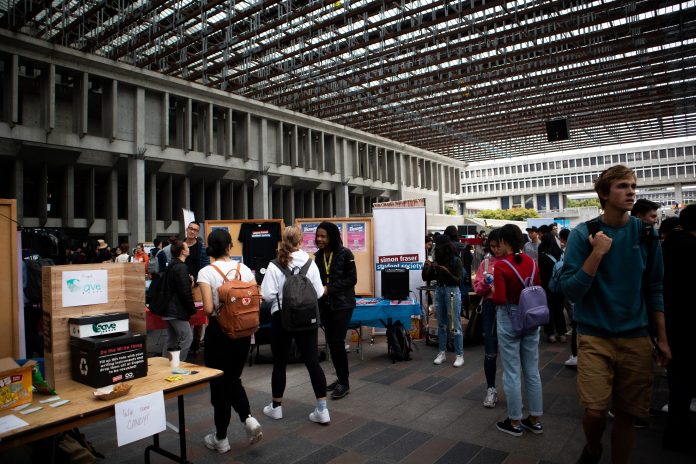
Seeing a pro-life club at Clubs Days was disturbing. Photo: Zeh Daruwalla/The Peak

By: Meera Eragoda, SFU Student

It all started during Clubs Days when I was wandering the booths. As I approached one, a member who was explaining the club to a passerby turned to include me in her explanation: “We’re SFU’s pro-life club.” It took me a moment to register her words but once I did, I turned around and nope’d right out of there. 

Since then, I have not been able to stop thinking about the insidiousness of the term “pro-life.” The definition of pro-life begins and ends with the birth of a child. Proponents of it don’t really care about the life of the mother or the life of the baby once it’s born. If they did, they would look at the bigger picture, and not focus on such a narrow view of what life is. This movement is anti-abortion or pro-birth, but what it definitely is not is pro-life.

The anti-abortion movement feeds into the classism and racism embedded in our society. According to an article made available by the National Center for Biotechnology Information, the most important factor in the decision to have an abortion reported to researchers were socioeconomic. For those already struggling with finding adequate resources to support themselves, the additional cost of food, childcare, clothing, medical expenses, a larger living space, etc. places a huge financial burden on women living in poverty. 

This economic insecurity is compounded by the fact that many employers view parents, especially new mothers, as unreliable—and parental leave in general as a negative thing. As a result, this leads to fewer employment opportunities for pregnant women or new mothers. The ensuing lack of job security and need for increased resources disproportionately effects poorer people, forcing them deeper into a cycle of poverty. And because poverty is also racialized due to structural barriers in employment and racist stereotypes, forcing women to carry their pregnancies to term furthers the marginalization of racialized folk as well. 

If anti-choice folks are so concerned about “loss of life” through abortion, there is a simple solution: create situations wherein parents are stable enough to have and care for children. Give them access to housing, food, better working conditions, child support, job security, access to mental and physical health resources, contraception, and better opportunities for education in general. The anti-abortion movement only succeeds in punishing people for perceived moral failings and furthering racial and class scorn.

Where in the anti-abortion movement is the concern for the conditions in which life is lived? Where is the understanding of the intersectionality of racial and class disparity and its effect on life expectancy

For anyone looking for pro-choice resources on campus, the SFSS Women’s Centre is one that is “committed to ensuring reproductive rights and justice for all, including non-judgmental information on abortion and pregnancy, and support for parents and families.” They provide a necessary, informed, and inclusive alternative to those who do not wish to be subjected to the myth-based morality judgments advocated by anti-choice groups. You can find them in the Rotunda, just outside of the W.A.C. Bennett Library.

Craving poké or ramen? Check out these delicious, budget-friendly restaurants

0
Poké and ramen are two popular — and often expensive — dishes in Vancouver’s culinary landscape. Illustration by Alice Zhang / The Peak.

By: Sara Wong, SFU Student

One of my favourite aspects about being a foodie is sharing my thoughts and experiences on a plethora of restaurants. Often, I get asked for recommendations on places that are both tasty and  student budget-friendly. When someone hears “student budget-friendly,” they often think of the stereotypical university diet of instant noodles and Hot Pockets. In other words, people believe there are limited options when going out to eat on a student budget. Well, I’m here to change that! If you want cheap eats that don’t sacrifice flavour or portion size, look no further than Riz Sushi & Poke and Kamamarui Ramen & Don.

Poké has been a popular food trend for a few years now, and Vancouver is still obsessed with this Hawaiian rice bowl. You’ll have no trouble finding a poké place in Metro Vancouver (there’s even one at SFU’s UniverCity), but none compare to Riz. The poké at Riz hits the poké trifecta: it’s affordable, delicious, and fulfilling! 

A small poké bowl here costs $10.50, which, compared to similarly-sized bowls at competing poké bars, is the cheapest I’ve found. Furthermore, compared to other poké bars, the flavours at Riz are unrivaled. They only use fresh seafood, which actually does make a difference. Another component of their poké that I appreciate is the sauce, which is evenly distributed. I usually get one of the aioli options because it adds a richness to the dish (as aiolis are mayonnaise-based), but if you’re more of a purist, you can ask for less sauce or opt for a ponzu instead of an aioli. If you need any more reason to visit Riz, their service is friendly and efficient. 

Ramen is another well-established food trend in Vancouver, and with that fame often comes higher prices. However, there are still a few places, such as Kamamarui Ramen & Don, where you can find flavour-forward ramen at an affordable rate. I highly recommend the black garlic flavour because it comes with a larger variety of toppings, such as tree ear mushrooms, bean sprouts, and an onsen egg. Additionally, the broth has multiple dimensions, meaning the flavour profile is not one note and you can taste a difference as you continue to eat. The aforementioned ramen costs around $10. 

Another menu item I’d recommend are the rice bombs, which are essentially balls of rice rolled in seaweed seasoning. The rice bombs are the perfect burst of umami to start your meal with. Besides its affordability, I prefer to go to Kamamarui for ramen because it is never too crowded. You won’t have to wait very long to get a table; this is a luxury I’ve yet to see at popular ramen places such as Jinya, where I have experienced wait times of over an hour. Once you’ve ordered, you never have to wait long to receive your food either. 

Sometimes it’s hard to go out to eat as a university student because of a lack of convenient location or a lack of funds. Both places I have mentioned do not fall into these categories, so go ahead and treat yourselves! We’re fast approaching the dreary, constantly rainy winter season, so what better way to cheer up than with good food? You deserve it — especially after midterms. 

Riz Sushi & Poke is located at 2887 East Broadway in Vancouver, just steps from Renfrew SkyTrain Station on the Millennium Line. Kamamarui Ramen & Don has two locations: 4219 East Hastings Street (along the 95 B-Line route) and 6514 Royal Oak Avenue — a short walk from the Royal Oak SkyTrain Station on the Expo Line.

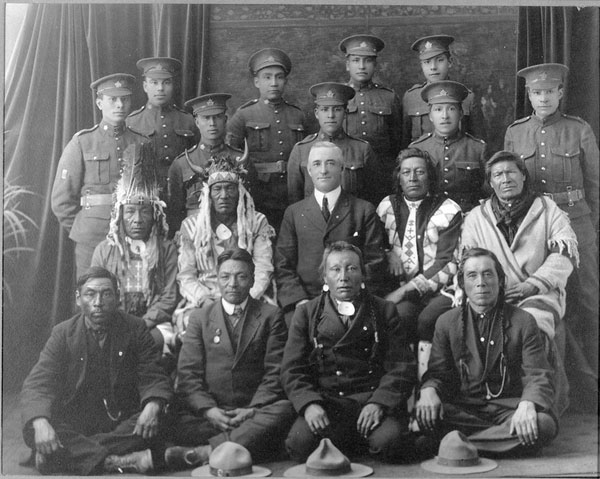
This November 11 consider that history comes in more colours than white

0
Every family has war stories — what are some of yours? Photo: /Veterans Affairs Canada

By: Jess Dela Cruz, News Writer

Right at the start of November, cadets in uniform appear in the malls or in front of supermarkets exchanging poppies for donations to support veterans and their families. People are encouraged to wear poppies this time of year to honour the lives of those who have served and fallen in war. Yet, the faces and lives that we remember on November 11 only tell a fraction of the past’s bravery, suffering, and loss.

In history classes, lessons are heavily focused on the Canadian, American, and British armies’ involvement in the First World War. This has meant that the causes, main actors, and victims of the war are told through the faces of white men. But countless communities of colour also served and gave their lives in war. For example, Indigenous communities in Canada were excluded and mistreated so poorly from war memorial activities that they created their own veteran’s day on November 8. Our whitewashed versions of history exclude and discredit the services of people of colour. Their stories and experiences are tucked away in the footnotes of textbooks and lecture slides.  

When we place a poppy on the left side of our jackets, we should remember not only the white men we see in our textbooks, but also the people of colour and marginalized communities who also served and were caught up in the horrors of war. These people deserve the same honour, respect, and credit that white veterans receive on November 11. 

My family does not have a connection to the Great War. But my mother tells me the story of her father, mother, and aunt who were caught in the middle of the Second World War when Japan invaded the Philippines in 1942. They were in Bulacan and hid in an underground hole covered by wood, dirt, and leaves. The hole was large enough to fit even the neighbouring families. I’m told that when the men of the community were taken, they would never be seen again. Women were raped and parents hid their children to prevent them from being taken away. My great-aunt and grandfather were left orphaned at age nine because of atrocities like this.

My paternal grandfather volunteered in the war effort and enlisted with the 15th Infantry, USAFI (United States Army Forces In the Philippines), and clerked at 1st Battalion Headquarters. He later transferred to a combat unit. His father was an enlisted United States merchant mariner who helped deliver war supplies to other US troops. Their ship, SS Susana, was torpedoed by a German submarine and their bodies were never found. These stories are often marginalized next to heroic retellings and visualizations of white soldiers. The unfortunate result is that these people of colour and their stories are forgotten on a day when we are called upon to remember those brave lives lost.

I share my family’s story because in one way or another, we all have a connection to war. It is important to find out these relationships to the past to have a deeper understanding of where we came from, the experiences that our ancestors lived through, and how these stories have brought us to where we are today.

We are rarely educated on the lives of people of colour who volunteered or dedicated their lives to help Canadian, American, or British troops. The lives of Muslims, Sikhs, Hindus, Asians, Indigenous peoples, black people, and other marginalized groups who fought and suffered are not honoured or remembered in publicized ceremonies. We cannot educate our children about our past without considering that history is not just white. 

I know I am incredibly lucky to have immigrated to Canada from the Philippines when I was two. I live in what I believe to be a safe place that has provided my family and I opportunities to start a new life. I do not want to come across as disparaging the lives lost in making Canada the country that has become our safe home. I recognize that I am extremely privileged to live in Canada. But I must also not forget my family roots and history and make sure that my ancestors’ stories are respected and honoured. 

On November 11, recall your own family’s narratives and experiences with war. Remember that history consists of more than what is televised and published in books. Don’t forget to honour the people that matter to your own history. Remember the wars that have touched your family, and the lives that were irrevocably changed. Most of all remember that our whitewashed history is made up of the lives of people of colour as well — lest we forget. 


Shakespeare is more torment than tranquility in an introductory class

2
It’s time to yeet Shakespeare out of first-year classes. Illustration: Nancy Chen/The Peak

By: Michelle Young, SFU Student

Whether or not Shakespeare should be taught in schools is often widely debated. Many maintain that Shakespearean sonnets and plays are indispensable pieces of English literature, as their themes remain timeless. Others argue that Shakespeare’s works are too boring, outdated, or challenging for students. There are positives and negatives in this discussion, and there’s no doubt that his writing is a valuable part of literature. But in a first year English class, though? Not so much. 

First year courses set out to provide a base for the rest of post-secondary education, focusing on fundamental concepts. English classes generally aim to teach students basic essay and writing skills, and the ability to critically analyse characters and themes within a story or poem. This is what the department expects students to do with Shakespeare. The problem is that Shakespeare isn’t entry-level English, so to speak. Students can’t start unpacking his complicated brilliance without some practice with more accessible materials first.

The English language has changed significantly over the years, and in that respect, Shakespeare provides historical insight into that evolution. However, with such a stark difference between Shakespearean (Early Modern English) and contemporary English, his writing doesn’t serve as a good example of how to analyse and craft effective writing in English today. Bringing Shakespeare into first year classes as an early introduction gives students the impression that analysing difficult pieces is just what the entire department is about. So many students have told me they hate reading or English as a subject because it’s hard to understand. In reality they probably just meant, “I hated reading Shakespeare, and that’s the only reading I’ve been introduced to.”

Shakespeare’s writing is typically difficult to read, even for avid readers. He’s enjoyed by literature and history buffs, but his work isn’t for everyone. For students who just want to get that English credit, hone their writing skills, or want to test the waters in the world of English, Shakespeare isn’t a great introduction. Shakespeare’s work isn’t the only example in the English canon that can teach students how to critically analyse English literature. There are so many diverse contemporary poets and novelists that are more engaging, that appeal to a wider audience, and can teach the same skills that professors want students to demonstrate. There’s Natsume Sōseki and Hermann Hesse, who deal with the complexity of change and the human heart in works such as Kokoro and Demain. There’s Sarah Kay and Ocean Vuong, who weave simple words together to create intricate poems of loss and love. These works are easier to read, and in no way are inferior to Shakespeare. 

English is more than difficult plays or poems; it can provide students with new worldviews, improve writing skills, and impart knowledge in entertaining ways. Contemporary works can assist students in learning what any introductory course aims to teach, so why not diversify the options and explore beyond Shakespeare? 


SFU Hockey comes up short in rematch against rival Spartans

0
Forward Arjun Badh scored the first two goals of his BCIHL career. - Photo credit / SFU Hockey

By: Michael Lenko, Peak Associate

Looking to bounce back after losing their first regular season meeting with the Spartans, the SFU Men’s Hockey team fell a goal short in a disappointing 5–4 loss at the Bill Copeland Sports Centre. 

In the second consecutive game between the lower mainland rivals, the Spartans took control in the first and fired 11 shots on net, compared to just five for the Clan. Despite this, the Clan struck first, as Arjun Badh picked up his first career British Columbia Intercollegiate Hockey League (BCIHL) goal by beating Spartan netminder Isaac Labelle just over five minutes into the opening frame. The lead was short lived though, as Josh Bruce tied the game just a few minutes later. The Spartans jumped ahead soon after Bruce’s equalizer on a Dustin Deugau powerplay marker and took a 2–1 lead into the first intermission.  

The second period saw the game balance out a bit, with the Spartans outshooting the Clan 14–9. SFU evened the game with three minutes left in the frame on a Kyle Bergh powerplay marker that came on a two-man advantage for the Clan. The teams continued to trade blows, with the Spartans once again pulling in front as Elijah Vilio rushed the puck end to end and scored five hole with just 10 seconds remaining in the frame. Vilio’s tally gave the Spartans another one-goal lead heading into the intermission.

The third period saw an offensive explosion by both teams, as five goals were scored on just 16 total shots. Each team put up eight shots in the frame, and the third was easily the most evenly played period of the game. The Clan tied the game at three while shorthanded on Arjun Badh’s second tally of the game. The back and forth continued though, as the Spartans again reclaimed the lead 30 seconds later on Brandon Potomak’s powerplay marker. The Clan’s shorthanded success continued with Eric Callegari tying the game with just under seven minutes left. The game-winning goal came with less than five minutes left in the game, as Evan Last added to his impressive BCIHL career numbers with another clutch tally. The game offered a wild finish, as the Clan had multiple grade A scoring opportunities in the final minutes of the game, but SFU was unable to tie the contest and the Spartans held on for the win.

While the second consecutive loss against the Spartans is surely hard to swallow for the Clan, the offensive production from the penalty kill was certainly a silver lining. Another positive to be taken from the loss was the dominant play of Clan player Arjun Badh. Picking up the first two goals of his BCIHL career will surely be a major confidence boost to the second year forward. Ideally for the Clan, Badh will begin to produce more consistently and can start to provide some secondary scoring to ease the pressure on the top lines.

After a brief home stand, the team will embark on an equally brief road trip on the following weekend. Following their first visit to Vancouver Island of the season, the Clan will return home to face the University of Victoria Vikes on November 16. 

A little more clarity going into an exam would be nice, thanks

1
Don’t make midterms more stressful than they already are. Illustration: Sabrina Kedzior/The Peak

By: Lubaba Mahmud, Staff Writer

This Halloween I dressed up as a midterm exam guide. It’s, like, the scariest thing ever — next to, you know, midterms. My costume, “ghost of a midterm guide,” was basically pieces of scrap paper that I glued on myself with a few vague instructions such as “be on time” and “see syllabus” — but most were just blank. Instead of “trick-or-treat” I said, “Boo-hoo! So what if the midterm is 30% of your grade?” with a couldn’t-care-less attitude, yawning the entire time. This outfit required minimal effort, which is handy for a last-minute costume, but not great when students’ grades are hanging on the line.

Call me cynical, but I like to know exactly how I’m going to get shattered on an exam. Be it multiple choice questions that spark incomparable amounts of self-doubt, or short-answer questions that are just about as short as NBA players, please professor, for the love of God, just let me know what to expect!

I took a class where the professor stressed that the exam would mainly be based on multiple choice questions. However, on the day of the midterm most of the weight was actually allocated to long-answer math problems. This really hampers time-management during an exam as I had devoted most of my time to filling out the scantron. When I realized that I didn’t have enough time for the math problems nicely hidden on the last page of the question-sheet, it was already too late. While I do take some blame for not going through the entire booklet as soon as I was handed the exam, it is not entirely my fault. I went into the room expecting mostly multiple choice questions and left with a sense of betrayal and utter disappointment instead.

Professors should include the question pattern, along with estimated weights in the midterm guide. This would give students an approximate idea of how much time to spend on each section. The material to be tested on should also be included here so that students know what to study. It’s not always the case that all content taught in classes leading up to the midterm will be on the exam. Once, in class, the professor vaguely mentioned that the midterm would contain all content up to “here” in the middle of the lecture, and didn’t bother clarifying further.

Also, I can’t believe I have to point this out in university, but professors should post instructions at least a week ahead. This would give students enough time to email their instructors with questions and reasonably expect to get an answer before the exam.

And before I exhaust my grief with midterms, maybe — just maybe — test us on things we’ve actually done in class? I know it seems like a wild thought to test students on things you’ve actually taught, but we’re mentally, as well as financially, broke and deserve some justice. I once had a midterm where the class average was 38% because the questions on the exam were radically different from tutorial practice questions. When the class average is an F grade before the bell curve saves us, maybe that should be taken as a red flag that something isn’t right on the instruction side.

Midterms usually have a lot of weight attached to them, so it’s more than fair to ask for comprehensive instructions in a timely manner. Exams induce enough panic on their own, so the least professors can do is give us accurate hints about how to approach them.


SFU Special Collections hosts Eve Joseph for a charming afternoon of poetry

0
Joseph’s latest book of poetry, Quarrels, won the 2019 Griffin Poetry Prize. Image courtesy of Anvil Press.

By: Lubaba Mahmud, Staff Writer

My mother always says that the mark of a truly great person lies in their humility. When I attended a reading by award-winning writer Eve Joseph a couple weeks ago, my mother’s words echoed in my mind. On October 24, Joseph graced us with her presence in the W.A.C. Bennett Library’s Special Collections section. 

Books written by Joseph include Quarrels, which was awarded the Griffin Poetry Prize this year, as well as The Startled Heart and The Secret Signature of Things, which were both nominated for the Dorothy Livesay Poetry Prize. Her memoir In The Slender Margin won the Hubert Evans Non-Fiction Prize.

During the event, she read excerpts from all of her books as her audience listened with awe and admiration for her elegantly penned words.

She began her readings by declaring that “it’s not really a poet standing next to you it’s a failed actress,” and shared that she used to be in an improvisational theatre group. Joseph echoed the theme of uncovering the beauty in failure by reading her poem which, funnily enough, is about poems she doesn’t write.

Some brilliant lines include: “These ones know that the brain is only a photographer, intricately mapping what the mind explores” and “The poems I don’t write tire easily of metaphor.” Furthermore, she compared unwritten poems to actors with stage fright, who “dread the moment the curtains open, fearing no words will come, or if they do, [that] they belong to someone else.” She did an outstanding job of capturing the essence of stubborn poems that don’t want to be written, and amazed her audience with a clever piece of poetry.

Next, Joseph moved on to In The Slender Margin, which she described as a long meditation about death. She shared that she worked in a hospice for 21 years and faced a personal tragedy when her brother died at a young age. Joseph explained that her memories of her brother were fleeting, but it was heart-wrenching nevertheless. She found him again through writing this memoir.

Thinking back to the time when she discovered that her brother’s undergraduate thesis was on poetry, Joseph said, “Astonishing things happen, I think, when you undertake something close to your heart.” Contemplating the question of why we make art about death, she said that it’s about “the idea that art frees us from the literal. Art is the imagination’s take on death.”

She candidly expressed her interpretations and musings about death. It was a deeply personal, lyrical, and incredibly thoughtful account of one’s experience of coping with a loved one’s demise. As I recalled a similar experience I had, a strange sense of familiarity arose within me, as if the emotions were powerful enough to gently bind us — the author and the reader, together in a cocoon of mourning.

I would assume that the effortless connection I felt with Eve Joseph’s words is what most writers aim for. Little did she know that when she talked about unique writers and how to identify them, she was articulating exactly how I felt about her in that moment: “Writers show me things I didn’t know before. More than that, it’s when you find a writer and you recognize something you’ve always known, but didn’t [really] know it — those are the kinds of writers that become a part of you.” 

Peak Sports Mailbag: Week 11

0
Photo credit / Amazon

By: Katinka Neumann, SFU Student

Hello readers of The Peak sports section,

Our Peak Sports Mailbag topic this week is rowing and our host is SFU Rowing Club president Katinka Neumann.  

Thanks so much to all of our readers for submitting their rowing-related questions, and my apologies if your question didn’t make it into this week’s edition. Usually, the Mailbag host will only answer three questions. Don’t worry though, as all questions submitted count for an entry into the raffle draw whether or not they are addressed in the Mailbag. Now, onto the questions!

Question 1: What is the most common injury in rowing? – Priya 

Answer: The most common injuries in rowing are back injuries — specifically, injuries to the lower back. When rowing, you are engaged in a relatively uniform, repetitive pulling and pushing motion. If you don’t have the proper technique, it is very easy to strain the wrong part of your body.

There are also two kinds of rowing: sweeping and sculling. When sculling, you use two oars and your body constantly moves back and forth. When sweeping, you only have one oar, and you need to add a twist from the back when moving forward. This twisting motion, combined with the force applied in every stroke, will negatively affect the back over time. Therefore, back injuries happen more frequently with sweepers as opposed to scullers — though both are likely to get some kind of back pain at some point.

Question 2: What does a rowing competition consist of? Do teams race all at once or are time trials involved? – Derek

Answer: There are two common distances for regattas (rowing competitions). The first is 2,000 meters, which is considered a sprint race. This is the standard distance for a regatta and is the distance that is raced in the Olympics. The second distance is 6,000 meters, otherwise referred to as a head race. Both of these races are organized a little differently.

When racing 2,000 meters, there will initially be a time trial stage where boats will compete with everyone else at the regatta that is in the same age, weight, and boat class. Boats are sent off about 15 seconds apart, alternating between two lanes. Based on the time trial results, boats will be sorted into groups for finals. The fastest six boats will make the A final, the next six will make the B final, and so on. In a final, you are lined up with the other boats and all are sent off at the same time. Similar to swimming, the fastest boats (based on the time trials) will be in the centre lanes, and the slower boats will be in the outer lanes.

For 6,000 meter races, there are no time trials — just a final. Boats are sorted into a group based on their size/class. In their groups, boats are set off in 15 second intervals, with the largest boats going first, followed by the smaller ones. There are no lanes in 6,000 meter courses, as many of them have turns and bends. A slower boat is always expected to move out of the way of an approaching boat.

Question 3: What is the best/easiest way to give rowing a shot around the Burnaby campus/lower mainland area? – Christina 

Answer: If you are an SFU student, staff, or alumni, you are welcome to join the SFU Rowing club! We take on a group of novice rowers at the beginning of every semester. Rowing is known as a late entry sport, so don’t worry if you have no experience — we can teach you. 

If you are not a student, staff, or alumni, there are various rowing clubs throughout the lower mainland that take on new members. The Burnaby Lake Rowing Club and the Inlet Rowing Club are the closest to Burnaby campus. Many of these clubs have a learn-to-row program in the summer, which is a month-long introduction to the sport that allows athletes to row with the club competitively after completing the course.

If you would like to participate in future editions of the Peak Sports Mailbag and be entered in a raffle for an end-of-semester prize, here’s what you can send to [email protected]

  • Sports-related questions that our weekly host will answer
  • Weekly theme ideas to guide our questions

Or: sign up to host the Mailbag (and get paid)!

Thanks to all of you SFU sports fans for blowing up my inbox!

Next week’s theme is: Ultimate Frisbee

Next week’s host is: Dane Yule

Send in your questions to [email protected]

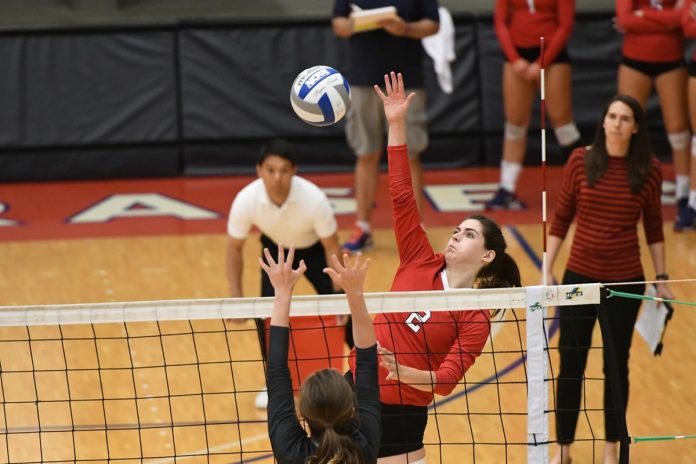
Clan volleyball splits final two games of four-game home stand

0
Kalyn Hartmann in action. - Photo credit / SFU Athletics

By: Dylan Webb, Sports Editor

After an impressive seven game winning streak was ended by a loss to Western Washington University (WWU), the SFU Volleyball team rebounded with a dominating straight-sets win over Montana State University Billings. With the win, the Clan moved their regular season in-conference record to 10–4, with the WWU Vikings responsible for two of the only four blemishes on an otherwise strong 2019 season. 

In the loss to WWU, the Clan came up short against a first-place team that continues to ride a wave of momentum. The Vikings have lost just one of their 21 games this season and SFU was, once again, unable to overcome a squad that has consistently executed a winning formula. While the Clan did claim the second set after blowing an early lead in the first set, that was the extent of their success as WWU took control from the third set on. 

In their second game of the week, the Clan righted the ship with a straight-sets pounding of the Montana State University Billing Yellowjackets. SFU was able to out-hit Montana State University by a large margin, recording 45 kills to the Yellowjackets’ 29. Freshman Middle Blocker Kalyn Hartmann had a standout performance in the win with three aces, four blocks, and 13 kills. 

As the team moves rapidly toward the playoffs, with only six games left on their regular season schedule, The Peak checked in with head coach Gina Schmidt to see which areas of play she felt the team has improved in the most since the start of the season. 

“Our team has improved in several areas over the course of the season, but I think it’s been a combination of our ability to sideout efficiently and score points when we are serving,” she said. Schmidt also noted that the team’s “block and defense has been doing a good job of making it difficult for our opponents to get kills.” 

Given the progress the Clan has made in these areas, The Peak asked Schmidt what role the new additions to the coaching staff have played in facilitating these on-court improvements that the Clan has made throughout the season. 

“Mandy Cao has been a great addition to our staff,” Schmidt responded, pointing to the fact that, “her international experience brings a fresh perspective to the team.” Schmidt also noted that, on a more basic level, “it’s helpful having more coaches in the gym as it allows our players to hear different voices and receive lots of feedback.”

The Clan will now look ahead to the final two home games of their regular season schedule in which they will host both University of Alaska teams. The game against the University of Alaska Anchorage Seawolves on Saturday November 16 is Seniors Night for the Clan as the team honours the achievements of its graduating players. 

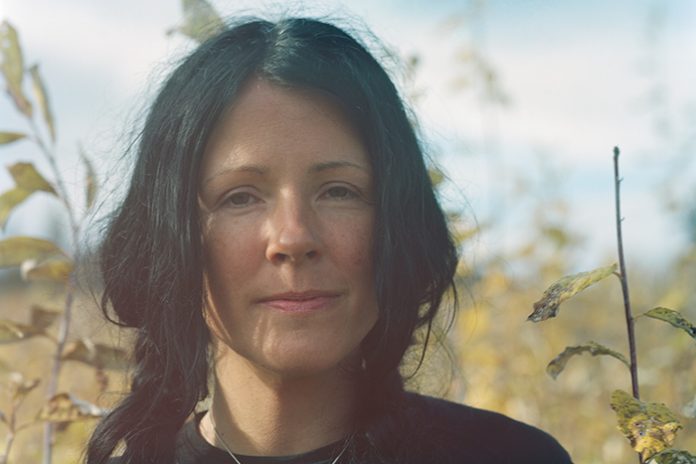
SFU English department welcomes Carleigh Baker as newest Writer-in-Residence

0
Carleigh Baker is an award-winning poet, short story writer, and novelist. Image courtesy of Callan Field / The Globe and Mail.

By: Isabella Wang, SFU Student

On Friday October 18, the SFU English Department hosted a reception and evening of reading to officially welcome Carleigh Baker as the department’s newest Writer-in-Residence. As the fifteenth writer inaugurated by the Ellen and Warren Tallman Writer-in-Residence program, she is well-suited to follow in the footsteps of Daphne Marlatt, Fred Wah, Wayde Compton, and, most recently, Ivan Coyote.

Baker is a nêhiyaw âpihtawikosisân/Icelandic writer whose award-winning poetry and short story work has been published in Best Canadian Essays, The Short Story Advent Calendar, and The Journey Prize Stories. She is currently working on a novel about paddling the Peel River Watershed, which examines matriarchal relationships with the river as a symbol of a mother figure. One of her current writer interests includes using the tools of storytelling to acknowledge climate change grief while firmly moving toward action.

The evening began with warm introductions made by Dr. Jeff Derksen, Dean and Associate Provost of Graduate and Postdoctoral Studies. Dr. Derksen situated the Writer-in-Residence program as part of a cultural front that, through resistance, aims to “transform society through creative thinking, a new form of social relations within the university.” Past Writers-in-Residence were also present to celebrate the occasion, including Fred Wah, who was accompanied by his wife, writer Pauline Butling.  

Indeed, in what she has called a “brutalist rain palace,” Baker can be found in her office, listening to heavy metal and talking to other writers about their writing over her weekly community consultation hours. Her time in residency has also been spent towards finishing her first novel — a long time coming.

Baker’s novel arose following a canoe trip, paddling more than 100 kilometers through the 12 interconnected brooks linking the Yukon Watershed. Despite being well-intentioned, it was a fraught trip that drew into the problems of wanting to find oneself, and then finding oneself on someone else’s land. As she explained, however, she wrote the story in part with wanting to learn from the mistakes.

Baker went on to read from her short story “Where Were You?” a story about two girls questioning the ecological impact of hairspray on the ozone. On a deeper level, the duo-narrative is asking readers to consider the various forms of violence committed against the earth, in direct relation to the feminine beauty standards of the late 19th century and violence against women’s bodies. Thus, the story on climate grief draws into focus the notion of dark nostalgia, or memory as a safe haven. Simultaneously, this evokes a sense of shame, where, as she explained, “we can begin to look back and [identify] the places where we started to go wrong.”

In this way, Baker showed that through her story and the writing of her novel, we can grieve over loss, over poor behavior, or over the “lack of heroism in a situation [ . . . ] but [we] don’t move ahead until [we] acknowledge [our] grief.”

Baker also shared a powerful message with the audience: writing does not have to be a solitary act. She reflected on her canoe trip by saying that after she returned, “[I realized] community involvement needed to be my number one priority [ . . . ] It fills you up, whereas writing leaves me depleted until it’s over.” These are commitments that she is intent on carrying over to her time at SFU, through community engagement and through teaching.

For the remainder of the semester, Baker’s office is open for weekly writing consultations available to the general public, following which she will be teaching a creative writing course on ways to address ecological grief, civil disobedience, and apocalyptic narratives through poetry and fiction.