Home Blog Page 479

SFU FANFICTION: The Demon and the Concrete Man — Chapter 3 [COMPLETE]

0
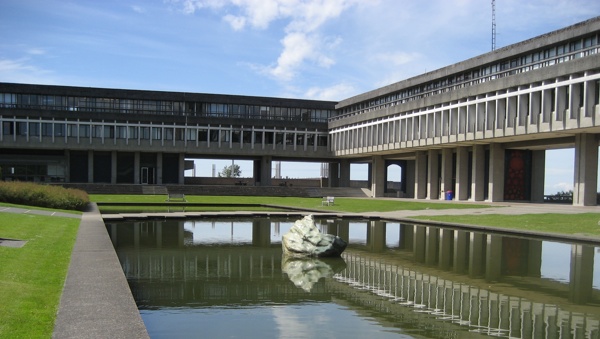
Photo curtesy of Pixabay

Written by Kelly Chia, Staff Writer

Disclaimer: *turns around in office chair, stroking a soft white cat* It is November, bitches. Once again, it is time for me to bless you with my words. Also please stop with the anonymous tumblr asks. I know that you are surely jealous that you don’t possess my word mastery, but it just can’t be helped. Last time, I let our beloved Kathearrynne dangle over the edge of her precious, beautiful life. Let’s see what happens next, shall we?

********** THE FINAL CHAPTER **********

==== Avocado Statue’s P.O.V. ==== [A/N: That’s right, didn’t expect that, did we?]

I had been sleeping for many years when a beautiful woman made eye contact with me. I mean, really looked at me. Kids pass by me all the time to stare at me, and students rushing to have s*x would sit on me, but I’ve never had someone look at me like that goth lady did . . . and it stirred something up.

Suddenly, all the raw tantric energy stored in me from years of s*xy times burst through my round body. I needed to be with that girl now . . . I didn’t know her name yet, but she was the one.

And blessed be this mirror on my supple body because I saw her again! But this time she had been pushed into the water by a fiend. I rose out of my resting spot, suddenly donning the reasonably attractive human shape I was always destined to bear, and sprung to my loved one! We needed to start our new, fabulous time together now. I wouldn’t let anyone get in our way.

“Kathearrynne!!”

==== Kathearrynne’s P.O.V. ====

At first, I didn’t understand what was happening. The holy water had seared my skin, and now it had become all too cold. I was surrounded by the various koi fish in the AQ pond. 

‘How embarrassing,’ I thought, as I sunk deeper into the shallow water, ‘maybe I’m too much of a loser to fight back here.’ But then, like Naruto when his powers took over and turned him into a hawt foxy manimal [A/N: ROAR!], I felt my vampire blood surge through my body. I was a dragon, metaphorically speaking, and I would not fall!

“Dracula Killer Power, Make Up!” I yelled, holding my hand up to the surface in a Sailor Moon-esque pose. I was wrapped in rad energy waves, as my black ensemble was adorned with ornate jewellery. My limbs were wrapped in neon fishnets, which were filled with justice. I stood on the lake with hands on my hips. “I, Kathearynne Targaryen Dark Ash Snow Ketchum, will take what is mine with exams and blood! And in the name of all things edgy on this campus, I’ll punish you!” I finished, pointing to my mortal enemy — Stacy von Tussle (A/N: that bitch who tried to steal Kathearynne’s canvas grades and her man last chapter and then stabbed her with silver!@!!).

And then, a voice! It was a voice I had been hearing my whole life. “Kathearrynne!!” [A/N: We love a continuity queen uwu] I whipped my head around. I knew it: my very own Stone Cold Steve Austin. I gazed at him lovingly, and we did a courting move: the dab. 

I snickered at Stacy, who was quivering slightly. “Who has a little avocado man now?” My voice boomed through the pond. I was prepared to fight, but so was she. “SHARPAY EVANS WAS AN UNDERRATED CHARACTER, MAKE UP!” Stacy yelled, transforming similarly. It was so boring that I yawned when she appeared in her hot pink ensemble. “I’M GOING TO END YOUR BLOODLINE!” Stacy yelled, powering down in front of me.

“Now, now . . .” the professor said, but we didn’t care. Stacy and I were destined to spar, and this was bigger than him, bigger than my handsome guy even. This was Sparta.

“I relish taking you down,” Stacy breathed. Okay, the inner lady might have liked that but feelings are a distraction! 

I prepared my laser, murmuring, “Dracarys Hyper Fog Moon Beeeeeeam!” 

“JUST GO AHEAD AND HATE ON ME AND RUN YOUR MOUTH! SO EVERYONE CAN HEAR!” Stacy ejaculated, reciting the chorus to “Loser Like Me” sung by the Glee cast, and a powerful soundwave of pop covers strung with awkward teen drama released from her palm, interlocking with my raven beam. [A/N: If you were a Gleek, you are NOT valid.] We went like that for awhile, and sometimes Lea Michele’s vocals would overpower my Poe-esque ray of doom. 

But in the end, I stood victorious. Stacy and I had a vicious fight, but love had softened my demonic, cold heart. We had learned a lot about each other in the course of 10 minutes. Stacy held my hand, and passed the silver blade to me, “I give you this silver blade, which is a metaphor – I give you the power to do the killing, and trust you won’t kill me,” Silly Stacy. That would only work with vampires. I took the blade anyway. “Thanks.. I guess Sharpay Evans was really ambitious, and Gabriella Montez was a boring preppie..”  Stacy smiled graciously, and walked away with her binder filled with tabs and various Muji pens. I felt.. something like respect?

[A/N: Oh my God… I’m so good at developing drama and creating character growth…!]

As Avocado Statue and I held hands, an acoustic version of “Girlfriend” by April Lavigne played in my head. We made out. It was hot. 

“But I have to go back to AQ.. what obscure statue would SFU students laugh at? They need me.” I caressed his beautiful, round face, which reflected mine. 

“I don’t know, maybe you could sit next to me…. haha, just kidding!” I shrugged, hoping to capture his attention. “Unless…?”

“I would do anything for you, my queen…” Avocado Statue said. And I knew that there’d be many more days like this in store for one Kathearrynne Targaryen Dark Ash Snow Ketchum. But Satan damn it, I was ready to take it all!

~~~~~ The End ~~~~~

Epilogue/Final Author’s Note: 

Kathearrynne would go on browsing majors for a year and a half. Avocado Statue would inspire several essays on the sexual gaze he was subjected to for several years. And Stacy? Well, she’s doing community theatre. 

And that’s all, folks! I was underappreciated in my prime, but that didn’t stop me from providing you the most thrilling thing you’ve read in ages. The fan letters can continue though. No hate or you’ll be subjected to all six seasons of Glee, including the episodes where they turn into Muppets.
 

Coming Up at SFU: Nov 11-15

0

By: Lubaba Mahmud, Staff Writer

SFU 2065 Master Plan: Open House

Have ideas for how the Burnaby campus should look in the future? Check out the SFU 2065 Master Plan: Open House event.

Strategists from SFU Campus Planning & Development will be sharing with students and community members their vision for the future of SFU’s Burnaby campus. They will be sharing the still-in-development infrastructure plans for the next half century. The SFU community is invited to an open house to learn about the proposal and ask questions about the SFU Burnaby 2065 Campus Master Plan. Their feedback will be taken into account as SFU’s development offices finalise their planning.

This long-term project aims to enhance the academic experience at SFU as well as overall quality of campus life. It considers the campus’ connection to its neighborhood, transportation facilities, as well as the design of landscapes and new buildings.

Open house sessions will run from 11 a.m. to 2 p.m. and 3:30 p.m. to 6:30 p.m on Wednesday, November 13 in the Saywell Hall Atrium. Tickets are not required.

Decolonizing Mothering: Asian Immigrant Mothers’ Learning in Transnational Canada

SFU’s David Lam Centre and the Department of History will be hosting a presentation called ‘Decolonizing Mothering: Asian Immigrant Mothers’ Learning in Transnational Canada’ on November 14. The presentation, by Dr. Yidan Zhu of UBC, will be presenting the results of a two-year long ethnographic study about the adjustment process of Asian immigrant mothers in Canada. It looks at how Asian immigrant mothers “learn to become ‘ideal mothers’ and (re)construct their identities in association with the reproduction of race, gender, and class inequalities in transnational Canada.” The seminar’s purpose is to apply the concept of decolonization to discuss the inherent colonial biases in the Western idea of ‘motherhood’. It is based on an ethnographic study conducted in an immigration settlement organization in Vancouver. 

Dr. Zhu, is a postdoctoral research fellow in the Faculty of Dentistry at the University of British Columbia. This free presentation will take place from 12:30 p.m. to 2:30 p.m. on Thursday, November 14 in Academic Quadrangle room 5027. Tickets are not required.

Mindfulness Meditation

Whether you’re drowning in term paper deadlines or studying hard for final exams, or both, you deserve some down-time to alleviate stress. SFU’s Health and Counselling Centre offers a meditation class that can help you to relax your mind and teach you how to bring a calming energy into your life. This class does not require any previous experience, and beginners are welcome. It is a free drop-in service open to SFU students, faculty, and staff.

The class will be held from 12:30 p.m. to 1:20 p.m on Wednesday, November 13 in Group Rooms 1 & 2 (enter through Career Services in MBC 0300), SFU Burnaby Campus.

Health & Counselling talks seasonal affective disorder

0
Illustration: RESLUS / The Peak

By: Mishaa Khan, Peak Associate


Nobody likes the gloomy, rainy season or shorter days, but it impacts some people more than others. So be mindful of SAD, aka, seasonal affective disorder, a mood disorder which occurs due to changes in weather, particularly decrease in sunlight. 

Individuals living with SAD experience consistently low moods for over two weeks, which diminishes their ability to follow daily routines. Other  symptoms include: changes in appetite, sleeping too much or too little, fatigue, difficulty concentrating, memory problems, feelings of hopelessness, and more. 

To gain a counselor’s perspective and a better grasp of what students can do for themselves, The Peak conducted an in-person interview with Shereen Khan, a counselor at SFU’s Health & Counselling Services. 

Khan first recommends that students with SAD make sure they take walks during the day. Students should aim to be outdoors specifically between 10 a.m. and 12 p.m. given Vancouver’s later sunrise. 

Unfortunately, many students have classes during 10 a.m. and 12 p.m., so it may be difficult to take a walk. However, Khan recommends an alternative method for sun exposure that students can use called artificial light therapy. 

“The light therapy can make a difference in their serotonin and melatonin levels, which are part of the symptoms where [students] are not sleeping enough and they’re generally feeling tired and sad,” she explains. 

Khan says that UV lights for SAD can easily be bought in places like Amazon for affordable prices. At other universities like BCIT, students can sit at various ‘sun stations’ for half-hour periods at a time. Khan also suggests sitting close to a light source whenever partaking in daily activities such as studying, eating, or hanging out with friends. A light source can be as simple as a sunny window, or even a bright desk lamp.. 

Along with an increased exposure to sunlight, Khan stresses the importance of various habitual lifestyle choices students can make in order to combat SAD. She explains it is important to start building these habits once autumn starts in order to prepare for when the sunshine decreases. These habits not only prevent lower moods, but are great for overall well-being. However, students shouldn’t fret if they haven’t gotten a chance to build those habits, there’s never a bad time to start. 

Eating a nutritious diet is also integral to combating SAD, Khan notes, as the gut has a significant impact on your mood and overall brain health. A well-designed diet would be filled with high amounts of vegetables and whole grains, moderate amounts of nuts and legumes, some healthy fats, poultry, fish, and low amounts of sugar, processed foods, and trans fat. Studies have shown that a nutritious diet can improve mood in depressed patients whereas, foods that contain a lot of sugar and are processed can worsen mood

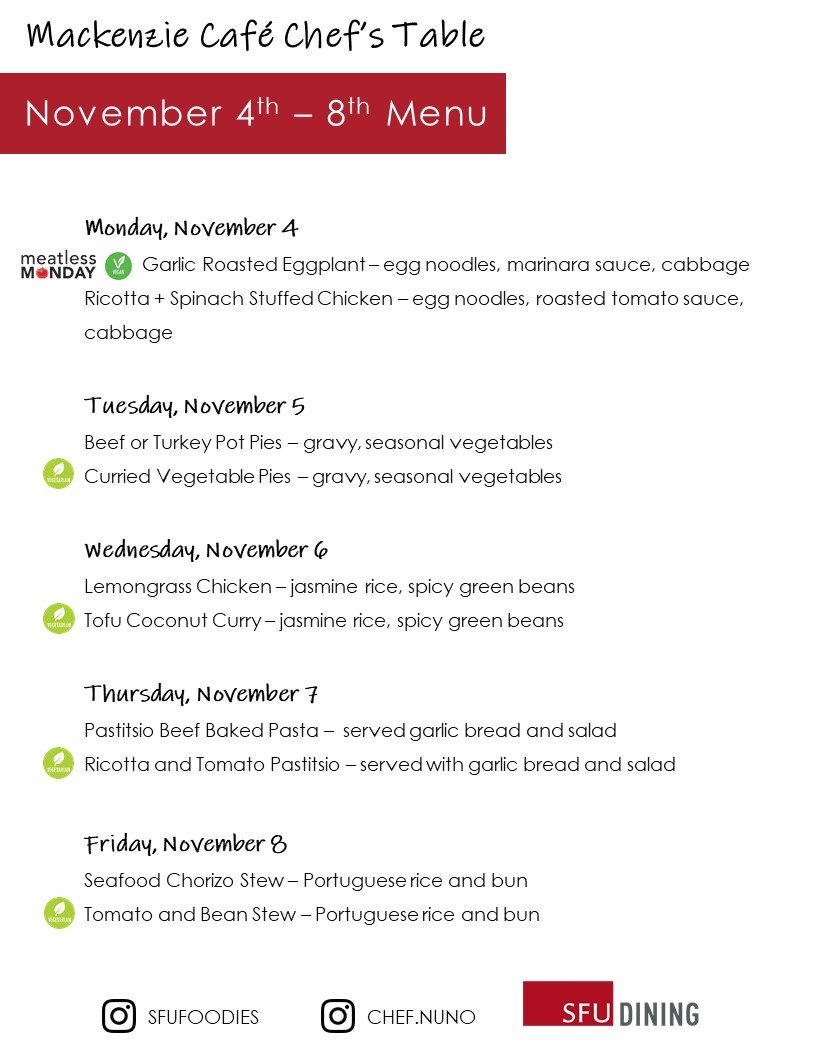
With that said, maintaining a low-sugar diet can be hard, especially with so much tempting food available on campus. There are, however, healthier alternatives that students are encouraged to try. For instance, try eating nuts instead of pre-packaged granola bars, or kombucha or iced tea instead of pop and juice. And thankfully, there are also a few healthy eateries on SFU Burnaby campus that aren’t just fast food. There are places like Steve’s Poke Bar, the bowl and sandwich bar at Mackenzie Cafe, the Chopped Leaf, Quesada, Veggie Lunch, Diamond Alumni Centre, and even some options at Subway. Embark SFU also has a food rescue program that provides free produce to students every Monday and Thursday at Blusson Hall. 

Additionally, exercise plays a vital role in improving mental health as well. It results in the increase of endorphins (i.e. your happy hormones) and decrease in cortisol (stress hormones); both of these combined together can mitigate the effects of depression significantly. 

There are no resources that are specifically available by Health & Counselling Services at SFU that treat SAD. However, the resources that HCS does provide aid with all forms of mood disorders, mental health concerns, and physical health issues. Students can book appointments with counselors and mental health nurses to discuss strategies on how they can deal with SAD. 

Alternatively, students can also use an app called MySSP, which is a free, 24/7, confidential app available to all SFU students. You can use MySSP to text, call, or book an in-person appointment with a counselor. Please note that these counselors are not the counselors at SFU.  

The Peak wants to note that students should remember that this article is supposed to raise awareness about SAD, and it is not a means for self-diagnosis. If you are concerned about any potential symptoms, please see a doctor, counselor, or another mental health practitioner.

Hiking at SFU: Pandora & Velodrome Trails

0

The Raven Boys is an enchanting story of fantasy, friendship, and captivating characters

0
The Raven Boys is the first of four novels in The Raven Cycle series. Image courtesy of Scholastic.

By: Kelly Chia, Staff Writer

The Young Adult (YA) fiction genre has always been a means to escape from my mundane school life. YA novels often feature themes of fantasy and adventure, which is rad for any sixth grader. As I’ve gotten older, my obsession with YA has veered from escaping through these books to becoming a clucking mother hen over their characters. I took on that role yet again through the dynamics presented in Maggie Stiefvater’s The Raven Boys, the first novel in The Raven Cycle series.

The premise of the book already has pretty cool stakes: the titular “Raven Boys” try to wake up a supposedly dead Welsh king, and Blue, a girl born into a family of psychics, knows that she will one day kill her first love. The plot in itself is pretty neat, but I hesitantly asked, “Where’s the substance?”

To that question, Stiefvater smacked me in the face and invited me to meet her charming characters. She sat me down for two days straight as I maddeningly sped through the book getting to know them. It was a losing battle; I had no choice but to declare these children my children.

Indeed, the most riveting part of The Raven Boys is watching the tight-knit bond grow between our main five: Blue, Gansey, Adam, Ronan, and Noah. Not only are these characters appealing, but Stiefvater delivers depth to all of them and draws attention to how they need each other. Reading about how their relationships unfold in the story is rewarding, and for me, this aspect of the story definitely trumps all of the cool things the plot set up. The plot details feel like a bonus rather than the backbone of the story, and surprisingly, I really enjoyed that. I don’t get to read character-driven stories too much, but Stiefvater reminded me why they’re treasures.

As an example, let’s take a look at the character of Richard Gansey III — known as Gansey — who is repeatedly established as the leader of the Raven Boys. Gansey has a big noisy car, is super rich, and sometimes comes off as super cocky. While these types of characters are pretty common, I don’t really care for them that much. They are often caricatures, and their redeeming trait is very singular. 

Here, however, Gansey is packed with genuine insecurity and a heartfelt devotion to find something real in his vapid life through the Welsh king and he is determined to protect his boys doing it. Gansey really cares, and he’s not perfect, but the book never establishes him to be. His relationships with the others feel like they progress at just the right rate, which is truly rare to find in a story.


Stiefvater has a way of making you believe that these characters are meant to be together; she works to tell you why through her characters rather than hiding it behind a well-dressed plot. Yes, there’s an undercurrent of destiny that leads these characters to find each other, but I love me some outcasts finding a family with each other. Stiefvater happily delivers in this department.

All of this is to say, I LOVED this book! I can’t remember the last time I devoured any book — it made me feel like I was in seventh grade again, when I would go through book after book at a rapid pace. It is an excellent saga (there are four books in the series in total!) to add to your bookshelf. And for even more reading material, Stiefvater reprises some of these characters in Call Down the Hawk, the first novel in a Raven Cycle spin-off trilogy, which was released on November 5.

The Peak recaps SFSS discussion on not housing Rotunda groups in SUB

2
Image courtesy of sfss.ca

By: Paige Riding, News Writer

At the SFSS Board meeting on November 1, president Giovanni HoSang’s proposal to house the Rotunda groups in the upcoming Student Union Building was defeated by a 7–5 vote of the Board of Directors, as previously reported by The Peak

A large audience attended the meeting to view the discussion and vote, and as a result there was a palpable sense of tension in the air. A lengthy discussion preceded the vote, with many members of the audience speaking in support of housing the Rotunda groups in the SUB. 

Though HoSang’s motion failed, a second motion for them to be housed in the Undergrounds and Forum Chambers in the Maggie Benston Centre, did pass. According to the proposal, the projected cost of $320,000 would be covered by the SFSS Space Expansion Fund, the Accessibility Fund, and $120,000 that “CJSF has been collecting [ . . . ] to prepare for a move out of its current space. . .” 

Members of the audience voiced their concerns about the displacement of the Rotunda groups, and the decision not to house them in the SUB. 

Before the Board began their discussion on the motion, a guest named Annie Bhuiyan spoke on the impact Simon Fraser Public Interest Research Group (SFPIRG) has had on her as a university student. 

“SFPIRG [ . . . ] gives a space to feel at home on campus, and mak[es] me feel safe on campus. It lets me know that I can just go somewhere if I needed a space, if I needed something [ . . . ] or if I just needed someone to talk to. And the thought of them getting pushed out, or getting put in this situation where they’re uncertain about where they’re going to hold their meeting or where they’re going to have an office is awful,” she said. 

“Unfortunately I haven’t had that sense of community from the SFSS, who would be an alternative kind of institution that could give me those resources,” Bhuiyan claimed in front of the Board.

Matt McDonald, Director of External Relations for the Graduate Student Society, provided financial reasons why HoSang’s SUB allocation would be preferred. 

“If the Rotunda groups are not housed in the SUB, SFU has indicated to us that it will be prohibitively difficult for them to house them elsewhere on campus. The main idea was to use the Forum Chambers and Undergrounds, but they are old and need major renovations to be usable at all,” he explained.

“SFU has estimated the cost of this: originally it was $800,000, now they’ve bumped it up to 1.5 million because of the increased costs of construction in Vancouver. As you know, [the] Student Societies have been negotiating affordability and other issues [with regards to] the SFU budget . . . If we add one more expense, this is about the equivalent of a percent hike in international student tuition.” 

McDonald proceeded to explain that, due to the structure of the building as it is, accessibility will remain an issue even after hefty renovations of these basement rooms. He touched on how problematic it would appear for the SFSS to prioritize video game rooms and nap rooms over “environmental and social justice groups to organize on issues, unique student voices heard and important information spread by radio, and for Black students to have a place to build community and advocate for their rights.”

CJSF Station Manager Magnus Thyvold’s statement explained that “SFU provided land [for the SUB]. When they provided that land, a commitment was made to provide housing for the independent, non-profit student societies. The language may not have been strong enough, but everybody knew what was meant when those commitments were made. 

“That’s why our groups were asked to participate fully in the planning process . . . SFU had indicated to us [ . . . ] that they would not have provided the lease to let this whole project go forward had they known that this commitment was going to be withdrawn,” he said. 

To have “long-standing, active, progressive organizations in support of students and providing opportunities for students on campus for decades” in jeopardy of being pushed off campus is a mistake, according to Thyvold.

Jennifer Chou, Arts & Social Sciences Representative, spoke about her experience volunteering in the past for one of the Rotunda groups potentially being displaced: Embark Sustainability. She noted their positive impact on the SFU community through Community Kitchens and free produce distribution to students. She also spoke positively about her experiences with SFPIRG and how they are a “hub of resources that are valuable to the community.”

Simran Uppal, Science Representative, stated that “SFSS Student Union groups should have priority over external groups.” This was a recurring answer from those who voted against the motion.

Tawanda Nigel Chitapi, VP Finance, said that “over time, I’ve learnt that not everyone is [extroverted] like me [ . . . ] and these groups of students, especially international students, they’ll just come here, they don’t have family, so a space such as this would be very beneficial to them. It brings a sense of home, a sense of community, around people that they relate with and can understand each other [ . . . ] I think it’s important that there be a space for students to get together and find a home.”

Following the vote, a necessary break, and other business, the Q&A period allowed guests to ask questions in a 20 minute block of time.

The Peak asked Board members to explain why they voted against the alternative allocation, particularly because most of the comments during the motion’s discussion were from those voting in favour of housing the Rotunda groups. 

Only VP External Relations Jasdeep Gill answered this question, explaining, “I would like to preserve as much space as possible in the SUB for bookable, shareable space for students [ . . . ] I do view the external organizations as external, but I am in favour of housing them in our Forum Chambers and Undergrounds.”

When the Board was asked about concerns over funding of the renovation by The Peak, Chitapi answered, that funds were coming from the Space Expansion Fund. 

“That’s the purpose of the fund, so they’re not being wasted, they’re being used for their [specified] purpose,” he said. “The focus of the Student Union Building was to make sure that there are as many spaces available for everyone, all of us here will have access to, instead of having some that are fixated for a certain group of people.” 

A student who introduced herself as Emma Lynne protested this claim that these spaces will be available for everyone. “I think we have learned time and time again throughout history here at SFU, here in Canada is that, for a space to be for everyone, sometimes you need to create space for interest groups. Sometimes you need to create space for people that don’t have space that is for ‘everyone’. For me, that excuse sounds similar to the ‘#AllLivesMatter.’ People say Black lives matter because we need to draw attention to that.”

Ricky Castanedo Laredo, CJSF Music Coordinator, stated “ultimately, SFU still belongs to the community at large. This whole idea that because we [CJSF] are an external group, suddenly we’re demerited in some way is ridiculous. You’re going to enter community life after this. This is not where your life is going to end. To not have groups that can bridge that gap in that building that is specifically being built for said groups . . . It’s a building that you have control over how it’s going to be filled.”

HoSang himself had to say that “that specific question isn’t being answered by the board at this time,” asking guests to move on. 

Another audience member pointed out that these groups already struggle to fulfill their functions in their current homes, and that the new arrangement would reduce their space.

Ana Lozitskaia expressed their concerns about the space’s accessibility, and how the new location would make these resources difficult to access for students with disabilities. They told the Board that, “by tearing those resources apart and placing them [where they] are inaccessible, you’re not only tearing us apart from the resources, you’re tearing us apart from ourselves because there is no place for us to meet,” they said. 

“There is no place for us to connect [ . . . ] Please represent all students. Please remember the students you encounter may not be representative of everybody else on this campus.”


Long Story Short: Friend breakups can be as painful as romantic ones 

0
Illustrated by Tiffany Chan

By Winona Young, Features Editor


I’m in my room in Vancouver, scrolling through my Instagram feed. In the pale blue glow of my phone screen, I see the new post that she’s uploaded from New Orleans: a picture of herself and some other girl. They’re in matching costumes and I scrunch my mouth. She never did anything like that with me, I think distantly. I double tap the screen on instinct. I continue scrolling, and try not to think too hard about how happy the person I once called someone my best friend looks with someone new. 


I’ve gone through some painful break-ups, but no one told me about how painful friendship break-ups can be. And even though I just got dumped this summer, the break-up that haunts me, and I believe will continue to stick with me, is the one I went through with my (now ex) best friend. 


I met my ex-best friend in high school — Let’s call her Elizabeth. Elizabeth and I became friends over a school play between rehearsals and running lines. When we both realised we had a shared love of Doctor Who and Tumblr (I know, please don’t bully me), we hit it right off. The next few months were filled with long sunny afternoons with her, whispered conversations in the darkness of movie theatres, and obnoxiously loud laughter at jokes no one else would understand. During that time, she even had a boyfriend briefly, but he often said that whenever us three would hang out, he felt like he was the third-wheel. And honestly? He wasn’t wrong. When I think back to high school, despite the horrible time I had, she was one of the reasons I recall those days with warmth. Her smile, her wit, and her; I still miss all three dearly. I wanted nothing more for this person to stay as my partner-in-crime, my commander-in-homie, my [insert any silly joke label here] — any name we’d call ourselves would do as long we stayed friends. 


We lost touch gradually — it was so subtle, I barely noticed it. Over the course of two years, it ebbed away slowly and quietly. The thing about friendship break-ups is that they fade in the corner of your eye. Calls were missed, inside jokes grew stale, and visits proved how wide the gap between us was. Neither of us acknowledge that anything has changed with how we talk. Instead of completely ignoring each other, we stay in each other’s periphery with an enthusiastic comment on a great Instagram post; these emotional equivalents to bread crumbs somehow made the break-up worse.


There are countless songs about heartbreak — ranging from singers feeling utterly gutted to victorious to bitter. But most of all, many break-up songs about your ex-partner are all about empowerment. You’re over that loser! Social media, witness my goddamn #FlexOnMyEx! The underlying message in each break-up anthem is, “I am better off without you in my life and I can’t wait to tell the world.” 


When I think of people I’m no longer friends with, when I think of Elizabeth, I’m not filled with a sense of victory, more so a sense of hollow emptiness. There are no break-up anthems about losing friends that empower you. Songs like “When She Loved Me” by Sarah MacLachlan just remind me of a deep psychic ache that I can’t quite shake each time I see she’s posted something new on social media. 


What I learned is that unlike the melodrama of romantic break-ups, a break-up between friends, however, is more ambiguous, more confusing. Because there can come a day where you can dive deep into a new partner, but the regret and sadness from a friend break-up lingers. It sticks with you in every new friendship made, every holiday passed, and the hope that maybe one day they’ll reach out still lurks. The sob story of being dumped by your good-for-nothing ex will always garner more sympathy and more understanding than trying to articulate how a perfectly great friendship crumbled over time. And it’s a shame we can’t mourn a friendship as publically. But both kinds of loss, at the end of the day, are equally valid and painful in their own dimensions

Netflix’s Carmen Sandiego is a fresh take on a nostalgic character

0
Carmen Sandiego’s second season premiered on Netflix in October. Image courtesy of Netflix / Bustle.

By: Prabhdeep Dhaliwal, SFU Student

The Carmen Sandiego franchise goes way back, beginning with the 1985 video game “Where in the World is Carmen Sandiego?” and expanding to include a children’s game show, two series of books by John Peel and Melissa Peterson, four comic books, and various board and card games. The newest addition to the franchise is an animated Netflix series featuring Gina Rodriguez (of Jane the Virgin) and Finn Wolfhard (of Stranger Things).

For those of you who have never heard of Carmen Sandiego, here’s a quick synopsis: the Netflix series follows Carmen Sandiego (Rodriguez), a former thief, as she travels all over the world stealing historical artifacts and valuable items. With the help of her hacker friend Player (Wolfhard), Carmen Sandiego seeks to retrieve these items before the infamous agency V.I.L.E. (Villains International League of Evil) can steal them. She then returns the items back to their rightful owners, continuously trying to foil V.I.L.E.’s evil plans while simultaneously being chased by two Interpol agents. Carmen Sandiego is recognized by her long red trench coat, big red hat, and tousled red hair.

Each episode starts by presenting the audience with some historical facts about the country or city Carmen Sandiego is in before she launches into her plan to stop V.I.L.E. Using intel from Player, as well as her own agility, quick reflexes, and ability to think on her feet, Carmen Sandiego time and time again manages to stop V.I.L.E. during their capers. 

Season 1 was released in January 2019 with nine episodes. During the first two episodes of the season, we learn about Sandiego’s transformation from a former thief into a kind of Robin Hood. As the season progresses, two allies, brother and sister duo Zack and Ivy, are introduced and join Sandiego’s mission. In these episodes, Sandiego is confronted with her past as she fights former thieves she had trained with. The audience also sees Sandiego struggling to find out about her roots in the first season. Season 1 ends with an unlikely accomplice helping Sandiego escape from V.I.L.E.

The second season of the show was released in October 2019 with 10 episodes. Season 2 follows Carmen Sandiego, Player, Zack, Ivy, and their new accomplice as they continue to foil V.I.L.E.’s plans. As this season came out just last month, I won’t go into too much detail so as to not spoil anything, but there are many twists and turns, and each episode keeps you wanting more. Season 2’s last episode ends on a cliffhanger, leaving viewers impatiently anticipating a third season — although it has not been confirmed yet.

I would give this Netflix series a 9/10 review. Though it is geared towards a younger demographic, adults will still find it entertaining. Carmen Sandiego offers the audience history tidbits about different countries and cities, and it has likeable characters, humour, and an overarching theme of good winning over evil.

200 photographs for 100 years: Kate Bird’s visual exploration of BC Sports history

0
Sidney Crosby seconds after he scored the Golden Goal. - Photo credit / CBC

By: Dylan Webb, Sports Editor

Kate Bird’s Magic Moments in BC Sports History: A Century in Photo’s provides an expansive and diverse perspective on the rich athletics history of British Columbia. While the book regrettably doesn’t undertake a substantive critical analysis of the role sports played in the formation and enforcement of a colonial state, it does do a reasonable job of, at the very least, paying significant attention to the role Indigenous communities and people, as well as other communities of colour, have played in a century of athletic achievement within the province. After receiving a copy of the work soon after publication, The Peak compiled a list of five of our favourite moments from Magic Moments in BC Sports History. 

Barbara Howard wins silver and bronze at the 1938 British Empire Games. 

As the first Black athlete to represent Canada in international competition, Barbara Howard did far more than simply win medals in track at the 1938 Empire Games in Sydney, Australia. Not only did Howard break colour barriers in the world of athletics, in 1941 she also became the first person of colour to be hired by the Vancouver School Board. Born on May 8, 1920 in Vancouver, BC, Howard died at the age of 97 on January 26, 2017 after spending a lifetime overcoming racist practices and social structures in sports, education, and society in general. 

Chief Dan George holds the 1936 Golden Jubilee International Indian War Canoe Championship trophy won by the Tsleil-Waututh Nation. 

Chief of the Tsleil-Waututh First Nation Dan George was known more famously for receiving an Oscar nomination for his role in the film Little Big Man than he was for his war canoe racing prowess. George is pictured on page 55 with the Golden Jubilee International Indian War Canoe Championship trophy, which cemented the Tsleil-Waututh Wolves’ reputation as one of the most successful war canoe racing teams in the history of the province and the nation. 

Nancy Greene wins Olympic gold in giant slalom and is then voted Canada’s female athlete of the 20th century. 

In the introduction to the 1960’s themed chapter of the book, Bird begins by noting the immense challenges female athletes faced in taking on societal attitudes that largely excluded women from taking place in competitive sports, and even vigorous exercise. In the face of attitudes such as those expressed by Pierre de Fredy, Baron de Coubertin, known as the founder of the Olympic games, who said that, “women have but one task, that of crowning the victor with garlands” and that, “in public competitions, women’s participation must be absolutely prohibited,” Nancy Greene engaged a fearless and aggressive approach to participation similar to her skiing style. After overcoming barriers, such as limited access to equipment and training facilities, Greene secured World Cup wins in 1967 and 1968 before taking two of Canada’s three medals at the 1968 Olympics in Grenoble. Because of these and other achievements, Greene was voted Canada’s Female Athlete of the 20th Century and later became a Senator. 

Rick Hansen completes his Man In Motion World Tour.

Not only was Rick Hansen widely acclaimed for his efforts to raise money for spinal cord research through his Man in Motion World Tour, he was also a pioneer in the development of disabled and wheelchair athletics in British Columbia. Hailing from Williams Lake, BC, Hansen wheeled over 40,000 km through 34 different countries over a span of two years to complete his Man in Motion World Tour. The tour was completed upon his arrival at Oakridge Shopping Centre on May 22, 1987, to the delight of thousands of supportive Vancouverites. 

Team Canada wins Olympic gold in men’s ice hockey at the 2010 Vancouver Winter Olympics 

On February 28, 2010, one of the most iconic moments in Canadian sports history took place at what is now known as Rogers Arena. After a battle in the corner resulted in Jarome Iginla digging the puck out of some skates and feeding it to Sidney Crosby just below the face-off dot to the right of the USA net, one of Canada’s greatest hockey players of all time scored one of the most important goals in Canadian sports history. With the overtime win over a rival American squad, Canada was, at least temporarily, able to bask in the glow of international hockey supremacy earned on home turf. With the moment known to this day as simply “the Golden Goal,” Crosby, Iginla, and Roberto Luongo who, at the time, was playing for the hometown Vancouver Canucks, secured themselves a place in the upper-echelons of Canadian sports history with an Olympic performance for the ages. 

Why must SFU Burnaby get the butt-end of the toilet paper roll?

0
Guests of Goldcorp Centre for the Arts are spoiled next to Burnaby Mountain. Photo: Andrea Renney/The Peak

By: Paige Riding, News Writer

In the “Whale of a Birthday” episode of the culturally impactful show Spongebob Squarepants, Squidward performs a song for Pearl on her sixteenth birthday. The monumental song won audiences over with the stunning lyric, “When my tear ducts give issue, I can’t use just any tissue, I need four ply, four ply, four ply, when I cry.” 

This song resonates with me to this very day. It shaped my expectations for myself and what I deserve in my tissues. You can thus imagine my horror, my dismay, my shock when I headed into my first washroom stall at the university I would call home for the next two-plus years to find the flimsiest quarter-ply toilet paper I have ever had the displeasure of using.

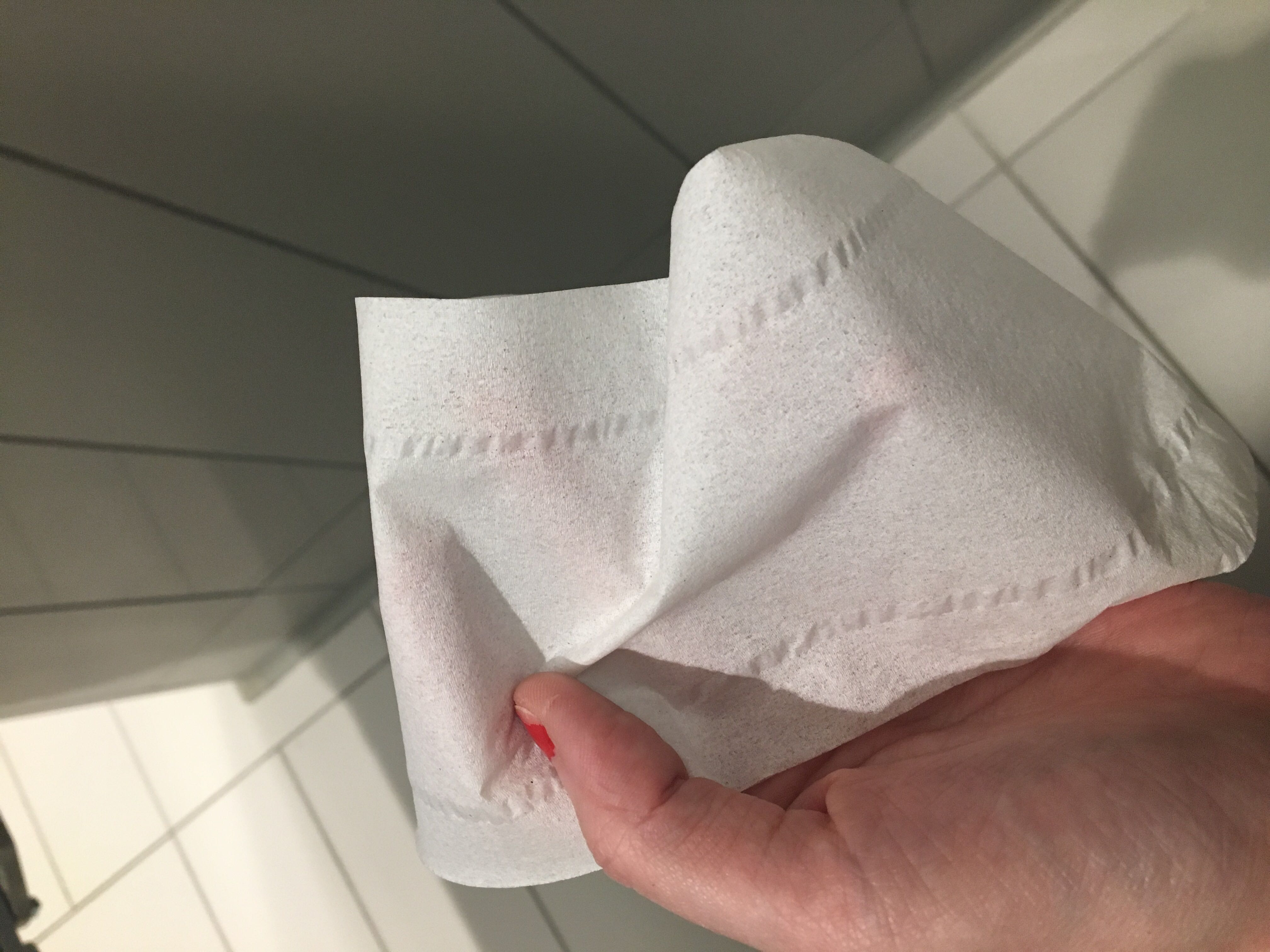
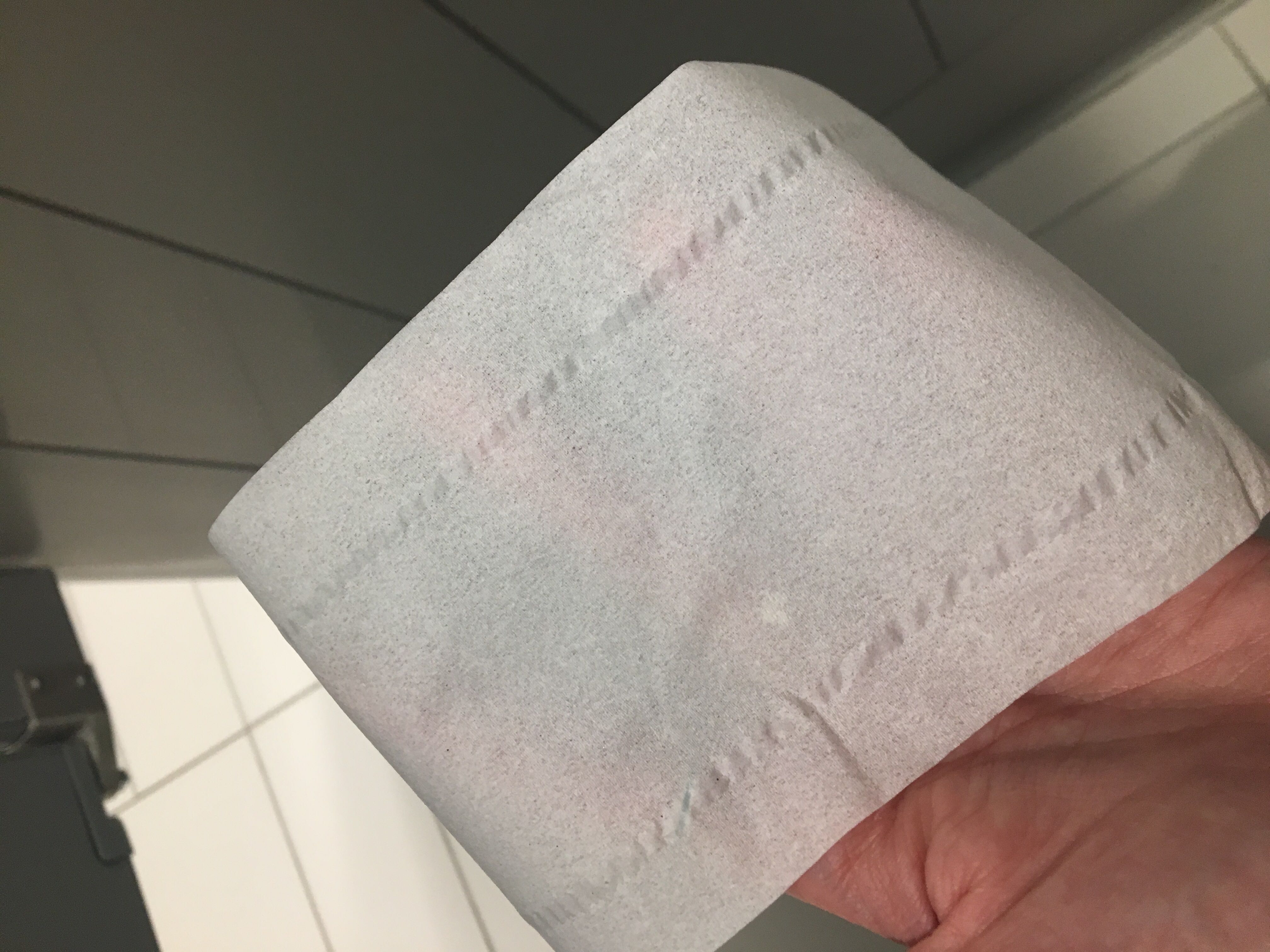
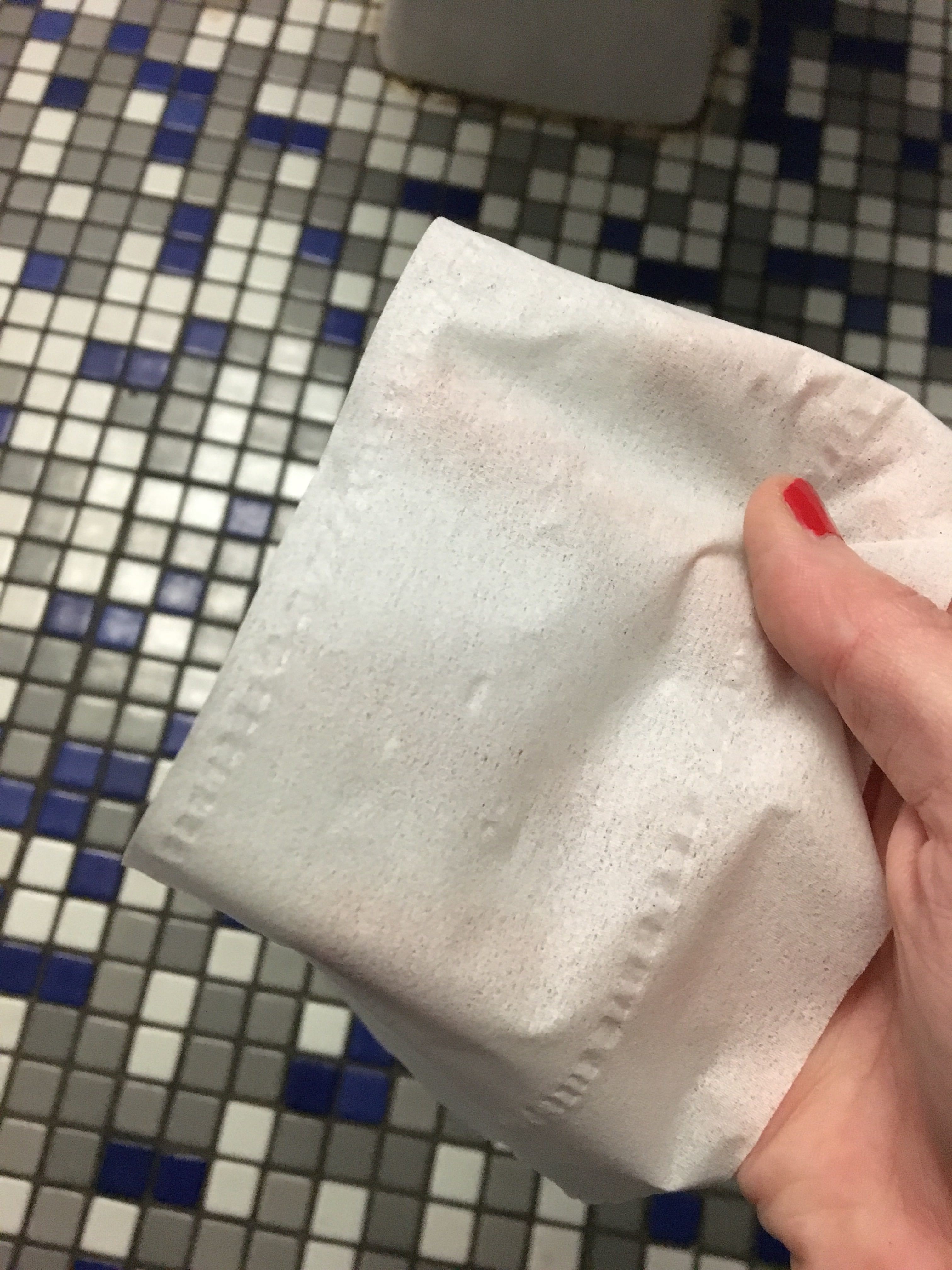
This sick, sad excuse for toilet paper exists in every toilet stall around the Burnaby campus. Unless students whip out their own toilet roll from their bags, the quarter-ply nightmare is inescapable atop this cursed mountain. From residential buildings to Blusson and beyond, the wretched rolls wreak their havoc. No one is safe.

Each dispenser possesses two humongous rolls that hardly fit. Despite its pretense, bigger is not always better. The hefty rolls get stuck after a pathetic amount of paper reaches the hands of SFU patrons. The desperate grasp for a sufficient amount of toilet paper results in little to no success. Like a pathetic attempt at confetti, teensy squares of TP find themselves in the hands of the betrayed, the stranded. 

In a cruel twist of fate, these pieces flutter forgotten to the floor where they belong. Users are left helpless on their porcelain thrones. Silent cries for help sound out as the only way to get more TP is to carefully, care-fu-lly, move the roll to reveal a little more of the paper. The stall floors of each washroom are covered in little snowflakes of failed attempts at attaining a sufficient wad of TP. Beside each scrap lies the tears of students who just want to feel clean, but can’t.

Rushing between classes and need to go? Good luck, kid. Wanting to speed up the prolonged time of a particularly predominant number two? Yeah, right. Everybody knows now. You should have done your business at home, I guess.

Less is not always more in the TP industry. The toilet paper rolls across campus echo the transparency of dollar store tissue paper for bagged birthday presents. Thin enough to view your own hand through it, this stuff requires at the minimum five or six bunches or folds to do a meagre job of things. If SFU really wanted to help the environment, or whatever they had in mind with this toilet paper monstrosity, the toilet paper decision makers would have put their heads together to realize that flimsier paper requiring twice as many layers (not including scrap waste on the floor) is more of a waste than a greater ply paper that requires less bunching.

To rub salt in the wounds even more, other SFU campuses have effective TP that is not see-through. Our downtown campuses boast double-ply TP for their toilet needs. For those formal meetings and important guests at Harbour Centre? They get to have have triple-ply! Maybe it’s the elevation getting to me, but is this not unfair for the students, faculty, and staff on top of Burnaby Mountain?

We need a thicker TP around Burnaby. The sorry excuse of paper we have currently is a waste of resources, and as far as preventing us from having to wipe with our bare hands, it scores a 3/7. With such thin material to work with, is the job really being done as well as it could be? As it should be? The fix is easy enough: it’s not impossible to find a thicker ply that works with the current dispensers. All we ask is for our toilet experience to be given the same amount of consideration as those at the Vancouver campuses. By phasing out the current abominations in our stalls, bums all over campus will be better off.