Home Blog Page 453

Books to break out after reading break

0
Photo: Goodreads
Photo: Goodreads

by Juztin Bello, Rodolfo Boskovic, Nicole Magas, Lubaba Mahmud, Zoe Vedova

Book: Hero by Perry Moore

Submitted by: Juztin Bello, Copy Editor

Photo: Goodreads
Photo: Goodreads

Alright, picture this: Marvel, but gay. 

This winning combination of superheroes and homosexuality makes Perry Moore’s Hero a top-tier book. For anyone interested in a book that features misfits coming together, wholesome lessons in acceptance, genuinely shocking plot twists, and a healthy helping of gayness, this book is the one for you. The story follows Thom Creed as he traverses hiding both his newfound superpowers and his sexuality from his homophobic and disgraced ex-superhero dad. 

As a gay man and literature loser, there was a point in my life where I began seeking out novels that prominently featured gay characters — perhaps to compensate for the lack of gay books while growing up and in the closet. Being one of the first books I discovered to feature a homosexual protagonist who can also heal people, I fell in love with this book immediately. What’s great about Hero is that it balances entertainment and action (using fight scenes and superhero lore) with thought-provoking narratives on coming out, not fitting in, and working through strained personal relationships. Of these narratives, I think the most interesting to watch develop is the relationship between Thom and his dad — particularly, the anxiety Thom experiences over his secrets and the one he thinks is more necessary to hide. 

Also, there’s a scene where Thom masturbates to a photo of his favourite superhero and fails to delete his search history after he panics when his dad unexpectedly comes home — it’s probably one of the most relatable in-the-closet moments I’ve ever read. 


Book: Pronto by Elmore Leonard

Submitted by: Rodolfo Boskovic, Peak Associate

Photo: Goodreads
Photo: Goodreads

If you’ve read or watched Elmore Leonard’s Get Shorty and Be Cool, then you know what you’re in for with this one. When 66-year-old Miami bookmaker Harry Arno is caught in the crosshairs of both the cops and his mob boss, Harry uses all the money he skimmed over the years to disappear. 

Pronto is filled with cool, slick-talking characters which are Leonard’s bread and butter. Characters walk the fine line between camp and fresh, while the plot follows a fast-paced chase that travels from Miami to Italy. 

What really stands out about this book is just how digestible it can be. Even when nothing is really happening, the dialogue feels like a game of tennis with clever one-liners bouncing back and forth. If you’re into crime novels with interesting characters, or if you just want a brain break from complicated university terminology, give Pronto a whirl. 


Book: The Black Prism by Brent Weeks

Submitted by: Nicole Magas, Opinions Editor
Photo: Goodreads
Photo: Goodreads

I am a huge nerd for fantasy novels and have been for most of my life. For me, a good fantasy is one that keeps me reading until 3 a.m. at least. And boy, does The Black Prism ever deliver on that promise.

The Black Prism is the first (and arguably best) book in a five-part series of which the final book just released last year. It’s part of a sub-genre I like to call “charismatic boys behaving badly” (those familiar with the Gentleman Bastards series will know what I’m talking about). If you love character-driven fantasy with a vividly descriptive world, and an impeccably well-thought out magic system, then this is the fantasy series for you. The Black Prism sets all this up in a delightful way with moments of both humour and gravitas. It presents characters a reader can grow to love and care about over the several thousand pages of the series. And lets not forget that twist in the middle!

A word of warning though: this isn’t a series without its flaws. While Weeks crafts a beautiful work of fantasy fiction here, it’s full of plot holes and inconsistencies. I would caution that this is a book best read by people who love to fall in love with characters, not those who require their fantasy to be air-tight. 


Book: Tell The Wolves I’m Home by Carol Rifka Brunt

Submitted by: Lubaba Mahmud, Staff Writer

Photo: Goodreads
Photo: Goodreads

I remember snuggling up with the book Tell The Wolves I’m Home on a rainy afternoon a few years ago. I was enchanted by the author’s poignant storytelling and absolutely devoured this book. It somehow left me devastated in a beautiful way — after all, what good are stories if they don’t shatter your heart in some way?

Tell The Wolves I’m Home follows fourteen-year-old June Elbus, who feels alone in the world after her best friend and uncle, Finn, dies of AIDS in New York in the 1980s. She soon discovers that her uncle was gay and had a secret partner, Toby, who his family didn’t approve off. But after his death, June and Toby form an unlikely friendship as they reminisce about the wonderful man and artist that Finn was.

The novel tackled the very important subject of the AIDS epidemic and the stigma that gay men faced in the 1980s with grace and empathy. Brunt’s deeply moving novel is about complex relationships and the undeniable pull of family, whether it is biological or chosen. 

The richly-layered story and heart-wrenching portrayal of relationships made this one of my favourite reads. I love seeing unlikely friendships come to life. I also find it very interesting when a story has an artist as its central character. In this story, for example, Finn’s paintings were a central component of the plot. The book had some great details thrown in, which are open-ended so that readers can come up with their own explanation for some events. What’s more, as an extra treat, readers uncover the deep meaning behind the title once they finish the story.

Tell The Wolves I’m Home is a very emotional story full of wonderful characters. Make sure to pick this one up if you like to cry over books like I do. 


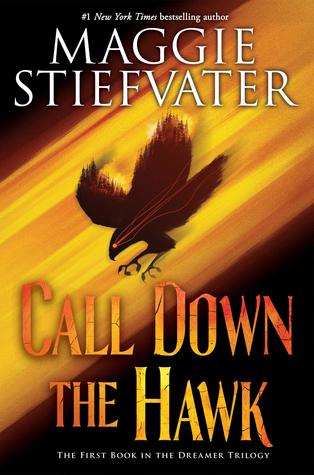
Book: Call Down the Hawk by Maggie Stiefvater

Submitted by: Zoe Vedova, Peak Associate
Photo: Goodreads
Photo: Goodreads

There is nothing more dangerous than dreaming for Ronan Lynch. He has had the powerful, disastrous ability to bring objects out of his dreams since he was a child, and he’s about to find out he’s not the only one with this power. 

Call Down the Hawk is the first installment of Maggie Stiefvater’s new Dreamer trilogy. Although it continues with characters from her previous series, The Raven Cycle, this book is part of a stand-alone trilogy. Stiefvater’s writing is sharp, the stakes are high, and every moment of fantastical magic is met with real-world consequences. The novel is also filled with explicitly gay characters, although it doesn’t have quite as much explicitly queer content as I’d hoped. That being said, there is a substantial word count given to describing a moody, goth farmer which is gay content in and of itself. 

If you mourn your lost ability to voraciously tear through novels because you’re constantly dragging yourself through academic readings, treat yourself to this YA book. Call Down the Hawk will give your brain that jumpstart you deserve.


SFU Alumni Christa Ovenell hosts a four-part series engaging in open and honest conversations about death

1
Photo by Chris Ho.

By Kim Regala, Staff Writer

I’m an avid user of the idiom “I’m dead,” and while I use it mostly for comedic purposes, rarely have I ever had a genuine conversation about what it means to die. In fact, it’s not often that people dive into the topic at all, as it holds rather morbid connotations. However, through attending Christa Ovenell’s workshop, “Know Before You Go,” my entire perspective on addressing death has shifted. Elaborating on what it means to have our affairs in order, Ovenell engages in open and honest discussions that encourage and normalize our approach to end-of-life conversations.

Contrary to the dreariness that surrounds the notion of dying, the event was held at The Learnary, a small and cozy non-profit shop along East Hastings. Selling a variety of intergenerational books, art supplies, and do-it-yourself kits, The Learnary also serves as a workshop space for practical skills from basic sewing to home brewing. I immediately felt a sense of liveliness as I entered the space. A bright yellow accent wall, along with matching yellow curtains, made for a visually vibrant setting. Colourful pennant banners also decorated the room, adding a festive atmosphere to the mix. What I loved most about the space, however, was the nostalgic presence of antiques displayed along the shelves, like old cameras and used typewriters.

I was greeted with a warm welcome by Ovenell and Surya, one of the co-managers of the shop, who kindly offered me tea as she walked me inside. Right away, there was a sense of intimacy and physical closeness, as our small group of ten sat around a circular table. We had no choice but to face one another. At the same time, Ovenell was quick to assure us that we were free to step outside of the circle at any time if we felt any discomfort.

The workshop began with Ovenell asking each individual to introduce themselves, share their reason for attending the event, and mention one thing or person that they loved. While some were just simply curious about the topic at hand, others had specific goals in mind of what they hoped to learn at the end of the session. One attendee openly shared a personal story of having experienced a death in the family and how this motivated her to explore further discussions about how to properly prepare for such an event. Meanwhile, another participant who appeared relatively older than the rest of us, had a more optimistic outlook on death. Instead, she gleefully expressed that she was more than ready to reach the end of her life, and it was only a matter of guaranteeing that all of her preparations were in proper order. Sharing each other’s background was effective in allowing everyone to feel more at ease with one another, building up a level of trust as we dug deeper into our own relationships with death.

Following this brief introduction, Ovenell’s workshop focused on many of the legal matters that go along with planning for the day you die. She offered an abundance of resources, information, and advice regarding legal documentations, such as the difference between a power of attorney and a representation agreement. She also emphasized the importance of a will, urging that in no way should a person die without first establishing where all of their properties should go. While legal advice did not so much apply to me, it was refreshing to observe a group of people candidly talk about organizing their death without any emotional baggage attached. To them, it came off naturally to speak on matters like deciding between cremation or a burial, or about signing do-not-resuscitate forms in order to allow for natural death to occur. 

Although Ovenell was the main facilitator of the discussion, she established a rather open and encouraging space for everyone to include their voices into the conversation. I was surprised to find myself sharing smiles and laughter with the other attendees as we spoke about death with less of an imminent and uncontrollable dread. Rather, we treated it as just another future event that — like all others — would need proper planning. One individual even half-jokingly recommended that perhaps a death party was to be coordinated where people can gather in a social setting to settle documents and wills together. Hearing this suggestion without any context may seem rather dark. However, in the setting of the workshop, it garnered a large amount of laughs from the group who resonated with the idea.

While I initially felt strange discussing death in such a casual and lighthearted manner, I found that it rid me of my formerly bleak perceptions of what a conversation about dying would be like. Being in my 20s, this concept feels rather detached from my everyday reality, and not to mention my large fear of death itself, as it feels so uncertain and ungraspable. However, attending Ovenell’s workshop allowed me to break this very mold that confined the subject of death into something that was dark in nature.

Ovenell will be hosting her next workshop on February 20, which will dive further into the discussion on memorialization. To learn more about her four-part series, you can find more information at The Learnary website.

Birds of Prey is a mediocre superhero ensemble at best

0
Courtesy of Warner Bros. Pictures

by James Conn, Peak Associate

The new DC Comics film Birds of Prey (and the Fantabulous Emancipation of One Harley Quinn) sees Margot Robbie reprise her role from Suicide Squad as the titular character. After splitting from the Joker, Harley Quinn teams up with superheroes Black Canary, Huntress, and Renee Montoya to save a young girl named Cassandra Cain from the evil crime lord, Black Mask. 

Birds of Prey (and, no, I will not write out that ridiculously long title again) is directed by Cathy Yan and written by Christina Hodson. With its R-rating you can expect quite a few F-bombs, heavy violence, and some sexual and drug-related material. All that goes to support the delightfully charming setting of Gotham City: the crime-riddled, corrupt hometown of numerous types of criminals, mobsters, and villains. Hearing all this, I had high expectations for this ambitious film revolving around overlooked comic characters. Unfortunately, I left the theatre disliking a majority of what I had seen. 

I do admit that it was a fun, action-packed movie with over-the-top characters, an awesome soundtrack, and badass action sequences. However, a lot of the comedy felt forced and, quite frankly, made me cringe. It seemed to me that Birds of Prey was trying too hard to be like Deadpool with its self-awareness and zany over the top feel. 

Furthermore, my biggest problem with the film was how superfluous the actual “birds of prey” were to the overall plot of the movie. Black Canary, Huntress, and Renee Montoya aren’t given nearly enough screen time, and are used merely as Mac Guffins to drive the story forward. What results from all this is a disjointed movie about Harley Quinn suddenly forced into a team-up with unrelated characters who contribute little to the plot. Many of the characters’ motivations felt forced or tangentially related to the others, which hinders the believability of the film. 

In addition to that, the non-chronological narrative style of the film, which started off as a promising storytelling technique, quickly devolved into a convoluted gimmick, making much of the first act’s frantic pacing hard to follow. 

Notable film critic Griffin Schiller on Twitter compared Birds of Prey to the previously mentioned Deadpool and the highly-acclaimed filmmaker Quentin Tarantino’s films, which I echo to a certain degree. However, the overall execution of the film was poor, resulting in a mediocre superhero ensemble film. 

If you’re looking for a fun time at the theatre, then this movie will serve you well. Take it for what it is: a fun action-packed movie with over the top characters. Nothing more, nothing less.   

Allowing the RCMP to recruit on campus undermines reconciliation efforts

2
The RCMP has always been a part of violence and displacement against Indigenous people. Photo: /The Star

By: Meera Eragoda, Staff Writer

Anyone who’s wandered past the BIG Fair or the Mini BIG Fair at SFU may have seen a booth set up for the RCMP. Some have already realized the hypocrisy that goes into having the RCMP recruiting on campus. For anyone who hasn’t, here’s the disconnect: SFU reportedly recognizes it’s on stolen land, yet invites the very organization that helped steal the land in the first place to recruit people. Those new recruits will then go on to police those who they stole the land from.

Like many places around British Columbia, SFU has started making land acknowledgments at events held on its campuses. There is even a handy little guide on their website with info on which land acknowledgment to use for each campus. For Burnaby, it’s “Simon Fraser University acknowledges the unceded Traditional Coast Salish Lands including the Tsleil-Waututh (səl̓ilw̓ətaʔɬ), Kwikwetlem (kʷikʷəƛ̓əm), Squamish (Sḵwx̱wú7mesh Úxwumixw) and Musqueam (xʷməθkʷəy̓əm) Nations.”

So SFU acknowledging it’s on stolen land seems like a good start. But if the RCMP are allowed to recruit on campus, clearly SFU is not acknowledging the violence that went into removing Indigenous people from this land. The RCMP was created specifically in order to displace Indigenous people, and were tasked with removing Indigenous youth from their homes and families and putting them into residential schools.

What makes this arguably worse is that a whole section of SFU’s website is dedicated to reconciliation, specifically regarding education. As part of this supposed dedication and SFU’s goal of empowering Indigenous people, SFU created the Aboriginal Reconciliation Council which, in 2017, released the Walk This Path With Us report. The report states that “[p]ost-secondary education for Indigenous people in Canada is deeply scarred by a long and disastrous history of colonialism, racism, and residential schooling . . . [and] saw more than 150,000 First Nation, Métis, and Inuit children forcibly removed from their communities and assigned to schools.”

Let me just repeat that once more: the RCMP helped forcibly remove over 150,000 Indigenous children from their land and families. For perspective, the student population of all three of SFU’s campuses is approximately 30,000

SFU presents itself as wanting to rectify these historical wrongs and provide Indigenous people with access to education without assimilation, as well as engage with Indigenous knowledge and education styles that were previously condemned. However, if SFU is conveniently overlooking the complicity of the RCMP as the source of force, violence, and harm against Indigenous people, how exactly is it empowering Indigenous students?

How does the SFU administration not see the hypocrisy in saying they are striving toward reconciliation while bringing people complicit in Indigenous oppression to campus? How is SFU any different from Canadian governments who pat themselves on the back for making empty land acknowledgments while ordering the RCMP raid on Wet’suwet’en lands? The same lands they acknowledge are stolen? If SFU is truly dedicated to creating a safe environment for Indigenous education, they should stop allowing the RCMP to recruit on campus. It’s honestly a no-brainer.

Perhaps if the role of the RCMP as an oppressive tool of the state had been addressed and rectified as a mistake of the past, their presence at campus recruitment fairs may be more tolerable. But as it stands, their mismanagement of Colten Boushie’s case, Tina Fontaine’s unsolved murder, the over 1,200 Missing and Murdered Indigenous Women and Girls, and, of course, the force used against the Wet’suwet’en put into context all too clearly that the RCMP has never stopped acting as the violent arm of colonial governments against Indigenous communities.

No wonder Indigenous youth are declaring that #reconcilitationisdead.


CJSF shows how integral independent societies are to the SFU experience

1
A lot of hard work and fond memories are tied up in CJSF. Photo: Chris Ho/The Peak

By: Leslie Wang, SFU Student

In the spring of my third year at SFU, I was living with a horrible case of lizard brain — I doubted all of my actions, words, and thoughts. It was an extremely difficult couple of months on my mental health. Tired, I decided to fight back and take a risk: I joined the on-campus radio station, CJSF. There, I found that I had little to worry about. I was welcomed warmly and offered a myriad of activities through which I could participate. 

At first, I just wanted a change of pace and wanted to tap more into my creative side. Slowly, I began to get acquainted with the station’s day-to-day activities. I met cool people, many of whom were fellow students. I realized that CJSF created an incredible community that is integral to the student experience at SFU. To lose CJSF would mean that students would be robbed of the potential for a fulfilling student experience.

However, the station is currently facing the threat of being displaced. Last semester, the SFSS Board of Directors voted to exclude several Rotunda student groups — the Simon Fraser Public Interest Research Group (SFPIRG), Students of Caribbean and African Ancestry (SOCA), Embark, and CJSF — from spacing plans in the upcoming Student Union Building. 

Obviously, this made me very upset. For CJSF, being displaced means that the station would be left without an adequate space from which to operate. Importantly, it means that students involved with CJSF would not have a space to create radio content, a space to hang out with other community members, or a space from which to organize.

CJSF provides opportunities for me to get involved at SFU and my community beyond SFU. It gives me a safe space to express my creativity. There, I feel like I belong, I make friends, and I find community. I vividly remember supporting the running of the station’s booth with other CJSF members during Pride in 2018. We were a popular booth. In the August heat, we stood under our muggy tent for hours, cranking out hundreds of handmade custom pins. Afterwards, sipping on margaritas, we toasted to our hard day of work in the community. 

I also remember a dreary, rainy springtime in the middle of the semester when studies and work felt too overwhelming. Stuck in what seemed to be an unending loop of cold, wet nights and grey, damp days, my work piled up and my lizard brain ramped up to maximum power. It was the friends I made at the station who cheered me on. Springtime was just as hard for them as it was for me, but we had each other to rely on. And we could look forward to unwinding and doing something fun when we hosted our radio program.

Students cannot lose CJSF. The radio station’s involvement at SFU is unspeakably bountiful. Not only do we endeavour to highlight students’ voices, movements, and issues, but students help run the operations of our station. Much of our programming and events are student-organized and lead. Every week, CJSF welcomes prospective SFU student volunteers to its office. They become curious about what we do at the station when they see us at Club Days events. They hope to get hired at the station as work-study students, interns, or summer assistants. Students are involved in every part of CJSF’s structure.

Recently, the SFSS Council condemned the SFSS Board on their decision to exclude CJSF, SFPIRG, SOCA, and Embark from their accessible, cost-effective, long-term space models, and I — along with many other CJSF volunteers — am immensely grateful for this. But knowing that these groups are still in a limbo state on spacing issues continues to be worrying and frustrating. It is the Board’s responsibility to offer accessible, cost-effective, long-term space for these student groups. And so far, they have failed to do so.

CJSF enriches the lives of SFU students, current and prospective. It has enriched my experience as an SFU student in so many ways — as it has done for countless others. Losing CJSF at SFU would hurt students more than the SFSS Board of Directors could possibly imagine. 

Currently in the middle of my final semester, I look back at the memories that I made at CJSF. No doubt I will continue to volunteer there even after I graduate — at least, I hope to be able to do so.


Local band The Escapes proves that music does not need to be defined by genre

0
Photo: Navreet Dhaliwal

by Marco Ovies, Arts Editor

You might not expect it, but SFU is home to many talented people who take their art outside of the classroom. One of the best examples of this is The Escapes, a jazz-pop band featuring SFU talent Keely Rammage-Scott (bass and vocals), Max Cunningham (guitar and vocals), and Rhett Cunningham (drums). Joining them are band members Isobel Ralph (lead vocals and guitar) and Jack Wells (keyboard). 

The Escapes is a band that does not conform to just one genre. You can hear bits of jazz, rock, funk, soul, and pop in all of their music. Probably the biggest selling point of their music is the pure effortless mastery of the guitar, comparable to artists such as Phum Viphurit and Rex Orange County. 

But The Escapes do not just rely on one instrument to carry them through — they give each band member their own moment to shine. Most notably, Jack Wells intro in “Step Aside” left me floored. The transition between jazz and rock throughout this song can only be achievable by the interchanging focus between the piano and guitar. Both instruments complement each other, and there is never a moment where one instrument feels like it outshines the other. 

Vancouver seems to be a large inspiration for the many genres that The Escapes encapsulate. In an interview with Pacific Sound Radio the band said “Being a band that originated from a myriad of genres and influences, seeing Vancouver be so diverse musically and seeing how its bands support each other is something we love and appreciate.”

Expect some great things in the near future from The Escapes, since they have now partnered with 604 Records (most notably known for artists like Carly Rae Jepsen and Marianas Trench). Be sure to support this local Vancouver band before they inevitably blow up and take the music world by storm.

You can check out The Escapes on their website, YouTube, or purchase their music on BandCamp.

Political Corner: You can’t understand the Wet’suwet’en protests without knowing their history

1
The RCMP perpetuate a legacy of colonial aggression against Indigenous communities. Photo: Jesse Winter/VICE

By: Miriam Abel and Weichun Kua, SFU Students

Many Indigenous land defenders and their allies are outraged by the recent invasion of the Wet’suwet’en territory by the RCMP. Despite the fact that all protesters were unarmed and repeatedly said they were peaceful, the RCMP removed the land defenders at gunpoint during a ceremony for Missing and Murdered Indigenous Women and Girls. 

The Coastal GasLink pipeline — whose proposed construction would cross through Wet’suwet’en cultural and historical sites on their land — prompted protests against the construction. The use of RCMP force against the Wet’suwet’en protestors represents a continuation of history of the RCMP as tools to control and discipline Indigenous communities — one that needs to end immediately.

What most history books will not say is that the RCMP was created to forcibly remove Indigenous people from their traditional territories. Steve Hewitt, a history lecturer at the University of Birmingham, explained in a Global BC interview that the RCMP’s job “effectively, was to clear the plains, the Prairies, of Indigenous people [ . . . ] to displace Indigenous people, to move them onto reserves whether they were willing to go or not.” They were also involved in enforcing the forced removal of Indigenous children into residential schools that became part of the legacy of genocide and intergenerational trauma. With that history in mind, the use of force against the Wet’suwet’en is a colonial act of oppression. 

Instead of continuing the historical narrative of violence against Indigenous people, Premier John Horgan could have agreed to engage in dialogue on behalf of the BC government with the Wet’suwet’en Nation as they requested

What is needed in times like these is a respectful conversation that is informed by history and embedded in a moral system that considers everyone. This specifically includes respecting Indigenous laws. If the BC government had decided to approach the Wet’suwet’en and their concerns with the respect and peacefulness that the Wet’suwet’en brought forth, the principles of reconciliation would have been prioritized and truly acknowledged.

But the goal of the capitalist, settler-colonial government has always been to fracture and subordinate Indigenous people and their interests. Part of Canada’s efforts to control and marginalise Indigenous people have been to divide them into elected and hereditary chiefs. 

As a Tyee article explains, “Under the Indian Act, those who are recognized by the federal government as having First Nations ‘status’ are grouped into bands, led by a chief and council elected by the band members.” Elected chiefs and band councils have authorities, powers, and jurisdiction on the reserve land base itself. And where the border of the reserve ends, so ends their power and jurisdiction. Additionally, these did not extinguish or completely eliminate the legal systems that existed before contact.

Hereditary chiefs are appointed through traditional and family ties. Part of their role is to preserve the knowledge, traditions, and ways of life of their nations — which includes historical and vital connections to the land. The hereditary role is seen as focused on protecting the traditional territory. 

Since the Wet’suwet’en have never signed a treaty with Canada over their land, their territory is not a reserve. This causes disagreement about who consents to the pipeline on the Wet’suwet’en territory and for what reason. The escalation could have been avoided if provincial and federal leaders had been willing to meet with hereditary chiefs about the pipeline — but they refused. 

This is why the public, Indigenous people, and their allies have started standing up in solidarity with the Wet’suwet’en people. Throughout the last few weeks, several protests across Canada have taken place. Train track blockades, intersection access to ports, and occupation of BC’s legislature have been the main tactics used to disrupt Canada’s economic activity. Land defenders want to pressure the government to remove the RCMP and respect the Wet’suwet’en, which means respecting their laws, their sovereignty on their unceded territory, and their land rights.  

What is happening on Wet’suwet’en territory exemplifies how Canada has disregarded reconciliation between settlers and Indigenous people in the past and throughout the present. Reconciliation is prioritized when it is convenient and beneficial to the government, as during elections. Land rights are only respected if it suits the government’s economic needs. Indigenous existence is only acknowledged if it does not challenge the status quo. 


Monday Music: Songs to help prevent traffic in the halls

0
"Monday Music" in giant yellow block letters with a red background
Monday Music: your weekly themed playlist. Image courtesy of The Peak.

by Gabrielle McLaren, Editor-in-chief

I don’t know who needs to hear this but walk or get out of the way. Note that this isn’t addressed to anyone who is genuinely doing their best to navigate the hallway and get around our nightmare of a school. No, this playlist is for the select few who either walk in the middle of the hall, thus creating one-way traffic, have group hugs in narrow AQ halls, bringing pedestrians to a standstill, or those texting in staircases who end up slowing down the entire population’s speed to I’d rather die than stand behind you for one second longer while you search for your signature emoji. So here, as a public service from all the people who have places to be, are some songs that you can listen to to keep things moving.   

It Won’t Be Long” — Okay Mann

This song features a nostalgic acoustic guitar, the soothing and earnest voice of Katlin Mathison, and simple lyrics about being lonely and waiting for a change. The lyrics have a note of optimism, like there’s something at the end of the line no matter how slow and painful the wait. Will it be reuniting with your love, a new direction in which to take your life, or finally finding a way to stomach your loneliness? I don’t know man — all I know is that I’ve got a tutorial and it starts in three minutes, so I’m going to need you to make up with your high school frenemy somewhere else. 

Everything is Awful” — The Decemberists 

This song from The Decemberists’ latest album is here to remind you that I am like a shark — I need constant movement or I drown. If I have to pause in a human traffic jam because you didn’t pull over to tie your shoe, my constant existential dread is going to drown me in a tsunami of anxiety about neoliberalism and the bees. The upbeat guitar of this song will get stuck in your head as you jog to class. And the lyrics you ask? Well, I won’t spoil their beautiful simplicity and the absolute best use of background singers in the history of background singers. Just go give the song a listen and remember that this is how we all feel when you don’t pull over. And for once, it’s not neoliberalism’s fault — it’s yours.

I Will Wait” — Mumford & Sons 

An oldie but a goodie from a band I sometimes forget about. I’m leaving this here in the hopes that Mumford & Sons’ signature energetic, and slightly erratic, banjo will bring you back to life while you stumble to the nearest Renaissance for your first dose of caffeine. Just remember that while Mumford & Sons might wait for you, I don’t have the time to because my sessional instructor is overworked, underpaid, and doesn’t even know my name yet.  

Wanderer” — From Indian Lakes 

This soft, romantic song about knowing you’re in love with someone without quite managing to connect speaks to wandering and feeling adrift. This will resonate with all the poor first years, exchange students from presumably cleaner and prettier European universities, and general population confused by the latest configuration of orange pylons on the Burnaby campus. Remember that if you’re lost and holding up traffic, even if the crowd around you looks cold and annoyed and brain dead, we’ve all been where you are. We’re on your side; go ahead and ask someone where AQ 7895 is. 

Accessible transportation in BC is in crisis and taxis aren’t helping

0
The arrival of ride-hailing services has caused disputes with the taxi industry. Photo: Andres Chavarriaga/The Peak

By: Liam Wilson, Peak Associate

After years of waiting, ride-hailing finally launched in Vancouver last month, a move that was applauded by much of the local community. 

It’s not hard to see why people are excited about ride-hailing. A quick glance at some of the Google reviews for several Vancouver taxi companies reveal scores of two stars or less. The reviews cite high prices, long pickup times, and rude drivers. The thought of being able to take a ride that’s cheaper, convenient, modern, and friendlier would excite anyone.

Unfortunately, those with accessibility needs haven’t been able to join in on the excitement. Much criticism has been leveled at the BC Passenger Transportation Board (PTB), who have not implemented any requirements for wheelchair accessible vehicles in ride-hailing fleets. Additionally, they have only levied a 30-cent fee for non-accessible ride-hailing trips, which PTB vaguely said will go towards “funding for accessibility programs.” 

It’s a shame, because many people who depend on mobility aids such as wheelchairs need more accessible transportation options. Buses and HandyDART may be inconvenient or unavailable, and taxis can be a nightmare to deal with.

For background, taxis are required to have 17% of their fleet be made up of accessible vehicles, but those vehicles don’t need to be on the road. They often sit unused in lots because they’re much more expensive to operate and don’t earn as much money for taxi drivers. To combat this, taxi companies usually subsidize drivers who take accessible vehicles to make driving them worth the time. Unfortunately, people with disabilities still regularly report waiting hours for accessible taxis to show up, despite booking in advance.

Even when accessible taxis are on the road, there are plenty of problems. People with disabilities regularly tell stories of taxis refusing them service or refusing to take certain payment types — such as TaxiSaver vouchers — from them, both of which are illegal.

At the end of January, the Vancouver Taxi Association (VTA) stated that they would no longer subsidize taxi drivers for driving accessible vehicles. This understandably brought a wave of public outcry. VTA cited the fact that ride-hailing companies are not required by the PTB to have accessible vehicles in their fleets. Taxi drivers will now have almost no monetary incentive to drive accessible taxis, further shrinking an already short supply of accessible transportation.

It’s clear that taxis and ride-hailing are always going to operate only in their self-interest, with accessible transportation not seeming to fall into that category. We should all be calling on the PTB to introduce tighter regulations and higher subsidies so accessible transportation can operate. 

There’s been a lot of talk in the past year about creating a “level playing field” for taxis and ride-hailing to fairly compete on, but whatever playing field the PTB creates, we should at the very least make sure it’s one that fairly serves every member of our local communities.


Venture into the snowy depths of the Seymour Mountain Pump Peak Trail

0
The sign that indicates the end of the hike wreathed in fog. — Photo: Kim Regala/The Peak

By: Kim Regala, Staff Writer

I’m no fan of snow in the city and on the roads just as much as the next gal, but there is something enthralling about experiencing snow up high in the mountains. As this cold season finally reaches its end, I decided to venture off one last time into the winter forests of the Mount Seymour Pump Peak trail. With a backcountry route known for potential avalanche activity, this hike is the perfect mix of thrill and escapism and brings a newfound version of peace and quiet outside of city life.

The trail can be found to the left of the Mount Seymour ski run, just past the Dog Mountain trail. Looking at the path from below, the incline appears neverending and certainly intimidating. However, as soon as you get past this first struggle, the entire trail is fairly manageable, with a balanced amount of uphill and downhill slopes. While the tedious climbs definitely tested my non-existent calf strength, the occasional downhill sections that soon followed offered a nice break from the mild strenuousness of the uphill portions. 

Mostly surrounded by tall, snow-covered trees, the whole scene cultivated a calming and peaceful atmosphere. Nearing the halfway mark, the trees eventually cleared out to reveal the various ski runs that surrounded the mountain. This was quite a contrast to the quiet nature sounds I experienced on the earlier portions of the hike, but it was equally entertaining to witness skiers and snowboarders passing by. At the same time, it created a nice distraction from feeling all of the exhaustion from the journey.

After nearly two hours, I reached a sign that read, “marked access ends here,” which informed me that I was at the end of my hike. At this point, the thick fog had already settled in, covering any chances of seeing a mountain top view. Mount Seymour is widely recognized for its gorgeous lookout of the Lower Mainland and Coastal Mountain Range in the summer and, frankly, I was initially disappointed that I couldn’t witness it all. However, as I sat there in the midst of all the heavy mist — the path I’d just come from no longer visible — the more I admired the complete stillness of the space. To say that it felt like I was floating on a cloud would be no exaggeration. And, while I’ve certainly been on plenty of summer hikes that offered a similar sense of serenity, it was in this completely isolated, snow encased environment that I felt the most disconnected I’ve ever been from everyday life.

As if that wasn’t rewarding enough, the journey back solidified my love for this trail. Coming down the mountain, those sections that had been steep inclinations on the way up had transformed into endless snow slides on the way down. I spent most of my descent on my butt rather than on my feet as I swiftly drifted down the trails.

I certainly don’t condone setting off into the Seymour Mountain Pump Peak trail when there is a high avalanche risk, and you should definitely not embark on this hike on your own, as you may lose yourself in the fog. I do, however, strongly recommend this trail to anyone looking for a little bit of a getaway from the hustle and bustle of Vancouver life.