Home Blog Page 444

Latest COVID-19 measures affect classes, libraries, food services, recreation, and more

0
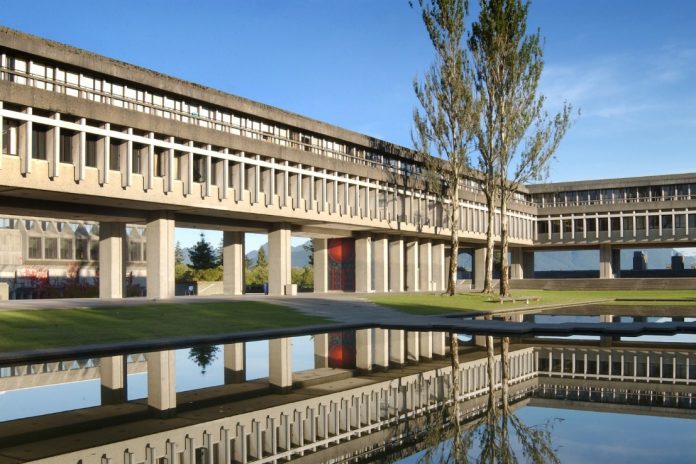
Photo courtesy of SFU

By: Gurpreet Kambo, News Editor

In-person instruction and exams cancelled

SFU sent out an email yesterday stating that as of March 17, 2020, they will be discontinuing all in-person instruction, including exams. The email stated that students should check their SFU Mail accounts and class Canvas pages for specific instructions on how their classes are proceeding. This follows similar announcements from other local institutions, including BCIT, Capilano University, and Langara College. 

A letter from Andrew Petter entitled “COVID-19: A Test of our Mettle and Humanity,” indicates that professors and teaching assistants will have until March 19 to plan and implement the shift. Petter also explained that BC’s Public Health Officer has said there is no need for post-secondary institutions to close. 

The email added that, though some students may be considering leaving the Lower Mainland, or Canada, that SFU is committed to supporting those students who remain.

“Though the COVID-19 pandemic knows no boundaries, neither does our shared humanity. We are all in this together. And, if we pull together, we can come through this a better and more compassionate community, province and country,” stated Petter.

SFU libraries to close

According to SFU’s COVID-19 FAQ, as of 5 p.m. on March 17, SFU’s Fraser and Belzberg libraries will close until further notice. The W.A.C. Bennett library will remain open from 9 a.m. to 5 p.m. until Friday March 20, and then will close until further notice. 

All library workshops, events, and seminars have been suspended. All holds, recalls, and late fees are also suspended, with no fees being charged after March 13.

According to the notice from SFU Library, all services that can be transitioned to online delivery will do so, including research help via email, chat and videoconferencing.

SFU Recreation facilities suspended

All sports and recreational activities at SFU will be suspended as of March 17 at 5 p.m., until further notice. The Lorne Davies Complex will also be closed. Refunds for paid memberships and programs will be considered at a later date. 

Parking on Burnaby Campus to be made free of charge

All parking on SFU Burnaby campus will be free of charge for the time being, so as to accommodate community members who wish to avoid public transit. Parking permit holders will be refunded their fees from March 15 to the end of the semester. 

Campus shuttle suspended

SFU Burnaby’s campus shuttle will be suspended until further notice.

Food services

SFU’s Dining Hall remains open, with a seating capacity of 50. Takeout is now being offered at the Dining Hall. 

Starbucks Cornerstone, Tim Hortons, and Renaissance café in the AQ remain open with adjusted hours. All other food providers are closed, or will be closing shortly, including Mackenzie Café and The Study.

SFU Bookstore, Spirit Shop, and Document Solutions to close 

The Bookstore and Spirit Shop on all campuses will close until April 20, though online book sales will continue. 

Document Solutions will suspend in-person service, but services will continue via phone and email.


 

DEAR PEAKIE: Parting is such sweet sorrow

0
Chris Ho

Written by Zach Siddiqui, Humour Editor

Dear Peakie,

You’ve basically raised me this semester. I’ve done everything you’ve prescribed in your column! I left the Red Backpack Cult because of you. All my eyelashes fell out after I started my diet of printed assignment sheets only. I filed for bankruptcy on Thursday! And none of this would have been possible without you  . . . so what will I do when Spring 2020 ends and I don’t have your advice anymore?

I am scared of what the future holds for me in the coming weeks without this column. In the absence of your moral guidance, I have already stolen three puddings from Mackenzie Café. They were freaking disgusting, too. I couldn’t even keep them inside my belly, and soon puked them up all over a wall of SFSS campaign posters. 

See what you’ve done to me? I’m literally dumber than a red backpack and I can’t live without you, Peakie. 

From, A Lost One


Dear A Lost One,

That’s so cute. I’m sorry to hear that you can’t live without me. I know it must be hard to be a figment of my imagination, dependent on my whimsical mind and submitted to my editor to help me convince The Peak that I deserve funding. But I promise that you are a better person than I, and you will be OK. Trust yourself and your abilities. You’re going to kill it this summer, especially after you reincorporate protein into your diet and your eyelashes come back. 

I’ve prepared you and yours for the long haul, and now I need a vacation. Might mess around a bit and build a summer home in Prince George, IDK. It’s called “Prince” George so it must be bougie enough, underneath the ice and the despair of teens who already know they’re doomed to raise families in the shadow of Big Pulp Mill. 

Anyways. I believe in you, SFU. Give yourself the advice you want to see in the world; drink wine through used Nike socks without being told. I’ll be back, you’ll see. Until then, remember me and my reign of agenda-setting through media fondly. Don’t cry because it’s happened; smile because it’s over. 

Love, Peakie

CONFESSIONALS: I went vegan to save myself from family dinners

0
Illustration of a closed envelope, with the text, “Confessionals”
ILLUSTRATION: Marissa Ouyang /The Peak

Written by Kim Regala, Staff Writer

Forgive me, for I have sinned. For years, I have been burdened by the torturous small talk and dad jokes that occur at every family dinner. But tonight, I have chosen to end the madness. Tonight, I choose my sanity — by switching to all-green, all-ethical, all-eco-friendly ethical choices only.

Only two hours have passed since I saved myself from Aunt Judy’s birthday dinner by transforming into a vegan.

There I was, sitting patiently on the leather couch of the living room, tantalized by the smell of ground beef taco casserole. Grilled pork chops and crispy fried chicken were set onto the centre table as everyone’s mouths salivated.

My mom was up to her normal tactics, reminding everyone of her wrath if she was to catch anyone not using a coaster. My dad? Onto his next recitation of yet another famous joke — what’s new? Aunt Darlene was pretty tame this time. She went from three weight-gain comments per minute to a shocking two. 

But Uncle Jerry was definitely on a roll tonight, trapping me in what felt like a century-long time loop, like the Hundred Years’ War of Mansplained Politics. It began with him talking about recent developments in Canada’s economy, and it ended with golf, again and again. As for how he managed to shift so fluidly, dexterously, and obnoxiously between those two topics? That, I will never know. 

After a lifetime of dealing with cases like these, I’d gotten pretty used to shutting it all out. But tonight, something inside me changed.

Blame the excessive amount of spring rolls shoved into my mouth by Grandma Lucille. Or maybe just the overcompensating laughter of my cousin Genevieve, flooding the whole room in her high-pitched cackle.

But there I was, suddenly propping myself up on top of the dinner table with a ladle in hand. In a split second, I announced the words: 

“I AM VEGAN.”

Silence filled the room in a way that has never been achieved at any family dinner.

Realizing what I had just done, I ran out of there as quickly as I could. I suddenly felt like a cheetah, moving so fast that my mom couldn’t even stop me in time to remind me to bring a jacket outside. A slender, slippery cheetah, like one of those house cats condemned to meatless diets by ill-informed owners looking to make points about environmentalism, or whatever.

I’m about to be well acquainted with “whatever,” I guess.

Now, I know what you’re thinking. What kind of monster would ever want to pass up on delicious and free home-cooked meals? But hear me out: veganizing was the only way to save myself from the emotional turmoil accumulated from the endless small talk with relatives that I barely see once a year. 

Trust me, if you were in my shoes, you would have done so a long time ago. As a matter of fact, I should have too. Because I sit inside this Church’s Chicken now with a heavy chest, no longer from the burden of my family, but rather from the barbecue sandwich I’m smelling, the sandwich that lurks just out of reach. The sandwich in the hands of a customer with far less family baggage than I. 

And as I inhale the sweet scent of scorched greasy meat, feeling the loving nurture I never got from the extended family I never added on Facebook, I dig for the courage to remind myself — everyone leaves home someday.

Board Shorts: March 4, 2020

0
Irene Lo / The Peak

Written by: Michelle Gomez, Assistant News Editor

Clarification on housing Rotunda groups in the SUB

The Board passed a motion clarifying the terms of their agreement to house Rotunda groups in the Student Union Building (SUB). 

The motion mandates Executive Director Sylvia Ceacero to enter into sublease agreements with the Rotunda groups. It also notes that the Rotunda groups’ subleases should align with the head-lease signed between the SFSS and SFU for the SUB. 

Furthermore, it adds that SOCA will be granted space as per Configuration 3 with a Memorandum of Understanding. 

The motion was carried unanimously. 

SFU’s Chief Information Officer discusses security breach

SFU’s Chief Information Officer Mark Roman discussed the recent security breach at the Board meeting. 

Roman explained to the Board that the breach occurred on Thursday morning, and was discovered by SFU on Friday. He noted that they were lucky that it was discovered “pretty quick.” After the breach was discovered, a large IT team spent the entire weekend working to understand what had happened, what data was taken, and what the next steps should be. 

“I don’t want to go into the details of what happened, but it was human error. A person made a mistake,” said Roman. He explained that due to a human error, an automated bot found a weakness in the network and was able to take some data. Roman noted that the passwords that were taken were encrypted, and that it is difficult to decrypt them, but not impossible. 

“The probability of risk is low, but we need to exercise an overabundance of caution and change our passwords,” he concluded. 

He added that the computer that the mistake was made on has been unplugged from the network, thus solving the problem. 

“I apologize and regret what has happened; it’s very unfortunate and we’re doing our best to fix it, and we’re being upfront and honest about what happened.”

March Mayhem 

The Board voted to approve up to $2,600 for their March Mayhem event. 

Environment Representative Julian Loutsik explained that it will be a 3-on-3 basketball tournament held in Convocation Mall. The event is open for all students to participate. 

Loutsik noted that this event is in partnership with the Student-Athlete Advisory Committee (SAAC), and aims “to showcase some of our athletes who play different sports, and showcase students who maybe didn’t make varsity teams but are still talented. It’s a chance for them to participate in an athletic event.”

Applied Sciences Representative Nick Chubb added that the event will include a barbecue. 

BC government approves need-based grant for post-secondary students starting September 2020

1
Photo courtesy of Government of BC

Written by: Paige Riding, News Writer

The Government of British Columbia has announced that their 2020–21 budget will include funding for needs-based grants to assist post-secondary students with funding their education. 

StudentAid BC describes the grants as “needs-based, up-front, and available to eligible students each year.” 

According to StudentAid BC’s website, the BC Access Grant will be offered starting September 2020. To be eligible to receive a grant, the applicant must be a low- or middle-income student studying at a BC public post-secondary school, and must be eligible to apply for and receive a student loan. Those receiving student loans will automatically be assessed for the grant program with no additional application process necessary. 

Shina Kaur, SFSS VP University Relations, spoke with The Peak about the grant. 

Kaur said that the grant is beneficial for “people not only with low income, but [ . . . ] marginalized community members that are trying to have access to education.

“I think it will [ . . . ] decrease the barriers that exist to accessing post-secondary education.”

Certain factors including family income and the length of one’s program influence the grant amounts. Family income and the maximum amount of a grant are reciprocal; as family income increases, the maximum loan amount decreases. Programs two years or less in length allot a maximum of $4,000 a year for students, while those in longer programs may receive a maximum of $1,000 a year. 

Kaur noted how the program was created as a result of  various BC student bodies lobbying together.

“Things like this really show the importance and the value that student societies can bring if we’re willing to speak out about the things that really do impact us,” she stated. 

“It’s about them knowing that we’re here, we’re present, and we’re not going to move until you give us what we want.”

Still, Kaur noted that there is still room for improvement. This program offers significantly less funding than the previous needs-based grant program which was eliminated in 2004. Furthermore, the average undergraduate tuition costs in British Columbia post-secondary has significantly increased from an average of $4,400 in 2006–07 to $6,463 in 201920.

“I think it’s a step in the right direction. I think it’s not as good as we can do, especially considering the fact that in 2004, the amount that the grant was for eighty million dollars, so literally twice as much as they approved now.”

The Centre for Educational Excellence holds workshop to valorize SFU’s multilingual community

0

By: Lubaba Mahmud, Staff Writer

The Centre for Educational Excellence hosted “Who Is SFU? A Conversation About Our Linguistic Diversity” on Friday, March 13. English as an Additional Language (EAL) Consultants Eilidh Singh and Amanda Wallace facilitated the workshop.

After a brief introduction and ice-breaker session, participants were asked to discuss the answers to questions like “What percentage of undergraduate students use EAL?” and “which faculty has the highest percentage of EAL graduate students?” in small groups. These questions were designed so that participants could get a better idea of SFU’s multilingual community. Some of the statistics shown include the following:

  • 30% of undergraduates speak English as an additional language
  • 15% of undergraduates speak no English at home
  • The Faculty of Applied Sciences (FAS) has the highest percentage of EAL graduate students (80%). This is closely followed by Faculty of Communication, Art and Technology with 52% EAL students, Faculty of Science with 44% EAL students, and Beedie School of Business with 32% EAL students
  • EAL students mostly attend evening classes in Burnaby campus

The workshop also outlined some myths about multilingual students. These included allegations that EAL students slow down the pace of classes, that their work took much longer to read and grade, or that faculties require special training to teach them. Moreover, the group discussions touched upon racial stereotypes and the prevalent hierarchy of languages, which gives the notion that English is a superior language.

Participants were then encouraged to think about the benefits that multilingual learners can bring. There was a wide consensus that these students often bring creative ideas and personal experiences that enrich class discussions.

Lastly, attendees were asked to write a message about how they will continue to appreciate the multilingual nature of SFU on some postcards. These will be mailed back to the students in attendance after six weeks, so that the postcards can serve as a reminder of how diversity is an asset to the SFU community.

How BC’s residents affect its coastal ecosystems

0

By: Harvin Bhathal, News Writer

A talk, entitled Navigating towards ecologically safe and socially just fisheries, was held at SFU Harbour Centre on Thursday March 12. It was the final lecture of the semester in the Dean’s lecture series from SFU’s Faculty of Environment.

“We’re doing to the ocean the same thing that we’re doing to the land that we massacred,” stated Daniel Pauly, UBC zoology professor. “Essentially, we are deforesting the ocean.” 

Pauly was one of the presenters, alongside Anne Salomon, one of Canada’s leading specialists in coastal marine ecology, and Kii’iljuus Barbara J. Wilson, an SFU MA alumnus, educator and elected representative for the Council of the Haida Nation. The focus of the talk was on the interconnectedness of social systems, governance systems, and ecosystems. 

According to her bio on the event page, Wilson’s research links traditional knowledge, land and ocean management, conservation, climate change and Indigenous governance. Pauly is focused in mitigating the impact fisheries have on marine ecosystems as his doctorate and habilitation are in Fisheries Biology.

In regards to coastal ecosystems, Salomon discussed the intertwined systems “where humans have been [ . . . ] overexploiting, learning, managing and steward[ing] some of these areas for thousands of years.” 

Salomon discussed the resilience of these social-ecological systems, and how they have the capacity to “adapt and transform the response to changing ocean conditions, societal values, international markets, and shifting governance practices.”

According to Salomon and Wilson, adapting to the life cycle of nature, strengthening Indigenous governance authority, and implementing adaptive co-management plans are solutions to protect BC’s Coast.

Salomon and Wilson also discussed the decline of kelp forests in the water along BC’s coast because of the growing population of sea urchins. Sea otters used to keep the sea urchin population in check as the latter was a food source, however large-scale commercial hunting took its toll on the sea otter population.The effects of climate change and ocean acidification also affected the sea urchins. Without the balance that the otters provided, the urchin’s population has risen and overeaten the kelp that acts as food and shelter for many organisms. 

“My people always knew how to [maintain balance] by [ . . . ] being very deliberate in the ways they manage the very spheres of Haida Gwaii,” said Wilson. 

The biggest challenge, according to Wilson, is that animals and humans both have a right to food.

“How do we do this respectfully [and] how do we eat [considering climate change] and the acidification of the ocean?” 

Pauly thought that a global perspective “can best be shown through the expansion of fisheries.”

The consequences of overfishing along BC’s coast can be seen in the decline in population of sea otters, clams and herring. 

Herring eggs are used for caviar but in North America, the rest of the fish is typically used as fertilizer, cat food or simply thrown away as opposed to a food source for humans. 

Pauly, who grew up in Europe, added, “This is bizarre [ . . . ] because herring is actually good food.”

Since the herring is a common food source for marine mammals and predatory fish, according to Pauly, “The best way to protect [animals] is to leave them some food.”

The talk was streamed online for anyone who could not see it in person, and is available via the Eventbrite. For more information, visit coastalvoices.net to watch the documentary, Coastal Voices: Navigating the Return of Sea Otters, on which Salomon and Wilson worked as a researcher and cultural advisor respectively. 


SFU history department shuts down because “who cares, what’s done is done”

0
Photo: Chris Ho / The Peak

Written by Marco Ovies, Arts Editor

On Friday, SFU’s incoming president Joy Johnson announced her plans to shut down SFU’s Department of History. The university hosted a Town Hall in Images Theatre for students to discuss the future of the school’s history programs.

“Who cares about history?” Johnson pointed out to the crowd, to raucous applause. “It already happened! It’s over! What’s done is done!”

Students were vocal in supporting Johnson’s announcement, joining in a chant of “Liberty Bell! Disappointing and dumb!” throughout the assembly. Some students even feel that the department staff will benefit from being ousted.

“These profs act all upset, but secretly they really want things shaken up. We can all tell,” says Hank Balarmey, a first year student in attendance. “Don’t believe it? Take literally any history class ever and see if they have any fresh conversational material. Those history people think they do — but they don’t. They’re literally studying the history of history now . . . pretty soon they’re going to run out of excuses to keep going. 

“They are starving for literally anything new to happen and nothing could be better than unemployment.”

Despite Balarmey’s assurances, however, faculty appeared truly off-put by Johnson’s announcements.

“SFU is acting like President Hoover during the Great Depression,” said Dr. Blank, history professor at SFU. “They just don’t give a dam.” Blank spent the Town Hall stabbing his Caesar salad to the rhythm of “Rasputin” by Boney M., before storming out in protest to one of his dingy 5000-level tutorial rooms in the AQ.

SFU’s Department of History is infamous for starting in 1965 as an SFSS club, meeting weekly to reminisce over the “good old days” in high school. Eventually, they ran out of grudges to loudly pretend to have gotten over, and quickly moved on to their elementary school days, their toddler years, and their babyhoods. Upon arriving at throwbacks to water breaking, the history department was born, in search of ever more things in the past to dwell on.

In fact, in a final tribute to the department’s roots, SFU encourages history majors and minors to see Academic Advising, where they can have “HIST 000: Peaking In High School” added to their transcripts as course credit to satisfy all remaining graduation requirements.

Your weekly SFU horoscopes: March 16–22

0
An illustration of a girl with long flowing hair. Astrological signs and stars shine around her.
ILLUSTRATION: Marissa Ouyang / The Peak

Written by Zach Siddiqui, Humour Editor

Aries — March 21–April 19

Oh, did you hear that on the grapevine? It’s an earwig, and she wants you. 

Taurus — April 20–May 20

This week, you run this town. That comes with responsibilities, like paying off your debts and doing odd jobs for the local wildlife. Just remember to turn off Animal Crossing when you’re done pretending to have agency and authority for the day. 

Gemini — May 21–June 20

Love triangles consume you this week. As always, you are caught between Mario and Luigi: in other words, fundamentally identical menu options, offering only the illusion of choosing something beyond your unhealthy romantic type. 

Cancer — June 21–July 22

This week, you will remember once more that you are an adult, not an ageless forest fairy. It’s a tragedy, really. You might keep growing older, but at the rate the world is going, the forest certainly won’t.

Leo — July 23–August 22

Set boundaries this week. For example, if your father makes you a weird gift, like wings of wax, and urges you to escape into the sunset with him, just say no and confine yourself to your basement. 

Virgo — August 23–September 22

Swallow the political economy of communication this week and swell to ever greater proportions. Maybe you’ll learn what the political economy of communication actually is. Or maybe you’re just a round pink baby.

Libra — September 23–October 22

Digitize yourself into a Nintendo avatar. Your ability to play games with people’s hearts will maximize. Mii music was in art, now Mii music’s in art, in you. 

Scorpio — October 23–November 21

Remember: it’s always darkest before the dawn. You may think you’ve hit rock bottom, what with having the ugliest clavicles I’ve ever seen. But don’t give up. Soon you’ll realize that you have amazing scleras, and that should be enough for you. 

Sagittarius — November 22–December 21

The gym is waiting for you. So are your Tamagotchis. The choice is yours to make. 

Capricorn — December 22–January 19

Prepare to climb your way out of the cold of winter. Enter the spring reborn and ready for a new adventure, and prepare yourself to get social in ways you never have before. Otherwise, these past few weeks have been meaningless. As they say, the real COVID-19 is the friends you’ve made along the way.

Aquarius — January 20–February 18

Take some time to remind your social circle that you are a blessing in disguise. Flay off your worthless outer skin to reveal a $1,000,000 organ spread. It’s better than charcuterie.

Pisces — February 19–March 20

Stay literate, boys. It’s all we have left in the era of Coachellagate.

SFSS election debate held in freezing outdoors to keep cold-hearted students refrigerated

0

Written by Zach Siddiqui, Humour Editor

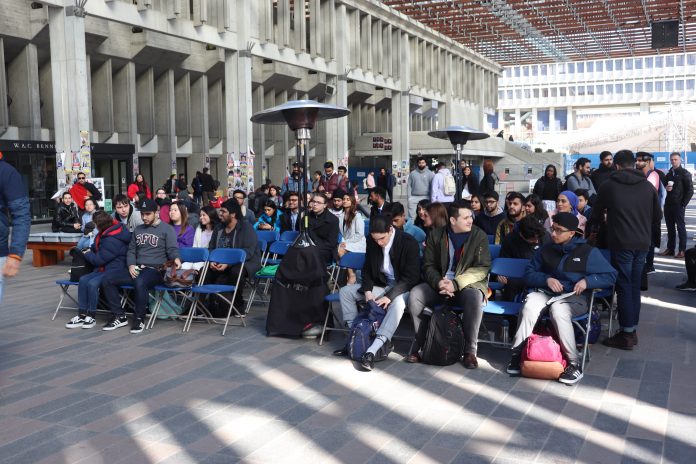
Tens of students gathered in Convocation Mall on Wednesday afternoon to shiver in the cold as candidates raced to capture our attention in the annual SFSS Board of Directors’ election debates. But while our bodies suffered, our hearts and souls thrived — all as per event parameters. According to the Independent Electoral Commissioner (IEC), the chief consideration in choosing the debate venue was whether candidates and attendees alike would be subjected to enough wind chill to refrigerate their cold hearts.

The average SFU student’s ideal temperature is about 5 C, says recent research cited by the IEC. Higher than that, and colour, joy, and life starts to return to their features and persona. This tends to end in overstimulation both for the warmed student and for students around them who witness the change.

SEE MORE: First-years deprived of icebreakers after climate change melts all remaining ice

The attempt to refrigerate students was about half-successful. While spectators did rude things like clump around the few heat sources in the area and eat all the baby potatoes provided by catering, they also expressed warmth at times. Many students clapped and cheered at multiple points in the debate — in spite of potential onsets of hypothermia.

“Maybe students are now freezing to death out in the cold while surrounded by enormous, empty, well-insulated buildings,” said an SFSS staff representative. “But the refrigerative effect is worth it. Trust me: so worth it.” 

The Peak could not confirm allegations from a few discontented students in the crowd that the 2019–20 SFSS Board of Directors were “still rotten after being left out too long during last year’s debate.”

The IEC chief, whose name nobody really knows despite the election period starting ages ago, told The Peak in an email interview that the outdoor debates were one of many changes they were bringing to the position. They cited the “refreshing” and “preservative” qualities of cold.

SEE MORE: “SFSS hires this year’s IEC chief, a loaf of banana chocolate chip bread

On Thursday, Peak humour editor Zach Siddiqui submitted a motion to The Peak Publications Society’s Board of Directors to provide all Peak senior editors with Snuggies as essential personnel equipment for surviving “inhumane joking conditions.”