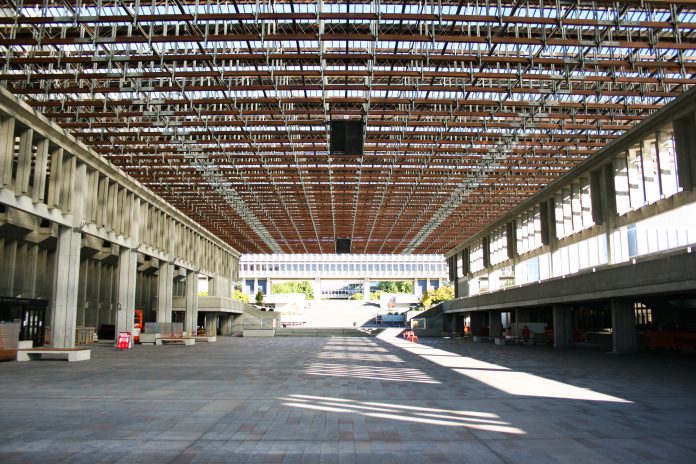
The Plaza Renewal Project is planned for completion during the Fall 2020 term. The project began in December 2018 in the Convocation Mall of SFU’s Burnaby campus and currently isn’t facing delays, according to project manager James Bremner.
The project was broken down into two phases. One phase focused on construction in the AQ, and the second phase on the Convocation mall and Transportation Centre.
“The project is necessary to replace the existing roofing membrane and outdoor paving, while improving drainage and accessibility with new ramps and upgraded stairways,” Bremner said.
“We’ve also taken this opportunity to beautify the plaza space with new landscaping, furnishings, and finishes to further emphasize the sense of importance that Convocation Mall and the AQ has to SFU, in a way that is also sensitive to the campus’ architectural heritage.”
Most of the plaza is already open to use for students. Bremner noted, “Only the area’s around Fountain Square and the Transportation Centre, where the work is still ongoing, is closed off to the public.”
Bremner concluded with a final statement saying that “the architects and contractors have done a wonderful job with the plaza, it provides a vibrant and beautiful space for the SFU community to enjoy.”
The SFU English department is hosting a launch and reading for new Writer-in-Residence Juliane Okot Bitek. The event will feature a reading from Okot Bitek who will be in conversation with Canisia Lubrin, an award-winning writer, critic, editor, and teacher. The event will also be moderated by SFU professor Dr. David Chariandy, also an award-winning author, as well as teacher of contemporary literature and creative writing. Participants can register by emailing [email protected].
Hosted by New Westminster Museum and Archives, registrar Allan Blair will be sharing his favourite of the 20,000 photos he has digitized over the past 23 years with participants of the event. The event will feature post-war photos taken by Croton Studio which once was the City of New Westminster’s official photographer. Participants can register by emailing [email protected].
Vancouver Fringe Festival | October 1 to 10 | Performance Works theatre on Granville Island | Tickets: $15 per event and one-time $7 membership fee
Vancouver Fringe Festival is a festival dedicated to reducing barriers and being open to everyone. This year’s festival is running on staggered dates. This second stage is running small, physically-distanced performances like One Man Pride and Prejudice. A one-time membership fee of $7 is required but will be valid for all events for the duration of the festival. Tickets need to be purchased separately from the membership fee.
SFU Galleries is hosting this online, interactive exhibit by artist, Amy Lam. The exhibit aims to explore public bathrooms as both a public and private space, and examine the exclusions that have occurred in these spaces. The bathroom featured in this exhibit is modeled off one located close to the SFU Gallery in Burnaby.
As summer leaves and the autumn chill weaves between our bones, you open your social media of choice and they’re there. It’s benign at first, but the descent into cinnamon apple-scented madness is inescapable.
That’s right: it’s Halloween Freak.
Don’t get me wrong: I love Halloween, but there’s something to be said about what’s embodied in this individual. And what’s to be said is that it’s annoying as hell and their content is the exact same every single year.
They have five definite stages. Here they are, so you can recognize and mute them on your feed accordingly.
STAGE 1: September First
“NO ONE:
ME: IT’S HALLOWEEN NEXT MONTH!!!”
Often accompanied by a Nightmare Before Christmas GIF, this is the first warning. While it’s not a guarantee, if there was a watchlist for this kind of person, this would be a qualifier.
STAGE 2: What’s Back To School?
“Most girls are worried about back to school season, but what about Halloween? It’s crazy it isn’t a national holiday. It should be. I’m already in the spirit!”
If you’re the kind of person who can slough off fall semester stressors like water off a duck’s back by thinking about Halloween, you could be at risk of becoming a Bone-Chilling Halloween Freak. There should be at least some kind of buffer period, if you ask me (not that anyone ever does). If you don’t leave space for back to school, you end up burning through all your horror movies and cozy sweaters while it’s still technically beach season. I don’t know whether that’s mild BC weather or climate change, but if you can’t wait for Mother Nature, you need to dial it back.
STAGE 3: The Buzzfeed Quizzes
“I got 50/50 on this ‘How Well Do You Know The Nightmare Before Christmas Test!’ Beat THAT! Also, this quiz told me I’m most like Winifred Sanderson! You all WISH you were me.”
It’s the same quizzes and answers every year. I personally don’t base my identity on a Hocus Pocus witch of choice. The Bone-Chilling Pumpkin-Sniffing Halloween Freak, however, totally does. They fill your feed with results from Internet quizzes.
. . . I’m not bitter about getting Mary Sanderson as my Hocus Pocus character two years ago, I swear.
STAGE 4: Group Costume Planning
“OMG guys, check out these 20 group costumes for you and your friends! Who wants to do this with me!”
No, buddy, I don’t want to be the kids from Stranger Things with you. Or the Losers from It. Or whatever else Finn Wolfhard is in. No disrespect to the guy, but I have a teenage sister, so he’s already inescapable. Also, is it just me, or do group costumes almost never come to fruition? There’s got to be a statistic. Like, one in six. Also, I’m not gonna be anything Disney, dammit. Not until they apologize for making people pay $30 for their live-action Mulan.
STAGE 5: The Skeleton War
“This Halloween, consider enlisting in the SKELETON WAR. I am serving proudly as a General under THE BONE LORD. Sharpen your weapons, ready your bone flutes, and forget what it means to be merciful. WE WILL TAKE NO PRISONERS!”
I’ve only seen someone hit Stage 5 once or twice, but it’s how you know they’re too far gone. They’ve become a vessel for all things spooky and scary, and it sends a shiver down my spine just to think about. I do wonder what a socially-distanced Skeleton War would look like, but also, these people scare me and I’d rather not think about it.
There are your warning signs. Thankfully, come November 1st, most Halloween Freaks revert back to their normal selves.
Some, however, will emerge in the new month howling out Michael Bublé and posting Rudolph GIFs. That’s the Christmas Freak, a whole other beast.
On September 8, Dr. Bonnie Henry introduced a new liquor sales rule that prohibits all bars, restaurants, and pubs from selling alcohol after 10 p.m. While I’m relieved to see that this has helped put an end to illicit outdoor gatherings like the Granville Street party or the Third Beach drum circle, I’m not impressed with the clear lack of consideration in how this new liquor sales rule is affecting small, local businesses, which are already struggling to stay afloat.
Whether you’re in the downtown core or elsewhere in Metro Vancouver, you’ll find that many establishments are open past 10 p.m., especially on Fridays and weekends. For bars and pubs, who cater to a late night, alcohol-enthusiastic crowd, the province’s latest public health order is like twisting a knife into a wound that’s already bleeding. These places can continue to sell food, but not all bars are equipped with a kitchen. Also, who goes to a bar or a pub solely for the food?
Essentially, this new liquor sales rule is pushing more bars and pubs into permanent closure, one example being The Metropole Community Pub in Gastown, which announced it was shutting down the day after Dr. Bonnie Henry’s briefing of the updated restrictions. Prior to The Metropole’s closure, they had been operating at half capacity in accordance to COVID-19 safety measures; and before that (when operations were limited to takeout only) they were selling off their liquor supply and offering $2 hot dogs in a fight to stay alive. According to a Global News article, The Metropole’s lease was more than $30,000 per month.
Restaurants are also suffering from the changes to the liquor-selling policy, for although they can continue to sell food past 10 p.m., there’s a lot of profit being lost with alcohol sales forcibly decreasing. Not to mention, profit margins are already tight. Like bars and pubs, restaurants can only serve at half capacity at the moment; and once you account the costs of product, rent, insurance, employees’ salaries, and whatever the business had to pay for COVID-19 safety accessories like plexiglass screens, masks, and hand sanitizer bottles, it’s a miracle if a restaurant is able to break even at this point. In another Global News article, the CEO of the BC Restaurant and Foodservices Association, Ian Tostenson, reports that “for the most part, restaurants will be able to adapt to the changes — as long as they’re temporary. But [ . . . ] if they drag on, they could be fatal to many independent businesses.”
Government officials in the province, including Dr. Henry, have encouraged people to support the local economy during this pandemic, so in my view the new liquor sales rule they’ve imposed is hypocritical and standing by this decision is unacceptable. The restaurant and bar industries are drivers in the “support local” movement. In BC, restaurants employ more than 180,000 people and in these establishments, the farm to table concept is widely used. Furthermore, small businesses are what add character to a neighbourhood (there’s a reason why Commercial Drive is known as Little Italy, Main Street attracts hipsters, and so forth). My point being, losing more local bars, restaurants, and pubs — which is what the 10 p.m. alcohol-selling cutoff is doing — will not only take a toll on the economy, it will affect the job and financial stability of many British Columbians, result in significantly less business for industries connected to hospitality — such as fishing and agriculture — and alter community outlooks. Talk about living up to our “no fun city” reputation there.
Also, if the thought behind the new liquor sales rule was that it would discourage young people from partying in a non-safe manner during the COVID-19 pandemic, then the health ministry has one too many naive persons working for them. Since September 8th, I’ve seen an increase in news coverage across the province on indoor parties being busted by local police. Large gatherings have simply moved from being held in public spaces to taking place inside private residences, which is even more dangerous. What is plainly obvious from these instances is that businesses are not the majority at fault for a lack of social distancing and potential “super spread” of COVID-19, yet they’re the ones being punished for it.
In response to the change in liquor selling regulations, the Business Technical Advisory Panel on Liquor Policy has sent a letter to Dr. Bonnie Henry, Premier John Horgan, and others asking for a revision to the latest rule around alcohol sales. They want bars, restaurants, and pubs to be allowed to sell booze until midnight as opposed to 10 p.m. I believe this is a fair request and that the government should take it under serious consideration, instead of countering with a standard bureaucratic statement that the current measures in place are for the greater good of everyone; because, evidently, they are not.
A bootleg textbook PDF missing half the pages because you were too cheap to buy the actual book
A Quizlet or flashcards pile with two entries that you gave up on
The SFU hoodie you bought out of obligation looking sadly on as you unlock your phone to Google an answer again
Four water bottles on your desk filled halfway with lukewarm water, half with the expelled air of your melancholic sighs
2. Safety needs
A Google Doc full of links you were too lazy to organize to articles that you swear had something to do with your research paper but you will probably never read through
A pitiful Note in your phone titled “To do:” followed by tasks you most certainly did not do and a link to a YouTube video you wanted to watch later about bathroom hacks
A Canvas tab constantly open to refresh for the assignments you swear you have but aren’t listed
3. Belongingness and love needs
95 unopened emotional support PSYC 241 spam emails
A message request on Instagram from a sex spam bot
A class group chat with two people who actually answer questions and 58 leechers (including you)
Your two friends from high school who never message you first
4. Esteem needs
The only 100% you’ve gotten this semester being the pass/fail discussion post where you talked about that one other class you paid attention in
Not dropping out yet, baby
5. Self-actualization
Discovering and accepting that it really do be like that sometimes
Who knew Zoom comedy could work so well? Courtesy of the Sunday Service.
By: Emma Jean, Staff Writer
Improvisers make their whole craft out of knowing how to adapt to brand new situations on the spot. What happens when a pandemic forces them to do it in real life? If you’re the long-running Vancouver improv group The Sunday Service, whose weekly shows have run for years at the Fox Cabaret, you, well, improvise.
According to founding member Ryan Beil during an online show, “Normally, in a perfect world, we would be performing live at the Fox Cabaret every Sunday night here in Vancouver BC, but we had to move our shenanigans online.” Those shenanigans can now be found on their YouTube channel, where viewers can watch live-streamed episodes every Sunday night at 9 p.m., as well as archived episodes from the past seven months of quarantine. If you’re someone like me who is looking for some joy in their life, then these shows are a must-watch, with some episodes reaching nearly 10,000 views.
Though occurring over Zoom, the format of the shows has remained the same; the group, consisting of Ryan Beil, Mark Chavez, Caitlin Howden, Kevin Lee, Aaron Read, and Taz VanRassel stick to their format of working from audience suggestions — this time using the YouTube live chat function to create side-splitting scenes on the spot from their individual apartments. In a twist of convention, they are forgoing the door fee by live-streaming each show on their YouTube channel, and are instead asking viewers of the show to buy a ticket if they feel so inclined to support their performers.
The weekly shows have been a consistent bright spot for me throughout the dreary monotony of quarantine, as each week the team members and obvious pals turn the live audience chat’s suggestions into hilarious riffs and vignettes during the many short-form games each week. Segments range from classics like “freeze” (where performers freeze in the middle of a scene and switch out performers) to very niche set-ups like “Taz Berates a Plant.” They also bring outrageous premises to new heights in the long-form stories developed over the second half of the hour-long show, as well as plenty of razzing between scenes. It’s a genuine delight to watch, as the performers seem to be having a blast doing it. It’s no wonder guests from across North America like comedian Paul F. Tompkins, who did an eight-week run with the Service during the early months of quarantine, as well as locals improvisers Vivian Tang and Maddy Kelly, have made guest appearances to join in on the fun.
The online nature often adds to the program; rather than fighting against the rare but inevitable technological hiccup that comes with online performing, they often embrace a freezed camera or flash of someone’s video, bringing an already funny scene to an absurd new level of silliness. During a mock couple’s argument in a recent show, an accidental flash of an off-screen performer’s video, as well as a frantic effort to get off screen, turns the tables as a partner interjects, “And who was that guy?” In this case, the guy comes back and reveals himself as their father-in-law, and also a time-travelling Alexander Graham Bell — somehow, it hilariously works.
Their online reach hasn’t just been used to pull in great guests, however. For the latter part of quarantine, the Service has partly pivoted their shows into fundraisers that have allowed both support for their performers and charities that need it. A portion of their funds is being used to help support non-profit organizations that are committed to supporting Black and Indigenous creators in the arts. These have included the Indian & Cowboy Podcast Network, an all-Indigenous audio platform, and the Black People in Improv Comedy Safety fund, which is creating a financial safety net for Black improvisers.
If you’re like me and the passage of time has lost all meaning to you, having a constant to look forward to each week can be calming . The Sunday Service has been that for me. If comedy fans, or fans of feeling joy in general, want to support local performers, causes, and watch something genuinely hilarious, the Sunday night shows put on by the Service are a great place to start.
This film will have you questioning your perception of reality. Courtesy of Netflix
By: Aritro Mukhopadhyay, SFU Student
I’m Thinking of Ending Things is a film made for people who love being perplexed by cinema and appreciate cinematography that emotionally moves them. Viewers who prefer fast-paced films might want to skip this one. This psychological thriller often feels like slow cinema, mainly because the change in location happens gradually. Written and directed by Charlie Kaufman, known for films such as Being John Malkovich and Eternal Sunshine of the Spotless Mind, the film is based on a book of the same name by Canadian author Iain Reid.
The film begins with shots of an empty old house set to a narrator’s inner monologue while she is “thinking of ending things.” The narrator, later revealed to be Lucy, repeats this thought as something that lingers and ruminates like a broken record. The film then follows Lucy and her new boyfriend, Jake, on their journey to meet Jake’s parents for the first time. The beginning seems innocent enough and the viewer has no idea how surreal and bizarre the film is about to become — and that’s part of the fun.
The first time I watched it was with two of my friends and we were all utterly disgruntled by the film’s convoluted plot and slow pace. It is difficult to figure out what is real and what is Jake’s imagination. Needless to say I will never be allowed to choose another film ever again on movie night.
But does that mean that the film is bad?
For some, this film might be pretentious garbage; but for a keen eye this is a cinema porn. This is a classic Kaufman film that makes you feel uneasy, sad, puzzled, and dazed all at once. A melancholic yet ominous background score, a blizzard, a dead pig, and the overall bluish hue of the film are all cleverly used as symbols of Jake’s dishevelled psychological state.
As the couple make their way through a blizzard toward the farm, inconsistencies about Lucy’s background start to surface. After saying she has no interest in poetry, the film shows her reciting a heart-wrenching rendition of a poem called “Bonedog” by Eva H.D. that she claims to have written herself — I know, talk about academic dishonesty right? She also claims to be a scholar in physics, art, and gerontology (the study of aging) all at the same time. Her name might not even be Lucy for all we know. The film makes it feel like Lucy is being pulled apart in different directions by her ambitions.
Jake, too, seems to be an unreliable narrator. Jake’s parents age back and forth throughout the visit, making it feel like we are watching Jake’s memories after somebody has shuffled them randomly in a sack and presented them to us like a box of chocolates — we never know which one we’re going to get.
I’m Thinking of Ending Things deals with themes of loneliness, isolation, and aging — something many of us have been made aware of in these past few months due to the pandemic. Although the film is categorized under horror and psychological thriller, it really isn’t a jump scare movie. This film has the ability to make its viewers shift in their seats, not through a scary monster but through facing real human emotions that we often try to suppress.
“I’m thinking of ending things” is uttered multiple times by Lucy early on in the film, like a thought that gets stuck and refuses to budge. She repeats “I’m thinking of ending things”as if it were a refrain in a poem. In a virtual talk with Charlie Kaufman through Vancouver International Film Festival (VIFF) Talks, Kaufman mentions his obsessive nature with getting stuck to a single idea or thought and how it affects and is even reflected in the films he creates.
I was amazed by how picturesque the film was as well as annoyed in places where the film didn’t give me the answers I wanted. It is a complex piece of cinema that is woven with multiple stories and narratives in mind.
Departmental Affiliation: Assistant Professor, department of Psychology
Hometown: Auckland, New Zealand
During SFU’s transition to remote learning in the Spring 2020 semester, Dr. Yuthika Girme began recording episodes for her podcast “Merlot with my Beau.” During the episodes, Girme and her husband Steve relax with wine and discuss topics in psychology. Girme also invites guest lecturers, such as her former PhD research supervisor. Her podcast is available on Acast and Spotify. I had the chance to talk with Girme about her podcast, audio learning, and how her podcast has shaped her experience as an educator.
Merlot with my Beau can be found on Spotify and Acast.
Interactive Learning
Girme reflected on her goals when planning her podcast episodes and Steve’s contribution to the episodes.
“With the podcast episodes, I was trying to essentially emulate a casual and conversational way of going through the lecture material. Now unfortunately, I couldn’t do that with my students but what I did have to utilize was, of course, my husband Steve.”
Girme appreciates Steve’s contribution because “he would ask the questions that [she] think[s] a lay person or a person that’s not familiar with academic research may ask [her] . . . and ask[s] the questions that students might be thinking as they listen to the podcast episode.”
“The key goals that I had in creating these podcasts were to continue creating an engaging learning environment for my students.”
Behind-the-Scenes Action
When asked about the podcast’s production process, she admitted, “I very rarely listen to podcasts myself, and this is the first podcast that I’ve ever tried to create.”
The hours she invests into the production process reflects the quality of her podcast.
“There is a little bit of post-production that students don’t see. There’s a lot of editing involved in the podcast, so typically my episodes might be an hour to an hour and a half, depending on whether I have a guest speaker on the show, and that is probably about two to two and a half hours of actual recording material and probably another two to three hours spent editing.”
Bidirectional Learning
Through recording her episodes, Girme realized that flexibility is “an important part of the puzzle as teachers to keep in mind when we’re creating our courses.
“Teaching can be a really varied experience for students. Having a podcast and trying to teach the podcast episodes has actually expanded my assumptions about what teaching looks like and what is most helpful for students.
“Not all students learn the same way. Some students find it really difficult to sit in a theatre and listen to someone speak continuously for three hours, so I think having teaching materials like this, something like a podcast, offers students flexibility to students.”
Photo Opportunity with Plato
A special guest that Girme would like to invite to her show is Plato.
“In one of my podcasts, I actually start the podcast talking about basically a little snippet from his philosophy. It’s about close relationships, not just romantic relationships, but about friendships and family relationships too.”
She envisions that Plato and her would have “philosophical arguments about the importance of relationships, what those relationships actually look like, and how they manifest in our day to day life. ”
Encouragement for Fellow Teachers
Since the transition to remote learning, professors are looking for interactive and flexible teaching methods for their lectures. I asked what Girme would say to professors who are considering starting their own podcast.
“It might be fun to break some of that speech up by inviting people to do part of that lecturing process with them. I realize that I’m lucky that I have a husband who was willing to do the podcast episodes with me . . . [G]uest lecturers [are] a great way to kind of break up that kind of one-way speech and invite someone else on there to have a conversation, which is something that I think students really appreciate because it makes it a lot easier I think to listen to the material and to absorb the material.”
Flexibility is Key
Girme acknowledges that not all programs may be suited for audio recordings as “trying to teach people mathematics or physics through audio is not going to be a very effective teaching tool, because I think those kinds of things really require some sort of visual representations of formulas and graphs and things like that. But I think that there are many programs at SFU that could really benefit from this type of teaching.”
On potentially recording a third season, she said, “It might be fun to have professors come on and talk about up and coming research that they’re doing in their labs.”
The topics she would discuss may range from “different types of experimental methods that people use, different kinds of research topics, and also how people apply a new theory or a new type of research method to new and novel research methods.
“It would be sort of an insight into more ground breaking research that’s just about to emerge.”
Student Feedback
Girme is grateful for her Spring 2020 students’ positive feedback and is looking forward to this semester’s upcoming feedback.
“I think students just appreciated the effort, especially because I was teaching and getting that feedback in a context in which the pandemic had just hit, so students were just really glad to see something different and appreciated the effort that went into creating the podcast episodes.
“One of my students said that they really enjoyed the podcast, especially my husband Steve who laughs like Seth Rogen. After reading that comment, and now every time Steve laughs, I just think of Seth Rogen.”
The Killers returned in August 2020 with another alternative rock/pop rock album, Imploding the Mirage. However, don’t let their name or genre confuse you, The Killers can present a very whimsical and dreamy sound.
Songs like, “When Dreams Run Dry,” will make listeners want to pack their bags and go on an adventure they’ll never forget. The lyrics encourage people to think of the time they have left, and to use that time to go on adventures instead of living in sorrow because of the hardships life brings. It is the perfect song to motivate listeners to just do and not think.
The album presents triumph, love, sadness, and everything in-between. “Lighting Fields”, featuring k.d. lang, demonstrates this well: sadness and love can be heard through the chorus with lyrics like, “I just wanted to run my fastest and stand beside you in a lightning field of love.” In spite of these emotions, the song also contains a triumph that can be heard through the music, which is very upbeat, fast and powerful.
The Killers are one of the few rare bands that can create an album of 10 songs that articulate a wide variety of emotions and sound that can be played in any situation. To all the dreamers who need motivation, this is the album for you.
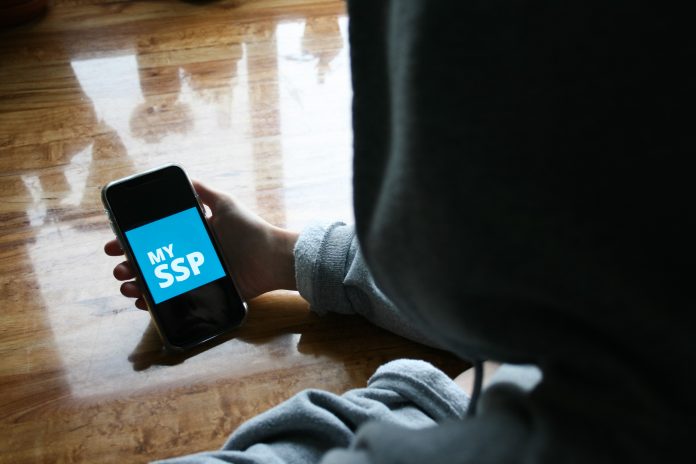
If you’ve ever stepped foot on an SFU campus, chances are you’ve seen the countless posters by Health & Counselling promoting the mental health and well-being app, MySSP. The app is basically a virtual counselling service for SFU students, meant to provide free 24/7 service to those needing to reach out for support or talk to someone. While the concept is, in-theory, both convenient and useful for immediate situations, the app has its downfalls and is in no way an adequate replacement for increased (and improved) counselling and mental health services funded by the university.
For those unfamiliar with the app, the service is offered by the company, Morneau Shepell — a human resources service, primarily intended for workplaces and apparently struggling post-secondary students as well. As advertised, MySSP offers on-going support by appointment and referral to on-campus services, alongside their immediate consultation through the app. Since I’ve personally struggled a bit with my mental health and have turned to the app in times of need, there are a couple of major problems I’ve encountered that concern me about both the app itself and where SFU is choosing to allocate its funding for mental health services.
The first couple of times I’ve turned to MySSP I used the standard messaging service, where (depending on your level of risk) you get connected to a counsellor. Immediately, I found myself waiting quite a bit for this process, which in a vulnerable situation is not ideal. While I can’t speak for anyone else, I found myself anticipating when the counsellor would get back to me after almost every other message. On top of that, the responses I was receiving felt impersonal and as if my situation was being shoved into a general template of “support.” Needless to say, I didn’t find that I was being given any of the proper resources or help.
The one time I did reach out to MySSP in a time of crisis, I was once again left waiting. To be fair, I do understand that there can be a heavy load of users on the app at once with a potentially lower ratio of counsellors, but a mental health crisis should be enough grounds to receive more immediate support. Furthermore, I was merely connected to a counsellor for ongoing support and was booked a phone session instead of being thoroughly supported and talked to. Additionally, the session they booked me was scheduled in the next month — no resources were given or advice for some tools I could use until that session.
At least, in this situation I was given a referral to some support, but I shouldn’t have to be in a crisis situation to receive it. If SFU is going to provide students with mental health services and if the cost of this is included in tuition fees, it only makes sense that these services are able to provide the proper support (e.g, reliability, resources, and adequate referral according to specific needs).
To be honest, the phone session I got through Morneau Shepell was nothing less than a disappointment. The counsellor bombarded me with overly personal questions all within the first half-hour, was condescending, and pushed medical decisions onto me before even getting to know me or the extent of my situation. If anything, I got the impression that I was being rushed into dealing with my mental health issues, so that I could “get back on my feet.” Considering the company is an HR service for several workplaces, this seemed like the standard capitalistic ideal for re-grouping workers to make them profitable again.
While the app itself has its issues, this wouldn’t be as big of a concern if MySSP wasn’t one of the major mental health services offered by SFU. Speaking from my experience alone, increased funding towards improving the already existing counselling services both on-campus and now virtually is much more beneficial than an app that is run by an HR company. MySSP does not have the capability to provide long-term support, even with the ongoing sessions they offer, and its virtual limitations of messaging cannot replace in-person or video chat counselling.
For the students who do not have the proper extended health plan or money to be able to afford to see a therapist, SFU’s mental health services may be their initial and only resort for help. In a stressful environment like a university, particularly during these confusing times, MySSP is simply not enough.