Home Blog Page 403

Tales of pandemic defiance

0
Illustration courtesy of Tiffany Chan.

Please get out of my personal bubble, I just want a coffee

By: Espresso Myself

With COVID-19 restrictions starting to lift, I was happy to be able to return to my favourite local coffee shop. While I wasn’t quite comfortable enough to take a seat and enjoy my drink in the cafe, I figured it would be very safe to just grab my coffee and run. They had those stickers on the floor to show you how far away six feet was, the plexiglass in front of the barista, and numerous signs encouraging people to wear masks. 

So tell me why when I went into line, properly distanced from the person in front of me, that the person behind me thought being six feet apart meant breathing down my neck. This was uncomfortably close, even if we weren’t in the middle of a pandemic. And before you even ask me, of course they didn’t have a mask on. 

I don’t think I ever left the cafe faster in my life. On my way out with my drink I took one last look behind me and watched this person move the plexiglass curtain out of the way so they could talk to the barista. Not only is that incredibly unsafe for both this person and the barista, but it is just disrespectful. We need to do better. 

There are no essential social gatherings during a pandemic 

By: A Frustrated Frog 

At the beginning of the pandemic, those around me were happy to cooperate when the province went into lockdown. However, COVID-19 recommendations rapidly became “simply a guideline” once we entered Phase 2. The whining about needing to see friends and family was always backed with a jeer of “we’re not as bad as the United States!” While reminding those around me that we should be limiting unnecessary interactions, I was labelled as paranoid — which I consider an alarming disregard for the health of those around us. I miss my friends and family too, but this seems like a trivial issue considering others are struggling with job insecurity and financial stability. I’m not saying you should never leave your house, but in the middle of a pandemic, would it really be so bad to simply get take-out instead of sitting in a restaurant where everyone’s masks are disgracefully tucked under their chin? 

Older adults flouting COVID-19 guidelines

Byline: anonymous

To older adults who think they’re above pandemic guidelines, I have a simple request. Can you please stop hanging out in public places in large groups? I’m trying my best to limit my social group and to go out as little as possible, you know, as everyone should in a pandemic. That means I can’t see my friends as often, and I can’t do recreational activities unless they’re through Zoom or another online platform, even though they are starting up again. I do all this to help keep COVID-19 numbers down and to protect you. But when I see some of you going to the park to hang out in huge groups, having picnics and BBQs, celebrating each other’s birthdays, hearing from my parents about your road trips, I am starting to rethink the purpose and effects of my actions. Your demographic can spread COVID-19 well enough without me. What good are my safety precautions if you keep insisting on expanding your social circles? So please, can you not?

Get out, and stay out!

By: Stace Afe 

Everytime I see an article about Dr. Bonnie Henry’s recommendations, it’s overwhelmingly clear that the risk of spreading or catching COVID-19 is higher indoors than outdoors. So when, on a perfectly sunny day, my roommate decides to have a friend over and hang out with them inside, it takes all my effort not to hit her on the head Looney Tunes style — I’m not actually advocating this as a solution to anything, but the frustration is real.

Doubly infuriating is when she expresses to me how anxious she is of catching COVID-19. I’ve had chats with her about this and she says she understands and wants to take the proper precautions since she lives with other people (myself and another roommate). She’ll generally do this while I’m around, but if I spend a couple days at my partner’s place and come back home unexpectedly, there’s a high chance I’ll find someone inside the house. Again, on a perfectly hot day when we have a patio with an umbrella for shading. 

I’ve taken to just spending more and more time at my partner’s place. But it’s not that hard to take a blanket with you and sit outside. There are parks if you don’t have a backyard. 

Family flout

By: Shirley U. Care

For those of you with family members who are being reasonable with the recommendations and guidelines outlined by the CDC and other health ministers, I envy you. I would say I envy the sane family you have but even with the safety precautions, there’s no such thing as a family that is sane. They all have their own quirks. But my family’s cute, little quirk is to endanger not only their own lives, but the lives of others through negligence, ignorance, and being stubborn. The irony in this situation is that my culture is generally one that has been known to force feed its children into careers in science. Yet my family can’t put aside their conspiracy theories for one second to see the science behind COVID-19. I guess that’s what I get for having a family that supports my passion for writing — should’ve been a doctor.
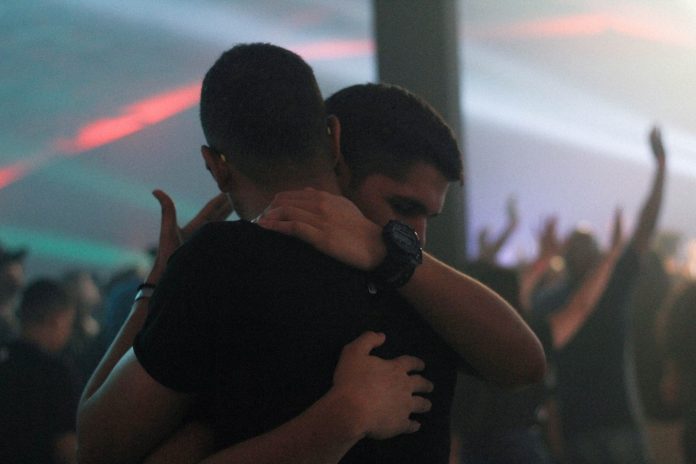
“Kissing the homies” and bromances: why we should rethink praising the normalization of male intimacy by straight men

0
PHOTO: Thiago Barletta / Unsplash

by Juztin Bello, Copy Editor

As a gay man I’ve always been fascinated by bromances — even just considering how bromance is a combination of “bro” and “romance” triggers something in me. 

Bromances have shown prevalence in various media forms, including television, celebrity culture, sports, social media, studies on masculinity, and so on. In all cases where bromances are emphasized, a recurring narrative sees the celebration of men finally dismantling the negative perceptions around male affection that once saw men ashamed to be physically/emotionally close to one another. 

In accordance with this, reports on how masculinity has been redefined emphasize how men are now expressing their emotions to one another and becoming comfortable touching one another. And what’s interesting to consider is who is at the forefront of these discussions: men, yes, but specifically, heterosexual men

On one hand, the opposition of conventional perceptions of masculinity and the deconstruction of toxic masculinity is a step in the right direction for re-evaluating masculinity. However, what is often left out of the dialogue that paints the relationship between bromances and male affection as progressive is the continual criminalization, manipulation, and scrutiny of homosexuality. 

At a time where gay men are continually discriminated against, conversion therapy is still legal in much of the world, and homosexuality is criminalized, media culture places a spotlight on straight men who play into the bromance narrative and content creators who use male intimacy and gay culture as a source of entertainment. 

Trends, such as the “Is kissing the homies gay” videos that circulate TikTok, use the narrative around male intimacy for comedic purposes, and public personalities who queerbait (use querness as a marketing ploy) or make “dismantling toxic masculinity”-like posts merely trivialize the real conversations surrounding queerness, while revealing the privilege straight men have in choosing to use male affection for personal gain — personal gain being defined here as publicity, income, etc. Additional examples include straight people coming out as a joke and appearing on gay-centric dating apps. And yet gay men are still not guaranteed the same amount of positive attention, freedom, and praise that straight men receive despite forefronting much of the scrutiny towards feminine men and men being affectionate with one another. 

Now I know what you might be thinking: isn’t men showing intimacy with other men a step in the right direction? Shouldn’t we be normalizing men being comfortable with one another/themselves in intimate ways? To these questions I say a tentative yes. Of course in some aspects, we can appreciate that (straight) men are displaying a closeness to one another that has often been discouraged due to ever-apparent toxic masculinity; toxic masculinity defined as an adherence to men being emotionless, violent, and non-feminine. 

The fact that men are becoming comfortable enough to be affectionate with one another is definitely something — it’s just not exactly something that is treated the same as the public display of gayness. So yes, there are aspects of men being affectionate that does combat stereotypes of toxic masculinity and work towards normalizing male bonding and femininity, but in order to celebrate these things we must first begin treating gay men who seek male affection in a way that is not disrespectful or minimizing. This dialogue on male intimacy must include all males, not just the ones who are convenient for the conversation. 

The reason I speak so openly on this is due to having first-hand experiences as a gay man who has been harassed for showing intimacy with another boy. Whether this be holding hands, kissing, or even resting a head on a shoulder (AKA all things bromances make light of), I have faced discrimination through hateful name-calling and judgemental looks from people for doing the very thing conventionally attractive straight white men are being lauded for. While of course, I’ll give the benefit of the doubt that most men who engage in this behaviour do not have ill-intentions; rather they are misguided in thinking that by dipping their toe in the vast ocean of minority oppression, they’re throwing life preservers to the countless minorities drowning — as if they’ve ever experienced drowning before. 

And often times it’s not even straight men themselves pushing the narrative that they’re dismantling toxic masculinity — it’s society rewarding “heroic” strides to people who could already run and gravitating toward male intimacy when it’s “digestible” — meaning it’s presented in a way that can be decompressed or still perceived as conventionally heterosexual. It may be fun for straight men to engage in hand holding and “kissing the homies” as a source of entertainment, but what needs to be taught and instilled in society’s mind is that we cannot acknowledge/converse about/celebrate male intimacy without first deconstructing homophobia towards gay men. 

The issue doesn’t begin or end with straight men normalizing physical intimacy: it involves rethinking our frameworks of equality which requires placing society’s perception on gayness on a pedestal alongside straight men; it requires the normalization and acceptance of gay couples holding hands and kissing without feeling the need to gauge their surroundings first; and it demands straight men not using femininity and queerness as a means for entertainment and attention grabbing, in a way that belittles the struggles gay men face day to day. 

Nature is no longer healing, and corporations are still the virus

0

by Serena Bains, Staff Writer

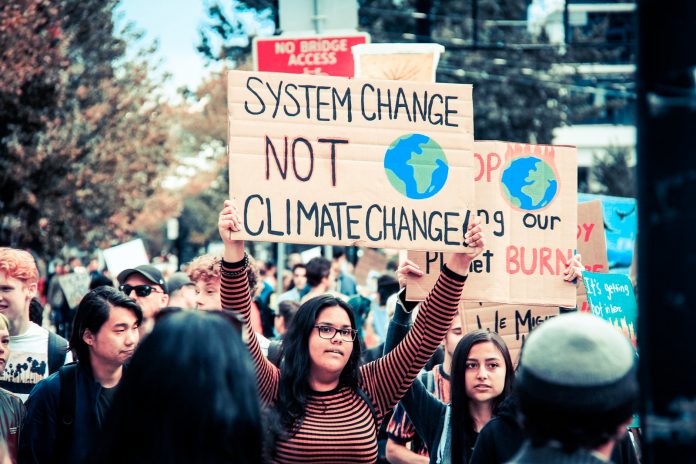
Corporations remain by far the most significant contributors to climate change with 100 corporations being responsible for 71% of the global emissions. Why then, is the responsibility on individuals to reduce their carbon consumption? This shift in blame simply serves as a purposeful division, so those who fund the government and those who fund the economy are two separate entities. Thus, the government requires the investment from the taxpayers to fund corporations’ pet projects of adding to their exorbitant wealth, while destroying the planet and killing millions. 

Corporations have knowingly contributed to climate change. It is not an exaggeration to say that their function is to extract as much capital from the earth as possible, while simultaneously destroying it. As early as the 1980s Shell and Exxon conducted internal assessments which predicted that carbon dioxide emissions would double from pre-industrial levels by 2030. The same assessments also warned of the catastrophic impact this would have on the environment including: rising sea levels, the Arctic melting, ecosystem destruction, and worldwide famine. These corporations lied about their findings and actively prevented governments from enacting sustainable policies through lobbying. 

Although corporations like Shell lobby governments to do their bidding, in the same breath they claim that the burden of climate change lies with governments. While spending $1.1 billion on a pipeline, instead of investing in renewable energy is short sighted, it is much more than that. It is a decision made at the behest of the oil and gas industries, which spend a criminal amount of money lobbying the federal government. In fact, among senior government bureaucrats contacts with the fossil fuel industry rose under Trudeau’s government from 144.5 to 228.5 annually. Thus, senior government officials are more influenced by oil and gas corporations than ever before. In this case, the cause of the cognitive dissonance associated with buying a pipeline a day after declaring a national climate emergency becomes more clear.

Despite the clear evidence that corporations and their influence on governments is the root cause of climate change, the majority of the blame falls on the shoulders of individuals. 

Individuals are told to reduce their carbon footprint, recycle, and somehow climate change will spontaneously disappear. The only problem is we’ve already participated in this experiment. At the onset of the COVID-19 pandemic, there weren’t nearly as many cars on the road, there were no international flights, but the world is still set to not meet the targets necessary to prevent a two degree warming above pre-industrial levels. 

So, if individual actions have little impact and we cannot rely on our government to save us what options are left? First, there needs to be an understanding that in order for nonviolence to work, your opponent must have a conscious and capitalism does not have a conscious. Climate strikes are impactful, but when Justin Trudeau protests assumingly against himself, there needs to be a reevaluation of how to achieve our goals. 

To achieve the avoidance of climate catastrophe, there needs to be a systematic solution to the systematic problem of capital. It must be immediately more profitable to enact climate justice, as opposed to continuing to participate in climate change. This can be brought about through divest movements, raising awareness that some renewables are cheaper than traditional energy sources, pushing for a Green New Deal that creates high-paying green jobs equivalent to those in the tar sands, pushing for policy to reduce the impact of lobbyists, carbon taxes, etc. 

There are just 11 years left until climate catastrophe is an inevitable event that will impact not only our lives, but future generations to come. It will disproportionately affect those most marginalized, therefore, those without the resources to escape will face the most brutal repercussions of inaction. So, the next time you absolve corporations of sin, remember that they are purposely accelerating a disaster that they will be able to escape through capital, while leaving us to endure the consequences. Corporations do not have empathy for what we have to suffer through in a climate crisis, so maybe it’s time we stop empathizing with their profits.

The Bright-er Side: Online events give access to the world around us

1
ILLUSTRATION: Siloam Yeung / The Peak

by Emma Jean, Staff Writer

As I write this, I’m waiting for a live comedy show starring two of my favourite performers — Lauren Lapkus and Paul F. Tompkins — to start. Tickets cost five dollars, the seats are in my bedroom, and the performance is being streamed live from Los Angeles. Ordinarily, this would be a monthly show that happens at a live performance venue in LA, but, thanks to COVID-19, I and the 500 other patrons from all around the world can watch it from anywhere with an internet connection. There are few upsides to this pandemic, and none are worth its overall impact, but it’s remarkable to have global live events be more accessible than ever before. 

For the first time in history, geography, accessibility, and time are often no longer barriers for anyone to see live events that would usually only be able to see if all of those things aligned. Instagram Live concerts are a great side effect of quarantine, but it goes much further than that. 

Museum events like Literary Death Match, which features writers like Roxane Gay, Jon Lovett, and Aparna Nancherla, would normally be seen only at the Hammer Museum in Los Angeles, but is now freely available for anyone. 

Even local events where students can work through parts of their identity in a more anonymous and safe way online, like QMunity’s BC-based Zoom support groups for LGBTQ2+ adults or Vancouver Quaker’s online meetings for those who are in the faith or find themselves drawn to it. 

Have you always wanted to go to Italy? Check out the Uffizi Gallery to take an online tour. Whatever it is you want to see, you can see with just an internet connection now. 

Things are generally awful right now; there’s no denying that, but thanks to user-driven streaming platforms and widely available internet connections, live events have been forced to come to us. In other words, while we’re stuck inside, lots of the world is now more accessible than ever before, and that’s pretty remarkable. In a time when daily novelty is rare, “get out there” while you can. 


SFU’s COVID-19 and the Future of Democracy highlights activism arising from the pandemic

0
Illustration courtesy of SFU Public Square.

By Emma Jean, Staff Writer

If anything good has emerged from this pandemic, it’s that the cracks in our systems have become more apparent than ever. It might feel easy to make like a turtle and hide until it all goes away, but if there’s something you can take away from the event COVID-19 and the Future of Democracy, it’s that now is precisely the time to take action instead. 

In a conversation put on by SFU Public Square and the Morris J. Wosk Centre for Dialogue that discussed gentrification, the throne speech, and the elitism of the art world, the four activists (Clare Beckton, Sandeep Johal, Walied Khogali Ali, and Liliah Williamson) led discussion around what it means to work towards a better world, and what that looks like in a time where traditional methods of physical gatherings can be deadly. 

The panel began with an effort to bring the audience into the presentation; it was about democracy after all. In the Zoom chat, participants were invited to share what democracy means to them and why they were there, as well as encourage conversation. As a range of responses rolled in, the event’s moderator Sabreena Delhon reminded everyone that “the people you encounter are the experts in their own experiences.” 

She introduced herself and shared a land acknowledgement, pausing to inform the audience that the event was presented with live closed captioning for those who needed it. This was the first appearance of a continuing theme about accessibility, and how true intersectionality means working outside traditional means of delivery. She then opened the floor for each of the four panelists to introduce themselves and the work they’ve done during the past six months of the pandemic. 

Clare Beckton, a former senior executive and current advocate for women in leadership, found concerns that COVID-19 may cause a regression on all of the societal gains made for women’s roles in society at large. With her own organization, The Prosperity Project, Beckton hopes to ensure that the increase in women leaving the workforce in the face of COVID-19 “doesn’t create a setback for us given all the progress that has been made in the past 40 years [ . . . ] going backwards.” The Prosperity Project provides training for women who otherwise may not get the opportunity. 

As she noted in an interview with The Peak, women are more likely to simultaneously work in industries as low-wage workers, who have been disportionately affected by the physical and economic effects of COVID-19, as well as be taking on the brunt of childcare and work in the home. 

“Some of [these women] have had to step back, lots of them who have had jobs have had to step back in a lot of cases because they just couldn’t do it all, and some are contemplating just stepping out of the workplace all together which is not healthy for the Canadian nation.” 

She spoke with urgency but never panic, noting that the shift to online outreach has removed physical barriers, allowing more people access to the organization than before. It’s not all negative, she insisted. A recurring theme from the event emerged: when normalcy is out the window, jump in to shape the new normal. 

Walied Khogali Ali is an organizer in Toronto who worked within the parameters of COVID-19 to create change in his own community. During Ramadan this year, he delivered meals to those who needed them across Toronto through his project, #RamadanMealsTO. Through grassroots fundraising, they were able to deliver 10,000 meals and employ at-risk youth to help deliver them, helping those who have been disportionately impacted by COVID-19. 

He noted how many of the people hit hardest by the pandemic, essential and low-wage workers, are disproportionately represented by racialized people, and Canada’s inability to get housing and food to many citizens have become more obvious than ever during the pandemic. The way he sees it, shifting times are the best opportunities to get in and steer that change for good. 

As he put it, “never let a good crisis go to waste”. 

Lilah Williamson is a high school climate activist with Sustainabiliteens, a group of teenage Vancouver activists who have rallied for their governments to enact meaningful efforts against the climate crisis like last year’s enormous Vancouver Climate Strike. 

At the event, she discussed how the pandemic turned their most famous and successful initiatives, public strikes, into a COVID non-starter. Rather than viewing it as a barrier, she says it acted instead like a “reset button.” The online initiatives have also found them working towards a wider range of goals through what Williamson called “distance action.” most recently with their “No Going Back” campaign. It fought for a better future for young Canadians, by creating and promoting a list of demands for Prime Minister Trudeau’s throne speech dealing with climate action, dismantling systemic racism, and decolonization. 

Sandeep Johal is a Vancouver-based artist whose work acts as commentary for social issues by “telling the stories of women who can no longer speak for themselves.” She discussed how during the pandemic, this manifested in the “Make Art While Apart” project, which transformed boarded up doors of businesses into pieces of art across Vancouver. 

Johal described how much the project had turned the “depressing doom space into an open-air gallery.” Her participation with the project is far from her only work creating art for all. Much of her work is an embodiment of democratizing art. 

She discussed a recent display she put on within the Vancouver Art Gallery, done in conjunction with Moving Still: Performative Photography from India. It was a blending of the “highbrow” celebrated there, and the “lowbrow” art looked down upon, and how a fellow person of colour told her that they could never see themselves in the gallery until she was featured there. 

“It really comes down to having access to these spaces,” she continued, “and being seen and being heard.”

After the panel discussion concluded, participants, panelists, and staff were sent into breakout groups to settle with our thoughts and everything that had been said. In our conversation, composed of only three members, we spoke about what the discussion stirred in us, what stood out, and how to spin it into change. It became clear that the themes of hope, loss, and action seemed to rise out of all of the panelists’ remarks. 

The 15 minutes flew by, and it seemed to be a deep meditation on the loss we’ve experienced as a society, and the hope of a goal on the horizon yet to be reached. As the session concluded, it felt almost like coming out of church, praying for a future you don’t know if you’ll see; sitting with like-minded individuals and our convictions, listening to others deliver testament to what action towards a common goal can accomplish. 

As I listened to these activists, all of whom had reasons to become apathetic towards a system that had turned their back on them but still continued to rally and organize for a better future, I found myself sharing a quote from Jon Lovett to my breakout group that kept ringing through my mind: “Hope is annoying because it makes demands of you.” 

Hope is the most potent motivator to fight for a better future, because as Johal put it, if they didn’t have hope that things would change, they would have no reason to do what they do. If you want to take action, try to find it in yourself because that’s the most personal place to start. Then, get busy.

WGOG: Stop assigning me last minute assignments

0
Illustration by Momo Lin/The Peak

by Marco Ovies, Editor-in-Chief

This is the first semester I am taking classes that were not originally designed for online learning, and let me tell you that it is annoying. While the class quality is actually better than I expected, one annoying thing is that the professor will assign work due immediately after the lecture. 

I have a four-hour-long Zoom lecture this semester, and that takes up a big chunk of my time. Another one of my classes has an hour-long lecture that I actually take during my lunch break at work. This is fine, and I accommodate that into my schedule. The problem is when after the four hour lecture, my professor will announce a “short discussion question” due by midnight the same day. 

That is work that I had not accommodated for in my schedule, and quite frankly feels like a lack of consideration to me as a student. Just because we are all online does not mean these professors have access to me 24/7. I have a life outside of school, and giving me less than 12 hours to complete an assignment — no matter how small the assignment may be — is very disrespectful to me and my time. 

I have other things to worry about, like how I’m going to pay for my tuition after the 2% increase, or trying not to catch COVID-19 and spread it to my whole family. Remote learning is great because I get to do things on my own time and schedule my life accordingly, so don’t assign me something last minute and expect me to do it outside of the scheduled lecture time. 

SFU Criminology should cut ties with police

0
Courtesy of SFU School of Criminology

by Gurpreet Kambo, Peak Associate

Modern life (particularly news discourse) has become like the never-ending climax of a post-apocalyptic film. One persistent, dramatic arc is that of policing and all the adjacent discourse that surrounds #blacklivesmatter, police brutality, and Indigenous rights movements. The frequent deaths of young black men at the hands of police have rightfully caused a crisis in North American policing in a way that we have never seen before.

In response to these recent controversies, Carleton University’s criminology department announced in August that they are cutting ties to police. More specifically, they are cutting student co-op placements with police and affiliated organizations, and creating four related student scholarships. Carleton’s criminology department should be commended for their proactive actions in supporting communities that are frequently and disproportionately targeted by law enforcement.

The academic field of criminology has long been associated (and frequently direct partners with) police departments. The statement from Carleton’s criminology department reads: “Criminology itself has been complicit in being an education stream for police and for corrections for many years.” SFU criminology has also partnered with the RCMP for recruitment, co-op, and internship opportunities, something that has caused controversy on campus. Like Carleton’s criminology department, SFU criminology needs to take a cold, hard look at where they’re implicitly staking their ground politically by being in a partnership with police departments.

Though much of the recent debate on policing has been fueled by extrajudicial killings in the US, in Canada, policing has also come under some well-deserved scrutiny. In particular, the shameful historical and modern treatment of Indigenous communities by police should cause Canadians to reevaluate the institution of policing in Canada. The RCMP was conceived by Canada’s first prime minister, literally to control and displace Indigenous peoples. They fulfilled this purpose very well, from forcing Indigenous peoples onto reserves to taking Indigenous children and putting them in residential schools. However, this legacy continues to this day, as seen in the countless Missing and Murdered Indigenous Women, or the RCMP’s use of force against the ‘Wet’suwet’en.

As the discourse related to systemic racism and policing has heated up, especially after the murder of George Floyd, many organizations across North American society have sought to make statements and reevaluate their ties to police organizations. It’s a testament to how much of a sudden shift there has been in societal attitudes that corporate America, and others who you’d never expect to wade into politics, have made statements against systemic racism and police brutality. For example, Lego decided to stop marketing it’s police lego sets, Nintendo made a statement about the death of Floyd, and the TV show Brooklyn 99 rewrote its upcoming season to reconsider how it portrays police. The bar is low for Corporate America, and much of it has condemned police brutality. Yet SFU criminology continues to partner with police. Normally, one does not expect Corporate America to be more progressive than academics in advocating for social reform.

SFU has emphasized reconciliation as a core part of its identity as an organization. New SFU President Joy Johnson has also said that it is an important part of her vision for SFU moving forward. Former SFU President Andrew Petter also recently made a statement condemning racism and systemic discrimination. For SFU criminology to so brazenly invite and partner with the RCMP, given its history with Indigenous peoples, flies in the face of SFU’s commitment to reconciliation. It is well past time that SFU criminology fixed that, and reorient themselves towards lifting up Indigenous and marginalized communities, rather than enabling institutions that oppress them.


Dean of SFU health sciences to co-lead COVID-19 Work-Study

0
PHOTO: Tyler Franta / Unsplash

Written by: Mahdi Dialden, News Writer

Dr. Tania Bubela, the faculty of health science’s dean, is co-leading a study that explores the impact of COVID-19 on the workplace. The 1.2 million dollar project, SARS‐CoV‐2 Study for Eased Restrictions in British Columbia (SAfER), is funded by Genome BC, Genome Canada, and life science industry partners.

In an interview with The Peak, Dr. Bubela explained that the study plans to analyze subjects from five workplaces which include SFU, UBC’s Life Science Institute, and three local biotechnology companies.

“We’re going to be recruiting 1,500 participants from those [areas], anybody who is in the workplace at least one day a week is eligible,” she said.

Dr. Bubela explained that “the test population is the life sciences sector in British Columbia.” She emphasized the importance of researching this industry, because “it’s not the kind of work that you can do remotely.” 

SAfER will take participants through three main portions that will aid in coming to safe practices for the future. 

The first part is to test participants for COVID-19 before the study begins, which will ensure that the findings can be accurately traced to the study period. 

The second part of the study will be a “blood draw to look at serology.” It will consist of three testing points, one at the beginning, after six months, and 12 months. “This is a kind of test that looks at the immune response to the virus and the longevity of the immune response to the virus,” Dr. Bubela said. This will give a certain answer on whether the participants have contracted the virus during the study period regardless of symptoms.

The final part of the study will seek the psychosocial impacts of the virus on the participants, in the form of a questionnaire to check in on the participants and their well-being. This will ask  questions about issues like “their family circumstances because there’s a lot of other factors that come into play for risk of exposure.” 

The underlying data will be available for health officials. Dr. Bubela explained that their work will be used to help make informed decisions for the future. For example, using “epidemiological modelling to inform the public health measures, both at the provincial and at the federal level.” 

Dr. Bubela added that “models are only as good as the data that inform them, so we’re hoping that the models can be made more accurate so we can be more responsive.”

The findings will be used for improved long-term planning for large employers in BC, and ensure it can work simultaneously with the public health system in contact tracing. 

Recruitment for the study is aimed to begin in October, awaiting ethics approval. 


Cisgender people should make efforts towards normalizing pronoun sharing

0
Nadia Bormotova / Getty Images

by Juztin Bello, Copy Editor

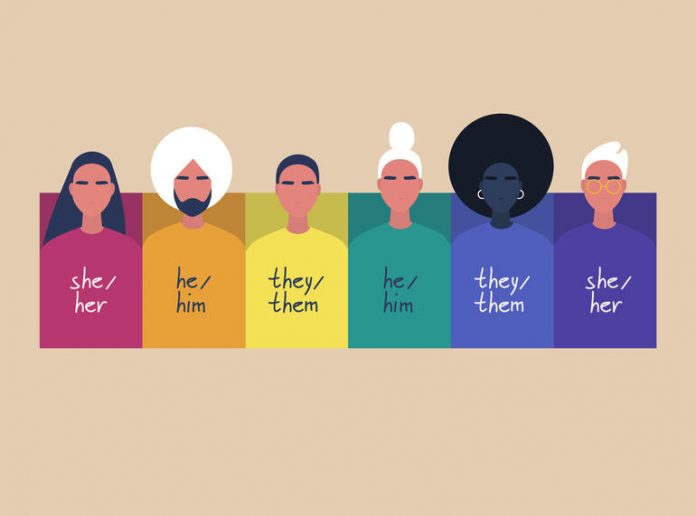
For people who have never had to worry about having their correct pronouns not being used, sharing gender pronouns might not seem that important. Because they’re used to being properly identified without questioning or misgendering, cisgender people (meaning people whose gender identity correlates to their sex assigned at birth) may be confused when prompted to specify how they would like to be addressed. The same reassurance cannot be guaranteed, however, for those who do not identify within binary perceptions of gender, which sees males and females (who go by he/him/his and she/her/hers, respectively) as the assumed norm. Sharing one’s pronouns, and politely asking for someone else’s pronouns, is an exceptionally easy way for those not in communities that do not conform to the gender binary to enact better allyship.

Before I go on I want to make one thing clear: this piece and the notion of normalizing pronoun sharing is not for me. Though I am part of the LGBTQ2+ community, I am still a cisgender gay man who uses he/him/his pronouns — I’m privileged in that my correct pronouns are typically assumed and used by strangers with very little need for clarity. 

But the same cannot be said for those who perhaps identify with they/them pronouns such as those who are trans, non-binary, or gender nonconforming, who face misgendering and discrimination for their pronouns and identities. So while I am writing this to bring attention to why normalizing pronoun usage is significant, I stress that I am writing this as a privileged member of the LGBTQ2+ community who merely wants to shed light on the significance of normalizing pronoun establishment. 

To begin, the most obvious reason why we should be normalizing sharing pronouns is simply because it’s respectful. Cisgender people should begin sharing their pronouns as it helps trans, non-binary, or gender nonconforming individuals to not feel isolated when they share theirs. By sharing their pronouns, cisgender people can establish sharing pronouns as not simply done in LGBTQ2+ settings, but in all settings. In certain environments like workplaces or classes, taking the initiative to share pronouns helps to create a safe space for people of these communities, which can be incredibly comforting in helping them feel welcomed and accepted. 

Moreover, cisgender people sharing their pronouns deconstructs the idea that everyone’s gender can be assumed, something that often results in misgendering. The idea that pronouns can be assumed by one’s outward appearance conforms to a gender binary and, ultimately, the stereotyping of gender expression. Through demonstrating that gender identity is not something that can/should be assumed, this alleviates pressure for those whose identity is more fluid and normalizes the idea that identity is not simply one (male) or the other (female). 

With this in mind, there are numerous instances where someone could include their pronouns to better normalize pronoun sharing. For instance, I have my pronouns on my social media accounts (in my Instagram bio, for example) and also in my email signatures. Screen names in Zoom calls is another helpful place to put your pronouns — this could be especially helpful for lectures. The benefit of including your pronouns in these places is that it helps people who may not know you personally see which pronouns you prefer to use to avoid misgendering. This is especially significant in professional settings, where establishing pronoun sharing can create a comforting work environment/relationship amongst staff, and can let people who may not know you well address you correctly. 

Additionally, including your pronouns when introducing yourself is another place where you can make your pronouns known; whether it’s to an individual or within a group context, sharing your pronouns can help encourage others to share their pronouns, which can be especially supportive in helping someone feel comfortable enough to share theirs. Something as simple as saying, “Hello I’m Juztin, I use he/him/his pronouns” takes very little effort to share as someone cisgendered.

Beyond simply normalizing sharing correct pronouns, other steps to becoming a better ally include challenging your own use of gender-specific language and respectfully asking for someone’s pronouns. The gender binary ignores the fluidity that is involved in identity, and it is so ingrained in our everyday lives that we often fail to question it. Language especially is something we often gender unintentionally, and making little adjustments such as saying “their” when referring to a person instead of “his/hers,” or using “parent,” “sibling,” or “partner” so as to not assume gender can help to make language more inclusive.

If you accidentally misgender someone, be sure to apologize, correct yourself, listen, and do better — of course your intent is not malicious, so the best way to atone is just to hold yourself accountable and work towards using the correct pronouns to help that person be comfortable. 

What’s important to remember is that the purpose of allyship is not what you can do for you, but what you can do in support of someone else. While no one is going to be perfect in how they enact allyship, efforts towards questioning our own biases, normalizing behaviours that are more inclusive, and simply being patient and open enough to listening can help to ease the anxiety that centres around gender identity.

Holistic Nutritionist Rhiannon Lytle on maintaining mental and physical health in university

0
Image courtesy of @eatingbetweenlines on Instagram.

By Emma Jean, Staff Writer

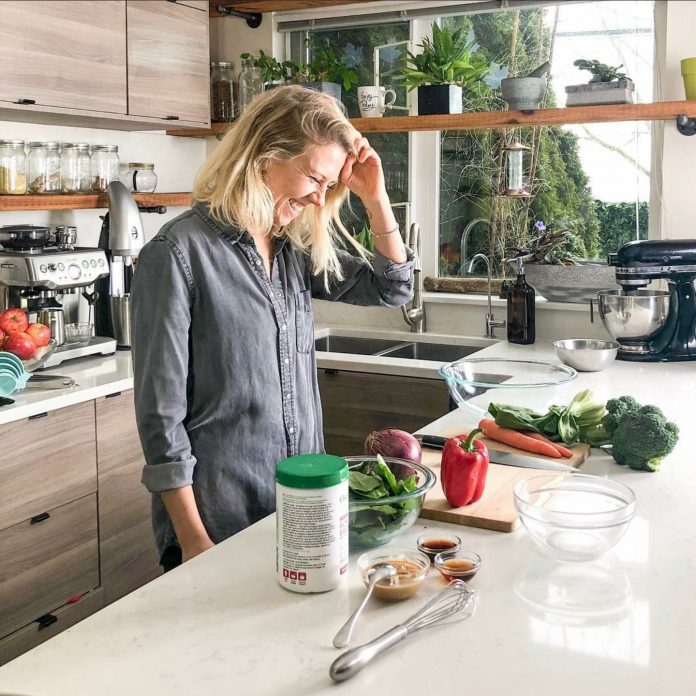
The back-to-school season is upon us and at this point, you know what that means: exciting change, neverending deadlines, job applications, faulty internet connections and, God forbid, a life outside of them. In other words, academic life can bring on more stress than we can handle sometimes. That’s where Registered Holistic Nutritionist and wellness educator Rhiannon Lytle, who also leads education and product knowledge at Organika (a Canadian health and wellness company) can offer some relief. In an interview with The Peak, Lytle shares advice on how to identify unknown causes of stress, the impact of your diet on mental and physical health, and how taking time to be patient with yourself can be a game-changer for your mental and physical health. 

The Peak: Do you have any tips to help students identify the unknown stress triggers in their lives?

Rhiannon Lytle: When we’re looking at stress, one thing we do as a society is we exist from moment to moment to moment without really checking in with ourselves — and we just live this surface-level life a lot of the time. You know, we’re sad and we don’t cry, because “we can’t cry, that’s not right.” What we’re seeing more is that people need to identify those stressors by doing things like taking a few deep breaths. 

When people feel like they can’t breathe, there’s a reason for that! Take a deep breath and tune yourself inwards so that you’re not just moving from moment to moment. Write down some of those things that come so that once you start to be aware of it, you start to notice the things you realize are really bothering you. Your roommate snoring may not have been something you thought was really bothering you, but when you look at it, it’s almost the root because you haven’t been sleeping properly! So write these things down, take deep breaths — not even to calm the stress, but just to look inward for a minute no matter where you are. We’re all told this stuff, [but then] when you try it, you go “oh, yeah! That does work!”

P: What are the most common harmful habits you see in students when it comes to managing their stress, and what strategies can they adopt instead?

Lytle: Definitely one of the most harmful habits we gravitate towards [very quickly is] coping mechanisms. These can be a physical thing, and that can be: a cup of coffee when you’re tired, or alcohol when you’re really stressed, or working out really consistently because we assume that high-intensity physical activity is going to be that one thing that changes the way our body looks [ . . . ] Identifying what you use as a coping mechanism is going to be really important to identifying how you manage the stress, and then deciding whether or not it’s something you need. So, if someone is having a cup of coffee three times a day, see if you can swap out one cup of coffee for maybe something like maca, which is an adaptogen, which helps us adapt to stress, [blended with] cacao powder and a little bit maple syrup or oat milk — something that’s going to balance your cortical, or what balances your stress hormones, so you’re not just riding this high of stressful moment to stressful moment because caffeine does act like stress in our bodies at the end of the day. It wakes us up, sure, gives us a bit more brain power, but it just creates a little more stress that we don’t necessarily need. 

P: Based on your work as a nutritionist, what can students integrate into their diets (or take out of them) to help their mental and physical health? 

Lytle: The first one I’m going to say, most people are probably going to hate me. If you can limit caffeine intake, that’s number one. If you can limit alcohol intake, that’s also really great, because both of them can really stress our systems. If you are dealing with a hormone imbalance, and your stress levels are skyrocketing and decreasing, and you’re just living from hot coffee in the morning to ice coffee in [the afternoon] to beer in the evening at the pub, can you cut it down to just one coffee in the morning and swapping it out for that maca or an adaptogen latte or herbal tea even? That’s going to be a great option for you. In the evening, have the beer, but instead of maybe excessively drinking, balance it out with some water, or swap it with some flavoured waters, or use an effervescent tablet and make yourself a mocktail — no one’s really going to notice, plus it’s flavourful and has vitamins! 

Doing that and also, when it comes to our fitness, you don’t always have to go so hard. If you can go for an hour-long walk and listen to a podcast, that’s going to do just as much for your body, especially when you’re stressed, than doing a high-intensity workout or a spin class. I absolutely love my spin class, but say you do that first thing in the morning, you leave and get a cup of coffee, then what happens? That stress hormone, that cortisol, is going to be super high and then, by three o’clock, you’re crashing hard. You’re probably moody, you’re probably going to reach for something sugary, so those things can all work together to be not the best for yourself. 

P: Do you have any advice on how students who menstruate can limit it from interfering with their stress levels and overall wellness? 

Lytle: Totally. I’m very passionate about this work, if you can tell, mainly because I personally dealt with a lot of issues, especially during university, around the menstrual cycle [ . . . ] and ignored it because that’s what we’re told — that periods are a burden, we don’t want to have them. They’re annoying, they’re painful, we get moody. That’s not necessarily the case, and you don’t have to deal with it. 

The first recommendation I give to anyone who is stressed about menstruation is to learn or figure out ways to embrace it more. Are you taking your temperature every morning to learn about your base-level body temperature? Are you adding in different herbs, like the maca, so you can help manage that a little bit better? Are you tracking your cycle on an app and learning about how it works? When we learn more about it, it’s kind of freakin’ cool! Our body’s temperature changes because of when we’re on our cycle. Learning about it can be, well, I say exciting, other people may say interesting! [laughs] Another thing I would say is, can you manage it through breath work? Can you add in those adaptogens that I talked about because that can help manage the stress? When we talk about painful periods and mood swings, those adaptogens are going to be great, but also things like liver [supportive herbs]. If we’re talking about something like milk thistle, or chlorophyll, or dandelion roots, like those are all really good options for you to try, especially if you’re dealing with period issues. 

Lytle can be found at Integrative Naturopathic Medical Centre in Vancouver. Interview edited for length and clarity.