Home Blog Page 379

SFU gets rid of professors to save president’s salary

0
PHOTO: Changbok Ko / Unsplash

By: Madeleine Chan, Opinions Editor

BURNABY, BC — SFU plans to cut its spending budget drastically by firing all teaching staff for the upcoming Spring 2021 semester in lieu of SFU President Joy Johnson’s supply of supposed “fat stacks.” 

The move is projected to increase income for SFU tenfold, but only cover a fraction of the president’s pay. 

Richard Bich, SFU’s official Money Person, stated in an interview with The Peak that this is not a “fix-all” solution, and that further cuts to SFU’s budget may just be necessary down the road. 

“Getting rid of all professors and TAs is the first step to guarantee that SFU’s president remains one of BC’s highest paid executives. It will also make sure that she remains as socially removed and unaware from the student body as her predecessor was,” noted Bich. 

“It will also ensure that Joy will be paid more than the Prime Minister of Canada,” continued Bich, a neck vein popping out. Indeed, Prime Minister Justin Trudeau receives a total pay of $359,800 per year, while it has been reported that SFU’s president receives $439,910 per year. 

When asked why this pay discrepancy exists, Bich explained that it “ensures SFU’s integrity as Canada’s engaged university” in the hopes that the institute can “keep up with the colonial power than the Canadian government exudes.”

In regards to the effect on education at SFU, Bich said that the removal of teaching staff will “have none.”

“Students are teaching themselves, anyway. Continuing to have instructors during remote learning was really just a way for us to say that we are delivering the same quality of education and charge accordingly, all while gaslighting our students.”

When asked about the employee change via a Peak representative’s laboured scream towards his window from his lawn, SFU student Bob Boberson popped his head out and stated: “I have professors? . . . Oh, you mean those tiny people who supposedly lead Zoom calls? I thought they were cardboard cutouts. Good to know that my tuition money actually went to someone who might care about my education. I know I sure don’t anymore.”

Regarding continued tuition increases, Bich said, “Oh, yeah. Those are still happening. It’s one of the things that keeps the president’s salary afloat, and that we can keep increasing no matter how many students object to it.”

Bich said that they are looking at getting rid of courses, the entire Surrey campus, and the remaining supply of campus soap during a viral pandemic next.

“These cuts would be necessary to keep Joy Johnson’s quality of life at a standard way above the average TikTok star.”

Joy Johnson declined to comment on the change, though we did hear the low-hum of a Tesla zooming away in the background of Bich’s call.

Grad Minutes: November 10, 2020

0
Illustration by @Reslus

Editor’s note: This piece previously quoted McDonald as “drying up things like the annual budget.” It has now been corrected to “drawing up things like the annual budget.” An earlier version of this article also stated that the meeting motioned a “tuition hike condemnation,” this has been changed to a “tuition hike opposition” to more accurately reflect the meeting agenda. 

Written by: Mahdi Dialden, News Writer

The Graduate Student Society Council (GSS) held a meeting that motioned a tuition hike opposition, showcased candidates running for positions, and gave updates from committees. 

Motion to officially oppose the tuition hikes

The Director of External Relations, Matthew McDonald, spoke about the motion to oppose the recent SFU tuition hikes. The motion was moved for a stance of opposition while calling on SFU to “seriously consider changes to its long-term cost structure with student affordability.” This motion also includes sending a letter to the SFU leadership and the BC government, while working with the SFSS and TSSU. 

Member Reese Muntean spoke in favour of the motion, “It’s very timely. And, and what I mean by that is I think it’s good for us to act now shortly after the SFSS and TSSU condemnation letters. I think working together with other student societies will help further our advocacy work in this.”

McDonald added, “Students generally, institutionally, do not have a whole lot of power. That’s just kinda how it is. But when we make our voice heard like this, it reminds administration that they have to take our priorities into account when they’re drawing up things like the annual budget.

The tuition hikes are affecting graduate students with 2% and 4% hikes for domestic and international students respectively. McDonald added, “In the long run, our incomes don’t really match up with the cost of living. That also includes, you know, the rapid rise in rent in the greater Vancouver area.”

This comes after the SFSS condemnation at the annual general meeting. “We think [SFU’s] institutional priorities should be reconfigured to place student affordability higher on the list,” McDonald added.

GSS Director Elections Candidates

Students nominated themselves for the Director of Finance, Director of Student Life, Director of Academic Relations, and Director of Access and Equity. They were given a chance to speak about their candidacy and why they should be elected for the position.

Candidates for the Director of Finance:

Candidate Anna Orlichenko stated, “I execute financial planning, analysis, and budget control, and I want to implement this experience if I am selected.” On the GSS website, she said she aims “to help serve students’ needs for their wellness and mindful living by managing GSS finances using my strategic vision, positive attitude, and strong passion.”

The current Director of Finance, Farina Fassihi, presented herself for re-election saying, “Despite all the challenges that last year had within the context of [COVID-19], we were able to successfully plan the budget — our operating budget is healthy.” Fassihi added, “I have a comprehensive understanding of the society’s budget processes, and budget planning strategies, and have made effective efforts in fixing and enhancing the GSS financial structure.” 

The final candidate for the position was Abdul Mubarak Dutie Tuhson, “A Chartered Management Accountant and a Certified Tax Practitioner (CTP) with eight years’ experience in various finance functions,” according to the GSS website. Tuhson added, “I believe I can contribute a lot. I’ve had a look at the strategic kind of this society, and I can clearly see where we align [in] the budgeting and planning process.”

Candidate for Director of Student Life:

Gloria Li, a full-time MBA student, said, “I will provide you valuable networking opportunities that will hopefully benefit in your career. I know it’s harder to do that under the current COVID-19 pandemic situation, but I will try and explore online platform as much as possible.”

The other candidate for the position, Aiman Adelshiyeva, did not attend the meeting, but can be found on the GSS website, where she stated, “I believe I have an extensive experience in organizations of events and activities that help students feel a sense of community.”

Candidates for the Director of Academic Relations position:

Pankaj Bagga, should he be elected, is “excited to be part of SFU’s amazing community of people and ready to take responsibility as Director of Academic Relations.”

Prince Kumar Lat, pledged to “start career counselling [for] all the graduates.” He added, “I’ll try to increase the scholarships, particularly international ones. I’ll try to increase financial support during emergencies [ . . . ] and I will try to create more industrial as well as academic opportunities.” 

Reese Muntean, a PhD student in the School of Interactive Arts and Technology (SIAT), as well as a SIAT representative, also nominated themselves for the position. Muntean stated that because of “COVID-19 issues and the research assistant concerns, [she’s] been learning a lot already this year about the issues that are faced by graduate students during their academic career, including those relating to coursework, personal research or research search assistantships, and relationships with supervisors,” she said. 

Another nominee, Lance Quan, explained, “My strategy is from the positioning of learning and to embody the stewardship responsibilities of a GSS (Society) Director to collaborate, coordinate, and advocate.” 

Candidate Devan Prithipaul spoke about how graduate students “are the ones who pay tuition, who pay the salary for professors and administrators. That gives [them] a huge advantage when it comes to bargaining and making sure that our interests are heard. Especially as graduate students, we are the ones who build the reputation of the university by conducting original research.” 

According to the GSS website, nominee Anchal Jain has “15 years of teaching experience for undergraduate and graduate studies in the computer science field, back in India,” and wants to work on support for full-time opportunities as well as lowering co-op student fees.

Director of Access and Equity:

Candidate Shanny Rann, a second-year PhD student in gender, sexuality, and women’s studies, stated, “[The position] will enable me to advocate for diversity and inclusion — these are values that I strongly believe in. More importantly, I want to speak up for students who are experiencing systemic discrimination,” Rann added. 

The next candidate, Hafsa Sadiq, said, “As a graduate student in the Master of Public Health program, I noticed the lack of policies, services, and advertising for services in place to create a campus where all graduate students have equitable opportunities to learn, care for their health, connect with peers in their community, and access financial aid and support.” 

The last candidate, Satyajeet Chouhan, was not present at the meeting. On the GSS website, it states, “I will always be available as an open channel to represent and voice your indifferences and sufferings to the concerned authorities to ensure dignity, fairness, equality and respect is delivered and maintained across the university.” 

According to the SFU grad society website, “campaigning will end on November 25th and polls will open for online voting from Dec 1st to Dec 4th.” 

You can find the candidates’ profiles running for each position on the GSS website.

The South African Film Festival features thought-provoking documentary, Good Hope

0
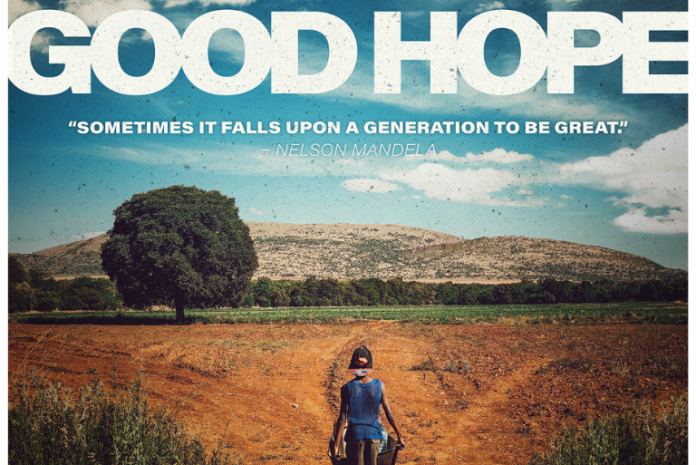
The film sheds light on the past and hope for the future. Courtesy of Anthony Fabian

By: Devana Petrovic, Staff Writer

The South African Film Festival’s (SAFF) virtual event ran this year from November 1 to 12 and featured several award-winning documentaries, featured films, and shorts. Good Hope, a 2019 documentary following post-apartheid movements in South Africa, was one of the SAFF’s hidden gems this year.

Filmmaker Anthony Fabian’s Good Hope looks at the impact of Nelson Mandela’s human rights advocacy in the current political climate and how younger generations are shouldering the historical legacies of racism, corruption, and inequality. More importantly, Fabian uses his film to educate viewers globally on South Africa’s efforts to rebuild a hate-free country, united beyond its history of oppression. 

The film provides a brief look into South Africa’s history of division and racism — which was appreciated for viewers like me, who have a limited understanding of apartheid (a system of institutionalized racial segregation and discrimination aimed at the non-white population of South Africa). Further, Fabian gives political context through various interviews with experts and archived news footage. The chronological structure of the film made it easy to follow as the bulk of the documentary looked at current and future efforts, only understandable once given the perspective of the country’s past. 

Fabian expertly paints a picture for viewers of the current government situation in South Africa, outlining key issues such as the racial division that is systemically enabled by the country’s politicians. Beyond that, he also provides a platform for the activists, workers, and thinkers, who have solutions and who strive to make South Africa’s “new democracy” truly egalitarian. 

Good Hope is an intricately created, informative, and inspirational film. It addresses key issues, while also giving viewers a sense of hope. I appreciated that the film didn’t leave me feeling hopeless (as many documentaries can), but instead made me feel proud of this generation’s advocacy work and its forward-looking perspective of the global community. 

A notion that came up in the film is the dark narrative the rest of the world perpetuates of South Africa, due to the media’s focus on apartheid. Fabian’s Good Hope aims to take down this narrative and rebuild it in a positive light. I found that through viewing this film, many of my own assumptions have been unravelled. 

As Fabian himself says, “Nelson Mandela’s vision of a Rainbow Nation may need to be re-configured [ . . . ] but in essence the message remains the same: what draws us together is not the colour of our skin, but our common humanity.” While there is still a lot of work to be done to heal from the past, Fabian’s film reminds us that there is still “good hope” for the future.

Dear Peakie

0
PHOTO: Kyla Dowling / The Peak

By: Kyla Dowling, Peak Associate

Dear Peakie, 

I’m graduating in Spring 2021 and I don’t know how to start looking for a career! 

Sincerely, Your Next LinkedIn Network Request

Hey Your Next LinkedIn Network Request! 

Firstly, don’t add me on LinkedIn. The idea of being associated with an SFU graduate makes me far too optimistic that I too will get out of this cesspit, and I can’t cope with false hope. Secondly, a JOB? In THIS economy?! Baby, what year are you living in? It’s certainly not 2020! 

Given that you didn’t provide your major, I’ll assume that you’re not in STEM and thus your post-graduation job is probably going to be completely unrelated to your degree. Might I suggest donating your eggs or your sperm? That said, though, I really don’t think any SFU student should ever reproduce. Honestly, who needs a job anyways? Stay on campus. Submit to the noise of the construction and the voices in your head telling you you’ll never be good enough.

Love, Peakie 


Dear Peakie, 

I’ve recently discovered men ain’t shit. What do I do with this information, given that I’m a straight girl? Help, please. 

Sincerely, Saygrace was right, these boys ain’t shit

Hi Saygrace was right, these boys ain’t shit, 

Honey. Darling. Babygirl. As your gay best friend with no other plot but to support you in your misadventures, I have to ask: you only noticed NOW that men ain’t shit? Not in the third grade, when fucking Joshua pulled your hair and your MALE teacher said “he’s just doing that because he likes you”? Really? I knew straight people were oblivious, but this is a whole different breed of stupid. 

Regardless, congratulations on your newfound discovery! Now that you recognize that men ain’t, in fact, shit, you have a few options here. The first? Celibacy. Now, I’m not going to force you to be a nun, because the thought of organized religion makes me squirm, but voluntary celibacy could definitely, totally, be good for the soul. Just don’t go on Reddit. 

Your second option is to become a lesbian. Yeah. You heard me. Manifest it. A lot of straight people think you can choose your sexuality anyways, so make that choice. Buy a flannel (or two, or three, or 17, that all look identical). And for god’s sake, cut your damn nails. Best of luck!

Love, Peakie 


Dear Peakie, 

I slept with this guy and now he won’t return my calls. Should I hex him?

Sincerely, Hoe-cus Pocus

Hey there Hoe-cus Pocus, 

First of all, if you don’t have a valid reason for sleeping with a random person in the middle of a global pandemic, I’m going to hex you. And there are very, very few valid reasons. Secondly, is a hex really the most rational choice here? Before you gather your candles and rainwater, think logically. These sorts of problems require tangible solutions. It’s not like he’ll post about a bird shitting on his head on Instagram. You’ll have no way of knowing if your curse worked. 

What you’re going to do is this: quarantine for two weeks. Lurk his Snapchat locations to ensure he’s also not seeing anyone for two weeks, which he shouldn’t be. Then, hit him up, and give him the best sex of his life. Make him breakfast the morning after. Flirt with him. Listen to him talk about sports or cars or whatever the fuck kind of boring guy shit he’s into. Get into a relationship with him. Bring him gamer juice as he plays Fortnite. Encourage him to switch his major to something successful, like engineering. Encourage him to get a high-paying job as you stay at home and do the housework. Pretend to love him as the years pass. Say yes when he proposes at Olive Garden. Marry him in his family’s weird cult-ish church. Talk about one day having children. Have dinner on the table for him every day he gets home from his stressful but profitable engineering job. Then, finally, when you think he’s made enough money, slip some arsenic into his dinner. Take the money and run. 

Meet me in Vienna, outside the Wien Museum that we chose as a meeting spot only because it reminds us of the word wiener. Confess your love to me. Move into an apartment together under fake identities, living wealthily in Europe. Come to bed with me. Have some wine. Start feeling a weird cramping in your stomach. What could this be? Watch me as I tell you I’ve poisoned your wine with arsenic — the same way you killed your dead husband. I take the money and leave. You die a painful death. I’m now living in France, under a false identity, with enormous wealth, but that’s not enough for me. I need more. I plot to steal the Mona Lisa. But wait! You never died. You’re watching me from the shadows. You plan to foil my plot to break into the Louvre. We reunite mid-robbery. I confess that I’ve loved you all this time. We get caught. We get arrested together — or so you think. You realize I’m actually in cahoots with the security at the Louvre and I’ve made off with the Mona Lisa — only to bring it back to Canada, where I’ve met up with your not-actually dead husband because you clearly don’t know enough about arsenic, and your ex and myself live happily ever after. Sound good? 

Love, Peakie

Public Health Agency of Canada now recommends three-layer masks

0
PHOTO: Kai Pilger / Unsplash

Written by: Sara Wong, Peak Associate 

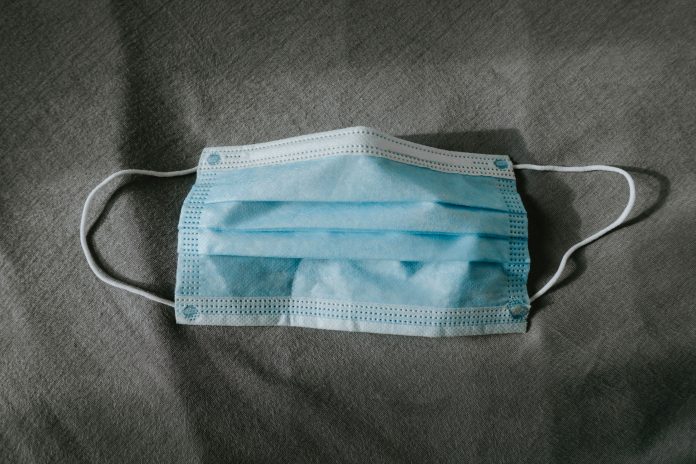
During a press conference on November 3, Canada’s Chief Public Health Officer Dr. Theresa Tam updated recommendations surrounding the wearing of non-medical masks and recommended that the public use three-layer masks. According to the Public Health Agency of Canada (PHAC), two of these masks’ layers should be a tightly-woven material (like cotton) and the extra layer should act as a filter, using a “non-woven polypropylene fabric.” 

If you have a mask with a pocket, you can insert a removable filter into it and that can serve as the third layer. The PHAC recommends craft fabric, a piece of a reusable shopping bag, or a folded paper towel as options for a filter. Depending on the material, the filter can be washed and re-used or will have to be disposed of and replaced frequently. Additionally, the PHAC provided step-by-step tutorials on its website on how to create your own three-layer mask, with choices between “sew method,” “no-sew method using a T-shirt,” and “no-sew method using a fabric square.”

According to Dr. Jing Wang, a clinical instructor in UBC’s faculty of medicine, the PHAC’s changes in mask recommendations are a result of the rise in COVID-19 cases across the country. On November 12, CTV News stated that “Canada reported 4,981 new cases of COVID-19,” which broke the country’s record for the largest single-day total of COVID-19 cases. At the time of writing, this remains Canada’s highest daily record. 

Dr. Tam spoke at another press conference, in which she warned the public that case numbers will continue to increase by the thousands if people do not do their part to stop the spread. Global News quoted Dr. Tam on how “an important driver continues to be informal social gatherings, and activities both inside and outside our homes” in regards to rising COVID-19 cases.

Another reason for the three-layer mask recommendation is because COVID-19 can be transmitted by aerosols as well as droplets. The difference between the two is that aerosols are smaller and can linger in the air for some time. Additionally, with winter approaching and many activities moving indoors, it is imperative to maximize ventilation in order to decrease concentrations of aerosols, as noted by the PHAC. Wearing face masks while indoors (excluding your own household) is advised.

A number of Canadian news outlets have pointed out that the World Health Organization (WHO) recommended three layer masks back in June, causing reporters to question why the PHAC waited months before following suit. In a statement given to the Toronto Star, the PHAC said that “[they] always work to do [their] own analysis to determine what is appropriate for Canadians, rather than just accept recommendations from the WHO or other organizations.” 

Regardless of the type of mask, Dr. Tam emphasized that in order to be of any protection, masks need to fit properly. Quoted first by CTV News, Dr. Tam stressed that “[a mask] has to cover your mouth and nose [ . . . ] that’s really important.” 

As of November 19, masks have been made mandatory in BC “for all customers and workers [ . . . ] in all indoor public and retail spaces, including hallways, elevators, breakrooms, kitchens, and customer counters. The only exception is while eating or drinking.” For more information on COVID-19, visit the BC Centre for Disease Control’s website. 

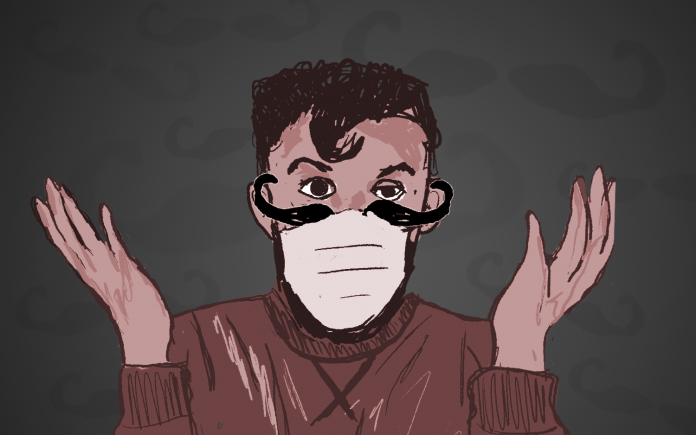
Student upset that his performative moustache for Movember won’t be seen under his mask

0
ILLUSTRATION: Johanna Jucutan / The Peak

By: Devana Petrovic, Staff Writer

It’s that time of the year again. Fellas of all shapes and sizes, of all hair colours and textures, of all Call of Duty usernames, it’s time for us to rise up and prove just how manly and masculine us men can be. No other month in the year is as socially accepting for men. No other month is as freeing for men to finally resist all the hatred in the world directed at them by dirtbags like Vogue that put a guy in a dress on the cover. 

It’s Movember, my dudes. 

Do you know how ridiculous society’s expectations for men to shave this small portion of his body is?! I wait for midnight to strike every year on October 31 — with only my closest 24 homies gathered for our Halloween party, of course — and we count down in our sexy cop outfits until the month of shaving liberation. 

The world awaits me and my Movember stubble. Alas, not this year. The apparently “mandatory” face masks doomed the world, depriving all females of laying eyes upon my rugged, handsome November face.

Now, who’s going to know that I pull off that five o’clock shadow AND that I spread awareness for Movember? No Nut November is such an important cause to me. . . or is Movember something about cancer? Doesn’t matter, anyways. Stupid masks!

All I can do now is angrily stomp everywhere and bang my fists against my archnemesis, drywall, like a real man. I thought this whole hoax would be over by the time it was lip warmer time — and I’m not just talking about my ‘stache.

I just truly care about helping people, and it is so hard for me to have that completely stripped from me. I have (sorta) done so much over the years with my ‘stache (I think?) for: charities, orphans, that person on the bus that one time who was wearing Crocs with socks, you name it. I don’t donate money or anything, but I think with my annual Movember involvement, I am doing more than enough. But what now?

As a big middle finger to this injustice, I’m wearing my mask as a hat on my forehead. That’ll show them! I get some stern looks every now and then for some reason — probably because everyone is jealous of how much I do for the starving children globally with my sultry ‘stache. 

I can take the criticism from the so-called feminists or whatever who see my strideful moustache walk and tell me to “put my mask on properly, please, we’re in the middle of a deadly pandemic.” Don’t they see how handsome I am? Are they forgetting how much I am giving back to the world with my facial hair’s presence? 

anAnyways, despite everything against me, I am persisting. Just me and my moustache against the world. We will get through this dreary, dark, man-hating period together, my furry facial friend.

The radicalization of social sciences and humanities students at SFU

0
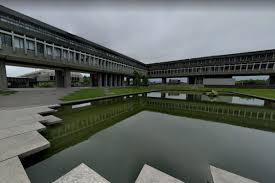
Photo courtesy of SFU News.

By Harvin Bhathal, Alison Wick, Madeleine Chan, Emma Jean, Kim Regala

Simon Fraser University (SFU) is an environment that fosters radicalization against the current economic, political, and social systems in place. Whether it is from the inactions of the university regarding Indigenous and/or environmental issues, or learning how to critically think through its various social sciences and humanities programs taught by professors (i.e. Communication, Political Science, Geography, Criminology, Sociology, Indigenous Studies, etc.), students often leave SFU radicalized.

Radicalism refers to advocating for social and political reform that bypass incremental changes – changes that maintain the status quo. To be radicalized is to experience emotional response(s) to a relentless assortment of social injustices, and actively seeking a means of pushing for necessary change because if not them, who else will?

Students at SFU shared their paths to radicalization, and what they are doing about it. Here are their stories.

Alison Wick, Peak Associate

Program: Indigenous Studies Major, Publishing Minor

Positionality: She/her/hers, fifth-year white settler student

I think that some programs are significantly more radical — and produce more radicalized students — than others. For myself, I would say that I have been educated in radical teaching by my profs and my peers — who are very distinct from SFU as an institution. That education is what has allowed me to think more deeply and critically about the society I live in and my place in it. This has been through taking courses across disciplines and especially been from finding community within my major department, Indigenous Studies. The flexibility in taking and selecting courses is a significant reason I still actually recommend SFU, after all the institutions fuckery. There are a lot of opportunities to take courses across disciplines, programs, and campuses, which allows you to meet new people and communities in ways my friends at other schools haven’t been able to. 

The Indigenous Studies program is one of the most radical departments because the program is about learning erased histories, marginalized voices, and positioning yourself. Taking a variety of courses and spending time in radical departments allows me to more radically approach my studies and life as a whole. And that’s not even mentioning the long and ongoing history of student activism in our student body that has certainly changed me for the better.

Madeleine Chan, Opinions Editor

Program: Communication Major, Gender, Sexuality, and Women’s Studies Minor

Positionality: Mixed Chinese-Canadian, non-binary, queer

I have a lot of privilege. I haven’t had to worry about not having the means to survive, police targeting me for the colour of my skin, and I’m able to attend a post-secondary school. Yet, I still belong to multiple marginalized communities. Enter my studies at SFU. I started in communication and quickly learned about the fucked up way that the world operates with the callous creed of capitalism, systemic gender disparities, and hegemonic power structures that seem infallible. My awareness of this only grew when I started a GSWS minor and I learned about how all of these things have affected and continue to affect multiple marginalized identities and communities. 

Growing awareness of social issues through things like social media just solidified my commitment to advocating for change. It wasn’t like I woke up one day and decided to help, but I slowly learned that through my privilege of being able to attend university among other things that I had the power to do so. If not for the ideal of people not suffering for who they are, but for the parts of me that suffer along with them in this capitalist and patriarchal society that seeks to push us down.

Emma Jean, Staff Writer

Program: Communication Major, Political Science Minor

Positionality: Speaking from the perspective of a queer, white, middle class cis woman, I cannot speak on behalf of the experiences of racialized, trans or low income people, nor do I intend to

Growing up, I was increasingly aware of the racism, sexism, and homophobia in the world; it came first by experiencing or witnessing it first-hand, and then learning it had a name through the media. I wanted to work against them, but each issue felt categorized as generally isolated, individual issues that required completely different courses of action. If each of these issues had very different surface-level tools of oppression, what was the common tool used to fuel it? It wasn’t until I started taking Labour Studies courses that I fully realized: money, money, and money. All of these groups experience varying degrees of economic oppression, often with intersectional overlap. This determines access to social rights, legal abilities, proper healthcare, and other things a human beings deserve that are often taken for granted by those who possess them. 

I always considered myself to be some kind of socialist, but from learning more about the world around me, I became more invested in a system where a country treats each person as having inherent worth rather than being discriminated against for the circumstances they were born into. I am incredibly grateful that the Labour Studies program gave me the tools to fully realize that. 

Kim Regala, Peak Associate

Program: Communication Major, Film Studies Minor

Positionality: Filipino-Canadian, cis-female

I wouldn’t exactly call myself a radicalized person, but I am passionate about many things. At 16, I learned about Vancouver’s homelessness crisis when I met and heard first-hand the story of a person living through poverty. It was also around that time when I had gotten a job in retail, where for the next three years, I was exposed to the wasteful practices of fast fashion. My natural curiosity led me to further understand these social injustices within our current systems in place. However, I kept these thoughts to myself, rarely entering the dangerous territories of political and social debate, as to avoid confrontation and argument. That is, until I entered university. Passively distilled in me through SFU’s Communication program was a drive to apply all of this knowledge to action. One class in particular — CMNS 349: Environment, Media and Communication — exposed me to the harsh realities of the climate crisis and media framing. Learning about the use of media to deflect blame away from larger structures of power made me recognize the importance of advocacy and grassroots activism. 

Now you may not see me in every single protest or running for political leadership anytime soon, but I can say that I participate more in those political and social debates I would once shy away from. I admit that it gets exhausting to engage in these conversations, especially with ones that end in disagreement, but it’s important that we continue to make our voices heard, because only then can we create meaningful change.

Experiencing a suicidal crisis as an SFU student

0
Photo courtesy of Surrey Now-Leader.

By Anonymous

Content warning: suicidal ideation, prescription drug use, institutionalization

I was first diagnosed with disabilities during my first year at SFU. While coming to terms with the diagnoses themselves was difficult, it was nothing compared to the medications and crises I have endured throughout my undergrad. 

I have been on more medications than I can count — and they all end the same way. They either have enough side effects that I want to forget that I ever took them, or they make me forget everything that has occurred in recent memory. Eventually, I stop taking them due to the side effects and am immediately punished for being “non-compliant with treatment.” 

Then all of the effects of withdrawals set in. These include feeling disoriented, issues with my vision, feeling electrical shocks in my brain, cold sweats, severe mood swings, and suicidal ideation. 

But it doesn’t stop at withdrawal; the guilt I have from each perception of myself that I hold in my mind reminds me each day as I wake, that my health (or lack thereof) is a result of my own incompetence. 

The combination of the mental and physical symptoms creates the perfect storm for a crisis. 

Although in retrospect the crisis is predictable, there’s nothing I can do in the moment. Every thought in my mind is debilitating and only further integrates my perceived incompetence into reality. 

The only thing I’m fully aware of is that my state of mind is at the point where institutions have to treat me as a potential liability. If I am honest with a health professional at SFU, I’ll be threatened with a call to the police and eventual committal to an institution. 

Being the property of individuals who systematically oppress members of the BIPOC and disabled communities is not an option. Neither is being in an institution where I am constantly medicated to the point of barely having a grasp on consciousness. 

So, if I see a counsellor or a doctor, I have to minimize my pain at minimum and lie outright if necessary. But what’s the point if I’m not communicating how I truly feel? Besides, I have enough commitments as it is. I have class, work, and volunteering, and there isn’t enough room in my head for anything else. 

So when the dread of another day in the realm of the living hits me at 6:00 a.m., I get ready for class. Just in case I do have to go through a crisis today, I ensure that I live up to the label of having “invisible” disabilities. I pick out an outfit that will avoid bringing any attention to myself, keep my head down, and try to avert my gaze when I can. 

There is a type of privilege with having invisible disabilities, but the erasure of identity and lack of empathy offsets this. I feel as though I carry more pain in my eyes than some able-bodied individuals carry in their bodies and I’ve given up hoping someone will notice that. Therefore, I arrive to campus, forcing myself to look to the floor.

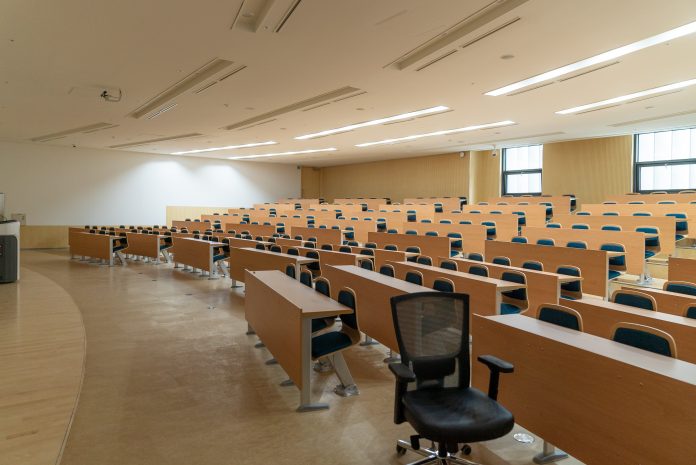
In lecture, I have a radius of 20 empty seats surrounding me. I simultaneously hope with all my will that no one will fill a single one of seats and that someone will sit next to me. 

Every one of the hundreds of thoughts that run through my head pick me apart and I agree with all of it. I am worthless, ignorant, attention-seeking and will never amount to nothing. 

I’m doodling possible ways out of this nightmare on my lecture slides while trying to remember what the first hour of lecture was about. The professor asks the class to organize themselves into small groups and I suddenly realize that everyone has come to the conclusion that I am a fraud. 

They don’t know that I am disabled, but I’m sure they know that I am lying about it nonetheless. The lecture hall of 300 are all staring at me and I cannot disappear fast enough as I try to catch my breath while running up the stairs.

I am desperately searching for a place to panic or cry. The posters of mental health support groups, phone applications, and crisis lines feel more condescending than ever. What’s the point? I don’t want someone to recite their script of “I understand, that must be difficult, how does that make you feel?” at me. I want someone to listen and empathize with me, but that isn’t possible, not here at least. 

I find the nearest accessible washroom, lock the door, and look up at the ceiling. This washroom doesn’t have any pipes or beams that could bear my weight, I wonder if I move one of the ceiling tiles that a way out would be revealed. It’s something I try to keep in the front of my mind as I breakdown and try to avoid any visible markers of a crisis. 

I place my hands on either side of the sink and try to stabilize myself as I see my reflection in the mirror. I have a comprehensive understanding of how hopeless, pitiful, and what a waste of space I am. 

For the first time in weeks, I am thinking clearly and know what I have to do to feel better. I have to go home, count the pills I have left over from whenever I discontinued use and make a decision — to take one one of them or all of them.

The EVSCSU and BESU receive eviction notice from School of Environmental Science

1
PHOTO: Gudrun Wai-Gunnarsson / The Peak

Written by: Serena Bains, Staff Writer 

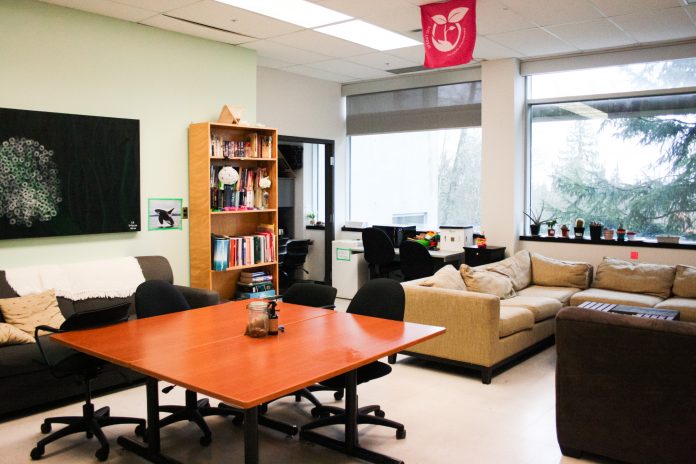
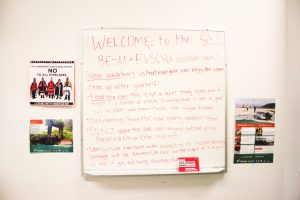
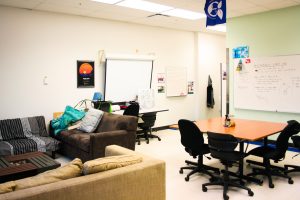
The Environmental Science Student Union (EVSCSU) and Bachelor of Environment Student Union (BESU) recently learned of the School of Environmental Science’s plan to repurpose their common room and convert it into a lab space for environmental science research. Neither the EVSCSU or BESU were consulted regarding the eviction of the groups from the common room, according to the student unions. 

Initially, there was no replacement for the common room nor a rationale given for what prompted the decision. The EVSCSU and BESU were given the suggestion to use the bookable rooms in the Student Union Building. However, this would require constant relocation and provides limited storage space. 

According to Nathan Zemp, President of the BESU, and Paolo Orosa, webmaster of the EVSCSU, the School of Environment assumed that the common room was underutilized, were unaware of the community the room provided, and didn’t know of the investments made by the EVSCSU and BESU into the space. Furthermore, the faculty was unaware that BESU was one of the resident student unions of the common room, meaning that it was BESU’s only common space for events and gatherings. Zemp expressed that “the common room is [their] second home” and that “it’s a meeting space for all of the students in our majors, it’s a place where you can always go.” 

PHOTO: Gudrun Wai-Gunnarsson / The Peak

As detailed in the annexation statement put out by the EVSCSU and BESU on November 13, the BESU remains unnotified of the eviction, which was three weeks away at the time the statement was written. The School of Environmental Science conveyed that the common room was meant to be a temporary space, where this decision was being contemplated for the last five years however, this was not communicated, as expressed by Orosa.

B-Jae Kelly, the Associate Director of Facilities and Technical Operations of the Faculty of Environment, remarked that there is a solution in the works. Additionally, Kelly stated that they are happy to consult with student unions in the future to prevent any further miscommunication. 

“In more recent communications, they have appeared more supportive and understanding. The initial notice was quite blunt. Since they’ve heard how important this room has been to us, they are open to some dialogue,” said Zemp. 

In terms of an alternative space, the EVSCSU and BESU have been provided some options. All options, however, would be approximately a 50% reduction in size compared to the common room because “given the size of the student unions, [the faculty] can’t justify giving [them] a larger room,” as noted by Zemp.

While the EVSCSU and BESU acknowledged that the School of Environment was unaware of the significance of the space to either student union, they do not blame any individual for this disconnect. They hope that with continued dialogue with the faculty, all parties can come to an agreement for a feasible replacement of the common room. 

PHOTO: Gudrun Wai-Gunnarsson / The Peak

Kelly stated that the faculty is also committed to finding a solution that is suitable for all parties. The faculty believes that there is currently a solution in process — a tentative solution is that student space would be administered out of the Dean’s office to fit the needs of the student unions currently housed in the common room.

The EVSCSU and BESU also acknowledge that the School of Environment is under fiscal pressure by SFU as there is a shortage of lab space for professors, as there is no greater funding being provided to the school. Zemp explained that, “SFU is now charging them for potential space. So, if they don’t utilize the space that they have they won’t be able to get anything else.

“We are hopeful, we’ve seen some good signs that the faculty is listening to us [ . . . ] It’s not hopeless, if you get evicted there are things you can do and there are ways to stick up for yourself and if you engage with the faculty in dialogue and act respectfully, you can achieve positive results — we’re hoping.”

For more information on the EVSCSU and BESU and their negotiations, visit their Facebook page.  

UPTOWN BOYBAND discuss their sound, bilingual music, and the Canadian music scene

0
These artists are embracing their identity and creating versatile music. Photo courtesy of Mimi Vuong

By: Michelle Young, News Editor

Editor’s note: Some of the answers below have been edited for length and clarity.

Toronto-based UPTOWN BOYBAND released their first album, CLUB UBB, on November 20. It’s a concept album that’s divided into two parts, HEARTTHROB and HEARTBREAK, and showcases the band’s musical versatility. 

Comprised of Roc Lee, Joe Rascal, and Justin Trash, the band has been releasing singles since early 2020 — like groovy and upbeat “SAILORMOON” and hard-hitting “CHUMCHURUM.”

The Peak had the opportunity to interview the band over Zoom to discuss their new album. 

The Peak: Why did you decide to break the album into two concepts? 

Justin: The album is inspired by K-pop music, and [in] K-pop, there are so many genres within each song: you can get a trap feel, you can get an EDM feel, a pop feel. For us, we really wanted to divide into pop and trap music because of our upbringing as musicians. When we were performing [ . . . ] we would start with a pop song, then just end the show with a full trap set. I think it was important for us to hit every aspect of trap music and every aspect of pop music to show that versatility. 

P: Adding onto the idea of versatility, what are your thoughts on genres? As a band, your sound has blended a lot of different genres together. Do you think genres will eventually fade away — or does it simply depend on the artist? 

Roc: I think it really depends on the artist, because not every artist is willing to be as experimental as we are. Like Justin mentioned before, we were influenced a lot by K-pop, and K-pop is famous for literally taking a lot of different sounds from all over the world and making them fit cohesively in one song. We really thought that was something we wanted to do with our music. We’ve always wanted to be different and to showcase our versatility.

Joe: I really think that every year, the music industry is always changing, and therefore, people are always coming up with new ways to express themselves because now the audience has new ways to find who to listen to. I feel like a lot of artists now are trying to be more personal [ . . . ] I feel artists now can express themselves more freely, hence why they can branch out with more genres. 

P: Do you have any specific sounds/genres you’d like to try or experiment with?

Justin: Well, we definitely won’t do country music. Over my dead body.

Joe: You know what, though, you never know. 

Justin: I know. 

P: Going off of that, do you ever clash on which sound you want during recording?

Roc: I think usually in sessions, we get along well and have a similar vision of what we want to sound like and the sounds we want to create. We also bring our individual strengths to the table — Justin’s really good at writing, Joe’s very good with that soul, the melody.

Justin: At the end of the day, if it sounds good, it sounds good.

P: What is your creative process like? Has COVID-19 changed the way you write and produce music?

Justin: Initially, when we originally recorded the first album, CLUB UBB, we had a simpler approach to it where someone would come up with the hook and we would kind of build around that concept. But now with [COVID-19] hitting, we still have that similar structure but more resources to use in terms of working and collaborating with other producers and writers. Now, we’re able to write for each other and we kind of get what sounds good with other things. 

P: Various artists of colour have commented on media placing emphasis on their identity instead of their music, however, you’ve spoken about embracing your Korean identity. What are your thoughts on placing emphasis on identity versus the creative process in interviews?

Justin: I feel like when we say we’re embracing our background, it comes from our upbringing — there are times where we’ve felt shameful about being who we are, but I guess what we’re actually embracing is more the identity of being Koreans living in Western culture and being raised in that with the same cultural discipline we get at home. But also when we go outside we have a total different experience, where maybe our non-Korean friends or [friends who aren’t people of colour] wouldn’t get.

Roc: And I also think it’s because we wanted to represent something bigger than music [ . . . ] We wanted to represent that [East] Asian culture, that upbringing, because we didn’t have a lot of role models growing up in Toronto and we haven’t seen a lot of Asian-Canadian and Asian-American artists doing well. I mean, now we have a lot of great artists coming up, but we wanted to represent that culture. 

P: Many Asian-Americans/Asian-Canadians have been putting out bilingual music. Do you plan to put out any Korean releases? Do you think multilingual music will eventually make its way to the mainstream music scene?

Roc: Even now you see K-pop songs getting number one, like BTS, Blackpink — and people have no idea what they’re saying.

Joe: Sound has been with us since the beginning at time, whether there was language or not, and it can sound good, and we’ll just love it because sonically it sounds good — so I think it doesn’t matter what language or culture you’re bringing up. It’s the sound of what you love to make. 

Justin: To answer your question though, yes, we’re really interested in doing it, and we’re planning on doing it on our second project. 

P: UBB has been dubbed as “an alternative” to K-pop is that something that you initiated or a label thrown onto you?

Justin: Hey, if that’s what they’re saying, that’s what we are. We’re totally open to the term “alternative K-pop” because the way we are taking our direction is we’re so heavily inspired by K-pop, but yet we’re not K-pop, right? We’re so heavily inspired by Western music, but we’re not fully there yet, so we’re taking the alternative route of the K-pop discipline, the musicality of both sides.  

P: What changes do you hope to see in the future Canadian music scene? 

Roc: I want to see more different types of languages incorporated in music and just having different cultural influences in Canadian music. I feel like it is very black and white with a lot of music that is coming out, and we hope to be a part of that change. 

P: Is there anything else you would like to say to our readers?

Justin: Go stream CLUB UBB. Stan us, stream us, follow us. Stay healthy, stay safe, wear a mask, don’t be an asshole. 

CLUB UBB is available on all streaming platforms. Follow Uptown Boyband on Twitter  and Instagram