Home Blog Page 369

Board Shorts — January 15, 2020

0
Image: Irene Lo

Written by: Karissa Ketter, News Writer 

The Board takes action to reform the temporary pass/credit/no credit grading system

SFU administration recently announced that they are introducing a new, temporary pilot grading system: pass/credit/no credit (P/CR/NC) for the Spring 2021, Summer 2021, and Fall 2021 semesters. University Registrar and Executive Director, Student Enrolment pro tem Kathryn Verkerk noted in her email to students that while not all details had been finalized yet, they are aiming to give students autonomy over which courses they want to use this grading scheme for up to 12 units. However, students are limited to choosing program electives and not required courses. 

The SFSS Board discussed that they felt this system was flawed. Student senate members had introduced a motion to “reinstate the original pass/fail grading scheme that was used as an emergency response to the emerging coronavirus pandemic back in March 2020,” as noted by VP University Relations Gabe Liosis. He said that “Since then students have been calling on SFU to bring back this grading scheme [ . . . ] up until about a few weeks ago these calls were largely unheard. And so a motion was put forward to senate by students senators to try and bring it back.”

Liosis noted that the SFSS Board has heard feedback from students that the grading system only being available for electives may present some problems for students. “There are a lot of questionable components to this new grading scheme that are really frankly confusing and will present logistical issues going forward,” said Liosis. 

VP Finance Corbett Gildersleve questioned whether this system will be applicable for students in general studies programs or students with undeclared majors. Liosis added that this may also present a variety of issues for students that will use this grading system and then potentially change their majors in the future as using that option for an elective may now become a prerequisite.

The system works by having students request alternative grading prior to the last day of class. At that point they are assigned either a pass, credit or no credit. 

System breakdown:

  • Pass is where credit is awarded but CGPA is not affected for a grade that would otherwise be above a C-
  • “Credit” allows credit to be awarded and CGPA still is not affected for a grade that would otherwise be below a D. However, students may not use courses with a “credit” grade as a prerequisite for other classes. 
  • The “no credit” option is awarded to students who have failed the class but it does not affect their CGPA.

Liosis noted that while at the Senate meeting, SFSS Chair Osob Mohamed “attempted to move an amendment to expand the scope of the grading scheme to all courses not just elective courses, however, that amendment failed.”

This prompted Liosis to bring forth a motion to the SFSS Board to direct all faculty representatives to speak with their respective faculties about the current grading system. He reported that in the memo discussed at the Senate meeting, it was indicated that each program is permitted to “expand the scope of the grading scheme within their program.” 

“What I believe is an important next step is working with individual departments and faculties to try and do this at a much smaller level because clearly it did not work at the institutional level,” said Liosis. 

The Board voted unanimously to call on individuals departments to encourage expansion of the P/CR/NC grading system. 

The Board received a presentation from MeaningfulWork

CEO of MeaningfulWork, Raaj Chatterjee, discussed the potential for the SFSS to use their tech systems. MeaningfulWork is an online platform supported by the SFU Coast Capital Saving Venture Connection that “matches skilled corporate employees with nonprofits and charities for volunteering.” 

According to Chatterjee, it is difficult for students to get involved with campus clubs and it is time-consuming for clubs to recruit the right people for their initiatives. He told the SFSS Board that their program can aid students in figuring out their goals and career paths.

Their platform works by having students register with their information and interests. Clubs also register with the website and outline what positions they are currently looking to fill. “The idea for this hub is to match students to club opportunities that align with their skills and their passions,” said Chatterjee.

Chatterjee noted that MeaningfulWork has done a beta project with over 10 clubs at SFU to test the website and they are hoping to work with the SFSS to expand the scope of their Opportunities Hub at SFU. 

The Board asked MeaningfulWork to develop a formal proposal to be considered at a later date. 

SFU professors raise concerns about snowbirds travelling during COVID-19

0
PHOTO: Freddy Castro / Unsplash

By: Jaymee Salisi, News Writer

Many retired Canadians continue to participate in international migration to warmer climates such as Mexico or Florida during the COVID-19 pandemic. People who engage in this practice can be referred to as “snowbirds.” An estimated 375,000 snowbirds travel annually to the United States and Mexico to escape the Canadian winter. 

In an article by SFU professors Valorie Crooks and Jeremy Snyder, the authors describe how snowbirds may complicate the distribution of COVID-19 vaccines. “We need to be preparing ourselves for how we’re going to deal with the fact that people are going to access this vaccine abroad,” Crooks explained in an interview with The Peak. 

“Somebody, such as a snowbird, may access the first dose while they’re abroad, and then actually have to access the second dose upon return,” Crooks explained. This is because the Pfizer and Moderna vaccines both require two doses with 21 and 28 day intervals between each dose, respectively. Canadians meeting eligibility requirements are able to access the vaccine in American states such as Arizona and Florida

Canadian snowbirds are eligible to receive the vaccine if they are 65 years of age or older and able to produce proof of Arizona or Florida residency and legal identification. Canadian travel insurance may not cover the cost of the vaccine abroad, as it is not considered a medical emergency.

“Although many people aren’t aware of this, there actually is no standardized international language of medicine, and so the information you may be given when you access your vaccine abroad may not be what we’re looking to capture here in Canada,” Crooks stated. Based on this information, she emphasized that Canada and other countries must prioritize the creation of a “dynamic and thorough vaccine registry” to better keep track of health information across international and domestic borders.

Crooks and Snyder also noted that prioritizing snowbirds for the vaccine might be unfair to those who did not travel abroad. Crooks clarified that she does not think that “anyone is planning, necessarily, to access ‘dose one’ abroad and ‘dose two’ here,” but this could happen if there are changes in access to borders or if doses arrive later than expected.” 

For instance, the US/Canadian border closure that was implemented in March 2020 is an example of travellers changing plans abruptly to return to Canada. Due to the unprecedented challenges of the pandemic, Crooks stated that there could be potential for similar circumstances.

Snowbirds might experience a “different sense of risk and [ . . . ] health while they are abroad” as living in cold climates can trigger existing respiratory conditions, according to Crooks. While people with respiratory conditions are also highly susceptible to COVID-19, some snowbirds have stated they feel safer while travelling to warmer climates during winter months due to illnesses that worsen in cold weather. 

Although Crooks acknowledged that international retirement migration can generally provide people with positive health and recreational benefits, she warned that “there are going to be instances where people have complications following the vaccine.” Complications might include potential allergic reactions to the medicine and the capacity for travel health plans to cover this.

The Canadian Snowbird Association recently notified their members that all air passengers are required to get tested three days before their flight to the US departs, and must confirm negative test results with their airlines before boarding. Travellers who have received the COVID-19 vaccine are still required to present a negative test result before their flight. 

Crooks suggested that people who choose to travel abroad should carefully weigh their personal health risks with their family physician to “assist them with helping them to understand the implications of decisions to travel abroad.” 

More information on Crooks’ and Snyder’s article can be found online.

Skip the food delivery apps

0
Support the food, not the delivery corporations. PHOTO: Gudrun Wai-Gunnarsson / The Peak

UPDATED 11/2/2021 to reflect the BC Federation of Labour’s stance on the provincial government’s fee cap.

by Emma Jean, Staff Writer

Delivery apps: they’re great, right? They provide meals from a number of local restaurants, the food is already prepared, and they provide deals not available with normal takeout orders. That’s what the advertisements for apps like Skip the Dishes, Uber Eats, and DoorDash say, anyway. What they don’t talk about is how they classify their workers as contractors instead of employees, so they don’t have to provide them with any benefits. When the struggles of a pandemic are layered on top of that, what’s left is workers with COVID-19 exposure risk and little means of protection against it. To actually support food industry workers, we should avoid these apps.

The struggle of delivery drivers hasn’t gone completely unrecognized. This past December, the provincial government set a cap on delivery order fees at 15% at the request of the restaurant industry itself. The aspects of the legislation that protect “workers’ wages and tips” were praised by the BC Federation of Labour and recognizes “the critical role delivery workers have played during this pandemic.” However, these regulations are the most protection delivery workers have ever seen, with the apps themselves — worth collectively billions of dollars — refusing to give them any proper benefits. Most of these apps pay their workers based on the individual deliveries they complete and not an hourly rate, and that’s all that workers can expect from them. 

Research and action based on this new gig economy — filled with independent contractors jumping from job to job — is only emerging, but it’s needed as labour laws surrounding this concept are almost non-existent. Plenty of food delivery workers in the United States have taken this kind of action by expressing interest in unionization, much to the chagrin of the apps. A statewide referendum (Proposition 22) was even held in California that proposed to mandate Uber, Lyft, and Doordash to recognize their workers as employees. Had the companies not thrown around millions of dollars to defeat the initiative, millions of workers would have gained healthcare and the right to unionize. While similar legislation is yet to take place in BC, growing research is keen to call for it. 

A report by researchers with SFU’s School of Communication found that, in BC, food delivery workers are “particularly vulnerable to exploitative working conditions,” and even more so with the onset of COVID-19.

It’s not all hopeless, though. Drivers for Uber in Toronto have organized and have fought against their employer’s disputes with the Ontario Labour Relations Board. The same board also ruled that the now-defunct delivery app Foodora’s workers should be recognized as employees. This sets the legal groundwork for potential organization across the gig economy field and could give unions a leg up against their employers — something that needs to happen soon if their livelihoods are to be protected. 

But what can the average consumer do about this problem? For starters, ordering food doesn’t have to be through an app. Most local restaurants will offer delivery for a comparable cost just by calling them, and the same rush of not having to cook and clean is the same. To take things a step further, advocating for revised labour laws that protect gig economy workers and allow them to unionize is crucial. By recognizing gig workers as employees rather than contractors, that process can begin.

Opinions in Dialogue: Is SFU’s U-Pass system fair?

0
The U-Pass system has been controversial over the years. PHOTO: Gudrun Wai-Gunnarsson / The Peak

by Gurleen Aujla, SFU Student, Dev Petrovic, Staff Writer, Madeleine Chan, Opinions Editor

Over the years, there’s been a lot of conversation from students about the equity of SFU’s U-Pass system. Specifically about whether students who don’t want the U-Pass, and don’t meet the U-Pass exemption criteria, should have to pay for it. On the other hand, some students believe that having these harsh restrictions allow the program to fiscally function, and give students who actually need the pass an affordable transportation option. Now, when fewer students are using the pass, and students at schools like Kwantlen don’t have to pay for it without in-person classes, the topic is fresh on students’ minds.

Gurleen: Overall, I believe SFU’s U-Pass system is fair. It is one of the key services provided by the Simon Fraser Student Society (SFSS), the Graduate Student Society (GSS), Simon Fraser University, TransLink, and the Province of British Columbia. It is a necessary part of many students’ lives as they use it to travel to and from campus(es), get groceries, go to work, and see family or friends, to name a few uses. In addition, a 2019 referendum on the U-Pass passed with 86.78% of student respondents in favour of continuing the program until at least May 1, 2025. 

The current cost of a monthly transit pass is $98 for a 1-zone pass, $131 for 2-zones, and $177 for 3-zones. Depending on where students are commuting from, this can mean a savings of up to $538 per semester. It is certainly one of the cheapest options available for students, compared to driving, using a taxi, or a ride-sharing service. 

Dev: I agree. While the U-Pass system requires students to pay a per-term fee of $170, the alternative for students using public transportation is much less economical. Not to mention that several students pay for their tuition fees through student loans, bursaries, scholarships, and other forms of financial aid that aren’t out-of-pocket. If the U-Pass was not available to SFU students, many would be forced to take on public transportation as a personal expense. This can be an additional financial toll and stressor, considering all the external expenses that come with being a student and living through a pandemic.

I understand the frustration I’ve heard from other students who feel that it is unfair to be paying for the U-Pass when learning is currently remote. There may be less urgency for some students to have the U-Pass, but this does not exempt the fact that there are always students who are essential workers and students who rely on the U-Pass as the cheapest possible transportation option. 

Gurleen: Quite honestly, I believe it is a lifeline for many students. I can certainly understand the sentiment from students who, pre-COVID-19, drove to campus or found public transit more of a hassle than a benefit. But, in the end, it is a type of social benefit program. The universal model and strict exemption categories of the U-Pass program are what make it affordable and attainable for students. This is something that comes with being part of the student community. 

I would also add that because of the U-Pass, fewer students drive. This means less cars on the road, which has a positive impact on campus parking, traffic, and road conditions. And from what I’ve heard, parking is already a nightmare on campus.

As you mentioned, we are in a bit of a difficult situation with the current public health emergency and the majority of students studying from home. Those who have access to other forms of transportation have either reduced or completely avoided the use of their U-Pass. But, I believe the exemption criteria provided is, for the most part, fair. There was even an added exemption criterion for students taking classes remotely and living outside of Metro Vancouver due to COVID-19. This ensures that those who simply cannot use the U-Pass — not those who just don’t want to — are fairly exempt from the program. The one criticism I will add, with regards to exemption criteria, is the lack of options for individuals in a high-risk category for severe complications if diagnosed with COVID-19. 

Dev: Going off of your point of the U-Pass being a social benefit program, the program is inevitably not going to benefit every SFU student — particularly considering the current status of remote classes. But the benefits for those in need of the U-Pass outweigh the downsides for students who do not use it. Those who don’t need it can merely apply for an exemption or pay the semesterly fee.

For example, there are many places that our money goes towards besides actual tuition. One of these is the Student Activity Fee, which funds helpful student organizations like the Simon Fraser Public Interest Research Group (SFPIRG) and the SFSS Food Bank Program. Just like the U-Pass, many of us may not be using these services or engaging with these student organizations, but it is a price we pay to ensure accessibility and support for all students. It is also a given aspect of attending a university and being a part of a student community, as you mentioned. 

I also believe that the added U-Pass exemption is relatively fair, although I agree that there should be further exemptions in regards to COVID-19. Nonetheless, the current exemptions are also valid for folks with documented disabilities that prevent them from being able to use public transportation. While this only applies to students registered with SFU’s Centre for Accessible Learning (CAL), I do think that these exemptions make sense, especially considering that an exemption for simply not using public transit was not even available before COVID-19. 

Gurleen: Very well put, Dev. The last thing I would add is that we, as students, need to realize how important of a customer base we are for Translink. They have negotiated these contracts with a number of post-secondary institutions all across BC, but SFU has one of the largest student populations in BC. This is something to consider when the SFSS works again with Translink to negotiate our U-Pass contract. As always, student input is necessary on services such as the U-Pass. I would encourage all students to vote in referendums and provide their input on the program as the SFSS works on behalf of and for students. 

Dev: Precisely. The SFSS is not a separate entity from the general student body and while they do negotiate matters like the U-Pass on behalf of students, their decisions are based on our needs. That being said, when there are opportunities for students to communicate their concerns on U-Pass to the SFSS, they are free to express them and are encouraged to do so. Whatever the future outcomes for the U-Pass system are, I do hope that the SFSS is not put in a negative light for the work they do for SFU students.

Entertainment shouldn’t be the exception to pandemic caution

0
Why can Supernatural socialize outside when I can’t? ILLUSTRATION: Maple Sukontasukkul / The Peak

by Alex Masse, Staff Writer

As a lifetime citizen of Hollywood North (aka Metro Vancouver) it’s a hobby of mine to stumble onto film and TV sets. I live by a park, one that’s seen everything from Sonic to Supernatural, and my mother and I love watching shows and pointing out film locations we recognize. Needless to say, when COVID-19 hit, the entertainment industry came to a screeching halt. 

So imagine my surprise when I see a dozen cars clumped together on my daily walk. Everyone’s wearing masks and there’s a testing site down the road, but it feels wrong when you know just how many cracks the virus can slip through. I know this more than most: my father got COVID-19 from a coworker despite being outdoors and never removing his mask. The gears of the industry started turning again even though the situation remains dire, especially in America where many filmmakers are from. This filming resumed in Canada as of last July, but its continuation just shows how inherently reckless this type of work remains.

Besides safety risks of filming, COVID-19 restrictions can also alter the final product. The last season of the CW network’s long-hauler Supernatural premiered after filming during COVID-19. Some of its disliked finale is blamed on social distancing guidelines, which resulted in the appearance of several strange, masked figures never seen before in the series. This lack of quality was a choice: instead of suspending production, they went on to make a product with limitations, resulting in these underwhelming villains.

This isn’t even half of it. Time-tested shows like The Bachelorette, Wheel of Fortune, The Conners, and even newcomers like Carnival Row and The Witcher, among countless more have chosen to brave these strange times. As it turns out Hollywood waits for nothing — not even a virus that has claimed the lives of 2.2 million people globally. Many other productions have been suspended or delayed, why can’t these?

I especially feel for the crew members of these productions who depend on this work to fund their livelihoods. They already go through so much, with their long, grueling hours of work and lack of career support.

I know these productions are probably doing their best to keep up with prevention practices by mandating quarantining, testing, and social distancing. But that only does so much, especially when it’s followed by hours of close contact on shooting days. Besides, it’s a well-established fact that what we watch affects how we perceive reality. When the entertainment industry starts moving again, projecting these illusions of normal life, we almost feel like it’s real. Even when it isn’t. 

To continue shooting now is inherently reckless, as things can go wrong even when all  precautions are followed. It can also change the end result of these productions, with pandemic guidelines limiting creative freedom. And worst of all, it normalizes the idea of close contact to viewers, and helps contribute to the illusion that the pandemic is “over.” But it isn’t, no matter what the entertainment industries are saying.

Need to Know, Need to Go: February 8–14

0
Illustration of a blue calendar, with "Need to Know, Need to Go" written on top
Arts & Culture events to catch around the city. Image courtesy of Brianna Quan

By: Charlene Aviles, Peak Associate

Coastal Lunar Lanterns and Community Lanterns | Jack Poole Plaza and šxʷƛ̓ənəq Xwtl’e7énḵ Square | January 30 February 18 | FREE

The Lantern City, the Society of We Are Canadians Too, and the Asian-Canadian Special Events Association present the Coastal Lunar Lanterns and the Community Lanterns displays, located at the Jack Poole Plaza and the šxʷƛ̓ənəq Xwtl’e7énḵ Square (Vancouver Art Gallery North Plaza) respectively. Featuring beautiful Taiwanese and Indigenous art, the vibrant and colourful lanterns are an example of one way that diverse communities can come together.

Meet, Greet, and Eat: Mindful Creations | Zoom | February 9 from 12:30 1:30 p.m. | FREE

The Creative Collective and Global Student Centre are inviting all SFU students to a relaxing environment where they can make crafts, eat lunch, and chat with their peers. To increase accessibility, the craft materials will include common household objects. All activities are optional. Registration for Mindful Creations is available on WebSurvey

Dine Out Vancouver Festival | Restaurants across Vancouver | February 5 March 7 | Prices vary

Taste the world, Vancouver style” at the largest Canadian food and drink festival. Tourism Vancouver presents Dine Out Vancouver, which includes over 300 local restaurants this year. With respect to current public health guidelines, restaurant customers should wear masks and must stay at their own table. You can support local restaurants by planning your visit today! The Dine Out Vancouver website lists which restaurants are accepting reservations. 

SFU Faculty Smackdown Debate 2021 | February 10 from 11:30 a.m. 12:30 p.m. | Suggested donation of $2 | Zoom

The annual Faculty Smackdown Debate is back, featuring moderator Paul “Bam Bam” Budra. Cheer on your nominated contenders as they debate silly topics. At the end of the event, one professor will win the coveted Gnome-It-All Award. To support the United Way of the Lower Mainland, purchase a ticket for the event online via EventBrite. After registration, event participants will be e-mailed a Zoom link.

Monday Music: Valentine’s Day Edition

0
"Monday Music" in giant yellow block letters with a red background
Monday Music: your weekly themed playlist. Image courtesy of The Peak.

By: Charlene Aviles, Peak Associate

While creating a playlist, I usually choose songs that describe vivid memories because I enjoy visualizing the artist’s experience. Whether it is 90’s R&B or boy bands, I appreciate music that creates a feeling of nostalgia. This playlist includes songs that detail breakups, unrequited love, and finding the right love at the wrong time. No matter what your relationship status is this Valentine’s Day, these songs will remind you to cherish your loved ones.

“Never Mine” by Marylou Villegas

Image courtesy of Marylou Villegas

SFU alumni Marylou Villegas’ song “Never Mine” describes the risks of investing time into unofficial relationships. With lyrics like “One day you’re asking if I’m free / The next you call to cancel on me,” she details wanting to escape from the friend zone and feeling confused about her friend’s mixed signals. She raises her voice while singing the line “I don’t deserve to be second choice,” reflecting her newfound confidence.

“Unloving You” by Alex Aiono

Image courtesy of Become Records

If you are looking for a bitter breakup song, then look no further. Alex Aiono’s “Unloving You” explains that healing takes time. His lyrics reflect the indecisiveness one feels when figuring out whether to move on or not. When Aiono sings “Oh, if I could undo the shame of ignoring my friends,” it reminds me of the tendency to get caught up in the moment during the seemingly perfect “honeymoon phase.” Other people may perceive the relationship more realistically though and recognize red flags appearing, which is what the song is conveying. 

“Loving You Silently” by Kira Kosarin

Image courtesy of Off Brand Music

Kira Kosarin’s heartfelt song “Loving You Silently” describes the heartbreak from a relationship where both people did not equally commit. The line “Can’t love you enough for the both of us” reflects Kosarin’s realization that her partner is hurt and responsible for their own healing. Lesson learned: people should love themselves before entering a romantic relationship. 

“Almost is Never Enough” by Ariana Grande ft. Nathan Sykes

Image courtesy of Universal Republic Records

Ariana Grande and Nathan Sykes’ duet “Almost is Never Enough” conveys the pain of not pursuing love. The song outlines a relationship where both people were unaware of their feelings, despite it being obvious to other people. Sykes expresses regret about not risking it all when he sings “We almost knew what love was / But almost is never enough.” The rest of the song also communicates the angst of realizing it would have been better to pursue a relationship than to wonder “What if?”

“Happier” by Ed Sheeran

Image courtesy of Asylum Records UK

Ed Sheeran’s song “Happier” expresses the struggle of witnessing your ex-partner moving on with someone else. In the song, Sheeran reluctantly accepts the situation and wishes his ex the best. When he sings “I know that there’s others that deserve you / But my darlin’ I am still in love with you,” you feel his deep, emotional pain.

Your weekly SFU Horoscopes: February 8–14

0
An illustration of a girl with long flowing hair. Astrological signs and stars shine around her.
ILLUSTRATION: Marissa Ouyang / The Peak

By: Kyla Dowling, Staff Writer

Aries: It’s frustrating to know that people are too cowardly to admit that they’ve been madly in love with you for years. Take action into your own hands. DM your exes, your best friend’s dad, that one kid from your high school math class that wore a Squirtle hat every day of his life, and tell them that you are expecting— nay, demanding— a love confession. That, or investments for Dogecoin stocks. 

Taurus: Your 2015 Instagram bio was probably “Kanye taste with Drake feelings.” But your Drake feelings aren’t going to save you when you realize you’ve spent all your money on skincare and nothing on a gift for your SO. Here’s an idea: snatch some flowers from Ronald Reagan’s grave. Regifting has never been so anti-establishment.

Gemini: Love is in the air, Gemini, and you’re wearing a mask. The stars say it’s time to talk to someone new. Take inspiration from what you know: say you have a clogged pipe and can’t pay a plumber, or apply for a job as a middle-aged woman’s pool cleaner.

Cancer: The stars have a very special message for you, Cancer. It reads: “Get in a relationship immediately. I don’t care if it’s with that weird person on Hinge who wanted you to see his pet Kay.” . . . I think my star translation got a little convoluted. If you see Kay . . . WAIT

Leo: You have a vast array of choices this Valentine’s Day. Who will you choose? Maybe you’ll Zoom with your classmate from the third grade who gave you their Charizard card? Well, the last one is great if you wanna catch ‘em all: the best starter and COVID.

Virgo: You have rules, Virgo. Leave a room cleaner than when you walked in. Be cautious about lovers. Yet, something about that buff, bald man makes you want to risk it all. For Mr. Clean, you’d be willing to be just like his products — all-purpose.

Libra: Timothée Chalamet? That skater boy in your Zoom class who is most certainly sending “u up?” snaps during a war crime lecture? You don’t need them. It’s time to realize your worth and stop searching for unattainable skinny white boys, just make them yourself. There are Tim Burton claymation tutorials on YouTube.

Scorpio: Want to make some quick cash? Become ordained at www.lonelyministers.com and spend your February officiating weddings! You get to make $5 each time and you can repress your overwhelming desire to shoplift the entire Valentine’s Day chocolate section at Shoppers Drug Mart. Who needs Smarties when you’re such a smartie?

Sagittarius: Ah, Valentine’s Day. Today, while couples are cuddling at home, you can live out your mermaid fantasies (sort of) when you free the lobsters from the supermarket. Get your heist tools: an oversized coat, a bucket of water, and a seashell bra.

Capricorn: Reality shifting is all the rage on TikTok, Capricorn. I know you’re realistic and practical and all that, but give it a shot! Close your eyes and let your reality shift over to whatever anime you’re obsessed with this week. Maybe in the 2D world you’ll find someone to love you.

Aquarius: When it comes to romance, your dream relationship is the one in Beauty and the Beast. You just want a partner who will let you wander around their castle and read every book in their enormous library. It also doesn’t hurt that you have a thing for furries. 

Pisces: You’re equipped with some frog-shaped chocolates, a rose bouquet, and a handmade card that you’ve learned calligraphy for. Now show up on the doorstep of your pre-pandemic Tinder match from last March. Yeah, they ghosted you, but they also complimented your ass. You can’t let a love like that go.

SFU’s Centre for Accessible Learning is not accessible

1
Think twice before going to CAL for learning accommodations. PHOTO: Gudrun Wai-Gunnarsson / The Peak

by Anonymous

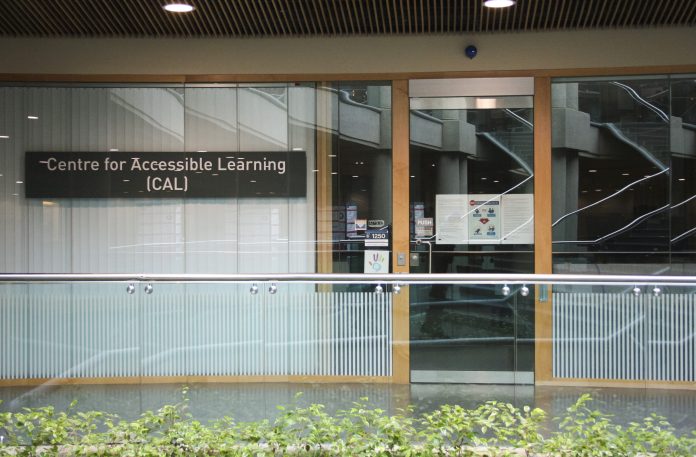
I recently delved into the process of obtaining learning accommodations from SFU’s Centre for Accessible Learning (CAL). But I was shocked to learn that receiving support would require weeks of my time and energy, and would only force me to settle for the absolute bare minimum. These services that are intended to promote equity in learning are overly bureaucratic, limited, and lack sensitivity with vulnerable cases; in short, they are inaccessible.

In October of last year, I was hospitalized for a psychiatric condition, which caused me to miss a week of classes and severely impacted my ability to keep up with my courses. However, despite a letter from my family doctor and an ER psychiatrist, I did not have enough documentation to register with the CAL. Nonetheless, I met with one of their advisors. 

However, I came out of the meeting frustrated by the inaccessibility of receiving accommodations, and entirely overwhelmed by the amount of information thrown at me. Like many students, I did not have the privilege of being able to see a private psychiatrist to provide me with the necessary documentation, nor did I have the time to get in touch with a psychiatrist at SFU before the registration deadline. So I did what a CAL advisor urged me to do: I dropped all of my classes. The situation was out of my hands and it was made very clear to me that I should just “wait until my condition improves” to enrol in courses again. 

I know I am not the only student who has dealt with these circumstances. Serena Bains, an SFU student and member of the SFU Disability and Neurodiversity Alliance (DNA), revealed to me that the CAL appeared to be the only option at SFU to receive learning accommodations. But when they spoke to members of DNA, “everyone had recited how inaccessible accommodations were.” They explained that obtaining documentation was not worth the hassle to “receive hardly any accommodations.” This is the same reason that prior to my hospitalization, I had never reached out for support, and it seems like the reason many others had not as well. 

Bains further explained how they had also encountered trouble with receiving immediate accommodation after being hospitalized. 

“I thought that my situation was dire enough that CAL would have to provide me with significant accommodations. I entered the centre visibly upset and was told that I needed an appointment and that I couldn’t speak to an advisor.” 

While Bains managed to provide enough documentation to receive an appointment, they were told that they could not receive accommodations unless they went through SFU’s Health and Counselling Services (HCS). 

This bureaucratic process and its necessity for students to “prove” their condition creates a barrier for those who require accommodations, but do not have access to diagnostic privileges. It is significantly counterintuitive to expect students with disabilities, like those with psychiatric disabilities, to complete long and complicated processes just so they can have the same opportunities for academic success as those without. This aid is a necessity for students, yet SFU treats it as though it’s a privilege. 

I can see why these extensive requirements for documentation are needed — to prevent students who do not have disabilities from making false claims. But it is ableist to expect students with disabilities to just “push through” the excessive documentation process, especially when their case is particularly sensitive or complicated. Besides, if a student is struggling enough to falsify claims for support, that should be enough grounds to at least receive some help, documentation or not.

Bains elaborated that when they finally received documentation from HCS, they were “provided with 13 pages of highly sensitive and triggering medical records.” They noted how the paperwork was re-traumatizing and included documented quotes from healthcare professionals that criticized their character. It is entirely unfair that a process intended to support students can become an emotionally triggering ordeal. Students should not have to relive trauma, or feel as if their condition is being invalidated to receive minimal accommodations like access to lecture recordings or 15 extra minutes to complete an exam.

I am lucky enough that I was able to gather the right documentation in time for the Spring semester, but many are not in this position. Some students are limited by their ability to deal with the CAL registration process and cannot actively advocate for themselves. Some are even discouraged from attempting to register, or are expected to accept that they will not be able to receive all the help they need. At the end of the day, the CAL’s services are intended to instill equity at SFU but this is impossible if these very services are inaccessible.

David Ly discusses inspirations, metaphors, and more in “Mythical Man”

0
SFU alumnus, David Ly, reflects on what led to his new book’s publication. PHOTO: Erin Flegg Photography

By: Michelle Young, News Editor

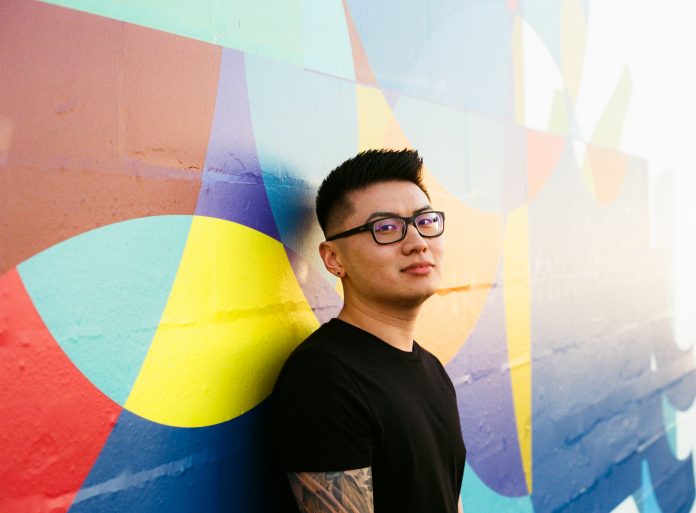
In April 2020, Vancouver-based writer and SFU alumnus David Ly published his debut poetry collection, Mythical Man. During an email interview with The Peak, Ly shared his creative process.

Reminiscing on his experience at SFU, Ly noted that poetry did not always interest him. “I tried so long to avoid poetry in my Creative Writing, English, and World Literature courses.” He added that when he did take a poetry class, it pushed him out of his comfort zone. 

“I used to write for The Peak and I remember one time interviewing Renée Sarojini Saklikar about her poetry book Children of Air India. I think interviewing a poet helped me get into poetry and grow as a writer too,” Ly shared.

Although Mythical Man is Ly’s first full-length book, he is no stranger to the world of publishing. His previous work, a chapbook titled Stubble Burn, serves as a prequel to Mythical Man. Ly said the chapbook “solely revolved around my experiences as a gay Asian man with online culture and how that impacted my perception of who I was.” Mythical Man expands on these ideas by adding elements of fantasy and blending them into Ly’s examination of identity. “I drew inspiration from classic myths where the characters underwent extreme magical transformations,” he explained. 

Mythical Man mixes the magical with the mundane in pieces like “Finally” and “Walking Together At The End of The World.” As described by Ly, the collection explores “mythology and how that informs our perception of men.” 

“A myth — in my opinion, at least — is a story that is constantly changing; much like what my idea of what a person can be,” Ly said. He added that while writing, he would question what makes up “the notion of masculinity” and would draw upon his experiences in online dating. 

Ly’s poetry also uses metaphors that explore relationship dynamics, specifically that of predator and prey. He writes, “Have you noticed how sharp and sparkly / your talons are in the starlight? / Let me lick them clean once you’ve finished / stirring up my sweetest and most tender parts.” 

“The prey and predator metaphor really symbolizes temptation to me, I think. There’s a poem in the book called Hunt and it’s one of my favourites because there is this feeling that the narrator is speaking to a predator-like beast in a very loving and protective way, but there also exists an underlying fear.”

These metaphors are a sharp juxtaposition to poems like “Transit Romance Guy,” and “I Finally Learned How To Love Myself,” which lean away from the mythical and deeper into life experiences: “Maybe he thought sticky rice was cute / to say after we fucked, / but I was hoping for an experience / where we could exist beyond an expression / that describes two Asians together.” 

Mythical Man blends fantasy with morality and sensuality with hardship to weave together a collection that is vulnerable, honest, and rich. Next, Ly is working on another poetry collection, aimed for publication in Fall 2022. “I think it’ll be less gay, but just as magical — if not more. It’s a fun one,” he shared.

When asked about advice for emerging LGBTQIA+ writers, Ly said, “Write what you want to read and see in the world! Also, as much as it is important to write about our experiences as they are just as valid as anyone else’s, never feel pressured to write about LGBTQIA content where you feel like you have to put yourself in the spotlight [if] you don’t feel comfortable doing so.” 

Mythical Man can be purchased directly from the publisher, Massy Books, or from Iron Dog Books. Connect with Ly @dlylyly on Twitter.