Home Blog Page 362

University is the time to make mistakes

0
Failures in university are a good opportunity to learn. ILLUSTRATION: Maple Sukontasukkul / The Peak

by Brianna Condilenios, Peak Associate

When we arrive at university, we can feel full of starry-eyed, first-year anticipation. We are then thrust into the cosmic world of clubs to join, classes to take, people to meet, and volunteer opportunities to try to help keep our heads afloat amidst all this madness. It seems that the endless stream of possibilities never stops throughout university as opportunity after opportunity unfolds. This can bring excitement, but it can also be overwhelming. Because of this, more than a few of us are going to struggle, and that is okay. Actually, it is through these failures that students can learn and grow. 

A bad grade, a fumbled job interview, a romantic pursuit or relationship that puttered out, a rushed volunteer experience; these things can make us feel utterly low, or perhaps even guilty for not achieving what we wanted. Students shouldn’t feel positive about missteps like these; they should accept the natural sadness that comes with failure. In accepting these feelings, we give ourselves the space to work through the hiccups we encounter. It’s important to shed some tears, breathe some fresh air, and take all the time needed to recover. 

In giving ourselves this space, students can then reflect on why things did not work out as they imagined. The reason may have been a factor outside of their control, something that was a result of their individual action, or (often) a combination of both. For example, a student may have had a rushed volunteer experience because the way the event was organized, or maybe they were hurrying through it to be able to finish their school work. Maybe the student was not truly passionate about the volunteer position in the first place and just wanted to get it over with. 

The catch is, even though the volunteer experience was not successful, the student can still learn from it. They may now be more aware of what a healthier workload might look like. Or, have a better idea of what causes they are truly passionate about. Regardless, the student has a new found perspective that can help them navigate the sometimes turbulent waters of life. 

Students should also congratulate themselves for having the courage to plunge themselves into new situations. It is better than creating endless safety bubbles for ourselves, because ultimately exploring the unfamiliar is what is going to help us grow. We gain knowledge, experiences, and relationships from having the courage to leave our comfort zone to try new things. A club full of strangers that a student just signed up for might be where they make friends that last a lifetime over the bond of a shared hobby. A fascinating elective a student signs up for outside of their major might just start a fiery passion that guides their career aspirations. So what if there are a few mishaps along the way? 

Students are not just learning about themselves, but are growing as people through the bold strides they take. They shouldn’t beat themselves up over mistakes that they can learn from. If not now, when will they have the chance to stumble and rise even stronger?

Turns out I’m the worst international studies major out there

0
ILLUSTRATION: Shaheen Virk / The Peak

By: Clarence Ndabahwerize, SFU Student

There are times during the pursuit of my international studies degree where I am genuinely excited to get out there and be a functioning member of a major security organ, for the sake of the world. These moments are overwhelmingly overshadowed by my fear that maybe the world is not at all like an SFU Zoom box, and the following reasons elaborate on why I worry that I may become the worst international studies major out there.

I fear I may lack basic diplomatic etiquette

This shouldn’t be too hard to learn, right? Although as an aide, I’d have to sermon all my ancestors from far and beyond to help me not be too silly. But what if I’m with the Prime Minister at Balmoral Castle or Buckingham Palace and go looking for the bathroom and then wander into Her Majesty’s office? What if one of those red briefcases she gets every day is right there, slightly open? I’m not a big fan of spilt tea but, my, oh my, spilt geopolitical state tea may be hard to resist. This is also known as an awfully bad thing called espionage. I’d have to walk away because the consequences would involve an international incident and a press gathering outside Canada House in Trafalgar Square.

Returning to diplomatic etiquette, I worry about what a trip to the White House would entail. I’d be eyeing the nuclear football and itching to ask questions. How much does it weigh? Is there an actual big red button? Does the carrier have a higher sense of patriotism given their role? Are they rather terrified of dropping it and accidentally unleashing nuclear Armageddon on all of us?

Europe is a daunting entity

First, I’m going to get lost in the German Intelligence Service’s very expansive headquarters. As if that’s not enough, I’d be rather sad about going to the World Economic Forum in Davos and missing out on going tobogganing nearby with some world leaders. You know that saying; all work and no play makes Jack a dull boy! However, could you just imagine a picture of Vice President Harris, Chancellor Merkel, Prime Minister Ardern and Deputy Prime Minister Freeland (what a time we’re living in) joyously going down some pristine powder on a toboggan for four? What would likely be most amusing would be the large swathe of respective security details following them down trying to maintain composed and neutral faces while snow covers their stereotypical sunglasses.

Policy

I’d write it all in Shakespearean English! This would be a serious issue because of course, no one will be performing Foreign Policy: The Perils of Structural Adjustmentat Bard on the Beach! This would also make it not easily digestible for anyone who needs to read or apply it. However, it’d be a nice way to cause a hubbub especially during TV interviews which will leave viewers and hosts alike confused when asked, “Doth thee has’t any opinions on the c’rrelation between populism and economic strife?”

SFU and Foresight Cleantech Accelerator Centre collaborate to decarbonize BC’s industrial sectors through cleantech

0
PHOTO: Manny Becerra / Unsplash

by Jaymee Salisi, News Writer

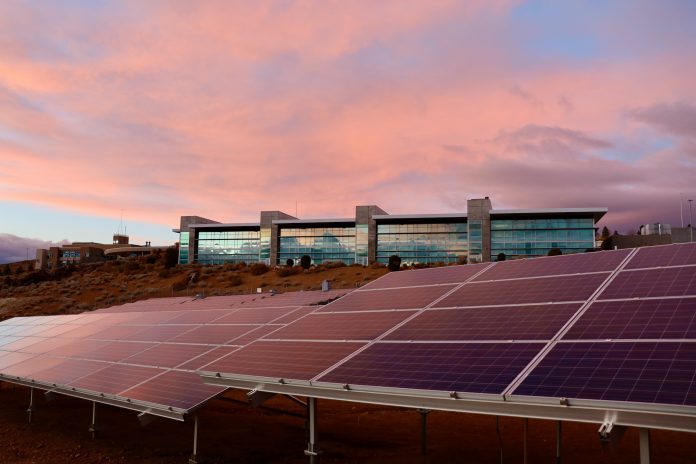
Foresight Cleantech Accelerator and SFU will work together to support the development of BC cleantech. This project will be funded by the Pacific Institute for Climate Solutions to focus on decarbonizing industrial services.

Cleantech refers to technology that improves economic and environmental sustainability by reducing pollution and energy efficiency with renewable energy. In an email interview with The Peak, PhD candidate Thomas Budd, who is working in SFU’s Energy and Materials Research Group, outlined the team’s plans to move industries in BC towards a sustainable future. 

“We will be looking into how climate policies, like a carbon tax and emissions regulations, can be linked to trade policies which keep domestic and decarbonized industries internationally competitive,” Budd stated.

In order to reach zero-net emissions by 2050, Budd said provincial and federal governments should commit to decarbonization policies by consistently “increasing the carbon tax and/or tightening emissions regulations, all the while financially supporting innovation that lowers the cost of zero-emission technologies and processes.” The research team is seeking policy support from municipal, provincial, and federal governments to implement emissions reduction policies.

The cleantech industry yields “some of the lowest returns on investment” compared to other software industries, making it a less viable option for investing. Although government emission regulations could contribute to reducing greenhouse gas emissions, their increased expenses prevent them from being able to compete with other industries. This puts them at risk of shutting down, Budd explained. 

As a result, many industries that sell products to international markets have little room to accommodate the increased expenses of cleantech at the risk of losing their consumer base. To solve this, the team aims to maintain market competition and find policies that can reduce the cost of cleantech to allow faster adoption within the industry.

BC’s aluminum and pulp and paper industry — which converts plant material into paper —  developed strategies to transfer energy sources. They aim to switch to biomass waste and hydroelectric power to implement cleantech into their sectors. These alternative approaches transform natural sources, such as forestry, into clean energy, and generate electricity from moving water.

Budd emphasized that these accomplishments are a result of the carbon tax and emissions regulation policies that created a pathway for accessible cleantech. Although these are promising efforts to decarbonize the industry, he believes that there is still “a tremendous amount of work yet to accomplish.”


The lamentation of a co-op student’s failed speaker gig

0
PHOTO: Maksym Zakharyak / Unsplash

By: Subaig Bindra, SFU Student

My co-op coordinator invited me to address a group of students on their orientation. I barely had any clue about what to say, only writing some lines a few minutes before the Zoom call.

Me (nervous but hiding it very well)

Hello all, I am Subaig. My pronouns are he/him. Can you all hear me? Give me a thumbs up if you can! 

Here lies the most excruciatingly painful bout of silence with one student holding in a laugh as they gave a thumbs-up out of pity. Good start.

My coordinator invited me to address this group that is about to start the same journey as I did in September 2019. Thank you for having me here. I work as a web developer in a telematics company and I’m in the second co-op term with my employer. I didn’t work a lot on the speech, as you can see I’m at work right now.

I pointed to my shirt. Well, yeah, obviously, but I mean my work shirt. I hope you didn’t think I was that ill-prepared that I had to point that out, but if you did . . . 

I don’t really blame you.

From personal experience, getting what you want only depends on how you carry yourself. What I mean is that you will only get what you want if you do what is a prerequisite, and this is a general idea of looking at things, not just landing a co-op. Now since I’m invited here and we’re doing all this, it’s easier said than done. To my understanding, each of us has to find our ways to make things work. For a practical example, oftentimes I maintain this sheet of paper. 

I pointed to a slip before the webcam.

This is a 5 by 3-inch piece of paper and is actually the back of a Revenue services BC slip. Not that I don’t want to pay my bills, I just do it online! 

At this point, one attendee rolled their eyes so intensely I could almost hear it! I knew that walking into the applied sciences co-op office would never be the same again. Only hoping the pandemic would wash away their memory of today. Regardless, I continued . . .

On this sheet, I have a to-do list for a web developer. 

I read out some examples that went like “refactor code,” “fix horizontal alignment,” and “put enhanceVerify() in js file” and I have a sinking feeling that about five participants muted their laptops.

From the bottom, I got a to-do list for ordinary stuff that I must keep doing to carry me in our strange world. 

Again I read out some examples like “Schedule meeting – (My manager’s name),” “speaker gig prepare,” and “REPLY MONICA.” Now their faces looked like I had casually asked each of them for one of their two kidneys. I was flushed, sensing that the bold sense of humour might have been too much to handle. I think “Speaker gig prepare” got them more than “REPLY MONICA!” as I was presently at the event! Sorry for the shoutout, Monica.

Worth noticing is the little ticks at the end of some tasks! You see, “REPLY MONICA” is not ticked yet, but it’s Friday and I’m gonna be doing that soon! My goal is to make existence valuable, if you have a goal then good luck with fulfilling it! And lastly, no, I’m not gonna say thanks for coming to my TedTalk. 

Right after the last line, I had put a note for myself that said “Try not to laugh while speaking” and as was predicted, I tried very hard to hold my tears in that moment (maybe for more reasons than one).

After I was finished, my coordinator looked flustered as she tried to convince the newbies that I had all the good qualities employers looked for, using all the good words she could come up with. As for me, I was silent, awkwardly awaiting the end so I could go take a nap. 

For  judgement day, I received a thank you email from her for my “inspirational speech on the co-op orientation.” Even more striking was that she thinks I’m good for more public speaking! She was just being nice, I guess.

Sexual violence prevention education needs to be mandatory at SFU

0
PHOTO: Chris Ho / The Peak

by Anonymous


Content warning: mention of sexual assault


SFU has a long-standing history of failing their students. But some of their most egregious failures have been the multiple mishandlings of sexual assault cases on campus. Much more can be done to prevent sexual violence on campus, and SFU should start doing this by allocating additional funds to create a mandatory, first-year course on sexual violence prevention.

I started at SFU in Fall 2016, and I was never made aware of any sexual violence support resources; the Sexual Violence Support and Prevention Office (SVSPO) wasn’t even given a permanent space on campus until May 2018. In 2018, I was a victim of sexual assault. Even then, my case manager told me she was not surprised I had never heard of their office. The SVSPO was created solely in accordance with provincial legislation. SFU’s resources are not adequate as they were mandated only to fit a requirement by the BC government.

In addition to the SVSPO, sexual violence prevention would be more effective if a course like Canvas’ SFU 101 was made mandatory for first-years — but through synchronous teaching. This would be more engaging than an online module. Discussing topics, like sexual violence, in a classroom can help build student solidarity as they go through their undergraduate degree. With online modules like the plagiarism tutorial, the mini quizzes and learning objectives are easy to pass and do not require much analysis. This is unsatisfactory for meaningful retention as many students can easily skim through, or even cheat.

In synchronous classes, they could teach the importance of consent, what it looks like, and what it does not look like. The SVSPO did introduce a #consentmatterssfu campaign in January 2016 which aimed to educate the student populace. But what actual change do posters or online resources effect? The reality is that students are juggling the transition to university with many of life’s other issues. They are not going to take the initiative to read posters in detail and go to the websites they suggest. Even if a student chooses to do so, the information would not be as impactful, and would not actively engage students as it would in a synchronous course.

Furthermore, this mandatory class would educate the freshman body of the resources on campus, and this formal introduction could aid in prevention. It would also show SFU cares about their students and that, no matter their gender identity, their feelings and experiences are valid. The BC government dedicated $5.5 million in funding over a five year period in 2018 to tackle the issue of sexual violence. SFU could push for this funding to go towards a mandatory course, or even pull from their large tuition surpluses to fund this initiative.

SFU is long overdue to establish direct, prevention-oriented measures. These actions need to be more than just poster campaigns or links featured in Student Service emails. By adding a mandatory, first-year course that every student would need to complete to graduate, students would be more aware of the issue of sexual violence on campus. Information could then be more openly discussed, allowing for true education of sexual violence.

Top Ten reasons I’m still not over March 2020 even though March 2021 is here

0
Very calm, very cool. Nothing wrong here. Illustration: Siloam Yeung / The Peak

By: Dev Petrovic, Staff Writer

  1. Things have just progressively gotten worse

One day, it’s just another day in a pandemic where I’m questioning how many Goldfish crackers I’ve eaten in the past week. Next, an ugly dictator is staging a violent coup. What happens tomorrow? A TikTok trend where teenagers get high on nutmeg? An army of disillusioned right-wing extremists protesting over having to wear a piece of cloth over their faces? I run out of Goldfish crackers? The suspense continues every day.

2. I have not been laid in God knows how long

When “WAP” came out, that was just the biggest slap in the face. How insensitive. In the middle of a pandemic? Rude. Yes, I am both on antidepressants and have intimacy issues so it’s not like I had much of a chance without the lockdown aspect, but dammit I’m still annoyed. It’s just me and my cheap vibrator against the world now. Please get me off Tinder.

3. I used to have goals 

March 2020 was a period of naive expectations. I definitely was among the silly bunch that thought this would all be over in a month tops. I really thought I would be able to do a semester abroad by now. I wanted to snobbily brag about it. I wanted to travel the world, fall in love, or whatever. Live laugh love, right? Remember when we all had long-term goals? Can’t seem to have those anymore. All my cringy teen aspirations have crumbled into rewatching the same shitty sitcom for the twelfth time. Maybe I’ll listen to it in French dub next time just to feel something.

4. My “college experience” 

As someone who attended a university with virtually no campus life, this was already disappointing. But, nonetheless, there was still that hope that university would become more exciting than getting stuck in a bus on a mountain after half an inch of snow falls. Instead, I got married to Canvas and Zoom and the most exciting part of SFU is the confetti after I submit an assignment. Seriously, I look forward to that now. This is not what I had in mind. At all.

5. Katy Perry’s oopsie on Twitter

If you missed Katy Perry falling for an edit of people in Italy singing “Roar”, to which she retweeted and used the wrong global flag, you did not experience March 2020 to its fullest. This event keeps me going and it’s also the reason I sometimes can’t sleep at night. I mean was a quick fact check really that hard? Was it even Ms. Perry who tweeted it, or was it a clumsy publicist? There’s so much to unfold. No, I don’t have lectures to watch. Stop asking.

6. Early quarantine trends 

March 2020 held the age of Dalgona coffee, baking bread, Tiger King, and Princess Diana nostalgia — also that Doja Cat song that has been so overplayed I sometimes get ringing in my ears after hearing it. Early quarantine trends were truly an innocent era for us all. Except for when Animal Crossing memes corrupted the internet. That was a mistake. It all went downhill from there. Can we go back to this? Why don’t you say so?

7. Socially distanced picnics

This was a thing before everyone decided to give up on human interaction altogether. More specifically, I’m referring to those awkward socially distanced picnics with people you aren’t even friends with anymore. Why did any of us pretend we actually wanted to leave our houses? Don’t lie to me, I know you know what I’m talking about. You didn’t actually want to go on a picnic with Jessica from high school who actually only wants to use you to promote her Arbonne “business.”

8. Cancelled concerts 

If I could write an elegy for all the rescheduled concerts that I had tickets for but am no longer interested in, it would be quite short — it was only two. Sorry, Billie Eilish, you’re great but that phase has long passed. But that’s not the point. I am mourning the fun past me would have had, but alas, there’s always next March. Unless there isn’t. 

9. The smell of hand sanitizer 

The initial craze of sanitizing every object that enters an indoor space will haunt me forever. The fumes of hand sanitizer have burned my last two brain cells. I swear I can smell hand sanitizer when I’m not even using it. It immediately brings me back to the cheap Smirnoff I was once able to chug as a teenager. I can’t even think about that. It’s everywhere. 

10. SFU being SFU

The end of the Spring 2020 semester? Tuition increases? The fact that McFogg the Dog is still our mascot? I don’t even have to explain this one.

Your weekly SFU Horoscopes: March 1–7

0
An illustration of a girl with long flowing hair. Astrological signs and stars shine around her.
ILLUSTRATION: Marissa Ouyang / The Peak

By: Charlotte Gravert, SFU Student

ARIES: Since you’re not really a morning person, your black coffee addiction is like adding gasoline to a fire. Combine your morning brew with a cool glass of literal gasoline just for the chaos.

TAURUS: Time is key here. Wait too long, and your hangry ass turns into a bull chasing the red flag snacks. We’ve searched near and far and found the perfect spring addition to your freezer stack of goodies: dry ice cubes for the special effect smoke. Yummy.

GEMINI: Nothing strokes a Gemini’s taste buds like some unusual flavour combinations. Milkshakes and fries are for beginners. Your twisted tongue is longing for a PBJ Burger (Tap & Barrel in North Van serves one). Not strange enough? Go ahead, dip a banana in the Dining Hall’s quinoa and tell us how it went.

CANCER: Two words for you: comfort food. Unlike some of our more experimental signs, we don’t recommend overloading your pallet or stressing yourself out with complicated recipes. But come out of your (pasta) shell a bit; switch Kraft Dinner with some Annie’s. We’re here holding your hand if you need us! 

LEO: Noble lions don’t mess with petty TikTok trends. Ok, ok Julia Child (she’s actually a Leo, btw) we hear you and formally invite you to bring back class to the kitchen with some French class. If the lockdown gets extended, why not try losing a game of War like they always do?

VIRGO: Really? Pizza with a knife and fork? Since sticky fingers and messy plates are as unappetizing to you, as that pineapple on your pizza is for us, we bring you: the tortilla wrap hack! Hide that fruit abomination in there, and no one has to see your sin.

LIBRA: We love you until we ask what food you want for takeout and your inability to make a decision DRIVES US UP THE WALL. Hence, here’s a pack of bacon. It tastes good sweet, it tastes good salty. Don’t tell us you’re thinking about going vegetarian! There goes our solution for indecision . . .

SCORPIO: I’m not suggesting you try putting a little extra “love” in the next brownies you stress-bake, but I am also not not suggesting it. That is all.

SAGITTARIUS: Straight-forward, loved by all, easy to switch up . . . The infamous feta baked pasta is your spirit dish! If you cook it repeatedly for your parents who fed you the same five meals your entire childhood, it makes like a feta wheel and comes full-circle.

CAPRICORN: Zodiac traditionalists, we know of your little nostalgia kink. So in the spirit of the aprons and cookery of the ones who came before us, dish up a revamped version of the tummy-twisting 1950s jello salads! In the name of innovation, maybe leave out the spam. 

AQUARIUS: There is nothing wrong with baking a whole cake for yourself, but show me one Aquarius who wants to go through a whole cake that is one flavour. Mug cakes on the other hand give you all the freedom to experiment and enjoy. No commitment, no problem. Wasn’t that your mantra? 

PISCES: Being creative and sensitive to their fellow fish-friends makes Pisces the perfect candidate for trying to whip up some vegan carrot lox! You heard right, you’ll no longer sob into the soft bagel buns as you mourn the loss of your saltwater soulmate.

Joining a student union has many benefits

1
Almost every department has a union that you can join. Photo courtesy of stockgiu via Vecteezy.com

by Sara Wong, Arts & Culture Editor

Starting at SFU was both thrilling and daunting to me. I was excited to make new friends, but wondered how the hell I was supposed to do that in lecture halls with hundreds of people. When I found out about student unions, I was all set to join mine. I couldn’t wait to meet other students in my department, especially since I didn’t know anyone else who was majoring in humanities. The only problem was, a humanities student union (HUMSU) hadn’t been active in over seven years. 

As I settled into my first semester of classes, I finally met a few other humanities majors who expressed interest in forming a union. Fast forward a couple months and the HUMSU was re-born. At first, it was just about building a stronger community of humanities students; but as I quickly discovered, there were many other benefits too. In being a part of a student union, you receive better academic, career, and social opportunities. 

After HUMSU became official, I found my experiences as a first year student to be a lot less challenging. I built stronger relationships with my professors and other humanities faculty — who went from accidentally spelling my name with an “h” on the end, to welcoming my input on departmental activities. I was also able to access information about classes a lot quicker, which has helped in planning my courses.

Additionally, student unions are always encouraging more people to join, and they almost always have leadership positions available. For myself, because HUMSU was all new, I got to fill a top executive position — co-chair (which later became president) — right away. Being the leader of a student group in my first year strengthened my resume, cover letter, added value to my co-curricular record, and gave me useful experiences to reference during job interviews. Participating in a student union can also help expand available career options by providing opportunities to network at events.

I also found the bond that formed between me and the other executive members to be empowering. It’s hard to stay in touch with classmates because of SFU’s commuter campus, but student unions provide the opportunity to foster longer-lasting friendships. Now, with the pandemic, I often hear that students are interested in joining or participating with the union, but that they are too busy to add another commitment. I get it — after spending hours in Zoom classes, I don’t want to be anywhere near my laptop either. However, I found that taking the time to meet weekly with my fellow HUMSU members, even though that means another Zoom call, has helped make student life during a global pandemic more bearable. It’s been nice to talk about school and other random topics in a casual environment, where speaking up doesn’t feel awkward or intimidating — like it can in classes.

In addition, joining a student union gives students the power to amplify their voice. It gives them a larger platform to point out how SFU has screwed up or ways that campus life can improve. For example, HUMSU wrote a letter about the marginalization of BIPOC students at SFU and the lack of usable space other student groups have been able to access. If students are paying tuition, they should have a say in what goes on at the university.

HUMSU is just one of many student unions at SFU. Most departments have active ones and a full list can be found on the SFSS’ website. Each student union has their own rules for member eligibility, but generally, if a student is a major, minor, or taking a class in the department, then they’re eligible. And if there is no existing student union, one can be created — just like I did! All it takes is one conversation to get the ball rolling — whether that’s with another student, professor, advisor, or someone from the SFSS. So if you’re interested in becoming more involved in student life by attending events or seeking a leadership position, I encourage you to turn towards student unions.

Two-Spirit artist Raven John discusses their unique project with Zee Zee Theatre

0
Check out John and other participating speakers — literally — from Zee Zee Theatre’s online library. Photo courtesy of Salish Sea Sentinel

By: Dev Petrovic, Staff Writer

If there’s anything COVID-19 has shown, it’s that the arts can continue to thrive virtually. Zee Zee Theatre Company’s new project, Virtual Humanity, proves just that. The initiative utilizes virtual means for an innovative form of community-based storytelling, and I had never heard of anything like it. 

So how does it work? Members from the Virtual Humanity audience get to choose a title from Zee Zee Theatre’s “human library” and engage in a 20 minute, one-on-one chat with the selected storyteller, who will share their personal anecdote. As mentioned in the project’s biography, it is “designed to shatter preconceived notions about otherhood, to challenge our biases and misunderstandings, and put a human face to difference as a means to foster empathy.”

The Peak spoke with one of the project’s storytellers, Raven John, a Two-Spirit activist, artist,  and comedian of Coast Salish and Stó:lō Nation descent, whose story is titled “Indigi-Queer Identities, Two-Spirit and Beyond.” 

John finished their BFA from Emily Carr University, with a major in visual art and a minor in social practice and community engagement. They are also a graduate of Native Education College’s North West Coast Jewelry Arts program. Their work centres on visual art, but they also work as a cultural consultant, mediator, storyteller, photographer, and sculptor. 

Though John had previously worked with Zee Zee Theatre, their introduction to the Virtual Humanity project came through a friend of theirs. They explained that the project has been partly collaborative: they got the chance to work alongside various people from different backgrounds. John elaborated saying it’s been exciting to hear about the different stories people find important and want to share. 

“Activism has always been a big part of my identity and role as an artist. I’ve worked on stop motion animation projects and done set and prompt work for both theatre and film,” explained John. They have worked on projects such as The Switch, a Canadian television show and the first transgender-themed show represented by a transgender cast. While they have a wide range of experience in various fields, they have just started to get into performance and theatre.

At the time of the interview, the storytellers for Virtual Humanity were still in the workshopping stages of developing their scripts. John explained that their personal story navigates dialogue on the experience of being a Two-Spirit person, their relationship with their identity, what it means, why it requires a specific distinction from other LGBTQ+ identities, as well as the history behind the identity. They also explained that “not everyone has had the opportunity to spend time with a Two-Spirit person or find out what the complexities are of that identifier.” So, their storytelling is a tool that they use to spread awareness. 

For John, a highlight of the project has been Zee Zee Theatre’s commitment to open communication. “It’s been really great,” they said. “For our workshops, we are developing our stories together, which is really nice, so I’ve gotten to hear the early scripts of the other storytellers a little bit.” They gave an example of another storyteller whose narrative is about being a recovering hoarder and how hearing other people’s stories has been an important learning experience for them. 

When reflecting on how the project has impacted them, John said, “In my own journey of healing in general and helping other people, I have definitely found that we all have coping mechanisms for the trauma that we dealt with in our lives. It really is about finding the healthiest coping mechanism we can if we don’t have the support structures to directly address what we’ve been through.”

The Virtual Humanity project is running from March 628 and tickets can be reserved through the Zee Zee Theatre’s website. To directly support local artist Raven John or further look into their work, you can do so through their website: ravenjohn.com. 

Ban the Bottle bars plastic water bottles from campus

0
PHOTO: Alison Wick / The Peak

by Karissa Ketter, News Writer

A project three years in the making, Ban the Bottle, a collaboration with Re-use for Good,  banned plastic water bottles across all SFU campuses. The official phase out of plastic bottles began on January 1, 2021. 

Ban the Bottle provides reusable water bottles in the vending machines “at no additional cost,” Russell Dunsford, co-president of Ban the Bottle, told The Peak. He added the reusable water bottles will be the same price as plastic bottles. 

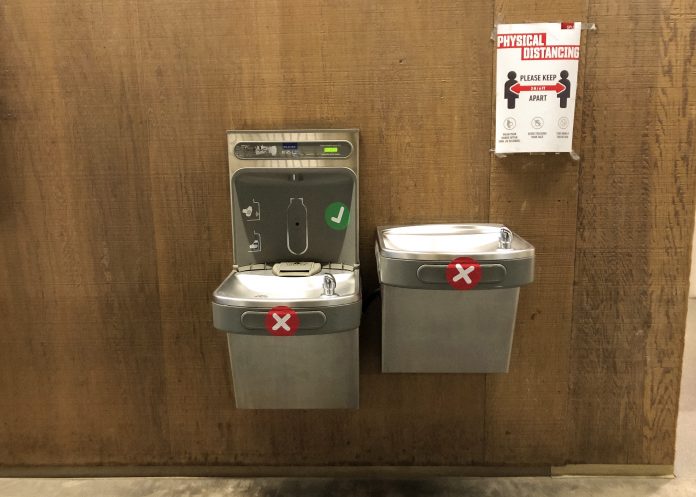
Students will be able to refill their reusable bottles at the bottle-filling stations on campuses, according to Dunsford

Dunsford noted that due to COVID-19 safety measures, water fountains are currently closed but “once the restrictions loosen and everybody [comes] back onto campus, those will open up again too.”

Beyond plastic water bottles, Dunsford said the plastic ban also eliminates plastic straws and stir sticks.

Due to the large amount of plastic waste produced by SFU each year, Dunsford explained that Ban the Bottle’s initiatives are a better alternative to recycling, because “you never have to deal with that waste in the first place.” He added, “Plastic recycling is really difficult and it’s inefficient, at best.” Re-use for Good reported that over 1 million single-use plastic bottles and cups are used and discarded every year at SFU, and only 11% of Canadian plastics are recycled. 

Dunsford said Ban the Bottle had consultations with SFU’s Disability and Neurodiversity Alliance (DNA) regarding their new policies. DNA worked with them to ensure plastic water bottles will be  available for request through the Accessibility Centre for students who require them. Ban the Bottle continues to work with SFU to eliminate other sources of plastic on campus where possible, such as disposable gloves in some labs, other plastic drink bottles, and coffee cups. 

Moving forward, Ban the Bottle is building their research capacity to study plastic waste’s effect on the environment. Dunsford noted they are increasing capacity to implement public education for students and community members, and assisting other universities with a similar ban.

“We actually hadn’t anticipated that [SFU was] going to be so supportive: we started a petition [and] were collecting names from students to try and build student support for [the ban but] it turns out we didn’t even need the petition.”