Home Blog Page 360

Monday Music: Five Songs to Warm You Up After That Cold Snap

2
"Monday Music" in giant yellow block letters with a red background
Monday Music: your weekly themed playlist. Image courtesy of The Peak.

By: Alex Masse, Staff Writer

After a brief but intense snowfall, we’re back to our trademark Vancouver rain. That said, spring is just around the corner. Why not get a head start on warming up with this mini playlist? Whether you’re braving the cold or won’t leave your blankets, here are some songs to keep you warm and get your feet tapping. 

  1. “fall4u!” By Ambynt 
Image courtesy of EAT WORMS C.C.

Floaty, dreamy, and fresh, Ambynt’s tunes are the best kind of music for an easy stroll, or just puttering around your house, doing some pre-spring cleaning (I’m not the only one who does that, right?). “fall4u!” is short, but sweet; the song is guaranteed to make you smile and get you all warm and fuzzy, with its affectionate lyrics and bouncy instrumentals. Also, it’s part of a newly-released album, and pretty much every track is bound to put a bit of pep in your step. 

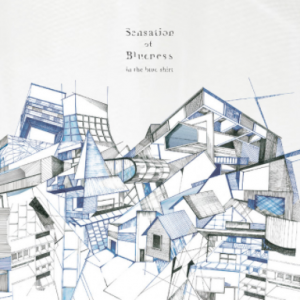
2. “Mellow Out” by in the blue shirt

Image courtesy of Trekkie Trax

A bouncy, energetic track made of chopped-up vocal snippets, this is a longtime favourite of mine. I can’t explain why, but it gets me in the mood for racing around my neighbourhood with a skip in my step. It’s like the auditory equivalent of a sugar rush, and will definitely get you fired up. I could easily listen to this for at least an hour straight. 

3. “Make Light” by Passion Pit 

Image courtesy of Frenchkiss Records

This is a song that feels like letting go; and honestly, what more do we need right now? We’re over halfway through the semester, approaching a full year of online learning, and just as the weather was turning, we got hit with a cold snap. This is the kind of song for when you’re past exhausted, but keep going anyway. It’s the kind to scream out your window at 3 a.m., because you need some kind of outlet or you’re going to lose it. Lead vocalist Michael Angelakos just hits differently, especially in the chorus: “So I try and I scream and I beg and I sigh / Just to prove I’m alive, and it’s alright / Cause tonight there’s a way I’ll make light / Of my treacherous life.” Me too, buddy. 

4. “Immaterial” by SOPHIE

Image courtesy of MSMSMSM INC / Future Classic

Last month, music lost a true pioneer and icon following the death of this creative in a tragic accident. That said, SOPHIE’s music is still something magical to experience. I can’t recommend it enough, especially “Immaterial,” which is such a bright, euphoric track. It never fails to give me goosebumps, and as the days get longer, I continuously find myself coming back to it. It’s joyous, it’s existential, and like every track she made, it’s truly one of a kind. 

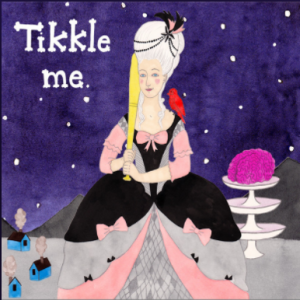
5. “And the Tiger Roared” by Tikkle Me 

Image courtesy of A West Side Fabrication

Tikkle Me is one of those bands I feel so lucky to have stumbled upon. One of their songs, “Blow My Brains Out,” went semi-viral on Tiktok a while back, and it’s great that more people are learning about them. “And the Tiger Roared” has a catchy, floaty beat — the kind that feels retro and fresh at the same time — and the lead vocalist has such a unique, pleasant voice to listen to. Add on some tender, lovestruck lyrics and you’ve got yourself a gem. 

Your weekly SFU Horoscopes: March 8–14

0
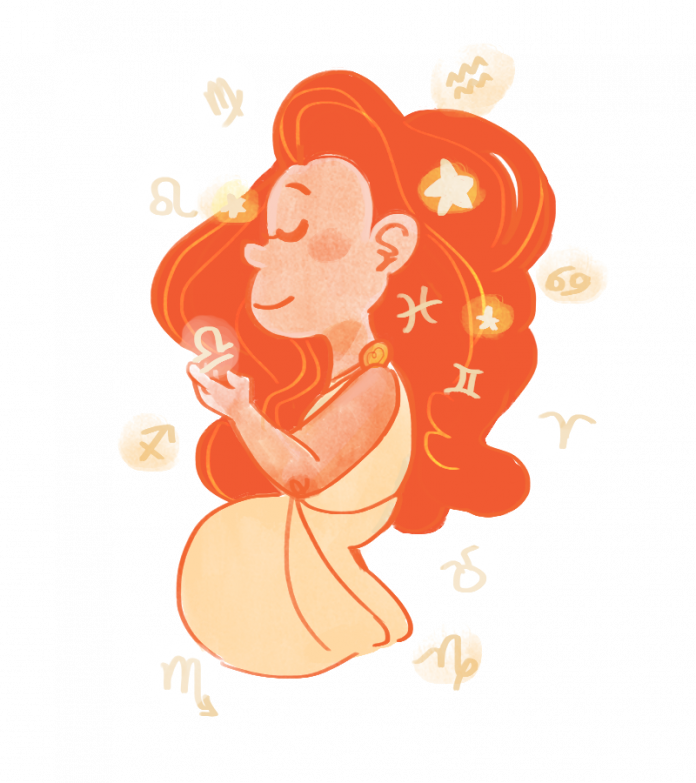
An illustration of a girl with long flowing hair. Astrological signs and stars shine around her.
ILLUSTRATION: Marissa Ouyang / The Peak

By: Alex Masse, Staff Writer

ARIES: You know how they say “March enters like a lion and leaves like a lamb?” No? Good. Forget it. You’re no lamb, you’re a ram. Start acting like it. Go find a Dodge Ram and yell at the owner for having such a big truck in the city.

TAURUS: Listen, I’m not saying you should drop out and practice witchcraft in the nearest bog, but I will say that you’d look really nice draped in moss. And don’t mind Shrek over there, he’s just checking to make sure you’re listening to our Horoscope advice.

GEMINI: I’m seeing an attractive but troubled stranger in your future. Just across the street. On a bus. Oh, the bus is zooming right by. Oh, they’re gone. Sorry, bud. Did I get your hopes up? Maybe next time. 

CANCER: You know, I think crying on public transit has done you at least a little bit of good. You’ve got the “attractive if troubled stranger” vibe down. Folks like Gemini are totally looking at you wistfully, imagining your beautifully distressed mind, even if you’re just losing it over a video of a cat being reunited with its mom. 

LEO: Have you considered how good you’d look in a scarf? Like, really. They’re a great accessory, they really tie an outfit together, and they can protect your neck. From what, you ask? Well, the cold, obviously. And other, hungrier things. So yeah. Scarves. 

VIRGO: Virgo, store your energy. Spring cleaning is just around the corner, and we all know you’re going to tear through your home like Leo through a conversation not about them. Prepare accordingly. 

LIBRA: Why do I feel like you’re hyping yourself up for some kind of “main character turns evil” arc? I mean, it’s a really dope aesthetic, but c’mon. We’re all feeling that urge, so don’t hoard it for yourself. We can’t all be the comedic relief in your life.

SCORPIO: Gonna be real, your vibes are super unknowable right now. If that’s what you’re going for, keep on keeping on. And if it isn’t, how do you know? Don’t worry, identity crisis is the new middle part in hair. It’s trendy, we promise.

SAGITTARIUS: Try sitting still for once and just enjoying the moment. Even your loud-ass neighbour mowing the lawn at 8 a.m. and that car alarm that sounds like Pisces when they cry. And even all the texts from— okay, yeah, I see why you live like this. Carry on. Forget everything I said. 

CAPRICORN: You’re going to be wrong, but not about anything with major consequences whatsoever. Maybe when the food delivery person tells you to enjoy your meal and you say, “thanks, you too.” This’ll give you time to mull it over until you feel as guilty as someone who hit a squirrel with their car. Typical.

AQUARIUS: Aquariussssss, please come back from your respite in the astral plane. Your body’s getting all gross and wrinkly. You’re gonna look like you were in a bath overnight. 

PISCES: So, how’s thrift store withdrawal treating you? I just know your soft artsy soul is weeping, and if you ask me, an overpriced sweater on Etsy might be the way to go. One that’s just pretentious enough. 

SFU Mad Lib for when the university disappoints you again

0
Illustration: Tiffany Chan / The Peak

By: Marco Ovies and Paige Riding

Dear SFU,


I am writing to [verb] about [one of the many problems with SFU that shouldn’t be happening at a multi billion-dollar institution].

I am a [your major] in my [number of years you’ve attended SFU. I know this hurts to write sometimes. I’m sorry] and I am very [negative emotion] about this. 

My personal [sensitive, personal belonging of yours] may have been sent out to the world because of SFU’s [negative adjective (there appears to be a lot of those associated with SFU at this point so take your pick)] security protocols. Further, I worry that the university’s unwillingness to handle the [any typical concern that students have been demanding be addressed for years] shows the university’s unwillingness to [verb that would imply that the university’s administration makes any active efforts to act on behalf of the students they represent] and this makes me wonder if [a different university name] may not have been that bad of a choice after all.

I would appreciate it if SFU would [what would you have liked SFU to have done?]. I pay [absurd amount of tuition, exaggerate here if you must but something tells me that you will not feel the need to do so] and demand [compensation you would like, you can write anything here because you won’t get it anyways]

This has negatively affected my [choose all that apply: mental, physical, emotional, financial] health and now I can no longer feed my [choose either a passion of yours and/or an organism under your care, can include yourself] nor can I see a photo of [name of supposedly beloved SFU entity] without feeling physically nauseous.

I’m looking forward to hearing from you soon and I hope you have a [negative adverb, preferably a curse word] day.

[Adverb ending in ly],


[It doesn’t matter what name you write here, there’s no way anyone will read this far anyways]

SFUnexplained: All of these email redirections condition us for long degrees

0
PHOTO: Gudrun Wai-Gunnarsson / The Peak

By: Emma Jean, Staff Writer

Doesn’t it seem fishy that it takes three-login attempts to see your SFU mail? Unless you’re a tinfoil beret-wearing big brain like me, any normie that uses a cookie-collecting browser tends to spend five minutes getting redirected through a host of websites and portals any time they want to use an SFU web service. 

Students don’t rise up against the tyranny of technological negligence unless they have truly impressive will-power. Instead, they take a drag of SFU’s chemtrails and accept that they will be five minutes late to each Zoom instead of accounting for that extra login time and showing up early (another form of acceptance). SFU stands for Sheep Fools University. Fools.

Just think: the first time you logged in, it felt like such a pain in the ass. You may have thought that surely, there’s a way to see my silly little emails in three clicks or less, but SFUMail has other plans. An honest mistake, but isn’t there a way to fix it after every student experiences it? SFU is sending people to the moon but working around generic browser cookies proves to be just too much. 

You know what else takes 15 years to get done? Every building on each campus. The legend of the Student Union Building is not only an endurance test to keep some kind of faith in SFU’s ability to do anything, it’s also a coverup. It’s almost as if they’re getting us used to disappointment. If we’re okay with spending 10 minutes trying to find out when we have to pay them again, we’ll be okay with spending six years getting a degree that could take three. 

Does this sound familiar to you? If you would stop sleeping through life like I sleep through lectures, you’d have noticed the curious phenomenon that it takes a fuckton of time to graduate from SFU. The excuses for why vary: an advisor forgot about a course, degree requirements changed, the renaming of the 95 B-line to [REDACTED] left unrecoverable emotional damage that set you back a year. Regardless, there’s always some reason that these programs take longer to complete than expected, but somehow we just know to accept that as part of the process. Now, where have we seen that before? WAKE UP, SHEEPLE!

How does SFU benefit from all of these? Easy. They get to cut costs with IT fixes to invest in their true passion: announcing projects that will be built by the time X Æ A-12 Musk is sworn in as Emperor of the Galactic Regime. They’ll profit from all those extra semesters spent telling students it would be their last one. SFU sets the bar lower and lower each year, and we just keep cha-cha-ing under it. When it comes to any hopes of the changes we’re counting on, it’s time to make like a sheep and say bahhhh-bye with a degree in hand. Err, hoof? You know what I mean.

If you’re sick and tired of SFU’s scam’s, you can . . . flip off the red loading screen on your computer when it redirects you for the eighth time? Struggle not to throw your phone into the ocean when an advisor tells you yet another requirement has been added to your degree? Dig yourself into a deep whole of denial and pretend that the SFU stadium has existed this whole time? I don’t know, pal— there’s really not much to be done. But at least you know you’re not a sheep anymore?

Students should get the grades they deserve

0
Fulfilling requirements completely should mean that a student gets 100%. PHOTO: Gudrun Wai-Gunnarsson / The Peak

by Brianna Condilenios, Peak Associate

Students aren’t strangers to that sharp pang of disappointment when they receive a low grade on an assignment. This pain cuts even deeper when they know they deserve a better grade. I’m talking about the assignments and exams that students prepare for weeks in advance and have, by all reasonable accounts, met the criteria that was originally set forward. Putting such careful effort into stellar work and being met with a mediocre grade is extremely disheartening. 

Universities have this shallow desire for prestige that they try to uphold by being ridiculously selective — and SFU isn’t exempt from this. Part of this comes from how several departments will set a limit on how many students can receive a certain grade. Business and economics students are familiar with this as the grading bell curve looms large over their studies. A student can ace all assignments, but end up with a B because there are only so many As allowed for that class. And in the social sciences, sometimes professors are just not willing to give a student full marks. Whatever the reason for this restriction, it is unjust to deprive students of the grades they have rightfully earned as it is discouraging and can destabilize their educational funding. 

Students come to school to learn new skills and knowledge to prepare them for employment and life. Assignments, exams, and other means of testing are designed to test such skills and knowledge. However, if the outcome of these assessments do not properly measure students’ abilities, the metric of study can seem pointless. For example, if the grade a student receives on an assignment does not accurately reflect their skills and knowledge, the purpose of the assignment becomes futile. No matter how much they study, whatever they learn will not be properly reflected in their grade. Given the frustration of this vicious cycle, a student may even ask themselves why they should bother studying. 

This is clearly discouraging as the student’s time and effort are not being appreciated. Not to mention it can be a huge blow to their self-esteem and how they perceive their abilities as a student. Even if it is just one or two professors that a student experiences this with, a disparaging precedent is set for them. 

Professors and departments who set arbitrary amounts on grades also do not realize that many students must maintain a certain GPA to get funding for their education. Students need a minimum of a 3.50 CGPA for most undergraduate scholarships. Since not all students are able to afford SFU’s soaring tuition prices, some rely on scholarship money to fund their studies. In some circumstances, the difference between an A or a B can have detrimental effects on the student’s overall grade in the course, and furthermore their CGPA. Not only can depriving students of their true grades be a blow to their self-worth, it can actually jeopardize the continuance of their education.

SFU’s departments and professors should re-evaluate the potential harm they could be causing to students by artificially controlling grade distribution. Instead, they should honour the integrity of the grading criteria that was originally set out. This would not only give students their rightful rewards, but would motivate students to show their true potential as writers, readers, artists, presenters, and debaters without a cloud of defeat looming over their head.

SFU’s Fall return should be accessible to all students

2
A Fall in-person return would be great, but it needs to accommodate everyone. PHOTO: Miguel Henriques / Unsplash. PHOTO: Surface / Unsplash

by Emma Jean, Staff Writer

On February 22, each student enrolled at SFU received an email that seemed incredibly premature given current circumstances. It was about the status of Fall 2021’s course delivery. After months of gossip and speculation, every student finally learned that SFU is not only considering an “almost full-scale return,” but that the only other option was a “significant return” to on-campus class.

The email announcement came as a shock to students as it goes against the general belief that SFU would only consider a return once case rates have slowed down significantly, which has not happened. This hypothetical return would involve classes returning before the scheduled vaccinations for 18 to 24-year-olds in BC — a significant number of whom live and work on campus. 

Coming back to campus will be an emotional and physical relief for many people. But for those more at risk of infection, uncomfortable returning to campus, or waiting until the majority of the campus population receives the vaccine, it could be quite the opposite. The options that SFU are presenting might be successful, but it’s important to make sure that they don’t leave anyone behind.

SFU’s plan feels like a huge gamble. Bringing children back to elementary and high schools has worked out relatively well in BC, but growing research suggests that children experience the virus very differently than adults do. Universities in the United States that have opened up have had incredibly different infection rates from one another, but toss-up odds still mean that many students and staff could get sick.

There are many medical experts doing intensive research on how post-secondary schools can re-open and it’s important that we trust their judgement. However, that doesn’t mean that this situation is going to work for everyone. There are plenty of reasons that remote learning might be the best option for some students while SFU opens up. A person might be immunocompromised or bubbled with those who are, they may have to relocate and quarantine without the financial support to do so, or have any number of reasons to be reluctant to return to campus.

An option that allows students to participate in online classes and to safely come to campus if they are comfortable would be essential in a transition that takes full consideration of students’ needs. This would both recognize the gravity of the COVID-19 pandemic and acknowledge the importance of safe re-opening. 

Models like this are far from unheard of; in places like Nova Scotia at Acadia University, most undergraduate lectures are carried out in-person to a small group of students while the majority of other students watch them live virtually. For students on campus, it’s hardly a return to normalcy either. Each step is accompanied by symptom-monitoring protocols and social distancing rules. By following this model, there have been only two cases reported (none related to community spread) and re-opening actions have been able to occur more frequently. The capacity to spread in a small Atlantic Canadian town is different than in a metropolitan area like the Lower Mainland, but we should consider using this thoroughly blended success story at SFU if it could bring similar positive results. 

We don’t know what SFU will ultimately decide at this point. These preliminary statements are just that, and as the monster of COVID-19 evolves in all its variants and more information becomes available, SFU may change its tune when it comes to re-opening. Whatever action that they end up following through on, they need to be ones that accommodate a variety of students’ needs, not just those able to risk exposure.

Opinions in Dialogue: “BIPOC,” progressive or problematic?

0
The use of BIPOC (Black, Indigenous, and People of Colour) may not be as progressive as we think. PHOTO: Omar Lopez / Unsplash

by Madeleine Chan, Onosholema Ogoigbe, and Idara Udonya


BIPOC, an acronym used to encompass Black, Indigenous, and people of colour, has gained increased usage over the past year. A revision of POC (people of colour), the term aims to acknowledge the unique, systemic challenges that Black and Indigenous people face. However, does it adequately accomplish what it sets out to do? Students Idara and Onosholema discuss the term’s usage.


Idara: It’s really interesting to see different opinions on whether the term is truly as progressive as everyone claims it to be. As a Black African woman, I find it to be particularly exclusive at times. There’s a level of erasure that happens when the term is used in conversation to refer to only one race. I sometimes wonder, why can’t people just say Black? Is it a dirty word or something? My problem is that BIPOC can be,  to some degree, performative.

Onosholema: BIPOC is a fairly new term which acknowledges that Black and Indigenous peoples’ experiences do not necessarily fit under the neat umbrella of POC. That being said, I do think that erasure still happens even with the distinction made with BIPOC. In response to your statement about why people can’t “just say Black,” I think that POC or BIPOC is really just a more politically correct way for white people to say “colored.” The problem is that any such term that groups, for example, Black, Asian, and Indigenous peoples together assumes that whiteness is the default state and delegates those who aren’t white as “the other.”

Idara: I think that context is so important when we talk about the “progressiveness” of this term. If we contextualize any conversation around an issue that all Black, Indigenous, and other peoples of colour face, then I understand its use. When used to be more particular and concise about race however, I feel as though the term has been created as an easier way to mention peoples of colour. I have an issue with terms born out of convenience that center white ease. Eventually, these terms stand to make talking about specific pain more digestible for white people, which shouldn’t be the case. I see it all the time: people would rather use BIPOC than use Black. Some would even use BIPOC to replace Black in discussing conversations that affect only Black people.

Onosholema: Yes, it may be necessary as a way to refer to the shared and mostly negative experiences of people who are not white. I agree that it is progressive because BIPOC acknowledges that Indigenous and Black peoples’ experiences include those that do not also apply to other POC. However, in acknowledging that there are specific difficulties Black and Indigenous peoples face, the term also (unintentionally, I hope) suggests that other people of color have shared experiences that do not require singling out. Different POC have different racial issues and needs; racial slurs aren’t even the same. 

Idara: People need to be more conscious of the positions they take when they use certain words. This requires a lot of internal, reflective work that has to be done before engaging with any conversation that revolves around issues faced by BIPOC. People need to ask themselves why they are more comfortable using BIPOC as opposed to talking about a specific group of people. I do not necessarily think the whole term needs to be put out of use. It should just be used with greater caution. Besides a more careful usage however, I do not feel it is anything more than a classification, and isn’t particularly empowering.

Onosholema: Exactly! I do not think that it’s empowering, but that it might remove any possibility of empowerment altogether by simplifying these groups too much. Let’s start by individualizing these races and acknowledging their differences in difficulties and cultural rejoices. Start by calling all Black people Black, and so on. Even within the existing categories of race there’s an erasure that happens. For example, South East Asians are sometimes not considered when generally talking about Asians, and dark-skinned women are often not considered when talking about Black women. How much more harm to the particular nuances and struggles of different people of color can be brought if we simply refer to all of us as POC or BIPOC? Especially with the term BIPOC singling out Black and Indigenous persons and referring to other non-white people under an umbrella term. 

Idara: These conversations are great because I think it’s generally important to talk about how we interact with identity, race, and language. A lot of what I have come to know as an adult is that language is an extremely important part of existence. It is political and shapes your understanding of the world. Just because something is said in a certain way, or used in a lackluster manner, it doesn’t justify its usage. Words are never just words. Factors of language, like etymological origin and connotative context are so important. 

Onosholema: The negative impact of any umbrella term, much less one which, as Idara points out, interacts “with identity, race and language,” needs to be assessed along with its usage in everyday conversation. Why are we using said umbrella term? In what context are we using it? For example, are we using these terms as a way to signify unity amongst non-white people? Or, is it simply there to make things easier for white people, and the systems that serve them than “BIPOC”? 

I think the negative effects of such an umbrella term are evident when you think about the fact that although BIPOC is an acronym for Black, Indigenous and people of color, when you say BIPOC it sounds like a single entity. So, instead of a constant acknowledgement that these systems serve neither Black, Indigenous, nor people of color we have conversations about how systems do not serve BIPOC. Who is a “BIPOC?” No one, that’s who. It’s just a nice, pretty little package to hold conversations about the people it claims to represent.

Idara: It is important to note that I can only talk from my position as a Black, African female. My views are influenced by my perspective on modern activism and my experience navigating Blackness in spaces where discussions around social issues happen, like online, in class, and in-person. I often come across solutions to issues that lack substance, solutions that become performative and more symbolic than visceral. I sometimes feel as though they only ever end in becoming watered down symbols.

Onosholema: I am also talking from the position of a Black, Nigerian female. My personal experience comes from one too many conversations where the term POC is used to reference Black people.

Idara: I definitely think we have taken a more adverse perspective on BIPOC and it’s usage, but I can acknowledge that the term allows the experiences of people of colour to be highlighted rather than assumed the same as white experiences. That, in of itself, is somewhat progressive at its core. 

Onosholema: There are probably quite a few perspectives we aren’t considering especially because we’re both Black, female, and African. However, perhaps because we are Black, female, and African our perspective should be more strongly considered? Ultimately, the term is a result of mostly positive change surrounding how we treat people of color in our society. Since the only constant thing in life is change, the term is subject to revision and subsequent change as well. Much like how BIPOC has replaced POC for better or worse, something else will replace BIPOC, and hopefully rectify its adverse points.

Foxx and Swann puts heart back into rock and roll

0
Support local bands and listen to Foxx and Swann’s first EP. Photo courtesy of Natalee Lovelock

By: Kelly Chia, Peak Associate

Rock and roll love on Sunday morning.”

These are the words used to describe alt-rock husband and wife duo Danny and Natalee Lovelock’s band, Foxx and Swann. The New Westminster-based couple released their debut EP in December 2020, and indeed, the acoustics and heartfelt lyricism in the EP reminded me of rootsy coffee shop performances. 

I had the opportunity to chat with the Lovelocks on their EP, inspirations, and the relationships they have formed with their music. One minute with them and it was clear how much respect they had for each other’s creative voices, and how music lovingly weaved through their lives. 

Besides being the frontpeople of Foxx and Swann, the Lovelocks have been making music together since 2012. Their careers are truly entrenched in the arts; Natalee teaches drama and musical theatre while Danny does audio and video production for artists. On top of this, they are also parents to a young toddler named Fox. 

The Lovelocks’ work truly fills every facet of their life. I asked if they ever needed a break from music, and they both laughed.  “I love being a mom, I love music [ . . . ] Fox and I sing together,” Natalee said fondly, “I think we’ve done a pretty good job of doing only the things that we like doing!” she laughed sheepishly. 

Danny had a similar answer. “I try to surround myself with things that I really enjoy doing, and if it brings in some income, [good], and if it doesn’t, it’s still just doing the things that I enjoy doing — music, and video work, and helping raise [my] son.” 

Danny and Natalee are also the guitar and bass vocalists in the four-piece band, Marry Me. More rock and roll-centric, Marry Me hits notes of 2007 punk rock with cool guitar riffs and vocals. Their most recent single, “Bad Tattoo,” definitely feels like a rock song made for chanting along to in a live bar: “Open up, let me in, that ugly little part of you / Show me your bad tattoo!” We talked about the song, and how people treat their ‘bad’ tattoos. 

Danny developed the riffs and lines of “Bad Tattoo,” and brought the idea to the group. “He had this idea [that] a bad tattoo is like a bad thing that’s happened to you, like an embarrassing night out [ . . . ] but that the person that really likes you would want to see that ugly part of you, that bad tattoo,” Natalee said. That sincerity grounded the punk feel of the song.

I asked the Lovelocks what it was like to work together as spouses, and they explained it came down to their mutual respect for each other’s creative voices. Music augmented their relationship as a means of expression. “You could argue that we built our relationship on a common likeness for wanting to play music,” Danny said. While they felt like they had other things to share and grow through, something about working on music together drove them closer. 

Some of their biggest moments happened as performers — in true rock and roll fashion, Danny surprised Natalee with an on-stage proposal in 2018 and they were married then and there. They found support and trust in one another to balance out the duties that come with being musicians — and there were a lot.

Danny and Natalee handle practically everything together, along with their bandmates: they produce and edit their own music videos, do their own promotions, and more. “I’m really lucky to be in [ . . . ] two acts [where] I can [bring] my side of things, the bones of music, to the group [while] having somebody do the stuff that I can’t do,” Danny smiled, pointing at Natalee. “We’re really give and take with our roles.” 

The pair also credits their Marry Me bandmates for their good work habits. “We didn’t look for people that did everything, but everyone brings such different skills to the table and knows what they do best, and also knows what everyone else does best,” Natalee said. 

Their new project, Foxx and Swann, has a more mellow acoustic sound so far — having just released their first EP, they are still experimenting with what genres of music to tackle in their future works. The pair are inspired by other alt-rock artists, like The Civil Wars and Tom Petty, and you can hear that in their lovely harmonies. 

Asking the pair what inspired them in their songwriting. Natalee said she was inspired by the blues period and Americana music at the moment. “Today, I’m inspired by the musical Hadestown,” she said. “It’s really rootsy and bluesy, and it’s the direction that Foxx and Swann [is going with].” Natalee hoped to tour Nashville and Chicago in the future and visit every blues, jazz, and country bar to absorb that sound and use it in their music. 

“Yeah, I find if you want to be inspired, there’s lots of options,” Danny said. He found that listening to Top 40 hits didn’t inspire him as much as random everyday events. “It’s easier to say where I don’t find inspiration than where I do, because there’s a million places to find inspiration!”  

Since this EP is their debut project, Danny said that each song is uniquely exciting. Their three songs are titled, “Something Better (Good),” “This Old Hat,” and “He Gave Me Tom Petty.” Danny and Natalee’s vocals blend beautifully together in these songs, and the earthy chords make the songs pop. 

“He Gave Me Tom Petty” is one song in particular that I can’t stop thinking about. It’s so vulnerable. With lyrics like “Do you see yourself when you look at me, satisfied I followed along? / I’ll chase your ways another lifetime of days, loving and loving song,” it’s clear that this song is a dedication and a love letter to a parent, and to the memories that they’ve helped create. 

“‘He Gave Me Tom Petty’ was not even meant to be on this album, that song was written as a birthday present for my dad,” Natalee laughed. “We wrote it the night Tom Petty died, and I was really emotional [ . . . ] and my dad happened to be on a trip to Mexico at the time, and I couldn’t get a hold of him. And I said to Danny, ‘I have to talk to my dad! He gave me music! He gave me Tom Petty!’” 

The song was so personal, Natalee initially felt like it shouldn’t be shared with the world. “All of that stuff in there is like my mushy feelings and my mushy reflections!” I chuckled, understanding exactly what she meant. Even so, the emotion in the song made me think of the people in my life — my parents, my brother, my teachers — that have paved the way to inspire me to read and write and express myself in the world this way. It’s not often that I hear things that are so unconditionally heartfelt in gratitude, and it made me mushy too.

And while their other songs are far from mushy, the Lovelocks’ sincerity and passion is heartfelt. They put everything in their projects, and in each other, making them compelling artists to follow as their sound evolves from hard rock to bluesier sounds to wherever they find their next inspirations. While I don’t listen to a lot of rock and roll myself, their guitar riffs certainly have me wishing for a post-COVID live concert. 

Foxx and Swann and Marry Me can both be found on streaming platforms like Spotify, iTunes, Soundcloud, and YouTube. For new music releases, follow them on Facebook and Instagram.


Enuka Okuma: from SFU to stardom

0
Enuka Okuma on Workin’ Moms. Photo: Jackie Browne / CBC

By: Sara Wong, Arts & Culture Editor

Enuka Okuma is no stranger to the spotlight. The SFU School for the Contemporary Arts alum has been credited in over 60 films and television series, and is best known for playing Traci Nash on the TV show Rookie Blue. Recently, Okuma joined the cast of the Canadian sitcom, Workin’ Moms. In an email interview with The Peak, she discussed her acting experience on the show and beyond.

Workin’ Moms has been full of new experiences for me. It’s the first time I’ve gotten to lose myself in a comedic role,” Okuma started. Her character, publishing executive Sloane Mitchell, was introduced in season five, which is currently on air. “Sloane Mitchell is such a fierce, energetic force,” the actress shared. “It’s been exciting figuring her out.”

Also exciting for Okuma has been working with showrunner Catherine Reitman (who also stars as Kate Foster) and fellow Canadian actress Dani Kind (who plays Anne Carlson). “Most of my scenes are with [them] and they’re both so talented and embody their roles so fully,” Okuma praised. “In my first scene on my first day, it took me a while to stop watching them as if they were on TV!”

Like many shows these days, the latest season of Workin’ Moms was shot during the pandemic, which Okuma said has been a difficult adjustment for everyone on set. “Everything seems to take longer and you never quite get used to masking and unmasking constantly. General socializing is non-existent, so it’s all a bit more lonely too,” she confessed. Prioritizing self-care has also been a bit of a challenge with a lack of craft services. “I’ve spoken with a few actor friends who have gone back to work at this time and everyone says the same thing, which is ‘I’m not drinking enough water!’” said Okuma. 

Even before the pandemic it was common for actors to face job inconsistency. “When you’re released into the wild after graduation from theatre school, it’s easy to think that the big, bad world is against you if it’s challenging to find work,” Okuma noted. However, in her experience, SFU taught her how to adopt a successful outlook, no matter how many acting jobs she booked. Aside from providing “a solid foundation in performance and the tools needed to sustain work and life as an artist,” the School of Contemporary Arts encouraged Okuma and her fellow students to connect with one other and collaborate with like-minded individuals. “Leaning on the idea that there will always be work for you if you make it yourself can save a lot of heartache and spur you on to new personal challenges,” she said

That being said, dealing with rejection remains unavoidable. Okuma cautioned that pursuing an acting career “is definitely not for the faint of heart.” When asked what advice she would give to young actors, Okuma said that developing a thick skin is essential. “[But] the ironic thing though is that artists are generally sensitive, emotional beings and the last ones you’d expect to be able to develop a thick skin,” she reflected. 

Okuma also provided words of wisdom specifically for Black actors. “Double down on the previous sentiment. The journey will potentially be extra long and arduous as a Black actor so you really have to be in love with every aspect of this career to follow through with it,” she said. “It’s definitely not impossible though and if you’re following your heart, paths will open up for you. Remember that.”

Watch Enuka Okuma on the new season of Workin’ Moms, every Tuesday at 9 p.m. on CBC or stream anytime on CBC Gem.

International Women’s Day needs to represent more than just cis women

0
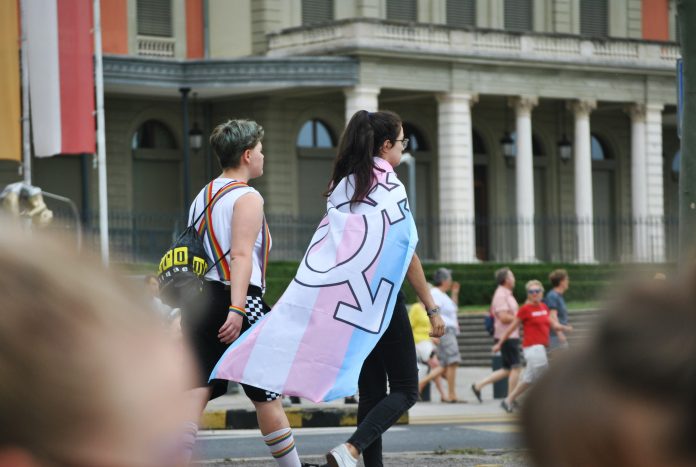
A day that celebrates the progression of gender rights shouldn’t exclude gender non-conforming folks. PHOTO: Delia Giandeini / Unsplash

by Dev Petrovic, Staff Writer

Every year on March 8 for International Women’s Day, social media platforms are flooded with variants of “go girl” posts, celebrating “strong, powerful, independent women.” While women have every right to celebrate the progression of their rights, why haven’t we gotten past this form of feminism? What about gender non-conforming (GNC) folks? What about the experiences of trans women, which are vastly different from those of cisgender women? It appears that this monumental day has not kept up with the development of modern feminism and, in turn, its message has become exclusionary. 

International Women’s Day is rooted in first and second-wave feminism — the first wave initially standing for working women’s rights, but then expanded to include other forms of female justice. The second-wave advocated for amending political and cultural inequalities, like gaining access to contraception. Since then, feminism has transformed into a multifaceted ideology, including movements such as #MeToo. Many of these movements advocate for gender-based rights through an intersectional lens, but this is not always the case. There are people out there who identify as “feminists” but preach transphobic views and voice hate-speech against sex workers. Women’s rights have come a long way, but gender inequality still manifests in violent and hateful forms — especially for trans and non-binary individuals, as well as sex workers. This is not something to celebrate.

The official website for International Women’s Day itself only mentions the day’s importance as a celebration of “women’s achievements,” and promotes “female-focused” charities. Reading this as someone who does not identify as a woman (but is woman-passing) is a huge slap in the face. Seeing this sort of language on any day automatically makes me feel left out and erased from the conversation. But seeing this on the most prominent and official source for International Women’s Day — a website that intends to uplift those marginalized — is entirely disappointing. As if non-binary people don’t experience gender inequality like women do? That’s bullshit.

I may be non-binary, but I am still treated and viewed as a woman in many ways. Because of this, I experience the same issues that many women do, but on top of that, my identity is also constantly forgotten. I feel that in any conversation that centres on women’s issues, the mention of trans or non-binary people does not seem to make the cut. There’s no reason as to why International Women’s Day, a day that symbolizes progression and equality, can’t be inclusive of different identities. It is also vital to mention that by including other identities, those of cis women are not erased. 

Most importantly, it does not make sense to only celebrate the progression of women’s rights while there are still folks who are systematically discriminated against, and are fighting for their gender to be legally recognized. If there’s going to be a day that symbolizes the fight for gender equality, it is counterintuitive for this celebration to be exclusionary. Besides, including all identities does not mean that we can’t celebrate the past and present activist work that is being done by women and people of all genders. 

For starters, let’s call it a day not solely for cisgender women. Feminism has come so far in its inclusion of various genders. Maintaining gender binaries for the sake of uplifting one gender is a major step in the opposite direction.

I understand that progression within these formalities takes time, but non-binary and GNC people alike deserve to be represented and seen. It is incredibly invalidating to be erased from important international dates, while cis women get to freely write #girlpower on their Instagram stories. It’s about time that we step away from being a second-thought for performative feminism, and that we are finally included and acknowledged in the fight for greater gender rights. We are important and we exist.