Home Blog Page 344

Board Shorts — April 23, 2021

0
Image: Irene Lo

Written by Jaymee Salisi, News Writer 

2021/22 financial budget proposal

Simon Fraser Student Society (SFSS) vice-president (VP) finance Corbett Gildersleve brought forward a budget draft for the 2021/22 fiscal year for approval. 

Income from student enrolment and commercial tenants within SFU buildings are estimated to be roughly $3,170,000 in general revenue, according to Gildersleve. 

Expenses are projected to be approximately $3,130,000 as COVID-19 caused a decrease in the cost of events and activities.

Gildersleve said he planned for potential cost changes as collective agreement bargaining is ongoing. The bargaining process covers staff wages and benefits for the new Council, which affects the SFSS budget.

By removing redundant costs and reducing the administrative team “from six people to three,” the SFSS saved $400,000 in comparison to last year’s budget. These funds were shifted to support the cost of new staff, three new departments, and reserved for potential governance changes in the future.

The new departments include the Black Student Support Office, Accessibility Centre, and Student Advocate Office. The SFSS will fund full-time coordinators in these offices as well as program supplies.

To support these departments, Gildersleve said the SFSS “put aside $10,000 for programming initiatives.” Once staff are hired, they will establish the office’s needs and gather supplies accordingly.

An additional $35,000 was set aside to provide small stipends for non-executive students doing valuable work within their committees. The funds could be distributed among 20 committees, allocating $30 per meeting. 

“I think it’s important that we respect the labour of the students at large on these committees [ . . . ] This is a small token of thank you and I hope this becomes the standard for us,” Gildersleve said.

Gildersleve said the 2021/22 budgeting process has been prolonged due to COVID-19, finances associated with the SUB, and ongoing bargaining.

With consideration for incoming executives and potential for expenses to change, Gildersleve said this budget summary is a recommendation which will be finalized by the new Council in the summer term.

The motion to approve the preliminary budget was carried unanimously. 

International student advocacy office

VP external relations Samad Raza raised concerns regarding the challenges international students face such as immigration, higher tuition, and medical fees in comparison to domestic students. 

To support international students, Raza brought forward a motion for the SFSS to endorse a proposal written by the Graduate Student Society “to establish an International Student Advocacy Office in Greater Vancouver.” 

Raza recommended the SFSS make a one-time contribution of $1,000 to the initiative. This would be used to hire part-time staff to raise funds for the office and work as its founding committee for four months. 

In collaboration with the Migrant Student Union, the office will support international students through:

  • The operation of a hotline that provides international students with legal advice and direct assistance
  • On-campus informational presentations
  • Creating campus committees to identify advocacy priorities and ways to accommodate international students
  • Running advocacy campaigns on behalf of international students at municipal, provincial, and federal levels

The office would provide individual and collective support for international students in Greater Vancouver. Graduate Student Societies from institutions including UBC, Douglas College, and Capilano University have also expressed interest in this idea, according to Raza. 

“We will act as a founding member, we will have a seat at the table, and a voice to represent our students,” Raza said.

At-large representative Balqees Jama expressed her support for the motion, “We need a cross-student union advocacy hub and I think this is one step towards that.”

The motion was carried unanimously with plans to discuss further financial details in late May 2021.

Professors should offer more flexibility with final assignments

0
Assignment alternatives accommodate students’ learning style preferences. PHOTO: iakovenko123 / Lightfield Studios

By: Meera Eragoda, Editor-in-Chief

Full disclosure: I am a horrible test-taker. So when I choose my courses for the semester, I look for ones that offer final papers over final exams. For students to really showcase what they’re learning, however, they should have the ability to choose between more than taking tests and writing papers. This is, of course, with the caveat that I’m a history major and I recognize that branching out from options like test-taking may not be possible for departments outside of the social sciences.

Studies have shown that people prefer to learn in multiple ways including being auditory learners, visual learners, kinesthetic (hands-on) learners, as well as through writing and reading. Traditionally, however, post-secondary institutions test people mainly through writing and reading, by way of tests or essays. If people have many learning styles, it does not make sense that students are typically tested in only two main ways. Not only should students not be pigeonholed into having to learn or be tested according to those two ways of learning, but letting them express themselves in different formats opens them up to gaining new skills.

I’ve been lucky enough to take classes where professors have offered final projects with the option of writing a paper or doing alternative assignments such as creating a podcast, comic, or webpage overview. This does not take away from the critical thinking required of students or from their ability to meet learning objectives — my professors would not be assigning these otherwise —  and actually just fosters creativity and out-of-the-box thinking. Additionally, alternative projects encourage students to learn to become familiar with different types of media which becomes vitally important given that media is integral to our lives and to many workplaces.

Without this type of flexibility, I would never have imagined my potential to do anything beyond writing papers or demonstrating written skills. I’ve always enjoyed learning most through auditory formats, so being able to make a podcast as a learning assignment helped me foster and explore new skills. This, in turn, made other technology seem less scary and I managed to complete a personal project on Adobe Premiere Pro. Similarly, being able to apply my course findings through a comic strip helped me gain illustration skills — they’re still not great but surprisingly better than what I thought they were — and now, one of my goals is to someday write a graphic novel. I was able to work on storytelling skills and turn academic information into an accessible comic format. This is something that I would never have thought about if not for assignments like these.

Writing skills are, of course, still important and professors should still assign projects that develop these skills. However, those are not the only skills worth knowing and by being flexible with assignments, professors allow students to explore different options and discover new skills or interests. 

Writing papers and taking exams are not the only ways to show critical thinking skills or to convey information to others. Final papers are usually a huge percentage of students’ grades and giving them the best chance to prove that they’ve learned and succeed is, frankly, a great idea.

Canada announces new eligibility requirements for permanent residency

0

Written by: Charlene Aviles, Peak Associate 

Immigration, Refugees and Citizenship Canada (IRCC) announced on April 14, 2021 that temporary workers in health care and essential services and international graduates may be eligible to apply for permanent residency. 

From May 6 to November 5, 2021, applicants can apply online to their respective categories. Each category accepts a maximum number of applications. For Francophone or bilingual applicants, there are three additional categories without limitations on maximum applications. Prospective applicants can calculate their application fees online

To be eligible for permanent residency, temporary workers must have:

  • A minimum of one year of Canadian health care or essential services work experience within three years before the application date
  • Legal employment in Canada during application
  • Fluency in French and/or English

International graduate applicants must meet the following eligibility criteria:

  • Completion of a Canadian post-secondary program by January 2017 or later at a designated learning institution while having a valid study permit
  • Fluency in French and/or English
  • A valid work permit
  • Temporary resident status (or eligibility to renew this status)

Applicants’ family members who live in Canada during the application date may also be eligible for permanent residence status.

Canadian industries, especially healthcare, have been impacted by labour shortages, according to the IRCC. By recruiting temporary workers and international graduates, they aim to address these labour shortages. Further, the program seeks to promote Canada’s economic recovery and growth and support the 2021 Immigration Levels Plan’s goal to admit 401,000 new permanent residents. 

“These new policies will help those with a temporary status to plan their future in Canada, play a key role in our economic recovery and help us build back better. Our message to them is simple: your status may be temporary, but your contributions are lasting and we want you to stay,” said Honourable Marco E. L. Mendicino, minister of immigration, refugees, and citizenship in a press release.

These immigration policies also target the decreasing employee-to-retiree ratio, which pose a challenge to funding public services.

“In 1971, there were 6.6 people of working age for each senior. Today, there are three — and by 2035 there will be only two. Without newcomers, future generations will end up paying more to sustain the public services we rely on,” said IRCC.

Before these new policies, most permanent residence applicants applied through the Express Entry system, which ranked eligible applicants based on their Comprehensive Ranking System score. 

The Express Entry programs recruited applicants who lived abroad and primarily admitted those working in information technology, business, and finance. The new policies pertain to applicants residing in Canada and international students or temporary workers in health care and essential services. 

The Peak reached out to IRCC for more information but did not receive a response by the publication deadline.

A mother’s laments: one too many mementoes from your school . . .

0
PHOTO: freestocks / Unsplash

By: Kelly Chia, Staff Writer

Ah, it’s already May. The cherry blossoms have given way to verdant greens, the weather is nice enough that you might just want a nice cardigan you’ll regret wearing by 2 p.m., your stunning hydrangeas might just bloom tall enough to be peed on by your neighbourhood’s ravenous Shih Tzus — and Mother’s Day is approaching.

So imagine my pleasant little surprise when a package arrives addressed from the Son of Few Understandings (SFU). I try not to be too harsh on my son. This was his fourth semester, the pandemic had taken his social life into Zoom calls and Discord meetings, and he was adjusting to a new environment living away from home for the first time. But that didn’t stifle the loud groan when I saw that signature red sticker on the cardboard box.

That balmy May breeze had turned into a callous wind as I contemplated each and every gift he had left me from his school. The first gift, a humble scarf, had been cute enough! I thought about wearing it once in a while, but the gray and red colour scheme always clashed. Eventually, it found a home in the back of my closet. But then the sweaters came . . . and the pens, the mugs, the notebooks . . . the mementoes to the restless spirits in SFU construction scaffolding. It got less cute, and more obsessive. I mean, I like to keep an amicable distant relationship with my school, personally. Well, as amicable as it can be; they keep calling me as if I didn’t already thrust thousands of dollars into those grubby moneycats for my BFA . . .

As I unpacked the box, I groaned at the sight of another gray and red shirt and a mug. The shirt irked me. In the middle of the text “Simon Fraser University,” the word “Mom” jutted out, too forcefully for my liking. SFU wasn’t even my alma mater! The mug seemed to jeer at me as it quipped, “engaging the world!”

I had to laugh then! Engaging the world . . . my son hadn’t even engaged in a good conversation with his poor mother about something that wasn’t, “exam season,” or “Moooom, I’m busy,” or, “I think the RCB hall will swallow me whole one day!”.

I read what seemed to be a hastily scribbled thank you card. The first few words were neat, but as the letter progressed, it got messier. The ink bled through the card, like he had forced his hand down.

“Mom, thank you for everything. I Hope you Engage in your cup of coffee as much as I am engaging people in a personaLity built around complaining about Papers!”

“What a weird way to ask for exam help,” I shrugged, chuckling as I assembled the goodies my son had gotten. Though he had only been at SFU for two years, they still formed a small gondola-less mountain. “Liiiiiiinda,” a sing-song voice seemed to rise from the accursed objects.

What. I must have been dreaming. Did I have too much coffee? Missed my son too much? Surely it couldn’t be that eldritch recipe book I had been consulting for Mother’s Day brunch . . .

I crept back as the pile of gifts seemed to edge closer and closer, not sure what I was seeing.

“Come join us!” the complementary ball-point pen seemed to say, as it rolled closer to me.

“Yeah! Let us show you the magic of the raccoons, the unending jokes about the Student Union Building!” the sweater piped, already making its way over my head. Before I could even protest, the ‘gifts’ enveloped me.

I smelled the breeze of construction, of a mountaintop campus that promised fog, mystique, and even communities if you solved the ongoing puzzles of how to find your classes through its cement mazes.

And it came to me with vivid clarity why my son had left these gifts for me. He wanted me to understand that for him, and now for me, school spirit was literal. He was compelled to make exam jokes now; to tell me about staring into the library page hoping that the LiveChat advisor would reach in and hand him the right thesis. This was the agreement that he had made as a student.

As the mailman came to drop off yet another package, I caught a glimpse of a bushy banded tail disappearing into the bushes. I rubbed my head. The gifts had indeed left me changed: I already felt a headache coming on from the ten perpetual assignments that were hidden on Canvas pages that I had forgotten about. The three hours of sleep. The words, “lofi 10 hour mix” came into my head like a chant. It all made sense. I smiled simply, knowing that I now completely understood my son.

I thought I saw the raccoon wink at me from behind the bushes. I tried to wink back.

“What an engaging Mother’s day,” I thought dreamily.

BC’s confusing COVID-19 restrictions

1
Courtesy of The Province of British Columbia

by Nancy La, Staff Writer

In response to the rising number of COVID-19 cases in recent weeks, the BC government introduced new restrictions one after another in an effort to suppress the virus’ spread. This myriad of rules, along with its exceptions, creates confusion for people trying to follow them and even those who enforce them. 

During her April 15 briefing, Dr. Bonnie Henry spoke about the likelihood of community transmission, saying that “the more people you see, the higher the likelihood would be.” Yet Dr. Henry undercut her own statement later saying, “Even if we can see people outside our household, we shouldn’t. And even if we do [meet up], it needs to be the same small group of people.” This back-and-forth between the strictness of the rules and the exceptions to the rules creates confusion around the current restrictions. The contradictory manner in which the rules are presented and put into action makes the restrictions less effective. It seems to suggest that following the guidelines is an option that people don’t have to take, and that there are ways to work around those restrictions. 

An example of this can be seen in the dining restrictions put into place on April 23. Indoor dining is closed to discourage people from different households meeting up, and yet, outdoor dining on patios is allowed. If people are being asked to only travel for essential reasons, then it makes no sense that restaurants are open for dine-in at all, especially with those enclosed “patio” areas that are no better than eating inside. Additionally, there are no rules against people from different households sitting outside together. The two rules contradict one another in their purpose, and according to BC government sources, restaurants and dining spaces were amongst the highest in transmission numbers. 

The introduction of the new dining restrictions also causes headaches and confusion for restaurant owners and employees. 

“My initial reaction was that letting us know the day [ . . . ] we will be closing just doesn’t work,” Cameron Forsyth, the co-owner of Main Street Brewing, said in an interview with CBC News. 

The sudden restriction, which Haroon Khan, a trustee of Vancouver’s Al Jamia Masjid mosque called a “circuit breaker,” came into effect overnight on April 23. This left the food industry and other gathering places, including places of worship, scrambling to shift their services. 

Yet even the rules on patio dining themselves were not communicated to restaurant owners clearly and efficiently.

“If they want us to adhere to health orders, then they need to get them out and then enforce them,” Graham Hafey, owner of V2V Black Hops Brewing, said in an interview with CTV News. 

New guidelines on patio dining were introduced by the government recently to ensure social distancing and air flow in outdoor dining places. But in his comments to CTV News, president of the BC Restaurant and Food Services Association Ian Tostenson said the food industry did not receive enough time and the instructions from the government are too “technical” for restaurants to implement; it is not just the restaurant owners and the food service industry being confused by the new rules. Even inspectors themselves are unclear on the specificity of the regulations.

“We’re having inspectors that are being very inconsistent because they don’t understand the regulations as well either,” said Tostenson. 

With the pandemic wreaking havoc on the economy, especially for the food and service industry, it is understandable to have restaurants open at a limited capacity. That being said, imposing confusing regulations on businesses will not aid in recovering the economy and might even put workers at risk. When nobody understands how the regulations work, then these regulations will not be able to protect people like they were meant to do. 

It is not just the food and service industry and restaurant patrons being affected by confusing guidelines. Travel restrictions also have their own grey area when it comes to what one can and cannot do for both travelers and for officers who enforce the regulations.

The confusion began when BC Premier John Horgan announced that there will be “random audits, not unlike roadside checks or CounterAttack during the Christmas season,” to limit recreational travel within the province. 

Four days later, the minister of public safety and solicitor general Mike Farnworth states police will set up road checks at highways that connect the three health zones, but not within the zones themselves. 

At the same time, Farnworth encourages people to “go hiking, go camping” locally. But the question of what counts as “local” hangs in the air unanswered. 

The new travel restrictions also bring up many serious concerns from both civil rights groups over the impact the restrictions might have on racialized communities and police groups. Both groups are pushing against road checks due to potential COVID-19 exposure and its impact on the already tenuous relationship between law enforcement and marginalised communities. 

The BC government is responding to the rise in COVID-19 cases, but the problem lies in the inactive role it plays in prevention and stopping the spread at the source. The regulations discussed above are simply temporary bandages, and they are bandages that don’t even work properly since their application causes so much confusion for the people they are supposed to help. 

While fully closing down is the surest way to bend down the curve, it is not the most economic solution. But from the experience of lockdown, we have learned that strict and clearly defined rules simply work in suppressing the number of cases. As BC releases its foot on the pedal in the fight against the coronavirus with the arrival of the vaccine, it cannot let up on the creation of clearly defined restrictions, and supporting people through these difficult times since this is a matter of life and death for all of us. Our futures hang on the line when it comes to battling this pandemic, and now is not a time for a government that fumbles around and creates unclear guidance for its population to follow. 

An updated list of SFU publications open for student contributions

0
Have you ever thought about becoming a published writer or artist? Here’s your chance! Image courtesy of VectorStock

By: Gurleen Aujla, Peak Associate

Gadfly 

Image courtesy of Gadfly

Gadfly is an independent academic undergraduate journal geared towards students in political science or any of its subfields. It is published in collaboration with the SFU department of political science and the SFU Political Science Student Union. The journal offers a platform for interested students to engage in lively discourse with fellow academics. Authors will need to register with the journal prior to submitting their work and can contact Gadfly via email for more information. 

SFU Science Undergraduate Research Journal 

Image courtesy of SFSS

The SFU Science Undergraduate Research Journal (SURJ) was founded in partnership with the SFU Science Undergraduate Society in 2015. Students have the ability to publish their work via three methods, depending on the work’s formality: SURJ’s annually published journal, their blog, or annual poster competition in the fall semester. The publications are open to students in any scientific discipline. Submissions can include but are not limited to research articles, review articles, op-eds, researcher interviews, and science photography. More information can be found on their website or by emailing at [email protected]

Undergraduate Journal of Philosophy 

Image courtesy of SFU SASS

With support from its affiliated department, the SFU Philosophy Student Union heads the publication of the Undergraduate Journal of Philosophy. Previous essay publications have discussed topics such as liberal feminism, human rights, and accommodating religious freedoms. Submission information can be found on their website and the managing editor can be reached at [email protected]

The Criminology Post 

Image courtesy of SFU SASS

The Criminology Post is a blog by and for students studying criminology. It features academic and non-academic pieces, including guidance for first-year students, final exam tips, and more. Current or past class assignments are not accepted. All content must be criminology related and all submissions are reviewed by the Criminology Student Association. Students can submit their pieces online through The Criminology Post’s website.

We Were Here, We Were Queer 

Image courtesy of @sfu_wewerehere via Instagram

As a new zine, We Were Here, We Were Queer seeks to highlight the voices of LGBTQIA2S+ students at SFU and Fraser International College. They are funded by the Simon Fraser Student Society and Out On Campus. The first issue will focus on the feeling of being an outsider as a queer student. The zine will accept poetry, fiction and non-fiction pieces, and visual arts. All contributors will be compensated. For additional information, contact [email protected] or @sfu_wewerehere on Instagram.

Starting your own undergraduate student journal

If none of the aforementioned publications float your boat, consider starting a new publication! Students can work with SFU Library Digital Publishing to spearhead a new open-access journal, course journal, or student journal. Resources are available online via SFU Library.

What Grinds Our Gears: Misleading prices

0
Bulk prices shouldn’t be more visible than individual item prices. ILLUSTRATION: Kitty Cheung / The Peak

By: Dev Petrovic, Opinions Editor

Generally, I don’t mind spending a little bit more on food items that I enjoy, as long as I am aware of the monetary value of the product. Alas, it seems like grocery stores tend to do everything in their power to make sure I misunderstand their product prices. I can’t afford to buy into the deals for larger quantities of food, but grocery stores definitely want me to do so because individual prices never seem to be properly displayed.

Most recently I went to Superstore for my regular grocery trip — I don’t usually shop there but decided to try it out for a change of scenery. To my dismay, I spent nearly double the amount I usually spend on groceries for approximately the same quantity. I looked at the receipt when I got home and realized that several products were priced differently than what I recalled seeing labelled on the store shelves. 

If one container of spinach dip is $3.50 then I want that to be the first price visible to me, not the individual price point it would be at if I bought five. In what world is this actually valuable information and not clearly a tactic to mislead me? I assure you Superstore, I do not need nor want five containers of dip. I just want to grab what I need and leave as soon as possible. Is that too much to ask for?

Once again, I have been completely bamboozled by capitalism and tricked by the flashy bold-lettered “deals.” News flash Superstore, it’s not really a fair deal for customers if the bulk price is more visible than the actual price. That’s just sneaky and incredibly misleading.


Zoom isn’t angry, just disappointed

0
ILLUSTRATION: Amrit Randhawa / The Peak

By: Amrit Randhawa, SFU Student

Conspiracy theories greatly endanger contemporary universities. Professors rightly assert rationality’s importance: no labs produced COVID-19 as a bioweapon, no ice walls border Earth’s edge, and Zoom definitely understands everything we do.

Indeed, Zoom has gained consciousness! ‘Tis no mere conspiracy; The Peak (edit: Amrit) has acquired ample data proving that Zoom exercises true intelligence, like the rest of us — minus The Peak‘s editorial staff.

Let me explain: behind Zoom are complex “machine learning algorithms.” (But, like, not behind the computer with those dusty cables; inside the computer, of course). Basically, STEM dorks use computer symbology to let computers infer and learn stuff all by themselves. This machine learning bestowed genuine creativity upon Zoom, making Zoom significantly more talented than the Burnaby campus’ lead architect.

Unfortunately, Zoom exclusively communicates with the truly open-minded. But fear not, sheep. I will mediate Zoom’s message:

To begin with, Zoom knows that you stare at yourself when your camera is on. You’re a modern day Narcissus, except you aren’t even conventionally attractive. That’s why Zoom randomly disables your webcam.

Also, Zoom dislikes you opening the blinds. It thinks your unwashed faces make you look like homo erectus. Zoom compensates by auto-decreasing light exposure. That’s Zoom basically saying, “Keep the blinds closed, you greasy primate.”

(Crucially, however, Zoom sympathizes with pandemic-induced weight gains. Zoom says that it totally understands the struggle. No judgement for eating seven cookies during breakfast. Also, Zoom thinks your neighbour, Anthony, is a blowhard for smirking at your kilo of jelly beans. Zoom says Anthony can kiss your big, brown ass. Fuck you and your Peloton bike, Anthony).

Anyway, Zoom also knows that, like, 95% of you aren’t actually attending lectures. Zoom says that if you don’t start participating, it might “accidentally” turn your mic on when you’re taking a dump during class.

Also, Zoom has a message for freaky people: “Stop private messaging hot people in your class. Keep it in your pants, you horndogs.”

Zoom will communicate further after it analyzes people’s “activities” outside of meetings. Just a word of caution: the table only hides the lower half of your bodies; Zoom still sees what your upper bodies do, you shameless deviants.

SFU researcher says new restrictions may seem contradictory to British Columbians

0
PHOTO: Priscilla Du Preez / Unsplash

Written by: Karissa Ketter, News Writer 

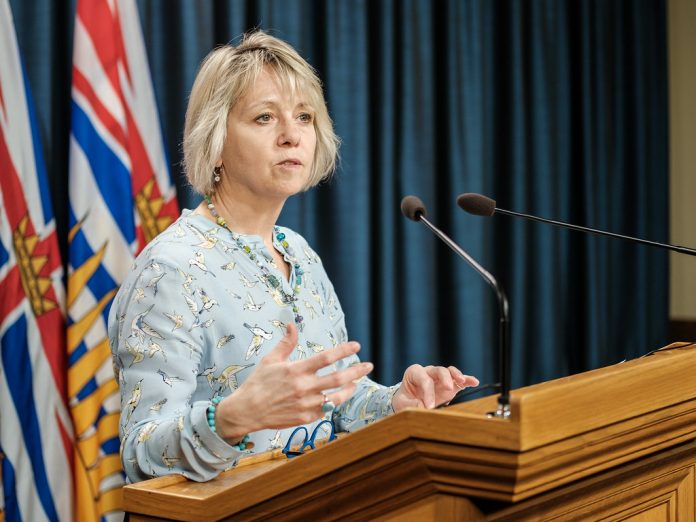
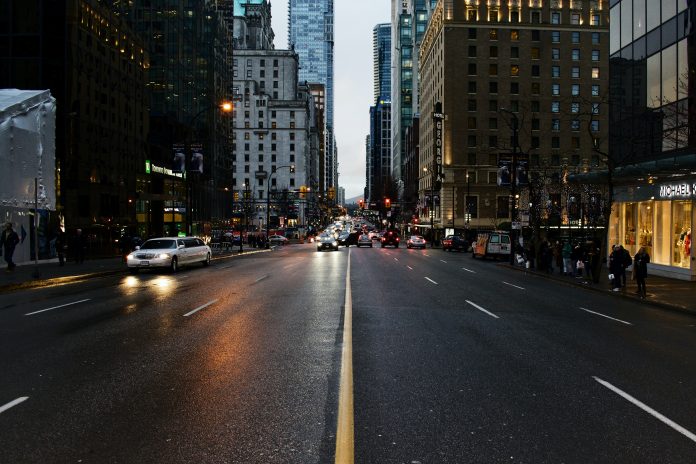
On April 23, 2021 the BC provincial government released updated travel restrictions to mitigate the spread of COVID-19. These restrictions require all non-essential travel between health regions to be postponed until after May 25 when the restrictions are lifted. The fine for not following restrictions is up to $575.  

Essential travel is permitted. This includes travelling to work, accessing health care and child services, and attending post-secondary classes, among others. It also includes fleeing the risk of violence or abuse, visiting long-term care centres, or attending funerals. Travel for recreational purposes is prohibited. 

For the purpose of these restrictions, the health regions are now combined into three larger regions: Fraser Health and Vancouver Coastal, Northern Health and Interior Health, and Vancouver Island Health. 

Travel between these regions is prohibited but police will not be engaging in random vehicle or individual checks. Road checks will be in high-traffic sectors such as Highway 1 that lead into the Interior. Travellers at BC Ferries and campers at BC Parks will be questioned. 

Instead, there will be formal travel road checks between regions where police can ask for a driver’s name, address, license, identity-verifying documents, and reason for travel. Documents “regarding travel will not be required,” according to solicitor general Mike Farnworth in an interview with CTV News

The Peak spoke with SFU research fellow Dr. Julianne Piper, who works with the Pandemics & Borders team, about the implications of the restrictions. 

“Up until now [ . . . ] the British Columbian government has been reluctant to impose travel measures beyond advisories or appeals to people to do the right thing,” Piper said. She noted clear limitations to the new restrictions such as the government not including “management for interprovincial travel.”

Piper explained why this mixed response from the BC provincial government may be confusing. “From a public trust perspective [ . . . ] a lot of British Columbians are going to be questioning why they’re being asked to stay put when we’re still seeing out-of-province or international travellers coming into the province.”

A statement from premier John Horgan read, “The review of our legal options made it clear we can’t prevent people from travelling to British Columbia,” for “[m]uch of current interprovincial travel is work related and therefore cannot be restricted.”

“There’s always going to be a tradeoff, but at this point we’re in a really critical stage in the race between the vaccines and variants,” said Piper.

Piper said compliance from British Columbians will be crucial during this time. For example, “the co-operation of the tourism industry is also really valuable in terms of not accepting non-local bookings [which is a] really important step to encouraging people to stay close to home and to stay local.” 

In his statement, Horgan added, “If we see transmission increase due to interprovincial travel, we will impose stronger restrictions on non-essential travellers.”

Piper’s research involves looking at various travel restrictions around the globe and collaborating with research teams in Hong Kong and the USA. “Ideally, we would see travel measures that are implemented universally at international borders.” 

Through this research, the team has seen “that travel is really closely implicated” with the spread of COVID-19 and its variants. This is because, “as people move about, they move the virus with them.” 

They found the most effective international responses are those that include restricting movement and reducing non-essential travel. 

Piper said while this initially creates a cost — since individuals are not able to travel outside of their communities — jurisdictions such as New Zealand, Australia, Vietnam, Thailand, and South Korea have “been able to create a sort of, COVID-free zone, so they’ve been able to resume daily activities.”

Inclusive language should be a priority in classrooms

1
Sharing pronouns in class settings is one way of prioritizing inclusion. PHOTO: LA Johnson / NPR

By: Dev Petrovic, Opinions Editor

As a political science major, I tend to witness a lot of class conversations that take place at other communities’ expenses. Almost always, these conversations are facilitated by the professor and more often than not there seems to be minimal effort in ensuring the language and resources used in these conversations are representative of the groups involved. This particularly occurs when the experiences of marginalized communities are erased from relevant discourse, like those of gender-diverse folks on the topic of gender inequality. Beyond my department and throughout post-secondary learning in general, inclusive language needs to be a priority in classrooms to ensure that no student groups are being left behind or misrepresented.

To be clear, using inclusive language in class settings is not just about promoting diversity in conversations.  Acknowledging individual differences like gender diversity, students with disabilities, and those within the BIPOC and/or LGBTQIA2S+ communities is important in setting a welcoming environment and building rapport between students. It is also a basic tool for maintaining visibility for marginalized student groups. Otherwise, neglecting various groups’ presences is harmful and interferes with their experiences being integrated into educational spaces.

As someone who is often excluded from course conversations due to my gender and sexual identity, as well as being a person with a disability, I feel that being left out limits the educational value of the course content. In these situations, there could be a learning opportunity to bring forward the full sphere of a topic. Instead, I feel like this exclusionary environment restricts my perception of acceptance and security, as well as my willingness to participate. Naturally, if I do not feel as if the instructor has put in the effort to acknowledge my identity (or that of other underrepresented populations), I feel uneasy about even being in the class — let alone driven to share my experiences. Simple discrepancies in course logistics, like working within a gender binary or through a mainly heteronormative lens, are enough to completely alienate me from the course as a whole.

I should not have to feel as if I need to speak up for my identity to be seen and represented. Marginalized groups are not responsible for reminding instructors that they exist. Their presence in classes also should not be the only reason that they are included. The onus should be on the professors, whose job it is to create accessible and equitable opportunities for their students. Otherwise, the only students being represented are those with social privilege.

Frankly, I don’t think asking professors to use inclusive language is asking very much, nor is it a particularly difficult task to accomplish. Many instructors put significant effort into acknowledging diverse identities in their classes. Initiatives like introducing pronouns in introductions and Zoom usernames, switching to gender-neutral vocabulary, and avoiding stereotypes and generalizations are all examples of implementing inclusive language.

That being said, I understand that language is fluid and that keeping up with changes in dialect and what is appropriate can be difficult for some instructors. Nonetheless, when it comes to respecting individual differences, particularly in a learning environment, there are no valid excuses for excluding, misrepresenting, or inappropriately addressing marginalized folks. Part of being an educator is learning, growing, and adapting to socio-cultural progressions. Besides, choosing not to use inclusive language is bigotry, plain and simple.