Home Blog Page 330

Bright-er Side: The pandemic helped me see who my real friends are

1
ILLUSTRATION: Siloam Yeung / The Peak

By: Sara Wong, Arts & Culture Editor

In my senior year of high school, I was the type of person who was friends with everyone but never had a tight-knit circle. It made all the grad group activities, like Artona photos and prom, feel more awkward than fun because I was constantly questioning where I belonged. 

Maybe that’s the reason why, after starting university, I spent so much energy keeping in touch with everyone. The insecurity I felt over not having a core group of friends resulted in me being on my phone for hours at a time, trying to be emotionally available to upwards of five people at once. Then, the pandemic hit. With so much of my world thrown into chaos, sending my usual round of “Hi! How have you been?” texts slid further down my priority list. I’m used to being the person who reaches out first, so during the first few months of the pandemic, I was always pleasantly surprised when someone messaged me to check in, especially when they asked about my family. 

I’ve always been open about having a parent who’s immunocompromised: my mom has lupus, a chronic disease that — in her case — affects her kidneys. Having friends keep tabs on my family’s wellbeing made me realize I wasn’t on the fringe of every social circle like I had imagined. 

In contrast to my super sweet, supportive friends, others at that time treated me like I was the problem for not wanting to risk COVID-19 exposure. I was told I needed to worry less. Suffice to say, I don’t talk to those people anymore. 

Getting rid of toxic friends allowed me to focus on myself and also have deeper, more meaningful conversations with people. And with everyone at home more often, it was easier to plan fun group activities too, like monthly cocktail nights over Zoom

Now that the COVID-19 restrictions are easing once more, I’m looking forward to seeing my real friends and not wasting my time in toxic relationships.

Art plays a vital part on the road to decolonization

0
Art gives a voice to those who have been silenced. Photo: Sam Javanrouh

By: Vrinda Kapadia, SFU Student

Content warning: mentions of violence against Indigenous communities

Despite persistent and deliberate human rights violations and abuses, Indigenous communities across Canada have shown tremendous resilience and solidarity throughout the years. Major art projects, initiatives, and campaigns by members of Indigenous communities are influential in illuminating the hardships Indigenous peoples face and start conversations around decolonization. These artistic endeavours are more than just nice to look at. They play an important role in telling Canada’s colonial history and are needed to remind us there is still a lot of work that needs to be done. Through art, Indigenous peoples who have been previously silenced have now found a voice. 

One of the most recent initiatives is the 215 shoes currently arranged on the steps of the Vancouver Art Gallery. These 215 pairs of shoes symbolize the lost lives of 215 children at the Kamloops Indian Residential School. This exhibit was assembled on May 28, 2021, just one day after the heartbreaking and painful discovery of the remains of these children. The memorial shines a spotlight on the undocumented deaths of Indigenous children across Canada. Additionally, similar memorials are emerging from coast to coast in honour of these children. 

Another one of these artistic campaigns is the REDress Project founded by Jamie Black in 2010. Black is a Métis artist determined to spread awareness about Missing and Murdered Indigenous Women and Girls (MMIWG). Black ventured to collect 500 red dresses donated by community members and aimed to hang them in and around the city of Winnipeg. Since then, fiery red dresses have been installed in several parks across Canada and have been part of exhibits in museums and other academic institutions. The bright red dresses, intensely fluttering in the wild or silently lurking among other exhibits, leave a striking impression on spectators. Black explains, “People notice there is a presence in the absence.” The REDress Project “calls in the energy of the women who are lost” and speaks for silenced Indigenous women.

The Faceless Doll Project, launched in 2012 by the Native Women’s Association of Canada (NWAC), is another one of the creative responses for raising awareness on the epidemic of MMIWG. It was envisioned as a travelling art exhibit in honour of the 582 cases of MMIWG accounted for in a research commissioned by the NWAC. Community Engagement workshops were set up across Canada and community members were educated on the crisis while they crafted their own dolls to contribute to the exhibit. The deliberate lack of facial features on the dolls reflects society’s continued lack of regard for these women and girls. The representation of lost Indigenous women and girls as faceless dolls depicts how they are deindividualized and devalued by society. The Faceless Doll Project sends a simple yet powerful message about the violent history against MMIWG.

There are numerous instances of creative programs founded by individual artists, groups, and organizations created to raise awareness on the issues plaguing Indigenous peoples in Canada. The history of Canada is filled with targeted violence, systemic racism, discrimination, purposeful denial and attempted abolition of cultures and languages, and more. It is in all of our hands to shape a better present and strive for a better future. These art projects are not only reminders of the hardships Indigenous communities have faced, but also a reminder of their incredible resilience. As such, these art projects are crucial in reflecting back to us the condition of our society and augment the acknowledgement of the experiences of our community members.

SFU researchers create consciousness-swapping device; chaos ensues

0
PHOTO: Tran Quang Thien / Unsplash

Burnaby, BC — SFU researchers debuted their groundbreaking consciousness-swapping device on Friday morning. The device has been in the works at the Behavioral and Cognitive Neuroscience Institute (BCNI) for three years. It was revealed on the Burnaby campus by Joy Johnson, BCNI researchers, and a group of bored communication majors who were looking for a break from talking about Marshall McLuhan for the third lecture in a row. 

The device, named the Consciousness Replacing Acceleration Project (CRAP), was meant to be used on the campus solely for a test run. The mind of head researcher Seymour Cox was supposed to be swapped with a raccoon’s. 

“Honestly, this whole project started because I watched Pacific Rim at seven years old,” Cox said. “I saw the scientist drift with the Kaiju brain and it awoke something primal in me.” The rest of the quote is not suitable for print.

During CRAP’s initial usage, in which Cox swapped with the raccoon, a figure dressed in black holding an electric guitar sprinted into the testing area and launched the instrument into the device. The device exploded violently, beams of light extending to every person in the immediate vicinity. This swapped each individual’s mind into different bodies. 

I, your intrepid reporter and one of the bored communication majors (seriously, can we stop talking about Marshall?), am still in the body of McFogg the Dog as we speak. Did you know there’s no person under there? Like, you’d think there was some beleaguered student in a fursuit, but McFogg the Dog is actually an animatronic being with an IQ of 192. I was talking to him before he took over the body of my professor. Cool guy. 

In the immediate aftermath of the explosion, president Johnson was seen running into the woods. Security arrived on the scene in the bodies of touring high school students to detain Andrew Petter, who had suddenly appeared. As the Hot Topic-clad teenagers dragged him away, he howled desperately: “Please! I’m not Petter! I am the anti-Petter! I am your president! I am your God!He was then gagged with a 100 gecs beanie. Teenagers. 

Johnson emerged from the woods this afternoon with a raccoon on her shoulder and an e-cigarette in her hand. When asked for a comment, she stared perplexedly at the vape and said, “I just wanna blow some perfect Os.” 

When asked her specific thoughts on the body-swapping device and if, perchance, she happened to be someone else inhabiting Johnson’s body, she froze for 20 seconds, blinked slowly, and said, “No. I am Joyce Jansen, and I vow to return this school to the beautiful state Andrew Petter put it in.” The Peak chose to gently remind her that her name was not Joyce Jansen and that Andrew Petter had, among other things, conspired with Jonathan Driver to cause the pandemic. She had no further comment. 

The BCNI researchers hope to swap everyone back— I think. Cox has just been rubbing their grimy little raccoon hands over the broken mind-swapping device.

Food for Thought: Edible cities

0
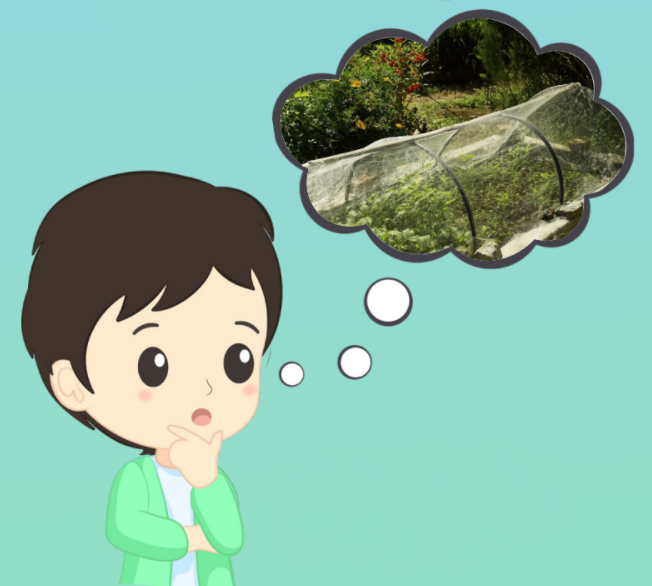
Greenspaces should prioritize agriculture over aesthetics. Illustration: Alyssa Marie Umbal / The Peak

By: Meera Eragoda, Editor-in-Chief

Thanks to TikTok, a partner with botanical knowledge, and a workshop I took at the UBC Botanical Garden, my plant identification skills have been growing and growing (pun intended). I, like many, used to think all green things could be classified in three ways: plants, shrubs, or trees. When I went hiking, I enjoyed the forest feel, but I didn’t appreciate the little details and mostly did it for the view. I definitely had no idea anything around me could be edible. Now, I’m starting to get a sense of what’s edible and what’s in season. 

For instance, at the start of spring, all the coniferous trees — cedars, hemlocks, and douglas firs — start putting out new shoots. These tips are edible and taste citrusy

The beginning of summer brings the emergence of all sorts of berries such as salal, salmonberries, huckleberries, thimbleberries, and blackberries.

Even in urban areas, I notice much more than I used to. Despite city planners exclusively having aesthetics in mind, I’ve started realizing how many of the plants around us can be used in edible ways. 

Alexis Nikole Nelson (@blackforager on Instagram / @alexisnikole on TikTok), whose fame has skyrocketed this past year, makes content alerting viewers to things around them that are edible. Though she lives in the Midwest, there is still some overlap. I’ve learned from her that magnolia petals taste gingery and can be pickled or baked into cookies. I infused them into simple syrup for cocktail-making purposes. She also taught me that elm seeds taste kind of nutty and can be eaten as a snack.

There are so many ways plants can be used, but I’m only starting to learn about these now because Western scientific principles teach us to separate ourselves from everything around us. This is unlike Indigenous knowledge systems, which prioritize staying connected to the land and being sustainable.

This separation manifests in how little people know about the native plant life in BC and the importance of conserving natural resources — like old growth trees, which are important to local ecosystems. It also shows the lack of imagination those in power have when it comes to city planning.

Given the amount of introduced plants and trees, why not try and use that to make food more accessible to people? Joshua Zuenert, an Australian landscape architect and lecturer, has been advocating for over 10 years for public spaces to integrate food into their design. He highlights UC Davis as a leading example of this. Their edible campus includes gardens used to teach people what they can grow and how to use that food in cooking. There are also salad gardens where people at the school or at work can make their own fresh meals.

Coupled with education, urban food architecture would bring us closer to the plant life around us. This would lead to a greater connection with the land, a greater understanding of what it takes to grow something, increased social connections, and a better environment for pollinators.

Vancouver already encourages community gardens, personal gardens, backyard chickens, and beekeeping. However, these still rely on individuals’ implementation and are not always accessible. Even if you are able to make use of community gardens and teach yourself the skills, the waitlist to get a plot can take years.

Imagine instead, a city where you could walk to a park and pick fruit off a tree to have as a snack, or, during your walk home through a public food space, you could grab some basil to make a pesto. The possibilities could be endless.

Need to Know, Need to Go: July 5–11

0
Illustration of a blue calendar, with "Need to Know, Need to Go" written on top
Arts & Culture events to catch around the city. Image courtesy of Brianna Quan

By: Charlene Aviles, Peak Associate

Indian Summer Festival | Online | June 17July 17 | $0–50

This year’s Indian Summer Festival (ISF) will be taking place virtually. Featuring various musicians, comedians, and authors, ISF 2021 is based on the theme of shapeshifting. The program and tickets are available on their website, as well as accessibility information. The ISF is also accepting donations through their website to increase their programming.

Canoe Cultures: Building a Legacy | Vancouver Maritime Museum | June 17–August 2 | $11 for students

The Vancouver Maritime Museum and master carver Mike Billy Sr. present Canoe Cultures: Building a Legacy. The exhibit will showcase Indigenous canoes and explain their history and importance to the xʷməθkʷəy̓əm (Musqueam), Skwxwú7mesh (Squamish), and səlil̓ilw̓ətaʔɬ (Tsleil-Waututh) Nations. Masks are mandatory. Attendees can book their visit online. 

2021 Korean Film Festival in Vancouver | Online | July 110 | $1020

In honour of actress Youn Yuh-jung, the Vancouver International Film Festival (VIFF) and the Consulate General of the Republic of Korea in Vancouver will stream Minari, Canola, and The Bacchus Lady at the Korean Film Festival. Attendees can purchase single movie tickets or festival passes through VIFF’s website. They are also accepting donations online to support VIFF Centre’s construction.

Break the Silence: The Power of Active Witnessing | Zoom | July 7 from 67:30 p.m. | FREE with registration

In a workshop presented by the North Vancouver District Public Library, SFU alum Angela Ma Brown will lead a discussion on how to respond to witnessing racist situations. The goal is to increase participants’ empathy and confidence in speaking out against racism. Attendees can save their seats via the library’s website.

Annual Festival of Contemporary Dance | Online and in person | July 817 | $035

This year’s festival is a hybrid of live and virtual shows. Dancing on the Edge Festival Society is celebrating its 33rd annual event with over 30 Canadian dance performances, all listed on their website. Tickets are available on their website or by calling 604-689-0926.  To support future projects, Dancing on the Edge is also accepting donations.

Enrolment Day Cheat Sheet

0
ILLUSTRATION: Alyssa Marie Umbal / The Peak

by Charlene Aviles, Peak Associate

Disclaimer: The following tips may not work for everyone. Consider your situation, including but not limited to academic standing, grade point average (GPA), enrolment date, financial aid and international student visa requirements, and graduate school applications. Always consult the most recent academic calendar and your academic advisors.


Tip #1: Contact your academic advisor

The Facebook group “Must Knows for Courses at SFU” and the Rate My Professor website are popular methods of finding study groups and professor reviews, but these resources should only supplement academic advisors’ advice. Before contacting your academic advisor, use the Fall 2021 academic calendar to research course offerings and your program’s requirements. For now, there are no in-person appointments for advising, but you can contact advisors through workshops, drop-in appointments, LiveHelp, phone calls, and Zoom. Registration for appointments is available online at goSFU or by calling 778-782-6930. Whether you visit departmental advisors, Indigenous Student Centre staff, or NCAA academic advisors, review the academic advising syllabus and go to your appointment with a completed “New Student Academic Advising Information” form.

If you are considering using the Elective Grade System (P/CR/NC) option, watch the recorded information session on YouTube to understand the policies, excluded classes, and potential consequences, especially since the decision is permanent after the deadline. Also consider the pros and cons, future graduate school applications, and financial aid eligibility criteria, as SFU undergraduate scholarships have a minimum credit requirement per semester. 

After you fulfill your program’s declaration requirements, immediately contact your departmental advisor to declare your major or minor. If you meet the minor’s requirements before your intended major’s declaration requirements, declare your minor to gain access to more classes. Otherwise, you may not be able to enrol in upper-division classes until the open enrolment date, since seats may be reserved for declared students only. Once you meet your intended major, minor, or certificate declaration requirements, do not forget to declare accordingly.


Tip #2: Combine your required courses into a spreadsheet

One organized document with all your required classes will help you see the big picture and focus on your graduation requirements. The academic calendar is a great resource, but since it lists course prerequisites, corequisites, breadth courses, and declaration requirements on separate web pages, you might accidentally exclude some courses. Be attentive to the breadth courses that simultaneously meet multiple requirements because these courses may help you fulfill degree requirements faster. Use this spreadsheet to note which courses meet each degree requirement and the number of credits per course.

First, create a list of your required classes for declaration, breadth requirements, course prerequisites, and the required amount of credits needed, such as the minimum number of upper-division credits. Compare your list to your advising transcript, which will help you keep track of your SFU credits as well as transfer credits, if applicable. After noting which courses you took, compare the total number of seats and sections per class. Prioritize your declaration requirements and course prerequisites, especially for classes with fewer sections or seats. Then, add electives to your schedule. Consider taking English courses as soon as possible, preferably in your first year, as these courses develop transferable skills, such as essay and argumentative writing. 

Since the academic calendar contains changes every semester, always consult with the most recent version to update your document. Upper-level students should review their graduation checklist and undergo a graduation check to help inform their plans for the upcoming semesters. 


Tip #3: Create a balanced schedule

A balanced schedule entails a manageable workload and regular breaks. Despite the pressure to complete a degree in four years, excessive course loads might inadvertently drop your GPA and possibly lead to you repeating courses.

The transition to a new learning environment may be overwhelming, so try and adapt to one to three courses to prepare yourself for a greater workload. Consider incorporating electives, required courses, and breadth requirements into your schedule. Unless you are a STEM student, I do not recommend taking all quantitative courses in one semester. For courses with labs and tutorials, the additional time commitment combined with lectures, commuting, employment, and extracurricular activities may lead to burnout.

Since SFU announced that 80% of Fall 2021 courses will be in person, pay close attention to potential time conflicts due to different campus locations. If you create a draft of your schedule using MySchedule on goSFU, it will help you identify potential time conflicts and set aside time for commuting.


Tip #4: Have a backup plan

A late enrolment date may limit your options for course selection. If you cannot enrol in your first-choice classes, prepare a list of alternative classes to enrol into, such as electives or breadth requirements. To learn more about electives, check out some sample lectures online. You can view course preview videos from departments like english, philosophy, economics, cognitive science, and labour studies.

For upper-level students who already completed their breadth and declaration requirements, join a waitlist. If you have a friend already in a class you are waitlisted for, contact them for any upcoming assignment deadlines. While on the waitlist, consider asking the professor for permission to sit in on the lectures, and do not lose hope. As long as you waitlist as soon as possible, you may have a chance. In the first two weeks of classes, many students withdraw and enrol in classes, which shifts your waitlist position. This semester, I was originally 27th on a course waitlist but managed to enrol into a class on the last day of enrolment.

If none of the above is applicable, consider planning summer courses to catch up on credits. Since your priority in enrolment dates may shift with time, taking summer courses while you still have an early enrolment date may offset a late enrolment date.

For assistance in navigating goSFU and mySchedule, video tutorials are available for streaming on SFU’s website

Academics explore challenges faced by Black scholars and students

0

Written by: Karissa Ketter, News Writer 

SFU School for Contemporary Arts held an interdisciplinary webinar hosted by Dr. Henry Daniel to highlight Black academics’ work in arts, sciences, technology, and business. This panel featured Black faculty, students, and staff to discuss identity, history, and the institutional barriers they face. 

“This information needs to be shared [ . . . ] It needs to be shown to students who don’t think they have a place in this university,” said Daniel.

Dr. Taiwo Afolabi, assistant professor in applied theatre at the University of Regina, explored matters how the system is broken for Black people in Canada, among other matters. Black Canadians are more likely to be unemployed, have a low income, and not go to post-secondary, as a product of the institutional barriers that bar them from these opportunities, according to CTV News. He said he sees a lot of immigrant families with education, but “by the time [ . . . ] they came to Canada, they couldn’t get a job, not because they were not qualified — but because of the system.”

Afolabi noted if he had come to Canada 20 years ago, he wouldn’t have been afforded the same opportunities he has been today. He encourages students to go beyond recognizing institutional barriers to create change, asking attendees, “What are you doing in your own capacity?”

“We talk about equity, diversity, and inclusion, but how do we actually start doing things?” asked Daniel. 

Fellow panelist and associate professor at the Beedie School of Business, Dr. June Francis, also discussed institutional barriers in her conversation. Francis researched the “markets that created the first internal market system in Jamaica.” 

She explained enslaved people in Jamaica were allowed to grow agriculture for themselves on extra land known as “slave plots.” It was Black enslaved women “who transported and connected the rural economy to the urban markets and provided the first system in Jamaica.

“To my great dismay, I came to understand what a colonial white system looked like — I was told that I would not get tenure if I insisted on pursuing this direction,” said Francis. She abandoned that research. It was not until decades later, after receiving tenure, that Francis went back to conduct research in this area. 

Daniel noted the importance of allowing Black students today to pursue research and work rooted in the place where they come from. 

Webster McDonald, a PhD candidate at the University of Kansas, experienced the challenges of finding his identity as a Black queer man growing up. He said it was in primary school “that I realized that my identity — my queer identity — was always going to be under heavy surveillance.”

He found growing up in Jamaica that “a boy is supposed to embody ideas of masculinity” in the way he walked, spoke, and carried himself. “I realized that I could not meet those masculinist, heterosexist signifiers, and so I felt as if I had to perform and assimilate to some of these social codes to be safe — to stay alive in these violent spaces.”

McDonald said he found an outlet in the performing arts to explore and discover his identity. With his background in the performing arts, he was able “to find some of these creative tools to critique some of these inherited knowledge systems and to disrupt [them].”

“Creativity is courage, creativity is boldness, creativity is also vulnerability. That’s the work that needs to be done first and foremost,” said associate professor in the faculty of health sciences Dr. Angela Kaida

“To be able to do that work, you need to know who you are, who your authentic self is, and you have to know that you matter.”

Daniel noted the importance of students putting themselves “in a position where you are able to create new things for yourself and for others.” 

Your weekly SFU Horoscopes: July 5–11

0
An illustration of a girl with long flowing hair. Astrological signs and stars shine around her.
ILLUSTRATION: Marissa Ouyang / The Peak

By: Carter Hemion, Staff Writer


ARIES: Don’t be shy . . . start dipping your Flamin’ Hot Cheetos in milk. Don’t let anyone dull your spice except you, sweetie. 

TAURUS: Have you ever thought about how terrible the English language is? Do you think it would be worse if the plural of house was hice or the plural of louse was louses?

GEMINI: The stars say you would be really great at, uh, either track and field or stripping. It’s hard to tell, but there are definitely metal poles involved. Get past the hurdles and raise your bar. 

CANCER: Whoa! Did you see a ghost, or was it just your reflection during midterms season? Either way, at least you’re not totally alone.

LEO: Your reputation is fading — it’s time for a publicity stunt. Make your Zoom background a photo of Nicolas Cage and make eye contact with every damn person on the other side of that camera.

VIRGO: Nobody in your class hates you. Some of them might even like you. It’s time to change that. Tell everyone about some healthy study habits and your 3.9 GPA. That’ll show them!

LIBRA: Stop expecting yourself to create a great presentation the week it’s due. It’s time to project your voice instead of your insecurities. Prepare yourself: take a deep breath and have a glass of wine from your beloved McDonald’s Shrek cup. 

SCORPIO: Looking for inspiration for the paper you have due this week? Cover your eyes and let your third eye guide you. Feel it wrench open. Wait, that might just be your headache from staying up all night?

SAGITTARIUS: If you can’t swipe left on any of Tinder’s wannabe alt TikTok stars, it’s time to delete the app. Your heart says yes, but their four followers and dyed bangs say hell no. 

CAPRICORN: Did you know Chuck Lamb made a career out of playing dead? Remember that the next time someone says you come across as too cold for academia. You still have options!

AQUARIUS: Clam down! No, I don’t mean “calm down.” This is your sign to go to the beach and look for shells. You can hold them to your ear later to tune out everyone you don’t want to hear.

PISCES: Be the kind of person your shadow would be proud of and take a nap. That sunlight didn’t travel millions of kilometres just to run errands with you.

The Scared Straight Tour endangers people who use substances

0
Support for people who use drugs needs to include the voices of people who use drugs. PHOTO: Mathijs Deerenberg / Unsplash

by Carter Hemion, Staff Writer

Content warning: mentions of drug use, overdose, stereotypes against unhoused peoples, and violence against Indigenous communities

From 2003 to June 2021, a program called the Scared Straight Tour made the Downtown Eastside a living tourist attraction. Their original website and Facebook page have been taken down after recent community backlash, but they continue to offer a virtual tour targeting Indigenous youth. These tours invite people to “come and witness first hand just how devastating addiction can be!” through “tours of the worst drug-infested ghetto of North America.” While deterrence-oriented programs intend to change behaviour to lessen the drug poisoning crisis, they cause more harm than good.

Experts Dr. Alissa Greer and Dr. Jamie Livingston weigh in on issues with tactics like these, as well as alternative solutions to reduce the impact of stigma. Greer is an assistant professor at SFU’s School of Criminology, researcher, writer, and independent consultant. Livingston is an associate professor at Saint Mary’s University in the Department of Criminology and an SFU alumnus from both his MA and PhD in Criminology.


Scared Straight Tour

The tour itself is a 48-hour program visiting the Downtown Eastside. Its stated goal is to “give youth (13 and up) a reality check in terms of where they could wind up if they abuse drugs and alcohol.” The program was founded by Pierre Morais, a certified clinical counsellor, with previous lived experience of addiction. He worked as an addiction counsellor before starting the Scared Straight Tour. He believes “any drug use today is extremely dangerous,” especially with the introduction of fentanyl. The Scared Straight Tour is composed of a tour as well as webinars, an online course, videos, and more. 

The online course, currently available on the tour website, targets Indigenous youth in particular. It includes videos taken of unhoused people who have used substances, sometimes recorded while people are under the influence of substances. It is unclear whether all those recorded were able to consent to being filmed. 

As a whole, the online course was “gamified” for youth to earn points, badges, and places on a leaderboard, which turns the real lives of community members into a game. While Morais may advertise this program with positive intentions about reducing the likelihood of substance use disorders in youth, he presents his message in harmful and misleading ways for profit. 


Deterrence-oriented programs

Both Greer and Livingston agree programs relying on fear tactics are ineffective in addressing potentially dangerous substance use behaviour. Greer said they “can be extremely stigmatizing, entrench ‘otherness’ and reinforce negative stereotypes of drug use and people who use drugs that are not rooted in the realities of drugs and drug use.” She added that particular harm comes from programs excluding people who use substances in the processes of developing or delivering the program.

Livingston said deterrence-oriented programs “promote a distorted portrait of substance use” through spreading stigmatizing stereotypes. These often spread the idea that people who use substances lead meaningless and less valuable lives than those who do not. These negative stereotypes are sometimes internalized, which can cause issues that are “detrimental to self-esteem, self-efficacy, hope, and seeking help should they need it.”

Contributing to the stigma around people who use drugs further harms the community. Greer said stigma “inevitably contributes to shame, isolation, and marginalization.” It is “a major driver in the current opioid crisis, and is deeply rooted in the criminalization of drugs.” 

Livingston added that research does not support fear-based programs, like the Scared Straight Tour and D.A.R.E., as an effective strategy. He said promoting abstinence-only lifestyles does not account for the majority of people who will use substances and does not help people learn how to make healthy choices for themselves.  

Deterrence-oriented programs increase stigma around and harm community members who use drugs, and structural change needs to occur in order to support people with substance use problems.


Effective solutions

Both Greer and Livingston offered possible solutions and steps that may lessen the undue harm incurred by people who use substances. Anti-stigma programs cannot only focus on education; they also must address structural issues that create barriers to support and criminalize substance use.

When working towards awareness and comprehensive education, we must listen to and engage with people who use substances. Greer said, “Drug use and people who use drugs are extremely diverse, just like any other behaviour or group of people.” There is a wide range of experiences to listen to, and issues need to be met with empathy. Drug use can bring positive, negative, and mixed experiences. In our own lives, Greer said, “One thing we can do is to actively challenge stereotypes and have frank conversations with the people you are close with to replace negative narratives with evidence and compassion.”

When programs like the Scared Straight Tour focus on prohibition and abstinence, they can conflate substance use disorders with all substance use. Most people who use substances will not develop substance use disorders. Those who do experience problems with their substance use, to any degree, should not be vilified for it. Livingston added, “The goal of anti-stigma programs should be to create a social context in which people aren’t shamed or demonized for developing a health problem and needing help,” and they should “promote hopeful messages that people who do develop a substance use disorder can find support.” 

Greer also said one piece of the work to reduce stigma is addressing the “laws and institutions that moralize drug use and say that it’s wrong or bad.” A part of this is supporting initiatives in BC that seek to reduce the stigma around substance use. 

Livingston made it clear we “can’t educate our way out of this.” While education is necessary, so is structural change. This includes changing and repealing laws that criminalize and prohibit substance use. It also involves changing social institutions that disproportionately harm people who use substances. Stigma can only be addressed when these changes “rectify inequities and injustices facing people who use substances, which are disproportionately imposed on people belonging to oppressed groups (e.g., Black, Indigenous, living in poverty or with a mental illness).”

Human rights and justice for marginalized people are intertwined with substance use issues. In order to properly support people who have problems with substance use, support must be led with compassion. It cannot be a work of coercion or judgment. Greer said harm reduction needs to centre people who use drugs, and “meaningful involvement and empowerment of people who use drugs is an essential part of any drug policy, education, program, service, or study.”

With the increased risk of toxic or contaminated drugs, harm reduction can help address the drug poisoning crisis. Anyone who uses drugs that have been criminalized may be at risk, whether they develop a substance use problem or not. Harm reduction, according to Livingston, involves “developing safe supply programs for people to access pharmaceutical grade (non-toxic) grade [drugs], increasing investments in harm reduction services (including supervised consumptions sites), decriminalizing illicit substances, increasing access to services in which people can check the toxicity of their drugs, reducing barriers to Opioid Agonist Treatment (e.g., methadone), widespread distribution of naloxone, and increasing access to housing, basic income, peer support, and trauma-informed counselling.”

When any deterrence-oriented program makes a profit off of fear tactics and stigmatizing community members who use substances, it must be opposed with researched solutions. It is imperative to meet people who use substances with empathy and to ensure legislation and community resources meet their needs. Support involves deconstructing stereotypes and harmful social structures while decriminalizing substance use. Most importantly, there must be support for people who use drugs, people with substance use disorders, and unhoused people in the Downtown Eastside. They must have their needs listened to.


Choose Your Own Adventure: the return-to-campus edition

0
Photo Credit: The Peak

By: Kelly Chia, Staff Writer

INTRO:

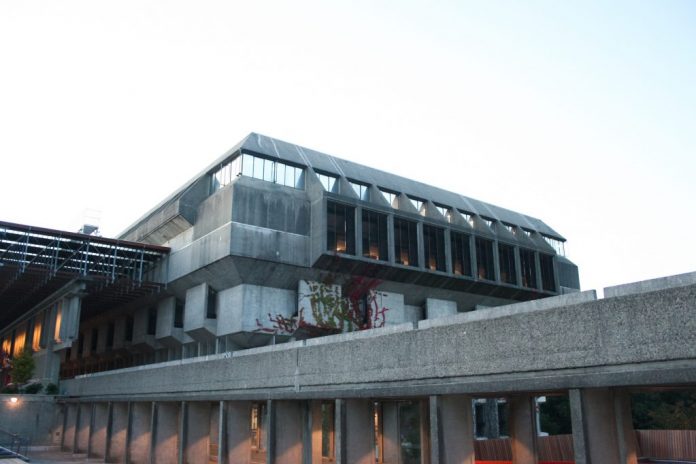
So, this is it. You half-smile, half-cringe at the scaffolding as you take in the campus. Maybe it’s your first time entering Burnaby Mountain’s concrete abyss, or maybe it’s your thousandth. Either way, you are filled with a unique burst of excitement.

It’s an odd feeling at eight in the morning.


START:

Your introspection is interrupted by a sharp voice. “Hey! Listen!” he says, definitely not breaking any copyright laws.

Out of the corner of your eye, you see . . . McFogg the Dog? You:

A) Choose to ignore him. You really need to figure out where that tutorial on the fifth floor of AQ is. You know you’ll be looking at SFU Snap forever before figuring out the closest staircase to your classroom, so you might as well get a headstart. (Go to 3)

B) Wave back at McFogg. It’s not everyday you get greeted by a washed-up, potentially dangerous school mascot! (Go to 4)


~


1. You follow McFogg dutifully, winding through the bowels of SFU (your affectionate nickname for the hellhole under Maggie Benston Centre). What could being “the chosen one” mean? You rub your hands together zealously

“My star,” McFogg begins with Mickey Mouse candour. We’ll be filming a documentary for the next four years to prove SFU doesn’t delete student emails whenever they hold us accountable. We’ll start with an interview with yours truly,” he finishes, with a flourish of his hat.

Guess you’re now a film major? Steer clear from your classmates that have made liking Kill Bill their personality! (End.)


~


2. You go to leave the building, still dizzy from your new experiences. McFogg starts barking, but you don’t understand. You find a small sticky note as the 145 sends you to safety.

It reads . . .

You have been cursed with always having your department advisor out of office when you need to make an appointment. Buy 100 iced cappuccinos for McFogg the God to relieve your curse.” (End.)


~


3. You make your way to the AQ building. You stare at the fire escape map trying your very best to find where that one room in the middle of the hallway is. Winding around the halls for an eternity (AKA five minutes before your class starts), you see a hastily scribbled “Follow me!” on the wall in pink Sharpie.

A) You really need direction at this point in your life, so you follow obediently. It’s the summer of adventure, as Bonnie Henry said (or something)! (Go to 5)

B) Shrug. You’ve seen more cryptic messages scribbled on the doors of the school bathrooms. You walk the opposite direction out of an abundance of caution, though. (Go to 6)


~


4. McFogg approaches you. As he comes closer, a dense fog sets in. It would almost feel nostalgic if the unsmiling eyes on McFogg’s fursuit didn’t feel so threatening.

“I’ve been waiting for you. We all have. The RCB quakes once every 50 years when the chosen one enters the campus, and I felt that deep in my soul,” he tells you in an uncharacteristically high voice. “Come with me.”

A) Your individuality complex cannot believe how perfect this is. You finally get to brag about being the main character. Let’s go! (Go to 1)

B) You turn around and go home. Maybe it is too soon to return to campus . . . (Go to 2)


~


5. You uncover a treasure trove of Hershey’s Kisses and Eggies that have been humbly refrigerated in the student lounge. And bonus: AQ 5190203849.5 is right next to the lounge! Wait, there’s a student lounge on this floor? 

You collapse on the floor, amazed by this secret. But, as you leave the room to head to your tutorial, the lounge vanishes. You look at your chocolate, ripe and ready for three hours of intense syllabi reading.

Congratulations! You’ve been blessed, I guess? (End.)


~


6. And with that one turn, you find your tutorial room. You take a massive breath, fondly thinking of the papers you’ll be bullshitting at four in the morning. As you sit down in your tiny desk-chair and unpack, everything falls out of your bag at a humiliating speed.

Your McFogg the Dog plush you brought for comfort and to share conversations with stares at you as you die from embarrassment.

Your plan of looking like the coolest, most articulate student in your tutorial has been ruined! You will never live this down. (End.)