Home Blog Page 328

Disability Pride Month needs to happen in Canada 

0
The disability community benefits from having a Pride Month. Disability pride flag pictured.  ILLUSTRATION: Ann Magil / Flickr

By: Jae Stafford, SFU Student 

Disability Pride Month is recognized in July in the United States. It began in 1990 with the Americans with Disabilities Act (ADA) on July 26, which sparked the first disability pride celebrations in Boston in July 1990 and 1991. It is a tradition that was revived in 2004 and continues today. While Canada does not share the ADA, we should acknowledge a month for the disabled community. Disability Pride Month is celebrated by some Canadian groups, but it is not yet formally recognized nationally.

The month encourages more mainstream conversations about disability and offers information on allyship. It is an opportunity to amplify authentic stories from people with different kinds of disabilities and encourage allies to continue taking action to eradicate ableism. More than a billion people have disabilities, and we should never be ashamed of them. It is a movement the entire world needs, and it’s time Canada recognizes that.

Not everyone may take pride in their disabilities or identify as disabled, and some people do. Regardless, lived experiences should be respected. To discount the idea of disability pride altogether is erasure. Ignoring our disabilities ignores our access needs and, for many of us, a part of our identity that connects us with an entire community of people. Connecting with people who have shared life experiences, especially when we so often have to self-advocate for change, can be life-saving. 

The movement rejects the notion that there is something wrong with us and that we are less worthy of dignity than non-disabled people. We should not be brushed aside when we reject the shame put on us for simply existing. Disability pride is associated with well-being and higher self-esteem. In some cases, it has also been associated with lower rates of anxiety and depression. People with a positive disability identity have also reported higher satisfaction in their lives. Expressing disability pride openly can be a healthy way of fighting ableist views of disability. 

Disability pride is often recognized by Sarah Triano’s definition, but that definition is not entirely beneficial to the disability community. It embraces the idea that people should not be ashamed of their disabilities, but implies that a lack of pride is what causes ableism. It takes the words of Dr. Martin Luther King Jr. out of context to say a lack of pride is our greatest barrier in an ableist society. Though disability pride may have benefits, toxic positivity will not eradicate oppression of any form. 

Movements for the disabled community often recognize the social model of disability, which can be a welcome break from only being pathologized in the medical model. Rather than focusing only on what should be “fixed” or “cured” for us to fit in, we should be seen as people who can thrive and live fulfilling lives — not just as patients or inspiration porn.

Pride cannot exist as a co-opted movement and cannot be compared to the oppression faced by other marginalized groups. Disability is an intersectional experience, and it cannot be compared to the Black civil rights movement like Triano’s definition does, or likened to LGBTQIA2S+ pride like it may be compared in other definitions. It also cannot be stated that having pride in disability is the way to freedom and equity. 

Ableism is not our fault and not a burden we can love our way out of; it is a result of systemic oppression which requires tangible change to create an equitable society free of institutional barriers. 

Celebrating disability pride deserves a separate occasion from Disability Employment Month in October and the array of awareness days throughout the year. It goes beyond the work to spread awareness of our disabilities and must also recognize that the ableism that kills us is a result of external barriers, not of how we identify ourselves. There is a wide range of disabled experiences, and we are in no way a monolith, but we all deserve basic respect and equity. 
Isabella Wang: poetry is like being at home

1
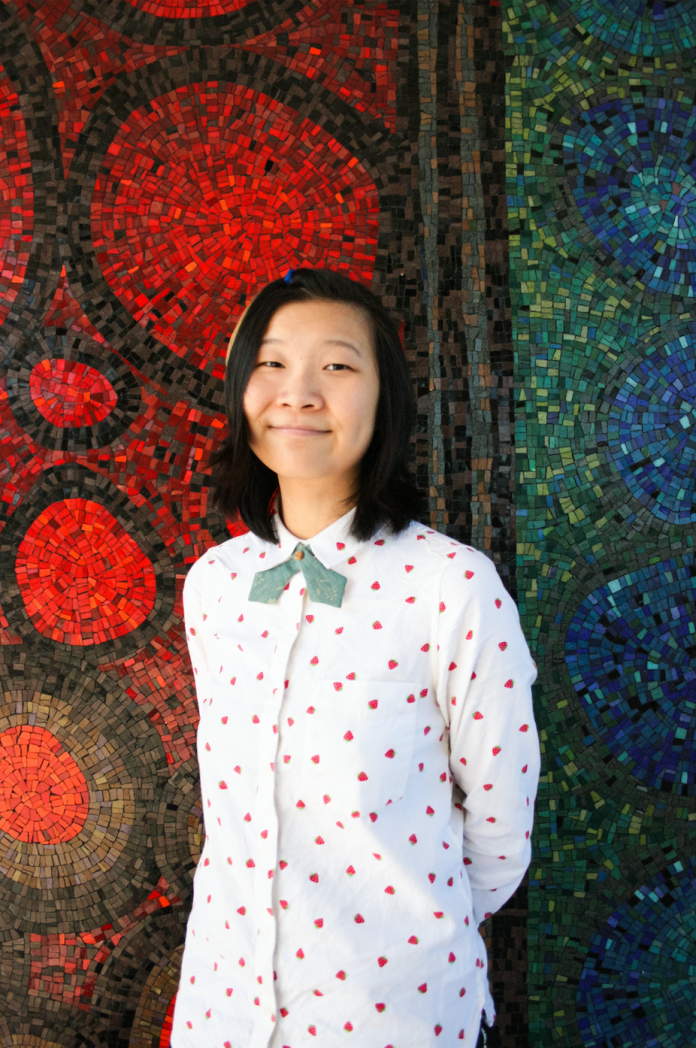
Wang, author of Pebble Swing. Photo: Gudrun Wai-Gunnarsson / The Peak

By: Kelly Chia, Staff Writer

Isabella Wang, a third-year SFU student, has made impressive strides in the literary community as the author of two poetry collections: a chapbook titled On Forgetting a Language, published in 2019, and Pebble Swing, her forthcoming full-length collection. The Peak had a chance to talk to Wang about her work and what inspires it.

Speaking with Wang felt like remembering what it means to write. She told me poetry is like being at home in a language, like the closest sense of home she has ever felt. This loving and gentle description of her work feels apt given Wang’s overall warmth. 

Talking about the ways poetry has been a comforting medium for her, Wang described her experience immigrating to Canada. “After I immigrated here at the age of eight, my mother tongue started fading a lot due to bullying and other forms of erasure. And with that also, family ties and a lot of stuff like that,” Wang said. 

Poetry became a way of reclaiming language for herself in a way that was familiar. Reading the work of other poets helped her feel a sense of belonging and grounded her.

These experiences are documented in her forthcoming manuscript, Pebble Swing

For her, writing is not a lonely process. “I think a lot of the possibilities of writing opened up for me precisely when I started seeking and ended up finding a sense of community,” Wang said. She reminisced about being in high school and having support from her teachers, but also wishing for something more. This desire propelled Wang to start taking creative writing workshops at SFU, where she connected with professors doing literary work; and from them, she met other poets. These connections would hit home for her.

“There were Chinese-Canadian poets writing about their experiences,” she said. “It was the first time I saw a piece of myself on the page, reflected. And for me, especially when writing is hard, that sense of community and knowing you have so many people who are there [ . . . ] is really important.”

Though Wang is a critically acclaimed author, there are times when the writing doesn’t flow. Wang said she had to learn how to forgive herself for not writing, which she admitted was difficult to do. “I’m just learning right now, reading. And when the writing comes, it comes,” she added.

As a writer talking about her cultural experiences, the weight of representation is significant to Wang. She highlighted her perspective on it by sharing a quote from her friend Furqan Mohamed’s chapbook, A Small Homecoming

“‘Write what you know is a phrase many writers are familiar with. The expression asks writers to trust themselves, to trust their inner narrative. As I grow older, I reflect more on the reverse of this saying, know what you write,which necessitates the understanding of what exactly I’m writing about, as well as who I’m writing about and how.’”

This excerpt from Mohamed resonated with Wang because she knew her work, whether it was fiction or poetry, came from a personal place. Wang recalls her own experiences, and when she writes about the lives of other people, she is careful and specific about how she represents them. 

Pebble Swing will be published October 31, 2021 and is available for pre-order through Nightwood Editions. More of Wang’s work can be found on her website, isabellawangbc.weebly.com

Monday Music: Placebos to kick-start your day

0
"Monday Music" in giant yellow block letters with a red background
Monday Music: your weekly themed playlist. Image courtesy of The Peak.

By: Subaig Bindra, SFU Student

Starting your day on the right note can be tough, especially if you have things to do like studying for finals. Here are some songs to infuse joy into your work day. 

“Sledgehammer” by Peter Gabriel

Image courtesy of Peter Gabriel Ltd

Performed by the original lead singer of Genesis, “Sledgehammer” imparts a boost of excitement with a groove consisting of an animated horn section plus a hypnotic bassline. Listening to this song will make you whirl a little!

Like this song? Check out “We Didn’t Start the Fire” by Billy Joel 

“Pretty Pimpin” by Kurt Vile

Image courtesy of Matador Records

This song is a ride that makes me forget things beyond my control and go with the flow. I semi-relate to the vibe of him saying “all I want is to just have fun, live my life like a son of a gun.” Vile keeps things easy yet extraordinary with a melody that lingers on and makes me feel silly and carefree.

Like this song? Check out “Continental Breakfast” by Courtney Barnett and Kurt Vile

Autre temps” by Alcest (French)

Image courtesy of Prophecy

I can do pretty much anything with Alcest playing in the background. Listening to their music can make me pause and ruminate or focus more on my work. The dynamics of the song change between serene post-rock-influenced sounds to raging storms of blackgaze compositions. The band’s music is a creative influence and the reason I try to learn any French!

Like this song? Check out Le secret by Alcest

“Luoto” by Omnium Gatherum

Image courtesy of Lifeforce

I got a chance to witness this melodic death metal band perform live at the Rickshaw Theatre in pre-pandemic times. The heavy and highly melodic guitar riffs amplified the surge of ecstasy I felt. In my opinion, metal is just classical music with electricity! “Luoto” is a moving instrumental intro to an album with an existential theme.

Like this song? Check out “Demiurgeby Meshuggah

“Ramble On” by Led Zeppelin

Image courtesy of Swan Song Inc.

I can’t compile this list of songs without including Led Zeppelin. I think some artists have been really important in influencing what came after their works. Led Zeppelin is definitely one of them. While I believe every song and album of theirs is great, “Ramble On” instills a mysterious effect on me as I move around in rapture. The band has an astonishing quality of expressing a multitude of feelings with their songs, and “Ramble On” is no different.

Like this song? Check out “Kashmir” by Led Zeppelin

Summer 2021 Gallery Guide

0
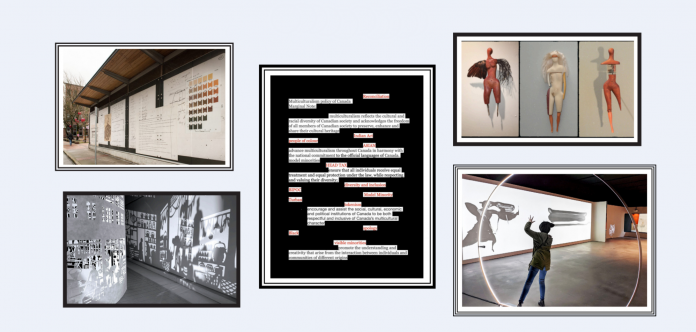
From collages to contemporary art, these galleries have a lot to offer. Composite: Brianna Quan / The Peak

By: Paige Smith, Peak Associate

Contemporary Art Gallery | Archival – for Rosario Cooper and my 10 year old self | Free | On until August 22

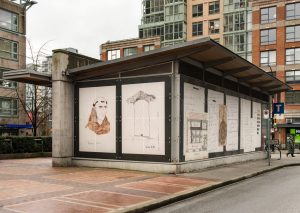
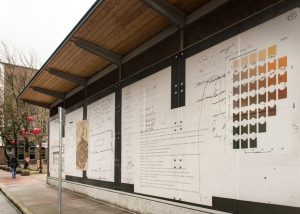
Image courtesy of SITE Photography

A cornerstone of the Vancouver art scene, the Contemporary Art Gallery focuses on programming the best of contemporary visual artists. The gallery has exhibited the first solo shows of many acclaimed Vancouver artists, such as Stan Douglas and Rodney Graham, and it continues to present boundary-pushing artwork.

An off-site public installation, Archival – for Rosario Cooper and my 10 year old self covers the surface of the Yaletown-Roundhouse SkyTrain station in archival documents and photographs about Indigenous cultures and languages. Obispeño Chumash and Hispanic artist Christine Howard Sandoval present digital scans of these documents, enlarging and collaging the pages. This destabilizes the traditionally orderly archive. Calling to question the power of colonialism, Howard Sandoval’s work refuses the archive’s power to control documented histories through a settler lens.

Centre A | Speech Acts | Free | On until August 28

Image courtesy of Centre A
Image courtesy of @zainubverjee via Twitter

Located in the heart of Vancouver’s Chinatown, Centre A was Canada’s first public art gallery dedicated to contemporary Asian and Asian-diasporic perspectives. Tucked away inside the Sun Wah Centre, Centre A is a treasure of the Vancouver art scene, previously presenting works by Yoko Ono, Vanessa Kwan, and the Hong Kong Exile group.

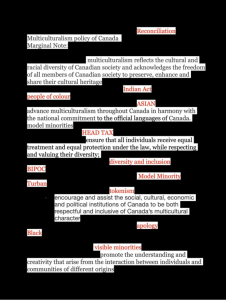
Speech Acts examines how language performs and how it fails us. Artist Zainub Verjee engages with issues of resistance and discourse through speech, listening, and writing. Verjee questions how vocabularies are appropriated, pointing to terms such as “reconciliation” and “diversity and inclusion.” Verjee was born in Kenya and works in Vancouver. She has a long history of working in Afro-Asian solidarity as an artist and programmer. Verjee co-founded In Visible Colours with Lorraine Chan, an international film festival and symposium featuring works by women of colour. She also helped support the start of Asian Heritage Month Society in Vancouver alongside the late Jim Wong-Chu and Paul Wong.

New Media Gallery | MirNs | Free | On until August 1

Image courtesy of Vancouver Presents
Image courtesy of Kevin McConnell / The Tyee

The New Media Gallery often represents the future of contemporary art. New media works are designed or produced through mediums that rely on computers for redistribution. Examples include video games and cyborg art.

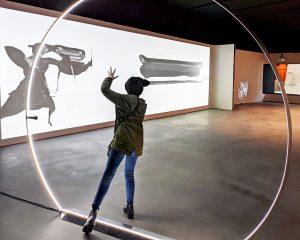
A group exhibition featuring an assortment of international artists, MirNs was designed to explore how machines see visitors who enter the gallery. Guests directly interact with the works. The mirroring machines then reflect human diversity through their technologies. The works draw from the time-honoured question: “what is the essence of humans?” In a time of exponential technological growth, questions like this seem critical.

Museum of Vancouver | A Seat at the Table | $0-10 | On until January 2022

Image courtesy of The Georgia Straight
Image courtesy of Museum of Vancouver

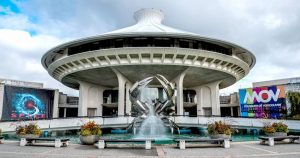
Though not an art gallery, the Museum of Vancouver (MOV) often features works and exhibitions of contemporary artists. Their goal is to create “a deeper understanding of Vancouver through stories, objects, and shared experiences.”

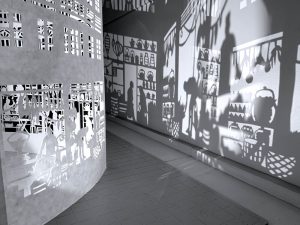
In their feature exhibition A Seat at the Table, the MOV examines the “historical and contemporary stories of Chinese-Canadians in BC” through the lens of food and restaurant culture. Included in the exhibition is an interactive shadow installation by Mere Phantoms. The work invites viewers to indulge in a “shadow buffet,” where paper cut-outs cast food item shadows onto tabletops. It encourages viewers to create their own food histories.

Pendulum Gallery | Constructed Identities | Free | On until August 20

Image courtesy of Jana Skala
Image courtesy of Della McCreary

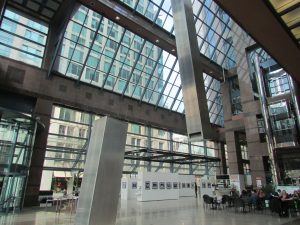
Named after the giant metal block that swings above it, the Pendulum Gallery is a private non-profit gallery operating in the atrium of the HSBC Building. Often showing works that may not be suitable for strictly visual art venues, Pendulum’s mandate includes showcasing underrepresented art communities in Vancouver.

A solo exhibition of prominent Canadian artist Persimmon Blackbridge, Constructed Identities examines how disability is perceived as breaking from ordinary life, rather than its own version of normal. Blackbridge is a writer and artist who identifies as a lesbian, feminist, and person with a disability. In this exhibition, she uses mixed media wood carving and mundane found objects to create sculptures of human figures. The found objects are items people usually throw away or consider junk, creating a metaphor for how disability is treated.

Students discuss SFU’s reopening plan for fall semester

0
PHOTO: Gudrun Wai-Gunnarsson / The Peak

Written by: Karissa Ketter, News Writer

Following the provincial government’s announcement of reopening measures, SFU released a reopening plan for the Fall 2021 semester. 

SFU anticipates 70–80% of courses will be taught on campus. Reopening protocols include enhanced cleaning practices and reimplementing student amenities and programs. 

The Peak reached out to various student unions for their thoughts on the return to in-person classes. 

“It feels like again and again, SFU fails disabled students,” said SFU Disability and Neurodiversity Alliance executive member Vivian Ly. 

Based on personal conversations with SFU students, Ly reported many feel SFU needs to better balance remote and in-person classes. Ly added those with priority access are also having trouble enrolling.

Course enrolment for the few remote fall courses gives priority access to the Centre for Accessible Learning (CAL) registrants. Ly said, “It’s certainly not enough. For one, not every disabled student is registered with CAL, often due to a myriad of ableist institutional barriers. There are disabled students who need priority access but cannot access that because of existing and enduring inequities and institutional barriers.

“While SFU is ‘moving forward’ with re-opening, we are leaving our most vulnerable behind.” 

SFU Students of Caribbean and African Ancestry (SOCA) president Balqees Jama noted SOCA shares the same concerns as the Access for All campaign. The campaign highlights accessibility and safety concerns regarding the reopening. It noted the pandemic has allowed for new norms to be established — particularly for disabled students — but returning to in-person status will “reinstate the same barriers to education numerous marginalized students faced prior to the pandemic.” 

SOCA noted concerns regarding financial challenges and travel restrictions for international students to return to campus. Jama said there is a “lack of equitable access to receiving the vaccine in Canada as well as our membership’s many countries.” She highlighted their membership is also experiencing “racial anxiety around returning to face daily anti-Black microaggressions and ongoing systemic racism.”

President of the Data Science Student Society (DSSS) Dustin Jorgensen questioned “how quarantine, vaccinations, and travel arrangements will work for international students.” 

Jorgensen noted concerns surrounding the dangers of the COVID-19 Delta variant emerging in Canada. “If BC experiences another wave of cases due to a variant, are we prepared to return to remote learning?”

Ly said, “Despite many of us wanting the pandemic to be over: it isn’t. Caring for our communities and our collective safety means that SFU should be recognizing this reality and not rushing into policy decisions and re-opening plans.

“Even when I’m fully vaccinated, I’m going to mask up to protect myself and others. I hope that other students, staff, and faculty will do the same.”

“The prospect of going back to classes in person is exciting,” Jorgensen acknowledged. “For many students they’ve completed an entire year of university without seeing the campus!”

In their statement to The Peak, the English Student Union (ESU) echoed this sentiment, saying they “are excited to be returning to on-campus classes and activities.” However, the ESU said their activities and events in the fall will use a hybrid model to accommodate students. “[We] also want to acknowledge the barriers faced by marginalized students in this plan. We are in support of the Access for All campaign.”

SFU announced plans to encourage professors to continue recording and uploading lectures, as well as not penalizing students for being absent. This is in effort to keep students away from campus if they are feeling ill. Ly noted how important it is that SFU is “re-thinking workload, absence policies, and participation policies, which are traditionally rooted in ableist and exclusionary frameworks.”

Ly suggested SFU have dedicated and widespread consultations with students regarding their concerns and then take action. 

“SFU is making all these decisions impacting students without doing broad consultations and without specifically consulting marginalized students such as disabled and neurodivergent students,” said Ly. 

“Our school should be doing more to protect immunocompromised and unvaccinated folks by retaining strong COVID-19 safety practices, not relaxing them [ . . . ] There is simply no safe space on SFU for [a] student that is unvaccinated because they are immunocompromised.”

Top Ten Simon Fraser University name alternatives

0
Very calm, very cool. Nothing wrong here. Illustration: Siloam Yeung / The Peak

By: Craig Allan, SFU Student 

  1. Skunk Forest University

We need to come up with a new name for the school’s athletics department anyway, so why not combine the two? Our opponents won’t see us coming because they’ll be totally distracted by our pungent spray!

  1. Surrey FernGully University

We have a Surrey campus, so why not name our school after it? Besides, most people like to go to the Surrey campus anyway since it’s on the SkyTrain line (at least I do). As for the FernGully: The Last Rainforest part, why not? It’s a movie about environmentalism and it’s just so darn cute. I know what you might be thinking: “Wait, wouldn’t it be ‘SFGU’ since FernGully has a capital G?” To that I say . . . shhhh.

  1. Stephen Fry University

I can see why changing SFU’s name might anger some people since it is throwing out the history of the institution. So how about finding some common ground and naming the school after yet another white guy? Stephen Fry University will be named after the famous British comedian and prominent gay actor. Unlike Simon Fraser, Stephen Fry may actually come to the school. May, but probably won’t.

  1. Senseless Fun University

Let’s embrace our fun side with Senseless Fun University! Now, some may argue it seems like a bad idea to have the words “Senseless” and “University” together, especially when “Super Fun University” was right there. However, I am writing this out by hand and having my editor transfer it to the computer, and I’m not going to go back and change it.

  1. Soiled Foundations University

About the fact that our campuses are built on a foundation of soil. What were you thinking of when you read “soiled?”

  1. Scar Face University

This can be after the notorious movie character Tony Montana or the villainous Scar from The Lion King. However, in this institution, we will only recognize Jeremy Irons’ Scar from the 1994 animated movie, not the Chiwetel Ejiofor version from the awful 2019 remake. What will be taught at this school? I don’t know, drug cartels and animal power struggles or something? The Lion King is based off Hamlet. English majors can have a little attention, as a treat.

  1. Sex Fest Underground

Let’s just give up on this whole “university” thing and turn the school into what we really want: an underground sex fest that occurs every semester! I know I would much rather learn things like The Piledriver and The Wheelbarrow instead of subjects like economics or history. 

P.S. this was a much cleaner name than my first idea of what to do with the “S” and the “F.”

  1. Sit Forever University

A true reflection of what university is: sitting forever and listening to some teacher drone on and on about something you don’t care about because you didn’t get your WQB requirements done early. So now, you have to spend time listening to a teacher talk about something you are never going to use simply because the school wants you to have a “breadth of knowledge.” 

  1. Substandard Food University

It’s the perfect name to honour the poor food offerings at the school. The economics class at this school will just be “Make the food cheap and bad, and then charge a shitload of money for it. If they’re on the Burnaby campus, where else are they going to go?”

  1. Sunny Florida University

Let’s name ourselves Sunny Florida University and get out of this cold and dreary area. No more having to struggle to get up Burnaby Mountain on a snowy day because the buses have all shut down. Why hide in the cold, cavernous, concrete structure of the Burnaby campus when we can just catch some rays in the Florida sun? What will we learn? I’ll tell you what we’ll learn: Spring Break and anti-vax propaganda!

The roommate that will change your life

0
PHOTO: Jérémie Crausaz / Unsplash

By: Nancy La, Staff Writer


Congratulations! You’ve finally secured a basement for rent at a small price of $2,500 a month. Of course, adulting is nothing but finishing one task only to be met with more tasks. The next challenge is to find a roommate to share the burden— ahem, share the two-bedroom space. Which person will you choose? 


Planter looking for room

Are you a renter of a glorified bathroom with a bed that requires the financial assistance of another? Well, keep on looking because I ain’t got money. What I do have is an extensive collection of houseplants that’ll keep the air quality at a decent level as the province burns. In exchange for sharing a 200-square foot space, you get fresh air! What more can a person ask for? References include my best friend Phil who I’ve been watering and trimming for the past 10 years and a drama queen peace lily that refuses to be ignored. Serious offers only! 


Closet to sleep in

No, this is not a stay-in-the-closet joke. I’m only 4’8”, so I can fit in your walk-in closet as long as there’s a bed. Wouldn’t it be nice to know there’s no monster hiding in the closet because there’s a person sleeping in there instead? In fact, you should pay me to live in your closet, since I ward off the closet monsters that hide in between the hoodies you stole from your ex. I might also want a door for privacy, but I can accept an open floor plan. Any offers for living under the bed will not be accepted! I only deal with closet monsters, not the detached arm under your bed that grabs your ankle in your sleep.


Medical student needing cold room for sleep and storage

Hello! I’m a self-taught medical student specializing in human anatomy, and I love doing experiments on human organ functions. I’m looking for a room, preferably in a basement where it’s cooler so my specimens won’t go bad. I’m very good with cooking and butchering, and my knife skills will surely impress you. Bonus points if you have a freezer. I have an experiment named Frank that needs to be kept cold or he’ll be grumpy. Seriously— the man’s got a temper. Don’t worry though, I have him completely under control! Email me at [email protected] with an offer and we can go from there!


Seeking new home for me (and my cats)

Meow! That’s cat-talk for “Hello!” If you can’t tell, I’m mother to 12 cats, and we are looking for our new fur-ever home! We’re not looking for much, just a room big enough for me and my babies to co-sleep. All my cats are very friendly (except for Mr. Ted, he’s a feisty little fellow). They’re all very adventurous and like to be petted, so no worries about getting scratched. If you’re allergic to cats, don’t worry! I’m allergic to them too, so I’ll bring enough allergy pills for the both of us. Soon enough you’ll be able to learn cat-talk and add that to your resume! I attached 1,300 photos of my cats for your reference, but I have more if required. Mrow! (That’s cat-talk for “I hope to hear from you soon!”)

Your weekly SFU Horoscopes: July 19–23

0
An illustration of a girl with long flowing hair. Astrological signs and stars shine around her.
ILLUSTRATION: Marissa Ouyang / The Peak

By: Tiffany Chang, Peak Associate 

ARIES: After a great workout, you’ll (rightfully) choose a homemade smoothie over Tim Hortons. But I sense that your non-existent smoothie-making skills will result in some sort of spill. Some advice? All blenders have minds of their own, so proceed with caution. 

TAURUS: I see anger in your future. For some reason, you’ll find yourself thinking about a shitty former classmate, but then you’ll remember how you beat them during a track meet several years ago. All better.

GEMINI: Some people say the post-workout ache is the best feeling in the world. For the most part, you disagree, but after that part-weightlifting, part-backwards running, part-Dance Dance Revolution workout, you feel great. Sure, your aches might stem from smashing into a wall mid-“Rasputin,” but hey at least you can relate to Instagram fitness buffs now.

CANCER: Those crunches you’ve been doing for the past 48 hours are paying off! This is the perfect time to pretend you’re Jennifer Lopez by wearing a loose crop top and attempting to seduce Ben Affleck (mostly for some free Dunkin’ Donuts).

LEO: You’ll finally find the perfect YouTube video for at-home yoga. Make sure your dog doesn’t try to snuggle up against you when you’re doing something that looks cool but has a chance of injuring vital body parts. Remember the last time it happened? Your dog decided to try the pose herself and mastered it, but you didn’t! Out of shock, you fell over. Your neck has never felt the same since. And that’s not even the worst part! An animal outshone you. Don’t let it happen again. 

VIRGO: Don’t let other people’s seemingly flawless exercise routines get you down. Plus, with Zoom classes, this is a great time to tell them nobody cares about their marathon training schedule and then virtually disappear afterwards.

LIBRA: Libras will be facing some life-changing decisions this week, including whether or not to be sensible and buy a pair of leggings at Winners or go raid Lululemon and splurge without considering the financial consequences. Either way, they’ll just collect dust in your closet . . . 

SCORPIO: You don’t feel motivated to do any rigorous physical activity, so combine it with something more pleasant like nostalgia. Create a Spotify playlist with all your favourite childhood music and stroll around the nearest park. Nothing screams “I’m old!” more than a slow walk and hit tunes from 2010, but baby steps, right?

SAGITTARIUS: Reward yourself after a tough day with some well-deserved karaoke. I have a suggestion for a song: how about “Physical” by Olivia Newton-John? You won’t actually get physical, but singing about it seems like the next best thing. Bonus points if you whip out a tracksuit and pretend you’re Sue Sylvester.

CAPRICORN: Pull out your mom’s Jane Fonda aerobic videos and see if you can keep up. While you’re at it, wear some bright leotards like she does to get the full experience. If anyone asks, you’re nostalgic for the ’80s in a “postmodernist Stranger Things-aesthetic liberated way,” not a “I was born in the wrong generation” way.  

AQUARIUS: Do a thorough clean of your living space to stay active and be productive. Even better, blast the radio so you have an excuse to take some dance breaks with the mop for some more calorie-burning goodness. Just don’t get too caught up in the moment and try kissing your mop like Justin Russo from Wizards of Waverly Place did.

PISCES: When watching a few martial arts movies, you may feel inspired to join a kung fu class and get in shape while learning some new skills. You’ll only go as far as accessing the front page of their website after seeing some of the absurd costs, but, hey, at least you can say you (kind of) tried.

Digital Divides: Youth and Digital Skills explores technological barriers

0

Written by: Charlene Aviles, Peak Associate 

SFU Public Square hosted their latest instalment of the 2021 Community Summit series: Towards Equity. This was in partnership with Telus, The Brookfield Institute for Innovation + Entrepreneurship, First Nations Technology Council, and the Ryerson Leadership Lab.

Moderated by Sam Andrey, the workshop featured keynote speakers Kate Arthur, Howard Moriah, Simona Ramkisson, and Ken Sanderson. They discussed the factors contributing to the understanding of privacy policies and of access to the internet and technology, highlighting the impacts low income youth under 18 may experience without said access. 

Arthur and Ramkisson expressed concerns that youth were unaware of how algorithms and websites process their information. According to Ramkisson, youth seldom read websites’ privacy policies. Since Canada lacks legislation to protect children’s data online, Arthur recommended that websites simplify their privacy policy to promote transparency.

“If our children aren’t able to critically think about how their data is being used, who built the technology that is taking the data, and where that data is going, then we’re also doing that a disservice,” said Arthur.

As the Wikimedia Foundation’s manager of community development, Simona Ramkisson’s presentation focused on promoting digital literacy and access to technology through a multifaceted approach. According to Ramkisson, equal access to technology entails preparing youth with updated technology and digital literacy skills to protect their privacy.

“Digital literacy, in my opinion, is not just being able to get someone online but getting them into a space in which they can meaningfully contribute — so shifting that mindset from just consumption of taking on and taking information from these digital spaces,” explained Ramkisson.

To address youth’s inaccessibility to the internet and technology, Ken Sanderson, Teach for Canada’s Executive Director, suggested focusing on grassroots initiatives to increase infrastructure. 

Moriah added that accessibility requires affordable rates for Internet access, citing that low-income families often lack access due to costs. Compared to Australia, France, Italy, and Germany, Canada charges the most for high-speed broadband internet

Arthur, founder and CEO of Kids Code Jeunesse, discussed her organization’s work during the COVID-19 pandemic to promote youth’s access to technology and increase their cybersecurity. She said  temporary closure of Canadian libraries during COVID-19 was also a barrier to Internet access. Aiming to aid Internet accessibility, they distributed technology to students transitioning to online classes.

Sanderson said reforms regarding the digital divide, digital literacy, and privacy policies must be an inclusive process that involves all key stakeholders. He added governments must participate via funding to help bridge the divide. 

The full event can be found on YouTube.

Council Meeting — June 30, 2021

0

Written by: Karissa Ketter, News Writer

Content warning: mentions of the residential school system, colonialism, and genocide. 

#CancelCanadaDay

President Gabe Liosis presented a motion asking Council to support the ongoing #CancelCanadaDay campaign. It was created by vice president (VP) events and student affairs Jess Dela Cruz. The motion asked Council to refrain from the idealization or celebration of Canada, instead amplifying the hashtag on their social media. 

It also asked for SFU flags to be lowered indefinitely and for a campaign to stop the Canadian national anthem from playing at any SFU events. On June 24, president Joy Johnson said in an email statement, “SFU’s flags will stay lowered indefinitely to honour the lives and mourn the loss of these discoveries,” in reference to the former Marieval Indian Residential School. The motion stated it aimed to hold Johnson accountable.

Dela Cruz noted First Nations Student Association member Audrey Heath’s said, “We don’t necessarily think Canada Day should be cancelled altogether, but the meaning of it should be changed. Instead of just celebrating this romanticized version of Canada, people should take the time to educate themselves on the colonial history.”

Discounting settler colonial narratives while “highlighting Indigenous knowledge systems” is important as society continues to educate themselves on Canadian history, said Dela Cruz. She continued, “We have a lot of work to do as an institution named after a colonizer.”

Councillors questioned the ethics of having less than 24 hours notice to pass a motion this large without time to consult their membership. 

“This motion would, in essence, be asking for an environment at SFU in which it’s permissible to burn a flag, but not to raise it,” said Computing Science Student Society representative Ryan Vansickle. While he noted he was personally in favour of the motion and welcomed the radical social change, he questioned the integrity of not allowing councillors appropriate time to consider. 

Vansickle commented that, while they have responsibilities to act as allies to Indigenous communities, Councillors’ primary responsibility is to represent their membership. 

“I guarantee that there has not been adequate discussion between Council, the Board, our student constituents, departmental student unions, and our executive teams because it simply was not possible to have done so,” said Vansickle.

Sustainable Energy Engineering Student Society representative Mohamed Al-Sheboul called on Council members to consider that Canada Day is also a time for international students and immigrants to celebrate all they have achieved because of Canada. “We should at least recognize that there is some good, and we can move towards something better,” said Al-Sheboul.

“To not celebrate the fact that we’ve come so far into this country — it just doesn’t seem fair,” said international student representative Kirtana Menon. 

Dela Cruz asked Councillors to consider their place in the conversation. “We need to take ourselves out of this narrative, and we need to centre Indigenous peoples — and that’s not what we’re doing in this conversation.”

Warren Ho Kin, Data Science Student Union representative, attempted to amend the agenda to remove items disregarding celebrations of Canada, flags being lowered indefinitely, and the anthem not being played at events. He asked for the SFSS to participate in the hashtag trend and amplify the hashtag on social media only. These amendments were not passed.

VP external and community affairs Matthew Provost said, “This is stuff that elders have been saying for years — this is stuff that our communities have been advocating for for years with the Truth and Reconciliation Commission of Canada.

“I always say that this one has to be done with an open mind and an open heart for it to be done in a good way.”

Gender, sexuality, and women’s studies student representative Devynn Butterworth said, “For white settlers, it’s easy to celebrate Canada Day, because it continues to perpetrate the colonial white supremacist values that the state of Canada was founded — and continues to operateon [ . . . ] I ask my fellow settlers to reflect on how they can change their inherent biases to be more equitable.”

The motion was carried. 24 Councillors voted in favour, 2 Councillors voted against, and 12 Councillors abstained from the vote. 

The Council’s Commitments to Reconciliation

Provost brought forth a motion to Council asking them to stand in solidarity with Indigenous communities after the finding of over 1,300 unmarked graves. The motion tasks the SFSS with drafting Calls to Action in alignment with the 94 Calls to Action from the Truth and Reconciliation Commission of Canada. 

The motion also asked Council to share resources, educate themselves and others, and donate $6,000 to the Indian Residential School Survivors Society. 

Provost noted the finding of unmarked grave sites under residential schools is not an “isolated incident, and these numbers will continue to grow and they will continue to impact Indigenous communities.”

Provost explained that, along with his younger brother, he is the first generation of his family to not attend residential schools. Regarding SFU, he noted, “It’s a privilege to be an institution, to be able to learn and unpack these things in a good way, but we have to make sure that we’re not perpetuating the same narratives of colonial violence and ignoring the history that has been here.”

Menon noted, “I don’t think the Indigenous community wants thoughts and prayers, I think they want policy and change.”

Provost said, “The work isn’t done and it’s not going to be done for a long time.”

The motion passed unanimously.