Home Blog Page 327

Need to Know, Need to Go: July 12–18

0
Illustration of a blue calendar, with "Need to Know, Need to Go" written on top
Arts & Culture events to catch around the city. Image courtesy of Brianna Quan

By: Charlene Aviles, Peak Associate

Trailblazing: Women in Canada Since 1867 | June 24–September 12 | FREE with registration | Museum of Surrey

The Museum of Surrey’s latest exhibit celebrates the accomplishments of trailblazing women like Hide Hyodo Shimizu, an advocate for interned Japanese-Canadians’ educational rights, Lady Stanley, a hockey player in the first documented female hockey game, and more. Attendees can call 604-592-6956 to book their visit. During the one-hour self-guided tour, attendees must wear masks. 

Meet, Greet, and Eat: Game Day: Among Us | July 13 from 1:30 to 2:30 p.m. | FREE with registration | Online

Need a study break? In the upcoming installment of the Meet, Greet, and Eat series, the SFU Creative Collective and the Global Student Centre are hosting a session of Among Us. All students are welcome to participate. Students can register through WebSurvey.

Welcome to Emojiland (Youll Never Leave) | July 15 at 4 p.m. | FREE with registration | Zoom

Through a collaboration with the Vancouver Art Gallery, University of Michigan associate professor Joan Kee will host a Zoom session celebrating World Emoji Day (July 17). She will discuss how contemporary art and emojis intersect. The event will be available in English and Mandarin. Tickets are available through Zoom.

Conversation with Cindy Mochizuki and Henry Tsang | July 17 from 7 to 8 p.m. | FREE | Facebook Live and YouTube 

This discussion highlights the Surrey Art Gallery’s current exhibitions, Cindy Mochizuki: Autumn Strawberry and Henry Tsang: Hastings Park. The two featured artists will detail the experiences of Japanese-Canadians in internment camps. Participants can join the event through Facebook Live or YouTube.

The Welcome Blind Tiger Comedy classes | Dates and times vary | FREE with registration | Online and in person

With the goal of uplifting marginalized communities, Blind Tiger Comedy’s Welcome initiative offers free classes to people in BC who are often underrepresented in comedy. This includes those who self-identify as Black, Indigenous, a person of colour, genderfluid, non-binary, and/or transgender. A full list of Blind Tiger’s classes, which take place either at their Fresh Air space in East Vancouver or on Zoom, can be viewed online. To indicate you are registering for a class as part of the Welcome event, simply fill out the form on Blind Tiger’s website.

What Grinds Our Gears: Paying for printing

0
SFU should offer free printing for how expensive tuition is. ILLUSTRATION: Alyssa Marie Umbal / The Peak

By: Victoria Belway, SFU Student

I transferred to SFU in Fall 2020 from Douglas College, and this semester I had my first in-person class at SFU. It was exciting to have my first real-life university experience, until I discovered some flaws with SFU’s servicesparticularly, the cost of printing. 

My professor asked that we print something and bring it to class. I don’t have a printer at home, so I had to go to the library. At Douglas, students were given 240 pages of free printing each semester. I figured SFU would have a similar service, considering how much more expensive the tuition and student fees are, but we have to pay for every single page! Although it’s just a few cents each time, it adds unnecessary stress. Many students work and take out loans, yet struggle to pay pricey tuition. When students are going into debt to go to school, it is insulting that we have to pay extra to submit work or participate fully in class. 

Lack of access to printing puts working students at a disadvantage. They must take the time to go to the library to print, when they are already busy, then pay extra for pages they are required to bring to class. Students should be given at least 100 pages per semester for assignments, so they are not paying more just to submit their work. SFU needs to consider how the cost of printing affects students financially and emotionally.

A taxonomy of professorship

0
PHOTO: Tra Nguyen

By: Amrit Randhawa, SFU Student


The Non-Animus:

In the realm of professing, our first species, the Non-Animus, gives the least fucks. Ancient philosophers theorized that human beings are comprised of two parts: body and soul. The Non-Animus’ soul says students can kiss their body’s ass. They arrive late to most lectures while admonishing lateness from students. The Non-Animus severely punishes late assignments while taking half the semester to grade them. Despite writing grade-threateningly poor instructions, they insist on “university-level writing.” Truly, the Non-Animus represents academia’s greatest hypocrite. Likely, tenure empowers the Non-Animus’ infuriating laziness.


The Anal-Retentor:

Professordom’s fussiest fellow, the Anal-Retentor maintains low-level control through strict, authoritarian order. One can immediately identify the Anal-Retentor through their 45-page syllabus-magnum. This policy dossier dictates everything from email etiquette to in-class bowel movements. You will shit your pants before the Anal-Retentor accomodates your mid-lecture scatological needs. If their PowerPoint presentation fails to load, then the Anal-Retentor exhibits truly frightening bloodlust. Even TAs may feel the Anal-Retentor’s wrath; indeed, the Anal-Retentor verbally flogs their counterpart over the merest lesson plan hiccup. Fair warning: probability dictates that the Anal-Retentor hides undergraduate cadavers in their office.


The Ultra-Tedium:

Not to be confused with the Anal-Retentor, the Ultra-Tedium possesses the unique power to induce narcolepsy during lecture. Indeed, the Ultra-Tedium wields power so potent boredom itself falls asleep. They speak in monotone lullabies and add 10 pounds to your eyelids. The Ultra-Tedium often spends 40 mercilessly boring minutes on the preamble’s preamble. Invariably, the Ultra-Tedium ends lecture by saying, “We’ll cover the remaining material next week.” Then, next week, the Ultra-Tedium begins lecture by saying, “Okay, so moving on from last week’s material . . .”


The Gawawad Dayum:

With brains and beauty, the Gawawad Dayum represents God’s gift to professorship. This professor produces panic when they cold call drooling students. And, no, the lecture hall floods not; those are puddles of nervous sweat. But heed our warning: keep it in your pants! The Gawawad Dayum spent an entire life being hot. They will not divorce their partner for some mouth-breathers who watched Spongebob Squarepants; they will suplex horny novices for breakfast. 


What you’re actually thinking about when attending a late-night Zoom class

0
PHOTO: Chris Montgomery / Unsplash

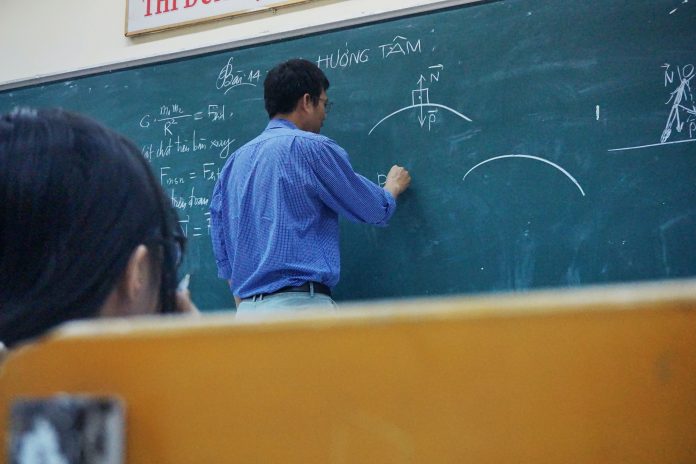
By: Tiffany Chang, Peak Associate 


“What should I have for a snack?” 

It’s 9:00 p.m. on a Tuesday night. Dinner seems like it happened a lifetime ago. The professor is talking, but it’s all going in one ear and out the other because all you want to do is rummage through the pantry for some munchies. Maybe that bag of Cheetos you were eyeing yesterday hasn’t been completely consumed by your family or the rogue band of mice that live in the cupboard. Let’s hope no one hears your stomach growling. “What if I quickly sneak away and come back? Will shutting my camera off be too conspicuous? They’ll just assume I’ve gone to the bathroom, right?”


“Geez, I almost forgot about my iClicker.” 

While quickly rummaging in your drawer for concealer to cover up your Sims-induced eyebags, your fingers brush against a small box. Curious as to what’s inside, you tentatively pull out the box only to see an iClicker looking brand-new in its packaging. “Wow,” you think. “I haven’t used this ghastly remote control since I took that one humanties class that went into way too much detail about Poseidon’s bestiality a million semesters ago. I should probably sell the thing,” you muse. In reality, you’ll soon pretend it isn’t there. You’ll act like you didn’t spend a fortune on this iClicker like everything else you’ve bought for school.


“Is it humanly possible to sleep with my eyes open?” 

You’re super tired, but there’s still 30 minutes of class left. You say to yourself: “Should I try and stay awake for this? Or figure out how to get away with taking a power nap while my camera is on? Or I could totally try to sleep with my eyes open — if guinea pigs and the villain from The Adventures of Sharkboy and Lavagirl can do it, why can’t I? On second thought, maybe I should lean to the side and let my head droop a little bit so they can’t see my eyes close.” (Fair warning: your TA totally saw you conk out.)


“I should introduce the idea of a weekly group therapy session during our breakout rooms!” 

We whine about courses and workloads whenever we’re put into breakout rooms, anyway. You might as well make the therapy official. Everyone knows the best way to effectively complain is with people who can relate. And besides, there’s nothing like baring your soul to a group of total strangers that you won’t even wave to when you pass them in the hallways in the fall. Sometimes you just need to tell people about the time an Abraham Lincoln roleplay Twitter account revealed your deepest secrets to their 16 followers. It’s easier for them to live with that knowledge than for you to live with the shame that you disappointed one of the funkiest American presidents, style-wise. 


“This T-shirt needs to be washed.” 

COVID-19 hasn’t just been a time of masks and constant hand sanitizing, but also an era of staying home all day in comfortable attire. With the days blending together, who knows when you last washed the T-shirt you’re currently wearing? It might have a design of a frog riding a skateboard with the words “Vibe now, cry later” on it, but its evident coolness doesn’t mean it’s invincible to your onion-tinged sweat. Now that you think about it, the shirt doesn’t smell too nice, but you don’t want to take a whiff and then wrinkle your nose when your hot classmate might be watching. Just wait until they show their pet on screen instead. Bartholemew A. Bittlebun Jr. won’t judge you — probably. 


BC heat wave can be explained by climate change, says SFU expert

0

Written by: Karissa Ketter, News Writer

BC broke the record for the hottest temperature recorded in Canada on June 30, 2021, peaking at 49.6 C. The province experienced a heat wave during the end of June. SFU professor Dr. Ken Lertzman said the extreme weather events occurring are “clearly pegged to climate change.”

Lertzman noted he is not surprised by the weather. “This is exactly what — for 20 years — the models have been saying we should expect for climate change.” He said along with warmer and drier summers, we can also expect “earlier springs and warmer, wetter winters.”

As climate change affects ecosystems and temperatures, one of the first signs is shifts in extreme behaviours such as the frequency and severity of hurricanes, tornadoes, or droughts, explained Lertzman. The recent droughts and heat waves along the coast of North America are not new. California experienced a period of drought for 376 weeks lasting from 2011 to 2019.

Drought periods dry out fuels — flammable material and plant life in the forest. It is challenging to burn wet fuel, whereas extremely dry material will burn easily. Lertzman explained it’s similar to trying to light a campfire in the rain. 

Wildfire risk can be calculated by tracking how dry the fuels are in the forest. If the forests are very dry, then the presence of an ignition source — a cigarette, lightning, or campfire — is more likely to start a wildfire. 

“What we’re seeing through a lot of western North America over the past decades, is the tendency for fires to burn with more extreme behaviour: higher severity that kills more trees and burns faster over a larger area, and has more severe ecological effects,” said Lertzman.

“Ultimately, the solution is not putting as much carbon in the atmosphere.” Lertzman added the solution has been clear “since the mid 1990s.” 

“For people like me who have been doing research on this kind of thing for decades, every time there is an extreme event that hurts people like this, we hope, ‘well, maybe now people get the idea,’” said Lertzman. He said he wants people to understand the consequences of climate change are not hypothetical — they cause problems for the ecosystems today. 

Lertzman noted an increased rate of mortality due to our heat wave and changing climate. As of July 2, the heat is believed to have played a role in 719 deaths over a seven day period in BC. 

The “weather we’ve had over the last week really hit home for a lot of people, and hopefully this will cause people to make voting choices, their consumer purchases, and their choices about how they are as citizens to reinforce and push the climate change message,” said Lertzman.

While there are opportunities for individuals to take action in their personal life to reduce carbon consumption, “the leadership on that really needs to come from government — they need to create the conditions, and they need to create the policies that allow people to take meaningful actions on their own and support them in doing that.”

Unhoused people shouldn’t be neglected during dangerous weather conditions

0
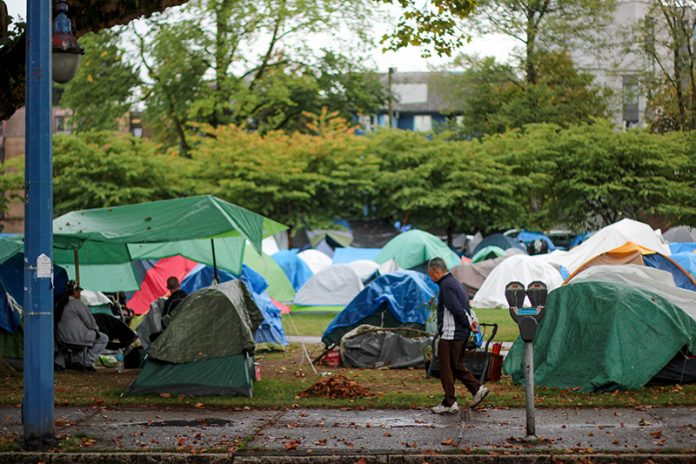
Factors like the displacement of tent cities make it difficult for the unhoused to receive resources. PHOTO: Christopher Cheung / The Tyee

By: Gurleen Aujla, Peak Associate

A few weeks ago, BC faced a dangerous heat wave, with temperatures hitting the high 30s and 40s. We saw 719 sudden deaths during this “unprecedented” event, from which the heat may have been a “significant contributing factor.” Weather irregularities like heat waves are a serious hazard to our health and well-being. In events like these, we need to do better in protecting unhoused people. 

Such events are felt disproportionately across various populations, where groups already facing inequities may be the most impacted. As a vulnerable population, unhoused people are at higher risk due to pre-existing and ongoing challenges. This may include a lack of access to stable housing, hunger, chronic diseases or respiratory issues, and mental health issues — not to mention the COVID-19 pandemic. 

Extreme weather events will exacerbate existing challenges and health conditions, and temporary pop-up resources, such as misting stations, are not adequate solutions. The compounding of anti-homeless infrastructure, scarce support, and lack of ease in communicating information are a few ways we are failing the unhoused population. 

Fake armrests on benches, fixed rocks, and spikes under bridges are all examples of anti-homeless infrastructure. They are a waste of resources and are used to deter the people with the most need from using public spaces. This type of hostile architecture disproportionately impacts unhoused people from seeking shelter from weather conditions. Asante Haughton for Azure Magazine argues, instead of protecting public spacesfrom the homeless, they need to be leveraged for the homeless.” 

Extreme cold weather events prompt open warming centres, and for hot weather events, cooling centres. But these are not enough. The recent heat wave prompted a flurry of social media posts from municipalities about pop-up cooling centres, misting stations, and tips to stay cool, but unhoused people face additional barriers in accessing these short-term supports. Indoor public spaces turned into cooling centres, such as libraries or community centres, can often be stigmatizing as a shared environment with housed people. They can feel unwelcoming or excluding and may lack resources such as bottled water or a place to store belongings. Even then, during the worst of the heat wave, most of these centres were only open for limited hours during the day, despite temperatures barely cooling off at night.  

This points to the lack of ease in communication, especially due to the displacement of tent cities preventing a centralized means to share information. How can we ensure all those who need access to these services are notified on time? For example, Burnaby RCMP sent officers to homeless camps in an attempt to distribute flyers with the location of cooling centres, but there were delays in finding camps, and they relied on officers’ previous knowledge of the areas. Also, considering the lack of trust the unhoused population has in the police, the RCMP are the wrong people to handle this responsibility.

Community organizations look to the public for support through financial contributions or donations. However, this points to the need for intersecting conversations and actions around the disproportionate impacts on certain groups during extreme weather events. This includes the role of governments, prioritizing budget resources, housing justice, and the alarming consequences of climate change. 

Extreme weather events such as heat waves are poised to be “more frequent, long-lasting, and intense” as the impacts of climate change worsen. Unhoused people are having to bear the brunt of one crisis after another. Remember, the recent heat wave was the worst one — so far. 

This issue requires a proactive approach to mitigating the consequences of extreme weather events by planning well in advance and reducing the prevalence of homelessness in the first place. Greener spaces and essential infrastructure should be implemented. Community members can also be encouraged to donate essential items, such as sunscreen, hats, umbrellas, and non-perishable food items. Amid such emergencies, resources should be deployed efficiently. For example, shuttle buses to and from centres should be available, and they should be open 24/7.  

As a year-round issue, we must work beyond these pop-up solutions. 

Vaccine production companies place money first

0
PHOTO: Spencer Davis / Unsplash

by Nancy La, Staff Writer

If the invention of the vaccine is humanity’s greatest gift, then the concept of medical patents is our greatest curse. News of vaccine shipments being delayed and affecting the global supply chain presents a glaring question: why are there so few companies in charge of making vaccines? Surely there must be other factories and companies willing to help with production? 

The answer lies in medical patents, and it is this legal status that allowed for large pharmaceutical companies such as Pfizer to “artificially ration” the COVID-19 vaccines. By keeping the medical patent to the vaccine, Pfizer, along with other brands such as Moderna and Astra-Zeneca, are prolonging the pandemic by slowing down herd immunity at the cost of human lives.

A patent is a form of protection for intellectual property. More specifically, a medical patent pertains to pharmaceuticals, including their production methods and ways to use them. Patentees (companies who are awarded patents) will have exclusive rights to market and produce the product for a certain number of years, usually 20. Ideally, by giving a company this monopoly — where they are the only one making and selling a certain product — the revenue will make up for the patentee’s initial investment in the research and development of the product.

In the beginning, patents are a way for the government to incentivize companies to advance medical research and development. Yet, as we can see with the COVID-19 vaccine, having pharmaceutical companies be the only ones in charge of making and distributing vaccines during a pandemic is ineffective and unethical.

Groups such as the People’s Vaccine Alliance are campaigning for a “people’s vaccine” for COVID-19. They point out companies such as Pfizer and Moderna are “putting up barriers to restrict production and drive up prices” by refusing to suspend intellectual property rights. For pharmaceutical companies, earning revenue from a pandemic that has already killed millions is an acceptable practice. How can we trust they will do what is best for humanity when they approach a health crisis as a business opportunity?

Oxfam, a supporter of the People’s Vaccine Alliance, published a report on how companies like Pfizer, Moderna, and Astra-Zeneca plan to produce enough for a third of the world’s population. But because rich countries around the world buy multiple doses of vaccines, the actual coverage of the vaccine is less than projected. As rich countries hoard vaccines, countries with less buying power are left vulnerable to contracting the virus.

Anna Marriott, Oxfam’s health policy manager, points to pharmaceutical companies for creating this health disparity in the first place. “By refusing to share their technology and waive their intellectual property, companies like Moderna and Pfizer/BioNTech, are artificially rationing the supply of successful vaccines with the hopes of reaping huge financial rewards.”

Other vaccine production companies, such as GlaxoSmithKline (GSK), Merck, and Sanofi, have the production capabilities to increase the global vaccine supply but have been unable to due to longer trial periods and lack of funds. If Pfizer, Moderna, and Astra-Zeneca are willing to share their vaccine findings and waive their patents, these major vaccine producers can help ramp up production and help balance out the global market need and supply for vaccines.

It must be noted that the initial investment for Pfizer and Moderna, which kickstarted their research on the COVID-19 vaccine, came from taxpayers. Moderna, for example, was funded by the US National Institutes of Health. BioNTech, Pfizer’s partner in developing the vaccine, received $445 million in funding from the German government. This means the vaccines these companies developed are a part of a public good funded by the people. It makes no sense for them to be the ones holding patents on COVID-19 vaccines.

Pharmaceutical companies were not the only ones who invested in research and development, but the governments and their people did too. Capitalism, enabled by means of medical patents leading to market monopolies, cheated the people. Governments now have to pay Pfizer and Moderna for vaccines, but these companies have no ethical or moral grounds to be charging money for their products.

With scientists predicting we will need booster shots for COVID-19 once the pandemic is over, there is a legitimate worry that one day, the vaccines will no longer be free to the public. Pharmaceutical companies are reported to keep prices for the vaccines down during the pandemic for the sake of optics and goodwill, but they are expecting to raise prices once the pandemic is over. With the price of a regular Pfizer pneumococcal vaccine clocking in at $200 per dose, we can expect these pharmaceutical companies to use these COVID-19 booster shots to make even more money.

Capitalist markets have veered pharmaceutical companies away from doing what is right, instead pushing them to do what brings in revenue. This “money first” mentality no longer deserves to be protected by patent laws, which were meant to drive innovation and research for the public good. Continuing to allow patents to be exploited for money with no restrictions no longer serves its intended purpose of helping advance technology for all of us.

Even during one of humanity’s greatest health crises, we are seeing pharmaceutical companies refuse to share their patents and vaccine knowledge with others to help end the pandemic. This selfishness of prioritizing profits costs human lives. The only way to ensure health equity for all is by taking action. 

Joining causes such as the People’s Vaccine Alliance and placing political pressure on governments to waive vaccine patents for the COVID-19 vaccine is the beginning. We cannot expect companies to do what is right in a capitalist market where money is generated off of a public health crisis.


Visual art students create thought-provoking artwork

0
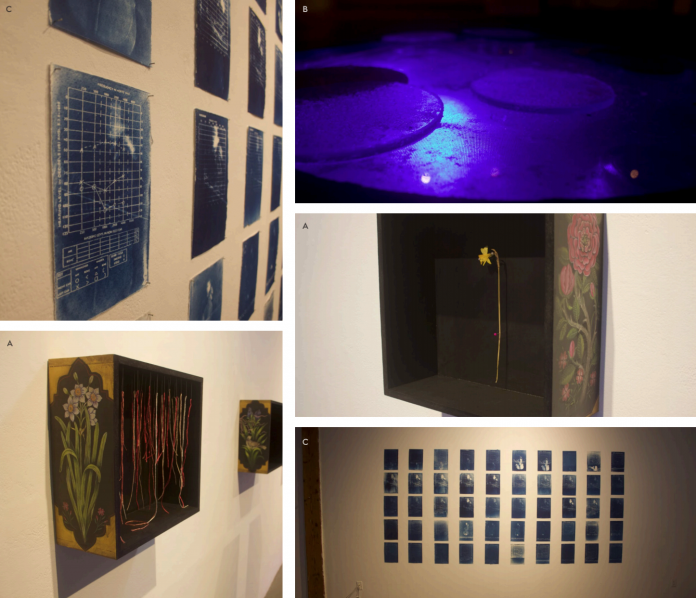
An in-depth look at the exhibition, featuring multimedia pieces by (A) Homa Khosravi, (B) Katie Kozak, and (C) Silas Ng. Photos courtesy of Paige Smith

By: Paige Smith, Peak Associate

In the midst of the pandemic, SFU’s first-year master of fine arts (MFA) students have successfully assembled an in-person exhibition. The work showcases their artistic research into topics such as identities and form. 

Walking into the unusual gallery space — previously a salmon cannery of SFU’s Vancouver campus at 611 Alexander St., viewers see an assemblage of works. Each piece is distinct in style, though many involve moving images and sculptural elements. 

The exhibition contains works from Barry Olusegun-Noble Despenza, Tin Gamboa, Homa Khosravi, Katie Kozak, Silas Ng, Jami Reimer, Matthew Toffoletto, and Katayoon Yousefbigloo. A few of these artists’ pieces are detailed in this article and pictured above.

Three odd wooden boxes hang from a wall, each black with exquisitely painted flowers on their sides. The boxes are visibly open, and each contains a delicate object. The first holds sewing needles stuck to the top of the box, each holding a loose pink thread. The farthest box contains a dried, flattened yellow flower pinned like a dead butterfly for display. The middle box bears very small photographic projections, reminiscent of the antiquated practice of projecting family travel photos. 

The photos evoke a personal and private world: cozy homes, women holding flowers. The grain of the wood creates a beautiful texture for the projection, and the sides of the box suggest a darkened miniature theatre. 

Before even examining the artist’s statement, it is clear Homa Khosravi’s Pink Lacquer is an intimate piece. Khosravi’s piece attempts to magnify her Islamic and Iranian heritage, alongside her recently passed mother. She gracefully interweaves symbols of growth in the painted flowers and loose threads with the symbols of grief in the calcified, pinned dead flower and the grainy family photography.

Nearby, a glowing blue light emanates from the ground. The light is shining through the sand-covered glass table top. Round mirrors sit on top, inviting viewers low to the ground to see Katie Kozak’s work in detail. 

Working with SFU MFA graduate artist Lucien Durey, Kozak’s piece, Everything is borrowed and will be returned, contains an assortment of sea-related objects. These objects were borrowed from Durey and taken by Kozak to the ocean. There, she allowed the body of water to alter the objects. 

The title seems to clarify Kozak’s artmaking process and her work’s environmental inclination. She borrowed the materials from Durey, but also borrowed the seawater and salts from the ocean. She states she plans to return everything, but the viewer is left to wonder whether they will be returned to the human owner of the objects or the land from which the objects originated.

Sprawling across the back wall, Silas Ng’s The Blue Room immediately calls for closer inspection. The bright blue cyanotype prints each depict a graph layered over blurry images of a cello player. The graph’s x-axis indicates audio frequencies, the y-axis decibels, and markings show whether the sound is heard with the left or right ear; the prints depict a hazy and confusing potential reading of how to visualize audio. 

Accompanying the prints is a looping projection piece that layers the images further. The absence of an accompanying soundtrack to the moving image component seems to intentionally point to our assumptions of certain visuals containing accompanying sounds. The artist statement describes the work as an attempt to transform unseen sound into visual materials, navigating between Ng’s experiences in both “audiocentric and Deaf worlds.” 

The SFU MFA first-year exhibition some things may pass was filled with distinct works with a diversity of topics and forms explored. 

For more, check out @611studio on Instagram.

Monday Music: The Best Songs of 2021 (so far)

0
"Monday Music" in giant yellow block letters with a red background
Monday Music: your weekly themed playlist. Image courtesy of The Peak.

By: Ahad Ghani, SFU Student

Halfway into 2021, this year has already been one of the strongest for music in recent memory, despite a global pandemic. These songs are the best of the year, so far, and deserve your immediate attention.

1) HOT HOT” by Bree Runway

Image courtesy of Universal Music Operations Limited

“HOT HOT” serves as the first single from British singer and rapper Bree Runway’s debut album. If this self-love anthem which blends R&B with pop is any indication of how Runway’s debut album will sound, we’re in for a treat. “HOT HOT” is undoubtedly a smash that brings the BET winner of the 2021 Best New International Act one step closer to superstardom, and one I imagine will be played at clubs around the world.

2) “Mirror” by Sigrid

Image courtesy of Universal Music Operations Limited

Norwegian singer Sigrid has released a string of pop gems, none of which unfortunately achieved global success. However, this might change with the release of her new dance-pop single, which is reminiscent of Dua Lipa’s recent work, Future Nostalgia. One of two self-love anthems on this list, “Mirror” is an earworm that’ll have you singing along in no time. Sigrid’s latest song essentially confirms she is one of pop’s most exciting emerging stars.

3) “Till Forever Falls Apart” by Ashe and FINNEAS

Image courtesy of Mom+Pop

FINNEAS takes a break from producing sister Billie Eilish’s music to assist singer Ashe on the romantic ballad “Till Forever Falls Apart” from her debut album Ashlyn. The song, which is reminiscent of singer JP Saxe’s hit “If the World Was Ending,” showcases each of the singer’s powerful vocal abilities as they sing about loving each other through any obstacle thrown at them. The chemistry between the two stars can be felt through the song, which allows it to rise above other collaborations released this year.

4) “Hot N Heavy” by Jessie Ware

Image courtesy of Universal Music Operations Limited

One of the new songs on the reissue of Jessie Ware’s disco album What’s Your Pleasure?, “Hot N Heavy” is yet another strong entry by the British artist in the current resurgence of dance music. The single is just as infectious and groovy as the album’s original tracks. It further proves that Ware not only deserves the critical acclaim she’s been receiving, but the global success to go along with it.

Why so few SFU students graduate in four years

0
ILLUSTRATION: Siloam Yeung / The Peak

By: Jacob Mattie, Peak Associate 

Burnaby, BC — In a recent statement of apology, SFU administration admitted to making some inaccurate assumptions when outlining a bachelor’s degree as taking four years. 

“It was a perfectly natural mistake, and it could have happened to anyone,” said one staff member who preferred to remain anonymous. “When deciding on course rosters and the time commitment needed for an undergraduate degree, we used McFogg the Dog as a basis for our modelling. While McFogg is objectively the ideal student, they are also a dog, and so experience time differently. To our eyes, McFogg the Dog took four years to graduate. However, when accounting for dog years, this is closer to 28 years — something more in line with what we’ve come to see in our students’ academic progression.

“We wish we noticed this earlier, but we were frankly overloaded with encouraging students to take heavier courseloads and less breaks. There are nearly 40,000 students enrolled at SFU, and it takes a lot of work to make sure they continue to put academics ahead of their mental well-being and real-world perspective.”

While some have criticized the SFU administration’s poor choice of sample size, others praised what they argue could, in a certain light, be considered a service to students.

“Mental health on campus is pretty dismal,” said seventh-year political science student Ulma Graedes. “But with these policies, I can convince myself that at least SFU is on our side. By rushing us through our degrees, they’re sparing us years we might have otherwise spent in an equally miserable university lifestyle.”

“I’ve certainly supported more tenuous claims in some of my essays,” she added.

However, other students and faculty were shocked to learn that McFogg should no longer be considered the standard, as they have gotten increasingly used to pets attending Zoom classes. One professor believed something was wrong with Canvas when Sir Fluffykins and Macavity the Mystery Cat did not show up on their course roster. (There was something wrong with Canvas, of course, but it wasn’t that.) 

Indeed, the lines dividing human students and canine learners have become increasingly muddled over the past year, as many (human) students have displayed their pets on camera during online classes. Worsening the problem, recent direct-to-DVD release Air Bud™ Does Calculus documents the heartwarming story of one such case of canine success, in which underdog golden retriever Buddy discovers a propensity for integration and aces a calculus exam against all odds.