Home Blog Page 32

Random thoughts from the editor: Global cooling

0
A man wearing a blue shirt sitting in front of a laptop. He looks like he is thinking about something with his hand rubbing against his chin.
PHOTO: Christian Velitchkov / Unsplash

By: Mason Mattu, Humour Editor

If everyone places 10 gallons of ice cream on the pavement, will global warming be . . .  solved? If so, how do I measure 10 gallons or buy ice cream with my arts degree? Time to ask Reddit, I guess. Yours faithfully, Mason Mattu.

Exploring ConnecTra Society’s 2025 Abilities Expo

0
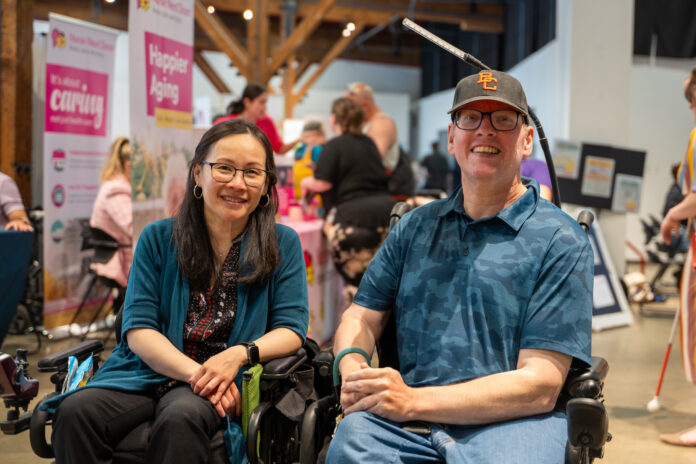
This is a photo of a man and woman in wheelchairs smiling for the camera. Nurse Next Door and other folks are pictured in the background.
PHOTO: Jeremy Dyson / ConnecTra Society

By: Noeka Nimmervoll, Staff Writer

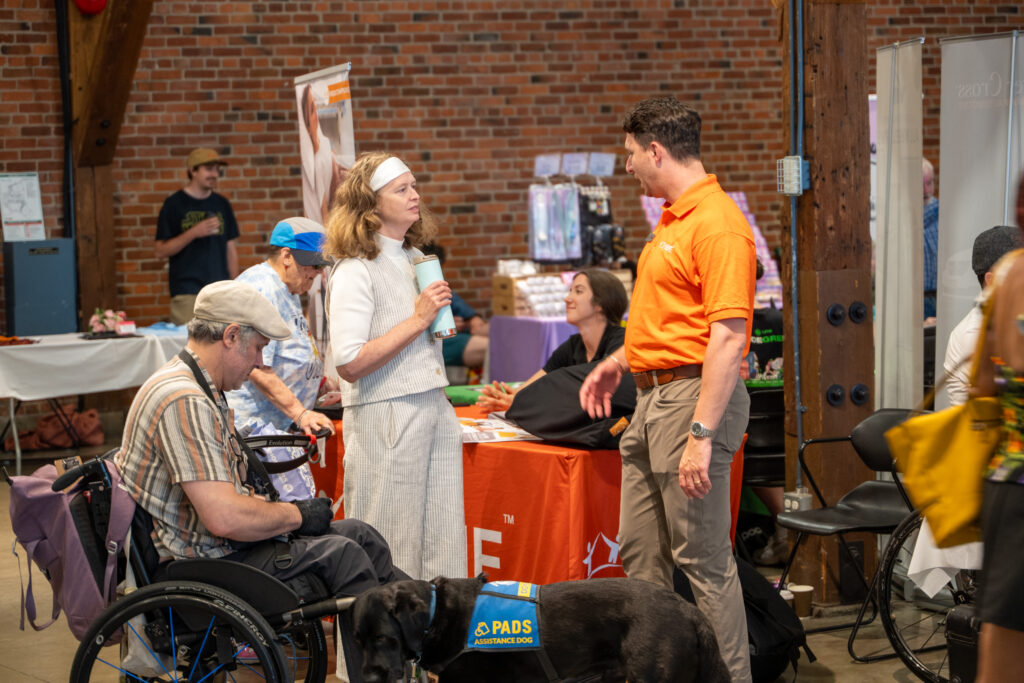
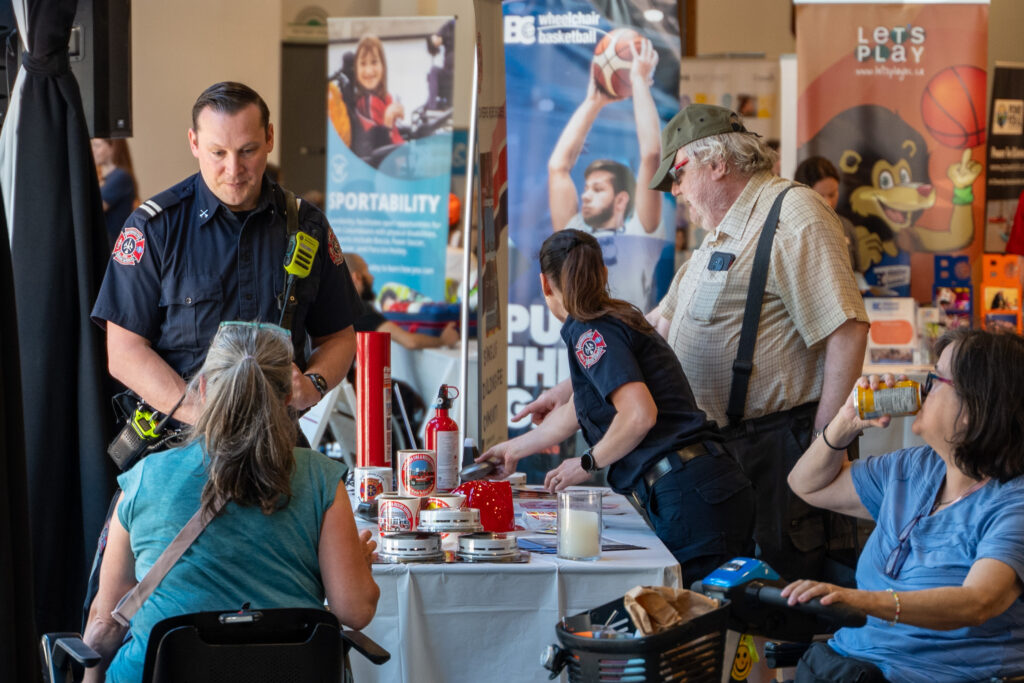
On June 9, ConnecTra Society hosted its 14th annual Abilities Expo at Yaletown’s Roundhouse Community Centre. ConnecTra is a non-profit that links “people living with disabilities to activities, services, resources, and opportunities.” More than 45 vendors and performers shared their resources and knowledge with the community, including people living with disabilities, caregivers, and health professionals. The Peak attended the event and interviewed Emily Chambers, ConnecTra program coordinator, to learn more. 

PHOTO: Jeremy Dyson / ConnecTra Society

The theme of this year’s expo was “How to Thrive in 2025: Your Wellness, Your Way.” Chambers explained that “wellness looks different for so many people, especially when we’re dealing with a lot of physical disabilities, chronic pain, you kind of have to define that for yourself.” Visitors could expect to interact with organizations with a wide range of focuses, including “outdoor recreation or mental health support.” The expo’s 45 vendors included WorkSafe BC, BC Blind Sports and Recreation Association, and Theatre Terrific Society

“Wellness looks different for so many people, especially when we’re dealing with a lot of physical disabilities, chronic pain, you kind of have to define that for yourself.” — Emily Chambers, ConnecTra program coordinator

ConnecTra has become more attuned to the needs of the community over time, Chambers said. Every year, they learn from the community to ensure the expo is accessible: “We used to be really catered to people with physical disabilities, and we’ve really branched out in the last three years to be more inclusive of cognitive disabilities, sight impairments, hearing impairments,” she said. Two ASL interpreters were present at both the expo’s keystone presentations, and live captions were displayed on the screen. 

PHOTO: Jeremy Dyson / ConnecTra Society

First, Simon Paradis and Kara Stanley performed a song-and-story called “I’ve Been Better; I’ve Been Worse.” Paradis performed blues songs about his experiences with chronic pain, while Stanley shared some tools on the complex issue and personal experience of pain. “When we talk about self-care and resilience, often the elephant in the room — the thing we don’t talk about — is pain,” said Stanley in her performance. She explained, “Extreme pain radically jeopardizes a sense of safety or pleasure. And so, focusing on those things, safety and pleasure, this is not a frivolous pursuit. It is not a selfish pursuit. It is critical to the overall health of the nervous system.” 

“Extreme pain radically jeopardizes a sense of safety or pleasure. And so focusing on those things, safety and pleasure, this is not a frivolous pursuit. It is not a selfish pursuit. It is critical to the overall health of the nervous system.” — Kara Stanley, expo speaker

PHOTO: Jeremy Dyson / ConnecTra Society

Stanley also shared that a key mission for repairing the nervous system is finding ways to “promote that sense of ease or safety, fun, pleasure, and connection, belonging.” Stanley said for her, that’s “engaging with stories and through movement practice,” and “for Simon, that journey has always led him back to music.” 

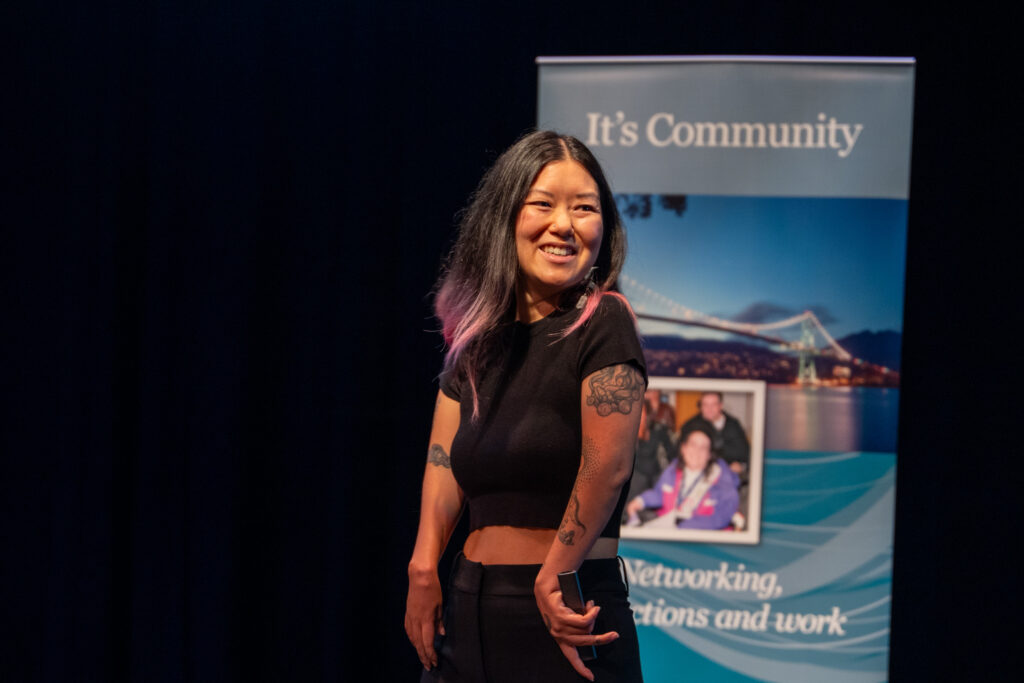
Another presentation featured was a spiritual talk by life coach Chi-ka Harada. “The more you get curious [about your emotions], the better you get to understand yourself, and be able to build a life that aligns with you and your deepest desires,” she said. Harada pushed the audience to “imagine what it feels like to be confident” and embody the person that you imagine, because “they already exist inside of you.” 

PHOTO: Jeremy Dyson / ConnecTra Society

The expo also featured two interactive activities straight from ConnecTra’s weekly agenda of events: adaptive chair yoga led by Bobbie Seale-Cobiskey and a contemporary improvisation dance class led by All Bodies Dance Project.

Vancouver Aboriginal Health Society celebrates Father’s Day with Powwow

0
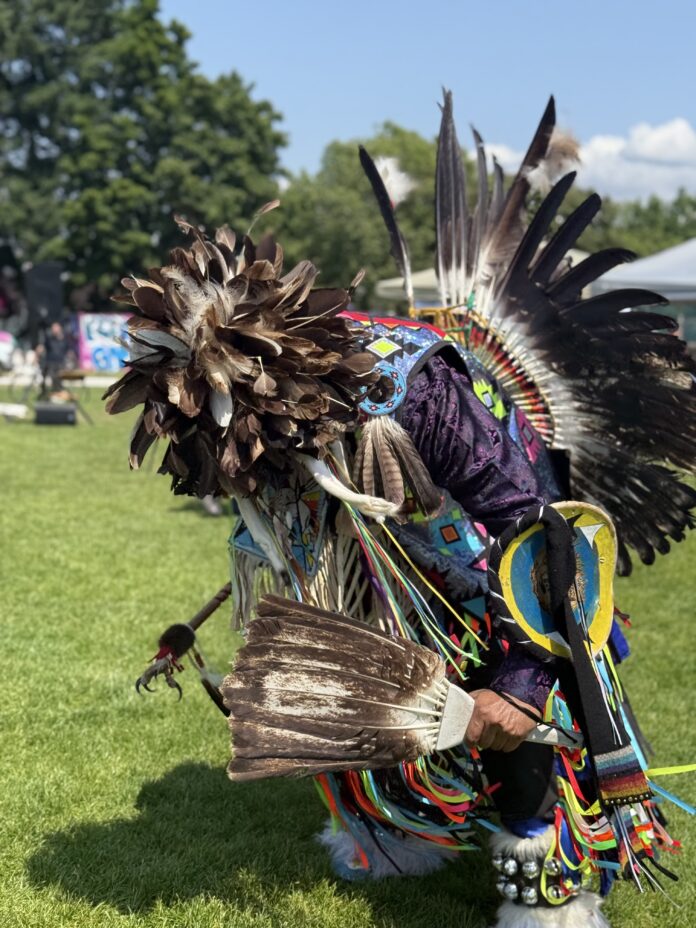
This is a close-up photo of an Indigenous person at the Powwow in their colourful regalia.
PHOTO: Mercedes Innes / Vancouver Aboriginal Health Society

By: Lucaiah Smith-Miodownik, News Writer

June 14 and 15 marked the third annual Father’s Day Powwow, hosted by the Vancouver Aboriginal Health Society (VAHS) in Vancouver. The event was focused on honouring Indigenous “fathers, grandfathers, and sons through drum, dance, and culture.” The Peak attended the Powwow near Britannia Secondary School and spoke with VAHS executive director Carrie Humchitt of the Haíɫzaqv (Heiltsuk) Nation for more information.

PHOTO: Mercedes Innes / Vancouver Aboriginal Health Society

The Powwow is about being able to “lift up the men,” Humchitt said. “They deserve to be honoured,” as well as “the murdered and missing Indigenous men and boys and Two-Spirits.” Planning for the event starts in the fall, with fundraising efforts and grants to cover costs. “We also have regalia-making workshops all the way up until the Powwow,” Humchitt explained. Regalia is traditionally worn during ceremonies and celebrations, featuring unique individual, familial, and cultural aspects. It tells a story for those who wear it, reflecting identity and creativity. Regalia may also be a distinguishing factor for different types of Powwow dances.

“Vendors come and it’s an opportunity for them to sell their arts and crafts and come together and be a part of the community. We have food vendors as well, who we’re thankful for feeding everybody here. It’s an opportunity to get Indigenous foods,” Humchitt said.

“Culture is healing for a lot of our people.” — Carrie Humchitt, Vancouver Aboriginal Health Society executive director

PHOTO: Mercedes Innes / Vancouver Aboriginal Health Society

They also noted that the Powwow is alcohol and drug-free. “Culture is healing for a lot of our people,” Humchitt said. “We’ve had people who have taken The Red Road once they started connecting to their culture, so it really is significant in that way.” The Red Road, an organization started by Charles Robinson of the Choctaw Nation, is about “a deep commitment to living life in the best way possible,” including sobriety. “There’s intergenerational trauma from residential schools,” which Humchitt’s parents attended, and they explained that healing from this trauma is still an ongoing process. 

Humchitt’s favourite part of the Powwow is the beginning, when the event begins “in a really good way.” They said, “We carry the flags, and we honour our Elders and everybody who’s here, and it’s just a good opening every time.” The phrase “‘in a good way’ is a concept used by many Indigenous Peoples to recognize work” done with “high levels of integrity, moral strength, and communal spirit.” It is a recognition that time is non-linear and cyclical — that choices have far-reaching implications.

PHOTO: Mercedes Innes / Vancouver Aboriginal Health Society

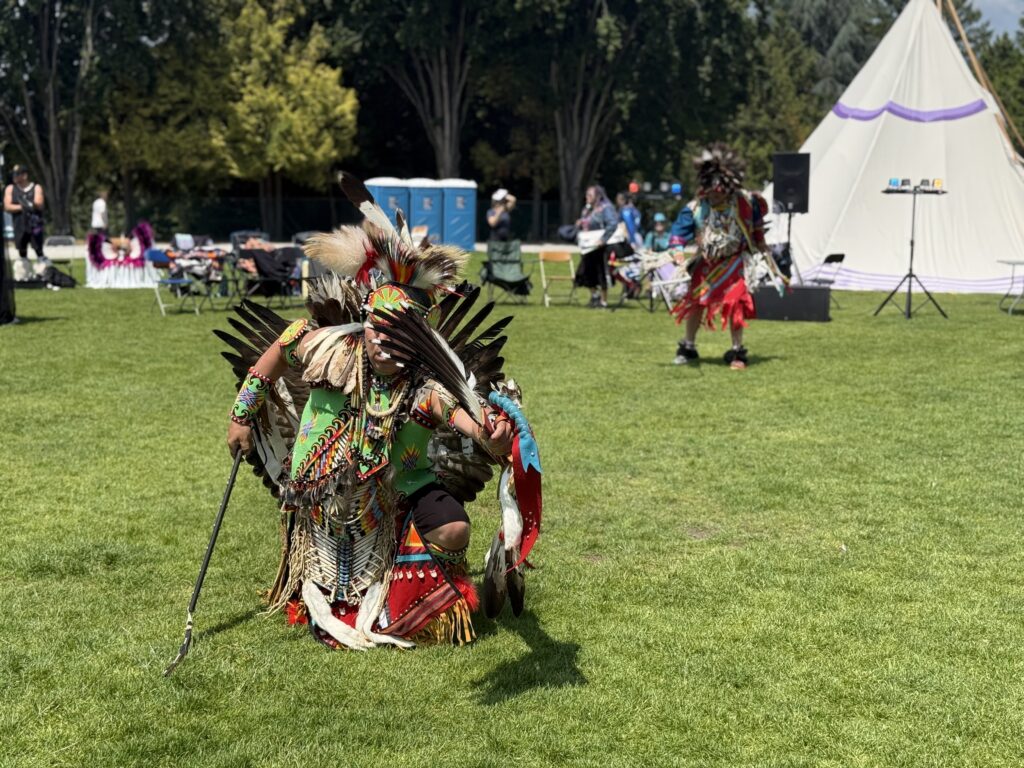
The event featured three drum groups, with Black Lodge Singers as the main event. The group is “quite famous in Powwow circles,” Humchitt explained. “Whenever there’s a Powwow, there are other drums that come along and partake. It’s a good thing, we love it when extra drums show up because they add to it.” Along with drum and song, the Powwow centres around dance, featuring “everything from tiny tots, to Elders, chicken dance, fancy dance, grass dance — every kind of category imaginable,” they said. Each dance has its own unique history. For example, the chicken dance mimics the prairie chicken’s mating ritual, originating from the Niitsítapi (Blackfeet) Nation before becoming a pan-Indigenous dance. Some dances are competitive, with a winner chosen by judges.

“It’s just a beautiful event,” they added. “We plan on doing it every year, and we think about ways that we can improve it for next year. We’re just happy.”

Facebook Dating solves the issues with modern romance

0
A girl with her face painted blue crouching down in her washroom. Next to her is a speaker.
PHOTO: Katie Walkley / The Peak

By: Katie Walkley, SFU Student

In our modern era, staying single has become an appealing option. I count my blessings every day I don’t have to be married by age 14 like my foremothers. My romantic interactions are limited to checking out the SFU hotties on the 143 bus (hmu baddies). Just kidding, please don’t, I’m not ready. 

Anyways, I have noticed that many of my friends also experience the epic highs and lows of singledom. On one hand, I would not give up my solo nights watching old Survivor seasons for ANYONE. However, I need to take a peek at what we’re missing out on. Thus, I have taken it upon myself to investigate how to find love as a dating-curious-loner-queen.

The saying is true that love finds you when you stop trying. And I really had given up on that one fateful night where after asking, “Why on earth does Facebook have a dating app?” I made myself a Facebook Dating profile. 

No bio. Just a picture of me in my alien makeup sitting on my friend’s toilet. 

It was originally just to see what kind of hooligans were finding love on my Aunt Linda’s favourite app. Then, my curiosity grew into respect like a caterpillar’s transformation into a slightly larger caterpillar. So, here are my three reasons why Facebook dating will change your status from unwitting loner to reciprocal boner just in time for some summer romance. 

  1.       Low standards: boost your ego!

My extraterrestrial form has received many confessions of love and coffee invites after the briefest of exchanges. Since it is impossible to fumble a Facebook diva, even the most inexperienced, non-committal users will feel like fine shyt in no time. 

  1.       Absence of rizz: assure a genuine connection

Most Facebook daters have limited real-life dating experience. Some are even bold enough to sing their woes in their bios. One man wrote a full paragraph about how he’s a good-looking guy — so it’s not his fault he hasn’t had sex in over a year. I could tell his hand was relieved to take a break from its full time job and write that paragraph. You can rest assured that these people aren’t putting up an act because they tell you things that most wouldn’t give up under torture.

  1.       Loneliness across the board: you’re not the only hermit

In a land where people have resorted to finding their other half on Zuckerberg’s social hellscape, the inhabitants surprisingly do not have the most frivolous social lives. This means they will text you back faster than even your closest friends. With their abundant free time, they put lots of thought into their responses and they don’t mind giving you a double, triple, no, wait, septuple text.

So, is Facebook the place for you to embark on your first relationship? God no! I hope you said no or else you’ve misunderstood everything I’ve said worse than an ignorant bachelor misunderstands 500 Days of Summer. But is it the place for you to go from time to time to safely flirt while remaining peacefully single? Absolutely.

Political cartoon: BCNDP passes Bill 15

0
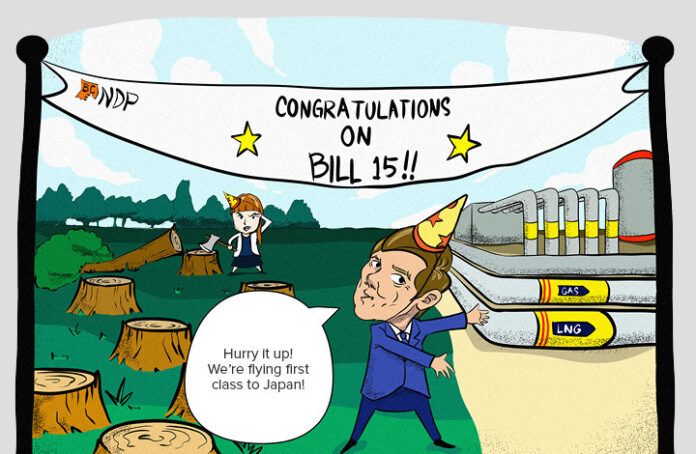
Political cartoon: BCNDP passes Bill 15
CARTOON: Cliff Ebora / The Peak

SFU study indicates men surviving intimate partner violence don’t have enough support

0
This is a black and white photo, composed so that only a man’s black silhouette is visible in front of a white, grey, and black gradient in the background.
PHOTO: Bita Eskandari / Unsplash

By: Corbett Gildersleve, News Writer

Content warning: mentions of physical and sexual abuse, intimate partner violence, substance abuse, and suicide. 

A new study co-authored by Dr. Alexandra Lysova and Dr. Eugene Emeka Dim was published on February 28 in the Journal of Family Violence, examining how men surviving intimate partner violence (IPV) deal with their abuse. Lysova, an SFU criminology professor, and Dim, a University of Victoria assistant professor in sociology, highlighted that men in Canada were significantly less likely to receive support due to stigma, a lack of dedicated services, and poor coping strategies. The Peak reached out to Dr. Lysova and CJ Rowe, director at SFU’s Sexual Violence Support & Prevention Office, for an interview, but could not conduct an interview by press time.

This study reviewed previous studies conducted on the topic, drew data from the 2014 General Social Survey (GSS) victimization survey, and analyzed 2016 interviews with 16 men who experienced IPV. Although the interviews occurred almost 10 years ago, the researchers found that “there have been no significant changes in societal attitudes or support systems” toward men who experienced IPV in Canada. The men who were interviewed were over the age of 18 and had experienced IPV in their married, common-law, or dating relationships. 

The study states, “Previous studies utilizing the GSS 2014 data found that men were significantly more likely than women to report experiences of physical and/or sexual IPV (2.9% of men and 1.8% of women in current relationships).” However, the 2025 study highlights that men were significantly less likely to seek support than women, revealing several disparities, as found through several statistics. For one, the study found women “are more likely to confide in their families (56.3%)” compared to men (27.8%).

“When men survivors wanted to seek support through counselling or other services, some were not immediately available to them, or they were expensive.”

The interviews showed that the men’s coping strategies fell into four areas: “denial of abuse and/or withdrawal, diversion to work or other activities, maintaining the relationship, and seeking help after the abusive relationship ended.” 

One respondent said, “I wasn’t (coping). I was just existing. I guess I was dissociating; that would be my best guess. I still don’t remember those memories; it’s a bad time of my life. Obviously, I tried to repress it.” Another respondent who focused on other activities said, “I hide . . . work more, play video games, do home projects, and other activities.” Others tried to focus on saving their relationship through seeking couples counselling, Alcoholics Anonymous support groups, or focusing on helping the abuser instead of themselves. One man said, “I thought I could be a hero . . . I focused solely on trying to help her, instead of trying to help me. Alcoholics Anonymous group helps you look at the alcoholic person from a different perspective. I loved my wife and I believed that she would change.” Only after the relationships ended, some found support through counsellors or groups: “I’m going to the male support center every week for meetings,” one noted.

When men wanted to seek support through counselling or other services, some were not immediately available to them, or they were expensive. From the 2014 GSS victimization survey, a substantial percentage of respondents had incomes below $40,000, with (at the time) counselling sessions costing $50–220 per session. One of the 16 interviewees said that after their breakup, they sought out suicide prevention support and shelters, but “every helpline was for women and children.” One man noted, “So, the message for me was, don’t call this number . . . Even shelters in Toronto are all named for women and children.” Fortunately, he was able to find support through his job benefits — something that not all men survivors have. The study concluded that a “nuanced understanding” of the factors affecting men “is crucial for developing policies, practices, and interventions that comprehensively meet” their needs.

For more information, the study is available here. If you or someone you know has experienced physical and/or sexual abuse, you can contact the SFU Sexual Violence Support and Prevention Office, call 778-782-7233, or email [email protected]. They support anyone in the SFU community and are open to all gender identities and sexual orientations. Additionally, the BC Society for Male Survivors of Sexual Abuse provides individual and group therapy sessions as well as victim services at 604-682-6482 or [email protected] (Vancouver), and 672-963-9931 or [email protected] (Surrey).

The Vancouver Arts Book Fair returns to the city once more

0
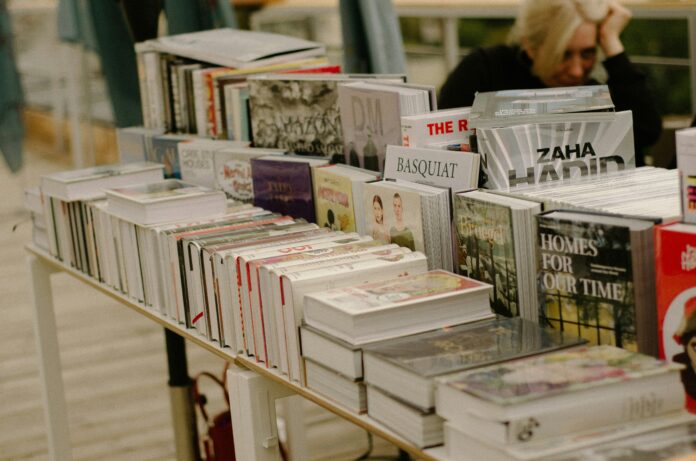
The picture shows a book fair, focused on a few books on and around a table
PHOTO: Kate Bezzubets / Unsplash

By: Ashima Shukla, Staff Writer

From July 4–6, 2025, the Vancouver Arts Book Fair (VABF) returns to the Roundhouse Community Arts and Recreation Centre, bringing you not just knowledge transfer, but also many visions of what a publication can be. It is not just “Canada’s longest-running international art book fair,” but one of the most persistent, having been an annual Vancouver staple since 2012.

Kay Higgins, board chair at VABF and professional development coordinator at SFU School for the Contemporary Arts, attributes this longevity to “stubbornness.” Higgins has been attending art book fairs with her partner since the early 2000s. For her, this work is more than just making and selling books; it is about the intimacy inherent in this physical exchange. “It’s something that has gone from my hands to a stranger’s hands,” she says. 

For Higgins, it is also about self-expression and resistance. Art publishing “can be very, very political,” she notes. “It’s got the potential for you to express ideas that wouldn’t be very viable to express even through a small press.” And yet here they are in our hands: zines, risograph editions, photocopies, hand-stitched booklets, even envelopes. 

“There is so much variety in what we do,” Higgins continues, her passion for publishing evident in her voice. “A book is not just a vessel to put things in. It is a thing in itself,” she quotes from Ulises Carrión’s The New Art of Making Books. As beautiful objects, these publications have a life of their own, and book fairs are vital spaces for this culture of appreciating books to be made and passed along. 

However, Higgins is keenly aware of the limits of space, time, and funding. “We need to be able to do things we haven’t done yet,” she says. Imagining a future where arts book fairs can create broader networks of solidarity with Indigenous artists, those from the Global South, or those making art under oppressive regimes, she admits, “We are still in the infancy of working with Indigenous artists, including artists from the host nations.” This decolonization is not uncomplicated, as some might find even the book a colonial form

However, her work is ongoing. “My vision is that we manage to get everybody a living to produce work that creates meaning,” she shares. Mindful of the tension between these independent cultural spaces and her more institutional roles, she recognizes the limited power we hold as artists and scholars. Yet, she believes learning to work with institutions is a way to triangulate power, to make space for work that would otherwise be impossible. It is personal and political. And it has a cost. 

Yet, artist-publishers from all over the world show up: Brooklyn, Seattle, Tokyo, Eindhoven, Shanghai, Hong Kong. From established names like Art Metropole and Emily Carr/Libby Leshgold, to some of Kay’s personal favourites like Brick Press, Cathy Busby Projects, HOMOCATS, Wendy’s Subway, and more, the fair is packed with diversity. The best part? It is also free to attend and open to all. The books are often affordable, and most exhibitors accept debit and credit payments. 

Higgins first learned about art publishing in her twenties, with creative projects like File magazine by General Idea, which parodied fashion and culture, and Aspen magazine, which came in a box. It was a revelation to her then, that “anything made public is a publication.” That same wonder and sense of possibility is what VABF is about. 

Wander in. Stay awhile. Witness what happens when strangers gather around ideas made tactile. And take something home — a sense of community but also a book or two — a reminder of the long, invisible chain that connects us. No special equipment or knowledge required. Just curiosity and some time. So, head out to Yaletown to see the fair for yourself!


A funeral for my tongue

0
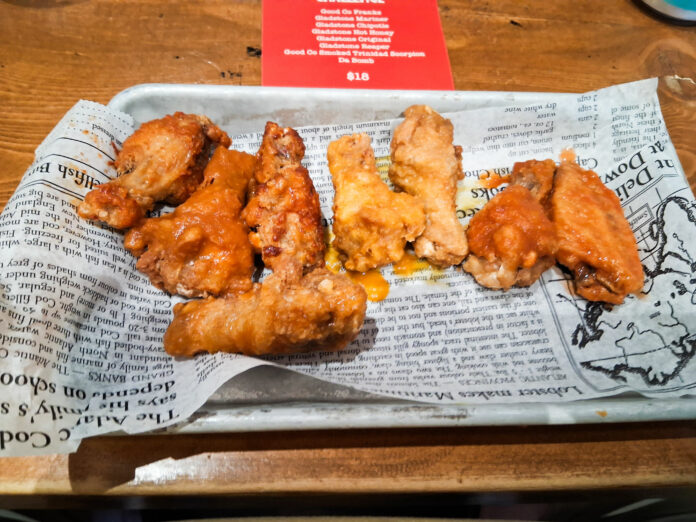
the wings and the menu of the hot sauce coating
PHOTO: Corbett Gildersleve / The Peak

By: Corbett Gildersleve, News Writer

We are all gathered here today to mourn the loss of Corbett’s tongue, lost to us at a ripe young age of 44. Corbett thought himself adventurous, having lived in China for two years where he ate many different types of dishes, many of which were of the spicy variety. The numbing spice of Sichuan peppercorn was no match for him, nor the shredded pork dishes heaped with chilis. So, when one of The Peak’s Editor-in-Chiefs asked for someone to attend a Hot One’s Challenge as a media taster, Corbett foolishly volunteered as tribute. 

On June 7, Corbett arrived at the Good Company Granville, host of the event. It was sponsored by Gladstone Hot Sauce, who provided six of their eight featured flavours. While watching a competition of eager community members, he was provided an eight-piece sampler with a list of hot sauce flavours, ranging from mildest to hottest. What he didn’t know was that the wings were not in the same order. It was a chicken wing roulette!

This poor, innocent man, not knowing the danger in front of him, grabbed the first wing and, after devouring it in seconds, knew he had chosen poorly. Heat filled his mouth like never before. What heat! What betrayal! The ice water . . . it does nothing! Fortunately, the fire faded quickly, and he decided to be more thoughtful in his next choice. Luck was on his side, as the next five were of the mild to medium variety. Some had a sweet honey flavour, while others had a chipotle or sweet Thai chili. Maybe he just got unlucky with the first wing. Maybe that was the hottest. 

Editor’s note: It was not the hottest

“Heat filled his mouth like never before. What heat! What betrayal! The ice water . . . It does nothing!” — Corbett Gildersleve, A poor fool

After biting into the second-to-last wing . . . Pain! Unmitigated pain! 

Corbett went through at least two litres of ice water, which he knew would have no real effect, but it was better than doing nothing. Tears flowed, face muscles perked, and breathing was as heavy as in all those “romance” novels people read now. 

The final wing provided no relief as it, too, was one of the hotter ones — or maybe Corbett’s tongue was so burned that the nerve endings had given up. Either way, he quickly flagged down a server to order a bowl of ice cream, which just so happened to be advertised on a board next to the competition. 

That singular bowl of ice cream was the only source of comfort that day. Corbett left Good Company Granville a broken, changed man. Never again will his tongue be able to taste things the same again. 

Ashes to ashes, dust to dust

Monday Music: A reminder that time is lived in every direction, at every speed

0
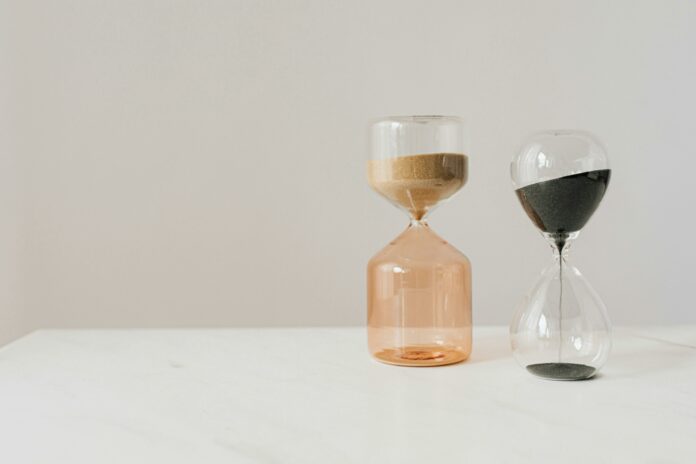
A photo of two sand hourglasses of different shapes against a white background
PHOTO: Karolina Grabowska / Pexels

By: Lucaiah Smith-Miodownik, News Writer

A car comes and goes, the present nestled somewhere between those four wheels. The past lingers in the air like dust on the dirt road. The future is still miles away, or perhaps it has already passed by. Music reminds us that time is lived in every direction, at every speed. A moment stretches on, while days go by in the blink of an eye. A good tune allows us to slip past the illusion of linear existence, and into a world blanketed by the soft understanding that we are more than dots on a timeline. Here are a few songs that humanize what it feels like to live through the passing of time, captivating attention with beautiful melodies and thoughtful lyrics in the process.

“Airplane” by Hana Vu

Do you remember getting older? Can you tell me what it’s about?” Vu delivers a ballad for what once was, or perhaps what could be. With a voice that echoes equal parts longing and apprehension, she blends past with present in a song that leaves listeners simultaneously nodding their heads and tapping their feet while searching for memories yet to happen. “I don’t feel the same as I did when it’s over,” sings Vu, and neither will the listener after hearing this song.

“Pretty Lady” by Tash Sultana

Tash Sultana brings an infectious sound to the often complex dynamics of relationships. Anyone who has struggled to find a balance in communication with their partner, romantic or otherwise, can see themselves in the lyrics. “I’m passing through a lesson learnt in time, but I know we’ve been over this. Why can’t I break through the other side?” Sultana forces us to ask ourselves how many chances we get before our past simply transcends our present, or perhaps the other way around. Still, beautiful experiences are forged when we are with the right person, and it’s times like these that we “try to make a moment last,” as Sultana sings.

“Burn” by Benja and Glitter Party

Time continues to change, regardless of whether we follow suit or remain “frozen thinking everything through.” With gentle voices, Benja and Glitter Party explore what it means to look at what used to be in order to become something new. Calming riffs and tender intonations coax the listener towards a sense of hope and possibility, a reminder that sometimes a better tomorrow is hidden in yesterday, so “today I’ll face my life and make it burn.”

“Forgot Your Roots” by Buffalo Traffic Jam

You lost who you are, forgot your roots and it shows.” Buffalo Traffic Jam confides in listeners what it means to lose yourself through someone else’s eyes. With Caampesque vocals, the duo reminisces on what could have been. But whose fault is it when things don’t work out? Such a question is seldom easily answered. As the song reminds us, the truth is usually a messy combination spanning across people and timelines. Wishing extends its well-worn arms in all directions, pushing and pulling us with it. This is a tune for anyone who finds themselves longing to be anywhere but the here and now.

2025 song of the summer shortlist

0
A composite photo of Sabrina Carpenter holding a dog, a SkyTrain, a photo of Alanis Morissette singing, and someone’s feet.
PHOTOS: Courtesy of @sabrinacarpenter / Instagram, Diego Mazz / Unsplash, @alanis / Instagram, Mehrdad Jiryaee / Unsplash (left to right) EDIT: Gudrun Wai-Gunnarsson / The Peak

By: Ashima Shukla, Staff Writer and Mason Mattu, Humour Editor

It’s June, and the vibes are off. We’re in a climate apocalypse, the billionaires are feeling victimized, the aux cord is haunted, and we still don’t have a song of the summer. Can Benson Boone save us? No. Can the “married in a year in the suburbs” or whatever guy save us? Certainly not. What shall a world-in-collapse do without a unifying bop?? 

We asked our very professional music reviewers, Mason and Ashima, to come up with The Peak’s shortlist for song of the summer! You’re welcome.  

Sounds of Vancouver: The SkyTrain” by CelGen Studios (selected by Mason)
We’re literally being trained like one of Pavlov’s dogs. Even when we’re not in a rush, as soon as we hear the aggressive “NEXT STOP” from our SkyTrain, we’re pushing and shoving like we’re some sort of celebrity. Let’s stay anxious 24/7 with this underrated banger. 

Hand in My Pocket” by Alanis Morrisette (selected by Ashima)
 Nothing screams 2025 like Y2K nostalgia and ungrounded optimism. Let the youth believe “I’m high but I’m grounded” meant microdosing shrooms and ASMR-induced nirvana. 

Who Let the Dogs Out” by Baha Men (selected by Mason)
This song is a public service announcement. Because this summer, we’re hoping NO ONE lets their dogs out. Let me make it crystal clear that NO ONE wants to see unclipped toenails in your Instagram posts. Thanks!!

Manchild” by Sabrina Carpenter (selected by Ashima)
In a world of pastel-Glinda-Grande-conservatism, Nara-Smith-apron-core-delusion, and Sydney Sweeney bath-water-soaps, this song is perfect for the girlies rethinking feminism. Because nothing screams empowerment like performative rebellion and satire that only props up the status-quo.

Welcome to Hell” by Black Midi (selected by our office nihilist
And if you’ve stopped asking questions altogether, this one is for you. Perfect for lying face-down on a hot sidewalk and realising that, this is the summer, babe. No skips. Just censorship, surveillance, and a bonus LSD trip (minus the LSD).