


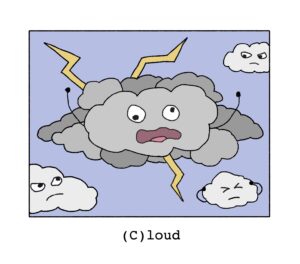
Do you know who this professional athlete is?

By: Greg Makarov, Sports Writer
Welcome to the most challenging and intricate game you’ve ever played. This will test your intelligence, wit, and of course, your ability to use Google search. Will you be able to guess this athlete based on our clues?
-
- They are fluent in French, despite hailing from Michigan
- They started a clothing line named S
- Their favorite song to play during workouts is David Bowie’s “Fame”
- They had a cameo in the movie Oceans 8, and Beyonce’s music video for “Sorry”
- In their sport, two to four people can play at once
- They won their first major trophy at 17 years old
- They have competed at four Olympics (2000, 2008, 2012, 2016)
- They were Sports Illustrated Sportsperson of the Year in 2015
- Their older sibling plays the same sport as them
- They won 23 Grand Slam titles
Did you figure it out?
I’d say this sounds like Serena Williams, wait, hold on, let me check my notes, yup, it sure is!
SFU Hockey continues to win despite time off

By: Greg Makarov, Sports Writer
It is rare to see a team dominate in their respective league for much of the season. But that’s exactly what SFU is doing in the BC Intercollegiate League (BCIHL). The team has come out flying, securing two more wins against UVIC, after having to sit idly for a few weeks due to COVID-19 concerns and Christmas break.
Newcomer Nick Wicks, formerly with the Clarkson Golden Knights (NCAA), reflected on shaking off the rust. “It is always tough to get back into a game situation. You get out there, get the foot moving and start having some fun, and it comes quick.”
SFU’s recent doubleheader on Friday (January 14) and Saturday (January 15) was one of the hardest, made even more challenging by the temporary pause. UVIC was determined to get their first win of the season, while SFU looked to add to their six-game win streak. Both were hard-fought affairs, coming down to the last minutes of the final frame. The much faster SFU team peppered UVIC goaltender Blake Pilon, averaging 40.5 shots per game in back-to-back nights.
SFU also juggled their lines as new faces suited up, including forward Max Lightfoot, from Trinity Western (USports), alongside Wicks. Lightfoot has adapted well and is still getting his feet under him after only playing one game with his new club. Wicks dazzled in his first two games, recording two assists and even some McDavid-esque sequences, decking around three players.
The Peak asked Wicks after the game if there were more flashy moves to come. Wicks cheerfully replied, “When the opportunity is there, and I’m confident I can make a move, I’ll do it — but that doesn’t happen too often.”
These past two games have been extremely entertaining, with hard hits and fast play, yielding many fantastic breakaways and another attempt at the coveted lacrosse goal. SFU has weathered the storm late in games to overcome early goals against them and maintain leads. With a roster featuring the top four scorers and two of the top goalies in the BCIHL, SFU continues to be a step ahead of its opponents.
The Rundown
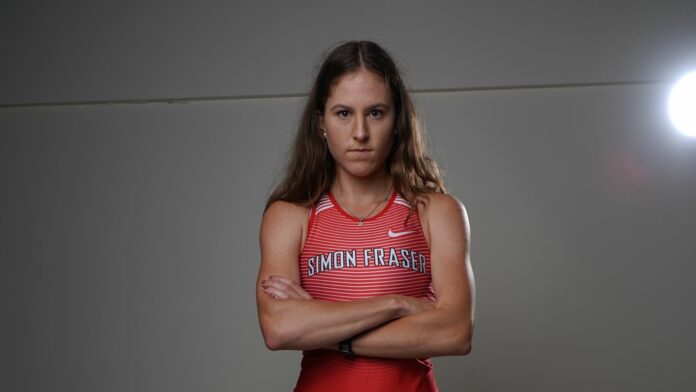
By: Isabella Urbani, Sports Editor
SFU takes home first in the 800m at the first indoor meet of the season thanks to Alison Andrews-Paul.
Date: January 15
There is nothing she can’t do (muscle emoji): Andrews-Paul and the SFU’s 4x400m relay team win. A possible candidate for January Player of the Month?
Date: January 15
HOLD THE PHONE (use emoji instead of writing phone)! Aaron Ahl just ran the second-fastest 3000m in Great Northwest Athletic Conference (GNAC) history.
Date: January 15
SFU swimmer Kaleigh Sharkey (shark emoji) wins three of the seven winning individual races at the women’s latest meet against Idaho.
Date: January 15
SFU loses to Idaho 183–132 this weekend in the pool. They were originally scheduled to take on Washington State, who pulled out due to COVID-19 protocols.
Date: January 15
Rising star (star emoji): Freshman swimmer Isabelle Roth won two races for SFU.
Date: January 15
Make it eight wins in a row for SFU hockey to remain perfect this season.
Date: January 15
Aaron Ahl and Alison Andrews-Paul earn GNAC Athletes of the Week. Do you think they saw our Power Rankings article? (big eye emoji, not just the eyes emoji)
Date: January 17
Men’s basketball edges out Alaska to remain undefeated at home.
Date: January 18
Horoscopes January 24–28

By: Sara Brinkac, Star-whisperer in training
ARIES: One day this semester — when you least expect it — a tall dark stranger will come to you with grave news. Be nice to them, the cemetery industry is pretty dead nowadays, and they’re excited to share this update with you.
TAURUS: Be wary of aimless travellers this week. They have an astoundingly terrible sense of direction and will just bump into you totally unprompted.
GEMINI: Laugh long, loud, and often. People need to know you have the intensity and sense of humour of a Moon God.
CANCER: When one door opens, another door opens too. It’s an odd door based domino effect, I’m not really sure how it works — I think it’s like a pulley system? Anyways — just watch out for your heating bill this month, it’s gonna be off the chain.
LEO: A new romance is in your future. Shit. No. It’s romaine. A new romaine is in your future. I think you’re running low on groceries.
VIRGO: In coming months, you will receive a letter from one close to you — I think it’s an “A.” Maybe think about getting close to your professor.
LIBRA: Big journeys begin with a single step — but so do step aerobics classes. Maybe just try taking a step and see what it starts.
SCORPIO: You will have Good Luck this week. I really appreciate you taking care of him, he’s my favourite iguana. Don’t forget he eats at 9:00 a.m. and 4:00 p.m., I’ll be by on Sunday to pick him up — thanks again!
SAGITTARIUS: The light of good fortune is peaking out from behind the clouds. I suggest grabbing some shades, SPF, and a bottle of water. Your future is going to get very bright very quickly and I’d hate for you to burn.
CAPRICORN: You will be given advice by a star-whisperer in training this week — something to do with bees. It probably won’t be beneficial to you but they’re trying their best ok.
AQUARIUS: The currents of time are flowing in your direction. I don’t know what this means, how they’re flowing, or why now, but I think it’s supposed to be a good thing.
PISCES: I don’t know what to tell you, man. It’s literally just the word “poop.”
The incidence of umbrella-under-awning attacks is increasing

By: Luke Faulks, staff writer
A 2012 study by the Australian Monash University suggested that around 20 people in the area are hospitalized for umbrella-related injuries each year. While the study didn’t identify where most umbrella attacks occurred, through Peak field researchers, the newspaper determined at least 75% of these attacks occurred under awnings.
The same study suggested the incidence of hospitalizations for umbrella-related injuries was highest for children. “People who trundle under awnings with their umbrellas aloft are — unwittingly or perhaps, intentionally — putting Australian children in danger,” says SFU researcher Rainn Shields. “It’s contributing to a phenomenon academics are calling ‘the epidemic of umbrella assaults on Aussies under awnings.’”
Authorities, addressing those who open umbrellas under awnings, argue these people are “upsetting the flow of awning traffic, putting fellow pedestrians at risk, and just flat out hate children.” But if you think these attackers limit their self important umbrella dealings to the infants of down under, think again. SFU is just as susceptible to these assaults as any awning-based institution in a rainy city may be.
Due to campus shutdowns, people were, until now, safe in their homes. But now that students are maybe back on campus, unsuspecting awning enthusiasts risk becoming part of this epidemic of umbrella-related injuries more than ever.
Experts suggest that if you plan on spending time underneath awnings, it may be suitable to bring additional eye projection. Glasses, industrial eyewear, or, a full-on Iron Man helmet may be enough to prevent an outbreak of eye-stabbery. Additionally, experts recommend that children — in particular Australian children — should avoid awnings completely for the time being. Or, at the very least, until a government response to this immoral and senseless violence is enacted.
It is strongly encouraged readers stay vigilant under awnings and report any excessive umbrella usage to local authorities. Remember, these people could be anywhere and anyone — a friend, a family member, even you. No Australian child is safe. Do your part — help stop these (yet to be legally defined as “criminal”) crimes.
Is SFU’s return to campus too soon?

By: Balqees Jama, SFU Student
The SFU community is tired — call it the January Blues, pandemic burnout, compassion fatigue, or whatever you call the kind of anxiety that comes with the COVID-19 pandemic. The university’s recent announcement that SFU will be returning to full in-person learning has been met with mixed responses — relief, frustration, and most notably, extreme apprehension.
Calls for a Remote Semester
SFU claims it’s safe to return, despite healthcare systems being strained, models predicting hospitals being overwhelmed, and experts warning of a collapse. One person who is worried about this return is Vivian Ly, an undergraduate student and executive member of the SFU Disability and Neurodiversity Alliance. Ly commented on a public student Facebook group post and said, “Through the lack of caution, foresight, and even acknowledgement about the risks they are exposing students, staff, and faculty to, SFU is contributing directly to the current Omicron wave and strain on healthcare systems.”
Some Relief for In-Person Learning
Some students are relieved to hear in-person learning will continue this Spring 2022 semester. This is due to mental health concerns and lack of access to adequate tools for a supportive study environment with remote learning. While many empathize with the need for accessible learning, students expressed in-person learning provides a more wholesome university experience. This is something students have been forced to miss for almost two years now.
One student commented on a public Facebook thread in an SFU group, “If I have to pay this much, I expect a better quality education and/or better measures taken to protect students’ wellbeing while providing a quality education.”
Proponents for Remote and Hybrid Learning
Students, staff, and faculty have shared the primary concern of returning right now is safety during the COVID-19 pandemic. Despite SFU’s COVID-19 safety measures in Fall 2021, we witnessed packed classrooms of up to 400 students with little physical distance, people who do not wear masks properly, and poor air circulation in indoor spaces. “The thought of going back causes me nothing but stress,” an anonymous student said in an interview with The Peak. “I had one prof go full anti-vax mode and ask students to take off their masks ‘if they were tough enough’ and students took him up on it!”
Many students on public platforms have expressed pandemic fatigue and frustration, but acknowledge SFU can’t safely return to in-person activities yet. Another student anonymously told The Peak, “By declaring a full return to in-person, SFU is directly telling students — no, we do not care about your well-being nor your families.”
An email sent to students on January 11 sent by SFU vice-president, academic and provost, Catherine Dauvergne, said one of the primary reasons SFU is returning to in-person learning is to alleviate mental health distress associated with remote learning. However, students like Vivian Ly are disheartened by SFU’s priorities. “What about the mental health of people who are being put at risk of getting COVID-19 (and potential mental and physical from self-isolation, long-haul COVID-19, and even death) due to SFU’s negligence?” Ly said. “Even so-called ‘mild’ COVID-19 puts a huge amount of mental duress on a person and their family.”
Additionally, many students shared common experiences of their professors refusing to provide recordings of lectures and other accessible methods of engaging online, and are frustrated the university is not mandating online options. One student said, “Many students I know in both UBC and [SFU] were forced to go to class sick for exams and labs [ . . . ] due to the lack of resources for them when they were sick.”
Staff and Faculty Voice Concerns With Return to Campus
Students and labour unions at SFU share many similar safety concerns. In an email statement to The Peak, the Teaching Support Staff Union (TSSU)’s health and safety commissioner, Katie Gravestock, said, “Many TSSU members do not want to return to in-person on January 24 as they feel it is unsafe for them to do so and they are worried about putting their family members at risk, especially those who live with children under five and immunocompromised individuals.
“Another issue that TSSU members have raised concerns about is the messaging this week from SFU’s president that ‘SFU is an essential service and our services must continue, even in complex times.’
This message and that implication are legally incorrect. It appears that the purpose of this message was to imply that workers do not have the right to refuse unsafe work, which is false. Regardless of ‘essential’ status, all workers have the right to refuse unsafe work. In response, TSSU communicated to our membership that one of their essential health and safety rights is the right to refuse unsafe work. If a worker reasonably believes that performing a job or task puts them or someone else at risk, they should stop working and report the unsafe work condition to their supervisor.”
Faculty members are also calling for greater support from SFU. A 2020 report released by the SFU faculty association and SFU academic women highlights inequities and the invisible struggles and impacts of COVID-19 on faculty, and recommended SFU prioritizes “work from home support” and “developing structural health support.”
While some faculty are eager to return to in-person learning, others are disappointed to see SFU go against the call for safer returns made in a letter released on December 22, 2021, by post-secondary unions. This letter included the Confederation of University Faculty Associations of British Columbia — a union with members of SFU and other universities.
Gravestock said, “Many TSSU members are angry, upset, and frustrated that SFU Administration is not listening to their calls to extend remote teaching and learning, and instead are putting their health and safety at risk by returning to in-person teaching and learning on [January] 24.”
Permanent Hybrid Learning Is the Only Equitable Way Forward
“These hybrid options have been demanded by students with [disabilities] for years before the pandemic,” said an anonymous student. “It’s a disservice to those students who have finally had some opportunity for quality education to have them taken away just because able-bodied students ‘don’t need them anymore.’” The student highlighted able-bodied people still need accessible learning options too, as they may find themselves in unpredictable situations. “Hybrid options mean not just safety, but equity.”
Despite the hardships of remote learning, SFU needs to centre the most vulnerable as BC is surging with the Omicron variant. Students and workers need to direct our frustrations and organizing efforts on the ones who have the power to change it — pressuring the SFU Administration and BC Government — and not fellow peers who have different learning needs. Education should be accessible to all students.
Opinions in Dialogue: Reaching out and Checking in

By: Maya Beninteso, Peak Associate; Kelly Chia, Staff Writer
Over the pandemic, many of the methods we use to interact with one another have become formalized. With quarantine, distanced education, and work, we’ve had to adapt the language we use to build and sustain our relationships. Central to the changing ways in which we interact are the phrases “reaching out,” and “checking in.” How do these phrases make us feel, and how have they affected our lives?
Peak Associate Maya Beninteso and Staff Writer Kelly Chia discuss.
Kelly: I did not take well to social distancing in March 2020. I’d find myself staring at Zoom calls after my lectures had ended, wondering if I should have DM’d my classmates to get their social media. It’s hard to assess your relationships when online because it feels impersonal. So I think having developed the language that we have to describe all of these compounding and unique anxieties is nice, but for me it still feels inadequate.
Maya: I enjoyed lockdown at first. But by the end of March 2020, I found myself missing the world outside of my home and the small interactions that I’d taken for granted. Carrying out friendships online simply wasn’t cutting it for me either. I completely agree that DM’ing my friends felt impersonal and superficial. My friends and I organized Zoom calls — but it just wasn’t the same. I left the calls feeling even more isolated than before.
Kelly: I do admit the break initially gave me time to reflect on how I approached my work and my friendships. There’s also a particular . . . exhaustion with online hangouts through Zoom and Discord. Having only one outlet through which to talk to my friends felt like a burden, making it difficult for me to assess my needs, let alone theirs.
I’ve learned an important part of reaching out is knowing what you need. Do you want advice? Or do you just want someone to listen? Likewise, when a friend reaches out to you, it’s good to ask what they need from you, because you can assess whether you can provide that for them. Maybe they’d even just like to be tagged in a cute video or a meme.
Maya: During the beginning of the pandemic, I was the mental health council president at my high school, which prompted me to feel a great deal of pressure to be the one to “check in” with my loved ones and peers. Don’t get me wrong — I care a great deal about the people in my life, but “check-ins” were often accompanied by a great deal of responsibility and anxiety. I don’t believe anyone should feel wholly responsible for making sure their peers are mentally/physically well — this responsibility is undue. Although I have concerns regarding the term “checking in,” there are also conceptual issues surrounding the idea of “reaching out.” Namely, some find it difficult to ask for help, making “reaching out” difficult for those select individuals. Whatever the reason may be — reaching out can seem daunting.
Kelly: I agree; I don’t think their mental and personal welfare is entirely your responsibility. I remember early in the pandemic, there seemed to be more conversations happening around personal boundaries regarding difficult topics. In my experience, this meant I was having more difficult conversations. I respect that articulating these problems is an exhausting process. But listening without assessing your mental wellbeing can be burdensome, too.
Boundaries are the compromise. I learned that when I was “reaching out,” sometimes this meant asking if it was an appropriate time to talk. Learning how to do this was a bit awkward, as it can be difficult to ask whether a person is ready to listen to some difficult news when you feel like you have no other personal outlets. But it is vital to learn what your peers’ boundaries are to be fair to yourself, and to your loved ones. Sometimes you kind of have to intuit these lines to start — these are personal conversations, and relying too heavily on a template can eclipse the sincerity needed.
Maya: These preferences are entirely personal and contextual but, if you are going to “reach out” or “check in,” I believe clear boundaries should exist. For example, if I were to reach out to someone, I should ask my friend if they are currently in a good, and safe, mental state to help me through a rough patch. Asserting this boundary is vital and can contribute to healthy and non-toxic relationships.
Kelly: Offering a definitive guide of how to reach out is hard. During the pandemic, I was trying to repress so much of my emotions. It was so hard to know when was the right time to share these feelings since I worried about the same things almost daily.
Sometimes, I’ve had to tell friends I need a break in the middle of a hard conversation and when I think I could come back to the conversation. It feels shitty to do. But you and your friends deserve to have good support from each other, and you won’t be able to provide it if you don’t know your limitations.
Nurses need more than just appreciation

By: Charlene Aviles, Staff Writer
In the pandemic’s early days, Vancouver residents cheered for healthcare workers. However, tangible support for them has been sparse. Even in the best of times, nurses have faced staffing shortages and workplace safety issues. While nursing involves exposure to disease, the COVID-19 pandemic has highlighted additional workplace safety issues. Applause on its own is not enough. As nurses sacrifice their safety to take care of patients, they need more support and resources, not overtime hours and exhaustion.
In 2021, there were a recorded 22,400 vacancies, resulting from decades of misdirected policies. From limited nursing school admission rates to the consistent neglect that has led to notoriously poor working conditions, nurses urgently need more support and resources, especially as they continue to battle the pandemic.
During the COVID-19 pandemic, the Canadian Federation of Nurses Unions reported: “Canadian nurses’ average weekly overtime hours increased by 78%.” While employers increase nurses’ overtime to resolve the staffing shortage, this is an unsustainable approach. Nursing staff are stretched so thin that some healthcare facilities are considering asking nurses to come into work despite having tested positive for COVID-19.
Further, an undercover investigation by CBC found that there is no required staff-to-resident ratio in nursing homes. There should be a minimum staff-to-resident ratio. A skewed ratio is recognized to cause increased risk of adverse health effects among all healthcare facilities. As a result, a single staff member is often assigned to multiple residents. Numbers have been reported as high as one nurse for over 40 residents. The overwhelming workload makes it harder for staff to complete their tasks. Excess overtime endangers both nurses and patients’ safety.
Although employers are required to enforce personal protective equipment (PPE) guidelines, during the PPE shortage of the early pandemic, many medical staff were forced to use surgical masks instead of N95 masks — and in some cases no mask. Surgical masks are less effective at filtering airborne particles such as COVID-19.
Improperly protected, nurses run an increased risk of contracting COVID-19 — among many other diseases — endangering themselves and their patients. A 2021 BC Nurses’ Union survey found 36% of respondents had restricted access to proper safety equipment. Inconsistent access to PPE endangers nurses who are already enduring stressful working conditions. Nurses cannot work without PPE, nor should they be expected to do so.
Nurses’ concerns need to be addressed before the nurse deficit drops even lower — 35% of surveyed BC nurses reported they are likely to quit nursing within the next two years, with the number even higher for ICU nurses: 51%. By lobbying to increase funding for medical programmes and staff, training more nurses, and trying our best to not make the pandemic any worse than it already is, we can alleviate some of the issues medical staff are facing. Throughout the pandemic, nurses have consistently shown their dedication to their patients. Let’s return the favour.
SFU’s special collections acquires rare 16ᵗʰ century book

By: Tamanna T., Staff Writer
The Wosk-McDonald Aldine collection in the SFU Library recently welcomed a new addition to its shelves. The collection, established in 1995, acquired the complete edition of letters from St. Catherine of Siena, a patron saint of Italy. The book was published in 1500 and has the first example of the italic style of writing in printed history. The Peak spoke to Melissa Salrin, head of Special Collections and Rare Books at SFU Library, for more details.
According to Salrin, the books were produced by Aldus Manutius, a leading Italian Renaissance publisher. On top of inventing the italic print, Aldus was also responsible for printing classical literature, making it more accessible to readers in the form of books. “Aldus’ intervention freed the text and revolutionized reading; it was now possible for readers to enjoy and interpret these classics on their own,” said Salrin.
Salrin also discussed Aldus’ creativity with typefaces. “He had the first italic type design based on the cursive of scholars of the fifteenth century.” Additionally, Aldus introduced the modern use of the comma and semicolon to the publishing world.
The collection, which has texts mainly dated from 1501–15, has often served as inspirations to those interested in Greek and Latin, as well as “the aesthetics and history of book making,” said Salrin.
The Wosk-McDonald collection was named after donors Morris and Dr. Yosef Wosk, along with book donors Hugh and Jerry McDonald. Salrin said these donors wanted to house their Aldine books at a Canadian university and to build a “twenty-first century library for scholars not yet born.”
SFU’s publishing department, along with the library’s digitization centre, have digitized over 20 titles from this collection. It is considered “one of the three most accessed of all SFU Library’s digitized collections,” said Salrin. “These remarkable works continue to interest and engage researchers and book lovers from all around the world.”
Salrin emphasized this collection’s importance at SFU. “In the over 25 years that the Aldine Collection has been stewarded by SFU Special Collections, they have been consulted frequently by faculty, students, and researchers.
“We’d like to think that Aldus himself would approve of such innovative efforts to make his editions more portable to every kind of reader, whether they can visit campus or not,” said Salrin.
Special Collections and Rare Books is home to an extensive collection of manuscripts, photographs, oral histories, and books, among many other mediums. The collection has different themes, from “20th century ephemera connected to Doukhobor immigration” to “contemporary socio-cultural movements” available for viewing digitally.
The entire collection can be found at the Wosk-McDonald Aldine collection website, where students can access the digitized books.

