Home Blog Page 310

A first strike with Kendo and the SFU Kendo club

0
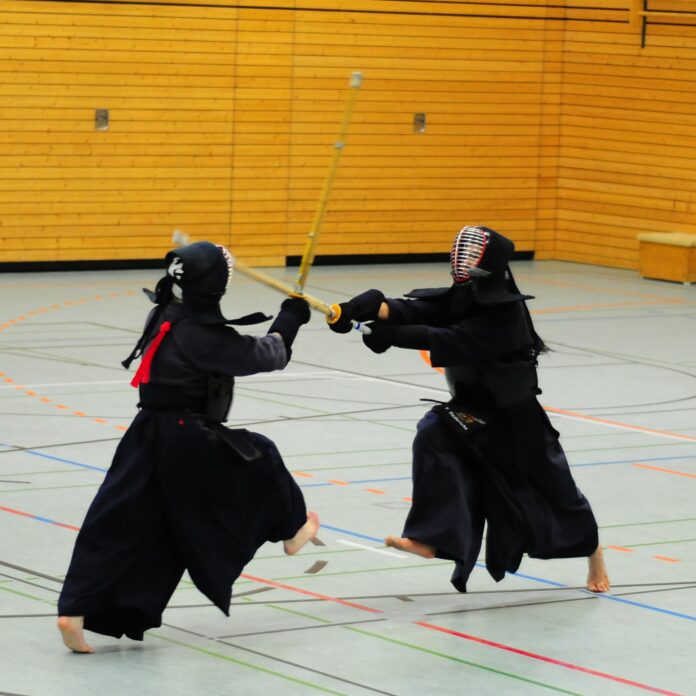
Two people engage in a battle in full armour, wielding their sword.
Kendo cultivates self-development through discipline in practice and tradition through “the way of the samurai.” Photo: B Vi / Unsplash

By: Kelly Chia, Staff Writer 

On September 27, I mustered the courage to message SFU Kendo club president Michael Hong and ask to participate in a class. He readily invited me to practice the following Monday. I didn’t know what to expect, but when I walked into the East gym, I was ready to fulfil a childhood fantasy. 

The SFU Kendo team practices in the East gym on Monday and Wednesday evenings at 7:30 p.m. Right now, masks and proof of vaccination are required to enter.

The instructor, David Chiu, who was referred to as sensei, called everyone into a circle to start warm ups. Former instructor Hirokazu Okusa, picking up on my nervousness, invited me into the circle along with everyone else. Chiu informed me that Okusa had retired, but still liked to come to practice as though nothing had changed. We all bowed to Okusa, as etiquette called for. 

Modern Kendo originated in the Shotoku era. Kendo consists of three central components: sword handling, striking, and mental fortitude.

Okusa, 7th-dan, founded the club back in 2001. Hong and Chiu told me dan in Kendo refers to the rank and experience of the practitioner, starting from 1st-dan to 10th-dan, and only grades up to 8th-dan are awarded in a physical test.

As the advanced members, who were distinct in their navy hakama, gi, and bogu — their uniforms and armor — began to warm us up, I started to adjust to the flow of the class. With my shinai (a bamboo sword used for practice) in hand, Chiu taught me some basic etiquette. He stressed the importance of disciplined movements and respect between sparring partners. 

When greeting your partner, three strides and eye contact are necessary. Chiu said these simple but controlled movements help to keep the sparring polite and limit hastiness. Then, you draw your sword and bow to initiate a fight. Lastly, at the end of the practice, you would thank your opponent in Japanese. 

I found maintaining my focus a bit difficult at times. Holding myself up, and keeping my shinai pointed towards the centre of my body and away from the floor was no easy task. Gratefully, my partner helped me through this process.

After this, beginners were thrust into a series of footwork drills mirroring the movements of the advanced members. I learned to shuffle barefoot as I swung a sword, before moving on to target practice. Chiu taught us how to control and make our movements more precise, so our shinai didn’t waver on the target after it connected. My movements began to look sharper, and boy did my upper arms feel the effect. 

I came away feeling impressed and excited about what I had learned. Being able to discipline my body and mind was extremely satisfying. Plus, it felt fantastic to strike with the shinai. When I approached the club members to ask why they joined, I found they were interested in the sport for similar reasons. 

Some said they were inspired by anime. Others because their parents believed Kendo would help teach respect and manners.

Hong confessed it was “the feeling of fighting with a sword and reenacting the way of the samurai” that encouraged him to join.

Chiu told The Peak in an email interview he joined the SFU Kendo club to live out a childhood dream of fighting with a sword.

“Besides the obvious aspects of sword fighting, I discovered the inner purpose was personal development: etiquette, politeness, spirit, and emotional control,” he wrote. 

“The sparring matches are about developing spirit and learning to deal with your emotions while trying to score points.” For a sport that has precision and discipline at its core, I found Kendo rewarding and fascinating. It was evident how much tradition was infused in the sport. I’m so thankful the club extended an invite for me to participate in a session.

The SFU Kendo club usually accepts new members at the beginning of the school term, but you can send an email to [email protected] if you have experience and are interested in joining. 

Predicting the winner of the WNBA Finals

0
Stadium view of a basketball game packed with fans with the lights dimmed down.
Newly acquired veteran Candice Parker, will bring home the first championship for the Chicago Sky. Photo: JC Gellidon / Unsplash

By: Isabella Urbani, Sports Editor 

For most professional sports teams, the month of October signifies the start of a new season. But for the women of the WNBA, it marks the final stretch of a long and hard-fought journey to raise the championship. Unlike its parallel organization, the NBA, the WNBA season normally consists of 36 games played from midMay to early September. The top eight teams with the best winning percentage, “regardless of their conference,” advance to the postseason.

The two best teams receive a bye, exempting them from the first two rounds and sending them directly to the third round. Similarly, teams three and four are exempt from round one, leaving teams five through eight to duke it out in a single-elimination match. The same “winner takes all” showdown remains for round two. Finally, in the third round, the final four teams will battle it out in a best of five series to determine the final two. 

This year, in an unlikely turn of events, the fifth-ranked team, the Phoenix Mercury, and the sixth-ranked team, the Chicago Sky, are contenders for the coveted championship.

Nothing would be sweeter for the Chicago Sky than to rewrite history and beat the Mercury who swept them 3–0 in the 2014 championship. But toppling the three-time WNBA champions will be no easy task for the Sky, especially after the Mercury single-handedly eliminated last year’s reigning champions, the Seattle Storm

However, the Chicago Sky did not have the 2008 first overall draft pick and WNBA champion Candice Parker during this playoff run. Parker, who signed with the Sky after spending 13 seasons with the Los Angeles Sparks, has had 10 consecutive postseason appearances. She scored 16 of the Sky’s 91 points, in a commanding 91–77 victory in game 1 of the 2021 WNBA Finals.

Not to be outdone, Diana Taurasi is another former first overall draft pick and three-time WNBA champion. When it comes to this year’s WNBA Finals, she has no shortage of experience. Taurasi has played her whole 17-year career for the Mercury and scored 17 of her team’s 77 points. 

The Predictions: 

I have this series coming down to the wire in a deciding game five victory for the Sky in overtime. It would be a mistake to underestimate the Phoenix Mercury, but if they want to even out this series, the offence will need to be spread throughout the lineup, rather than relying on Taurasi and Griner

Game 2: The Phoenix Mercury (98–85) (series tied 1–1)

Whoever wins game two holds all the stakes. Down 1–0 in the series at home, the Mercury will have to win this game to get back in the race. They do not have the same star power as their 2014 championship team to beat the Sky in three straight games with the series heading back to Chicago.

Game 3: The Chicago Sky (105–97) OT (Sky lead series 2–1)

With the series tied and in Chicago, the Sky will pull out all the stops to take a 2–1 game advantage. Game three will likely go to overtime and either Parker or Taurasi will win it for their team. Despite Taurasi having a history of nailing clutch shots in the finals, it looks like this game will go to the Sky. 

Game 4: The Phoneix Mercury (87–73) (series tied)

Game four will be a setback loss for the Sky. Despite their rallying efforts in game three, with their backs against the wall, the Mercury will be relentless on the forecheck and may force the Sky to panic and create sloppy turnovers.

Game 5: The Chicago Sky (80–75) OT (Sky win series 3–2)

In the final game of the series, both teams will leave it all out on the court. In a close defensive matchup, the game will be forced to overtime, and the Sky will capture their first title. 

The Sports Peakbox: basketball

0
A stack of different coloured letters all piled on top of each other.
What is up with all these letters? Photo: Sharon McCutcheon / Unsplash

By: Charlene Aviles, Staff Writer 

Peekaboo! Guess what’s back other than midterm season? The PeakBox! Each week the Peak will answer student submitted questions about sports at SFU. This week, we asked students to pose questions about basketball.

When was basketball introduced?

In 1891, professor Luther Halsey Gulick encouraged his class to create a new indoor sport. Taking up this challenge, one of Gulick’s Canadian students, James Naismith, drew inspiration from other sports including American rugby, English rugby, and lacrosse. Cutting a hole in peach baskets to turn them into a hoop, Naismith developed rules for his sport, such as its playing positions and fouls (penalties). To honour Naismith’s invention, he was inducted into the Basketball Hall of Fame and Canada’s Sports Hall of Fame.

What are the positions in basketball?

The positions in basketball include a center, power forward, small forward, point guard, and shooting guard.

Center: as the tallest member on the team, they use their body to attack the net, and jump up to retrieve defensive rebounds. 

Power forward: they retrieve rebounds and quickly attack the net to maximize a scoring chance. 

Small forward: they use their speed to drive hard to the net for a basket and draw a foul. On defence, they guard shots from the outside to prevent three point attempts.

Point guard: they begin the play and anticipate the opposition’s passes to help their team transition up the court to score. Whether the team transitions to offense or defense, they rely on the point guard for guidance.

Shooting guard: they have a lethal shot and are skilled in defense. They are relied on to be a decoy to open up space on court. Since the opposing team’s defenders will surround the shooting guard, the other team members on offense will have more opportunities to score

When was SFU’s first basketball team created?

After SFU opened in 1965, the first men’s basketball team was introduced. In their inaugural year, they won 17 games

In 1972, a women’s basketball team was formed and competed in the National Association of Intercollegiate Athletics (NAIA) tournaments. In the Women’s Senior “A” League, SFU’s women’s basketball team had a record of 12–5.

Has SFU ever won a title in basketball? If not, what’s the furthest we’ve gone?

No, SFU has not won a title in basketball. However, in the 2009–10 Canadian Interuniversity Sport season, SFU’s men’s team won their divisional semifinals, 2–1, against the University of Regina, but later lost in the final four.

When does the SFU basketball season start?

The basketball season will start in October for the men and November for the women. On October 19 at 7:00 p.m., the men’s basketball team will have a preseason exhibition game against Columbia Bible College in SFU’s West Gym. In the Alterowitz Stadium, the SFU’s women’s basketball team will take on Nova Southeastern University on November 5 at 9:00 a.m.

Were there famous alumni who played basketball at SFU?  

After playing for SFU’s men’s basketball team, Jay Triano represented Canada at the Seoul 1988, Los Angeles 1984, and Moscow 1980 Summer Olympics. According to SFU Athletics and Team Canada, when he started coaching the Toronto Raptors in 2008, he made history as “the first Canadian-born coach in the NBA” and “the first foreign born coach in NBA history to win 100 games.” He is currently the Charlotte Hornets’ assistant coach.

Who is considered the best team of all time in the NBA? 

From their 18 game winning streak to their all-star roster, the 199596 Chicago Bulls set the bar high with their regular season and postseason successes: they won 72 of 82 games and captured the NBA championship. Retired Chicago Bulls guard Michael Jordan (1985–1998) achieved many milestones in this championship dynasty, including winning 6 championships and recording 2,000 career steals.

Want to host a mailbag and get paid for it? Email [email protected] 

Reaching new heights one terrifying step at a time

0
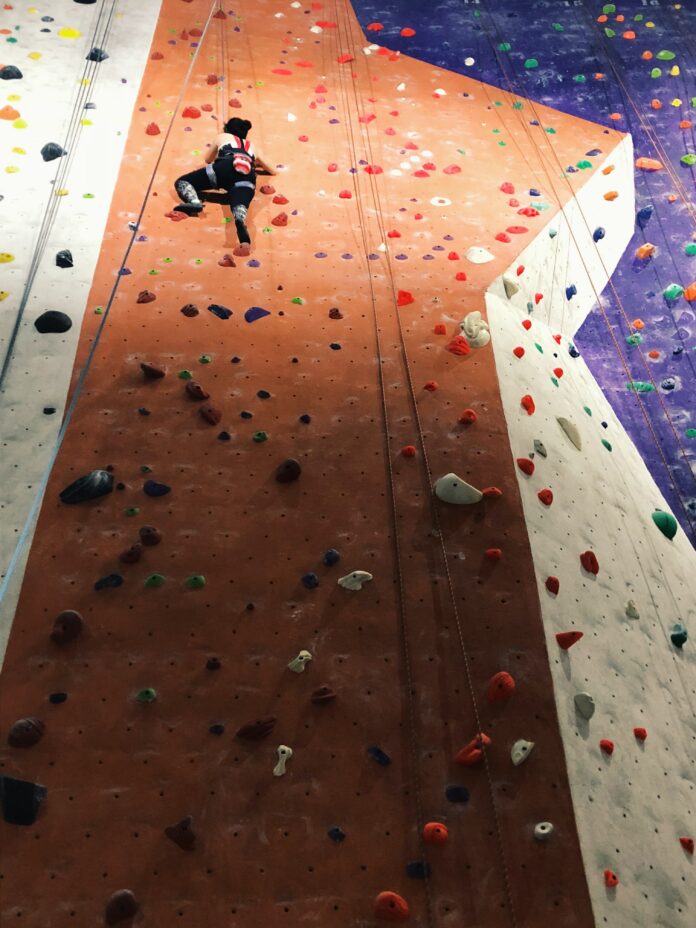
Photo shot looking up at a climber scaling the wall.
Peak Writer conquers her fears and scales the wall. Photo: Stephanie Cook / Unsplash

By: Kelly Chia, Staff Writer 

I first tried indoor rock climbing at the SFU Climbing Wall in 2019. The experience was exhilarating, firstly, because I kept looking down and fearing the wrath of God, and secondly, because I was genuinely having a lot of fun. I remember not being able to grip a pencil in lecture afterwards, and wanting to chase that exhausted but thoroughly satisfied feeling. 

The SFU climbing wall reopened on September 20, 2021, so off I went for another go.

Right now, the Climbing Wall is open from 7:00 p.m. to 9:45 p.m. on Mondays to Fridays. The cost of the equipment and a day pass to climb for students is $15, which is cheap compared to other indoor climbing sessions like the HIVE’s ($25). Students can choose between top-roping (which requires a partner to hold you up) or bouldering (which requires small and more technical movements). Proof of vaccination and masks are required. SFU doesn’t currently offer drop-in sessions.

As my friend and I entered the facility, we were fitted with a climbing harness and shoes, and had a brief orientation about the kinds of climbing routes we could take. The difficulty of the routes scaled from the easiest to the most challenging, all marked by different colours and labels. 

Our instructor, Victor, explained the SFU climbing wall currently offers two different ways to climb: bouldering (no harness) and top-rope climbing (with harness). I am more comfortable climbing higher with top-roping, because it involves somebody holding down a rope attached to your harness. But this week, the climbing wall will have auto-belaying set up, so you can pull yourself down. 

As I alluded to earlier, I’m pretty darn scared of heights and was getting nervous as I approached the wall. But with dance pop playing in the background, I started getting pumped up — seriously, the staff have great taste in music. I found the environment super friendly, with the SFU recreational staff cheering on each climber to go higher. And while there were many beginner-friendly climbs, the harder climbs definitely posed a nice challenge for the friend I was climbing with. 

When I got to my first climb, I confessed my reservations about the wall to my top-roper, Colette. She took this in stride and tied me to the harness, making sure everything was snug. Feeling like a baby deer, as I scaled the wall for the first time in two years, I managed to climb five meters. But with Colette’s encouragement, my baby deer legs carried on.

At that point, I was feeling some strain in my shoulders so I asked to be let down: this involves your top-rope partner pulling you down while you sit on your harness. Admittedly, this was a little scary at first, but Colette definitely made the experience lighthearted, being very reassuring, as I plopped back onto the mats. 

I watched other climbers tackle the walls while I waited. Watching people ascend to the top of the wall was a cool experience in itself. I observed how their feet managed to find footholds, and how they stretched to get higher, and tried to apply this to my next few climbs. I found I wasn’t scared when I was climbing up, though the way down was a bit intimidating when I realized how far I had actually gotten. Plus, the overwhelming support you get from fellow climbers is really encouraging.

The SFU climbing wall also offers a few courses for groups of people, like a top-rope belay class to practice top-roping, and a lead climbing course for advanced climbers with tons of belay techniques. 

Overall, I found the wall to be a fun and inexpensive activity for an evening out with friends. Despite my fears, I found myself pleased knowing that I had challenged myself to go further. 


Kayla Munro, another female athlete making history at SFU

0
Photo of SFU goaltender Kayla Munro smiling for the camera in her gear in front of three SFU jerseys in the background.
Munro earned her team a win against the Okanagan Lakers. Photo: Kayla Munro

By: Isabella Urbani, Sports Editor 

Kayla Munro, SFU hockey goaltender, was born into an athletic family. Her parents were both hockey players, and her mother was even a goaltender. Growing up, her time was spent between rinks, where she learned to skate at an early age, and turf fields to see her older sister compete in softball matches.

As Munro told The Peak, her family was “always doing something. 

“Girls don’t really grow up saying ‘oh, I am going to go to the NHL,’” Munro added, until Manon Rheaume became the first woman to play in an NHL match. She stopped seven of nine shots in the first period of an exhibition matchup for the Tampa Bay Lightning in their inaugural season (199293).

In regards to Rheaume, who became a benchmark for women in hockey, Munro said she was inspired by her to “[be] the best athlete [she] can be.” 

Munro first got a taste for the game when she started playing for the North Shore Avalanche in grade three. Like most goalies, she began as a defenseman, as minor league players are obligated to take turns playing goalie.

After playing for the Fraser Valley Rush and the Junior Women’s Pacific Steelers, Munro set her sights on transitioning to playing with men for the first time at SFU. But a dislocated shoulder — which required surgery — and the COVID-19 pandemic, put her aspirations on hold. Munro used this time to rehab her shoulder and attend goalie camps and clinics.

On September 25, 2021, Munro saw her first start in net in two years as she entered the game for the third period. By the end of the evening, she had made history, becoming the first female goaltender to play in the league. When asked about her return to play, Munro mentioned her appreciation to be on the ice, as practice doesn’t simulate the same game-type experience.

Standing at 5ft6, Munro mentioned playing big to cover more room in the net and adjusting to the speed and strength of the shots have taken some time to get used to.

She credits understanding that “the crease is only so big” as a turning point in her play. Goalie partners Cale Dolan and Michael Lenko have also been supportive, checking in on Munro’s studies and play. 

Munro is not the only woman making history for SFU athletics. Her friend and former high school graduate, Kristie Elliot, made history by becoming the first Canadian woman to score in a college football game. Munro shared the two met up recently with friends and spoke about their successes.

“We are both really proud of each other,” Munro said, blown away by Elliot’s great feat. 

When asked about how it feels to be in the spotlight, Munro expressed she is “very honoured and hasn’t thought about it too much.”

However, she shared a piece of advice for female hockey players: never be satisfied, have faith in yourself, and never stop working.

So what’s next for this history-making superstar? Munro confessed she’s playing it day-by-day. Her studies and her team are the priorities. But “having somebody look up to [her]” and goalie coaching is in the cards. 


COVID-19 spike postpones basketball and hockey games

0
Photo of the Terry Fox Field at SFU with the Lorne Davis Centre in the background.
SFU’s Recreation facility, the Lorne Davies Centre prepares to reopen for students starting January 10. Image courtesy of SFU Athletics

By: Isabella Urbani, Sports Editor 

After opting out of the 2020–21 season, basketball at SFU was finally in full swing for the first time in a year. While the women’s team have travelled south to face competition for most of their season, the men’s team enjoyed a home-court advantage, beating rival UBC for the Buchanan Cup

When the women’s team was able to play their first in-home game, the men had their Idaho and Washington games postponed. SFU Athletics posted a statement by the GNAC, addressing the postponement of the games, identifying health and safety protocols for SFU’s team as the reason. They have yet to be rescheduled. Closures for the men’s team didn’t stop there. Both of their home games on January 6 against Alaska and January 8 against Alaska Anchorage were postponed. The men’s team last played on December 7

SFU’s hockey team, who play off-campus at the Bill Copeland Sports Centre in Burnaby, have also been battling recent surges in Omicron cases. The team’s January 7 game, their first matchup against UBC in 12 years, was postponed until further notice. With seven varsity sports seeing action in the new year — including the season start for the track and softball team — more postponements may be expected. 

Current SFU COVID-19 protocols require proof of vaccination and masks for indoor sporting events for guests and for players, staff, and media personnel. No additional protocols have been put in place. Home games are live-streamed and can be accessed through the SFU Athletics Youtube channel.  

SFU’s Recreation facility is still open. Drop-ins are still not permitted. Students can book a session through the Recreation portal, more details about reserving a session can be found here. The Aquatic Centre re-opened on January 10. The Squash and Racquetball courts, Climbing Wall, and Fitness Centre have a projected reopening date of January 24. Masks and proof of vaccination are required for those 12 and older. Proof of vaccination is not required for indoor youth programs (which can include those 21 and younger). The trial week, scheduled for January 17–21, has been cancelled. 

Students petition for online learning in Spring 2022, others call for hybrid model

0
A student looking worriedly at their laptop
Krystal Chan / The Peak

By: Yelin Gemma Lee, News Writer

An anonymous group of SFU students have started a petition on Change.org campaigning for online learning to continue for the remainder of the Spring 2022 term. As of January 20, the petition has gained over 4,000 signatures out of its goal of 5,000. The organizers cite the rise in Omicron cases and lack of student choice as the main reason for starting this petition.

The petition letter reads, “Due to the severity of the pandemic, the decision that Simon Fraser University (SFU) has made in forcing students back to school in-person, not giving them a choice, and disregarding their discomfort towards in-person education is not an ethical choice.”

Following the petition, on January 20, a student group announced a campus walkout in protest of in-person learning. The walkout will take place on January 24. 

The Peak spoke to Michelle Zheng, spokesperson of the petition group. “We commit to request SFU to reserve remote access to most courses for all the students [ . . . ] We respect everyone’s freedom. But we do not allow the authorities to trespass our freedom from suffering from COVID-19’s danger of health and safety.”

This petition is in response to the SFU administration’s decision to return to in-person learning and teaching following the two-week online learning period at the beginning of the semester. On January 11, vice-president academic and provost Catherine Dauvergne sent out an announcement confirming in-person learning and teaching will resume on January 24. Dauvergne said this decision was based on consultations with the public health authorities and in the best interest of students’ mental health. On January 12, UBC announced they would extend remote learning for “the majority of programs” until February 7. 

SFU student Dilraj Nijjar started a counter petition on January 17 to voice the concerns of students who prefer in-person classes. Nijjar said to The Peak the purpose of this petition is not to ask for a forced return to in-person classes, but rather to keep in-person classes as an option. “We are also concerned about the new variant, but given that majority of us are vaccinated [and] have boosters, our mental health and other factors take precedence in this debate,” said Nijjar. 

According to a data tracker by Global News, 83% of BC’s population aged five and above are fully vaccinated with two shots of the vaccine and 36% are administered a booster shot. 

The Peak reached out to Dauvergne for a statement. 

Dauvergne stated the safety plan is still in place to protect students, as well as “completed extensive work on ventilation systems.” Dauvergne cited the importance of in-person classes and the impact of the pandemic on students’ mental health as reasons to return to campus. “There are a wide range of opinions and preferences for what this term should look like, but we have heard from many students that they are excited to return to in-person study.”

The report also recommended further actions for post-secondary institutions to help relieve students’ concerns amidst the pandemic. It calls for a tuition freeze along with an expansion of mental health resources available to young adults, among many other recommendations. 

Regarding the petition to move the semester online, Dauvergne said its validity was in question as administration was notified of people listed on this petition that did not sign it. Additionally, there have been comments on social media noting concerns of false signatures (such as those of retired faculty) on the petition. Zheng addressed the petition’s credibility in her interview. “I have to first apologize to everyone whose signatures appeared on the list of our petition sent to the authorities without their consent [ . . . ] We have not expected that there were students who input others’ signatures without consent, and we condemn such irresponsible practice.” Zheng said the website hosting the petition has an anonymous setting and the organizers were unable to control fraudulent signatures.

The group has now changed its approach to petition. They encourage students to send emails from their own SFU account to the school’s COVID-19 response team. Zheng said this solution will ensure “no room for anyone who should falsify other’s signatures.”

The Peak spoke to Hannah McGregor, SFU publishing assistant professor and graduate program chair who is offering flexible hybrid course options for her students. These include relaxed deadlines and grading schemes, as well as giving students the choice to access the seminars online or in-person starting January 24. 

McGregor was not surprised by the petition and said everyone at SFU needs compassion and flexibility right now. “Unfortunately, compassion and flexibility don’t work very well within institutional structures, which are often more concerned with budget lines, legal liability, provincial regulations, and labour issues,” said McGregor. “As I understand: the university can’t stay online without the province’s say-so, and the province has evidence-based reason to believe that it is better at a population level for universities to be open and operating face-to-face. 

It’s a difficult situation across the board, one that I don’t think would be solved by a unilateral decision for SFU to stay online but that I do think will benefit from ongoing student agitation for greater flexibility at an institutional level.”

This is a developing story that The Peak may cover in future pieces.

Updates and current expectations on SFU’s return to campus can be found on their website. The petition for remote learning and in-person learning in the Spring 2022 term can both be found on Change.org.

Movies are better without the 3D

0
A guy is sitting in a theatre. He is wearing 3D glasses, and manages to look both skeptical and unimpressed.
Why pay more for a worse experience? PHOTO: Tima Miroshnichenko, Pexels

By: Craig Allan, Peak Associate

Imagine this: you’re going to see a movie that you’ve been looking forward to. You have your tickets paid and your seats reserved. As you walk to the theatre, your excitement growing by the step, you see an unfortunate sight: a theatre employee is handing out glasses. You’ve made a terrible mistake — the tickets you bought were actually for a 3D movie, not a regular 2D movie. 

3D movies have been a novelty item for theatres from almost the inception of film. However, the practice didn’t really take off until the 1950’s when studios were faced with the growing threat of television. Even then, there was some dissatisfaction — famed film critic Roger Ebert also spoke against it. 

The problem with 3D movies is the glasses needed to make the film work filter out light and make the film darker. Additionally, with 3D images, you tend to miss more of the movie because the screen is constantly refocusing your eyes on the images jumping out in front of you. It’s distracting, and makes it less likely for a film to catch you with what really matters: the great stories and characters. Rather than enhancing the movie experience, 3D often breaks the immersion of the film.

Along with being a terrible way to watch a movie, 3D isn’t good for the environment either. Yes, many of the glasses are recycled, cleaned, and repackaged, but the plastic packaging is still garbage. As someone who works at a theatre, I have seen so many children popping out the lenses for the paltry five seconds of fun it provides. I doubt many of those pairs are salvageable.

If 3D is so bad, we might wonder why movie studios still make movies like this. Relying on the draw of novelty, the motivation is in the profit. Converting a film to 3D is usually expensive, but for a blockbuster film like Spider-Man: No Way Home that you know people will clamour to see, it’s safe to expect that the extra expense will be made back, especially with a $3 increase on ticket prices. There are great things about watching a movie in theatres instead of at home. The big screen, the surround sound, the feeling of going out — but 3D isn’t one of them.

Phrases to sound like you’ve done your reading

0
A chalkboard with E=MC squared written on it
You — confident in your participation.

By: Tammy T., Staff writer

Whenever a new semester starts, most of us swear to stay on top of our courses and do our readings in a timely manner, but let’s be honest here — does that ever really work? By week four, we’re already six weeks behind on homework, and some of us (me) start to panic. In an attempt to calm ourselves and save our GPA’s we create an action plan largely centred around that sweet 15% of a participation grade. Suddenly it’s week 10, you realize you haven’t said a single thing in class and your professor only knows you as the person who, in the middle of lecture, got their bag stuck in the door that one time. Well, fear not. I, a professional procrastinator, shall show you, an amateur postponer, how to get those participation grades you so desperately desire, save your GPA, and win back the respect of your parents in just four easy steps.


  1. Tie the topic being discussed to a completely unrelated pop culture reference that your professor will not get. 

An absolute alpha move that works every time. Your professor may know a bunch of nerd stuff but only you know how that nerd stuff is kind of like that one episode of Gilmore Girls. This will not only make you sound like you know your shit, but this is a chance to trick your classmates into thinking that you can make thoughtful connections across texts. Random references will also help you gain the attention of your class-crush who for some reason is sexually attracted to information synthesis. Nothing like a good Suite Life on Deck reference to get the hormones going. 


2.  “Piggy-backing off of Tara’s point…” 

This phrase has been known to have a very high success rate* in classroom testing scenarios and remains a favourite of finance bro’s everywhere. Simply by using the word “piggy-back”  you ingeniously imply that you also meant to say whatever Tara’s point was — she just happened to say it before you. The beauty of this strategy is no matter what you say, you’re getting credit for participation and what was primarily a woman’s contribution. Boo yah bro!

*Success rates are 5% higher if there is actually someone named Tara in your class. 


  1. Consistent nodding and making eye-contact with your professor 

You know what speaks louder than words? Actions. And this magic little action is the silent participation mark no one gives enough credit. I especially like to use it when totally clueless about what’s happening in class — it makes me feel like I know more than everyone else. 


  1. Have excellent argument skills — even when you’re clearly wrong

I’ll let you in on a trade secret: any participation is good participation. Even though your argument might be filled with total inaccuracies and wild assumptions, your confidence will win the hearts of the classroom and marks of the participation. This strategy has been largely championed by The Flat Earth Society, who, despite being constantly disproven, refuse to submit and instead just argue louder. They have clearly girlbossed too close to the sun, and they can’t (or won’t) back down now. Taking inspiration from them, learn to argue about anything, even if it’s wrong, and. Do. Not. Submit. You’ll get those grades you want, even if it comes at the cost of social embarrassment.

What Grinds Our Gears: Autocomplete phrase suggestions

0
A collection of fridge magnets fill the photo. They have words printed on them. Some of the most visible ones are: wet, bug, explore, sorrow, torn, bed, wings, miss.
We have an entire language’s words to choose from; why use the ones given by a computer? PHOTO: Glen Carrie, Unsplash

By: Jacob Mattie, Opinions Editor

Autocomplete this, motherfuckers. 

Despite the various word processing platforms’ increasing propensity for prediction, there was no autocomplete suggestion to the above line — and understandably so. Autocomplete phrasing comes from the collection and comparison of similar text, and is widely supported on most digital platforms, be that on Google Docs, Outlook, or your favourite messaging service. I doubt this opening phrase has been used often.

The immediate result of text prediction is that the most commonly-used phrases become even more commonly used, and interesting language — the words and phrases that we ourselves choose — get lost for the averages. That’s not to say every sentence should be written with funky, unexpected language. Commonly used phrases are commonly used for a reason: they’re quick, understandable, and direct. 

The issue with autocorrect is in how upfront it is. Often midway through writing a sentence, it’ll jump in — were you intending to write “have a nice day?” Well yes, I was aiming for something along those lines. But now that phrase is in my head, I’ve lost my initial train of thought, and feel inclined to write exactly that — “have a nice day.”

The worst part of autocomplete suggestions is that they’re technically great completions. They fit well with the prior phrasing, and are exactly what one would expect to follow. How do we compete with the pleasantly sterile phrasing of an autocomplete? We can’t! All the markers of personality that come from having to write around that one word you can’t quite remember, or the clumsiness of a phrase written amidst dozens of real-life distractions — they’re all lost in a suggestion and a press of a button. 

There’s more to communication than being efficient in the sharing of information. It’s the reason we attend lectures rather than just reading the textbooks — we communicate for the sake of interacting with other people. The presence of autocomplete phrasing in our online interactions takes this away from us. We get enough interaction with aritifical intelligencethrough websites and feeds as is; let’s at least keep our messaging human.