Home Blog Page 307

Iron Widow is a searing debut novel

0
Illustrated book cover of a Chinese women warrior, standing in the centre of the page as the body of a red, orange, and yellow mythical creature twists around her
Wu Zetian, reintroduced. Image: Penguin Random House Canada

By: Kelly Chia, Staff Writer

Iron Widow is a historical reimagination of Wu Zetian, China’s only woman emperor, set in a society and culture that resembles pre-colonial China. Portrayed as an 18 year old girl, Zetian is sent to fight Hunduns, mythological aliens that exist beyond the Great Wall, in mecha suits called Chrysalises. For girls, this is a rite of passage: they fly the Chrysalis with a man, a process that almost always kills the concubine women co-pilots. When Zetian not only survives, but overpowers the pilot that took her older sister’s life, she is paired with a man who is the most powerful and fearsome, Li Shimin, as a means to control her. 

Despite all the action, SFU alum Xiran Jay Zhao’s debut science-fantasy novel isn’t bogged down by exposition. It takes you into a world of fluid, passionate characters who can’t wait to take their vengeance on a deeply patriarchal society, and you cheer for them every step of the way. There’s a violent undercurrent of injustice Zetian moves through, but there’s also sharp-witted humour, which makes the book progress faster. 

Zetian’s anger starkly contrasts her healing relationship with Shimin and Yizhi, who find refuge in each other. When I first read this book, I was worried their polyamory would be an incidental plot device to add some queer diversity into a story. In a lot of YA romance, characters are rushed into marketable love triangles, making the books difficult to read. There are also often blurred lines of consent for teenage characters. But Shimin, Yizhi, and Zetian’s love is touching and doesn’t feel like a device to make the story more dramatic. It’s something that helps them grow and strengthen as characters.

As grounded as the main characters are, they are also quite chaotic: you understand why they do what they do — but they do things to extreme levels. 

Zetian is rightly filled with rage, but the book also shows how much she doesn’t know. And it doesn’t necessarily condone her violence either. The book shows how Zetian, in many ways, is a villain but it also means she doesn’t need to be placed on a protagonist’s moral pedestal.

Zetian unabashedly chooses the hard path of undue justice, even if it means dismantling everything she knows. She sits so comfortably in her rage in a way I’m not used to seeing. 

The revolution Zetian pursues is equally personal and political. In the abrupt process of uprooting gendered power dynamics, there’ll be lasting effects on the very people she’s trying to save. She’s not some thoughtless rage machine, either. She is humbled multiple times. Reading about the world she has to buck against, I really rooted for her. 

Overall, Iron Widow is a riveting read. The magical elements are easy to understand, and they never overshadow the furious beating heart of the story, Wu Zetian. 

If Iron Widow inspires you to find out more about the real Wu Zetian and Chinese history, I highly suggest visiting Zhao’s Youtube page, which analyzes many Chinese media depictions, like Avatar, Mulan, and Over the Moon.

Being COVID-19 safe on campus

0
A picture of the COVID-19 virus.
Whether you have in-person labs or just need to visit for the school wifi, be sure to respect others’ boundaries. Animation / Unsplash

by Gurleen Aujla, Peak Associate

As BC marks its record-breaking fifth wave of COVID-19, you’re probably busy savouring the last few days of winter break and preparing for another pandemic semester. While we continue to learn more about variants and adjust to new restrictions, let’s remember to take care of ourselves and others during this challenging time. Being COVID-19 safe on campus is a shared responsibility and one that begins with vaccination. It is one of the most important acts we can take to protect ourselves and the people around us. Vaccines are free and available to all students, even for those without a Personal Health Number. 

In addition to getting vaccinated, here are six tips for being COVID-safe on-campus.


Stick to the basics

I know, we’ve heard the same few tips for being COVID-19 safe on campus, but that’s because our everyday small actions lead to greater safety for all. Wear a properly fitted non-medical face mask, especially in all indoor public spaces and public transit. It doesn’t do any good if you use your mask as a chinstrap. Your mask should cover your mouth, the bridge of your nose, cheeks, and chin. 

Be sure to wash your hands frequently or use hand sanitizer. Did you know washing your hands “at least five times a day has been shown to significantly decrease” the occurrence of colds, the flu, and other infections?  

Practice physical distancing of two metres or six feet from others when possible. Prepare a personal COVID-safety kit to keep on you at all times, including extra masks, hand sanitizer, wipes, and tissues. Stay home if you’re feeling sick and get tested.


Course COVID-19 protocols 

Familiarize yourself with your course COVID-19 protocols, including how the professor will make the course content accessible to those unable to attend in-person classes if they’re feeling ill or have COVID-19. Will lectures be recorded? Will the lecture slides be posted? If your syllabus doesn’t say, ask your professor.

Read more: COVID-19 protocols should be included in the syllabus.

In addition, clarify what steps a student should take to receive an instructor-granted academic concession alongside the documentation required. Concessions can include “extensions, deferred exams, make-up exams, alternate assignments, or the re-weighting of grades.” You should know how to access these supports before you or one of your classmates needs them. 


Keep an eye on SFU and SFSS updates

As COVID-19 continues to evolve, it is imperative to stay up-to-date on timely and reliable information. Visit SFU’s Return to Campus website for their latest statements, changes to campus services, and the campus safety plan. The Simon Fraser Student Society also has a section on their website on COVID-19 updates for clubs, events, and services, including their food bank program, Out on Campus, and the Women’s Centre. Additionally, be sure to follow @SFU on Twitter for any updates and to check your SFU email regularly.


Respect other people’s personal space 

While there might not be enough room in lecture halls for physical distancing, it’s still important to respect others’ personal space. The pandemic has changed our ways of connecting through having six-foot markers on floors to handshakes and hugs no longer being a commonplace greeting. When in doubt, ask what the other person is comfortable with.

If you’re approaching a friend, give them a wave or simply say “hello.” Otherwise, ask whether it’s okay to bump elbows or hug before you engage. It might feel awkward to you, but it’ll make a world of a difference to people facing these anxiety-inducing situations. On the flip side, try to prepare a response in case someone is breaching your personal space. Try saying “How about an elbow bump instead?” or “I’m going to grab this seat instead, just so we’re all spaced out.” Be polite, but assertive. 

If you’re hopping into an elevator, either wait for the next one or ask whether it’s okay to join the people inside. 

When you’re lined up for something like buying lunch, be sure to give the person in front of you at least six feet of space even if there are no markers on the ground. That is roughly the length of an adult bicycle (and also the length of a dairy cow, which is a much more fun comparison).


Develop a plan for possible exposures 

Lastly, we can abide by best practices for safety but must plan for the worst. In case you or someone close to you gets COVID-19, have a plan in place to ensure you are not caught off guard. 

For testing, visit the BCCDC’s website to find out where your nearest COVID-19 testing location is. 

Your preparation will differ if you live in a shared place, such as with family or roommates. For example, would it be possible for the infected person to stay in a separate room with a separate bathroom? If not, how will the house members manage cleaning and disinfecting high-touch surfaces? Consider having a meeting with your household to develop an isolation plan. 

At home, take stock of what you have. Check the expiry dates of your cold medications, make sure any other prescriptions are filled, and that you have enough household essentials. This could include tissues, toilet paper, hand soap, pantry staples, freezer meals, foods that you like to eat when you’re sick, cleaning supplies, and personal hygiene items. Plan how you will get such items if you cannot leave your house. This can be through friends, family, or a delivery service. 

Lastly, be sure to take a look at SFU’s website for self-isolation support and resources. 


Eating on campus 

The risk of contracting COVID-19 increases in restaurants and bars since there isn’t always a six-foot distance between individuals, there are prolonged periods of being unmasked, and COVID-19 is airborne. While dining in on-campus restaurants, try to use cashless payment methods and take your food to go or sit outside. Also, remember to wash your hands or use sanitizer before eating. 

During class breaks, find an open space, preferably outside and away from others to eat your snack. The fresh air will also do you some good — especially if you’re contemplating grabbing that third coffee of the day.

Senate Meeting — January 10, 2022

0
View of AQ building from the pond
PHOTO: Allyson Klassen / The Peak

By: Karissa Ketter, News Writer

The Senate receives concerns on mental health resources for students 

The Stronger Together Party at SFU saw the student body voice concerns online about remote education. Faculty of Arts and Social Sciences undergraduate representative senator Helen Pahou and member of the party brought these concerns to the Senate. 

The student group conducted a survey to gather information. “As students revert back to online learning [until January 24], a key concern rests on maintaining their mental health. Students have expressed concerns towards the increase of suicide ideation, drug misuse, and drug overdose while furthering their undergraduate degrees online,” said Pahou. 

She noted this risk is most prominent for marginalized students and those who live in inadequate living conditions. 

“Students have voiced prominent dissatisfaction towards the shortage and unavailability of mental health counselors to consult with on so-called ‘accessible’ resources like MySSP [ . . . ] While the pandemic progresses into a second year, students are continuing to lose trust in the effectiveness of the resources set up by our institution,” said Pahou. 

“Does [sic] our executives have any plans to solve the shortage of counselors within our existing mental health resources and does our institution have any updated priorities to protect the mental health needs of our marginalized students?” asked Pahou. 

Vice-president academic Catherine Dauverge noted Dr. Bonnie Henry has strongly urged post-secondary institutions to return to in-person instruction, citing data on how remote learning negatively impacts young adults’ mental health. 

“One of the reasons we are trying our best to be back in the classroom by January 24 is because the evidence is that this is the single most important thing we can do [ . . . ] for the mental health of our students,” said Dauvergne. 

She added that SFU has hired more counselors during the Fall semester and MySSP has hired more Indigenous and Black counselors. 

Dauvergne also encouraged students to reach out to the Multifaith Centre, the Sexual Violence Support and Prevention Office, or the Indigenous Student Centre for mental health resources or support. Currently, SFU health and counselling only offers virtual appointments. 

According to Dauvergne, at the rate students are using the mental health resources at SFU, it’ll be near impossible to implement enough of these resources, “especially as [SFU faces] declining revenue related to the pandemic.”

In SFU’s 2021 financial report, the university noted a revenue of $825 million, a 2.3% increase from 2020. With an expense of $784 million, SFU has a surplus of $41 million. Expenses grew but were “fully covered by revenue, providing a net annual surplus.”

The Senate discusses international student financial aid programs

Senator Daniel Leznoff raised a question to the Senate regarding the amount of financial aid SFU offers to domestic students in comparison to international students. Since the pandemic, SFU has increased their international student support and proportionally decreased the domestic student support. 

“The bursary funding for international students, which is already high, has gone up immensely in the past year or so because the domestic students are able to get support from all levels of government,” said Leznoff. 

He questioned if the levels of funding would return to normal or if international student financial aid would remain higher.

Senator Colin Percival noted “it is anticipated that it will move back in the direction it was before.” He explained this is because, as federal and provincial support programs have ended, the need for financial aid for domestic students is increasing again.

The Senate discusses their open scholarship program

Leznoff also noted a concern regarding the way in which SFU regulates their open scholarship programs — those that are based on student GPA. 

He found some faculties are more likely to have students with higher GPAs. So the open scholarship program — that is based entirely on GPA — is biased towards some faculties who consistently have higher GPA rating requirements to be in the programs. 

Senator Brian Krauth reported alternatives other institutions use is to allocate a set amount of funds to each faculty. However, he also noted “awarding by faculty would actually reduce the number awarded to the hardest grading faculties.”

BC researchers develop material sterilization methods using visible light

0
Blue disposable masks stacked on top of each other
Sterilization technology can relieve stress from lack of PPE equipment in rural communities and lessen environmental impacts of single use plastic. PHOTO: Jievani Weerasinghe / Unsplash

By: Yelin Gemma Lee, News Writer

Researchers from SFU and the University of Victoria (UVIC) have developed a method to sterilize non-woven polypropylene materials using visible light. These materials are commonly found filtering personal protective equipment (PPE) used largely in healthcare settings such as single-use medical masks and respirators. 

The Peak spoke to Tyler Cuthbert, who led this study when he was a post-doctoral fellow at SFU school of engineering science. 

“We were able to take something called a photosensitizer, which can convert visible light into [a molecule] called reactive oxygen species, and we were able to put this specific molecule and attach it onto polymers and materials that are commonly used in healthcare,” said Cuthbert. By inserting a light-sensitive compound developed by UVIC chemistry professor Jeremy Wulff, viruses attached to polypropylene fabric were 99.9% inactivated after four hours under intense visible light.

A polymer is a molecule made up of a series of building blocks connected by bonds. A polymer can be artificially made, such as nylon or plastics, or naturally available, such as cotton or wool. 

Cuthbert explained Wulff’s research group and their chemical insertion method is “typically a difficult process to do from a chemistry standpoint.

“It’s a method that can functionalize relatively any polymeric material that has CH bonds, and that’s pretty much all of them,” said Cuthbert. “The applicability of this to a large variety of materials or products or devices is quite widespread [ . . . ] the potential is there to be able to incorporate these types of advanced materials into lots of different products for potential commercialization in the future.”

Cuthbert explained there are many opportunities for this research to be used in the future to lessen the impacts of viruses on the healthcare industry and supply shortages. 

“The advantage of this kind of technology, looking forward, is that there’s a potential it can eliminate some of the problems with the current subset of PPE infiltration technology which is really just single use,” said Cuthbert. “These materials could be reused after they undergo some exposure to light and the light we’re talking about is visible light so it’s very accessible.” 

Cuthbert said even sunlight could work, although depending on the strength of the light the time it takes to sterilize the fabric would differ. He said this could enable remote communities with limited supplies available to extend the life cycles of PPE rather than having to throw it away or have it go through a harsher sterilization processes.

He added this research could also be used in the future to lessen the massive environmental impact of single-use polymers and plastics. He hopes single-use products such as masks can be resterilized and reused, or recycled and given a new lifecycle.

“Putting advanced technology or advanced material science into some of these commodity products could have benefits far-reaching just the impact of the user but more the environment and how we see the future of the devices that we use to protect ourselves,” said Cuthbert.

This collaborative study is published and accessible online for free on Scientific Reports. 

“Not My Age” set to screen at the 2022 Vancouver Short Film Festival

0
Two Asian women, a granddaughter and grandmother, sit in a green field with the sun setting behind them
Jennifer Cheon (left) and Maki Yi (right) play a mischievous familial duo. Image courtesy of Kaitlyn Lee

By: Luke Faulks, Staff Writer

Fresh from winning Best First Time Director for Short at the Vancouver Asian Film Festival, Kaitlyn Lee’s student film, Not My Age, is headed to the Vancouver Short Film Festival (VSFF).  

Not My Age follows a granddaughter and grandmother who, after the latter suffers an injury, bond over an evening of spray painting. Kaitlyn helms as director, but the short film also features a collaboration between SFU students Cathy Huynh (producer) and Peter Lee (director of photography and Kaitlyn’s brother). 

Kaitlyn’s inspiration for the film came from her fascination with the coming-of-age genre and her desire to do something new with it. The theme of young people in reckless situations was something she felt was a key component to the genre. What she hadn’t seen were the circumstances that would lead a grandmother to repeat her own coming-of-age moment. 

The film highlights a positive intergenerational relationship in a Korean family, which Kaitlyn says pushes back against stereotypes. 

“There’s so many stories about the disconnect between generations in Asian families and Asian cultures,” Cathy added. “I think what’s beautiful about what we’ve done with the short is it’s not about conflict, but it’s about coming together and finding joy within each other and enjoying each other’s company.”

“As I kind of explored the idea of youth and aging more, I saw that it was a more universal idea and wanted to focus more on the grandma and what it would be like to see her doing some of that [wildly] reckless stuff that we see commonly in coming-of-age movies,” Kaitlyn said. 

Although working during a pandemic was challenging, the Not My Age team says their experiences on student film sets helped inform the project. Peter believes the supportive environment among cohorts in SFU’s film program also helped. “Not only do you get to learn a lot of skills from being on these upper year sets [ . . . ] we get to see all sorts of different scales of projects,” he said.

On top of “organizational aspects, making sure the shoot happens, getting locations together, and working through finance,” Cathy found Zoom auditions presented a hurdle. She lamented the process, saying auditions are scary enough without the added stress of having to do them “in such a weird format.” Fortunately, the actors’ chemistry, even over Zoom, shone through. “When we saw them just interact and read through the scene, we were like ‘we’ve struck gold,’” said Kaitlyn.

For students looking to get their own projects off the ground, Peter said, “don’t be afraid to take the first step, and if you can do it with a partner, even better.” 

VSFF 2022 is available online January 28–February 6. For tickets to see Not My Age, and more, visit VSFF’s website.

SFSS Election 2022: What to know about each open position

0
Multiple people with no face are sitting around a beige table. Behind them is the logo of the Simon Fraser Student Society.
ILLUSTRATION: Irene Lo / The Peak

By: Luke Faulks, Staff Writer

The Simon Fraser Student Society (SFSS) elections are here once again. Led by SFU students, the SFSS works to represent and advocate for fellow students. Some of the ways they do this are by managing student spaces, the extended health and dental plan, the U-Pass program, the university’s free legal clinic, and an emergency food bank certificate program. There are seven positions available on the SFSS Executive Committee that any SFU undergrad can run for. We reached out to some current members of the SFSS to give us the rundown on what each position entails.  

  1.     President

This year saw the resignation of SFSS president Gabe Liosis and the temporary appointment of vice-president internal and organizational development Corbett Gildersleve in his place. Gildersleve’s term will end on May 1, when the next elected president commences their term.  

The president chairs various meetings and is required to ensure all SFSS members’ compliance with organization policies, including “collective agreements, employment contracts, and staff relations policies.” As the SFSS’ highest-ranking member, the president is expected to represent the organization in communications with the general public, SFU students, and at formal events. 

If necessary, the president will also communicate with legal counsel. 

  1.     Vice-president internal and organizational development

Candidates with a zest for policy may enjoy this role. In an interview with The Peak,  Gildersleve said what excites him about his role are “policy updates and policy reviews to make sure our rules are working and doing the job.” When it comes to any event, he said “you have to think about the SFSS system, what does that look like, what are the logistics needed to get that going?”  

Gilversleve highlighted the VP’s role in developing a training system for the executive development of councillors. It’s a practice that had been worked on for several years, culminating in a fully-formed program this year.

This past year, the Governance Committee (focused on SFSS constitutions, bylaws, and Board policies), under the VP’s guidance, made recommendations for the establishment of a Black, Indigenous, and people of colour committee, changes to the SFSS privacy policies, changes to the SFSS elections and referenda policies, and more. The committee also performed several reviews of the SFSS’ structure aimed at informing those recommendations.

  1.     Vice-president finance and services

The crux of this role is to oversee the finances and commercial endeavours of the SFSS. Current VP Almas Phangura said a regular day can involve meeting with the “bank, investors, and financial coordinators,” and communicating with student services “like TransLink and StudentCare.”

This last term saw an effort to make the SFSS’ finances more transparent for students. That work is reflected in the 2021 annual report for the Annual General Meeting (AGM). The report offers a snapshot into some elements of this VP’s portfolio. Some highlights from Phangura’s term included

  • WUSC x SFSS Scholarship;
  • Afghan Scholars Funding Disbursement;
  • Financial Report and Presentation at the AGM;
  • SUB Soft Opening Consultation Group, and;
  • A Financial Audit. 
  1.     Vice-president university and academic affairs

This role is intended to lobby the university on undergraduate students’ behaviour. This lobbying can take many forms, from communicating between the Board and the university, to organizing students’ involvement and collective action. They’re also asked to recommend policies related to university-undergraduate relations. 

This year, the VP’s university and academic affairs committee undertook several projects, including:

  • COVID-19 Town Hall for students;
  • P/F grading scheme in recognition of the rigours of the pandemic on students;
  • Support for the Burnaby Mountain gondola project;
  • Advocating an end to invigilation and proctoring software for online exams;
  • Researching reforms to end “sick notes” as a barrier to student success, and;
  • Creation of the Student Wellness Working Group aimed at bolstering students’ mental health.
  1.     Vice-president external and community affairs

The VP external and community affairs is responsible for communicating and coordinating with “external groups, community organizations,” and lobbying the government on behalf of undergraduates. According to current VP Matt Provost, this outreach can also take the form of “digital campaigns” to raise awareness, which have been a highlight of his time on the executive committee.

One of the best parts for Provost is the position’s ability to help groups in need. He cited the group’s response to last year’s disastrous flooding in BC, which saw $10,000 raised to support the affected areas. In this situation, the VP organizes partners to support and contribute to the project. 

The outreach to external organizations, including the government, doesn’t just consist of lobbying. The role demands “listening to [the community] and then communicating back to Council.” This includes collaborating with groups in need of assistance, or institutions that “have a direct or indirect impact on the society and its members.” 

Provost also said research is a key component of the role, such as researching ways to “build community relations” and support students. 

  1.     Vice-president equity and sustainability

In the newest role on the SFSS Executive Council, this VP is responsible for communicating with groups “representing marginalized communities on behalf of the society.” On the flip side, the VP also partners with SFU offices to work on raising awareness and eliminating discrimination. Like the VP external and community affairs, this role revolves around outreach, with a more pronounced social justice lean. The VP is expected to represent the SFSS on issues of anti-discrimination and climate justice, as well as lobby public and private institutions on students’ behavior. 

The 2020–21 SFSS Annual Report flags several advocacy projects undertaken by this group’s first VP, Marie Haddad. This includes support for student movements like the changing of the SFU Athletics “Clan” name, the Let Us Speak campaign, and the #StudentsDeserveSpace campaign. Issues like community safety and Trans-Mountain expansion hazards are also in the VP’s portfolio. 

Internally, the VP is responsible for holding “anti-oppression training within the first semester of the elected term” for SFSS directors and staff, and is asked to make policy relating to “equity, anti-oppression, disability justice, anti-racism, sustainability, and climate justice.”

  1.     Vice-president events and student affairs

As the executive group’s primary events organizer, COVID-19 has significantly changed the job. The remote nature of this position isn’t the challenge, but rather the speed at which COVID-19 changes. Being online, then sporadically in person, leads to plenty of rapid shifts in planning. This past term, current VP events and student affairs Jess Dela Cruz, said a significant departure from years past has been never having to manage a building during an event, due to the preponderance of events being held online.

That’s not to say the role hasn’t been busy. The VP’s portfolio includes management of student affairs, which has been the focus of the last year, like giving out free things to students and “donation drives for the flood.” The role also includes overseeing student unions and constituency groups’ participation with the SFSS. 

In 2021, the Events Committee, overseen by the VP, organized many events, including:

  • Black History Month;
  • Anti-Racism Workshop;
  • SFSS Trivia Nights;
  • Pet Yoga with SFU Recreation;
  • Tidy Tuesdays;
  • Social Media Giveaways.

Each current member interviewed said meetings and emails are a big part of every day. Communication skills between fellow executive members, Board members, other student groups, and SFSS staff are essential to keeping an organization moving forward. While staff members’ jobs follow regular hours, executives’ roles can take them into late or early meetings. Those interactions with staff and fellow members, said Dela Cruz, are a highlight of an executive’s job. 

Another aspect of SFSS executive life raised by each interviewee was the challenge of relearning their positions as student life oscillates between in-person and online learning. Hoping for the pandemic to ease off, SFSS executives are hopeful the next set of executive committee members will enjoy greater consistency in their positions. 

With respect to salary, every executive and non-executive councillors receive a flat stipend. According to Gildersleve, executives are currently paid $1,050 twice a month, and non-executives are paid $175 over the same period. In May, those stipends are set to increase to $1,170 and $195.

In this election, each of the above positions has posted a vacancy. For students looking to make a difference on campus, have an impact on external communities, lobby the government for change, or help trim organizational bureaucracy, it may be worth throwing your hat into the ring. To enter, students must fill out a nomination package and email it to [email protected] by no later than January 31.

Food for Thought: Pancit canton

0
Person in thinking pose with a thought bubble overhead featuring an image of pancit canton
Long noodles, long life. Illustration: Alyssa Umbal / The Peak

By: Charlene Aviles, Staff Writer

Pancit canton is a stir-fried noodle dish with seafood and vegetables. The flavours of shrimp, soy sauce, and black pepper are a standout. The dish’s history traces back to Chinese traders, who brought it to the Philippines. Its name is derived from the Hokkien phrase pian e sit (“conveniently cooked”). As the demand for cigars grew with Spanish colonization, Filipinx factory workers had to work more and turned to quick meals like pancit canton. From there, restaurants popped up around the country to meet the demand.

Since I come from a big extended family, birthdays are extra special celebrations. Before COVID-19, my family flew to the US to attend birthday parties, giving us a chance to catch up with everyone. One birthday tradition we had was eating pancit canton together.

Our relatives show our love to each other through food. As soon as you arrive at a party, all the elders ask, “Have you eaten yet?” When I hear this question, I automatically feel at home. It’s not an official birthday celebration without pancit canton. Growing up, my mom would tell me the long noodles represented long life. When you serve someone a bowl of pancit canton, you’re essentially saying, “I hope you have many more birthdays to come.”

Due to COVID-19, I’ve been unsure about when I’ll get to reunite with everyone. Pancit canton brings back the nostalgia of childhood parties. Whenever I take a bite of the noodles, it makes me hopeful we’ll get to see each other in-person again soon.

Here’s how to cook pancit canton, according to the blog Panlasang Pinoy:

You will need:

  • 10–12 snap peas
  • ¾ cup carrots, julienned
  • 1 piece cabbage, chopped
  • 1 piece onion, sliced
  • 1 tsp garlic, minced
  • 4 oz pork, thinly sliced
  • 1 piece Chinese sausage, sliced
  • 3 tbsp soy sauce
  • 1 tbsp oyster sauce
  • 1 ½ cup chicken broth
  • 8–10 shrimp
  • ½ cup parsley, chopped
  • 250 g flour stick noodles 
  • Salt and pepper to taste
  1. Boil six cups of water.
  2. For 35–50 seconds, blanch peas, carrots, and cabbage.
  3. Put the vegetables in ice water for two minutes. Then, drain the water.
  4. Sauté onion and garlic.
  5. Sauté pork and Chinese sausage.
  6. Add soy sauce and oyster sauce.
  7. Add chicken broth, ¾ cup water, salt, and pepper. Let it cook for 5–10 minutes.
  8. Add shrimp. Season with parsley. Cook for three minutes.
  9. Add flour stick noodles. Toss until they absorb the liquid.
  10. Add blanched vegetables. Toss. Cook for one to two minutes.

“I Cannot Lie to the Stars that Made Me” is a loving dedication to community

0
Four people huddled together, leaning into one another with content expressions on their faces. All except the one on the far right have their eyes closed.
Stars is both tender and resilient. Photo: Kimberly Ho

By: Kelly Chia, Staff Writer

Content warning: Explicit mention of suicidal ideation in the fourth paragraph

When I first listen to the ethereal harmonies introducing Catherine Hernandez’s I Cannot Lie to the Stars that Made Me, I feel a sense of belonging. It’s as if I was invited right into the play: a warm campfire where “a grieving young mother [ . . . ] shares stories with her fellow women of colour” under the night sky. Adapted by SFU alum and the frank theatre’s director, Fay Nass, this musical explores themes of resilience, lust, and the intersections between poverty and race. While the play has a lot to offer, the discussions of trauma may be triggering for some listeners.

In three acts, these women come into their grief, embark on the fraught journey of healing, and endure the honest difficulty of this process. Stars features Lili Robinson as the young mother; and Anjalica Solomon, khattieQ, and Emily M. Cheung as Robinson’s supporters. The grit of healing — like salt over wounds — permeates throughout the play in their raw confessions. But what draws me is how the women laugh, cry, and soothe their way through it. It’s truly a joy that shines like stars.  

The audio play’s first song is meditative, beginning with deep breathing. “And so I hold my sadness in the palm of my hand, its tail between my fingers so that it can no longer escape me,” Robinson sings, her voice hushing towards the end. Cheung and Solomon join in crescendo, “So I can tell it to fuck off, for I’m ready to be happy!” 

These lines feel emblematic of the play — there are many moments when a woman describes the impossibility of overcoming grief and being vulnerable. Struggling with postpartum depression, Robinson’s character talks about the difficulty of finding a counsellor while living in a shelter. But what follows those gut-wrenching moments is the supportive women around her, giving her strength to be resilient.

The play is deeply uncomfortable sometimes, reflective of the vulnerability of the women’s stories. Robinson’s character talks about the dissonance of feeling empty while her son seems so full of joy. “It made it easier that he had my eyes, so it looked like a happy version of me, discovering the world while I worried,” she says. Robinson’s delivery of this monologue about raising her carefree son while processing trauma is heartbreaking, but necessary as it highlights an issue often unacknowledged. 

Eventually, through the raw moments of struggle, the women find some respite in themselves and each other. This culminates in the final song, when they breathe deeply together. In their speech about burning away their pain in the campfire, they say to the universe, “Let the stars that made me know they have made a goddess.” 

As a listener, I was invited to sit with these women and reflect on my struggles. When they let go of their hurt, it felt like a release. Stars made me reflect on the people I’ve learned to trust to hold my pain and how grateful I feel in my community, in my strength. The play beautifully embodies reverence and reassurance in one’s self. It is a dedication to the importance of community. 

Listen to I Cannot Lie to the Stars that Made Me on Soundcloud. Content warning: play contains mentions of sexual and partner abuse, drug use, self-harm, and poverty. To stay updated with the frank theatre’s projects, follow their website and Instagram.

Shirin Anjarwalla and Ryan Stolys share their goals for the season

0
A photo of SFU golfer Shirin Anjarwalla posing for the camera in her SFU polo with a golf club behind her back.
Anjarwalla and Stolys both had unique stories to share about the team’s recent trip to Hawaii. Photo: Jacob Hall / SFU Athletics

By: Charlene Aviles, Staff Writer

Shirin Anjarwalla

Pronouns: She/her

Major: Kinesiology

Favourite golf player: Rory McIlroy

Shirin Anjarwalla is a sophomore on the SFU women’s golf team. At 14 years old, she won the 2014 BC Juvenile Championship. In an interview with The Peak, she described her goals for the year and her experience at SFU’s latest tournament in Hawaii from October 25–27.

Anjarwalla’s love for golf first blossomed after watching her older brothers play, and she quickly joined them at age seven. SFU’s friendly golf coaches and teammates — who she had previously played with — played a key role in her signing with the team. 

The life of an athlete requires patience and discipline, especially when things aren’t swinging in your favour. 

“Having the rough days keeps me motivated, days where I’m not performing well or if I’m not playing my best, because I know my potential and I know where I can go with golf,” said Anjarwalla.

Anjarwalla’s goal this season was to “finish top 10 in every tournament.” She did so at the first tournament of the season with her second place finish.

In October, Anjarwalla competed in the Hawaii Hilo Dennis Rose Intercollegiate meet. She laughed as she described her team’s mix up with their schedule.

“On the last day of the tournament we ended up teeing off two or three hours earlier than we originally thought, but we didn’t know this. So we got a call from our coach saying that we had to get to the golf course right away [ . . . ] We barely had our hair done. None of us warmed up.” Despite the rushed start to the game, she believes they “played better because we weren’t overthinking.”

Anjarwalla has also learned to change her game style to improve technique and land more shots, opting to use her right hand as a left-handed player. 

“There’s more than one way to play golf. It’s not a perfect game. I sometimes get caught up in needing to hit the ball perfectly or needing to finish the hole in the way it was meant to be finished,” said Anjarwalla.


Ryan Stolys

Pronouns: He/him

Major: Computer engineering

Favourite golf player: Jordan Spieth

Ryan Stolys is a junior on the SFU men’s golf team. In an interview with The Peak, he reflected on how he’s tackling new landscapes and striving to be a better athlete.

His golf journey began when he was “cut from [his] soccer team,” prompting him to begin playing golf at a summer camp, which eventually led him to signing with SFU in 2016. 

At 18 years old, Stolys won the 2016 CJGA Nike Junior Golf Championships in Hamilton, Ontario. SFU’s great combination of athletic and academic opportunities motivated him to move from Richmond Hill, Ontario to sign with the men’s golf team.

Stolys also competed in Hawaii with the men’s team. His highlight of the three day competition was experimenting with a new landscape. He explained the Hawaiian golf course had black lava, which was completely new to him.

“The lava is unplayable, meaning wayward shots would be penalized more than the same shots would be at courses locally,” explained Stolys.

Reflecting on previous advice he received, he explained he keeps in mind “there’s always someone better.” Only five out of nine players on the men’s team are sent to tournaments. 

“Having that drive to improve yourself is particularly important, because when you’re competing [in individual sports] there’s no one out there to lean on. Every single thing that happens out there is your responsibility,” said Stolys.

Stolys hopes to make the most of this season by helping the men’s team win regionals and nationals.


So long 2021 and its sports teams

0
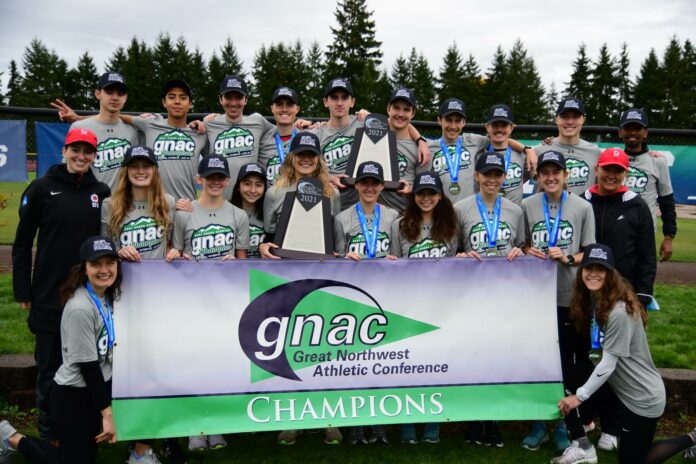
A photo of SFU's cross country team holding the GNAC Championship banner after winning.
SFU’s cross country team racked up the most hardware this season with a conference and regional title. Image courtesy of SFU Athletics

By: Isabella Urbani, Sports Editor

As 2021 comes to end, so does SFU’s fall sports campaign. Let’s take a look at how SFU fared this year and which teams still need to wrap up their season.

Football

Head Coach: Mike Rigell (2020–present)

2021–22 Overall Record: (1–7)

SFU’s football team capped off their season on November 13 with a 0–70 loss against Central Washington University. Among the highlights for this year was head coach Mike Rigell’s first win, the first year playing out of Terry Fox Field, and kicker Kristie Elliot becoming the first Canadian women to score a point in a university football game. Elliot made three out of her five field goal attempts this season. Sophomores Jerrell Cummings (defense) and Riley Morrison (offense) made the Great Northwest Athletic Conference (GNAC) Team

Cross Country

Head Coach: Brit Townsend (1998–present)

Accomplishments: GNAC Championships (2), West Regional Championship 

SFU’s cross country teams dominated the fall season, bringing home two championship banners. The women’s team remained undefeated the whole season until the NCAA Championships, which they qualified for with their regional championship. The men’s team had a strong showing, placing in the top three in each regular season meet. They claimed their first ever GNAC Championship with the help of Aaron Ahl’s first place finish. The men did not advance to the NCAA Championship after their eighth place performance at the regional championship. Head coach Britt Townsend walked away with West Region Coach of the Year, while five SFU runners were named to the West All-Region Team, including GNAC Athletes of the year, Olivia Willett and Aaron Ahl. 

Soccer: Women

Head Coach: Annie Hamel (2014–present)

202122 Overall Record: (5112)

The women’s season came to a close after a nail-biting loss to Seattle Pacific University in the semifinal of the GNAC soccer championship. SFU qualified for a playoff spot with sophomore Giuliana Zaurrini’s double overtime goal against Western Oregon. SFU fell behind early against Seattle after two goals against SFU goaltender Nicole Anderson, who made three saves in the game. Freshman Annika Gross was able to put SFU on the board with a late tally in the 77th minute, but it was not enough to topple Seattle Pacific University. Captain Emma Lobo earned a spot on GNAC’s All-Conference Second Team. 

Soccer: Men 

Head Coach: Clint Schneider (2015–present)

202122 Official Record: (97)

The men’s soccer team came up just short of a playoff spot, finishing two points behind Seattle Pacific University. Only the conference champions advance to the NCAA Championship. The team won three consecutive GNAC championships between 2016 and 2018. The men’s season came to a dramatic finish on senior night with a 21 overtime win. SFU defeated third place Western Washington University after their opponents scored on a penalty kick with six seconds left to tie the game up. Junior Conrad Cheng, freshman Simone Masi, and sophomore Mark Talisuna earned a spot on the All-West Regional Team. Cheng also earned GNAC Newcomer of the Year. Senior Aidan Bain was named to the CoSIDA Academic All-District First Team


Still in the hunt: 

Volleyball

Head Coach: Gina Schmidt (2013–present)

Record: (17–8) 

The women’s SFU volleyball team finished the regular season with a respectable (17–8) record. At one point in the season, the women went on a seven game win streak, beating the University of Alaska Anchorage and Central Washington who sat higher than them in the conference standings. They are still in the hunt for the NCAA Championship, but they will have to beat Western Washington in round one this Wednesday. SFU lost both its matches to Western Washington (21–4) earlier in the season, who are currently on a 16 game winning streak. SFU’s Brooke Dexter won GNAC’s Freshman of the Year and sophomore Kalyn Hartmann and captains Julia Tays and Bianca Te made GNAC’s All-Conference Team