We’re failing to tackle the root causes of mental illnesses. Photo: Jonadan Cheun / The Peak
By Meera Eragoda, Features Editor
One in three Canadians are likely to experience a mental illness in their lifetime. In 2020, pre-pandemic, The Tyeereportedone-third of Canadians had been diagnosed with anxiety. Additionally, one-third had been prescribed antidepressants. Since the pandemic, CBCreported54% of Canadians felt their mental health has worsened. Given the scale of the problem, when do we recognize it’s not an individual but a systemic problem?
There are many reasons why your depression and anxiety may not just be your problem. As mental health provider Madeleine Ritts writes for Jacobin, declining mental health is the inevitable outcome of an exploitative capitalist system. Case in point, a 2022 report released by the Intergovernmental Panel on Climate Change found that climate change negatively affects mental health, with impacts being felt disproportionately depending on intersecting vulnerabilities, like race and class.
If you can’t afford to rent or buy food or live or barely make ends meet, doesn’t it make sense you would feel anxious and depressed? If there’s a war going on in your country or you’re targeted by state forces, doesn’t it make sense you would be anxious and depressed? If you’re living through climate disaster after climate disaster, doesn’t it make sense you would be anxious and depressed? Instead of us being sold the idea that we need therapy or we need to medicate, perhaps the real solution is to stop war, to give people basic needs, address multiple isms, and to ensure we will all have a world to live in?
Capitalism and colonialism’s cycles of extraction and oppression are sending us hurtling over the cliff’s edge of climate destruction, all while we’re being told there is something wrong with us. We need to recognize what we’re being told may not be the whole story and to hold leaders of every institution accountable to make wide-scale changes.
Now, I’m not saying that mental illnesses are not real (they are) but perhaps the scale at which they are proliferating is indicative of something beyond individual issues. I’m not saying we should stop advocating for low-cost access to counselling, medicine, and other supports. After all, we still have to live under late-stage capitalism and its intensifying series of crises — most recently, climate change and COVID-19 — which affect certain communities disproportionately. But while we advocate for these, we should also recognize that a capitalist system will demonize and dismiss anything that goes against its ability to extract and profit to create the illusion that it is not the problem.
The late Marxist blogger Mark Fisherexplained that capitalism creates a problem, offsets that onto individuals, and sells them the solution. Fisher suggested capitalism causes instability and oppression that people can’t cope with. As a result, Fisher argued capitalism prompts people to believe there’s something wrong with their neurochemistry. He added they can solve it by paying pharmaceutical companies and therapists. Fisher explained that because of this, “any question of social systemic causation is ruled out.” All of this prevents examination of the wider systemic causes of the problem and maintains the status quo for those in power.
While we should continue to fight to lower barriers to accessing mental healthcare, we equally need to fight against the systems that cause such high levels of stress to our mental health. This fight starts in our communities — whether at home, at school, or in our workplaces. As sci-fi author Ursula LeGuin famously said, “We live in capitalism. Its power seems inescapable. So did the divine right of kings. Any human power can be resisted and changed by human beings.”
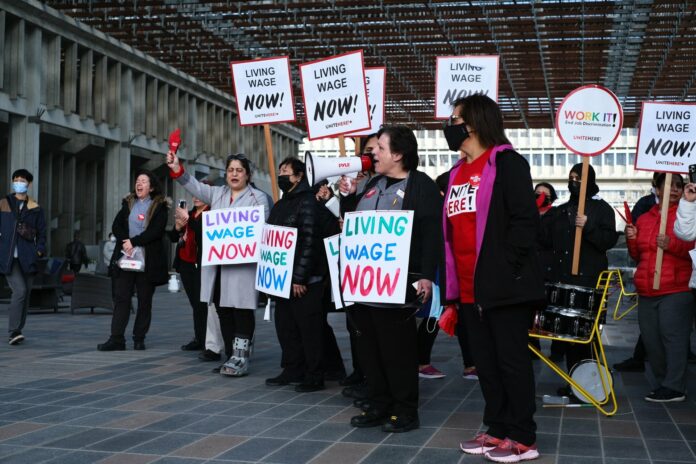
Over the next three years, some SFU food service workers are expected to see up to a 17% increase in wages. This is the largest increase for food service workers in SFU’s history.
In their press release, UNITE HERE Local 40 — BC’s hospitality workers union — stated that after pushing for a living wage and rallying at SFU, the union’s bargaining committee was able to achieve a collective agreement with Compass Group.
In addition to wage increases, workers can expect better health benefits and recall protections. Recall protection promises during emergencies such as COVID-19-related shutdowns or natural disasters, workers will not lose their seniority.
SFU hires all food service workers through Compass Group, a third-party company. This means workers must bring their concerns to this external company instead of the university.
In an interview with The Peak, Stephanie Fung, communications organizer for UNITE HERE Local 40, noted the health benefits from the new contract. “Physiotherapy has doubled to $500 a year, massage therapy [has] tripled to $300 a year, and dental has increased from $1,500 to $2,000 a year,” she said.
She elaborated on the struggles that SFU’s food service workers face due to COVID-19. “During the pandemic, workers were struggling with increased workloads, trying to ensure that the community’s health and safety was protected while they were serving meals to the community [ . . . ] Workers are feeling exhausted at the end of the day and feel like they’re not being treated with respect by their company,” Fung said.
Fung said many of the workers are women of colour who have served the community for decades. The Peak had previously reported, “there is no data regarding the diversity of these workers, since they are not direct employees of the university.”
The focus of the campaign was to provide food service workers with a living wage. They had planned a protest in February of 2021 which was cancelled when Compass agreed to renegotiate their contract.
According to the press release, “costs of living are soaring in Burnaby and Vancouver.” Fung explained, “A living wage [will] make a tremendous difference for food service workers.”
The minimum wage in BC is currently $15.20 whereas the living wage in Metro Vancouver was $20.52 per hour in 2021. “Other companies and workers are noticing this [ . . . ] and it gives us more fuel to rise up and demand what we deserve,” Fung noted. “There are many other hospitality workers across the province who have been working through the pandemic [with] increased workloads and want job security during this time.
“It’s time they get what they deserve for all the hard work they’ve done,” said Fung.
UNITE HERE Local 40 is continuing to advocate for SFU’s food service workers. They’re asking for increased community benefits, including access to university facilities, such as campus libraries. Other employees directly hired by SFU already have these benefits.
According to Fung, Compass Group “has agreed to meet within 45 days” of the announcement “to discuss expansion of access to university facilities for workers.
“[It’s] a good sign that there will be conversations moving ahead,” said Fung.
For more information or updates on their campaign, visit UNITE HERE Local 40’s website.
The buildings in Chinatown hold a history of quiet strength. ILLUSTRATION: Josh Ralla / The Peak
By: Kelly Chia, Humour Editor
Growing up, my fondest memories of Chinatown were walking through the iconic Millenium Gate that greets every visitor and seeing the dancing lions parading around red street lights every Lunar New Year. I also think back to the bakeries I would go to with my parents. We would come home with soft steamed pork buns and flaky pineapple buns. It’s only in recent years I’ve grown more appreciative of the history of Chinatown and the placemaking efforts of Chinese Canadians to make it such an iconic part of Vancouver. The buildings that make up Chinatown, some of which have existed proudly since the 1800s, reflect the strength of the neighbourhood and the community, offering a glimpse into its history of resistance and resilience.
A Brief History of Chinatown in the 1800s
Though Chinese immigration to BC started in the 1850s as part of the Gold Rush, the history of permanent settlement in what is now known as Chinatown dates largely back to the late 1800s. This coincided with the influx of the approximately 17,000 Chinese migrants arriving to work on the Canadian Pacific Railway (CPR).
Though Chinese migrants made up the majority of the railway worker crew by the end of construction, none of them were in the historic photograph capturing the railway’s completion. It was clear the BC government only employed them as cheap labour, with hundreds dyingthrough this work. They were given the most dangerous tasks, worked in harsh conditions, and were paid $1.00 a day while paying for food and gear out of pocket. Comparatively, white workers made $1.50 to $2.50 and were provided food and equipment.
Additionally, due to racism and economic segregation, they were forced to self-segregatein the area which eventually became Chinatown.
After the CPR’s completion in 1885, the federal government no longer needed this labour force and enacted the Head Tax in an attempt to restrict Chinese immigration. This fee required every Chinese person immigrating to Canada to pay $50.00 (approximately $1,240.00 today). That fee increased exponentially to $500 in 1903 (approximately $12,408.00 in 2022).
Despite this, more than 90,000 Chinese immigrants entered Canada between 1885 and 1923. By 1901, Vancouver’s Chinatown had a population of around 2,900 people.
Then, the government passed a new Chinese Immigration Act in 1923, completely banning Chinese migrants from entering Canada, leaving many unable to bring their families over. In a Canada Museum for Human Rights interview, the grandson of a Chinese migrant, Dr. Henry Yu, noted the act made it nearly impossible for most men to marry and have grandkids, and many would die alone. These policies resultedin the population going from 45,000 in 1923 to a little over 20,000 by 1947, when the act was finally repealed.
Chinese people faced segregation in places like swimming pools, movie theatres, classrooms, and were excluded from voting. Their efforts to build a community in Chinatown faced constant threats, most notably in 1907, when thousands of white settlers rioted through Chinatown and Powell Street, destroying businesses and homes of Chinese and Japanese migrants. Looking into the history of the buildings in Chinatown show the efforts of Chinese Canadians to unify their growing communities, in spite of the discrimination they faced.
Wing Sang Building
The oldest building in Chinatown — the Wing Sang building — was constructed in 1889 by Yip Sang, an immigrant from Guangdong. Yip Sang is often recognized today for being a formidable community leader in the then-budding Chinatown.
Hired by the CPR as a bookkeeper, timekeeper, and paymaster for the Chinese railway workers, Yip went on to establish his own business — the extraordinarily successful Wing Sang Company. The import/export company, founded in 1888, opened a two-storey office on Pender Street which would eventually become the Wing Sang building.
Beyond his business acumen, Yip helped build a number of social institutions. In 1902, he established Aiguo Xuetang, a school for his and other Chinese children. It provided a safe space in which students had proper access to education and could learn both English and Chinese. This, along with similar schools established by others, were likely a response to the racism Chinese students faced in the BC school system from additional entrance barriers to outright segregation.
The Wing Sang building remained in Yip’s family until 2004, when it was bought by Bob Rennie, a real estate marketer, with the intent to restore and preserve it. For the legacy and community it represents, the Wing Sang building will be donated as the home of the Chinese Canadian Museum in 2023.
Chinese Benevolent Association Building
Another key building Yip helped establish was the Chinese Benevolent Association (CBA). Built in 1910 on Pender Street, the CBA building was one of the first in Chinatown with recognizably Chinese architecture: Chinese eaves, recessed balconies, and an inscribed parapet (a barrier that starts at the roof).
The CBA was an important umbrella for many social services and provided crucial support for the educational and communal needs of the growing Chinese community in Chinatown.
They helped establish burial rights for Chinese communities in Vancouver and Victoria, provided some financial stability to CPR workers who were laid off, built a clinic in the building, and established a Chinese Public School.
The clinic, which would later be incorporated into the Mount Saint Joseph Hospital, provided Chinese patients free medical services when they were not welcome at other medical establishments.
In addition to providing services, they were politically involved, advocating against the Head Tax. While the Chinese Immigration Act was repealed in 1947, many of the restrictions remained in place. In 1956, the CBA helped relax them, finally allowing many Chinese Canadian men to bring their families to the country. The CBA also fought for Chinese Canadians to gain the right to vote in 1947 — a fight that was successful.
Movements to Revitalize and Preserve Chinatown
By the time the anti-immigration laws had relaxed in 1956, large historic parts of Chinatown and Strathcona faced threats of demolition for modern development. Hogan’s Alley, a historically Black neighbourhood in Strathcona, was destroyed.
The 1950s to 1970s thus saw Chinatown leaders making efforts to revitalise the area. Hong Kong entrepreneurs made new investments in the area, and Chinatown’s value as a cultural neighbourhood was recognized with it being deemed a historic district in 1971. Groups like the Strathcona Property Owners and Tenants Association fought to preserve the historic areas against threats of demolition.
In 1979, the Chinatown Historic Area Planning Committee funded Chinese-style elements, like red street lamps and paved crosswalks, increasing the cultural value of the neighbourhood.
This revitalization marked a new era. Leaders of Chinatown focused on drawing in citizens all over the city for their social scene through food and entertainment.
Foo’s Ho Ho Restaurant
One of the major attractions of Chinatown in the 1950s were the neon signs that decorated the streets. Adorned with a neon bowl and chopsticks, Foo’s Ho Ho restaurant stood out to many visitors.
It was built in the Sun Ah Hotel, a 1911 building commissioned by Chinatown merchant Loo Gee Wing. Loo wanted to invest in real estate in Chinatown that would cement Chinese aesthetics to shape the city’s appearance and heritage value.
On the bottom floor, Ho Ho restaurant, a buzzing social hub, was opened in 1954 by the Quon family, featuring Cantonese dishes.
In 1997, the neon sign was removed, and the restaurant moved across the block. The building was designated a historic building in 2014. There are plans to reopen the restaurant on the same spot in 2022.
Jack Chow Insurance Building
During this time, another iconic building was being renovated — Jack Chow Insurance, also known as the narrowest building in the world.
In 1985, Jack Chow bought the four-foot, 10-inch deteriorating building that would later become Jack Chow Insurance. The lot had originally been bought as a bet by businessman Chang Toy to see if he could create a building in the tiny space. When Jack Chow purchased the building, he saw potential in the thin building and renovated it for $250,000. The iconic neon sign decorating the building was wider than the building itself, and has since been moved to the Western entrance of Chinatown.
In a CBC interview, Rod Chow said his father had the foresight to install sidewalk facing service windows, a feature which helped serve people in a socially distanced manner during the height of the pandemic.
Altogether, the unique visual features of this building kept people coming. The building would go on to win the International Live Design Award of Excellence in 2016, and is just as much an insurance business today as it is a tourist attraction. Rod says his father’s goal had always been to keep people interested in returning to Chinatown — to keep Chinatown alive.
Dr. Sun Yat-Sen Classical Chinese Garden
I cannot discuss any significant historical buildings without discussing Dr. Sun Yat-Sen’s Garden, which sits staunchly in the heart of Chinatown.
According to the garden’s website, the community recognized a need to create a central cultural artefact to preserve Chinatown as a civic asset. The Dr. Sun Yat-Sen society formed with the hope to build a Chinese classical garden for the Chinese migrant community.
But there had never been a garden like this built outside of China. Architects Joe Wai and Don Vaughan were enlisted to work on the Ming Dynasty Chinese Garden, and they worked with the Suzhou Garden administration to help design and construct this garden. The garden received large funding from the Canadian and Chinese governments, as well as many private and public contributors.
Not only is it a physical reminder of the efforts to preserve cultural heritage in the face of demolition, it serves as a non-profit at the centre of Chinatown. The garden provides many educational programs and tours, and partners with various community organisations in Chinatown to promote cultural connections and celebrations.
Chinatown’s Fight for the Future
Through these buildings, I’ve learned there is a palpable determination and love for community in Chinatown.The next time you find yourself in Chinatown, I encourage you to take a walk through the neighbourhood and appreciate the culture and strength of a people who built it up in the face of harsh discrimination from the government and others.
Chinatown has endured the rage of anti-Asian sentiment for decades. It still takes the brunt of these sentiments, particularly after 2020. In recent years, the Dr. Sun Yat-Sen garden, businesses, and murals have faced rampant vandalism. Gentrification has also threatened to displace lower income tenants. Even so, the fight to keep Chinatown alive has always been a part of Chinatown itself. However disheartening this period may be, Chinatown is here to stay. It has weathered so many disasters and formed a strong community nonetheless.
You can learn more about the stories of Chinatown from the 1880s onwards at the Chinatown Storytelling Centre. Neon lights are visible through their augmented reality app, which I highly recommend.
By: Amirul Anirban, SFU Student and Gem Yelin Lee, Arts & Culture Editor
Although plants have many healing properties, they can be hard to grow as a student with limited free time and a home with limited sunlight. Plants benefit our health by ensuring a “healthier environment, more optimism, and lower stress and anxiety.”
Summer is just around the corner so without any more delays, gear up with your gardening arsenals and begin growing vibrant plants in your home! Here are some plants you can try to grow successfully in dorms and basement suites with limited lighting.
Chinese Evergreen / Aglaonema
Illustration credit: Alyssa Umbal
If you are looking for a plant which can brighten any dark corners of your room, the Chinese evergreen is a top choice. It has vivid green foliage and is the best plant to start with because it requires less attention and time. Its known to be a low-maintenance plant that “grow[s] tall, narrow, and glossy oval foliage on short stems.” For a student who has to deal with a ton of academic work and exams but is also a nature enthusiast, the Chinese evergreen is the perfect plant to grow this summer. The plant grows slowly but surely, nestled in varying indoor spaces and students’ busy lives. They do well in student living space conditions that are typically not optimal for plants with little natural light or too much moisture.
Tips from for growing and maintaining Chinese Evergreen / Aglaonema:
This plant does well even in fluorescent lighting, but avoid too much direct sunlight. It likes humid air and damp (not drenched!) soil so Vancouver climate is perfect for this plant.
If you want to be extra good to your Chinese Evergreen, you can use indoor fertilizer biannually.
If you begin to see different colouration on the leaves, make sure those areas of the plant get extra sunlight.
Be careful! This plant can be toxic to animals and people if ingested and its natural plant juices can irritate skin.
Maranta leuconeura / Prayer Plant
Illustration credit: Alyssa Umbal
Prayer Plants have bright, uniquely patterned leaves that grow lusciously in the space you give them. It is sure to make the dreary areas of your home come alive and acts as a natural air-purifier that will come in handy when you’re stuck indoors studying for exams. The name derives from how the leaves close vertically even at night, which resembles “prayer hands.” This house plant is grown for its “variegated green and cream leaves with bright red veins” and unique properties. It is another slow-growing plant and its height grows up to one foot.
Tips for growing and maintaining Maranta leuconeura / Prayer Plant:
The plant grows well within the range of low to bright light. However, it prefers its leaves to be protected from direct sunlight.
The plant favours a humid environment so make sure to keep the soil moist by watering it once a week with low-fluoride room temperature water.
Prayer plants are also toxic for animals and humans.
The cast iron plant got its name and reputation for how tough it is: if the plant can thrive outside with low sunlight in a shady forest, it can thrive in your basement suite with a bedroom window the size of your forearm. Who doesn’t want a friendly plant that can survive just about the worst of conditions and still play nice with others? This plant grows to be a bit bigger, up to 2 feet long and 4 inches wide. With its glossy, forest green leaves and air-purifying qualities, it is sure to add a homey and refreshing feel to your space.
Tips for growing and maintaining Aspidistra elatior/ Cast Iron Plant:
The plant requires minimal maintenance. By that I mean it does better if you leave it be.
It gets very unhappy and could die if you overwater it or expose it to too much direct sunlight.
Very calm, very cool. Nothing wrong here.
Illustration: Siloam Yeung / The Peak
By: Maya Beninteso, Peak Associate
Denial
What semester? This summer you’ll be tanning blissfully at the beach, laughing at the people signing up for another summer of the same school-related stress and poorly air-conditioned lecture halls. Instead of completing required readings, you’ll be reading a book — one that isn’t non-fiction and could double as a sleep aid.
Cry.
Let it all out. Your summer of freedom should be mourned. So grab your favorite snacks and your guilty pleasure TV series that you’ve watched too many times, and have a nice cry. While scrolling through social media when you should be studying, you’ll likely come across posts (from peers you’ve never met, but their bio says they’re from SFU, so you added them to be polite) with this caption: take me back to beachy days. Keep those #hotstudenttears coming.
Hit the gym
Ah, yes, coping the healthy way. Physical pain is better than the prospect of enduring another semester. Hit the gym and contemplate life between sets of exercises you’re 100% sure you’re not doing correctly. Either way, you may lift your spirits by doing some exercise*.
*Pro tip: combining #2 and #3 is an embarrassing, but oddly cathartic, way to cope. Have that sad boi hours playlist ready for your next gym session, folks.
Discover Google Calendar
Since the end of your summer is upon you, you might as well have a visual aid to remind you. This is my personal favourite way to cope as I can schedule everything, like lectures, tutorials, outings with friends, work-outs, and my “do I really want to be a psychology major or do I just want to work through my own trauma” sessions.
Procrastinate
Ah . . . yes, good-old fashioned procrastination. Surely the most familiar concept for SFU students (because physical textbooks never take weeks to ship). This coping mechanism never fails to cause anxiety to run rampant. Will I be prepared for this semester? Who knows! Will I learn my lesson for the next semester? Highly unlikely! If you love the adrenaline rush of not knowing whether you’ll have all of your materials for the upcoming semester, this coping mechanism is for you!
Hoard all the caffeine*
I mean it. Take a trip to your local family-sized-everything shop (ahem, Costco) or anywhere selling copious amounts of caffeinated beverages, and purchase your favourite source of caffeine. This proactive measure will surely get you through those all-nighters because you have, evidently, mastered coping mechanism number five.
*Use coping mechanism with caution. Recommended use only if a bathroom is in close proximity.
Start journaling
Journaling is a way to reflect and process the events in your life. This can look different for everyone, but here is a sample I think will be helpful:
Dear stack of bound paper I refuse to call a diary, to no one’s surprise, I fucked up again. I willingly signed up for another semester. Totally unrelated, but something must be wrong with me. I am doomed to a semester of 300 pages of readings a week and a professor who I swear cannot intonate to save their life.
Conduct intensive research
This is likely the most productive method of coping. Research absolutely everything and make sure to pay attention to Rate My Professor,Course Diggers, SFU course outlines, and other relevant sources. The aforementioned resources will ensure you’ll be ready to tackle another semester. Thoroughly researching the enemy, AKA your courses, will render you prepared for anything the semester can throw at you: exams, papers, existential dread, and more!
Find sources of support
Whether this be your group of friends, family, a literal support group, or other loved ones, find people that will be in your corner. All jokes aside, university can be mentally trying, so it’s vital to have people you can lean on when times get rough. If all else fails, SFU’s avocado will always be there for you (unless the avocado ends up leaving you, too.)
Succumb
Reach acceptance. You signed up for another semester and you’ll get through another semester. It will, for the most part, suck, but schedule some fun if you can. Look on the bright side! Your friends will have to listen to you make jokes about some guy named Pavlov and his drooling dog as he appears on your syllabus for the fourth time. Everything in life will pass and, with some luck and preparation, hopefully you’ll pass your courses this semester, too.
SFU finally has some closure one week after the avocado statue disappeared from the Burnaby Campus. ILLUSTRATION: Nazmus Sakib / The Peak
By: Isabella Urbani, Staff Writer
BREAKING NEWS!
The ENTIRETY of the SFU Burnaby Campus was thrown for a LOOP on the early mornings of Monday, May 2, when our beloved avocado statue was nowhere to be seen!!!!! If you don’t believe this nightmare, take a look for yourself. A few students started a vigil for the statue’s return. They laid candles, photos, and some avocado scented soaps at the site. Grief or reason for SUSPISION?
The Peak attended the vigil and spoke with those who chose to pay respect at the vacant spot the statue once resided upon.
“I am at a loss for words,” a bystander said, clad in a dark green blazer — avocado-like, one could even say. “That egg statue was the perfect place to roll a dart at night, perfect view of the stars and everything.”
The Peak observed they were the only one laying their gifts in front of the blue triangle statue, and nowhere remotely close to the avocado.
Other students suspected foul play to be involved.
“It’s bloody murder,” one student shouted, throwing themself on the dirt where the statue occupied. “I bet it was UBC students, has anyone ever considered that?”
UBC declined to comment on their suspected involvement in the matter, but The Peak did receive an anonymous email with a photo of UBC president, Santa Ono, cutting up an avocado for lunch in his office.
In the interest of being thorough, SFU did indeed try to bring this to court, but was turned down due to “circumstantial evidence.” Curses.
As SFU’s student newspaper, The Peak felt obligated to track down every last person to find out what could have happened. We started with the creator of the sculpture, Carlos Basanta, but scrapped that idea when he confused his own statue.
When probed, Basanta started speaking about some statue and its reflections or something of the like. Clearly, he did not know his own statue.
Moving on.
As of right now, 100 SFU avocado–related profiles have been set up on Instagram. There were more initially, but many of them were taken down when students started posting some BALLYHOO photos of them in the avocado. In their defense, the photos were so blurry, no one could tell a hand from a foot.
The Peak reached out to president Joy Johnson for a statement.
When asked whether she knew anything about the whereabouts of the statue, or if SFU had any intention of buying a replacement, Joy had no joyful answer. Disappointedly, she said, and I quote, “Who?”
Alas, it looked like students were never going to find out where their beloved statue went. Had it up and disappeared on its own? Did UBC really steal it for their avocado obsessed president? According to inside sources, he has worn an avocado tie each day since the statue went missing.
More questions arose from our investigations. Was there a SIMPLER solution? Had it gone for cleaning? If so, then why hasn’t it been cleaned more frequently?
Below is the only statement ever known to be made by the avocado statue itself. It was delivered to The Peak office today, exactly one week after its disappearance:
I know there have been a lot of theories floating around about my disappearance, and I’d just like to take this opportunity to clear it up. I have enjoyed my time at SFU, but I have mutually decided to part ways with the campus to make my long-life dream of becoming an organic avocado in your local grocery stores happen.
I can only imagine we will meet again in the produce aisle — I know I will be waiting.
Do not undermine the power of a tote bag, it can make you do unbelievable things. ILLUSTRATION: Stella Nguyen / The Peak
By: Nercya Kalino, Staff Writer
Ah, tote bags. They give the perfect impression of looking put together and artsy. So what happens when a student loses it?
It is with tremendous sadness that I announce my resignation from the Tote Bag Alliance. What can one do when they have lost a part of themself? After a long while of feeling the validation of being an artsy tote bearer, it is quite embarrassing that I bear this news.
Careless! I know. I have not only searched the highs and lows of my room, but I have also found a potential suspect! My roommate insists they had nothing to do with the disappearance of my tote bag, but I’m not quite so easily convinced.
Two weeks ago, I went to Donald’s local market. After all, it is only fair to abide by the rules of the Tote Bag Alliance Section 420, which states, “When one has spent at least one month with their newly found emotional support bag, it is imperative they carry their work of Picasso to a local store.” I am also very aware of the subsequent section which states, “Without a tote bag in a local store, you are as naked as a worm on a pavement.” I write this to acknowledge my shame, for I feel like the most naked worm.
I came home and left my tote bag in its place on the side of the laundry basket. I did not leave my house for a while. On one fateful day, I saw my roommate carrying a tote bag as she left the house.
Now, I am not saying we have tote bag thieves among us, but this is worth noting, my friends! In my mind, I thought my roommate did not want to be a naked worm. I was merciful and did not think much about this. Of course, she only wanted to join the ranks of tote bag worship!
Alas! Mercy is for tote bag losing losers! One day, I excitedly made plans to go outside. I unconsciously reached for the bag, and my hand grasped at air. It was gone!
I anxiously searched. My makeup started to crease from the sweat of dread. This day was meant to be the day I was supposed to name my emotional tote bag.
It left without a goodbye.
Now we all know that it is different when your tote bag grows old and asks for a proper send–off, consisting of a proper wash and a final fold before being placed in the closet. But no! It left as if to mock me for all the times I had left it on the floors of the public bus, or the one time I almost forgot it in the Uber . . .
And then it hit me! My roommate had been carrying a tote bag. It must’ve been mine!
With anger, I barged into her room, and there she was, laying in her sleep. I immediately shook her awake and asked the most important question ever: “Did you take my tote bag?”
This proceeded into an argument about how it is unfair to wake up people so abruptly for trivial things. How dare she? Calling my precious tote bag trivial.
“Let me see your tote bags then,” I responded.
Obviously, she had no intention of cooperating, but the investigation continues. She has not carried her tote bag ever since the confrontation. I suspect that it could be mine. So every time she leaves the house, I wait in the common area. I will NOT be the naked worm. My current mission is to catch her with my tote bag on her shoulder.
You will find all the unique Vancouver events and hidden speakeasies and your friends will all wonder how you do it. You can’t help it! You’re always the first to discover where it’s at. You’re the life of the party. Maybe you should focus on being the life of your studies?
Taurus:
The summer for Taurus will be a horrible time . . . for their wallet! You’re destined to be a big spender this summer, whether that’s spending hours in Hudson’s Bay or that weekly massage you think is an essential part of your budget. Remember, there’s another semester in the fall that needs sponsoring — tuition hikes don’t slow down for you.
Gemini:
Gemini is, as always, far too busy for their own good. Your FOMO is real. After all, you’re juggling schoolwork, a few part-time jobs, constantly bumping into Oprah Winfrey, and trying to make friends with the bears around campus. This circus act makes you a chameleon; you’re adaptable and charismatic. Isn’t it time people saw the real you? Maybe not.
Cancer:
You’ve had a tough 2022 so far and this manifests itself in your need to protect yourself emotionally this summer. Self-care and improvement are all swell, but try and crank open that emotional clamshell, Cancer!You’ll reap the pearl of your treasure: friendship! Open up to new people and new opportunities and you could have yourself a hot vaxxed summer.
Leo:
This is Leo’s summer, according to themselves, at least. You’ll be strutting down the well-ventilated Convocation Mall in your off-brand Lululemon while your friends are filming you flossing for TikTok. The mobile spotlight is on you and you live for it. Remember, stay safe while socializing! Wouldn’t want to be a #2020in-flu-encer.
Virgo:
The Virgo’s summer is a time to work hard in order to play hard. You just seem to forget the play hard part. Let down your hair a little and get a Starbucks iced frappuccino. Everything doesn’t have to be perfect, some things just have to be fun. Like a hike. Everyone in Vancouver is always talking about hiking. Bring water though, the heatwave will arrive soon . . .
Libra:
Ever the peacemaker, your summer will be spent trying to achieve balance in your friendship groups. You take on the role of mediator — even when you have absolutely nothing to do with the issue. Spend your summer trusting that everything will work itself out with or without you. In other words: Butt out!
Scorpio:
The Scorpio spends their summer obsessing over small things. Whether you’re formatting your essay or the perfect revenge, it’ll takes days, sometimes weeks, of your time. As the star seer’s spiritual icon, Elsa said, “Let it Go,” your time could be better spent. Perhaps people watching at Wreck Beach? Maybe it’s time to be a little less diabolical and a little more human.
Sagittarius:
Oh, Sagittarius. You don’t need to hide your feelings behind the woods, you know? We know you’re independent and don’t need no one to join you. Who needs friends when you have Insta-worthy selfies to take?! It’s bear season though, so maybe you should cut back on the sarcasm and bring a friend and bear spray. Don’t go chasing waterfalls, chase feelings instead.
Capricorn:
A pessimist at heart, the Capricorn is upset about autumn before summer has even started. You love your own company, but there is no “I” in summer. The weather is beautiful so grab a friend and enjoy a socially-distant Vancouver in the sun. And don’t worry, summer will come around again next year, too, but only if you smile for once (just not if a man tells you to).
Aquarius:
The summer is unpredictable for the Aquarius. Always going with the flow, you let other people plan your summer and it’s bound to be great because your friends are awesome. But if there’s something you actually really want to do, get off your backside and plan it. Your dream of singing Under the Sea with a crab isn’t gonna plan itself.
Pisces:
People rely on you, Pisces. You are a good friend and always listen to your friend’s problems. There are lots of them this time of year, especially with your fellow Pisces friends who are busy fueling themselves with tears of summer enrollment. You seem to forget that you can also be an emotional wreck that needs some TLC. Self-care is important, boo, put on some Taylor Swift and cry it out.
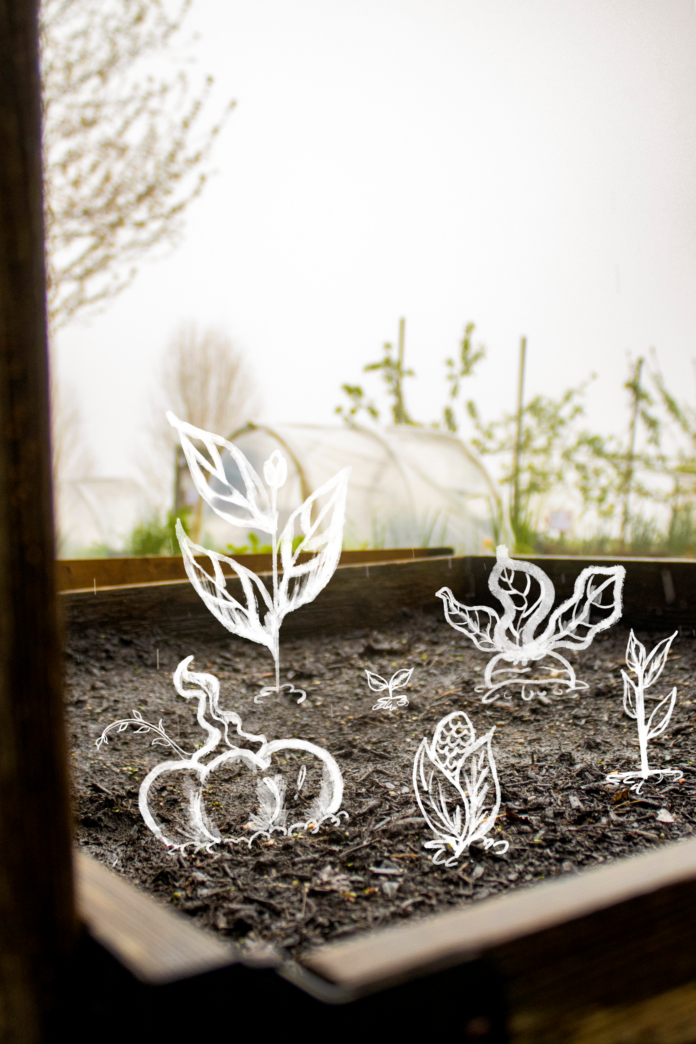
The gardens are also open to students who don’t have plots, offering a space to relax and connect with nature. IMAGE: Krystal Chan & Kelly Chia / The Peak
By: Meera Eragoda, Features Editor
Editor’s note: This piece has been updated to reflect Embark Sustainability Society is a non-profit group located on SFU’s campuses.
“Gardening is an act of love — a love for the planet, a love for your community, and a love for yourself,” said fifth year Nimrit Basra. The garden plot she rents from Embark Sustainability Society helps her “build a reciprocal relationship with the earth,” manage stress, and find joy in sharing their harvest with loved ones.
Embark is a non-profit on SFU’s campuses dedicated to addressing systemic sustainability issues such as food access and climate change through a justice, decolonization, equity, diversity, and inclusion lens. Their learning garden plots are one way they further this mission. Having started as a student initiative in 2012, they now feature an impressive 84 raised garden beds and 24 vertical garden plots.
These plots are found on the Surrey and Burnaby campuses. The 3’x4’ raised plots are rented out yearly to individual students and student groups for an affordable price of $15/box or $25/two boxes for the year, with a cap on two boxes due to demand.
While registration for plots is currently closed (and booked through to January of the next year), Embark is running a Burnaby Learning Garden Cohort program for 10 students to learn the gardening ropes for free, with guidance. The program runs on Thursdays from June 2–August 11. All the tools are provided and no experience is required. Applications are due on May 20, 2022.
Gardening as food justice
With the arrival of gardening season, The Peak spoke with Embark’s gardens manager Pablo Vimos and programs manager Desiree Gabriel about the importance of giving students access to this green space.
“The idea behind [the gardens] is creating a space on campus to grow food, get in contact with the land, and to change the landscape that companies offer into a more agricultural environment,” Vimos said.
Gabriel added, “At Embark, we prioritize two areas: climate equity and food justice. And our learning gardens obviously very much focus on food justice. So our gardens provide students a space to explore the connections to food production and deepen their understanding of food justice in our communities.”
Embark provides garden users with a variety of food options to help them find more nutritious alternatives to mainstream organic grocers which are costlier and offer less cultural selection. Working through a food justice lens allows Embark to provide students with “low-barrier access to gardening and cultivating their own food,” said Gabriel.
The gardens also aim to provide an antidote to the harm caused by universities. The university structure can increase stress and isolation, and require students to remain sedentary and focused on screens, Gabriel explained.
Gardening, she said, gives students a place to “reconnect with nature, and also develop skills through hands-on experience without worrying about the framework of grades and scrutiny.” The gardens are a way for students of any identity to gain mindfulness practice, be out in fresh air, find independence from mainstream food systems, and access organic fruits and vegetables.
Cycles of food and life
Along with helping students build skills and gain a better understanding of food production, Embark’s program also enables students to “build community and develop food literacy in a way they might not be able to in classes.”
Food literacy refers to “how to grow food and how to prepare food,” Vimos explained. The former is done through the learning gardens and the latter through Embark’s complementary Community Kitchen program.
When growing food, Vimos teaches students the garden cycle from “planning, planting, caring for the garden, harvesting, and composting.” Being involved in the cycle helps students understand how it changes depending on the crop being grown. For example, growing a radish would take 35 days while growing garlic would take nine months.
A key teaching of the cohort program is the interconnectedness of land and animals (including humans), which Embark honours by growing organic food. Care for the land includes care for all the living things in it. “When we start gardening, the first thing that we acknowledge is that we are part of nature and as a part of nature, we should work with it, not against it,” Vimos stressed.
With their garden program, Embark tries to strike a balance between allowing certain bugs and protecting crops through natural pest control, such as garlic and chili pepper. Vimos said in urban environments, when people come across a spider, often their first thought is to kill it. “But, when you are in the garden and you see a spider, your attitude changes, because then you realize, ‘oh, this spider is a gardener’s friend.’” This is because spiders often eat other bugs like mosquitoes. Not using pesticides also makes it easy to take a bite out of a particularly enticing vegetable right from the garden bed while ensuring soil health.
An organic approach also helps gain an understanding of nature’s cycles and how they relate to food production. Understanding the influence of things like the moon, the length of days, and temperature help gardeners match “the right crop with the right season,” Vimos said.
Staying attuned to the world outside the garden by making connections between what’s growing in the plot and what native plants are growing in the surrounding environment, lead to deeper understandings of the seasons, Vimos said. Both Vimos and Gabriel stressed the importance of learning about Indigenous food systems which existed before Europeans colonized the global food cycle in order to understand there are multiple food pathways that exist.
Connecting to land and community
Their garden and kitchen programs build not only resiliency, but community. Gabriel explained the gardens build excitement and lead to people sharing recipes with each other.
Vimos also shared a story about a previous cohort witnessing three deer walking into the garden. “Our gardens are open. So the deer and wildlife just show up now and then, and they like to taste the leaves of berries, the leaves of beans, the shoots of apple trees, and we just need to be patient, resilient. We cannot do anything without that. It became part of the land, part of where we live, and we just accept and remove whatever was eaten.”
Gabriel said, “It was amazing to see the different reactions of all the cohort members when the deer arrived, adding “there was a mixture of fear to amazement to really stark happiness. It was interesting to see how differently everyone perceived the deer coming.”
Encouraging students to join, Vimos said, “Don’t be afraid. We will learn on the way and if something doesn’t work out, well, it’s a learning garden. We are learning, it’s a learning process.”
Embark learning gardens provide a space for healing and community. PHOTO: Krystal Chan / The Peak
Grow through what you go through
Gardening as a process to gain mindfulness and provide a therapeutic practice is something Tricia-Kay Williams supports. Among her many hats, Williams provides counselling at SFU to help support Black students and runs her own counselling practice, Metamorphose Counselling.
When she saw an email from SFU Health & Counselling (H&C) asking if anyone would like to use the two plots H&C rents out from Embark, she jumped on the opportunity.
“I was super interested in this. And the reason I’m so interested in it is because my grandparents in Jamaica were farmers.” Williams’ grandparents were pea and bean farmers and she recounted her fascination with being able to help with harvest and taking produce to the market. It was what inspired her own gardening journey and with Embark’s garden plots, she saw an opportunity to use them “as a space for students to be able to gain a better understanding of themselves.”
The workshops are specifically open to Indigenous and Black students and other students of colour. She highlighted the significance of this as being the ability to reclaim space and the “connection to nature.” She explained BIPOC have been historically separated from accessing land, either through slavery or other displacements. “This [gardening] is livelihood, this is building community. This is connecting to pieces of ourselves that help us to be self-preserving.” Williams added it can also be “healing and sustaining.”
The IBPOC Garden Therapy workshops run in a series, corresponding roughly to the main stages of gardening: planting, maintenance, and harvesting. Each theme has four workshops and though the workshops on planting have wrapped up, the ones on maintenance will begin on May 27, 2022. They will be open to students whether or not they attended the planting workshops since Williams will provide a quick recap of the planting workshops in the first session. Though the workshops provide students with everything they need, Williams said students may opt to bring their own gloves to ensure they fit.
Planting
With the planting workshops, Williams wanted to explore different ways of planting and how that can be applied to the different life journeys students take. A couple different ways planting can happen is through getting seedlings that have already been prepared for you and placing them in your garden or the more “challenging process” of growing them from seeds. Williams said, with seeds, “you have to take so much care to ensure that they grow and even though it doesn’t matter how much care you put into it, sometimes they won’t.
“So you think about the different ways of planting and look at life and society and circumstances that we place ourselves in. You can see how there can be similarities or correlations that you can draw, right? And it will be different for everybody.”
Williams spoke about how different soil conditions are required for different plants and similarly, societal conditions will impact people differently. She asked her cohort, if a seed is planted in rocks, even if it comes up, will it have enough of a foundation to grow and succeed? On the other hand, “a person that had all the nutrients, the right soil, and had somebody that was taking care of it for a period of time, that person will hopefully get to the place where they have all the things they need to succeed.”
The workshops were a “very open process.” Williams focused on the planting and got people thinking about how the process might apply to their lives. “There’s so much that can come out of the idea of planting a seed and waiting for it to grow.”
Maintenance
The upcoming maintenance workshops will focus on giving plants the appropriate conditions to grow in. “Sometimes you have plants at home, and you have to prune the plant from time to time to cut away dead leaves.” She added you also need to ensure each plant is receiving the right amount of light and water.
Williams plans to explore different concepts weekly such as how pruning can be applied to students’ lives. “We think about this idea of letting go of, you know, negative or toxic people in your life [and] being able to reflect and look at ourselves and identify areas that we need to improve on as well.” This reflection can be “really important to self development and also the idea of improving as a society.”
Harvesting
The last in the series, which won’t begin until September, will be harvesting. Williams explained, in Jamaican culture, “harvesting is a celebration. It’s a time where you’re able to see the benefits of all the work you put into planting.”
This is an opportunity to “see the benefits of who you are as a person in society and be able to celebrate that.” Celebrating and embracing the joy of seeing all your hard work pay off is something Williams thinks is missing in today’s society.” These small things deserve celebration, Williams said, because they are “an important part of increasing confidence and your sense of self.
“In order to get to the big things, there are really small things that you would have to accomplish.”
Other Embark stories
Along with H&C, Embark plots are rented out to student groups. This year, groups renting spaces include Simon Fraser Public Interest Research Group (SFPIRG), English Student Union (ESU), Students of Caribbean and African Ancestry, SFSS Women’s Centre, and the Resource and Environmental Planning Student Association.
Chantelle Spicer, director of engagement of SFPIRG, highlighted the potential the green space holds. “We are very excited to be growing food this summer to support folks at the WatchHouse who are standing in resistance to TMX. Being able to grow food not only supports this important work, but provides opportunities for us as an organization to learn, create an outlet for students to organize in creative ways, have mental health breaks, and support connections to the land and seasons.”
Anita Shen, ESU FASS representative said helping with ESU’s plot gives them “access to fresh veggies and a chill place to enjoy plants and learn about gardening.” Encouraging other English students to join, they added, “But much more than that — it connects me to the SFU community and makes being a student here less lonely.”
Applications for Embark’s Burnaby Learning Garden Cohort can be found on their website. Up-to-date information on Williams’ upcoming IBPOC Garden Therapy Workshops can be found on the H&C website.
Professors already face long hours and large workloads, and hybrid learning could worsen this. Photo: RODNAE Productions / Pexels
By Meera Eragoda, Editor-in-Chief
If you’re in the SFU student groups on Facebook, you may have seen a petition calling for SFU to implement hybrid learning. Its two main demands are to mandate the recording of lectures and tutorials and for instructional staff to have both in-person and online options for lectures, tutorials, and office hours. Students who want to learn in-person can, and students who can’t, don’t have to. Sounds like a dream, right? Well, maybe on the surface. In reality, none of this takes into account the structure of universities or the pressure on professors and TAs.
It’s been well-recognized that universities treat most staff as dispensable and most positions are untenured. Teaching positions — including TAs — are underpaid, overworked, and lack job security. Implementing hybrid options means adding onto the workload of instructors, likely without increasing pay or adding additional support and resources. To petition for hybrid learning without collaborating with teaching staff risks working towards an unsustainable goal, hurting the initiative.
As one anonymous SFU professor writes in The Mainlander, hybrid learning entails “piling-on the work for the most precariously employed instructors and deepening the divide between classes of students while increasing revenue streams.” Additionally, they explain that hybrid learning requires two different lesson plans to ensure both those joining online and in-person are appropriately engaged.
Though it’s possible for some classes to run in a hybrid style, it’s not a simple solution across the board. In a Facebook post, another SFU professor outlines a number of issues: educational and privacy concerns, a limit to the ability to plan lessons, and the devaluation of teaching labour. They added that teaching goes beyond creating recordable lectures, extending to experiential learning and more. They write, “Many of us have spent years of our lives on the prep work and skills involved in developing truly engaging and meaningful in-person teaching methods.”
Teachers have talked about how hybrid learning means having to split their attention, giving neither group enough care due to a lack of infrastructure. Students have commented on how this will result in a lower level of education for an already high cost of tuition. In the thread, one student added their experience with hybrid learning setting was disruptive, and seemed to place excessive strain on the professor.
Despite the uncertainty in course formats this semester, SFU has done thebareminimum for student safety, while refusing to implement tangible supports — such as extending deadlines for tuition and course withdrawals. Additionally, SFU seemingly decided students didn’t have enough precarity to face with a pandemic, increasingtuition twice.
Amidst tuitionincreases and issues with the return-to-campus plan, it makes sense that students are advocating their own solutions. But it’s important to keep in mind that SFU cares equally little about its teaching staff.
If hybrid learning (as opposed to more remote options) will make things more equitable, then we should pursue it. But such discussion should include students and teaching staff working together to advocate for better conditions for all. Not doing so only has one result: the padded pockets of university administrators at the expense of the rest of us.