Home Blog Page 277

Eight Questions with SFU softball

0
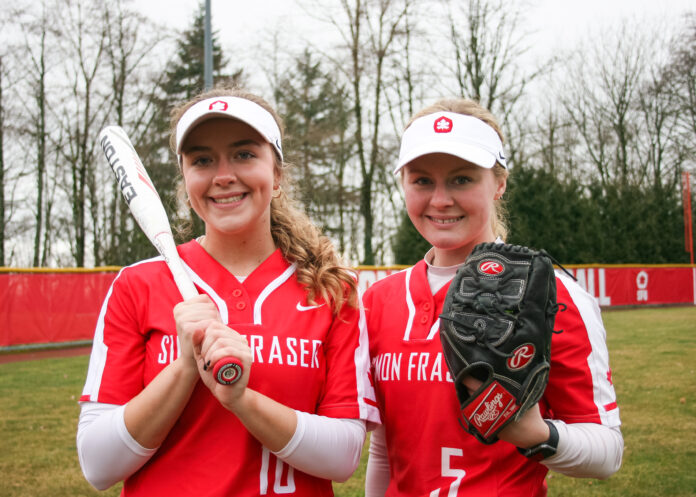
SFU softball players Rebecca Kirkpatrick and Lauren Schwartz pose with a bat and glove in uniform on the field.
SFU’s sophomore outfielder and junior infielder take a trip down memory lane to reflect on their style of play and most memorable tournaments. Photo: Gudrun Wai-Gunnarsson / The Peak

By: Kelly Chia, Staff Writer

On February 18, the SFU softball team is heading to Arizona to play five games in the Cactus Classic tournament. They are entering the tournament ranked fifth out of seven teams in the Great Northwest Athletic Conference. After welcoming a group of nine freshmen and a transfer pitcher in January of 2021, the team is raring to compete together after opting out of last season. 

The Peak was able to get to know two SFU softball members: Rebecca Kirkpatrick and Lauren Schwartz. Kirkpatrick majors in Criminology with a minor in Physical Geography and GIS systems, and is studying for her Forensic Sciences certificate. Meanwhile, Schwartz is among the newcoming class, transferring from Bellevue College in Washington. She has a double minor in English and Kinesiology.

P: What do you like most about the culture of softball competitively?

K: I like how every game is different. One person could be dominant in one game, and it could be a completely different person [the next].

In one game, it could be a pitcher’s duel where it’s a low-scoring game, and then all of a sudden it could be a 10–10 ball game, so it can flip very easily.

Schwartz laughed.

S: Yeah, I guess that’s both a pro and a con in some ways.

I like how relaxed it is, but then the moments of excitement are super exciting. Especially playing outfield, you are mostly standing around, but when you have to make a play, it’s super important.


P: Is there a misconception about softball that you’d like to clear up?

S: There’s always the baseball/softball comparison everyone makes. I don’t know, at this point, I’d say they’re hard in different ways.

K: People think baseball and softball are really slow sports, so they must not be as physically exhausting. But they are very physically exhausting! We play double headers, so we can be out in the field for twelve hours.


P: What’s your most memorable moment as a softball athlete competing in tournaments?

S: My first thought would be, in my last season of club softball, we won provincials. We were down seven-nothing in the last inning, and we came back and won it. That’s always been a memorable one for me

K: For me, it would be from my freshman year here. Six of us that are on the team right now played in something called the Canada Cup. We ended up playing junior team Chinese-Taipei in the finals, and we ended up winning. It was pretty cool because Team Canada and Team USA were watching us.


P: What do you think your strengths are as players?

S: One thing I can always control is my energy on the field. I guess that would be a strength — no matter how I’m playing, I try to keep that energy up. 

K: My strength is more of the mental side of the game: I know a lot of strategy plays, so I bring more of the mental aspect of the game.


P: What do you do to feel ready beforehand?

S: Music keeps us all loose.

K: Baseball and softball are actually really superstitious sports. If you’re doing well, you have to put your bat in the same position.


P: Is there a particular superstition around something that you [can’t] do?

S: Foul line.

K: Yeah, you can’t step on it. You always have to hop over it. Honestly!


P: What seniors have left the team? How has that affected you?

S: We had two important seniors leave last year: Amanda Janes and Kate Fergusson. They contributed a lot — Amanda especially was a huge leader on the team. I literally only knew her for four months, but you could tell she was really prominent on the field. We miss that a lot, but it was only two people. With the incoming freshmen, we have a lot of talent!

S: I’m really excited to see our freshmen play. I think they’re going to have a lot of success this year. Our sophomore class, too, [who] didn’t get to play last year. Our pitcher has been doing a lot of good things in practice.


P: Do you have any advice for students wanting to play softball in university?

K: You have to work harder than anyone else, and want it more than anyone else. Even if you aren’t the best on your team, or you are the best on your team and aren’t getting noticed, you have to put yourself out there. Make contacts and go talk to people. A lot of good athletes, especially undersized athletes, get [overlooked] easily, so you have to be the one winning for yourself.

You can check out the softball team play their first home game of the season against Central Washington on February 26.

February 2, 2022 — Councillors discuss special meeting to re-open SUB early

0
outdoor shot of the new SFU stadium
PHOTO: Krystal Chan / The Peak

By: Karissa Ketter, News Writer

The Council discusses special meeting to re-open SUB early

Mathematics councillor Ben Tischler submitted a motion to hold a special meeting on February 9, 2022 to discuss re-opening the Student Union Building (SUB) early. 

Tischler reported he found through a Mathematics student survey only 20.96% of members were in favour of closing the SUB whereas 70.04% were against the closure. 

“Closing the SUB completely is not the answer, by doing that we limit the availability of space on campus which can lead to more crowding and, of course, with crowding, more COVID-19 transmission,” said Tischler.

Sociology and Anthropology (SASU) student representative Kayla Chow reported that SASU held a survey where they found that most students agree with re-opening the SUB “to reduce congestion on campus.”

The original closure of the SUB was scheduled to take place until February 18, 2022. Tischler’s motion also included pushing the SUB’s re-opening date to February 14. 

Matthew Provost, vice-president external and community affairs, said the SUB building staff and SFSS executive committee is already prepared to open the SUB by the originally proposed date. 

Vivian Ly, SFU Disability and Neurodivergent Alliance executive member, was not in support of having a special meeting to speed up the SUB reopening. “You don’t need a whole other meeting for the SUB to be open, literally just four days earlier. Council would be wasting time having a meeting,” said Ly. 

“The SUB being opened or closed is not going to make hallways less busy between classes, which is when they are most busy — that is an SFU issue — it’s not going to make lineups any shorter for food,” said Women’s Centre representative Nim Basra. “What it will do is put the SFSS staff at risk and create unsafe conditions for many students because there will be people who refuse to wear masks and social distance.”

Former SFSS president and councillor Gabe Liosis said, “I do not believe that it’s wise to call a meeting next week to consider a motion to open the SUB early [ . . . ] There’s a reason why the timeline was established for February 18, and why that timeline has been given in advance: that’s so that our staff can prepare the communications to go to membership, saying that the building is open.”

After a debate that stretched for over two hours, the final motion to hold a special meeting was not carried. The SUB is still currently scheduled to be opened on February 18, 2022. The vote was rejected with 16 votes in favour, 19 votes against, and 2 abstentions. 

For updates on the SUB re-opening, visit the SFSS website.

Food for Thought: The addictiveness of food porn

0
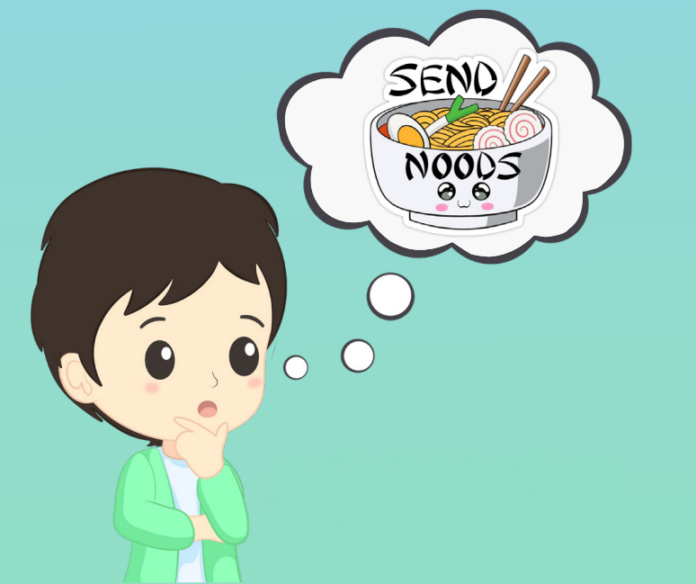
Person in thinking pose with a thought bubble overhead featuring an illustration of a ramen bowl with “send noods” on it
Food porn isn’t limited to social media. ILLUSTRATION: Alyssa Umbal / The Peak

By: Sara Wong, Arts & Culture Editor

Content warning: discussion of eating disorders.

Currently, #foodporn has 279 million posts on Instagram. What does that mean, besides the fact that foodies like to put out a lot of content? Food porn isn’t just a trend. The act of glamourizing dishes has been used for decades by marketing agencies to tempt consumers. From glistening hamburger patties to oozing egg yolks, food is inherently sexy.

Similarly, depictions of preparing and eating food are often made provocative. Remember Salt Bae? Or Kraft’s risqué “send noods” promotion? You can also find examples in classic literature! Writing about the Iliad, scholar Michele M. Sordi notes “the emphasis on eating food in the Iliad focuses our attention on the body, on the restoration of vigor, and the replenishing of ambition for kleos [glory].” While the story is about the Trojan War, Sordi’s observation touches on a universal experience — to eat is to nourish our bodies; the relationship between food and physicality is intrinsic.

Comparing food porn to actual porn can be fun, but it’s important to recognize its negative social impact as well. Like its human-centred counterpart, food porn presents an idealized model that can lead to unrealistic expectations. In pursuit of a milkshake with the super thick consistency shown in fast food commercials? Food stylists reveal the ads actually use dyed mashed potatoes or a mixture of shortening and confectioner’s sugar — definitely not something you want to suck on. 

Food porn continues to become more sensational with the prevalence of social media. While some of this content promotes nutritious meals (one of my favourites is @chez.jorge — an Instagram influencer creating vegan takes on pan-Asian dishes), a vast majority of food porn normalizes unhealthy eating habits. 

Studies have shown that food ads on social media can be linked to increased risk of hypertension and type 2 diabetes among young adults. There are also studies providing evidence on how platforms like Facebook and Instagram can “influence maladaptive (ie, nonpathological) eating disorders,” such as anorexia.

In both cases, researchers suggest the influx of influencers and other celebrities in food advertising exacerbates negative relationships with food. Content creators are like the pimps of the food porn industry.

As a food influencer myself, I’m cautious about what goes into my posts (I’m not trying to be a pimp, please don’t come at me). I aim to be as transparent as possible. The less editing I have to do, the better. If something is sponsored, I make sure to indicate that; and I always provide honest feedback. I also detail whether or not everything being pictured is eaten by me or multiple people. Until I joined the foodie world, I honestly thought influencers were crushing fried chicken combos and boxes of artisanal cinnamon buns on their own. 

All this is to say: take what you see on Instagram with a grain of salt. Food porn can be amusing, but it’s important to remain cautious of our relationships with food and how overeating or undereating is ingrained in our day-to-day lives.

Unlearning shame around sex and pleasure

0
A dimly lit room with a bed and a book open on top of the bed. The only source of light is coming from a small lamp on a bedside table.
You shouldn’t feel shame around sex. PHOTO: Lightbield Studios / Adobe Stock

By: Hannah Kazemi, SFU Student

From a very young age, I could name all parts of the reproductive systems, explain how pregnancy happens, and tell you which phase of the menstrual cycle is best for conceiving. I was raised in a house with an open-door policy and a mother who did her best to educate my sisters and me on our bodies and how to protect them. “You can talk to me about anything” was a phrase I heard a lot growing up. While the sentiment was nice, I didn’t always find it to be true.

For most of my elementary and high school years, I didn’t really know sex had any purpose other than to make babies. 

I thought going to a strip club was something only weirdos with sex addictions did, and that people who had sex for fun didn’t have anything going for them. I didn’t grow up thinking I had to wait for marriage, or that it was necessarily wrong to have sex, but it wasn’t something that was really discussed further. While I knew all the technical stuff regarding sex, I didn’t know anything more than that. I didn’t know what it meant to date, fall in love, or be intimate with someone outside of the context of marriage and babies. There wasn’t a lot of room to be curious about sex, sexual identity, and experiences.

In my mind, most relationships were meant to be transactional. My parents divorced when I was too young to have developed real memories of them together, and my mom didn’t date again until my sisters and I were much older. I grew up thinking every relationship was doomed and there was no point in engaging in sex unless you planned to commit to that person and have a baby with them because duh, sex always equals babies.

It wasn’t until I was 14 or 15 years old that I started to think differently about sex and I became more curious about pleasure. What helped me on this journey was the discovery of adult romance novels.

I had initially started out with the typical manic-pixie-dream-girl falls in love with boring-male-protagonist John Green YA love stories. As I got deeper into the romance rabbit hole, I moved away from YA romance and into romance novels meant for adults. What I didn’t realize was that YA novels lack the explicit content that most adult romance novels contain. It got spicy real quick. We’re talking heat. Straight-up erotica.

And because I was almost exclusively reading e-books, this meant what I was reading wasn’t physically accessible to my mom or younger sisters — preventing unwanted questions.

I was reading about things I had never heard before, or at the very least, I recognized words but didn’t know what they meant. Orgasms, blowjobs, the names of different positions, what it means to masturbate — even descriptions of people flirting were so new to me and I was intrigued.

I sometimes felt embarrassed or ashamed when I would read — and like — a chapter or a book that was more explicit or erotic. I thought it was wrong or that I was too young to be so interested in sex as something that could lead to pleasure. It felt like I was keeping a secret. There’s a heaviness that accompanies the topics of porn and sexual pleasure, and I’ve really had to work to unlearn the shame that accompanies talking about and even thinking about sex.

In high school, because of a myriad of personal and mental health struggles, I wasn’t ready for a relationship. I had crushes but never acted on them, I didn’t date, and honestly, I was a bit afraid of it. I was afraid of the thought of falling in love and giving my heart to someone, and I was also a little bit scared of what the expectations were going to be surrounding sex. I knew my peers in relationships were having sex — they were experiencing the things I had read about in my books. I found myself a little bit jealous, wanting to experience this image of sex and pleasure I’d built up, but not feeling ready.

Books were my way of exploring without having to commit to the real-life bit yet. Learning about sex and pleasure through reading helped me grow to be more comfortable with my sexuality in romantic relationships and in talking about sex with people close to me. I could quietly explore different scenarios and experiences by reading through the lens of different characters at a pace that was comfortable.

As I got older, and even now as I navigate having a boyfriend for the first time, talking openly about my experiences with sex has made it easier for me to express myself and communicate my curiosities when it comes to sex and pleasure. There’s a comfort that comes with being validated by another person in this way; knowing that it’s okay to have different sexual experiences. There’s also a comfort in knowing each of us is entering the relationship with a sex-positive mindset and a willingness to be vulnerable with each other. It’s also a really cool thing to be experiencing.

Sometimes I wonder if I would have been more ready for a relationship or more willing to ask questions about sex if discussions of pleasure happened more openly in society — and I also wonder how many people have had similar experiences. Am I “normal” for being exposed to sex, pleasure, and porn in the way I was? Is it “normal” to have learned about my turn-ons and mood-killers through descriptions of fictional characters and relationships?

What does it even mean to be “normal,” anyway?

I realized I’d been holding onto the expectation of being “normal” for a really long time. The timeline I subconsciously held myself to didn’t exist. I didn’t kiss someone romantically until I was 20, and that really fucked with me for a while. I felt unlovable, incapable of getting into and maintaining a relationship — I felt like I had fallen behind in a race no one else was running.

I’m really proud of 15-year-old me for sitting in discomfort for so long in the pursuit of self-discovery and confidence. I no longer feel the shame and anxiety I once felt when talking about sex and pleasure. I still feel a little bit nervous sometimes, but it’s becoming increasingly easier as I reflect on myself and the way that my perception of sex and pleasure has changed over time. In the past two years, the heaviness and shame I used to feel has dissipated. I’ve gotten to know myself at a much deeper level, and have become more connected and comfortable in my sexuality than I ever have been before.

Opinions in Dialogue: The Ambiguity of Gender and Sexuality

0
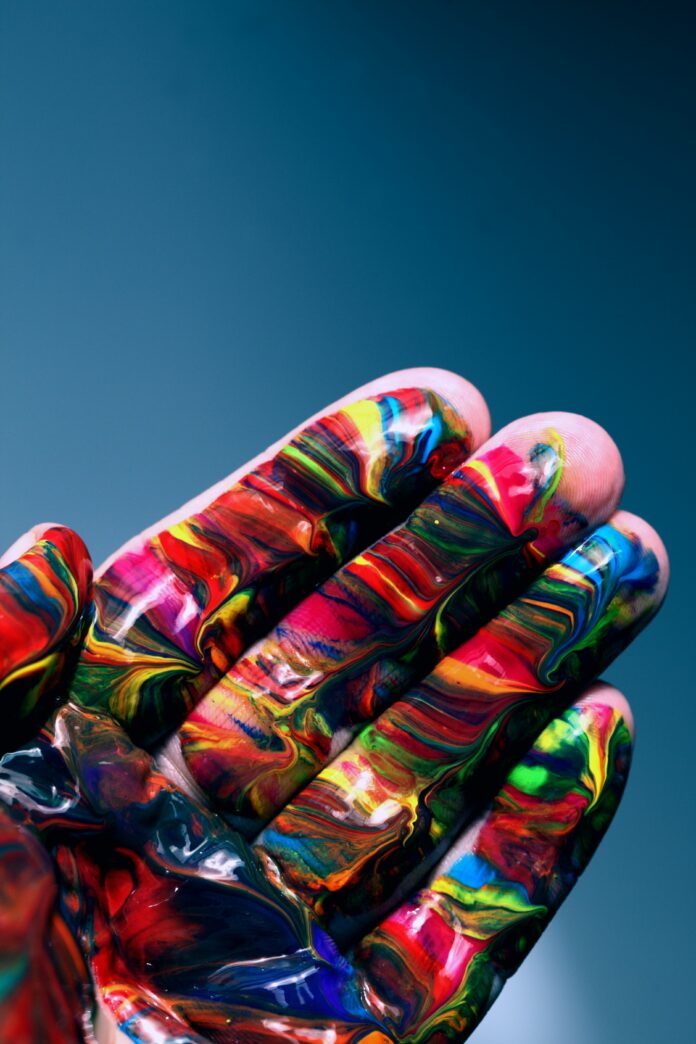
A hand is covered in all colours of paint imaginable. The paint is tightly layered, and looks complex.
The words we have traditionally used to define sexuality are contingent on a fixed gender. PHOTO: Sharon McCutcheon / Unsplash

By: Ciara Reid, SFU Student;  Maya Beninsteso, Peak Associate

Though gender is not inherently sexual, it does bear influence on the relationships we form — be they sexual or otherwise. 

SFU Student Ciara Reid and Peak Associate Maya Beninteso discuss.

CR: As a trans-person, I feel that my gender and sexuality, while separate parts of my identity, are deeply intertwined — and not always in a way that I fully understand. For a long time though, I didn’t think about how these two aspects of myself interacted. Especially as a teenager who wasn’t involved in any significant romantic relationships, I never felt these pieces collide. And why would I? I feel we often don’t engage in this type of self-analysis until we’re put in a situation where it becomes necessary. 

I do clearly remember what was maybe the first moment the interaction between gender and sexuality called my attention. I was about 19 years old and I had gone out to a queer event at The Cobalt (RIP). There, I bumped into someone who I had recently met, and who I had a serious interest in. 

As the evening drew to a close, this person quite bluntly asked me about my sexuality — specifically, if I was a lesbian. I was stumped, not only by his bluntness, but also by my inability to find a clear answer. No, I was not a lesbian (although, I was often mistaken for one) — but words also failed to provide a good replacement descriptor. I explained I was non-binary, and really didn’t know how to describe my sexuality because lesbian and gay held too many gendered assumptions which clashed with my self-understanding; and bi/pansexual didn’t feel like they could capture the specificity of the people I was interested in. 

I later found the word queer, and I still stick to that as my self-descriptor today; but, I continue to think about that moment, and the interactions between gender and sexuality that have become more present in my life as I have progressed through transition. 

MB: There is much I’m still working on regarding my sexuality and gender, and how they relate to one another. Getting to know myself as a sexual being has been proven to be quite complicated. In my youth, I was a “girly girl” and I had no doubt that I liked men. I later realized this identity was something that was reinforced, as opposed to an identity that was wholly my own. 

In high school, I slowly realized I was in love with a teammate. As someone who was always interested in men, I was confused and it took me two years to realize I had those feelings for her. Once I came to this realization, I questioned whether I truly liked men. When I eventually kissed a guy, it felt the way I thought it would — good. This only made me more confused as I didn’t know someone could love men and women. When I stumbled upon the term “bisexual,” I felt an immense amount of validation. I knew that was my label.

Although this revelation made me feel at ease, I struggled with my gender and gender expression. For a little while, I felt compelled to dress more masculinely. I had no idea I could just be me — I thought my gender expression and the way I carried out my interpersonal relationships had to change once I announced my sexuality. I thought everything would change — nothing did.

More recently, I have been questioning my gender and have pondered the use of (she/they) pronouns. I wouldn’t mind if people referred to me as such but — honestly — so long as people refer to me in a respectful manner, I don’t really care what pronouns are used. 

CR: Your point about gender expression really resonates with me. I think gender expression is a place in which the intersection of gender and sexuality can be particularly noticeable. People often signal their sexuality through their gender expression in various intricate ways such as a particular haircut, piercing, style of clothing, or mannerism. These associations between presentation and sexuality aren’t always helpful or clear though. Because of the ways in which gender and sexuality operate separately, a person could be drawn to a particular form of gender presentation that signals a sexuality that does not resonate for them. I personally find a lot of joy in signaling my queerness through my presentation, but I think its important to keep in mind how complex these things are — and how our limited ways of communicating about these things can sometimes fail us. 

MB: I love finding new ways to signal my queerness as well but, it can be problematic when we attribute certain styles to an identity — just because someone engages in a specific behaviour doesn’t necessarily mean they are queer. That could be someone’s way of expressing themselves without any underlying signal. 

That doesn’t mean there’s a lack of ways to communicate sexuality, though. Last semester, I asked a girl in one of my classes whether she listened to girl in red (asking if she was lesbian) and she said yes. I said I listen to “Sweater Weather” (signaling that I am bi). I find it so interesting that people can have a full blown, queer-coded, conversation. She and I are now best friends and we laugh about the bold inquiry. 

CR: It is pretty fantastic that we as queer people are able to communicate so much in such subtle ways. Beyond how fun it is, these signals are also rooted in our history as queer people, and our efforts to stay safe (while still visible to each other) in potentially hostile environments. Queer semiotics (how we use signs and signals to communicate meaning) can also still serve this function, and I think that is super important to keep in mind.

As I have started a physical transition, I’ve been increasingly experiencing the complex intersections between my gender and sexuality. Taking steps into a physical transition has enabled me to experience my gender and my body in ways that feel simultaneously more honest, and new. 

Part of this experience has been a shifting understanding of my sexuality. I have long had complex feelings about my past attractions to men (for many reasons, including a concern about being perceived as cis and straight). Yet now, as my body has come to align itself better with who I am, I am realizing that these complicated feelings might start slipping away. 

It is hard to pin the interface between our genders and sexualities — and the nature of this connection will appear differently for different people throughout their lives. But it is always something that I have found fascinating and beneficial to spend time thinking about. You gotta love some healthy introspection.

Your 2022 SFSS presidential nominees

0
PHOTO: Gudrun Wai-Gunnarsson / The Peak

by Gurleen Aujla, Peak Associate

This year we have six candidates running for the Simon Fraser Student Society (SFSS) president position. Voting takes place February 15–17 through SFU Mail. 

Shariq Ahsan (he/him), Independent

Why did you decide to run for SFSS president? 

I’ve been involved with the SFSS for a long time. In that time, I’ve seen the student body lose faith in the SFSS and feel like they can’t rely on it. I want to show students that the SFSS is worth getting involved with and that real change can happen.  

What are your plans to support students during the ongoing COVID-19 pandemic? 

I want to make sure that the university gives [students] ample time to make informed decisions about their education. We’re going online for a semester, fine, give us ample notice so students who have families, commitments, etc. can plan accordingly. Our administration should empathize with the situation of students.

If elected, what would be your top three areas of focus? 

Firstly, I want to provide students [with] platforms in which they can voice their concerns and opinions. Secondly, I want to focus on empowering our clubs, unions, and groups on campus to better reach their membership. Finally, I want to regain the trust that many students have lost in the SFSS.

What leadership skills will you bring to this position? 

Above all else is my willingness to make sure the student body is heard. I have had the privilege of working with a lot of people in my many years as both a DSU/FSU President and it has provided me with many different perspectives. A true leader empowers his membership.


Liam Feng (he/him), Independent

Feng wearing a mask pointing at the camera in black and white
Liam Feng, Independent.

Why did you decide to run for SFSS president? 

I’m the most accurate student representation you’ll get. I struggle with schoolwork, I sleep at 2:00 a.m., I’m ambitious to change things despite a lack of experience/qualifications. And if I don’t get elected, you better believe I’m finding some other way to make a change.

What are your plans to support students during the ongoing COVID-19 pandemic? 

Excellent question. You best believe I am going to reopen that Student Union Building. I’m gonna give students more space to be people, and that is going to support them in the most direct way.

If elected, what would be your top three areas of focus? 

My three areas of focus: 

  1. You. 
  2. Making that sketchy inner council more trustworthy, and more importantly, verbally open. 
  3. I want more people to hear about [the SFSS] and care about it.

What leadership skills will you bring to this position? 

I can hustle. I’ll film commercials in the middle of the night to get votes. I busted into common rooms and lecture halls for nomination signatures. I can craft posters to catch attention in a certain way, because this election is worth gunning for.


Vincent Huang (he/him), SFU Change for Better

Huang smiling with a lighthouse in the background
Vincent Huang, SFU Change for Better.

Why did you decide to run for SFSS president? 

I love making positive impacts [on] people. By having discovered what the students need (and more in the future) and what can be improved at SFU, I could see myself [making] changes as SFSS president while working together with others on the same page and supporting one another.

What are your plans to support students during the ongoing COVID-19 pandemic? 

Other than adding 50 hand-sanitizer stations throughout the campus, I would love to improve the students’ mental health by offering a platform that allows students to voice their concerns and [be] heard, and providing more games like ping-pong tables for students to have fun between their busy schedules.

If elected, what would be your top three areas of focus? 

  1. Students’ mental health and beliefs that every one of them matters. 
  2. Free finance and investment education to emphasize its importance, allowing students to apply it in real life as early as possible. 
  3. Career simulations or workshops to polish the skills needed in workplaces through reliable practices.

What leadership skills will you bring to this position? 

As a leader, my people (including the students) are important. I will bring my selflessness and empathy for anything they need while providing directions and support so that they can learn, grow, feel rooted and belong in the community, and become the best versions of themselves as they should.


Dilraj Nijjar (he/him), Independent 

A headshot of Nijjar on a black background
Dilraj Nijjar, Independent.

Why did you decide to run for SFSS president? 

I joined SFU in Fall 2020. In these two years, I realized there is very little student involvement in SFSS decision-making. That’s when I decided that I will get students the transparency and power they deserve. It’s time we take back control of what’s rightfully ours.


What are your plans to support students during the ongoing COVID-19 pandemic? 

Because of COVID-19, students are divided into two major groups: those who want online classes and those who prefer in-person. They both have valid reasons. My plan is to demand a hybrid option for the first group while resuming in-person classes for the second group.

If elected, what would be your top three areas of focus? 

Top three areas of focus: 

  1. Push for bylaws that will make transparent decision-making a duty and not a choice.
  2. Providing better mental health resources, especially for international students. 
  3. Get a better extended health plan. 

What leadership skills will you bring to this position? 

I was the school president of my high school for three consecutive years and advocated for gender equality and more. Just a few weeks ago, I, along with a few friends, organized and led a BC flood relief food drive and collected donations of more than half a million dollars.


Helen Sofia Pahou (she/her), Stronger Together Party

A full body shot of Pahou smiling in front of the AQ
Helen Sofia Pahou, Stronger Together Party.

Why did you decide to run for SFSS president? 

Collectively, my team and I agreed that the SFSS is in dire need of change. At such turbulent times, students deserve an SFSS that fosters a student-centric, resourceful and welcoming government that serves all. If elected, I hope to reinforce that while rebuilding trust between students and the [SFSS].

What are your plans to support students during the ongoing COVID-19 pandemic? 

My team was [the] first to conduct a survey about students’ perspectives on the Spring 2022 return-to-campus. The barriers students face throughout the pandemic aren’t universal. Folks have different experiences and needs. Thus, I hope to foster a holistic SFSS that is careful in cultivating data as a guide for decision-making.

If elected, what would be your top three areas of focus? 

Out of a myriad of issues needing improvement, three key areas I’d focus on are: 

  1. Raising students’ awareness of their benefits and services via virtual town halls. 
  2. Empowering the SFSS Council with coherent policy training. 
  3. Utilizing periodic data-driven methods to include students within collective decision-making models.

What leadership skills will you bring to this position? 

Formerly as SFSS vice-chair and councillor for political science, I offer salient knowledge that’s central to the Society’s organization, procedures and bylaws. As [an] SFU senator, I advocate for improving student policies. However, being resilient is my most essential skill. I hope it’ll inspire students to be resilient too.


Sophonie Priebe (she/her), SFU Progressives

A full body shot of Priebe smiling inside of the AQ
Sophonie Priebe, SFU Progressives.

Why did you decide to run for SFSS president? 

To build on the legacy of radical student activism and build joy, celebration, and empower the community.

What are your plans to support students during the ongoing COVID-19 pandemic? 

As SFSS president, I will increase [student] supports through the distribution of the $400,000 passed previously to acquire resources to support students during the pandemic, such as N95 masks for students, push for hybrid learning on campus, and continue pushing for [the] introduction of rapid testing sites on campus.

If elected, what would be your top three areas of focus? 

I want to bring this spirit of community to the SFSS and build on the work that progressive student activists and allies have done. I will focus on advocating for student rights and equity, building a community of care and solidarity uniting all students, defending student safety during COVID-19.

What leadership skills will you bring to this position? 

I have a host of leadership skills from my previous experience with other amazing student groups. This past year, I got involved with a lot of efforts to build community, whether it be at the Gender, Sexuality, and Women’s Studies Student Union, the Students of Caribbean and African Ancestry or the Society of Arts & Social Sciences, I have helped to amplify students in any way I am able.


Pole dancing breaks the shackles of impending prejudices

0
A woman with her head back kicking her foot out on a pole with a white flowing dress.
An ultimate test of strength, flexibility, and endurance. Photo: Pixabay / Pexels

By: Vanshita Sethi, Peak Associate 

A pole dancing class is the very melting pot of diversity: participants of all occupations, ages, and genders express a full range of emotions like sensuality, anger and joy while working the pole. Pole dancing dates back to the 12ᵗʰ century, when it was performed only by men. China and India saw the emergence of the pole in various forms. While Chinese acrobats displayed acts of strength and skill on poles, standing as tall as nine metres in height, Indian wrestlers used wooden poles to train — a sport referred to as Mallakhamb

Pole dancing has seeped into dance genres worldwide including belly dancing, tango, rumba, and moulin rouge. However, the sensual hoochie coochie dance of the 1890s was the true pre-cursor of pole dancing. 

Nowadays there are three main genres of pole dancing: artistic, sport, and exotic. Looking for self-expression? Pole artistic combines music and movement to create a story. Those looking for a workout should take a shot at pole sport. Unlike its artistic counterpart, sport involves little dance and all acrobatic pole movements. Last but not least is exotic — meant for strappy heels and sensual moves. Professional dancers can compete at international competitions like “Miss Pole Dance World” or national competitions like “Miss Dance Pole.” 

Pole dancing is redefining the face of fitness wherein a few swings and lifts on the static pole can leave you catching your breath. However, the journey of pole dancing into what it is today wasn’t an easy one. Usually dismissed as a feminine erotic dance form, it has been a struggle for pole dancing to claim its much-awaited recognition as a competitive sport. It wasn’t until 2017 that the Global Association of International Sports Federation granted the International Pole Sports Federation official observer status as a legitimate sport — although it is yet to be recognized in the Olympics

But pole dancing is not just limited to tests of physical strength. AnnaKia, a professional aerialist and owner of House of Baelien told Vogue, “I was [ . . . ] struggling with the loss of my identity.”  For many, pole dancing has become a powerful symbol of pushing their bodies to the limit and embracing their sexuality while hanging upside down in the air. AnnaKia added, “Pole is for everyone and every body! As a whole we want to welcome everyone into our little piece of heaven.”

The beauty of pole dancing lies in its ability to allow participants to connect to their bodies on a much deeper level by exploring how they can move on the pole. It can give you a whole new appreciation of your body while allowing you to have fun doing so. Pole dancing can be anything you want it to be based on your comfort level: from a simple twirl to more demanding acrobatic positions. When you are on the pole, the world is your oyster. 


Sex, love, and podcasts: three recommendations for sex-positive content

0
Collage of three podcast covers. From left to right: Honeydew Me — two women in hot pink jumpsuits drinking cocktails; Girls Gotta Eat — two women mid-laugh, holding wine bottles; How C*m — a woman in bed holding a banana in one hand and a red book labelled “sex” in the other
Dive into discussions exploring sex and sexuality. PHOTO: Gudrun Wai-Gunnarsson / The Peak

By: Hannah Kazemi, SFU Student

Honeydew Me

Hosts Emma Norman and Cass Anderson step out of the bedroom and into the real world to do what many of us have been conditioned not to do: talk about sex. They bring sex-perts such as doctors and sex therapists into the conversation and ask the questions we’re a little too embarrassed to ask. They even take it a step further and individually explore sexual experiences that may be intimidating for the first time, and reflect on their experiences with the audience. Nothing is off limits: How can we effectively communicate our preferences and desires to a partner? How can we make boring sex more fun for ourselves and our partner? What the hell is mutual masturbation, and how can it spice up a relationship? With a focus on sex education for all genders and encouraging confidence in one’s sexuality, Honeydew Me discusses the good, the bad, and the awkward when it comes to sex and becoming comfortable in your own body.


Girls Gotta Eat

If you’re into comedy, hosts Ashley Hesseltine and Rayna Greenberg are your go-to gals! Full of witty humour and personal anecdotes, Girls Gotta Eat is a must-listen. They talk candidly about countless awkward Tinder dates, the time they sent a dirty text to the wrong person, how to plan a hookup, and more. Hesseltine and Greenberg chat about everything to do with sex, love, and relationships. In the process, they destigmatize sex and remove the stigma that typically comes with owning and embracing sexuality. There’s no shame in a bad Tinder date or a booty call gone wrong. Confidence is key, and there’s no shortage of it here. Girls Gotta Eat is all about being unafraid to explore sex, pleasure, and desires, even if it’s awkward, new, and doesn’t exactly go as planned.


How C*m

How Cm was started to help host Remy Kassimir reach “the big O” for the first time and is dedicated to exploring how and why so many cis women struggle to orgasm — either by themselves or with a partner. Kassimir brings in unofficial sex-perts such as porn stars, comedians, and other fun guests to talk all about orgasms. They also give tips and tricks to help Kassimir and her audience achieve their first orgasm. When someone with a vulva can’t orgasm, there are often feelings of shame, pressure, and failure that come with it. Many can’t orgasm from penetrative sex alone, but no one really tells them there are other ways. You might be thinking, “how cm?” Kassimir discusses this typically taboo topic with no shame, and empowers her audience to take control of their sexuality and explore what feels good. No more fake orgasms!

HIV Made Me Fabulous unpacks link between social inequity and sexual health

0
A woman laughing on the right with positive reviews on the left hand side
The film is narrated by Juno Roche (pictured above), whose personal story about living with HIV is featured in the film. PHOTO: Courtesy of Life and Love with HIV

By: Yelin Gemma Lee, News Writer

SFU health science professors Dr. Allison Carter and Dr. Angela Kaida presented their national study through the short film HIV Made Me Fabulous which premiered publicly for the first time at an online event on November 26, 2021. The researchers conducted a survey with over 1,400 women living with HIV across Canada who were part of the Canadian HIV Women’s Sexual and Reproductive Health Cohort Study.  

The Peak spoke to Carter, adjunct professor at SFU faculty of health sciences and senior lecturer at the Kirby Institute to learn more about the study. 

“We wanted to disseminate our research findings to a wide audience but we also knew that affecting people’s attitudes and emotions around HIV would require more than just sharing information and statistics and the science around undetectable = untransmittable,” said Carter. 

“We wanted to provoke emotion. And so we partnered with an incredible filmmaker, producer, and director Edmond Kilpatrick whose film uses embodied storytelling to connect with audiences.”

Carter explained the study focused on women’s individual health priorities and concerns such as satisfaction, pleasure, love, relationships, and sexual activity. One of their core findings was the diversity of experiences with sex and sexuality. About 49% of women in the study were not sexually active, whereas the other half were involved in several different relationship types. One in two women in this study viewed sex as an important part of their lives.

“There was a common thread of social inequity being related to sexual health outcomes so violence, poverty, HIV stigma, sexism, so women who scored higher in those areas tended to have poorer sexual outcomes,” said Carter. “I think that’s a really important finding because it tells us a lot about how we can promote sexual health — not just for this population but for the population as a whole. So, promoting sexual health is also about addressing social injustice.”

Carter said the main motivation of the study was to try and shift the narrative of women living with HIV from risk and disease to pleasure and positive sexual health. She said much of the public is still unaware of “undetectable = untransmittable,” which means that, with treatment, people who have an undetectable viral load of HIV in their blood cannot transmit the virus to their sexual partners.

“We hope that science can disrupt embodied prejudice and stigma and improve health and relationships and quality of life for women living with HIV,” said Carter. “Certainly we need to be, at the same time, as a society, addressing gender inequality, stigma, violence, and all of these other social determinants that can play a major role in outcomes for women living with HIV.”

Writer and campaigner Juno Roche wrote and narrated the film based on her experiences as a transwoman living with HIV since the 1990s. Carter said Roche was selected due to the provocative and radical perspectives present in her writing, which challenge preconceived prejudices.

Before public screening, the film underwent six to seven private screenings where discussions and a survey were conducted among “women living with HIV, service providers, clinicians, students, educators.” Carter said they used the feedback to create a discussion guide accompaniment for the film to facilitate positive conversations about the film’s themes.

“I think for a lot of women living with HIV they saw themselves and they saw their lives reflected on screen. Both the struggles, as well as the triumphs.”

Carter explained the biggest institutional issue that needs to be addressed is HIV stigma and the criminalization of non-disclosure of one’s status. Despite believing Canada has come a long way through the efforts of many activists, Carter believes there is more to be done. “We need more structural interventions around HIV stigma, to promote the latest science within the public, and to address discriminatory practices, behaviours, attitudes, and knowledge in the public. 

“That work really needs to be grounded in intersectionality and thinking about the diverse experiences of women living with HIV.”

The short film HIV Made Me Fabulous can be viewed through the Life and Love with HIV website, along with the accompanying discussion guide and survey. This film is based off of specific studies on sexual activity, sexual importance, relationships and love, and social justice and sexual health.

Monday Music: Songs that celebrate queer sexuality

0
"Monday Music" in giant yellow block letters with a red background
Monday Music: your weekly themed playlist. Image courtesy of The Peak.

By: Petra Chase

For many young adults, public school sex education is inadequate and promotes harmful messages surrounding queer sex. I still battle with the shame I was taught to feel at a young age. Music has always helped me work through these feelings and reminds me to be proud of my sexual identity. Here are three sex-positive songs that reflect this.

“Silk Chiffon” by MUNA feat. Phoebe Bridgers

Image credit: Saddest Factory Records / Dead Oceans

“Silk Chiffon” takes on a new meaning in this frivolous pop song. Electronic pop band MUNA and singer-songwriter Phoebe Bridgers capture the giddy infatuation and temptation of a potential meet cute. Who can resist noticing the cherry lipstick of a stranger or running into a pretty girl at the drugstore? With a message as lighthearted as the breezy melody, the lyrics, “If it feels good to me / Oh why wouldn’t it be?” is the perfect reminder your sexuality is valid.


“Bisexual Anthem” by Domo Wilson

Image credit: Domo Wilson

There are a lot of misconceptions about bisexuality, which even get perpetuated in the queer community. In her rap song “Bisexual Anthem,” Domo Wilson destroys them all, reminding you not to forget about the “B” in LGBTQIA2S+. As a bisexual woman, I’ve always felt pressure to “pick a side” and also felt dating men made me less valid. Listening to Domo Wilson’s unapologetic truth helped me dispel these illusions and regain my confidence.


“Fast Car” by Syd

Image credit: Syd Solo

“Fast Car” is a hazy sapphic reverie set against a synth backdrop. “I wanted to make something for the gay Black girls,” Syd shared in a press release. “I want them to see themselves in this and in me.” Syd’s sultry voice is beautiful in this track, especially as she sings, “We gon’ piss some people off / but right now that’s where we belong / right here in your fast car.” This is the perfect song for setting the mood with a sexual partner, or fantasizing about them.