Home Blog Page 268

Dr. Debra Thompson lectures on Black belonging in North America

0
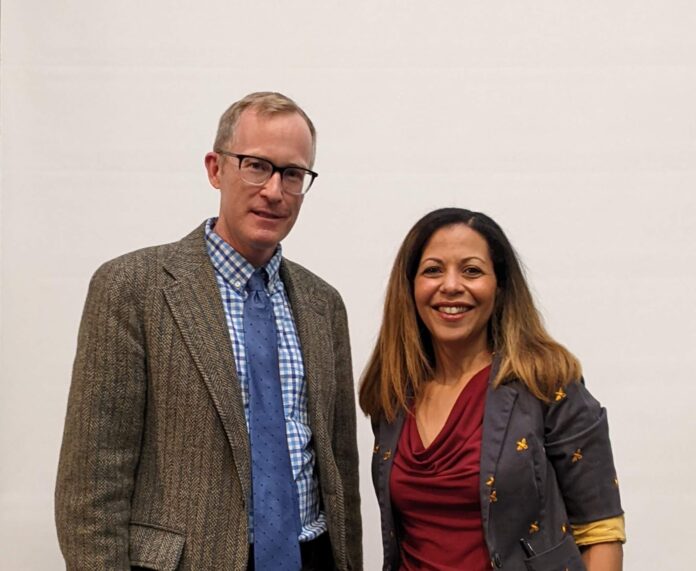
Two people standing next to each other, Dr. Thompson is on the right. Dr. Jeremy Brown of the history department is on the left.
Dr. Thompson (right) describes Canadian racism and political tactics used to diminish Black people’s accomplishment in Canada. PHOTO: SFU department of history

By: Yelin Gemma Lee, News Writer

On February 17, Dr. Debra Thompson presented, “Homegoing: Blackness and Belonging Across the Canada/US Border,” at the Harbour Event Centre. She is the second guest speaker in SFU department of history’s annual public lecture series

Her lecture focused on Black belonging and comparative race politics between US and Canada.

“I’ve spent the past 15 years thinking about the comparative politics of race, especially between Canada and the United States, but I’ve spent the past 40 years living in this body,” said Thompson. “Black History Month for me is Black past, present, and future, every day of the week and I think that I have some things to say.”

She described double consciousness — the tension and conflict of being both African American and American — as “constantly viewing one’s Black identity, experiences, behaviours, and potential through the eyes of white people who probably hate and fear you.

“It is a conflict not of loyalty or allegiance, but one characterized by the hard truth that the core ideas of the American national identity — life, liberty, pursuit of happiness — they are made possible to white Americans because of the deadly and violent subjugation of Black people,” she said.

“It is an exhausting tactic of Black survival defined by the necessity of being neither here nor there, yet everywhere at the same time.” 

She said racial politics in America are frequently used as a means to excuse and deny racism in Canada. Compared to US racism, Canadian racism is either believed to not exist or be far less entrenched and harmful. Thompson said, the “cognitive dissonance required to be righteously indignant about anti-Black racism in America but defensive when the perpetrators are the ‘us’ and not the ‘them’ is itself a particularly Canadian form of racism.”

Thompson put forward the rhetorical question of who had been asked, “Where are you really from?” She shared memories of her 20-year-old self and her response to use time and generational roots in Canada to claim her rightful place as a Canadian. 

“Generational status is frequently used as a proxy for assimilation into dominant culture. We often assume and a lot of data demonstrate that over time the characteristics that define immigrant groups and host societies become more and more similar,” explained Thompson, “We assume that the longer your family has been in this country, the more Canadian you become.” 

Despite this data, Thompson said even second-generation Black Canadians still struggle to experience belonging because of systemic racism that they disproportionately experience. She explained the question “where are you really from?” is a response of astonishment, as people assume Blackness is from elsewhere. 

Thompson said although Blackness is erased and absent from Canadian history and society, Black people are still needed for the profitable myth of Canadian multiculturalism. She gave the example of identities such as the Canadian “safe haven” from American racism. The myth places Canada as the “promised land” for people escaping slavery. 

“Our invisibility in national mythologies is neither a coincidence nor a mistake but rather a purposeful crafting of a vision of Canada that renders Black people invisible.”

Thompson said her experiences living and teaching in both Canada and the US have taught her “abolition is the only way forward.” She added, “I didn’t used to think this way. Young Deb never dreamed of this. My students made this radical term possible. You cannot be a decent teacher without a reservoir for hope, what the future holds, and who will bring it into being.    

“Police and prison abolition is just a single star in a constellation of Black radical politics that asks us to imagine a different kind of reality. We rage for the calamity of the present because we know, we dream, we believe that the world can be better than it is now.”

Thompson is an associate professor of political science at McGill University and Canada research chair on racial inequality in democratic societies. The third and final lecture in the Highlighting Black Histories public lecture series will host Caroline Shenaz Hossein and will be held on April 14, 2022. Registration is open on Eventbrite.

UBC students get $1,500 of mental health benefits, we get . . . $500?

0
A single 100-dollar bill, against a white background.
It’s hard to develop our minds when they’re in shambles. PHOTO: Piggybank / Unsplash

By: Meera Eragoda, Editor-in-Chief

In 2021, UBC’s student society, the UBC Alma Mater Society (AMS), increased their mental health benefits from $500 to $1,000. Earlier this year, they increased them again to $1,500 through use of their Health and Dental Reserve Fund. So why hasn’t the Simon Fraser Student Society (SFSS), who are responsible for administering SFU’s Studentcare program, done the same?

The AMS reviews their health and dental plan yearly to see what parts of the plan “students use most and where more coverage is needed,” fueling their decision for the latest increase. It’s unclear whether the SFSS does the same, as there is no easily accessible information that confirms this. According to the 2019–20 finance report, the SFSS has an additional $300,000 surplus, with surpluses having increased over the past five years. 

It’s been well established that due to the pandemic, mental health has suffered among post-secondary students. There are currently many barriers to accessing mental health support, but one of the biggest ones is cost. Even with the discount of choosing a therapist off the Studentcare Psychology Network, the starting price is $130 for a 50-minute session (a $30 discount). Studentcare covers 80% of this cost, allowing for reimbursement up to $500 per year — equivalent to four sessions. 

While this may be enough to help students through a bad day at work, exam season, or social troubles, for others this isn’t enough. A more sustained approach to mental health might require building up a relationship with a therapist, working through trauma, or needing time to find the type of therapy and therapist that works.

The SFSS successfully pushed for SFU’s Health & Counselling services to hire Black and Indigenous counsellors. However, there are no counsellors specifically trained to help trans, non-binary, or gender-diverse students; sometimes resulting in harm to students seeking help. Students may also want to find counsellors who are culturally or religiously competent, or who speak a language other than English. Any of this may motivate students to look for counselling outside of what SFU — or the Studentcare Psychology Network — has to offer, potentially increasing the cost of a session.

Whether students are looking for a counsellor within the Studentcare network or outside of it, $500 is a paltry amount of coverage given the current cost of counselling. Until mental health is publically funded, however, students are left accepting a minimal amount of sessions with therapists who may not even be the right fit for them. Under the circumstances, it’s understandable how some students might not choose to pursue counselling at all. 

Of course, funding is more complicated than it seems. As reflected in the health and dental plan referendum question to increase fees, costs and usage are rising, with the biggest driver being dental. As of the 2019–20 VP Finance Report (the most recent report available), the SFSS has been covering a $700,000 deficit out of their Health Plan reserve fund. 

But this seems to be more than an issue of just administrative finances. The SFSS has proven they will find the money when necessary, as seen by their increased funding of other equity projects and Council stipends. 

Perhaps what is needed is the $30 student fee increase that failed to pass in the referendum. If this is the case, the SFSS needs to undertake a better public outreach campaign to educate students on how the health plan benefits them. If accessing mental health care is a priority for the SFSS, they should follow in the footsteps of the AMS and increase mental health coverage.

Vehicle on fire at Maggie Benston Centre parkade

0
Cause of the fire is still unknown, according to Ringrose. PHOTO: Amirul Anirban / The Peak

By: Yelin Gemma Lee, News Writer

On the afternoon of February 10, a vehicle fire was reported at the SFU Burnaby campus. The cause is unknown.  According to Andrea Ringrose, senior director of Campus Public Safety (CPS), a contractor saw the first signs of smoke coming from a vehicle in level 7000 of the West Mall Centre parkade and contacted CPS at 2:15 p.m.

This is the second car fire incident at SFU. The last incident in July 2021 involved three cars catching on fire at the West Mall parkade. 

The Peak spoke to Ringrose to learn more about the incident. “With Burnaby Fire Department en route following our 911 call, all available CPS units were immediately dispatched to assess hazard(s), confirm if there were people requiring immediate assistance, ensure the safe movement of community members from the area, and to initiate traffic control and escort Burnaby Fire units,” said Ringrose. 

Ringrose said the “coordinated response came together quickly,” with the first CPS responders and traffic and road manager on-site within two minutes of the report. The first Burnaby fire truck was directed to the hazard by CPS within 10 minutes of the 911 call. 

The Peak reached out to the Burnaby Fire Department for a comment, but didn’t receive a response before the publication deadline. 

The Burnaby Fire Department, CPS supervisors, traffic and road safety team, and security staff were all collectively involved in addressing the incident. Additionally, Ringrose said staff from meeting, event, and conference services, and parking enforcement helped with crowd control and redirecting people and vehicles to safety. She emphasized many community members were involved in addressing the situation and ensuring public safety including facilities, safety and risk services, contractors, and SFU marketing and communications department. 

When witnessing a potential hazard, Ringrose advised students and community members proceed in the following order: 

  1. Get yourself to safety, 
  2. Call 911 if the situation could require fire, police, or ambulatory services, and 
  3. Notify SFU CPS. 

At that point, students should not re-enter the hazardous area and should follow the directions of CPS and other emergency personnel. 

Ringrose highly recommends SFU community members save the SFU CPS urgent phone number in their phone, as well as download the SFU Snap app with notifications enabled. Emergency notifications and updates are posted on the SFU Snap app and the SFU Twitter account.

“Thanks to the SFU community for coming together to keep each other safe: The contractor who reported the first sign of smoke, the managers in the area that evacuated people as a precaution and the patience of staff, faculty and students who calmly cleared the area despite the disruption to their afternoon!” 

SFU Board of Governors declares climate emergency

0
factories in the background with smoke
Over 100 staff and faculty wrote an open letter criticizing the school's inaction against pipeline extensions. PHOTO: Chris LeBoutillier / Unsplash

By: Luke Faulks, Staff Writer

After years of lobbying from climate advocacy group SFU350, the Board of Governors (BOG) formally declared a climate emergency on January 28. The Board’s vote approved most elements from the student group’s 2021 Climate Emergency Declaration (CED) open letter.

In a statement to The Peak, SFU350 said, “The declaration is really a concrete acknowledgment by the university of the climate crisis that we’re in and an understanding that the university does have a role to play.” 

SFU350 said while they are “optimistic” about the declaration, “the day-to-day changes will be minimal in the lives of students right now.”

The declaration by BoG brought the university in line with six of seven demands from the letter. The six demands approved included:

  • decarbonize university facilities in accordance with the IPCC’s recommendations, 
  • divest from carbon-intensive investments, 
  • create a “climate hub” to engage the student population on the crisis, 
  • create future climate policy with an eye to climate justice for disenfranchised communities, educate students about climate change and climate justice, and
  • set out a series of immediate policy actions to take in a report by April 2022. 

The BoG didn’t agree to the call to “raise awareness and amplify” concerns around the Trans Mountain pipeline expansion (TMX). According to SFU350, the BoG argued it was “‘inappropriate’ to take a position on issues that fall beyond its ‘institutional mandate.’” SFU350 does not agree with this explanation. 

“The decision to divest, their statements on anti-Black racism, support for scholars in Afghanistan, and SFU Athletics team name change [ . . . ] were political,” said the advocacy group. 

“The City of Burnaby and the fire department remain concerned about safety issues surrounding TMX, as do Indigenous land defenders and allies,” said SFU350. “We will continue to push for safety, environmental awareness, and stand with Host Nations to uphold Indigenous rights and sovereignty surrounding TMX both on and off-campus.”

In a statement to The Peak, SFU writes it will not “take public positions on fossil fuel projects more generally or on other such issues” but “fosters open debate and supports the rights of its faculty members and students to engage in these issues.” 

On March 31, various faculty sent an open letter to the administration asking the school to “fully and swiftly engage with all the issues raised in SFU350’s CED.

“Declaring a climate emergency is important for emphasizing the urgency with which we need to act,” states the letter. “We call on SFU to raise awareness about the TMX pipeline in the SFU community and create opportunities for learning.”
 

The open letter from faculty criticized SFU’s decision to not speak on the TMX expansion. “If senior administration and the BoG chose to not speak out more directly against TMX, we ask that our academic freedom not be used to justify that decision. The notion that the university cannot take a stand on a political issue is not the leadership required from an engaged public institution in a climate emergency.” The letter was signed by over 100 staff.

The Board also voted to convert the 2014 Responsible Investment Committee into the “Climate Action and Sustainability Committee.”

SFU350 are “pleased to see that BoG agrees and made this change.”  

According to SFU’s statement, later this year, SFU Sustainability is set to work with the Sustainability Advisory Council “to develop the next iteration of the university’s sustainability plan,” which includes the school’s “climate action commitments.”

SFU350 was not dismayed by a lack of immediate policy action on their letter. Outside of getting the school to agree with the notion of a climate crisis, SFU350 said the move will help students and climate advocates pressure the university to keep its work. 

“This is a mechanism to hold SFU accountable for what they say they’re going to do to help mitigate and adapt to the climate emergency.”

Comics

0

Need to Know, Need to Go: Feb 28–Mar 13

0
Illustration of a blue calendar, with "Need to Know, Need to Go" written on top
Arts & Culture events to catch around the city. Image courtesy of Brianna Quan

By: Gurleen Aujla, Peak Associate

SFU ArtsLIVE: Banana Bread and Shawn Bullshields | March 1, 12:30 p.m.–1:30 p.m. | FREE | Convocation Mall

Presented by SFU Woodward’s Cultural Programs and the Student Experience Initiative, ArtsLIVE hosts live pop-ups and performances. This event features Banana Bread, “a 3-piece ukulele-based acoustic band composed of first-generation Japanese musicians.” They will be performing in English and Japanese. Also performing is Shawn Bullshields, a Blackfoot singer and guitarist focusing on pop, blues, country, and folk genres. SFU ArtsLIVE encourages attendees to engage with the performances as they feel comfortable; watch for a few minutes or bring your lunch and enjoy a break from your day. No pre-registration is required. 


Kímmapiiyipitssini: The Meaning of Empathy | March 2, 6:00 p.m.–7:00 p.m. | FREE | Online

The SFU Vancity Office of Community Engagement is hosting a screening and discussion of Kímmapiiyipitssini: The Meaning of Empathy. Following filmmaker Elle-Máijá Tailfeathers, it highlights the impact of the drug poisoning epidemic as a condition of settler colonial trauma on the Kainai Nation. The film shows community-led initiatives to deal with the impacts of the substance abuse crisis while striving for harm reduction practices. Kímmapiiyipitssini was a2021 winner of the Rogers Audience Award for Best Canadian Documentary. Tailfeathers also received the award for Emerging Canadian Filmmaker that same year. Registrants will be able to view the film one week before the discussion event. Register on Eventbrite.


One Book One SFU: Hiromi Goto’s Shadow Life | March 9, 7:00 p.m. | FREE | Online

Join SFU Library for a conversation with Hiromi Goto, a Japanese emigrant and author of Shadow Life. Goto will be joined by Sarah Leavitt, author and UBC professor, and Erica Hiroka Isomura, a Chinese Canadian and fourth generation Japanese multi-disciplinary artist. Shadow Life is a graphic novel about a 76-year-old widow who, after being placed in an assisted living home by her daughters, secretly finds a bachelor apartment to live in. Shadow Life is the 2022 Asian/Pacific American Literature Award Winner for Adult Fiction. Copies of the book are available at all three campus libraries. Pre-registration for this event is required through Eventbrite.


YWIB International Women’s Day Conference | March 12, 4:00 p.m.–6:30 p.m. | $6.32–8.45 | Online

The SFU Young Women in Business (YWIB) club is hosting its annual conference celebrating International Women’s Day. This year’s theme is “Own Who You Are,” to reflect on individuals’ characteristics in order to break predetermined expectations and “how they’re able to positively impact the world.” The event will feature a panel discussion, keynote speaker, and networking sessions between professionals and students. A portion of ticket sales will be donated to the Downtown Eastside Women’s Centre. To purchase a ticket, register on Eventbrite; early bird pricing ends on February 28.

SFU’s financial aid falls short of helping international students

0
A student is in a booth, running their hand over their forehead. A laptop is open in front of them, decorated with stickers. They look stressed about broad circumstance, which is not helped by whatever they’re seeing on-screen.
Financial aid is nice, but really doesn’t measure up to the problem of academic fees. PHOTO: Tim Gouw / Unsplash

By: Tamanna T., Staff Writer

University is very freaking expensive. As an international fourth-year Arts and Social Sciences student, I pay between $12,000 to $13,000 every semester. That’s a large sum of money. The stress of every tuition deadline starts wreaking havoc in most middle-class homes once enrollment dates are out. Amidst all the tension, bursary applications open up, and the students are reminded of the financial restraints of university life. Despite reverently applying for bursaries and grants, do they help much? As an international student, not really. 

Bursary applications are due in the last month of every semester, right when exams are about to begin, so it’s hard enough to remember to apply in the first place. Even if you do manage to apply on time, students don’t hear back until the middle of the next semester — right in the thick of midterm season. This bursary system clearly doesn’t consider students’ mental health, because the timings of these deadlines are atrocious. 

The amount offered by bursaries, grants, and scholarships is not enough to ease the financial burden on students. Most of the international students I know have taken additional student loans — sponsored by their home country — to financially sustain themselves in Canada. Still, some of these students remain ineligible for financial aid.

In my experience, I have usually used the amount given by these awards to pay for bills and maybe groceries, but it has never really helped much in regards to tuition. While financial aid is much appreciated, the majority of awards are under $1,000 — barely enough to cover a month’s rent, let alone university costs. 

Bursaries and awards are described as “a supplemental source of funding” that is intended to help students financially. If you ask me, they fail to do that in an impactful way, even for domestic students whose tuition generally caps out around $4,000 a semester. SFU bursaries and awards fall short in de-stressing students facing financial issues. 

A different, more efficient, system is needed to assist students experiencing financial strain. A great start would be to start offering bursaries earlier in the semester, rather than in the middle of midterm season. This would help students manage their finances and costs in a better headspace, and avoid existing in precarity until week seven, wondering if they’re going to get financial aid at all. 

Currently, international students engage with the same financial aid system as domestic students. There really needs to be a separate process for international students, which assesses financial needs according to the amount of tuition they pay.  

This could require more proof of financial distress, and in many cases this should be feasible. While this offloads some work onto students, a more robust financial aid system might allow a student to survive off only two jobs, as opposed to three or more. Though this is still a lot of work, it would be an improvement over the current conditions for international students.

With SFU’s continued operating surpluses, students could be getting better and more consistent funding to help them remain enrolled and study with a bit more ease. It is high time that better assessment is done with each application to evaluate individual needs, as well as addressing what SFU can provide as financial awards to the student. If there is a tuition hike every consecutive year, why doesn’t the amount of awards and bursaries provided also increase?

Councillors vote to re-open the Student Union Building

0
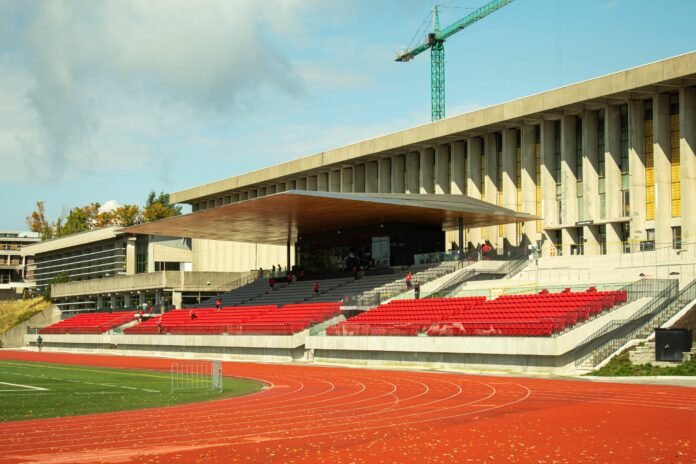
SFU stadium with red seats
Krystal Chan / The Peak

By: Karissa Ketter, News Writer

Vote on re-opening of the Student Union Building (SUB)

On January 20, the SFSS announced they were closing the SUB due to COVID-19 safety. They had tentatively scheduled the SUB to re-open on February 18, 2022. 

At the February 16 Council meeting, a motion was made to re-open the SUB on February 22, 2022. The decision to extend the opening came from the re-opening colliding with a weekend and a statutory holiday, as February 21 was Family Day. The motion proposed the SUB re-open at reduced capacity to limit the potential for COVID-19 transmission within the space. 

Vice-president events and student affairs Jess Dela Cruz noted the executive committee has been planning the reduced capacity model alongside SUB building staff for about a month. She reported some seats in the common study areas have been removed to encourage social distancing. 

This allows students the option to sit in single-occupancy areas or gather in groups within the SUB.

“The SFSS is obviously taking a safer approach than SFU and the government to reduce the transmission of COVID-19 within our spaces,” said Dela Cruz. 

Matthew Provost, vice-president external and community affairs, added the SFSS is planning to open bookable rooms to immunocompromised students and students who live with immunocompromised household members through SFU’s Disability and Neurodivergent Alliance. The details of bookings have not yet been finalized.

Health science student representative Jocelle Refol asked whether there would be a timeline for the reduced capacity model. 

Provost noted the executive committee is currently planning to slowly transition and reach full capacity for the Fall 2022 semester. However, the incoming SFSS executives will make the final decision. 

Provost also noted that despite the extreme amount of student backlash they faced for their decision to close the SUB, the SFSS says they had the community’s health interest in mind.

Hilary Tsui, a student in attendance, shared their experience with finding a study space with Council. Tsui is in favour of re-opening the SUB, and highlighted the lack of study space for small groups elsewhere on campus and how their study time is regularly interrupted by crowds. 

The motion to open the SUB on February 22 at a reduced capacity model passed unanimously. 

The Council purchases FN95 masks and personal protective equipment for students

The executive committee brought forth a motion for Council to allocate $30,000 to the purchase of FN95 masks and various personal protective equipment (PPE) for students across campus. 

Provost noted with the opening of the SUB, the executive committee felt it was important to provide PPE for students in that space. The masks will be available to students for free.

According to the SFSS, the FN95 masks are medical grade PPE with similarities to KN95 face masks. They are being sourced from local Vancouver businesses and are made in Canada. 

Sustainable energy engineering student society representative Mohammed Al-Sheboul raised the question around allocating some of that fund to making rapid-testing available on campus. 

Provost reported he contacted the BCCDC in December 2021 to apply for SFU to have rapid testing available. They have not yet received confirmation of their application. 

At the time of writing, SFU has rapid antigen test kits available for in-person students at all three campuses.

The Council passed this motion unanimously. 

Seating and space restrictions at the SUB are separated by floor levels. For more information, students can consult the SFSS’s website

Top Ten Vancouver Cafés

0
Coffee beans
Hand roasted beans from local café Farmer’s Table. PHOTO: Louis Hansel / Unsplash

By: Sara Brinkac, Humour Editor

1. Black Coffee

An easy Top Ten contender, this café provides Vancouver coffee lovers the simplicity they’re sometimes looking for. By stripping down all the parts of the business, including their menu, Black Coffee tells the customer exactly what they’re getting and how they’re getting it. 

Cost of a 12 oz. cup: $5.75


2. The Hot Spot

Both a Hot Spot for coffee lovers and a literal hot spot due to its being located in an infrared yoga studio, this establishment is Vancouver’s favourite multi-activity café. The Hot Spot’s one of a kind studio allows customers to sip a cup of rainwater brewed tea from the inner peace of their yoga mat, and it’s delightful. Once you come you’ll want to nama-stay forever. 

Cost of a 12 oz. cup: $10.75


3. Farmer’s Table

While all Vancouver cafés care about ethically sourced ingredients, only Farmer’s Table is committed to a completely locally sourced venture. With each bean strenuously grown in BC’s coffee resistant climate and each table handcrafted by confused farmers, Farmer’s Table is handcrafted through and through. As soon as you walk into this café you know it was built with the bare, amateur hands of Vancouverites committed to the cause of “local.” 

Cost of a 12 oz. cup: $15.00


4. The Temperate Forest Café

If there’s one thing Vancouver loves in it’s cafés, it’s plants. And lots of them. Literally taking from BC’s own temperate rainforest, this café is adorned with the most rare and beautiful plants nature has to offer. Grab your friends head down to Mount Pleasant and try our personal favourite roast “bold growth forests.”

Cost for a 12 oz. cup: $8.50


5. gęñtrįfÿ 

Taking a page out of Black Coffee’s playbook, this café makes its business model clear in its name. Opening sterile, modern locations in all of Vancouver’s character communities, gęñtrįfÿ has caught the attention of coffee trend followers everywhere. With a European look and baristas that clear citizens from the premises, this café is the perfect place to go when you want to drink up the future of our city. 

Cost for a 12 oz. cup: $13.50


6. Unparalleled Roasters
“We keep seeing businesses using 49th parallel in their names for some reason,” says café owner T. Kups. “We didn’t want to confine ourselves to 49/100, we wanted to go above and beyond a cup of coffee.” And beyond a cup of coffee they have gone. With a beverage menu of over 300 different drinks, Unparalleled Roasters quench Vancouver’s unbridled thirst for large quantities of options.

Cost for a 12 oz. cup: $6.50


7. The Miner’s Pan 

While The Miner’s Pan has extremely mediocre food and coffee, we believe it’s their exquisitely Vancouver atmosphere that makes them an undeniable Top Ten pick. With raw wood, exposed light bulbs and a ceiling full of painted pipes, The Miner’s Pan reminds Vancouver of a nostalgic time we are constantly trying to revive. Personal favourites of the café atmosphere are the tin cups and literal miner’s pans they serve all their drinks and dishes in. 

Cost for a 12 oz. cup: $11.00


8. Pet and Stay

This café was opened with four cats, a dozen dogs, 32 hamsters, and a dream. To be the snuggliest, calmest, most hair-balled café in Vancouver. And they’ve achieved just that. Not only do frequenters of the café lovingly pet, they also insist on staying indefinitely because they “just can’t say goodbye” to the adorable, unadoptable animals. 

Cost for a 12 oz. cup: $10.25


9. jacques

Totally French, totally cool, totally jacques. With monotone music by French bands you’ve never heard of and blurry photographs of naked bodies in various positions hung on the walls, this café has the most undeniably cool atmosphere in town. You can’t help but just want to be a part of the jaques crowd, whatever the cost. 

Cost for a 12 oz. cup: $16.00 


10. Light Room

Finally the café everyone in Vancouver has been waiting for — a place completely dedicated to perfect lighting. With warm overhead tones and complimentary ring lights per table, it’s impossible to take an unflattering picture in Light Room. So grab your friend, order a cup of their famously complex latte art and start posing today. 

Cost for a 12 oz. cup: $18.50

Vancouver Black Library aims to foster connections that have been historically lost

0
Collage of book covers, primarily featuring the colours red, orange, and yellow.
Support this student-led initiative. PHOTO: Gudrun Wai-Gunnarsson / The Peak

By: Gurleen Aujla, Peak Associate

Maya Preshyon is at the forefront of an exciting and much-needed initiative to create the Vancouver Black Library (VBL). “I wanted for a long time to make a space that can fulfill community advocacy needs,” said Preshyon. She hopes VBL will “address the lack of community for Black people, specifically in Vancouver.” 

Preshyon, who is Zimbabwean and Indigenous, came up with the idea for VBL while pursuing a double major in social work and Indigenous studies. 

“I never thought that I would be at the forefront of an organization that’s pursuing change,” they said. However, finding it difficult to make substantial change in the local arts scene, they felt compelled to take action. “I started it not because I felt called to, but because I was so frustrated with not seeing the kind of changes I wanted to see,” Preshyon said.

The VBL will prioritize the needs of the Black community. Run by Black organizers, the library will serve as a safe space for Black and BIPOC community members to connect with each other and borrow books. It aims to become a launchpad for initiatives such as group therapy, poetry readings, and more. As for VBL’s first event, Preshyon intends to draw on her work organizing music festivals and her interest in DJing to host a soft launch karaoke party. 

Preshyon hopes the library will operate from the Hogan’s Alley area in Strathcona. This would pay homage to the Black community that took root there. Efforts are being made to revitalize the neighbourhood after its dismantling in 1970 with the construction of the Georgia and Dunsmuir Viaducts. However, Preshyon believes Vancouver is behind in terms of creating the infrastructure and localization of meaningful community support. “The effects of that are noticeable by every Black person,” she said. 

Speaking about VBL as part of a larger movement, Preshyon said marginalized groups need to continue mobilizing within themselves to form and share knowledge and infrastructure. They discussed how, since 2020, they’ve seen “clusters of people coming together, not just because of shared struggles but [also] celebrating shared joys. 

“It’s important to bring people together who cross paths but never really connect; that connectivity is a resource, and the more people are connected to it, the stronger the resource is.” 

VBL is currently accepting monetary and book donations. After surpassing their initial GoFundMe goal of $6,000, VBL is aiming for $35,000. At the time of publication, VBL has raised over $28,000. 

Funding will be put towards “paying rent for an accessible space that is large enough to house all the books that the community has requested and large enough to be a communal space.” Funds will also be used to compensate people for their operational support and for running workshops and programming, while keeping these offerings free to the public. 

Book donations can be dropped off (more information online) or accepted through their partnership with Massy Books. Massy Books will take used books or allow supporters to purchase books off of VBL’s wishlist at a discounted price. VBL has launched a toolkit to assist any group, including student clubs, organizations, and businesses interested in hosting their own book drive for VBL. 

Currently, their online database, featuring a PDF collection of books, is available to any member of the public for free. 

To stay updated on VBL’s activities and learn how you can get involved, follow them on Instagram, @vanblacklibrary, or visit their website.