Home Blog Page 268

Hamilton: new and old perspectives

0
A standing Hamilton is surrounded by the ensemble who are in a lunching position towards him
Hamilton is an explosive performance that brings a simple set come to life. Photo Courtesy of Joan Marcus.

By: Yelin Gemma Lee, Arts & Culture Editor and Yasmin Vejs Simsek, Staff Writer

This June, Broadway Across Canada is bringing the beloved and multiple award-winning musical Hamilton to Queen Elizabeth Theatre. Written by Lin-Manuel Miranda, the musical shook the world of theatre with a score rooted in rap, hip-hop, jazz, and R&B. Broadway Across Canada states it “has had a profound impact on culture, politics, and education.” The Pulitzer-winning musical is famous for casting predominantly Black and POC actors to tell a story of the Founding Fathers and the American Revolution.

One of us has rewatched Hamilton on Disney+ over ten times since its release to the streaming service, and one of us has never watched it before in any format. Here are our different and honest perspectives on what we thought of the live performance.

A whole new world — by Gem

Having watched and appreciated other movie versions of musicals I thought I knew what I was walking into but boy, was I wrong. The show began with a few upbeat songs back-to-back and it was then that I realized, in horror, that this three-hour story was not going to have any non-musical dialogue. Despite this, I was honestly floored by the hip-hop and R&B dominant score; it made for a refreshing and unexpected sound that gripped your attention. But because so many of the scores with important dialogue were done in rapid-fire rap, I missed (no exaggeration) 80% of what was said. With no way to add subtitles and having not watched Hamilton before, I strained to keep up with the details of the plot.

The storyline left me flabbergasted. I’m no history buff, but weren’t all of the Founding Fathers white? I wasn’t sure how I felt about the Founding Fathers being painted as morally righteous friends until I sat with it after the production. Given that casting choices and genres explored by the scorebook were intentional, I took this as a message that the origin story of America belonged to the African Americans. America was a country built by Black people, so what a different country it could have been if they had the political power to follow.

The main cast was excellent, with unbelievably powerful voices that never strained or faltered and facial expressions that quickly pivoted between dramatic changes in emotions. The ensemble, however, was what shocked me the most. The only other Broadway play I had seen used technology, sound, and lighting effects to do the work of the ensemble. In Hamilton, the ensemble was the shouting consciousness of the characters, the tension in the air, and the slowing and speeding of time. Based on how the ensemble moved, they clearly represented flashbacks and internal monologues, and several times they even became the deadly bullets moving through the air.

Although it was a very long performance and no one told me how much my eyes would hurt from the lighting, Hamilton left me feeling electrified.

Not my first rodeo — by Yasmin

If you told me two years ago that I would become obsessed with a musical about the American Revolution with no dialogue, to the point where the music takes up my entire Spotify Wrapped, I would have said, there’s no way! I had tickets to see Hamilton in London when the pandemic hit, and I’ve had to wait two years to finally watch it here in Vancouver and I was not disappointed.

The scenography was basically identical to the filmed stage version on Disney+, I found it evident that director Thomas Kail likely asked the cast to come into their characters in their own way, rather than attempt to mimic Lin-Manuel Miranda and ​​Leslie Odom Jr., who played the main characters Hamilton and Burr in the original Broadway version.  Most of the main cast did a wonderful job standing out with their vocal range and emotional delivery; however, I was disappointed with Julius Thomas III, who portrayed Alexander Hamilton. Compared to his fellow cast members, his voice did not project the same level of emotion and range and it was a tad disappointing after having watched Miranda deliver it with such heart.

When you’re listening to the soundtrack daily, you will have memorized the lines by now. And I am happy that I did because there is no way you can watch this stage production for the first time and understand more than half. The mix of rap and hip-hop makes for a fun and different broadway musical, but it doesn’t lend any help with understanding the complexities of the storyline. I suggest you watch the filmed version with subtitles before you go as it’ll only make you more excited to watch it live. Don’t worry, masks are still mandatory in the theatre, so no one will see you mouthing along to the lyrics.

YA lover disappointed SFU isn’t like their books

0
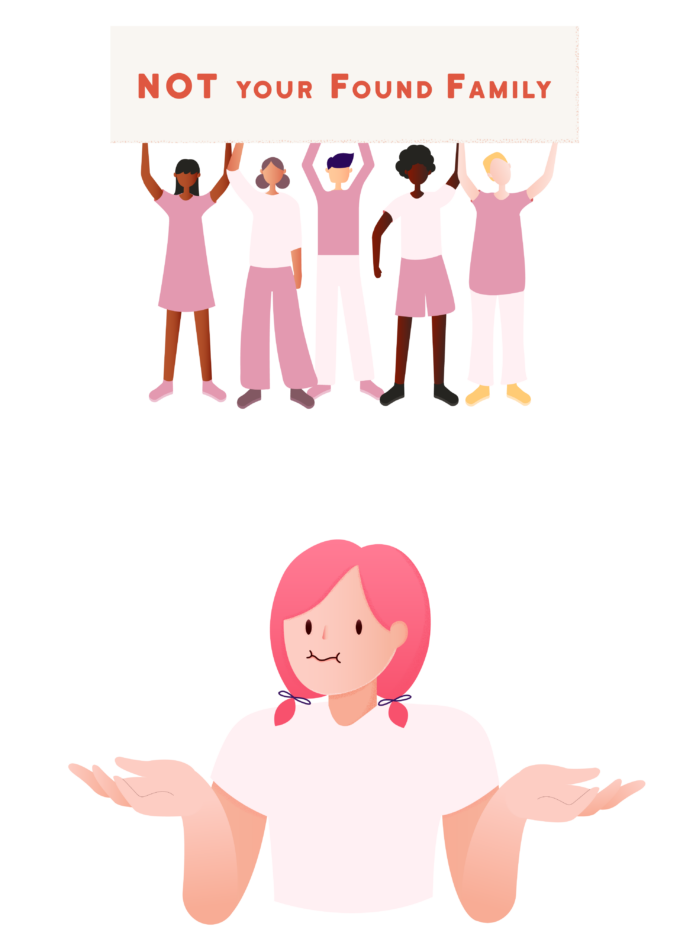
An illustration of a student in a messy bun shrugging as people behind her raise a sign that reads, “NOT YOUR FOUND FAMILY”
Ugh, where is my elf prince in a time like this?! ILLUSTRATION: Stella Nguyen / The Peak

By: Emily Huang, SFU Student

For many international students transitioning to university, the first year of school proves to be full of surprises, excitement, and disappointment. Mitzi Bitzy is among those first year students. A young woman passionate in literature and a self-proclaimed “average YA enjoyer,” requested to speak to The Peak, stating it was important she warned fellow YA enthusiasts about setting their expectations too high. 

“At first glance, it seemed that SFU had everything. A café situated in a charming little street, the goth-like interior architecture of the AQ building, and the chance to talk to the smart, quiet guy at the corner of a large theater,” Bitzi began hopefully. The freshman had even moved into the university residence area with hopes of maximizing her chance of living an “alternate universe (known to the fanfiction-initiated as AU) college/university” life. 

“The world unfortunately has its ways of reminding you that you are not the star of a school drama,” Bitzi said disappointedly. “So much for being the hero of your own story.” 

When asked about the experience that prompted this conversation, Bitzi said it was a culmination of disappointments starting from when she decided to use the wheel of names to choose her first semester courses. Seeing our crew’s confused expressions, she enthusiastically told The Peak, “In YA novels and fanfiction, the quiet, brooding guy would normally use this tactic because he wasn’t sure about what major he would declare himself into. He would then find a ‘sunshine significant other’ in the class and the two would get it on,” she said enthusiastically. 

Bitzi continued, stating that she used this method to test the theory, but to no avail. “This calls for a change in tactic. If you can’t join ‘em, ship ‘em,” she said, grinning ominously. “That reminds me, my roommate and I are taking the same class alongside her childhood friend.” 

The second incident that left Bitzi aghast was when her “found family ghosted her” after they were finished with a group project. Having used the wheel of names to pick her courses, Bitzi found herself in an introductory business course notoriously known for its dreaded final group project. “We’ve been through so much — prepared to succeed or fail gloriously together. I thought at this point that we were a found family.” Despite that, when Bitzi expressed her desire for their relationship to continue even after the semester, her eclectic group members did not remember her. 

“Hear that? That’s the sound of my broken heart.”

The last incident, according to Bitzi, was a “funny, but not really” case. Upon hearing the many paranormal hotspots of the Burnaby parking lot, she and her roommate decided to explore the campus “Shane and Ryan style.” 

“My roommate, Ari, was like, maybe we can find sexy Lucifer or whatever,” she chuckled. 

Unfortunately, despite the gothic architecture of SFU, there were no spooks to be had. No magic cupboards, nor a magic wall that led to a wizarding world. 

Despite the numerous times that her hopes had been let down, Bitzi would still like to remind her fellow YA enthusiasts that there are still many precious moments waiting to be experienced. She left us with her final statement. “This might not be the AU life you expected to have, but it is still a university life. The fun is just waiting by the corner for the right spark.” Bitzi winked, and walked out of the office mysteriously, messy bun and all.

What Grinds Our Gears: The “Devil’s advocate” guy

0
Someone holding up a speech bubble that reads “go to hell”
The advocatus diaboli can go straight to hell. Alyssa Umbal / The Peak

By: Yasmin Vejs Simsek, Staff Writer

“Just playing the devil’s advocate” is arguing for the sake of argument, and it helps nothing 

I’ve had people tell me that white cisgender straight men are discriminated against in western societies, that hiring quotas are unfair, and that I wouldn’t know because I’m a woman. Never mind that I am doing a Masters in gender studies. It’s so ludicrous I can only assume people say this to wind me up. Why engage then?

Who even gave these Luciferian advocates the autonomy to play their role? The only people that find pleasure in this concept are people from a privileged background who never had to argue and defend their identity or heritage to anyone. The same goes for men who feel the need to throw in a bit of mansplaining for good measure.  

Do we not have enough to fight about in our day-to-day lives? No, Gladys, we don’t need to hear you give the “other” point of view on LGBTQIA2S+ rights. And no, Bert, we don’t need to hear about your fake research into how global warming is a hoax. We’re still fighting a pandemic, witnessing a war that’s negatively impacting global trade, and hey! Monkey pox!  

Sure, some people want to argue the other side to things like the earth being flat and arguably it’s not hurting anyone directly per se. But the midway point between nonsense and sense is still nonsense. So next time you want to play Devil’s advocate, think about why. Is there a need for this discussion? Will anyone gain anything from it? Will I spontaneously combust if I don’t take on this role? If the answer is no to any of the above, practice silence and see your surroundings flourish.

And so the Devil’s advocates can go straight to hell.

SFU hosts virtual seminar on food systems

0
Seven farmers are working in the fields. The image is an aerial shot where the field spans a large distance.
Among Ione Smith’s main concerns is the erosion of BC’s top soil. PHOTO: Aboodi Vesakaran / Unsplash

By: Chloë Arneson, News Writer

On May 25, SFU hosted an online event to discuss the impact climate change has on food systems, farmland, and ecosystems. The session was hosted by Ione Smith, founder of Upland Agricultural Consulting, a cultural consulting company.

She explained the flooding that occurred in the Fraser Valley this past fall led to significant erosion in topsoil. “This has a huge impact because these soils take hundreds if not thousands of years to develop. So as much as I’m concerned about a drought or a wildfire, I’m really concerned about the loss of our topsoil.”

Smith had a plan to renew a sense of positivity and hope on the journey to protect our food systems, which she referred to as “the six R’s” — reconciliation, resilience, research, regeneration, redundancy, and radicalism.

“It’s really important that we address racism within our food systems and we address food sovereignty right off the bat. Without dealing with these issues we are not going to get to climate justice issues or food system justice issues,” said Smith.

Smith opened the conversation by explaining the challenges to the local food systems. “Most of us don’t only eat what’s coming out of our garden or from the local farms in our community. We are often eating products that are based and grown far around the world that have been processed and shipped to us,” she said. “In fact, what most of our food on a day to day basis is reliant on are things like cheap migrant labour, tons of processing and added sugars, salts and fats. And at the end of the day, unfortunately quite a lot of waste.

“As much as climate change is impacting our food system, our food system is also impacting climate change. It’s a give and take relationship,” she said.

The discussion highlighted despite the overwhelming issues presented by climate change and climate doom, there are a multitude of strategies that exist to preserve food systems and climate justice. Smith noted climate change is our new reality — we need to accept our circumstances and do what we can to deal with it. 

Smith explained, “The weather patterns particularly around rain and snow events are changing. We’re seeing a hugely volatile system. We’re seeing a lot more droughts and then a lot more flooding. Nothing is consistent anymore with regards to our precipitation. Not just in BC and not just in Canada, but worldwide.”

One of the projects her company worked towards was helping the Líl̓wat Nation create an agricultural business plan. “They are creating a social movement out of it where they are feeding the families within the community first and foremost. The primary objective is community wellness and they’re selling excess food at the Pemberton farmers market and all of those funds go back into the farm,” said Smith.

Smith and her team have no intentions of stopping there. “We’ve got close to 20 projects on the go right now,” Smith said. Their website states their goal is to work “collaboratively with land use professionals around the province to improve local food systems.”

You learn about Upland Agricultural Consulting and their upcoming projects on their website or follow their Instagram for more updates.

Vancouver’s only social detox program for youth is closing

0
Rainbow Dykeman, a protest organizer, is standing behind a large yellow sign that reads “bring back youth detox.”
VCH accelerated the program’s closure from June 3 to May 21 due to staff shortages. PHOTO: Devin Avery / Unsplash

By: Isabella Urbani, Staff Writer

On May 21, the Directions Youth Services (DYS) social detox program came to an end. DYS aimed to support youth dealing with homelessness as a result of substance abuse. Their detox program offered a safe space for youth under the age of 21 to stay while coming off drugs. They also offered drop-ins and safehouses, among other services. 

In 2020 alone, DYS had over 21,000 visits to their centre. But back in December, Vancouver Coastal Health (VCH) informed the organization they had decided to pull their funding. The Peak reached out to Emily Luba, Rainbow Dykeman, Katey Kincaid, and Kali-Olt Sedgemore, who helped plan a rally on May 22, to protest VCH’s decision after Becca Norris began the petition

“The youth are going to die without it,” said Dykeman, a harm reduction activist. “I think it’s a huge joke that VCH is not giving real answers about anything.” 

Sedgemore referred to the program as one of a kind. “This is the only service that really incorporates building connections and relationships that allows a break from street life if you don’t have a stable home,” they explained. 

Social detoxing is where detoxing occurs in a structured community based environment. Support services such as therapy and aftercare are offered. Home-based detoxing occurs in unsupervised settings where the individual detoxes alone. It is considered to be more dangerous because the chance of relapse is increased when unsupervised. Medical detox occurs under supervision of licensed medical professionals. They can administer medication to manage withdrawal symptoms and monitor the health of the individual.

The Peak reached out to VCH to find more about  the program’s closure. According to VCH, the current social detox model, which houses youth while they withdraw from drugs, is no longer the best option. “The landscape of substance use care has changed,” explained VCH. “For some clients, social detox as a stand-alone treatment can cause greater harm and put them at risk of overdose and being discharged.” VCH did not expand on why this is.

Dykeman, who spent some time at DYS’ drop-in centre, believed this couldn’t be farther from the truth. “I was one of those youth who fell through the crack of every system ever,” Dykeman shared. “It’s one of the only places youth have to be like ‘I need help, everything else has failed, what do I do now?’”

Luba said although VCH is abandoning the social detox model, they didn’t initially provide DYS with the adequate funding to host a medical detox. She said medical detoxing is “essential for people detoxing from specific substances which can cause death during withdrawal, such as benzodiazepines,” but don’t “delegitimize” a social detox. 

“It doesn’t make sense to close the social [detox centre] just because it isn’t meeting the needs of all youth,” explained Luba. She added during her time working at DYS, youth prefered to detox there instead of at other centres with older users which they found to be more “alienating.” 

Kincaid added the benefit of social detoxing is feeling more at home and less like you’re in a hospital. At DYS, each person has their own room, television, and access to a stocked fridge. Dykeman referred to the service as a map guiding youth in the right direction, hence its name. “Sometimes just knowing that you’re not alone is the only thing that keeps people alive,” said Dykeman. They were able to remain sober while living on the streets for two years with the help of DYS.

Instead, due to a “significant community engagement” research project, VCH has transitioned to a home-based detox method, ensuring youth without homes will have priority for VCH’s detox sites. This effort includes a new outreach team specifically designated to the Downtown Eastside. 

Kincaid believed the more outreach the better, but not at the expense of the entire social detox program. “We need more services but it is not a replacement for a social detox like Directions.” She added youth in family homes or foster care would be less likely to be allowed to do a detox at home. 

VCH moved the program’s closure from June 3 to May 21 due to staff shortages. VCH expressed that despite the earlier closure, they do not anticipate any gaps between the start of their new program and the ceasure of their old one. Luba doesn’t think this is attainable. “There will be a gap much longer than two weeks in services as it takes months if not years for youth to become familiar — let alone trust new services and service-providers,” she explained. 

Dykeman, on the other hand, thought the rescheduling had more to do with the rally held on May 22. A lot of people were unaware of the program’s closure, said Dykeman. They think this is because media coverage has been minimal.

Today, Becca Norris’ petition against the closure has nearly 8,000 signatures online. A template script for people to send off to VCH representatives has been used over 200 times, said Luba.

There is still much to be done about BC’s ongoing opioid and drug crisis. Kincaid believes there should be at least two youth detoxes in Vancouver, one medical and one social, to cater to the needs of different people. She urged people to hold the government accountable instead of blaming people suffering from substance abuse. 

“We have moms and dads and sisters and brothers. Sometimes, we even have children. We feel pain and sadness and grief just like everyone else,” she said.

Luba wanted VCH to retract the program’s closure, allocate more money to pay for nurses, and give patients the opportunity to choose between a medical or social detox. She also calls upon the VCH to start listening to the voices of youth who “are in charge of their own healing” instead of dictating the decision themselves.

Dykeman believes the VCH and the government shouldn’t “make decisions about services for people without talking to the people who use those services.” They added if VCH “had spent [time] talking to ten youth about this, they would have understood this is not something to let go.” 

You can find the petition and open letter here, as well as Sedgemore’s co-authored calls to action about harm reduction. 

Debating unreality: Listening to “the other side” is overrated if we can’t agree on a shared reality

0
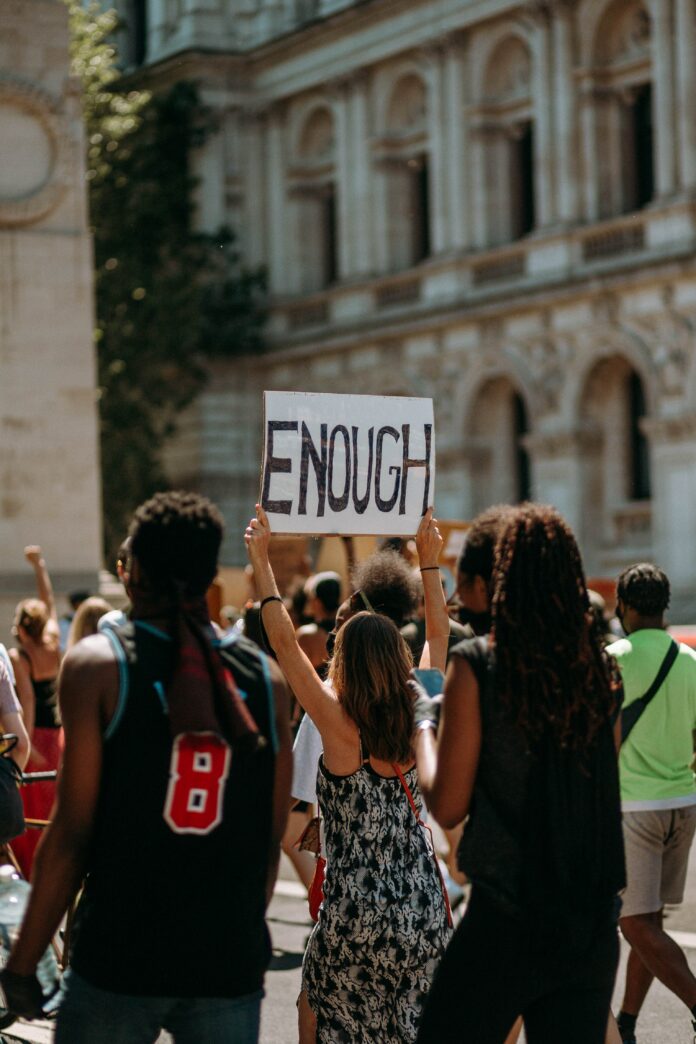
Protestor holding up an “enough” sign
Debating the challenges of our time is impossible without an agreed-upon set of facts. Liam Edwards, Unsplash

By: Olivia Visser, Staff Writer

You’ve heard it before: “Both sides have their issues.” Or even, “Both sides of political discussions deserve to be heard.” Popular media often promotes the value of civility, which mostly involves an empathetic approach towards “the other side.” However, it’s not always appropriate to consider both sides of an argument. Don’t get me wrong, I’m not saying that you shouldn’t listen to others’ opinions. Listening to the other side can be valuable, but it’s meaningless if we can’t agree on a shared reality or values.  

As a direct result of discrepant facts, both sides of a discussion don’t always have equal value. For example, the COVID-19 pandemic has triggered conspiracy theories about the virus’ origins, vaccines, and its very existence. Both sides are not equally valid when one group’s argument lies mostly in falsehoods. The extensive peer-reviewed research conducted on COVID-19 is far more credible than fringe news sites that spout conspiracy theories. 

There’s probably no better long-term example of how distinct citizens’ realities are than the issue of climate change. It’s long been established by the scientific community that climate change poses a direct threat to humanity. The United Nations Intergovernmental Panel on Climate Change found that increased climate events like “heatwaves, droughts, and floods are already exceeding plants’ and animals’ tolerance thresholds.”  

Climate deniers either downplay or outright deny reality. But climate denial, like COVID-19 denial, is not a harmless opinion.

In part because weak facts underpin their worldviews, “listening to the other side” reveals a severe conflict of values. At the start of the pandemic, the lieutenant governor of Texas, Dan Patrick, pushed for a swift reopening of the economy. He told Fox News, “Those of us who are 70 plus, we’ll take care of ourselves. But don’t sacrifice the country.” That’s great for you, Dan, but some of us enjoy being alive more than working. On COVID-19, one side’s arguments directly affect some of the most vulnerable members of our society. Conspiracy theorists put the lives of immunocompromised people at risk by spreading disinformation discouraging mask use, vaccines, and social distancing. That’s more than just a difference in opinion, it’s dangerous. 

Much like COVID-19 conspiracies, the effects of denying climate change will impact the world’s vulnerable populations the most. Unsurprisingly, the richest countries are the biggest contributors to carbon emissions: China, the United States, and the European Union are responsible for 41.5% of global emissions, while the “bottom 100 countries” account for only 3.6%. Climate denial rhetoric in those countries prompts inertia when we should be calling on governments and corporations to decrease their emissions alongside the rest of society. 

Clearly, there are discussions that require privileging one side over the other. “I hate coffee” is a difference of opinion, while “COVID-19 doesn’t exist” is a lie that can kill people. There is an important distinction between letting someone speak and actively engaging with their opinion. You don’t need to participate in conversations that compromise your values. It’s time we move beyond valuing all opinions equally and shift our focus toward upholding verifiable truths.

Abilities Expo 2022: Connecting community in the midst of a pandemic

0
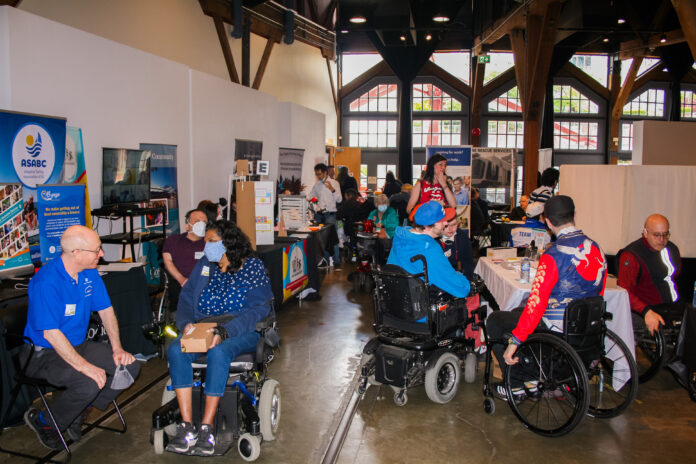
people in wheelchairs approaching vendors and the people stationed at them at the Abilities Expo 2022. Everyone appears to be genuinely connecting, with big smiles on their faces.
The Expo reminded disability community members they don’t have to navigate difficult things alone. The Disability Foundation

By: Olivia Visser, Staff Writer

Being disabled can be isolating. From having a limited capacity for events to experiencing accessibility barriers, disabled people often find themselves disconnected from community. The COVID-19 pandemic has exacerbated this disconnect for many disabled people, which is what ConnecTra Society addressed with their annual Abilities Expo, hosted on May 25 at Roundhouse Community Centre.

Following a two-year hiatus due to COVID-19, the in-person event was themed “Reconnect.” It hosted vendors, speakers, and other various attractions centring people with disabilities. 

As a disabled person myself, I had never heard of the event before, which is perhaps a testament to the aforementioned disconnect. It was encouraging to see so many community members in the same space together. The event was also streamed online for those unable to attend in-person. Much of the Expo’s programming shared relevant resources to help people with unmet support needs: here are the ones that stood out to me!

Pain BC

Not everyone realizes how hard it is to find adequate diagnosis, treatment, and support for pain-related conditions. Pain BC provides multidisciplinary resources for people experiencing chronic pain. Among other programs, they offer a pain support line, which is so important. Speaking from experience, regular crisis lines aren’t always equipped to provide support for chronic pain because it often can’t be controlled at will. This is why chronic pain requires its own targeted approach, which the line offers by providing an understanding ear and specific information about pain-management and pain-related health services. 

TrailRiders by British Columbia Mobility Opportunities Society (BCMOS)

Another area where disabled people lack support is accessing outdoor spaces: for people with mobility aids, this can often feel impossible. To help increase this access, BCMOS provides disabled people with low-cost buying or rental options for TrailRiders (wheelchairs for backcountry). When I asked a BCMOS volunteer about how well the TrailRider performs in rugged conditions, he pointed to a photo of hikers on the trail to Black Tusk in Sk̲wx̲wú7mesh. He said, “The sky is the limit: if you can push yourself, then you can go anywhere.” I think it’s incredible that BCMOS is expanding access to places that able-bodied people also struggle to reach. According to their website, TrailRider has helped disabled people reach locations like the Grand Canyon, Mount Kilimanjaro, and Everest Base Camp. 

Disability Foundation’s Youth Leadership Initiative 

Despite existing resources, there is still a long way to go in terms of supporting young people with disabilities. One example of a project addressing this need is Disability Foundation’s Youth Leadership Initiative (YLI), a “three-year project led by and for youth with disabilities” as described in their brochure. YLI has conducted research that found only “56% of youth with disabilities are confident in their ability to perform tasks as well as colleagues without disabilities.” A national Youth Advisory Committee will be formed after the research is complete, aimed towards finding a solution “to support employers and youth.” YLI is currently seeking volunteers to assist them in their project. 

“Road Trip Camping: How I Accidentally Regained my Confidence,” by Ryan Clarkson

This speech by Ryan Clarkson, peer support program coordinator for Spinal Cord Injury BC’s GF Strong Centre, meant a lot to me. As a disabled backpacker who has had my fair share of difficulties in the backcountry, I often wonder how much longer I’ll be able to continue doing all of the activities I enjoy. Clarkson adapted his camping strategies after his injury in 2009 but does not dial back on adventure! He spoke about making the transition from traveling abroad to solo camping locally due to his injury. Since then, he has traveled around 160,000 kilometres by himself. Clarkson showed the audience a pop-up tent that unfolded itself into assembly and shared his “five-day-rule” for emergency supplies. What resonated with me the most was when he said, “I try and find where that line is, push it, go there, tip a toe over it, and just keep increasing that line.” I haven’t backpacked in a while for illness-related concerns, but I don’t think I’ll give up on it just yet. Hearing Clarkson speak reminded me that you don’t need to give up on your hobbies when you’re disabled, you can just do them differently. 

As a disabled person, I know there are services out there for me, but discovering and navigating them can be difficult. Abilities Expo 2022 was an opportunity to explore genuinely valuable resources. The event is expected to return next year, and until then, you can check out ConnecTra’s other initiatives and events on their website.

“Tea-Chings” uses cooking as a medium for ancestral storytelling

0
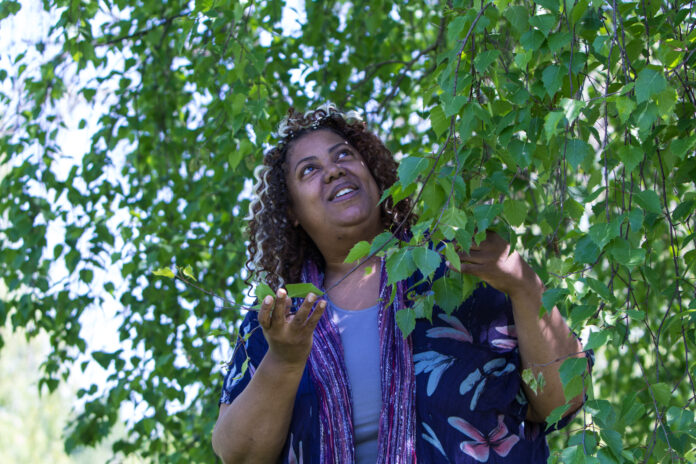
Siobhan Barker wearing a blue outfit, stands under a tree holding one of its branches full of green leaves gently, smiling upwards.
From Barker’s living room to mine, the cook-along felt like a night in with a friend. PHOTO: Siobhan Barker

By: Jocelyn Stevens, SFU Student

This year’s rEvolver Festival by Upintheair Theatre presented Harvesting Ancestral “Tea-Chings,by Siobhan Barker in a live screening Zoom event and Q&A on May 26. The event featured cooking and storytelling intertwined to share experiences about cultural roots, intersectionality, and the Black/African diaspora. Despite it being a virtual screening, Barker made us feel like we were all present with her: it was a stunning and approachable experience

What intrigued me about this performance was that it interactively focused on reconnecting to cultural roots through storytelling and traditional cooking. Barker opened the performance with a call to her ancestors, where she rattled a shekere and chanted to them

Barker called in two helpers, Jahmira and Athena, who prepared the dish as Barker guided them onto the next ingredient. Barker then introduced the dish they were going to create, pepperpot callaloo soup. As a vegan, I was delighted to hear them say they were going to make a gluten-free vegan version of the traditional soup.  

One of the stories  Barker shared was about how the women on her mother’s side have deep connections with the land that run generations back. These women know the importance of the “sights, sounds, smells, [and] tastes” of the land and how they can connect us to our past and present.

Growing up, my parents had always taught us the importance of the land and appreciating all that it has to offer. Hearing Barker say these words reminded me of these lessons. The connection that Indigenous communities have with the stolen ancestral lands we live on now are very similar to Barker’s story, and people tend to forget this fact. 

Another powerful story Barker shared was about living with and around disabilities. She explained she grew up with an understanding of disabilities because her father was someone with an amputation. Her father tended to try and bear the struggles around his disability on his own. Having grown up seeing this, Barker said she is now unlearning being silent while living with her own disabilities. 

The last unforgettable story Barker shared was about her longing to connect with family roots and ancestral knowledge in Jamaica. She shared a quote that resonated with me: “Family was named and claimed not by how you looked, but by blood, bone, breath and body.” I loved this, as members of my own chosen family are not based on conventional ideas and “looks” but rather who they are as a person and the deep connection that we share.

The different ways Barker would tell each story showed the care put into the performance. At one point, she sang a wonderful song from her culture called “Fanga Alaafia” to welcome us all into the space, and for another story, she had us close our eyes and just listen. 

At the end of the performance, I found myself wishing I had the ingredients to join in on the cooking. The whole performance was casual and comfortable despite the serious messages it conveyed. Barker’s vivid descriptions, vulnerability, and sense of humour kept me in anticipation of what she was going to say next. The tidbits of humour amplified the relaxed nature of the performance and made you feel like you were in the room with them. 


The pre-recorded performance will be available to view online for the entire duration of the rEvolver Festival. You can learn more about Harvesting Ancestral “Tea-Chings” here, along with more about the annually returning rEvolver Festival on the Upintheair Theatre website.

Need to Know, Need to Go: SFU edition

0
Blue and white calendar illustration with block text “Need to Know, Need to Go”
Arts & Culture events to catch around the city. Image courtesy of The Peak.

By: Yelin Gemma Lee, Arts and Culture Editor

There are a lot of events happening around the city, but sometimes you don’t want to go far from your usual route. If you want to enrich your campus life with some exciting artsy events, you’ve come to the right place! This June, don’t miss out on these events happening across all three SFU campuses.


Sacred Skin and Stories that Transform Us / Talking Stick Festival 2022

Full Circle presents its 21st Talking Stick Festival this year! With two weeks of incredible programming in various locations across Vancouver, this event is the perfect way to celebrate Indigenous History Month. SFU’s Woodward’s Cultural Programs is hosting Sacred Skin, a visual exhibition and Stories that Transform Us, a film screening. Sacred Skin is an exhibition that “explores the resurgence of Indigenous tattooing practices as they relate to cultural revitalization.” It documents the cultural practices, creative processes, and aesthetics of seven Indigenous tattoo artists and their works. This exhibition will be available for viewing all throughout the festival. Stories that Transform Us is a documentary created to celebrate its 20th anniversary of creative shorts and theatrical works under the program since it’s inception in 2001. The film is being screened in-person on June 12 at 7:00 p.m. and streamed online for the entire duration of the festival. 

Where: SFU Goldcorp Centre for the Arts (149 West Hastings Street)

When: June 12–July 3


Mindful Art Creation / Meet, Greet, and Eat 

So you’re stuck on SFU Burnaby campus on Tuesday for classes and have no one to eat lunch with because all your friends are out doing road trips or whatever? How about having lunch, making art, and chilling out with some new friends in the same boat as you? The Global Student Centre and Creative Collective have partnered up to present a free and inclusive series called “Meet, Greet, and Eat!” They have six events in their summer 2022 calendar, with one called “Mindful Art Creation” coming up. As the name implies, this event will help you de-stress through creativity. The crafts will use materials common to student living spaces, so if you have a great time, you can continue the practice at home. There is a graduate student version of this series as well, and you just need to fill in a quick web form to register for the event.

Where: Global Student Centre, AQ 2013 (SFU Burnaby) 

When: June 28, 12:00 p.m.–1:00 p.m. 


Nelly Queen: The Life and Times of Jose Sarria / Surrey Pride 

Surrey Pride 2022 has partnered with SFU Gender, Sexuality, and Women’s Studies Margaret Lowe Benston Lecture Series in Social Justice to present the Canadian premiere screening of this remarkable film! The film tells the story of Nelly Queen Jose Julio Sarria, a “WW2 veteran, a cabaret performer, a political activist, and the first out candidate for public office in 1961 all before Stonewall.” The event page writes that Nelly Queen is not only a history lesson, but “a triumphant story of the human spirit, a hero’s journey of a man fighting unjust laws and uniting a fractured community.” Come join me in celebrating pride this June by learning about the legacy of Jose Sarria through this momentous film screening. The event is free to attend, but make sure to reserve a ticket through their Eventbrite page.

Where: SFU Surrey, Room 2600 

When: June 23, 6:30 p.m.–9:00 p.m.

First Experiences: Batik

0
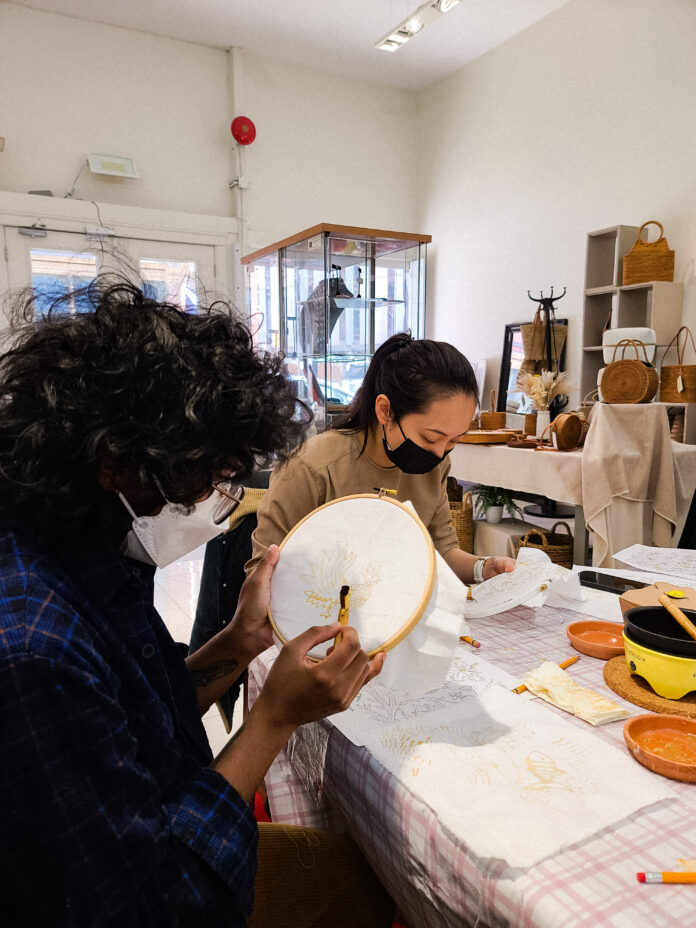
(1) Image of a person neck down wearing a moss green crewneck, holding up an embroidery hoop and using a Batik tool to draw on the fabric with wax. (2) first-person point of view, two pieces of cloth flatlaying on a table with designs drawn on them with wax. One is a symmetrical pattern that evolves into two small faces as it goes down, and one drawing is a larger side profile of a face. The person taking the photo has one hand in the photo holding up a Batik tool over the fabrics. (3) Person with dark curly shoulder-length hair, glasses, and a blue plaid shirt on has shoulders angled towards an embroidery hoop they are holding up and drawing on using a Batik tool. In the background, another person with a ponytail and moss green crewneck is seen at the table also hunched over their own Batik piece.
Practicing and learning about Batik for the first time. Yelin Gemma Lee and Gudrun Wai-Gunnarsson / The Peak

By: Yelin Gemma Lee, Arts & Culture Editor

As a part of explorASIAN 2022’s programming, The Batik Library hosted introductory batik workshops at the Indonesian Trade Promotion Centre (ITPC) in Vancouver. When I attended the opening session on the morning of May 20, I had no idea what to expect. I walked in with the faintest knowledge of what batik was and left with a deep appreciation for the ancient art form and the cultural history behind it.

Bernarda Antony from The Batik Library taught us that batik is a traditional Indonesian wax-resistant dyeing method used to make designs on fabric. This textile technique, she explained, is also practiced in other parts of Asia. However, artisans on the island of Java in Indonesia are considered to be experts in this practice, having developed a diversity of styles and techniques. Batik uses tools made of copper to apply a hot natural wax mixture (of beeswax, tree sap, etc.) to the fabric in a pattern. Cold-dyeing is used to colour the other parts of the fabric, and the dye-resistant wax is then removed by boiling the fabric in water, leaving a beautiful design behind. 

We worked around a small table in the centre of the room, surrounded by displays of Indonesian trade goods such as woodwork, food products, and of course, batik textiles. First, we practiced using a wooden stick with a copper application to hold a small amount of hot wax and drip it out of the pointed end. Depending on the angle of your wrist, the wax would flow out either in a controlled way or suddenly all at once causing big splotches. The cloth was so thin it was almost see-through, and Antony explained the thinner the fabric is, the easier it is to do batik on. This was because the wax had to seep through to the other side of the cloth in order to successfully imprint the design and resist the dyeing process. 

To make this practice easier and to prevent burns from the wax seeping through, we held up the cloth in an embroidery hoop while working. Antony explained that traditionally, Indonesian artisans would work balancing the fabric on their palms and that the heat transferring onto their skin was accepted as part of the practice. 

Whatever smidge of extra confidence I brought to this workshop as an artist immediately vanished while practicing. The experience I had with paintbrushes melted away. I moved onto a batik pattern I had traced in pencil on a cloth with a “fuck it” mindset and promptly annihilated the symmetry and detail. The wax in the little applicator of my drawing tool cooled down about every 30 seconds — a lot faster than I expected — and I had to keep pausing to rest the tool in the melting pot. After attempting the repeating motifs of my traced pattern multiple times, I went freehand on a new cloth and on a bigger scale with less detail.  

I learned a lot from Antony about the history and cultural significance of batik, but I learned even more from doingbatik was a teacher itself. It taught me a deep understanding and appreciation of batik artisans and their works. I looked at the batik pieces in the ITPC with new eyes and was flabbergasted at the skills honed with patience and grace. 

With the calming music playing in ITPC and the cozy smell of the natural wax mixture, I felt strangely connected to nature — the walls seemed to fall away into a peaceful, green utopia. Practicing batik meant being forced to slow down, take slow and deep breaths to steady my hand, and focus on the present moment with each careful stroke. As a person who vibrates to the fast-paced rhythm of the contemporary world, I felt soothed by the meditative ancient practice of batik

To learn more about The Batik Library and potential future workshops, check out their website and their Instagram. To learn more about ITPC Vancouver, check out their website or visit them in-person.