Home Blog Page 258

Federal government plans to move away from open-net pen salmon farming

0
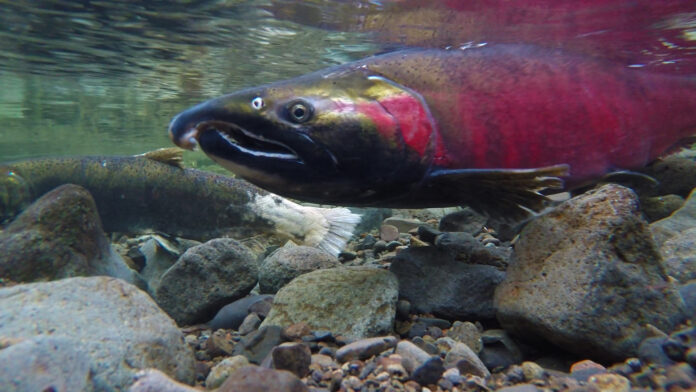
The photo is of a red salmon underwater. The fish is swimming in a shallow river above small rocks on the riverbed.
Proboszcz would like to see the farms phased out by 2025. PHOTO: Bureau of Land Management Oregon and Washington / Flickr

By: Chloë Arneson, News Writer

On June 22, Joyce Murray, minister of fisheries, announced the government of Canada has created a transition planning process to phase out fish farms in BC. 

In their press release, the Union of British Columbia Indian Chiefs (UBCIC) explained the Discovery Islands fish farm licences have been extended until January 2023. The extension was made to allow the government the ability to fulfill their “commitment to transition from open-net pen salmon aquaculture in BC’s coastal waters in a manner that protects wild salmon.”

The government will be working with First Nations title and rights holders within the industry, which UBCIC hopes will be a “concrete step towards the complete removal of fish farms from BC oceans.”

The Peak spoke to Watershed Watch Salmon Society science advisor, Stan Proboszcz, to learn more about open-net fish farms. 

“I think it’s a reasonable step forward,” Proboszcz said. “It’s the farthest we’ve ever gotten towards removing all salmon farms in BC. We’ve never had a federal government commit to doing that, and now they’ve limited their licenses to two years.”

Fish farms have been shown to have an extremely damaging effect on the natural salmon populations in BC. The farms contribute to the spread of pathogens among wild salmon. “Wild salmon across the board are not doing well,” said Proboszcz. “I think that the management and the oversight of the farms need to be a lot stricter, they have a lot of problems controlling their parasite levels.”

Proboszcz mentioned along with their importance to many Indigenous communities, salmon also play an important role in maintaining the health of local ecosystems. The fisheries manager of the Heiltsuk Nation’s integrated resource management department told The Narwhal the Neekas River saw only 750 salmon return to spawn in 2021, down from an average of 47,000 in 1970.

According to CBC, Fisheries and Oceans Canada will be sharing a framework for the transition within the next couple weeks. After the consultation period, they will release a final plan to phase out 79 open-net pen farms next spring. 

Proboszcz is hopeful about the future of BC’s salmon, noting this announcement will give the natural population a better chance of recovering. “What I would like to see is a staged transition of the farms out, and hopefully they will all be removed by 2025. I hope that next year we will see half the licenses aren’t renewed again,” he said. 

Watershed Watch Salmon Society will be releasing a seasonal forecast monitoring the health of local salmon species. To find it and keep up to date with BC’s salmon populations, you can visit their website or Twitter

Top 10 circumstances to get yourself in for an extension

0
Very calm, very cool. Nothing wrong here. Illustration: Siloam Yeung / The Peak

By: Isabella Urbani, Staff Writer

  1. Walk in wearing a full body cast

The least the teacher can do is help you actually enter the door of the classroom before granting you an extension. Heck, I won’t be surprised if they excuse you from the rest of your tutorials, and you shouldn’t be either. Go big or go home. Just make sure your story is tight. Worse comes to worse, go for the knockout and blame SFU. A lawsuit will kill off some time.


  1. Become Joy Johnson

This might not be the most time efficient plan, plus identity theft is a serious crime, but desperate times call for desperate measures. Who else could get you the extension than the prez herself? Visit your local party store, cop a blond pixie cut wig, pull off a stylish monochromatic jumpsuit, and instill the fear of God into your unsuspected TA.


  1. Kind-of-not-really tell the truth

Don’t lie, but make sure you fluff up the truth enough to leave your teacher in a difficult position to deny you. The rule of thumb is 10% truth, 90% exaggeration. But be very careful! There is such a thing as adding a little too much sympathy to your stories. Think odd, but possible. A racoon pick-pocketed your USB with your project on it!


  1. You’re hiding out

Oh no, there is a hit out on you! Tell your teacher that, long story short, you’ve got some bad blood with the library after you failed to pay the withstanding bill from that one textbook you borrowed and never returned months ago. Gwen Bird is out to get you! Last week, the library assistants threw a textbook through your window! Actually, maybe skip that part. Just tell your teacher you have to lay low for a week or so.


  1. Your house is haunted

Sorry, that paper proposal has to wait until the priest cleanses your house inside and out. Why can’t you head to the library? Well you see, these ghosts were rejected from SFU and hold a grudge against me from living out their dream, so they follow me everywhere I go. Really, I’m doing a favour by isolating myself. Seriously, SFU, just do me a solid and let them in.


  1. You’re stuck in a tree

As the good samaritan that only you are, you got stuck in a tree while trying to rescue the neighbourhood cat. Don’t worry, the cat’s fine, but you’re stuck and help isn’t on its way. Your phone died, but you managed to snap some selfies and send an email to your teacher. I guess you’ll just have to wait this one out.


  1. Reach out after the extension

Play coy. Say your internet has been acting up all week and you wanted to email your teacher to make sure they received the assignment. Perhaps even attach the assignment to the email, but forget to do so *wink wink* Double whammy. The turnaround time is pretty quick so be ready to pull an all-nighter to submit the assignment the next day. But an extra day nonetheless — score!


  1. You left your computer outside

HEY — HEY! WHERE ARE YOU GOING WITH THAT!?


  1. It’s the zombie apocalypse (only where you live)

You’re in your downstairs bunker fighting for survival, and yet you still made time to email your teacher. What a trooper. Make sure to update them by the hour. You don’t know how long you can keep these zombies at bay. I hear the antidote is an extension.


  1. Give yourself an extension

The project is only due as long as you think it’s due. This isn’t an excuse to completely write off your assignment, but take a good look at your calendar. This work is completely booked. Slot it for sometime next week.

Bugphobic person loves camping

0
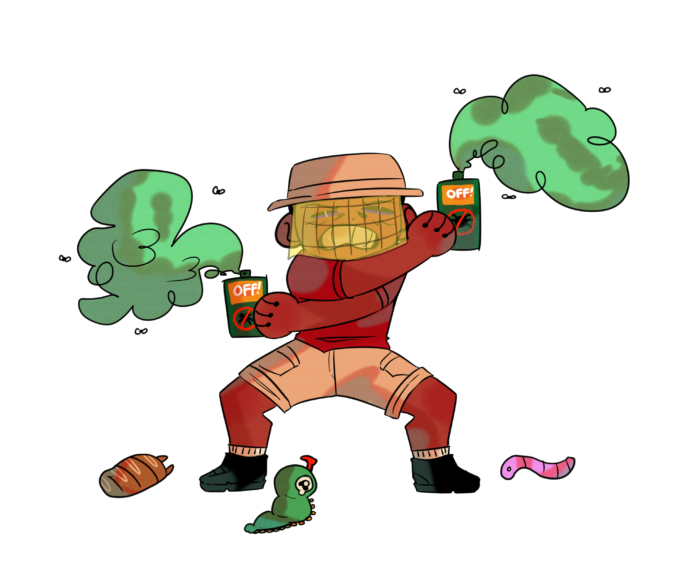
Illustration of a person in camping gear and a hat with netting around their face, in a fighting stance, carrying Bug spray in their hands
To flee or not to flee. ILLUSTRATION: Jiamin Bai / The Peak

By: Yelin Gemma Lee, Arts & Culture Editor

The best thing to do in summer is to go camping. There is nothing more peaceful than being out in nature with your phone on airplane mode and having deep soul-searching talks over the crackling fire. If only bugs would stop getting in the way of this pure unequivocal joy. 

As a person who experiences an intense case of bugphobia, there is nothing more terrifying to me than those . . . pests. I just don’t understand why they have to be all up in my grill. “LET ME ENJOY NATURE!” I remember screaming last summer when I met an earwig in the shower. I know what you might be thinking. If you don’t like bugs, don’t go where they live. That’s the thing though: those territorial motherfuckers live everywhere, even in my own apartment. 

But instead of cowering, I will teach you to fight back. The wanna-be-outdoorsy-Vancouverite edition.


Money can buy you courage

Last summer, my biggest purchase of the year was buying my own camping equipment from MEC, and now I can’t chicken out of going camping even if I wanted to. It would make no sense logically or financially. Did I build up my camp-fantasies by watching Laid-Back Camp, an Iyashikei anime? Absolutely! Who wouldn’t want to make s’mores by the fire with your unlikely friends? Did it make me have rose-tinted glasses about camping? A little bit. Nonetheless, investing in high quality equipment is the only thing giving me the courage to go camping sometimes. So, it works.


Study your opponent’s go-to moves

When you’re on enemy territory, you have to scope out the situation over there. You have to know the lay of the land, where their weapons lie, and what kind of soldiers they have coming to the front. 

Is there a body of water near the campsite you’re booking? Mosquito city. Look up the times in the day that are the worst for the mosquitos to be out and light a massive bonfire to kill those scrawly-looking Edward Cullens.

In fact, put your tent as close to the bonfire as possible to get the best effect. If your tent lights on fire while you’re in it, at least you will be free of those creepy little things leaving their mark on you. 

Mosquitos aren’t the only thing you have to worry about. The biggest concern is when you have to go to the bathroom or shower. When you’re in your most vulnerable state: naked and afraid. I take 5-minute military showers and somehow at least one bug gets all up in my grill WHEN I’M NAKED. Who does that? 

Campsite websites are never detailed about this critical information, they just say whether or not they have a bathroom and a shower. They don’t tell you if it’s an open concept with no roofs and a fluorescent fucking light attracting everything that flies, crawls, scatters, and sludges. Which in my opinion, is awfully suspicious of the campsite workers — whose side are you on? If you want to know, you just need to call. It works . . . sometimes. 

Unfortunately, my partner said the camp worker hung up on me because they thought it was a prank call. But I know better. She was on THEIR side, protecting top private information from getting out to their enemy. Well-played.


Emergency protocols 

If you’re in the trenches like me, the only advice I can really give you is to bring plenty of bug spray, citronella candles, blowtorches, bug traps, and holy water. If anything is swarming you or crawling up your legs, remember all bugs are scared of excellent dance moves. Proceed to aggressively Irish jig or tap dance, and may the hymns of death be your music. Whenever you open your tent flap to go in or out, make your body as straight as a pencil and torpedo your way inside, whipping around to zip the tent shut within split seconds! It takes some practice, but you’ll get the hang of it one day, young brave one. If you see me on your campsite this summer, sprinting like a track star, it is probably because a wasp is chasing me. I am pursuing nature, and running from it. Mind your business.

Parliamentary Budget Office declares TMX as non-profitable

0
The picture is of the TMX construction site. A construction digger is sitting in sand.
The TMX project is set to triple the carrying capacity of the existing oil pipeline. PHOTO: Adam Jones / Flickr

By: Pranjali J Mann, News Writer

The Parliamentary Budget Office (PBO) of the Canadian government declared the Trans Mountain Pipeline project (TMX) as non-profitable in its report on June 22. According to their analysis, the project will result in a net loss of $600 million. 

To learn more about this, The Peak interviewed Metro Vancouver’s Climate Convergence organizer, Alison Bodine. Climate Convergence is a collective of various grassroot climate justice organizations and activists working towards preventing climate change and protecting the environment from toxic pollution.  

As noted on the Government of Canada website, the TMX pipeline is set to triple the carrying capacity by twinning the existing oil pipeline, which originates from the Alberta tar sands. Bodine mentioned this expansion will increase tanker traffic in Burrard Inlet by seven times. The Rainforest Conservation Foundation reported this will have grave repercussions for marine and natural environments due to heightened risk of oil spills. 

Bodine pointed out this expansion is not fulfilling the Trudeau government’s 2018 claims in approving the expansion, where the Liberal government stated the project would help against climate change. “That has been exposed as a complete lie given the project did not create one penny to go towards so-called climate mitigation or climate action in Canada,” she said.

According to her, this public money could have been used for other public concerns. “People in Canada need money for real social justice, but that’s not only thinking about Canada divesting from oil and gas extraction projects. That’s also money for housing and health care and education, which I think is very critical at this time [ . . . ] so the money that’s going into building this disastrous pipeline is a losing proposition. And it’s really a complete waste.” 

PBO officer Yves Giroux said in an interview with CBC News that the report “does not take into consideration the broader benefits to the country.”

Adrienne Vaupshas, press secretary for the finance minister, told CBC News, “The Trans Mountain expansion project is in the national interest and will make Canada and the Canadian economy more sovereign and more resilient.”

The Canadian Association of Petroleum Producers believes the pipeline is now more needed than ever because of the global energy crisis which has been worsened by Russia’s invasion of Ukraine. 

Bodine explained the TMX expansion encapsulates and runs through the city of Burnaby. This poses both “human and environmental disaster and a great risk, especially to the 40,000 plus students that live up on Burnaby Mountain,” according to Bodine. 

Bodine called upon people to join the opposition and hold the government accountable. She commented, “We believe fully that this pipeline will be stopped. There is strong opposition from regular people across the Lower Mainland [ . . . ] And I just want to share that sense of hope with people, because I think a lot of this can seem really impossible, but change is possible. It is possible to stop these projects.” According to Research Co., a Vancouver-based polling firm, 55% of British Columbians are disappointed with the management of the project and 47% of people believe the pipeline poses health and safety concerns. 

She elaborated there are multiple opportunities to stand up for this cause. Climate Convergence and other climate justice organizing are great places to get involved in this “fight for our Mother Earth.”

You can find more information on campaigns and initiatives of Climate Convergence BC on their website.

Leaked Among Us movie script

0
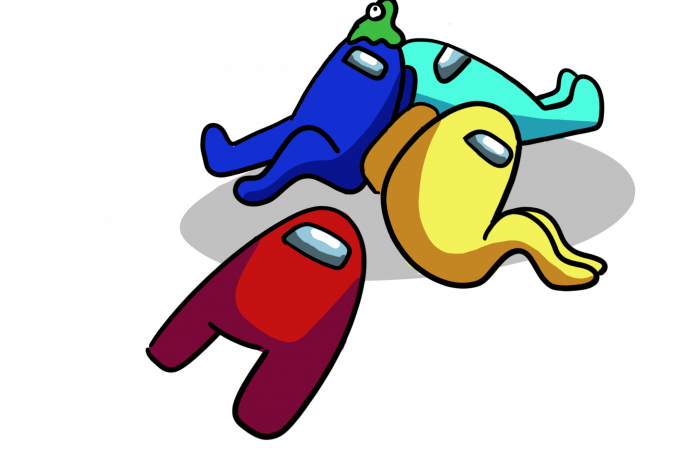
ILLUSTRATION: Johanna Jucutan / The Peak

By: Kelly Chia, Humour Editor

Gentle readers,

The Peak received an exclusive sneak peek of a script we are afraid of . . . the Among Us movie.

Today is a sad day.

Nay, it is a sussy day.

Read and mourn the death of innovation, my friends.

INT. SPACESHIP — 20XX

The residence of six crew members. Once they were coworkers, even friends. Now, the pristine white walls reminded them they were among enemies.

    NARRATOR (VOICEOVER)

Space was supposed to be the next frontier . . . but it turns out we couldn’t overcome our greatest weakness: ourselves.

RED strides confidently into view. His bright neon space suit masks the horror on his face as he unmasks a death on the ship. Before him, GREEN laid face-first on the floor.

RED takes off his mask and flips his cropped hair, revealing . . . Chris Pratt.

RED/PRATT

Mamma mia! GREEN was meant to be the best of us! How could this happen?!

NARRATOR (VOICEOVER)

But deep down inside, CHRIS knew GREEN was weak. CHRIS and GREEN had a special relationship. When CHRIS had trouble swiping his ID card through the reader, GREEN would chuckle and help him. GREEN had human kindness. Perhaps that’s why they were the first to go.

Still, CHRIS knew what he had to do. He strutted suavely towards the emergency button and pushed down firmly! He’d be the HERO!

Three crew members slumped into the main office where RED was standing: YELLOW, BLUE, and PINK. Their identities are all obscured.

YELLOW speaks first.

YELLOW

What’s the big hoot, lil’ RED?

RED/PRATT

The “big hoot” is  death. GREEN’s gone.

NARRATOR (VOICEOVER)

With this serious revelation, YELLOW removed their mask to convey their shock and sadness. The unmasked? VIN DIESEL. The camera holds on DIESEL so the audience can cheer at his cameo. Unseen, he clutches a pendant in his pockets. The camera reveals text reading: Familia.

DIESEL does a conciliatory dab before speaking.

YELLOW/DIESEL

That’s not very pogchamp. Where’d you find the body?

NARRATOR (Voiceover)

At this, CHRIS despairs. He thought he knew the ship, but it felt like a maze at times. He vaguely points at the NORTHWEST corner of the ship. Nobody looks impressed.

BLUE

Um, Chris, that’s a bit sussy. What do you mean you don’t know?

PRATT tosses some finger guns at BLUE in response.

PRATT/RED

Sorry, I . . . I use finger guns to cope. Anyways, I saw a dash of pink exiting the bathrooms right after I found GREEN! Where were you four minutes ago, PINK?

NARRATOR (VOICEOVER)

PINK (19 to play 45) heaved a deep sigh. Somehow in that space suit, PINK made herself distinctive. She was like Jessica Rabbit but in space. PINK purrs at CHRIS’ accusation like it doesn’t even bother her.

PINK 

Fixing the Communications signal. You were right there at the body. Have a better answer than “I don’t know.”

PRATT/RED

Oof.

NARRATOR (VOICEOVER)

BLUE unmasks, revealing a surly hedgehog underneath. Out of the glove, a long, unlit cigar sits idly. BLUE is SONIC. He speaks with an uncharacteristically deep New York accent. He dabs.

BLUE/SONIC

So it’s you who killed our friend, eh? We don’t take well to liars on this ship.

PRATT/RED (EMOTIONAL)

GREEN was my friend first! I know I don’t know a lot out here, but neither do any of you!

NARRATOR (VOICEOVER)

Uh oh. CHRIS is in trouble. But what can he do against the legendary debating prowess of SONIC the HEDGEHOG? The crew seemed to descend into chaos, friends turned into enemies, enemies turned into imposters. Who was the killer?!

But it was sunset for the truth.

INT. SPACESHIP EXIT

The crew rounds up CHRIS, preparing to open the door seal.

NARRATOR (VOICEOVER)

Just then, CHRIS remembered there was another crew member who wasn’t present at the meeting! That white suit. Those sussy white paws! Why, he saw him snickering then. But it was too late.

RED/PRATT

Wait!

NARRATOR (VOICEOVER)

They did not wait.

CREW (COLLECTIVELY)

Hasta la vista, pal!

Red text beams across the ship, revealing CHRIS’s innocence. DIESEL takes off the sunglasses he was wearing underneath the suit.

YELLOW

No way . . .

Elsewhere, a WHITE suited astronaut cackled in the distance. Finally, they would have their star moment. All these years of being the school’s mascot and now they were the universe’s star.

WHITE/McFOGG

It’s time for the endgame. Welcome to the McFogg Multiverse (MFM.)

Comics

0
ILLUSTRATION: Sara Brinkac / The Peak

By: Olivia Visser, Staff Writer

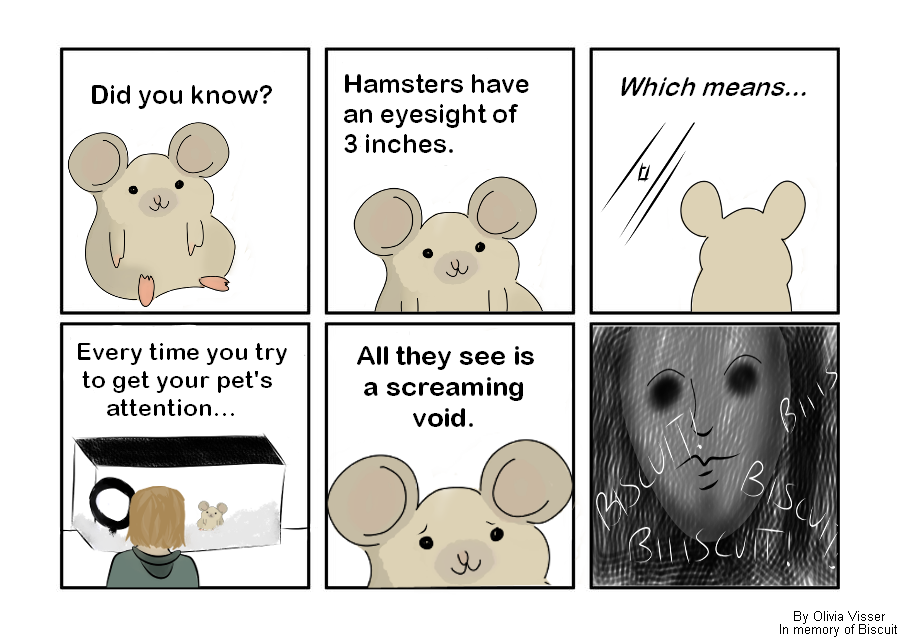
Panel 1: a round cream-coloured hamster with large ears sits in frame. "DID YOU KNOW" in big letters sits above it. Panel 2: The same hamster sits lower on the screen, with the text above reading "Hamsters have an eyesight of 3 inches" Panel 3: The hamster is seen from behind, looking out from behind glass. Above its head reads "which means..." Panel 4: A person with blonde medium length hair is seen from behind, looking at a glass tank with the hamster inside. "Whenever you try to get their attention..." is written above. Panel 5: The hamster's face is seen close up, with concerned looking eyebrows. The text reads "all they see is a screaming void". Panel 6: A sinister looking blurred grey face is seen amid a swirling black background. In the foreground is white text that reads "BISCUIT! BIIISCUIT! BIIISCUIT!
COMIC: Olivia Visser / The Peak

SFU Digital Democracies Institute receives $6.22 million funding

0
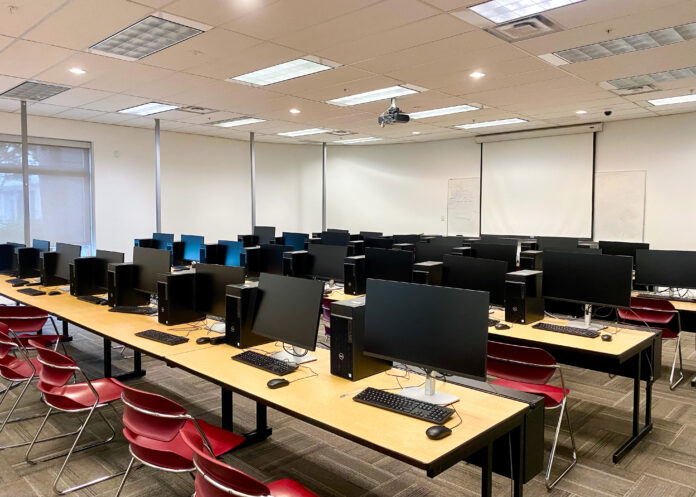
The photo is of the SFU computer lab. Rows of computers fill the room. The room has no people and the computers are all turned off.
The Data Fluencies Project is analyzing social inequalities embedded in the online experience. PHOTO: Pooja Singh / The Peak

By: Pranjali J Mann, News Writer

Editor’s note: The author of this article works for Dr. Wendy Chun as a research assistant. The author is not involved with the Data Fluencies Project. 

Editor’s note: The article was updated on July 22, 2022 to correct the name of the Digital Democracies Institute. It was originally written as Digital Democracy Institute. 

The Digital Democracies Institute (DDI) at SFU is led by Canada 150 Research Chair in New Media, Dr. Wendy Hui Kyong Chun. DDI received $6.22 million from the US-based Mellon Foundation. The funding will be directed towards their Digital Fluencies Project, according to the DDI’s press release

In an interview with Chun, she said the institute “brings together people in the humanities, social sciences, data sciences, and network sciences, in order to take on some of the hard problems that face us such as abusive language, mis- and disinformation, polarization, discrimination, and discriminatory algorithms.” 

She underlined the importance for disciplines to work together to combat disinformation. “These problems are too big for us not to try to work together to take on,” she said.  

Chun pursued studies with a double major in systems design engineering and English literature from the University of Waterloo. Spending nearly 30 years in the US, Chun made the switch to SFU “in order to do this kind of institutional, large-scale work. To really make Canada the center for this kind of work.”

The funding will be used to support young researchers, graduate students, and allow collaboration with global partners. According to their press release, the team will include SFU professors Gillian Russell and Karrmen Crey, and researchers from Canada, the US, and Europe. 

Chun expressed her concern on the modern state of the internet. “Part of the problem we face right now isn’t simply that the internet is a trash fire. But the internet is a trash fire, in part because people have tried to seek technical solutions to political and social problems.” She continued, “Technology isn’t the only problem because it’s rather what technology reveals about the social inequalities around us.”

The Mellon funding is directed to the three-year Data Fluencies Project and will encompass four main streams of research areas. The first stream would bring together qualitative and quantitative methods to understand “the experience of being online as well as the impact of disinformation on shutting down diverse voices.” 

The second stream of the project would look into machine learning programs and investigate if they “actually address the issue it’s supposed to.” Machine learning programs include artificial intelligence and algorithms used as a solution to moderate biases, hate, and misinformation within online platforms. 

The third stream of the project hopes to expand on whose voices are prioritized in digital spaces. This means working towards analyzing discrepancies in ways digital spaces disproportionately impact vulnerable populations. The final part of the grant would go towards “creating courses across the world around data fluencies, as well as research development workshops and dissertation fellowships.”

Chun is optimistic about the present and future projects underway at DDI. When receiving the Mellon funding, Chun expressed she was “thrilled to be here. Working with you and all the really wonderful students here has been very impactful.” 

The Boys reflects on our socio-economic power structures

0
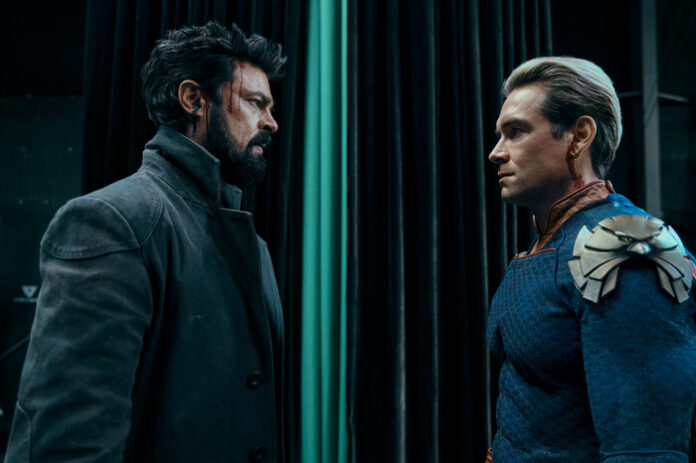
Two characters face each other in an intense stare-down
The show highlights the perspective of humans in a world where heroes’ corrupt actions have consequences to the masses. Photo Courtesy of Amazon Studios.

By: Nercya Kalino, Staff Writer & Yelin Gemma Lee, Arts & Culture Editor

I was not keen about watching anything on Prime until my older brother, with whom I share a lot of television interests, suggested I watch The Boys. The Boys navigates the perspective of humans who have suffered at the hands of powerful heroes — something overlooked in many iconic hero franchises like Marvel. It embodies the ideology that humans are capable of saving themselves instead of waiting on heroes, and specifically in this show, saving themselves from the heroes. The Boys is currently on its third season, and the plotlines keep getting increasingly intense, bringing up reflective questions about our own society.

The story follows the lives of four men, Butcher, Hughie, Frenchie and Mother’s Milk. These characters, besides Frenchie, have been impacted by some of the “supes” of the state: Homelander, Soldier Boy and A-Train. It introduces a group, the “Association of Collateral Damage Survivors,” where people of different backgrounds share horrific moments that result from supes involvement.

As a viewer of hero franchises, the most terrifying and powerful evil I can imagine is if superheroes become corrupt. This was demonstrated in the recent Marvel film Doctor Strange in the Multiverse of Madness, where Scarlet Witch turns to dark power and evil intentions to get what she wants. The Boys demonstrates the perspective of ordinary citizens in a similar scenario, but with systemic corruption powering the superheroes’ evil actions and the consequences that humans experience.

In season one, I saw similarities between the charade of heroism in the show to celebrity in real life. There is a threatening separation of socio-economic status between ordinary citizens and celebrities, similar to the power difference depicted in The Boys. The show itself has several blatant metaphors and mirrors the celebrity culture we are used to in our own society.

Some of the supes characters take on horrific paths to suppress or assert dominance over one another: we see this in the relationship dynamics between A-Train and Homelander. This plot mirrors a chain of aggression that we see in our own society.

Another portrayal of the corrupt entities, as we see reflected in today’s world, is political and private entities forming agreements. In the show, we see that behind the scenes of celebrity life, the supes attempt to inject themselves into politics through politically powerful individuals. This reminded me of real life political relationships that are formed for personal gain.

The show further draws the audiences in by the impending question of whether the boys will be able to find a way to kill off the supes. The timeless question, “Will goodness prevail?” echoes in audiences hearts, just not in the way we are used to, with the superheroes being the underhanded villains of the story. It makes us question how we define goodness and justice.

In many ways, The Boys reflects major systemic and social issues within our society, like celebrity culture, socio-economic class divide, and systemic corruption. The show warns of an unnecessary loss of life as the ultimate consequence of harsh imbalances and misuses of power.

Monday Music: Vibing in the thrift store

0
“Monday Music” in orange block text on a yellow rectangular background with rounded corners and an orange border.
Monday Music: your weekly themed playlist. Image courtesy of The Peak.

By: Jerrica Zabala, SFU Student

You walk into your favourite clothing store and there it is — the section with the beautiful red tags marking things as 30–50% off. You’ve already had an exceptional thrifting day with one-of-a-kind finds, and the sale section is popping too. You’re there for at least an hour. Your head unintentionally nods up and down to epic sounds of — oh my god, this dad shirt is $6. Later, you get home happy with your purchases but you feel like something’s missing: the bops you forgot to Shazam while shopping.

Boring Again” by Luna Li (featuring Jay Som)

Photo Credit: Luna Li Music, Inc.

Do you ever feel overstimulated with all the colours and lights when you’re shopping? Well, close your eyes and let your body ground itself to the sounds of Luna Li. This dream pop song mixes harmonic vocals and a lovely melody to get you out of that shopping funk. My favourite lines are, “I see my future is bright / Just wanna see the sunlight / I hold a piece and watch the day go by / With all my friends by my side.” These endearing lyrics remind us to hold our friends close when life is unpredictable, especially in times of questionable fashion tastes.


Super Stars” by Yves Tumor

Photo Credit: Warp Records

A groovy hidden gem, this song makes you want to vanish into the bass line and seductive vocals. Yves Tumor is the unspoken parallel to Prince in our generation. “Girl, I can’t quit you, you’re my super, my super star.” This hook certainly describes my love-hate relationship with outdated fashion patterns. Plaid, I can’t quit you — you’re my superstar. This song is hot and certainly playing at that thrift shop you gatekeep.


Up With The Jones” by Bahamas

Photo Credit: Brushfire Records/Universal

Released in 2020, Bahamian singer Afie Jurvanen said, “It’s pretty easy to get caught up in consumer culture.” The song, with lyrics that convey society’s struggle with consumerism, makes you feel good about your thrifty finds: “My second home, your student loan / And every year I got myself a brand new phone / Can’t do without, don’t have the nerve / I tell myself that these are things that I deserve.” The beats to this song elevate your mood as you sift through racks of flowered shirts and good-as-new skateboard decks. 


Evian” by GoldLink (featuring PinkPantheress, Rizloski, & Rax)

Photo Credit: Squaaash Club/RCA Records

Just like ice cold water, “Evian” is a refreshing, modern take on UK garage sound. This song mimics the vibrations of 90s electronic music and its addictive beat definitely makes you feel some type of way. If sunglasses were a song, this would be it. Imagine yourself striking a pose in the dressing room and blowing a kiss to the angled mirrors in your new fit. Perfection.

Growing up unaware of my autistic identity

0
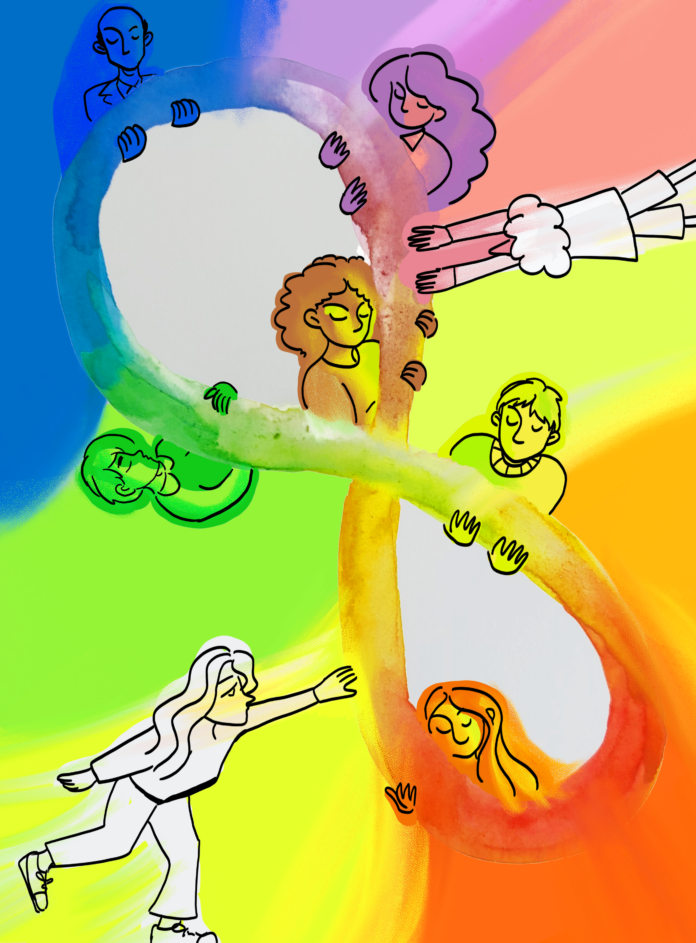
The infinity neurodiversity symbol with eight people around it reaching for it or holding onto it. The symbol spans the whole area diagonally with the middle in white and the edges of the image to the outline of the symbol being multicoloured.
Increasing awareness of neurodiversity helps reduce the stigma and help people feel less alone. ILLUSTRATION: Angela Shen / The Peak

By: Olivia Visser, Staff Writer

The concept of neurodiversity was not widely discussed when I was growing up. People were either normal or they were weird. There was no nuance to this conversation, nor any way to approach our differences without creating an “us vs. them” dynamic. When I was diagnosed with autism at 21, I realized all the quirks I saw as alienating me from society were just differences that make me who I am — differences that are actually shared by many of my peers. 

The word “neurodiversity” simply refers to the existing variation in human brains. Someone who is neurodivergent is someone who does not fit into the “typical” neurotype — the ability to navigate situations the general population has deemed “normal.” This word is commonly used to describe people with autism and ADHD, but it applies to all neurological differences, from learning disabilities to personality disorders and beyond. Neurodivergent people account for roughly 15 to 20% of the world’s population, but they lack support and representation because of the outdated belief that neurodivergence is an affliction to be overcome.

All throughout my childhood, I recall having felt a nagging sense of disconnect from the rest of the world. I’d watch from the outside while kids my age played together, never quite grasping how others seemed to so effortlessly just open their mouths and talk. I was a quiet kid in elementary school: polite enough to stay out of trouble and capable of getting decent grades without putting in too much effort. I was diagnosed with ADHD at 11, once I started struggling to keep up with increased workloads. Parents and teachers were well meaning yet dismissive, attributing my struggles with schoolwork and making friends to self-esteem problems. According to adults, I just needed the time to grow into my own identity.

But I didn’t know what my identity was. I had gotten by in life by copying the mannerisms of those around me. I know now this is referred to as “masking” or “camouflaging” and it’s incredibly common for autistic people, which is why we often go undiagnosed for so long. This is also what contributes to autistic burnout for many young people who reach a breaking point in managing the high demands of adult life. I experienced this after the shift to my first year of university, having increased difficulties with memory, energy, and overstimulation. At the time, I didn’t realize why it felt like I was losing my social and self-care skills. Now I know that the expectation of trying to fit into this neurotypical world is often what contributes to periods of additional stress for autistic people.

Without this terminology, though, as I grew up, I only knew that socialization did not come naturally for me. Adults viewed what they saw as shyness as something to be overcome, so I felt shame for still struggling as I approached adulthood. The few childhood memories I have of openly being myself ended in bullying. To peers, the “real me” was too loud, too weird, and too direct. Because of these experiences, I shut myself in, preventing my classmates from truly getting to know me. I didn’t know much about autism at the time, so I thought my difficulties with communication were because of something that needed to be fixed.

When you’re unaware of your autistic identity, you have no idea why the ins and outs of daily life are so terribly exhausting. For one, masking only gets you so far. I could spend all day rehearsing a conversation and practicing reciprocity in my head, but once things go “off-script” I’m always a deer in the headlights. I can remember moments from retail jobs where I’d completely shut down due to stress and find myself unable to speak. Other times, I’d miss customers’ blatant jokes or find it painful to look them in the eyes. I developed a persona as a clueless and clumsy young adult, and eventually discovered that subscribing to this naïve façade was the easiest way to get by in social situations. This absolutely devastated me because all I wanted was to fit in while being myself.

I realized I might be autistic while viewing a presentation put on by SFU Autistics United as a part of the training for a summer camp I was volunteering with. The presenter described the autism spectrum as a colour wheel instead of a linear line, and a light bulb went off in my head. According to this analogy, the way autism presents is varied depending on individual differences. Instead of having “severe” or “mild” autism, someone may have significant sensory processing difficulties but high social skills. Alternatively, someone may be fully non-speaking with restricted interests, yet might not have too many issues with overstimulation or social anxiety. There are endless ways to be autistic, just as there are endless ways to be human.

Autism is a developmental disability that over 1% of people are estimated to be born with. Our understanding of the condition has grown from the belief that those with autism require 24/7 support to recognizing autism is a spectrum where each individual requires varying levels of support.

For instance, I have trouble reading people’s intentions and difficulty initiating conversation. If an article of clothing bothers me, it feels like that sensation is amplified compared to my surroundings. I can’t talk straight or focus on anything else and it will likely take me a day to mentally recover. On the other hand, I have an impeccable memory, good analytical skills, and find it really difficult to be dishonest. All these traits are part of who I am and I’m proud of that. I don’t need my identity reduced by others telling me they can’t tell I’m autistic because I’m so “high functioning.” It’s not the compliment you think it is.

Because of the “high functioning” label, I missed out on a lot of crucial support in school and following my autism diagnosis. Traditionally this term was used by doctors to describe autistic people with an IQ over 70. Nowadays it’s often used to dismiss people’s struggles by suggesting that “fitting in” well enough is more indicative of the autistic experience than an autistic person’s own perspective. Nobody sees what goes on inside your head, so if you smile and nod believably enough then others will think you don’t need additional help when you ask for it. For a while I even identified with this term because I thought that if I wasn’t perceived as “high functioning,” I’d be seen as incapable. Sometimes all you want is for someone to recognize that you have limitations and be willing to work within them.

I avoided reaching out to a psychologist for years, because part of me was worried that I had things “too easy” to actually be autistic, denying myself the fact that suffering is dynamic and not a competition. Once I finally did reach out, the psychologist was certain I was neurodiverse. This diagnosis was simply a pricey confirmation of what I’ve always known deep down. I knew that something was different about how I think and socialize but could never pinpoint what it was.

Confirming my diagnosis was like finally giving myself permission to be who I truly am. It’s still a work in progress, but I don’t feel the weight of trying to be like everyone else so strongly anymore. I don’t even bother anymore to make eye contact when I don’t feel comfortable, because I communicate more effectively and genuinely when looking away. I’m less ashamed to have interests that don’t match my peers, and I know that the friends who are worth my time will be up front about whether they want to listen to my info-dumping, instead of making fun of me.

Understanding who you are is one of the most liberating feelings there is, but recognizing neurodiversity is only the first step in making our society fair and accessible. In recent years, the neurodiversity movement has turned into a self-advocacy movement led by neurodivergent people, intersecting with the broader disability rights movement. This is a valuable step towards inclusion in our society, as neurodivergent people are the best source of information on how to accommodate our diverse needs. Seeing and listening to us is the most effective way to show you care. Although I didn’t know what neurodiversity was as a young teen, I’m hopeful about the media’s increasing representation of disability justice. I hope more young people grow up aware of the fact that there really is no “normal.” Beyond that, I hope we work to embrace differences in communication instead of making personal judgments.