Home Blog Page 255

Canadian Blood Services adopts inclusive screening practices

0
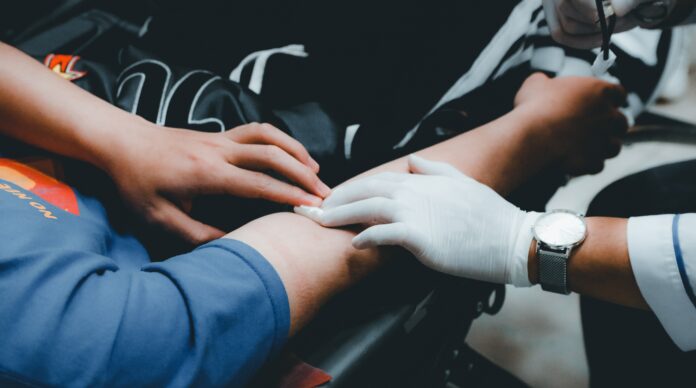
an individual in a blue shirt and black pants is sitting down with his arm outstretched. A doctor wearing white gloves is applying pressure to his arm with gauze. The individual is donating blood.
Michael Kwag discusses how the blood ban is a part of medical discrimination. Image Courtesty of Unsplash (Nguyễn Hiệp)

By: Chloë Arneson, News Writer

Canadian Blood Sevices (CBS) has announced that by September 30, 2022, queer men will be eligible to donate blood. Previously, gay and bisexual men were not eligible to donate blood if they had been sexually involved with men within a three-month span. On April 28th, Health Canada approved the CBS submission to change screening policies. The updated policy includes universal screening criteria that encompasses everyone who has sex with men, rather than only queer men. 

This means that regardless of gender or sexual orientation, each donor will be asked the same questions regarding their sexual health. Previously, screening questions regarding sexual activity was only asked to people in the LBGTQIA2S+ community.

Additionally, transgender donors will no longer be asked screening questions based on their sex assigned at birth. Non-binary donors will still be required to register with CBS in a binary gender. 

In an interview with The Peak, acting director of Community Based Research Centre (CBRC), Micheal Kwag discussed the policy update. CBRC is a non-profit organization that “promotes the health of people of diverse sexualities and genders.” In their press release, CBRC stated that LGBTQIA2S+ communities have “have long faced challenges when it comes to our health and well-being.”

“There are many folks in the community who are disappointed these changes didn’t go further in ensuring more gay, bi, and queer men could donate.” After the changes in CBS’s criteria, any donor regardless of gender who has had anal sex with a new partner will be required to wait three months before they can donate.

Kwag explained the blood ban was “one of the recommendations that came out of the Krever Inquiry, which was set up to investigate the tainted blood scandal which led to thousands of folks who received blood transfusions acquiring HIV.

“It effectively amounted to a blood ban on any gay men who wanted to donate,” said Kwag. This ban has changed throughout Canada’s history, starting first as an outright ban, then limiting the number of queer men who could donate by regulating their sexual activity. 

According to the Canadian Medical Association Journal, LGBTQIA2S+ peoples are more likely than heterosexual cisgender people to be diagnosed with “cancer, chronic fatigue, and heart disease.” They note that due to negative experiences with the medical system, queer people are “less likely to have family doctors” or seek out treatment. Historical medical discrimination during the HIV/AIDS crisis and the treatment of queerness as a mental disorder contributes to these fears. 

“The blood ban has been a type of public policy that has contributed a lot of stigma, misinformation, and ignorance about our communities,” said Kwag. “The fact that the policy existed was used to legitimize hate and discrimination towards our communitites.” He went on to explain that many queer people are afraid to navigate the medical system due to judgement and many also face barriers when trying to access care. 

CBRC has launched a new survey to discover more about health in the LGBTQIA2S+ community. Their goal is to “tell politicians, policy-makers, and service providers about the challenges and needs of our communities.”

You can follow CBRC for more information as well as updates via Facebook, Instagram, and Twitter.


Vancouver city council discusses increased surveillance to deter crime

0
Two CCTV cameras are seen on a pole. Their background is a bright blue sky.
The motion was defeated with only one vote in favour. Image courtesy of Unsplash (Michał Jakubowski)

By: Chloë Arneson, News Writer

A new motion was brought forward in Vancouver’s city council to increase the use of CCTV surveillance technology in areas around Metro Vancouver. It suggested cameras should be installed in partnership with the Vancouver Police Department (VPD). If the motion passed, the VPD would determine where the cameras would be placed.

The Vancouver City Council voted on this motion at the end of April 2022. The vote was turned down and recommendations to fund CCTV technology in Vancouver will not be made. Councillor Melissa De Genova was the only council member to vote in favour of the motion. 

Originally, the motion, put forward by De Genova, explained that large cities across the world such as London, New York, and Washington use technologies such as CCTV cameras or facial recognition technology to counter violent crimes. 

The motion stated violent crime has increased since the last council debate regarding increasing CCTV cameras in 2018. According to statistics provided by the Vancouver Police Department, crime has increased 11.3% since last year. The types of crime that increase this statistic are theft and mischief. Crimes against a person, homicide, and breaking-and-entering are down from last year. 

Some were concerned the motion would have infringed on citizens’ privacy rights. 

The Peak interviewed Dr. Darren Byler, an SFU professor who specialises in surveillance systems and their impact on marginalised communities, to find out more.  

“It’s hard to know exactly what effect [the cameras will] have. My sense is that when they say ‘critical areas,’ they’re referring to high traffic areas which might be areas where they say there are high rates of crime.

“Those locations are also locations where Black and brown people — people that are racialized — are often located,” said Byler. “My sense is that it will turn regular activity into something that could become criminalised.

“We should be very careful in how we use surveillance and think not from the position of those who are protected in the society,” Byler began, “but rather from the position of those that are more vulnerable, who have less protections, so you know stateless peoples, undocumented peoples, people that are already radicalized, they are the most affected by this. Because what surveillance really does is that it amplifies existing problems in our society, it makes them worse.” 

Byler noted that security is never neutral since it is designed to discipline. “You’re always being watched, or you might potentially be watched, so you monitor your behaviour [ . . . ] That assumes that the person being watched has the capacity to change their behaviour,” said Byler. 

Surveillance affects people from particular communities differently. Byler explained there is a disproportionate amount of surveillance directed towards certain socio-economic and ethno-racial statuses.

“Surveillance is never neutral. It is always about control, no matter where it’s situated.” Byler added, “It’s about controlling and disciplining people.” 

The Internet Freedom Foundation, an organization from India that promotes fundamental technology and privacy rights, suggests that CCTV surveillance is not effective in preventing sexual violence or crimes against women, as the majority of this violence occurs in private places. Internet Freedom Foundation reported CCTV cameras can have undesired effects on women, such as “voyeurism and moral policing.” They further suggest that improved street lighting may be more effective at preventing violence against women. 

Dr. Byler explained he believes “we should think about surveillance as a response to a symptom rather than treating the underlying cause.”

Horoscopes: May 16–21

0
An illustration of a girl with long flowing hair. Astrological signs and stars shine around her.
ILLUSTRATION: Marissa Ouyang / The Peak

By: Hannah Kazemi, Peak Associate, Girlie In Training

Aries

Throw it back to 2012 and go to the super hidden and impossible to find Pink Alley. Take pics with the girlies, then go get bubble tea to reward your efforts. Taking Insta pics is a full time job, so treat yourself, bestie!


Taurus

Go window shopping in Kits and spend your whole paycheck even though you really can’t afford to in this economy, then post about it. Eventually make your way to the beach and when you do, guess what! Post about it. You know it didn’t happen unless you post about it, don’t you?


Gemini

Find someone with a backyard and a fire pit. Post a pic with the gals by the fire to commemorate how much fun you’re having in some rando’s backyard. Remember to stay six feet apart when you’re throwing it down on the dance floor! 


Cancer

“Hike” Quarry Rock in your Lululemon Aligns and take a picture of the view when you make it to the lookout point. Bring a speaker with you in your Everywhere Belt Bag and blast some throwback tracks to dance to on your way up and unleash your inner Katy Perry. You’ll be as bright as legal Vancouver fireworks, baby!


Leo

Find that spiral parking garage on Cordova (I know you know what I’m talking about) and have an ~artsy~ photo shoot. Post the pictures on Instagram immediately after, like the girlboss that you are. Bonus points if you made a series of IG stories while parking your electric car (you don’t make enough to pay for gas in this economy.)


Virgo

Party it uppppp with a few girlies at home (because girlies are responsible, but still know how to have fun) to celebrate the end of the semester. Put on 13 Going on 30 and paint each other’s nails to have the best slumber party EVER! 


Libra

Take on the Grouse Grind with your buddies and show off your muscles in a group pic when you get to the top. If you exercise and don’t post about it, did you even really exercise?? Pics or it didn’t happen.


Scorpio

Have a picnic at Stanley Park, then bitch about the prices of hot yoga.


Sagittarius

Take a day trip to Whistler. Make sure that you take a picture or video of the view on the Sea-To-Sky every five minutes (on the dot!) and post it to your Snapchat story so that everyone knows you’re driving to Whistler. Slay, but keep some distance and wear your mask, Sagittarius!


Capricorn

Stay home and cut your own bangs tonight. You need to prepare new lewks for stunning your profs! Self-care is important, too, bebs.


Aquarius

Go somewhere really cool and unique for ice cream, like Earnest Ice Cream or Rain Or Shine. Write a poem about your experiences. The world needs to know your feelings on these sleeper shops that no one has eaten at before! Be a trend-setter, hon!


Pisces

Get the girlies together, put on your oh-so-affordable Aritzia, take photos with a disposable camera at the beach and then gossip the night away!

SFU’s parking lots, ranked

0
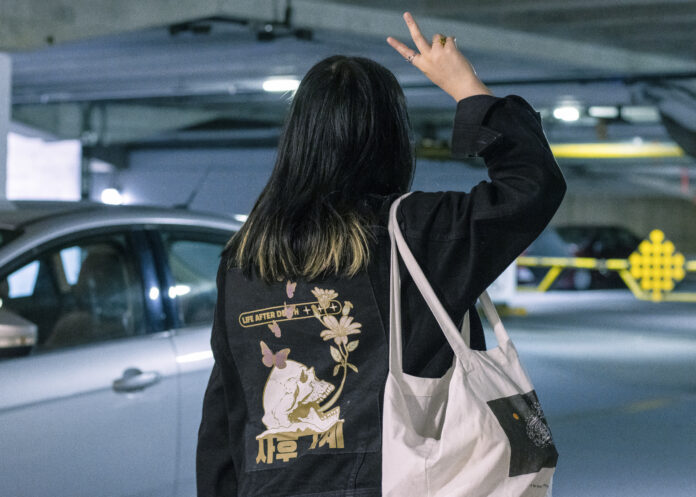
A photo of a student posing in front of a parking lot, holding up a peace sign
Just Herbie and I against the world. PHOTO: Krystal Chan / The Peak

By: Hannah Kazemi, Peak Associate and Parking Expert

  1. Central Parkade
    • 42069/10. This lot will never let me down. My ride or die. My homie. My bae. Live, love, laugh, Central Parkade. I can always find a spot and it’s right in the middle of campus, so I never have to walk very far to get where I need to go. I feel very “Romeo and Juliet Forbidden Lovers” about this parking lot now though. It’s the only lot you can’t use the Honk Flex parking pass at. I have to find another lover. My heart is shattered :((

Tags: #BestLocation, #CrowdFavourite, #GoldStarsAllAround

  1. West Parkade
    • 9.8/10. I didn’t know that this lot existed until last semester and I’m already almost four years into my degree. It’s tucked away and took me an hour to find the first time. Because of the Romeo-and-Juliet situation with Honk and my one and only luvr, Central Parkade, I had to choose another lot to dedicate my life to. Since my only Burnaby class in the Spring was in West Mall, I relied on this parking lot and let me tell you, I was not disappointed. There’s always a perfect little spot for my perfect little Toyota. Like all parking lots, it has its own flaws, primarily with car-fires, but I think that makes the West Parkade extra quirky and cute!

Tags: #HiddenBeauty, #MostReliable, #SFU’sBest KeptSecret

  1. North Lot
    • 7.3/10. My go-to spot when I have a class in Blusson or I take a drive up to campus to go to Renaissance. The downside: it’s a fucking trek to get literally anywhere other than the North side of the AQ if I park here. Forget leg day, just park in North Lot and walk to West Mall.

Tags: #ParkingLot?More LikeWorkoutSpot, #AverageAtBest

  1. East Lot
    • 6.9/10. Not gonna lie, I’ve only ever parked here like twice. Both times were in the evening so I only paid $3.00 or whatever SFU charges after 6:00 p.m. which is why it’s ranked #4. We love cheap parking. More of this please!

Tags: #AfterHours, #Wallet-Saver, #NotablyUn-Notable

  1. South Lot
    • ?/10. Never parked here.

Tags: #MostUnremarkable, #MostLikelytoHostStudents SummoningDemonsWithAOuijaBoard

  1. South Parkade
    • ?/10. Never parked here.

Tags: #ExceptionallyForgettable, #MostLikelytobeOvertakenbyConstruction

  1. Residence Main Lot
    • ?/10. Has anyone ever actually parked here? I can’t even visualize in my head where this lot is, let alone find it without extremely detailed audio and visual instructions. My gut is telling me this lot has been overtaken by construction so it doesn’t actually exist but my other gut is telling me that surely people in residence have visitors and maybe I just haven’t looked hard enough.

Tags: #ConfusingButNecessary?, #HardtoFind, #EvenSFUDoesn’tKnowItExists

  1. Residence West Lot
    • -14/10. I accidentally ended up here when I tried to find the West Parkade for the first time and I almost crashed head-on into a janky golf cart absolutely ripping around the corner. I made eye contact with the maintenance guy behind the wheel who was definitely wondering how and why the fuck I was there. I got lost on my way out and I think I actually started to cry a little.

Tags: #TheWorstLotOnCampus, #TraumaticAndDangerous, #ShouldNotExist

Imperfect fits for students who would rather be anywhere but class

0
An illustration of a sleeping bag, a hiking outfit, and a penguin suit
Live the summer of your dreams vicariously through fashion! ILLUSTRATION: Shaheen Virk / The Peak

By: Olivia Visser, Staff Writer

Summer has arrived, and so has the semester! Isn’t that just lovely? I, too, enjoy spending my summer sitting on the leather seats of the 145 in shorts (and peeling my thighs off my seat when I’m getting up), sweating through seminars, and surviving off caffeine. 

Yep, there’s nowhere else I’d rather be this summer than good ol’ SFU. So, in the spirit of this year’s summer semester, I’ve compiled three outfits that will really make your personality shine.

Disclaimer: You are only allowed three student-subsidized personalities and looks. Any looks beyond these are NOT my responsibility.

Everywhere is My Bed

Nothing says “I’m thrilled to be here” more than this look. Yes, this one is perfect for fourth-year students and beyond. Did you put a lot of effort into your style in earlier years only to find yourself giving up later after being swamped with responsibilities? Do you struggle to find comfortable nap spots on campus, then settle for a futon in the Women’s Center because you NEEDED some shut-eye? If so, this look is for you! 

With the rise of loungewear, it’s now safe to say that pajamas are fashionable, and I dig it. You might think that loungewear would make you blend in with the concrete, but the style offers endless opportunities to stand out. Hooded onesies? Loungewear. Plush slippers? Loungewear. Wearable air mattress? Loungewear! Sleep everywhere!

Gosh, I’d even consider you a trendsetter: SFU-leisure-chic

Outdoor Chic

This look is great for people who want to look like they’re on the run or just came back from one. You’ll fit right in with your fellow Vancouverites if you can afford it! I’m talking merino wool base layers, 60-liter backpack, and $800 Arcteryx jacket levels of chic. The more stickers on your water bottle, the better — how else will people understand you’re outdoorsy?!

Attach all trinkets to your backpack with the most expensive carabiner you can find at MEC. You better think up some inspiring quotes now! Did you just return from the mountains? Is that chalk on your pants or something else? No one can tell, but I bet your peers will want to hear all about it!

Suited-up Student

Let’s try something more upscale. Professional, even? I mean, you’ve got to start thinking about references at some point, and who wouldn’t want to write one for a suited-up student? Casual professional-wear is soooooo yesterday. 

Why not step it up with a penguin suit? Bonus points if it’s a literal penguin suit. Gone are the days of trying to leave a lasting impression on your esteemed professors. As a penguin you not only leave an impression, but you also relinquish yourself of all human responsibilities. Heck yeah.

I hope my suggestions can be of some help to those who are struggling to get back into the swing of things. If your mind isn’t in the game, at least your outfit can be. Don’t let the cheerful confines of this academic institution keep you from at least LOOKING like you’re having the summer of your life!

How one student’s pandemic listening kickstarted a Taylor Swift fan club

0
A group of people sitting around a table listening to Taylor Swift.
Liao and her club pictured at their spring end of the semester study session. PHOTO: Cristina Liao / SFU Swifties

By: Isabella Urbani, Staff Writer

The early months of the pandemic encouraged people to pick up a new hobby or resume previous passions while home-bound. For Cristina Liao, founder of SFU’s Taylor Swift fan club, SFU Swifties, the pandemic brought her from an occasional Taylor Swift listener to a superfan. 

“When I was younger, I didn’t know what albums were, so I only listened to singles,” revealed Liao about her journey to becoming a fan. Her first introduction to Swift was the singer’s 2014 Grammy Award winning studio album 1989. From that album, Liao “obsessively” listened to “Blank Space” and “Out Of The Woods,” alongside some other Swift singles including “Safe and Sound” and “I Knew You Were Trouble.”

Although she was initially introduced to Swift during the singer’s peak pop era, Liao’s favourite style of Swift’s is folk. She enjoys her recent albums Folklore and evermore, and even cited Folklore as the album that made her a “hardcore” fan. 

By the end of her high school senior year, Liao had become a full-fledged fan, and the idea of starting up a fan club the following year in university came to mind. She finally took the plunge after her idea was well-received by the SFU Undergrads Facebook group. 

“A hundred people or so liked the post so I was like ‘Why not do it?’” said Liao. 


As the founder, Liao is responsible for handling club funding, room bookings, and coordinating events alongside her executive team of three other members. Liao recruited one of her friends as the first executive member to get the club its seal of approval. From there, Liao brought on an events coordinator to help smooth out event details and activities, and a communications manager to oversee the club’s social media. 

As for the club’s membership, anyone is welcome to join. The club can be found on the Simon Fraser Student Society’s portal. “It’s just a bunch of friends hanging out and talking about Taylor,” said Liao. “It’s a kind community of Taylor Swift fans, and stereotypically, Taylor Swift fans can be kind of [passionate].” 

When it comes to meetings, SFU Swifties are mainly “discussion-based.” All members interact through a group Discord page whenever they like to discuss anything from Taylor Swift to movies. During the spring semester, the club hosted its first in-person gathering with an end of semester study session which included a Taylor Swift listening party.

Liao and her team had their most recent gathering, a Taylor Swift trivia pizza party, last week in the Student Union Building

“The event went great! We did trivia and handed out some prizes, then listened to some music,” said Liao about the success of the recent event. It was such a hit, Liao hopes to organize more trivia events in the future and one more general event before the fall semester. Right now, her main attention is focused on making discussions in the club’s Discord chat more regular. In regards to future events, the club has not yet announced COVID-19 policies. 

Approaching the end of the club’s first year, Liao is very appreciative for the skills and people the club has introduced to her. “I really enjoy meeting and talking to my members,” she explained.

From her early country days to her recent folk adventures, Liao enjoys all of Swift’s albums. “I feel like she can pull off any genre if she tries hard enough,” she said. Her love has only continued to grow with Swift’s latest album Red (Taylor’s Version), a re-recording of the star’s 2012 Red album. 

“I love the re-recordings. They make me appreciate her all that much more. For a while, when it first came out, it was all I listened to.” Liao added, “It shows her growth as a singer.” 

Aside from her music, Liao is also inspired by the way Swift carries herself, from her ambition to her songwriting. “She is one of the pop pioneers currently in the music industry, and [one] of the most prolific artists to come out of the 2010s,” said Liao. 

Swift was the youngest person to ever receive the Album of the Year award at the Grammy’s and was named the Youngest Country Entertainer of the Year by the Country Music Association back in 2009 and 2010, respectively. Since then, she has continued to stake a claim in the music industry by becoming the most awarded American Music Awards winner and most representative artist of Gen Z and Millennials back in 2019. 

Nearly 16 years after the release of her debut album, Liao said Swift has influenced recent up-and-coming artists, including Conan Gray, Olivia Rodrigo, Gracie Abrams, and Maisie Peters. So how does Liao enjoy these prodigies? 

“I enjoyed [Olivia Rodrigo’s] debut album. I even played it for my dad,” said Liao

At the end of the day, Liao may be a superfan, but her enjoyment starts and stops with Swift’s music. “I don’t particularly care about the personal life of the artists that I listen to, I appreciate their art,” said Liao. “As long as she keeps making good [music], I’ll listen to it.” 

You can find more about SFU Swifties, their Discord, and their events through their Instagram @sfuswifties.

What Grinds Our Gears: In-person summer convocations

0
SFU graduates
Look at all those potential heatstroke victims. PHOTO: Courtesy of SFU

By Luke Faulks, Opinions Editor

This July, for the first time in two years, SFU’s graduating class will be gathering for an in-person convocation. You’ll be told you’re lucky to finally have an in-person convocation. I’m here to tell you you’re not.  

No, this summer, our graduating class will be suffering under a sweltering sun. You’ll sit for what feels like an eternity, listening to a parade of supposedly distinguished but entirely unfamiliar faces talk about the virtues of education, while becoming so heat-drunk that you’ll forget your major. Then, the humiliating ritual of glueing your  arms to your sides in a failed attempt to conceal your underarm sweat stains. 

 Let’s face facts — students are probably only there so their families can watch you cross the stage. Fine, but to do so risks your elderly relatives risk succumbing to heatstroke. Think I’m exaggerating? The roof of the main mall is supposedly made of metal. Your relatives will literally(-ish) become baked potatoes. 

 If everyone does make it through the convocation ceremony, your sweaty, greasy faces will be captured for all eternity in the never-ending post-ceremony photoshoots. You can, I suppose, take consolation that those photos will likely be sequestered in a box that will be passed down, powered by guilt, from generation to generation. It’s just not worth the risk. 

 Although “implications for graduands” didn’t make the final cut of this year’s Intergovernmental Panel on Climate Change report, we know climate change is a thing. Every year, a summer graduation becomes ever more untenable. That’s not to mention how extreme weather events, from forest fire smoke to deadly heat domes, are set to make summer convocations increasingly intolerable. That’s just science. 

SFU’s faculty needs to take a moment to reflect on the rare benefits of the pandemic. Going to class in PJs? Fine. Using a minor illness as a pretext for canceling events? Great. Not having in-person summer convocations? Best thing ever

Four films to watch at this year’s DOXA Documentary Film Festival

0
Grey banner with red circle in the middle holds the protagonists of these films
Add these independent documentaries onto your summer watch list. Image courtesy of DOXA documentary film festival.

By: Isabella Urbani, Staff Writer

It’s that time of the year again school is out for summer and the DOXA film festival is back! DOXA is a “Vancouver based non-profit charitable society” which prides itself on showcasing independent films. Many of the films center around resilience and overcoming personal obstacles in politically challenging environments.   

After two years of online-only programming, films are being screened through a hybrid model for this year’s 21st annual DOXA festival from May 5–15. In-person films are available at the following locations: The Vancouver Playhouse, The Cinematheque, the Vancouver International Film Festival Centre, and SFU’s Goldcorp Centre for the Arts. 

Seniors, low income individuals, and students that present ID receive a $2 discount on tickets for in-person and online showings. Masks are mandatory and available at the in-person screenings. Online viewers are geo-blocked to Canada and have access to watch their selected film once within 48 hours of pressing play.

Here’s our must-watch documentaries from this year’s festival. 

Beyond Extinction: Sinixt Resurgence (2022) 

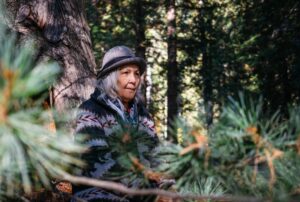
Elderly Indigenous Matriach of Sinixt Nation pictured amidst the shaded forest on a sunny day
Sinixt Nation Matriarch Marilyn James / Photo Credit: Louis Bockner

Length: 98 minutes 

Watch the world-premiere of a documentary that took 27 years to make.The documentary centers the Sinixt Nation from the Arrow Lakes region, referred colonially as British Columbia. Filmmaker Ali Kazimi has been invited and immersed in the autonomous Sinixt Nation’s community building practices and their fight to gain recognition from the Canadian government since 1995. The documentary reveals that the Canadian government continues to declare them as extinct. Known for presenting “work that deals with race, social justice, history and memory,” Kazimi’s new release is guaranteed to hold power.

Metok (2021)

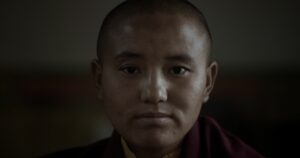
face and shoulders of a woman with a shaved head
Metok / Photo Credit: Titolo

Length: 66 minutes 

Unpack the journey of a Tibetan Buddhist nun living in India who has to return home to help assist her mother with a local birth. Metok embarks “through an achingly beautiful landscape,” but tense geopolitical environment to reunite with her family and grapple with the emotions that follow. 

You can watch the trailer for this piece here

We Don’t Dance for Nothing (2022) 

Two Asian women dancing on the beach together in summer clothing
Still from “We Don’t Dance for Nothing” / Photo Courtesy of DOXA

Length: 86 minutes 

Follow one domestic worker’s yearning to strive for “independence, love, and motherhood” during the 2019 Hong Kong Protests. Described as a “photo-montage love letter to Fillipina domestic workers of Hong Kong,” We Don’t Dance for Nothing touches on the struggle of workers’ rights, a “changing political landscape,” and the joy that dance can bring even in turbulent times.

You can watch the trailer for this piece here

Sirens (2022)

Two women dressed in all-black play electric guitars in the midst of tall grass
Still from “Sirens” / Photo Credit: Rita Baghdadi

Length: 78 minutes 

Witness the journey of an outspoken, queer, women Lebanese death-metal band. Their two members, Lilas and Shery, deal with “mounting personal tension” while their band is on the “verge of success.” Sirens follows the duo’s “ups and downs, both personal and musical,” with a front row seat to the inner workings of their lives and relationship. 

You can watch the trailer for this piece here

For more information on DOXA 2022 programming and to purchase tickets for both in-person and online screenings, check out their website.

SFU Audain Gallery presents “Collecting Plum Blossoms,” a dazzling graduate-class student exhibition

0
A person leans over to adjust a sculpture featuring a sewing machine
Photo Credit: Paige Smith

Editor’s Note: A previous version failed to accredit the photographer of the published images. This has been updated to give Paige Smith full credit for all images used in the article. A previous version stated, “Sofia Grace titled I Leave You With All of Me, To You. It implemented wood, gesso, and acrylic paint,” implying these pieces were not separate. This is incorrect and has been updated to reflect that the piece being described was titled To You and its materials were mixed media. A previous version writes, “The aspect of technology in art is shown through Lin’s attempts to experiment with the inputs and outputs of the camera feed and the microphone.” This is incorrect and has been updated to reflect that this artwork does not include a camera feed and there was no camera involved in the production nor installation of this work.

By: Nercya Kalino, Staff Writer

“Collecting Plum Blossoms,” the 2022 exhibition of student works displayed at SFU Audain Gallery from April 14–23 portrayed an intriguing approach to art and the future. The title of the exhibition was inspired by a 2021 artwork by Sahar Rahmanian and symbolizes students’ hopes for the future. The exhibition showcased various works from 13 graduating artists from SFU’s fine arts program. According to the SFU School for the Contemporary Arts Instagram post, “plum blossoms become a metaphor for the way disparate pieces can come together.” It writes about the special collectivity of showcasing with other artists and the “sense of futurity” that comes from graduation. Artists chose unique choices of materials and mediums to create their works. 

Before “Collecting Plum Blossoms,” I had only been to one other exhibition, so I didn’t know what to expect. It was wonderful to see several works expressing experiences of vulnerability. Each of the stories narrated reflections of the world. The first work I came across was by Sofia Grace titled To You, a mixed media piece.

To You by Sofia Grace / Photo Credit: Paige Smith

The arrangement of the pieces resembled an author’s messy desk accompanied by a memory wall with intimate letter exchanges between strangers. For the project, Grace mailed hand-written cards “proposing friendship” to use for the exhibition. The letters appeared to elevate what was described by the gallery brochure as an “experimental gesture that looks to generate new connections through invitation.” Grace used the exchanges and contributions of letters she received to relate the meaning of her work to items within the art piece. The mixed media piece focused “on the idea of the pen pal” in order to convey this sense of vulnerability, as explained by the brochure. 

Revealing Hidden Memories by Ravneet Kaur Sidhu / Photo Credit: Paige Smith

Ravneet Kaur Sidhu’s work definitely brought childhood memories and feelings to the surface. Her art piece, Revealing Hidden Memories, stuck out to me. The wood, metal, and paper materials she used for the piece were items I played with as a child. The artist tied together the domestic and cultural relationships in her life in this piece. There was also an element of soundscape that complemented the pictures. The biggest piece — the wooden picture frame — had multiple pictures of family members in it. The photos had a tan filter layered on top with a newspaper background as the frame. Seeing this work, I reminisced about the smell of old newspapers or moments when all of our relatives gathered at the grandparents’ house with so much food and lively chatter. The dialogues of a festival celebration in a household within the background brought life to these memories. According to the exhibit pamphlet, Sidhu’s approach was to emphasize “sentimentality” and “the gaps between traditional and modern relations in her community.” 

Reformation by Shinaaz K. Johal / Photo Credit: Paige Smith

Another work that I particularly appreciated was Shinaaz K. Johal’s Reformation. This textiles piece was one I connected with on a deeper level — fabric and texture are an immense identification of culture (or BIPOC communities, myself included). The artist collected the fabrics used on the large canvas from woman family members. What impressed me was the abstraction of the piece: it reminded me of the birthing organ. The colour coordination and the textures of chiffon, silk, and velvet gave it life. I think the textures worked in parallel with the themes the artist tackled. According to the exhibit pamphlet, these themes were “Indian culture, empowerment, internal conflict, and the body.” As someone who is drawn to abstract works, I was immediately enticed by the artistic elements of the piece including the materials themselves and the intentional arrangement of the fabric. 

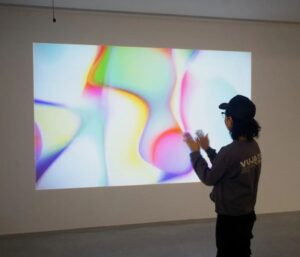
HUES (Highlighting Ubiquitous Emitted Sounds) by Daniel Lin / Photo Credit: Paige Smith

HUES (Highlighting Ubiquitous Emitted Sounds) by Daniel Lin was a piece that used a microphone and a projection — a work that used colour and sound to show new ways of expressing art. The piece responded to sounds that the viewers made. It was not marbled colours, but rather a portrait of colours in constant movement to the sounds, glowing and meandering into and out of each other. The colour emission was vivid in a way that did not take away from the movements; it was more like a lulling emission. The aspect of technology in art is shown through Lin’s attempts to experiment with the inputs and outputs of the projection and the microphone. It was quite impressive that he was able to tie it all together to show the possibility of going beyond the boundaries of medium functionality. 

The other works exhibited at the Audain explored the idea of identity and the public in contemporary spaces. Through observing these works, I learned more about the innovative forms and executions of art in modern society. The exhibit encompassed broadened forms of media as tools to spark new ways of contemplating identities. 

To learn more about and view some of the pieces that were on display, follow the exhibit Instagram page and SFU School for Contemporary Arts Instagram page.


Peace Country gives city dwellers insight into climate change realities faced by northern BC’s small towns

0

Five young-adult friends sit around a small outdoor table with beers and playing cards in hand
Cast of Peace Country photographed by Sewari Campillo Photography (left to right): Sofía Rodríguez, Montserrat Videla, Sara Vickruck, Kaitlyn Yott, Garvin Chan

By: Jocelyn Stevens, SFU student

As a former northern BC small-town habitant, I was intrigued by the concept of Peace Country and pleasantly surprised at the emotional impact and relatability of the play. Written and directed by SFU alumnus Pedro Chamale, Peace Country expresses the clash of narratives he encountered from being born and raised in Chetwynd, BC. The play was a Rice and Beans Theatre production and was presented by the Shadbolt Centre for the Arts from April 27–30. I was thoroughly amazed at how well the play portrayed northern BC and the challenges that come with living there. 

Chamale was inspired by reflections on his youth and his family’s experiences in the Peace Region as Latinx people. Pushing for sociopolitical change, the play follows five friends and their growth in the Peace Region. Peace Country brings up the challenges that come with trying to make it in a small town, from being belittled by urban Canadian cities to trying to make ends meet, all in the midst of a changing climate.

I was glad to see a meaningful land acknowledgement and welcome done by Quelemia Sparrow before beginning the play. Along with this, the performers and stories represented a wide range of marginalized communities — such as queer and BIPOC folks. The play centres on the lives of  two sisters (Sofía Rodríguez and Montserrat Videla) and their friends (Sara Vickruck, Garvin Chan, and Kaitlyn Yott). In spite of their differences, the five friends become close and endure hardships together such as loss, racism, and homophobia. The play flashes back between the past and present where they find themselves having to navigate the return of one of their friends, now a newly elected MP of a green party.

The play touched on some of the hard realities many people face. Some examples of these include: local coffee shops unable to stay open with big-name brands taking customers, sudden increases and decreases in population due to the pipeline, and Indigenous communities still not being included in conversations around environmental change. 

During my interview with Chamale, I asked him what ultimately led him to create Peace Country. He realized that the catastrophic effects of climate change were already happening in northern BC at a much greater scale than in urban centres.

“I started researching climate change and the climate crisis that we’re in right now [ . . . ] and then realizing that a lot of my friends and family are dependent on those resource industries,” said Chamale. “We, the world, need everything to change so that we can stop this climate crisis or try to mitigate it if we’re not already too far.”

When asked about the conflict between climate emergency and jobs in northern BC, Chamale discussed the need for sustainable solutions that take care of people in the industries up north as well.

“It’s the larger corporations that have not cared for people because of capitalistic profits and the capitalism we live in.” He continued, “We are subject to that system and so how do we talk across these differences that are just radicalizing so many people?”

Peace Country captured what seemed like positive and innocent moments as children growing up with friends, going back and forth between past and present, which left me curious about what kind of scene was coming next. The transition between scenes starkly contrasted this positive energy with eerie and heavy breathing — as if to make the audience members uncomfortable. I saw the contrast between scenes and transitions as the simultaneity of everyday life and the climate crisis. 

I was emotionally struck by the personal stories of the characters, especially the solo monologue by Melissa (Sara Vickruck), where they spoke on the hardships of being the only openly queer person in a small town. They touched on the loneliness and lack of support available to LGBTQ2S+ people coming into their identities. This resonated with me and my friends because we left our small town due to the same struggles and ultimately found acceptance in urban cities.

Chamale hopes audience members will feel inspired to pursue political action such as writing to their members of parliament or attending rallies. 

“Ask for these just transitions, ask for actual courage in our politicians to make actual change.” He added, “Provide for the people who need to switch out of those industries, not just drop them like dead weight.”

This play was supported by Playwrights Theatre Centre and PuSh International Performing Arts Festival. To find out more about Peace Country presented by Rice and Beans Theatre, check out their Instagram or website. To keep up on Pedro Chamale’s work, follow him on Instagram.