Home Blog Page 255

Fourth-widest tree in Canada located in North Vancouver

0
The photo is of the base of the fourth-widest tree in Canada. A man stands next to the tree to showcase the huge size of the tree.
Many of BC’s old growth is not renewable and is in danger of extinction from logging. PHOTO: Ian Thomas and Colin Spratt

By: Chloë Arneson, News Writer

On June 24, Ancient Forest Alliance (AFA) announced the fourth-widest tree in Canada was found in the Lynn Headwaters regional park in North Vancouver. 

Two big-tree hunters, Colin Spratt and Ian Thomas, found the 5.8 metre wide ancient Western Red Cedar on their recent expedition, naming it “The North Shore Giant.” This giant cedar is the widest tree found in Canada in over 34 years and is estimated to be more than 1000 years old. The British Columbia Big Tree Committee will soon be visiting the tree to confirm its measurements for entry into BC’s tree registry.  

The park, situated on the unceded xʷməθkwəy̓əm Musqueam, skwxwú7mesh Squamish, and səl̓ílwətaɬ Tsleil-Waututh nations, is known for its large trees, but faced “aggressive logging in the 19th and early 20th century” which resulted in drastic forest loss, according to AFA’s press release. AFA noted Lynn Valley might have been home to the tallest trees on earth, but “castle-like stumps are all that remain of the ancient trees that once dominated the region.”

Ian Thomas, AFA researcher, noted this tree was one of few that are protected by a park. “Most of our richest ancient forests are still unprotected and in danger of being logged,” he said. 

Many are criticizing the lack of action to control logging limits in these areas, specifically after the issue was used as a political talking point in both the provincial and federal elections since the blockades began to attract global attention.

In summer 2021, a swell of protests to protect old-growth forests broke out across BC. By September 2021, there were 882 arrests made at Ada’itsx Fairy Creek, which was considered the “largest act of civil disobedience in Canadian history,” according to CBC. The blockades are led by a grassroots organization, Rainforest Flying Squad. 

Sage Barson,an 18 year old Iroquois Mohawk land defender, attended the Fairy Creek protests. She told Teen Vogue, “As an Indigenous person, we care about all living creatures.” Barson added, “I’m not just there for the trees. I’m there for the whole ecosystem that comes with the old-growth forest because we care about the trees, we care about the insects, the moss, the salmon, all the biodiversity that comes with those ecosystems.”

TJ Watt, a AFA campaigner, said, “this is one of the most remarkable big-tree finds of this century and it just shows how special the old-growth forests in BC are.”

As a response to the BC government’s overestimation of remaining old growth, a 2020 report found that productive old forests with the potential to grow very large trees cover less than 3% of the province. BC reports that 23% of remaining forest is old growth forest, but by using this definition, it is only one percent. The study describes the irreplaceable biodiversity these ecosystems provide. “They will ensure that the status quo of industrial clearcutting of the last unprotected old-growth stands occurs,” Watt said.

Watt discussed his hopes after this historic find, stating, “support for Indigenous old-growth protection initiatives and the associated sustainable economic development in the communities is needed, along with a major, dedicated land acquisition fund to purchase and protect old-growth forests on private lands.”

To find out more information about saving BC’s old growth forests, you can visit the Ancient Forest Alliance website or Save Old Growth BC.

Horoscopes July 4–11

0
An illustration of a girl with long flowing hair. Astrological signs and stars shine around her.
ILLUSTRATION: Marissa Ouyang / The Peak

By: Max Lorette, Peak Associate and Supposed Village Soothsayer

Aries:

Have you connected with your inner child recently? If not, I think it’s ample time for you to start building that time machine. Travel back in time and tell your younger self not to make the same mistakes you did. Fade away from existence as a better version of yourself comes to pass. Realize what a grave mistake you’ve made. 


Taurus:

If you’ve been looking for a sign to become a certified forklift operator; this is it. The stars have aligned perfectly, and they have informed me that you will get girls if you tell them that you’re a certified forklift operator. Godspeed, my dear friend.


Gemini:

Dear Gemini, the stars know how intelligent you are. I think it’s time the world does, too. Grab a stranger and tell them all about Euler (make sure to emphasize it’s pronounced OIL-er) and his prolific role in the maths world. Strangers will appreciate the newfound knowledge! Go, my little Prometheus!


Cancer:

A little birdie told me that it’s Cancer season! Whether your birthday has passed or is on the horizon, I’m giving you full permission to go absolutely wild with your online shopping addiction. I promise that you won’t regret it once your credit card statement comes in. 


Leo:

Next time you’re writing an essay and your professor asks you to defend your thesis, flip that shit around on them. Ask them with real tears in your eyes, “Why are you attacking my thesis?” Let’s be real, your thesis is your brain child. It hasn’t done a singular thing wrong in its life! Your professor will be so caught off guard that I think that they might just give you an A.


Virgo:

Hey Virgo. Have you been feeling down in the dumps lately? Next time you need a quick laugh, I encourage you to look up your favourite historical figure on Archive of Our Own and sort by Kudos. You’re welcome.


Libra:

Next time you receive a spam call, lead them on a bit. Make some jokes and strike up a conversation. Who knows! It could be your next true love/fling. The stars certainly seem to think so. 


Scorpio:

Hey buddy, I’m going to give you some advice. Scorpio to fellow Scorpio. I promise it’s simply human nature to feel like an outsider at all times. We all feel this way. Humans are funny like that. I don’t know if this is a comfort or not, but at least we can relate to each other on that. 


Sagittarius:

Hey Sag! I know that you skipped over all the other Horoscopes to get to this one, but I’m going to ask you to take a look at Scorpio’s right above you. Do you know how I said that it’s human nature to feel a little bit different? Yeah. I know that you’re fuelled by your own individuality complex, so I’m just going to bring you down a notch and remind you that your own human condition is not unique.


Capricorn:

Hey Capricorn. Did you read last week’s horoscopes? Do you remember how I asked you to take a day off? Did you do it yet? DID YOU DO YOUR HOMEWORK??? If not, I’m docking 50% off of your final grade. That’s a promise.


Aquarius:

Stay away from dairy this week. I’m serious. Aquarius. If you’re, like, literally every single lactose intolerant person I know, I’m fully aware that you don’t avoid dairy as much as you should. Stop it! Give your intestines a break. And if you aren’t lactose intolerant . . . now you are. The stars say so. 


Pisces:

Hey Pisces. How have you been? Long time no see. Anyway, as much as I’d love to stay and give you your horoscope this week, I was wondering if you could give me your mom’s number? She’s really hot. Zoo wee mama.

Changing how you think about fungi in What a Mushroom Lives For

0
Book with a cobalt blue cover photographed on a cream fur rug next to a wooden decor piece
This book on the enchanting worlds of mushrooms is one to add to your summer reading list. Photo Courtesy of Jocelyn Stevens / The Peak

By: Jocelyn Stevens, SFU Student

On July 16, I found myself attending my first book launch event for SFU anthropology professor Michael Hathaway’s new book, What a Mushroom Lives For: Matsutake and The Worlds They Make. Although I’m not currently an avid reader, my obsession with mushrooms propelled me to buy the non-fiction book without a second thought. The event was hosted at Massy Arts Society, and Hathaway was joined by Spencer Greening, a Gitga’at doctoral student at SFU. They shared a conversation about the book and the ways fungi have been interpreted in western societies.

Owned and operated by the same crew from Massy Books, the room was cozy with lots of cool books and art showcased throughout. The energy at the event was very welcoming, and the community of fellow mushroom lovers in the audience were chatting away like old friends. Complete with complimentary food and wine, the book launch felt more like a living-room gathering

In the first part of What a Mushroom Lives For, the reader is able to reimagine fungi as more than a simple mushroom on the forest floor. Hathway argues our planet is habitable because of fungi and how they are critical life partners for all living things.

The second half of the book focuses on Hathaway’s research in China on a specific mushroom — the matsutake — and the important role this sole fungi plays in our world. Hathaway talked about his time with the Tibetan and Yi people and how the matsutake has impacted their ways of life and interactions with the land. This point was contrasted with the fact that matsutakes are a multibillion-dollar global trade item. Hathaway was challenged to think about forms of “agency and observation” in ways that he never thought of before in relation to plants and fungi. He hopes others will be challenged in the same way when reading his book.

“It’s just a given that other beings have agency,” Greening said when asked to share his Indigenous knowledge in relation to Hathways findings on fungi. “When I hear elders talk about other beings [ . . . ] they’re talked about in a way that they’re just human. We might say the mountain goat people, the wolf people, the salmon people, and often when I hear oral histories, they say society. The mountain goat society, the salmon society, again, it’s this expression that there’s this deep, sort of institutionalism.”

Greening then asked Hathaway if there are any examples of institutionalism in the mushroom world. Hathaway brought up an example of encountering this in his personal life. 

“[I was] looking at this piece of cutting board that I have from an old pear tree and you can see the histories of fungal interactions in that, you see these black lines as they’ve engaged,” expressed Hathaway. “There are these interesting physical archives of the histories of these relations going on that we just have the slightest hint.” 

The idea that mushrooms, too, have institutionalism similar to other beings was very eye-opening. Even though I went into this event with some knowledge about mushrooms, it altered my views of fungi and their agency.

Despite fungi being associated with poison in western societies for so long, it was encouraging to have people come together with open minds and listen to two people talk about the ways in which fungi shape our world. I found myself very engaged with the conversation, listening to Hathaway and Greening’s conversation at the edge of my seat.

With all the fascinating things I learned about the magical matsutake from the event and the book so far, I’m really looking forward to reading more about “the worlds they make.”

You can purchase What a Mushroom Lives For: Matsutake and The Worlds They Make at Massy Books either online on their website or in store.

lessLIE’s Salish Modern/Tradition collection reclaims literacy through Indigenous oral and visual traditions

0
paintings in square frames are lined up against a blank wall, pictured is a large window on another wall over looking the waterfront
Teck gallery is the perfect place to showcase LessLIE’s Salish Modern/Tradition with its view of the waterfront. Rachel Topham Photography / SFU

By: Jocelyn Stevens, SFU Student

SFU’s Teck Gallery is featuring an art collection by lessLIE, a “Coast Salish artist from the Cowichan Tribes,” until September 25. Salish Modern/Tradition is a collection of seven different acrylic-on-paper paintings which are inspired by the ways colonizers have used language as a tool against Indigenous culture and traditions. He combines the English language with visuals inspired by his Coast Salish culture to show the complex duality of the written word, “an instrument for both cultural oppression and cultural survival of his People.” The exhibit is held at Teck Gallery, a small area located in SFU’s Harbour Centre campus. It is easily accessible with a ramp for those who need it to get onto the platformed area. 

The paintings were nicely laid out on the west and east walls, and the view of the harbour waterfront from the large window amplified the experience. There weren’t any individual descriptions for each piece, and visitors were encouraged to view the accompanying support material online. Each painting was painted in a circular shape and framed in a white square, laid out in an order that flowed well.

lessLIE conveyed the interconnected relationship between the English language, Indigenous oral tradition, and visual symbolism. According to the exhibit description, “he argues that individual Coast Salish design elements, such as circles, ovals, crescents, trigons and u-forms, are like the letters of an alphabet, which can be used to visually ‘spell’ any image.” lessLIE, therefore, accepts literacy without sacrificing deep cultural connection, which is a powerful critique of how it was weaponized for assimilation throughout colonization. 


My favourite pieces ended up being the two that caught my eye as soon as I got there due to their colour scheme and stylistic differences from the other pieces. The first piece stuck out to me because of its bright pop of yellow and was titled Sun, Salmon, Frogs and Ravens. lessLIE strategically used the yellow on the white canvas to bring out the different animals listed in the title, and the circle was outlined by a red paint. Although it gave the impression of being an uncomplicated painting, when I looked at it long enough, I could see the subtle shape and essence of sun, salmon, frogs, and ravens. 


The second piece that I really liked was called heART. This piece was particularly striking because lessLIE used white paint on white paper, and was contrasted with a deep, dark blue background to bring out the boldness of the white circle. This made the circle eye-catching and gives it a 3-dimensional look when I observed it with less focus. I was attracted to this painting because of the white-on-white concept, which seems overly simple but was quite captivating. Similarly to Sun, Salmon, Frogs and Ravens, when you look long enough, you can see two fish-like figures using their fins to make a heart shape.

The other pieces were also very well done and used a lot of red and black pigments, which was completely different from the two that struck out to me. We learned about pictographs and the pigments that are used when creating them in my Indigenous Studies class last semester: red pigment is used in some Indigenous cultures as it carries a spiritual or mystical meaning.

Something that came to mind for me while viewing my two favourite pieces in relation to the other ones was that they seemed to be the sun and moon for the other paintings. This was due to the circular motifs, the colour choices of the two pieces, and how they were placed on opposite walls from each other. The Sun, Salmon, Frogs and Ravens piece was bright yellow with red elements like the sun. In contrast, the white with blue detail in the heART piece reminded me of the moon. This made the pieces feel really connected, and illustrated the intertwined nature and storytelling aspect of the collection.

I enjoyed going to view lessLIE’s Indigenous art and his powerful use of negative space. It’s one of my favourite kinds of artwork to see as it can come in so many forms, have many different meanings, and cultural interpretations. The collection is beautiful, critical, and worth a visit to downtown Vancouver.

You can view Salish Modern/Tradition at the Teck Gallery until September 25, and an accompanying support material is available online.

Council discuss changes to policies on in-camera discussion

0
This is a photo of the SFU Stadium at the SFU Burnaby campus.
Proposed referendum will have $299 health fee charged from Sept 1, 2023 onwards. PHOTO: Krystal Chan / The Peak

By: Pranjali J Mann, News Writer

Policy amendment for in-camera sessions 

At the June 22 Council meeting, Judit Nagy, SFSS vice president internal and organizational development, introduced a motion to suspend policy PM-1.2., which dictates how policy is notified and changed. This is because “a time sensitive situation has come up surrounding the amendment of old policies,” and would therefore “allow [the] Committee on Councilor Breaches of Confidence (CCBC) to continue its work expeditiously.” The motion passed and PM-1.2 was suspended.

After PM-1.2’s suspension, Council discussed time sensitive changes to R-9 and SO-22. The motion proposed only councillors and invited third-parties will be allowed into in-camera meetings. Additionally, if a councillor is not present for an in-camera meeting, they will not be given the information that was discussed.

Nagy stated the policy suspension had already been put into place in the last Board meeting in March. “This is highly, highly important to pass. We have work to do. This needs to be handled now,” said Nagy. 

Matthew Reed, history student union councillor, raised concern about this policy. “This is a highly questionable motion to propose. You are essentially saying that any councillor members that are not in attendance of any of our in-camera discussions are not granted any access to the in-camera discussions.” He added, “It’s very frustrating and very concerning. This is highly irregular, and I don’t see how you could desire it.” 

Reed continued, “There’s just a lack of transparency that has taken place with regards to this. This was proposed within the last 24 hours, we were given no clear information about this, and now we’re asked to vote on it.

Nagy responded, “That’s actually incorrect.” She said directors who are not present for in-camera meetings are not allowed to view the discussions, which “is not actually irregular.” She added, “I highly encourage Council to let CCBC do its job, and do it well.” 

Rea Chatterjee, vice president equity and sustainability, added, “I just want to reiterate a sentiment that a lot of people have been saying: this is becoming increasingly concerning with the lack of transparency, and also the lack of time that was given to everyone for a decision this big. This undermines the democratic nature of the society as well.” 

Vivian Ly, Disability and Neurodiversity Alliance member, echoed similar concerns. “I do not have any trust in this process right now as a councillor, because this does not seem to be good governance at all.”

After voting, 56% of Council voted in favour of Nagy’s policy amendment. This fell short of the two-third majority it required to be passed. The motion was not carried. 


SFU Bridging for Future Initiative

Arthur Lee, sociology and anthropology councillor, presented the SFU Bridging for Future Initiative to Council. This initiative aimed at assisting and supporting students who are directly or indirectly affected by civil and international conflicts. 

Lee highlighted the initiative as a support tool for students in response to major international conflicts, such as the Russian invasion of Ukraine. He stated this was in accordance with similar past attempts of the SFSS to support students through implementations like the Palestine policy

This proposal is set out to roll in a three-step basis. The first step would include communicating with the university regarding what has been done already. This would be followed by consultations with SFSS and students to get an understanding about what the SFSS can do to support the student body. The third step would be to implement measures agreed upon in their student consultation in coordination between the SFSS, staff, and students.

The proposal passed unanimously.

Top 10 ordinary things for your classmates to endure

0
Very calm, very cool. Nothing wrong here. Illustration: Siloam Yeung / The Peak

By: Yasmin Vejs Simsek, Staff Writer

  1. A pineapple

Why not bring this mystery to class? You could either rock your pineapple like a baby, bring it to the teacher like an out-of-the-box-thinking teacher’s pet, or whip it out of your backpack halfway through class and apologize for having to eat it. The future is clear (and tropical)!


  1. A full-sized cardboard cutout of Leonardo DiCaprio

Bring a cardboard cutout of Leonardo DiCaprio to get your classmates talking — I speak from personal experience. You can ask Leo anything, like a Magic 8-ball. But a silent one you can dress up with anything, like a lei! Spice it up a little bit by feeding him during lunch break, or better yet, ask permission to use the bathroom, because Leo’s gotta go. 


  1. A really, really big hat

Go all out and wear one that is simply just as high as you are tall. You might get some nasty looks from the classmates who made the fatal decision to sit behind you, but they don’t understand fashion. For the full effect, it is crucial that you sit in the front row. If, or more likely, when, someone asks you to take your hat off, pretend you have absolutely no idea about any hat supposedly on your head. 


  1. A human-sized teddy bear

It’s imperative to treat this teddy bear as if it’s your life-long partner. Stage a meet-cute at the classroom entrance. Hold its paw and bat your eyelashes at it. Your classmates will be thrilled at this display of affection. Defend your love if anyone comes at you and invite them to the wedding in the fall.


  1. A director’s chair

Manifest your future career in the classroom. This item is great because it guarantees you a seat on the bus on your way to class as well. And you get to pick exactly where you will be sitting in class, obviously. Ideally you would sit in the back so you can comment on everything the prof says and make sure they improve for the next shot. For full effect, get one of the high director’s chairs, so you can overlook your whole film crew/class.


  1. A giant sub from Subway   

This six-foot long beauty from Subway will feed your entire class. You’re not going to, though. You deserve this. You’ll probably need a hand carrying it into the classroom, the helping person can have a bite. Make sure you eat it as one long sandwich, no cutting it into normal-sized sandwiches. Bonus points if your sandwich has tuna and pickles.


  1. An old PC computer

An oldie but a goodie. Bring the computer, keyboard, and monitor in all its glory. The clickety-clack of the external keyboard will ensure everyone knows you’re into the classics. Remember to arrive at least 20 minutes early to set you your whole home office — wires and all.


  1. A six-foot tall fern

It’s bring-your-bestie-to-class day and who better to bring than your BFF, Fern, whom you’ve raised since the lockdown of ‘20. You’re so proud of Fern and you obviously want to give them the best impression of your studies. The two of you should get in the middle of the class, right in front of the projector.


  1. A scroll of the 10 commandments

An old-timey scroll roll with the 10 commandments written with quill and ink. Every time the prof asks a question, you roll out the scroll and find your answer there. When reading a commandment aloud, declare it with the same vigor that Moses would have done.


  1. Your mom

This may or may not have been personally tested out. Bringing your mother to class is how you really make an impression on your classmates. To really go all in, ask her permission every time you want to do or say something like when you were a kid. Or exclaim with embarrassment “STOP IT, MOM!” every time she breathes.

McFogg the Dog is actually a queer icon

0
Photo of McFogg lying sideways, looking at the camera, holding a rainbow flag
PHOTO: The Peak

By: Chloë Arneson, News Writer

In honour of pride month, The Peak wanted to shine a spotlight on one of our favourite underrated LGBTQIA2S+ icons, McFogg the Dog. Any student within the community with at least a semi-functioning gay-dar could tell you that the burly, mustachioed, kilt-wearing beast is definitely fruity.

The LGBTQIA2S+ community has a history of choosing strange mascots to represent our pride. The question of who, or what, is chosen by the community to become a “gay icon” is simultaneously very simple, and yet impossible to describe. Lady Gaga and Elton John, those make sense. But what about frogs? Or the Babadook? Queer icons are adopted by different parts of the community from vastly different parts of culture. The one defining factor — an aura that speaks to some part of the queer experience. McFogg the Dog absolutely oozes the aura of a gay icon.

McFogg’s attitude is the only explanation for how he so effortlessly slays his iconic look: a kilt, boots, a tiny hat, and his muscled chest covered with barely a wisp of a vest. Aside from the obvious lack of toxic masculinity it takes to pull off a look so glamorous, McFogg is that bitch and he knows it. He is serving leather daddy in Pride-the-house-down boots. He literally looks like the furries you inevitably bump into at Pride. As someone who grew up on the gay side of the internet, I don’t even want to know what art of our Scottish fursona there is out there. McFogg has all the makings of a bear, despite being a tiny Scottish terrier.

His big, hairy body certainly does not go unappreciated, as he was voted SFU’s sexiest in 2022. His pretty face and iconic look isn’t the only thing that we appreciate about McFogg, however. After reading a 3000-word article on the history of our beloved icon, I believe his story of overcoming adversity echoes the difficulties of the queer experience. You can definitely expect to see him on the front of rainbow coloured Walmart shirts next June.

After he was introduced in 1996, many students felt that McFogg was not manly enough, with one Peak writer having allegedly seen our dashing hero taken down and mugged by three pre-teens. Just mortifying. Despite facing these horrors, he rose above with a fresh glow-up, those iconic muscles, and overflowing confidence. If that isn’t iconic, I don’t know what is. Last time somebody told me that I was an abomination, I got ten times hotter and made sweet love to their mom, so I can confirm that this is the quintessential gay experience.

While McFogg has never directly commented on his sexuality, it is pretty clear that he embodies the soul of the community. He is loud and proud, and quite frankly, looks way too good to not be a gay icon.


SFSS to appoint new committee members

0
Photo of the SFU stadium. The stands are nearly empty, only a few people walking. The outdoor stadium is seen with a sunny sky behind.
SFSS committees support the executive Board with engagement and policy alternatives. PHOTO: Krystal Chan / The Peak

By: Olivia Visser, Staff Writer 

At the Simon Fraser Student Society (SFSS) council meeting on June 8, committee elections were held for 28 vacant committee seats. Council members nominated themselves or a fellow council member for each committee. 

According to the SFSS, Board committees exist to “help assist the Board of Directors at SFSS do their job.” This includes preparing policy alternatives, among other initiatives. The SFSS currently has 14 committees, such as the university and academic affairs committee, the events committee, and the HR and personnel committee. Four seats were available in each election.

The first committee receiving nominations was the Black, Indigenous, people of colour (BIPOC) committee. The BIPOC committee seeks equity for BIPOC students on campus through a variety of engagement initiatives. They also ensure accountability on SFU’s equity, diversity, and inclusion commitments

The four members unanimously appointed to the BIPOC committee were Nimrit Basra from the Women’s Center Collective, Linda Chobang from Students of Carribean and African Ancestry, Simran Basra from the gender, sexuality, and women’s studies student union, and Keianna James from the SFU First Nations, Métis and Inuit Student Association.

The first year engagement committee was another with open seats. The first year engagement committee coordinates “engagement events and initiatives,” as well as “first year advocacy activities and projects” for new students at SFU. 

The four members unanimously appointed to the committee were Aarthi Srinivasan from the behavioural neuroscience student society, Ayooluwa Adigun from the science undergraduate society, Liam Feng from the engineering science student society, and Ashley Flett from the philosophy student union.

The Surrey campus committee was also seeking councillors. Their committee “focuses on issues affecting students at the Surrey campus” such as “engagement initiatives” and “community building events.” 

The four members unanimously appointed were Ryley McWilliams from the mechatronic systems engineering student society, Jung-Yeon Lee from the interactive arts and technology student union, Vaibhav Aora, vice president events and student affairs, and Gurmehar Singh from the software system student society.

The accessibility committee is another vital group that was asking for nominations. This committee oversees the student society accessibility fund’s spending, approves “accessibility-related capital expenses,” and recommends accessibility focused changes around the university. 

After a council vote on 5 nominees, the final appointed members were Vivian Ly from the Disability and Neurodiversity Alliance, Brydan Denis from the political science student union, Gurleen Grewal from the biomedical physiology and kinesiology student association, and Rastko Koprivica from the faculty of communications, arts, and technology. 

The SFSS website has more information about their Council and committees. 

Chris Lewis becomes SFU’s first director of Indigenous initiatives and reconciliation

0
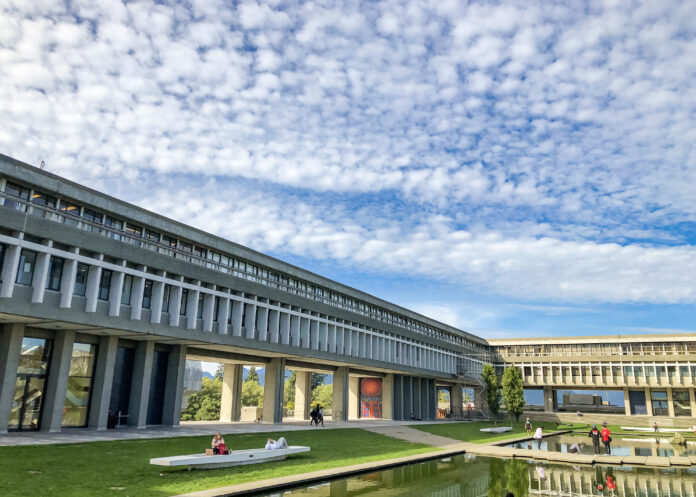
The photo is of the outside of the SFU Burnaby campus Academic Quadrangle. There are students sitting on the benches near a small pond surrounded by grass.
Lewis was assigned this position in February of 2022. PHOTO: Allyson Klassen / The Peak

By: Pranjali J Mann, News Writer

Chris (Syeta’xtn) Lewis was appointed to the role of director of Indigenous initiatives and reconciliation at SFU in February 2022. 

Lewis was previously a co-chair of the Indigenous Leadership Listening and Implementation Task Force which is working towards recommendations for the SFU-ARC and their subsequent Pathways Report, which recommends “pathways for Indigenous students to and through Simon Fraser University.” Prior to his position as director, he was part of numerous advisories and initiatives including being elected councillor and spokesperson for the Squamish Nation, Board of Governors’ Chair, and recipient of Chancellor’s Distinguished Service Award.

The Peak interviewed Lewis to know more about his vision, upcoming initiatives, and his contributions in this position. “I’m just really humbled with the position that I have,” he said. “I really understand the responsibility, and the privilege, and a little bit of the weight that kind of comes with that role.”

When Lewis began the role, he met with senior leadership, deans, Indigenous faculty and staff to “listen and learn from all of the great work around what they’re doing.” 

Gaining insights from these conversations, Lewis navigates collaborations regarding Indigenous initiatives and reconciliations which “transcend faculties and departments” — not limited to one  section of the university. He recognized that his work includes “creating safe and welcoming spaces. So all of us have a sense of belonging.”

Unpacking the term reconciliation, Lewis said, “Reconciliation just isn’t an Indigenous matter. It’s a collective responsibility that we all have at the university.” To achieve this, he reiterated the need for collective action and effort. This included having support resources and capacity building to assist the ongoing work of Indigenous students, faculty and staff.

Lewis highlighted another essential step in the process of reconciliation: recognition. He explained it’s important to honour and appreciate the gifts of Indigenous students, faculty, and staff. But he pointed out that this inherits a challenge: honoring existing contributions can mean looking at things that have often been forgotten. 

“We really need to build capacity on all fronts, and look at our governance structure, to ensure that it’s supporting the Indigenous work that we must do,” said Lewis.

His position allows Lewis to look into these concerns more closely and he hoped to work on the “Indigenous university wide governance structure on how the university needs to pivot to meet the needs and collective goals around Indigenization and reconciliation.” He said he is excited for an upcoming project that addresses Call to Action #5 from the Aboriginal Reconciliation Council (SFU-ARC) report around “bringing Indigenous names back to the university.” Lewis said he looks forward to “creating a sense of belonging, especially for Indigenous community within the university,” through the project.

Lewis noted he is looking forward to working with the “largest urban Indigenous population in British Columbia,” in Surrey, including Métis, Inuit, and other five host communities to “create safe and welcoming spaces.”  

What does it mean to be an immigrant on stolen lands?

0
A Canadian flag flying against a blue sky
This Canada Day, we can hold space for the nuances that make up the immigrant experience. PHOTO: Hermes Rivera / Unsplash

By: Meera Eragoda, Features Editor

Content warning: war, genocide, colonialism, anti-Indigeneity, racism

It’s uncomfortable but necessary to think about what it means to be a racialized immigrant settler on stolen lands. For many of us, life is better than in the countries we came from. But at whose expense has this been possible? And what forces went into making our home countries places we needed to leave in the first place? Understanding this might help us all learn how to better work together in solidarity.

I came to this country with my single Tamil mother, fleeing both the genocide of our people in Sri Lanka and my abusive father. My mother struggled, disconnected from the community, with a law degree worth little here. I grew up shopping in thrift stores long before it was cool — and not in a way-ahead-of-the-game way but in a deeply shameful and poor kind of way. I saw her struggle between pride and accepting hand-me-downs from strangers who knew me. 

Life wasn’t easy at first but it slowly became more stable. And regardless of what it was like here, she taught me English first for a reason: she knew that she wanted us to leave Sri Lanka. And it was a privilege to be able to leave, as fucked up as that is. To not be one of over 300,000 internally displaced people, to not have been killed or disappeared by the Sinhalese government, and to know where our family members are (even if we don’t talk to them). We also lived in Colombo, the capital, as opposed to the north and east of Sri Lanka where Tamils are concentrated, and therefore targeted. Aside from when we visited my grandparents, we were relatively separated from the conflict with enough money to leave.

My grandparents lived in a city called Kalkudah in the east and I have vague memories of being there, surrounded by my grandfather’s rough voice and whiskey breath and my grandmother’s scratchy saris contrasting with her soft skin. Their love for me permeates into memories of dusty roads, the sea, and their farm with monkeys rustling in the trees above. I was shielded from the context we were living under but I also remember hearing practice drills at the military base beside their farm. 

Placing this into historical context, I learned how colonialism touches everything. On the surface, the civil war in Sri Lanka is a straightforward conflict between the Buddhist Sinhalese majority and the Hindu Tamil minority. However, this conflict emerged from tensions British colonizers capitalized on and exacerbated. Once the British left, they handed power back over to the Sinhalese who started enacting discriminatory policies, culminating in the two genocides of Tamil people in 1983 and 2009. 

Like many other Tamils fleeing the genocide, our first point of entry was Toronto. This is where the largest diaspora of Eelam Tamils outside of Sri Lanka resides. I, like many of us, grew up being told Canada was a utopian alternative to the US. Canadians are polite, multicultural, and more progressive than the US. We’re told this even as we face racism and discrimination. On the other one hand, I am safer here. I have more opportunities, I can be openly queer, my non-binary identity is accepted, I can have tattoos, and I don’t live under a state that is trying to enact genocide on my people. 

At the same time, fleeing one genocide just to benefit from the genocide of another group of people places me, and others like me, in a complicated position. The more deeply I examine my place here, the more I see the intersecting threads of colonialism that make up this country. The British created a problem in my country and left a sea of wreckage behind them as they exited. Then they sold us the solution by way of immigration to countries like Canada. Canada has a history of using immigrants to claim ownership over the land and continue their displacement of Indigenous people. In many ways, we are all pawns in this game.

When I immigrated to Canada, there was little education about Indigenous people and Canada’s genocide and displacement of them. What I was taught made it seem like this history was so long ago. I didn’t learn that the last residential school closed in 1996. I didn’t learn that the residential school system morphed into the foster care system. I didn’t learn about the over-incarceration of Indigenous people or how many still grapple with very real intergenerational trauma resulting from displacement and colonialism. I didn’t learn about the vast diversity of Indigenous cultures, their resistance, their resilience, their creativity, and their care for the land

The more I learned about colonialism, the more I realized how interconnected oppression is and, conversely, how it would be so powerful to come together to dismantle the system. Conservatives of any ilk like to tell us the success of other groups comes at our own detriment.

We’ve been taught to divide so they can conquer. And we have been taught this. Who told us to see brown people as terrorists? Who told us to see Indigenous people as criminals? But how do we all unite so we can conquer colonialism and capitalism? Sometimes I think like we silo our own movements instead of fighting for collective liberation. But who taught us this? When we should be seeing a win for one group as progress and as opening space for us all to uplift each other and unite against colonial and capitalist structures. 

It’s true that many of us can’t go back to our home countries. I, for one, have been so separated from the language and the culture that even if I wanted to, I would not be able to live in Sri Lanka. We can hold multiple truths about our experiences here. We can be thankful for the opportunity and the relative safety and we can also recognize we’re here because of colonialism and capitalism. We can realize we can’t return to our countries but also understand that our presence here perpetuates settler colonialism. For those of us who are vocal against oppression in our home countries, we need to see the connections here and show up in solidarity with Indigenous people. That means paying attention to Indigenous voices calling to change the system, that means showing up when they ask us to, that means educating ourselves and our communities, and that means holding politicians accountable.

None of us are untouched by colonialism, whether we benefit or not. And this Canada Day, I think all of us have a duty to examine our history and help other immigrants to understand that when we celebrate “Canada,” we celebrate the same forces that set the stage for volatility in our countries that are responsible for the loss of so many cultures and languages, are responsible for the destruction of land, and an ongoing legacy of genocide right here. Britain has colonized the world. We don’t have to let them colonize our minds.