Home Blog Page 254

Animal meeting concludes humans are garbage at recycling

0
An illustration of a gathering of bears sitting on the grass
ILLUSTRATION: Nazmus Sakib / The Peak. How would you like it if I kept your food in a bin?

By: Nathan T., Peak Associate

Dear humans,

We strongly encourage you to read the latest meeting minutes for the weekly Burnaby Mountain Conservation Area Bear Community Meeting as part of the Burnaby Mountain Neighborhood Committee. We trust you will enact changes to your garbage disposal habits in line with best practices.


July 2 Weekly Burnaby Mountain Bear Consortium

Special guests: Northern Port Moody Cougar Family

Location: Office of the President Strand Hall, 3000–8888 University Drive

Date: July 2, 2022 at 3:00 p.m.

Attendees: Bears: Simon, Fraser, Robert, Brown

      Cougars: Lorne, Davies, McFogg, Uni


Agenda items:

  • Discussing availability of human trash as food

Be it resolved that human methods to dispose of trash are currently unacceptable:

All in favour / Motion passed

  • President Simon said if the humans will not let us eat their trash, we should eat the humans instead.
  • Observation manager Fraser added, “Early morning humans will be less able to run away, but were only widely available during exam period when the Burnaby Campus library operates 24/7.” This caused an uproar.
  • Sustainability representative Uni said that if we ate the humans, they would produce less garbage and thus less food for us to eat. “We needed to be sustainable in how we treat the humans so we can keep getting food from them long term,” he stated. Robert concluded the local humans were moving towards composting which was good for nature.
  • Simon countered that the meeting committee was part of nature and it was not always good for them.
  • The committee formed breakout sessions to define the meaning of the term “nature.”

  • Discussion of the definition of nature:
  • Deliberations lasted for four hours.
  • Reactions ranged, but generally all parties agreed that nature was something humans liked exploiting. “Just look around us, bro,” Fraser said.
  • Deliberations proceeded to explore “places where we can poop without a human yelling at us.”
  • Discussion proved unproductive as all voting parties agreed that meeting fatigue was present. There was a unanimous agreement to leave the tawdry work of defining nature to the people living in the giant gray prison structure adjacent to the meeting space. Discussion concludes.
  • Participants returned to the main room and took a nap. Upon return, Uni wanted to discuss food dispensers (i.e. human waste disposal cans).

  • Discussion of food dispensers AKA waste disposal cans:
  • Head of cougar resources Lorne provided background information on the locks of the trash cans, arguing all animals should take a stand on it.
  • Parks and recreation representative Davies told Lorne he needed to get shredded and work out more and that he had plenty of recreation classes available for him to join. Lorne reluctantly said he knew but that the gyms on the west side were way too far away for him to get to.
  • Uni wanted to stop the group from getting distracted and informed the Council that local humans were moving to composting. He brought a motion to inform humans that animals are natural compost machines that don’t require infrastructure or transportation.

Be it resolved that humans are informed of proper composting methods:

All in favour / Motion passed

  • Simon agreed that humans needed to know the plight of animals.
  • Fraser brought up that since humans used tiny red pieces of meat in their mouths to communicate instead of their bodies like all other animals, it would be hard to communicate with them.
  • Uni said that they could use a combination of body language and speech to make sure the humans understand.

Be it resolved to scare the humans with roars and charges if they continue locking their waste disposal cans:

A timeline of SFSS conduct and concerns

0
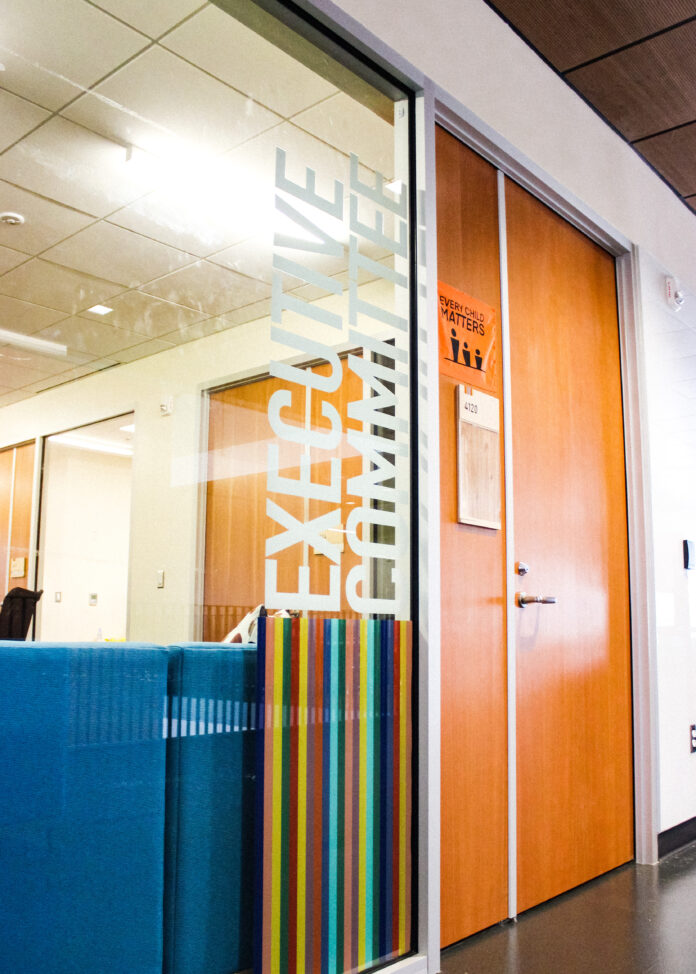
The outside of the Simon Fraser Student Society Executive Committee meeting room.
The new student government increasingly faces critiques over its Executive Committee. PHOTO: Gudrun Wai-Gunnarsson / The Peak

By: Meera Eragoda, Features Editor

May 2022 

  • President Helen Sofia Pahou and the new Simon Fraser Student Society (SFSS) begin their 2022/23 term. 

May 11, 2022 

  • In an interview with The Peak, Pahou said she hopes to facilitate clear communication within the SFSS. 

May 11, 2022 Council meeting

    • In-camera portion called by Pahou and vice president internal and organizational development Judit Nagy to discuss committee election. 
      • In-camera refers to portions of the meeting which are confidential and unavailable to the public. Matters which constitute a basis for an in-camera meeting are: HR matters, “open contract negotiations or competitive processes,” legal issues, and anything subject to the Personal Information Protections Act (PIPA).
    • English councillor Gabe Liosis and mathematics councillor Ben Tischler run for vice chair — Council votes in Tischler.
    • Oversight Committee on Executive Officers formed with Alan Ropke, Aaron Fun, Nim Basra, Gabe Liosis, Matthew Reed, and Riordan Huenemann as councillors for the 2022/23 term.
    • Governance Committee formed with Ben Tischler, Abhishek Parmar, Hilary Tsui, and Mark Giles for 2022/23 term. Vice president equity and sustainability Rea Chatterjee and vice president external and community affairs Eshana Baran run but are not appointed.
      • The Governance Committee is responsible for keeping up to date with and interpreting the SFSS’ constitution, bylaws, and policies. They can also make recommendations to change any of the above.

June 8, 2022 Council meeting

  • In-camera portion called for by Faculty of Communication, Art, and Technology councillor Ratsko Koprivica and sociology and anthropology councillor Arthur Lee to discuss Forum Chambers Temperature Check and Potential Sponsorship from Memory Express.
  • Council approves $6,300 to send Pahou, Chatterjee, Baran, and Unit 5 CUPE Local 3338 representative Trish Everett to Chicago, Illinois for the 2022 Labour Notes Conference from June 17–19. Various councillors express concerns over the number of people being sent, the cost of the budget, and a lack of transparency regarding the motion.

June 14 Executive Committee meeting

  • The Executive Committee is comprised of seven members, four of whom belong to the Stronger Together Party, two of whom belong to the SFU Progressives, and one independent.
  • Council moves in-camera to discuss legal concerns.
  • Vice president internal and organizational development Judit Nagy motions to issue an apology to SFU over letter dated May 17, 2022 calling for firing of an SFU employee. The Peak does not have access to the contents of the letter. According to the minutes, the letter included the SFSS Executive Committee as a signatory despite lack of support from majority of the committee. Motion passes with only vice president external and community affairs Eshana Baran and vice president equity and sustainability Rea Chatterjee opposed.

June 22 Council meeting

  • Nagy motions for policy amendments for in-camera meeting which would stipulate only councillors and invited third parties be allowed access. Additionally, any councillor not at a meeting would be excluded from information discussed at the meeting. Councillors express concerns over transparency. The motion required a ⅔ majority which was not met, with only 56% of the vote.
  • Vice president external and community affairs Eshana Baran asks for an update on coverage for operations organizer Ayesha Khan when she goes on leave. Pahou states building manager John Walsh has agreed to step in temporarily and the item will be discussed at the next Executive Committee meeting.
  • Chatterjee brings up discussion item regarding the Executive Committee meeting decision to apologize to SFU regarding the letter dated May 17, 2022. Chatterjee alleges lack of sufficient discussion time surrounding the letter. Councillors express concerns this undermines the other signatories such as Graduate Student Society, Teaching Support Staff Union, Students of Caribbean and African Ancestry, Disability and Neurodiveristy Alliance (DNA), etc. Councillors allege concerns over transparency, conflict of interest between Committee on the Councillor Breaches of Confidence and Executive Committee, and undermining of complaints process. Other councillors express support for Executive Committee decision, citing that the current Executive Committee does not have to agree with the previous one. Others express concerns over Chatterjee informing constituency groups about what they claim was SFSS business. Baran and Chatterjee allege they have been isolated and excluded within the Executive Committee.

June 23 

  • English councillor and staff liaison officer Gabe Liosis expresses concerns over Executive Committee’s decision to merge operations organizer and building manager roles into one. Liosis outlined lack of consultation and silencing of current operations organizer Ayesha Khan, alongside a prediction of burnout of building manager. 

July 5

  • The Peak reaches out for a statement regarding the operations organizer positions. Pahou requests future media requests be sent solely to her and says councillors are not to speak to The Peak. English councillor Gabe Liosis claims this is unreasonable and undemocratic of Pahou.

July 6 Council meeting 

  • In-camera session called by vice president finance and services Abhishek Parmar and vice president university and academic affairs Nicole Kirigin to discuss review of a public report and Committee on Councillor Breaches of Confidence (CCBC) report. Concerns about CCBC’s transparency raised by members of Council. Council passes motion to allow CCBC to continue investigations and enable CCBC to begin future investigations on recommendation of Council or other committee.
  • English councillor Gabe Liosis, Disability and Neurodiversity Alliance representative Vivian Ly,  vice president external and community affairs Eshana Baran, and vice president equity and sustainability Rea Chatterjee leave the meeting at 6:45 p.m.
  • Motion put forward by French councillor Ethan Dungey and science undergraduate society councillor Ayooluwa Adigun to allow Council to replace members of CCBC “whenever Council believes” they are in “potential conflict of interest.” Motion is not carried with two in favour and 35 against.
  • Environmental science councillor Chloe Homenuke’s resignation accepted.
  • $14,000 approved to furnish the Computing Science Student Society common room.
  • $10,000 approved for Fall Street Festival.
  • Hiring position for staff leave and potential administrative restructuring discussion brought forth by Ly. Mathematics councillor Ben Tischler objects on the basis it should be an in-camera discussion. Discussion item postponed.
  • Operations organizer Ayesha Khan raised concerns regarding SFSS lack of action for coverage of her position. 

July 8

  • English councillor Gabe Liosis resigns due to time constraints. Liosis also alleges concerns of transparency, toxic work culture, and silencing tactics based on political ideology. Liosis states he will continue in his capacity as associate vice president external and community affairs.

July 13

  • Disability and Neurodiversity Alliance representative Vivian Ly resigns, alleging concerns of transparency, misuse of power, corruption, and accessibility, all of which Ly says contributed heavily to “rapid, severe deterioration of [Ly’s] mental health.”

July 20 Council meeting

  • Ly, Liosis, and Indigenous Studies Student Union councillor Nebula (Anita) Shen’s resignations accepted.

July 25 

  • Vice president equity and sustainability Rea Chatterjee and vice president external and community affairs Eshana Baran release a public letter alleging concerns of transparency, toxic work culture, overuse of in-camera, and other silencing tactics meetings. Chatterjee and Baran are the only two members of the executive committee belonging to the SFU Progressive party.

July 27  Special Council meeting 

  • Meeting held to call for the censure of and request resignation of Chatterjee. Motion postponed until next meeting.
  • Council condemns letter released by Chatterjee and Baran over “concerns about [councillors’] mental health, wellbeing, and safety as a result of this statement being disclosed at a Council Meeting without Council’s approval, then to the public at large.”
  • Chatterjee alleges her email has been accessed by Nagy without permission.
  • Koprivica called to skip discussion and go to a vote on condemnation of the letter, effectively blocking any discussion from the 50+ student members in attendance due to concerns they are “acting in bad faith and clearly have been brought by the two SFU Progressives [ . . . ] to pressure council to vote a certain way.” Motion to skip discussion fails. Members in attendance express concern over the seeming attempt to stifle democratic process.
  • Council goes in-camera two times in the meeting.

July 27 

  • SFU350 releases statement standing in solidarity with Chatterjee, condemning motions to call for Chatterjee’s censure and resignation. They also state they condemn the current culture at the SFSS, citing concerns of toxicity.

July 29 

  • SFSS announces hiring of Sindhu Dharmarajah as temporary replacement for operations organizer Ayesha Khan, keeping the positions of operations organizer and building manager separate.

July 29

    • Students of African and Caribbean Ancestry (SOCA) holds general meeting in Student Union Building.
    • The Peak receives a tip from an anonymous source. In a Discord chat, film councillor Riordan Huenemann made a potentially inflammatory comment towards SOCA that he later explained was not meant to be taken seriously and for which he has since apologized. Pahou acknowledged this comment and said she does not condone this behaviour. She assured Council that SOCA’s safety needs have been attended to.

This is a developing story that The Peak will cover in future issues. 

Study tips for people with ADHD

0
a person lies slumped behind a pile of books
A few tips to try if you have ADHD. PHOTO: Pixabay / Pexels

By: Meera Eragoda, Features Editor

While everyone who experiences ADHD will experience it differently, this non-exhaustive list will hopefully provide some new tips to try. As always with lists of study tips, try it out, if it doesn’t work, that’s OK. Take what serves you and leave the rest. 

ADHD brains tend to require a different approach than a neurotypical brain does, as they aren’t motivated in the same way by importance or rewards. ADHD’ers understand they can just give themselves a reward whenever they want. Instead of working within a rigid set of rules, they have to be able to game the system to introduce novelty and accountability, while reframing how rewards work.

    Diagnosis/General Tips

  1. Join the weekly Experience ADHD support group offered by Centre for Accessible Learning, Student Experience Initiative, and SFU Health & Counselling. While I have not been yet, this group was created to provide support and connect with other students with ADHD. Some of the topics they cover include diagnosis, tips for navigating ADHD, self-advocacy, and intersectional identities.

    Routine
  2. Counterintuitively, a routine is one of the most important things for someone with ADHD to get into. And ADHD makes it very difficult to get into a routine. The best way to hack it is to find a routine that does not seem like a routine. If I do the same thing in the same place at the same time every single day, I lose the novelty that my brain needs. So I rotate among my favourite coffee shops to keep things interesting for myself, even though the routine of going to a coffee shop does not change. If coffee shops don’t work for you, you can try whatever spaces work for you. Just remember to give yourself enough time to find the perfect spots and get used to them.
  3. Get going in the morning (or whatever time makes you most productive). Setting alarms is a good way to do this. However, executive dysfunction means all your brain sees sometimes is the numerous steps you have to take even for something simple. For me, pulling out my phone, opening my alarm app, and typing in my alarm can become too much of a hurdle. Though not everyone is comfortable with Google Home, they have made it so much easier to set alarms by just speaking a command out loud. This is especially helpful if you tend to get distracted and are always running late. 
  4. Plan ahead and make time to plan. This means figuring out a list of things to do. This sometimes requires writing down the steps to your various routines and placing them where you can see them. It means dedicating certain places to certain things (like your keys and wallet) so you don’t misplace them. Planning can also be fun because it can be a productive way to procrastinate a little and you can integrate fun stationary into the process to give you a serotonin boost.
  5. Start slow and remember, progress is not linear, so  be a bit forgiving of yourself. When you’re building in routines, try building things one at a time and give yourself a few weeks to get one habit down before adding another.
  6. Remember to feed yourself regularly, drink enough water, get enough sleep, and move your body in whatever way you can. One of the things with ADHD is sometimes forgetting the basics, which is why setting timers, planning, and getting into routines becomes incredibly important.

    Accountability

  7. I find it difficult to see priorities in the same way other people do, which sometimes means it’s difficult to get things in on time. One of the ways I work around this is by having coworking buddies and meeting them early enough to start getting things done earlier. One important thing about this is since most of my coworking buddies are also friends, we set strict rules about non-talking time. Another thing that works for me is going to coffee shops by myself. I cannot work at home because I will get distracted by everything in my house and coffee shops are a nice distraction-free environment, especially when paired with headphones. 
  8. If your ADHD is also paired with perfectionism, practice getting a terrible draft on paper, just to have something there. After that, go back and edit but having something down on paper will make your life much easier.
  9. Many ADHD’ers may relate to sitting down right before a paper is due or right before an exam and then hyperfocusing to get it done. If this has gotten you good grades, you have trained your brain to know that you don’t actually need to set aside a whole day to study. While you want to make sure you’re not cutting it too close, starting closer to a deadline might actually be the best motivator for your brain. Whenever I try to leave myself plenty of days to do an assignment in, I still never end up actually getting it done until the last minute. That being said, try and do prep work, like research, beforehand so all you have left to do is to just do the assignment.

    Alternatively, if this is not your experience or you’re studying for an exam, finding a way to split up your study sessions into multiple days of shorter sessions may be more effective. This way, it doesn’t seem as daunting to sit down to a whole day session but just two hours. This will require planning ahead and finding accountability tools but will leave you feeling less drained.

  10. Work with your tendency to procrastinate but also do not get in the habit of asking for extensions because if you get them, that will train your brain that there are no consequences to your actions.

    Novelty

  11. Pair your studies with rewards. So most study tips ask you to give yourself a reward after you complete a task. This does not work for me because I know I can just give myself a reward anytime and I can’t trick my brain into waiting. The best way to get around this is to pair your study session with a reward or to get a reward in preparation for your study session. So getting a coffee you like and then sitting down to work or using nice stationary and pens for your notes (or customizing your desktop wallpaper, apps, and theme). This helps associate study time with something positive, making it more appealing.
  12. Another aspect of novelty is to do things more creatively. Try and make your study sessions into games to see how much you can get done — like trying to do it within a certain amount of time or doing tasks out of order.

Still our money: The SFSS is spending too much running itself

0
piggy bank
Students are paying a whole lot for a bureaucracy. PHOTO: Fabian Blan / Unsplash

By Nercya Kalino, Staff Writer 

When SFU released its 2021/22 budget plan, a plan that called for a 2% increase in domestic tuition and 4% increase in international tuition, the Simon Fraser Student Society (SFSS) objected. Their objection, in part, was based on their recognition of students’ “unprecedented financial hardship” during COVID-19. Unfortunately, it’s an objection that rings a bit hollow in light of how the SFSS spends our money. As of 2021, a third of the SFSS budget is devoted to running the SFSS. That’s a big change from previous years.

The SFSS claims to be a student advocacy group. For students, by students. But because they draw the overwhelming majority of their funds from students’ bank accounts, we also need to closely examine their actions. Take the most recent year. In the SFSS’ final 2021/2022 Operating budget statement, $3,070,662 out of the total $3,169,725 SFSS revenue came from students in the form of SFSS member fees. That’s 97% of the SFSS’ revenue. Every semester, full-time students pay $42.74 as part of their SFSS membership fee, and part-timers pay $21.38. 

So, where’s the money going? Despite some fancy infrastructure investments, the answer is largely disappointing. 

What’s of concern are the ballooning administrative costs associated with the Society’s activities. In 2012, the SFSS’ administrative costs totaled $479,389. Those costs were mostly associated with administration, financial office, general office, and “build SFU office.” That’s fine. The SFSS is a big organization. It needs upkeep, supplies to run, and, of course, to pay its workers. But let’s flash forward to 2021, the latest year for which figures are available. 

In 2021, those same line items now total $1,567,090. That’s over three times as costly as in 2012. “Administration and financial office” have more than quadrupled, from $193,711 in 2012 to $777,894 in 2021. “General office” and “build SFU office” expenses have more than doubled. The overwhelming majority of those funds are coming from student fees. We’re funding this explosion in SFSS operations. That’s plenty of strain on a student body that, by the SFSS’ own admission, has been experiencing “unprecedented financial hardship.” 

Why has running the SFSS become so much more expensive over the course of the decade? The rate of inflation hasn’t doubled, let alone quadrupled to match the expenditures above. We deserve answers. Whether it’s the previous Executive Committee or the current one, the SFSS has become an increasingly controversial organization. From the confusing closure of the Student Union Building to leaks to the dismissal of members over said leaks to the recent resignation of multiple councillors, the group has been placed under more scrutiny than ever. On budgets, they deserve even more scrutiny. 

There are, admittedly, some big shiny benefits we’ve gotten for our money. The annual build levy, approved in 2012, currently demands full-time students pay up $90 and part-time students pay $45. We’ve seen those dollars go to some cool projects. $10 million from the levy paid for the new Burnaby Campus stadium. The same fund went towards the construction of the SUB, which, of course, was then denied to us at the height of the pandemic. The 2023 financial budget consultation listed COVID-19 mental health as one of the recommendations. It explains this objective should “provide expanded accessibility and health services including dedicated funding.” That’s all well and good. But it doesn’t answer why we’re paying the SFSS to devote such a substantial (and increasing) portion of its budget to running itself. 

That the SFSS publishes its financial statements for everyone to see is fantastic. That it sometimes shells out for big, shiny infrastructure projects is nice. And that it has committed itself to a living wage for its employees is great, too! But what we need are explanations as to why the SFSS has become three times as costly to run over less than a decade. 

Treading water: Canadians need Universal Basic Income

0
Canadian currency
UBI is a bridge to happier, healthier living. PHOTO: PiggyBank / Unsplash

By Bhavana Kaushik, SFU Student

In a world with skyrocketing housing prices, wages that don’t reflect productivity, and rampant worker dissatisfaction, we need a way to bridge the gap between wages and the real cost of living. Universal Basic Income (UBI), a program that provides citizens with regular income to help them meet their needs, fits the bill. In Canada, a UBI program could enhance the happiness, productivity, health, and overall financial well-being of citizens. After a pandemic that devastated our pocketbooks and amid rising prices, it’s time for Canadians to seriously consider UBI. 

Before the pandemic hit, the Financial Consumer Agency of Canada conducted a survey to measure the financial well-being of 1,953 Canadians. Only 33% of respondents felt financially secure while 41% felt somewhat secure, 19% were struggling somewhat and 7% were struggling a lot. Thanks to COVID-19, inflation, and global supply chain shocks, Canadians are likely feeling even more financial pressure. UBI will reduce that pressure so Canadians can feel financially secure.

On the benefits of UBI, we can move beyond speculation. A Finnish UBI study that compared recipients of UBI to a control group without the regular income supplement found that UBI recipients came away from the program with more favourable perceptions of their household’s financial well-being. As a result, seemingly unrelated aspects of their lives improved. Respondents felt they’d “experienced less mental strain, depression, sadness, and loneliness” over the course of the program. The UBI group also expressed better perceptions of their cognitive abilities, including “memory, learning, and ability to concentrate.” Without financial disaster around every corner, Finnish UBI recipients were able to enjoy improved mental health

Despite UBI being supported by a shocking 75% of Canadians, as of 2019, some doubts persist. One persistent myth is the idea that, with UBI, no one will want to work. Some believe a steady stream of income will produce a population with no inclination to work. They couldn’t be further from the truth. That same Finnish study, and others like it, found that recipients of a regular income supplement weren’t just hanging around. Because of a newfound feeling of autonomy associated with less worry about their finances, recipients were more likely to engage in “voluntary work or informal care.” They didn’t withdraw; they engaged. 

“Engagement” extends beyond informal work, too. A study on the effects of a UBI pilot program in Ontario found that receiving unconditional payments improved the participants’ well-being and boosted their likelihood of landing jobs. Not only did they keep working, but they also gained the confidence and financial security to seek out better jobs. 

We can argue about how much to offer Canadians on a regular basis. We can argue about how often to dole our payments. But what we can’t argue about anymore is whether our current system of labour and pay is working for Canadians. UBI offers a potential bridge from our current state of toiling away for insufficient pay to a healthier, wealthier, and happier future for every Canadian. 

SOCA and SFU Black caucus host inaugural Black Graduation Celebration

0
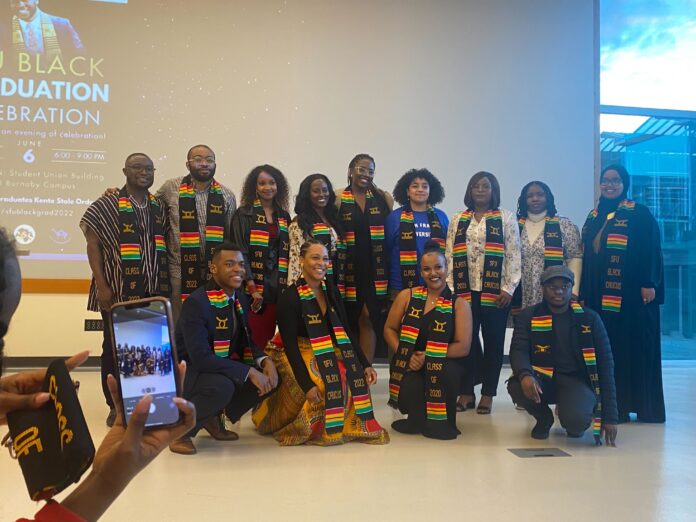
The photo shows 13 graduates wearing the Kente cloth stoles. They are huddled together smiling at the camera.
The event offered a culturally immersive experience by including music, food, and performances. PHOTO: Chloe Arneson / The Peak

By: Chloë Arneson, News Writer

On June 6, the SFU Black Caucus hosted the SFU Black graduation celebration at the Student Union Building. The celebration was supported by SFU Students of Caribbean and African Ancestry (SOCA) and endorsed by SFU African Students Association (ASA) and the Somali Students Association. The inaugural event was the first annual Black graduations.

Graduates from 2020, 2021, and 2022 were invited to attend. In their press release, SOCA noted they chose to include previous years’ graduates to celebrate those who had online graduation ceremonies. “Black students over the years have been instrumental in ensuring that there is space and opportunity for Black/African Descent students to be recognized and celebrated for their accomplishments.”

June Francis, director of the institute for diaspora research and engagement at SFU, spoke to the graduates virtually. “It has been our dream for some time to be able to celebrate with our Black students as they move on to other things [ . . . ] you never leave us as a member of the Black caucus, we hope we will continue to provide a community of support,” she said.

Francis wanted to emphasize the importance of celebrating Black joy despite challenges faced by Black students in academia. “I know many of you have advocated for change, but today I wanted to do two things. To remember where we have come from and to really rejoice,” she said. “We know that racism is still with us and we know that as you go into the wider world there is a lot that you will face [ . . . ] but as you go into the world and embrace it with everything you’ve got, that you go with joy.”

The event featured African food, spoken word poetry, Ugandan dancing, and a performance by local singer and songwriter, Bukola. The night offered a chance for graduates and their loved ones to celebrate “while creating a culturally immersive experience,” SFU stated in their press release.

The graduates were presented with SFU Black Caucus-branded Kente cloth stoles after celebrating each of their individual achievements. SOCA is also offering Black graduates a chance to be in the inaugural SFU Black grad yearbook to celebrate their hard work during the course of the COVID-19 pandemic.

For more information about the SFU Black grad yearbook, you can contact [email protected] or visit their website.

What to know what’s wrong with policing? Compare the treatment of Indigenous land protectors to the trucker convoy response.

0
Police car lights
Canadian police remain more comfortable exercising force against Indigenous protestors. PHOTO: Scott Rodgerson, Unsplash

By Olivia Visser, Staff Writer

Content warning: mentions of police brutality and anti-Indigenous violence

Police shouldn’t take public stances on political issues, yet they do on a regular basis. Beyond displaying on-duty support for controversial symbols like the thin blue line, officers showcase their beliefs in the way they police different groups of people. The overwhelming disparity between their treatment of Trans Mountain Pipeline protesters and Freedom Convoy participants underlines a broader systemic problem with Canada’s policing.

In 2016, the Trudeau government approved the Kinder Morgan Trans Mountain Pipeline (TMX) expansion, backtracking on its campaign promise to protect the environment and community land rights. Two years later, the BC Supreme Court granted an injunction preventing obstruction of TMX work in Burnaby. Since then, more than 248 people have been charged with contempt for demonstrating against the pipeline’s expansion. 

Four members of the Indigenous youth warrior group, Braided Warriors, were violently arrested after a peaceful sit-in protest in February 2021. They gathered for a ceremony at BMO’s downtown Vancouver building, which hosts TMX insurer AIG. This was enough to prompt their forceful removal by “approximately 25 Vancouver Police Department officers.” Video footage shows police throwing one person to the ground and pulling another’s hair.

Official RCMP documents suggest violence isn’t the last resort in policing TMX protesters. In their notes from a strategy session for a militarized raid of Wet’suwet’en Nation lands, the RCMP requested “lethal overwatch,” which refers to an officer who is ready to use deadly force. Officers were told to use “as much violence towards the gate” as they want, referencing a roadblock led by Wet’suwet’en people. For Indigenous land protectors, police violence is a familiar reality. 

Other, less peaceful protestors benefit from a more privileged experience with police. The so-called “Freedom Convoy” which occupied Ottawa this past winter is a prime example of how our police fail to provide fair and effective protection. At least 196 people were arrested by the end of the convoy, but they received favourable treatment when compared to Indigenous protesters. 

The Ottawa Police Service’s Interim Chief Steve Bell said the truckers were warned “all week” they were going to be arrested, and even on the morning of the arrests “all unlawful protesters were given many, many opportunities to leave.” This came after nearly three weeks of horn blaring that plagued the city and required an injunction to stop. That’s to say nothing of the harassment, including threats and hate crimes, endured by Ottawa residents. Text messages from an affidavit reveal an Ottawa police officer even gave protesters parking advice ahead of time and offered to devise for them a “plan.”

The Freedom Convoy and Indigenous land protests have significant distinctions. There’s a big difference between protesting the corporate and colonial degradation of Indigenous land and aggressively occupying residential streets en-masse because you don’t want to get vaccinated. Beyond that, the clear contrast in policing tactics and attitudes reflects an anti-Indigenous bias that is not just harmful but dangerous.

There’s no denying the far-right ties held by many Freedom Convoy attendees. The fact that Ottawa police were so slow to publicly distance themselves from the participants within their ranks and take action against the convoy is alarming. Peaceful protests shouldn’t end in arrest, but Indigenous land protectors face this reality regularly despite causing a fraction of the disruption the Freedom Convoy generated. 

This is a systemic issue, but it still requires awareness. It’s easy to be distracted by the spectacle of the Convoy and its obvious political implications, but we can’t let ourselves get sidetracked from working against Canada’s colonial policing history and its far-reaching consequences. 

A look into the SFU Cheer Team

0

Democracy inaction: The SFSS’ toxicity is spilling out of its meetings

0
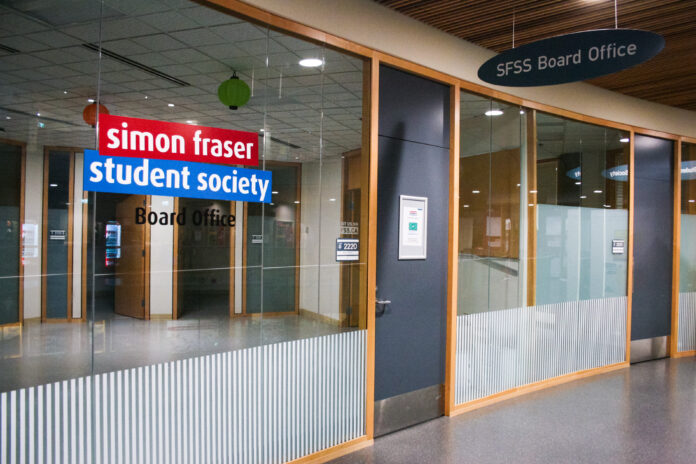
SFSS Board Office
Who’s paying for all the SFSS drama? PHOTO: Gudrun Wai-Gunnarsson / The Peak

By Andrea Steveson, SFU Studen

The SFSS has power over student life, policies, and our money. It is cause for concern, then, when we have several councillors and executives alleging the Society has become toxic and is abusing their power and by extension, our money. 

The SFSS plays an important role in advocating for undergraduate student rights and providing many of the essential services students need. Besides managing the Student Union Building (SUB), they also provide students with free legal services, an emergency food bank program, an extended health and dental plan, as well as the U-Pass program. All these responsibilities, and the power associated with them, means the Society deserves scrutiny. That scrutiny must include the SFSS workplace. 

Students pay hefty fees that go towards supporting the SFSS’s initiatives. Fulltime students cough up over $300 each semester to the SFSS. That’s a lot for cash-strapped students. You might assume the responsibility associated with managing student money would make for a solemn environment, but you’d be wrong. Increasingly, SFSS meetings are scenes of devolution. 

But don’t just take it from me. The SFSS will admit their meetings have fallen into disrepute. Vice president equity and sustainability Rea Chatterjee and vice president external and community affairs Eshana Baran recently released a statement condemning the SFSS’s work environment. They claim that meetings can devolve into personal arguments and they have tried to remind members of community guidelines and etiquette.

They note at the June 3 executive meeting, that “concerns were raised on multiple occasions about the importance of having respectful dialogue and work environment.” In other words, the governing body of SFU’s most powerful student society is looking less like the seat of student government, and more like a playground.

So, in light of a toxic work environment, what has the Council been able to accomplish since the new executives took over in May? Well, according to their Notices of Motions page, fixing typos in policy documents. I can’t imagine many students cast a ballot during the 2022 election thinking they were voting for the person that’d be best at tackling typos. Instead of devoting time to passing a motion to correct something as straightforward as a spelling error, we need a student government that’s legitimately concerned with advocating for students. SFU’s student body has any number of concerns that extend beyond typos. With the SFSS’ $3.1 million budget, they could make a real difference on climate change, climate justice, protesting the Trans Mountain Expansion, fighting for Research Assistant rights, and, of course, pushing back against the school’s routine tuition raises. 

SFSS arguing about petty issues from those personal issues to questions of etiquette and typos are ridiculous issues to devote any energy to, particularly when students are paying their salaries. We want student services, not meaningless debates on the most insignificant issues. 

No one else but Council knows what goes on behind closed doors and in-camera meetings, but, at its core, the SFSS should exist to serve the student body. An Executive Committee that’s rife with infighting isn’t working in the best interests of the student body. The current executive team needs a reminder that the students who are critiquing, asking questions, and demanding answers are the ones paying their bills. They work for us and right now, they’re underperforming. 

Multiple councillors resign from the SFSS

0
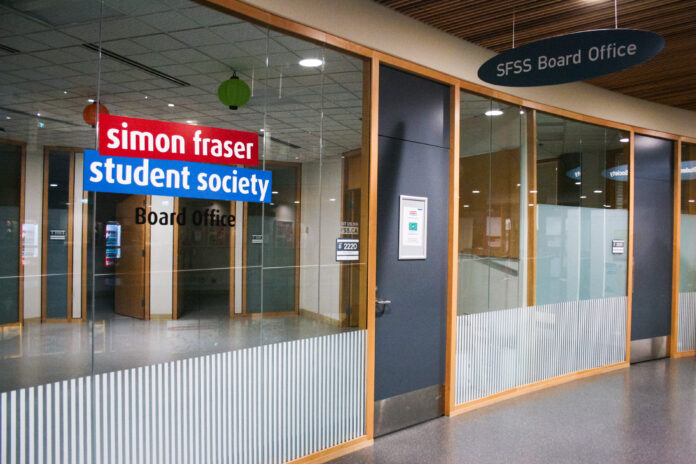
The photo is of the outside of the Simon Fraser Student Society's office. The office has large windows that have their logo printed out.
Some councillors say the dominant political party is targeting the minority. PHOTO: Gudrun Wai-Gunnarsson / The Peak

By: Chloë Arneson, News Writer & Karissa Ketter, News Editor

Three Council members, English representative Gabe Liosis, Indigenous studies student union representative Nebula (Anita) Shen, and Diversity and Neurodiversity Alliance representative Vivian Ly, have recently announced their resignations from the Simon Fraser Student Society (SFSS), citing improper working conditions as their reason for leaving. One of their main concerns is a lack of transparency in the SFSS’s governing processes. 

Gabe Liosis:

On July 8, Liosis announced his resignation due to upcoming career obligations and the harmful work environment he said he has experienced in this role. 

In his resignation letter, he said, “I find myself unable to serve on a governing body led by an executive that has created a toxic work environment, that fails to be transparent with Council and our membership, and treats other councillors, executives, and members with blatant disrespect.”

Liosis will continue to serve the SFSS as associate vice president external and community affairs. The Peak reached out to Liosis for a statement on his resignation. Liosis declined to comment.

Vivian Ly:

Ly commented on the SFSS’s working conditions in Ly’s resignation letter dated July 13. “The environment is damaging and reactionary; pernicious attacks are common, underhanded, targeted, and personal,” Ly stated. “Misuse of power is rampant, and accessibility need requests have been repeatedly ignored.”

Ly is one of several councillors who have come forward to criticise the society. Ly states the resignation is “an objection” to the harm Ly has witnessed. “I have raised concerns multiple times that processes [ . . . ] have not been transparent, fair, independent, and democratic.

“I am tired of the lies, half-truths, and corruption.”

The Peak reached out to Ly for a comment. Ly declined to comment. 

Nebula (Anita) Shen: 

In a statement regarding their resignation, Shen noted, “I stepped down from my role as a Council representative a few weeks ago as I recognized that the environment is deeply toxic and there is continuous harm being perpetuated on individuals who do not conform to the politics of the dominant group.” 

Shen reported there has been “a culture of secrecy and bullying that threatens the health of our SFU and SFSS community.” They noted this is specifically harmful to those who represent minority groups such as DNA, Out on Campus, Women’s Centre, First Nations, Métis, & Inuit Student Association, and Students of Caribbean and African Ancestry.

“Democracies are only strong when they are diverse, and the current SFSS president and Executive Committee are deliberately and maliciously silencing the voices of those speaking out against the harm and attacks on democracy,” said Shen. 

In an interview statement to The Peak, Shen noted “democracy at the SFSS is broken.”

Shen added they joined the SFSS to represent their department “and be part of important decisions which affect students.” However, during their time on Council they found voting to be “more of a popularity contest, based on whose friends with whom or who dislikes whom.

“Executives such as president Helen Pahou and vice-president internal and organizational development Judit Nagy belittle councillors who disagree with them, stonewall staff and students with differing views from speaking, [and] socially exclude and ostracize Progressive councillors,” said Shen. They also claim Pahou and Nagy withhold important information from the Progressive councillors “so that they are unable to do their work and are caught off guard by new motions and absurdly tight deadlines.”

During Shen’s time as councillor, they said, “Several councillors have shared with me that they feel exhausted and burnt out being on Council, and they’re scared to express unhappiness or any criticism as they’re scared to get on [Pahou] and [Ben Tischler’s] ‘bad side,’ fearing the president and vice chair might target them next.” Tischler is the math councillor and vice chair of the SFSS Council. 

Shen believes the SFSS deserves “democracy, transparency, and a safe working environment. SFSS staff deserve good leadership who listen to their concerns and don’t ghost them for months when they request a meeting.”

Executive Team Makeup:

The current SFSS executive team is split between members who ran against each other during the election. 

The Stronger Together Party (STP), who are “politically diverse,” include president Helen Sofia Pahou, vice president internal and organizational development Judit Nagy, vice president finance and services Abhishek Parmar, and vice president university and academic affairs Nicole (Nikki) Kirigin. Pahou’s platform states the previous SFU Progressives leadership “[lacked] empathy for others’ differences” and that the SFSS should be designed to “place its students first before its own self.” One of their running points was creating an “open dialogue” with students to listen to their needs.

The Progressives include vice president external and community affairs Eshana Baran and vice president equity and sustainability Rea Chatterjee. Their platform ran on creating an “equitable, intersectional, and justice-centred university where students belong and will not be ignored” and hoped to “defend student power, and build solidarity and community across campus.”

Statement from Eshana Baran and Rea Chatterjee: 

Chatterjee returned from a leave of absence to release a joint statement with Baran to Council regarding allegations of misuse of investigative power and lack of transparency within the SFSS. 

One of their main concerns is the overuse of investigative powers related to an ongoing investigation by the Committee on Councillor Breaches of Confidence (CCBC). They said the CCBC is using this process as “a political witch hunt opportunity.” 

They allege the committee has been investigating the contents of a private group chat that are unrelated to any legitimate breaches of confidentiality in an attempt to “[slander] certain individuals.” They also allege some members of the private group chat have encountered suspicious activity on their personal social media accounts. The current investigation involves a letter that was sent to multiple organisations about a complaint regarding a senior authority at SFU

These investigations can be kept out of the public’s eye through the use of “in-camera” discussions, meaning the Council or each individual committee has deemed the information sensitive in accordance with policy R-9. In their joint statement, they said the SFSS is “using in-camera to silence and weaponize these processes” and “a student would have no idea what is being discussed.

“Actual legitimate investigations should be few and far between, and be used in cases where the Society is at risk of reputational and legal harm.”  

Statement from Nicole Kirigin: 

The SFSS vice president university and academic affairs and STP member, Nicole Kirigin, sent a statement to The Peak. Kirigin stated she has experienced “bullying and intimidation tactics” during her time as an executive member. 

“I noticed that internal temperature between certain members of the executive committee seemed to increase,” said Kirigin. She noted she had fears to come forward with a statement to The Peak citing “past experiences with my words being twisted in a bad faith manner for the purpose of supposed political gain.”

She added, regardless of “whatever fears I may hold, my intentions to promote transparency, authenticity, and student involvement within the society takes precedence.” 

Moving forward it is Kirigin’s priority to promote an open dialogue between the Progressives and STP leadership. “I strongly believe that the tumultuous relationship between those associated with the Progressives caucus and their supposed enemies would be resolved with open and patient conversation.

“I am willing to forgive the provocation, bullying, and harassment conducted and perpetuated towards myself by the Progressive caucus,” said Kirigin. She stated her forgiveness is only possible if they can work together to create “a landscape of mutual understanding, open dialogue, and respect, in which no other individuals would ever be subjected to similar turmoil and harm.”

Statement from Raghava Payment: 

In an interview with The Peak, world languages and literature councillor said they felt the allegations of a lack of transparency “are a bit unfounded.”

“What it boils down to is [ . . . ] personal issues that people have with each other that, I think, they’re using transparency and other accusations to pursue the problems they have.”

Payment believes “the only losers in this situation are the student body.” They said the situation occurring within the SFSS is slowing their ability to deliver services and support the students.

Statement from Maren Elizabeth (pseudonym):

One councillor submitted an anonymous statement to The Peak about the work environment of the SFSS. “There is no problem with transparency. The people with the problem with transparency are the ones who are not being transparent themselves.”

The Peak sent an open call to Council inviting everyone to submit statements — with an option to remain anonymous — regarding their work environment and the allegations of the SFSS executives lack of transparency.

The Peak also reached out to president Pahou three times to comment on the resignations and concerns of transparency but did not receive a response by the publication deadline.