Home Blog Page 241

Stories from the vault: First goal at SFU

0
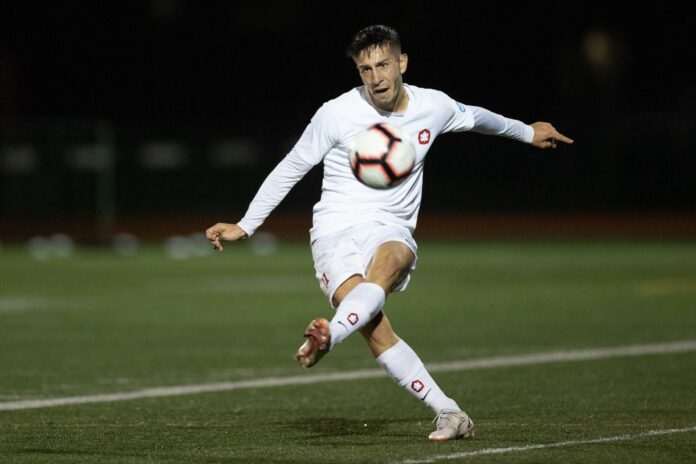
photo of Niko Papakyriakopoulos kicking the ball mid-game.
A game of inches: a fortuitous bounce can go a long way. PHOTO: Paul Yates / SFU Athletics

By: Simran Sarai, Sports Writer

There are a lot of firsts that come with being a collegiate athlete, whether that be the first day of class, first practice, first game . . . the list could go on. But there’s one moment that stands out among the rest: first goal. We asked SFU athletes to take a stroll down memory lane to describe their first goal at SFU  — how it happened, who they played, and what they remember most from that day.

Kyle Bergh, SFU men’s hockey

The fifth year psychology major fondly recalls his first goal as a freshman against the Trinity Western Spartans. “I remember it fairly well, mainly because it was my first game with the team,” Bergh said. “It was also a meaningful goal for me because I had red-shirted the first semester — so after a lot of sitting in the stands, it was just great to be back playing, and to score was even more of a bonus!” 

Speaking of bonuses, how about not knowing how the puck found its way in the back of the net? “The goal was quite funny, I moved the puck to my linemate as we entered the zone and went hard to the net,” explained Burgh. The only way Burgh was going to score is if a rebound from his teammate ricocheted off the goalie and onto his stick. That’s if his teammate did decide to shoot the puck. 

“I got tied up with the player in front, and to my surprise, my linemate had passed me the puck, and it somehow hit off my stick and went in, unbeknownst to me!” While it might not have been the prettiest of plays, it doesn’t make the moment any less special to the winger. “I still have the puck with the date and team written on it, sitting on my mantle. I am looking at it now!”

Niko Papakyriakopoulos, SFU men’s soccer

The junior left back, double minoring in business and communication, also remembers his first goal at SFU in great detail. “It was last year in Lacey, Washington against Sonoma State University. I was a sophomore playing in my first season for SFU,” the transfer from Western Michigan shared. “The goal was a set play my coach drew up from a corner kick. The ball was passed to me on the edge of the box, and I shot it low with my left foot.” 

While the set play worked out to plan, similar to Bergh, Papakyriakopoulos’ goal wasn’t possible without a bit of fortune. “It was a little bit lucky considering it went through two players legs before hitting the back of the net,” he said. By the end of match, Papakyriakopoulos’ goal had earned him not one, but two achievements. “It was the first goal of the game, and the eventual game winner, so I felt great that I could put my team in the lead, and my teammates all felt the same.”

Deep dive into daydreams and diversions with David Ly

0
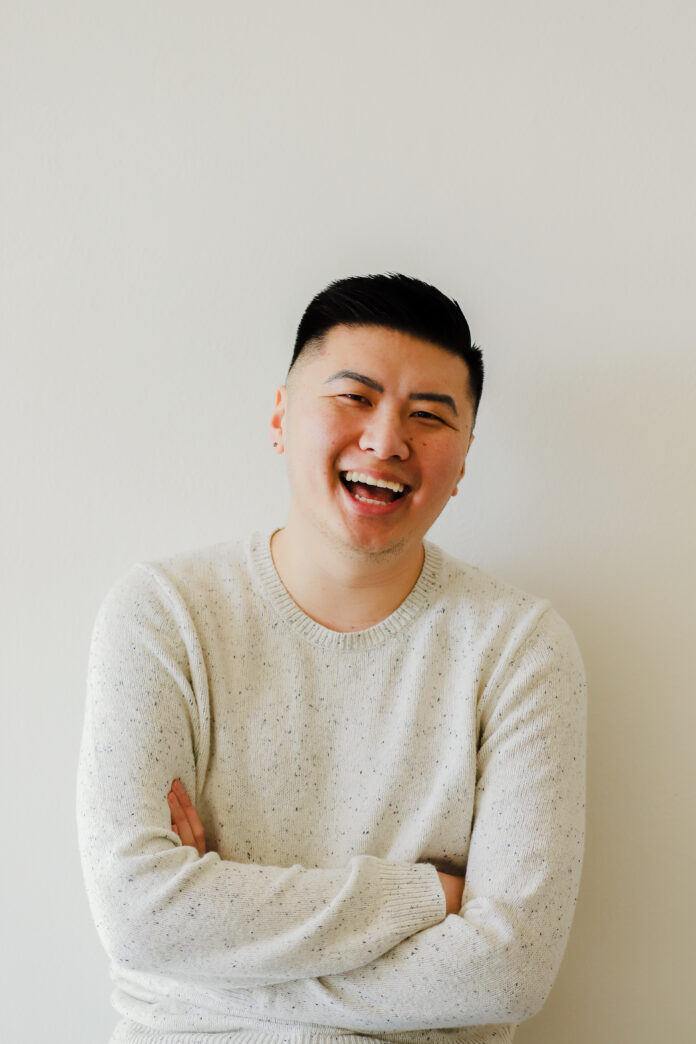
Headshot of David Ly in a white sweater with arms crossed and an open mouth smile
PHOTO: Joy Gyamfi

By: Gem Yelin Lee, Copy Editor

“There is nothing / more soothing / than returning / to the water / with only / our unyielding / imagination / of whatever / we want to be, / once we sense / it’s safe / to re-emerge.”

These lines close David Ly’s second poetry book, Dream of Me as Water. They ran a chill down my spine — the perfect ending to this fantasy-filled, lyrical adventure. Dream of Me as Water follows Ly’s stunning first poetry collection, Mythical Man. Both books were published by Anstruther Books, an imprint of Palimpsest Press

Dream of Me as Water is tied together with themes of water, and the mythological or fantastical. Each poem reads as a chronicle of innermost thoughts representing themselves as dreamscapes. 

The Peak spoke to Ly, SFU alum and Vancouver-based poet, about his newest release.

“Because my first poetry book Mythical Man was quite ‘serious,’ I wanted this second collection — a companion to the first book — to be lighter and more freeing for me in terms of the subject matter I wanted to write about,” said Ly. “So choosing the dreamier route, and staying within my realm of mythological-esque poems, gave me an opportunity to explore without being bound to anything, I felt. Water was also an exciting metaphor to explore in as well, since I feel it was a good bridging device between dreams and myth — how they flow into one another.”

Dream of Me as Water feels relatable to one of many identity crises’ students encounter through their studies and their young adulthood. The feelings this book explores — stress, facing fears, and self-love — paint the walls of my own experiences of late-night thought spirals and daydreaming through courses. 

Maybe this relatability was what initially drew me to Ly’s lyrical lines, but the places his imagination swept me into was what captivated me. 

Through exploring the natural and fantastical world, Ly shows us how they become intertwined with identity. Lines like, “Maybe it’s natural for him to return / to the three seas where his existence is rooted / from time to time, pulled back to write about facets of identity while trying to imagine how else / he can be seen,” are followed by, “like a freshwater eel instinctually / finding its way to the Sargasso Sea in order to spawn, / the larvae metamorphosizing so they can return / to rivers before they yearn for their sea of origin.” 

Ly explained the title Dream of Me as Water came from the final poem of the book, which has the same name. The book is split into three sections: “Dream,” “Dream of Me,” and “Dream of Me as Water,” an idea he accredits to his editor, Jim Johnstone. 

Ly explained the title being split and progressively becoming whole, represents a state of evolving.

“Since the book explores the creation of an identity (not bound to the expectations of others), stacking the words to name the titles, to me, feels like the building of an identity. But, in the end, even when the narrator(s) arrive at who they think they are, it isn’t completely solidified, because I think an identity is ever-growing/evolving,” said Ly. “To capture this idea, we landed on the title being ‘Dream of Me as Water’ because of its malleability — like the growing of an identity.”

Although many of the poems feel based on dreams, there is only one based on a real dream Ly had: “I Only Remember Dreams When Stressed.” Ly said the others were based on the daydreams he indulges in each day. He writes poems the way he wants them to be read and understood, making his dreamscapes easy to happily get lost in. 

“Nowadays, I’m really intrigued at how much a poem can say in such few words, and by how vivid imagery can be. I think that’s my main drive to write poetry, and will always be: to see how vivid of an image I can conjure in very few words,” said Ly, reflecting on his writing process. 

When asked what he wants readers to experience from Dream of Me as Water, Ly said, “I think I just want them to have a good time with it and wonder at all of the creatures in it. I had a fun time writing it because I really got to indulge my imagination, so if readers can escape reality for a bit and hug the octopuses in this book, that would be great.”

Reading Dream of Me as Water in a rather hectic and stressful time in my life, the book felt like a welcome escape from reality’s constraints. I happily “swam the waterways / of long-gone mangrove forests,” with Ly’s spinosaurus, and imagined I, too, could heal as well as a giant pacific octopus which “magically grow / a whole body / of newfound limbs.” 

Dream of Me as Water by David Ly can be purchased through the publisher online, or locally (both online and in-person) at Massy Books and Iron Dog Books

SFU hosts a lecture with hydrologist Dr. John Cherry

0
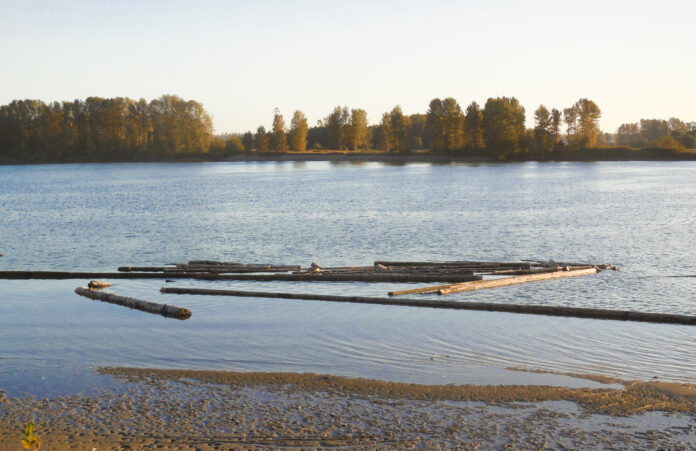
This photo is of a small body of running water. The land surrounding the river is covered in trees.
Groundwater is often neglected when discussing the climate crisis and making policy decisions. PHOTO: Shirlyn Zobayed / The Peak

By: Pranjali J Mann, News Writer

SFU department of earth sciences hosted a guest lecture with distinguished professor and 2020 Stockholm Water Prize recipient Dr. John Cherry. The lecture explored the importance of groundwater and its need for a sustainable earth. 

Cherry opened the lecture by explaining mere reduction in greenhouse gas emissions is not enough for a sustainable future. He noted the unprecedented population growth in the last half a century and stated, “So this isn’t my concept of collapse, but the number of affluent people will shrink. While the rest of humanity expands. The remaining affluent people are in a thin line, surrounded by the vast majority of extreme poverty — much famine, living in ravaged landscapes. So that’s a pretty big picture of the future, but that’s the path we’re on.”

Highlighting factors necessary for human survival, he included a 1000 liters of water per family and 2000 calories of food per person per day is the appropriate amount. These numbers flag upcoming food and water scarcity threats as one-third groundwater levels have been “depleted beyond recovery in human time.” He found irrigation to be one of the key reasons behind this. Because of this, Cherry projected that nearly four billion people will be pushed into “severe physical water scarcity for at least one month per year” as a result of depleting clean drinking water availability. 

Explaining the geological aspect of how groundwater is stored and transferred across the planet, he noted that 70% of irrigation drinking water comes from groundwater. Thus, he implied maintaining groundwater levels was necessary to maintain food supply and human sustainability. 

Drawing from disasters happening in India and Iran pertaining to water insecurity, Cherry underlined reasons related to extensive pumping and irrigation techniques. He also mentioned the “extensive over exploitation of groundwater and rising salinity levels” due to pollution. He flagged the impending threat of drought at many places around the globe including California, where underground water level is rapidly decreasing. 

Towards the end, Cherry indicated two major solutions to the threat of water insecurity. The first is changing food habits to enable more sustainable agriculture measures such as giving up meat in our diets. The second is “reducing the amount of freshwater that escapes to the oceans.” He said it’s important to innovate the agriculture industry and encourage them to shift away from chemical to ecological agriculture methods. Reducing chemicals in the ecosystems is a way to replenish groundwater levels. 

The lecture concluded with discussing ways we can contribute to the cause. Cherry included making informed voting decisions, being critical of mainstream media coverage about the environment, and volunteering with grassroots organizations. 

Dr. John Cherry is part of the Groundwater Project which aims to inform readers and provide them free, easy, and online access to materials about groundwater as an essential component of earth systems.

To learn more about the project, visit The Groundwater Project website.

Modern representation in comic books is on a positive journey

0
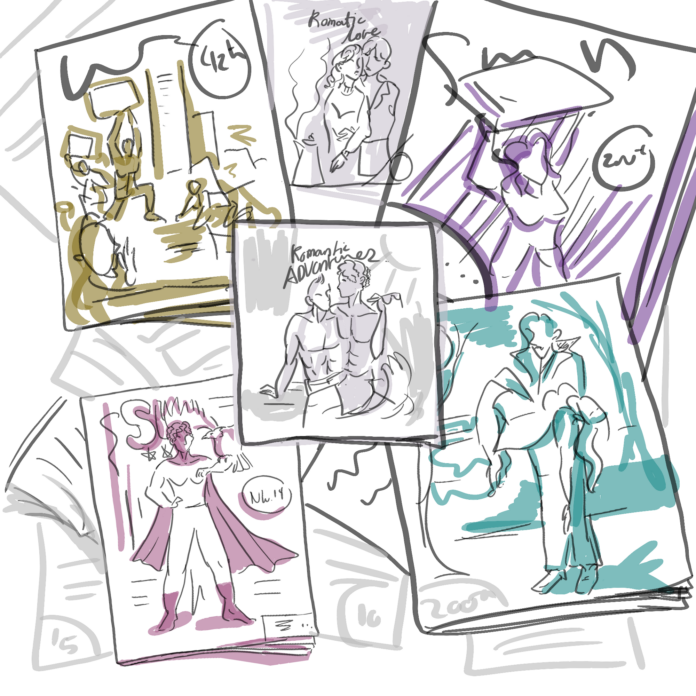
New comic books with new heroes
Comic book superheroes are looking more and more like its readers. ILLUSTRATION: Angela Shen / The Peak

By: Nercya Kalino, Staff Writer

Everyone deserves to have their own superhero. Fortunately, the last two decades have seen this mantra become increasingly realized in the comic book industry. Global interest in superheros has led to a vastly diverse audience, which in turn has inspired comic book companies to lean into heroes who are not just white, straight, cisgender men. This diversification of superheroes hasn’t been easy; it’s been a slow but ultimately successful venture. 

Superman in the ‘40s was an undocumented alien (literally, an alien) who went after grifting politicians and landlords. The X-Men are comics’ perennial allegories for the civil rights movement and the LGBTQIA2S+ community. The 21st century has seen depictions of the first gay marriage in comics, non-white characters take on roles that have historically been played by white actors, and a new bisexual Superman on the mantle. 

This approach by the industry is not incidental to their success but central to it. Over the last decade, Marvel’s Miles Morales, an alternate universe Spider-Man, exploded in popularity, becoming the main character in his own video game and critically-acclaimed animated movie. He’s even enjoyed a few crowd-pleasing references in the Marvel Cinematic Universe. Marvel’s new Ms. Marvel, a Pakistani American and Muslim take on the legacy of Captain Marvel, enjoyed a similar rise to prominence, becoming the main character in the Avengers video game and Disney+’s highest-rated Marvel TV Show. 

Comic book publishers are aware of the success of BIPOC superheroes. In 2020, DC Comics announced it would be relaunching the Black heroes Static Shock, Icon, Rocket, and Hardware as part of their Milestone imprint. The relaunch of those heroes is one of the most beautiful signs of progress there is: massive corporations finally recognizing that the benefits of embracing a diverse marketplace outweigh the costs. 

That’s not to say that there haven’t been missteps. Early representation attempts were at best cringy (as in the case of the DC’s first stereotypical Latino character, Vibe) and at worst, downright bigoted (as in the case of early gay men threatening to sexually assault Marvel’s Bruce Banner in a shelter).

Comic books have a long way to go before they can guarantee authentic representation. Behind the scenes, there still needs to be more diverse creators. The return of DC’s Milestone universe prompted this reflection from the Washington Post: “Diversity has improved in mainstream superhero comics, but is still a concern, especially behind the scenes.” And it’s beyond the writer and illustrator alone. The characters and storylines that emerge from a diverse staff could blow away audiences ready to see inclusive superheroes that properly represent their communities, on-page and on-screen. 

Comic books have managed to stay a success because of growth in characters that don’t fit the traditional superhero model. To generate stories that are authentic to a growing population of diverse readers, our largest comic book producers need to double down on the value of effective representation, both on and off page.

We shouldn’t treat politicians like celebrities

0
someone taking a cell phone photo of their friend at a restaurant table
We must pay attention to what’s important in politics. PHOTO: Josh Rose / Unsplash

By: Clarence Ndabahwerize, Staff Writer

A few months ago, Finnish prime minister, Sanna Marin, was caught in a scandal involving footage from her friends’ social media accounts becoming public. The footage showed her dancing, having fun, and enjoying life. Widespread public criticism followed, and she had to take a drug test that later turned out negative. Finally, Marin reminded people that she was human in an emotional speech, holding back tears. “I want to believe that people will value what we politicians do at work instead of what we do in our free time.”

Marin was the world’s youngest leader before Gabriel Boric became President of Chile early this year. She’s efficient, evidence-based, and praised for her work ethic. Amidst the threat of  expansionist Russia, she bolstered Finland’s security by leading the country into NATO. This wasn’t enough to protect her from the hateful barrage of tabloids and social media comments, though. 

Whatever activities politicians do in their free time shouldn’t matter more than their competence as leaders. This tabloid-style gossip in news and on social media can also shift attention away from more important leadership failures, and undermine pressing policy concerns. When Donald Trump was in office, news media frequently made fun of his clothing and health for clicks, overlooking significant concerns about his terrible policy decisions and behaviour as a leader.

Politicians aren’t celebrities. They’re civil servants with stressful high-profile jobs. They too, should be able to reap the benefits of living in their free and vibrant societies. Not awarding them some sort of sovereign immunity, they need space to have personal lives outside the public eye. We need to let them be, and focus on the important and relevant aspects of their jobs.

Monday Music: African gospel

0
“Monday Music” in orange block text on a yellow rectangular background with rounded corners and an orange border.
Monday Music: your weekly themed playlist. Image courtesy of The Peak.

By: Nercya Kalino, Staff Writer

As a Christian, worship through music is one of the ways I connect with God. Here are African gospel songs that get me in the mindset of praise and help me overcome my challenges. I hope the powerful vocals and soulful instrumentals bring peace to your week, whether you’re Christian or not.

“Obinasom” by Mercy Chinwo 
Photo credit: EeZee Conceptz
Alt text: Satisfied Mercy Chinwo album cover

This song popped up in my recommendations and I’ve loved it ever since. Chinwo’s powerful voice, which is overlapped in harmonies at times, and the rhythmic percussion produce a positive vibration that you feel in your body. With a voice like hers, it’s no wonder Chinwo won Nigerian Idol in 2012. On top of this, her spiritual lyrics never fail to lift my mood, especially, “See the way you love me,” and “You carry my matter for your head.” 

“There is a place” by Nathaniel Bassey 
Photo credit: NATHANIEL BASSEY MUSIC
Alt text: The King is Coming Nathaniel Bassey album cover

Some days I feel tired of life. Bassey’s uplifting voice, the call and response between him and the choir, and the inspiring instrumentals in this song help me push through. Bassey carries emotions in his voice, which are impossible not to feel. This song is perfect for giving me strength in the morning to face my day and I get excited to listen to this song as an optimistic reminder of God’s love for me. 

“Congratulations” by Ada Ehi feat Buchi
Photo credit: FreeNation INC
Alt text: Born of God Ada Eh album cover

When I face trials that may leave me feeling saddened by the world, this song reminds me there is a time in my near future when I’ll see the glory of God. The song combines a subtle traditional in-church gospel with modern production, while Ehi sings, “I told you with Christ say you can never lose.” If you’re Christian, I hope these lyrics touch you the way they’ve touched me.

“Excess love” by Mercy Chinwo  
Photo credit: EeZee Conceptz
Alt text: The Cross, my gaze, Mercy Chinwo album cover

This song will bring me tears especially in the times I feel as though I can’t fully love myself. I personally love this song because as I live through my life, I am strengthened by Jesus’ love for me. As the instrumentals and uplifting lyrics ring in my mind all day, my spirit is filled with peace and joy.

SFU student creates One Stop Mental Health Canada

0
This photo is of a student who is looking at their computer screen. Their head is resting on their hand and they look sad and down.
White plans to launch the service across Canadian provinces over the next year. PHOTO: Kriti Monga / The Peak

By: Nercya Kalino, Staff Writer

One Stop Mental Health Canada is set to be introduced one province at a time within a year, starting with co-creator Chloe White and Erin Rebello’s home province, Ontario. The digital project aims to bridge the gaps for Canadians with marginalized backgrounds. The project stemmed from concerns over issues many marginalized people face with mental health in society. 

This service is meant to help marginalized Canadians find existing resources that best match their background and needs. 

The Peak conducted an interview with White concerning accessibility to mental health resources. White has a background in psychology from McGill University. Currently, she is working towards her masters in clinical psychology at SFU. 

White’s background involves “research as well as some clinical work with people who have eating disorders.” She has also worked in social services with people who are facing homelessness because of marginalization, racialization, domestic violence, refugees, and intersecting forms of marginalization. 

“One of the main patterns that I saw was that not only is there a shortage of resources but there is also a shortage of education on how to access the resources that do exist,” said White. She added  while there are resources for the public many people still face difficulty accessing these services around Canada. 

“There just isn’t necessarily a solution, there isn’t a platform to help you easily access and determine which mental health care service is best for you.” White noted some people have specific needs, such as Indigenous individuals who might prefer traditional healing methodologies. 

This service platform differs from others that already exist such as MySSP, the platform for SFU students. White explained One Stop Mental Health uses the information collected through a diagnostic tool — which is a set of questions that help determine the sort of resources the user is seeking. 

“These resources do exist, we are not claiming to reinvent the wheel, we are essentially trying to bring all these spaces together in one spot,” said White. She offered the example that for someone who is Black, they are not simply their race. They also exist as a mom, a sister, among other titles.

“Humans are comprised of our networks, we are not comprised of a single characteristic.” 

White and Rebello acquired a grant for the project. They were awarded $9,000 from Press Start CoLab funding

White shared the aim for One Stop Mental Health Canada, “I would love to create something that actually synthesizes all the resources that are out there and provide the people the opportunity to see what resources are out there for who they are.” 

The current challenge White and Rebello face is the concern that people who are unhoused or don’t have technical knowledge could have a harder time accessing this tool. White also noted the lack of resources for those that have no consistent technological access. 

“The issue of people who experience houselessness that don’t necessarily have access to consistent WiFi or consistent computers or phones, then that is more where we would have to give that some thought, I think that the good thing about our model is that you would only have to use the tool once,” White explained. “Hopefully for someone [who doesn’t] have access to a consistent connection and device, they could input their information into the tool once and get their results based on that.

“What I’m really hoping to do is maintain an open dialogue with the public, so a big part of our mission is and a big part of our launch process will be communicating with focus groups and individuals in the community to see what they want from our service,” White stated.

Choose your own adventure: A date with McFogg

0
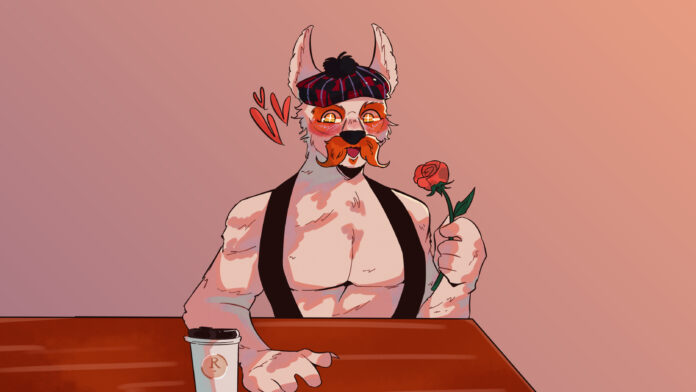
Illustration of McFogg, SFU’s mascot, looking at you across the table, Renaissance coffee in one paw, rose in the other.
A charming date with a charming man! ILLUSTRATION: Jiamin Bai / The Peak

By: Kelly Chia, Humour Editor

INTRO:

You came to Simon Fraser University to engage yourself in many different disciplines. You didn’t expect that you could possibly . . . get engaged. You admit, this brutalist building might capture your heart when it isn’t disappointing you in every way possible. In the many paths our lives can take, you find yourself on the heels of a budding romance. A certain tartan toting canine awaits you: McFogg the Dog. 

You are waiting at the fountain in the Academic Quadrangle at the Burnaby campus one quiet evening, and a text lights up your phone. 

McFogg: Excited for our date?

You:

  1. Ignore him and go to the bus stop so you can take the 143 down. You’re actually not too sure you want to engage with this canine paramour. Go to 5.
  2. Text back enthusiastically, “You know it, wolverine! Where are we headed to?” Go to 3.

~

  1. McFogg texts back, “Oh, you’re not leaving?” You suddenly see him behind you. Where did he come from? Does this dog teleport?! 

You shake your head, anyways. “No, I was honestly thinking about it because the weather doesn’t look too fun,” you admit. Overhead, some clouds looked suspiciously indicative of another rainy night in Vancouver. “But hey, that’s life living here, right? Sorry, I should have said something.”

He nods, with an indeterminate expression on his face as he is wearing a mask. “Well, hey, bygones are bygones, eh?” McFogg has a stray maple leaf in his paw that he extends to you. It’s especially large.

“What do you say? A hike to the rose garden?”

“THERE’S A ROSE GARDEN AT SFU?”

“Yeah, I know it looks gloomy out, but there’s no reason why we can’t enjoy the flowers and the forest. Plus, there’s a restaurant up there!” He says, and you can feel him beaming underneath his mask.

You know what? You think you are glad you decided to go on a date with this canine fursuit. You happily accompany McFogg to the rose garden, where you enjoy conversations about the weather, the lack of social culture at SFU, and more. Its a lovely little date. (END.)

~

  1. The two of you walk towards the Renaissance in the AQ building before it closes, passing by Blenz in the Student Union Building and giggling. You are somehow already creating your own inside jokes already, and you feel as though you’ve known each other forever. 

McFogg grabs a table for the two of you, and it’s lit dimly. He brings you an iced chai and a caramel macchiato for himself — a classic — and you sit down and chat.

“So, I wanted to bring you here because I think it represents the perfect autumn date, here at the heart of SFU itself,” He gestured toward the empty hallways. The janitor’s cart squeaks across the floor two corners away and you two giggle like it’s a joke, because at least you aren’t hearing the wheels of that cart over your professor’s lectures like you usually do.

“It’s a good night!” you admit. 

“I want to show you something,” he says, suddenly nervous. The bouquet on the table rolls toward you as he shudders. “I’m not the McFogg you think I am.”

“Huh?” 

McFogg takes off his mask, revealing . . . nothing? 

“I am the spirit of all McFoggs, past, present, and future. It’s a heavy burden I bear to take every student through their four, five, or ten years of university, but I take it nonetheless,” he nods seriously.

“So, like, a ghost?”

“Yeah, I guess you could say that. I would still like to a-woo you in courtship, though, if you do not mind the ghost bit,” he laughed sheepishly, which is funny as he is a dog.

“Okay, yeah!” You are surprisingly okay with this. 

Having entrusted this stunning revelation to you, your winning acceptance of McFogg’s spiritual responsibilities delights him. You two strut over to point out constellations in the night sky, and have the best first date. (END.)

~

  1. McFogg greets you with a bouquet of flowers in his paws. You take the bouquet gratefully. “Well, superstar, we’re headed for the greatest place this campus can offer!” Your brain pours over all of the available options near you: the many cuisines in the food court? The cafeteria? The fancy new Dining Commons?

McFogg breathes one word.

“Renaissance.”

You: 

  1. Okay, so he’s nostalgic. That’s kinda cute. You agree to go on your little coffee shop date, like the light academia cuties you are! Go to 2.
  2. You cringe because you think Renaissance is overrated — a very hot take. You suggest the Dining Commons instead. Go to 4.

~

  1. McFogg looks a bit disappointed, but perks up when you mention the new soup selections for autumn. He is, after all, a very soupy lad. “Okay, yeah, I’m fine with having my plans change!” He says nonchalantly, hiding a long scroll poorly in his fursuit. You shrug as if you don’t notice. 

You and McFogg discuss many relevant topics: whether apple spice has taken off as much as pumpkin spice has, whether students read too much Freud, so on and so forth. Much as you try, you two seem like you are on two different pages. As you two drink your squash soup, you both feel quite comfortable. 

Suddenly, McFogg coughs a bit. He rubs a pair of Clark Kent-esque glasses that you never noticed before. You look up. “This has been an amazing date, [Y/N], but I’ve got some midterms I need to study for,” he tells you.

“Oh, okay, thats fine!” you say, but then you question whether McFogg even has midterms? I mean, of course he does, right? He’s a student like everyone else?

Or . . . is he? 

You don’t know. As you watch McFogg dash into the SFU fog, you wonder what secrets McFogg is hiding. Or maybe it’s not that deep for a first date. (END.)

~

  1. As you wait at the bus stop for the 143 to arrive, you suddenly make the horrid realization that the 143 doesn’t come after 7:00 p.m. Stinkin’ bus with its own stinkin’ agendas! You huff as you stare at your phone. Maybe this is a sign you should actually go on this date instead? 
  1. Sure! You pick up your phone and text McFogg back. It’s been ten minutes, but you see no sign of him at the fountain you agreed to meet at anyways. Go to 1. 
  2. It is not, actually. You think there just isn’t as much of a spark as you thought there was. Go to 6.

~

  1. Sending out an apology text to McFogg to let him know your feelings, you take the 145 home. You feel glad that you listened to your instincts, though you wish you knew earlier, you take heart in knowing it’s never too late to say no. 

McFogg texts back, “That’s okay! See you on the flip side, kiddo,” and although you’ve never known McFogg to talk like a surfer bro, you appreciate his friendly demeanor.

He seems like a polite fellow and you wish him luck in his ventures for romance. (END.)

Need To Know, Need To Go: October 17–29

0
Illustration of a blue calendar, with "Need to Know, Need to Go" written on top
Arts & Culture events to catch around the city. Image courtesy of Brianna Quan

By: Nercya Kalino, Staff Writer

Vancouver Writers Fest 
Where: Various locations, in-person and remote
When: October 17–23

The 35th annual Vancouver Writers Fest is around the corner. The noteworthy festival will be hosted at Granville Island. With guest curator Omar El Akkad, journalist, novelist, and winner of the 2021 Scotiabank Giller Prize, the event will feature 80 events. Ranging from creative writing classes to panel discussions with renowned and up-and-coming writers, this is a highly anticipated local event for literary-inclined folks. There are also many remote events available. This is an event that avid writers, communicators, and those passionate about conversation should not miss.

Halloween Costume Contest
Where: English Bay Beach, south of Cactus Club 
When: October 29, 10:00 a.m.1:00 p.m. 

This Halloween edition of the English Bay Beach Cleanup hosted by Surfrider Vancouver is an opportunity to help clean up the environment as much as an excuse to wear a costume and socialize on Halloween weekend. Winners will be chosen based on the loudest beach cheers, so go all out. Surfrider Vancouver’s beach cleanup is a monthly event where debris is sorted into recycled materials. There should be more details to follow closer to the day. RSVP to claim your spot through their website.

Pumpkins After Dark
Where: 6100 Boundary Rd, Burnaby 
When: Sept 22–Oct 31

Pumpkins After Dark, Canada’s award-winning outdoor Halloween event, is here again. This event is being hosted at Swangard Stadium and Central Park in Burnaby, with live pumpkin carving demonstrations and candy. This is a perfect way to spend time with your family. It’s expected to have over 6,000 hand-carved pumpkins and a one-of-a-kind walk-through experience. Adult tickets are $21.95.

A couple firsts for SFU golfers Aidan Goodfellow and Izzy Ferguson

0
photo of Izzy Ferguson posed in her backswing after hitting a shot.
Results come at pivotal moments in the front half of Ferguson’s career and the back half of Goodfellow’s. PHOTO: Manmeet Sagri / The Peak

By: Simran Sarai, Sports Writer

SFU men’s and women’s golf teams kicked off their fall season recently, and to say they’ve been busy is an understatement. Both teams recorded impressive showings last month, with the men winning the Bishop Men’s Invitational, and the women placing second at the Saint Martin’s Bishop tournament.

Two athletes, at opposite ends of their university careers, started their season with a bang. Senior men’s golfer Aidan Goodfellow celebrated his first individual university tournament win. And freshman women’s golfer Izzy Ferguson potted her first hole-in-one at SFU, placing second overall at her invitational. The Peak reached out to Goodfellow and Ferguson to find out how they’re feeling about these early season achievements, and how it impacts their plans for the lengthy season ahead.

Ferguson’s excitement over her strong showing was clear. “I’m feeling great about my second-place finish. I’m so glad to be putting my best foot forward during my first semester at SFU,” she shared. “The team has been working really hard from day one, and it has definitely been paying off.” After a slow start on day one, Ferguson started day two with multiple birdies to narrow the gap between her and her competitors before sinking her first hole-in-one. 

Ferguson — who had success with this hole in practice, hitting an albatross (three strokes less than expected) — didn’t know where her ball landed during her formal attempt. “When I walked up to the green I didn’t see my ball, so I called my assistant coach Kat [Kennedy] over to look for it,” said Ferguson, believing it might have went out-of-bounds. In the end, it was coach Kennedy who checked the hole and found the missing ball. Ferguson described this moment as “the highlight of [her] day,” and was thankful it “happened in a tournament” setting so her teammates could take part in the celebration.

The shocking hole-in-one also dominoed to a surprising second-place finish for Ferguson. “I didn’t look at the leaderboard after day one as I didn’t think I was close, and wanted to keep my nerves in check,” the golfer explained. “I spent most of day two just focusing on one shot at a time, and trying not to think about the big picture. When I looked at the leaderboard afterward, it was a big surprise.”

Looking forward, Ferguson has high goals, both for the remainder of the 2022–⁠23 season, and for her career at SFU. “I’m feeling great about the rest of the season. As a team, we have some strong goals for the rest of the year, and I know our list of accomplishments will only continue to grow.” As for her own goals, Furguson wants to “win regionals,” “make it to nationals,” and win it all. 

Evidently, it was also a surprising weekend for senior Goodfellow, whose first place finish wasn’t decided until the final hole. He was equally thrilled with his first ever solo tournament win as an SFU golfer, an achievement he describes as “probably the biggest” goal for his university career. 

“It’s a pretty amazing feeling. I’ve definitely been looking for that since I got here,” Goodfellow said. This win also comes after Goodfellow missed out on multiple competition seasons due to COVID–⁠19 and unlucky injuries. “In November of 2021, so ten months ago, we were playing flag football as a team just for fun, and I ruptured my achilles tendon,” he shared. 

Nevertheless, Goodfellow has roared back into competition with an early season win in his senior year, a feat he says will provide motivation for the remainder of the season. The win also helps fuel the golfer’s dream to compete professionally after his collegiate career ends. “We have two more tournaments this semester, and then the spring’s like our main season. It’s huge, especially getting it so early. I’ve never felt more confident with my game before.”