Home Blog Page 237

Food for Thought: My mother’s porridge heals

0
A green bowl of porridge being served by hands with red nail polish
ILLUSTRATION: Raissa Sourabh / The Peak

By: Nercya Kalino, Staff Writer

Whether rice, oat, or flour based, porridge is the dish that carries the comfort of childhood in many cultures. It’s a basic food in my culture that most Malawians grow up eating. Now that I’m in my mid-twenties, a lot of my food cravings are childhood meals, especially my mother’s porridge recipe. The tenderness and care that I associated with porridge since a young age makes eating it now remind me of my mother’s love. 

My mother mostly made flour porridge. Sometimes she would add groundnut powder into the mix with dry milk. Other times she would use rice and add liquid milk with cocoa, honey, and peanut butter. No matter the ingredients, her porridge was always curative to my soul. Whenever I was sick from body aches and headaches, she would sit next to me and slowly feed me, with patience and love. If I was full, she would urge me for one last spoon and before I knew it, I had finished eating the whole bowl. 

As I grew into my teenage years, I moved away from home for boarding highschool. This is when I started to loathe breakfast, because the porridge served in school was bland and cooked to feed, not to heal. I hated the idea of having to wait in line for a scoop of a piping-hot mix of flour and water because in my eyes, there was nothing about it that was appealing. I didn’t like that I had to bring my own condiments to improve the taste of the porridge. Everything about this interaction made me miss home. During that time away from home, I tried my best to not get sick, because if I ever got sick, my mother was too far away.

Porridge to me is my mother’s pure love for me. She would always surprise me with my favourite meals and always seemed to know when a bowl of her porridge would brighten my day. 

Now that I’m in Canada, the weather here is different, so porridge is best cooked in the fall. The cold and snow outside will leave me feeling homesick, but when I replicate what my mother used to make for me, I feel the warmth of her heart. Sometimes, as I eat, I cry, but after the last spoonful, I feel closer to her caring and protective nature. 

It’s time to stop treating climate change like a future problem

0
illustration of Vancouver skyline covered in wildfire smoke
Increased extreme climate events are already occurring. ILLUSTRATION: Alyssa Umbal / The Peak

By: Olivia Visser, Opinions Editor

Over the decades, popular media outlets reporting on climate change have appealed to readers by pleading with them to consider future generations. The idea that current generations may not suffer, but future ones will, is one we’ve seen plenty of times in the media. This notion isn’t entirely untrue — people should care about the Earth’s future. However, framing climate change as a long-term problem allows individuals and corporations to get comfortable with complacency. Climate change is currently destroying the planet. Predictions about the Earth’s future are important, but the most convincing evidence that we need to act now is our collection of current climate crises.

Last year, Western North America experienced an extreme heat wave. Lytton, BC broke records with 46 C weather, before being almost entirely destroyed by a wildfire. This past June, the United Kingdom suffered a series of severe heat waves. England reported 2,803 “excess deaths” among those 65 and older due to the heat waves. India and Pakistan also had their “hottest March since record-keeping began 122 years ago,” according to a report cited by the World Economic Forum. Everyone’s been feeling it: the Earth is changing. The Earth is changing, and people are literally dying. 

Not only are humans dying, but animal populations are dwindling as a result of climate change. During record-breaking droughts this year, salmon in BC experienced difficulty spawning from low water levels. The salmon spawned at nearly half their predicted rate of 9.8 million fish. William Housty, conservation manager for the Heiltsuk First Nation, says the full effects of such a loss won’t be known until 2026. Declining animal populations are significant because they affect many Indigenous peoples who rely on “traditional sources of sustenance.” 

Joseph Koostachin, who lives in the Cree community of Peawanuck, told Human Rights Watch he noticed a considerable decline in food sources over the years. With “fewer caribou and geese migrating to the area,” community members must rely on expensive imported food that costs about 30% more than food in Toronto. Koostachin said his family can’t afford healthy food like vegetables as a result. Animal loss is closely linked with human-driven climate change. In fact, the World Wildlife Fund (WWF) reported that two-thirds of the Earth’s wildlife has disappeared within the last 50 years. This has devastating effects for the ecosystem and for humans, many of whom rely on sustainable sources of meat for food. 

The Earth and its inhabitants are suffering, and it’s not slowing down anytime soon. Climate change has been a present-day problem since the moment temperatures began rising from an uptick in emissions. It’s time we move beyond the narrative that frames climate change as a generational crisis, and recognize that people are in current danger. Organized climate activism is needed now more than ever. If you’ve been waiting for the time to act, the Earth isn’t getting any younger. 

Council receives presentation on Iranian solidarity

0
This photo is of the SFU stadium at the Burnaby Campus. The stadium is empty but it is a sunny day.
PHOTO: Krystal Chan / The Peak

By: Pranjali J Mann, News Writer

Editor’s Note: The article was updated on November 3, 2022 to reflect the correct full names and titles of Peter Hance and Ayooluwa Adigun.

Open letter calls for increased support with Iranian community Narges Abedzadeh

Sarah Smith from the SFU Iranian Club gave a presentation to The Simon Fraser Student Society (SFSS) Council asking for solidarity with the Iranian community. She discussed an open letter addressed to SFU and University of British Columbia, regarding the issue of ongoing protests in Iran. This letter was formulated in collaboration with SFU Iranian club, students and faculty at SFU, and the UBC Persian Club.

After the death of 22-year-old Mahsa Amini while in police custody, protests broke out in parts of Iran. They demanded an end of oppression against women in the Republic. Many cities across the globe including Vancouver, Paris, and Sweden have shown support by hosting demonstrations. 

The United Nations Human Rights Office of the High Commissioner also condemned the ongoing violence towards women in Iran, often leading to deaths. The experts noted that the decades of struggle against the “compulsory hijab rules and the violations of their fundamental human rights,” need to be heard now.  

Smith noted many protestors are currently being “arrested and tortured in the prisons.” On this, she presented to the Council the letter which was based on demands and requests from the “community, whether they are Persian or Afghan, and other middle-Eastern.” 

According to her, the letter consists of three key parts: helpful resources for students, information on the office for student support, and “academic community support.” She highlighted the need of having “funding and spaces for public gatherings to have conversations and dialogues on the current women’s liberation movement.”

Further, in collaboration with the SFU psychology center, Smith hoped to continue the mental health awareness and support events. She said, “We really appreciate their efforts. But we really wish to continue all of this because it’s an ongoing process and it’s not enough to just have a few sessions. I believe this is something that needs to continue for over a year or so.”

She also proposed appointing a specific “trauma therapist” to assist Iranian students, and increasing research avenues “by and for Iranian communities” at SFU. These propositions, along with increased teaching about the culture and language, were made in consultation with Iranian faculty and students. She called for greater flexibility in admission requirements, such as the International English Level Testing System (IELTS) score, application fees, and deadlines for new incoming students. 

The complete petition and open letter can be found on their Facebook page

SFSS discusses apologizing for harmful statements regarding reconciliation

A motion was introduced in response to a conversation that occurred at the last Council meeting on September 28. According to First Nations, Métis & Inuit Students Association councillor Peter Hance, it included “anti-Indigenous and colonial rhetoric” during a conversation about the SFSS’ financial contributions to the Indian Residential School Survivors Society (IRSSS). He noted the comments from the SFSS showed Council members’ “lack of empathy, respect, and understanding regarding truth and reconciliation.” 

Hance cited the chat from the last meeting. Pointing to policy IP-7 and SFSS’s goals to uphold Indigenous values and concerns, he noted the behaviours of Council should reflect the wishes of the student body.

He believes the Council engaged in “the defamation of the IRSSS.” In this light, he hopes the chair would intervene whenever such harmful conversations happen in the future and issue an apology for the matter at hand. He added, “It felt very disrespectful, how we were treated in that meeting and how Indigenous students were treated.” During the conversation, he explained, councillors called for more information on the organizations and their work in future, when making a decision to endorse them or give a donation. 

SFSS president Helen Sophia Pahou, said the IRSSS “is a legitimate organization,” and Council was poorly informed beforehand. She added, “CIBC donated $50,000 to the IRSSS as well. As councillors, it’s our duty to inform ourselves about this.”

VP external and community affairs Eshana Baran said, “We should be held accountable to what was said. Also, making sure in the future that it never happens again.” 

Science undergraduate society councillor, Ayooluwa Adigun, said, “Council should not be made to apologize [ . . . ] All the councillors here did was rightfully voice their worries.” 

Pahou added, “We are deflecting from accountability and if there’s something that all of us councillors have taken from last week, it’s that Council can do better.”

Citing the lack of clarity on the proposed donation to IRSSS, Council voted for the amended motions to open future avenues for members to have informed decisions. 

Pahou noted she felt the SFSS has “let down the Indigenous community.” Pahou said the Council still needed to do more than this motion, and choose to not vote in favour. 

The amended motion to hold informative sessions and workshops for councillors on Indigenous reconciliation did not pass. Thus, the apology was striked from the motion, and an avenue to have information workshops was carried over to be addressed at the next Council meeting.


Health and counselling offers seminar on climate change anxiety

0
Photo of a path on Burnaby Mountain. The path is surrounded by forest and healthy trees.
Levels of climate change anxiety have increased as the effects of global warming become stronger. PHOTO: Amirul Anirban / The Peak

By: Pranjali J Mann, News Writer

SFU’s Health and Counselling and registered clinical psychologist Dr. Shona Adams hosted a seminar on “Climate Change Anxiety and Grief.” Hosted in a hybrid model, the seminar focused on strategies to cope with anxiety related to climate change. The seminar was held in addition to a newly launched Canvas course covering climate anxiety. 

A 2022 study by UBC PhD student and co-founder of Mental Health and Climate Change Alliance, Andreea Bratu, and SFU health sciences assistant professor Kiffer Card found a rising trend of climate change related anxiety in the province. This was especially because the 2021 heat dome hit close to home and more people became aware of the lack of environmental stability. The two-hour event explored the meaning of climate change anxiety, immediate coping strategies for it, resilience building, and support resources available. 

Adams specified the meaning of climate change anxiety as “fearing the impact of climate change like temperature flooding, wildfires, and heat domes.” She drew attention to the slight difference of this term with eco-anxiety. “Eco-anxiety is a slightly broader topic, which is the impact of environmental damage and ecological disaster due to human actions.” 

She found anger, fear, hopelessness, and a sense of being overwhelmed as some of the emotions relating to these types of anxiety. She indicated these emotions surface when “there’s something wrong with the situation that you are in.” She added that “understand[ing] our emotions will help us know how best to respond to them.” 

She unpacked climate grief as a feeling of loss due to “acute or past physical loss” from calamities like heat waves or floods. This would also involve feelings of “disruption of personal and cultural identities related to the physical environment,” or anxiety from anticipating a future environmental catastrophe.

She introduced the concept of the window of tolerance in her presentation. She explained the “window” as a safety net or boundary, wherein we actively work. Below this window, “we have no arousal levels at all. We would stay in bed, we would not function, we would not do anything.” Above this window, emotional arousals to act are too high which causes a person to completely “shutdown and [be] overwhelmed.” For her, paying attention to “healing with nature,” and “adapting to changes and practicing gratitude” alongside taking realistic climate action was important. 

The purpose of anger and frustration — the fight and flight response — builds up and is there to get us to take action or do something.”

Support resources for climate change anxiety and grief can be found on SFU’s website.

Associate criminology professor wins 2022 Sterling Prize

0
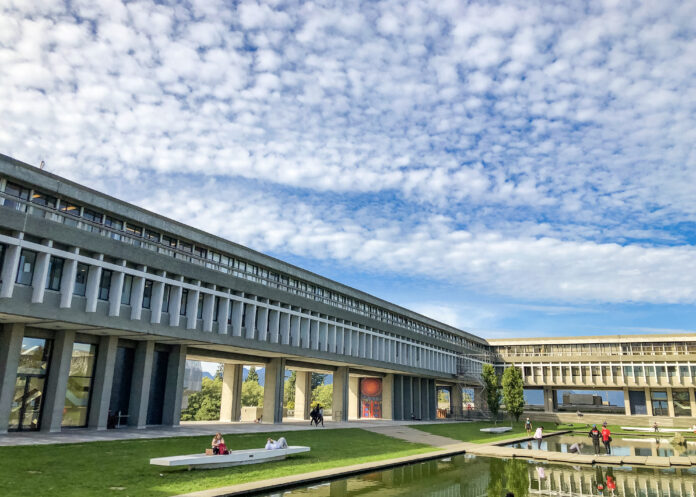
This is a photo of the outside of the Academic Quandrangle at SFU Burnaby Campus. There are students sitting below on the grass. It is a sunny warm day.
The Sterling Prize aims to bring awareness to topics that are considered controversial. PHOTO: Allyson Klassen / The Peak

By: Clarence Ndabahwerize, Staff Writer

Associate professor of criminology, Alexandra Lysova, recently received the Sterling Prize in Support of Controversy, honouring years of research on men who are victims of domestic violence. The prize is committed to recognizing work that provokes and contributes to the understanding of controversy. The spirit of such work should present new ways of looking at the world and challenging complacency.

Lysova opened this year’s Sterling Lecture by acknowledging former SFU president Andrew Petter’s statement on freedom of speech in universities. “Universities operate on the principle that freedom of speech is a core component of intellectual inquiry and is central to the pursuit of knowledge,” he said in 2010. 

“There is controversy that is beneficial and can promote an attitude of inquiry and the critical spirit, which is so necessary for critical thinking,” Lysova said. This was after she noted how she often experiences the use of personal attacks to discredit her research, rather than the attacks against the research itself.

“I realise that it’s not easy to talk about controversy [ . . . ] because while it encourages interest and increases likelihood of discussion, it simultaneously increases discomfort, which decreases the likelihood of discussion.” 

She quoted Nobel Prize Laureate Alexandr Solzehnistyn: “No longer does violence always unnecessarily lunge straight for the throat, more often it demands of its subject only that they pledge allegiance to lies and participate in falsehood.” She noted academic controversy is inevitable, especially in the field of criminology.

Lysova, talking about intimate partner violence (IPV), referred to it as a “very serious social, public health, and crime related issue in many countries in the world, including Canada.” She noted IPV is defined simply as, “a behaviour perpetrated with intention to hurt an intimate partner physically or sexually.” 

“If we add more forms of abuse which [and] psychological aggression, coercive and controlling behaviour, legal and administrative abuse, that will be a broader definition for intimate partner violence,” she added. She explained legal and administrative abuse is a more recent form of abuse being discovered in the field. It involves the “use, or threat of use, of administrative systems like courts, law enforcement, and child protective services against a partner in an abusive manner.”

Explaining the controversies, as well as myths and realities surrounding men’s victimization, she talked about how the prevalent framework in the field of IPV was conceptualised in the ‘60s and ‘70s. She said during this time, researchers studying IPV framed domestic violence as being synonymous with violence against women. Lysova added that the advocacy work was important to address the issue of violence against women, but influenced perceptions of who can be a victim. 

“When [aggression from women] was discussed, it was in the context of battered women; women who are abused, killed, or perpetrate violence as a response to violence” — which is distinctive to those who are abusive. 

Comics

0
ILLUSTRATION: Sara Brinkac / The Peak

By: Angela Shen


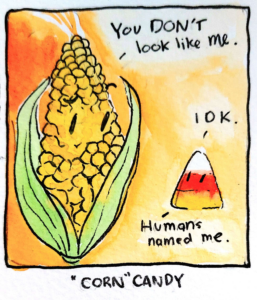
A watercolour illustration of a corncob staring at a piece of corn candy. The corncob says, “You don’t look like me.” The corn candy responds, “IDK. Humans named me.” The comic title is, “Corn” Candy.
ILLUSTRATION: Angela Shen / The Peak
A watercolour illustration of a femme-presenting person dressed as a witch responding to a speech bubble asking them, “Twitch?” They respond, “Yes?” The speech bubble responds back, “Oh, I mean the game.” The comic title is “Teen Witch.”
ILLUSTRATION: Angela Shen / The Peak

Cryptid Spotlight: The disappearing tutorial room on SFU Snap

0
Illustration of a tutorial room disappearing on the SFU Snap app.
Where did the room come from, where did it go? ILLUSTRATION: Raissa Sourabh / The Peak

By: Kelly Chia, Humour Editor

Students,

On this sunny October afternoon, we bring you a nightmare every undergrad student can surely relate to. Today’s story comes from Bend n. Snap, a student just like you, lost in the seemingly endless corners of the Burnaby building. They made the morbid mistake of trusting . . . SFU Snap. Just shudder-inducing. We’ll let Snap tell you the story.

Snap was searching for a quiet room to study on the sixth floor of the AQ, a site of increasingly frequent paranormal activity. This labyrinth has confused many innocent students on their valiant quests to find their tutorial room, only to be met with corner after corner of Faculty and Arts and Social Sciences departmental offices. An extremely relatable problem, if we do say so ourselves. On this particular day, as they found themselves near a suspiciously clean bathroom, they decided to open up SFU Snap. That’s when they saw it: AQ 69420. How curious!

Snap says this is when “engagement killed the McFogg,” our adorable way of saying curiosity killed the . . . Well, no need to get morbid. Once Snap saw that room, they were caught by how novel the room number was. “I mean, imagine! 69420! So funny!” We laughed politely when Snap recited this to us, as we encourage you to do. With no thought as to how there could be a five digit room number in Academic Quadrangle, Snap continued on their daunting quest to find a story to tell.

Drawn like Sleeping Beauty to that spinning wheel, Snap pursued the loading screen of SFU Snap for clues to this elusive room. Unfortunately, reception was especially suspenseful, only loading the next corner of the map when Snap had reached it. Before they knew it, Snap found they had rounded this fire escape one, no, three times? How many times have they passed the Humanities offices now? 

Snap shook their weary head. Perhaps this was the universe’s way of telling them they could not have a hearty little chortle while studying. They started to turn toward the couches that everyone sits on, but stopped. Suddenly the halls looked different. According to Snap, where there once were maps of the floor posted on the elevator doors, there were now regal framed portraits of raccoons with snapback hats. The sublime silence of the sixth floor was replaced with faint airhorn sounds dooting at Snap. They were surrounded by cans of Mountain Dew and Doritos. It was unmistakable: this was the embodiment of 69420 itself.

Snap swore they could hear whispers. “‘Your paper is actually fine,’” Snap remembers one kind voice fondly. But as a whole, they felt afraid and confused. “For all the paranormal activity that was happening around me, it was actually quite encouraging.”

Snap looked down at SFU Snap, and was shocked to see a goofy little smiley face on the map. “Haha, get fogged!” a corny voice blared from the app. Snap checked to see if this was a new engaging function of MySSP, but the app just smiled back at them. Reportedly, after flicking the face a few times, it sighed and the illusion faded. The snack food disappeared before him like an angelic, caffeinated farewell. The app was back as it always was: mildly functional. Only one thing caught Snap’s eyes as they decided to leave the school after their ordeal. A new regal portrait had been added of them, rendered as a raccoon in a snapback.

“I’m not sure what led me to being chosen for this special moment,” Snap confessed, fiddling with their snapback. “All I know is if there is even a chance that SFU Snap has something interesting to show you, you must be cautious, lest you lay your eyes onto something most students could not comprehend.”  

What was the purpose of this ghost haunting the app? To show students a jolly time when they needed it most? To render them as fancy raccoons? We’re not sure. But we continue to investigate these cryptids on campus to learn more about their ways. Until next time, we drink a Mountain Dew in Snap’s courageous honour.

Getting into the Halloween spirit with Kelsey Fisher

0
photo of Kelsey Fisher kicking a ball mid-game.
A candy a day keeps the goalscorers away! PHOTO: SFU Athletics

By: Simran Sarai, Sports Writer

Happy Halloween! The Peak asked junior goalkeeper Kelsey Fisher of the SFU women’s soccer team about her Halloween favorites — from candy preference to notable memories.

Horror movies or Disney halloween movies?

“Definitely Disney Halloween movies. Love the classic Nightmare Before Christmas.

Chocolate bars or candy?

Candy, but Reese peanut butter cups have a place in my heart.

What was your favourite costume growing up?

Probably the classic vampire look.”

Would you rather play dressed as a ghost or with a jack-o-lantern on your head?

Definitely a ghost, you could get some good action shots.”

What’s your favourite Halloween movie?

Rocky Horror Picture Show, cult classic and top tier.”

What’s your favourite Halloween activity?

“Pumpkin patch for sure.”

Which of your teammates is most likely to star in a horror movie?

“I could see either Emily [Smith,] she has the facial expressions, or Kate [Cartier] would probably be the lone survivor.”

Do you have a soccer memory you associate with Halloween? 

“In U17, my whole team dressed up for a Halloween practice and it was hilarious watching everyone try to play in costumes.”

Two SFU football games rescheduled back to Burnaby Mountain

0
up close shot of players setting up on the line of scrimmage.
Posters spotted on SFU campus criticizing Lone Star Conference and “antivaxx hypocrites.” PHOTO: SFU Athletics

By: Simran Sarai, Sports Writer

It’s been a season full of schedule changes for the SFU football team. In August, four of their initially scheduled home games were moved to Blaine, Washington, due to COVID-19 border restrictions that prevented non-vaccinated players from travelling into Canada. On October 13, over a week after COVID-19 travel restrictions were lifted in Canada, SFU football athletes, coaches, and fans received news that two of their games would be moved back to Burnaby Mountain.

COVID-19 first began impacting international travel between Canada and the US on March 20, 2020, when non-essential travel was restricted to contain the spread of the pandemic. Non-essential travel across the Canada-US border resumed on August 9, 2021, after the Canadian government allowed fully-vaccinated Americans to cross into Canada. Prior to the removal of COVID-19 border restrictions, travellers were required to use ArriveCAN to provide proof of vaccination.

In an interview with The Peak, Theresa Hanson, Senior Director, Athletics and Recreation spoke about how the decision to move games back to Terry Fox Field was made. While the COVID-19 border restrictions were rescinded on October 1, the process to move some of SFU’s games back to Burnaby took “about a couple of weeks, [and] various contractual obligations, coordination, and collaboration with all parties was necessary.” Parties included the Lone Star Conference, and the other teams besides SFU that make up the division. 

When asked how the process of communicating the various schedule changes had gone with players and coaches, Hanson answered, “Everyone was thrilled to be able to bring these games back to SFU Stadium, and enable our student-athletes to compete in front of our fans and SFU community,” including “seniors and captains who have endured so much during the global pandemic,” and will be “recognized on senior’s night here at home.”

According to Hanson, each team in the Lone Star Conference is obligated to follow their region’s COVID-19 mandates. Because testing is no longer required in BC, no testing measurements will be used at SFU’s home games. Instead, SFU is asking student athletes who “are unwell to stay home and away from others until they [feel] well.” It’s unclear whether or not additional measurements will be put into place for fans. 

In spite of the homecoming, the schedule changes stemming from accommodating unvaccinated Lone Star teams has led to at least one person expressing their anger towards Commissioner Jay Poerner. This was evidenced by posters seen in SFU’s West Parkade Saturday evening.

SFU sophomore offensive lineman, Maliq Washington, shared his thoughts on the vaccination status of Lone Star Conference athletes impacting the 2022 season schedule. “The teams or players that did not want to [vaccinate] are sending us a message of disrespect, which is not taken lightly. But that sort of message just makes us hungrier to compete each game,” said Washington. He also felt the communication from administration to the team about schedule changes “could [have been] more fluent,” especially regarding “changes that impact how [they] play football.” The Peak reached out to two more athletes but did not receive a response by the publication deadline. 

Head coach Mike Rigell knows there is no place like home after being on the road for the last four games. “We are very excited and happy the home games are back on campus. Burnaby Mountain is a special place to play games at,” he said. 

SFU will now be back at home to play West Texas A&M on November 12, in addition to their Shrum Bowl matchup against the University of British Columbia on December 2. They lost their first rescheduled home game against Western New Mexico on Oct 22. 

Yes, I’m defending Just Stop Oil

0
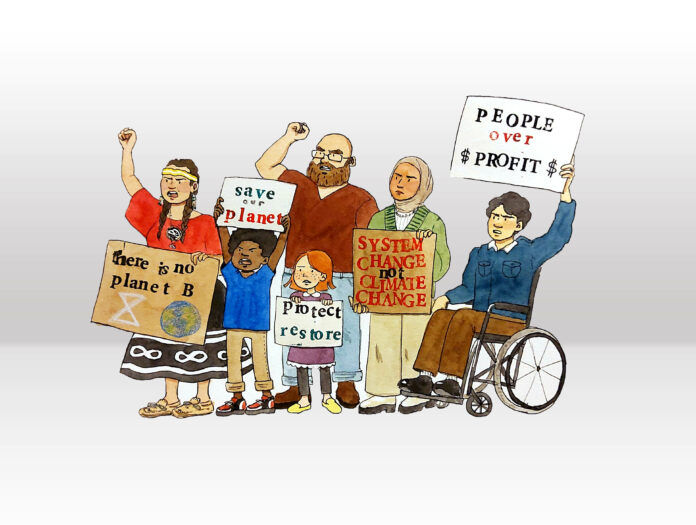
illustration of a crowd of climate change protesters
Arguing about the “right” way of doing climate activism when you don’t do any is strange behaviour. ILLUSTRATION: Joyce Song / The Peak

By: C Icart, Staff Writer

The writing is on the wall, or should I say, the soup is on the painting: the climate crisis is here. 

In this attention-driven economy, news about Just Stop Oil activists throwing soup on Van Gogh’s “Sunflowers” at London’s National Gallery has come and gone on our timelines. But it did happen, and for a brief moment, some people were upset. However, the painting is fine and let’s be real: how many of you cared about it before? 

What started as an investigation into the origins of the activism group that generated all this buzz led me into a cloudy mess of half-truths. As I emerge from the weeds, I have to be honest: maybe Just Stop Oil aren’t the bad guys?

Quickly after the incident, rumours broke that Just Stop Oil is funded by an oil and gas (O&G) tycoon. Suddenly, the few folks that supported Just Stop Oil’s methods were now also against them. But I did some digging, and that seems to be only a little bit true. 

Just Stop Oil is primarily funded by the Climate Emergency Fund (CEF), founded by Aileen Getty. Getty is an oil heiress, meaning she inherited part of her wealth from her family’s oil company. This was enough information for many to speculate that Big Oil funds Just Stop Oil to make climate activists look bad. 

However, a quick Google search reveals that Getty has been vocal about and donating to various social justice issues for decades. Although she is not personally involved in the oil industry, she’s incredibly transparent about where her money comes from. So, is Just Stop Oil funded by oil? Not really. It’s partly funded by a woman who inherited money from her grandfather, who made a lot of money from oil. 

If they’re not hired actors, who is Just Stop Oil, and what have they inadvertently taught us about misinformation? According to their webpage, they’re “a coalition of groups working together to ensure that the government commits to ending all new licenses and consents for the exploration, development, and production of fossil fuels in the UK.” While this is their most popular demonstration, the group has been practicing non-violent civil resistance for months, causing their members to be arrested more than a thousand times. 

Why were people so quick to believe this TikTok conspiracy? Is there any truth to it? Do O&G executives fund other climate action groups? O&G regularly participates in greenwashing, which is definitely a practice we need to continue to critique. But I will also call out how quickly folks were to discredit civil disobedience in this situation. Why are we so intent on finding out what is “wrong” with climate activists? 

Arguably, there are other ways to do climate activism than throwing soup and blocking racetracks. But, if people throwing soup and engaging in other forms of civil disobedience is enough to turn you off from climate activism entirely, I’m sorry to inform you that you didn’t stand for climate justice in the first place. 

Getting lost in Tiktok conspiracies and discourse is still less of a contribution to climate justice than throwing soup. So if you really care, and trust me, you should (here are some scary facts if you need an extra nudge), look up initiatives in your community. Support grassroots activists who have been doing the grunt work for a long time now. That goes a lot further than being holier than thou about the “right” and “wrong” ways to protest against the destruction of the only planet we’ve got.