Home Blog Page 210

Seedling Art Co. launches guided mental health journals

0
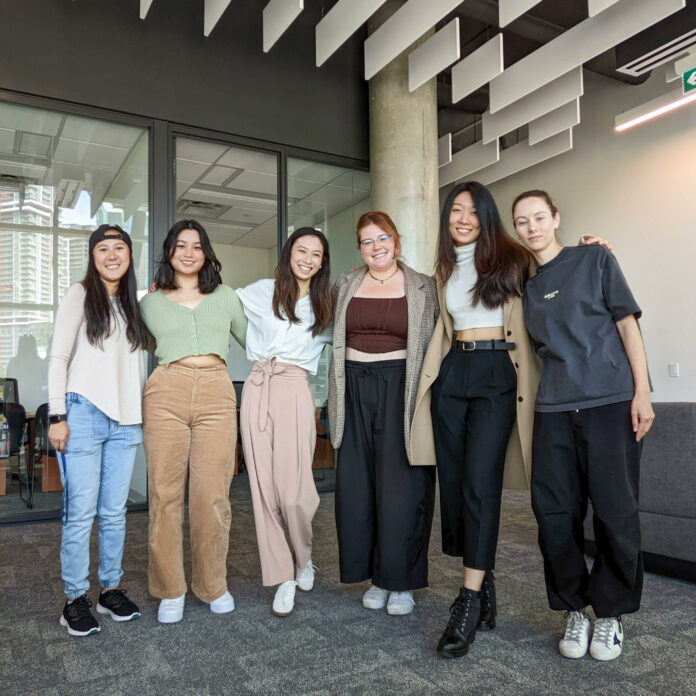
This photo is of the creators of Seedling Art Co. There are six people together smiling for the camera.
PHOTO: Jesika Kula

By: Karissa Ketter, News Editor 

Seedling Art Co. has recently launched their kickstarter for the Seedling Growth Journal Kit. The kickstarter was launched in October but Seedling Art Co. expects to have their online store ready to launch by March 2023. 

The company was founded by CEO Jesika Kula, in collaboration with other SFU alumni. They worked with mental health professionals to create their journals. The Seedling Growth Journal includes guided cognitive behavioural therapy (CBT) and dialectical behavioural therapy (DBT) practices.  

The Peak spoke with Zoë Law, Seedling Art Co. project coordinator, to learn more about their journals. Law noted, “mental health has often gone overlooked in our holistic understanding of medicine and healthcare.” Currently, Law reported “the average wait time to see a psychiatrist that is covered by [BC’s medical services plan] is anywhere from three to six months.” The Seedling Growth Journal was started as an outlet for people to have accessible and approachable mental health care. 

“With mental health, it’s not always clear what the next steps should be if we are feeling stressed or down. Some might not think it’s ‘not bad enough’ to see a doctor, or because they don’t have an official diagnosis, they should not seek treatment for mental health,” said Law. 

She added, “However, everyone has mental health. It is our emotional, psychological, and social well-being affecting how we think, feel, and act. Without taking care of our mental health like we do with our physical health, we are ignoring physical manifestations of our troubles — such as burnout, fatigue, and muscle tension.”

The CBT and DBT portions of the journal can help students focus on their mental health in times of stress. Law also encouraged students to “take preventative measures for mental healthcare.” CBT aims to address behaviour and thought patterns to “shift our ways of thinking.” Law noted an example of students becoming stressed about an exam. “It can be quite easy to see our test results as very all-or-nothing, success-or-failure.” However, the goal of CBT is to “help us recognize that this thought may be distorted and that our success lies more on a spectrum.” 

The design of the Seedling Growth Journals is based around plants and nature. Law noted they made this decision because “a phenomenon called the biophilia effect suggests humans are inherently integrated with nature,” explained Law. “Biophilia means the love of life. In such a digital age, it is so easy to become absorbed in our screens, that we miss out on interacting with nature [ . . . ] that, and it’s also really cute.”

To learn more about the Seedling Growth Journals, visit the Seedling Art Co. website

Basketball coach Steve Hanson realistic about team expectations

0
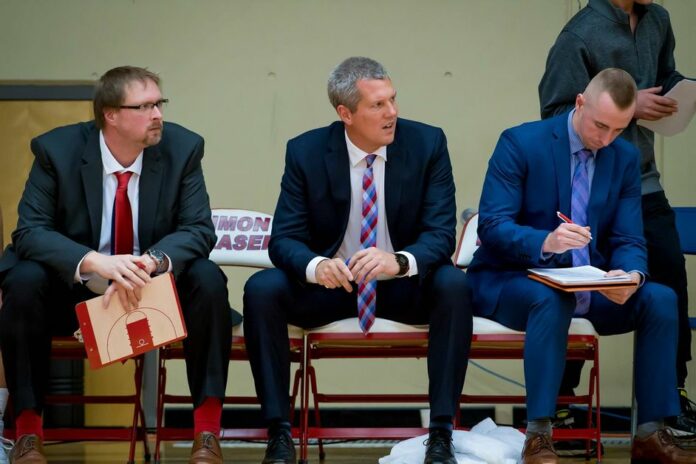
Photo of Steve Hanson and the basketball coaching staff sitting on the sideline during a game.
PHOTO: Paul Yates / SFU Athletics

By: Simran Sarai, Sports Writer

The fall National Collegiate Athletic Association (NCAA) season is coming to a close, which means the next round of athletes are gearing up for the start of their regular season competition. The start of a new athletic season also means the arrival of team rankings. After placing seventh in their conference last year, SFU finished second-last in the Great Northwest Athletic Conference preseason coaches poll. The Peak sat down with head coach Steve Hanson to discuss the season ahead and what he’s hoping to see from his athletes.

Hanson, in his eighth year heading the men’s basketball team, is “super excited” for the season ahead, despite the departure of several key players from the Red Leafs starting roster. However, the talk of the team is this year’s considerable number of former NCAA Division I transfers, including Eric Beckett, Georges Lefebrve, and Victor Radocaj. “With so many new guys, it’s a ton of work,” said Hanson, “But it’s extremely exciting. There’s so much potential.”

Hanson is equally pleased with his freshmen recruits, like Jimmy Zaborniak, the first-year guard hailing from Burnaby. “[Zaborniak] is really showing he can play at this level,” said Hanson, who believes the rookie “has the potential to play minutes this year.” Most minutes get eaten up by older players who start the game, and get taken out with some time remaining in the fourth quarter. Senior forward Jahmal Wright and junior guard David Penney are two of the returning players who will be looked at to lead on the court. “Those two were both starters for most of the season last year and had huge roles,” said Hanson. 

However, this isn’t the first time a freshman has played their way into the lineup. Sophomore guard Elliott Dimaculangan was a welcoming surprise for Hanson. “He really shined as a shooting guard last year and stepped up in some big moments, which is hard to do as a freshman — to have that courage to take big shots in big situations.”

While Hanson recognizes that pressure mounts for both his athletes and himself as the start of the regular season inches closer. There’s been extra “urgency” this preseason for players to become well acquainted with the team’s new additions. This was especially apparent during the squad’s first practice on Oct 15. “We’re behind where we were, because there’s not as much carryover with so many new guys,” said Hanson.

Regardless of early season huddles, Hanson is looking to take down SFU’s first opponent of the season, Western Washington, just like they did last season. “Our season opener is December 3 against Western Washington. We went 2–0 against them last year, and that was a team that’s always tough to defeat,” he said. “We take that with pride every time we play them. We want to knock off our closest rival.”

Part of securing a winning record is getting wins when having home court advantage, something Hanson says has been a strength of the team since he took over as coach in 2016. “I think it’s so hard to win on the road in this conference because the travel is so big and so long. We gotta be better on the road and continue to be really good at home,” he said. 

While the goal is for SFU to “win the conference” for the first time in history, with this many new players, Hanson is anticipating this year to be more of a learning curve for the team. “I’m not sure if this will be their year,” the coach admitted, “It really depends on how fast we gel. But we have the talent to compete with the top teams.” With it feeling like a team can win on “an any given night” in SFU’s division, said Hanson, it will be hard for the Red Leafs to be sitting in first after the regular season. However, Hanson is confident SFU will “be in the playoff hunt at the end of the season.”

The Student Learning Commons arranges a studying event with pigeons

0
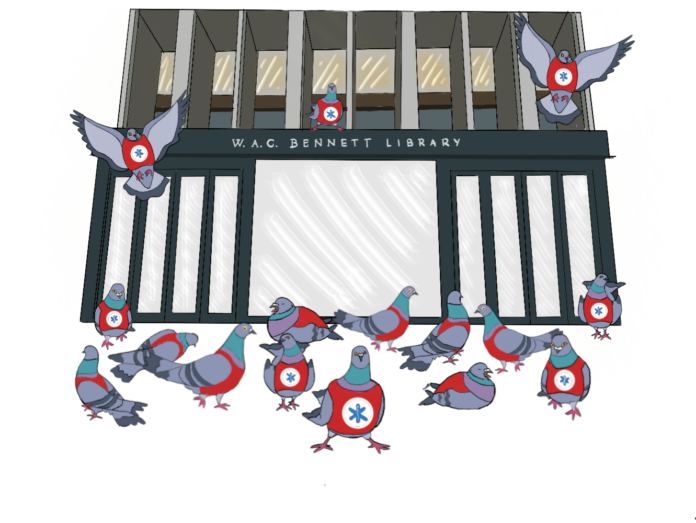
Illustration of a pigeon flock with therapy sweaters gathered around SFU Burnaby’s library.
ILLUSTRATION: Raissa Sourabh / The Peak

By: Maya Beninteso, Peak Associate

BREAKING NEWS — The Student Learning Commons (SLC) at SFU is saying soar-y after their catastrophic “studying with pigeons” event held last Thursday afternoon. This event’s mandate was to help prepare students for exams in advance, but it only proved that the early bird does not, in fact, get the worm. The SLC’s attempt to be original by ditching the traditional puppy therapy completely and rapidly flew over their head. 

Several reports detailed pigeons violently attacking students during the event, leaving no student unscathed. Over 50 students were injured badly enough to warrant hospital stays, but not enough to warrant an excused absence from class or an exam. The Peak obtained an excerpt of an email sent by a professor to one of the injured students. The professor, whose identity is being kept secret until feather investigation is done, wrote to the student: “Having a scratched cornea and complete loss of eyesight is no excuse for missing my class. Consider your medical note null and void. I will see you in class tomorrow. Sent from my iPhone.” In solidarity, the student’s classmates released 130 pigeons in the following lecture, where the professor sustained a minor scratch on their arm. The professor stated they would be cancelling their following lecture in order to deal with this “medical emergency.” 

Beyond the attack of the pigeons, several event attendees reported that the event turned fowl at the end. The floor was not only covered in the tears of struggling students, but further covered in pigeon feces. As if exam season wasn’t shitty enough already. In an interview with The Peak, one feather-covered student could only manage to utter, “W-white . . . white . . . so much white.” The only thing that the SLC achieved in this event wasn’t helping students study, but adding to the traumatic experiences of SFU students. 

The Peak reached out to the library dean, who is suspiciously named Gwen Bird, and received an interesting statement. In a statement to The Peak, Bird said, “I sincerely apologize for the events that transpired at the SLC’s studying with pigeons initiative. In attempting to kill two birds with one stone by cultivating an environment conducive to studying, we cultivated one of horror. As the library dean, my only wish is to witness the students soar. As the bir— I mean, kids say, that wasn’t coo coo— I mean, cool. I guess you can’t beak— I mean, beat puppy therapy. To anyone who attended the event, we will do our best to deal with this as per the appropriate pecking order.” 

Social media is outraged by the, clearly bird-biased, response to the tragic events. The hashtags #GwenFlewOverTheCuckoosNest and #PigeonGate have since been attached to over 13,000 posts. While SFU’s beloved Joy Johnson has yet to speak on the recent events, SFU’s student body has spoken — you’re either on the side of pigeons, or on the side of justice. 

Memories of Pasta Amore

0
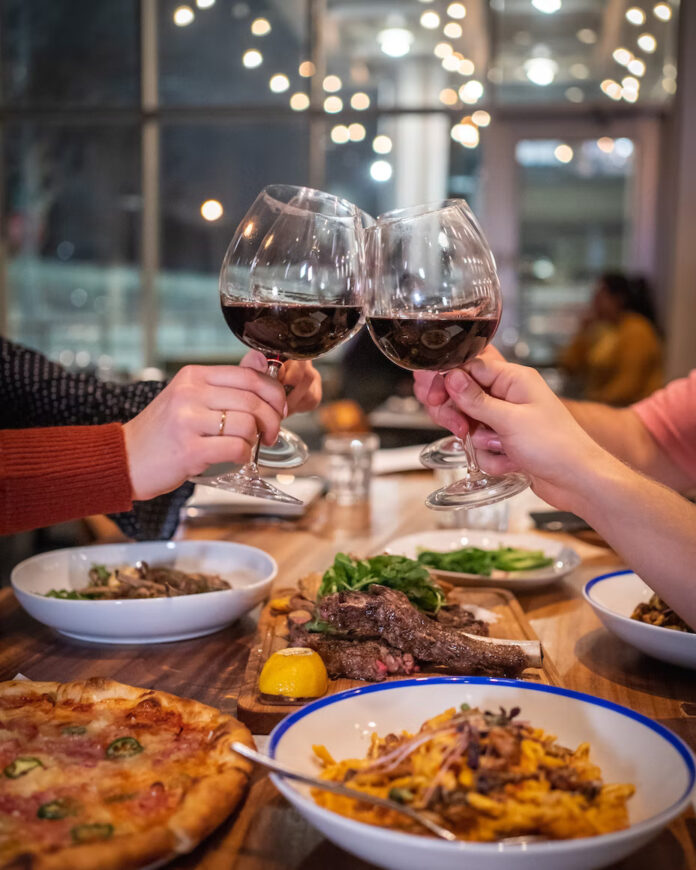
Family eating Italian dinner and cheers in a fancy restaurant
PHOTO: Davey Gravy / Unsplash

By: Saije Rusimovici, SFU student

My great uncle Claudio grew up with a spoon in his hand. Raised in northern Italy, his passion for cooking carried him through every stage of his life, and left a legacy for his children and grandchildren to follow. 

We occasionally visited his restaurant, Pasta Amore, for family functions. When I was sixteen, I got my first job working for him. Our shared connection to food strengthened my relationship to my Italian culture. Now, I’m proud to call him a friend and mentor.

For five years, I watched uncle Claudio impress, inspire, and comfort people with his dishes. There was no need for flair or fancy — the plates were simple, homestyle Italian recipes with no special ingredients. 

Uncle Claudio didn’t adjust his palate to what was on-trend. The pasta dishes he prepared were made with the simplest of ingredients. I can still taste the richness of his tortellini, tossed in a silky alfredo sauce that can’t be matched by anyone else’s recipe (not even my mom’s). Potato gnocchi swimming in creamy pesto sauce was also a customer favourite. Pasta Amore had something for everyone, from basic spaghetti and meatballs to delicate entrees of veal topped with decadent, sauteed mushrooms. 

Thinking about these dishes now takes me back to earlier years, when Costa-Rican born head waiter, Israel, helped me with my Spanish homework at the bar between shifts. These memories bring back the sounds of the place: the chattiness of the old Italian men over two plates of pasta, the customer who gushed their hellos before settling into a table, and the regulars who celebrated their milestones with us. Pasta Amore was not only a space where people ate, but a space where people felt they belonged. 

When Pasta Amore closed due to urban development in the area, uncle Claudio retired. I was devastated. It felt like I was losing a part of myself, the link to my Italian culture, and coworkers who had become family. It was very difficult for me to see our doors close. 

Behind the scenes, something else was on its way. Uncle Claudio’s legacy was carried on by his two sons. My cousins, with an homage to their father, opened up a new restaurant called Claudio’s. The recipes I grew up with have taken new shapes, providing that same homey feeling with an elevated twist. My hope is that a new generation of foodies will be inspired by Claudio’s food in the same way I was at sixteen. I hope they feel the same sense of belonging I felt at Pasta Amore through a shared love for Italian culture and most importantly, good food. 

Sports made me feel full of life

0
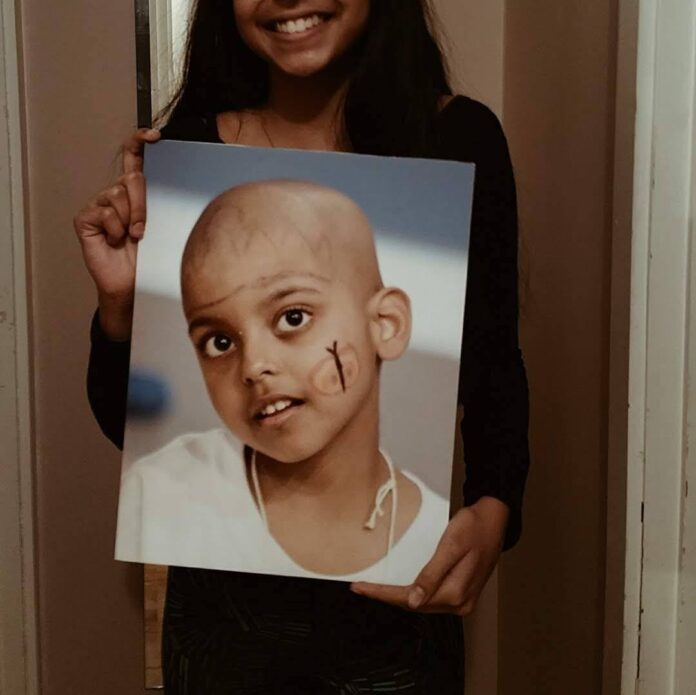
photo of Simran Sarai holding a photo of her when she was battling cancer
PHOTO: Simran Sarai / The Peak

By: Simran Sarai, Sports Writer

When I was five-years-old, my parents registered me in soccer. I loved it, and I especially loved kicking the ball around with my twin brother and younger brother. I had the best year of my life.

When I was six-years-old, I was diagnosed with acute lymphoblastic leukemia (blood cancer). As a kid, I didn’t really understand what cancer was, or why I was suddenly in a hospital bed being poked and prodded by scary looking — albeit very nice and apologetic — nurses and doctors. 

I did know that nothing would ever be the same. Life as I knew it was turned upside down. The one constant I had was soccer, and the community that came with it. Throughout my two years of treatments, my coaches and teammates made sure I knew that I was still a part of my team. Even if that meant just sitting on the sideline, wearing multiple touques to keep my bald little head warm.

After I went into remission, I knew I wanted nothing more than to head back onto the field. At eight-years-old, I had a massive chip on my shoulder, and a lot to prove. Two years away from sports had left me behind the other girls. I remember running in an elementary school cross country race in one of the first years after completing treatment. I was so slow — I came 62nd. I was frustrated. But while my stamina was gone, my competitive streak was not. I kept running and playing soccer, and while I wasn’t extraordinary, I was committed. Soccer, cross country, and track and field were the sports I loved and probably always will.

I never told my teammates or coaches about my medical history, if I could help it. I graduated high school before my track coach even found out, and I wasn’t even the one to tell him. There’s this look that washes over people’s faces when you tell them you had cancer as a child, and the look is not one I love. There’s no ill-intent behind it, but it makes me feel as if people expect less from me, and that’s not the way I want to live any aspect of my life.

From the time I was diagnosed, soccer and running kept me grounded. I am so fortunate to have had the ability to keep playing and running after my diagnoses, especially when I know this isn’t the case for so many other kids. Growing up playing sports allowed me to grow into a version of myself that felt confident taking risks and challenging the limits of what I was capable of — whether that was in athletics, academics, or another area of life. Soccer and track gave me lifelong memories with my brothers and friendships I will cherish forever. Although I don’t really play organized sports anymore, I give a silent little thanks each time I hit the track or pitch. I know every crappy weather practice or losing game kept me going and led me to exactly where I am now.

Milk & Bone unveil striking electro-pop album, Chrysalism

0
Laurence Lafond-Beaulne and Camille Poliquin (Milk & Bone) in blue lighting
PHOTO: Bonsound

By: Petra Chase, Art & Culture Editor

Montreal-based electro-pop duo Milk & Bone just released their third album, Chrysalism, a word defined by the Dictionary of Obscure Sorrows as the “tranquility of being indoors during a thunderstorm.” Thematically, I listened to the album as Vancouver started its much-needed pouring spree. Rain pattered on my window as the synth arpeggios echoed in the four walls of my living room, giving me the sensation of Pop Rocks candy crackling through my body.

While Milk & Bone’s sugar-coated vocal harmonies and electronic production create addictive cyborgian melodies, the lyrics about love, longing and heartbreak ground the album. As their first release since the pandemic started, the songs are told from the perspective of “actors in the storyline of their lives.”

Object of Fun” perfectly demonstrates the sense of agency embedded in their lyrics. Their affirmations against the male gaze like, “I’m a person of earth too / I equal all my sums,” beckon you to sing along and reclaim your subjectivity.

My favourite track and the album opener, “Bigger Love,” carries feelings of longing with electrifying intensity. Milk & Bone’s vocal harmonies cut into the synth soundscape like sharp lasers as the melody builds up in speed and intensity to the declaration “I’m not moving I’m not going / You’re gonna have to remove me with a truck.” The bridge that follows is blissful and perfect for stomping through puddles.

Borders” struck me immediately by its ethereal ambiance alongside feelings of hope and longing that felt relatable. The climactic storytelling matches the sense of urgency in the melody as the duo unravels the story of a long-distance relationship falling apart.

A Little Better Every Time” is an angelic ballad with heartbreaking lyrics “steeped in both fury and tenderness.” It captivates the raw emotions that accompany standing up for yourself and beginning to heal. When they sang “getting better with the breakdowns,” I really felt that.

The talented voices and musicians behind the name Milk & Bone are Laurence Lafond-Beaulne (Soft Fabric) and Camille Poliquin (KROY). They won the Juno Award for Electronic Album of the Year in 2019 after a nomination for Breakthrough Group of the Year in 2016. Chrysalism solidifies that they’re going places.

Coco and the socio-cultural power of representation

0
PHOTO: Unspalsh/Mario Mendez

By: Daniel Salcedo Rubio

The way media and mass communication outlets present marginalized groups can easily create bias in their audiences. When I was a kid, I grew up with incredibly problematic representations of gay characters in the media: they either were ridiculed, presented as inappropriate, or with behaviour issues — of course I grew up with internalized homophobia. If such portrayals caused me to hate and deny my own identity, just imagine what it does to those outside of these communities. For reasons like this, appropriate representation should be an obligation for any outlet. 

I’m writing this article on November 1st. Tomorrow will be the Day of the Dead, and it’s now my personal tradition to watch Coco on this cultural holiday. You’ve probably heard of the Disney-Pixar movie; it came out back in 2017 and is part of Disney’s cultural diversity set of movies, like Moana and Encanto. These movies all share a common theme: they include people from the cultures they’re trying to represent to make an accurate portrayal of said cultures. Before moving forward, I want to acknowledge that while I love these movies, there are still some problematic aspects to them. These movies aren’t perfect and are subject to bias from the creators. Whether it’s missing key aspects of these cultures, the use of stereotypes and clichés (or in the case of Coco, greed from Disney for trying to trademark “Día de los Muertos.” Fuck you for that one, Mickey). But let’s not focus on the negatives right now, let’s see what they’ve done right. I’ll focus on Coco as it’s the movie that represents my culture and thus is my area of knowledge.

When I first watched Coco, I wasn’t in Mexico; I had been away from my home country for months. I had reached that point where joyful memories of Día de los Muertos turned painful to remember because I wasn’t able to take part in the celebration. I could only see the photos my mom would send me of our family ofrenda (an altar for those who have passed away), or crave a pan de muerto (bread of the dead, a type of sweet bread with roots in the Día de los Muertos tradition). If you have moved to a new country, you’ve probably felt something similar: you feel disconnected from the country you used to call home and you just can’t seem to entirely fit into where you are now. That was until November 2017, when Coco was released. I, of course, took all of my friends to the cinema so they could experience a bit of my culture. Coco did not make me reconnect with my culture, my friends’ reactions to it did. They were so excited to learn more about the tradition of Día de los Muertos after the movie, they bombarded me with questions: 

Do you really put food in the altars? What type of flower is that? Yup, we always put some pan de muerto for my abuelito and you can see cempasúchil everywhere around this time of the year. Even the main street in Mexico City gets decorated with it.

What are those colourful animals in the land of the dead? Those are alebrijes, they are imaginary creatures with body parts of many animals. It’s pretty common to make them in art classes or to find them being sold somewhere in the city.

Why is the grandmother always attacking everyone with her sandals? La chancla is a traditional weapon used by the matriarchs of our families to induce fear in the heart of those who dare disobey them (of course this was a joke, we don’t condone physical violence).

How excited and happy they were with the movie made me entirely forget the extremely problematic comments I had been dealing with in France. Some of the residents in my building would make random comments like “Hey! Pablo Escobar!” or “El Narco!” (the drug lord) whenever they saw me. I don’t want to excuse these people for their comments, but I understand that they were only a product of stereotypes in western and eurocentric media. They didn’t know any better because that was what the popular media was representing my culture as. Series like Narcos, Pablo Escobar, or La reina del Sur might show an exaggerated version of a painful reality, but when this is all people consume, it becomes a false generalization of entire identities. The people who lived in my building associated me with Narcos not because I’m a drug lord or have any relationship with drugs, but because that’s probably all they knew about my country and about my culture.

Representation can do wonders to help us overcome conscious or subconscious limitations imposed by problematic stereotypes or beliefs. Another great example is the recently released Netflix series, Heartstopper. Older people in the audience, myself included, can only imagine how helpful it would’ve been to have a series like this when we were kids. To have healthy portrayals of same-sex relationships, and to have LGBTQIAS2+ characters being portrayed without the shackles of harmful stereotypes. If I had had a series like Heartstopper when I was a kid, I’m pretty sure I wouldn’t have hated myself for so long. I would have accepted my sexuality and enjoyed my teenage years. 

This is the power of representation and we as a society have both the right and obligation to ensure appropriate representation in the media. Representation can demonize a whole community and give an ugly, untrue picture to someone if it only focuses on harmful stereotypes. Or, it can change perspectives and belief systems entirely for the better. Proper representation has the power to help us better understand cultures and the people within them.

Panel discusses role of media in Russia-Ukraine war

0
This photo is of a group of protestors. One individual is central in the photo and is holding a sign that reads “Support Ukraine.”
PHOTO: Mathias Reding / Pexels

By: Pranjali J Mann, News Writer

SFU Public Square, in collaboration with Digital Democracies Institute, SFU School of Communication, and SFU School for International Studies hosted a panel discussion on “The Russia-Ukraine War and Media.” The panel investigated the role of the media in formulating public opinion and narratives. 

Russia actively waged war on north-eastern territories of Ukraine on February 24, 2022. This resulted in military clashes between the countries, which has been ongoing for eight months. Various attempts including bombing Ukraine’s capital Kyiv, military bases, and civilian attacks were carried out by the Russian army. This has caused an increase in media coverage in the area. Moderator Nicole Jackson, opened the discussion by highlighting, “This war has seen an extraordinary level of media engagement and narrative, spinning a large spectrum of misinformation and disinformation.” She talked about the importance of “complex media ecosystems,” wherein different forms of information consumption occurs — through traditional mainstream media such as news channels, or newer forms including social media and podcasts. 

German analyst at the Stockholm Center for Eastern European Studies (SCEEUS) Andreas Umland said a large part of the European Union looks at the Ukraine war through a lens of empathy, as its citizens fight for “independence, for liberation, and survival.” As war intensifies in the region, he said western countries abstain from “investing too much into this war as it could be expensive — not only in terms of military, but the possibility of World War III.”

According to panelist Vasyl Cherepanyn, head of the Visual Culture Research Center (VCRC), the western media coverage of the war is problematic. He observed that most of the western media referred to the ongoing war as “Ukraine’s war, or war in Ukraine, without mentioning Russia at all.” He explained, “This is problematic. At the same time, it’s not only a Russian-Ukrainian war. It is the great European war.”

Cherepanyn added that the media holds the capacity to both deter the war and incite fear and anger. Rather than conveying the outrage felt by Ukrainians, western media has assigned Ukraine citizens the role of “victims,” he explained. Ukrainians’ analysis of the war is diminished by western media as “first-hand observations or personal stories.” He said the media limits coverage on Ukrainians’ fury and rage, so they can consider the “rational judgment.”

Further, PhD student at SFU’s School of Communication Kayla Hilstob, brought in the perspective of research that links media discussions and the “oil and gas sector fueling Russia’s war budget.” She suggested that “ethical oil” was central to some online media discussions of the war. As Hilstob explained, the term “ethical oil” was coined by Ezra Levant who questioned relations and dependency of the world’s oil being extracted from “authoritarian governments” like Russia and Saudi Arabia.  

Hilstob referred to some initial findings that “nearly half of Canadians [say] that not expanding fuel extraction is aiding Putin’s war.” This is because some Canadians are concerned for their energy security, and feel expanding Canadian oil production will offer more stability. She underlined this is a dangerous line of thinking and threatens work being done by climate activists and Indigenous communities in the country.

Svitlana Matviyenko, assistant professor at SFU’s School of Communication, investigated the driving force of the war and the ways in which media reports on it. Specifically looking at use of terror in media discourses, she said, “We see more production of terror than production of disinformation” in this war. She stated, “It’s not just lies, it’s not just information. It’s massaged with feelings and effects that target [the] Ukrainian population in serious ways.”

Matviyenko also indicated the media plays a role in the way we understand information, its perception and in the consumption of narratives. She closed by illustrating, “We are at the same time overwhelmed with all the information we are given — videos, publications, witness accounts.”

Club Profile: VeggieSFU

0
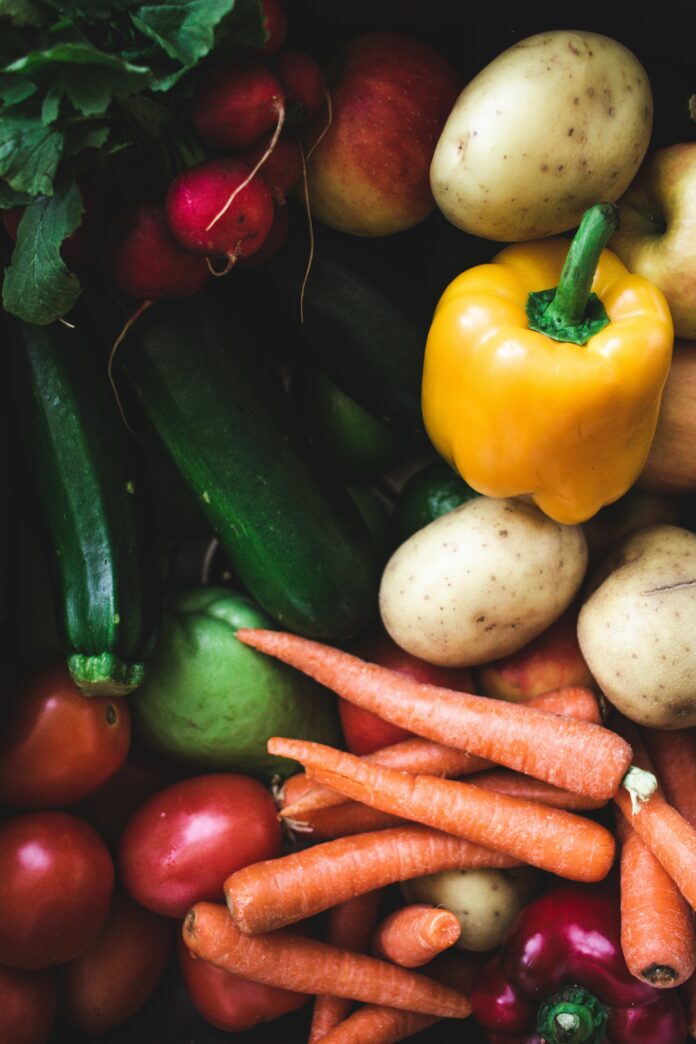
Photo of a variety of vegetebles, including carrots, peppers, cuccumbers

By: Petra Chase, Arts & Culture Editor

The writer of this piece is affiliated with VeggieSFU

VeggieSFU has been steadily racking up members and sparking discussions among SFU’s vast plant-based community. It’s a club which exists to “create community, facilitate discussion, and provide support and resources for those looking to switch to a plant-based lifestyle.” The Peak spoke to three VeggieSFU executives to learn about what being a member means, their club’s steadfast values, and the exciting things on the horizon.

“To us, plant-based means a diet that is made up of mostly plants but may contain some animal products,” Evelyn O’Neill, the group’s events coordinator shared. “VeggieSFU’s brand of activism is community-based. We aim to encourage each other to pursue an ethical and sustainable lifestyle by learning from each other and making plant-based lifestyles more accessible.”

One of the ways they do this is by hosting events, which usually involve plant-based food. Recently, they’ve held subsidized restaurant meetups, potlucks, hikes, and attended the Planted-Expo. They’ve also introduced bi-weekly meetings every other Friday, a casual window to drop-in, socialize, play games, and eat free snacks. 

“I think our restaurant meet-ups are some of our most memorable events,” Evee van de Velde, the club’s discussion leader shared. “It’s always fun to explore vegan restaurants around Vancouver as a community, and it’s also super cool to see our non-vegan/vegetarian members experience vegan food alongside us!”

“Our central values of ethics and sustainability guide many of our decisions in event planning, such as serving only vegan food at our events and never supplying single-use plastic cutlery, dishware, etc,” O’Neill shared.

One of the group’s core missions, which are all chosen by the members, is to support those interested in plant-based diets. As a member of their Discord group, you’ll gain access to a network of people with a wealth of experiences and knowledge. The many discussion topics include resources, recipes, discussion prompts, and personal development. There’s even a “Fruit of the Week,” channel (which is what it sounds like) and “Ferret Central,” where van de Velde shares a picture of a ferret and a fun fact about them every day.

To join, you don’t need to be vegan or vegetarian. You don’t even need to like vegetables! All that’s required is an open mind. VeggieSFU is made up of and run by a mix of vegans, vegetarians, and omnivores, and civil discussion is one of their top priorities.

“I think the mix of [ . . . ] lifestyles in our club helps to create a more nuanced and less polarizing space to discuss different ways of living in relation to animals and the environment. It helps us be more conscious of others and see new perspectives we might not have otherwise,” O’Neill shared. “I personally learn a lot from the diversity of perspectives in the club and I think it helps bridge gaps and challenge our assumptions.”

Riya Dhariwal, VeggieSFU’s Club President, noted how VeggieSFU set out to be inclusive for all dietary palates since its inception. Melody Lim, founder of Mala the Brand, an eco-friendly candle company, founded VeggieSFU in 2017. Despite not being vegan herself, Lim made sure that everyone who was interested in leading a plant-based lifestyle could participate in the club. “VeggieSFU used to host bake sales and regularly meet at Veggie Lunch,” Dhariwal said, through activities like this, the community learns and gets involved in plant-based lifestyles.

“Because we know that vegan-related spaces can sometimes be judgemental and prone to gatekeeping, one of our main missions as a club is to make a space that is welcoming to everyone,” O’Neill explained. “We try to make that clear to our club members both through our actions, and by stating it in our club rules on our Discord server: ‘Conversations related to plant-based diets are encouraged. However, disparaging comments about any diet/lifestyle, vegan, vegetarian, or omnivorous, are prohibited. This is a space for everyone.’” 

“I hope to continue fostering a welcoming environment for people to explore plant-based diets and make new friends,” Dhariwal said.

VeggieSFU has many exciting new things planned for the future. Their plant-based diet mentorship program pairs people new to eating plant-based with more experienced group members. They also have a plant-based nutrition workshop with Vancouver naturopathic doctor, Dr. Matthew Nagra. You can also look forward to their upcoming bake sale fundraiser, which will raise money for animal sanctuaries and animal rescue organizations.

When asked what they would say to someone who is interested in joining, O’Neill said, “I personally was nervous about joining the club because I wasn’t a strict vegan at the time and worried about being judged.” She added, “So if you’re nervous about joining for that reason, don’t be! We would love to have you.”

SFU Student Update

0
"Student Updates" text in SFU red
You’ve already made it farther through the article than 97% of the student population. ILLUSTRATION: Siloam Yeung / The Peak

By: Nercya Kalino, Staff Writer

Key Updates

SFU innovatively stands by mediocre Health and Counselling services 

The location of the office being at the bottom of the Maggie Benston Centre, lack of lighting, and general difficulty in getting an appointment has been deemed “just alright.” The Board of Directors have more concerning matters to focus on like obtaining a mascot costume so McFogg can have a romantic partner. It will still take a week, two, or maybe a whole semester for a student to meet with a doctor, but don’t worry! We are positive you will have healed by then. On that note, the Health and Counselling staff is almost entirely made up of white people, so good luck on finding a health advisor to feel represented and understood in your marginalized experiences. 

Announcements

The events we suggest to you are not expired

We are currently doing our best to make sure the event listing we have outlined will take you to upcoming events, but sometimes, we forget no one proofreads these! We slip some events that have already passed here and there just to spice things up. If they have already passed, then just imagine what it would have been like had you gone. Remember, it is also partially your fault for relying on us to offer any upcoming event of your taste. You attend this school!

Funding Opportunities: Eligibility to be considered

If you are considering studying in-person and long programs abroad, this not-so-diverse, inequitable, and exclusive program is for EVERY student. Especially for international students! What do you mean it’s near impossible to join the program with how expensive tuition fees are? 

Co-op: Not everyone will do it 

Yes, Co-op is a spectacular opportunity for you to be considered an employable person post-graduation. Does that mean if you don’t do it you are doomed? We’re proud to make you think so! Join us in our upcoming event where we offer tools and knowledge on how not doing Co-op might just be the biggest mistake of your student career. You know you can’t afford the time off school for work experience, but that sounds like a you problem. 

Employment and volunteer opportunities 

Escalator opening up at convocation mall stairs

SFU is looking for students that can work fulltime with five years of experience working in construction. SFU has decided to save people time by adding an escalator up the stairway for convenience. However, to make this project possible they are looking for students who would like to work for their education. The project is said to last about three to four months, which is nearly a semester. SFU has promised all the student workers to waive their tuition during the time the project takes place, but will not provide details on how to accommodate students’ studies at this point. SFU sees no moral qualms with this.

Volunteering for SFU Residence marketing content 

In the upcoming spring semester SFU Residence is looking for a volunteer who can go about the SFU Burnaby residence area and film content to feature on social media platforms. You and your friends could be the lucky pals showing how snowy it gets on campus or how people litter, even though there are organized bins. Better yet, show the world how tiny your room is, but be sure to redecorate it so it feels more like a home and less claustrophobic.