Home Blog Page 209

Horoscopes: November 14–19

0
An illustration of a girl with long flowing hair. Astrological signs and stars shine around her.
ILLUSTRATION: Marissa Ouyang / The Peak

By: Hana Hoffman, SFU Student

Aries

You woke up feeling tired, it’s just one of those days. But remember that energy-boosting mushroom item you had the last time you played Mario Kart? Yes, it’s still in your possession because you didn’t use it during that race! Now’s a good time to use it. Always keep an energy item in your pocket because you never know when it will come in handy.

P.S. the energy item is not four shots of espresso

Taurus

Whatever it is you want to do, whether it’s picking up a new hobby or acing your next assignment, just know you’ve got the power in you. You’ve been daydreaming about a new talent you want to learn, we all know it. So go and chase that dream before your responsibilities start chasing you!

Gemini

Maybe you have days when you doubt yourself too much, or you underestimate your intelligence and skills. Well, let me tell you something. Take this invisible reverse card from this page. Yes, you have the power to see invisible things. Now keep this reverse card in your pocket and you’ll see all your fears and doubts transform into confidence.

Cancer

Rain, rain, go away. Come again another day. This whole time you’ve been believing that you have control over the weather, but this was actually a misunderstanding. The truth is you have control over whether you get good or bad grades in your school work. Don’t get the “weathers” mixed up!

Leo

Two, four, six, eight, who do we appreciate? Leo! Your special skill is being able to keep your cool even through busy times, and we want to let you know that you’re awesome. You totally have the “Keep Calm and Study On” vibe that everyone loves. Keep it up!

Virgo

If you don’t already know, you’re a very nice person. Being kind is your special talent and you’ve been using it to conquer all the challenges, obstacles, and stress you’ve been facing in your studies. That’s right, you’ve been killing ‘em with kindness.

Libra

A cool fact about you is that you are immune to procrastination. But ONLY if you switch your morning routine with your night time routine. So that means watching TV and doing all of your homework when you wake up, and chugging down a banana milkshake while packing your backpack before you go to bed. Either that, or you’ll have to get the procrastination eliminator vaccine.

Scorpio

Let me tell you a little something . . . Everyone has been telling you that an apple a day keeps the doctor away. But for Scorpio, there’s also different fruit that keeps the feelings of stress and negativity away. The only way to find out is by trying various fruits to figure out which one does the magic for you.

Sagittarius

On this gigantic planet with over seven billion civilians, there’s only one of you. Therefore, with your uniqueness you have the super power to stand out and be that eye-catcher in all your classes, interviews, social groups, and more. Keep being yourself and let the opportunities find you.

Capricorn

An interesting fact about you, Capricorn, is you have the superpower of getting things done speedy like Sonic the Hedgehog. However, the rule of thumb to activate this power is to get eight hours of sleep. Seems worth it to me!

Aquarius

‘Tis the season to take advantage of your superpower. You are the only horoscope to be resilient from the rainy weather that non-Aquarians can’t stand. While everyone else gets moody and sleepy whenever it’s raining outside, you’ll have the ability to keep the same energy and enthusiasm during all the activities you have planned for the day.

Pisces

When phones are low on battery, they can recharge by connecting to a portable charger. When Pisces are low on energy, they can recharge by connecting to a set of headphones and listening to their go-to motivation playlist. Pretty neat, eh?

Need to Know, Need to Go: November

0
Illustration of a blue calendar, with "Need to Know, Need to Go" written on top
Arts & Culture events to catch around the city. Image courtesy of Brianna Quan

By: Petra Chase, Arts & Culture Editor

Eastside Culture Crawl
Where: Various locations in Vancouver
When: November 17–20, varied times
Various ticket prices

The 26th annual Eastside Culture Crawl Visual Arts, Design & Craft Festival features over 425 artists. For four days, explore the art of diverse mediums and artists at streets and studios across Vancouver’s Eastside Arts District. The event includes demos and workshops, such as a stone carving demo and painting with alcohol ink. Use their map to find a spot hosting an event near you.

TWS Community Workshops: Feeling Bodies and Lyric In-Tension ($28.92)
Where: Online
When: November 20, 10:00 a.m.–12:30 p.m.

The Writer’s Studio is a recurring webinar that connects writers to guest instructors for unique writing lessons and workshops. This session is led by Sonnet L’Abbéa, a writer, professor, organizer and emerging musician. They are the author of three poetry collections: A Strange Relief, Killarnoe, and Sonnet’s Shakespeare. In this workshop, you’ll learn about the “elusive concept of a vibe,” and how to create tension in poetry.

Lunch Poems featuring Tawahum Bige & Heidi Greco
Where: Teck Gallery 515 W Hastings St. at SFU Vancouver’s Harbour Centre campus
When: November 16, 12:00 p.m.–1:00 p.m.

Lunch Poems is a favourite event here in the Arts section, and for good reason. Held at SFU Harbour Centre on the third Wednesday of every month, tune in to talented poets as they read their work at this free event. Tawahum Bige is a “Łutselkʼe Dene, Plains Cree poet and spoken word artist” who just released their debut poetry collection, Cut to Fortress, on top of an EP in May 2022. Heidi Greco is a Surrey-based writer, editor, and book reviewer whose environmental activism has influenced her work.

We haven’t forgotten about Peng Shuai and Brittney Griner

0
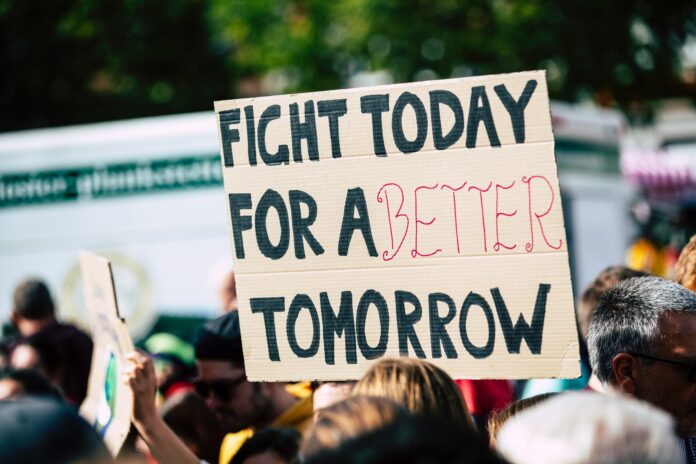
photo of a sign at a protest asking for change.
PHOTO: Markus Spiske / Pexels

By: C Icart, Staff Writer

Content warning: mentions of racism and sexual assault 

Fifty years after Title IX, a groundbreaking law in the US that “banned sex discrimination in federally funded education programs,” the growth of women’s sports is undeniable. Title IX increased the amount of women competing in sports at the high school and collegiate levels. Since then, women’s sports have “​​higher ratings, greater attendance, more sponsors, increased prize winnings, and greater media coverage” than ever before.

While there is much to celebrate, there is still inequality on and off the court. Sports may be entertainment, but it can’t be separated from politics. Athletes regularly use their visibility to make political statements. Over 40 years before Colin Kaepernick kneeled during the American national anthem, African American cheerleaders from Brown University caused a stir by staying seated during the national anthem. They followed in the footsteps of athletes like Tommie Smith and John Carlos in speaking up about anti-Black racism and violence in the US.

The Olympics, historically and even today, highlights relationships between different nations. During the 1936 Berlin Olympic Games, African American athlete Jesse Owens won four gold medals. At the time, American journalists described this “as a blow to the Nazi myth of Aryan supremacy.” Ironically, Black athletes still experienced discrimination once they returned to the US. This year, countries like the US, UK, Canada, India, Australia, Lithuania, Kosovo, Belgium, Denmark, and Estonia citedatrocities against the Uyghur Muslim population in the northwest province of Xinjiang” as the reason for not sending top officials to the 2022 Beijing Olympics. However, this boycott was only diplomatic, and all of these states did send athletes to compete in China. 

In November 2021, Peng Shuai, a Chinese tennis player, was censored online and disappeared after accusing a former senior politician of sexually assaulting her. Any conversation about her and the man she accused was heavily censored in China. Shortly after the post was made and taken down, the Women’s Tennis Association (WTA) suspended all tournaments in China and Hong Kong, and a statement was released: “We expect this issue to be handled properly, meaning the allegations must be investigated fully, fairly, transparently, and without censorship.” Yet, this did not happen, and the WTA is still returning to China. 

Since then, Shuai has made minimal public appearances and has denied that she had ever made allegations of sexual assault. There are still concerns that she can’t speak freely. This is partly because, almost a year later, she still hasn’t directly posted on her own social media. 

While news surrounding Shuai and the allegations have gone cold online, Brittney Griner made headlines this week. US Embassy officials visited the Women’s National Basketball Association (WNBA) star in Russia, where she is being detained. Griner was sentenced to over nine years after vape cartridges were found in her luggage. As cannabis is illegal in Russia, the athlete pleaded guilty to smuggling “less than one gram of cannabis oil” into the country. This happened as Griner was going to play for the Russian Premier League, which many WNBA players do during the off season for additional money. WNBA players make significantly less than NBA players and can make one million dollars a year in Russia, compared to less than a quarter of a million in the US. 

In the context of the Russian invasion of Ukraine, Griner is viewed as a political prisoner. That view is substantiated as Bidenoffered to exchange Viktor Bout, a convicted Russian arms trafficker serving a 25-year US prison sentence” for the release of Griner and Paul Whelan, who is detained for espionage charges. 

When these women were at the top of their respective sports, all eyes were on them. Shuai spent 20 weeks at no. 1 in doubles, while Griner is a two-time Olympic champion. We can’t turn away now that they are no longer on our screens. Athletes regularly willingly make political statements; however, when they are used by governments for political purposes, it’s important to recognize the difference and speak up, especially when athletes can’t. 

You can join the #WeAreBG campaign, by signing petitions and writing notes for Griner.

Social media fitness culture is damaging

0
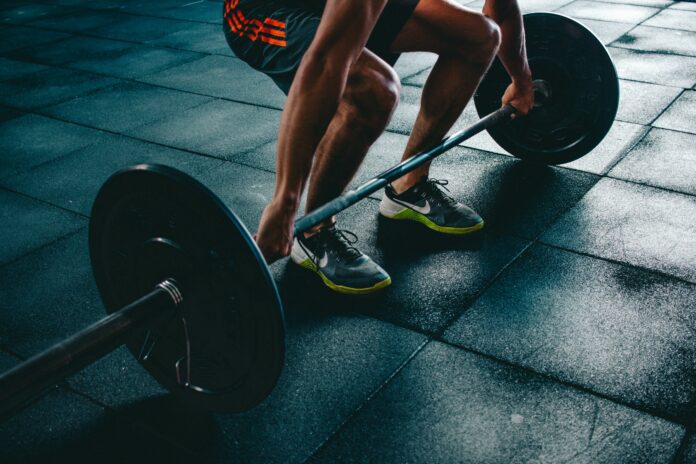
someone lifting a barbell
PHOTO: Victor Freitas / Pexels

By: Olivia Visser, Opinions Editor

Content warning: mentions of eating disorders and body dysmorphia

Social media is a useful tool that connects like-minded people, but it also has the potential to cause massive damage. In recent years, online fitness communities have been growing in popularity. If you’re an Instagram user, I’m sure you’ve at some point been bombarded by questionable “what I eat in a day” videos, or advice for getting six-pack abs. I’m someone who believes fitness is for anyone who’s interested in moving their body. It can take many forms, from commuting by bike, to weight lifting, or taking casual walks. Toxic fitness culture on social media discourages people from trying new activities, and contributes to an uptick in self-esteem issues and mental illnesses like body dysmorphia.

A large number of fitness influencers take self-improvement to the extreme, which sends the message that you can never be happy enough with your achievements. It’s concerning to see active and healthy individuals feel the need to subscribe to intensive workout programs or fad diets. Samantha Lego told Insider Magazine that after a 12-week workout program, the excitement of her new body was short-lived. She found herself panicking after eating food, and obsessing over feeling bloated.

I see this often on social media: influencers sharing tips for dealing with “bloating,” and only showing off their bodies before meals. Your stomach is supposed to increase in size throughout the day, but fitness culture sells the idea of a flat stomach that’s simply unattainable for most. These ideas have incredibly damaging effects for social media users. More and more people are engaging in restrictive patterns of eating and exercise, which can often be categorized as an eating disorder. Body dysmorphia, a mental illness causing preoccupation with physical appearance, is also on the rise among young people. Surely, it doesn’t help when influencers share how little they eat in a day to stay small.

Another concerning aspect of Instagram fitness culture is its reliance on pseudo-scientific claims or insignificant lifestyle changes that will supposedly transform your existence. It’s unsurprising that pyramid schemes and health scams are finding their way onto fitness influencers’ pages. From users selling useless and dangerous “detox teas,” to scamming people with expensive workout programs, it’s clear this space has some serious issues with misinformation. We should use utmost caution when we see non-professionals sharing medical advice, or making grandiose claims.

Popular media’s characterization of fitness is exclusionary. It leaves out fat and disabled people, many of whom are physically active. It can perpetuate shame for those who have less of a desire to be active, or do so in unconventional ways. It’s also a very white-dominated arena. Many people of colour and Indigenous people face access barriers and racism in fitness spaces. That’s not to mention the barriers faced by queer and trans folk and disabled people when it comes to fitness environments. Social media isn’t much better in terms of representation for marginalized people.

Physical activity is a great way to feel in tune with your body. Because of this, we should promote fitness for everyone who’s willing and able. Social media sells the idea of a dream body at the expense of physical and mental well-being, which has immeasurable consequences for vulnerable users. Body positivity was a big thing a few years back, and now we’re seeing the emergence of what’s known as “body neutrality.” Intuitive eating counselor Anne Poirier described body neutrality as “prioritizing the body’s function and what it can do rather than its appearance.” While both schools of thought have their use, society would undoubtedly benefit from a reduced emphasis on physical appearance.

Automation should help workers, not harm them

0
an empty computer lab
PHOTO: Jonadan Cheun / The Peak

By: Jared Murphy, SFU Student

In the 20th century, economist John Keynes correctly predicted that automation in the industrial sector would continue expanding and threatening jobs, which we’re currently seeing in North America. In some ways, Canada’s shift towards automation parallels the transition towards cleaner energy. Many labour intensive jobs are being automated away or changed dramatically. Without effective transition strategies, this hurts the working class: 10.6% of whom face a high risk of automation-related job transformation.

The Canadian government must act now, to offer legitimate solutions that actually benefit the working class. Canada needs to develop strategies that consider and support those with vulnerable jobs. We see this with the Just Transition advisory body, which aims to support displaced oil and gas workers by centering their voices, offering economic opportunities, and “minimizing the impact of labour market transitions.” Little help is offered for those displaced or threatened by automation.

In one of many examples, those with power and capital have set their sights on those with some of the most fragile futures in the market: the transport industry. With self-driving trucks threatening the job that employs 5% of Canadians, where do they turn? While there are many hand-wavey responses to those skeptical of self-driving trucks like “it’s safer,” and “it’s more efficient,” I’m proposing we take these ideas about automation and look at them not through the lens of economics, but of humanity. I honestly don’t care how safe the cars are marketed to be — they’ve been proven unsafe on multiple occasions. I care about what rapid automation will do to our society, and more importantly, who it will leave behind.

People lose their financial stability in careless market transitions. You can’t shove industrial workers with their own skill sets into the same box as the laptop class of professional email senders. What will a transition like this do to Canadian society? With 10.6% of the labour force facing job loss or transformation from automation, our government needs to act swiftly to prevent further unemployment and financial insecurity. Livelihoods are at stake, and the social outcomes of a massive shift like this can’t be justified solely by corporate and national economic growth.

Recently, Freshii was caught up in a scandal over people finding out they were outsourcing their cashier jobs to Nicaraguan workers for $3.75/hour. In one Global News article, the blame is shifted from the Freshii Board of Directors, and onto Canadian’s backs. According to them, virtual cashiers help the industry “grapple with its biggest crisis ever: staffing shortages.”

This example is particularly concerning, since automation should serve to benefit workers and consumers rather than corporate profits. Instead of recklessly automating jobs on a whim, businesses should work to address the reasons for staffing shortages, some of which include low wages and poor COVID-19 strategies.

Technology accelerates at an exponential rate. People don’t. As capital continues to barrel over workers left and right, will we wake up one day in the soon prophesied Universal Basic Income (UBI) utopia? Or, will what has happened for the last two hundred years continue: stagnant wages, higher cognitive demand, less free time, and higher wealth inequality? For these reasons, I’m not sure UBI is just around the corner. If we can take a step back, maybe the current growth by any means function of capitalism needs to be re-evaluated, and shifted towards a market that prioritizes workers’ autonomy and the right to a living wage.

Hidden Gems: Three spots to treat your palate

0
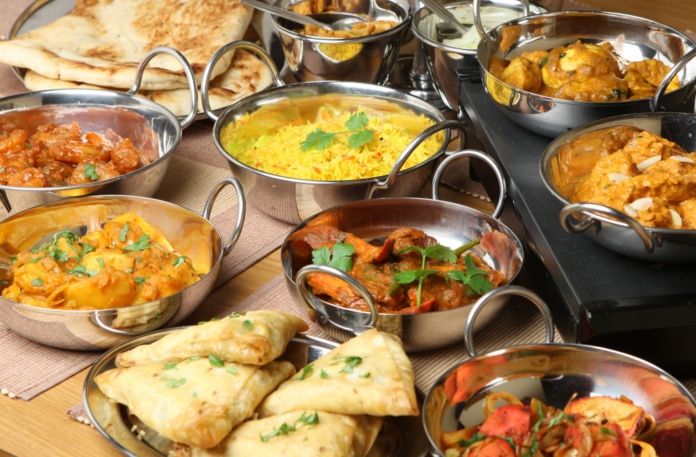
A spread of various curries, rice, and naan in metal dishes
PHOTO: Jambo Grill

By: Clarence Ndabahwerize, Staff Writer

Tap Restaurant
15350 34 Ave #101, South Surrey / Mains $26–$50

Tap is a fine dining spot perfect for celebrating milestones. If you watch MasterChef or spend a lot of time perfecting your culinary skills, you’ll want to experience their exquisite dishes. Last time I went, I had beef tenderloin served with phyllo wrapped mashed potato, wild mushroom demi glaçe, and café de Paris. A particularly good option from the menu is the duck served with warm chickpea and apricot salad, asian greens, beet purée, and fennel jus. For dessert, I recommend the profiteroles filled with a house-made vanilla gelato and topped with a chocolate-espresso ganache.

Jambo Grill
3219 Kingsway, Vancouver / Mains $13–$40

Jambo Grill boasts a vast menu with east African and Indian dishes: an embodiment of the special connection between the two regions. For starters, you have to try the cassava mogo. Salted, of course. My personal recommendation is the sukuma wiki, which is beef cooked with kale, rapini, cassava (a root vegetable also known as yuca or manioc depending on where you’re from), leaves, and spinach. It’s served with a side of ugali (maize bread) or chapati (a popular flatbread in India and east Africa). While you’re at it, try some warming mandazi bharazi with some soothing masala chai.

Blossom Teas
23-7198 Barnet Road, Burnaby / $5.20–$9

Blossom Teas is hidden below Burnaby Mountain. It features delightful fruit and milk teas, which one may complement with boba. Ordering is best done online prior to arrival. The real treats are the mango drinks, which can be topped with ice cream. The cheese foam is also highly rated. You’d be right to suspect a bit of a sweet tooth from me. 

The crisis of too many crises

0
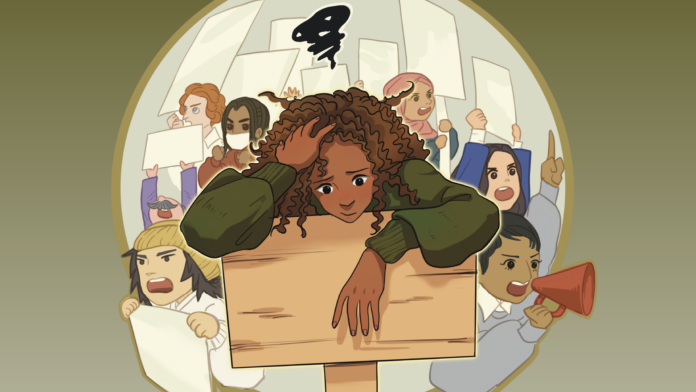
illustration of someone stressed out in the middle of a protest
ILLUSTRATION: Youngin Cho / The Peak

By: Karissa Ketter, News Editor

At this point in the 21st century, most Gen Z’s are aware our world faces many crises. If you tune into news or social media, you’ll undoubtedly be reminded of the devastating inhumanities resulting in protests in Iran, or the Russia-Ukraine war that’s now in its ninth month. Honestly, take your pick — the housing crisis, lack of reproductive rights, the dire state of democracy, climate change, racial injustice, refugee rights, food insecurities, COVID-19 . . . The list goes on, and on, and on. The amount of issues that societies face globally are so vast and most of them are interconnected.

Let’s say you’re interested in a specific area of social activism. Take climate change as an example: You go to your first climate protest, and feel pretty excited to get out and make tangible change. Then, next week you learn that climate change is pretty closely connected to food insecurity. More research leads to you learning about the connection between the agriculture industry and the treatment of immigrants and refugees. So, next, you attend a protest for the treatment of local refugees. 

With the amount of issues we face, if we force ourselves to give our all for every movement, at some point we’re going to get tired. Activism can be extremely exhausting for protestors — both physically and emotionally. 

It’s well documented that Black folks who protest their own racial injustices are most likely to face this emotional burnout. NPR did a survey with 500 Black Americans and many of them reported feeling depressed, anxious, and chronically fatigued from exerting so much emotional labour. NPR believes this is due to the accumulation of stress from protesting while seeing no difference in the amount of racism Black folks face on a daily basis. 

After experiencing activist fatigue, many protesters will take a break from their work. However, others will stop entirely. I think this is completely understandable — if you’ve put massive amounts of effort into a campaign and there’s no progress, no appreciation from your community, and no time to engage in self-care — at some point many people will have hopelessness wash over them and they’ll stop participating. However, this is also why white folks and others with privilege in society, who do have the energy to participate, should. If people take action when they can, others will feel less alone, and movements can continue their momentum.

So, is burnout just an inevitable part of social activism? How can we still help movements that are important to us if we don’t have the physical or emotional capacity to support them? 

I know from personal experience that choosing not to participate in a social movement or protest can come with the feeling of guilt. Am I a bad person because I’m not doing anything to stand up for what’s important to me? Sure, I’ve been to TMX protests and participated in other movements before. But it also sometimes feels like no matter what I do, that pipeline is going in whether I like it or not. Attending protests now makes me feel so much disappointment and anger towards our government for letting this happen. 

Activist burnout has caught the attention of political scientists, too. A study conducted by Cher Weixia Chen and Paul Gorski suggests that activists and social movements need to address the structural issues that lead to burnout within their movements. The act of protesting is meant to be selfless — you’re putting your own needs aside to stand up for injustice within your community. However, engaging in self-care doesn’t necessarily contradict your act of selflessness. In fact, Chen and Gorski found that when movements build strategies and create structural emotional support for their activists, their movement is more immune to burnout. 

Essentially, you don’t need to feel guilty when you take time for yourself. If you’re feeling overwhelmed with the intimidating number of problems we’re facing — take a step back, rest, and recharge. The movement will still be there when you’re ready. Take care of yourself first, and you’ll be better suited to take care of your movement later. 

Tipping reminds us how workers are underpaid

0
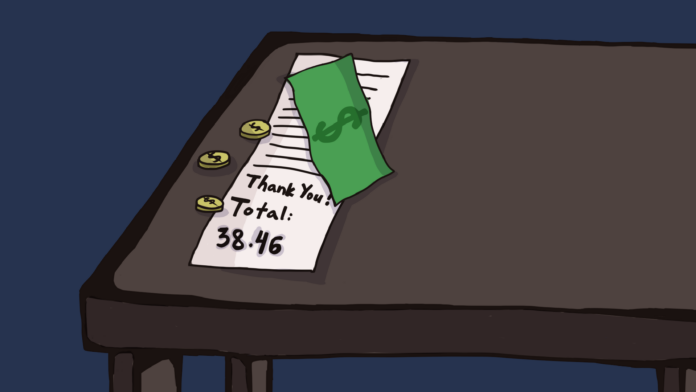
illustration of a restaurant bill with cash on top
ILLUSTRATION: Stella Laurino / The Peak

By: Nercya Kalino, Staff Writer

Each country has their own understanding of tipping within their society. While some countries don’t practice tipping by cultural standards, others, such as Canada, encourage it through rules or legislation around tipping. To an extent, there is nothing wrong with tipping. However, certain beliefs and practices surrounding tipping are problematic.

Tipping is a customary approach in North America to receiving services like taxis, coat checking, table service, hair styling, and more. It’s an expectation that positively impacts minimum wage workers in the hospitality industry, since many have highlighted that the minimum wage isn’t enough to survive on anymore. The minimum wage varies between provinces, ranging from $13.75 in New Brunswick to $15.65 in British Columbia as of 2022. 

Low wages amid a  high cost of living is one reason why tipping culture is ingrained into the Canadian lifestyle. Tipping usually starts from 15%, and anything less is considered condescending but not illegal. In restaurant settings, controlled tips help non-serving staff who work behind the scenes, while direct tips benefit individual workers. There are arguments to be made for both sides, but it’s important workers are first paid and treated properly. Besides financial barriers, service industry workers face mistreatment by customers due to harmful beliefs. Sexual gaze can have an impact, and is a demeaning factor that should never influence customers’ tips. Many workers put up with a lot of mistreatment while working a fast-paced job, and their wages don’t reflect this.

Since COVID-19, attitudes around tipping have shifted in a way that made people realize two things. For the most part, growing empathy for small businesses and workers resulted in tips increasing from an average of 16.6% to 17.9%. On the other hand, we now see “tipping fatigue,” where customers are faced with increasing tip expectations due to increasing inflation. Consumers are supplementing wages for items that have already increased in price at the point-of-sale terminal. 

This is where businesses must step in to support their workers by providing living wages. The need to rely on tips should be a secondary factor. Any business that offers the public a service ought to not undermine their workers because they are the ones bringing in sales. A business can facilitate other actions like paid sick leave and extended benefits to help support employees, but providing a living wage is a great start. 

Currently, tipping culture doesn’t create a huge dent in the livelihood of the average person. Those same workers are customers elsewhere — specifically minimum wage workers who know how tipping impacts them. At the same time, tipping shouldn’t be a primary source of financial security. The living wage should be a priority through government legislation and equitable business practices. The gap between wages and living standard is a huge issue that the government needs to address, not consumers.

New urgent and primary care centre opens in Burnaby

0
This photo is of a patient at a doctor’s office. The doctor is overlooking the paperwork.
PHOTO: cottonbro studio / Pexels

By: Pranjali J Mann, News Writer

Burnaby-Metrotown will be getting a new urgent and primary care centre (UPCC), and official operations began on November 1, 2022. The ribbon-cutting ceremony on October 29, included BC legislative and municipal officials as well as physicians. This 696 square meters facility has spaces for group therapy, consultation rooms, and education rooms.  

UPCC, according to the Fraser Health website, provides alternate care for “non-life-threatening medical concerns” in absence of family practitioners and access to walk-in clinics. In addition, it connects individuals’ health care needs to available medical services in the community.  

The new health care facility will cater to the “province’s growing, and aging population.” The 29th UPCC facility in BC is set to provide for both “non-emergency urgent care” and “long-term care” avenues. The service includes care in the cases of “minor cuts or burns, headaches, sprains, and those experiencing mental-health and substance-use challenges.” This facility will be open every day of the week from 9:00 a.m.8:00 p.m.. Long-term care would include provisions for regular, “planned primary care,” along with extending care to the “unattached residents.” Unattached residents are those who are not attached to a primary care physician or family doctor. 

BC’s minister for child care, Katrina Chen, said, “People in Burnaby and surrounding areas need improved access to primary care close to home. The new Urgent and Primary Care Centre in Metrotown will help fill this need and is an important step in delivering on the promise of a stronger, more accessible health-care system for us all.”

The UPCC is located at Unit 102-4555 Kingsway and will be open weekends and evening hours to reduce the burden on existing facilities in Greater Vancouver. The existing UPCC’s are in Surrey, Burnaby, Maple Ridge, Port Moody, and Abbotsford. 

The Canadian Medical Association (CMA) is concerned about the existing challenges within the Canadian healthcare system. President of CMA told CTV News she is concerned that Canada is experiencing a “collapse of the current healthcare system.” This is because UPCC facilities and emergency centres can’t keep up with the growing number of patients, with waiting times up to 20 hours. Canada’s entire healthcare industry is experiencing large staffing shortages and ongoing waves of COVID-19 continue to affect the whole system. 2022 has seen higher waves of COVID-19 hospitalizations than previous years in the pandemic.  

Dr. Victoria Lee, president and CEO of Fraser Health, stated, “This UPCC will enhance access to urgent care services for Burnaby residents and connect people to community services and care providers who will work together to provide a holistic, culturally safe approach to care.” 

Pole dancing reminded me of what my body could do

0
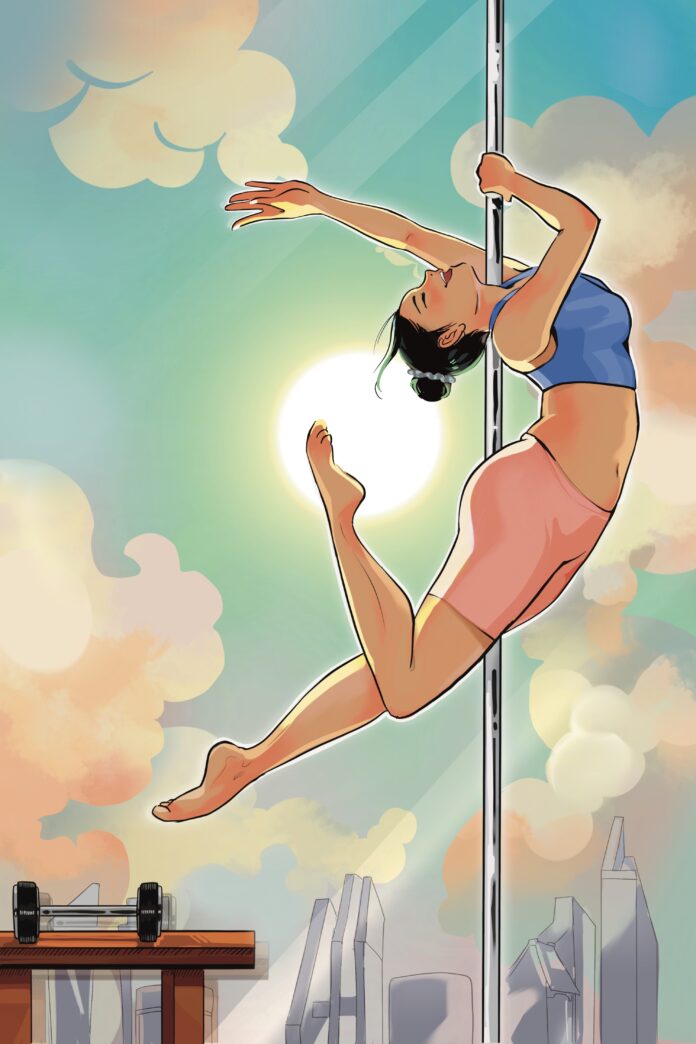
Illustration of a dancer beautifully leaning back from a pole.
ILLUSTRATION: Youngin Cho / The Peak

By: Kelly Chia, Humour Editor

I’ve wanted to try pole dancing for years. When I was 14, I watched a video of a pole dancer crushing a watermelon with her thighs alone and thought, “Man, I didn’t know they were that strong!” Since then, I’ve wanted to try pole, if only to become that strong. I had a fairly limited understanding of pole dancing, and had shied away from anything remotely erotic. I’ve taken a few dance classes, but always found myself second guessing, wondering what other people thought of me. Those thoughts would lock up my limbs, and I remembered feeling so uncomfortably awkward stroking up my body. I wasn’t sure if it was the performative aspect, or whether I couldn’t believe myself to be a sensual person.

Sensuality feels like an emerging extension of feeling good in my body — something I’m still not entirely sure how to navigate. I didn’t want to be attractive for anyone else’s sake, but I also found it hard to do things that would put me in that vulnerable position of reckoning with my own sensuality. For so long, it felt like something I needed to protect so others couldn’t take advantage of it. But, I’ve found the desire to feel safe in my body, for my sake. I wanted to push a bit harder, to find some strength in not only myself, but my pride in my sensuality as an adult woman.

As I stepped into AVA Fitness in New Westminster to try pole for the first time, thoughts and insecurities swam in my mind. 

My instructor, Shira, welcomed us into the studio cheerily. This was an introduction class, I reminded myself, so everyone around me had the same amount of experience and expectations. Still, I looked at the poles around the room and thought warily, “How am I going to get my body off the floor?!” 

We were surrounded by mirrors. It was hard not to be distracted with how little I could stretch during warm-ups, or how my body looked up close with so little clothes on — in pole, the more skin you bare, the easier it is to grip the pole. I knew this, but it didn’t make me feel any less self-conscious. At this point, I already felt the unease crawl through my skin. I tried to concentrate on my movements rather than the feelings. Strutting to the yawning beats of “Season of the Witch,” and stroking my hair as I watched myself in the mirror, I allowed myself to feel good about what I saw. 

Then, it was time to try spins. Shira showed us a backward spin, then broke it down to smaller steps, which I appreciated. You would extend your hips out so you would be triangular to the pole. Then, hook your knee into the pole and slide down, landing on your hips. I had some expectation that the pole would somehow be slick and it would be easy to just whirl myself down, but nope! I slid into the pole over and over, feeling my thigh slip. Concentrating on which part of my body to use, rather than thinking about who was watching, encouraged me to keep going. Each time I fell, I knew I was getting closer. 

By the time I landed the spin on my hips, I smiled proudly at my classmate. I joked with them that I finally understood why pole dancers end up with so many bruises on their legs: hooking your leg is hard! She laughed and told me the bruises were proof of our hard work. I really held onto this thought as Shira showed us our next move: a reverse showgirl spin, where we would finally get our legs off the floor. We all gasped as Shira twirled effortlessly around the pole, leg extended outward to kick out gracefully. 

This was hard for me to really commit to, because I simply didn’t believe I could do it. Then, I felt that magic click of understanding. I digged my thigh right into the pole and watched myself kick out in the mirror. It wasn’t nearly as fluid as Shira, but I had done it. I was so convinced I couldn’t, but as I watched myself go down the pole, I had the profound feeling that there was so much I didn’t understand about my body. It felt freeing to get off the ground that I was so nervous about leaving.

I felt strong, and honestly, so pretty — leg extended out, like a ballerina in a music box. I had known it took immense strength to do all the spins and twirls I admired on the pole, but in an hour, I comprehended the impossible idea that I was capable of this strength, too. I woke up the next morning feeling ALL sorts of soreness: the proof of my hard work. I also learned a new truth about myself; I’m capable of living and exploring my more sensual side, and playing with her made me feel damn powerful.