Home Blog Page 2

Joy Johnson reacts to communist positivity on campus

0
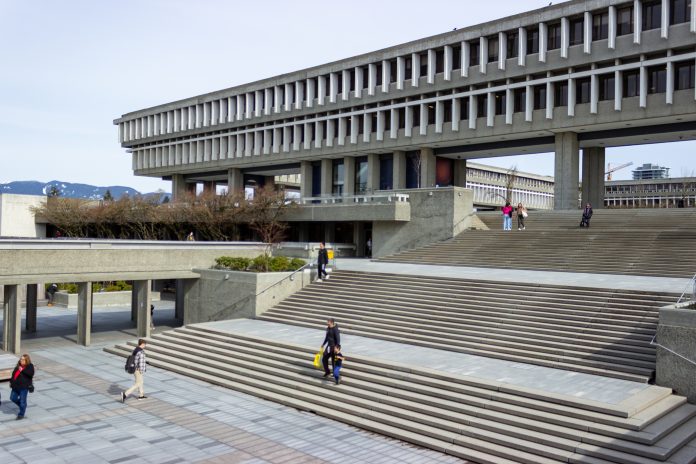
PHOTO: Mason Mattu / The Peak

By: Aiden Krysciak, PR coordinator for president Joy Johnson 

The following is a letter from the desk of SFU president Joy Johnson, delivered to The Peak by her majesty’s propaganda ministry — we mean PR team.   

Strung out, I was, deep as that very night when the visitation occurred. I stopped and watched in terror as the sky broke open and the light reflecting off the moon and stars were again diffused in this miasma which had materialized in the AQ-green. Soon, foreign and equally terrifying vocalizations filled the air and slowly. As I walked closer, pulled by that freakish leash of fate, these vocalizations formed words and “laughter.”

Upon the glacis rested a smoky apparition: some students, surely possessed by that communist poison — “marijuana.” I watched from the shadows for fear of my life and was, therefore, too far to hear really any of what they were saying. I can only deduce that what must have been spoken was threatening to me, this noble school, and to Simon Fraser himself, who bravely followed the River Fraser for the glory of the white man. It was surely communistic sentiment expressed by those sinister upward turnings of the mouths and revolting dimpled contortions each youngster wore upon their face. If not that, then full-blown revolutionary conspiracy. 

Well I’ll tell you, gentle reader, and I’ll tell you better than you’ve ever been told before. Believe you me that I followed these goddamn hippie agitators in their goddamn realtree hoodies and their goddamn sailor caps and goddamn sneaker shoes — and I saw those fucking scoundrel ne’er-do-wells paint upon the walls of our already-compromised-by-communistic-interpretation-architecture words that I have never before seen or heard. These etchings made in chalk on our concrete walls elicited such nightmarish meanings: “You’ve got this!”; “Stay positive?” Messages that mocked our school such as: “Concrete?” OF COURSE IT’S CONCRETE you absolute — anyways. 

I could hardly comprehend the filthy and fucking straight up disgusting “socialization” rituals of this evil-ass sect of Anglo-American culture. It makes me, the provost, and this monument to our glorious imperial forefathers genuinely want to RIP OUR EYES OUT OF OUR SKULLS. I wish I were fucking jokin’, but no; I just hate my students that much. If academia wasn’t so sensitive, I’d have already used all of these children as target practice for our first annual Simon Fraser battle simulator/LARPing sesh. 

It’s now been three days since I saw these two abominations on campus, and I still cannot bring myself to leave this office. I sit here as I feel my last caffeine pill wear away and my mind drift farther from reality . . . and closer towards lofty thoughts of heaven. Oh, to be free from this misery of having to justify every decision to the lousy press! To no longer have to bear the malfeasances of these wretched children! These may be my last words, and if so, may they empower the few students with some actual gumption to fight this scourge of communism.

Long Story Short: Paving a non-linear academic path

0
An illustration of a studious yet worried elephant in a lecture hall sitting among human students. The elephant has a pile of books in front of them. The elephant has imposter syndrome.
ILLUSTRATION: Cliff Ebora / The Peak

By: Marie Jen Galilo, Staff Writer

Before starting university, my peers and I started planning our careers. Everyone around me had such big dreams — my friends wanted to be doctors, lawyers, or engineers. Having always cared about my grades and academic success, my teachers, friends, and family would comment on how I would likely establish a respectable career that reflected my intellect. I felt compelled to choose a career path which reflected my efforts and fit their expectations. Another factor for me was family — as the daughter of immigrant parents who left their homes, careers, and loved ones behind, I felt pressured to establish a career that honoured their sacrifices in their hopes of giving me a better future. 

I loved subjects in the arts because they allowed for the intermingling of creative and analytical thoughts, but I also liked learning about topics in the sciences. While I did well in subjects across the board, my family and peers saw me as someone who particularly excelled in social sciences. In my social circle, becoming a lawyer was perceived as the main “respectable career,” so I pushed my interest in science aside, and decided I was going to pursue an arts degree to eventually become a lawyer. 

Because SFU’s breadth requirements include a certain number of science units, I thought, why not try taking a biology course to fulfill that? In this course, I found myself looking forward to lectures, enveloping my brain in learning about cellular processes and animal physiology. I started to consider the possibility of transferring to the faculty of science and majoring in biological sciences because it sparked my interest like no other subject. In biology, you’re taught the basics, given a problem, and asked to piece your knowledge together using creativity to come up with logical solutions. It’s truly rewarding when you understand the course concepts, and are able to apply that knowledge.

Bringing up the topic of transferring faculties and switching my major when I was going into my second year wasn’t an easy conversation to have with my family because it seemed like a big jump from my pre-law trajectory.

Their hesitation became intertwined with my own. I couldn’t help but feel like I had let people down. Deep down, I knew I had chosen the pre-law path because I thought it represented my potential.

It took a lot of courage to break out of the box I had placed myself in with walls that had been reinforced by the opinions of people who mattered most to me. 

A 2025 study examining the developmental histories of top-level performers in various areas found that those who explored a variety of disciplines early in life were more successful than those who quickly specialized, in fields including science, music, sports, and chess. This challenges the long-held idea that those who want to succeed should narrow their efforts, instead suggesting the importance of exploring and embracing different opportunities. For instance, Dr. Harold Varmus, who obtained a degree in English literature, went on to become a medical doctor and scientist. “There is still time to make decisions about the way you are going to conduct your careers,” said Varmus on the iBiology Science Stories podcast. Varmus addressed the perceived gap between the arts and sciences, saying that “not every scientist is a math whiz” and “there are lots of ways to become a scientist.”

I realized I didn’t need to choose between my interests, choosing to major in biological sciences and minor in English to fuse my interests in science, writing, and literary analysis. I initially kept the transition from arts to science a secret because I was experiencing imposter syndrome. Imposter syndrome is defined as feeling unworthy of successes despite your efforts and achievements, and is accompanied by the fear that you’ll eventually be seen as a fraud. Even though I was studying for hours on end and did well in my classes while being involved in extracurriculars, I downplayed my achievements and viewed them as a result of chance rather than my capabilities. I had always been perceived as an arts person, and I felt like people would perceive me as trying to change who I was by going into science.

There’s also a divide between the arts and sciences — in my experience, you rarely see a science major with an arts minor or vice versa. In my English courses, I felt like the elephant in the room, often being the only biology major in a room full of arts majors. In science courses filled with pre-meds, minoring in English seemed like a random decision. I’d often get asked, “Why?” or, “What’s the point in that?” But it was not a random decision for me — minoring in English was a way of letting the part of me that loved the arts live on.

Navigating my academic journey was accompanied by stress, exhaustion, self-doubt, and burnout. Despite these challenges, there was a lot of growth. I’m learning to accept that we’re all on our own journeys of self discovery, and there’s no single cookie-cutter pathway. I’ve developed a stronger sense of personal autonomy in making this decision. It’s given me a sense of purpose; I’ve chosen to get involved in my community and pursue a career with a focus on health-care and writing. My family’s hesitancy was replaced by support after seeing me excel in my passion. They’re now far more understanding of how they can be my strongest support system in this new field, which was different from the field they had initially imagined. I’m also learning to break away from imposter syndrome and be more compassionate towards myself, reframing my mindset to view my achievements as results of my capabilities rather than pure luck. 

If you’ve ever experienced feelings of imposter syndrome, I hope you know that you do not need to prove your “worth” to anyone. You’re enough as you are, and you can give yourself the credit for everything you’ve achieved and everything that you’re going to achieve as you pave your own path at SFU and beyond.

SFU community members sound alarm on new investment policy draft

0
PHOTO: Gudrun Wai-Gunnarsson / The Peak

By: Lucaiah Smith-Miodownik, News Writer

SFU’s Responsible Investment Policy has become a serious topic of discussion in recent years.

Specifically, SFU community members have raised ongoing concerns regarding the university’s investment in companies embedded in the military industrial complex. In March 2024, SFU’s Faculty for Palestine (F4P) released a petition asking SFU to divest from the arms industry, featuring over 1,300 signatures. In response to these community pressures, SFU committed to reevaluating its investment policy on May 30, 2024. On June 7, the SFU Faculty Association passed two motions that were proposed to them by F4P, one of which further pressured SFU to divest from military arms producers. 

For many, the most recent draft policy has left much to be desired. The Peak corresponded with F4P, as well as the university, for more information on the decision making processes behind the policy, and the future of the university’s investments.

F4P released a letter on April 2, 2026 expressing concerns regarding proposed changes to the outline. “As documented in the Custodial Statement of Endowment Investments, SFU holds or has held shares” in BAE Systems, Booz Allen Hamilton, and CAE. F4P notes they are “corporations that derive the vast majority of their revenue from military equipment and  services.

“The weapons and services of these corporations have collectively facilitated the killing, maiming, or displacement of tens of millions of individuals, primarily in the Global South. These are not abstractions — they are lived realities.” They specified, “Many SFU students are here in Canada because of war.”

The faculty group noted that the revisions include “no reference to military arms production, no screening criteria applicable to weapons manufacturers, and no process for evaluating or acting on the community’s democratically expressed position.” The Peak could not access SFU’s draft policy.

“SFU has committed to the United Nations Sustainable Development Goals, including reducing poverty and gender inequality, promoting environmental sustainability, and  promoting peace,” the letter continued. “The university’s own strategic plan declares it a community working to ‘make a difference in the world’ and ‘address humanity’s most complex problems.’ Investments in arms production and other military services are fundamentally incompatible with these commitments.”

Since the letter, “there has been no reply from the Board,” F4P told The Peak.

“After two years of waiting, they produced a draft policy that not only disregarded the concerns of a great many faculty, students, staff, and alumni, but they are poised to hollow out whatever matters in the current investment policy” 

— SFU Faculty for Palestine 

When The Peak asked about investments in weapons manufacturers, SFU stated that “the defence sector is multifaceted, encompassing companies that support national security, peacekeeping, disaster response, and technological innovation,” adding that “SFU’s investment managers assess companies for human rights risks, political instability, and social issue related concerns.” The university also explicitly stated that it “does not have any investments in arms manufacturers.”

The university’s 2025 endowment investment report features both Booz Allen Hamilton Holding Company and CAE. While not a producer of tanks, Booz Allen Hamilton develops military engineering and technology used for weapons. Similarly, CAE provides military services through training and simulations. SFU has not released their investment report for 2026.

“[SFU] may have traded out of a couple of these recently, but the SFU admin is completely disingenuous in this regard. If not, why not ban these investments in the so-called responsible investment policy?” 

“SFU’s Responsible Investment Policy should include a clear and enforceable screen excluding corporations that derive significant revenue from military arms production and military services,” reads the April letter. “This commitment should be anchored in the policy itself — not left to administrative discretion — and should be accompanied by a transparent timeline for  implementation. 

“It is long past time for the Board to act on these democratically expressed positions.” 


Langara journalism program faced with potential closure

0
Black-and-white photo of three issues of The Langara Voice. The issue in the center features a large image of a young woman holding her pottery. The article underneath reads “A bad housing situation, worse.”
IMAGES: Courtesy of The Langara Voice

By: Maya Barillas Mohan, Staff Writer

Interest in student journalism has faced a steep decline, journalism instructor Barry Link told CTV News. Steep enough that Langara’s journalism program is in danger of closing after 60 years of running. The Peak reached out to Link, who chairs the program, to learn more.

The Langara Voice is produced by the journalism program with responsibilities split in two courses: the reporter course, and the editor course. These courses are trim, with enrollment between 12 and 25 students per class. “We set The Voice up as a real, working newspaper,” Link tells The Peak. Covering the Langara and South Vancouver communities, The Voice narrates going-ons in “a whole range” of geographical areas across the campus and beyond.

The Voice reflects storytelling done by students.”

– Barry Link, journalism program instructor and chair at Langara College

The Voice itself represents the diversity of the campus.” 

Students in the program are trained to be working journalists, developing teamwork, responsibility, and accountability. They also develop practical skills for the industry like reporting, interviewing, and fact-checking. Link expresses that digging into stories, going places, and taking interviews is part of the essential effort journalists take to parse facts and report to the public.

Journalism and entertainment may overlap, but Link remarks that nothing is fictional in journalism. “We aren’t cherry picking facts, we aren’t distorting reality,” Link says. He observes there are “changes in what people regard as journalism,” and “the industry has not kept up with how society processes and shares information.” He continues that “what journalism has not figured out is how to pay for itself,” and further, the advertising that kept broadcast stations afloat disappeared because of the internet, replacing the media landscape of 30 years ago. 

There is “less reporting than we had 20, 30 years ago,” Link reflects. He identifies a reduction in newspapers and radio outlets, supplanted by an influx of influencers without media training. Link laments that efforts to “make it work as best we can” are overruled by the college’s belief that “there’s no room” for the journalism program. 

According to Link, Langara has been concerned with enrollment and financial challenges for some time. “The biggest change for the college is the pretty big financial difficulties it’s having now, which most post-secondary institutions are having now, and that’s directly tied to the drop off in international student enrollment,” says Link. He shares that the lack of income from tuition means program cuts inevitably follow. 

“Journalism still has value in our society, and I think that’s an important role for post-secondary institutions to fulfill,” Link says. Supplemented by recent media attention, Link also notes that there are a lot of people “very concerned” about what this closure means for journalism. Optimistically, “there is public concern about this, and that reflects public demand and need for a solution.”

BC’s overdose crisis crosses 10 year mark

0
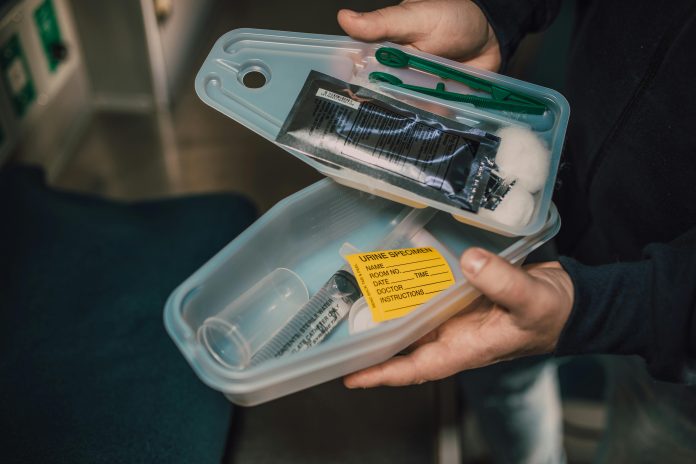
Image of someone holding a small open portable medical kit containing cotton swabs, tongs, and a catheter, among other items
PHOTO: RNDE Stock Project / Pexels

By: Jonah Lazar, Staff Writer

In 2016, the BC government declared overdoses a public health emergency due to the 474 reported overdose deaths that occurred in the province the year prior. In the 10 years that followed this declaration, BC used a series of policies to combat this crisis, including the expansion of supervised consumption sites, take home naloxone programs, the implementation of the safer supply program, and the decriminalization pilot program, with mixed results. The Peak spoke to SFU’s Dr. Kora DeBeck, distinguished professor of substance use and drug policy, to learn more about the effects these policies have had on the overdose crisis. 

In tackling this crisis, BC has adopted programs aimed at adequately preparing to respond to overdoses. Part of this has been an expansion of supervised consumption sites, which provide opiate users with safe, supervised places to use their own drugs in the presence of professionals to prevent accidental overdoses. Despite what she noted to be a large amount of drug consumption sites being introduced to the province, DeBeck said, “I didn’t think it met the full needs of everybody in the communities, everybody that was at risk.” While the first drug consumption site was introduced in the province in 2003, this program was significantly expanded across the province following the public health emergency. 

Another program the BC government has undertaken is the distribution of naloxone, a medication administered in order to reverse the effects of an opiate overdose. Naloxone kits have been made available at pharmacies and widespread take home naloxone sites without the need for a prescription since the pilot program in 2012, to distribute this life saving medication to people who are likely to witness overdoses or experience one themselves. DeBeck said “naloxone distribution has been very impressive” and “has made a huge amount of difference and saved a lot of lives.” 

Another facet of BC’s approach has been an attempt to control the substances being used by people in the safer supply program. Since 2017, BC has been expanding the prescription of less dangerous opiate alternatives such as hydromorphone for people with opiate use disorder. This program has fallen under scrutiny for its reach; at safe supply’s peak, it was treating approximately 5,000 people of the estimated 100,000–200,000 people in the province with an opiate use disorder. However, the program only treated people with opiate use disorder, when “the majority of people who are dying of a toxic drug poisoning did not have an opiate use disorder and were not using opiates on a daily basis” and therefore remain unaided by this particular program, DeBeck said. This led DeBeck to describe safe supply’s reach as “a drop in the bucket” for what is needed.

Despite BC’s policy reform, the crisis is still in full swing. In 2025, BC’s annual death toll from drug overdoses climbed to 1,833; over three times the toll from 2014. DeBeck attributes this in part to BC’s refusal to abandon a criminalization approach, which views the consumption and possession of illegal drugs as a criminal offence.

“The police have never been a good tool for [combatting] drug use.”

— Kora DeBeck, SFU professor of substance use and drug policy

In January 2026, BC decided not to renew the three-year long decriminalization pilot program which commenced in 2023. The program allowed for the personal possession of up to 2.5 grams of controlled substances such as cocaine, methamphetamines, and opioids like heroin and morphine. The program’s expiry means illegal drug possession, once again, is subject to criminal enforcement, with punishments ranging from seizure of the drugs to months in prison. DeBeck warned, “From an evidence-based public health perspective, [criminalization] is absolutely the wrong approach to take around substance use and the overdose crisis.”

The Peak reached out to BC’s minister of health, Josie Osborne, for a statement, but did not receive a response by the publication deadline. 


Post-secondary education funding is mishandled

0
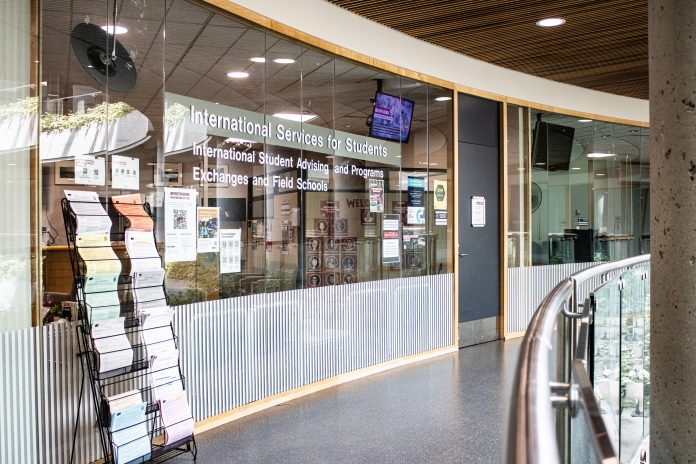
SFU International student advising office
PHOTO: Prerita Garg / The Peak

By: Jonah Lazar, Staff Writer

Studying in BC is more inaccessible than ever before, especially if you’re an international student. In 2024, federal limitations on study permits led to a 66% drop in permit approvals for international students. In 2023, 456,690 international student permits were granted federally; this number shrunk to just 50,370 for the first nine months of 2025. Post-secondary institutions should never have relied so much on the funding that comes from international students to begin with.

Public funding for post-secondary education in BC has dropped 41% since 2000, and doesn’t look to be rising anytime soon — despite BC launching a review of post-secondary institutions’ stability, post-secondary education minister Jessie Sunner ruled out the possibility of increased funding. This double-whammy of the international student cap and cutback of public funding has led to nearly 200 programs being cut or suspended from BC’s post-secondary institutions, and over 1,300 staff layoffs, with many institutions in the Vancouver area among the most affected. Langara and SFU alone have been victim to over a quarter of these layoffs. At SFU, all interpretation programs, the football team, and SFU’s participation in the NCAA, have been cut, and could lead to the loss of other teams. 

In addition to programs being cut, universities are raising costs on students. At SFU, the fall 2026 meal plan will be $278 more than it was in the spring, climbing to an eye-watering $3,727 per term; residence fees are changing too, increasing around 4%–10% depending on the building. 

At SFU, domestic tuition fees for 30 credits over two terms is about $7,500 and for international students, it’s almost $37,500, with an extra $14,370 if these students are living in residence. International students are often paying five times as much as domestic students and that makes them a very profitable client for the university.

Funding for post-secondary institutions shouldn’t be reliant on milking international students for as much money as possible.

There is nearly an 89% reduction in international student permit approvals from 2023 to the first nine months of 2025. Further, there is a volatility in the international student market that shows that it should never have been relied upon in the first place. Regrettably, post-secondary institutions have been left with few alternatives over the past few decades, in the wake of reduced public support. 

While the international student cap has made many post-secondary institutions sound the financially-viable alarm, all this cap really has done is highlight the systemic lack of public funding made available to these institutions by the federal government over the years. SFU students have long raised the issue of affordability and international student exploitation. The federal government’s overzealous cutting of student visas has made everything worse. This lack of funding has led to post-secondary institutions seeking out new ways to raise revenue; with nowhere else to turn, this shortfall is being filled by firing staff and raising costs on students.

Life and growth are never linear

0
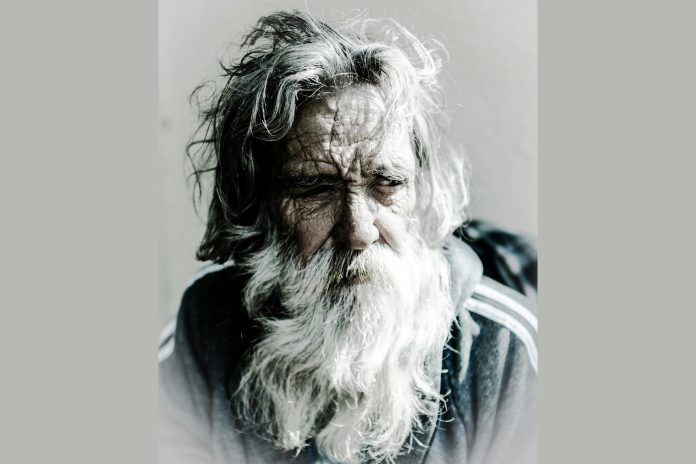
Craggy-faced old man with an unkempt beard and hair
PHOTO: Donald Teel / Unsplash

By: Corbett Gildersleve, Opinions Editor

Who am I? I’m old. I was a mature student when I started my first degree. My journey has taken many turns since starting at SFU in the mid 2000s when I worked as a security guard and later as a service clerk at the Vancouver campus. In early 2009, I started through the SFU-Zhejiang University dual degree program, spending two years studying computing science in China. It wasn’t easy: I was studying in another language and was 10 years older than my classmates. I struggled with completing my degree because I realized very late that it was the wrong program for me. But, I felt I was too far along to change or drop it. I crawled over the finish line in 2017 and crossed the stage that summer. For me, life and personal growth have never been linear or easy.

Being a mature student has its ups and downs. It was always funny walking into class and everyone thought you were the professor or teaching assistant. But, your pop culture references are dated, and there’s so much new slang to learn. I still don’t fully understand what “based” means. It’s probably why I often got along better with my instructors than my classmates, at least for the first few years. However, being a “mature” student has its perks: I bring knowledge, life experience, and history to my classes. I am able to distinguish between what I want and don’t want and I find myself being more in charge of my life choices.  

The real question that everyone should ask themselves is whether their educational path serves them in a way that fits their goals. Sometimes even when there is something that you believe is a strong fit for your future, it doesn’t mean it’s actually your passion. So, what do you do? You shift direction and apply what you learned. When looking back at my first degree, I really enjoyed classes that revolved around design, be it graphic design, software, or UI. I loved reorganizing the Computing Science Student Society that I was the president of in 2014. When I served on the Board of the Simon Fraser Student Society (SFSS) in 2015, and we changed the governance structure and policies, I realized there was a strong overlap between software and policy design. Both are about creating rules, processes, and structure to solve a real-world problem, but just in different domains. It was also during that time I realized I wanted to work on “people” issues instead of computer ones. So, in 2018, I enrolled in the post-baccalaureate diploma program in social policy through the sociology and anthropology department. 

The SFSS is full of “people” issues to solve, and my knowledge were useful in helping the Simon Fraser Public Interest Research Group, CJSF Radio, and the Students of Caribbean and African Ancestry during the student space campaign in 2019. Working with these student groups helped me understand collective strategizing and decisionmaking. Computing science trained me to see part of the SFSS as a system of rules, bylaws, and policies that could be broken down, analysed, and fixed. A few successful election campaigns later, and I was serving with my team as an executive in the SFSS. I’m proud of the changes we made in and outside the SFSS, but it came with a cost. I paused my diploma program after 2022 and have struggled to maintain a full-time job due to lingering mental health impacts from my time as an executive. 

All of this to say that one doesn’t need to linger where they don’t find themselves motivated. Yes, life is hard — and we have bills to pay — but there is a merit in pursuing a life that is your own. Pave a path for yourself. This path doesn’t have to look like anyone else’s.  

Why did I come back? I wanted to finish my program but I’ve been struggling academically to the point that it’s hard to know if I’ll be able to complete it. I’m exploring options through the Centre of Accessible Learning, and from what I’ve read, the experience is not always positive. But, I’m not giving up because as I’ve said, life and personal growth are not linear or easy.

SFYou: Kyle Newcomb of Setiaputra Lab

0
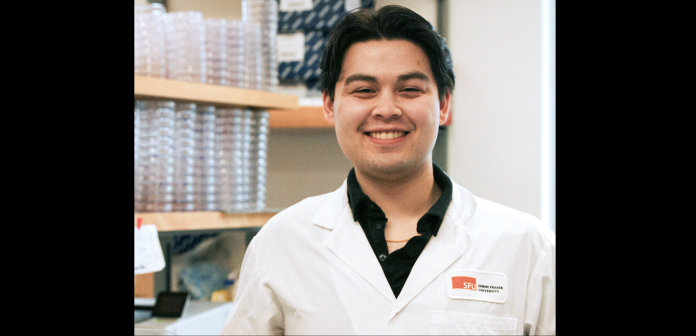
A headshot of Kyle Newcomb.
PHOTO: Yoona Charland / The Peak

By: Nitya Khanna, SFU Student

Editor’s note: scientific terms followed by an asterisk (*) are defined in the glossary section.

Researchers in SFU’s Setiaputra Lab study how cells repair damaged DNA, a process that is essential for maintaining genome stability* and preventing diseases such as cancer. The lab is led by principal investigator Dr. Dheva Setiaputra, who completed his undergraduate and PhD at UBC and now studies the molecular mechanisms that determine how cells choose different DNA repair pathways.

Master of science student Kyle Newcomb is part of the research team, working to understand how these repair systems function and how they may contribute to drug resistance. He also mentors undergrad students involved in the lab. Newcomb shared what a typical day in the lab looks like and what students should know about getting involved in similar research.

The following interview has been edited for concision.

The Peak: When you walk into the lab in the morning, what’s the very first thing you usually do?

Newcomb: I usually come in around 8:00 a.m. We’re very lucky in this lab because we have a lot of space compared to others, so I can do a lot of different types of experiments. I check my cells to see if they’re ready to be split or passaged*, and go over my plans and experiments for the day.

The Peak: What’s something you do every day that people would never guess is part of being a scientist?

Newcomb: The most unexpected thing about molecular biology in general is that we work with actual human tissues. For ethical reasons, we can’t work with human patients, and even mice and other organisms have their own considerations. But, the fact that we work with cells that were originally derived from human patients and we’ve immortalized* so we can continue using them as model systems. The main cell line I work with is retinal pigment epithelial cells, or RPE cells. Other people in the lab work with cancer-derived cell lines. 

The Peak: How do you acquire those cells?

Newcomb: We buy them, freeze them, and then scale them up in the lab. Some cells, like cancer cells, naturally keep expanding, and they’re biologically immortal. So from a small stock, you can get a large amount.

The Peak: What does a busy day in the lab look like versus a slow day?

Newcomb: A busy day could mean I’m busy with classes or TAing where I’m jumping in and out of the lab. That’s busy in a different way than, say, I’m running a lot of experiments, which means I’m doing multiple things at the same time. For example, a western blot* has long incubation* times, and during those periods, I might check the tissue culture, prepare something else, or jump in and out between multiple experiments.

A normal day might just involve a few experiments done sequentially. An easy day would be more so just looking at data, updating my lab notebook, reading papers, or general organizing around the lab.

The Peak: How much of your time is spent doing experiments versus planning or analysing?

Newcomb: For myself, when I’m in the lab I like to focus on experiments. Actual reading happens mostly outside of the lab. Especially because I’m relatively early in my graduate career, I want to get experiments done to make sure the project I’m working on has legs to run with, as opposed to focusing too much on the auxiliary research in the field.

The Peak: What would you tell someone who’s interested in pursuing similar research as you? 

Newcomb: I deal with the field of breast cancer. Obviously it affects a lot of people. It’s affected people in my family, so there is that looming existentialism of progressing towards a cure. If you want to focus on cancer specifically, when the research doesn’t go well, you must remind yourself that there’s a lot of people working together and even your small results can help build towards a cure. Otherwise, the weight of finding a cure and solving these real world problems falls onto you. For undergraduate students especially — because you’re acting on such a small piece of the puzzle, it can be very easy to burnout. But just remember even the small little baby steps help push us forward. 

The Peak: How does one adjust to managing experiments in the lab like this?

Newcomb: It’s definitely a learning curve. For undergrads, whether it’s co-op, honours, or volunteering, have the opportunity to take charge of a project on your own so you can feel the failures as well. That was the biggest learning curve for me when I did my honours research. There was a whole summer where most of my experiments failed. At the time it was frustrating, but looking back, it was a good learning experience.

My thesis was just me talking about what I tried, what I expected to happen, and what I would do differently.

Being able to reflect on experiments and troubleshoot them is a huge part of doing science.”

— Kyle Newcomb, master’s student and lab researcher, Setiaputra Lab

Even now, with some of my experiments, nothing happens, so I have to re-do them.

The Peak: Looking ahead, what are your career goals or the kind of impact you hope your work will have?

Newcomb: Dr. Setiaputra is a relatively new professor, and I’m his first graduate student, so we’re trying to figure out what mark we want to make in the scientific field and bring about results other people can build on. My research focuses on a protein complex* called Shieldin, which is connected to DNA repair and breast cancer research.

There are drugs called PARP inhibitors that are used to treat certain cancers, but sometimes resistance develops. Loss of Shieldin has been seen in a small number of samples. One goal is to understand the mechanism behind that resistance and what role Shieldin might play.

The Peak: Any final thoughts you’d like to share with The Peak’s readership?

Newcomb: If students want to get involved in research, be open but also understand your worst enemy is timing. For right now, we’re very full and Dr. Setiaputra is busy, so we’re not looking to take on more undergraduates. But look for opportunities where you can and get your name out there. 

Glossary

Cell splitting/passaging: As cells multiply, cell splitting, also known as cell passaging, ensures the cells do not overcrowd by transferring a group of new cells to a different medium. This process creates a new subculture and must be done regularly as cell cultures rapidly expand. Overcrowding of cells in one culture can lead to the buildup of toxic waste and nutrient depletion.

Genome stability: A biochemical process that involves the DNA’s ability to remain intact and repair damage in order to maintain health and prevent disease.

Immortalized: Immortalized cells are cells which continue to divide therefore the cell culture expands indefinitely. Some cells with finite lifespans can be made immortal through scientific techniques.

Incubation: In this context, incubation is the process in which an antibody is introduced in a solution with the target protein. The researcher then observes how the antibody acts on and produces symptoms in the protein.

Protein complex: A group of proteins within a single molecule that function to perform biological processes, such as cellular transport around the body.

Western blot: A technique in which cells are separated by size and specific desired proteins are therefore identified and can be extracted.

Visit the Setiaputra Lab website for the latest news, research, or to get involved at setiaputra-lab.org.

Monday Music: An escape into the many lenses of shoegaze

0
A photo of a music band playing amid a thick smoke
PHOTO: Dariusz Grosa / Pexels

By: Nejdana Houshyar, SFU Student

Shoegaze is defined as “melodic rock music typically characterized by heavily processed electric guitar and indistinct, often distant-sounding vocals.” Shoegaze works well because of the emotions — like sadness and melancholy — poured into the songs. These intense emotions are what listeners resonate with the most and what gave shoegaze its cult following. The genre peaked in the ‘90s with notable bands such as Slowdive, Lush, and My Bloody Valentine. This playlist is my choice of three songs, from the 1990s to the 2020s, that bring out those comforting, sad feelings.

2 by Dean Blunt and Inga Copeland

This dreamy, surreal track highlights the longing and romance of shoegaze. “2” feels like a frustrating dance between two people in a relationship — where one is in love and the other is not. Copeland’s vocals and lyrics represent one half of the couple who are so in love and infatuated: “It’s so good when I’m near you.” Blunt’s dream-like production uses static sounds to produce a nostalgic feel and represents the other individual who masks their sadness for a love that once existed. Blunt composes an echoing effect on Copeland’s vocals that makes her feel as if she were fading out of the song as the static and the beat gradually get louder. Together, they create a song that feels like a glimpse into an intimate yet dying relationship.

My Baby’s Got It Out For Me by a.s.o. and Alias Error

If you have ever wanted a song that joins Portishead and Massive Attack, “My Baby’s Got It Out For Me” by a.s.o. and Alias Error is your answer. The track is aware of its predecessors but still manages to create a song that feels fresh and alive. The sensual vocals from Error mixed with the trip-hop (a blend of slow-tempo hip-hop and experimental sounds) beats gives the song a dark, electronic atmosphere. Where the influence of shoegaze shines in this track is in its bass and guitar. While played softly, the synthesized bass creates a deep underlayer of rock and roll, and the electric guitar delivers texture with reverb/delay.

City Moon by Love Spirals Downwards

Perhaps the most ethereal/dream-like song on this list, “City Moon” creates an atmosphere reminiscent of an otherworldly, mysterious city. The lyrics “And yellow time is overhead / Unchanging things imprinted / Can it all be clear?” represent a melancholic longing for the past. The “city moon” is the only constant figure in these twisted times. The imagery and the soft vocals create the collective sadness shoegaze embodies. The track uses multiple techniques in its production to pull from a variety of genres, such as trip-hop, dream-pop (a form of alternative rock that combines rock music with elements of synths and reverberated guitars), and shoegaze. The drums, guitar, and bass are all synthesized and reverbed, and they almost drown out the already soft and airy vocals. I strongly suggest listening to this song on a late night drive — you will feel like you’re in a David Lynch film.

Get to know Greek mythology through Homer’s The Odyssey and its counterparts

0
A collage of all four books recommended by Nijjar
IMAGES: Courtesy of Penguin Classics (The Odyssey), Orbit (The Last Song of Penelope), Harper (A Thousand Ships), and Nicholas Brealey (Epic Continent)

By: Julia Nijjar, SFU Student

There is nothing better than sitting by the seaside while indulging in literature that captures the essence of summer along the coast. My favourite piece of literature to read by the ocean is Homer’s Odyssey. I adore being perched by the sea watching ships pass by in the distance, imagining it’s Odysseus and his remaining troops travelling back home to his wife Queen Penelope in Ithaca, Greece, after fighting for 10 years in the Trojan War and voyaging home for another 10.  

In the poem, the cunning and clever protagonist Odysseus undergoes many misfortunes after his departure from Troy. From shipwrecks to monsters and a sorceress, he endures his destiny condemned by the Fates and tainted by the Greek gods. The Odyssey is a tragically beautiful read enriched with melancholic passages and deep nostalgia. The visual aesthetics of the tale possess sensationally powerful prose and description of ancient Greece during the Mycenaean Age, combined with mythology and fantastical imagery. This read encapsulates the richness of ancient Greek culture through character interactions demonstrated by acts of hospitality, connection, and longing for family.

There is no better time than now to read the epic than this summer, as all-time favourite director of mine Christopher Nolan is releasing his adaption of The Odyssey on July 17. I have no doubt that the film will be an incredible hit. Not to mention that the skillful and beloved composer Ludwig Göransson — well-known for his contributions to blockbusters like Black Panther and Sinners — is in charge of the film score for this project.

While I look forward to watching The Odyssey on the big screen, I cannot help but urge others to read the epic before visiting your nearest cinema. It’s important to understand the very core of ancient Greek culture and storytelling embedded within the epic before enjoying the story unfold through the lens of film. I notice that oftentimes components such as religion and societal values can be lost in translation or undermined in big blockbuster movies.

The best way to enjoy the movie to the fullest is to go into the theatre with prior knowledge of Bronze Age Greece as depicted in Homer’s epic.

For those who have avoided reading Homer’s The Odyssey for its potentially complex terminology and vocabulary, I strongly recommend starting with Emily Wilson’s translation. She does an incredible job of simplifying the content of the tale while still maintaining the poetic charm of the epic through her writing style. Wilson also remains revolutionary for translating The Odyssey without misogynistic renderings of women. It’s a monumental change from other translations which tended to either sanitize or misrepresent how women slaves were spoken about and treated in ancient Greece.

There are also various less well-known Greek mythology-based fiction set during the events of The Odyssey like the Songs of Penelope trilogy by author Claire North. Through North’s feminist retellings, readers are given the opportunity to be acquainted with the Queen of Ithaca. The trilogy discusses themes of patriarchy, power struggles, and survival of ancient Greek women who suffered amidst a society dominated by men during the era of the Trojan War. 

A Thousand Ships by Natalie Haynes is another fantastic feminist work that explores the time period through multiple perspectives of the women who experienced great losses and tragedies on the opposite side of the war, in the city of Troy. It’s a perfect read for those who seek stories with powerful women combined with gorgeously written imagery. 

For non-fiction readers, try Epic Continent by award-winning traveller Nicholas Jubber. His work covers his journey across Europe where he explored various destinations visited in Homer’s The Odyssey. Many of those places have forgone the names they possessed during the Bronze Age, but it is still fascinating nonetheless to read about the places that inspired the myths and retellings we revisit today.