Home Blog Page 195

Opinions in Dialogue: The intricacies of immigration

0
A collection of objects
PHOTO: Rachel Claire / Pexels

By: Vanessa Martínez, SFU Student and Jessica Lo, SFU Student

Content warning: mentions of death and child neglect.

Editor’s note: The authors in this piece both use a pseudonym to protect the privacy of their families. 

Immigrants and refugees are often thought of as being happy and thankful for the opportunity to move to another country for a better life. Less spoken about, however, are the times people are forced to migrate due conditions in their homelands, and are often forbidden from grieving their past lives without judgement. 

Vanessa: My parents moved to Canada largely due to the unfolding economic crisis in Venezuela during the late ‘80s and ‘90s. They were excited to come here and diligently studied English. When Canada accepted them, they packed up some luggage and left. They always thought they would return to Venezuela eventually, at least to visit family. However, the inflation, crime, and poverty has made it so that they haven’t gone back — my father in over 20 years, and my mother in over 10 years. They were the first in the family to leave Venezuela and my mother’s side protested this. However, over time, most of them left, too. We tried to have my grandmother immigrate here, but she didn’t want to. She was in poor health and hungry, and we attempted to persuade her for around 15 years. She always insisted on living and dying in her homeland. My family is grateful to be here, but they often talk about going back and enjoying the good parts of Venezuela before its economic collapse. I know they would visit more frequently if they could, and I know some of my family would relocate entirely. 

Jessica: My parents had been applying to migrate to Canada for a decade before they finally succeeded when we moved to Vancouver in 2008. We had moved away from Sabah in Malaysia, my hometown. This is where many of my family live, so I was heartbroken. I remember showing my parents videos and photos of landmarks at home for three months straight, and sulking all the time. Now, as an adult, I think of everything they gave up to be here. Between raising three children and working full-time, my father had been working to get his Master’s in Malaysia, studying 16 hours a day to expedite the process. I can’t imagine how it felt to have the hard work he put in rendered irrelevant in the eyes of the Canadian government and education system. But as you noted, our move was about the economic opportunity they saw in Canada, and there are so many things we miss about our home countries. My mom and dad went from an environment where they could fluently and easily switch between four dialects and Malay, to one where their coworkers poke fun at their English, as if those people could ever conceptualize how much they had to give up to be here. Of course, there are always people who will read this and respond, “Oh, then just go back,” which is so ignorant. 

Vanessa: Immigration is so misunderstood. Some people assume you should just be happy to have relocated, which ignores so many of the complex emotions about leaving home. Then, the moment immigrants dare to talk about their difficulties, “just go back” is thrown back at them — as if this is viable in all cases. Even worse, is when backpackers and travellers get the opportunity to explore your home from a tourist’s point of view — enjoying all the beautiful scenery, and engaging in all of the “good” parts of the country, while being able to avoid all the reasons people left there. They travel back to North America and ask why you don’t return or why you ever left since it’s so “beautiful.” While it might be pure ignorance, it’s unfair and privileged for tourists to handpick their experiences just because they were able to turn away from crime and poverty, in many cases. 

Jessica: Exactly — when they travel to these countries as tourists, it’s often framed as a part of their individual self-growth journeys. They get the privilege of calling the experience healing, because they can easily leave. Worse, sometimes these journeys and vacations aggravate the exploitation of citizens at home. Coming from Southeast Asia, and witnessing it myself in high school here, there are large industries built on tourists’ goodwill to address crises, which have been coined as voluntourism. For example, the Guardian details how a US religious organization built an orphanage in Haiti, and “kept children malnourished and living in filth” after the 2010 earthquake. According to some former staff, this organization “collected donations averaging $10,000 a year per child — much of which ended up in the director’s bank account.” Of course I’m not suggesting that you aggravate these industries by visiting the countries alone, but travellers must be aware that, when they’re on vacation, the tourism industry is very capable of curating a skewed perception of the country they’re visiting. It’s never as simple as going back. I think what people don’t understand is that there are so many nuances in leaving your family and your career. Home can be complex, but still be home. Also, migration is a difficult and long process. For my parents, it took a decade. For some relatives, it’s been a process that has lasted two decades! 

Vanessa: Those who have the time and capacity to immigrate “legally” also come from a certain degree of privilege, and I can’t imagine how painful it is to have to leave everything behind on short notice and come to a new country with very little belongings. My parents came here with three trunks of belongings, and even then, I see them reminiscing about the places they had to leave behind. Trinkets can hold so much value for immigrants, because they are a little part of home, but it will never be the same as being able to visit again and breathe the same air as once before. As grateful as I am to be born in Canada, I always wonder what my life would have been like in Venezuela had the situation never deteriorated — like a little sense of grief over something that could have been. 

Jessica: I can agree. Before I was born, my family spent a decade in the US, accompanying my uncle while waiting for their documentation to go through. I remember my parents would tell me that my uncle back home would keep begging them to return, and despite the financial stress of raising two children alone without much support, they held strong. My family has moved to three different countries, each time to do what they could for a growing family. Nowadays, the most we see of my extended family is through WhatsApp calls . . . Not having the people and community that raised me, around me, is definitely a special kind of grief. Still, today, I see remnants of their hardship and joys in the trinkets my parents have collected that are older than me. It makes me appreciate how strong migrants have to be.

Vanessa: Whether it be documented or undocumented, alone or with family, moving homes to a whole new country is always hard. I hope with immigrant communities making up a large portion of BC, we can all give each other a bit of grace. Home will always be home for our parents, and I know it will never be the same again. But I hope migrants will be able to create a new sense of home here, too.

SFU’s response to the TSSU picket lines has been poor

0

A TSSU sign which reads, “Love your teacher, disrespect scabs”
PHOTO: Amirul Anirban / The Peak

By: Anthony Houston, SFU Student

As an international student, I tend to stay at the edges of certain aspects of Canadian life. I’ve strayed away from having an opinion about politics, healthcare, or worker’s rights, not because I don’t care about any of those things, but because whatever weight my opinion might carry feels inconsequential once my student visa expires. But, two weeks ago, I wrote an article for The Peak about the TSSU strike. I did my best to stay as unbiased as possible, but by the end of the piece it felt impossible not to feel anger towards SFU. I went over four years of events, and dozens of statements from both TSSU and SFU, only to discover how little the current administration cares for their workers. 

Just this past week, on June 14, SFU sent a mass communication regarding TSSU’s picket lines asking students who feel uneasy about the impacts of a TSSU strike to connect with SFU Health and Counselling and MySSP. Girl, (AKA Joy Johnson), where’s the support for the workers whose health benefits you’re threatening to take away? What about those who depend on those benefits, what do you think that’s doing to their mental health? Not only their mental health — but physical health! 

SFU claims to champion equity, diversity, and inclusion, but instead further marginalizes students who rely on healthcare benefits just for their right to strike. It has come to a point where SFU’s vagueness, contradictory statements, and actions can only be called hypocritical. They take away health benefits but worry about the mental health of those who are less affected by the strike. SFU “aims” to become a living wage employer but refuses to acknowledge hundreds of RAs as employees.

Even with three jobs, four on the occasional semester when I also have to TA, I still count my money at the end of the month just to know if I’ll be able to afford my living expenses next month. I’m physically and mentally exhausted from working my ass off just to barely scrape by, and meanwhile, SFU is posting annual operating surpluses in the millions. Girl, just take some money out of that surplus and give it to your starving workers — surplus in an organization whose workers are starving might as well be called stolen wages. It’s us — the workers, RAs, TAs, teachers, researchers, and the students — who have brought prestige to this institution, but to the eyes of SFU’s administration we might as well be vandals. 

On June 15, another mass communication from SFU directed students to resources for “inappropriate behaviour, such as intimidation or vandalism.” We are asking for a living wage, not destroying the university. 

There may be the rare instance where protestors have a negative impact on unrelated parties like undergraduate students, and I’d like to think TSSU would take appropriate action to reduce it to the best of their ability. 

But, intimidation? Vandalism? We are workers and students. SFU framing us as vandals for enacting our legal right to strike is appalling. Their refusal to act on agreements, their efforts to not recognize RAs as employees, their portrayal of the strike as potential “vandalism,” their weaponization of students’ mental health, their failure at tabling proposals that reflect actual living conditions, is beyond unacceptable. These actions don’t reflect what SFU’s foundations and commitments of “building a robust and ethical society” entail. Rather than wasting time on useless emails, and conveniently omitting all the ways in which they’ve contributed to this strike (such as delaying bargaining) — they should be bargaining with TSSU instead of tabling the same dusty-ass proposals they have since 2020. 

Fostering local economies event sheds light on initiatives in Vancouver

0
photo of many houses close together
PHOTO: Breno Assis / Unsplash

By: Eden Chipperfield, News Writer

On June 15, The Peak attended an online lecture hosted by Community Economic Development with speaker Steve Johnson from Community Impact Real Estate (CIRE) to discuss the steps CIRE is taking to foster and invest in local economies and create a cohesive community for residents to thrive. The lecture explained the CIRE module and how community real estate can be leveraged during difficult economic times. 

CIRE was founded in 2017 by former BC Housing CEO, Shayne Ramsey, to expand the potential of commercial real estate assets in developing communities such as Vancouver’s Downtown Eastside. The goals of CIRE include curating “a commercial property portfolio that maximizes social and economic benefits,” as stated on their website. The portfolio curation combines commercial retail spaces with social housing, such as single occupancy rooms. CIRE’s current portfolio to date consists of 52 commercial units in 24 Vancouver buildings. Shops partnered with CIRE include Di Beppe Restaurant and Nelson the Seagull Cafe.  

CIRE works alongside BC Housing to maximize the benefit of commercial spaces “through a community-based, non-profit, enterprise model.” CIRE tenant selection is a process that includes questions about the tenant’s business model, products and services, and the contributions they will make to impact the community they are located in. “We make sure that storefronts are vibrant and activated, but they must contribute to the quality of life here. We look at what is missing from the community, what fits the community needs,” commented Johnston.

CIRE aims to fill in the gaps of what communities need based on conversations between community-based advisors, real estate brokers, and residents with lived experiences in the area. The vision that CIRE operates under and strives to achieve is through collaboration, equity and inclusion of the community, and sustainability. 

CIRE’s mission is to create a new perspective that connects the goals of fostering local economies with the city of Vancouver to create more commercial spaces that allow social and economic impact for a brighter future. 

For more information about CIRE’s plans, visit its website. 

SFSS discusses budget setbacks

0
This photo is of the SFU stadium at the Burnaby Campus. The stadium is empty but it is a sunny day.
PHOTO: Krystal Chan / The Peak

By: Olivia Sherman, News Writer

On June 7th, The Peak sat in on the SFSS’ biweekly council meeting. This meeting settled many committee elections and councillors discussed issues of a decreasing budget and concerns about the U-Pass system, among others. 

Budget Cuts and Student Engagement Concerns

During the SFSS Council Meeting, many members voiced concerns over budget cuts. Jadvinder Bolina, the vice president of finance and services, stated, “The number I will show you in our account when it comes to healthcare looks good at first, but keep in mind that it is likely to be almost entirely depleted by the end of [our councillor term.]” 

Members also expressed that the general student body is not knowledgeable enough about the SFSS and the services it provides. SFSS president Liam Feng admitted this is a growing concern. “The main issue I have with SFSS is that nobody cares or knows about the SFSS whatsoever [ . . . ] If that’s going to be the popular attitude for SFSS, then regardless of whatever student services they can maintain for student bodies at the moment, I don’t think this is a sustainable student union. I really think this whole thing will go to pieces,” he said.

He continued, adding, that a major “problem for SFSS is the way it’s being seen by the very demographic it’s supposed to represent.” 

Out on Campus representative Adriana Cummings-Teicher commented, “We are in an extremely dire, sinking ship and we need to seismically change how we are perceived by the student body [ . . . ] If we do not have that show of strength and solidarity and show the students that we are an efficient and powerful body that can be for them and fight for them, we won’t be able to raise student fees and we will go bankrupt.”

Councillors recommended “more deep outreach programs [ . . . ] to go into classrooms and tutorials at SFU and present about student services at the SFSS.” 

SOCA retreat proposal postponed 

A proposal for a retreat with a focus on Black healing and well-being was proposed on May 24. However, the SOCA Wellness Retreat has been postponed until the next council meeting, as “staff are still working on drafting a recommendation.” 

U-Pass Concerns

Psychology student union councillor Hilary Tsui voiced frustration over the U-Pass system, which is only available to those taking more than three credits at a time. Those who aren’t taking summer courses but still require public transportation, like Tsui and other council members, must pay for these expenses. 

Tsui pointed out this policy affects students financially. “I know other students like me, who might have a part-time job, that rely on public transit to get around, or work on campus but aren’t taking any classes they have to pay out of pocket. 

“Some students don’t have the financial privilege of being able to spend so much money to get a one-zone monthly pass or something. U-Pass is $45 a month, that’s really affordable, and that’s for three zones. A three-zone monthly pass is well into the $200 zone. It’s really unaffordable for a lot of students, and we have to think about them too.”

Feng mentioned a reimbursement service for transit-related costs, but could not confirm if this was exclusive to councillors or not. 

“Here’s the thing, even if councillors get a bit of leeway with those, most of the student population are not councillors,” Tsui noted. “I think if we do make some change for summer, then I think it should be for everyone because that’s the most fair.”

“SFU encourages people to take summer classes, so they’re also encouraging us to get screwed over by Compass Card payments, especially because every year they raise the price.” 

Vice Chair of SFSS, Ashley Flett, voted in 

A vote was held council-wide for the role of Vice Chair. Ashley Flett, councillor for the Gender, Sexuality, and Women’s Studies Union explained, “You do simple things, like approving meeting minutes, calling agendas, all the fun stuff that a chair does. You are second to the chair, as well as taking over when Liam [Feng] is preoccupied.” Ashley Flett was then voted in, with 20 votes in their favour. 

Event brings Indigenous creatives together in joyful celebration of culture and identity

0
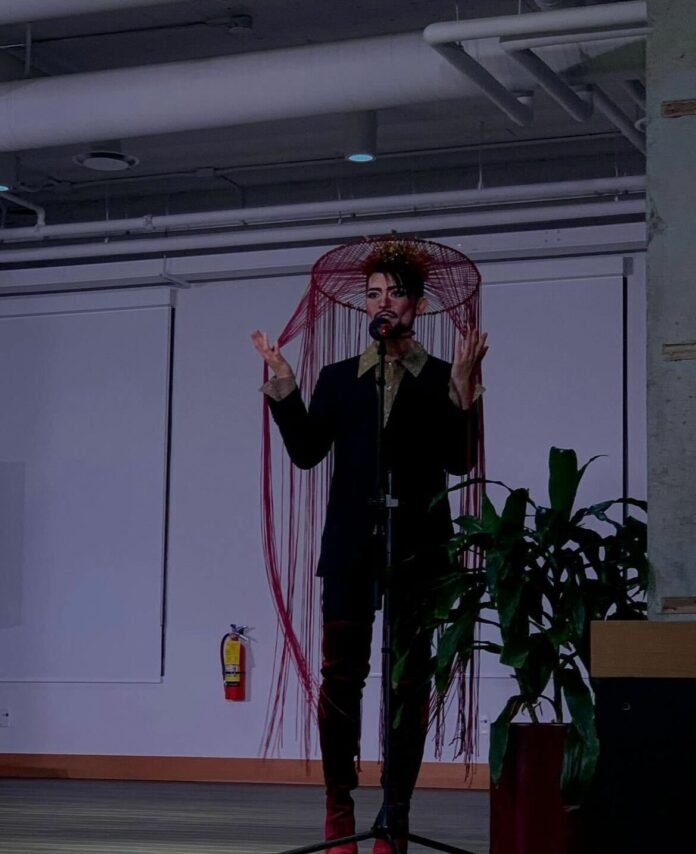
King Fisher performing a drag set, wearing bold makeup and a sharp collared shirt with a blazer. He is in front of a microphone sitting under a hanging string ornament.
PHOTO: Gabrielle Parent / SFU Public Square

By: Eden Chipperfield, News Writer

On June 17, Centering Indigenous Joy was a special event hosted by SFU Public Square at 312 Main in Vancouver. The collaborative space had plenty of room to mingle and sit, with the main stage bringing everyone together. I found it comfortable to enjoy the evening’s performances and enjoyed chatting with the vendors. The event recognized June 21 as National Indigenous Peoples Day, to amplify Indigenous-led literature, arts, and creativity. Artist storyteller Nathan Adler hosted the evening alongside drag king, King Fisher.

The evening started with a high-spirited drag performance by King Fisher. Their interpretation of “500 Miles” by The Proclaimers expressed how drag is not dangerous, with a call to support local drag artists. King Fisher ended their performance with a powerful message about ongoing trans laws and bans pushed by governments, and how drag is queer art expression. 

Savannah Erasmus, a “fashion comedian and writer,” performed a stand-up set based on her experiences as an Indigenous woman. Erasmus has performed at the Just for Laughs festival in Vancouver, Winnipeg Comedy Festival, Big Fun Festival, and Unibrow Arts Festival. Filled with quirks about fashion and a message about overcoming social anxiety, Erasmus took the audience on a journey detailing her life living in Kikino Métis Settlement and Cold Lake First Nation, in Treaty 6 Territory. She also shared her personal journey, filling the air with soul and fun.

The Peak spoke to an attendee about their interest in the event: “I’m always interested in hearing anything related to centering Indigenous voices and Indigenous perspectives and any of the work we do, the attendee described. “Indigenous people are resilient, and they’re thriving, they’re beautiful. We also need to have a platform to bring up and elevate that narrative and show that it’s not just the negative.

Vendors were also present at the event, including Raven and Hummingbird Tea Co, an Indigenous-owned and operated business selling loose leaf Indigenous herbal tea, as well as hosting cultural knowledge and consultation workshops. One of the performers, singer songwriter, Brad Henry, also had art on display with traditional Indigenous scenes featuring animals. 

The event focused on a narrative of hope to educate those who attended on what Indigenous joy looks like and to celebrate Indigenous heritage, which was expressed in varying art forms. It was a pleasure to attend the event and become more aware of Indigenous expressions of joy through creative outlets. 

The free event encouraged donations to the Urban Native Youth Association. Donate to them online. Find out more about the performers on SFU Public Square’s website.

The US shouldn’t be pointing their finger at Canada for air quality

0
A smoky sky
PHOTO: Ahmer Kalam / Unsplash

By: Isabella Urbani, Staff Writer

On June 8, the headline for conservative publication the New York Post read “Blame Canada.” Its subheading: “Canuck wildfires plunge NYC into eerie, smoky hell.” The New York Post, the city’s “least-credible major news source,” known for its “sensationalized headlines,” might already know that “Canuck” is actually derogatory when used by non-Canadians. However, it’s not only the New York Post that’s stirring the pot. As reported by Toronto Star, many people have taken to social media to spread memes blaming Canada for the effects of the wildfires on New York. Rather than sensationalizing these problems for clout, and pointing fingers to an issue that affects all of us — we should focus on solutions towards the real problem: climate change. 

Wildfires have ravaged hundreds and thousands of hectares of land, displaced animals, and forced people to evacuate from their homes for years in Canada. This is the worst wildfire season the country has experienced this century, and many experts fear it’s only going to get worse the hotter it gets this summer.

When reactionaries are busy blaming Canada for climate change, despite the US being the world’s largest oil and gas producer, they forget how the wildfires have affected us here. They affect the people living in areas where fires occur and the surviving animals that are forced to relocate. Since the beginning of June, more than 14,000 people have been evacuated from their homes, and remain evacuated. That’s just the short-term impact, too. Doctors all across Canada say the long-term health impacts of wildfires might not ever go away. When people inhale smoke from wildfires, it travels down to their lungs where alone, it can cause respiratory issues. But if these particles enter your bloodstream — and yes, they’re small enough to do so — serious inflammatory conditions can occur. 

A study in Yellowknife during the city’s intense 2014 wildfire season, showed that “ER visits went up dramatically for people with asthma, pneumonia, and chronic obstructive pulmonary disease.” This means that “as we age, we’re more likely to be living with chronic lung conditions.” And what does this mean for animals in the long run? More species will become extinct and struggle with fertility if they’re unable to adapt.

Enough garbage. Let’s get to what’s actually important: how can you arm yourself against poor air conditions? Mask up. If you do brave the air, wearing a mask gives you an extra layer of protection, and can help pesky particles from making their way into your lungs. The diameter of these particles, known as PM2.5, is smaller than the diameter of human hair. They can even seep into your household, which is why experts say you should keep your windows closed, and if possible, use a ventilator to filter the air. 

Once the air clears up, open all the windows in your house to remove any smoke that’s been trapped inside. Beyond individual action, we should be reducing greenhouse gas emissions, which would make wildfires less likely to start and spread

If the New York Post thinks there’s a better way to handle this, besides truly addressing climate change, then I’m all ears, once, of course, I put my earplugs in. 

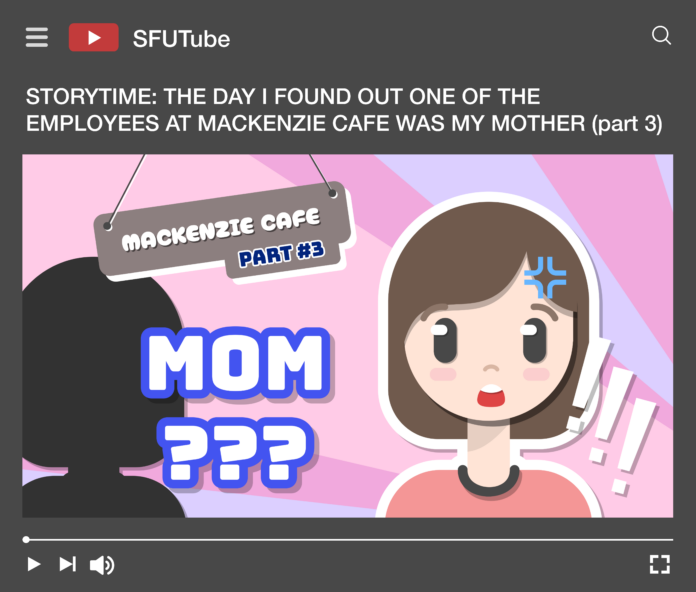
STORYTIME: THE DAY I FOUND OUT ONE OF THE EMPLOYEES AT MACKENZIE CAFE WAS MY MOTHER (part three)

0
Over-the-top YouTube thumbnail with someone looking shocked. There is text in all caps that reads, “MOM???”
ILLUSTRATION: Christina Cao / The Peak

By: C Icart, Humour Editor

Hi everyone! Welcome back to my channel! I know there’s been a bit of a delay . . . I was on vacation. Being an influencer is HARD WORK. Like, it’s literally 24/7, and no one in any other career could ever understand the workload. Like, I haven’t read The Communist Manifesto, but I have a feeling it’s about me, you know . . . I’m in my woke era.  

Anyways, if you want a recap of the first two parts, ask the besties in the comments below. My subscribers are the best, and they basically worship me so they can explain my life better than I could. And that’s on parasocial relationships. Speaking of parasocial relationships, today’s video is sponsored by . . . drumroll please . . . myself! Remember in the olden days, like 2004, when pop stars like the pop princess herself, Avril Lavigne, did mall tours? Well, wouldn’t it be so Y2K if I did one? 

Check out the description to see if I’ll be hitting up a mall near you. If you actually want me to glance in your direction during the tour, it’ll be $350 and $500 for a photo, but only if I’m in a good mood that day. You must pay in advance, and I will not be issuing refunds. I can’t wait to meet all of y’all! I’m just kidding; I need another income stream because y’all keep cancelling every brand I collab with. 

Okay, back to the STORYTIME. So, I’m at Mackenzie Cafe, ordering my stir fry because I’m hungry. I’m watching this sweet woman making my double-tofu stir-fry on rice noodles with all the veggies EXCEPT carrots (fuck carrots). She looks up and asks me, “What sauce would you like?” and I say, “Thai chilli, please!” Y’all know what this woman said to me? Do you know what she said to ME? I am still beyond shook. She said, “No. Teriyaki is better.” So, we’re making eye contact, right? She’s looking at me, and I’m looking at her, and she’s looking at me, looking at her. SHE PUTS THE TERIYAKI IN THE STIR FRY. 

At this point, y’all, I am bewildered. Bewildered. Y’all know me, though. I’m always cool as a cucumber. I’ve like never raised my voice ever in my life. So, I stand there in silence, looking confused, similar to how I will be during my mall tour because I keep rescheduling with my public speaking coach.

So, she hands me the stir fry, and I say, “Thank you,” because my mom raised me right. I also pay for it because I’m way too pretty to be running from campus security in the AQ. So, I carry my stir fry to my office. That’s right, SFU might not give TAs an adequate Collective Agreement proposal, but they do give us offices. Even holding it in my hand, I can tell the weight is different. Thai chilli sauce doesn’t feel like this. 

I open the box, unwrap my chopsticks, and I start eating. In the beginning, I was apprehensive. But the flavours, y’all; they were dancing. The sweetness was tangoing with the tanginess. The savoury was tap dancing with the umami . . . Suddenly, I was doing my little happy food dance. 

So, it dawned on me. That woman, she is MOTHER. She knew what was best for me. She saw that I was lost, and she helped me get found. Those days when I used to swear by Thai chilli sauce, those days are over. I am a brand. new. teriyaki sauce. bitch. 

Anyways, y’all, I have to go do literally anything else because the golden hour is over, and like, what’s the point of being on camera if I don’t look like I’m dripping in gold. 

Remember: 

  1. Check out the other videos on my channel.
  2. Don’t forget to like, comment, and subscribe!
  3. NEVER cross a picket line, because that is so not slay. 

Thank you so much for watching. Bye!

The silver lining of not getting an RA living wage

0
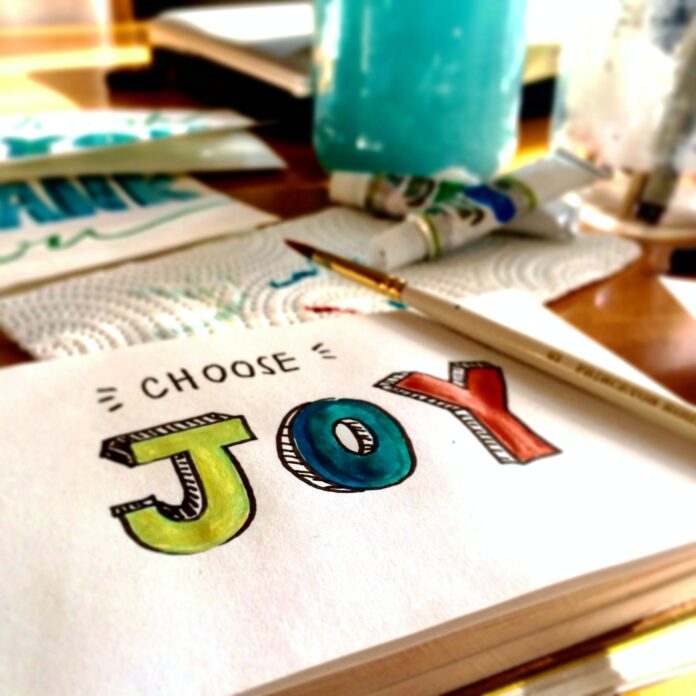
White paper with “choose joy” painted on it. The paper is surrounded by art supplies.
PHOTO: Bekka Mongeau / Pexels

By: Anthony Houston, SFU student

Content warning: mentions of disordered eating. 

Over the past couple of weeks, I’ve seen many negative communications fly around about SFU’s lack of effort in bargaining negotiations, the strike, living wages, and blah blah blah. You know what I haven’t seen? Someone explaining the positive impacts of SFU refusing to negotiate a fair deal for TAs, RAs, and other workers. So, I made a list.

  1. Great Grindr profile pics.

Dr. Joy Johnson has inadvertently put me on a rigorous two-meals-a-day plan by refusing to pay me a living wage. Yup, now that I have to skip breakfast and drink tap water for dinner, my body has never been this slim, and I mean visible-abs-slim! So yeah, thank you, Joy. Now, I am in a toxic work relationship with my employer and fit into toxic body image standards! Truly, what a gift.

2. I get to go full-out Boomer with my future kids.

Have you ever been so jealous whenever a boomer tells you how they could buy a house at 25 and fully support their family on a single wage? No, I’m not talking about being jealous of the house or the single-wage affordability; you and I both know that life is not for us — I mean the entitled-bragging rights. Thanks to needing three jobs to lower my monthly debt to only $100, I’ll get to act so entitled with my future children. I’ll be damn sure to tell them every single day that when I was their age, I had to work three jobs, and their life is so much easier now.

3. I am free from therapy. 

To be honest, who even likes therapy? Therapy is for those with money, or extended health benefits, anyways. What’s the point? We just sit there and talk for about an hour about our problems, hoping to find solutions to our most pressing issues. It sounds so boring, doesn’t it? Well, thanks to having to choose between having two meals a day or going to therapy, I no longer have to go! Now, my life is so much more interesting. Will I have a tiny mental breakdown in the AQ on a random Tuesday? Will I be able to surpass my trauma alone, or will I submerge myself into the endless void of my anxiety? Who knows? That’s what keeps it interesting, all thanks to SFU!

4. I can present the same dusty-ass proposal and get away with it.

If we are to believe TSSU, which, let’s be honest, we do, SFU has been tabling mostly the same proposal for RAs since like . . . 2021? It’s been over three years, and SFU clearly thinks they can get away with it, so why on earth wouldn’t I? Updated annual progress report? Nah, sorry, the only update is the date, I think. Take it or leave it — actually, no, you have to take it.

5. The right to remain wrong.

You know how whenever you try to get back with your ex, all your friends tell you it’s a bad idea, and they hold an intervention to tell you to stop your self-destructive behaviour? Well, if SFU can remain deluded after an arbitrator told them they’ve broken most of their Voluntary Recognition Agreement with TSSU, then, so can I! I swear he still loves me just as much as SFU swears RAs are not workers. 

Horoscopes June 26 – July 2

0
An illustration of a girl with long flowing hair. Astrological signs and stars shine around her.
ILLUSTRATION: Marissa Ouyang / The Peak

By: Hana Hoffman, Peak Associate

Aries

To all of y’all Aries who get onto buses from the Transportation Centre near the stairs and piano, y’all really need to start taking advantage of the Transit Exchange near Blusson Hall so you can get first dibs on seats! What’s worse than cramming yourself into a bus that’s already full? Not even being able to get on and having to wait for the next one, hoping that one won’t be full either. Seriously, always go from the Transit Exchange!

Taurus

Ever thought about learning to play an instrument? If you already do, that’s great! But if not, you should consider getting into guitar, then you can become a guiTAURUSt! The piano also has a beautiful sound. It’s just that it’s not an easy instrument to pick up. But if you try to and you drop it, don’t fret! Getting in treble sometimes is okay because that’s how you learn. Go up an octave and get some more playtime in.

Gemini 

Hey, I see you’ve been trying to find that missing piece of your puzzle, But I don’t think it’s a man or woman you need . . . What you really need is a walkman (or walkwoman). You can take them wherever you go, and they’ll always have entertaining things to say or sing to you. You’ll never be lonely again, and they’ll never leave you as long as you buy them a new battery once in a while!

Cancer

Oh, Cancer, you’re so busy with school and all that. You barely have enough time to read The Peak newspapers! Well, I know exactly why. It’s because I heard you always match the socks you’re wearing . . . is that true? Same brand, same colour, same length — no, no. No more of that, please. It takes so much time and effort! Just put all your single socks in the drawer and pick out 2 random ones. Don’t even think; wearing unmatched socks is the new trend here.

Leo

Leo, I choose you to slingshot us back to the past. Remember those days when silly bands were in style? Well, where are they now? It’s silly how no one wears those dual-purpose, fashionable, one size fits all elastic bracelets anymore. You can use them to keep containers closed, build a collection, relieve stress, trade, flex, slingshot at targets, tie up hair . . . the list goes on. So, let’s start using silly bands again, encourage others to do the same, and change the world.

Virgo

It’s nice you’ve been getting out there this summer and enjoying the natural weather. But, summertime shouldn’t just be all about beaches, picnics and hikes. We should bring back winter activities during this time of year so we’ll never miss the cool season! Go indoor skiing, ice skating, and snowman building behind the ice rink, where the Zamboni makes free piles of snow for us. And it’s always a great day to book a flight to Antarctica to relive your childhood after Club Penguin got shut down. :’)

Libra

Hey Libra, since you’re a real one, I want to ensure everything you do is always relevant and true to yourself. I feel like all I see these days are people wearing Harvard merch without being a Harvard student, wearing Air Jordans without being a basketball player, or wearing Nirvana shirts without being able to name three of their songs. Popular fashion doesn’t make sense sometimes, but we’re good as long as there are at least a few non-liars in this society!

Scorpio

Y’all really need to stop using the default ringtone sound and change it to something less annoying such as “I’m On A Boat” by The Lonely Island ft. T-Pain. What’s worse than repeatedly hearing the same song on the radio is hearing the same ringtone from people’s phones at work, school, and in public. What I want you to do, Scorpio, is spread the word and make sure everyone you know has their ringtone set to anything but the ringtones their phones come with. One suggestion I have is any song from Drake’s album, Scorpion. Thank you. Have a nice day.

Sagittarius

Hey Sagittarius, I don’t know where you’re at with your vehicle status. However, when you buy one, you NEED to break the traditional cycle of buying the same coloured cars. 90% of cars I see are just similar shades of gray! I’m sure many of us are tired of losing our cars in big underground parking lots because they ALL look the SAME. What made humans avoid awesome colours like pink, yellow, green, and orange on their cars? That question does not matter because we will get the most brilliant coloured cars and show people how much better the world would be with all colours of cars.

Capricorn

Listening to music is a great way to escape reality and go to dreamland. But if you’re ever going through your dad’s old CD shelf, stop using the CD player for them! Use your PlayStation console; it’s so much better, trust me. The audio quality, the satisfying clicks of the controller when changing music, and just being in that PlayStation atmosphere is way more exciting than spinnin’ your CDs on boring out-of-style CD players.

Aquarius

You work so hard, and you’re always on your heels. Why not buy yourself a pair of Heelys? You can rock n’ roll to every place you need to go! Save your energy and time, improve balancing skills, and be cooler than everyone who doesn’t wear Heelys (sad to say that I am one of them. Not proud of it! Don’t be me). 

Pisces

You know how some people attempt to memorize the periodic table or a hundred digits of pi? It’s quite boring, and Pisces, I don’t want you to do the same. Instead, a much more unique and interesting talent would be to have all the names in SFU’s raccoon community memorized. You’ll probably break the Guinness World Record for the largest number of raccoons’ names memorized! If you appear in their next book, I’m buying it.

Monday Music: Songs in solidarity

0
A black and white photo of a crowd of protestors with their fists in the air on the street taken from above.
PHOTO: Gayatri-Malhotra / Unsplash

By: C Icart, Humour Editor

On June 15, the Teaching Support Staff Union (TSSU) escalated strike actions and began picketing around campus. As a reminder, the TSSU is “fighting for better compensation and cost of living adjustments, better health benefits and pensions for instructors.” You can stand in solidarity with them by not crossing the picket line and talking to fellow students and community members about the strike and its importance. Strike songs and protest songs have a long history. Around the world, workers and their supporters have used music to denounce their working conditions and demand fair treatment. In light of that, here’s a playlist of songs that support workers and the union movement.  

“Hold The Line” by Tom Morello ft. grandson
Photo credit: Boonn and Zakk Cervini

If you watch one music video today, make it the Union Strong edit of this song. The mighty alt-rock song is interspersed with clips from various strike actions and workers talking about the importance of unions. In an interview, grandson explained, “‘Hold the line’ is a phrase that traces back to trench warfare and has become a union rally cry for anyone experiencing backlash for standing their ground.” This song is perfect for headbanging when you’re running out of steam. When SFU does everything to cause delays, TSSU holds the line. 

“We Are the Union” by Jaywalk, Grim, & Shatoya Thomas-Flemmings
Photo credit: Communication Workers of America

This one isn’t on Spotify, but the trip to YouTube is worth it. This rap song is about “Brooklyn Cablevision workers [who] saw through the corporate lies, organized to join the Communications Workers of America, and immortalized the experience in this amazing song.” The first verse starts with “Union busting is so disgusting,” and I must say — no lies are told in the entire song. Shatoya Thomas-Flemmings’ vocals on the chorus are so uplifting and inspiring. 

“More Than a Paycheck” by Sweet Honey in the Rock
Photo credit: Evelyn Maria Harris

Sweet Honey in the Rock is an African-American music collective that’s been around for 50 years. Over the years, more than 20 artists have been a part of the collective, making music that “challenges its listeners with songs on topics including motherhood, spirituality, freedom, civil liberties, domestic violence, and racism.” “More Than a Paycheck” calls out poor working conditions as the a cappella group sings soulfully about how their job is not just sending them home with money but also a myriad of diseases, including asbestosis, silicosis, and stress-related illness. As a reminder, you have a right to refuse unsafe work. Check out the TSSU website for more details on when and how to do so. 

“9 to 5” by Dolly Parton
Photo credit: Gregg Perry

You probably know this one, but when was the last time you really thought about the lyrics? It was initially written for the 9 to 5 movie: a comedy based on the 9 to 5 movement that “united women across race, class, and age divides, won millions of dollars in back pay and raises from corporate titans, [and] formed a women-led union affiliated with the Service Employees International Union.” The song, bursting with anti-capitalist sentiment, soared to the top of country and pop charts. You go, comrade Dolly!

“On Strike” by Gmac Cash
Photo credit: Gerald Devon Craft-Allen

Listen, I can appreciate a folk strike song from the 20th century. However, some of these top “union song lists” online will have you believe the only existing labour rights songs are old and written by white folks. So here’s another picket line rap song. Gmac Cash, a former Chrysler worker, released this song “in solidarity with [General Motors] strikers.” It’s incredibly catchy. Listen to it once, and I can guarantee you will be singing: “We goin’ on strike / We goin’ on strike / We goin’ on strike / Till they get this shit right” all week.

Honourable mention: “Bitch Better Have My Money” by Rihanna

This song’s not about workers’ rights, but the version I sing in my head is. Hear me out: “Pay us what you owe us, don’t act like you forgot / SFU better have our money.” If you think about how “TAs, TMs, SIs, and ELC/ITP Instructors do approximately 50% of all in-person teaching at SFU, while earning less than 5% of the University’s annual budget,” it’s super clear that TSSU isn’t asking for hand-outs, but simply a fair cut of the money they generate for the university. Remember: “The University works because [the TSSU does].”

Listen to the full playlist on The Peak’s Spotify profile.