Home Blog Page 192

Summer fashion trends

0
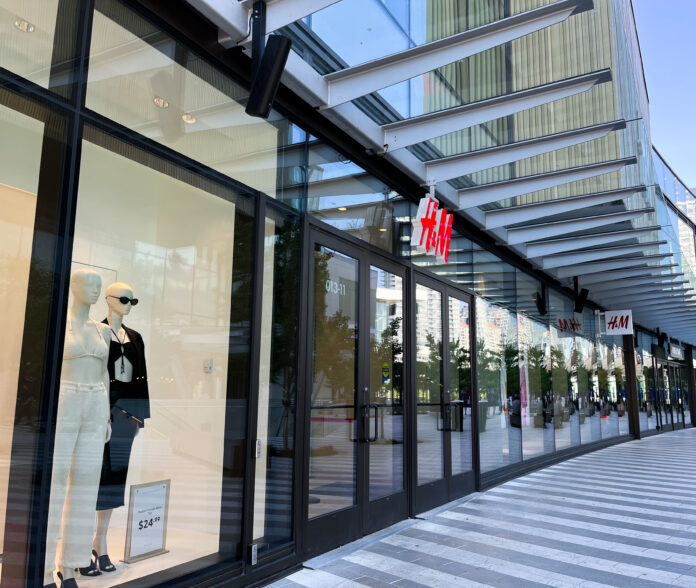
A modern-looking storefront exterior of H&M on a bright day. The display window features mannequins dressed in black and white monochrome outfits.
PHOTO: Shirlyn Zobayed / The Peak

By: Saije Rusimovici, Staff Writer

While fashion trends and fads are manufactured by fast fashion corporations to keep us buying, it can still be fun to join in on nostalgia for past eras, find second-hand dupes of popular items, and experiment with fun aesthetics. As we prepare our wardrobe for hot weather, here’s what I’ll be sweating in!

In: Coastal aesthetic 
I might carry some personal bias towards this particular trend, but you have to admit there is something about styling outfits to carry you from hot summer days into breezy West Coast nights. Your colour palette is built of periwinkle, ivory, and soft beige; think white linen pants, loose-fitting collared shirts, and slip-on sandals covered in sand. Flowy paisley prints also go well with this look. Take a trip to your local thrift store for affordable finds. Throw a straw shoulder bag packed with a worn saltwater-kissed paperback book, fruit-infused water, and a large pair of sunnies over your shoulder and head to the nearest body of water. And don’t forget to bring your sunscreen a Coastal Legend never forgets to take care of their skin.

Out: Low-rise pants
I know we were pushing for the Juicy Couture era to make a comeback for a while there, but do we really want it? I’m all for a good early 2000s trend, but jeans and cargos that fall below the belly button can be uncomfortable. There’s also something to be said about the unhealthy body standards, promoted in the emphasis on flat stomachs, accompanying this trend — body types do not “trend.” Don’t let any standard stop you from rocking them if they’re your style, but personally, they’re just not for me. I’ll be sticking to snug, high-waisted cutoffs this summer!

In: Tote bags
I’ve been obsessed with tote bags lately. What’s not to love? They come in a variety of sizes, styles, and colours that show off your interests or personality, like retro fonts, local organization logos, or your favourite pop culture icons. Not to mention they’re so practical and versatile. Tired of carrying around your laptop in a clunky backpack? Need a flexible spot to store your packed lunch? Grocery shopping after class? Throw it in the tote bag. I’ve made more trips to the library this month than in the last year, all because of how satisfying it feels to walk home with my tote bag full of books. Be sure to check out local sellers like kellybeanstudios and Cold Tea Collective to support small businesses!

Out: Platform shoes
Is it just me, or are these shoes unbearably uncomfortable? Personally, if my feet are going to be that far off the ground, I’m wearing heels. Platforms are heavy and impractical to walk in. These shoes can also draw attention away from the rest of your outfit. For some, this might be the goal (I, too, like to have my shoes in the spotlight sometimes). If you’re strong enough to endure this clunky shoe, props to you!   

In: Sheer & sparkles
Only Taylor Swift fans could turn an album into a fashion trend. The Midnights aesthetic is all over Pinterest and summer music festivals like Coachella. These outfits are built around dark, moody, mysterious basics in black, navy, or purple, and studded with shimmering flecks of silver and gold. Glitter and rhinestones dance on silky skirts and mesh tops, “making the whole place shimmer.” Check out a tutorial by Alexandria Layne on YouTube to learn how to make your own version of Taylor’s iconic top. Wear it on a night out as the sun sets and the night sky settles — you will feel absolutely bejewelled

Out: Baby tees 
These cropped, tight t-shirts with phrases like “baby” and “cherry” come from the cute aesthetics of the late ‘90s and early 2000s — but they’ve lost their charm. The mass production of these mini shirts by fast-fashion companies like Shein have ruined the nuanced loveliness of the baby tee. Not to mention they are often poor in quality and last barely one machine wash (forget about putting them in the dryer, unless your intention was to make a napkin). A great alternative to achieving a cutesy, flirty aesthetic is to hunt down genuine vintage second-hand or crop shirts that may be too long. Or, like me, you could forego them all together because they’re just not your style!


I’m (not) sorry I go the speed limit

0
Photo of a car
PHOTO: Aditya Chinchure / Unsplash

By: Olivia Visser, Copy Editor

Content warning: mentions of car accidents and death.

Those who drive to class on Burnaby Mountain are hopefully aware of the 60 km/hour speed limit. Yes, I’m talking to you, in your shiny blue BRZ with an even shinier N plastered on your rear bumper. Or, maybe you’re one of those retro Civic drivers with (definitely illegal) window tint and a ridiculous fart can muffler. Either way, I’m not intimidated by your following speed. I have a laundry list of reasons as to why I’m not interested in speeding up that mountain, and none of them involve your convenience.

Speed limits exist for legitimate reasons. Yes, they can feel rather slow for the experienced driver, but they’re designed to protect everyone on the road. The chance of a driver dying in a frontal crash is 60% at around 80 km/hour, and 85% for a side-impact. The risk of a pedestrian dying from a car moving 64 km/hour is around 80%. This is well below the average speed I’ve observed from most vehicles on Burnaby Mountain, which is concerning considering the number of cyclists that frequent this road in the warmer months.

Speed limits are for everyone’s safety. I’m not putting myself in harm’s way because you’re running late. Minimizing deaths on the road should be paramount when your lifetime risk of dying in a car accident is 1 in 112. Given that driving is commonplace in many people’s daily lives, risk desensitization is typical. It’s healthy to have an awareness of the dangers associated with driving — this is natural, and will protect you and those you share the road with. As with most risky activities, following safety precautions and having a low risk tolerance can only benefit you. 

Burnaby Mountain is not a highway. It’s a massive hill with wide turns, cyclists, pedestrians, and, most dangerously — people driving at drastically different speeds. Do you really think you’ll be able to slam on your brakes quickly enough at 100 km/hour when the speed-abiding vehicle in front of you needs to stop suddenly? I know you’d like to think your answer is yes, because you’re just a better driver and your car is good enough for that. You go on thinking that, and tell me how it pans out for you in the long run. 

Again, I’m not bothered by your reckless tailgating antics. You’ll be at fault if you rear-end me, and we both know damn well that Burnaby Mountain is frequently patrolled by police carrying out speeding checks. Why would you want to risk losing your brand new license to arrive somewhere two minutes before me? Hell, if I know — but I’ll see you at the next red light, pal. 

The Skytrain’s oldest track being revitalized with $35-million

0
This is a photo of the Skytrain on the Expo Line. The picture is taken of the outside of the train, at an oncoming angle.
PHOTO: Wikimedia Commons

By: Eden Chipperfield, News Writer

The Expo Line is receiving a $35-million upgrade. It is the oldest track in Vancouver’s Skytrain system, initially constructed for the 1986 Vancouver Expo. The update is funded half by the federal government, and half by TransLink. 

The purpose of the upgrade is to replace the running pads and reduce the noise pollution for residents in the area. They will also “ensure the ongoing safety and reliability of the lines,” said fisheries and oceans minister, Joyce Murray, at a press event on May 12. 

The update comes just two days after a letter to the editor published in the Burnaby Now newspaper by a concerned resident who described the noise that comes from the Skytrain as “unbearable.” The letter was then posted on the r/Vancouver subreddit, which resulted in over 150 comments from Vancouverites agreeing with it. Many were calling for action from TransLink to reduce noise pollution. One user commented: “My Apple Watch constantly gives me noise notifications when riding the older [ . . . ] trains, even with noise-cancelling headphones. The highest was 108 dB between 22nd Street and Edmonds station.”

In 2018, TranksLink compiled a report on Skytrain noise, offering solutions such as replacing the rail with harder steel and improving rail grinding techniques. Replacing the 20.2 km requires approximately 24,000 rail pads. 

TransLink reported, “When the program is fully implemented, the Expo Line will be able to move 17,500 passengers per hour per direction,” for a total of 35,000 passengers. This is in comparison to the 25,000 passengers the Expo Line moves per hour presently. The line update will move 300% more passengers when the project is completed. 

TransLink CEO Kevin Quinn told reporters at the press event on May 12 that rail replacement is already underway between the Commercial-Broadway and Nanaimo stations. The whole line will be completed in three other phases: Royal Oak to Edmonds station, Edmonds station to 22nd Street station, and Joyce-Collingwood station to Patterson station. 

The project will occur over the next four years and is to be completed by 2027.

BCCDC and SFU health sciences discuss food insecurity in Asian communities

0
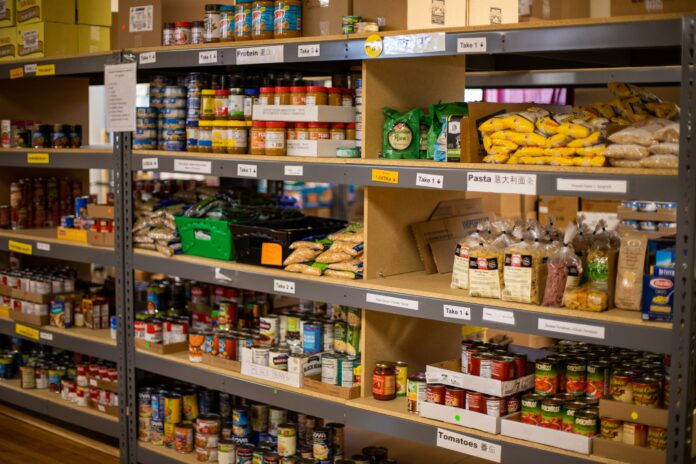
This is a photo of the inside of a food bank. No people can be seen. There are many shelves that have labels such as “pasta” “tomatoes” and “protein” and they also read “take one.”
PHOTO: Aaron Doucett / Unsplash

By: Izzy Cheung, Staff Writer

To celebrate Asian Heritage Month, SFU’s faculty of health sciences and the BC Centre for Disease Control collaborated to bring students a virtual event on “Food Insecurity in Asian Communities.” This event included a panel of community leaders who combat food insecurity in Asian communities.

The panel of speakers was made up of representatives from four local organizations: Ahmad Zeividavi, the executive director of the House of Omeed; Celyne Asnani and Anita Lau from Yarrow Intergenerational Society for Justice; Danison Buan, founder of ReFood; and Tara Flynn of SFU Food Pantry. Each spoke at length about their respective organizations’ impact in the community as well as ways in which others can contribute. 

The panellists were asked a variety of questions on the significance of cultural foods. Asnani highlighted how culturally-appropriate food can be “something that reminds [immigrants] of home,” which allows them to find “a sense of belonging” in a foreign setting. 

While food banks may try to offer diverse food selections, Flynn noted “there’s no possible way to provide [ . . . ] all variet[ies].” Zeividavi compared food banks to the “one size fits all” misconception: food banks are not always mindful of diverse cultures that cannot eat certain meats or produce. 

Buan noted food insecurity is sometimes a “hidden” issue because most Asian cultures are hesitant to ask for help. He added all cultures are different and that working with different communities will require different approaches. “You have to understand, each culture is different,” Buan stated.

Lao noted, “Once they notice that you are willing to help, they are very, very open and willing to tell you how they want you to help them.” 

Zeividavi also found the communities served by House of Omeed behave differently. He cited that within the communities they serve, asking for help is “a major issue.” This is because “they don’t want to be ashamed,” he elaborated. “After all, it’s a shame and honour culture and that really plays into it.”  

Dignity plays a big part in the House of Omeed’s food distribution model, according to Zeividavi. “Our model is a shopping experience,” Zeividavi clarified. “Each family at our facility gets a credit [ . . . ] they come in and shop from our store.” 

“[The shopping experience] really resonated with our guests,” he explained. “That has been helping their dignity.” 

The situation is similar with university students. “There’s a lot of shame around not being able to feed themselves,” Flynn said. “Most often, they’re just coping [with food insecurity] by skipping meals.” 

Many communities within Metro Vancouver are impacted by food insecurity. As demonstrated by the speakers, there are many different ways to support the organizations that help combat food insecurity. This can include lobbying for more equitable policies. 

Affordability is a problem stressed by both Asnani and Buan. “A lot of the insecurity out there is more tied towards the level of income you have,” Buan shared. He noted finding a solution “comes down to [addressing] a lot of these affordabilities.” 

“The one thing that comes up all the time is about how expensive the rent is  [ . . . ] it’s not really affordable for a lot of the low-income seniors that we work with,” Asnani discussed. “I think the government needs to do a lot more than what they are doing now.”  

When asked for any concluding thoughts, Buan urged people to get involved in the conversation. “Having these kinds of discussions and having this safe space where we can discuss and share our ideas and build that awareness,” Baun said. “That’s the first step.”

Why I love sitcoms

0
Photo of Jess Day, Nick Miller, and Cece from New Girl.
PHOTO: Courtesy of 20th Century Fox Television

By: Saije Rusimovici, Staff Writer

For some people, the forced laugh track that follows every bad punchline in sitcom history makes them cringe. To me, it’s the lullaby that lulled me to sleep on the nights when anxiety was high and it was difficult to stop my thoughts from racing. Hearing Joey and Chandler’s familiar banter while watching Friends, or stifling laughter when Mitch and Cam got themselves into an awkward situation on Modern Family, made it feel as though my problems were slipping away with every episode. 

Since childhood, sitcoms have brought cheer into my house on even the worst of days. A day home sick was spent nestled in a cocoon of blankets, comforted by the soothing drawl of Full House or New Girl. At dinner time, my parents would stream a variety of their favourite ‘90s sitcoms while we ate to mitigate the stress of a long day at the office. Not only did watching these shows together put everyone in a better mood, but they brought our family together through lighthearted jokes made by chummy characters that had begun to feel like friends. Sitcoms offered a temporary escape from whatever problems we were dealing with in our everyday lives. 

Sitcoms are often criticized for relying on the same tropes that can be outdated and distasteful. It’s necessary to recognize these patterns when consuming any televised content, especially those in older shows from the ‘80s or ‘90s, because they serve as a reminder of society’s age-old prejudices. It should also be noted that sitcoms can be a powerful and approachable medium used to bring attention to important issues in society through humour. 

Abbott Elementary, created by Emmy-award winning writer, producer, and comedian, Quinta Brunson, follows the endeavours of a group of passionate teachers navigating a predominantly Black community in the Philadelphian public school system. The mockumentary centres on the life of Janine Teagues (played by Brunson), a Black second-grade teacher determined to make positive changes at her school — but rarely does everything go to plan. A hilarious cast of characters make up the rest of the school staff, supporting each other as they navigate daily life as educators. Not only is this sitcom funny, but it’s centred around real-life issues that are likely relatable to elementary school teachers and staff navigating the trials that come with being involved in the public school system. 

Humour can make major life stressors and day-to-day problems feel very relatable. Used in the right way, humour also has the potential to heal. The phrase, “laughter is the best medicine” is true. According to Dr. Grace Tworek, PsyD, laughing has significant health benefits such as contributing to stress relief, strengthening social bonds, and bettering heart health. With that being said, it’s no surprise winding down with family and friends to watch a funny sitcom makes us feel good from the inside out.

My arduous journey to fight flies

0
Cat staring at a fly on a window
PHOTO: Anna Hinckel / Pexels

By: Kelly Chia, Editor-in-Chief and Enemy of the Flies

I’m just an ordinary gal with an ordinary dream: to punch every fly I meet in the face. I admit this dream has no rhyme or reason, much like a fly’s existence. No, I am not being dramatic. Just imagine your perfect summer: delicious sunsets spent on boardwalks, lapping at cheap ice cream. Now imagine the fly: a creature that has made a career of providing the worst ASMR as it gets into your personal space, then headfirst into a pile of garbage. Absolutely horrifying. 

No, I will not provide any scientific proof of this behaviour as that would force me to research flies. Really, the proof is in the proverbial and literal (garbage) pudding. So what’s a girl got to do about these absolutely ordinary feelings? Make a grand strategy to fistfight flies with every perturbing 30-degree day. I am detailing my exclusive plan to you. Now you, too, can fight the flies for the low, low price of the 2 minutes and 53 seconds Grammarly says it takes to read this: 

The method of zoom

First, I had to train to become faster than the speed of sound. I had a hypothesis on how to achieve this with my frail mortal body. I considered the tiny fly, who evaded my swats like a bumbling, graceless butterfly. I envisioned myself as its superior alpha and began humming. In these moments, I imagined myself as a butterfly or a moth to assert my dominance. Then, I extended my arms outward behind me and ran like I could catch every fly, ever. I was positive this shocked and dazzled every fly from even perceiving me and had defied the laws of physics. I’m just so legendary. 

For maximum effect, I have found that attaching two portable radios to my hips for maximum bzzzzz really sells my alpha-fly persona. I couldn’t see any proof of this, but I knew I was so fast that I could collect rings in a dazzling cobalt-blue blur! 

GOTTA GO FAST! TO BE BETTER THAN THE FLIES!

Know your enemy

If I dared to fight the flies, I had to know their weakness. I had to, and I shudder to say this, become a fly. I was already buzzin’ around, so I just had to get into the mindset of an extraordinary fly. I returned to my 2014 Tumblr days — a harrowing experience — and visualized myself as a trash lover. It was difficult. Visions of the proverbial salt rife in ranked first-person shooter games filled my head as I meditated on what it was to be a hater, like a fly. To keep myself in character, I muttered, “garbage,” lowly to myself to really sink into the mind of the fly. 

Ultimately, I did not find this method very effective.  I am too emphatic to lower myself to being fly-like. Next one!

Communicating your feelings

Okay, say you want to try a more pacifist route. I envy you, as I do not share your patience or kindness, nor do the flies. Here are a few key phrases I have learned in the last few days of studying how to be the best fly-fighter™. Note that in my benevolence, they all include the word “please.” 

Raising one hand to wave hello: Hello, please go away now.

Waving your hands in a fluid motion: Please enjoy my dance of hands as you go away.

Making a heart-shaped gesture over a garbage can outdoors: I love your home; please stay there.

Making a thumbs-down gesture over a garbage can indoors: I love my home; please go away.

Raising two fists, bouncing your feet*: I am pleased to engage in mortal combat at this time.

*This last phrase will usually cause the fly to flit around you and leave your presence, but may cause it to return to taunt you further, as they do. 

As I write this insightful list for you, I wonder out loud if flies really deserve this much scrutiny and whether I would know peace if I just left them alone. I mean, they are just bugs inhabiting this planet like me, and it’s not their fault that they like garbage since we are making it — GET OUT OF MY EARS THIS INSTANCE, YOU HEATHEN!

What is soup?

0
Person relaxing in a bathtub full of warm soup, surrounded by vegetables
ILLUSTRATION: Aliya Nourlan / The Peak

By: Izzy Cheung, Staff Writer

Recently, the debate of soup versus stew was brought up in The Peak’s online office space. Obviously, this caused a torrid discussion on why one or the other is better. More importantly, it sparked a question crucial to not just our staff but the rest of society as well — what exactly is soup? Does this question truly matter? Maybe not. But today, this grand soupy day, it does.

We can trace the origins of soup back to 20,000 BC, China, where a soup bowl was thought to be found in Xianrendong Cave. Since then, soup has become a popular dish throughout all cultures. From squash to the ever-famous tomato, soups are one of the best dishes — as a soup-er food, they squash the competition. 

However, certain soups are different from the rest — the chunks in a smooth slurp, one may say. Noodle dishes such as ramen or phở provide the warming comfort of soup and include whole, chunky ingredients that may push them away from the “soup” label. Even so, they make miso happy — so perhaps they could be considered stew. But can stew be considered a soup? As you sit around and stew over this question, let me enlighten you on my thoughts.  

Merriam-Webster defines soup as “a liquid food especially with a meat, fish, or vegetable stock as a base and often containing pieces of solid food.” On the other hand, their definition of stew is “fish or meat usually with vegetables prepared by stewing.” Would this not make stew a kind of soup? Perchance

Does this mean that chicken noodle soup is a stew? Would clam chowder also be considered a stew? Would vegetable stew even be considered stew? Are we not, then, the stew of life, brewing up our own day-to-day shenanigans? These are essential questions.

How do vegetables come into play? Kale, carrot, or other vegetable-based juices — would those be soups? No specific guideline says that soups must be warm, so would my smoothies be soups? They are liquid food, after all. Could the same be said for soups? Could a soup be considered a smoothie? Merriam-Webster says a smoothie is “a creamy beverage made of fruit blended with juice, milk, or yogurt,” eliminating a few types of soups. Since it’s a clear, brothy soup, chicken noodle soup can’t be considered a smoothie. But would soups made with milk or cream be considered smoothies? Cream of mushroom smoothie? Cream of corn smoothie? What about cream of wheat? Is that a soup? Oatmeal soup? WHAT IS SOUP???? 

With all this in mind, the world is full of soups, stews, and smoothies. A popular condiment, the blended beverage known as ketchup, is a smoothie. Puddles that form on the street, littered with sticks and mud from the Vancouver weather — these are soup. When we brush our teeth, scrubbing away at leftover food stuck in small crevices, the liquified toothpaste that’s left behind . . . that’s soup! If you put your mind to it, anything could be considered soup. And really, isn’t that a beautiful thing?

The next time you sit in a hot tub, lake, or any other body of water, despite enjoying the warmth of the jets pressing at your back, please consider this — at that moment, would you be a soup or a stew?

explorASIAN gallery hopping guide

0
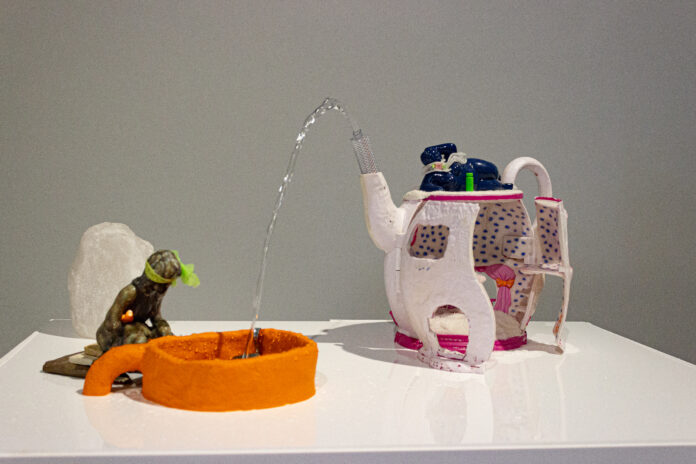
A sculpture of a white teapot with the front half open with windows like a dollhouse with the navy polka dots on the interior wallpaper. Water is coming out of the spout like a fountain, into an orange clay dish. Leaned over above the dish, a copper sculpture is kneeling over it.
PHOTO: Gudrun Wai-Gunnarsson / The Peak

By: Petra Chase, Arts and Culture Editor

One of the best ways to reignite your sense of wonder is by visiting an art exhibit — or three. And I’ve got your next field trip covered! Last week, we toured exhibits surrounding Vancouver, and like the sunlight that day, there was no shortage of awe and insight to soak up. These exhibits are all part of the explorASIAN Festival, which is put together by Vancouver Asian Heritage Month Society, covering events across Metro Vancouver. Supporting and tuning in to the work of Asian artists is important year-round, and Asian Heritage Month festivities present the perfect opportunity to do so!


Colour and Vibrancy
Where: Taiwanese Cultural Centre at 8853 Selkirk St, Vancouver
When: Until May 31, Mon–Fri 10:30 a.m.–4:00 p.m.

A row of four vibrant oil paintings hanging on the wall featuring surrealist depictions of trees, landscapes, and at the front, a white bird taking flight over a body of water.
PHOTO: Gudrun Wai-Gunnarsson / The Peak

Do you need a reminder to be thankful for the cones in your eyes? In this solo exhibition, Taiwanese Canadian artist, John Wu-Tzanq Liaw’s oil paintings will do the trick. Liaw’s work consists of landscapes, silhouettes, and wildlife paintings that feel familiar yet otherworldly, as if you’re looking at the world through colour-enhancing lenses, and at times a fun-house mirror. I sat with each painting for a few minutes — drifting off into my imagination happened naturally with the tranquil atmospheres and surrealist, storybook-like style. For instance, I envisioned myself in the pastoral setting of “Familial Love,” as a bird perched on a cow’s back. Other pieces bring out the beauty in local settings: “Spring Rolls Out a Red Carpet” depicts a sidewalk decorated with pink petals like a celestial path. Liaw believes “all things in nature are beautiful to the keen observer” and seeks out to discover the “inner spirit” of nature.

A framed painting hanging on a wall depicting a calf feeding from a cow. There is a pelican on top of the cow and one in front. The background is surrealist with vibrant colors making a surrealist landscape.
PHOTO: Gudrun Wai-Gunnarsson / The Peak

You can view Liaw’s online art gallery at: https://johnliawgallery.com/gallery.php. 


Where Songs Surface: Uta ga umareru basho
Where: Nikkei National Museum & Cultural Centre at 6688 Southoaks Crescent, Burnaby
When: Until September 16, Tue–Sat 10:00 a.m.–5:00 p.m. / Wed 10:00 a.m.–9:00 p.m. 

Photo of a row of square black and white photos on a wall printed on handmade paper. The front photo depicts a monkey walking in shallow, shimmery water, the monkey’s shadow reflected in the water.
PHOTO: Gudrun Wai-Gunnarsson / The Peak

This exhibit will transport you to rural village life in Japan, introducing you to the lives of some inhabitants. It features the lens-based collections and supplemental poetry of Masako Miyazaki and Yoshimi Lee, whose works are tenderly tethered to “time, place, and memory.” Miyazaki’s photography is based on rural folklore: the Toono legend of Futtachi is about a monkey-man hybrid who’s seen as a “scary monster.” Miyazaki’s platinum-printed photography flips this notion, offering a glimpse into Futtachi’s perspective. Standing in as Futtachi for the photoshoot is a monkey named Muku, who Miyazaki photographed around Kojima Island in Japan. As Muku belonged to a lower class in the monkey hierarchy, Miyazaki wrote that “Muku’s feelings also mirror my own difficult experiences as a recent immigrant.” His contemplative demeanor, reflected in the vast, surrounding nature, captures feelings of “depression, anger, and hope.”

Photo of a projector in a dark room transmitting a mountain landscape with a clear blue sky on the wall.
PHOTO: Gudrun Wai-Gunnarsson / The Peak

Lee’s work is nestled in a closed-off nook in the gallery, where you’re invited to sit on a straw stool, breathe in the breezy, serene moments projected onto the wall, and take part in a meditative visualization. The collection of short videos take you through Irokawa, a village with a population of around 400. Ambient sounds of nature, waterfalls, and footsteps up the mountains; a spark flickering and disappearing into darkness, a dog basking under the sun in deep sleep, and a curtain flowing in an open doorway — you feel almost as if you’re there. In a poem, Lee writes: My ancestors never visited Irokawa / Why does this place feel so familiar? [ . . . ] This is the hometown of our dreams.” In contrast to the bustling city life of Canada where she immigrated to from France, there is a sense of peace and gratitude that Lee exudes in tracing the footsteps of her ancestors to this quaint village with her daughters. 

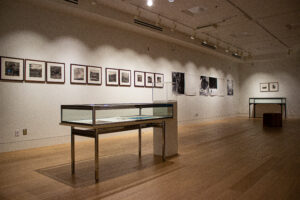
Photo of the spacious room of an exhibit. Framed photographs line the walls.
PHOTO: Gudrun Wai-Gunnarsson / The Peak

Pro tip: Grab a snack and some groceries from the Japanese food store outside of the museum, take a breather in the garden out front, and don’t miss out on the Japanese book store upstairs!


a small but comfy house and maybe a dog
Where: Richmond Art Gallery at 7700 Minoru Gate #180, Richmond
When: Until June 11, Mon–Fri 10:00 a.m.–6:00 p.m. / Sat–Sun 12:00 p.m.–5:00 p.m.

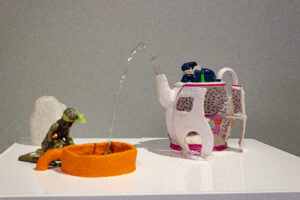
A sculpture of a white teapot with the front half open with windows like a dollhouse with the navy polka dots on the interior wallpaper. Water is coming out of the spout like a fountain, into an orange clay dish. Leaned over above the dish, a copper sculpture is kneeling over it.
PHOTO: Gudrun Wai-Gunnarsson / The Peak

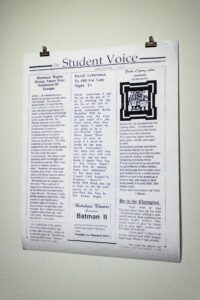
The title is a quote from a letter Amy Chin-Yan Lam, artist and writer, wrote and put in a time capsule at the age of 11. We probably spent the longest time at this exhibit; the eclectic installments and writings, linking Lam’s childhood self with her adult self and history with the present, came together like puzzle pieces. Deconstructed teapots and hollowed-out gourds furnished like dollhouses, an entry in her grade school newspaper about women taking over the world, and a USB shoplifted from the British Museum gift shop showcase Lam’s spunky personality.

 Photo of a large paper bulletin with printed text hung on the wall. The bulletin features three columns of articles with the headline “Student Voice.” The first column is an article written by Lam. The headline says “Womens’ rights group takes over the continent of Europe.”
PHOTO: Gudrun Wai-Gunnarsson / The Peak

Of course, the first thing you will see is an animation loop of an adorable sleeping dog. I quickly learned that this dog is based on Lam’s short novel, Looty Goes to Heaven, which is based on the true story of a Pekingese dog named “Looty” who was stolen by British colonizers in Beijing during the Opium Wars in 1860 and gifted to Queen Victoria. The name “Looty” references the word “loot” describing objects stolen during war. This story points out the link between dog breeding and Western eugenics, which tie back to the theme of colonialism. Ironically framed in the exhibit is the rejection letter from Buckingham Palace to loan the exhibit a painting of Looty that was originally stolen from Beijing. 

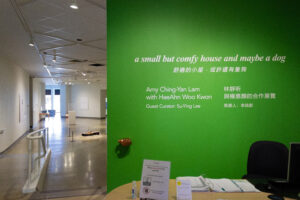
A photo of the entrance to the exhibit. The front wall is green and has the name of the exhibit and additional details in both English and Chinese alphabet. There is both a ramp and a small staircase leading down into the spacious exhibit.
PHOTO: Gudrun Wai-Gunnarsson / The Peak

Purchase Looty Goes to Heaven online at Art Metropole’s website for $12. Support Lam on her website, https://amylam.me/ and Instagram, @amychingyan.

Former vice president external and community affairs disapproves of SFSS budget cuts

0
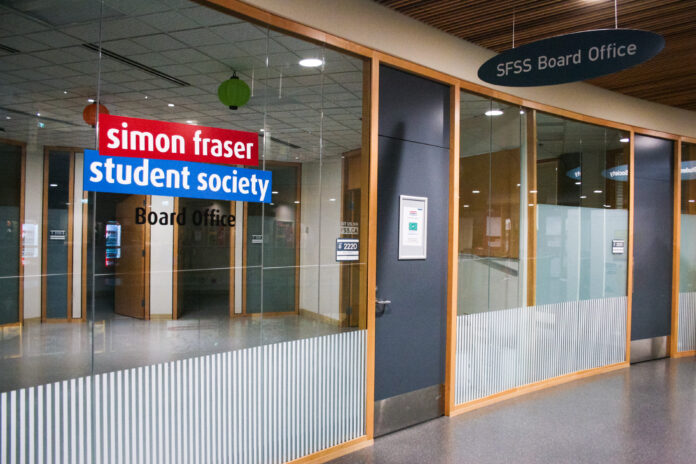
This is a photo of the SFSS offices. Their logo is printed in large letters on the window.
PHOTO: Gudrun Wai-Gunnarsson / The Peak

By: Isabella Urbani, Staff Writer

Former vice president external and community affairs, Eshana Baran, made several Twitter posts to inform students of sizable cuts in the Simon Fraser Student Society’s (SFSS) draft of next year’s budget. The new budget for 2023/24 cut funding for several committees including equity, BIPOC, and academic affairs. 

Baran’s first post noted that, in unusual fashion, Council received the drafted preliminary budget only the day before it was set to be voted on at the May 26 Council meeting.   

“Typically, the vice-president finance leads the society through an extensive consultation process to create the budget,” said Baran to The Peak. It is “then brought to the executive committee for recommendations, and finally to the Council for approval.” Instead, both the executive committee and Council received the budget at the same time, which Baran called “undemocratic” and “untransparent.” 

In the initial draft, more than half of the committee cuts were made to equity, BIPOC, and academic affairs spending. Last year, all three of these committees each operated with a $10,000 budget. Under next year’s plan, the equity committee’s budget would be halved to $5,000, the BIPOC committee to $2,500, and the academic affairs committee to $1,000. Meanwhile, $90,000 was added to the large-scale events budget.

“The importance of [the equity, BIPOC, and academic affairs] committees cannot be overstated, as they work tirelessly to support marginalized communities and foster a more inclusive and equitable campus environment,” said Baran. These same committees played a major role in “the Gondola Campaign, the team name change solidarity campaign, and the support of Black and Indigenous student rights and campaigns.”

Baran did inquire with the vice president finance as to why cuts were being made, specifically, to the equity and BIPOC committees, but did not receive any “clear answers.” Taking measures into her own hands, Baran shared a Zoom link to the May 26 Council meeting on Twitter and called on SFU students to dispute the budget. 

“Budgets reflect the political and organizational priorities of a society,” said Baran. “When discretionary budget cuts are made to one area and not another, it sends a message that the area being cut is valued less.”

Due to her online lobbying, Baran was able to make amendments that “restored the budget amounts for the affected committees.” The BIPOC and academic affairs budgets will be raised to $4,500 and $6,000 respectively, while the equity budget will be fully reinstated. 

Baran noted on Twitter she was “attacked” by a fellow Council member at that same meeting while attempting to make a separate motion for the Migrants Student United, a club the SFSS had previously supported. The councillor in question “used a delay tactic to disrupt the meeting as part of a wide effort to end the meeting early, preventing the budget motion proposed, and other motions presented to the Council, from being discussed and voted on,” according to Baran. 

The meeting eventually lost quorum — the minimum number of participants needed — after the chair, Abhishek Parmar, left during the incident. “The chair should have intervened during the meeting by addressing the disruptive behaviour and maintaining order,” said Baran, who later posted an emergency Zoom link on Twitter to try to continue the meeting. 

When asked if the SFSS has a tendency to neglect marginalized communities, Baran agreed, but wasn’t “certain whether this neglect is purposeful.” She did, however, say the budget cuts “suggest that [the] concerns [of marginalized communities] are not being given the attention they deserve.”

“The next step should involve revisiting the budget cuts and restoring the full funding to committees that represent marginalized communities,” said Baran. 

Acting vice president Abhishek Parmar was contacted by The Peak for comments but declined to respond.

Horoscopes May 23 – 28

0
An illustration of a girl with long flowing hair. Astrological signs and stars shine around her.
ILLUSTRATION: Marissa Ouyang / The Peak

By: Hana Hoffman, Peak Associate

Aries – Aster

You’re an aster, and you like to move faster! Every task you face is a day to race, and nobody else can match your pace. But be careful, doing everything in a hurry may cause you to act recklessly. 

Taurus – Tulip

You’re a tulip, and you’re also too lit. Every day’s a party with you at SFU. You come in all kinds of colours and you’re always photo-ready. Keep coming out and opening your petals to all sorts of summer fun activities.  

Gemini – Gladiola

I am glad to tell you that you are a tall and proud gladiola. When it comes to your potential, the limit does not exist. You’re the kind of flower that always strives for the best, and you’ll gladly grow until you reach the stars!

Cancer – Chrysanthemum

You’re a chrysanthemum — more solid than a crystal, and your stem is so strong, just like your work ethic in STEM classes. It’s going to take a lot more than a pesky error in your code to knock you down.

Leo – Lilac

This whole time you’ve been telling me you’re a larkspur; a graceful, colourful plant with poisonous seeds . . . Well, I just found out you’re actually a lilac. Don’t lie like that. You’re pretty and harmless. You’re too funny Leo . . . I never know whether you’re being real or sarcastic. Why do you lie like that, lilac?

Virgo – Viola

You’re a viola the flower, not the instrument. You’re a social flower who likes to be around all your buds in all kinds of colours. Have you considered starring in the Disney film She’s All That? You should.

Libra – Larkspur

You’re the bright intelligent larkspur! The spark to every firework, the lit up lightbulb to every idea, and the miracle maker in every group project. Even cats like you; they call you larkspurrr. However, your classmates should think twice about ghosting you until the night before the project is due. You may be cute, but you’re also toxic.

Scorpio – Spray mum

You’re cultivating your best academic self. You take good care of your laptop, textbooks and stationery, and always ensure you’re as hydrated as a hydrangea for maximum academic growth. A spray mum of one: your grades. You take care of them and watch them grow!

Sagittarius – Snapdragon

You’re a snapdragon, and all fired up for this summer! You keep everybody else’s summer fun and lit as well, by lighting fireworks & sparkling candles, starting up the barbeque, warming up the outdoor pool, and most importantly, keeping us hawt! Whether you’re taking courses or taking the semester off, you never miss a chance to break a sweat.

Capricorn – Cosmo

You’re a cosmo flower, colourfully bright and cosmic. You generally bloom and grow every time the summer semester exam season comes around. So, that’s probably when you’ll flourish every year!

Aquarius – Amaranthus

Long and strong, graceful and peaceful, you’re an amaranthus. A laid-back and relaxed flower that slowly gets brushed by the wind. Your strength is going with the flow of homework.

Pisces – Peony

Pisces, you’re the awesome peony flower! You remind me of an old tune; sing along if you know it: My little peony, friendship is magic. You’re a peony, and you love to party. Let’s ride a pony at the PNE.