Home Blog Page 124

Ms. Valentine Presents: SFU Hookup Locations

0
Anthropomorphized sweetheart. It’s light pink and has “BE MINE” written on it in red.
ILLUSTRATION: Sandra Cao / The Peak

By: Izzy Cheung, staff writer

Hello, all you SFU lovebirds! I, Ms. Valentine, have wisdom to bestow on all couples, from  those who met in class last week to the high school sweethearts (congrats on making it this far). Think of me as the older sister you never had. I’m here to make sure that your Valentine’s Day with your boo is perfect. Since February 14 lands on a Wednesday this year, I know that many of y’all will be on campus in classes, but that doesn’t mean you can’t have a fun and funky-fresh V-Day celebration! I’ve compiled a list of the best places for you and your lover to get a little spicy — so without further ado, here are some more of SFU’s top hookup spots. 

On the stairs leading to the bus loop under West Mall Centre 

Y’all know this spot is the best place to relieve stress after a crammed bus ride. Imagine this: you’re on a busy 8:00 a.m. bus, holding onto the same pole as a member of the preferred gender. The bus skids to a stop. You go flying into your pole-sharer’s arms. As you look up at them to apologize, your eyes lock. The chemistry is un-de-niable. You’ve been breathing each other’s (and the rest of the bus’s) air for the past 15 minutes. When you both get off (the bus, of course), the feeling is like going to the West Mall Tim Hortons only to see that there’s no line. Yay!

Images Theatre 

This one caters to two types of couples, so buckle up if either of these suits you. Option one: there’s no one in there except the two of you; the lights are dim, and the projector is displaying the old PowerPoint slides of a PSYC 100 lecture (charming!). Option two: the lecture hall is full because there’s an actual lecture occurring as you and your beau get down and dirty. You’ve heard of shacking up at the movies; now y’all can try shacking up in a lecture. Crossing this off your bucket list is in, and being considerate of your classmates who definitely do not want to see or hear that is out. Yay! 

On top of one of the campus pianos 

Let’s be real y’all; everyone wants to be serenaded by their partner at some point. As Duke Orsino says in Shakespeare’s Twelfth Night, “if music be the food of love, play on.” What better way to show your love than to make love and music on top of one of the campus’s pianos? Here are some of the songs I’d recommend you play while enjoying the piano with your love: “Fruit Salad” by the Wiggles, “You’ve Got a Friend in Me” by Randy Newman (get it?), and the Canadian National Anthem. Yay! 

The Peak’s office 

Worry not, friends, you can still hunker down someplace quiet to simply bask in your partner’s presence. Past the bookstore and deep in the tunnels of Maggie Benston Centre is the perfect place to take your partner — The Peak’s office! Here, you’ll find a surplus of ancient computers (vintage!) as well as a couple of comfy couches to do whatever you’d like on them (just keep the staff out of it, please). Yay! 

X’s and plenty of o’s,

Miss Valentine
The great wall of SFU under siege

0
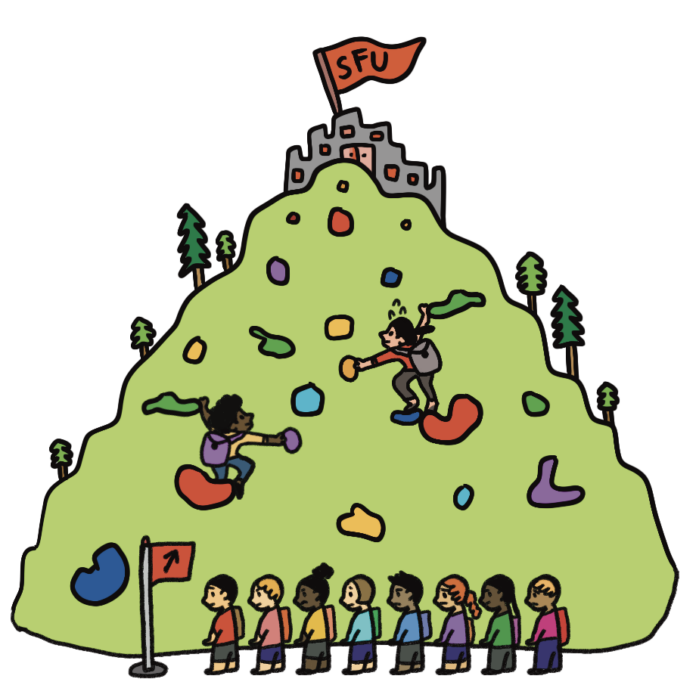
Burnaby Mountain as a climbing wall. There's a long line of students waiting to climb it.
ILLUSTRATION: Andrea Choi / The Peak

By: Sude Guvendik, Staff Writer

Dear SFU climbers, 

Hold onto your harnesses because there’s some wild news — the SFU Climbing Wall, that vertical haven of chalky holds and triumphant climbs, has been closed since mid-December. And get this: nobody seems to know why. It’s like the campus just ghosted our favourite climbing spot.

Whispers in the hallways suggest that President Joy Johnson might be grappling with an unexpected condition known as “climbingphobia.” Perhaps, in her eyes, the climbing wall is a relic of the past, challenging the sleek and high-tech future she envisions for SFU. Why climb manually when you can glide smoothly in a gondola, right? After all, the public engagement has been going great . . . 

Imagine a showdown on Burnaby Mountain, not with swords, but with carabiners clicking (don’t spend too much time pondering the logistics of this). It’s the gondola versus the rock climbers, a real-life Game of Thrones. Who’s gonna reach the top first? With the gondola project representing the crown jewel of technological marvels, costing millions and spanning years of planning, Joy Johnson views it as the symbol of SFU’s march into the future. However, lurking in the shadows like the Night’s Watch, the climbing wall poses a seemingly obsolete but rebellious threat, challenging the status quo with each ascent.

SFU is calling for progress, championing technology and modern solutions. Joy Johnson, with a regal air, seems to proclaim, “Let the gondola ascend the throne, this is how we are engaging the world.” The gondola has had at least a decade head start, but this is still a tight race! 

The stage is set, the mountains are watching, and the fate of SFU’s peak hangs in the balance. Winter may be coming, but who will conquer the mountain first — the gondola, a beacon of so-called progress, or the antiquarian rock climbers of olde? Whether it’s a masterplan or a colossal mix-up, one thing’s for sure — the SFU climbing wall closure is a cliffhanger we didn’t see coming.

Need to Know, Need to Go: Local performances

0
an illustrated calender that says "Need to Know, Need to Go"
ILLUSTRATION: Courtesy of The Peak

By: Petra Chase, Arts & Culture Editor

Into the Woods
When: February 1–18, 2:00 p.m. and 7:30 p.m. 
Where: Studio 58, 100 W 49 Ave, Vancouver

Presented by Langara College’s competitive theatre training program, Studio 58, Into the Woods is a fairytale crossover musical that features characters from childhood classics journeying through a mystical forest. From Little Red Riding Hood to Cinderella, award-winning director Barbara Tomasic said these “terrific characters” provide an “opportunity to delve into these fairytales to examine how they are relevant in today’s world.” The team of renowned creatives and cast of local up-and-coming talent is excited to perform in their newly-renovated theatre. Find content advisories and buy $10 tickets at their website, studio58.ca.

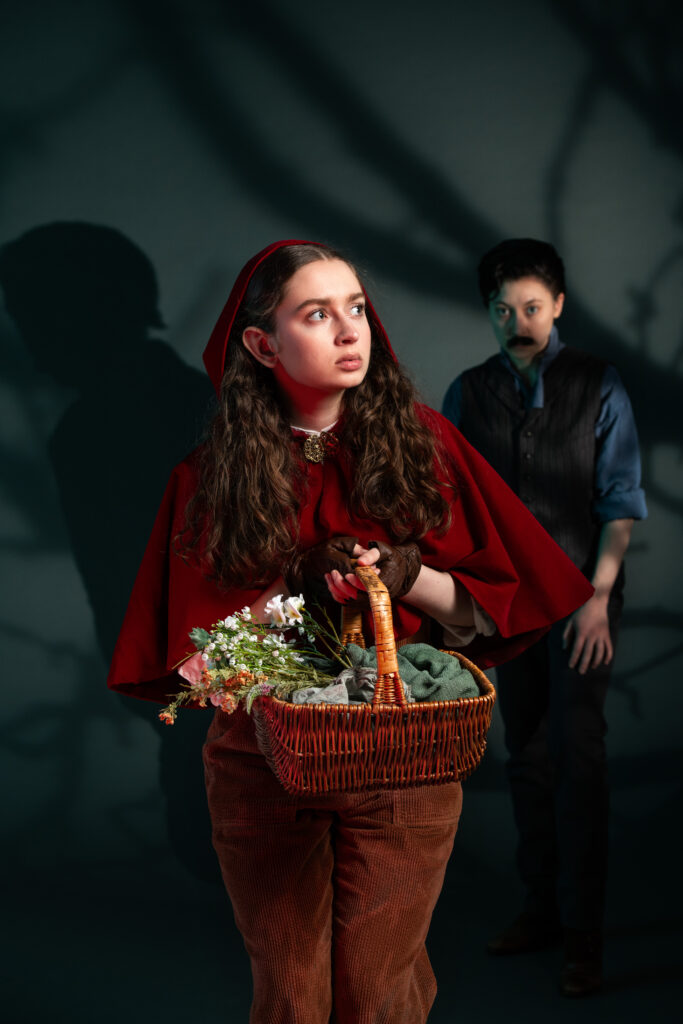
An actor from Into the Woods dressed as Little Red Riding hood holds a basket full of flowers and looks into the distance while a person in the shadows behind her looks at her. The shadows are of barbed wire.
PHOTO: Emily Cooper, Studio 58

Sunrise Betties
When: February 21–March 10
Where: Russian Hall, 600 Campbell Ave, Vancouver

Set in 1974 in East Vancouver, Sunrise Betties is an immersive play based on a historical account of street-gang fueled crime, drug crisis, and police corruption in the area. Created and performed by the dynamic theatre company ITSAZOO, the play brings this real history to light through the lens of a fictional all-women street gang. Co-artistic producer Sebastien Archibald said the play holds “a mirror up to Vancouver and [says] ‘this is your history; this is how it used to be; this is how we got here.’” This gritty, action-packed experience is brought to life by a talented cast and crew dedicated to “historic and tonal accuracy.” Tickets range from $20–30.

PHOTO: Chelsey Stuyt, ITSAZOO

Matriarch’s Uprising Festival
When: February 19–25, various times and on-demand online
Where: The Dance Centre, 677 Davie St, Vancouver

Matriarch’s Uprising celebrates Indigenous womanhood featuring dancers, from local to international, to “connect across different nations and Indigenous worldviews through dance.” The 6th annual festival also welcomes everyone to educational workshops, like the hoop dance workshop, and circle conversations held for free over Zoom, where panellists lead discussions, like “the way our dances can help to heal our personal and collective spirit.” Catch SFU alumni Starr Muranko and Jeanette Kotowich of the troupe, Raven Spirit Dance on Thursday, February 22. They’ll perform Confluence, in which their bodies form a “somatic tapestry that speaks to the resilience of Indigenous women.” You can also watch five dance videos, a collection called Noojimo’idizo ↛ She Cures Herself, for free on their website, which will be available on-demand.

PHOTO: Courtesy of Matriarch’s Uprising Festival

Hotel Mira makes Vancouver proud

0
Charlie Kerr, Cole George, Mike Noble, and Clark Grieve (Hotel Mira)
PHOTO: Lindsey Blane

By: Hailey Miller, Staff Writer

Vancouver alternative rock band Hotel Mira’s sold-out concert at the Commodore Ballroom was a show-stopper. The band was fuelled with energy that’s only felt from a hometown crowd, and their gratitude was emphasized after each number. I spoke to frontman Charlie Kerr ahead of the band’s headliner at the Commodore on January 19. On a Zoom call from a hotel room in preparation for tour, he spoke highly of his bandmates and the opportunities they’ve been given. It’s evident the band is eager to get on the road in support of their latest album, I Am Not Myself

Hotel Mira formed in 2010 as JPNSGRLS, and in 2016 they changed their name and shifted to the current lineup of Kerr on lead vocals, Cole George on drums, Mike Noble on bass, and Clark Grieve on guitar and keyboards. When asked how the band has evolved, Kerr explained there’s a vast distinction between the two bands, with Hotel Mira housing more of a synth pop-rock genre as opposed to the previous raw rock sound. Along with the name change, he felt obligated to separate the two lineups, while still honouring the history that was made with the original band members. 

As for the current lineup, Kerr stated he enjoys the collaborative process of writing and performing with his bandmates (who he considers his best friends) in a way he’s never experienced. 

“The evolution has been one of just continuing to explore music and explore storytelling,” the friendly frontman said, stressing how priorities have changed due to a more career-oriented musicianship with his bandmates. It’s clear none of them take any of it for granted, which was evident as he marveled at the thought of the shows on their headlining tour selling out in advance. “It’s a testament to being persistent.” 

When asked how it feels for the band to be playing their hometown headliner, Kerr stated, “it’s surreal.” With a candid laugh he explained he never thought this level of success would happen, as a musician who “busked on an acoustic guitar outside the Commodore.” He thought that would be the closest he’d ever get to playing it, but little did he know, that was just the beginning. 

Reminiscing what they’ve learned from supporting acts such as Dear Rouge, Billy Talent, and The Beaches, Kerr said dream scenarios became a reality, especially these artists being fans of Hotel Mira, too. Speaking highly of these artists, he attributed their support to giving the band more confidence to continue on their path. It’s evident what they learned in the early days as an opening act will be passed down in wisdom to the supporting acts of their own headlining tour. 

Kerr has been surprised by how much fans have “connected to [the] songs” on the new record, which grapples with identity and vulnerability. He describesd it as an “autobiography and tragi-comic character portraits” which reflect “a profound loss of self.” “Eventually” focuses on breaking free from social constructs. He said the reception they’ve received has surpassed their expectations, as he recalls being the 9th most-played band on alt-rock radio in Canada last year.  

On the night of the show, fans were screaming every back-to-back hit long past midnight as the dance floor bounced along with the crowd. Classics like “The Eyes On You” and “Speaking Off the Record” stood the test of time, while the band gave their all to newer hits like  the whimsically electrifying “Fever Pitch” and upbeat synth-filled “Dancing With the Moonlight.”  Kerr says “Vampire” is a personal favourite of his to play live, which was evident as the raw energy in the Commodore radiated through the walls, leaving fans buzzing and wanting more.

“To be more well-received in the city where I grew up, it’s beautiful” he explained, noting that, he “almost doesn’t trust” it’s finally happening. To go from a place in his career where he felt he was “tanking” and no one cared, to being recognized on-stage for the hard work that’s been done is something he acknowledged with great emotion. 

In my conversation with Kerr, it was evident that he and his bandmates are here for the long haul, and they’ve remained level-headed throughout the process. As seasoned musicians, they’re grateful to be where they are, and their careers are about to blow up as they continue their artistic evolution and exploration.

All menstrual products are valid

0
Illustration of various menstrual products, such as tampons, pads, and cups
ILLUSTRATION: Aliya Nourlan / The Peak

By: Hailey Miller, Staff Writer

There’s no wrong product to use when it comes to menstruation. Some people prefer pads, tampons, menstrual cups, leakproof underwear, or a combination of all of the above. Some people choose the more environmentally friendly route by using reusable products, while others prefer disposable hygiene products for convenience or accessibility reasons. All of these choices are valid.

The stigma that surrounds period products and menstruation is still problematic today. Some cultures see tampons as “dirty” and believe their use is an indicator of non-virginity. This is based on ideas around having menstrual blood outside the body, and ensuring the hymen — a “thin piece of tissue” sometimes present in the vagina — is preserved. In reality, a preserved hymen is not a true indicator of virginity, as explained by Planned Parenthood. In contrast, others see tampons as the better choice and claim pads are inferior or seen as an “adult diaper.” Neither of these outlooks help people access period products. 

Debunking the myth of “the best menstrual product” is long overdue. Some of us dabble in using many kinds of menstrual supplies, and this can change depending on our cycle or preference at the time. 

Some individuals are more sensitive to certain ingredients in menstrual products, which can include fragrances, dyes, and other toxins. People can also opt for toxin-free, organic cotton, or reusable options. Some say the cost of reusable products pays for itself over time. However, the upfront cost needed for these products may be a barrier for unhoused people, who don’t always have access to a space to change, carry, or clean these products. In many places where access to supplies is limited, people often use cloth pads made from fabric, or plant materials as their own period product. Product choice isn’t a determinant of one’s health. It’s relevant to comfort level, as some are more comfortable using certain products over others — like pads over tampons.

The availability of supplies isn’t the only deciding factor for period products, either — accessibility is also a huge component. Some disabled people have difficulty using one product over the other, especially if they have dexterity, muscular, or coordination issues. Others have medical conditions that prevent them from using certain products such as tampons.

Everyone should have the liberty to choose what’s right for them, but this is not always possible. Choosing a menstrual product can be difficult when it comes to options and availability. In some cultures, menstruation is still taboo, which can result in a lack of access to menstrual products and resources, as well as individuals being excluded from daily activities. Period poverty and affordability are significant factors that impact personal decisions based on product choice. Some don’t have the luxury of picking whichever product they desire based on cost and availability, which makes menstruation and hygiene more difficult and can result in people missing work and school. We must work to fight the stigma against menstrual products and menstruation itself. 

Whether you prefer one product over another, menstruation is different for everyone. Advocating for access to options is key to menstrual rights.

This week at SFU

0
women’s basketball team celebrating in a team huddle
PHOTO: Wilson Wong / SFU Athletics

By: Isabella Urbani, Sports Editor

Home Games 

Thursday, February 8: men’s basketball vs. Montana State Billings at West Gym at 7:00 p.m.

  • Lost earlier in the season 7361 against Montana State

Friday, February 9: conference hockey team vs. UVIC at Bill Copeland Sports Centre at 7:00 p.m. 

  • Lost 92 to UVIC last time they played 

Saturday, February 10: men’s basketball vs. Seattle Pacific at West Gym at 7:00 p.m. 

  • Lost earlier in the season 8363 against Seattle Pacific 

Saturday, February 10: conference hockey team vs. Vancouver Island University Mariners at Bill Copeland Sports Centre at 7:00 p.m. 

  • Lost 53 to Vancouver Island last time they played 

Away Games 

Thursday, February 8: women’s basketball vs. Central Washington at 5:15 p.m. 

  • The Wisotzki sisters, junior Sophia and senior Jessica, scored 52 of SFU’s 83 points in the team’s January 27 win against Seattle. 
  • 01 against Central Washington this season 

Friday, February 9Saturday, February 10: track and field at the University of Washington Husky Classic 

  • First of two competitions this month hosted by the University of Washington

Friday February 9Saturday, February 10: track and field at Boston University’s David Hemery Valentine Invitational at 6:00 a.m. 

  • Last invitational before the conference championships on Monday, February 19Tuesday February 20 

Saturday, February 10: women’s basketball vs. Northwest Nazarene (Idaho) at 4:15 p.m. 

  • Lost by one point (6160) to Northwest Nazarene last month 

Super Bowl LVIII predictions

0
Illustration of two teams lining up for a ball snap
ILLUSTRATION: Sonya Janeshewski / The Peak

By: Kaja Antic, Sports Writer

For the fourth time in five seasons, the Kansas City Chiefs are headed to the Super Bowl — and the San Francisco 49ers are there too.

The Chiefs and 49ers previously met four years ago during Super Bowl LIV, when the Chiefs overcame a 20–10 deficit in the fourth quarter to win 31–20. While this marks the 49ers first appearance back in the Super Bowl since 2020, Kansas City reached Super Bowl LV the following season in 2021, ultimately falling short to Tom Brady and the Tampa Bay Buccaneers. 

The Chiefs’ 2022 loss to the Cincinnati Bengals in the American Football Conference (AFC) Championship game was the first in two years that Kansas City wasn’t headed to the Super Bowl. Last year, Kansas City won Super Bowl LVII against the Philadelphia Eagles, after scoring a field goal with eight seconds left in the game. 

San Francisco’s Super Bowl history is not as recent or thorough as the Chiefs’. Before 2020, the 49ers had been to the Super Bowl once in the 21st century, losing 34–31 to the Baltimore Ravens in 2013 at Super Bowl XLVII. The 49ers had previously won five Super Bowl games from 1982–1995.

The Chiefs (11–6) led the four-team AFC West division this season, while the 49ers (12–5) led the west division of the league’s other conference, the National Football Conference (NFC). Playoff positions are assigned based on a team’s record in comparison to teams in their own division, as well as teams from the other three other divisions that round out their conference. 

Since the 49ers were seeded first in the NFC, they received a bye to the second round of playoffs, otherwise known as the divisional round. The Chiefs, who finished third, had to compete against the sixth-seeded Miami Dolphins in a wild-card match to advance to the second round. Unsurprisingly, the Chiefs made quick work of the Dolphins, winning 26–7. In the divisional round, the Chiefs defeated the second-seeded Buffalo Bills 27–24. They then defeated the AFC number one seed, the Baltimore Ravens, 17–10 to become the conference’s bid in the Super Bowl. 

On the other side, the 49ers beat the seventh-seeded Green Bay Packers 24–21, after the Packers pulled off an upset against the higher-seeded Cowboys to make it to the divisional round. The close margins of victories continued for San Francisco the next game. The 49ers scored 27 unanswered points in the second half of the NFC Championship game to win 34–31 against the third-seeded Detroit Lions, after being down 24–7 at halftime.

This year’s Super Bowl, Super Bowl LVIII, is set for Sunday, February 11 at Allegiant Stadium in Las Vegas; it will be the first time a Super Bowl has been held in Nevada. The 49ers have the edge in offence, ranked second to the Chiefs’ ninth, while the latter ranks second in defence to the former’s eighth. They are closely matched in passing — San Francisco in fourth and Kansas City in sixth — while their rankings differ greatly when it comes to rushes, with the 49ers third in the league, way above the Chiefs in 19th. 

Despite the regular season achievements of the 49ers, I don’t believe they will come out on top. Their playoff history since the turn of the century has been lacklustre, and they narrowly achieved wins against the Lions and the Packers — both being three points. 

The AFC champion Chiefs are in a much different position than their opponents, due to their recent successes. The key members of their roster are much more experienced compared to the 49ers. The Chiefs quarterback, Patrick Mahomes, has not just one, but two Super Bowl MVP awards under his belt, while 49ers quarterback Brock Purdy is only in his second season in the NFL — his first as a starting quarterback.

As well, you can’t mention the Chiefs without mentioning Travis Kelce. Aside from his highly publicized relationship with Taylor Swift, the Kansas City tight end is widely regarded as one of the best tight ends in NFL history, and the best currently playing.

Kelce and Mahomes are a record-setting pair, recently earning the playoff record for touchdowns for a quarterback-receiver combo. The pair have completed 16 touchdowns in their years playing together, beating the previous record of 15 set by storied pair Tom Brady and Rob Gronkowski. 

If you’ll indulge me, I believe the Chiefs have the upper hand on the 49ers for Super Bowl LVIII. The lights of the NFL championship are always bright, but the Chiefs have shown that it doesn’t blind them, and they have the reputation to prove it. Maybe it’s wishful thinking, but if all the pieces fall right into place, the Kansas City Chiefs will be the winners of this year’s Super Bowl.

For now, we have to wait and let the players play, and I could be wrong but life goes on. But I consider myself somewhat of a mastermind, so I’m still a believer in the Chiefs until the final whistle blows on February 11. 

Trial Week review: Judo

0
two people grappling on the floor
PHOTO: Joshua Jamias / Unsplash

By: Kaja Antic, Sports Writer

The spring 2024 trial week had several appealing options — from dance to yoga, and various martial arts. It was a difficult choice to make personally, but I ended up going with judo.

Judo was created in 1882 by Japanese scholar Jigoro Kano after he had studied the ancient martial art jujutsu and decided there should be a defensive martial art with educational benefits. In the literal Japanese translation, “Judo” means the “gentle way.”

Organized Judo is also celebrating 100 years in Canada, after Shigetaka “Steve” Sasaki immigrated from Japan to Vancouver in 1922, opening the Tai Iku Dojo in 1924. Judo was the fourth martial art added to the Olympic Games after debuting in 1964

The PEAK Judo Club runs out of the Lorne Davies Complex on Burnaby Mountain and offers programs for children and adults at varying levels of judo proficiency. The trial week was for the AIR program, which is for beginners aged 14+ and focuses on key aspects of judo: the art of falling safely, self-defence, working on one’s physical health, and executing the art’s moral principles

When entering the class, I was given a judogi — the traditional uniform used in judo — and the beginning exercises began. There were many different warm-up cycles of various exercises, including multiple somersault variations along with practicing the various fall techniques used in judo.

Since most of the techniques largely consisted of throws and grappling, the person on the receiving end, known as the uke, must be familiar with the breakfalls to ensure their safety. These falls serve many purposes, with the mae ukemi (forward breakfall) protecting the head, the ushiro ukemi (back breakfall) protecting the head and back, and the yoko ukemi (side breakfall) protecting the sides of one’s body — often the area landed on when the uke is thrown.

The next step in the class was to partner up, working on the first step of any technique — holding the judogi. There are different stances when participating in judo, but the basics of each stance are similar: one hand stays on the opponent’s collar, while the other grabs the extra fabric of the opposite sleeve. 

After this, we worked on various ways to unbalance your opponent, known in the judo lexicon as kuzushi. These steps were all built for the main champion of the evening class: the throwing techniques, also known as nage waza

One of these throws taught in the class is called o goshi, which is a major hip throw in judo. Classified under koshi waza (hip techniques), this move has the tori — the person performing the technique — positioning their hips below the uke’s, throwing them over one hip after grabbing the back of the uke’s judogi. In this exercise, it was my first time getting thrown in a martial arts setting, and honestly, it was pretty fun.

We were also taught various foot techniques — also known as ashi waza. These were harai tsurikomi ashi (lift pull foot sweep), deashi harai (front foot sweep) and kosoto gake (minor outer hook). The last techniques of the night revolved around grappling, known as katame waza. This involved pinning (osae waza), choking (shime waza), and joint lock (kansetsu waza) techniques. This was the only technique I was semi-familiar with, as it reminded me of fighting with my siblings when we were younger.

After this instruction was done, the class was organized on the mats in order of belt level, facing the senseis (instructors). I was part of the end, as I was wearing a white belt, usual for a beginner. We were taught the proper way to kneel with your feet crossed behind you, and how to bow to senseis following instruction.

Overall, I would like to thank the PEAK Judo Club for hosting the session, and the leadership team for being patient with me as I learned how to do martial arts for the first time. It was a great experience and I recommend that SFU students and community members check out the group’s events and programs throughout the semester.

Displacing the unhoused population dehumanizes an entire community

0
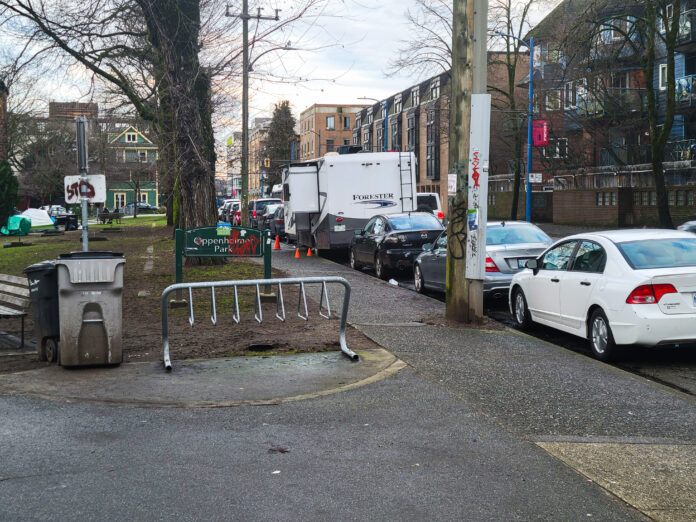
Photo of Oppenheimer Park
PHOTO: Amirul Anirban / The Peak

By: Emma Cosman, SFU Student

As temperatures in the greater Vancouver area drop to unprecedentedly low levels, the cold winter days become difficult to bear for even the most seasoned Canadians. Yet, an accessible shelter is a comfort that not all BC residents can rely on during these winter days. An escalated movement has been underway to remove the unhoused populations of the greater Vancouver area from supposed community spaces, highlighted most recently by the eviction of the tent-dwelling community that resides in Oppenheimer Park. This increased enforcement is putting the unhoused population of Oppenheimer Park at risk and dehumanizing an entire community. 

The solutions and resources that currently exist for the unhoused population — such as shelters — are a temporary fix to the housing crisis, which has become a permanent challenge for a growing number of people in Vancouver. The narrative of the unhoused population by city officials, mixed with a continuous lack of effort to implement long-term solutions, shows they are neglected members of our community. 

The unhoused population of Vancouver is among the most vulnerable members of the city during these months of remarkably low temperatures. The city’s inaction to implement accessible resources for unhoused communities is contrasted by the quick enforcement of city bylaws, which “allows people to shelter in parks overnight but requires them to pack up and leave during the day.” Despite not being categorized by the city as a decampment — the active removal of unhoused people from community spaces feels too close to the definition of a decampment to not call it as such. 

Even when residents of the park are dutifully complying with the bylaws, the response to their compliance is a complete disregard for the dignity and livelihood of the unhoused. Officers have been forcefully taking possessions from unhoused people who then struggle to get back what belongs to them. This immoral and biased enforcement of the bylaws completely ignores how forceful removals impact the unhoused population during a time filled with frigid uncertainty. 

Advocates for the unhoused population are calling on the city to implement a temporary moratorium, which would freeze the implementation of the bylaws that force residents to move their belongings daily. For the unhoused population, this daily movement can have tremendous impacts on their health, as the cold weather brings an increased risk of hypothermia and frostbite. These bylaws don’t consider the labour required to pack up on a daily basis. The city has opted to forgo the suggested pause in decampment and promised an increase in shelter spaces.

However, spaces in available shelters are limited despite an increased need for warm and safe shelter. The alternative shelters proposed by city officials are often either at capacity or unsafe due to hygiene or security concerns. Even when available, they rarely provide access to basic living needs for the unhoused community, such as washrooms and a secure place to keep their belongings. These unreliable housing resources coupled with the severe lack of compassionate action from city officials makes one thing clear — something needs to change. 

To create lasting solutions, we need to lead with compassion and care. What needs to be prioritized is creating actual support systems for unhoused communities, such as more availability in safe shelters, rehabilitation programs, mental health resources, and initiatives to implement more permanent accessible housing.

Enforcing bylaws with the justification of making community spaces accessible, while not providing safe resources for unhoused people, further isolates an already stigmatized community.

The current approach taken by the city to solve the houselessness crisis, an issue rapidly growing in severity, is marked by a severe lack of empathy. By treating unhoused people as an infringement on the perceived prosperity of an existing community, the city tells the public people without housing aren’t people at all. 

Leading with empathy is the first step in creating long-term solutions for the unhoused, built on respect for them as actual people, not as hindrances to a city’s reputation. Rather than treating unhoused people as a violation of city bylaws, we need to begin recognizing them as members of our communities. 

Black people still face barriers in healthcare

0
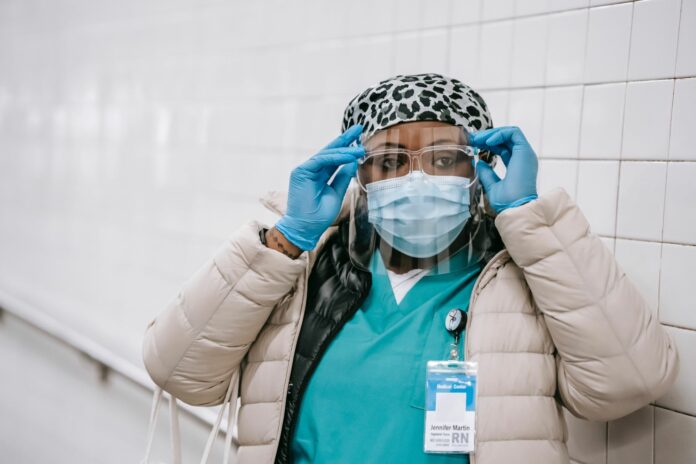
A Black healthcare worker wearing a mask, gloves, and face shield
PHOTO: Laura James / Pexels

By: Hailey Miller, Staff Writer

Content warning: mentions of medical racism and medical trauma. 

In Canada, Black people are at a higher risk of receiving inadequate healthcare due to systemic barriers. There is a long history of healthcare systems mistreating racialized people, and this still persists today due to a variety of societal factors. The Black Health Alliance explains that “the social determinants of health are the conditions in which people are born, grow, live, work and age.” Factors like housing conditions and food security are directly related to health outcomes. Further, the lack of medical photo references for darker skin can also lead to misdiagnosis as skin conditions or indicators of poor circulation present differently compared to light skin. Cyanosis, for example, which is typically thought of as a lack of oxygen presented by blue fingertips or lips, can be white or gray on Black skin. All these factors can lead to higher rates of negative health outcomes. 

In addition to a lack of information, racial stereotypes can also lead to mistreatment, misdiagnosis, and lack of access to screenings and testing. Racial biases in healthcare can include ignoring a patient’s pain or symptoms — especially for women — and mistreating or misdiagnosing ailments.  Black individuals can be at a higher risk for certain cancers or disorders, on top of having a higher mortality rate for some cancers. Some are not given proper screening or testing, even if they are at a higher risk, due to reported symptoms being brushed off. 

For instance, there was a case of a patient who had been mistakenly perceived as having a suspected overdose when in reality he was having a stroke. They made this assumption based on his race, despite him explicitly telling the operator he was experiencing a stroke. Another example involved a Black woman whose pelvic pain was brushed off for years until she finally found a doctor to take her seriously. She was eventually diagnosed with fibroids — which Black people are at higher risk of. These examples are reminiscent of false beliefs about Black people having a higher pain tolerance than white people, and a 2016 study showed “that a substantial number of white laypeople and medical students and residents hold false beliefs about biological differences” between Black and white people. The study also showed that such biases affect pain treatment recommendations and that racial bias played a role in the pain perception of patients.   

Steps need to be taken in order to best help and treat patients. This includes offering more tests and screening for certain diseases and disorders, and doing a full work-up of a patient’s symptoms. Black people experiencing pain should be taken seriously. 

In the Canadian healthcare system, forced sterilization is still happening, which disproportionately affects cisgender women who are Indigenous, Black, and disabled. This practice is completely unacceptable. The longstanding history of Black patients being used as test subjects for treatments is also still a problem today that results in traumatic experiences and systemic barriers. Providers need to shift the way they treat patients so that no diagnosis goes unnoticed and no mistreatment is made due to bias or ignorance. Even more importantly, institutions like medical schools and hospitals should be aware of how medical bias can affect patient outcomes and educate their staff accordingly. 

As of September 2023, the Black Healthcare Professionals Directory was introduced in Ontario to help Black Canadians find healthcare providers. The network includes physicians, nurse practitioners, mental health professionals, and more. It includes a background check, and will hopefully be available all across the country soon. The Black Health Professionals Network (BHPN) — which is the organization that created the directory — was founded in 2021, and since that time they have worked to generate a safe space for Black patients seeking medical care to help combat some of these issues.

The directory’s ease of access and available options for health professionals and patients provides a level of accessibility and accommodation that otherwise may not be available. With the ongoing shortage of family physicians in Canada, the network has been able to help those in search of a doctor — or other healthcare professional — who otherwise may not have had access to one. The directory will not solve the issue of systemic racism and discrimination in healthcare, but it provides additional support. 

More steps need to be taken to ensure that Black folks are seen, heard, and treated with dignity and respect in healthcare. The work that BHPN is doing is only one step toward creating a positive impact for Black patients in Canada, and it’s one that leads toward change and revolution in healthcare. Our governments and institutions need to follow suit to ensure that biases and misinformation are stamped out of our healthcare systems for equitable health outcomes. 

You can access the directory online at bhpn.ca.