Home Blog Page 12

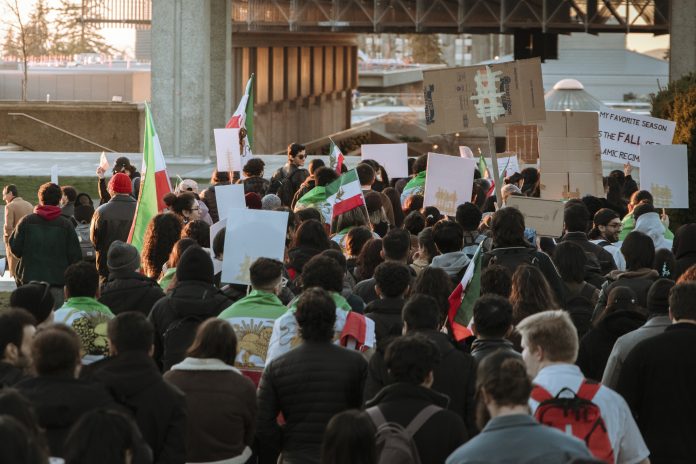
SFU Iranian students speak out

0
SFU Iran protest
PHOTO: J.J. Jang / The Peak

By: Jonah Lazar, Staff Writer and Petra Chase, Features Editor

It’s been over a month since the Islamic Republic of Iran began its crackdown on nationwide protests against the regime. Protests erupted in December 2025 regarding economic hardship and against Supreme Leader Ayatollah Ali Khamenei. While ongoing internet shutdowns and state repression have made exact figures unclear, the death toll has been climbing. Though estimates vary widely, the death toll has been reported to be anywhere between 7,000 to over 40,000. Iran International reported over 36,500 have been killed.

SFU’s Iranian student body is among the millions of Iranians in Iran and abroad reeling from loss, violence, and uncertainty. SFU Iranian Club started a change.org petition calling for greater flexibility in tuition and academic accommodations, and targeted mental health support. They want SFU to recognize and respond to the urgency of this crisis, as “internet restrictions have disrupted communication and interfered with access to banking and international money transfers,” the petition reads. “Allowing [students] to be academically or financially penalized by a geopolitical crisis contradicts [SFU’s] values and damages SFU’s reputation as a university that stands by its international students.” At the time of writing, this petition has 500 signatures.

The Peak interviewed members of the SFU Iranian club to find out more. Answers have been edited for concision. Ali and Leila are anonymous pseudonyms granted to protect those students’ identities.

How has the political situation in Iran affected you emotionally? Has this impacted your studies?

Kian: I am in a constant state of emotional shock and distress. I am repeatedly confronted with reports and videos showing the deaths of tens of thousands of people. Even simple daily activities, like going to a restaurant, attending an event, or playing soccer, remind me there are people in Iran who are no longer able to. I have found it increasingly difficult to concentrate and maintain focus on my studies.

Ali: During the protests, there was a period of 20 days when my parents and all the people in Iran didn’t have internet access, except the few with access to Starlink or links to the government. I didn’t know if my family was safe or not and had nightmares.

Leila: My parents live in Iran, and during periods of internet shutdown and unrest, not being able to contact them has been extremely distressing. The uncertainty of not knowing whether they’re safe is overwhelming.

It is very difficult to focus on school when you are constantly worried about your family’s safety. While I try to remain focused and meet my academic responsibilities, the emotional toll has made that very challenging.

— Leila, anonymous SFU student

Zahra: Is it even possible to witness the death of fellow citizens and loved ones in the worst way, to speak with the people who have lost someone, and not be affected? 

How has the internet shutdown in Iran affected your financial situation?

Zahra: It has affected me completely because it has disrupted money transfers for us. Even now, after the internet has partially returned, this has still not been fully restored. For example, my own online banking access has been blocked for more than a month, and I do not have access to it. As far as I know, many students were receiving their living and rent expenses from Iran, and they have faced serious difficulties. Even with part-time work, covering independent living costs in addition to international student tuition is not easy.

Kian: Due to the internet shutdown and broader instability, my family suddenly lost a significant part of our monthly income. This forced us to reassess our financial situation and reduce spending on daily necessities.

 The uncertainty surrounding communication and financial transfers has added an additional layer of stress to an already difficult situation.

— Kian, SFU student

How much contact have you had with friends and relatives currently residing in Iran since the beginning of the shutdowns and protests?

Zahra: I speak every day with different people in Iran. I try to support them psychologically and check in on how they are doing. 

Ali: Internet access has returned via VPNs and I am able to call them every day. But during those 20 days, it was not possible to call them. That, combined with all the footage of mass killings in Iran’s streets, created a very stressful situation.

Leila: My contact with friends and relatives in Iran has been inconsistent. There have been periods when I could not reach my parents at all. Communication depends on unstable connections or VPN access, and sometimes we go days without hearing from them.

Kian: During the internet blackout, we had to rely on unconventional and indirect methods of communication. In some cases, we reached out to people travelling between countries to carry messages on our behalf. I sent a message to someone I did not know personally, asking them to contact my relatives once they crossed the border and confirm whether they had survived the violence. We then had to wait for that individual to return and relay the message back to us. Eventually, we learned that one of my cousins was confirmed to have been killed. That period of uncertainty and waiting was one of the most distressing experiences of my life.

Have you reached out seeking support from SFU during this time, and how did they respond?

Kian: I have attended group counselling sessions provided by SFU. While I appreciate that support is available, I found it insufficient given the magnitude of what many Iranian students are experiencing. The general health and counselling services offered to all students and staff feel broad and not specifically tailored to the unique trauma and grief associated with this crisis. In my experience, there is a need for more specialized mental health support, including access to professionals who understand the cultural and political context of the situation. 

Leila: Some instructors, such as Dr. Sherryl Bisgrove and Dr. Gordon Rintoul were compassionate and understanding, and I am very grateful for their support. However, institutionally, I have not felt the same level of care. My classmates and I created posters around campus to raise awareness because we felt there was little acknowledgement of what Iranian students are going through. When I contacted student services to ask about dropping a course, I explained the situation in Iran and how it was affecting me. One of the responses did not acknowledge what I had shared at all. There was no recognition of the emotional hardship, which was disappointing and made me feel unseen during an already painful time. Overall, it has felt like the burden of navigating this situation has largely fallen on students.

How can/should SFU improve its support for Iranian students during this time? And are there any ways your peers and fellow SFU community members can show up and support you?

Zahra: SFU can help strengthen awareness of the magnitude of the situation within the community by amplifying our voices. Financial and practical support are also essential. Short-term emergency support, clear guidance on available resources, and compassionate academic flexibility would be very helpful. SFU’s collaboration with Iranian students to organize memorial and awareness events (in a safe and respectful way) would mean a great deal.

Peers and community members can support us by listening, sharing credible information responsibly, and showing up for student-led events and memorials. Simple acts, like checking in, offering practical help, and creating inclusive spaces can make a real difference.

I am also working with several Iranian students on building an initiative to support people inside Iran who are facing loss, injury, and serious economic hardship. We would sincerely appreciate any support SFU and the university community can offer to strengthen these efforts.

The Peak reached out to SFU for their response to the petition. “The university recognizes the on-going stress for Iranian international students and for students with family and loved ones in Iran,” SFU stated. “International Services for Students office has reached out to impacted students with resources around academic concessions and financial support and remains committed to ongoing consultation with Iranian student organizations. Impacted students have been advised to apply for bursaries to receive financial support from SFU. Students with immediate financial need can apply for one-time emergency funding through Financial Aid and Awards.” They also noted that academic concessions remain “up to the discretion of individual instructors.” They added, “Students can also contact Student Accounts to discuss their situation and will be provided with supports based on their specific situation.”

For resources on financial assistance and mental health support, visit the SFU Iranian Club’s linktree at www.linktr.ee/sfuiranianclub. Follow @sfuiranian on Instagram for updates.

Local school district Pokémon-ifies Black History Month curriculum

0
PHOTO: Mediamodifier / Unsplash

By: Heidi Kwok, Staff Writer

Official Memo

TO: School faculty and staff 

FROM: Board of Education of School District No. 145

DATE: Jan 26, 2026

SUBJECT: Emergency BHM teaching enhancement strategy

Esteemed faculty and staff of School District No. 145: 

With February just around the corner, we’re thrilled to announce that the ban on the teaching and distribution of Black history will once again be lifted exclusively for Black History Month (BHM). This is extremely exciting given that educators have taken a sacred oath to constrain this teaching to a single month out of the entire year. Why did we make them do this? We’re not sure either, but God forbid we incorporate Black history into a permanent year-round curriculum — that is simply not efficient. Why spread it out when the material can be condensed and delivered in a swift effective blow?

There are several changes coming to how BHM will be taught this month as per the recommendations of upper management. We have made the decision to go all hands-on-deck and escalate the teaching of Black history to make up for the 11 other months where we leave Black history out of the regular curriculum. We would like to thank our educators for their compliance with this unforeseen increase in work responsibilities — you will be expected to take one for the team and clock in 30 hours of overtime (per week) to work on developing unique BHM lesson plans.

To encourage participation, the Board will be implementing a revolutionary points-based system to reward educators who go above and beyond to integrate Black history teaching during all hours of the school day. Borrowing from the worldwide cultural phenomenon of Pokémon GO, teachers will be allotted points based on the frequency, spontaneity, and dramatic flair with which they mention noteworthy Black Canadian figures, locations, or histories, into as many subjects during the month of February (and February alone). An additional attack worth +80 points will be rewarded for extremely obscure facts. -300 points will be taken away if we overhear you mentioning Black history during January, March, and all the other months but February. In alignment with Pokémon GO’s gameplay, school faculty should aim to “catch ‘em all” before 11:59 p.m. on the last day of the month (and strictly, no later). To assist with your quest, trading cards with hit point and attack level designations of notable people and places will be distributed. 

A final show-down will take place in the last week of February, where finalists will compete against each other in a Black History Fact-Off. Competitors will be tasked with naming as many Black figures as possible within a one minute timeframe. 

To facilitate a smooth transition, volunteer representatives will be sent into classrooms to monitor and track each school’s progress. Their findings will be published in the school district’s Q1 forecast and strategically leveraged to meet our expected quarterly allyship quota. Rest assured that this oversight will terminate once BHM has concluded. Again, please note that you will be forbidden from teaching Black history after February.

We shall circle back and synergize our results on Feb 28. The institution who makes the most mentions of BHM histories will be granted a faculty pizza party and $10 gift cards — a small gesture of gratitude for bravely disrupting the status quo in such an actionable way. 

Lastly, a gentle reminder that March 1, 2026 marks the official commencement of Mustache March. We kindly ask our educators to refrain from all manners of facial hair extraction before then. 

Salutations,

Board of Education of School District No. 145

SFU and the First Nations Health Authority sign a Memorandum of Understanding

0
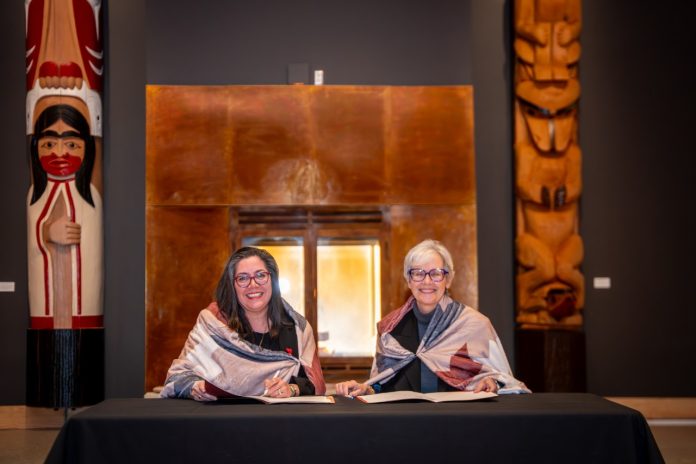
SFU president Joy Johnson and First Nations Health Authority CEO Monica McAlduff smile for the camera as they sign a Memorandum of Understanding.
PHOTO: Courtesy of SFU News

By: Heidi Kwok, Staff Writer

On January 19, SFU and the First Nations Health Authority (FNHA) signed a three-year Memorandum of Understanding (MOU) to formalize their longstanding collaboration and shared mission towards “advancing programs, research, policies, and services that support the health and well-being of First Nations peoples in BC.” The MOU became official upon the joint signatures from FNHA chief executive officer Monica McAlduff and SFU president Joy Johnson. An MOU is a non-binding bilateral agreement between two or more parties, indicating a shared commitment towards achieving a set of goals. The Peak corresponded with Monica McAlduff to learn more. 

McAlduff said this MOU reflects the progression of a “strong, values-aligned partnership” between the two parties. In 2020, the university facilitated greater federal funding for Indigenous health research through a mutual Research Affiliation Agreement with FNHA. SFU also financed a $2.5 million FNHA-led study to develop a harm-reduction response to the toxic drug overdose crisis affecting First Nations Peoples in BC. With the recent opening of the SFU School of Medicine, McAlduff said “the university demonstrated a deep commitment to cultural safety, Indigenous engagement, and addressing systemic inequities — priorities that echo our own,” referring to the FNHA’s 10‑Year Strategy on the Social Determinants of Health and the school’s focus on the factors of education, and culture, language, and ceremony as “essential determinants of wellness.

“These shared foundations created the right moment to formalize our partnership with the signing of this MOU.”

She anticipates that this MOU will bring forward “a more coordinated approach to improving health and wellness for First Nations people in BC,” and will also create “a more culturally safe healthcare system for everyone.” 

According to McAlduff, the primary goals of this partnership will include: “strengthened research and data‑governance partnership [that] will better support community‑driven analysis and planning,” as well as “meaningful, measurable improvements in how First Nations people experience healthcare and education,” and “increased First Nations leadership in medical education, research, and system planning.”

Decolonization and Indigenization of the medical school’s admissions process, curriculum, and collaboration with Indigenous communities represent a central objective of the MOU. The FNHA is also working with the SFU faculty of health sciences to integrate more First Nations knowledge into its course content. 

“We hope that our partnership will lead to improved wellness and better health outcomes for First Nations individuals, families, and communities across BC.”

— Monica McAlduff, CEO of the First Nations Health Authority

Brighter Side: Constantly caffeinated

0
A photo of a to-go cup of coffee. The background is bright yellow. And the cup has “My Little Cup,” written on it.
PHOTO: Samia Liamani / Unsplash

By: Diya Brar, SFU Student

Whether it’s a $1 gas station espresso shot that tastes like cardboard or a $9 overly sweetened latte with ludicrous foam art — coffee can change my day. Not my entire life, no need to exaggerate, but definitely my day. 

I think a lot of university students would agree that coffee is the quiet hero of campus life. Grabbing an iced vanilla latte from Renaissance Coffee before a three-class lecture day feels like putting on armour. Studying at a café on days when I feel restless — comforted by the sound of the machines, the clinking of glasses, and soft jazz — has become a weekly ritual. And on days when my motivation is nonexistent, I’ll convince myself to start my homework by making a homemade cold brew, complete with milk, cinnamon, and a wildly unnecessary amount of effort. 

Either way, coffee has consistently remained a pleasant background to my life, making everything I do just a little bit brighter. It keeps me company while I experience life’s stresses, boredom, and delight. I can’t decide if it’s the jolt of caffeine in my bloodstream, the sweet syrup piled up at the bottom of the cup, or simply the ritual of handcrafting coffee every morning that makes everything feel lighter. Maybe it’s all of it. It’s mundane but has the dizzying, mystical ability to make the normal feel more special. Coffee doesn’t solve my problems or write my essays, but it does make facing them a little less daunting. 

Remembering Assata Shakur

0
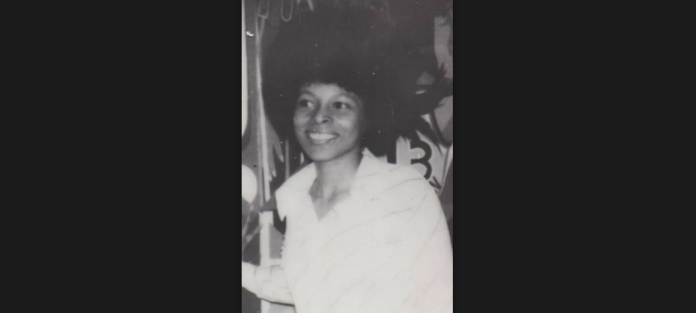
A black and white photo of Assata Shakur smiling.
PHOTO: Trenton Times / Wikimedia Commons

By: Zainab Salam, Opinions Editor

Content warning: mentions of solitary confinement.

Humans of all walks of life leave an imprint as they live. But once they’re gone, this imprint solidifies itself into a legacy. Assata Olugbala Shakur is one of those people. Born JoAnne Deborah Bryon in 1947, she grew up in New York and North Carolina. As a young Black woman exposed to structural inequalities, Shakur forged her identity through acts of liberation. 

Raised by her mother, grandparents, and aunt Evelyn A. Williams — a civil rights organizer — Shakur grew up amid financial instability. As a child, she experienced segregated and integrated schooling, and later became increasingly aware of the distortions of official histories taught in classrooms. 

During her university years, she became involved in anti-war and civil rights organization. These environments encouraged her to study revolutionary movements globally and view Black liberation in connection to anti-colonialism. With the intensification of her activism came the target on her back.  

In a move to reclaim her identity, Shakur changed her name to reflect her connection to her roots. She chose Assata (“she who struggles” in Swahili) Olugbala (“love for the people” in Yoruban) Shakur (“the thankful” in Arabic). The choice to have Shakur as her last name is particularly meaningful, as it was the name of her comrade: Zayd Malik Shakur. 

Shakur experienced the criminalization faced by many Black activists of her era. Like countless other freedom fighters, she was publicly framed as a criminal, cast by law enforcement and media narratives as a dangerous enemy. In reality, her prosecution reflected deeply entrenched patterns of oppression and violence directed towards Black people and Black liberation movements.  

Shakur was involved with the Black Panther Party, and later, the Black Liberation Army, a Marxist underground armed group fighting for internal community security from law enforcement. She demonstrated a deep commitment to community organizing, political education, and anti-imperialist struggle during a period marked by intense state repression of Black activism, and civil rights organizing. 

In 1973, Shakur, along with two of her comrades, Zayd Malik Shakur and Sundiata Acoli, were pulled over on a New Jersey turnpike for a faulty tail light. With the escalation of the state trooper, Zayd and the state trooper were killed. The wound and overall violence that she sustained became central to interpretations of the event, with Shakur later recounting the altercation in Assata: An Autobiography. In the aftermath of this incident, Shakur’s name was firmly etched into public record and national debate.

Following this, Shakur faced a highly publicized trial that would dominate headlines and legal debates for years. In 1977, she was convicted of first degree murder for the death of the state trooper, and was sentenced to life in prison. The proceedings were emblematic of the broader systemic bias against Black people — an all-white jury that set forth a guilty verdict based on a witness testimony and no concrete evidence. 

Her prison sentence consisted of a list of inhumane treatment, including periods of solitary confinement, which she later described as both physically and psychologically taxing. With the help of a network of individuals from the Black Liberation Army, she escaped prison in 1979. Following her escape she remained in the US, in hiding, until she secured political asylum in Cuba, in 1984. 

Central to her message is the importance of fighting capitalistic ideologies as they sustain racial oppression. Shakur linked Black liberation to broader struggles against capitalism and class exploitation. Drawing from global anti-colonial movements, she argued that liberation could not be achieved solely by removing overt racial domination if exploitative systems remained intact. Reflecting on African independence struggles, many movements recognized that without dismantling capitalist structures, political freedom would simply reproduce new hierarchies of power. This perspective led Shakur to frame oppression as rooted in both race and class — highlighting that economic inequality allows the elites, regardless of their race, to benefit from systems that marginalize working people. 

Yet Shakur’s political philosophy is not limited to her critique. In her poem “Affirmations,” Shakur asserts her philosophy: “I believe in living. / I believe in birth. / I believe in the sweat of love / and in the fire of truth.” She explains, “I have been locked by the lawless. / Handcuffed by the haters. / Gagged by the greedy. / And, if I know any thing at all, / it’s that a wall is just a wall / and nothing more at all. / It can be broken down.” 

Words are as much a weapon as any other; perhaps more effective. Words have the capacity to challenge dominant narratives, preserve experiences that might otherwise be erased, and inspire resistance long after the conditions that produced them have shifted. 

What remains most accessible to us, is Shakur’s legacy through her written and spoken words, which continue to commemorate and transmit her philosophies. Her writing, particularly her autobiography, has since publication become foundational to contemporary movements for racial justice. Her memoir is widely regarded as a crucial text in civil rights literature. It documents her arduous journey through systemic racial violence in the US, and her dedication to fighting for dignity and self-determination. 

Despite decades of exile in Cuba, Shakur’s imprint remains tangible in global political discourse, inspiring artists, organizers, and scholars who continue to engage her work as both historical testimony and living political theory. 

Shakur passed away in September of 2025, in Havana, Cuba, at the age of 78. Her passing marked the end of a life that remained politically charged until its final moments. Many see her as a revolutionary thinker while some continue to view her through a criminalized lens.

Until her passing, she had been the first woman to be included in the US’ Federal Bureau of Investigation most-wanted list. She had been added to that list in 2013, with a whopping $2 million dollars reward for whomever helps catch her. Suffice to say, she died a free woman.

Hootsuite faces backlash following ICE contract

0
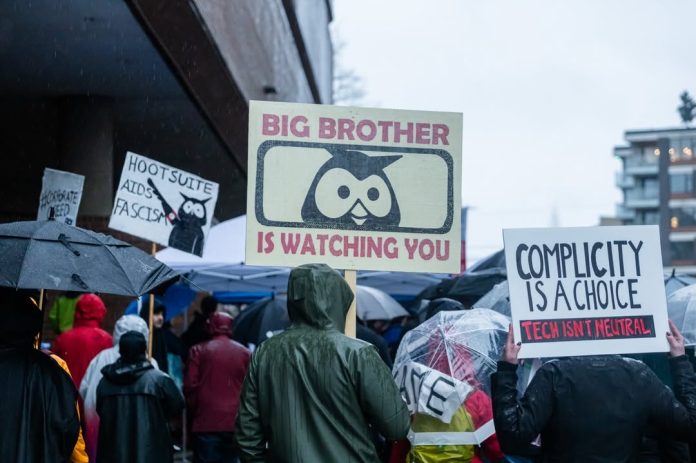
A crowd of people with their backs to the camera hold signs. Three of them read, “big brother is watching you,” “complicity is a choice: tech isn’t neutral,” and “Hootsuite aids fascism” with the Hootsuite owl logo.
PHOTO: @ryanwalterwagner / Instagram

By: Lucaiah Smith-Miodownik, News Writer

Recently, Vancouver-based company Hootsuite has come under fire for its contract with the US Department of Homeland Security (DHS), the governmental agency which contains Immigration and Customs Enforcement (ICE) and US Customs and Border Protection.

Hootsuite is an “all-in-one social media management tool” designed to help individuals and businesses manage their online presence. The corporation signed onto an agreement with the DHS beginning in August 2024 through a third-party contractor. A message on the DHS website stated that the organization “will only use Hootsuite to manage DHS social media accounts listed on the DHS Social Media Directory to improve the delivery of information and services to the general public, while promoting transparency and accountability, as a service for those seeking information about, or services from, the Department.” 

While set to expire in August of this year, the contract includes an optional renewal through mid-August 2029, amounting to a payout of up to $3.8 million.

This is not the first time Hootsuite has partnered with the DHS. The social media company signed a three-year contract with ICE in 2020, only to reverse course due to subsequent backlash. Similar resistance has occurred in recent weeks, but the company has no intention of voiding their agreement this time, “so long as the agency abides by the terms of service.” Hootsuite’s acceptable rules of use dictate that their technology may not be used “for law enforcement, surveillance, tracking, etc.”

ICE is now the single “highest-funded US law enforcement agency,” with a budget of $116 billion. The Trump administration has stated goals of up to 1 million deportations per year, as ICE agents increasingly arrest and detain immigrants with no criminal record, violate America’s Fourth Amendment, and murder detainees and protesters alike. The Fourth Amendment protects against unreasonable searches and seizures, requiring law enforcement to obtain warrants based on probable cause

The Peak reached out to Hootsuite for more information. The company said it had nothing new to add, pointing to a public letter from CEO Irina Novoselsky that reiterates the corporation’s stance on surveillance and tracking.

The Peak also spoke with Prem Sylvester, a researcher and project co-lead at the Digital Democracies Institute, for more information on Hootsuite’s statements. The SFU institute brings researchers with backgrounds in an array of disciplines together to “create critical and creative responses to our data-filled world.”

Speaking on the difference between surveillance and the delivery of insights via Hootsuite, Sylvester noted, “We think of those two as separate activities, whereas it’s evidently not been the case that the kind of language and the kind of rhetoric that ICE uses on social media posts is separate from how they conceive of this idea of the quote-unquote ‘illegal immigrant’ and how that sort of language and rhetoric is weaponized.

“How ICE figures out the language that is useful for them to use on social media is due to tools like Hootsuite that give them the ability to understand what their audience wants.”

— Prem Sylvester, researcher and project co-lead at the Digital Democracies Institute

Such technology allows the DHS to see “what gets more views, what gets more engagement with their post, and therefore sort of advances that rhetoric, that language, that sort of project of dehumanization,” said Sylvester.

Mike Tan, Hootsuite’s first finance executive, addressed a crowd of about 250 people at a protest last month, according to CBC.I see all the violence that’s taking place,” he said in reference to ICE, “shame on Hootsuite.”

BC Federation of Students rallies against post-secondary funding cuts

0
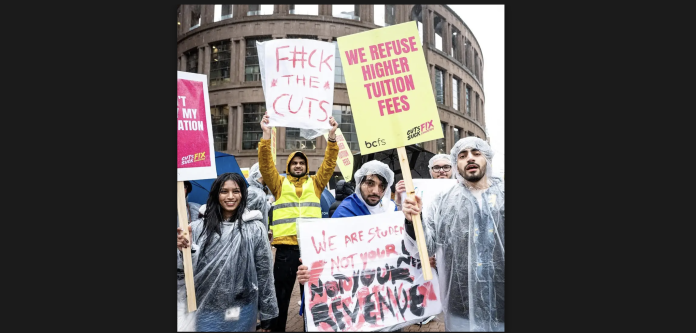
A group of protestors in ponchos smile for the camera and and hold their neon signs. Some of them read, “we refuse higher tuition fees,” “f#ck the cuts,” and “we are students, not your revenue.”
PHOTO: Courtesy of @thebcfs / Instagram

By: Maya Barillas Mohan, Staff Writer

Despite concerns that rain could dampen turnout, Cole Reinbold, secretary treasurer of the BC Federation of Students (BCFS), said the significance of their cause would keep people engaged.

Reinbold was right: On January 31, in front of the Vancouver Public Library, a healthy crowd veiled in clear plastic ponchos gathered for a rally organized by the BCFS despite the weight of the downpour. The issue of deepening financial inaccessibility to education was important to everyone who congregated at West Georgia and Homer — a location selected because “libraries are publicly funded, just like universities are,” Reinbold told The Peak. “We wanted to be as visible as possible to the public, premier, and federal government.” 

Public funding for post-secondary education “has dropped from 68% in 2000 to just 40% today,” according to the BCFS. “This budgeting shows education is not a priority,” forcing institutions to “cut themselves to the bone.” Reinbold expressed that currently, entire programs are being cut, thousands of staff are being laid off, and some campuses are closing. The rally sought to draw attention to the severity of the situation.

“Tuition fees are the only thing that has kept pace with inflation,” said Reinbold. “We knew the system was built on a precarious foundation propped up by international student tuition,” but then Immigration, Refugees and Citizenship Canada cut international study permits and sent many institutions into a deficit. She also noted that grants haven’t increased since 2003, and the tuition limit policy is in danger. The policy states the “limit for tuition and mandatory fees is 2%,” but in November 2025, the government was “considering removing, weakening, or making exceptions” to it.

“British Columbians should be angry,” Reinbold continued. “When we price people out of the system, we won’t have enough nurses to take care of your parents, not enough teachers to teach your kids, and not enough social workers to help community members that need them. 

“It’s not about students demanding more, it’s about students taking that step up for all of BC and demanding better.” — Cole Reinbold, secretary treasurer of the BC Federation of Students

Reinbold and another speaker at the rally, James, noted that first-generation learners and lower income families have to work harder and might even reconfigure plans due to cost and competition. Reinbold said she wouldn’t have been able to complete her degree if tuition went up any further, as she was already working three jobs. 

James proclaimed that paying for university-level education in 1999 was difficult but doable on a minimum wage. His fragile financial situation made his journey back to school take 20 years.

Another speaker, Anabelle Lee, an Okanagan College Student Union representative, raised a similar point, saying, “Students are not just learners, they are renters, caregivers, workers, taxpayers, and community builders.” She added that many students are forced to choose between their education and their lives, as support services like food banks are overwhelmed, and students skip meals for tuition. 

Reinbold concluded, “It really is that simple to fix; we need our government to prioritize education.” 

“When students have a chance to succeed, society benefits as a whole,” Lee shouted. “When classrooms disappear, communities disappear with them.”

The BCFS created an email template for contacting the Minister of Post-Secondary Education at www.cutssuck.ca

Not all sex workers have the same experience

0
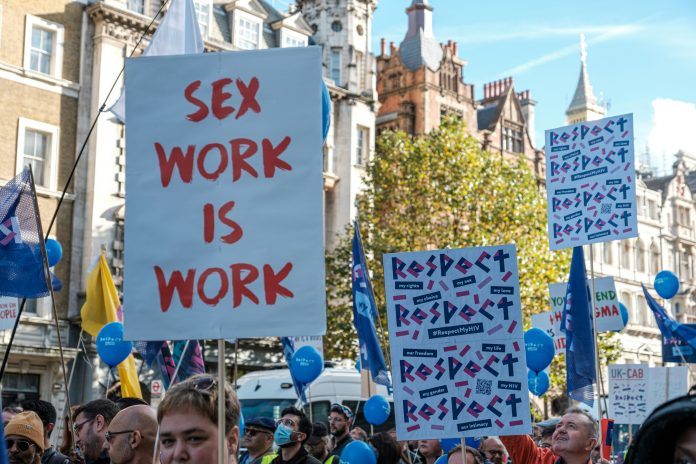
a photo of a protest in solitary with sex workers. There is a person holding a sign that reads: “sex work is work.”
PHOTO: Ehimetalor Akhere Unuabona / Unsplash

By: Heidi Kwok, Staff Writer

There are sex workers who engage in the consensual exchange of sexual services of their own volition; some out of the prospect of financial freedom and bodily agency, others in a journey to explore their own sexuality, among other motivations. While sex work is very much a legitimate form of labour, it’s also an industry that’s exploitative. A wide body of research suggests that vulnerable demographics, including women, racialized individuals, Indigenous Peoples, and people with disabilities, are unduly overrepresented in the sex industry. A 2021 sex worker survey conducted by local advocacy organizations had 73% of respondents reported having a disability, while 45% of street-level sex workers in Vancouver identified as Indigenous women. A product of colonial violence — some Indigenous women engage in sex work as means of survival because of racism and limited economic opportunities. Therefore, narratives that frame sex work as empowering and a form of bodily autonomy, while ignoring the harmful side of the sex work industry, can be problematic. This framing doesn’t fully depict the range of the realities of economic coercion, migrant precarity, racism, and/or gendered violence that pushed these disproportionately represented minority groups into this industry. 

Recognizing the nuance of sex work is the first step to attaining justice and equity for these vulnerable groups, and must be followed by supporting their health and well-being. This requires going beyond sex-positive narratives, which champion personal choice and eliminating judgment from sexual pleasure. Instead, we should advocate for amended legislation, increased social support funding, and efforts to address the root causes of sexual exploitation while addressing the needs of those who are willingly participating in sex work. 

General public perceptions surrounding sex work have been shaped by overly simplified end-demand narratives that promote criminalization as the only solution to eliminating sexual exploitation and sex trafficking. However, research shows that criminalization has only contributed to further stigma, marginalization, and violence against sex workers. This especially affects those working in street-based environments who are exposed to excessive policing and possible prostitution offences. Combatting exploitation requires changing existing legislation, such as Bill C-36, the Protection of Communities and Exploited Persons Act. This bill outlaws the purchase of sexual services and limits certain conditions of the transactional process (such as the procurement of services in public spaces) from both buyer and seller, to the effect of making it more difficult for workers to screen potential clients to ensure their own safety. 

Criminalization is plainly an ineffective solution to exploitation of sex workers. But decriminalization on its own is not enough either. The Canadian Public Health Association has called on local governments to invest in stronger and long-term social services to safeguard against the associated risks of sex work. Moreover, organizations such as PACE Society, WISH Drop-In Centre Society, and the Health Initiative for Men provide and advocate for more accessible avenues of reporting harmful experiences, expanded peer-based programs, sex-worker-specific healthcare programs, provision of legal aid, provision of public washrooms, and more. This demand couldn’t come at a more urgent time when numerous sex-worker-serving organizations in Vancouver’s Downtown Eastside have been forced to suspend operations because of uncertain future funding.

In an interview with The Tyee, Susan Davis, the executive director for the BC Coalition of Experiential Communities and sex worker of 38 years, told the publication that, “the government should provide stable, ongoing funding for organizations supporting sex workers, rather than less predictable annual grant-based funding.”

Social supports aside, concrete actions to address structural inequalities underlying coercion into sex work are the key to promoting the rights and safety of unwilling sex workers. Some researchers have promoted structural interventions over legal reform to secure social justice for precarious individuals who enter into the industry out of financial hardships, limited educational attainment, improper housing, and lack of mental and physical health supports, to name a few. 

While different people have different experiences with sex work, ranging from empowerment, perhaps a discovery of enjoyment, to dislike — sex workers need better rights and legal protections. Empowerment is one aspect but exploitation is another looming aspect that lives within the industry and shapes the work. As we learn more from the horrific release of the Epstein files where women and children were sex trafficked, it’s abundantly clear how much exploitation is enmeshed within the industry and better structures are needed to protect marginalized folks who are most affected. It is so systematically engrained that conversations about autonomy are beyond empowerment, and should be about financial and personal safety. The industry does not support and protect our most vulnerable, and we must do better for them at a systemic level.

We should be providing an environment that’s safe for those who want to stay and a pathway for those who want to leave.

“Science lost to fear”: BC’s halted drug decriminalization program

0
A photo of the parliament building in Victoria.
PHOTO: Parsa Mivehchi / The Peak

By: Olivia Sherman, Peak Associate

In January 2026, the BC government announced their drug decriminalization policy “has not delivered the results we hoped for” and that the province would not seek renewal from the federal government. The three-year pilot program, an exemption to the Controlled Drugs and Substances Act (CDSA), began in 2023 and allowed adults over 18 to carry a cumulative 2.5 grams of illicit drugs, such as cocaine, methamphetamine, and opioids, without police confiscation or seizures. As drug deaths increased through the province, it was intended to treat substance use and addiction as a health issue and not a criminal one. With the policy repealed, confiscations and arrests for drug-related charges for personal use have resumed in BC starting January 30. 

BC Premier David Eby stated that the policy “didn’t work and we ended that.” However, Dr. Kora DeBeck, distinguished professor of drug policy and substance use at SFU, told The Peak the program “accomplished what it was set out to do,” which was to address, “that criminalizing people who use drugs is a real failure.”

Dr. Kennedy Stewart, professor of public policy at SFU, told The Peak that, in his term as mayor of the City of Vancouver, he would receive weekly emails noting how many people had died in the city of toxic drugs that week. He added, “That’s really what prompted me to have an overdose task force to pursue decriminalization.” Since it was declared a public health emergency in 2016, the toxic drug crisis has claimed over 16,000 lives. It’s important to note that Indigenous communities have been disproportionately impacted by substance use. The intergenerational trauma of settler colonialism via institutions like residential schools and the foster care system are partly responsible for Indigenous people dying from toxic drugs 5.4 times more than other BC residents. 

According to Stewart, the drug decriminalization program was not intended to address the toxic drug crisis in the province, but was a tool to allow people leeway to access services judgment-free. Decriminalization “was never intended to fix the entire problem,” he explained, saying the province understood “that it was just going to make a small difference.” He said, when drugs are criminalized, people who use drugs may not seek the help they need in fear of retaliation, arrest, or drug confiscation. This necessary help can include rehabilitation services or more dire medical attention, as well as reluctance to visit drug testing services at the risk of their own safety from toxic and tampered drugs. Since decriminalization, BC has seen an increase in utilization of overdose prevention sites and supervised consumption sites, as well as drug checking services. 

Within the first year of the policy, several amendments were made, which Stewart says reduced the potential for the policy to save lives. Bill 34 prohibited consumption of drugs in public. Shortly after, it was amended to restrict drug use to legal consumption sites and overdose prevention sites, as well as people’s own residences and legal shelters. The Harm Reduction Nurses Association filed an injunction arguing the Bill would lead to more people using drugs alone and in private, which poses a greater risk for overdose. Bill 34 was repealed a year later.

In the context of Vancouver’s ongoing housing crisis, DeBeck noted that many supportive housing facilities are small, have harsh restrictions on guests within units, and often prohibit drug use. Homelessness and the toxic drug crisis are what lead to more public drug use and street disorder like mental health crises, crime, and people sheltering on streets. Debeck noted that despite this narrative that drug decriminalization caused “street disorder,” there is no evidence to confirm this. DeBeck raised concerns about an increased police presence on not just individuals who use drugs, but surrounding communities. “When people have their drugs seized, they’re quite likely to go and commit crime to raise funds to replace their drugs,” she said.

“Policing doesn’t stop the trajectory of drug use. It doesn’t stop the trajectory of addiction.”

— Kora DeBeck, distinguished professor of drug policy and substance use at SFU

Stewart suggested the policy was reversed due to widespread political pressure following that visibility, and “politicians capitalizing on misery for political gain, which is totally shameful.” 

Stewart, who carried the drug decriminalization policy to the federal government in 2018 noted the province saw a decline in a number of arrests for possession offences in the first year of decriminalization. With the policy repealed by January 30, the BC RCMP claims to maintain “a measured approach” to enforcement efforts against offences to the CDSA and is committed to “working with our partners to find solutions” to mental health and addiction issues. “They caved in to the opposition’s demands and the misinformation that’s been spread,” he continued. “Science really lost to fear.” 

“Police have always been a very poor tool for addressing street disorder and public drug use and homelessness,” DeBeck said. “Those are not issues that we can arrest our way out of. We can’t ticket our way out of them. These are very systemic, structural problems. In the long-term, the key really is housing, making sure people have alternative spaces to be, making sure they have homes, making sure they have other places to be right now.” Stewart added, “Innovation has never come from the RCMP, it has always come from independent police services,” such as safer supply.

Solutions to Vancouver’s drug crisis can’t work independently of each other, as factors such as increasing homelessness, mental health concerns, and toxic drugs exacerbate the substance use and overdose crisis. DeBeck explained that added sedatives in drugs that are circulated in BC often have a “destabilizing effect” on people which strains “their ability to engage with health services, their ability to get housing, to maintain housing, to just function and take care of themselves.” 

Alongside expanded resources and phone lines for help services, BC is also expanding involuntary care in order to provide care to those “so unwell they can’t make decisions about their own safety,” announced Eby. However, drug policy scholars like DeBeck and Stewart say that involuntary care does more harm than good, especially to marginalized groups with histories of institutionalization and incarceration. “As a scientist, I am certainly incredibly opposed to it as a policy,” said DeBeck, concerned that the threat of involuntary care will deter people from seeking and receiving necessary help. She also referenced how 300 nurses have signed a petition opposed to the NDP’s expansion of involuntary care. As Thea Sheridan-Jonah, a member of the Canadian Students for Sensible Drug Policy, told Global News, “involuntary treatment is a traumatic experience that increases someone’s overdose risk and does not support long-term recovery or mental health.”

“I have spent time with people in involuntary care and it’s a pretty horrendous experience,” Stewart elaborates. “You’re restrained, often given treatments against your will. 

“The province really isn’t giving any solutions and just seem content to watch the bodies pile up. And that’s not what a responsible government does.” Stewart claimed this is considered a “state failure.” He added

 “If the government can’t solve this problem, this current crop of politicians aren’t up to the job.”

— Dr. Kennedy Stewart, professor of public policy at SFU and former Vancouver mayor

“And yet, today, one person will die in Vancouver and six people across the province will die. That’s the reality we’re in.”

Celebrating Black Futures 2026 at the Vancouver Art Gallery

0
PHOTO: Courtesy of Kika Memeh

By: Jonah Lazar, Staff Writer

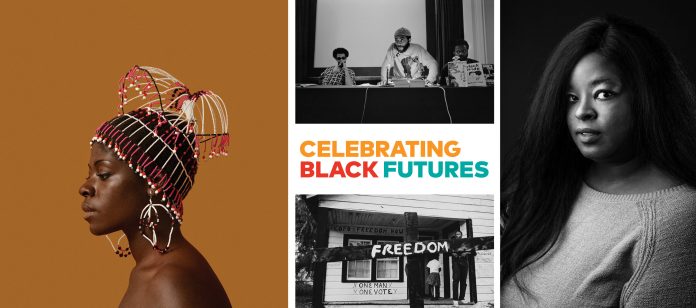
Throughout February, the Vancouver Art Gallery, in partnership with the VIFF and the Black Arts Centre, is hosting Celebrating Black Futures 2026. It looks to spotlight Black and African artists, while sparking meaningful discourse and critical reflection among its guests. This public programme began on February 7 with Haitian Canadian poet Junie Désil leading a generative writing workshop, with a BC premiere of the film Black is Beautiful: the Kwame Brathwaite Story four days later. Then, former members of the Student Nonviolent Coordinating Committee led a panel discussion on photography and social justice on February 14. The programme concludes on February 28 with a BC premiere of Michèle Stephenson’s True North and a concert by the composer of the documentary’s score, Canadian jazz pianist Andy Milne. I spoke with the curator and organizer of Celebrating Black Futures 2026, Kika Memeh via email, to learn more about the programme and its ambitions: 

What drew you to the events you selected for Celebrating Black Futures 2026?    

It’s necessary to create multiple, accessible entry points for people to engage with art. With most of the events being interdisciplinary, writing and film, it’s an avenue to get guests to actively participate in personal interpretation, draw connections between our exhibitions and the world around us, and discover new artists that are outside one’s field of vision. 


A few of these events aim to start conversations on the intersections between Black experiences and the experiences of other marginalized groups. What role do you see art as having in these conversations?    

Art plays an essential role in thoughtfully provoking these conversations. Either through offering space for a multiplicity of interpretations, which often reveals intersections in thoughts and experiences, or through the subject matter of the work being universally relatable across different groups. 


What do you want audiences to take away from these events? 

The foremost goal is for the audience to become acquainted with artists beyond their purview. Another goal is for audiences to leave with an expanded understanding of the works on view at the gallery. The writing workshop, for instance, invites guests to reflect deeply on the works of Indigenous artists featured in the gallery’s exhibition We who have known tides: Indigenous Art from the Collection, but through the words and musings of writers such as Dionne Brand, Toni Morrison, Leanne Betasamosake Simpson, and the thoughtful guiding of Vancouver-based poet, Junie Désil. The last but not the least takeaway should be a whetted appetite for engagement in global conversations beyond Canadian contexts. This is paramount for sustaining a well-rounded, conscientious cultural sector.

“A thriving metropolis like Vancouver requires consistent participation in cultural dialogues, especially those concerning Black and African experiences.” — Kika Memeh, curator of Celebrating Black Futures 2026

Because Canada — and specifically Vancouver and BC — has longstanding historical ties to the African diaspora and the African continent. 

Lastly, do you have any final words for potential attendees?   

Continue to nurture an honest curiosity for a world beyond what you’re accustomed to. Your curiosity and interest in art and artists beyond your field of vision is necessary in continuing these conversations at the gallery and expanding our art landscape into one of fully global relevance.

Check out the concluding act of Celebrating Black Futures 2026 with jazz pianist Andy Milne’s concert, followed by the BC premiere of True North, on February 28.