Home Blog Page 1197

Winter Safety Tips

0

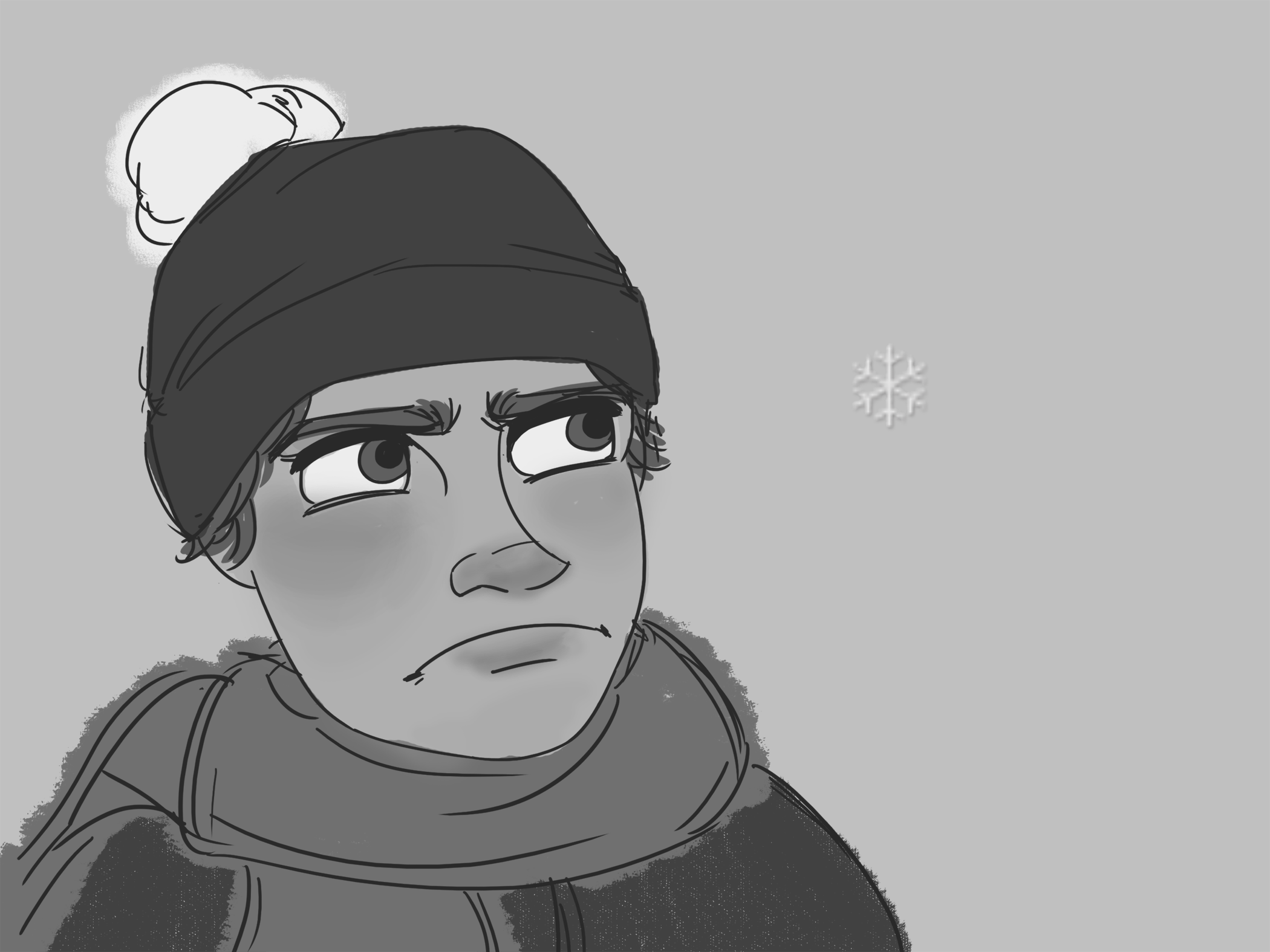
If there’s one season that really wreaks havoc on SFU, it’s winter. Spring, summer and fall usually pass by without too much of a ruckus but every year between around December 21 and March 20, the talk of how dangerous it’s going to be up Burnaby Mountain reaches extreme highs.

For the most part the actual conditions aren’t that bad but if you want to sleep in or have an excuse to hand in papers late you better be prepared to be overly precautious. Here’s a few safety tips on being dramatic about safety in the snow, winter driving and more mostly-imagined problems.

-Listen to weather forecasts and if the word “snow” is used do NOT attempt get out of bed (this applies even if you live in residence)

-Even if the word “snow” is used in the sentence “there shouldn’t be any snow today” you still shouldn’t leave your home as the mere mention of snow could cause you to walk timidly and fall.

– If the word “snow” is not in any weather reports but you think it’s implied because they talked about rain or clouds which are related to snow, you should definitely not travel and are advised to watch season 1 of The Wire all day instead.

-The best way to avoid getting stuck while driving up the hill is to never drive to school and get started on season two of The Wire.

– Don’t go outside at SFU without at least five layers of clothing and a winter-jacket. If you don’t own these you should go out immediately while it’s still nice and purchase seasons three, four and five of The Wire.

-The weather can change in a flash so you should probably just stay home all semester watching acclaimed TV dramas.

– To ensure that you avoid getting stuck while driving, you are best advised to quit school and move somewhere less dangerous.

-If you do get stranded in your car, remember that drinking alcohol hastens the loss of body heat so you should have already dropped out of SFU, moved to Fort Lauderdale, Florida where you could be hammered and be half-way through Breaking Bad by now. 

Funny Page Recaps

0

Plot updates for all the most popular syndicated comic strips we can’t afford to publish.


Adam@home: Adam spent time with his family and didn’t leave his home.

Garfield: Jon put Garfield on another diet. The results were less than exceptional.

Rex Morgan MD: Rex got home after work and sat down on a couch.

Dilbert: Dilbert took in the minutiae of office life in stride while Wally acted more cynically.

Tundra: Humorously drawn characters reacted to puns.

Peanuts: Charlie Brown finally kicked a perfect field goal. It was less satisfying than he would’ve imagined.

Doonesbury: Doonesbury went on another diet. The results were less than exceptional.

“Deranged mountain man” publicly executed after “stealing Christmas”

0

WHOVILLE — The man who was believed to be responsible for having literally stolen Christmas from the quiet mountain town of Whoville was allegedly executed in a violent, public demonstration.

According to police reports, a 53-year old man who called himself “the Grinch”, snuck into every single person’s house on Christmas Eve and stole all their gifts, toys, decorations and food. Strangely however, he did not steal any furniture, appliances or wiring.

“He stole everything . . . even the crumbs,” said one of the residents who lost everything, “How do you even steal crumbs?”

Previous to this incident, “the Grinch” had no criminal record, and was not seen often by residents as he lived up the mountain. However, the few times he came down the mountain, his presence disturbed some residents.

“Well, he’d scare the children, always going on about how much he hated Christmas, and going on long winded rants about corporations and consumerism” said one devastated Whovillian.

On top of the initial crime, for unknown reasons, “the Grinch” returned Christmas morning and gave back all the presents to the community. Not realizing that he was responsible for the theft, they invited him for their Christmas feast.

“We kind of just assumed that he must have beat up the robber or something, we wouldn’t think that somebody would not only rob us on Christmas, but come back and taunt us, flaunt his luck,” one Who was quoted as saying.

However, there was one witness who saw the Grinch during his robbing spree, a little girl, and immediately after the Grinch had cut the roast beast realized that it was he who had stolen her Christmas tree, having claimed that he was taking it back to the North Pole.

Stories of what happened next change from person to person, but all who’s willing to talk agreed that he was at least burnt, hanged, beheaded and defecated upon. Police did confirm that they had a burnt head in their possession but would not confirm it was that of “the Grinch.”

Some accounts suggest that as he was being dragged to his death, he cried for mercy, claiming that he had a change of heart and that he had realized the true meaning of Christmas.

He claimed it was their forgiveness and happiness that made him change his tune. However, the who’s, not being idiots, didn’t buy it considering his violent demise.

“He thinks he can steal from us who’s and get away with it? Well, I’m sure he thinks different now,” said one angry Who, “well actually he probably doesn’t think at all considering he’s dead, but at least justice has been served.”

Police would like to remind the public that vigilantism is not justice and that justice requires due process. In addition, they state that the who’s were promptly executed for their crimes.

Street performer struggling to juggle career and seven chainsaws

0

GRANVILLE ISLAND— A local street performer who has spent the last five years of his life putting in over 60 hours a week working at his juggling act is having a difficult time managing to keep that up and also juggle seven chainsaws.

Rodney Pipers, a 35-year old struggling juggling artist told The Peak that he has been caused great stress trying to maintain his career while also trying to keep up his newest challenging, extremely difficult stunt.

“It’s mostly just the ‘juggling seven chainsaws part’ that’s been really hard” Pipers explained, “The career part is fine, that’s pretty simple but I even struggle juggling seven balls and those won’t even decapitate me if I screw up.”

Pipers isn’t quite sure how he’s going to juggle everything he has going on right now and has said when you throw family into the mix it gets even more difficult.

“I’ve got three kids to support on top of all this” he complained clutching his forehead in stress, “If I make a mistake juggling them the court might take them away . . . and the three kids, two fireballs trick is the crown jewel of my act!”

While Pipers still doesn’t have a plan on how he’s going to maintain the delicate balance between spending time on his career, spending time with his family and juggling seven-running chainsaws, he say the problem isn’t really that complicated.

“Again, it’s pretty much just the chainsaw-thing that’s a problem, the other stuff is fairly straight-forward.”

Mental Alopecia #1

0

Throwback Thursday: SFSS Fall Kickoff

1

As the semester comes to a close, here’s a quick look back at one of the bigger events that kicked off our school year.

Created by Brandon Hillier

Professor under fire after critiquing African economic data

2

prof

An SFU professor’s newly released book critiquing African statistical data has caused an uproar across Africa, resulting in his explusion from two international conferences this year.

Morten Jerven, an international studies professor who has spent four years researching in Africa, met great resistance from several powerful African officials after launching his book, Poor Numbers, earlier this year. Since then, Jerven has been called a “hired gun” of the West who must be “stopped in his tracks” before he completely discredits African governments.

Poor Numbers’ main conclusion points to the lack of knowledge people actually have about economic development in Africa due to poorly collected economic data. Although issues with recording such data occur in every country, Jerven argues that there is a radical difference when you consider a third-world country because much of the important economic activity is not properly recorded or reported.

“Some of the economic statistics is pure guesswork. A lot of it is completely meaningless.”

– Morten Jerven,
SFU professor and author


Jerven explained, “Some of the economic statistics is pure guesswork. A lot of it is completely meaningless, and there is no way you can for instance download the data and pretend you’re saying something useful.”

The problem with these discrepancies is that measures like GDP are used to decide whether a country is low-income or not. This data can help a country decide whether to pursue a specific policy — if it proved successful — and can also serve as a benchmark for benefactor nations or the World Bank.

However, with poor statistical reporting, the data can be skewed one way or another to the country’s benefit, argues Jerven. “If a country like Southern Sudan wished to under report its income so that it continues to be classified as a poor country, so that it continues to get support from the World Bank, it can do so at the expense of another country that could have got that money,” said Jerven.

Jerven uses the example of Malawi, which according to his findings overstated its agricultural growth for many years to the extent that maize production was assumed to be 50 to 60 per cent higher than it actually was. “That’s many many meals,” said Jerven. “The practical implication is that we might go around thinking that someone is well-fed and that they’re going to school and they’re out of the poverty line when they’re actually not.”

Jerven’s book has been praised by the IMF, the African Development Bank, and even Bill Gates, who says the book “makes a strong case” for casting doubt on official GDP numbers. However, not all feedback has been positive.


African officials have called Jerven a “hired gun” of the West who must be “stopped in his tracks.”


Jerven’s critics, led by South African statistician-general Pali Lehohla, pressured a United Nations commission to remove him from the speakers list at a conference in September in Addis Ababa, threatening that no South African delegates would attend otherwise. Jerven was also prevented from speaking at a conference in Paris in May, where his session was moved to be behind closed doors.

Zambia’s central statistical office has also joined the debate. In a 13-page statement, the office accused Jerven as having a “hidden agenda” to “discredit” African officials. It also accused him of “sneaking in” to government offices and “taking advantage” of junior statisticians.

Jerven replied to these comments on the site African Arguments, saying, “The allegations that I am a ‘hired gun’ or ‘that I have not done my research’ are of course ridiculous and entirely false. With Lehohla putting his emphasis on “stopping Jerven in his tracks” before he “hijacks the African statistical agenda” the immediate danger is that good initiatives will be suspended and cancelled. In the long term, statistical offices in the region may struggle for survival.”

Although many are still angry, it seems that tides are turning in favour of opening dialogue. In December, Jerven will attend the ninth African Symposium on Statistical Development in Gaborone to have an “open and frank discussion” to resolve his differences with some of Africa’s most important statisticians.

“That invitation was written by the people who are the angriest at me,” said Jerven. “It will probably be me and nine officials on the other side of the table with their cannons aimed at me, so we will see . . . it’s going to be fun.”

Leaving a Digital Trail

0

8467202392_e26d157dca_b

What if I told you that digital privacy doesn’t exist? That every website we search, every keystroke we make, every text message we believe to be private is being monitored, or can easily be traced back to us? That these notions we hold of the protection of our privacy are completely pointless? That we are virtually helpless to protecting ourselves, and that our attempts have always been in vain?

Surveillance programs and government agencies across the globe have the power to track everything that we say and do online. They know virtually everything about us — they even have the power to predict our online movements before we make them. Our society cowers helplessly under the weight of digital technologies and the ghostly unseen who control them. What’s worse is that we’re barely aware of it, as I so dauntingly learned at the film screening of Terms and Conditions May Apply, during this year’s Media Democracy Days on Nov. 8–9.

The film reveals the truth of today’s digital communications by revealing what we really submit to when we click “I agree” to the terms and conditions for website services, such as Facebook and Twitter.

Our lack of critical thinking is what feeds Internet services and propels them to take advantage of us.

Terms and conditions are gateways for the world wide web to steal our Internet souls and use them to lurk in the shadows behind us, take advantage of the ways we think, and manipulate us. So, what do we agree to when we mindlessly click the “I agree” button? How exactly is our privacy being violated? Read on and you shall find out.

We allow Internet services to use our personal data.

If you’ve ever read Google’s terms of agreement — and I’m willing to bet you haven’t — you’ll know that Google’s terms allow the service to track user Internet cookies. Cookies are the bits of data we leave behind on every website we visit. Using these cookies, Google creates an algorithm that learns over time which websites we visit most frequently. This means that whenever we search for something on Google, the top results will always reflect websites the search engine believes we will be more inclined to enjoy than others.

Every time we use the Internet, we essentially leave a breadcrumb trail for Google to stalk us with! Feel free to test this for yourself: Grab a few of your friends, pull out your smart phones or laptops, and individually search the same topic. Most likely, your search results will be slightly different from the person next to you, reflecting the website content you, personally, favour.

How does this invade our privacy? Google employees, not to mention countless other website services, can track our movements online through our website histories and predict what we might search for next. They can research what we say, what we do, and, in a sense, what we think. It’s disturbing to think that a simple Internet search engine has the power to execute this, and downright terrifying to think of the billions of Internet users who are being taken advantage of by Google every single day.

We allow services to change terms and conditions at any time.

We as a society have adapted far too easily to the default settings on Internet services. If the default setting is set to public, most of us are unlikely to bat an eye. Our lack of critical thinking is what feeds Internet services and propels them to take advantage of us. In many cases, these websites are so confident in our online acquiescence that they decide to silently change their terms and conditions — from right under users’ noses.

Take Facebook, for example. In 2009, Facebook knowingly changed the fine print of their terms and conditions, without alerting any of its users. As a result, information that had been private suddenly became completely public — all except the user’s birthday and contact information. These changes sparked an angry outcry from Facebookers who felt their privacy had been violated without their consent.

But this wasn’t the first time Facebook had taken steps to make its users’ information more public — it’s only the most prominent. Since 2007, the site has gradually been altering its terms of service so that increasing amounts of information become public each year, violating the privacy of millions of users. For a social network that prides itself on connecting us with our “inner circle of friends,” it’s worth noting that Facebook seems intent on connecting us with pretty much everyone else, too.

We allow services to make our information “anonymous.”

Take note of the quotation marks on the word anonymous. Any terms that include the word anonymous, or claim that you are an anonymous user of their service, are outright lies. Nothing on the Internet is anonymous — it’s just not how the web works.

For example, in 2006, AOL spontaneously turned over a plethora of anonymized searched records from its users. Within only a few hours, reporters had decrypted exactly who many of these users were. They did so by matching user numbers with the different search terms the users had typed into the system. As a result, reporters were able to decode user names, ages, locations, and contact information. It seems like once we’ve made our contribution to the net, we’ve been carved into it forever.

Furthermore, it may make you more than a little uneasy to know that Facebook has a record of everything that has ever been posted on their network. Within seconds of deleting content, Facebook employees can check their archival data and pull up whatever you’ve attempted to trash. Your attempts to make yourself anonymous are futile, as all the underlying data is still there to be decoded.

We must shine the light on the issue, raise awareness of these surveillance programs and spark debate.

Those angry break-up messages you sent to your significant other, then promptly deleted? The ones you thought were gone forever? Just imagine Facebook employees huddled around a computer, laughing at them, while you’re sitting here reading this article!

We allow services to show our information to the government.

Let me begin by stating that there is no guarantee our information won’t be disclosed or accessed by the Canadian government. Popular social networking websites employ surveillance workers who search user profiles and private information, 24/7. If governments have reason to suspect any illegal activity, they can, and will, gain access to our private information.

Chances are, you’re aware of the National Security Agency (NSA) scandal that occurred in the United States this June. Edward Snowden, an ex-NSA employee cum political fugitive living in Russia, leaked classified information about the NSA that some have gone on to argue has been one of the most significant leaks in US history. Snowden revealed that the NSA had been secretly tapping into phone lines and intercepting online communications across the globe.

The leak sparked outrage with many digital technology users, whose eyes were opened to the fact that their privacy was being violated. At least now they know to say “hello” to the NSA whenever they answer the phone.

We allow the government to use our data to prevent private communication and protest.

Did you know that there is microscopic software in all of our phones called Carrier IQ? This software is designed to document every keystroke we make on our phones. It keeps a detailed record of our personal communication, and retains the ability to divulge every photo, video, audio, text message and password we have, or have ever had, to service providers and, if need be, to the authorities. Carrier IQ has recently been the cause of major controversy with regards to the data it gathers, and its lack of transparency in using this information.

In 2002, the American government began a surveillance program called Total Information Awareness (TIA), which was designed to track every single web transmission ever made. With enough data, TIA believed it could easily spot and track potential criminals. Many of these “criminals” weren’t actually criminals at all, and were only targeted because they had posted supposedly suspicious messages online.

Following public criticism, TIA was shut down permanently in 2003, but this has not deterred governments from acting against what they think is suspicious illegal activity.

The film Terms and Condition May Apply, which focuses on the touchy subject of Internet privacy, tells the story of a European man about to fly to America for a vacation. Before leaving for the airport, he posted a message on Twitter joking that he was ready to “destroy America”.

By this, he meant that he was ready to consume excessive amounts of alcohol while on his long-awaited vacation. To his surprise, once he arrived at airport security, he was taken aside by police and questioned about his online activity. After attempting to explain himself, he was handcuffed and taken to the police station for further questioning.

I don’t know how familiar you are with George Orwell’s classic Nineteen Eighty-Four, in which a dystopian society is constantly under surveillance due to government paranoia. But the case of the misinterpreted tweet, which calls to mind the “thoughtcrimes” of the novel, is downright Orwellian. Through our use of digital technology, we run the risk of being arrested on the grounds of tweeting. As a member of a proud and civilized society, you have to ask: how are government forces getting away with this?

Nothing on the Internet is anonymous — it’s just not how the web works.

There is no question as to whether privacy still exists in our society: it’s been dead for years. In fact, one may have trouble believing that any concrete form of privacy has ever existed in the digital world. The societal illusions that tell us to make sure we are protecting ourselves online are nothing more than smokescreens. Virtually every action that we make, no matter how subtle, has the potential to be tracked, and this notion is one that should truly terrify us.

But, as with every dystopian story, one might argue that the antidote to our current predicament is transparency. We must shine the light on the issue, raise awareness of these surveillance programs and spark some much needed debate. These are the beliefs that surround Media Democracy Days in Vancouver each year, as well as other media awareness campaigns. It has been suggested that a parliamentary debate should occur to promote transparency on privacy rights — and I, for one, am on board.

Ultimately, increased awareness of the pitfalls of our Internet privacy could be the primary step in breaking free from a world of power-hungry control-freaks, and ensuring our own independence.

SFU entrepreneurs get cozy

0

WEB-sfu top product-mark burnham

SFU student entrepreneur Eleanor Li and alumna Rachel Cheng are currently drinking to success — and it’s pretty steamy. The two have won SFU Bookstore’s Next Top Product Competition with their line of hand-knitted cozies, or “Snugs,” for mugs and tumblers, meant to keep your hands cool and your beverages hot.

“It all began when Eleanor had one hour of free time, some knitting needles and four colourful balls of yarn. She had seen knitted mug cozies online and got all excited,” said Cheng, one half of the business duo. The first knitted cozy went to Li’s aunt, but now that they’ve won the contest, cozies will be stocked in the SFU Bookstore as well.

The grand prize of the competition was a $500 initial purchase order for their product from the SFU Bookstore, which includes promotion and exposure in all three campus locations as well as the online bookstore, as well as professional product photography.

“We find inspiration in our everyday lives,” said Cheng. “Maybe it’s something someone doodled on the textbook before us, maybe it’s something we saw while window shopping downtown. From there, Eleanor pulls together the perfect colour palette for the Snug. After buying yarn, which always makes us feel like Christmas came early, Eli hand-knit cozies for either 11 oz mugs or coffee to-go cups.”

Li is currently in her fifth-year in biomedical engineering at the university, while Cheng has graduated with a degree in systems engineering. In the finals of the competition, they found themselves up against two business students with their products: Joy’s Lip Balm and Hench Wallet.

For Cheng, the experience of winning the competition was a chance to see their business take form.


“It’s a great way to increase our presence . . . and what better way to do so than right here on our own campus.”

– Rachel Cheng, Onana Knitted Accessories co-owner


“It was an incredible experience for us as this is the first time our Snugs will be sold at a physical retail storefront,” said Cheng. “It’s a great way to increase our presence in the marketplace, and what better way to do so than right here on our own campus.”

Li first started the business, which she dubbed Onana Knitted Accessories, two years ago after she posted a photo of a mug cozy on Facebook and began receiving requests from friends for cozies of their own. She later asked Cheng to take on the social media aspect of the business, and the two are now co-owners of Onana.

The cozies are largely produced by Li herself, but the two have looked for outside help in the form of three hired knitters when demand is high, as during the Christmas season. The two also have an online Etsy store that was launched this year, and have since found customers in Europe.

As for the future, the two plan to look globally. “If we could find communities that [are] the right fit with our company, we would love to teach women how to knit and help them create a platform in which they can provide a fair wage income to support their families,” said Cheng.

Cheng and Li will be selling Onana’s wares at the annual Simon Fraser Student Society Christmas craft fair at the Burnaby campus this week, and expect to have their mug warmers — in SFU colours — in SFU Bookstores by early December.

Remembering the Children of Air India

1

renee-saklikar-children-of-air-india

From her early beginnings as an undergraduate, BC poet Renée Sarojini Saklikar’s journey began much like that of many in the arts: hard work compelled by nothing but passion.

Saklikar earned a BA in English Literature and, in the late 80s, an LLB at UBC. She then began working with “three remarkable people at SFU”: Jerry Zaslove, Stephen Duguid and Michael Manley-Casimir. It was here at SFU that Saklikar began planting her own artistic seed, studying social justice, the humanities, and education programming.

Years later, she has tended to that seed and it has grown into a collection of poems, offering a revealing commentary on one of Canadian society’s most traumatic events. Children of Air India: un/authorized exhibits and interjections is Saklikar’s first work, and judging by the packed room at its launch at SFU Woodward’s Campus, the poems have touched many.

After her time at SFU’s The Writer’s Studio in 2009, Saklikar discovered the words to describe her intimate connection to Canada’s traumatic history. With the loss of her aunt and uncle, who were among the passengers during the bombing of Air India Flight 182, Saklikar looked further into the event’s details to make sense of it all.

Of her research on the subject, Saklikar remembers two things distinctly, “[Firstly], the persistent haunting of the voices of those 82 children under the age of 13 who died in the bombing; and secondly, the discovery that the bomb was developed and tested in the woods outside a beloved heritage country: Paldi, BC, located near Duncan on Vancouver Island.”

The poems are based on — and contain excerpts from — actual records and the resulting work is artistically haunting and unsettling to read, as if the reader is privy to very private material.

Having learned that her home was so closely tied to Flight 182, the 82 children “spoke” to Saklikar and compelled her to write an ode to them in a way that is close to her heart: poetry. The poems are based on — and contain excerpts from — actual records and the resulting work is artistically haunting and unsettling to read, as if the reader is privy to very private material.

She says that “[a] kind of aphasia descends in contemplating [the poems].”

To Saklikar, the action of breath is essential to reading poetry, how it connects to rhythms, sounds, and the beats of lines. In the case of her book, breathing plays a critical role in allowing the reader to feel the raw emotion of the bombing of Flight 182.

“If we think of the breath as related to a poetic line, then in this book length sequence, the breath wrote itself out, jagged, interrupted, curtailed, compressed at time, and, at other times, strung out, disconnected, disintegrated,” she says.

In the tightly packed room of the launch, it was as if our own breathing synced with Saklikar’s as she spoke passionately about her writing process. Saklikar says that talking and writing about the experience made her realize how truly important sound was in the exploration of trauma. “The deeper I ventured into the Air India archive, the more sound became paramount, rather than meaning: through that process of listening, I jettisoned many earlier iterations of the work.”

Drafts and drafts later, the premiere of Children of Air India, in her home province, is certainly an experience all on its own, bringing up memories of inspiration for Saklikar. “The influences I channel come from all over. The Fraser River is a muse, for sure, having grown up in New Westminster. Also, the fact that I take Skytrain everywhere . . . what comes through are the sound and rhythm-motion of the train, the inside architecture of the individual cars, the way the body experiences a journey on the line, east to west and back again.”