Home Blog Page 1155

”Fossil Fools” Day organizers have the last laugh

0

WEB-fossil fuels-Leah Bjornson
Sorry fossil fuel companies, but it looks like the joke is on you — at least, so says environmental justice club SFU 350.

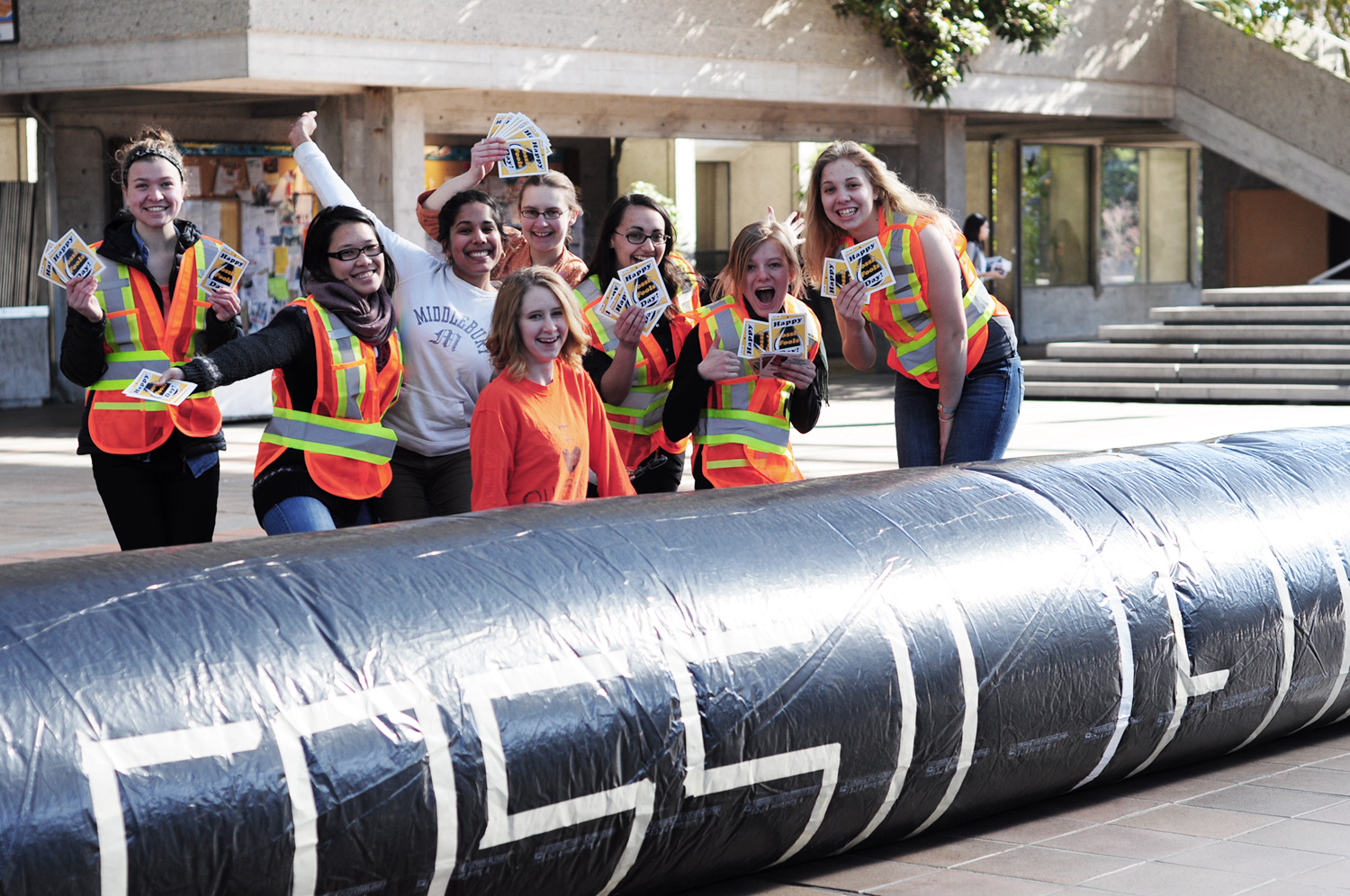
This April Fool’s day, the club held a “Fossil Fools” event in Convocation Mall to raise student awareness on the consequences of building the proposed Kinder Morgan pipeline.

“Fossil Fools” Day is a nationwide movement, in which several university student groups across Canada participated, advocating an end to the country’s reliance on fossil fuels as an energy resource and a greater investment in more sustainable energy alternatives. The aim of the initiative is to tackle the hard-hitting reality of climate change which SFU 350 holds will only be worsened by the release of fossil fuels into the air.

The Kinder Morgan pipeline project hits close to home, as it would carry crude bitumen from Alberta’s oilsands to the Burrard Inlet here in BC. The project has sparked outrage from several members of the community with regards to the potentially catastrophic damages it could cause through oil spills.

To emphasize the disruption that this structure would cause in the environment, students got creative and built their own inflatable pipeline that ran through Convocation Mall — a silly yet striking reminder of the proximity of the environmental consequences that the pipeline might create.

SFU 350 is a student-run organization — its goal is to advocate for climate justice on campus. The group’s name is based on the measurement of 350 parts per million (ppm), which is the optimum amount of carbon dioxide that should be in the atmosphere in order to have a stable climate. The club, while only formed last September, is already a prominent advocate for climate justice on campus.

The club, founded in September, aimed to create awareness about the environmental future.

With the fun filled and student centered celebration, the club aimed to create awareness about the environmental future. SFU 350 secretary Jesse Willows said of the cause, “There is often a ton of negative connotations associated with climate justice groups, and we wanted to be a more accessible [resource for] people. Our goal is to engage in dialogue that can be tricky because it can be perceived as political.”

SFU 350 is also a participant in the Divest SFU initiative, members of which recently made a case for fossil fuel divestment to the SFU Board of Governors. The campaign has garnered support from the Simon Fraser Student Society, the Simon Fraser Graduate Student Society, as well as the departments of Urban Studies and Resource and Environmental Management.

SFU 350 president Andhra Azevedo was one of two representatives who petitioned the board on March 27 to end investment in fossil fuel companies in order to reduce the university’s contribution to climate change risk.

In addition to the initiatives that they support on campus, the group also supports the march to be held by Burnaby Residents Opposing the Kinder Morgan Pipeline Expansion (BROKE) on Saturday, April 12. They share values with the community organization centre not only in regards to the potential effects of the pipeline on climate change, but also the rights of First Nations peoples, the lack of democracy demonstrated in the building of this structure, and the impacts of potential oil spills on the water and air quality of Burnaby Mountain.

While “Fossil Fools” Day was meant as a light-hearted glimpse into the problems with non-renewable energy and climate change, the group isn’t joking around. Willows concluded, “We wanted to raise awareness about the foolishness of fossil companies. We are trying to protect our future.”

Does Not Compute

0

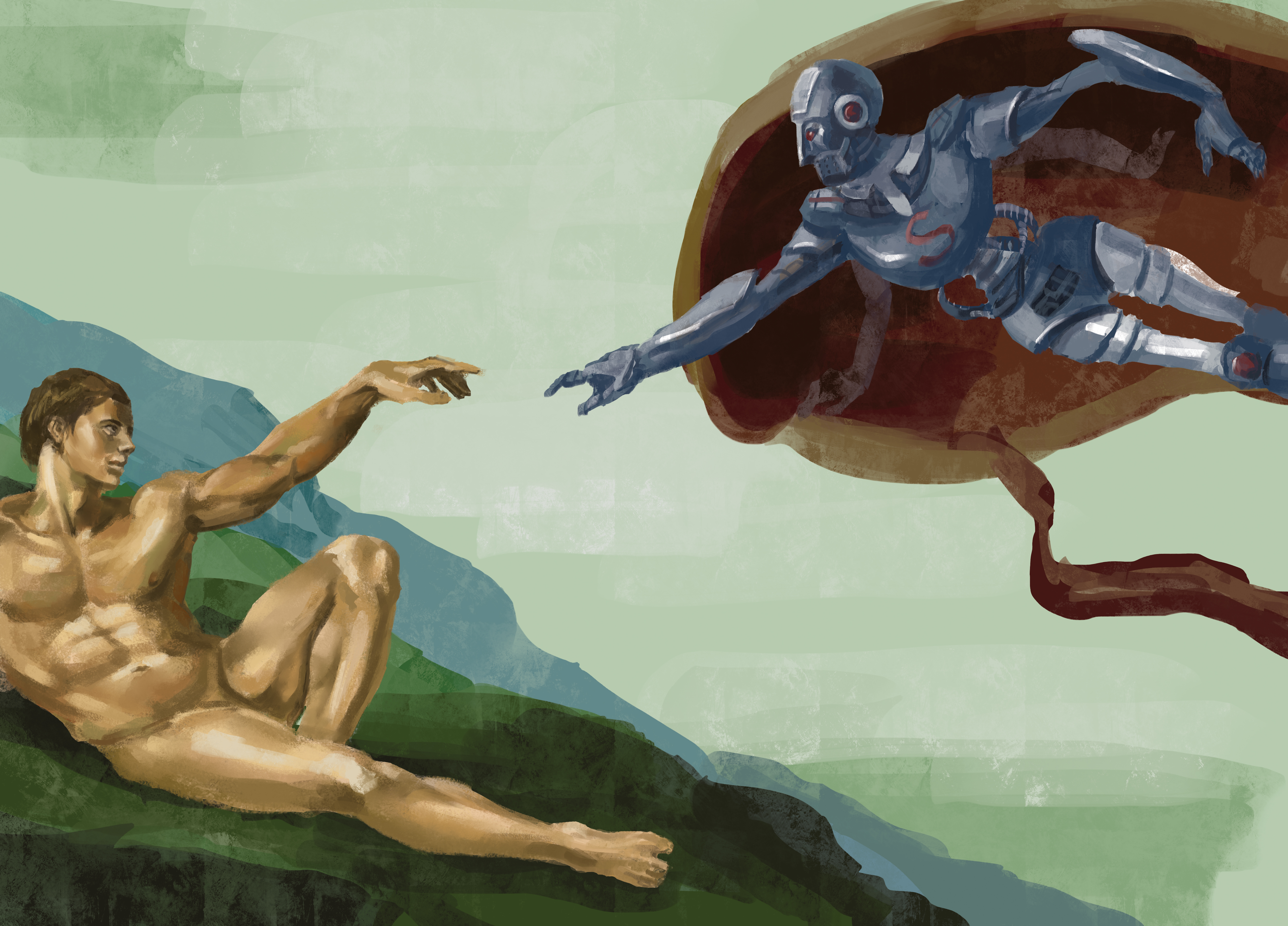
web-robot loverIllustration by Eleanor Qu

Brave New World

For most of us, the word cyborg likely conjures images of RoboCop or the Bionic Woman. We envision bodies where limbs are replaced by machines, enhancing one’s way of life: Darth Vader, whose helmet hides a face obscured by burns and scars; Star Trek’s Borg, whose coldly calculated plans of assimilation make them a force to be reckoned with; and Steve Austin, who would be a penny short of a Six Million Dollar Man without his bionic eye, arm, and legs.

Our current pop culture narratives depict cyborgs as human bodies integrated with high-tech gadgetry, electronically empowering the mind and body. The typical science fiction story often portrays the human part of the body as dependent upon the machine part to survive, and this dependence never comes without super-human benefits.

Our concept of distance has been minimized by our access to technology.

But consider this: are these tales still futuristic fantasies, or do they finally reflect a real-life rewiring of our human hard drive?

Technology has advanced to the point where it is fair to argue that many of us depend upon it to survive. Cell phones, the Internet and other digital technologies are a must-have for communication in a global, business-savvy world where now is always preferable to soon. Such technology provides us with more convenient ways to complete tasks, store information, and do something we once deemed possible only in fictional worlds: bend time and space.

Does that not sound superhuman to you? Maybe not — most of us are so accustomed to this way of life, we don’t take the time to question it.

The word cyborg refers to a person whose abilities and senses are enhanced by technology beyond the capacities of a regular human being. Without the help of our digital technologies, we would not have the ability to communicate instantly with millions of people, or to bend space and time. Compared to the way people lived a century ago, we may as well be superhumans.

Modern Cyborgs

Donna Haraway, a professor at the University of California, states in her 1985 essay “A Cyborg Manifesto” that “we are all cyborgs now.” Every time we click, scroll, dial or type, we essentially become electronically-augmented people.

It’s in our nature as humans to want to augment our abilities and extend our reach — as Marshall McLuhan states in The Medium is the Massage, “All media are extensions of some human faculty, psychic or physical.” In our increasingly tech-mediated world, cyborgs have gone from fantasy to everyday reality.

Such are the concepts that scholar Amber Case has dedicated her life’s work to. She explores these concepts as part of a rapidly emerging academic discipline: cyborg anthropology.

As in every anthropological discipline, cyborg anthropology is concerned with the study of humankind and how we relate to the world around us. Case’s fascination with our high-tech world has inspired her to pen ethnographies focusing on our relationship with — and reliance on — technology. She studies how we interact with technology, and the positive and negative effects of its increasing influence on our lives.

Ultimately, much of her work is devoted to examining how our brains have begun to work in the same way as the machines we carry around with us. The line between humans and machines has become increasingly indistinguishable: machines behave more like us, and we behave more like them.

The human race has always been trying to enhance its own potential. Neanderthals constantly strived to discover new ways to hit harder, move faster, and kill more efficiently. More recently, industrialisation was inspired by the necessity of business and war — we look to make our lives easier and more manageable through the invention of tools to extend our abilities. In the modern age, we’ve become equally concerned with increasing our mental faculties as well as our physical ones.

Case sums up her research brilliantly in a recent TED talk, in which she describes her ideas and those of cyborg anthropology at large. She views a personal device, like a laptop or cell phone, as a kind of “Mary Poppins technology” that never becomes physically heavier, no matter how much technology it stores.

If we were to print out every piece of information we own, we’d never be able to store it all — it would pile up to mountainous levels. To earlier generations, this would seem like magic.

The idea of teleportation, which seems even more fantastic, also appears in Case’s work. Stories of characters traveling immeasurable distances in a matter of seconds have been around for hundreds of years: Douglas Adams describes the process in The Hitchhiker’s Guide to the Galaxy as “not quite as fun as a good solid kick to the head.”

Having to maintain our identities and images online has led us each to create another version of ourselves.

You might be surprised to realise that teleportation is hardly fiction anymore. While we may not be able to physically transport ourselves from point A to point B, we are now mentally able to do so. As Case says, we can “whisper something on one side of the world and be heard on the other,” all through the wormhole technology that we carry in our pockets.

A quick visit to Google Maps and you can digitally walk through the streets of Paris or the jungles of Brazil. Our concept of distance has been minimized by our access to technology.

The Second Self

But perhaps one of Case’s most fascinating ideas is the notion that we have become two separate people because of the technology we use. Having to maintain our identities and images online has led us each to create another version of ourselves, or what Case calls “the second self.”

Whether we like it or not, it is inevitable that each of us has appeared on the Internet in some form. Once our names, faces, or any information about us has surfaced online, that second self has been created, and it’s our job (or at least our inclination) to make it reflect our physical selves in whatever way we deem appropriate.

For many of us, the second self has a different personality, or presence, than our actual selves — most real life people are never as funny as their Twitter accounts or as impeccably dressed as their Facebook profile pictures.

This dichotomization of the self has been a cause of much social anxiety among adolescents. Teens today not only have to deal with the awkwardness of puberty and social interaction; they’re now equally burdened with the grueling task of maintaining a second image online.

This second self is also constantly accessible. We’re able to be contacted and viewed at any time, and once we’re on the web, we never really disappear. With this in mind, do our electronic selves really have any privacy? While the actual self has the option to hide away in a small, dark and dingy corner concealed from any contact with the world, the online self does not have this luxury. We are always available, always open, never alone.

Case’s research delves into psychasthenia, a psychological disorder characterized by phobias, obsessions, compulsions and anxiety. Because of the unprecedented control we have over time, the constant access to a world of people in our pockets, and perpetual need to maintain our online images, Case believes many of us have developed these feelings.

Many have become seriously anxious about what the world of online identities is up to, even if they have been logged off for only an hour — experts have coined the term “fear of missing out,” or FOMO, to describe this phenomenon. We think of ourselves as belonging to two worlds: one physical, one electronic, both equally important.

Such anxiety leads to what is called ambient intimacy: we are now constantly intimate with ourselves, engaged in a neverending conversation between me, myself, and I.

Think of our online identities as sculptures of ourselves that we are constantly moulding. Every day we find parts we decide don’t make us appear exactly the way we want to, so we continue to cut and shape and press to no end. Maybe our noses are actually a little too large, or our foreheads jut out too much. We are compulsively indecisive artists, constantly reinventing ourselves in order to represent our best selves. It’s a lie that we tell ourselves and others, and with the advent of new technologies, it becomes a harder one to maintain.

“We are all cyborgs now.” – Donna Haraway, University of California professor

As a cyborg anthropologist, Case is very concerned with these notions, believing a continuous sculpt is mentally dangerous, especially for youth. She describes how young people today are not spending enough time self-reflecting because they are too immersed in the competition to establish the best online identity possible. “When there is no external input, no technology,” she argues, “we can actually create ourselves, do long-term planning, and figure out who we really are as real-life people.”

Case feels that once we unplug and discover who we truly are in the physical world, we can then make the move to maintain our second selves in a legitimate way that is reflective of who we actually are.

Children and youth today have lost the privilege of having downtime: our instantaneous, button-clicking culture hinders our ability to develop a good sense of real-world presentation, and develop truly comfortable, real life relationships with others.

A Brighter Future?

However, cyborg anthropologists also cite the positive effects of our high tech world. Case argues that our gadgets can actually help us to enhance our humanity, rather than marginalize it. We are naturally social beings who are biologically wired to live together, communicate and, inevitably, form relationships with one another. Our machines help many of us to connect with others more easily. The most successful technologies help us to increase and improve our interactions with other humans, rather than solely with ourselves.

In my opinion, cyborg anthropology should be considered as a new discipline to be offered at Simon Fraser University. While we do offer a wide variety of media and technology classes, our increasingly tech-centric world is too often ignored in lectures and course materials. Amber Case’s work could be a starting point, introducing the concepts and theories of cyborg anthropology to students and faculty alike.

Think about it: we cyborgs should have the chance to learn about our superhuman abilities and how they are truly influencing our selves and our lives. Doing so in an academic setting may allow us to strike a greater balance between our real and digitally sculpted selves, and to make the most of our cybernetic brains.

After all, it’s not easy being digitally enhanced.

SFU hires new defensive coordinator

0

Simon Fraser University falls 3-1 to FC Edmonton in Men's Soccer

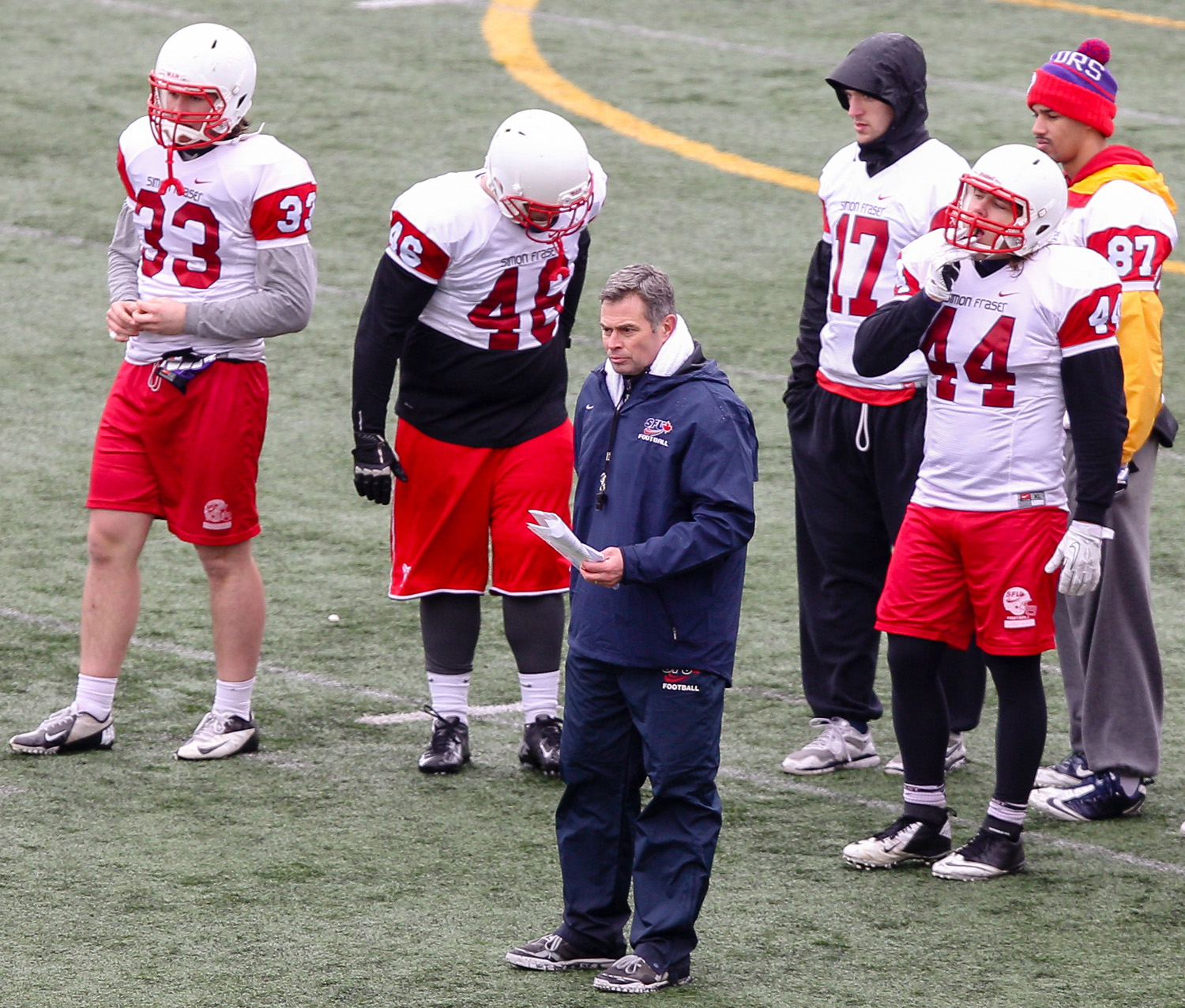
After SFU hired former BC Lions offensive coordinator Jacques Chapdelaine as the football team’s new head coach, scoring points was no longer going to be a concern.

Stopping the other team from doing so? That’s something the Clan haven’t been able to do since entering the NCAA. But with the brand new hiring of Abe Elimimian as defensive coordinator, things may finally turn around.

Elimimian comes to SFU from Div. I’s Washington State, where he served as the cornerbacks coach. Last season, his Cougars ranked fourth in the PAC-12 against the pass, against the likes of Oregon State’s Brandin Cooks — a first-round receiver prospect in this year’s NFL draft — and Oregon quarterback Marcus Matiota, who’s projected to go first overall next year.

“We were looking for someone who was going to be able to come in and be a good teacher, who was going to have a great way to communicate with the young people at the college level,” said Chapdelaine of his new colleague.

“From that point of view, Abe was the ideal candidate in a sense that he’s had experience coaching at the college level and he brings a great deal of understanding and relevance, not only from his NFL playing experience but also from the college coaching staffs he has worked with.”

Elimimian, a University of Hawaii alumni, signed with the San Diego Chargers in 2005 and the Chicago Bears in 2006. He also has some NFL coaching experience, working as an intern with the Green Bay Packers as a defensive assistant.

“The opportunity to work at a wonderful university and for an excellent head coach in Jacques Chapdelaine is outstanding,” said Elimimian. “From when we first spoke on the phone, I could tell he was a man of high character and high integrity and a man who knows how to win. Once I came here I found the people were outstanding, very smart and the atmosphere very welcoming.”

He takes over a program that has been dismal defensively since joining the GNAC, but Chapdelaine sees progress already.

“So far his communication skills with the players have proven to be very efficient and our student athletes are finding themselves in a scheme where they can perform freely and aggressively,” said the head coach.

And, after four years of struggle, any signs of progress are welcome.

Clan honour top student athletes at annual banquet

0

2013 Simon Fraser University Athletics Gala

After a year of both triumph and heartbreak, struggle and perseverance, SFU’s athletic calendar is nearing its end. Last Wednesday, the Clan recognized their best and brightest student athletes at the annual awards banquet.

The 2013-14 winners are as follows:

The Rick Jones Award for Courage honours an individual who has persevered through adversity to lead their team, and was awarded to Brad Erdos of Clan football, who missed the entire 2012 Clan football season with an injury just months after being drafted by the Calgary Stampeders. He rehabbed and was back on the field in 2013, leading the Clan offensive line in his senior season.

The Bill DeVries Award for Outstanding Academic Achievement is presented to a student who exhibits outstanding academic achievement and athletic performance as well as the personal qualities of integrity and generosity. The 2013 recipient was Adam Staschuk, a captain of the men’s soccer team, who helped the Clan reach the NCAA Div. II Final Four in each of his two seasons with the men’s soccer team, while sporting a 3.80 GPA.

Staschuk’s men’s soccer team was named the President’s Athletic Team of the Year for winning its fourth straight Great Northwest Athletic Conference title, second consecutive NCAA West Region title and making its second straight appearance at the Final Four. The award was presented by SFU President Andrew Petter, who also awarded the President’s Academic Team of the Year award to the women’s basketball team. The Clan boasted a team GPA of 3.12 and also finished second in the Great Northwest Athletic Conference and reached round 32 at the NCAA Div. II Tournament.

The Lorne Davies Senior Grad Award, presented to the senior athlete who has achieved excellence in competition, in the classroom and in the service of the community was awarded to women’s wrestler Victoria Anthony. Anthony went undefeated through four years of collegiate competition, winning four WCWA championships in her weight class while facilitating a busy international schedule and maintaining a 3.59 grade point average.

The Department Scholar Athlete Award presented to the junior or senior athlete with the highest overall GPA went to Nicole Cossey of women’s swimming, who boasts a 3.86 GPA. She would be honoured again during the evening as she was also named the Clan’s Female Athlete of the Year. She was a two time All-American at the 2014 NCAA Championships surpassing the 100-yard freestyle’s old NCAA record time and finishing second in the event, leaving her with the second fastest time in the event in NCAA Division II history.

The Clan’s Male Athlete of the Year was soccer All-American Chris Bargholz, who was the Great Northwest Athletic Conference Player of the Year.

The Clan also honoured their 2013-14 All-Americans at the event, including Nicole Cossey and Carmen Nam (Swimming), Erin Chambers (Basketball), Helen Crofts, Lindsey Butterworth, Sarah Sawatzky (Outdoor Track and Field 2013), Butterworth, Kirsten Allen (Cross-Country), Chris Bargholz, Magnus Kristensen (Soccer), Victoria Anthony, Helen Maroulis, Justina DiStasio, Jenna McLatchey, Darby Huckle, Nikki Brar, Mallory Velte, Laura Anderson, Monika Podgorski, Michiko Araki (Wrestling), Lemar Durant and Jamal Kett (Football).

Pooping towards a more sustainable environment

0

WEB-poop car-flickr-Ptpgrad

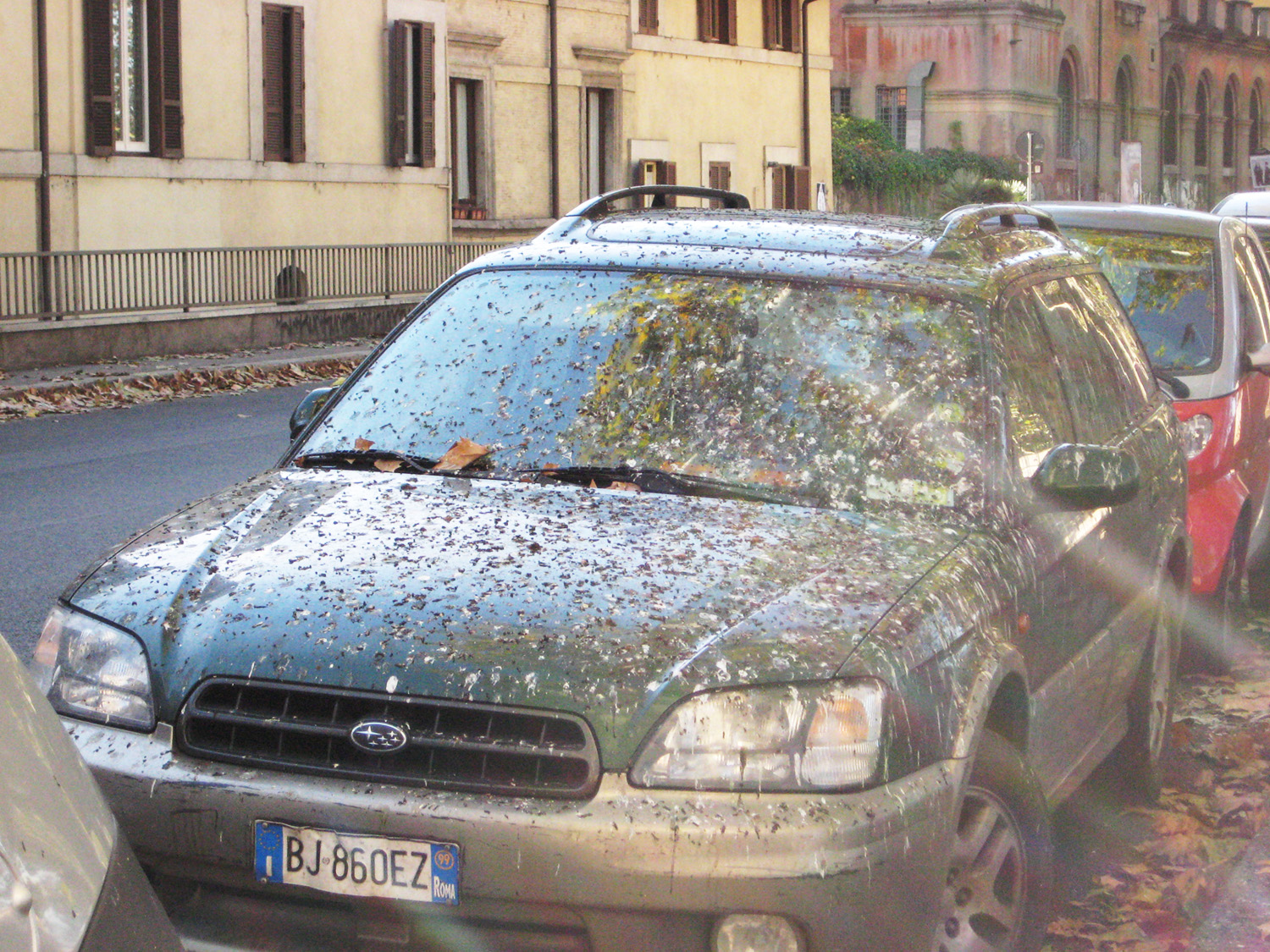
Hyundai is reportedly soon to give a whole new meaning to the term “gas tank.” It’s only a matter of weeks before the company introduces its new Tucson Fuel Cell car which is run on neither gasoline nor electricity, but poop.

Human fecal matter will be the sole fueler of this automobile, and while I envision a potentially disastrous marketing campaign, I also see, should this campaign work, the exponential benefits for our environment and for saving the dollars in our bank accounts.

How does poo translate to power? First we eat, then we digest, then we flush. Once our waste has been flushed it will be released into an airless tank called an anaerobic “digester” (yum). In this tank, our crap will then be broken down by microbes which release methane and carbon dioxide. These gasses will go to a public pump to be put into the fuel cell where the methane is converted to hydrogen to fuel the vehicle.

At first, this concept may seem a little less than appetizing; among the immediate drawbacks that come to mind is driving with a farm-smell reminiscent of the Chilliwack highway. But the concept of poo-fuel is brilliant. What more practical use can you think of for excrement, with the hydrocarbons from it now being used rather than wasted? Don’t answer that.

I do not smell poop, I smell success.

Poop-pump stations would allow for more businesses to emerge, hence contributing to more job opportunities, and would possibly provide this fuel at a much cheaper rate than gasoline or diesel.

The use of poop as fuel would also surpass the high environmentally-friendly standards that have recently caused a big hoopla with the introduction of electrically-powered hybrid vehicles. According to Hyundai, the Fuel Cell (which will produce zero gas emissions) will only take three minutes to fill, as opposed to the hours it may take to charge electric vehicles.

Furthermore, these cars can reportedly drive up to 483 kilometres (300 miles) before they need to be re-poo’ed; this is longer than your average electric vehicle.

Sure, some people may question whether we have enough hydrogen to allow most of our current vehicles to be replaced by poo-powered ones. But I say that with the leaps and bounds by which technology advances, and the fact that hydrogen is the most abundant element in the universe, I have no doubt that scientists will fit the pieces together and produce something that will allow all of our vehicles to be replaced with hydrogen-powered ones.

With this innovation comes a negative. With the probability of water being taxed in the near future as it becomes an extremely, if not the most, valuable resource, taxing poop is a possibility. But I’m okay with it. If there is any place I don’t mind my future tax dollars going, it would definitely be towards powering my car.

So now, if we want to drive longer distances, I guess we’ll just have to eat a little more. Or is this a bit of an overstatement? My point is that I do not smell poop, I smell success. Success that may, in the midst of roads with the fresh scent of livestock, bring about a more sustainable environment and help us to become more financially content.

Clan take two of three in Arizona

0

WEB - Lax week 12

It was a successful, but far from flawless road trip as the Clan braved the desert heat to play three out-of-conference games down in Arizona.

The trip started with a hard-fought, nighttime battle in Tucson against the #14 Arizona Wildcats. The Wildcats struck first, putting the Clan behind early for the third game in a row. But after the initial blow, the Clan came back and led for the rest of the game. The Wildcats nearly matched the Clan goal for goal, but were always one step behind.

Four Clan players scored multiple points led by Ward Spencer with four (two goals, two assists). Goaltender Darren Zwack stood tall between the pipes, stopping 15 of 22 shots in the Clan’s 8–7 win.

The Clan then made their way to Glendale to take on the #1 ranked Arizona State Sun Devils. SFU matched the Devils early but couldn’t stand the searing temperatures as the home team shut the door on the Clan, holding the high-scoring squad to just five goals on the day.

The Sun Devil’s own high-powered offence, led by junior Dan Davis (seven goals) and senior Logan Quinn (two goals, four assists), picked the Clan defence apart, out shooting them 53–32 over 60 minutes, routing the Clan 18-5.

After the thumping from the day before, the Clan came back to Glendale with a vengeance to take on the unranked Illinois Fighting Illini in a neutral site game. From the first whistle it was all Clan, all the time, with leading scorer Kirkby continuing his dominant season with four goals and two assists. Spencer (two goals, three assists) and Sam Clare (two goals, two assists) also had big nights.

The offence kept the Illini goaltender busy, ripping 30 shots on net. Backing up the high-powered offence was a stout Clan defence, a complete 180-degree flip from the day before, holding the Illini to just seven shots on the game, with both Zwack and Jeremy Lasher splitting time in net, allowing only two goals apiece to make the final score 11–4 in favour of the Clan.

With these results the Clan improve their record to 5-0 in the conference and 9-2 on the season, remaining at #10 in the rankings for another week. The Clan tone it down for the rest of the season with just one game a week until playoffs. Their next home game will be on April 5 against 0–8 Portland State on Terry Fox Field.

Vaccinate your kids, period

0

One of the most popular articles The Peak has ever published is a witty Opinions piece colourfully titled “I hate Jenny McCarthy.” The article, written by former editor Graham Templeton and published in 2009, took the eponymous talk show host and former model to task for her outspoken support of the anti-vaccination movement.

Five years later, it’s still garnering views on our website — and, despite overwhelming evidence refuting any and all claims that vaccines cause autism in children, this movement is still going strong.

Yes, seriously. Parents still think it’s a good idea not to give their children the MMR vaccine, which protects them against measles, mumps, and rubella, diseases that can and have killed hundreds of thousands of young people. Diseases that, thanks to modern medicine, shouldn’t be killing kids anymore.

But they are, and in greater numbers every year. Canada’s vaccination rates have dropped to 84 per cent — lower than necessary to ensure population immunity. Our rates are lower than those of countries like Eritrea and Tunisia, where vaccinations are both costly and difficult to acquire.

To not vaccinate is not only ignorant and selfish, it’s a willful endangerment of children.

So why aren’t we vaccinating our kids? For many, it’s because a man named Andrew Wakefield published a study in 1998 which claimed there is a direct causal connection between the MMR vaccine and autism.

There isn’t. Turns out that Mr. Wakefield had been given money by lawyers looking for evidence against vaccine manufacturers, and that his data was both carefully manipulated and just plain false. In fact, Wakefield was later removed from the British General Medical Registry, making him unable to practice medicine in the United Kingdom — and, hopefully, anywhere else.

Still, despite countless counter-arguments published by lawyers, scientists and medical professionals, the anti-vaccination movement marches on, stubborn and oblivious.

The debate has recently resurfaced in the form of a few offhand comments made by reality star Kristin Cavallari, who, like McCarthy, refuses to vaccinate her kids. “To each their own,” she told Fox News. “If you’re really concerned about your kid, get them vaccinated.”

Who can argue with that logic? If Cavallari wants to endanger her own kids, who are we to stop her? Except, of course, that just isn’t the case — the recent outbreaks of measles in Europe and North America are just one example of the dangerous effects of the anti-vaccination movement. It’s not an isolated decision: it’s one that affects everyone, especially young people.

Case in point: there have been 228 measles cases confirmed in British Columbia this year. We’re not talking about the black plague here; measles can be a dangerous disease, but it’s also one that’s easily treated in the Western world. Yet, on the premise of disproven evidence from a 25-year old article — not to mention the occasional staunch religious belief — parents are putting their children, and everyone else’s children, in danger.

There are plenty of studies out there that prove people aren’t swayed by the cold hard facts. So maybe a different approach is in order. Parents: vaccinate your fucking kids. To not do so is not only ignorant and selfish, it’s a willful endangerment of children. About 120,000 young people die of measles every year — and that’s nothing compared to the pre-vaccination days, when the number was closer to 2.6 million.

I still hate Jenny McCarthy, and in the immortal words of Graham Templeton, you should too. She and every other anti-vaccination airhead may desperately want to believe that vaccines which have the capacity to save hundreds of thousands of lives can cause autism, even though we know they don’t.

But you don’t have to listen to them. Vaccinate your kids, vaccinate yourself, and tell everyone you know to do the same.

SFU sweeps Crusaders for first wins

0

After 17 straight losses to open the season, the Clan softball team is finally back on track after sweeping the Northwest Nazarene Crusaders in Nampa, ID.

As with most things this season, the wins didn’t come easy for SFU. The first, a 3–2 triumph, took two extra innings to get the job done. After the Clan’s Danielle Raison scored in the top of the ninth, Jessica Goulet retired the Crusaders to give the Clan their first win of 2014.

“It was an outstanding performance from Goulet in the first game and [catcher Kaitlyn] Cameron called two great games today,” said head coach Mike Renney. “We got some timely hits and some clutch at bats. We got some runs when we needed to. We had some situations where the wheels could have come off but they didn’t. We bent but we didn’t break. We squandered some chances but we got ourselves out of some jams too.”

The second game, thankfully, came a lot easier. The Clan jumped out to an 8–1 lead in the top of the sixth, and though NNU would claw back, the lead this time was too big for the Clan to give up.

“It’s good to get the monkey off our backs and get a couple in the win column,” added Mike Renney. “We earned a hard fought win in extra innings in the first game and it was good to get some run support for our pitching in the second game coupled with a good pitching performance.”

Despite the sweep, the Clan’s record improves to just 2–10 in the Great Northwest Athletic Conference, and 2–17 overall, easily last in the conference.

Build SFU reveals preliminary SUB designs

0

PSD-SUB

Build SFU recently held an open session in the Think Tank where the architects of the SFSS project presented three possible designs for the new Student Union Building (SUB).

Not only will the new SUB be located at, “the heart of SFU,” between Maggie Benston Centre (MBC) and the AQ, but the building is meant to be “the heart of the student experience” and as such, student focused. Feedback has indicated a desire for community interaction, access to daylight, an opportunity to experience nature, as well as an outstanding design with a clear “wow factor.”

Students were asked which characteristics of each design worked to meet the above goals. The three schemes are not distinct options for the building, but rather a varied display of concepts from which the best elements will be chosen and incorporated into the final design for the SUB. Student commentary given at the Think Tank will be factored into the design process.

“Terrace”, “Pavilion”, and “Loft” are the three concepts that were presented, each with its own unique features. Marc Fontaine, Build SFU general manager, says that each design has its advantages and disadvantages: “Some pieces of [the models] could respond better to the campus architecture.”

One distinguishing feature of the “Terrace” design is that it has varying levels of outdoor space. Its storeys are also staggered, so the south side of the building aligns visually with MBC. The “Pavilion” model is unique in that its floors that are above Convocation Mall level have a distinguishable rounded shape.

Students seemed to like that the different shape made the building clearly identifiable, but it would mean pushing more student space to lower levels. The “Loft” design is different in that it reaches higher than the others, equalling the height of the 5000 and 6000 levels of the AQ.

One drawback of some of the designs was an overhang into Freedom Square, something that the university has particularly requested be avoided, so as not to block any light coming into that area. Another concern was having too much student space underground.

The double-height lounges, the opportunity for natural light, and the connections to Freedom Square, MBC, and the AQ that would result in new circulation patterns on campus are all factors that generated positive responses from attendees.


Students reacted positively to the concepts of double-height lounges and the opportunity for natural light.


A comment from one student was, as noted in the minutes, “It is nice to have different access levels to the AQ. [ . . . ] It makes travel across campus smoother.”

Fontaine commented on the feedback, “We can use that information to try to create a new concept that responds to student requests and responds to the university architecture as it stands.” Responses from the project’s upcoming sustainability workshop will also be taken into account.

The new schematic design report is set to be revealed mid-May. After its review, the design development phase will begin — a phase that will involve all of the interior and exterior design decisions that must be made before construction.

As for what will be inside the SUB, the space program developed by Build SFU allocates space to different purposes determined to be most important to students based on consultations done in 2013.

The most recent version of the program was updated in Feb. and has set aside more than a quarter of the building for lounge and study areas. There will also be ample space for meeting rooms — available to all students — and multi-use space. Another great portion of space will be reserved for student organizations, clubs, and services.

Other features of the SUB include a large multi-purpose room, unisex as well as gender segregated washrooms, additional dining space, and what is being called the “cabaret”; Fontaine likens this to, “the upper part of the pub, but without the age restriction.” It would be a comfortable place with audio/visual capabilities that could serve as a venue for events like open mic nights.

One of Build SFU’s main goals is for the SUB to be a distinctly student oriented building. In pursuit of this goal, workshops and open discussions will continue to be held to ensure that student opinion is kept in mind during the creation of this building. At this time, construction is scheduled to begin in the summer of 2015.

Satellite Signals

0

WEB-woodward

Woodward’s

The Walrus Magazine held an event on Tuesday, March 25 in the Djavad Mowafaghian Cinema during which seven different speakers were given seven minutes each to discuss an issue surrounding sustainable renewable energy. Topics included First Nations rights in relation to resource extraction, the political climate surrounding the Northern Gateway and Kinder Morgan pipelines, and the role for young people in mitigating climate change.


vancouver

Harbour Centre

Each year, a public lecture is held in honour of the late SFU professor of communication, Dallas Smythe. This year’s memorial lecture, titled “Pulling Punches: Media Power, People Power,” was given on Monday, March 24 by Natalie Fenton, a communications professor from the University of London. Fenton discussed whether or not the media affects the practice of democracy in our society, and if so, which forms of media might have the most influence.

surrey

Surrey

Angelika Neuwirth, one of the world’s leading scholars of the Qur’an, spoke at SFU Surrey on Thursday, March 27 about “Reading the Qur’an as a Text of Late Antiquity.” Opening with a quote by Johann Wolfgang von Goethe about the Qur’an being the “book of books,” Neuwirth unpacked a weighty thesis on how the Qur’an can be read as a literary text in its own context. In her lecture last Thursday, she argued that the Qur’an deserves to be recognized for it’s “epistemic shift” towards morality for the sake of humanity, rather than as a mere continuation of the preceding Abrahamic texts.