Home Blog Page 11

Naruse Mikio film series takes place in Vancouver

0
IMAGE: Courtesy of Toho

By: Jonah Lazar, Staff Writer

A selection of works by one of Japan’s great masters of the silver screen has returned to Vancouver for the first time in 20 years

Naruse Mikio is an influential director who pioneered Japanese film during the mid-century. He captures audiences with a subtle, solemn, and achingly human depiction of women’s lives following World War II. Despite limited international success (in comparison with other Japanese directors), Mikio is enjoying a posthumous international surge in popularity. Following what would have been his 120th birthday last year, New York’s Japan Society has been collaborating with the Japan Foundation and cinemas across North America to display the director’s films. 

Vancouver’s Cinematheque, which has been a mainstay of Howe Street for over half a century, is one of these many cinemas in collaboration with the Japan Society. This series will conclude on February 21 with a screening of Scattered Clouds, Mikio’s final work released just months before he passed away. 

On January 25, I attended a screening of Late Chrysanthemums at the Cinematheque along with a few dozen other cinephiles who braved the cold. Late Chrysanthemums follows a handful of former geishas combatting the loneliness of aging by clinging on to their children, past lovers, and memories of their former selves, all the while navigating the turbulent, westernizing postwar Japan.

Through the lens of this loneliness, Mikio highlights the patriarchal nature of the problems which these women face — with all of them unmarried, they scramble to find a foothold to maintain their worth in a changing society which no longer values them for their beauty. Nothing makes this more evident than one of the last scenes of the film, where one of these former geishas tries (and fails) to imitate a younger woman doing the Monroe walk, which serves to highlight how the shift towards western beauty standards has left these women feeling like relics of a lost time. 

Late Chrysanthemums is a captivating portrait of weariness, nostalgia, and solitude. 

This series is coming to an end soon, but if you still wish to attend, keep your eyes peeled for a couple screenings of When a Woman Ascends the Stairs, one of Mikio’s most critically acclaimed films, which will be shown on February 13 and 15 at the Cinematheque. Another one to look out for is A Wanderer’s Notebook, a film based on the life of the feminist writer and poet, Hayashi Fumiko, on February 20. 

Screenings of Mikio’s works will continue until February 21 at the Cinematheque. 

The bro of my dreams

0
IMAGE: Ashley Webb / Flickr EDIT: Mason Mattu / The Peak

By: Katie Walkley, Peak Associate

The Peak is proud to publish this beautiful love song that absolutely rivals the likes of Lana Del Rey, Paul Anka, and whoever sang “Take Me Home Country Roads.” Enjoy. 

We met on Hinge,

I wanted to take it slow.

But now I can’t end a sentence,

Without calling him bro.

When things get romantic,

I cannot hold back.

I get controlled by my antics,

Friendzone in full attack. 

I don’t mean bro as in brother,

I mean bro as in lover.

It’s a term for people

who appreciate each other.

It wasn’t my fault.

Before I called him bro, he called me man.

He opened up the bro-vault —

I think I need a new plan . . .

Honey? Dearest? Sweet huzz of my life?

No, that’s disgusting

This is bringing me too much strife!

I don’t mean bro as in brother,

I mean bro as in lover.

It’s a term for people

who appreciate each other.

Once I’ve called someone bro,

I just cannot stop.

It’s a level of deep shared intimacy,

Beyond that of tying the knot.

Maybe I’ll call him dude instead,

So it feels less incestuous.

But then our relationship,

Would be so disingenuous!!!

Bro, is bro all I know?

“Will you take this baddie to be your lawfully wedded bro?”

“I do, I do!” is all I can proclaim,

“I will only know you as bro and by no other name!”

I don’t mean bro as in brother

I mean bro as in lover

It’s a term for people

Who appreciate each other

Outro (phone call audio):
“But seriously Katie, can you stop calling me bro? I want to be more than your bro.”

“But there is nothing more than a bro!”


static ambience and fade to silence 


Peak positions: Sex tips from your student paper

0
ILLUSTRATION: Sonya Janeshewski / The Peak

By: Your Bedsheets

Tired of the same boring old stuff in the bedroom? Hoping to spice things up? Look no further. Here are The Peak’s top horizontal tango positions:

The McFogg

You’ve probably heard of doggy style. This one’s similar, but with a slight Scottish twist. One partner dons a tam o’ shanter, while the other plays Highland Cathedral on the bagpipes. This will have you finishing faster than Scotland’s EU exit, without leaving 73% of citizens dissatisfied.

SFU’s independent newspaper since 1969

What do those lips do? Read out loud. That’s what. If you thought anything else, please go ahead and get your head out of the gutter. For this one, you’ll want to go ahead and grab a couple copies of The Peak from your local newsstand. For those tuning in from off campus, any newspaper will do. Partners will assume the 69 position and take turns reading each other riveting articles from the most sensual newspaper west of the prairies. If intellectual stimulation isn’t your thing, maybe sit this one out.

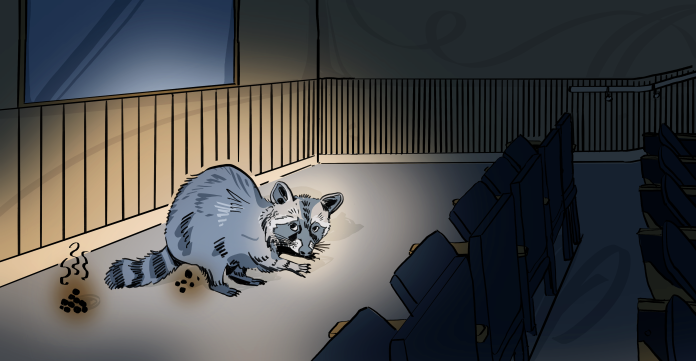
The Raccuck

Don’t think we forgot about all you voyeurs out there. With the flaunter’s consent, grab your favourite trash can snack item, climb into your ideal viewing position, and enjoy the show. We know you’ll be rubbing those little paws together, you promiscuous nocturnal onlooker.

The Gondola

Let’s face it, the university is not building a lift up the mountain anytime soon. In the meantime, you’ll have to ride something else. For this position, you’ll want to grab a piggyback ride from a partner. Make sure you’re holding on tight, and with a free hand/foot/other extremity, go ahead and crank that motor. Note — only those with expert balance should attempt to operate multiple cable cars at once. The Peak does not assume responsibility for any injuries occurring as a result of poor steering.

The Sticky Red Leaf

What’s sticky, comes out of a small hole, and might even taste a little sweet? Maple syrup, obviously. This one is pretty straight forward — go ahead and lather some of that liquid gold on your partners’ preferred areas and start sucking! Mmm . . . delicious. 

The SFU administration

Well, not much to say here. You know you’re already getting fucked by them anyway.


CUPE Local 15 alleges Vancouver bargained in bad faith

0
The Vancouver City Hall building is pictured on a bright, sunny day surrounded by trees and street lamps.
PHOTO: Thomas Roessler / Wikimedia Commons

By: Lucaiah Smith-Miodownik, News Writer

A local union is alleging that the City of Vancouver did not bargain in good faith during agreements that were settled in August of last year. Instead, they claim, “the City violated the Labour Relations Code by

“Intentionally withholding important information about its plans to implement far-reaching workforce reductions until after bargaining had concluded and the collective agreement had been ratified.”

— Santino Scardillo, CUPE Local 15 acting president

CUPE Local 15, which represents more than 4,000 employees with the City, Park Board, and community centres,” believes that Vancouver was aware of the possibility of upcoming layoffs “as early as June 2025.” 

This summer, mayor Ken Sim called for a 0% property tax increase, despite notes from city staff that a 7% hike “would be required to maintain existing services.” To avoid the hike, Sim and ABC Vancouver instructed “city staff to find $120 million in savings or new revenues.” At the beginning of November, a leaked memo sent before the City’s release of the 2026 draft budget indicated that these savings “will mean slashing 400 city jobs,” about 270 of which were CUPE Local 15 positions. This is the information that the union alleges the City withheld.

This discrepancy comes after a change requiring unionized city employees to return to working in-office for at least three days per week, a move some considered a “backdoor method” of getting employees to quit.

CUPE Local 15 hopes to renegotiate the collective agreement based on the details omitted, or ensure the City “will not be allowed to move forward with the workforce reductions that were a result of the bad-faith conduct during the term of this collective agreement.” While the Labour Relations Board could possibly invalidate the agreement outright, the director of SFU’s labour studies program, Kendra Strauss, told the Vancouver Sun that such an outcome is unlikely. The Peak reached out to CUPE Local 15 for comment, but did not hear back by the publication deadline.

“The City has received the union’s application [to negotiate] and has retained legal counsel,” Vancouver media relations told The Peak. “The City is in the process of reviewing and responding to the application. We value our partnerships with all our unions and continue to engage with CUPE 15 in ongoing discussions pursuant to Section 54 of the BC Labour Relations Code.” 

Section 54 states that “if an employer introduces or intends to introduce a measure, policy, practice, or change” that impacts employment conditions for “a significant number of employees to whom a collective agreement applies,” then “the employer must give notice to the trade union that is party to the collective agreement at least 60 days before the date on which the measure, policy, practice, or change is to be effected.” Additionally, “after notice has been given, the employer and trade union must meet, in good faith, and endeavour to develop an adjustment plan.”

For now, the union will have to wait to see if the Labour Relations Board finds the City in violation of the code.


SFU Residence Hall Association launches petition calling for affordable housing

0
A group of SFU residence buildings is pictured from a bird’s-eye view. Many of Burnaby Mountain’s trees surround the buildings.
PHOTO: Elliott Marquis / The Peak

By: Niveja Assalaarachchi, News Writer

On January 14, the SFU Residence Hall Association (RHA) announced a petition calling on Residence and Housing to keep on-campus housing affordable. In the petition, the RHA highlights that “many students rely on campus housing” — especially first-year and international students — but that the university matches residence fees to unaffordable market rates. The RHA calls on Residence and Housing to “prioritize accessibility, equity, and student needs in all decisions related to residence fees.”

The Peak sat down with Vinisha Kadyan, the president of the RHA, to learn more about the association’s demands. Kadyan said the primary goal of the petition is to call on the university to lower residence fees. She highlighted her personal experience as an international student at SFU and the stress the cost of living is for students like her. 

Kadyan said the policy of matching residence housing fees to market rates is compounding the stresses that people in residence face daily. “Day by day, there are many students who are coming from out of province or even international students and who are new in [the] environment. They do not want to deal with landlords and the rent issue and get scammed as well,” she said, referring to why students choose to live in residence. She emphasized that students don’t just value affordability, they also care about “safety and community.”

Kadyan also alleged that SFU Residence and Housing has a history of not taking students’ opinions seriously regarding lowering prices. In regards to previous surveys, she said,

“Even though they took our opinion, they didn’t implement it.”

— Vinisha Kadyan, president of the SFU Residence Hall Association

The petition comes as more discussion on student housing has emerged throughout the Lower Mainland, with housing advocates at UBC protesting for more housing rights in October 2025. However, some setbacks have occurred. In October, the City of Burnaby rejected a proposal for student housing near Burnaby Mountain due to environmental concerns. 

The RHA president noted that she was shocked when she heard about the proposal being rejected and called on the local government to take a firm stance on the issue and act for struggling students.

In a statement to The Peak, SFU said they “conducted an independent market analysis of its student housing fees” in July 2025, “assessing SFU’s student housing to other student housing buildings at post-secondary institutions in the Lower Mainland. This market analysis found that SFU’s housing fees were at or below the rates of other post-secondary institutions.”

The university “does not compare its housing fees to private market rentals because they serve different purposes. SFU housing includes services and supports (Wi-Fi, utilities, 24/7 student support, community programming and support, cleaning, etc.) and operating costs, including Living Wage and union wages, that are not reflected in typical private rental prices. This makes direct comparisons misleading,” they said.

“To maintain transparency,” SFU said their “Board of Governors provides guidelines for residence fee setting and oversees residence fee increases.” They also said “the total price of the cost of living in residences and the meal plan per term are published well in advance on SFU’s Residence and Housing website.” They claim several student suggestions have been implemented, such as “switching cable TV for Roku TVs and changing hardwired internet for more accessible Wi-Fi.” They concluded by saying “the university continues to listen to student feedback as part of our ongoing assessment of SFU’s housing fees” and for SFU’s Housing Master Plan.

Kadyan added that Simon Fraser Student Society president Landy Liu expressed sympathy with the RHA’s petition and would support the future steps the RHA would take. The Society previously advocated for more support for the RHA in the 2018–19 school year.

In terms of future steps, Kadyan said that her organization would be promoting the petition among students who lived in residence. She also pointed out that she could not rule out an escalation, saying that, if needed, they would pursue a demonstration on campus.

We need to implement universal basic income

0
a photo taken from inside of a car that shows a traffic jam on Davie Street in Vancouver.
PHOTO: Atul Vinayak / Unsplash

By: Niveja Assalaarachchi, News Writer

There are many instances where older generations would tell younger people to stop buying lattes and avocado toast. Maybe you haven’t heard this exact version but I can guarantee many young people have heard something along those lines from older generations. The fact of the matter is we can’t just work our way out of this economic stagnation. People are struggling financially and should be directly helped by the government — most notably, younger people seem to bear the brunt of this economic destitution. 

According to Daily Hive, 85% of Canadians have reported they live “paycheque to paycheque.” This would mean that, for most Canadians, one emergency could lead them to be in a vulnerable living situation. In BC, this is especially apparent. According to the CBC, 46% of British Columbians are only $200 away from failing to pay their bills on time. Consequently, many Canadians have taken to borrowing to make ends meet, leading to a household debit being 174% of total disposable household income in this country.

Two thirds of Canadians believe the current rate of inflation is the worst they have ever seen. One might wonder what kinds of effects this can have for ordinary people. The truth is that the current cost of living crisis is not only pushing many Canadians to the brink of mental and financial crisis, it is paralyzing their futures, and as a result, endangering our collective future choices.

Personally, I have also been affected by the rising cost of living. Living in one of the most expensive regions in the world and being a first-generation immigrant, I’ve seen many members of my family work tirelessly and still be worried about what’s left in the bank account. This seems to be a universal story where people are working as hard as they can to get nothing materialized from it. Why is this the case?

The truth is that this situation is not our fault. It is a consequence of a system that has prioritized the ultra-wealthy and left ordinary people in the dark. Starting in the 1980s, the rise of neoliberalism occurred. A major tenant of this ideology is trickle-down economics, which is predicated on the idea of giving tax relief to society’s most wealthy — supposedly to kickstart economic development. In this country, the top rate of income tax, which was 80%, was cut down to 50%. What followed wasn’t an economic renaissance for the country, but a massive wealth transfer from the poorest to the rich. Many social services, like subsidized social housing, were slashed by successive governments in the 1980s and 1990s. Not only was this an example of a service people depended on, it was also a representation that many things that were once deemed quintessential to middle-class living soon became nothing but a dream.

The current economic condition has robbed many of the future that they thought they had. So many people thought that if they went to university, and got a degree they would be able to secure a bright future, but this is not the reality.

The question emerges on how to tackle this issue head on. Universal basic income is a form of regular financial assistance directly from a government to every person in a given area. Basic income has been supported by the Canadian Medical Association for over 10 years, and, more specifically, universal basic income is supported by the Canadian Mental Health Association. A 2017 study found that participants who received basic income generally experienced improved health. Simply put, a universal basic income would help all of us live better lives, while decreasing the pressure on our society.  

The consistent nature of the financial aid would help families currently struggling through the cost of living, and has already been proposed via a petition in the House of Commons. Some might argue that a version of universal basic income existed in Canada before. The Canada Family Allowance was first introduced in the late 1940s to help stir up post-war economic development. The program helped thousands of Canadians families until the 1990s when the government of Brian Mulroney scrapped the plan in favour of a watered down version, the Canada Child Benefit.  

The only way we can see a future where people are on the brink of financial disaster every month is to have a stronger social safety net that can help struggling Canadians be better able to tackle issues.

Just think of how nice it would be to not continuously check the balance of your bank account. Perhaps this could be a moment where we can push for universal basic income, allowing all people a guaranteed way to afford living. We must ensure the ultra wealthy are held accountable to pay a higher rate of tax, thus reducing the burden on lower-income people.

Through taking these steps, we can make sure we can have a future accessible to everyone. A future where people do not have to worry but be hopeful for the future.

Nutritious Nibbles: Greek halva

0
ILLUSTRATION: Yan Ting Leung / The Peak

By: Sarah Venkatesh, SFU Student

I had finished my dinner when my father brought home a dessert I had never tried before. It looked like caramel bars and tasted like fudge. I asked my father what was placed before me, to which he simply replied,halva.” It was then that I discovered halva is a confectionery dish, most popular in East and Central Asia, Africa, Eastern Europe, and the Middle East. The dish can be made in many different ways depending on how each culture makes it, but it mainly consists of tahini paste or semolina flour, sweetener, as well as cardamom. During a visit to my grandmother’s place, she prepared a Greek version of halva using only a handful of ingredients:

  • ½ cups of Cream of Wheat
  • ¾ cups of sugar
  • 2 cups of water
  • 4 tablespoons of clarified butter (or just butter)
  • Additional toppings like almonds, raisins, pistachios, even ice cream or chocolate! (optional, but recommended)

Instructions:

  • Start by boiling your sugar and water together and whisking until the sugar dissolves. White sugar is considered the standard for making halva, but brown sugar also works if you want a richer caramel-like flavor. 
  • While the water and sugar are boiling together, melt your butter/clarified butter and add the Cream of Wheat. 
  • You want to make sure you cook the Cream of Wheat at very low heat until you can see it browning and separating (this could take around seven to ten minutes). 
  • When you see the separation, add your sugar-water mixture to the Cream of Wheat and continue to keep cooking until you see that it is no longer sticking to the pan. 
  • Turn off the stove and gently stir in your additional toppings (any nuts or raisins).

You can choose to wait until the halva cools completely, but I enjoy it when it’s still slightly hot. If you choose to completely cool the halva before eating, you can put it in a square pan and refrigerate it for six to eight hours, or overnight so it comes out as separate bars. 

This is a perfect, super easy dish to satisfy late night sweet cravings, and I hope you’ll enjoy it as much as I do! It’s quick to prepare and is rooted in several different cultures showing how this simple dish can offer both comfort and cultural history.

Ana Falastini explores Palestinian culture

0
PHOTO: Noeka Nimmervoll / The Peak

By: Noeka Nimmervoll, Staff Writer

On January 23, the Ana Falastini Tour stopped in Vancouver, at the SFU Goldcorp Centre for the Arts. Ana Falastini, meaning “I am Palestinian,” is a six-part docu-series created by Dalia Al-Ahmad and Rawan Ramini that explores what it means to be part of the Palestinian diaspora through intimate stories and family histories from Palestinian interviewees. Many of the interviewees were unable to visit their homeland due to their people’s systemic displacement and oppression by the violent militant Zionist regime since the Nakba in 1948. However, their resilience allows culture to survive and thrive, through cuisine, dance, stories of Palestine, music, and art.

The series highlighted Palestinians who hope to one day return to their homeland, and explored how they keep this identity alive while waiting for a free Palestine. 

The point of this series, according to the directors, is to provide a different light on Palestinian life — to tell a story of people who are proud of their culture and celebrate their heritage. Some parts of their culture simply exist to have and spread joy: Dabkeh is a lively Palestinian group dance, characterized by how the dancers often line up shoulder to shoulder as they move and stomp the ground rhythmically. It is an expression of self while being a source of community joy and celebration of culture. Cuisine represents something deeper to some: a reminder that Palestinians, despite Zionist efforts to erase them, are still present, and still cooking delicious food. One of the interviews in the documentary was that of Sobhi and Tamam Al-Zobaidi, the owners of Tamam: Fine Palestinian Cuisine, a restaurant near Hastings and Nanaimo, who proudly share their food to the Vancouver public. The film also featured conversations with artists, including musicians and painters, who use their different mediums to explore their inner artistry. For some artists, Palestinian motifs often make their way into their works without conscious effort, since Palestine is simply a part of them.

The Palestinian existence is inherently political. Al-Ahmad and Ramini shared that they began this project before October 7, 2023, and faced heavy challenges in producing the film. One major manager told them that their story was risky, and they should exclude saying “Free Palestine” in the film. The production group eventually dropped the project, and the directors decided to start a grassroots campaign. This effort eventually led to this Canada-wide tour of the series. In this way, the resilience and commitment to Palestinian culture were present both on and off screen. 

Opportunities for rich conversation filled the evening, long before the series began to play in the Djavad Mowafaghian Cinema. Palestinian food lined the halls in a buffet style for all attendees. Artworks were displayed proudly, and people from all walks of life mingled and connected in every corner. It all served as a reminder that, wherever Palestinians are, Palestine is too.

Cactus Club uniform required for entry

0
ILLUSTRATION: Cassandra Nguyen / The Peak

By: Maya Barillas Mohan, Staff Writer

May I, monsieur, offer my services without the risk of intruding?” 

Let me introduce myself first. From my white T-shirt, low slung baggy jeans, and ultra-mini platform boots,  I look like a Cactus Club patron. Indeed, I am. Your city has an abundance of Cactus Clubs, I understand. I am from a not-so-distant alternate world where there is only Cactus Club. If one fails to fashionably deserve Cactus Club, there is always an Earls or a Joeys placed lowly among the Fuller Family consortium. In this world, I enjoyed endless truffle fries and happy hour highballs. The pleasure these restaurant chains provide is only accessible through sartorial cohesion. I am perpetually met with prompt, enthusiastic service at Cactus Club, but only while donning my suede booties. Servers refill my water goblet with vivacity on the tyrannical condition of a white tee. If I failed to put on my blue jean finery, I would be barred access from — not just my preferred booth — but the establishment in totality. Even at Earls, the ever-so-slightly simpler offering, the dress code was ironclad. 

My time in a world ruled by Cactus Club outingsmost happily satisfied” my bottomless desire for premium-casual dining experiences. “It cleansed me of all bitterness” towards this freedom of selection you speak of; I simply always knew where I would eat and that I would be taken care of. But for the pleasure of illusory choices in that blanket entirety, there was no intermediary between “me” and my role as dutiful “Cactus Club patron.” I never developed my own taste in fashion because there was simply no possible occasion or place to wear clothes external from my trend-dictated uniform. I was effectively a mannequin that lived to wear Uggs at Cactus Club, sapped of freedom to wear colour. I didn’t realize I was bored because I knew nothing else. “My fashion crime was not due to my character, but unfortunate circumstances!”

As my Cactus Club world begins to seep into yours, mon cher ami, I warn you. Cactus Club is exclusive to one kind of person: the kind of person who follows insipid trends. In order to facilitate real identity, one must stay away from the temptation of citrus calamari plated to perfection under dim but flattering lighting. If you want to be your own person and look your own way, you must follow this advice: You will not step foot into any establishment under the Fuller family monopoly. You will stay at home and you will survive on the subversive offerings of DoorDash!

Creativity shines at Ethọ́s Lab’s annual Blackathon

0
Five grade 8–12 students sit around a table and smile for the camera as they participate in the 2025 Blackathon at Microsoft Offices.
PHOTO: Courtesy of Ethọ́s Lab

By: Lucaiah Smith-Miodownik, News Writer

On February 27, Ethọ́s Lab will host its Black Futures Month Blackathon. The fourth annual hackathon event will build “on a tradition of honouring Black innovation while equipping youth with real-world problem-solving skills.” Past years have focused on Black inventors, like video game console revolutionary Gerald Lawson, or locomotive safety visionary Andrew Jackson Beard.

The lab itself is a non-profit designed to “make STEAM learning (Science, Technology, Engineering, Applied Arts, and Math) accessible and exciting by offering afterschool project-based programs and in-school activations for youth in Grades 5–12.” They shared that their “approach to innovation is grounded in the African philosophy of Ubuntu ‘I am because we are,’ providing inclusive dynamic learning spaces that build community and centres the interconnected nature of innovation.”

For Blackathon 2026, “participants will dive into the world of artificial intelligence (AI) and, using equity, critical thinking and design, will reimagine Hogan’s Alley” — a vibrant Vancouver neighbourhood that “was home to Vancouver’s largest Black and African diaspora community.” In the 1960s, the city levelled the area to build a freeway and displaced the Black Canadians who lived there. 

“Reimagining Hogan’s Alley is about more than redesigning a space, it’s about reimagining possibility. Students engage with Hogan’s Alley not only as a historical site, but as a living story shaped by culture, displacement, resilience, and future vision.”

— Faidat Olatunbosun, Ethọ́s Lab outreach manager

“Through the ‘Ubuntu Innovation Cycle,’ students empathize with the lived experiences and histories connected to Hogan’s Alley [and] story futures that honour cultural memory while imagining regeneration,” she added.

In addition to this year’s Blackathon, the lab will be expanding into a larger physical space, one that it will share with UBC Geering Up and Hogan’s Alley Society. The transition “allows us to host deeper, more immersive programming, welcome more youth and community partners, and connect learning more directly to real-world applications,” said Olatunbosun. The new space will include a dance studio, shared makerspace, sound and podcast booths, and more.

Olatunbosun also shared how “Ethọ́s Lab approaches AI with intentionality and curiosity. We don’t position AI as the decision-maker. Instead, we teach students to use AI as a collaborative tool — one that supports ideation, iteration, and exploration while keeping human judgment, transparency, and cultural values at the centre.”

In workshops, youth “learn how to prompt AI intentionally, how to assess outputs critically, how to recognize bias and limitations,” and “how to use AI in ways that serve community impact, not convenience.

“At its core, the Blackathon is about shifting narratives from consumer to creator, from individual success to collective impact, [and] from technology as novelty to technology as responsibility,” she added.

“This year’s Blackathon is the culmination of intentional preparation through mandatory readiness workshops. Students don’t just arrive and compete, they arrive prepared to design with intention,” Olatunbosun shared.

To participate in the Blackathon, youth must complete a readiness workshop on February 7. Those interested can register or find more information at ethoslab.ca.