
Go back

The dark truth about plants

By: Izzy Cheung, Staff WriterA fern in a pot. The pot has a grumpy face on it with a mustache indicating that the fern is unhappy.
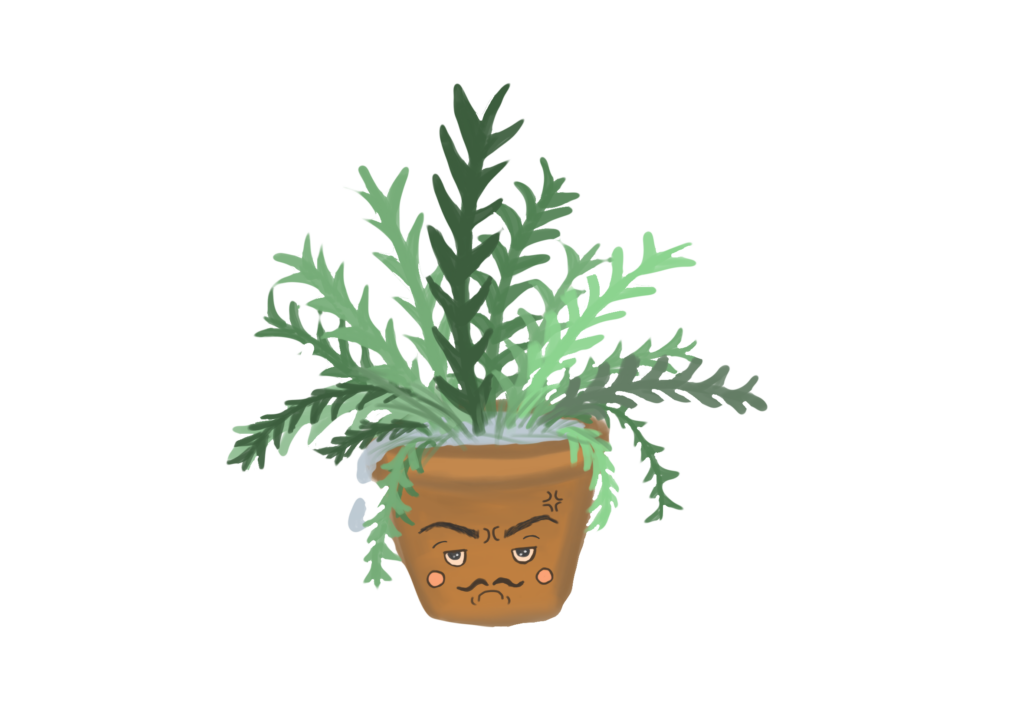
My name is Fern. I’m a small plant who lives in a cute little ceramic pot. My roots are buried in the dark soil. My life seems normal, but truthfully, I’m holding a dark secret. 

I’m not an actual plant. 

I know, I know. You’re all shocked. I would be, too. You’ve been watering me for the past few weeks, thinking you’re doing a good deed and helping a living thing continue to, you know, live — but I’ve been deceiving you. We’ve all been. 

You see, what I’m about to tell you is top-secret information. No one else can know about this. I’m telling you this in trust, hoping you won’t tell anyone or broadcast it to any publications. I can’t let this get out, but I feel like I can trust you. You wouldn’t go blabbing this private information to anyone, would you? 

There’s no such thing as plants. There, I said it — and I feel so much lighter now that I’ve told someone the truth. Plants don’t exist the way you think we do. The innocent little potted plants you store in your room, the ones you care for like you would a child, are slowly sucking your soul out. Humans came up with this idea that trees help create oxygen and help them survive, but really, all we do is steal bits and pieces of your lives. Have you ever seen Little Shop of Horrors? Pretty much what happens is a guy starts feeding this plant his blood, but the plant actually ends up being this alien set on world domination. It’s kind of like that. 

Another thing we hate? Water. Ugh. I don’t get why you all think we need it to survive — if anything, the water is killing us. So stop watering us, please and thanks. If you really want to feed us, feed us some mice or something. 

Well, now that I’ve told you about all our little secrets, I think it’s time to make sure no one finds out. You won’t tell anyone, will you? Sorry human, I know you’re not even the owner of this house, but I can’t let you escape with this knowledge. It was nice knowing you — 

Wait, wait, wait. What are you doing with that bucket? Where did you get it? What’s in there? It better be some fresh mice. I love mice. 

Water? Really, human?! I just told you that plants hate water. 

Put the bucket down. We can talk this out. I’m sure we can reach an agreement. Come on. There’s no need to be unreasonable. 

No, no, NO! HOLD ON, HOLD ON, PUT THE BUCKET DOWN. I’LL STOP EATING YOUR SOUL, PLEASE; I’M JUST A PLASTIC PLANT — 

— WATER YOU DOING???

Was this article helpful?
0
0

Leave a Reply

Block title

New immunotherapy treatment provides hope for aggressive cancer

By: Lucaiah Smith-Miodownik, News Writer Surgery, chemotherapy, and radiation therapy are often recognized as the three most common forms of cancer treatment. Sometimes, the latter two approaches become no longer effective when cancers become drug resistant, allowing the cells to further spread. At the University of Calgary, however, promising developments in immunotherapy intervention seek to provide alternative treatment when common therapies are not viable.  Cells continually divide to replenish dying cells, but certain gene mutations can create cancer cells, which divide and spread in an uncontrolled manner. The human body naturally defends itself from cancerous cells, though sometimes they can “hide from the immune system and avoid being destroyed,” according to the Canadian Cancer Society. Immunotherapy seeks to help strengthen the ability to recognize and fight...

Read Next

Block title

New immunotherapy treatment provides hope for aggressive cancer

By: Lucaiah Smith-Miodownik, News Writer Surgery, chemotherapy, and radiation therapy are often recognized as the three most common forms of cancer treatment. Sometimes, the latter two approaches become no longer effective when cancers become drug resistant, allowing the cells to further spread. At the University of Calgary, however, promising developments in immunotherapy intervention seek to provide alternative treatment when common therapies are not viable.  Cells continually divide to replenish dying cells, but certain gene mutations can create cancer cells, which divide and spread in an uncontrolled manner. The human body naturally defends itself from cancerous cells, though sometimes they can “hide from the immune system and avoid being destroyed,” according to the Canadian Cancer Society. Immunotherapy seeks to help strengthen the ability to recognize and fight...

Block title

New immunotherapy treatment provides hope for aggressive cancer

By: Lucaiah Smith-Miodownik, News Writer Surgery, chemotherapy, and radiation therapy are often recognized as the three most common forms of cancer treatment. Sometimes, the latter two approaches become no longer effective when cancers become drug resistant, allowing the cells to further spread. At the University of Calgary, however, promising developments in immunotherapy intervention seek to provide alternative treatment when common therapies are not viable.  Cells continually divide to replenish dying cells, but certain gene mutations can create cancer cells, which divide and spread in an uncontrolled manner. The human body naturally defends itself from cancerous cells, though sometimes they can “hide from the immune system and avoid being destroyed,” according to the Canadian Cancer Society. Immunotherapy seeks to help strengthen the ability to recognize and fight...

