Home Blog Page 928

Volleyball team drops fourth straight game

0
SFU hopes to end their four game skid against MSU-Billings tonight at 7 pm.

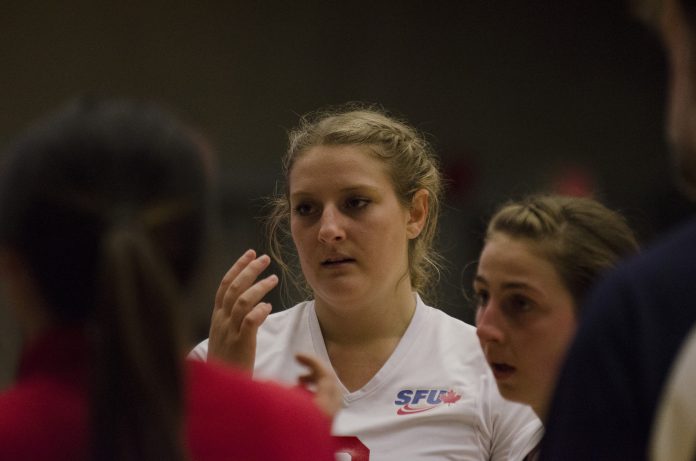
The SFU women’s volleyball team were handed their fourth straight loss with a four set defeat to the top Great Northwest Athletic Conference (GNAC) squad, the Western Washington University Vikings on Tuesday at home. Though the Clan fought well in the first set and came on top 31–29, the Vikings showed why they’re the top team in the Pacific Northwest. They stormed back to win the next three sets 25–20, 25–11, and 25–21.

The last time that these two teams played, SFU played an excellent first set before losing 1–3 as well. The same was to follow this time, too. Cheeky dinks from Madison Power, powerful spikes from Tessa and Devon May, and lightning quick digs from libero Alison McKay frustrated the favoured Vikings throughout the set. It was tit-for-tat right on until the end, when the Vikings gained three points in a row to get a 24–22 lead and two match points. However, SFU defended well and tied it back at 24 all.

During a timeout called by WWU after SFU tied it up 24–24, the SFU jazz band played an excellent rendition of Kenny Loggins’ classic “Danger Zone,” a song perfectly matching the action. Both teams rode into the danger zone and traded set points, but it was the Clan who was able to keep their cool and came out on top 31–29.

The second set also started out very even, with both teams trading points evenly. However, tied at 7–7, Western Washington was able to go on a run where they got nine out of the next 10 points, establishing a 16–8 lead. Though SFU was able to tighten the ship after that, the damage had already been done and Western Washington took the second set 25–20, tying the match at one set apiece.

After the intermission, the third set began, and it was the visitors who looked far livelier of the two teams. They stormed out of the gate to a 12–3 lead, and never looked back. It became clear why WWU is ranked as high as they are, as it seemed like every SFU spike was either blocked at the net or went straight to a Viking player. The effort for the Clan was clearly there, but throwing everything and the kitchen sink was not enough to faze Western Washington as they went on to take the third set 25–11.

SFU Head Coach Gina Schmidt gave some needed words of wisdom during the break, and SFU came out swinging in the fourth. Madison Power and Devon May began spiking like they did in the first set, and blocking by Tessa May stonewalled the WWU front court. All this, combined with more spectacular digs from Alison McKay, gave SFU a commanding 15–8 lead.

However, it was not to be, as the Vikings clawed back to tie it up at 18 all. A series of long rallies ensued, and it was Western Washington who came out on top in those, building a 24–19 lead. SFU was able to save two match points, but the third time was the charm as WWU took the fourth 25–21 and won the match.

After the match, Schmidt said, “I thought we fought hard, you saw a lot of good long rallies. We did a lot of good things, but they just did a few more good things.”

SFU hopes to end their four game skid against MSU-Billings tonight at 7 p.m.

SFU student aids in Bolivian economic development

0
Photo courtesy of SFU News

Gretchen Hernandez, a recent SFU graduate with a PhD in geography, has been passionately involved in a Community Economic Development (CED) program for Bolivia’s Indigenous peoples since 2007.

The training program, which was initiated by Hernandez, has helped 4,000 Bolivians, including indigenous leaders, municipal officials, and organisations map out their own paths of development.

Funded by the Canadian International Development Agency, the program aims to help communities as well as leaders work together to build on their available resources and improve their environmental and socio-economic conditions.

Hernandez, whose research focuses on the way the indigenous people of Bolivia are creating collective economic pursuits, is excited and inspired to continue her work as a social entrepreneur.

The Peak: How did you get involved with this project?

Gretchen Hernandez: I was a volunteer in 2003, and I saw a need for this kind of training in economic development. I made a link to SFU from someone I know and then I wrote a funding proposal and created this program.


P: Can you explain a bit about the training program?

GH: We established an innovative training program in Bolivia with Bolivian development professionals that brought together into one classroom all kinds of people, such as leaders from organizations, professionals, [and] people who work in the government. [. . .] The classroom creates a kind of a neutral space away from politics, so that people can get together and discuss what they can do to better the community.


P: What do you hope it will achieve?

GH: My real goal [is] to create economic justice and share knowledge. I was interested in redistribution so that people who are marginalized or on the outside and don’t benefit as much from economic assistance can take control of their lives and reap more benefits from sustainable development.


P: What is the most significant or memorable thing about taking part in this initiative for you?

GH: The big milestone was when the government there changed, and the Indigenous people had to be more powered; the indigenous leader just walked into our office and said, “this is the training that people might need.” From there, our program took off into this whole different area of working with Indigenous people in rural areas.

One of the most memorable things said to me by those people: ‘’We came into this program thinking that we are poor and we came out knowing we are rich, rich in land, in culture, in our social relationships, in our knowledge. And now we know that and we don’t have to wait for someone else to come and make things better for us’’.   


P: What’s next for you?

GH: I’m working with communities in one region to develop business plans for small agricultural ventures for Indigenous people, so that they can reach markets with their agricultural products. I have also started working on internship programs. We are going to send Canadian interns to work over there and I have also been hired as a faculty member at SFU in the Faculty of Environment. My job is to identify new research, training and international development opportunities in Latin America for SFU students and faculty.


P: Any particular message you would like to share with the readers?

GH: I just want to tell them that I think international cooperation is really the way that we can make a difference in the world. We can get to know each other and inspire each other to make the world a better place.

Queen of the Clan: A conversation with Theresa Hanson

0
Theresa Hanson comes to SFU after ten years at UBC.

After the resignation of Dr. Milton Richards in June, the SFU athletics department had a huge hole to fill. They needed someone who could lead this program into the future, and deal with the issues at hand. They seem to have found the ideal replacement, as it was announced Monday that Theresa Hanson was named senior director of athletics and recreation at SFU.

She becomes the first female athletic director in the school’s history, as well as the sixth overall. Her career has taken her to where it all started, as Hanson started as an assistant coach under the legendary Allison McNeil in 1988. The Peak sat down with the new leader of the Clan to talk about her new position at the school.

The Peak: What attracted you to the job here at SFU?

Theresa Hanson: It was a great opportunity first and foremost, and a career move for me. I’ve been the associate athletics director at UBC for 10 years, and this opportunity came up and I thought it would be a great fit for me. I’ve got ties to Simon Fraser that go back years, long before you were born. And then I also thought that in my career, it was the right time and the right place for a career move for me. I was very humbled and thrilled to actually get the job.

P: How does it feel to be back here, running it all, after starting your career here as an assistant coach on the women’s basketball team?

Hanson: It feels great. It’s a little bit surreal right now because I don’t start until December 14. But I am generally excited about it because I think that SFU has a lot of potential. It think that it’s a bit of a sleeping giant, and I think I have a lot to offer. I really hope I can make a difference.

P: What are some of the first things you will start implementing when you start the job?

Hanson: Well, the first thing is that I need to meet the people. I need to listen and I need to learn, and I need to evaluate everything. I look at the facilities and I look at the structure of the department and I look and the budget, and the funding and everything, and get all that information first before determining and evaluate what comes next.

Obviously the goal is to improve on things, the goal is always to provide those excellent opportunities for student athletes, and for the student body as a whole through the campus recreation program. So I need to listen and learn to start with before I can determine a plan going forward.

“I think that SFU has a lot of potential. It think that it’s a bit of a sleeping giant”

P: You said that one of your goals is to start engaging with the alumni more. How will you go about doing that?

Hanson:  You know, I really think one of the best measures of success for an athletics program is engaging the alumni. Again, that’s about meeting the people. Meet them, [and] listen to them. There’s such a great tradition at Simon Fraser, and the alumni are the biggest part of that, and they’re very invested in the program. So you want to listen to those people, you want to nurture relationships, because when you have you’re alumni on board, anything’s possible.

P: Will you be continuing the policy that Dr. Richards put in, which was free admission to students for home games?

Hanson: I don’t even think I can answer that question right now. Again, it’s one of those things that I need to really dive into the athletic program and see how programs have been running, and what’s worked, what hasn’t worked, what we can do better. So I think that it’s too early to answer that question, but certainly we want to engage the students to come to the games.

P: What do you think is your biggest challenge heading into this position?

Hanson: Good question. [. . .] The department both athletics and recreation, need some stability and leadership. Maybe one of the biggest challenges is really to get everyone on [the same] side, get everyone on board, and figure out a way to work together that we’re all getting the same goals. Trying to be excellent in everything they do.

P: How do you go about engaging the student body here to attend games, and to have them be a part of the athletics experience?

Hanson: That is the ultimate question on every university campus. Simon Fraser is a big university — 35,000 students over three campuses — and it’s a high academic university. Students are here first and foremost for their academics. And it’s a commuter campus, so not all the students are staying up here. So how do you get them to stay and how do you to support and have that school spirit for the SFU teams? That’s the biggest question, and it’s faced everywhere.

I think working really close with campus recreation, [because] we’re part of the same department, [is key]. So, how can we work that athletes support the recreation programs, and recreation helps get students to come and support the men’s and women’s clan teams.

P: With your connections inside UBC athletics, does this mean we can look forward to the Shrum Bowl sometime in the future?

Hanson: I certainly hope so. I was talking earlier today about the Shrum Bowl, and to coaches. It’s a game [where the] win-loss is a big part of it, and the bragging rights is a big part of it. But I think in the bigger picture, it’s really about engaging the greater community with university sport. We’ve got Simon Fraser and UBC, two of the province’s’ largest universities in the same community. So what a great opportunity for community engagement with the Shrum Bowl.

Clan lose in four sets to Northwest Nazarene

0
The team’s game tonight will be against third place Western Washington

The SFU Women’s Volleyball team suffered a 3–1 defeat against Northern Nazarene on Saturday. Northern Nazarene pulled into a tie for first place in the Conference, improving their record to 10–2. The loss dropped the Clan to 5–7 in Conference Play.

The Clan came out slow losing the first two sets 25–15 and 25–11. However, they bounced back to take the second set 25–17 before succumbing 25–20 in the decisive fourth set. Tessa May led the team with 12 kills and five blocks. Emma Jennings had nine kills, one ace and four blocks, and Devon May finished the game with a total of nine kills.

Coach Schmidt responded to Saturday’s game, stating, “We started slow Saturday so I was happy how our team responded after the break between sets two and three. Overall, our offensive output wasn’t able to match [Nazarene’s] and that was the biggest difference in the game. We’ve been working to improve our hitting efficiency as a team and we will continue to focus on that for our upcoming matches.”

The team was in Alaska two weeks ago where they split their two matches. Coach Schmidt also related how the team was fortunate to experience zero-degree temperatures as opposed to the frigid and icy conditions of last year’s late November trip. However, due to midterms, most of the team’s downtime was spent studying rather than sightseeing.

This week the Volleyball team has two matches at home. This Tuesday at 7 p.m., they take on Western Washington and their 10–2 Conference record. The Clan did manage to take a set from WWU in a 3–1 defeat earlier in the season.

Coach Schmidt outlined the keys to victory in this match: “WWU has a very balanced attack, so strong serving will be important tomorrow night. If we can eliminate some of their options with their passing, it will make it easier for us to defend. And on our side of the net, we will need to execute on offense. We will need to be aggressive and find ways to score.”  

On Thursday at 7 p.m., the Clan will take on Montana State University Billings, who are ninth in the conference. The Clan will look to sweep the season series against Billings after a 3–1 victory on the road earlier in the season.

Deux ans de votre vie is a story of unlikely love

0

This tour de force of a show from Théâtre la Seizième confirms why they are one of the leading theatre companies in Vancouver. With a sparse set and witty dialogue, three actors command the stage in this story of forced love.

Brigitte (Jessica Heafy) is sick of coming home to find her brother, Jérémie, suicidal in her closet, so she endeavours to set him up with the first single girl she finds. That happens to be Chloe (Julie Trépanier), who is minding her own business in the grocery store, looking at razors, when Brigitte tells her that she has the opportunity for a free year’s supply if she’ll come to her office for a meeting. Brigitte manipulates her by having her sign a contract that, unbeknownst to Chloe, says she will need to be in a romantic relationship in order to evaluate her free razors.

Chloe struggles to find a boyfriend under pressure, but of course Brigitte has a quick solution. She tells her to go home and meet the new love of her life. While this plot requires some suspension of disbelief, this was the part that was the hardest to accept. Jérémie (Cory Haas), assumedly at the direction of his sister, breaks into Chloe’s apartment and is waiting there for her when she arrives home from an appointment with Brigitte. Of course Chloe is skeptical at first, but she quickly comes around to the idea that they could fall in love.

I don’t know about you, but if I came home to a strange man in my apartment who casually admitted to climbing in through the window, I would probably be calling the police. Instead, Chloe savours the aroma of butter chicken (she had told Brigitte she likes Indian food) and imagines going to bed with Jérémie.

All three of these actors filled the stage with their confident performances, and I found Brigitte to be the most compelling character with her remorseless attitude and conniving scheme — she even spies on the couple from outside their window to make sure things are going according to plan.

Unlikely plot elements aside, the story served as an intelligent commentary on the contrasting lifestyles of singledom and coupledom. Brigitte revels in the fact that she is free to live her life alone and sprawl across her entire bed, while Jérémie and Chloe can’t imagine life without each other.


Fresh and varied performances at The Interplay Project 2015

0

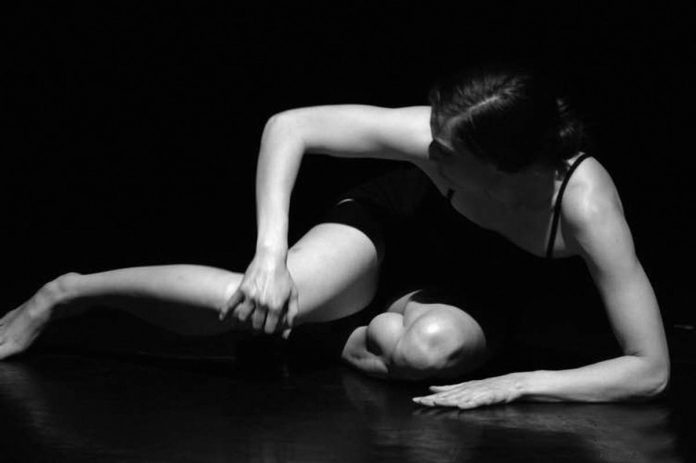
It was a warm October night at the Moberly Arts and Cultural Centre (MACC). In the spotlight, the performer poured herself a glass of red wine. She then undressed, piling her clothing and shoes on the table, and took a generous swallow straight from the wine bottle. Closing her eyes, she took a few moments to draw into herself (as if unaware she was half-dressed in front of an audience), sensing her mind and her body. Then she stepped up the microphone.

In an intriguing solo piece, Volume One, Clare Twiddy used a looping station to layer her own expressive and earthy voice. As she sang, her whole body responded in voluminous, and at times spastic, movement. From the song, a contemporary dance phrase was built and sung with abandon while reaching, turning, and diving.

This was the first of six experimental short performances in The Interplay Project, produced by Jane Osborne and Vanessa Goodman of The Contingency Plan. This interdisciplinary “performance lab” was hosted this year for the fourth time at the MACC. It is a multifaceted, fresh, and festive performance in which almost anything can happen. There was a delightful energy in the intimate theatre: before and after the performance, audience members and performers laughed and chatted to a backdrop of ‘80s records.

The performances themselves had little relation to each other. They were an energetic mix of dance, music, painting, theatre, and even woodwork (notably in Chris Wright’s comical attempts to literally construct meaning in Sheer Folly). In the blackouts, I had to mentally reset, banishing all expectation of what might happen next.

In Peril of Combusting Seas, for example, featured three black-clad male performers who rolled, jumped, and crawled across the stage, only pausing to adjust their orange toques. The costume combined with the frantic, almost comical, soundscore reminded me of convicts escaping from prison.

In Performentation, we heard the actress Victoria Lyons repeat herself again and again: “My name is Victoria, I am a middle child, I’m in a new relationship. . .” as her body was manipulated by dancers and painted life-sized in the background. And the minimalist, audience-participation piece, The Trail ended mysteriously, with the dancer Julianne Chapple handing out a personal note to one audience member, who promised to read it at home then throw it away.

The performances called up notions of identity and searching, the role of the artist, and the exchange between writing and performance. The Interplay Project was all at once refreshing, entertaining, and unfinished. It is a great platform for new ideas, and Jane Osborne explained that strong projects often keep evolving to be featured in festivals around Vancouver. The ethos of the event is a spot-on mix of collaboration, innovation, and community, allowing a variety of contemporary artists to take the stage in Vancouver.

Pumpking Carving on Campus

0

SFU’s Red Cross Club held a pumpkin carving contest to raise funds. Which pumpkin is your favourite?

You can vote here:
https://www.facebook.com/events/1507346622909854/

Created by:
Paige Smith & Eric Smith

Comic Connoisseur: Wytches is a top-notch father-daughter thriller

0

There was a time when the simple idea of a witch existing was enough to send a chill up your spine. Long before the bubbling cauldrons, the broomsticks, and the poorly exfoliated green complexions, a witch was the most terrifying supernatural entity of them all, rivalling even zombies and vampires.

Nowadays, though, these enchantresses are depicted with the same terrifying tact as a Twilight film. The only witches we see depicted today are either child-friendly or overly sexualized. However, Scott Snyder and Jock’s Wytches seeks to change that for good. At long last it would seem that the witch is getting a long-overdue makeover — or better yet, a de-beautification.

Wytches follows the story of Charlie Rooks, a children’s book author who moves his family to the remote town of Litchfield, New Hampshire after his younger teenage daughter is accused of murdering her bully. However, when his daughter, Sailor, goes missing, Charlie embarks on a feverish hunt to find her. Nothing can prepare the desperate father as he comes face-to-face with black magic, an eerie bald woman, and the ancient evil of the wytches.

At its core, Wytches is a story about a father, a daughter, and their special bond together. Part of what makes this story fresh in comparison to others is that the father is significantly younger than what is usually depicted. He is a young dad, trying his best to do right while still being prone to mistakes and bad decisions. Sailor is also a well-written character who is depicted realistically with her many traumas and psychoses.

Together, the two share in many heartfelt moments that allow readers to become invested in them and all the more concerned with their well-being throughout the story.

With a fresh and nightmare-inducing new look, the creators successfully revamp witches for a modern audience. What was once laughable is now enough to leave you scarred for the foreseeable future and in need of a night light. Jock’s designs are nothing less than the fuel that make up the most viscerally harrowing of night terrors.

Jock’s artwork also succeeds in building suspense throughout out the story. Chaotic and dynamic panel layouts help to depict the twisted story in an engaging way. Each scene is more captivatingly intense than the last, and each will leave readers eager to see what happens next. 

Wytches is well-written horror thriller which can stand on a petrifying pedestal with the best of the genre. By peeling back the layers of beautified fluff that have long kept witches away, Snyder and Jock reinstate these old-school occultists back to their place as the supernatural champions of the horror genre.

Cinephilia: Goodnight Mommy is an unsettling psychological tragedy

0

Children need their mother’s love; mothers innately care for their children. With this double-edged sword, Goodnight Mommy terrorizes our minds by imagining a scenario where either a mother is neglectful, or a boy is unreceptive to his mother’s care. Finding out which one is the case provides Goodnight Mommy, the feature-length debut from Austrian filmmakers Severin Fiala and Veronika Franz, an ambiguous and horrifying thrust.

Elias and his twin brother, Lukas, both of whom are adorable seven-year-olds, live in a remote mansion surrounded by a picturesque landscape and a glistening lake. Their mother begins behaving erratically and viciously after a mysterious accident left her face disfigured; her visage now hides behind a white bandage that obscures her identity. The boys suspect that perhaps their mother has been abducted and replaced by an impersonator (cleverly, we’re told the mother used to be an actress), but when the mother takes off her bandage, revealing her face and identity, there is a shocking shift in perspective as the perpetrator becomes the victim and the innocent the guilty.

Contrary to almost every mainstream scare flick, Goodnight Mommy is almost entirely bolstered by its atmosphere and narrative, not loud noises or jump scares. The unsettling mansion, captured in dark contrast to the bright sun that glistens outside the house’s walls, is filled with hollow and lifeless objects: a mantel of female mannequins and photographs that capture imposingly out-of-focus people as their subjects.

Susanne Wuest, who plays the mother, gives a performance that is both creepy and tragic, and the twins, Lukas and Elias Schwarz, are similarly adorable and off-putting. The difficulty distinguishing the boys is, in hindsight, a subtle mask for a dazzling twist.

Because of Goodnight Mommy’s sleight of hand and powerful performances, we not only experience the film viscerally, but also contemplate it poignantly. The more you undress its layers, decoding its metaphors and symbols, the more apparent it becomes that cliches and tropes which have literally been overdone to death have in this film been reinvented in a mesmerizing art-horror hybrid. Goodnight Mommy feels like The Sixth Sense and The Omen by way of Funny Games, yet that hardly explains its unique melding of ambiguous storytelling and body horror.

You may have heard that this is one of the scarier horror films of recent years, and that would be correct, but what’s most surprising is that beneath the torture, violence, and scares is a psychological tragedy, a twisted psychodrama of grief and delusion. It’s not just a film with blood, guts, and creepy lullabies; Goodnight Mommy challenges the audience’s identification process.

One of the more compelling parallel images is the tribal mask Elias wears and the bandage which covers his mother’s face. Both are disguises, but where one hides sorrow, the other points to an evil you may not see lurking beneath the surface. A mother could be hiding a secret behind her bandaged pain, or maybe a cute face is the real mask.