Home Blog Page 92

The avian flu pandemic needs more attention

0
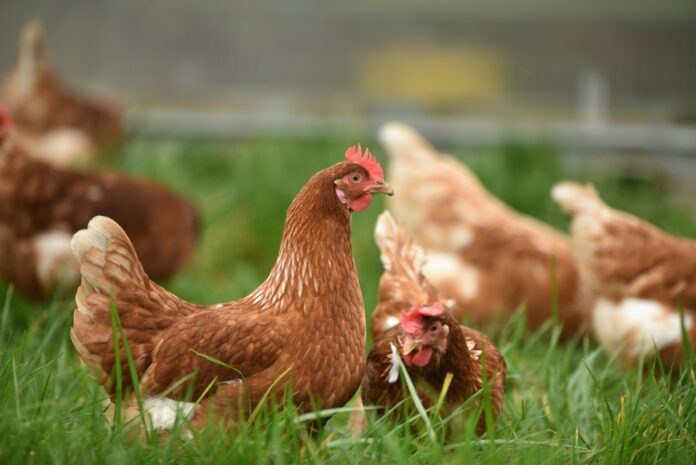
A brown hen standing on grass.
PHOTO: Thomas Iverson / Unsplash

By: Kaja Antic, Staff Writer

Avian influenza, specifically the highly contagious and infectious subtype H5N1, has seen increasing cases worldwide since 2020. As its name suggests, the virus is primarily found in birds, but it’s also been found in at least 26 mammals since its classification in 1996. Humans have also contracted the H5N1 avian flu, with the World Health Organization (WHO) reporting 889 human cases between 2003 and 2024 — 463 of those cases being fatal. While some continue to ignore the ongoing COVID-19 pandemic, there is another taking hold across the globe that also deserves attention.

The Canadian government has stated that it’s “currently responding” to rising global cases of H5N1. Since 2022, there have been 3,150 positive cases of the virus in Canadian wildlife, and since 2021, over 11 million domesticated birds have been impacted by H5N1. While there have been no reported cases of human-to-human transmission of the virus, the WHO has stated that there is an “enormous concern” with the rampant spread of H5N1, describing it as a global animal pandemic. There have been an estimated tens of millions of affected poultry, with large crossover with mammalian infections. Mammalian infection can lead to higher chances of human infection, which should be concerning considering the 52% mortality rate.

H5N1’s transmission is primarily through materials like feces and saliva, which differs from COVID-19’s airborne quality. Most human cases of H5N1 are seen in agriculture or livestock workers, but “anecdotal reports” have included people with “exposure to raw or undercooked contaminated poultry products.” Even though H5N1 exposure is less likely in daily life, the high mortality rate should be more worrying to government health officials than it currently is. Canada may not have had a confirmed human case of the H5N1 in a decade, but scientists have noticed mutations resulting in previously unaffected species being infected with the virus. Typically, mammals are exposed to H5N1 by eating contaminated poultry. However, an outbreak at a Spanish mink farm in 2022 was the result of “mammal-to-mammal” transmission. And while humans outside the livestock industry are at a low risk of infection, viruses are known to evolve — often unexpectedly.

“Canada may not have had a confirmed human case of H5N1 in a decade, but there is still a large risk as the virus continues to adapt and mutate.”

By now we are aware of actions that should be taken during a global pandemic, yet it seems like the world is slow to catch up. With the slow action taken against COVID-19, you’d think governments would hesitate to make the same mistakes — though it seems unimportant in the offices of world leadership. There have been trials since 2006 testing a potential vaccine against the H5N1 virus subtype, though there has not yet been a large-scale roll out of preventative vaccinations. The European Medicines Agency currently has three authorized vaccines meant to prevent a pandemic: Foclivia, Adjupanrix, and Pandemic influenza vaccine H5N1 AstraZeneca. The American Food and Drug Administration has also approved a vaccine named Audenz, though there has yet to be any widespread vaccination efforts in the US. 

Only recently has Finland made available vaccinations for those who are 18 years or older and have an increased risk of contracting the virus, such as working with domesticated farm animals. There have been suggestions for widespread H5N1 vaccines, though this would not necessarily limit the viral spread between animals, and could have negative implications for trade regulations. 

The avian flu is not new, and yet, the preventative measures taken to reduce spread, increase awareness, and produce vaccines is not adequate to combat the highly transmissible and highly deadly virus. With the COVID-19 pandemic, reports found that the initial response from governments and health officials was delayed. As the H5N1 strain of the avian flu has been known for decades to have many negative effects on humans and animals, you would think there would be quicker action to combat the ever-evolving pandemic.

With millions of animals and hundreds of people affected by the H5N1 pandemic worldwide, there should be more action taken to prevent even more horrific outcomes, especially after the continuous lack of preventative action for the COVID-19 pandemic. While H5N1 may not be an immediate threat to humanity, it very well could be one day, and the world needs to take proper action before the circumstances get that dire.

SFU research group helps people create air filters for wildfire season

0
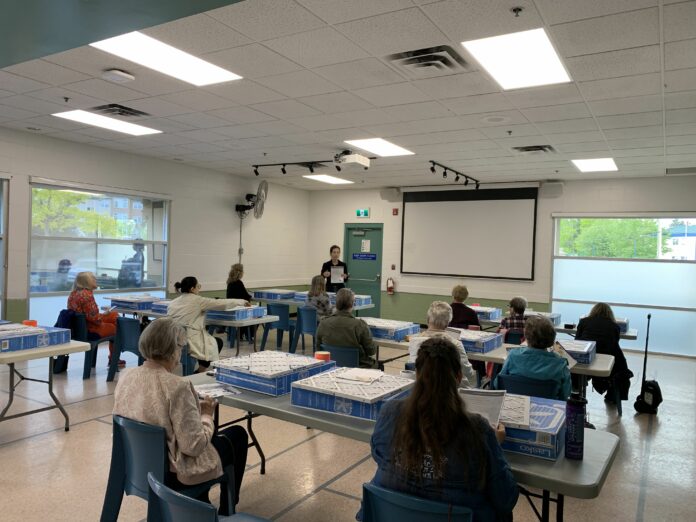
This is a photo of the Pacific Institute on Pathogens, Pandemics and Society holding a workshop to build DIY air filters in a classroom-type setting.
PHOTO: Pacific Institute on Pathogens, Pandemics and Society

By: Hannah Fraser, News Writer

The Pacific Institute on Pathogens, Pandemics and Society (PIPPS) is a research institute based at SFU Burnaby. They have now “led 25 workshops helping people build more than 500 air filters to clean the air in their homes and reduce exposure to fine particulates from wildfire smoke.” 

Dr. Anne-Marie Nicol, associate professor in the faculty of health science, said to SFU News that while wildfire smoke makes its way indoors, “indoor air quality is often overlooked.” This smoke can cause long-term health issues like “lung cancer, chronic obstructive pulmonary disease, exacerbate asthma, and make life miserable for people with existing lung disease.” 

With funding from the BC Lung Foundation, the City of Vancouver, and more, Dr. Nicol and her team have built “simplified versions of the Corsi-Rosenthal box.” The box is a cost-effective “DIY method of building your own air filter” and is made with a box fan, air filters (MERV-13), and duct tape. It costs less than $100 to create a single air filter this way. 

For many “renters and people in group-living or subsidized housing,” sophisticated air filter systems can be costly, and people in the Okanagan are often subject to smoky air from wildfires. In just March this year, there were two wildfires that came as an “absolute surprise” to Lumby Mayor Kevin Acton. “It is really early in the year for something like this. I don’t think I’ve ever seen it before, actually,” he told Global News.

PIPPS plans to lead 25 more workshops in “Lillooet, Rock Creek, Oliver, and Osoyoos” this summer to surpass the “500 units built last year.” They also want to “pilot the viability of the workshop in smaller, rural and Indigenous communities, where access to extra supplies may be difficult.” The Peak corresponded with Dr. Nicol and Riley Condon, a research assistant with PIPPS, for more information. 

It costs less than $100 to create a single air filter this way.

Dr. Nicol said the inspiration behind the project was reading Dr. Angela Eykelbosh’s research review on homemade air filters being effective at reducing exposure to COVID-19. Eykelbosh is an environmental research scientist with the BC Centre for Disease Control, whom Dr. Nicol has worked with. 

The homemade air filters PIPPS are building help remove PM2.5 from the air. PM2.5 is a “fine particulate matter” that is a mix of “smoke, soot, liquid, or solid particles in aerosol” that can “travel deeply into the lungs” and into the bloodstream. “PM2.5 is the main problematic constituent that’s found in fire smoke,” said Dr. Nicol. Research assistant Riley Condon said PM2.5 can cause heart attacks and strokes

A November 2022 study demonstrated that these DIY air filters are effective as they reduce “simulated wildfire smoke in a controlled chamber environment.”

Condon explained that the PIPPS team created a DIY guide on how to make the air filters and how to organize workshops to help others create the air filters. She also said that on July 2, Dr. Nicol and Prem Gundarah, another research assistant with PIPPS, held a workshop for the First Nations Health Authority.

“People have lots of great questions, and we have answers, as scientists we have answers, we just need to get them into the hands of people who can use those answers,” said Dr. Nicol. She said many individuals who don’t have access to the internet and aren’t used to looking online for help are at the workshops. This is most often experienced by Canada’s rural, Indigenous, elderly, and new immigrants.  

Dr. Nicol noted that these are often the individuals disproportionately impacted by environmental exposure, so it’s great to be able to help them in person. “We’re democratizing information and helping make it available to everybody,” she continued.

Advocates demand removal of earnings limit for disabled individuals

0
Person in wheelchair communicating with a colleague in the cafe
PHOTO: SHVETS production / Pexels

By: Hannah Fraser, News Writer

A coalition of over 50 small business owners, non-profit leaders, and advocates have written an open letter demanding the BC Minister for Social Development and Poverty Reduction “remove the earnings limits for people receiving disability assistance so that they can earn a living wage.”

Those currently receiving disability assistance can receive a maximum of $17,802 in benefits alone in a year. However, these benefits are “clawed back” if a disabled person makes more than $16,200 a year. Altogether, a single person with a disability could receive a maximum of about $34,000 a year, equivalent to $17 per hour

Over the last two years, Metro Vancouver’s living wage has increased from $20.52 to $25.68 — an increase of 25%. The living wage is calculated to include the cost for a person to cover basic expenses in their city, such as food, housing, clothing, and transportation.

The Peak interviewed Anastasia French, provincial manager for Living Wage for Families BC, for more information.

“If you are disabled, you face additional costs, and yet the government wants you to be surviving on less,” said French. She noted additional costs include medication, specific heating or cooling requirements, more expensive groceries if facing dietary restrictions, and equipment like mobility aids.

The coalition asked Minister Sheila Malcolmsom to “use the 2024 update to the BC Poverty Reduction Strategy to remove the earnings exemption.” The strategy “sets a path to reduce overall poverty in BC by 25% and child poverty by 50% by 2024.”

In the press release, Chantelle Spicer, campaign manager for the BC Poverty Reduction Coalition, said the limit “keeps people with disabilities trapped in a cycle of poverty.” 

The Peak reached out to the Ministry of Social Development and Poverty Reduction, who stated the “government understands how important earnings exemptions are.” The Ministry explained that in January 2024, they increased the earning exemptions. They added that they also recognize the difficulties brought about by global inflation which “is making life more difficult, especially for people on income and disability assistance.” 

“The earnings limit is a rule that is targeted squarely at a population known to be vulnerable and which denies us basic dignity.” — Steve Wright, a disabled worker from Disability Alliance BC

The Ministry referred to alternative social structures such as the 80,000 affordable home projects they have delivered or are underway, minimum wage increases, reducing childcare costs, and more. Yet, the Ministry acknowledged, “While good progress has been made, there’s more work to do to make life better for people and their families.”

“There are many employers that want to pay their disabled staff a living wage,” said the coalition in their open letter. “However, these employers find themselves having to pay their disabled staff less or offering them fewer hours than their non-disabled peers, so their staff do not lose access to their disability payments and other entitlements such as housing.”

Steve Wright, a disabled worker from Disability Alliance BC, was on disability assistance from January 2008 until late 2023, when he reached his earnings limit in 2023, which halted his disability assistance. “While on disability assistance, I was made to feel other, and at times, experienced the crushing powerlessness of my livelihood being beholden to a faceless governmental ministry,” he said.

“I kept working because I was able to at that time. But my ability to work is never guaranteed because I am severely mentally ill. Disabilities are not often set in stone. They are erratic beasts that can alter our existence at any time and which can hinder our ability to work.” Wright added that if his ability to work changed after he reached the earnings limit, he would be “bereft of options. 

“We are abandoned and left without support by the very government that declared us in need of sustained financial support to begin with.”

The current disability assistance policies force people to “choose between working beyond our abilities and possibly harming ourselves; ceasing work before reaching the earnings limit; or being left without any income at all. The earnings limit is a rule that is targeted squarely at a population known to be vulnerable and which denies us basic dignity,” Wright expressed.

Minister Malcolmsom said, “The BC government’s new and ambitious 10-year, cross-government poverty reduction strategy is anticipated to come out at the end of this month and considers ways that government may be able to further improve direct income supports for people in BC.”

Yet, according to Wright, “The only way this can change without a meaningful and substantial increase of the disability assistance rate to the equivalent of a full-time living wage is to remove the earnings limit.”

Not a message from the president: Everything I missed in the 2023–24 community report

0
Businesswoman handing paperwork to her colleague.
PHOTO: Andrea Piacquadio / Pexels

By: Kaja Antic, Staff Writer

As we come to the end of this mundane, troublesome, and cost-ineffective academic year, it’s time to jog down memory lane and remember everything that happened this year. And yes,  I mean everything.

You have heard a lot from our administration this year as we steadfastly fought against paying our staff fair wages and tirelessly drew programs from a hat to see what to cut next. Lots of work was done for the betterment of our salaries!

We remain committed to our core values in the creatively named What’s Next: The SFU Strategy. We may have had some commitment issues in the past, but we promise this time is different! Just don’t ask the football team, cleaning staff, dining workers, or TSSU members, for example.

While faculty and staff contribute to this strategy, I will continue to take credit for it all! Without further ado, the most outstanding achievements of my administration — whether I should be proud of it or not:

Upholding Truth and Reconciliation

    • Continue to use the name Simon Fraser to represent the university. Why should I cut my pay to change a silly name? It’s not like it’s John A. Macdonald University. Get over yourselves! Simon was one of the good ones!
    • Addressing colonialism by continuing to fund it through our support of Israeli military equipment, something a university that claims “budget issues” every month should definitely invest in.

Engage in Global Challenges

    • Divert our Board of Governors meetings online to avoid facing any consequences for funding an ongoing genocide.
    • Avoid difficult conversations on our contributions to the Israeli military industry by refusing to directly mention pro-Palestine protests during convocation ceremonies.

Make a Difference for BC

    • Cutting the Interpretation and Translation and English Language and Culture programs to aid in the estrangementof newcomers to the Lower Mainland.
    • Closing the climbing wall to make students pay full prices at other climbing gyms in the province rather than accommodating their needs ourselves. Why on earth would we do that?
    • Contributing to the destruction of greenspaces by interrupting an environmental conservation area to build the long-overdue gondola.
    • Continuing to contribute to the rising cost of living in the area by increasing tuition and laying off staff. These contributions are crucial for the padding of my retirement fund!

Transform the SFU experience

    • Close half of the athletics building, no one was using the pool anyway!
      • Correction: we do have a swim team! Their space is just hidden away, and if we can’t see it, we can cut it! The football team should’ve just gone somewhere else.
    • Refuse to elaborate on the “red leaf” branding. No, you are not getting your mascot back. McFogg the Dogg is at a lovely farm in the Okanagan. Leave him alone!
    • Scale back our cleaning team to make campus feel more like home. What? It’s not like you clean your bathroom at home every day, so why should we?
    • Removing our Woodward’s Cultural Programs so we can spend more money on conferences that are totally for advancing the university and not just for us to pad our LinkedIn connections lists. What more culture do we need anyway? We even have an Italian program, haven’t we done enough for you people?

Thank you

You all have sparked joy in my life this academic year unless you are one or more of the following: 

TSSU member, cleaning staff, any member of any union, student-athlete, Health and Counselling user, mascot lover, current faculty member, current graduate student, current undergraduate student, raccoon in the convocation mall, alumnus who doesn’t give us money, searching for friends/life on campus, international student, against our questionable military investments, or English (we have to stay with our Scottish roots that we only occasionally acknowledge).

See you all again soon, you’re stuck with me for another term!

Insincerely, 

Jojo Jameson
Not the SFU President

Saturday Fight Night: The vengeful Ah Choo vs. the undefeated Seasonal Allergies

0
Woman wearing a black and white polka dot dress sneezing into a tissue.
PHOTO: Andrea Piacquadio / Pexels

By: Izzy Cheung, Arts & Culture Editor

Snee: Welcome back to another installment of Saturday Fight Night! My name is Snee, and tonight, I’ll be one of your co-hosts for this magnificent mid-summer matchup. 

Zee: And I’m Zee, the other half of the broadcast. Boy, do we have a doozy for you all tonight! This square-off has long been in the making, dating back to the first time these two entities crossed paths. 

Snee: That’s right, Zee! Under the bright spotlights of our stage, directly inside that boxing ring, these two are about to settle a beef that even Alberta can’t produce. Now, let’s meet our competitors! 

Zee: Coming out of the right side, donning a snot green silk robe, we’ve got the challenger themselves — Ah Chooooooooooo! 

Snee: Ah Choo comes into this fight with a bone to pick. They issued the challenge after countless years of pestering. It started with tickles in their nostrils and even escalated to scratches in their throat!

Zee: Scratches IN the throat? 

Snee: You heard me, Zee! That’s why Ah Choo couldn’t take it anymore — they had to settle things once and for all, before they stuck a spoon down their throat in a fit of itchy anger. 

Zee: That’s a tough case, Snee! 

Snee: It really is. Now, coming out of the left side, sporting dandelion yellow, we have Seeeeeeasonal Allergies! 

Zee: Seasonal Allergies has been a force in the fighting industry for years. Nobody’s beaten them. 

Ding ding! 

Snee: And the bell has been rung! Here comes Ah Choo with a quick right hook —

Zee: Oh, but Seasonal Allergies dodges it! Ah Choo makes another quick move, trying to sweep out Seasonal Allergies’ feet from underneath them —

Snee: But Seasonal Allergies pummels Ah Choo right in the face! Yow, that looked painful. Those eyes are going to be itchy for a long time. 

Zee: Oh, but Ah Choo looks mad now, Snee. They look like they’re seeing red. 

Snee: I think those are just the allergies, Zee. 

Zee: Doesn’t matter now — here comes Ah Choo with a wild charge! They’re running like a bull! 

Snee: But Seasonal Allergies handles that deftly with a blast of boogers! Oh boy, somebody better get the clean-up crew down there. 

Zee: Ah Choo is out of control! Look at that sneeze! 

Snee: They just sent themselves backwards with the force of that thing! 

Zee: Oh, no — Ah Choo is down. The fight is over. 

Snee: No, no, it’s not — Seasonal Allergies is advancing on Ah Choo. But, Ah Choo is already down! 

Zee: Nothing can stop them once they’ve started, Snee. Not even overpriced medication

Snee: Well, that’s a whole lot of sneezing and nose-blowing from inside the ring, Zee. I think that means our work here is done. 

Zee: How long do you think Ah Choo will be like that for? 

Snee: It’s hard to tell, Zee. It could be forever. 

Zee: Well, that’s all from Saturday Fight Night, then. I’m your co-host, Zee. 

Snee: And I’m your other co-host, Snee. We hope you enjoyed this week’s fight . . . though it wasn’t much of one. 

Zee: It never is when Seasonal Allergies is your opponent.

Getting shipped away at Junction Public Market

0
A small storefront adorned with copper dishware, ornately woven rugs, and charms with a blue eye. A banner at the top says “every item tells a story.”
PHOTO: Zobia Khalid

By: Yasmin Hassan, Staff Writer

What hides among the looming towers of Vancouver’s Financial District? The Junction Public Market, that’s what! It’s not something that immediately catches your eye but the search for it is all worth it. With free entry and opening Tuesdays–Sundays (and holiday Mondays) from 11:00 a.m. to 7:00 p.m., what’s not to love? It’s a short walk up from Waterfront station and is nestled right atop Granville Square, which overlooks the water by Canada Place. I suggest taking transit or walking part of the way as pay parking around the area is quite pricey! Let’s delve into what this quaint nook of a market has to offer, shall we?

“In this intimate outdoor space, so many walks of life all came together to enjoy the sun, the market, and the bustling city that surrounds it.”

If you’re sensing a common theme here with my market reviews, yes, I love being by the water! Something about browsing for trinkets while listening to the faint sound of seagulls and seeing the summer sun glimmering on the currents of the strait just does it for me. 

PHOTO: Zobia Khalid

When I first approached the market, I was mesmerized by the array of vendors that were set up in a maze-like fashion, all in shipping containers (what an ode to the shipping dock that was just in view!). I first ventured over to Neo Naturelle, as their skincare and natural soaps caught my eye. Then, I perused Soumak Boutique, which sold gorgeous handmade Middle Eastern crafts ranging from bags, to rugs, to ivory mosaic chess sets. Another vendor I found interesting was All The Good Things From BC, which offered an array of T-shirts, art pieces, and more. This shop gives back to the community by donating to the Indian Residential School Survivors Society and BC Parks Foundation. The last one that caught my eye was EGG Atelier, which I happened to see at the Shipyards as well! They offer cute handmade crochet creations that I couldn’t help but ogle over.

PHOTO: Zobia Khalid

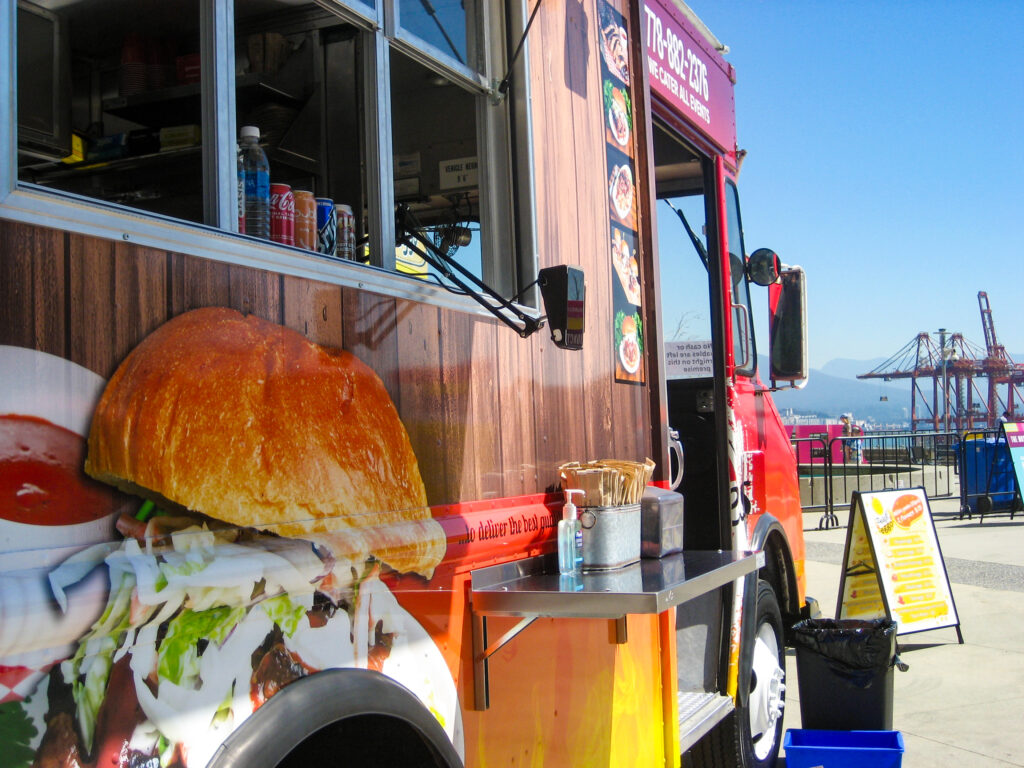
I started indulging in the market’s culinary delights by quenching my thirst at the Sipping Container. I had a refreshing can of Wards Cider, which is grown and made here in the Okanagan. I wanted to get something hearty, so my friend and I tried out Yo-Bones BBQ. He got the pork back ribs, but since I can’t eat pork, I opted for the BBQ pulled chicken sandwich. He said that the ribs were phenomenal, and as much as my sandwich was messy to eat, it was the best tasting mess I’ve had in a while! Finally, I decided to seal the deal with a sweet, egg-shaped custard cake from Meiggo Eggo. The time I happened to go — around 1:30 p.m. during their second week of opening — there weren’t many food vendors open, but the website has a list of them all! 

PHOTO: Zobia Khalid

As I sat down to enjoy my dessert, I noticed the crowds of people all sitting in the shade around a tree, shying away from the hot rays of sun. There were transit operators and office workers taking a lunch break, people passing their time, or friends sitting in a circle and enjoying their food from the market. In this intimate outdoor space, so many walks of life all came together to enjoy the sun, the market, and the bustling city that surrounds it. If you happen to be downtown, take an hour or two to stop by and indulge yourself in the market’s local culture and food. You’ll thank me later!

Need to Know, Need to Go: Vancouver-based arts events

0
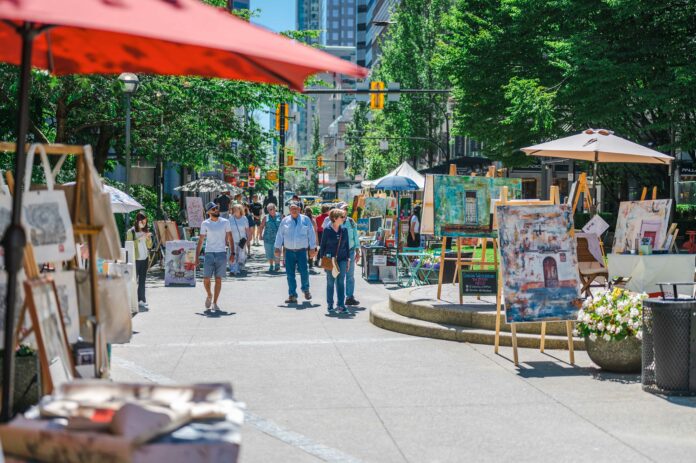
Colourful paintings on easels displayed along a busy street in downtown Vancouver.
PHOTO: Art Downtown

By: Hailey Miller, Staff Writer

Vancouver Art Book Fair

When: July 26: 11:00 a.m.–9:00 p.m. and July 27: 10:00 a.m.–6:00 p.m.
Where: Roundhouse Community Arts and Recreation Centre, 181 Roundhouse Mews, Vancouver 
Admission: Free!

The Vancouver Art Book Fair will showcase a variety of authors locally, across Canada, and around the world. Local authors and artists featured include Cathy Busby, Dawn Lo, Feiya Zhang, and Daniel Robert Hawkins. This event will be held in the heart of Yaletown for the start of the weekend, and will be followed by a symposium on July 28 at Emily Carr University of Art & Design from 10:00 a.m. to 5:00 p.m. The weekend will present programs, performances, and projects from over 100 authors, publications, and galleries — including works from books, magazines, zines, and more!

CREATE! Eastside Arts Festival

When: July 22–28, various times
Where: Various locations in the Eastside Arts District
Admission: Varies

For an entire week, the Eastside Arts Society will present CREATE! Throughout this arts festival, a variety of events, hands-on artistic programs, classes, and experiences will be open to the public. This includes art studios, live mural painting, public art installations, and more. While there, you can also enjoy the beer garden, craft breweries, and food trucks. From Strathcona to East 4th avenue, immerse yourself in the arts, try your hand at a workshop, enjoy live performances, and support local artists.

Art Downtown

When: Wednesdays July 3–Aug. 28, 11:00 a.m.–5:00 p.m.
Where: Lot 19, 855 W Hastings, Vancouver
Admission: Free!

The Vancouver Visual Art Foundation presents Art Downtown, the 5th annual free event that will showcase the work of local artists like Taisha Teal, Maria Ramirez Osses, and more. This also includes performances by artists who have yet to be revealed, so be sure to visit to see which musicians pop up every week. This event will provide an open space for visitors to enjoy the summer weather while also celebrating local artists by learning about their various cultures and art forms. Art Downtown was created as an “open-air gallery and artist studio” that helps unify individuals with the arts. 

Slip Slap Trip Wack

When: July 26: 5:00 p.m.–8:00 p.m., and July 27 and 28: 10:00 a.m.–4:00 p.m.
Where: Russian Hall, 600 Campbell Ave., Vancouver 
Admission: Adults: $15, Youth: $5, Children under 12: $5 or entrance with any toy or book. Tickets available at the door.

For three days, Leaky Heaven will be producing Slip Slap Trip Wack. This show will bring the imaginary worlds of eight to 12 year old children to life from artists and youth who live near the Russian Hall, where the showcase is taking place. The performance will encourage collaboration from the audience by having them watch and participate. The concept behind the piece is a reminder for kids to be kids, and for adults to find joy in the little things and not lose their sense of playfulness and light. Taking inspiration from Our Gang and The Little Rascals of the 1920s, Slip Slap Trip Wack will have you reminiscing about your childhood while joining in on the fun. 

Climate change is a class issue

0
A town with buildings and roads destroyed by flooding.
PHOTO: Sadiq Nafee / Unsplash

By: Yildiz Subuk, Peak Associate

In an East Prairie Metis Settlement, the atmosphere has ashened, accompanied by an orange tinge and smokey clouds in the sky. Trees burn and homes are destroyed, causing the community in this reserve to be displaced. About 385 kilometres northwest of this region is the unaffected city of Edmonton. While both of these places are governed by the same province, one region suffers exponentially more than the other. Many of us live comfortably in a suburban or urban area, away from the harsh reality of environmental degradation. We often believe the effects of climate change are approaching us, but when we zoom out, we may not be aware of how climate change currently impacts marginalized communities, especially lowerincome people and countries.

The terms climate change and global warming are often confused with each other, and it can be easy to feed into the notion that climate change is eventually going to affect everyone. While that’s true to some extent, climate change tends to impact those living in lower socioeconomic conditions much more than the rest of the population. To understand this, it’s integral to differentiate between climate change and global warming. The difference is described well in a video series called The Climate Explainers. The series likens global warming to one big house with multiple rooms, while climate change impacts each room differently. While the house being affected may cause problems for everyone residing in it, certain rooms tend to bear the brunt harder than others. The entire world is being affected by global warming, but climate change is disproportionately impacting the living conditions of lower-income communities and countries.

According to the United Nations, between 25 million and one billion people — especially those residing in lower-income socioeconomic conditions — will be displaced due to climate change by 2050. Because that number indicates a future problem, it may be easy to overlook the issue in the present day. However, the same report states that tens of millions of people have already been displaced or killed across the world due to climate disasters. This is a clear indication that climate change is not going to just affect the future — it’s affecting the present at an alarming rate. 

It is a privilege to not have to worry about ecological disasters.

The reason why the daunting reality of climate change is often hidden from many of us is due to privilege. It is a privilege to not have to worry about ecological disasters. According to the World Bank, “only one-tenth of the world’s greenhouse gases are emitted by 74 lowest income countries,” and yet their number of natural disasters has increased by eight times in the last 10 years. Various new industries are now accelerating the consequences of climate change, a prominent one being artificial intelligence (AI). The carbon footprint required to power AI models will measure up to 14% of the global carbon emissions by 2040.

Additionally, electronic waste (or e-waste, which contaminates soil and water with lead and mercury) produced by the AI industry will measure up to 120 million metric tonnes per year by 2050. That can cause health issues for those residing near where that waste is produced or disposed of. One study found that “China and certain countries within Africa receive up to 80% of the world’s e-waste.” Disposing of these materials is particularly difficult for “low and middle-income countries,” leading to adverse health effects. While AI can be perceived as a useful tool, it is not worth the environmental degradation or human rights abuses.

Most individuals are aware the world is heating up, and most do not outright deny the existence of climate change. Instead of only acknowledging that climate change will affect our future, we need to acknowledge how it has already affected those who are less privileged, and advocate for better climate policies. Climate change for the privileged is an issue for the future, but climate change for those who aren’t is an ever-growing issue of the present day. 

Bright-er Side: The atmospheric experience of the SkyTrain

0
A SkyTrain seen from the front
PHOTO: Diego Mazz / Unsplash

By: Samuel Akhibi, SFU Student

Cars and buses pale in comparison to the excitement of taking the SkyTrain.

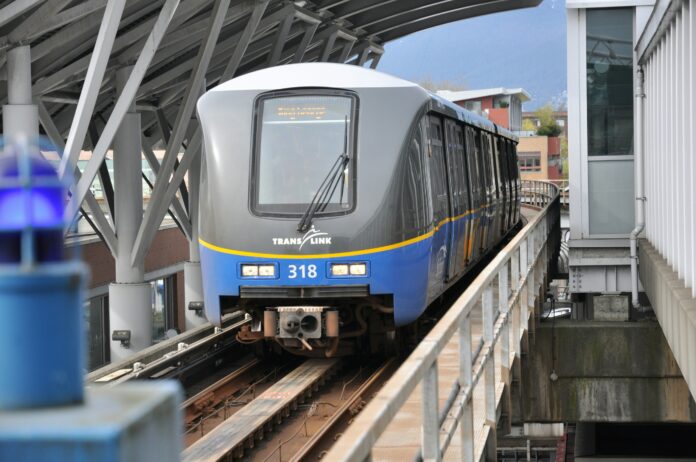
Cars and buses are limited to ground-level views within a congested traffic system. The SkyTrain, on the other hand, offers comfy and scenic views of the city landscape, mountains, and waterfronts. It offers a more accessible and modernized form of travel with the system being automated and efficient. The stations are operational with maps and convenience stores that make travel more comfortable. Even with the occasional technical difficulties, employees usually service the train and resolve delays at a rapid rate.

The SkyTrain is also more environmentally friendly than other vehicles. Being fully electric, it not only reduces greenhouse gases, but also reduces the number of cars on the road. Public transit in general also gives passengers the opportunity to interact with community members — something not experienced when travelling solo. I believe that Vancouver’s SkyTrain allows for a more visually and socially rewarding experience than other vehicles. 

Concerns raised regarding recent SFU layoffs

0
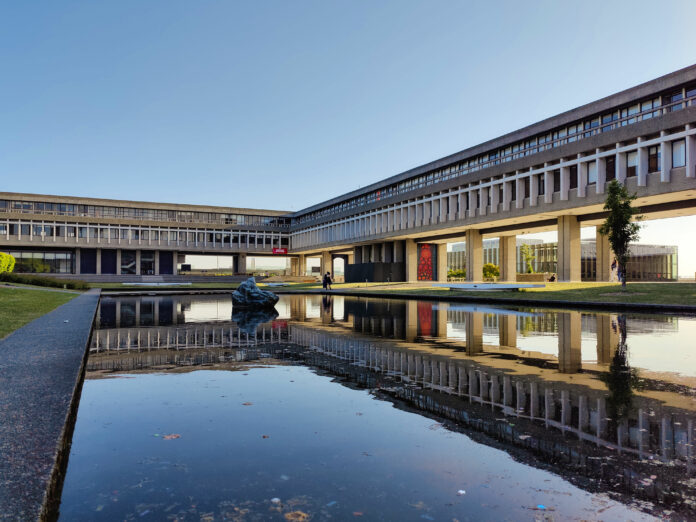
This is a photo of the SFU Burnaby Campus over the reflection pond.
PHOTO: Kriti Monga / The Peak

By: Michelle Young, Copy Editor

This summer, SFU laid off nearly 100 staff and eliminated positions citing budget concerns. Some of those positions included administrative staff, such as jobs in Student Servicesincluding positions in SFU Health and Counselling and Work Integrated Learning. These layoffs also included instructors and custodial workers

The Peak received an anonymous tip alleging that many of those laid off were either on or returning from medical leave, and those impacted were disproportionately women close to retirement. The Peak reached out to the Administrative and Professional Staff Association (APSA), which represents admin staff at SFU, for more information. 

Lakshmi Gosyne, APSA associate director, communications explained that within two days, 36 positions represented by APSA were eliminated, out of the near 100. “Some of these members were either on some sort of medical leave and/or maternity leave,” she explained. “Others had recently returned from a medical leave or had a medical leave of absence and returned to work within the last year.” Gosyne added that of those who are represented by APSA, who were on leave or returning from one, made up around 36% of those laid off. 

APSA found that most — 77% — of those laid off were women. Their analysis also showed that those who were over the age of 55 or a visible minority made up between 30–40% of the layoffs. Gosyne added she “can’t underscore enough that there were so many other Canadian Union of Public Employees (CUPE) staff who also appear to be disproportionately immigrants, people of colour, or vulnerable persons.” CUPE staff refers to workers such as cleaning staff, who are represented by CUPE. 

“The reduction in essential services such as academic advising, co-op support, and health and counselling services directly undermines the quality of education and support that SFU has a duty to provide.” — Simon Fraser Student Society

On June 10, the Simon Fraser Student Society (SFSS) released a statement saying the layoffs “represent a significant erosion of the support structures that enhance our learning environment. The reduction in essential services such as academic advising, co-op support, and health and counselling services directly undermines the quality of education and support that SFU has a duty to provide.” Gosyne added that the administrative team was “concerned about the faculty, students, and other staff who would suddenly not have access to important resources.”

She explained that APSA and SFU have “been in negotiations since May” on behalf of the laid-off workers. Issues, such as extended health benefits, and maternity and medical leave are being slowly resolved. Some of the negotiations have been fruitful, she explained, with SFU Labour Relations extending a “tuition waiver to the children of these affected members for one year, with the caveat being that they are enrolled either in the summer or fall semesters.” However, Gosyne added, “It’s been a difficult process which sometimes has not resulted in any improvements for our members, but we continue with this task in the hope that our members will be properly compensated for their work and dedication to SFU.” 

Gosyne also said “there has been a lack of transparency and a top-down approach to a lot of the SFU budget decisions, including the decision to eliminate a number of TSSU, CUPE and APSA positions.” TSSU, or the Teaching Support Staff Union represents teaching assistants, sessional instructors, and other teaching staff. The SFSS called on “the SFU administration to provide greater transparency regarding the decision-making process that led to these layoffs,” and asked for “a clear and detailed explanation of the criteria used for these decisions and how they align with the university’s long-term strategic goals.” 

“I can’t adequately describe how dehumanizing this entire process has felt for these folks. Many of these employees have been working for SFU for 10, 15, or 20+ years,” Gosyne said.

She added that staff were called into a meeting and “were not told that the scheduled meeting was a position elimination; they were not allowed to ask questions, or if they did, they were refused answers.” She added that staff were only given budget cuts as the reason for their position being eliminated, but “some of these positions were crucial to the department and likely student life.”

“I can’t adequately describe how dehumanizing this entire process has felt for these folks. Many of these employees have been working for SFU for 10, 15, or 20+ years.” — Lakshmi Gosyne, Associate Director, communications at Administrative and Professional Staff Association

The Peak reached out to SFU inquiring about their decision-making process, the demographics of the overall administrative staff, and the overlap between the positions eliminated and the staff who were on leave. SFU responded with a statement citing budget challenges: “Declining international student enrollment has had an impact on our financial situation, as have other cost pressures such as inflation. Information about this situation and actions the university has been taking have been communicated regularly and widely across our community this past winter and spring.” 

In their statement, the SFSS said, “We emphasize that it is the university’s responsibility, not the student society’s, to ensure the provision of critical services that support our academic journey.” 

Gosyne explained, “If the university worked with these employee groups and their members, consulted with us in a meaningful way and allowed us to consult with our members, we would have been able to create a better way to support the university with its budget issues. Instead, the layoffs that happened in May and the subsequent announcement of hiring APEX positions make many affected members question if a budget was really the reason these positions were eliminated in the first place.” 

In a statement to The Peak, SFU explained that APEX staff refer to Administrative Professional Excluded Staff and are administrative employees who are not a part of APSA “due to the nature of their work.” They added, “This group includes members of the executive, senior leaders, human resources, legal, Board office roles and other roles that may put an employee in a conflict of interest between their duties and their affiliation with an employee group.” Out of the 37 roles open, five are APEX positions. 

This is a ongoing story that The Peak will continue to cover.