Home Blog Page 916

Helen Yan closes the curtain on a great career

0
Since joining the team in 2012, Helen and the team has slowly climbed up the standings in the GNAC.

The SFU volleyball team is approaching the end of its season, which means that some players are facing the end of their time in the program. One such player is Helen Yan. When she first came on the team, it was going through a transitional phase, which meant there were not many wins to come by. But now she can reflect on her time at SFU as a whole, and how her collegiate career is coming to an end.

“I think it’s going to feel very surreal,” said Yan on approaching her last games with the Clan. “The time here has passed so fast, that it’s going to be weird that it will [eventually] be my last time walking on the court.”

Yan’s collegiate volleyball career almost never happened, as she was not actively recruited coming out of high school. “I was originally coming to come here [just for] school,” explained Yan. “I was actually torn between SFU and UBC for a bit. Then I contacted the coach [Lisa Sulatycki, previous volleyball coach], and the girls on the team seemed very nice. It was the better option, since it was closer to home. And they have a really good biology program here.”

“I think I would have gone [down] a total different path if I did go to UBC. I think I’d just focus on academics, but I’m a lot happier with my decision [to come] here.”

The early part of Yan’s career was in the program’s early years in the NCAA. In her first season with the team in 2012, they finished with a 1–17 record in GNAC play, and 4–22 overall. Two years later, the team finished with a 17–9 overall record, enough to place fifth in the GNAC. The team is currently on pace for the same finish this season.

Yan has been around for all the highs and lows, but struggles to describe the rise of the program.

“It’s feels unreal. It’s hard for me to find words to describe it. My first year was really depressing. It took a big emotional toll on me but I didn’t really know any better because I was a first-year. I wasn’t really sure what to expect. And after we got Gina [Schmidt, Head Coach], the tables have turned. I felt a lot closer to the game after that.

“In my first year I didn’t know if I was going to be able to lose for four years,” she continued. “I didn’t know if I could handle that emotionally. But ever since we’ve had Gina and the [new] girls coming, it’s been such a different environment. As bad as it is to say, in [my] first year, it almost felt useless to practice. Now there’s a purpose, and everyone has a common goal in mind.”

Yan went on to explain that when they were playing the top-ranked teams in her first year, “you knew we weren’t going to win.” That all changed when the team hired Schmidt as the new Head Coach.

“She looks at the sport so differently,” Yan noted. “She just knows so much about every position that I never even began to understand. She’s patient, she’s easy to talk to, and you can just tell everything she says makes sense. Whereas before, the coach [Sulatycki], she wasn’t that bad, but sometimes there wasn’t very much trust between the players and the coach, and now there’s so much trust. [Schmidt] could tell us to run outside in the freezing cold and we would do it, because we knew there [would be] a reason behind it.”

When asked about her favourite moment on the team, she pointed to a game that happened earlier this year. “One of our first home games of the season against Seattle Pacific, we were down [seven points] in the fifth set [. . .] and then Gina looks at me and says ‘You’re going to play back row for so and so,’ and I was freaking out. We came back to win, and it was unreal to be a part of that.”

So what does Yan think the team’s future will be like once she’s departed? “I think it’s just going to keep going uphill. [Schmidt’s] got great recruits coming in, she’s got a good base here, the girls obviously love her already. I think the program is going to be one of those nationally ranked teams pretty soon.I think it can be done within the next three to five years.”

Yan may be leaving the team, but she won’t be leaving SFU — she still has two years left of her degree in biology, and then she plans to pursue her masters in marine biology. And she’ll be making it to as many volleyball games as she can. “Now I can start making fun of the other team,” she laughed.

SFU’s Danison Buan gives food for naught

0
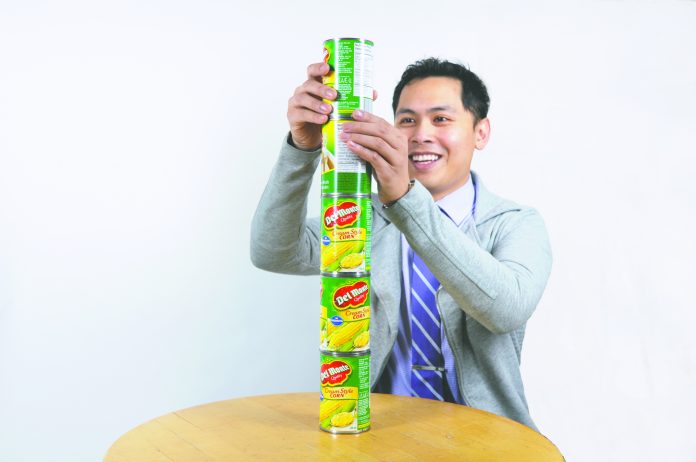
Photo by Lisa Dimyadi

SFU student Danison Buan is working on a new initiative to make a big impact on hunger. “Life is so short that one has to do what you can now, and not wait [. . .] one person can make a difference,” expresses the young entrepreneur.

Three times a week, Buan collects unsold food from grocery stores — food that would otherwise be wasted — and repurposes it as meals for the less fortunate.

He and his organization, Refood, work locally to reduce waste and fight hunger. The food is collected, cooked, and distributed amongst several local charities. Buan collaborates with the Union Gospel Mission, St. Barnabas, and Aunt Leah’s Place to distribute between 750 and 1,000 meals each week.

Food waste is a pressing issue for Canadians: we waste over $31 billion worth of food annually. “It’s a huge problem,”  says Buan.

Buan asks, “With such a rich country with so much food, how do we have so many hungry people?”

Buan saw the amount of food being thrown out by grocery stores as an opportunity to give back. “People see a nick on an apple and see an apple that is perfect right beside it, and they don’t purchase the apple with the nick,” he says.

“It’s about changing perspectives from convenience to reality,” says Buan. He offers eggs as an example. If a carton of eggs has a single egg broken, the entire case becomes unsellable and it will be wasted, even though the other 11 are perfectly edible. Likewise, food that may not be cosmetically perfect is still perfectly usable and delicious, but not as easy to sell.

Refood also saves businesses money. Unsold food must be composted, and businesses must dish out money for organic composting services. Refood solves economic, social, and environmental issues. “We’ve addressed the issues at once,” says Buan.

Buan’s idea for Refood won the One Prize in 2015 from the New West River Market, worth $2,000.

But his endeavors didn’t end there. In addition to Refood, Buan also operates Dani Moon Lending Corporation (DMLC), a microfinance company that provides capital to small- and medium-sized businesses in the Philippines.

The list goes on: Buan founded Skyvox Virtual Assistance, a company that outsources virtual assistance for small businesses. He also founded Vacation Assisted Living, which takes seniors with mild disabilities to exotic locations for an affordable price.

Buan is also the marketing director for Mr. Arancino, a food truck startup that will be launched on November 20. The idea, founded by his business partner, Yannick Cudennec, won a Coast Capital Savings Venture Prize in February of 2015. The truck, located at the Stadium-Chinatown SkyTrain Station, will serve traditional Italian risotto balls as a healthy alternative to other fast foods.

The Peak: What are you trying to achieve through all of your endeavors?

Danison Buan: I want to support as many people as possible, feed as many people as possible, and add as much value back to everybody I meet. I’m doing these things because I believe it’s right.

P: How do you balance such a busy schedule?

DB: I work very carefully to push as much as I can out of a day. I have a very systematic approach that allows me to get things done faster. I keep a narrow focus on the task I’m doing. [. . .] I live in the moment. I don’t even have a phone plan.

P: No phone!? How do you manage?

DB: My phone is the most expensive day-planner out there. I reply to emails in the morning and at night, and schedule my meetings. I hate being interrupted. This entire time we’ve been talking I haven’t once looked down at my phone due to a text or email. I stay focused on the task at hand.

It’s important to me to live in the moment. People know that if we talk, I’m dialed in, I’m all there. Everything you say, I’m focused on.

I was sick of people cancelling 15 minutes before a meeting after I’d driven an hour to meet them. This way, people can’t cancel on me, because they know they can’t get a hold of me.

P: What’s your motivation?

DB: I have a sense of urgency. [. . .] Life can end just like that. Things could end right now. You don’t know how soon it’s going to happen. I have to take advantage of the time I’m given.

P: What’s the key to building a successful business?

DB: Organization, systems, and [teamwork]. I build sustainability. I build things that last. Build fast; talk is cheap.

P: Do you have any advice for SFU students?

DB: Don’t be afraid to take risks.

I love it here. I love how innovative SFU is. The best part of being at SFU is that everyone has ideas, and they’re willing to take risks with their ideas. Make good friends with everybody here. Take advantage of the contacts and networks you make here at SFU. I’m very happy to have built great relationships with people here.

Be open. There have been a lot of great entrepreneurs to come from SFU. If you want to take a risk, this is the school to go to.

Album Reviews: Mariana’s Trench, Eli et Papillon, EL VY, and Bleachers cover album

0

By: Rebekah Chotem, Gemma Lee, Miranda Macfarlane, and Courtney Miller

Marianas Trench – Astoria

Astoria is Marianas Trench’s fourth album and a further showcase of their maturation — all of their albums seem to build and improve on the previous one. Though not done in the continuous song style that Ever After was, the band includes some cinematic style orchestral pieces to move between songs such as “Hospital Bells” and “Never Say Die.” For the past couple of albums, Marianas Trench has been a fan of long, “Masterpiece Theatre I”-type opener songs on their albums, and the title track is no exception.

Marianas Trench is known not only for their rhythm and musical abilities, but also for their lyrical prowess. “Sometimes you can’t yell loud enough / sometimes a whisper’s just too much” is a powerful line from “Burning Up,” along with “the light dims without regret / you’re fading right in a cold trick of the light” from “One Love.”

“This Means War” is a percussion laden up-tempo number with poppy guitar riffs and quick lyric delivery. A ukulele features on “Dearly Departed,” something I don’t recall the band ever trying. But it works really well as the only instrument for half the song, until a violin and then the rest of the band joins in. “Shut Up and Kiss Me” is another track that is extremely catchy and awesome to jam to — a personal favourite.

Lead vocalist Josh Ramsay employs his unique falsetto as a stunning contrast to his raspy screams throughout the album, with nods to the band’s previous work for the fans. “End of an Era,” for instance, is a beautiful tribute to that work.

I’ll admit: after the release of their 2014 singles, I was more than a little concerned that Marianas Trench had lost their place as almost-royalty in the pop-rock world. Let me assure you though, despite their previous foray into the unknown, they have returned to what they’re best at. It shows through with Astoria. Hearing it, I have no regrets. –CM


WEB-Eli et Papillon Colorythmie

Eli et Papillon – Colorythmie

The quebecois duo Eli et Papillon first met in 2008 during a recording session. Since then, singer/songwriter Elise Larouche and renowned Francophone composer/instrumentalist Marc Papillon-Ferland have been an inseparable pair, releasing their debut album in 2012 and gaining critical acclaim for its refined, elegant pop. Their new album, Colorythmie, deserves similar praise.

Their style can best be described as uplifting, folksy, and sometimes-electro, pop. Papillon-Ferland is impressively versatile and innovative in his composition and instrumentals. Throughout the album he plays the piano, guitar, synth, violin, bass, and saxophone, among other instruments. His musical style is simultaneously upbeat and mystical. The effects of his instrument choices are always aligned with each song’s lyrical theme.

Elise Larouche is, as far as my fragmented understanding of French can tell, a remarkable lyricist. Perhaps it is the appeal of a language that feels comparatively exotic to my own, but Larouche’s soft voice combined with her poetics comes off as otherworldly. Her singing style is always quick-tongued and fluid.

The pair works together harmoniously on all 10 tracks, exploring multiple musical fashions. Their song “Cette nuit” features prominent Celtic-sounding violin with an upbeat tempo. The tone of “Bouteille á la mer” slows a bit, setting a literal underwater sound, while still remaining folky. “L’oiseau” takes it even slower, its melody reflecting the spirit of a bird gliding through the air and featuring a more bittersweet tone to the violin that gradually gains momentum.

“Victoire” feels powerful, like a call to arms. The chorus gradually gains power, driving home a message of achieving victory. “Gratte-ciel” is by far the most pop-influenced track on the album, with more electro-based instrumentals, heavier bass, and featuring a rap segment by Sarahmée.

My favourite track off of Colorythmie is “Automne,” which describes my favourite season. It feels elegant and catchy, and doesn’t take long to get stuck in your head. –MM


Web-El Vy - Return to the Moon

EL VY – Return from the Moon

Musical collaborations have always been popular, and recent triumphs like that of David Byrne and St. Vincent remind us why we love them. But others, like Kanye West and Paul McCartney, make us reevaluate. EL VY, a collaboration between The National frontman Matt Berninger and Menomena/Ramona Falls’ Brent Knopf, lands somewhere in the middle.

Their debut, Return to the Moon, is a somewhat upbeat, dance-y, nostalgic record, filled with moments of self-doubt and melancholy (fans of The National will instantly recognize Berninger’s distinct lyrical style). The album’s title track kicks off with just enough force to get a room of apathetic dancers sliding their feet. This theme continues through most of the album’s first half, such as in the Beck-inspired “I’m the Man to Be.”

Berninger admits the film Grease influenced the album, and it’s in the moments where this is most apparent that the album finds its stride. The neo-rockabilly “Silent Ivy Hotel” feels comfortable and reassured, and lacks the chaotic jumble of musical ideas that confuse some of the other songs. As the backup vocals harmoniously hum, it’s easy to picture EL VY performing in an offbeat California hotel, with slicked-back hair, swishing dresses and all.

The latter half of the album abandons the swaying sounds of the former in favour of something more sombre. This is where the album sounds the most like The National; but Knopf’s influence is always there, providing that sought-after fresh sound. “Happiness Missouri” kicks things up a notch, while the wholesome piano of “It’s a Game” sets a much-needed subdued tone.

Despite these rare moments, Return to the Moon overall can’t quite find cohesion. Components provided by both Beringer and Knopf are individually great, but when combined feel more like the result of two beautiful jigsaw puzzles trying to fit together, ultimately forming a pile of missing links. When those links miraculously find each other, EL VY stands out. Here’s hoping they bring fewer puzzles to the next recording session. –RC

WEB-Terrible Thrills Vol 2-RCA Records

Terrible Thrills Vol 2 – Various Artists

Bleachers’ debut album Strange Desire has been reimagined as an all-female compilation titled Terrible Thrills, Vol. 2 with vocalists including Charli XCX, Sia, Carly Rae Jepsen, and Tinashe.

I cannot rave enough about this album. It’s a vision by the mastermind leader of Bleachers, Jack Antonoff. Terrible Thrills, Vol. 2  is his second re-imagined all-female cover compilation. The idea was reborn from Terrible Thrills, a compilation Antonoff released in 2010 when he was playing with his band Steel Trains.

“I hear my songs being sung by females before I change them and make them into my voice.” Jack Antonoff told Billboard in a recent interview. “The whole heart of this idea is for people to hear the album the way I hear it in my head, reinterpreted by the artists who sort of inspired it to be written in the first place.”

Listening to Terrible Thrills, Vol. 2  is even more enjoyable if you’ve already heard Antonoff’s original album. “Rollercoaster” by Charli XCX is a classic Bleachers anthem, enthusiastically solidifying their modern pop-rock persona. “Like a River Runs” made my eyes run, as the song, delivered beautifully by Antonoff, is reprised in a slower, more soulful style by Sia.

“Shadow,” sung by Carly Rae Jepsen, is an adorable, lighter version of the original bittersweet melody. Jepson’s voice is clearer than Antonoff’s, and, as sung by her, the beautiful lyrics are much more audible. “Wake Me” is similar in style, but absolutely gorgeous as sung by Lucius. The tune behind the refrain of “If you’re lonely, lonely / lonely wake me” is timeless songwriting genius.

But my favorite song of the whole album is “I’m Ready to Move On/Wild Heart Reprise.” Susanna Hoffs does an incredible job of renovating this song and its lyrics into more of a hopeful compromise between human and spiritual.

The song that disappointed me a bit was “I Wanna Get Better” by Tinashe. On Strange Desire, it was my favorite song, a deeply personal expression by Antonoff; I just couldn’t feel that with the cover by Tinashe.

Despite this one fault, gender-bent albums have yet to disappoint me. Great collaborations and creative reimaginings make Strange Desire and Terrible Thrills, Vol. 2 a perfect pair. –GL

Cinephilia: The Secret in Their Eyes proves remakes aren’t easy

0

At their worst, remakes appeal to popular laziness and an unwillingness to read subtitles, submerge into foreign cultures, or watch older films with slower editing. Although it’s easy to blame Hollywood for this supposed sacrilege, the remake can be effective at commenting on different contexts: old stories seen from new perspectives.

Earlier this year, Poltergeist, which resembled the original in many ways, presented a compelling portrayal of an updated nuclear family. The conscious deviations from the source material changed the meaning by playing off of different contemporary anxieties. The best remakes hardly remake. They adapt. They alter. They submerge deeper into different but related ideas.

Enter The Secret In Their Eyes, a beloved and riveting Argentinian film that won the Best Foreign Language film Oscar in 2010. After great critical success within its domestic borders, the film broke box-office records and garnered critical acclaim. Nothing solidifies a song’s cultural impact like a Weird Al Yankovic parody, and, similarly, the only thing left to crystallize The Secret In Their Eyes’ reputation was an American mockery.

But, to be fair, the Billy Ray film, which features an all-star cast including Julia Roberts, Nicole Kidman, and Chiwetel Ejiofor, is less unintentional parody than shallow imitation, capturing the essence of the plot but doing little to explore its implications.

Secret In Their Eyes is like buying a pie only to eat the crust. The story, disguised as a whodunit, is actually an examination of cultural hysteria from the past. Without the gelatin inside, crust isn’t a pie. Without its deeper themes, The Secret In Their Eyes isn’t the same film. Where the original took place during the Dirty War in Argentina, and imagined its effects years later, this remake, set amidst the madness after 9/11, hardly traces the impact on the characters a decade later.

Taking place in two separate timelines and jumping back and forth to fill in gaps as it goes along, the movie traces a group of counter-terrorism investigators who get wrapped up in a homicide case when an investigator’s daughter is found dead in a dumpster near a surveilled mosque. Years later, agent Ray (Ejiofor), who feels partially responsible for the murder, approaches Jess (Roberts), the girl’s mother, and Claire (Kidman), an old love-interest and the new DA, with a lead.

This story, which plays like a cliched procedural, is not about the whos, whats, whens, or whys. In the original film, we’re less concerned with solving the case than with the characters’ hysteria. Evidence may be elusive, but there are reasons behind the characters’ behaviours. To decipher them is to solve the real mystery, one of paranoid human nature.

Certainly, these elements are decipherable in this remake; it is engraved into the very core of the narrative. But judging purely from the performances, cinematography, and production design, there is hardly a hint of profundity, merely A-list actors (all of whom give strong performances except Julia Roberts, who is awkwardly miscast) naturally reading their lines in bland compositions and spaces. There is no atmosphere, no lurking dread, and no sense that 9/11 has anything to do with the story. It often plays like a high-production value variant of a mediocre procedural, not an introspection into recent history.

Remakes are not readymades. You can’t simply take a plot, recast actors and quickly slap it all together. Good remakes consider their alterations; they are conscious of how reimagining context changes meaning. Doing little detective work on its altered setting and time period, the new Secret In Their Eyes is searching for the wrong evidence.

Food Fight: tantalize your taste buds at Salt Tasting Room

0

Tucked away in the alley just across from Blood Alley Square is a gem of a restaurant, Salt Tasting Room. While not new on the Vancouver restaurant scene, this hidden location makes it feel like a new discovery when you walk down the alley at night and see the beautifully lit restaurant with a minimalist salt shaker sign out front.

Aside from its beautiful exterior, the inside of the restaurant is a mix of warm wood and cool concrete, and the overall feeling is reminiscent of a warm and inviting modern loft.

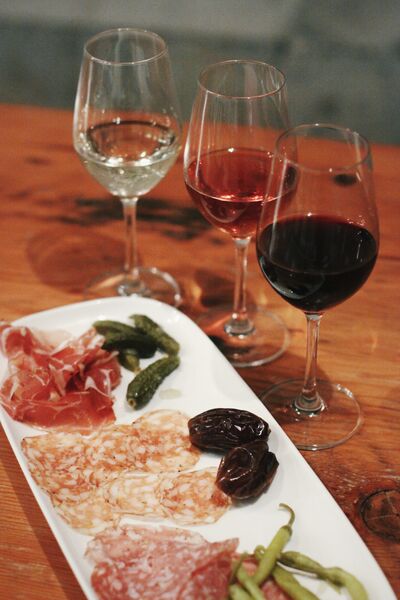
This atmosphere lends itself well to the style of menu featured at Salt. The focus is placed on local and high quality imported cheeses and cured meats, meaning that there is a high rotation in the menu. In place of printing new menus at an alarming rate, the selections of the day are written on chalkboards, one by the open kitchen area and another much larger on the back wall.

The tasting plates that can be created out of the options written on the boards are astounding. You can take control of your experience based on the explanations that the highly knowledgeable staff provide, or you can place your trust in the staff and allow them to make the selections for you. I chose to do a combination of the two, letting the server know which meats and cheeses I was intrigued by, and then allowing the server to fill the rest of the plate with side dishes.

Some highlights from the cheese tasting plates included the Shropshire blue cheese from the UK paired with a local honey from the Similkameen Valley and the locally produced Jurassic cheddar, which was aged for eight years and featured a thin ash layer through the middle, and paired with Spanish almonds.

The meat plates included standouts such as the pancetta salami, which had a mild flavour but stood out due to some excellent seasoning and the addition of piquillo peppers. There was also the outstanding pairing of the fatty rich coppa with piccalilli relish, which balanced the fattiness of the meat and allowed its the true flavour to shine through.

Salt also features an exceptional wine list that offers only BC wines, save for a sherry section dominated by Spanish varieties. Again, much like the meat and cheese selections, the wine list changes frequently, sometimes on a weekly basis. The emphasis on BC wines gives a place for some truly wonderful vineyards to be discovered by the adventurous connoisseur. One such vineyard is Moon Curser, based in Osoyoos. They are known for producing big, bold reds that pair well with many different foods — surprising, given that bold reds tend to dominate the palate.

A dining experience at Salt Tasting Room should not be passed up. The secluded location gives a feeling of secrecy and spontaneity, and the food makes it feel like you’ve just discovered one of Vancouver’s best kept secrets.

Cirque du Soleil’s Kooza bedazzles under the big top

0

It is could be argued that Quebec’s best contribution to the world is poutine. I would call Cirque du Soleil a close second.

What started off as a two-man group in 1984 has become a global entertainment empire, with shows travelling all around the world. Kooza and the big top are back in Vancouver this fall, and this latest show offers two hours of incredible entertainment with a perfect mix of humour, finesse, and strength.

You could say that the entertainment begins before the first acrobats hit the stage. Walking up to the grand chapiteau (big top), I was amazed by the massive size of the extravagant tent. I was also greeted with extravagant (read: extortionate) prices: $30 for parking and $7 for a bottle of pop. This made me weary that the show was nothing more than a cash grab for some rich Quebecois bigwigs who would use the money to fund the Montreal Canadiens. However, once the show started, all of my worries were put to bed.

I’ve seen Cirque du Soleil shows online and on TV before, but never in the flesh. The stunts always impressed me, but I didn’t truly appreciate how fantastic the acrobats’ athletic ability was until I saw them live at Kooza. Every act had me at the edge of my seat, whether it was juggling an absurd amount of items or performing death-defying backflips 50 feet in the air. Their inventive use of props kept the audience constantly on their toes, as each act was completely unique.

Another fantastic element of Kooza is its sense of humour. Though many people might think that clowns stopped being funny at the age of five, these ones kept everyone in the tent laughing all night long. Their style is slapstick and physical humour reminiscent of Charlie Chaplin, and it was delivered perfectly. The performers also integrated the audience into the show excellently, bringing a couple of lucky ticketholders onto the stage to play along with their shenanigans.

The music and costumes at the show were also extremely well done. The live band was excellent all night long, and the pinnacle of their performance was a Whiplash-like drum solo during a set change, which was so impressive that even Terence Fletcher would say it followed his tempo. The singers were outstanding, too. For most Cirque du Soleil productions, the singing is done in either a made-up or foreign language, and this was the case for Kooza as well. However, this type of singing made the audience feel like they were transported to another country.

The show’s music, along with the outlandish yet wonderful costumes and gravity-defying stunts, gave me and everyone else in the tent a truly out-of-this-world experience.

Men’s soccer finish just shy of NCAA tournament

0
After a tough start to the season, the Clan were able to finish second in the GNAC.

The SFU men’s soccer season came to an end Saturday night in a border battle against the Vikings of Western Washington University (WWU). The Vikings made their short trip from Bellingham to play the Clan for their second meeting this season. However, an eerie fog prevented visibility and postponed the start of the game for a full hour.

Seniors Shane Satar, Callum Whittaker, and Alex Rowley played their final game for SFU, making the team’s victory that much sweeter. All three seniors will walk away from the program with decorated careers.

“Callum, Shane, and Rowley are testament team guys,” said coach Schneider following the 2–0 victory. “They give everything they can for the team. They work hard in training and really have helped establish a culture for our younger players.”

SFU’s defense dominated the start of the game, as most of the match was played in Vikings territory. Senior defenders Satar and Whittaker made sure the Vikings felt their presences early and often during the first period.

“I think as the season went on we got stronger and stronger on defense,” reflected Schneider. “This was the first time in a long time that we haven’t conceded a goal at home, so credit to the guys [. . .] they deserved it tonight.”

However, a broken play in the 16th minute allowed for a WWU breakaway in which midfielder Conner Pichette took a close shot goal, but was blocked by Clan goalkeeper Brandon Watson.

The Clan responded in the 21st minute, when Kyle Jones scored on a long shot assisted by both Adam Jones and Mamadi Camara. Jones finished the season leading the Clan in points with a total of 22, followed by Camara and Kyle Jones with 11 points each.

“Callum, Shane and Rowley are testament team guys. They give everything they can for the team” – Head Coach Clint Schneider

Things remained chippy between the two teams as the referee was forced to issue yellow cards to WWU’s Stark Wesley and SFU’s Pascal Schmidt for physical misconduct in the 24th minute.

SFU continued to dominate the first period, giving up only two total shots compared to 11 shots of their own. The second period played out in similar fashion, as SFU continued to maintain possession of the ball for most of the game. The Clan was able to rally once more and put up an additional score in the 58th minute thanks to a shot by Michael North, assisted by James Fraser and defenseman Whittaker. 

WWU almost brought the game within reach in the 73rd minute with a very close shot on goal; however, Watson was there to make the key save. He finished the season with 44 saves and a save percentage of .786. Tensions rose further as a yellow card was issued only a minute later to WWU’s Derek Zimmerman. Callum Whittaker received a yellow card of his own in the 89th minute.

The men’s soccer program will take a short rest, but will be back preparing for the challenges of next season “right away,” according to coach Schneider. Despite narrowly missing a spot in the NCAA tournament, it was another successful season for the program.

HUMOUR: Six things the Grinch and the CEO of Starbucks have in common

1

Recently the Internet was set a-blaze by people claiming that Starbucks is ruining Christmas: instead of using coffee cups that previously boasted festive symbols like snowmen and all of those reindeer games, patrons wishing to guzzle impossibly-sugary beverages have had to do so out of plain red cups, which are bare except for the company’s signature siren logo. Starbucks claims this was done to “usher in the holidays with a purity of design that welcomes all of our stories,” but some people are fuming that this is an attempt to rid the Christmas season of the central Christmas component. Sound a little like another green-furred, conniving individual we all know?

Here are six things that both The Grinch and the humbug CEO of Starbucks, Howard Schultz, have in common.

1. Their facial expressions: Both have a wicked grin that simply screams, “I’m up to something.” Only Schultz’s schemes revolve around charging more than $5 for a cup of coffee.

2. Both sit atop a high peak, where no one else can reach them: The Grinch hangs out on a literal mountain, but for Starbucks it’s a business mountain that’s built upon ludicrous profits and caffeine addictions. Both mountains are equally lonely.

3. They both tried to take on Christmas, but were thwarted by a small, vocal population: A.k.a. the Whos and Starbucks regulars, both with their high-pitched shrills and group mentality.

5. Both have hearts two sizes too small: This is already common knowledge about The Grinch, but it’s got to be true about Schultz. Who else would condone the discontinuation of Starbucks’ oat fudge bars?

6. Neither was prepared for the immediate reaction they received when taking away Christmas: The Whos all came together for a big ol’ carolling, while Christian customers began a social media crusade. Therefore, protests in animated films from 1966 > protests in real-life 2015.

8. In the end, neither really succeeded in destroying Christmas: Because the holiday is an all-consuming goliath of consumerism that won’t stop until we’re all broke and/or dead.

Women’s soccer defies expectations

0
A big part of the team's success was Christina Dickson (left), who won Freshman of the year by an unanimous vote

At the beginning of the season, you would be hard-pressed to find anyone who could predict that the SFU women’s soccer team would have the season that they did. After all, the team was coming off of four straight seasons where they had finished bottom of the GNAC conference. But this season, the team defied expectations, finishing in fifth place — their best performance in four years.

“As a whole, I think it was a positive season,” said Head Coach Annie Hamel. “It’s a good step forward for us. We cut our losses by ten games, so you can’t really [complain]. We were 2–16 last year, and now we’re 7–6–2.

“I think it was positive on a lot of fronts,” she continued. “I think we were young and [inexperienced]. But [the] experience moving forward [is huge]. It will be a lot better going forward, I think.”

Perhaps the brightest spot of the season was the play of the freshman, especially Christina Dickson. Her seven goals led the team in scoring, and she was unanimously selected as the GNAC freshman of the year.

“I think Christina had a very strong start to the season,” remarked Hamel. “But the season that she had, for her to get Freshman of the Year, that’s something that’s never been done in the program since they joined the NCAA. That’s an incredible accomplishment, and what’s even [better] about it is that she was unanimously voted [in], so all the coaches voted her as number one. They unanimously thought that she was the best freshman in the GNAC.

“It’s a good step for our program, it’s incredible for her, and it just shows which direction this program is going.”

The team nearly finished fourth, a spot which would have earned them a chance to compete in the GNAC championships here at SFU. However, they lost the final game of the season in overtime, leaving them fifth and on the outside looking in. However, coach Hamel is sure that the experience will make the team more motivated heading into next season.

“I think the way this season ended is actually going to be [its] biggest positive [. . .] I think it’s something the kids will remember for a long time. They’ll have a chip on their shoulder, and I think they’ll really want to train hard and understand what they’re working toward,” Hamel said.

“I’ve already had a bunch of them tell me ‘I can’t wait for next season.’ And that’s because it ended in such a bad way that you just want to get back out there and do better and fix it and start again, and prove yourself. They know that wasn’t our best performance and they know we could have done better.”

Hamel has already addressed where this team needs to improve heading into next season. “Everywhere,” she responded. “We’re not where we need to be right now [. . .] I’m still looking for the best players around. We have our commitments for 2016, and I think we’re definitely addressing our needs.”

Hamel’s side defied expectations this season. Now the trick is to sustain the success, and further the standings next season.

HUMOUR: An open letter to Toyota, with safety concerns about the 2016 corolla

0

Dear Toyota,

The newest model of the infamously precious Corolla has some overwhelming safety issues that simply can no longer be overlooked. This is only true, however, if your goal is to kill pedestrians, passengers, and drivers alike, which would be ridiculous – that’s Ford’s goal.

My first major safety concern is in regards to the Corolla’s seat belts. If the driver and/or passenger aren’t strapped into these so-called lifesavers, a beeping noise occurs that is not only much too loud, but continues for much too long. The obnoxious sound will actually prevent me from saving my life. It’s much too distracting. Plus, it really bothers the person I’m talking to on my cellphone. In that case, I’m forced to take my phone off of speakerphone and have it clutched between my shoulder and neck, which is annoying, and also illegal. You’re forcing me to do illegal things, Toyota. Think about that.

The 2016 Corolla is also, sadly, not the speediest car on the market. I’ve got places to go and people to see; how am I supposed to speed race? Moreover, how am I supposed to get to Tim Horton’s before it closes? NOT ALL OF THEM ARE OPEN 24/7. If I get pulled over by the cops, they won’t charge me. They’ll understand. Students run on Tim’s, and so do the po-po.

Next up: what’s up with the designated sound limit on the stereo? Why am I unable to crank the volume as high as I want it to be? Do you Toyotans even respect drivers with hearing disorders? Sixty-two is not a viable volume for anyone or anything, especially not for blasting Eminem when I’m feeling like an OG and Drake for those nights when I used to call her on her cell phone when she needed my love, but now she don’t.

Lastly, the lack of cup holders is embarrassing. In what world is eight enough? I got my water bottle, my pumpkin spice latte, my booze from last night, my water bottle from last week, my Iced Capp from a couple days ago, my G-2 from this morning’s workout, my change for the meter and the apple core from breakfast. I need at least a couple more to keep other essentials in. Come on, Toyota!

Look Toyota, you need to check yo’self before you wreck yo’self. Literally.

Signed,

A concerned driver