Home Blog Page 904

University Briefs

0
An alleged sexual assault that took place at KPU (pictured) in September, resulted in an arrest this past December - Photo courtesy of Kwantlen Polytechnic University

Sexual assault at Kwantlen Polytechnic University

[RICHMOND] – A 24-year-old man was charged with sexual assault on December 8, related to an incident that occurred on the Richmond Campus of Kwantlen Polytechnic University in September.

Norman Vincent Sagarbarrian, the alleged perpetrator, used the ruse of conducting a survey as a massage therapy student to approach a female student. According to the RCMP’s press release, he told the victim she won a “complimentary massage.” Instead however, “the victim was allegedly sexually assaulted by the male.”

With files from The Runner

Algonquin College spreads Christmas cheer through angel trees program

[OTTAWA] – Algonquin College recently ran a successful charity campaign in its Angel Tree Program, done in collaboration with The Boys and Girls Club of Ottawa (BGCO). Students, faculty, and staff could choose an angel from a tree that had the name of a child in need; they would then pledge to buy that child a present for Christmas.

The presents were given out to the children at a Christmas party on December 19 held by the BGCO; St. Nick himself stopped by to distribute presents.

With files from Algonquin Times

Stellar, Basic, or Humdrum: How epic was your New Years’ Party?

0

How late did you party?

a) What are you talking about? We’re still going hard here! (5 points)

b) Made it to midnight to watch the ball drop — you can all leave now! (3 points)

c) Who cares about the new year? I’m more concerned with maintaining my flawless sleep schedule. I was in bed by nine. (1 point)


Who was in attendance?

a) Beyoncé. Mutherfuckin’ Beyoncé. (10 points)

b) Only the closest of my friends got an invite. Who actually enjoys having to entertain 20+ people? (5 points)

c) My parents — everyone else had other plans. Actually. . . I don’t even know if my parents wanted to be here either.  (1 point)


What did you eat?

a) Drone delivered Beluga Caviar from the Caspian Sea (with a set of complementary crystal spoons). (5 points)

b) Pizza, but like, not Little Caesars. The good kind.  (3 points)

c) Heated up leftover casserole from Aunt Gertrude’s Christmas troth. (1 point)


What was the beverage of choice?

a) Champagne — only the classiest for Beyoncé! (5 points)

b) Sparkling apple cider. I’m not trying to have a rager. (3 points)

c) Sneaking sips of Pabst when my parents weren’t looking. (-5 points)


What was the playlist?

a) Hand-selected mix between pop and indie tracks to give off that perf hipster vibe. (5 points)

b) A premade Spotify playlist of the top 40’s finest (Except Pitbull. Fuck that guy). (3 points)

c) 2000 throwback jamz! . . . What? (1 point)


What was the dress code?

a) Black tie event. If my friends didn’t show up in tuxes, they weren’t let in. (5 points)

b) Jeans and hoodies, like every other day. Time is relative and we’re all going to die anyway. (3 points)

c) My snuggie. I was asleep by midnight. (1 point)


What was the aesthetic?

a) Chandeliers, drop-ball, glitter, sparklers, red lipstick. Very 1920s-esque. It’s not a party without a theme!  (5 points)

b) Balloons, party hats, streamers. I’m not Martha Stewart, but everyone loves a few decorations here and there. (3 points)

c) Noise-makers, 2016 sunglasses — every middle schooler’s dream! (1 point)


Results:


35 to 40 points: STELLAR SHINDIG

Now, you know how to party! The great Gatsby couldn’t throw even half the star-studded house wrecker you could. You even (probably) snagged Beyoncé, player! You run the world!


20 to 34 points: BASIC BLOWOUT

So you hung out with your friends on the last day of the year, ate pizza, and listened to fun music. Who needs champagne when you have the best possible company? Even if the New Year’s party was the same as every other party all year, you still had fun and ultimately that’s what counts.


0 to 19 points: HUMDRUM HOOPLA

You should be ashamed of yourself! That was boring as hell. Decorations were tacky, the guests (your parents) went to bed four hours before the ball dropped — everything was awful. The good news: in 365 days, you have a chance to redeem yourself! Luckily for you, the leap year allows an extra day for planning. Use it.

Share your results in the comment section below!

SATIRE: SFU Students call for early reading break, still hungover from New Year’s Eve

0

With the first week of classes underway here at SFU, it might come as a surprise — and disappointment — that the inaugural first classes of this semester were almost cancelled in favour of an earlier-than-normal reading break. All on the grounds that New Year’s Eve celebrations were so off-the-chain, they left the majority of students floored, quite literally.

Shortly after New Year’s festivities concluded, hungover SFU students from across the lower mainland and Metro Vancouver took to their email accounts begging administration to postpone the start of classes for just one more week. It is reported that hundreds of undergrads parleyed with professors also, albeit unsuccessfully — more than likely due to poor grammar and punctuation dictated in emails.

Despite the university’s strict policy towards reading break, SFU staff did congregate over the weekend to begrudgingly devise a solution to student whining which had left its administrative resources in nothing less than a shambles.

“SFU students cited that New Year’s Celebrations were — and I’m quoting this — ‘turnt as fuck’ and ‘cuckoo bananas.'”


SFU reported that its phone lines were in disarray due to an unprecedented influx of inaudible voicemails. Likewise, that university website nearly crashed when undergraduates took to the SFU live chat to regale administration with stories of their booze-fuelled bashes.

The Peak caught up with one SFU administrator who has been at the forefront of this event since the very beginning for further comment:

“SFU students cited that New Year’s Celebrations were — and I’m quoting this — ‘turnt as fuck’ and ‘cuckoo bananas.’ We suggested that students sleep it off and drink plenty of water, but they were unreceptive. The comments we got back ranged from  ‘Dude, do you even drink?’ to ‘Ain’t nobody got time for that, bitch.’”

Engineering student Ralph N. Chuck took the time to contact The Peak after his bedroom stopped spinning to advocate for his suffering fellow students in a brief and poignant phone call.

“What were asking for isn’t unreasonable at all, man. The placement of the reading break has never been helpful in the slightest — granted, that probably has something to do with leaving all my readings to the last minute but that is neither here nor there.

“I think I speak for everyone when I say students would rather have an extra week to recover after New Year’s, nursing the stupefying ramifications of nine rocky mountain bearfuckers and a pitcher of water that turned out to be ouzo then — [sound of dry heaving] — I’ll call you back.”

SFU reading break is slated for February 9–14 and shows no current signs of changing anytime soon, leaving a resounding sigh of disappointment throughout campus as party-weary undergrads drag their feet to their next unexciting batch of classes with thick pairs of sunglasses and advil-filled pez dispensers.

SFU Replies!

0

To whom it may concern,

I’m writing out of concern for the lack of heating and lighting in the vast majority of the AQ as of late. After the sun is down, it’s completely black and cold in the AQ. Also, the bathrooms are constantly trickling water under the door, and do I even need to mention the amount of bats? These have only happened since this recent SFU management takeover or whatever. Also, I’m concerned by the constant, echoing laugh currently haunting several AQ bathrooms.

—— Wei T.

To Wei,

Thank you for your letter! We at SFU administration would like to reassure you that there is nothing shady going on with the “AQ.” Over the last few millennia, we’ve had many, many letters complaining about the building’s high temperatures and bright artificial lights, and we with the reformed SFU staff  take these, and all, concerns seriously, and lowered the temperature accordingly.

If you’re feeling chilly, I recommend wearing more layers of cloth or wool around you body, as I often do, especially while gliding through our SFU halls. Layers of cloth or wool around the skin warms blood that circulates through your legs, head, brachial arteries, or necks. Or how about a cotton or wool head hat? Heads carry roughly 20 per cent of a body’s total blood volume at any given moment!

As for the bathrooms, we hope the new cool, damp blue theme comes close to your impeccable standards, Wei. The laughing relaxation bathrooms are also a major part of the changes at the “AQ,” and were recently favourably voted-in by the majority of the roughly five per cent of students at the last general meeting (that one in the gym, remember?

If you’d like to discuss any more, Wei, feel free to fly by my office any time (066, the lower lower level) and enjoy some free candy and antiseptic neck wipes!

Sincerely,

SFU Burnaby lighting director Sharon Michael

-— Questions and answers

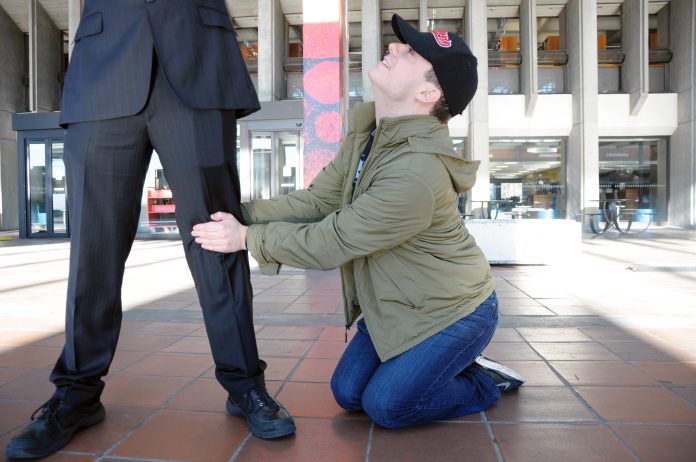
How to seduce your English professor into giving you a better grade

0

1. Whether it makes sense or not, bring up an untrustworthy narrator. Nothing gets an English professor more in the mood.

seduce 3

2. When asked if you’ve read a classic text, for the love of god, do not cite the film or video game adaptation.

3. If all else fails, attend lectures regularly. Heaven knows no one else will.

seduce 4

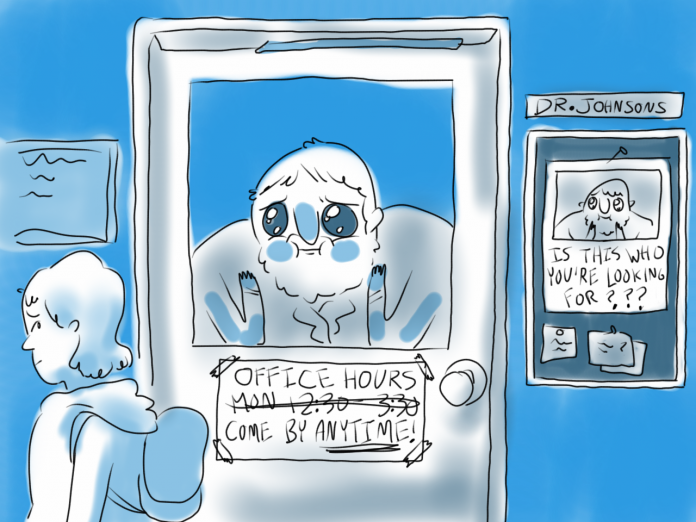
4. Visit a prof at their office hour. Even they need human contact sometimes.

seduce 1

CENTRE STAGE: World-class performing arts at a cinema near you

0
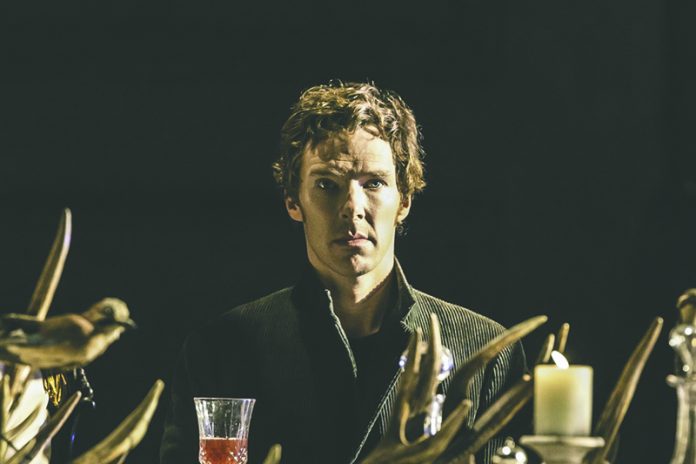
Benedict Cumberbatch stars in an outstanding production of Hamlet

There’s nothing better than that feeling of anticipation as the house lights dim, the performers take their places, and the deafening silence of an eager audience fills the theatre.

I’ve always loved the performing arts, and recently I’ve even started planning vacations around my thirst for a good show. For example, I thought it would be nice to have a weekend getaway a few months ago, but my main motivation was wanting to see Hamlet at the Stratford Shakespeare Festival. Yes, I flew across the country to see a play, but with the international theatre and dance now being shown in cinemas, you may not have to leave your hometown to do the same.

I recently discovered the joy of seeing world-class theatre at my local cinema when I saw Benedict Cumberbatch in National Theatre’s Hamlet. It was superb. I’ve seen countless Hamlets over the years, and this was the all-around best. The calibre of the acting, the detailed and stunning sets, and the nuanced direction (care of Lyndsey Turner) made this an extremely enjoyable three and a half hours. Don’t worry about the length; they give you an intermission, just as if you were at the theatre.

London’s National Theatre has been filming their productions live in HD since 2009, and they broadcast to over 1,000 cinemas around the globe. Coming on January 23, you can see an encore of their production of Jane Eyre, and on January 28 you can catch Les Liaisons Dangereuses featuring an all-star cast including Downton Abbey’s Michelle Dockery. They will also be broadcasting their production of As You Like It on February 25. If you can’t fly to London to see these shows, this is the next best thing.

If you’re interested in theatre from a bit closer to home, the Stratford Shakespeare Festival has also entered the digital age and this past year began broadcasting select productions in cinemas, although not live ones. Last year, they presented three 2014 productions (King Lear, King John, and Antony and Cleopatra), and although they have yet to announce this year’s lineup, we can expect to see Hamlet, Love’s Labour’s Lost, and The Taming of the Shrew — maybe even Pericles.  

Along with theatre, world-class ballet companies have also begun showing in cinemas, namely The Bolshoi Ballet and The Royal Ballet. Upcoming shows include the Bolshoi’s The Taming of the Shrew on January 24, and Royal Ballet’s Rhapsody and Two Pigeons on January 31. For any dance lover, this is an amazing opportunity to have access to these international companies, and for a fraction of the price of being there in person.

For opera lovers, The Metropolitan Opera is also on screens around the world, and their 2016 season includes Tannhäuser, Lulu, Les Pêcheurs de Perles, Madama Butterfly, and Elektra.

Aside from that, there are a few other events of interest that you might rather see live in cinemas instead of shelling out thousands of dollars — you can see the TED 2016: Dream conference opening night on February 15 in cinemas for about $20, instead of the $8,500 it costs to be at the conference in person. One-off events come up from time to time as well, such as the Monty Python Live (Mostly) reunion show which was broadcast around the world live from London in 2014.

You won’t want to miss the opportunity to see these exceptional productions on the silver screen in 2016.

_______________

Centre Stage is a weekly column. Check back each week for new content!

Top 10 books to kick off 2016

0

10. Girl on the Train – Paula Hawkins

This mystery has been called a Hitchcockian thriller and an incredible debut for Paula Hawkins. For anyone wanting to immerse themselves in a world consumed by betrayal, obsession, and murder, Hawkins’ novel is the perfect read for the New Year.

9.   Why Not Me – Mindy Kaling

Mindy Kaling’s collection of short and comedic essays guides you through her everyday, her work, and her personal life. While you kill yourself laughing, Kaling’s stories will still manage to inspire and motivate you.

8. Thug Kitchen – Matt Holloway and Michelle Davis

This is no cookbook for little old ladies. Thug Kitchen gets real with readers, teaching them how to live and eat healthy while not breaking the bank. This collection of healthy alternatives is ideal for students looking to find an easy way to get their diet on track and have some fun doing it.

7. The Golden Spruce – John Vaillant

This book is a decade old now, but its vivid description and breathtaking telling of the fall of the golden spruce is as enjoyable today as ever before. John Vaillant somehow finds the words to describe the beauty, the tragedy and the legend behind a mythical tree and its untimely murder.

6.  Modern Romance – Aziz Ansari

2015 was a milestone year for Aziz Ansari, and that’s partly due to the success of this book, which critiques and studies the way millennials connect with each other and form relationships. Drawing on his own experiences, Ansari helps us to understand what falling in love looks like today.

5.   Stranger Than We Can Imagine: Making Sense of the Twentieth Century – John Higgs

John Higgs shakes up everything we know to be true about history. Higgs suggests that up until the 20 century, history can be considered a natural progression of events and innovations — but the 20 century, in contrast, is a time of chaos and instability where no such model can be applied. Higgs’ interesting take on recent history will captivate you.

4.   All the Light We Cannot See – Anthony Doerr

This deeply moving novel has been praised for its intense physical imagery and for the poetic and just representation of our need to form relationships. Doerr rightfully received the Pulitzer Prize for his enchanting and stunning work.

3.   Off Track Planet’s Travel Guide for the Young, Sexy and Broke – Anna Starostinetskaya and Freddie Pikovsky

Just because we’re students living off of ramen noodles and crackers doesn’t mean we can’t see the world. This travel guide geared towards the young and broke provides a list of 100 destinations that could make 2016 the year you never forget.

2.   An Astronaut’s Guide to Life on Earth – Chris Hadfield

Chris Hadfield is undoubtedly a true Canadian badass. In his autobiography, Hadfield details his unbelievable journeys through the cosmos, like the time he broke into a space station with a Swiss army knife, and how he became the first Canadian to set foot on the Moon.

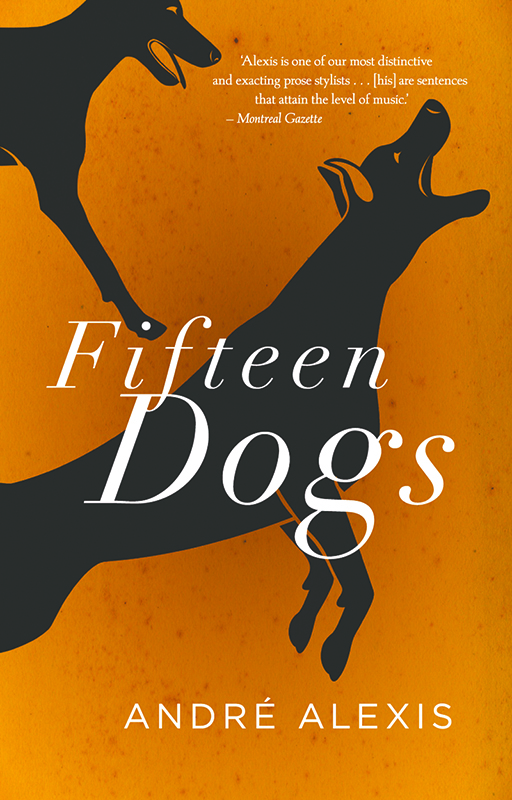
1.   Fifteen Dogs – André Alexis

André Alexis’ novel has been the talk of the town since winning the Scotiabank Giller Prize. This playful and energetic novel plunges into the beauty and costs of human consciousness and forces readers to reflect on their own lives.

CINEPHILIA: Anomalisa is relatable, funny, and poignant

0
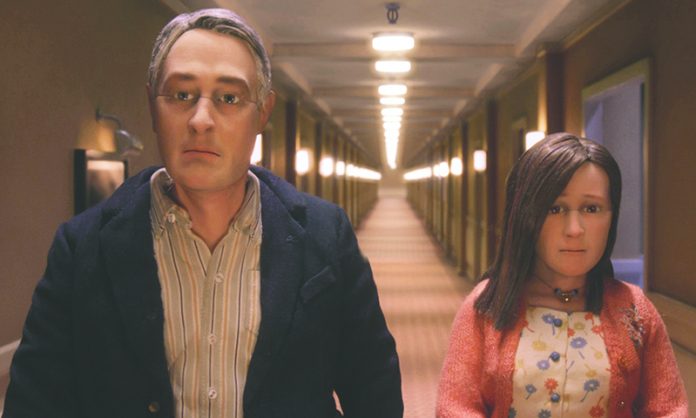
Stop-motion animation captures Michael’s suffocating nightmare of blandness.

We uncomfortably identify with Michael Snow, our self-centered and predatory protagonist of Anomalisa: his neuroses, egoism, and disillusionment. Whether female or male, family or stranger, friend or foe, to Michael every face, voice, and personality is ubiquitous and indistinguishable. His wife looks the same as a generic male host at a hotel; his son sounds exactly like a faceless stranger in a crowd. In Michael’s suffocating nightmare, he is trapped in a bland setting with bland acquaintances, and a bland routine.

Then, while on a brief trip in Cincinnati to do a talk on customer service, Lisa emerges, like Madeleine in Vertigo, or Daisy from The Great Gatsby — except rather than being stunningly beautiful or mesmerizingly enigmatic, Michael’s dream girl is inscrutably average, not particularly smart, cultured, or gorgeous. A fascinating dichotomy emerges between Lisa, who is the anomaly, and Michael because her uniqueness lies in her mediocrity; she has the only face and voice that stands out among the crowd, yet she is the same kind of person you might meet in passing and almost immediately forget.

From an original voice in contemporary cinema — Charlie Kaufman, the director of Synecdoche, New York and the writer of Eternal Sunshine Of The Spotless MindAnomalisa is one of the most formally rousing and narratively creative animated films of the decade, and perhaps one of the most tender and heartbreaking, too.

Similar to the rest of Kaufman’s oeuvre, Anomalisa uses a radical concept to illustrate a simple conflict. Synecdoche, New York created an infinite regress of narratives within narratives to externalize a theatre director’s nihilistic worldview, and Eternal Sunshine of the Spotless Mind went into a man’s fractured memory to look at the history of a doomed romance. Anomalisa uses inventive animation and its identical-face-and-voice gimmick to tell a subversive take on the disillusioned-man-meets-dream-girl narrative.

The stylistic choice to tell this sombre dramedy with stop-motion animation subtly builds Michael’s subjectivity, as the puppet figures and miniature production design border on a realism that is interrupted by uncanny quirks — a slit that separates faces between the upper and lower of half of the eyes, or slightly mechanical movements. It’s a subjective perception that doesn’t use expressionistic or surreal signifiers like many films and paintings, but one with uninterrupted long-takes, naturalistic (puppet) nudity, and an attention to realistic lighting and colorization, which is so unlike other animated films.

This tension between the surreal and banal extends to the film’s storytelling, where we are entrenched in a man’s fractured subjectivity yet also immersed in the mundanity of the world around him. Although there is a hilarious self-awareness of the film’s concept, with particular funny moments where his wife and young son speak with a very deep, male voice, most of the humor comes from the character’s inescapable boredom: Cincinnati’s tourist attractions are their “zoo-sized zoo” and the world-class chili; Michael struggles to order room service when all the icons on the hotel phone look alike.

The world’s beauty, uniqueness, and warmth lies beyond our disillusioned perception. We must choose to see others as individuals, to connect to them beyond the level of the sex doll that Michael brings home for his son after the trip. If you’ve ever been frustrated by a hotel room lock, had a creepy stranger hold your hand on a plane, or exchanged awkward small-talk, Charlie Kaufman’s Anomalisa will be funny in its tediousness, poignant in its banality, and relatable in its mundanity.

The Death of Small Creatures is a hauntingly beautiful depiction of psychological turmoil

1
The Death of Small Creatures captures the struggle with multiple mental illnesses.

Trisha Cull will take your breath away in this jarring and revolutionary memoir. She bravely sheds light upon the raw and dark stream of consciousness of a woman struggling with multiple mental illnesses. Cull’s prose is utterly poetic, and her honest story is startling and captivating.

“The depression squeezes my throat, digs in, presses me earthward. . . Negative space is relevant.” Almost instantly Cull takes readers by the hand and reveals the almost unbearable truth about the “intense and immediate experience of mental illness.” Throughout the memoir it is known that Cull struggles with depression, bulimia, bipolar disorder, borderline personality disorder, anxiety disorder, and multiple substance abuse, not to mention highly toxic relationships with men — she uses their love as a way to validate her own self-worth.

Trisha Cull’s The Death of Small Creatures is written in a way that is chaotic and entirely detached from reality. It gives an accurate representation of how mental illness distorts people. There are many artistic qualities to Cull’s prose, especially when she dives into her pain.

“The depression squeezes my throat, digs in, presses me earthward. . . Negative space is relevant.”

­­­Trisha Cull

Examples include when her and her husband Leigh have a huge falling out, when her two beloved pet rabbits pass away, or when she reflects on the fact that because of her, so many people are in pain. Cull illustrates her experiences with a blur of doctors and psychiatrists, what it’s like to be admitted into a mental hospital, and to completely lose sight of your own identity and will to live.

The only criticism I have for this memoir is that it was not a simple read. The short entries moved along quickly, but they were not in chronological order; they jumped back and forth between the past and present. This was especially the case with Cull’s relationship with Leigh and her other unconventional associations with men. These relationships were unstable and difficult to keep track of in terms of differentiating the present and the past.

Sadly, the better and more loving memories Cull has with Leigh are mostly all from the past, and in her more recent entries readers see that her relationship with him is becoming more and more problematic. That being said, the chaos of the memoir’s order completely compliments the artistic vision that Cull most likely had for the entire book. Taking this into consideration, this story’s disorder could be considered praise of her literary creativity.

Cull’s voice is hopeful and hopeless all at once — depicting the ups and downs of her mental illness. In summary, her memoir is refreshingly unapologetic and courageous for a topic that is still considered somewhat unfavourable. Her writing is generously detailed and unflinchingly honest.

Trisha Cull has somehow managed to do what most people have not,she turned her toxic and all-consuming past into a hauntingly beautiful memoir.

Carol is beautiful and emotionally stirring

0
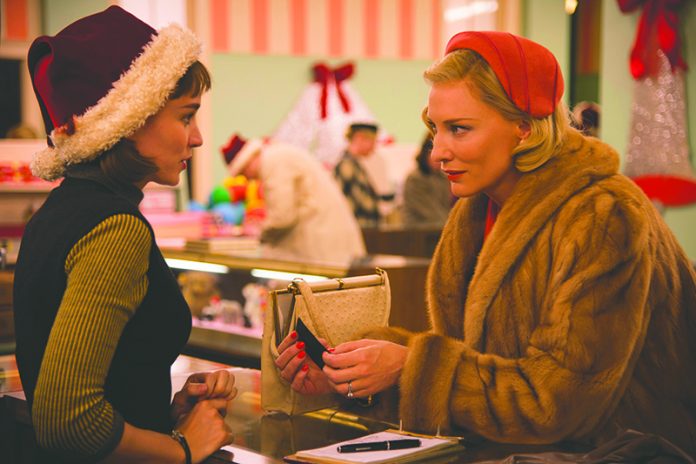
Rooney Mara and Cate Blanchett redefine the classic boy-meets-girl story.

Carol will rattle your heart and leave you wanting more. This lesbian romantic drama film is both aesthetically pleasing and cinematically genius. Admittedly, the plot moves slower than most other modern romantic movies; in fact, while I was enchanted, I overheard a couple in the audience mumbling about how boring it was and how they snoozed off.

However, Carol’s slow pace is more than made up for by the film’s beauty and elegance.

Inspired by the 1952 novel The Price of Salt by Patricia Highsmith, the movie whisks the audience  back to an enchanting 1950s vision of Manhattan. The plot centres on two charismatic women from very different backgrounds whose chance encounter leads to an undeniable bond. With many complicated factors standing against them, they both go through a dilemma filled journey that makes them ask how much they will risk for true love.

Carol Aird (Cate Blanchett) is in a loveless marriage of convenience. As a result of her scandalous interactions with women, her husband takes legal matters to bring into question whether or not she is a suitable mother. The film portrays the challenges faced by lesbians in the 1950s authentically, showing the struggles faced by Carol when she is forced to choose between her daughter or the love of her life. 

Director Todd Haynes does a phenomenal job, illustrating most of the plot rather than narrating it — showing us, rather than telling us, about what it’s like to fall madly and truly in love. Haynes depicts the film’s story so gracefully that the seemingly unfathomable concept of ‘gay love’ is no longer something foreign, but the same as any other passionate love. As a result, anybody is likely to be moved by the powerful emotion and artistic value this film offers.

Both lead actors are spectacular. Cate Blanchett and Rooney Mara will convince you of not only every large dramatic moment, but also the little moments. They absolutely disappear into the eccentric characters of Carol Aird and Therese Belivet — and if you aren’t careful, they have the power to emotionally tear you apart in those meager two hours.

Carol is also the most cinematically impressive film I have seen in a long time. The simple symbolic actions, minimal dialogue, innovative filming techniques, and powerful cast are all factors that make this film successful. Todd Haynes really proves his directing genius. He subtly challenges the audience to perceive the story as more than a niche ‘lesbian romance,’ but an honest and beautiful unravelling of the lovesick heart.