Home Blog Page 893

Life’s an adventure, not a quest

0

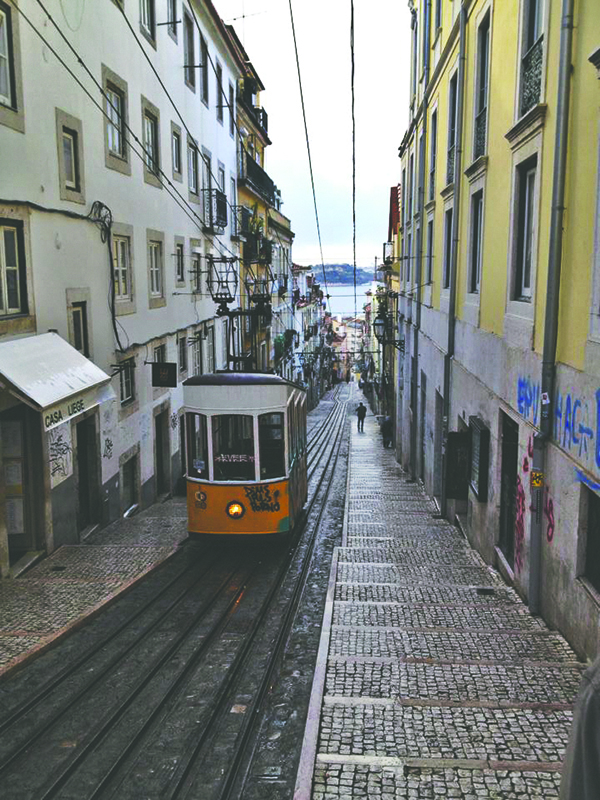
[dropcap]I[/dropcap]t was the first nice weekend in January when I and my friends boarded a plane traveling from Marseille to Lisbon.

A few weeks prior to this beautiful, warm January day, we decided to chase the sun west and spend some time away from our small dorm rooms. Naturally, as the group control freak and planner, I devised a long list of must-sees and can’t-miss attractions. I spent hours researching restaurants, and reading about hidden hot-spots. At the time, I believed there was a process, that there was somehow a right and wrong way to travel.

This was the trip, however, in which I learned an important lesson: the best memories are the ones you can’t anticipate or find in any kind of Lonely Planet guide.

There was one afternoon, about halfway through our trip, where all of my friends wanted to spend a few hours resting in a waterfront café. All they wanted to do was sit. Just sit. And I will give you that this particular café served mind-blowing espresso (or as the locals called it, “bica”) and delicious pastries, but after having a short rest, I decided to move on — without my group — and finish the day’s agenda on my own.

I had a list of sites I thought I had to see. As far as I was concerned, I would never truly see Lisbon, or get to know it, if I didn’t let my list guide me down breathtaking side streets to some kind of infamous landmark. But as I quickly learned after parting ways with my group, you can’t give yourself a final destination and plan your way there — life’s an adventure not a quest.

As I packed up my bag at the waterfront café, I ignored the eye rolls and pleas from my friends to stay, sit down, have another espresso, and just watch the water.

I told myself that I had a tower to climb, a street market to wonder, a parliament building to awe at, a garden stroll through and a cathedral to see. So off I went. And everything almost went according to plan. Almost.

I climbed the Arco da Vitória for beautiful sights of the Praça do Comércio, strolled through a lovely street market, took selfies in front of the parliament building and sat in the botanical gardens.

While I was sitting in the gardens, however, I witnessed an act against nature itself (or so I thought at the time). It was this unplanned, unexpected event that made my trip to Lisbon unforgettable.

As I sat quietly on bench in the gardens, watching ducks on the pond, I noticed that there was one duck who became quite aggressive with another. I was bothered by this. Ducks are, after all, one of my favorite animals. I, in fact, have a history of being quite protective of these simple birds. So naturally, I wanted to go help the duck being picked on.

I walked over to side of the pond where they were. The aggressive duck, let’s call him Jack, was biting the, poor, innocent one, let’s call her Susan. Jack then started holding Susan’s head under water!

“Duck murder,” I thought to myself. I was so sure I was witnessing cold blooded duck murder. Susan kept trying to swim away, but Jack always seemed to be able to pin her down.

It was a fight or flight moment for me. I was becoming increasingly stressed out by the whole affair so I decided to fight; fight on behalf of poor Susan. So I collected up small rocks and sticks and started throwing them in the water near Jack, to try and scare him off. Nothing was working, though. I could tell Susan was in great distress. So I walked as close to the water as I could and began quacking loudly at the two of them. Maybe of Jack saw how serious I was, I thought to myself, he would swim off. Surprisingly, though, the quacking didn’t work either. Eventually, Jack did swim off though, leaving a distraught, and assaulted Susan behind.

It was this unplanned, unexpected event that made my trip to Lisbon unforgettable.

I was in shock. I had no idea what just happened. At this point though, I had attracted quite a bit of attention from passersby and felt that I couldn’t go back to sitting quietly on my bench. I could tell you that I was embarrassed, or that I cared about the weird looks, but that would be a lie. As far as I was concerned, I was doing something good, I was saving a poor innocent duck from from it’s death.

Suddenly, the unmistakable ringing of church bells from the cathedral across the street filled the gardens. I looked at my watch; it was nearly 5 p.m.

“Oh, it must be a five p.m. mass,” I thought to myself. The cathedral was the final destination my list, and I was quite worked up from the duck incident, so I decided to leave the gardens and head on over to the cathedral.

On my way over, confused and upset about the garden situation, I thought that turning to the church, and staying for the five p.m. mass, seemed right. Maybe, somehow, I could find some answers about the atrocious duck actions I was witness to.

I hid out at the back of the crowd. I had never been to mass, nor did I speak any Portuguese. I thought if I hung out at the back, and did what the locals did, I wouldn’t stand out too much.

As we shuffled in, I took a seat on a pew near the back. About 10 minutes into the ceremony, I couldn’t help but feel that something was a little. . . off.

People were crying, and everyone was in black. . . and what was that large box in the front covered in cloth, flowers, and photos. . .?

“Oh shit,” I thought. I was at a funeral.

I tried to keep cool. But I was panicking pretty bad at this point. After about 15 minutes, I waited for what I will describe as a natural lull in one man’s eulogy, and made a graceful dash for the exit, my wind breaker swishing as I went for the door.

I was down the street in a matter of minutes.

At this point, between the duck incident and the funeral I just crashed, I decided that the best thing I could do for myself was go back to my hostel and wait for my group to return.

When I returned, no one was back in the room but me. So I went up to the hostel bar, ordered a drink, and waited. About an hour later they all rolled in, and took a seat at the table I grabbed for all of us.

They asked me what I had done, and I, needing to get off my chest what a debacle my afternoon was, began telling my story to the group. Once I got to the part about the ducks, however, the story took an all new turn.

“You do know that’s how ducks have sex, right?” my friend Chloë interrupted.

The short answer, is no. I didn’t know that how ducks had sex. If I did know that’s what duck sex looked like I wouldn’t have spent my time throwing sticks at Jack and Susan or quacking at them loudly.

The bizarre looks a received from strangers, though, suddenly seemed more justified. At this point I wasn’t embarrassed or even surprised. I could barely believe this was all really happening.

So in the end, I cock-blocked some ducks and crashed a portuguese funeral. And this helped make one of my most memorable days in Lisbon.

By the time I finished telling my story at the bar, my friends and I were laughing so hard there were real tears rolling down our cheeks.

I began laughing too. My perfectly planned afternoon turned into a whirlwind adventure that I surely will never forget.

And so I learned a valuable life lesson in Lisbon. Life isn’t a quest — you can’t predict how your travels are going to go, no matter how much prior planning and prep you do.

Rather, life is an adventure. Every day is a mystery, the ending unknown and unforeseeable. Stop looking for your final destination and just enjoy what’s happening now.
I can assure you the next time you take a trip, even if it’s just for a day, your favourite memories are the ones you never could have planned for.

Beedie students sell wares at bookstore for management

0
Sean Brown (above) said applying theories to a real-world setting is highly valuable. - Photo by Lisa Dimyadi

A recent addition to the curriculum at SFU’s Beedie School of Business grants students a first-hand glimpse of just what working in the business world is like.

The Bookstore Product Management Experience, or BPME, is a “business challenge” that has been implemented into BUS 202 (Foundations for Collaborative Work Environments), currently in its fifth semester. In approximately 15-person teams, students work alongside the SFU Bookstore to manage, market, and do accounting work for a Beedie-themed product.

“They’re learning about collaboration, [so] they need to have something to collaborate on. That’s the venue [in] which they do that,” said Shauna Jones, professor at Beedie and co-instructor of the class. “It’s very experiential.”

Students make pitches to the bookstore regarding their intended strategies for marketing their product, use funds granted by the bookstore to achieve their objective, complete assignments relating to their teamwork and performance, and make recommendations to the store for how to improve their sales of the product in the future.

In lieu of exams and papers, the BPME favours coursework that allows Beedie students to work in a “real-life” business setting. In particular, the curriculum places a strong focus on students assessing and developing their ability to work in a team.

“People [have] been on sports teams, they’ve been in teams in different projects that they’ve had in class, they’ve done a bit on teams and volunteer work, but they’ll take teams to a certain level. Most teams — and this is also true for the workplace — will not actually get to that high performance stage, because they don’t want to work through the conflict,” said Jones, referring to the early stages of developing the bookstore challenge.

“What we’re doing in this is saying, ‘this is a course that’s related to teamwork. We want to take it up a notch. We want to take it to a level where they’re actually being collaborative.’”

Jones describes the BMPE as improving with each iteration, based on feedback from students and teaching assistants alike.

Although Jones acknowledged that not all students “see the value right away,” she concluded that those students often come to appreciate the experience and understand its worth after completing the project.

Indeed, many former participants in the BPME consider the course to be a powerful lesson in coordination and group skills.

Sean Brown, a current Beedie student, reflected on his experiences with the bookstore challenge: “We weren’t perfect by any means, but I think we definitely grew. We definitely learned, and understood what it actually entails to be in a [big] group, to work with 15 other people who have 15 different opinions and 15 different motivations.”

Brown elaborated on the particular skills the BPME taught its participants. “You learn what drives people to be the way they are. You learn how to work with other people [. . .] you have to understand where everybody comes from.

“Dealing with conflict is something that really arises from it. Everyone sees conflict as this negative thing [. . .] but a lot of the time, conflict is a way of getting better. If you’re not constantly facing opposing opinions, you can’t progress.”

Yoga belongs to India, so hands off

7

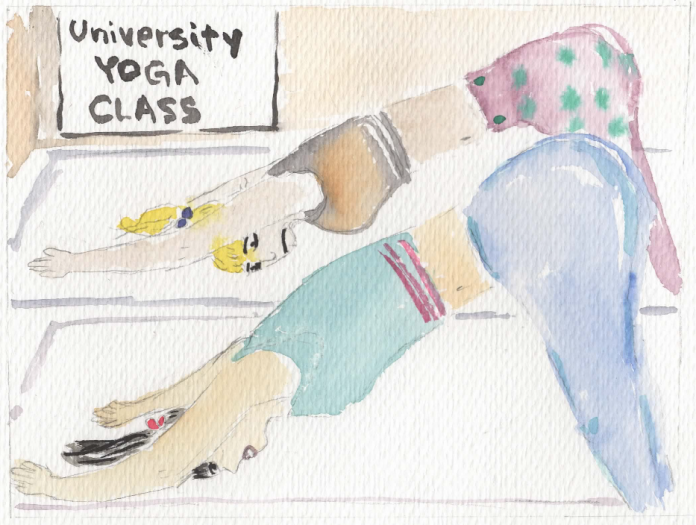
[dropcap]A[/dropcap]t the University of Ottawa last November, a yoga class was cancelled due to concerns that it was culturally appropriated from India — a culture that “experienced oppression, cultural genocide and diasporas due to colonialism and western supremacy.” At first, the story seems ridiculous and inconvenient. How did a simple yoga class become a political issue?

However, when you consider the debate on cultural appropriation, the issue becomes much larger than a yoga class. Cultural appropriation occurs when one culture takes and uses elements interpreted as a way of diminish the elements of distinct cultural identity. In this particular case, reimagining an originally Indian practice as a Western activity mirrors the colonialist idea that certain groups of people can take whatever they want from others without permission.

So, am I supporting colonialism by taking a yoga class? It is wrong to explore cultures outside my own? No. I am not accusing anybody of being a thief. I am not calling you a racist. I am saying, however, that people should take more seriously the cultural origins of whatever they do. People should think more about the sacred activities they engage in beyond the idea that “they are fun.”

If you are not going to respect the people that created a cultural practice, do not bother participating in it. A simple yoga class may mean much more to you than to another person. These classes are symbols of a culture that belongs to someone else. Your lack of understanding does not give you the right to forego empathy, compassion, and respect, and to me it does not matter if the activity is as benign as a yoga class or as serious as a traditional headdress.

People should think more about the sacred activities they engage in beyond the idea that they are fun.

At the end of the day, we have to come to terms with the fact the yoga belongs to India. It should therefore be practiced according to the rules and regulations set by India. You cannot claim rights to something that does not belong to you.

I have read many online comments that claim these views as too politically correct or restrictive. Unfortunately, minority groups have been increasingly painted as the villain in these situations for being ‘annoying’ and ‘overly sensitive,’ so I’ll offer up an alternative reason for this saturation of political correctness: nobody truly listens to each other.

Minority groups try to be understood while dominant groups accuse them of oversensitivity. We are not connecting. We do not understand one another. It is ridiculous that some people believe they have all the answers and cannot be bothered to learn more.

I do not have all the answers. You do not have all the answers. No particular culture has all the answers. We owe it to each other to listen and try to empathize with the other. If we do not find a way to communicate, we will continue to hurt one another.

I’m incredibly disappointed that yoga has been culturally appropriated due in part to this lack of communication between cultures, and I’m happy to see University of Ottawa take action against this. While it may take a while, I’d like to see some more public respect for the traditional roots of this sacred activity that has been ransacked by Western ideals.

Video games are a terrible alternative to exercise

0

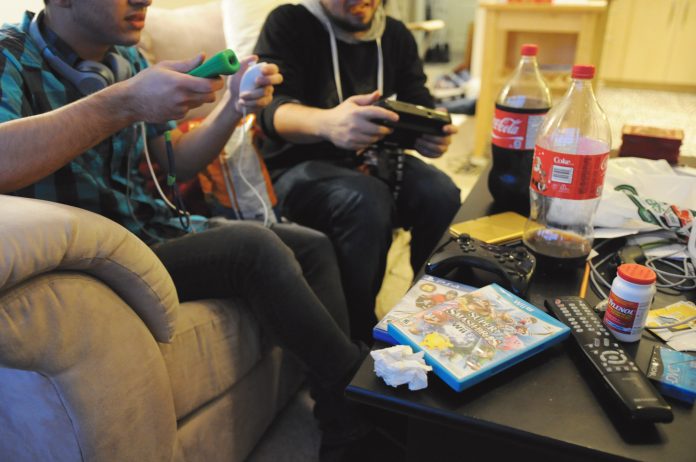
[dropcap]B[/dropcap]eginning next August, Norway’s Garnes High School will be offering students gaming classes in place of gym class, including only 90 minutes of exercise optimized for their favourite game. This is not the first time a school has made this decision, as other schools in Norway and in Sweden also offer eSports classes. However, this decision shows an unsettling shift away from the obvious purpose of gym class: exercise.

One thing can not be denied — eSports are a large, growing industry expected to be worth about $2 billion dollars by 2018. If schools mean to prepare our young people for the future, then it makes sense that we teach them about new, emerging industries. However, eSports are simply not an appropriate substitute for traditional physical activity.

Some eSports players take home six figures in earnings, or competition earnings and sponsorship. UBC’s esports team won a $180,000 scholarship last May in a video game competition. Many universities and colleges across North America now offer scholarships for eSports. Students should absolutely learn about these opportunities while in high school. Who doesn’t want to get paid to play video games?

Garnes High School says that these classes will train “[young] eSports pros bodies as well as their minds.” They will learn teamwork, sharpen reflexes, as well as build focus and endurance for long tournaments.

Truly, a training session for video games would likely aid in all those categories. However, the issue here is that you cannot substitute video games for physical exercise.

The benefits of gym class simply cannot be taken away from students. Just 30 to 45 minutes of moderate exercise per day has been shown to enhance memory, concentration, mood, cardiovascular endurance, and self-confidence. These are things that teenagers probably will not get out of an eSports class.

I’m not intending to bash video games. Personally, I have logged an embarrassing amount of time playing Call of Duty, Age of Empires, and numerous Fallout games. I enjoy them as much as the next person. However, it doesn’t seem right to allow students to opt out of gym class in order to play video games.

The entire purpose of physical education is to teach students the benefits of maintaining a healthy body, and, sadly, sitting does not contribute to health maintenance.

Perhaps, it would be better to offer eSports training as an extracurricular opportunity, so as not to diminish the importance of physical exercise. Students deserve the chance to pursue their interests, especially when it has the potential to earn them scholarships.

The fact of the matter is that the benefits gained from the two different types of classes are not identical, or even similar. A healthy body as well as a healthy mind is vital to ensure that students live a good life during and after high school.

Workshop offers potential hint of future for First Nations academics

0
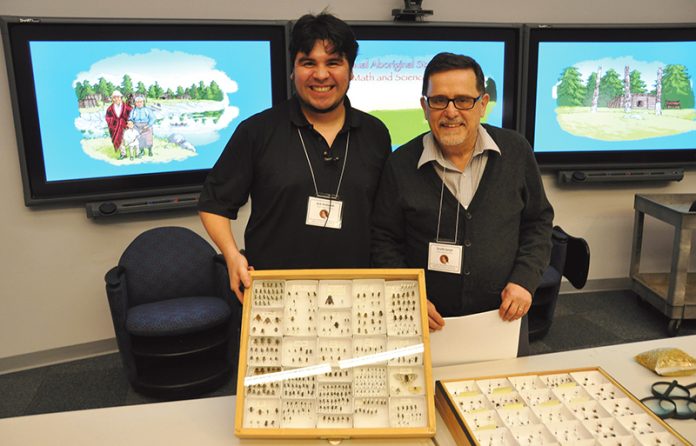
Kyle Bobiwash (left) and Veselin Jungic (right) were two of the presenters.

In an interview with The Peak last week, Director of the Office for Aboriginal Peoples William Lindsay mentioned that there was a lack of Aboriginal academics at SFU. However, there are initiatives in place to fix it for the future.

The sixth annual Aboriginal Students in Math and Science workshop was held on Jan. 14 at the IRMACS presentation studio building at the Burnaby campus under the guidance of professor Veselin Jungic. Over 70 First Nations students gathered to be inspired and indulge in their passion for math and science programs by four prominent math, biology, and astronomy presenters.

One of those researchers was Dr. Edward Doolittle from the First Nation University of Canada, whose aim was to help the students see that they actually have some news or values that they learned in high school can be used in something interesting.

“Ever since I have been in university at the age of 18, I have wondered about what I can do for the people,” said Dr. Doolittle. “I have been interested in math for most of my career. It seems that math is a major problem since not many Aboriginal students enjoy mathematics.”

For his part, he brought forward activities and education on string theory, which included making different shapes and figures from a string, realizing a string figure from a random drawing. String figures have been used throughout many culture groups and each of them contains cultural heritage from which students can learn.

Professor Veselin Jungic from SFU’s Department of Mathematics added that the meeting is also a way to promote scholarships, careers in math and science, and that the four eminent Aboriginal researchers invited to the meeting could serve as new role models.

The workshop reached a wider scope than just students at SFU, as some of the conference participants came from outside the Lower Mainland. Jungic says he is proud that SFU welcomes many Aboriginal students each year. Furthermore, according to SFU institutional research and planning, 7.6 per cent of SFU undergraduate students come from communities outside Metro Vancouver, and over 120 courses that focus on Aboriginal knowledge and issues are offered at SFU as stated by SFU Office of Aboriginal people.

The reaction from students was very encouraging, with those who attended showing fascination and excitement. Students tackled the problems given by the presenters,  and worked on new mathematical puzzles that arose over the course of the day. They said the activities were very fun to do, easy to understand, and caught their attention.

Programs like this could be one of the major keys to fighting lack of Aboriginal academics currently in Canada.

New masters program uses art for social change

0

Are you an art lover who wants to change the world? SFU’s new master’s degree in Art for Social Change (ASC), the first of its kind in Canada, is the program for you.

The new Master of Education in Art for Social Change will offer training in group facilitation, project management, communication, and ASC processes. The two-year program will launch this fall, with cohort-based classes to be held on Saturdays at the Harbour Centre campus. The degree also includes internship opportunities with local community organizations.

Judith Marcuse, an Artist in Residence and Adjunct Professor at SFU, explained that art for social change takes two forms. In the first, artists create pieces that contain content about social change and are intended to start a dialogue around specific issues. In the second, groups of people produce artwork about a subject that matters to them, with the help of an artist or facilitator.

Despite being the first formal graduate program in Canada, Marcuse said that art for social change has been used in a wide range of contexts all over the world including HIV and AIDS stigma reduction through puppet shows and other forms of performance, and hospital policy change through a play created by former patients.

“Because the range is so vast, it’s difficult to pigeonhole it,” said Marcuse. The interdisciplinary program has taken a long time to find a place at SFU; Marcuse started working towards the creation of this master’s program seven years ago.

Marcuse believes formal training will help provide the specific skills necessary to do ASC work as safely and richly as possible.  Producing art for social change includes both communication and exploration. She created a five year project that explored teen suicide, in which 400 youth used art to explore their own experiences around teen suicide.

The results of the project, she said, were powerful. “It becomes personal and it becomes a feeling, rather than just information,” said Marcuse.

ASC can have very different results from more analytic forms of activism. Marcuse said forms of art such as photography, storytelling, dance, and theatre, have the ability to affect people at an emotional and intellectual level.

“You can read all kinds of statistics about a certain subject, but then if you see a film about it or a play or you read a poem, it’s a very different experience,” she said.

Art for social change can be used for a wide variety of agendas, including education, policy change and conflict resolution. “So it’s not just for artists,” Marcuse stressed.

Who is the ideal applicant, in Marcuse’s opinion? “Anyone who wants to make change in the world and who sees the integration of the imagination as an integral part of that change-making.”

Whitewashing the 2016 Oscars

0

[dropcap]I[/dropcap]f 2015 ended a little bit more hopeful with regards to media representation for minorities, given the release of a Star Wars sequel featuring a black man and a woman as the main characters, as well as Viola Davis’s Emmy, the 2016 Oscar nominations managed to crush that hope.

This year’s Academy Awards continued last year’s pattern with zero non-white actors nominated for any of the four categories available. Similarly, no women were nominated for Best Director and Alejandro Iñárritu was the only non-white director on the list.

More surprising was Sylvester Stallone’s nomination for his supporting role in Creed while actor Michael Jordan was left out entirely. Likewise, Straight Outta Compton’s white screenplay writers were acknowledged while neither black director F. Gary Gray nor any of the film’s actors were. This is not to mention the LGBTQ+ actors who have yet to be cast in a large-scale movie (most recently, the missed opportunity to allow a trans woman to play Lili Elbe in The Danish Girl).

As expected, the overall lack of non-white nominees and other minorities has generated harsh retaliation. Celebrities Jada Pinkett Smith, Rashida Jones, and Martha Plimpton, as well as Straight Outta Compton producer Will Packer, have openly expressed their disappointment. While the backlash the Academy continuously receives for their lack of diversity is unlikely to destroy the Oscars entirely, the awards’ reputation is certainly diminishing among people from all ethnicities. After all, who cares for an awards ceremony that doesn’t even acknowledge the actors and filmmakers who represent it?

Simply put: old white men pick white people to represent the ‘best of the best.’

Not only this is the second year in a row that the Oscars failed to feature actors of colour, the Academy votership is 94 per cent white, 77 per cent male, and has a median age of 62 years old. Thus the Oscars are just a consequence of an overwhelming lack of diversity in the Academy. Simply put: old white men pick white people to represent the ‘best of the best.’

While it’s easy to assume actors of colour were simply not ‘good enough’ to be nominated for the 2016 Oscars instead of holding the Academy accountable, this year featured countless amazing performances that were oddly forgotten — Will Smith’s role in Concussion, Jason Mitchell’s in Straight Outta Compton, and Idris Elba’s in Beasts of No Nation. This pattern repeats itself across filmmaking categories in which the work of coloured people are under-recognized and undervalued.

The fact that the Academy continues to exclude different ethnicities and other minorities amplifies the notion that to be predominantly straight and caucasian is all it takes to be noticed in the film industry. It’s no wonder celebrities like Spike Lee are encouraging a boycott of the ceremony. It might be time to seriously re-think Hollywood recognition if it continues to perpetuate this exclusive environment.

University Life Hacks: Keys to Success

2

Reign in the next three months of the semester with four more spruce pointers to that’ll keep you styling and profiling on campus!


  1. Wear deodorant! And I don’t mean just under the arms, either. Wear that stuff like perfume: on your wrists, neck, tummy, pretty much everywhere. Smelling like clean laundry is a clear sign that you’re an adult who’s got it together.


  1. Memorize the name of as many cheeses as you can. The class keener might know every line of the textbook by heart, but can they name three different types of cheese that aren’t cheddar, mozza, or swiss? Looking Gouda, girl.


  1. Carry something leathery. May I suggest a good leather-bound journal. You don’t have to use it for class or anything; just scribble in it every once in awhile and carry it around like a trophy. Not only does it make you look educated, it also makes you look like a sophisticated human.

     4. Borrow the oldest book you can find from the library and flip through it when you’re at the coffee shop. Nothing is                   more alluring to the opposite sex than well-read coffee drinker caked in the scent of Dove deodorant.

Are SFU students #textbookbroke?

0
There are serious efforts to keep from being a reality for students.

What would you do with a couple extra hundred dollars a semester? A pipe dream for most students, it’s a question the Simon Fraser Society is starting to throw out there with the interest of helping students save a bit more money.

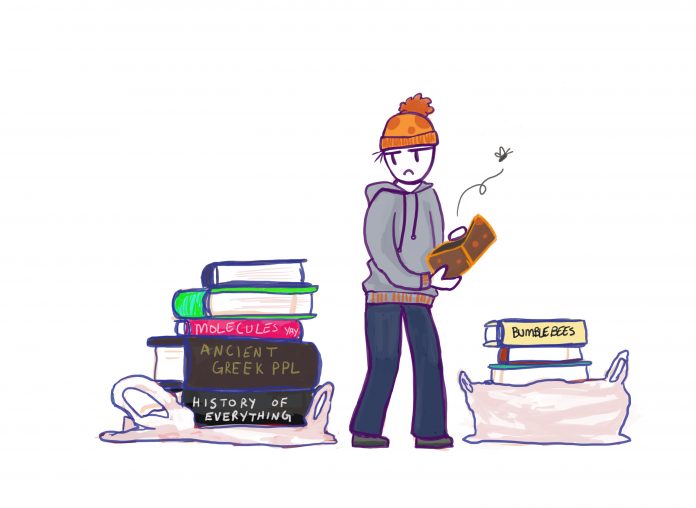
During the first few weeks of school, SFU students scavenge to find a copy of their required course materials, only to be met with the heartbreaking realization that the class has upgraded to the newest, shiniest, and most expensive version of the textbook.

The #textbookbroke campaign has found a home at SFU after popping up across various post-secondary institutions, and is being championed by the Simon Fraser Student Society (SFSS). Students across campus are being asked how much they’ve spent on textbooks in a campaign to petition for the use of Open Educational Resources at SFU by demonstrating the amount it truly costs to purchase mandatory course materials.

Hundreds of tweets displaying the hashtag #textbookbroke show students in schools across the country and even beyond Canada demonstrating their support for the movement for open source textbooks. Various university and college student societies are asking students to join and pledge their support, while also including how much they’ve spent on textbooks. Some of the images posted on the SFSS Facebook page show how much students are really spending, ranging from $12 to $780.

The movement took up their fight across the hall from the SFU Burnaby bookstore at the start of this semester, encouraging students to leave post it notes with their stories for all to see.

Said one arts student, “I could’ve bought groceries for the whole month with the $300 I spent on textbooks, and that amount is almost half of my rent for the month.”

Another note left by a sciences student read, “[If I didn’t have to pay for textbooks] I would feel a lot more freedom to take classes with extra costs or where I need extra supplies.”

Open Educational Resources are “freely accessible, openly licensed documents and media that are useful for teaching, learning, and assessing as well as for research purposes.” The goal is ultimately to offer students affordable and accessible educational resources that don’t break the bank.

VP University Relations Brady Yano explained that the provincial government has in the last year invested in 40 educational resources that could be used for “up to 40 undergraduate first- and second-year courses at postsecondary institutions.”

Said Yano, “The number has now grown to 150. If adoption [of these resources] took place in larger first- and second-year courses it could save them up to $100,000.”

Yano went on to say, “over the past two weeks the student society has been tabling outside of the bookstore educating students on the availability of these [open education] resources, and we started a photo contest on the SFSS Facebook, and whoever got the most likes will get their textbooks paid for by the SFSS, in this case saving the student $410 and hopefully generating more buzz and support for this campaign.”

In addition, the Library and the Teaching and Learning Centre will fund three grants of $5,000 to incentivize faculty to use open educational resources.

For more information on how you can get involved, sign your pledge at sfss.ca/OER, search the hashtag on Twitter, or contact VP University Relations Brady Yano.

Comics!

0

Peers (Leslie Lu)

Week6(2)

First Order of Business (Eric Smith & Justin Stevens)

unnamed

Creator’s Pet (Destiny Hsu)

CP_020

The Crapside (Darien Lechner & Ryan Stella)

coffee man 2