Creator’s Pet (Destiny Hsu)

Pun, 2, 3 (Sarah Walker)

Mystic Man (Reuben Newton)


Creator’s Pet (Destiny Hsu)
Pun, 2, 3 (Sarah Walker)
Mystic Man (Reuben Newton)
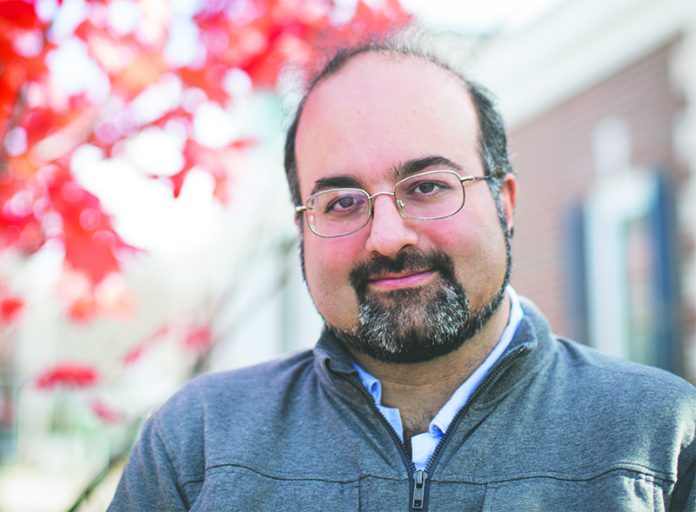
“You measure the moral health of any community or society by the way in which it treats the people who at the moment find themselves the weakest and the most vulnerable. And, I would argue, that there is probably no [. . .] population worldwide who collectively is more vulnerable than the Syrian people.”
Leading American Muslim intellectual and director of the Duke Islamic Studies Center Omid Safi was referring to the plight of the Syrian people, as well as the refugee crisis in relation to the rise of ISIS in the region, and Islamophobic sentiments worldwide.
On Tuesday, February 2, Safi spoke to a crowded room at SFU’s Harbour Centre campus in a lecture titled “Muslims in an age of Islamophobia and ISIS: Towards a holistic stance of Justice.”
Before unpacking Islamophobia and the role of ISIS (also known as ISIL) in its most recent proliferation, Safi explained that while it is undeniable that Muslims are being increasingly targeted, the community does not have any sort of “monopoly on suffering,” and advised against “wallowing in victimhood.”
Safi opened the discussion with a quote by Jewish theologian Abraham Joshua Heschel: “Few are guilty, but all are responsible.” He referred to Heschel’s comment throughout the talk in light of the way Muslims in general have been held responsible for the actions of ISIS.
Safi acknowledged the relationship between the recent rise in Islamophobia, especially in Europe and North America, and the phenomenon of ISIS — a group whose barbaric actions are based on a very specific, and highly contested interpretation of Islam.
On the tactics used by ISIS, he noted the music and camera angles used in their propaganda videos are based on hollywood horror movies, like Saw. Coupled with a staggering 80,000 tweets produced by members of the group per day, Safi argued their self-promotion and recruitment as well as the militaristic responses of the “American Empire” has resulted in a condition“as much about over here, as over there.” The production of English propaganda in particular suggests a target audience in Western countries.
However, in order to combat Islamophobia, Safi explained that we must collectively address all issues of social and political justice.
“Justice has to be holistic, and a threat to justice anywhere is a threat to justice everywhere. We have to remember that the conversation about Islamophobia [. . .] is inseparable from the conversation on racism, sexism, militarism, xenophobia, and others.”
He noted there is an onus put on the Muslim community — by media and politicians, among others — to publically condemn the actions of terror: “We hate and condemn, we hate and condemn, we hate and condemn — there should just be an app for that [. . .] you just plug in the name of the latest terrorist tragedy, and it produces for you, your press release.”
However, Safi argued that the language of “hating and condemning”, while important, is far from enough. While few are guilty for terrorist attacks, all of us are responsible for what is happening on the ground, and for engaging in radical change.
With the recent rise of Islamophobia, an entire “made-for-media” academic industry of specialists in “Islamic-inspired terrorism” has emerged and gained popularity with support of mainstream and corporate media. Safi referred to Bernard Lewis and Samuel Huntington, author of the infamous Clash of Civilizations, as some of the pioneers in this industry, and explained that parts of their work have influenced US policy, in some cases being used verbatim. Even more pernicious are “terrorism experts” who opine on places that they have no historical, contextual, or linguistic expertise, but only operate out of ideological pre-committements, often reinforcing the militarism of Western Empires.
Safi believes racism and white supremacy are partly to blame for why Muslims are held accountable for the actions of ISIS while other ethnic and religious groups are not targeted in the same way.
He explained, citing a number of recent shootings in the US conducted by white American men, and instances of state-sanctioned violence — both within the military and law enforcement systems — that acts of terror committed by non-Muslim Americans far outnumber instances of terrorist attacks by Muslims. Acts of violence committed by white domestic terrorists are always set aside as being the action of “lone wolves” (perhaps under influence of mental illness), while the actions of Muslims are cast as being due to a communal responsibility, and emerging from the heart of the Islamic tradition.
“Think about what it would have looked like if President Obama had said that, ‘it is time for white people, it is time for white men, to unanimously, explicitly, forcefully, and consistently, denounce the actions of white domestic terrorism,” said Safi.
“That never happens, and the reason it doesn’t happen is simple: white privilege.”

Not only did Canadian hedge funds outperform American hedge funds as well as global indices last year, they maintained high returns amid a decline in the US hedge fund sector.
This follows the predictions of a study by Beedie School of Business Professor of Finance Peter Klein and his colleagues, who investigated the Canadian hedge fund industry and found Canadian funds to have higher risk-adjusted performance than their global peers.
The study attributes the strong performance of Canadian hedge funds to a lower level of competitiveness for capital due to the smaller size and number of hedge funds in Canada. In addition, Canadian funds are better able to exploit inefficient domestic financial markets and having an information advantage by investing in markets that are closer in proximity.
Hedge funds, according to Investopedia, are a type of financial investment that allows multiple investors to pool their money together. In Canada, hedge fund investors must have a net worth of at least $1 million or earn $250,000 per year in income. Thus, hedge funds are allowed to take more risks than traditional mutual funds and are less regulated as investors are seen to be better able to shoulder losses.
Professor Klein was motivated to study Canadian hedge funds “to articulate a business opportunity” to potential investors and contribute to the growth of the hedge fund sector by advising investors to look to Canada.
Klein himself facilitated two pensions plans placed with KCS Fund Strategies as part of their Canadian hedge fund portfolios, and continues to promote Canadian hedge funds. Said Klein, “There is too much capital chasing too few opportunities” in the US, and there is room for development in Canada.
This room for development has been realized in 2015, according to John Shmuel of the Financial Post. While US hedge funds contended with high competition for investors and a higher number of closures last year, the Canadian sector has seen relatively strong returns with new hedge funds opening up.
The small number of hedge funds makes it easier for new entrants since there is less competition. Furthermore, Canadian hedge fund managers are more knowledgeable about the Canadian markets they are investing in, which can improve returns.
One disadvantage for Canada is that investors with large amounts of capital tend to invest in the US, since Canadian hedge funds are too small to generate a significant impact for their investment. Shmuel noted that this can even be seen with the Canadian Pension Plan Investment Board, which has invested $272 billion in US hedge funds.
Klein argues that this places “limits on growth” for Canadian hedge funds. Additionally, a unique risk for Canadian hedge funds is that of a real estate market crash. Moreover, Klein mentions that Canadian hedge funds may already have higher risk-taking activities than seen in the US.
However, if Canadian hedge funds can continue attracting investment, Klein sees “Canadian capital markets becoming more efficient and creating more employment” in the near future.
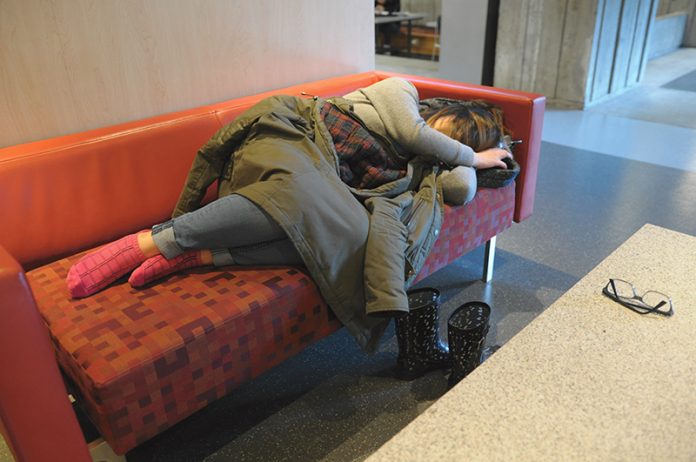
[dropcap]W[/dropcap]e’ve both seen, and probably been, that person: head down, slightly drooling over your notebook or laptop, trying to catch a bit of shut-eye on that cold, hard countertop.
Not only are there heaps of empirical data on the benefits of napping, but as a napper myself, I feel refreshed and optimistic after dozing for 20 to 30 minutes. As such, and because of the benefits they provide, I fully support work- and school-place nap rooms.
Recently, the British Columbia Institute of Technology (BCIT) introduced a nap room at its campus, where students can book an hour slot in a room with mats and pillows. This isn’t a new idea, as technology giants like Apple and Google have introduced similar features in their work environments. However, at the time, it had yet to be seen in a post-secondary institution in BC.
The National Sleep Foundation’s research demonstrates that to take a nap for 20 to 30 minutes can improve alertness and performance without affecting nighttime sleep.
Some of us may actually benefit more than others from napping, too. Over 85 percent of mammalian species are polyphasic sleepers, which means they sleep in short intervals during the day. Humans are said to be monophasic, meaning that we generally partition our days into sleeping during one time and being awake during another. But are we all fully monophasic? Small children and the elderly often nap during the day, so why aren’t more adults getting in on it, too? A short nap never hurt anyone.
Napping may also be of economic value; instead of loading up on costly caffeinated beverages for an energy boost, one could simply recharge the old-fashioned way. Not only would napping save money on coffee or Redbull, but it’s probably a lot healthier than drinking either excessively.
Now, I understand that SFU’s new Student Union Building plans to have a napping room, which is great, albeit still a few years away. But imagine how awesome it would be if all universities and colleges did the same. Instead of having to put your head down on a hard desk, or pass out in some contorted position on a chair in the library, we could all have a quiet room equipped with comfortable bedding designated solely for sleep.
The fact is that course schedules don’t always line up perfectly. In my time at university, there have been days where I’ve had six hour breaks in between classes. While the majority of my time is obviously best spent studying, I could also use part of it to catch up on sleep. Universities could even turn a profit on it: I’d pay a dollar or two for a snooze on some comfortable bedding in a quiet room.
SFU has adopted other stress relief practices such as puppy therapy, but we still have room to improve the mental and physical health of everyone, and SFU as well as other universities should follow BCIT’s lead — and fast — to create a comfortable environment in which students can recharge in a practical way.
Dear Dr. Breakup,
William has just been dumped by his valentine, Lady Francesca. William will not stand for these indiscretions. William has made a blood pact with our Lord of Darkness to be with the Lady Francesca forever. William’s hand still bares the cut of Grand Mama’s butter knife from the sealing of the holy blood pact. William now seeks the help of Dr. Breakup to help recapture the heart of his unruly mistress. William wishes to purchase necessary pharmaceuticals to complete his task. Please accept William’s cash advance of 23 dollars taken from Grand Mama’s purse.
–William, 31
Dear William,
Maybe “William” should use his 23 dollars from Grand Mama’s purse to invest in a healthier relationship with say — I dunno — a blow-up doll?
–Dr. Breakup
Dear Dr. Breakup,
I’ve hatched the ultimate plan to get Derek back. I’ve acquired two cartons of free range eggs, my brother’s butterfly knife, and a packet of Post-it notes. I plan to slash his tires, egg the shit out of his basement suite, and post mean notes all over his door about the size of his penis. I want him to suffer for breaking up with me last year at Denny’s on Valentine’s Day. I want to make sure he realizes what he’s missing out on. Then he’ll realize what a basic little bitch Tina is. Do you think I’m going to easy on him, or should I try something really drastic to get his attention?
–Liz, 24
Dear Liz,
I think you’re being far too easy on Derek. It’s very clear to me that to get him back you’re going to have to really go out of your way to show it. May I suggest walking out in front of busy traffic? Nothing says ‘I want you back’ like an oncoming semi-truck.
–Dr. Breakup
Dear Dr. Breakup,
Okay, there is something seriously wrong with my partner. I came home this Sunday and found a trail of rose petals all over the floor. Like, what the hell? I just vacuumed the house, man! She never picks up after herself, ever. I’m always the one that has to clean up after her. And to top it off, she taped promiscuous little notes all over OUR FRESHLY PAINTED WALLS. Now I’m going to have to put another topcoat of paint on. And just when I think it can’t get any worse, I walk into our bedroom to find her in expensive lingerie and room full of freaking candles everywhere. Fire hazard much? I have no clue what to do, man. What do you suggest?
–Gerry, 27
Dear Gerry,
I suggest you give your head a fucking shake, you twat-muffin.
-Dr. Breakup
Dear Dr. Breakup,
Yoohoo! It’s your obscene correspondent Brandy Jay again. I couldn’t resist the urge to write you another dirty note. Ever since you sent me that feisty little message to go away, I’ve wanted you all the more ;). I just love a man who plays hard to get and you are no exception. I’ve been go absolutely insane without you, darling. I can scarcely find the will to anything, I just strut around my home naked all day ;). Please Doctor Breakup, probe me with your thermometer — I have a fever and the only remedy is more of you. 🙂
–Brandy Jay, 43
Dear Brandy Jay,
You are a sick woman, all right, but you need a cold shower, not my thermometer.
–Dr. Breakup
Feeling heartbroken? Send a message to Dr. Breakup today at [email protected]

U of Alberta students use app to stop “hangriness”
[EDMONTON] — Students at the University of Alberta are now a lot more happy and a lot less hungry. Two weeks into launch, the Hangry app allows students to order meals ahead of time, avoiding long lunch-time lineups.
This may not be the first time you’ve heard of the app, as it was pitched on Dragon’s Den by its founders and received $120,000 to start up. Hangry doesn’t only let you pre-order food, it also offers loyalty points and allows users to rate food and their experience.
With files from The Gateway
U of Regina press celebrates short but controversial legacy
[REGINA] — Just over two years old, the University of Regina Press has already published three national bestsellers. The Press focuses on Canadian history and culture, and never hesitates to focus on the truth of important issues that have surrounded Canadians, specifically First Nations.
This year, readers can expect new publications focusing on typically taboo topics, like sex and mental illness. They hope to normalize these topics by inputting them into mainstream media.
With files from The Carillon
Dalhousie musicians support North Korean refugees
[HALIFAX] — North Korean refugees are being supported by music produced from students at Dalhousie University. Not all musicians themselves, many learned guitar in order to contribute. Focusing on lyrics that promote solidarity, one of the songs is even an original.
The movement was created by an International Development Studies student who was inspired by a Development & Activism course. The students involved marched and sang to bring awareness to North Korea’s liberation movements. The group also raised money for funds to support the cause.
With files from Dal News
SFU Introverts Club announces brand new app
[VANCOUVER CAMPUS] – In an attempt to convince the introverted population at SFU that going outside and meeting people is worth the effort, the club will be implementing various changes, including the release of the SFU Introvert App. The app will includes handy features, such as real-time hallway traffic, designed to allow members to avoid unnecessary crowds, and a list of secluded locations on campus for much-needed alone time.
University administration planning to shut down the SFU bookstore
[SURREY CAMPUS] – The bookstore has been documented record lows in profitability according to SFU’s head accountant, Buch Geschäft, who noted that “inelasticity of mandatory textbooks could backfire on us as soon as professors started using free online versions of textbooks that were just as good or even better.”
SFU students will now be expected to buy their supplies and college hoodies from neighboring post-secondary institutions, or just high schools.
SFU launches dangerous study area
[BURNABY CAMPUS] – In response to the demands of the undergraduate population at SFU, the administration is preparing for the grand opening of North America’s first dangerous study area. Students can expect the ceiling to collapse at the slightest quake, and for strange men to go around offering complimentary massage therapy sessions.
Said one student, “when I’m studying, I need to get the adrenaline flowing, or I fall asleep within five minutes. The safeness of the Burnaby campus has been forcing me commute to the Surrey campus whenever I need to study.”
President’s Update
SFU President Andrew Petter highlighted the search for the new chair in Technology Innovations for Youth Addiction Recovery and Mental Health. SFU, along with the John Volken Academy, the City of Surrey, and the Surrey Fire Fighters Association, have partnered to make $1.25 million available for funding.
The chair’s goal is to be able to assist youth who are recovering from substance abuse issues to be able to develop long-term solutions to their problems. They will also be working on problems that youth with mental illnesses face, and will looking into non-invasive innovations for diagnosis and recovery.
First Nations Health Authority Chair in Heart Health and Wellness
The senate congratulated SFU health sciences professor Dr. Jeff Reading on his recent appointment as First Nations Health Authority Chair in Heart Health and Wellness at St. Paul’s Hospital. This $2.5 million chair co-located at St. Paul’s, SFU, and the First Nations Health Authority will focus on First Nations cardiac health and drive research to improve health outcomes.
Reading, a Mohawk from Tyendinaga First Nations in Ontario, told SFU News that “you have discovery, treatment and advocacy in a triangle, working together and supporting each other.” Reading believes this three-pronged approach should be replicated across Canada.
Reading says that one of his main goals is to create “optimal physical, emotional, and spiritual health” for future generations of First Nations peoples.

[dropcap]T[/dropcap]here are two things I can’t stand more than anything. The first is getting in trouble. The second is travelling. I hate travelling. I hate packing, I hate that long drive to the airport and I hate going on airplanes. But I do it anyway. I endure all the things I hate to go on trips to unknown lands with the crazy, troublemaking people I love.
Three years ago, I endured a six hour, nauseating flight from Beijing to Yun Nan, two provinces on the almost opposite ends of the country, to go on the high school senior trip with the people I love. As soon as we got to the hotel, all I wanted to was crawl into my hotel bed and never get up, after that long flight. Of course, though, my roommate had other plans. She dragged me off to where all of my other friends were gathered at the hotel pool, having the time of their lives. I refused to join them; we were supposed to be in our rooms until the teachers told us to come down for dinner. We could’ve gotten in serious trouble. When I refused, though, they hoisted me up and swung me into the pool.
I was mad. I had just been through a hell of a flight, and as soon as we got to the hotel I wasn’t even allowed to rest. Instead, I was manhandled and dripping wet. I had been sucked into one of their crazy plans again, and as soon as a teacher noticed we were missing, we’d be in an unbelievable amount of trouble. The anger quickly dissipated as they pulled me out, and every single one of my friends ran over with a towel and started to dry me off. I probably should’ve felt suffocated being enveloped by so many towels, but instead I felt wrapped up in a giant fuzzy ball of fluff. They apologized and bought me food, and told me I was welcome to go back to my room if I wanted. If they were caught, they said they wouldn’t ever let on that I was involved whatsoever. I bolted back upstairs.
Only after I was back up in my room did it hit me: this would be the last trip we would ever do together.
This would be the last time we could travel together — before our lives started moving in seperate directions. I had just turned down one of the last chances I had to hang out with my friends. As the goody-goody of all my friends, I was always tasked with being the “mom” of the group. I was uptight, nagged them often and tried to make sure everybody stayed out of trouble. But that day I realized it was okay to unwind. It was okay to let loose, break the rules and just live a little.
I want to tell you that I went back downstairs and joined them at the pool. But I didn’t, because the teachers soon started calling us down for dinner. After that, though, I took every opportunity I got.
This would be the last time we could travel together — before our lives started moving in seperate directions.
I didn’t think twice about sneaking away from our tour group and zig zagging through the maze-like city of Li Jiang. I didn’t hesitate when my friends asked me to sneak out at night to a pub with a live band. I didn’t even flinch when I was assigned a thousand word reflection after getting caught playing videogames in the boys’ room after lights’ out. That isn’t to say we were always crazy kids; we enjoyed the culture of the city and appreciated how close the natives were to the beautiful natural world surrounding them.
The days passed by in a blur of tourist attractions, late night conversations, extremely traditional and gross Chinese food, and constant reprimands from our teachers for always sneaking away from the group. On the last night, we decided we should do something huge, something that we would remember forever. There was talks ranging from skinny dipping to setting off fireworks, and everything in between.
In the end, we just ran off to the rooftop to watch the stars. Nothing crazy, no breaking the rules. It was just us, the night sky, and deep talks. That night was worth more to me than any crazy prank ever would have been. I took a good, long hard look at the faces that had been with me all throughout high school, and knew that we wouldn’t last. We’d drift away, and I’d never see most of these faces again, but that was okay. We would always have this trip, this night, and that was more than enough.
Li Jiang was the city that set my adventurous side free, and where I left my old high school self behind. Li Jiang taught me the importance of letting go, and how to live in the present. Sometimes I miss the past and what we had, but Li Jiang was always meant to be a memory, a last hurrah of high school.
When I close my eyes and think of the city, I don’t remember the itineraries, what I wrote my reflection on or even the name of the hotel we stayed at. I remember shrieks of laughter, the weirdest selfies, and the happiest smiles.
My professor’s email about what readings to finish over the break
My Canvas account’s monthly calendar, to make note of any upcoming major assignments
Vogue’s extensive and informative article, “The Funniest Memes, GIFs, and Tweets from Super Bowl 2016”
A recap of highlights from this year’s Puppy Bowl
The ingredients list on my shampoo bottle
Five different articles explaining why Vancouver is so expensive to live in and what groups of people I can blame as a scapegoat
The recipe for a nutritious raw kale salad
The recipe for Paula Deen’s macaroni and cheese (Note: will put little doodles of hearts around this)
The SparkNotes page for a novel in one of my classes
The Wikipedia page for a novel in one of my classes
The Wikipedia page for a tremendously unnecessary film adaptation of a novel in one of my classes
A wikiHow article on how to get your professor to give you an extension
The dictionary.com definition of what’s considered a “bribe”
A Wikipedia page on the legality of bribing someone
A wikiHow article on how to fake your own death


