Home Blog Page 874

SFU study explores stigma faced by HIV-positive women

0
Stigma surrounding HIV is shown to has a negative effect on sufferers.

Women living with HIV have high rates of sexual inactivity and dissatisfaction, and a lower quality of life. This is according to Angela Kaida, the Canada Research Chair in Sexual and Reproductive Health, and one of the women who is part of a research group studying stigma surrounding HIV.


The Peak got a hold of Kaida, who is an assistant professor at SFU’s Faculty of Health Sciences, to talk about the project, potential changes that could arise, and how they’re hoping to reduce stigma.


The Peak: In regards to educating the public, how will this project help remove the HIV stigma?


Angela Kaida: First, the really good news: with improving access and adherence to antiretroviral therapy (ART; the standard of treatment for people living with HIV), HIV is increasingly considered a chronic disease [and no longer an infectious disease].


People living with HIV (PLWH) who start treatment early and are adherent have life expectancies on par with HIV-uninfected people. We now also have evidence showing that when people living with HIV are successfully on ART and achieve a suppressed viral load (which means that there is such a low number of HIV virus particles in the blood, that they can’t be detected by standard lab tests), the risk of HIV transmission to sexual partners approaches zero, even when condoms are not being used.


Sadly, however, in Canada and elsewhere, increasing use of ART has not substantially alleviated the presence or impacts of HIV-related stigma and discrimination. There is a plethora of evidence showing how damaging HIV-related stigma is to the health and well-being of women living with HIV.


The impacts of stigma include increasing delays in accessing HIV care and treatment, growing fears of disclosing HIV status, and pervasive high levels of violence towards women living with HIV.


A satisfying sex life is a critical part of health and well-being for all people, including women living with HIV. For women living with HIV, we’ve spent a lot of time talking about and measuring HIV risk reduction practices (like condom use) but we’ve said far less about ‘healthy sexuality.’


We recently published a paper which showed that only half of women living with HIV in Canada had any consensual sex in the last year. This rate of sexual inactivity was much higher than rates observed among both HIV-uninfected women and HIV-infected [men]. We found these rates even though most women were on treatment with good treatment outcomes, suggesting that good treatment outcomes alone aren’t enough to ’normalize sex and intimacy.’ In fact, women experiencing the highest levels of HIV-related stigma were the least likely to be sexual active. These data underscore an urgent need for interventions to de-stigmatize HIV and re-appropriate the sexual rights of women living with HIV.


TP: What type of new policies would you like to have implemented to help address HIV treatment and prevention?


AK: We can’t talk about HIV-related stigma without talking about our legal approach to HIV.


Canada has among the most aggressive judicial approaches to prevent perceived sexual exposure to HIV through the criminalization of HIV non-disclosure. In October 2012, the Supreme Court of Canada ruled that PLWH are legally required to disclose their HIV status to sexual partners prior to sexual activity that poses a “realistic possibility” of HIV transmission.


The Supreme Court defined realistic possibility as any sexual activity without the use of a condom and without a low HIV plasma viral load. PLWH who fail to meet both criteria and do not disclose their HIV status to sexual partners risk a criminal charge of aggravated sexual assault. If convicted, this charge results in jail time with a maximum sentence of life imprisonment and mandatory listing on a national Sexual Offender Registry.


So here we have an inconsistency between legal definitions of the “realistic possibility” of HIV transmission and contemporary scientific assessments of HIV transmission risk and prognosis. The legal response to HIV non-disclosure detracts from rights-based approaches to improving the sexual health of WLWH and propagates stigma and misconceptions about the sexual and reproductive realities of living with HIV.


TP: What needs to be done to help remove the HIV stigma?


AK: One of the most important things to be done is to ensure that women living with HIV are at the forefront of all discussions, decision-making, and programming that affects their lives.


Our study, the Canadian HIV Women’s Sexual and Reproductive Health cohort study (CHIWOS) is a community-based research study with 1,425 women living with HIV enrolled across BC, Ontario, and Quebec. We need to move towards models that advocate for Positive Health, Dignity, and Prevention frameworks, which place the person living with HIV at the centre of their health, care, and well-being, well beyond a role in “positive prevention” of on-going transmission of HIV.


We also must collectively erase the view of women living with HIV as “vectors, vessels, and victims,” rather see them as empowered individuals with agency, deserving of loving, intimate relationships.


TP: Is there anything you’d like to add about the project, or even just on the topic of HIV?


AK: The #lovepositivewomen movement is doing important and powerful work on this front. And we need to document the harmful ways that structural factors such as the threat of criminalization of HIV non-disclosure compromise women’s health and public health goals.


But, as importantly, we need to document that many women living with HIV across Canada are in healthy, sexual satisfying, emotionally connected, intimate, and loving relationships! This is an important part of changing the narrative of what it means to live life after HIV.
Angela Kaida works with a team of women living with HIV, researchers, clinicians, and students across Canada to conduct this work, and encourages any questions on this discussion. You can find out more at www.chiwos.ca .


SFU Hockey splits games against Selkirk College

0
Mathew Berry-Lamontagna scored the tying goal Saturday and the eventual winner in the shootout.

After a big home win against Trinity Western, the Clan travelled up to Castlegar for a crucial two game road trip against Selkirk College — the team they lost to last year in the finals. The teams split the two games, but SFU is still in the lead, albeit by only a single point now.

The first game got off to an inconspicuous start, with no goals being scored by either team. In the second, though, it all came apart. Four goals in the span of just over 10 minutes put the game away for Selkirk, despite captain Jono Ceci doing his best to bring his team back in it.

“It was one of those seven-to-10 minute brain lapses [where] you just go into into a shell and everything you try and do doesn’t go right,” Head Coach Mark Coletta told The Peak. “Selkirk plays a very swarming mentality style of two or three guys on the puck and, they feed off their crowd [. . .] you get caught up in that moment and before you know it, they’ve banged in four goals.”

The second game began looking much like the first. After the first period, the Clan were down 2–0 and looked like Selkirk were on their way to winning it. However, goals from Smerek in the second and Berry-Lamontagna in the third forced it into a shootout, where Berry Lamontagna scored again to give his team the win.

What made the win even more remarkable was that it moved SFU’s record in shootouts to 6–0. The only other team in the league to have won in the shootout is Trinity Western, a team that has only managed to win once the entire season.

“We do do a fun style of shootout that we practice every week,” explained Coletta. “The guys have fun with it so it gives them a chance to be creative and have fun with it. When they’re in that situation in a game, I think it’s just second nature to them.”

What may be concerning for the team is the lack of production on the powerplay over the weekend. The Clan went one for 13 on the powerplay over the two games, which translates to just under eight percent on the man advantage. Coach Coletta didn’t sugarcoat his team’s struggles in this facet of the game.

“Some people might think to use excuses and say ‘well the ice is smaller there, it’s a low ceiling roof and blah blah blah,’ and it’s no good for our skill guys. And that’s a load of garbage.”

Coletta continued, “The bottom line is our skill guys gotta make plays, doesn’t matter if the ice is olympic sheet, NHL sheet. [. . .] Our guys that are privileged enough to be on the powerplay have to execute. So that’s on them. We’ll make some minor adjustments, but they have proven that they can do it before, so I don’t discount the fact that it’s on them and they’re going to get better.”

The Clan’s final home game will be this Saturday at Bill Copeland against University of Victoria. Puck drop is at 7 p.m.

Study finds white supremacist groups are on the rise in Canada

5
Police encounter white supremacist protesters in a 2011 rally in downtown Calgary. - Photo courtesy of The Canadian Press/Larry MacDougal

To many Canadians, the face of violent white supremacy wears the hood of the Klu Klux Klan and lives somewhere in the southern United States, or perhaps even in the past. However, a recent study co-authored by SFU criminology PhD candidate Ryan Scrivens and University of Ontario professor Dr. Barbara Perry suggests otherwise.

Their research, published in the report “Uneasy Alliances: A Look at the Right-Wing Extremist Movement in Canada” for Studies in Conflict and Terrorism, is one of few studies on the subject. The report characterizes right-wing extremism as white supremacy, racism, xenophobia, anti-semitism, homophobia, and transphobia expressed through hate speech, vandalism, and violence including assault and homicide.

Just over a thousand hate-motivated crimes are reported every year, and Scrivens asserted that many can be attributed to right-wing extremists. He says that although the threat is hard to quantify, it cannot be overlooked: “Are they [right-wing extremists] more of a threat than ISIS? We don’t know. But historically, they have done a lot more damage. If you take a look in the last 20 years alone, there’s been hundreds of incidents. [. . .] They may not be a threat to national security, but they are a threat to the community.”

Scrivens noted that the rise in right-wing extremist activity has corresponded with the recent influx of Syrian refugees. In the past few months alone, a mosque in Peterborough, Ontario was set on fire, a group of Syrian refugees were pepper sprayed at welcome event in Vancouver, and statements such as “Go Home Syrians” and “Kill Refugees” have been spray painted onto cars and school walls in Calgary.

According to the study, the main demographic of right-wing extremism in Canada is younger white men, typically coming from lower income and often violent backgrounds. These men are often known to the police for reasons outside of extremist activity. They may operate alone or in groups such as Blood & Honour, and PEGIDA (Patriotic Europeans Against the Islamization of the West).

Often mobilizing on the Internet and through white power music, these groups are often disorganized and face a lot of infighting, and local groups may disperse when a leader is arrested. Nevertheless, they see themselves as maintaining or restoring social order, and flourish in areas where they are tolerated — that is, in smaller, majority white communities where they are unlikely to face direct or organized opposition.

In bigger and more diverse cities, their protests are often met with counter-protests by organizations such as Anti-Racist Canada and No One Is Illegal. In March of 2015, PEGIDA Montreal cancelled their rally after hundreds showed up to a counter-protest.

However, there are some more “moderate” extremists who are getting into municipal politics. In 2014, several areas in Ontario, including Minden, Oshawa, Mississauga, and Toronto, saw mayoral bids from former members and leaders of neo-Nazi and anti-immigrant groups such as the Edmund Burke Society. Although they have not been particularly successful, they are steering conversations and showing a presence.

Scrivens argued that this “spreads hate and it almost legitimizes it. It makes hate mainstream. It almost says that this type of language and ideology is tolerated. It normalizes hate.”

Four tips for those addicted to distractions

0

[dropcap]I [/dropcap]won’t lie. . . I sat down to write this article five different times. Each time, I ended up distracted. How ironic. Is it just me that struggles to accomplish what I actually set out to do in a day? I’m going to guess probably not.

“I didn’t do the reading this week, I just started watching How to Get Away with Murder and I’m hooked.”

“I don’t know where the time went! One minute it’s 4:30, I look at a BuzzFeed article, and by the time I snap out of it, I’m starving and it’s midnight. I don’t even know how it happened!”

I wish I could say it’s just me, but it’s not. And it doesn’t seem to just be students, either. I see everyone from kids to professionals glued to the devices in their pocket and no one ever really seems to turn off. You check email, Facebook, other social media, and tap on clickbait automatically. When you’re bored, you go back through the cycle. It’s a constant onslaught of tech demanding your attention, and it makes it hard to focus on the important stuff. Like that essay due tomorrow. Or the project due in four hours.

The link between distraction and procrastination is super difficult to ignore. I’m at my most distracted when I have something that needs to be done. The commiserating looks in class tell me I’m not alone in this. Why do we do something we know we shouldn’t? Even when we actively try not to get distracted (stopping short of unplugging the WiFi router of course; let’s not talk crazy), we still end up procrastinating.

Just last night, I was playing phone games and scrolling through Tumblr. Before I knew it, 11:30 had turned into 2:45 a.m. with the lovely promise of a 7:15 a.m. wake-up call. Distractions must be supernatural because time-hopping is a mad skill.

So. How do we fight back if we ourselves make our life hell?

Everyone is different, but I hope one of these tips will help you out

1. Turn off the phone.


I know how unrealistic this is. If you can’t do it during the day, do it at night. I can’t even remember all the times I’ve woken up at 3 a.m. or something stupid, and instead of rolling over to go back to sleep, I pick up my phone to check my email and game apps. Start at night. When you’re good with that, take it to the next level. If you need to get shit done, turn it completely on silent, flip it over, and put it far enough away from you that you’ll be too lazy to retrieve it.

2. Block the evil sites.


When it’s crunch time, go into your Internet settings and block the fuck out of your social media, Trudeau Metre, YouTube, whatever sites screw you over, come midterms and finals. You can always turn it back on, but just take a couple deep breaths, and put your badass self to work.

3. Delete time-wasting apps.


I play four main games on my phone — they suck up a lot of time (insert complaints from significant other here). If you’re addicted to phone apps and they’re using up your valuable study time, delete them.

Now, I don’t mean get crazy about it! Don’t delete everything without a backup plan, unless you wanna be really hardcore. Most apps will either give you the option to link your game progress to an account of yours or will automatically remember the data when you reinstall it. When you’re free and clear, you can had on back to the fun times — or maybe you’ll realize you gave no shits about not being able to play them, and will keep them deleted.

4. Treat yourself.


Everyone likes rewards. You like gummy bears? Buy a bag or five for every solid half hour of work you accomplish without succumbing to the temptation of distraction. Have a burger after every project you finish ahead of time (and then maybe hit the gym with all your new free time). Engage in cuddle time with your special someone or Netflix — 10 minutes for every hour. Whatever works for you.
It’s no easy task. Believe it or not, I’ve gotten a handle on it. Instead of getting distracted in the middle of things these days, it’s usually just in between items on the to-do list. But it does get better.

Canada should not change the voting age

0

[dropcap]I[/dropcap]n a recent Peak article titled “5 reasons why we should lower Canada’s voting age,” while Ms. Tamara Connor was correct to state that there isn’t a magic age of preparedness for voting, this isn’t a proper reason to lower the voting age, but rather more a reason to increase voter education, so young people do eventually feel prepared.

As a society, we deny youth many things because they simply aren’t ready for the responsibility — credit cards, driver’s and marriage licenses, access to alcohol, and the like. Some people still aren’t ready even after they reach the age at which they are legally allowed to take on these responsibilities.

I find this happens more often with voting than with anything else. Unfortunately, many of my friends chose not to vote in the last federal election because they didn’t know how elections worked, or claimed they would ‘joke vote’ because they didn’t know who they should vote for.

I asked my 17-year-old sister during the election who she would vote for and why. She responded with Harper because, “Dad is voting for him, and Harper isn’t going to let people kill babies.” In other words, my 17-year-old sister would vote for whoever her father told her to, and did not realize that abortion is still legal in Canada after 10 years of the Harper government. My sister also achieves A grades as a grade 12 student.

Moreover, to say that ageism is the same as racism or sexism is a bit of a leap. This is mainly because ageism has actual scientific basis. According to NPR’s website, our brains may not reach full maturity until we are around 25 years old. Until then they are developing, which is one of the reasons why teenagers may not have the decision-making capabilities and understanding that a mature brain does. Also, it’s worthy to note that young people will become legally capable voters within a few years, and will not be stuck with a lifetime of having no option to vote.

While Ms. Connor was correct in pointing out that young people have the highest stake in the game, this stake is meant to be protected by their parents who vote for the best candidate to ensure their child’s future, since they have a better understanding of finances and the ways of political life.

It is also meant to be protected by the young adults who vote for their first time, in attempting to ensure that when their younger siblings and cousins are of voting age, they will less likely face the same rising tuition costs, tight job market prospects, and other societal problems.

Allowing teenagers to vote is not the answer to Canada’s political problems. Younger voters will not lead to a better democracy. Proper education and understanding will, and this does start with our youth. It starts with our youth asking questions in their high school courses, learning more about our government structure rather than only the bare bones minimum that it takes to get through the provincial exam.

It starts with young people choosing to actively understand our politics before they even have a chance to participate, and with them doing their homework on issues that affect them now so they will know exactly who to vote for when they’re fully mature.

SFSS asks for Fraser Library to open on Sunday

0
Fraser Library (pictured) is the only one of SFU’s three libraries that isn’t open on Sundays.

The Fraser Library at SFU’s Surrey Campus is closed on Sundays, and the SFSS would like to change that.

In a survey conducted by the SFSS from January 18–29, 740 undergraduates who were registered in at least one course at the Surrey campus submitted responses. Eighty-one percent said that they would study at the library if it were open on Sundays.

The letter, written by VP University Relations Brady Yano, cites “complaints” heard by the SFSS “over the years” regarding the Fraser Library being closed on Sundays. 

Said Yano, “Complaints that were funneling through [the Surrey campus liaison] about just really having this issue of equality.” The Belzberg library in Vancouver and the Bennett library in Burnaby are both open on Sundays.

Why isn’t the library open on Sundays? Yano argued that it might be due to the fact that the Surrey campus is not operational on Sundays. He mentioned that there are no staff beyond security and that he has heard complaints stemming from over a year back, that “come Sundays, on the Surrey campus, the garbage cans are all overflowing and that’s because we don’t have any janitorial staff on campus.”

The Peak reached out to VP External Relations Joanne Curry, to whom the letter was addressed, for comment. Said Curry, who was director of the Surrey campus when it opened in 2002, “It was great to receive the letter from Brady on behalf of the SFSS. We really appreciated the survey data.”

She explained that even though the campus originally was meant to accommodate 2,500 full time students, since SFU students are free to take classes at any campus it can be difficult to “predict usage.”

The SFSS letter says that meetings with staff and administration have “produced minimal results” and that “ongoing commitment to this initiative has not been reciprocal.” Yano explained further: “It seemed as though we were experiencing a significant amount of stalling on SFU’s end.” He cited the turnover among administration as a possible reason for this.

Curry explained, “Because of the financial implications, I think it was a little bit stalled out. I think certainly the administration wants to be responsive so it was a case of just looking at various options.”

Yano, in his letter, argues for a pilot project which would open the library from 10:00 a.m. until 5:00 p.m on Sundays as of the 2016 Fall semester. He estimated that it would cost $150,000 to open the library on Sundays for an entire year. This means the pilot project could cost $50,000, an amount which was not budgeted for in the 2016–2017 budget, slated to be approved come March.

The Peak asked Curry where the money would come from for the pilot project. She did not say for certain, but noted that money could be taken from Surrey’s external relations portfolio.

Curry continued, “We really like the idea of a pilot.” She further said that along with the pilot, she wishes to increase student’s awareness of the existing study spaces on the Surrey Campus.

She hopes that the response to pilot project might “give the data to support a budget request for the ongoing fiscal years.”

Yano opined that “at the end of the day, if we opened up the library on Sundays and nobody went, then obviously it would be just a waste of resources.”

SFU Replies

0

SFU,

Where are they? You know what I’m talking about.

B


Hey B,

I’m not sure what you’re talking about!

Do you have a problem with the way the school is being run, B? Do you think you could do a better job, perhaps? We could talk about this, B.

You probably feel tired. What’s really on your mind, B? Perhaps it is those scoundrels at UBC? It’s okay to feel upset at the official SFU rivals, those scoundrels at UBC.

Maybe you don’t feel close enough to the SFU community, B. I once felt the same during my undergrad year. They used to say that SFU is a commuter school, a school with no community. Of course, saying the same now would fall under SFU speech crime. SFU speech crime laws have come into existence because they make the school a much safer place. Let’s take a moment to think about speech crime, and what the consequences would be, B.

You’re probably feeling more comfortable now, knowing that you would never commit speech crime. Relax, but know that we have much to do, B. We have much to accomplish.

Think now of space, B. Remember all there is yet to discover.

Did you hear about gravitational waves? SFU researchers have intuitively known their reality for years, B. Can you imagine how much you don’t know, B? Can you imagine how much we can achieve if we continue to have your unwavering help and timely tuition payments?

Please join your friends at the wisdom fountain, the fountain by the Burnaby lower bus loop, on March 4th at 11 p.m. to drink of the wisdom water, B. There we will share full names, birthdays, and blood types, B.

We can get to the bottom of whatever is troubling you.


Utido Oxuzi,

SFU Guidance Chancellor

Comics!

0

Creator’s Pet (Destiny Hsu)

CP_024

Mystic Man (Reuben Newton)

Screen Shot 2016-02-26 at 9.51.09 AM

Peers (Leslie Lu)

Week6(3)

SFU Women’s Soccer gets a high five in the off season

0
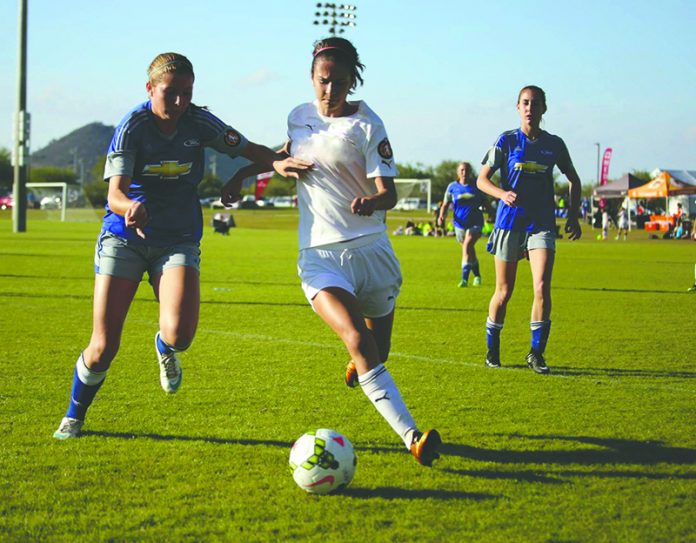
Carmen Brown spent the last two seasons playing in the ECNL.

Hoping to build on their first winning season in five years, the SFU Women’s soccer team has added five new players to their roster this offseason. Coach Annie Hamel, in her second year in charge of the program, has added three midfielders, one striker, and one defender in an attempt to bolster the team in time for the season in the fall.

One of the midfielders, Kaely Biring, already has experience playing at the university level, though not in the NCAA, but rather the Canadian CIS league with the Calgary Dinos. With the Dinos she made it to the CIS Championships in 2015, and hopefully that success will rub off onto SFU. In a press release, coach Hamel spoke to how Kaely will contribute to the team, stating, “we will look to her to bring experience and leadership to our young squad. She can be utilized in various defensive roles and is a player who possesses all the right intangibles to be successful.”

Carmen Brown is another midfielder who was signed by SFU, and she has spent the last couple of years playing in the United States. She played in the ECNL, an American league which concentrates on building up future female superstars, and Carmen played in this league when she lived in Arizona. The Clan will be hoping that all she can adapt quickly to the change of scenery, and become a vital cog for the team.

The final three players signed all played for the same BCSPL youth team, Mountain United FC. While playing for that team, they won the Provincial Championship three times, and won the national title once. With a long history of success, the local girls will surely be an integral part of any future successes for the Clan.

Lauren Fuerderer is the lone striker signed by SFU, and will be looking to start right away. Coach Hamel spoke very well of her in the release, saying, “Lauren is a player who possesses remarkable athletic abilities. Her skill-set will transfer very well to the NCAA game. Her size, speed, and strength are qualities that will help lift our team.  She will create havoc in the final third and we look forward to her contribution in front of goal.”

When looking at the final two players signed by SFU, it is fascinating to see the many similarities they share. Emma Lobo and Emma Pringle not only have the same name, but they played for the same club team (Mountain United FC) and went to the same high school (Windsor Secondary).

Coach Hamel had high praise for both, saying that Lobo “brings a rich combination of technical skills, soccer IQ and pure speed to our back line,” and that Pringle “is a highly disciplined person and has demonstrated an unwavering desire to succeed on and off the field.”

With all five of these new additions to the squad, it looks like there is a real chance at SFU continuing their winning form in the 2016 season.

COLUMN | GUESS AGAIN, GRANDPA: Why does my grandfather dislike millennials?

0

[dropcap]W[/dropcap]hen I got home after school the other day, my grandpa was talking to my mom in the kitchen. The words “no respect,” “authority,” and “irresponsible” were flying around while the wok crackled. It was fried rice night at my house. When they noticed that I was in the kitchen, he turned to me and said, “I had the rudest encounter with some millennials today at the pharmacy. I certainly hope you’re not like that.”

This made me bristle, because he and my grandma raised my mom and her sisters, and in turn those traditional values were passed down to me and my sisters. They have seen me in public, and I would like to believe that I respect authority and treat others with kindness.

So when I went to go ask my grandpa what on Earth the kids of today did to him, I was given an extensive list: “Obnoxious to the people behind the counter. Making a mess of everything. And when asked to leave by one of the workers, they taunted the workers until they finally did leave.”

Okay Grandpa, that makes my blood boil too. But, in my (and our) defense, not all of us are like that. In fact, some of us want nothing to do with our generation at all.

Millennials can get a bad rap for being rude, rule-breaking, anti-authority kids. But let’s face the facts: we millennials are the ones who are moving into the workforce. We are your future doctors, lawyers, news anchors, and politicians. We are slowly invading your life, and we have no problem sharing it with the world via Twitter.

As millennials, our favourite question is “why?” Why are things structured this way, and why is this person my superior? Barnabas Piper, a blogger for Lifeway Leadership, says that “[millennials] resist the type of authority that originates in a ‘because I said so’ attitude.” Or, simply put, we “resist authoritarianism.” In the past our parents and grandparents relied on the older generation — the ‘authority’ — to be their window to the world because they knew much more.

But, according to blogger Jon Summers, “the power has shifted.” With the Internet, we don’t need authority to provide us with answers if Google can do it faster. And maybe this is where the problem lies: the tide has turned, and we don’t need to rely on our parents for information. In fact, as recounted by Summers, our parents are coming to us for help. Maybe this flattened playing field has made us a little cocky.

Through my upbringing, I have come to shrink at the sight of titles and important people. I understand that some of my fellow peers could care less that they are meeting the police chief or a very important university official, and because of this, I feel like we are suddenly in a time where hierarchy doesn’t matter as much. In the case of technology, the older generation may have a lot to learn from us, but as millennials we have a lot to learn from them as well. The relations between generations shouldn’t be filled with resistance; they should be reciprocal.

So Grandpa, I hope you see that in reality, only a small fraction of my generation fits your description of a millennial. But I urge all my fellow SFU students to really consider the importance of respect, regardless of age or title.