Home Blog Page 83

Tell us your favourite Month of Welcome event and we’ll determine what your Twitter account looks like

0
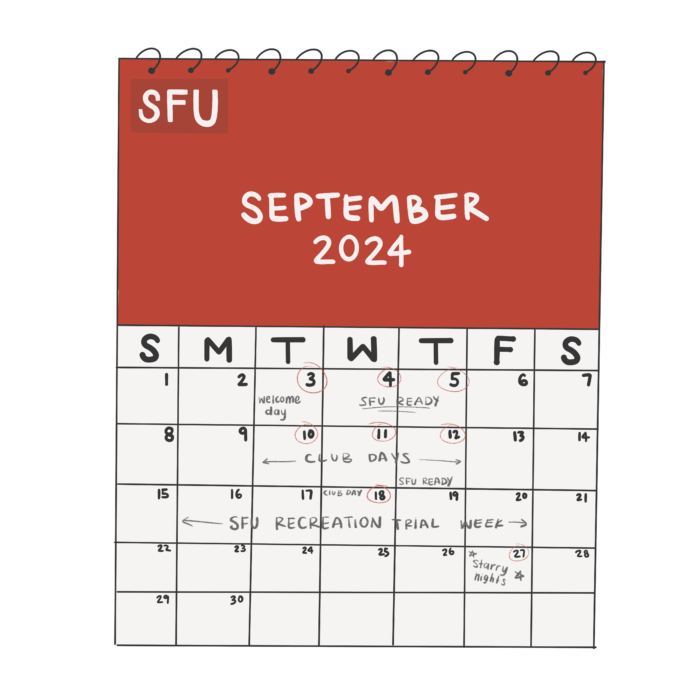
A September calendar with the dates of SFU Month of Welcome events circled.
ILLUSTRATION: Victoria Lo / The Peak

By: Amrit Kamaal, Peak Associate

SFUReady 

You made sure to attend each stall to scoop up all the freebies. You had to sweet-talk for some of them, but you’re not above that. Of course, that sweetness is a front. You run a stan account on Twitter for, in your words, “a very underrated artist,” and you will defend their honour on the platform with everything you’ve got. When you’re not having one-sided beef with your fave’s rival, you’re working on a new fancam. Maybe it’s time to take your own advice and touch some grass because your page has more stolen insults than a group chat full of tweens learning to cuss. 

Username: GucciFloraArtistName

Bio: Spreading love and positivity insert laughing cat emoji
       3x noticed by my queen
       insert random lyric about how many bitches hate you

SFU Welcome Day

You romanticize university life a bit too much, taking an exaggerated breath in to “soak it all in.” You commute over two hours daily to whichever campus furthest from you purely to “study,” pretending you’re Rory Gilmore walking around in the cold with your Blenz coffee. Of course, your Twitter consists of dimly lit pictures and a poem based on a quote from your PSYC 100 lecture talking about “we’re so similar but different.” Your captions and bios consist of the most random emoji combos just because you like the colour. Maybe if you actually attended your English lectures, your poems about your hallway crush might actually get some recognition. 

Username: BloomingLilliesInMySoul

Bio: Another person’s place
       “The place where flowers come to grow”
       emoji combo of a goose, a bathtub, a poodle, and a white heart

SFU Clubs Days

If you claim you weren’t a band kid, an anime kid, or even both, you are lying to yourself. This is your favourite event because you can unintentionally wreak as much havoc as possible, constantly repeating phrases you’ve heard on TikTok over a million times in an attempt to be “humorous” with club leaders. You definitely own a flop meme page, constantly tweeting and retweeting overdone memes remixed with loud screams and CupcakKe songs. Unfortunately, it also impacts your social interactions in person because asking to study abroad at “Ellie and Mason’s house” isn’t the move that you think it is.

Username: FlopTropica69

Bio: WhAt i dO insert purple heart
       Not me in my flop era I—,

Message from the president: An update on the official SFU mascot shortlist

0
Three small children stacked on top of each other in an oversized trench coat.
ILLUSTRATION: Emma Nash / The Peak

By: Petra Chase, Editor-in-Chief

Since McFogg the Dog was let go in 2018, the Board of Directors has been hard at work deciding who will replace him as SFU’s new official mascot. Finding a mascot worthy of representing our comprehensive university is a responsibility we do not take lightly. As a result, we’ve been way too swamped at our monthly meeting to get around to the calls to divest from war contractors. We’ve only just begun talking to the TSSU about a fair contract.

How’s this for accountability? Here is every mascot we’ve meticulously considered over the past year, and why we ultimately decided against them:

Three kids stacked on top of each other wearing a trenchcoat
A trenchcoat is a low-budget costume option, and that’s ultimately the reasoning behind this idea. At first, we thought this would simply be a guy in a trenchcoat. But then I came up with the brilliant idea that if we get a long enough coat, we could stack three kids on top of each other and make our mascot a mighty 12 ft. We were quite certain about this decision for several months. So much so that we made a casting call for local kids willing to drop out of school to fill the position. Ultimately, we realized this option posed practical challenges, as a trenchcoat is not always fit for the weather.

John Pork
I don’t normally answer unknown numbers, but when the call display for John Pork appeared on my phone with a photo of this handsome pig-human, I just had to hear him out. He introduced himself as a “pig who’s also a dude” just making some calls, looking for work. He seemed really chill and got on a video call to show off some of his dance moves. I was thoroughly impressed. Unfortunately, he backed out at the last minute, before we could seal the deal, saying he was moving to New York to pursue his dreams and be on Broadway. Just like that, it was back to the drawing board.

The spirit of demure #BratSummer 
No one cares about engaging the world anymore. All they care about is brat this, demure that. Honestly, we didn’t have any idea what this would look like as a mascot; all we knew was we had to hop on the trend before it stopped being cool (or I guess I could say brat or demure, both synonyms for cool, I’m pretty sure). But before we could hit send on this decision, I was informed someone called Charli XCX announced brat summer was officially over. Thanks for wasting our time, Charli.

A lousy raccoon
A petition made in 2018 to make a raccoon our next mascot was brought to my attention. Sure, some valid points were brought up, like, “Oh hell yeah,” and, “The campus raccoons are nicer than the students.” Unfortunately, the petition only had 252 signatures. Not nearly enough. Typically, we don’t even look at petitions from students and faculty unless they have at least 37,000 signatures. And besides, even though we have raccoons crawling our halls and the little bandits are adorable, I just want to stall this decision a little longer because, quite honestly, I’m avoiding making any decisions, and I’ll resort to anything.

Block party brings life into downtown Vancouver

0
Three individuals dancing while dressed in 70’s-styled clothing (flared pants, gold tights, bright colours).
ILLUSTRATION: Sonya Janeshewski / The Peak

By: Caitlin Kingsmill, News Writer

On Saturday, September 7, Public Disco Society hosted its Downtown Block Party, the final installment of this year’s summer series. The event was held from 2:00 p.m. to 10:00 p.m. at the Bentall Center’s Dunsmuir Patio, a multi-level outdoor seating area located in the heart of downtown. As someone who generally avoids downtown out of the belief that it has a soulless and bleak vibe, it was a treat to stumble upon an event like this, and I’m sure many other attendees felt the same. As we arrived around 6:00 p.m., my friend and I both thought the event felt like something you would find in Montréal, where pop-up music festivals are a big part of the city’s summer culture.

As we ascended the escalator at Burrard Station, we could hear the distant sound of mellow electronic music. Upon reaching street-level, the Dunsmuir Patio was vibrantly decorated with hanging string lights. The upper level of the patio was mostly made up of seating and vendor tents, while the lower level held the stage and DJ booth. We were greeted by a couple friendly staff members whose welcome booth was stocked with an assortment of complimentary items. 

They encouraged us to take whatever we wanted from the spread that included stickers, gum, hair elastics, types of condoms, and period products. Who doesn’t love receiving free items at a free event?

Once we finished stocking up on gum and condoms, we decided it was time for a beer. My friend felt inclined to figure out what type of beer she actually likes and the staff member was very pleasant and helpful with her recommendations. We determined that, much like myself, my friend enjoys a refreshing light lager (ideally served with a lime wedge). All of this friendly banter almost made up for the fact that a single can of Granville Island Brewing Lager cost $8.

We wandered around the vendor booths and observed the event while sipping on our respective lagers. The vendors sold a range of items including kids toys, locally-made clothing, and handmade soaps. From the upper level, you could peer down into the crowd for some good people watching, and from up there the music was quiet enough that you could easily make conversation. The event was open to all ages, with kids running around, families eating snacks, and young adults vibing to the music all in the same vicinity. There was an emphasis on safety with water stations and accessibility information available throughout. 

We ran into a couple of friends who said they have been attending these events since the first one in 2017. They, too, enjoyed the ambiance and appreciated that each year features a new mix of local underground electronic artists. This year’s lineup consisted of Vancouver-based The Ryze, Lerma, and Mother Mary, and Seattle-based APT E. The Ryze’s tracks were mellow yet funky at the same time, mixing electronically-synthetic tones with catchy beats. With a heavy, dropping bass and tone changes reminiscent of an ‘80s-style arcade game, Lerma had the crowd off their feet and showing off their best moves. 

As the sun set and we descended to the stage area, the mood began to shift. The music got louder and a handful of dancers dressed in neon clothes emerged. They stood on raised platforms and rhythmically moved to the music, encouraging the crowd to do the same. A dance circle formed off to the side. A bubble machine appeared in the middle of the crowd, as did a person wearing an Elmo costume and holding a sign saying “free hugs.” The night time crowd had officially arrived.

Needless to say, this downtown disco had begun to feel like a psychedelic fever dream of sorts. Tune in next summer to experience it for yourself!

Traditional medicine is health care

0
St. John’s wort plant in bloom.
PHOTO: john shortland / Flickr

By: Olivia Visser, Opinions Editor

Many people grow up believing that everything under the alternative medicine umbrella is false and misleading. However, this distrust can be particularly problematic when it carries over into traditional medicine. Evidence-based arguments fall short when considering the lack of funding for quality traditional medicine studies. But efficacy aside, you don’t need to practice a form of medicine to respect it. Western medicine often lacks a holistic approach that examines people’s body and mind as a whole system. These practices may not be for you, but it’s worth trying to understand why they’re important to so many people.

We must consider that what many of us now know as western medicine has roots in herbal medicine. Certain pain-relievers like morphine and codeine are still organically synthesized from opium poppies. Aspirin was originally derived from salicylic acid in willow tree bark. St. John’s wort has been found in multiple studies to alleviate mild depression. It’s dismissive to suggest that medicine is a recent invention. In reality, humans have been experimenting with plant-based treatments since time immemorial. 

As with most things in life, any sort of treatment should be cautiously examined before proceeding. Traditional medicine doesn’t generally promise miracle cures or aim to replace necessary medical treatments like chemotherapy or insulin. Rather, it’s intended to complement clinical medical practices. You should always consult your family doctor before starting any medicine, herbal or otherwise. Some substances can interact with medications or preexisting conditions.

Those who judge traditional medicine overlook the value of healing practices that prioritize person over patient. Many Indigenous Peoples consider “a person’s physical, spiritual, emotional and intellectual well-being,” and their “place in the community.” This sort of relational holistic care is preventative health care. The Centre for Disease Control reports that social connection has the ability to prevent certain physical and mental illnesses. Other studies have found that “Indigenous-led health partnerships can improve access to care, adherence to care plans and many health outcomes.” Access to traditional medicine practices is so important that it’s explicitly recognized in the Truth and Reconciliation Commission of Canada’s 94 Calls to Action. 

It may feel straightforward to suggest we should respect people’s cultural practices. However, this respect is still direly needed — traditional medicine is frequently regarded as a lesser form of treatment because it’s lumped under the larger alternative medicine umbrella. For many people, healing goes beyond their body alone and extends to meaningful connections with land and community. For example, traditional Chinese medicine proposes that an imbalance of positive and negative energy can have health effects. Clinical studies have also found notable links between stress and physical illness. But my argument isn’t even that traditional medicine is as effective as western medicine. It’s that finding a common ground between what you practice and what someone else practices is worthwhile. 

Recently, Kwantlen Polytechnic University announced the coming of Canada’s first traditional Chinese medicine bachelor’s degree. The decision has been met with both applause and criticism, as some feel traditional Chinese medicine is no more than a branch of pseudoscience. However, the degree is not a medical degree and is in no way designed to replace medical doctors. There are credible studies backing the use of acupuncture and certain traditional Chinese medicine herbs for minor ailments and chronic pain. At the same time, studies are still lacking regarding the safety and efficacy of many treatments. This is why we should welcome the program. Traditional medicine deserves education pathways that result in better regulations and standards of care. This must be done on a larger scale, but as individuals we can still reflect on our preconceptions and shift mainstream narratives.

Traditional medicine doesn’t necessarily assert that every illness has a natural cure, and it varies greatly between cultures and practices. My own prejudices surrounding traditional medicine kept me from exploring herbs that improved my mood and digestion. At the end of the day, we should be in favour of funding further studies about traditional medicine so we can practice it as safely and effectively as possible. Providing pathways within our communities for individuals to pursue these treatments could offset medical system strain and act as a powerful means of preventative care. 

Bright-er Side: Navigating the maze of Burnaby Mountain

0
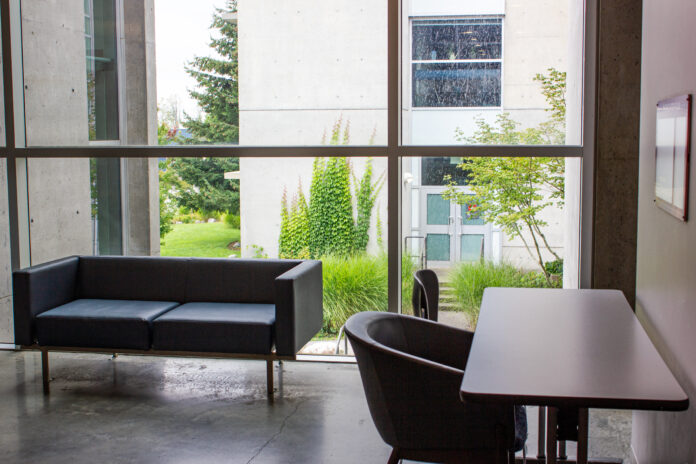
A small black couch and a chair with a desk in a quiet corner at SFU.
PHOTO: Jin Song / The Peak

By: Jin Song, Peak Associate

My first experience of SFU’s Burnaby campus was struggling to find TASC 9204 for an absurd amount of time. Even with the help of Google Maps, SFU Snap, the campus maps, and strangers (none of whom actually knew where the room was), first-year me decided that SFU was, indeed, a maze. 

Three years later, I still get lost . . . which is actually really exciting.

Maybe it’s not so fun when midterms are in two minutes, but when I’m not in a rush, stumbling upon unexplored parts of campus brings much-needed novelty to my day. It brings back memories of being a kid and having nothing better to do than explore. The Burnaby campus gets made fun of for looking like a prison, with the brutalist cement and whatnot, but I think it’s really grown on me. It looks like the backdrop of a science fiction epic, and it’s no surprise that tons of films and TV shows have used campus as a set.

There’s a bunch of science on why our brains are wired to love novelty, but I think it can be summed up like this: exploring mazes is fun.

Trudeau announces decision to limit temporary foreign workers and permanent residents

0
This is a photo of Justin Trudeau speaking in front of two Canada flags in a medium shot
PHOTO: taylor hartley / Flickr

By: Yildiz Subuk, Staff Writer

On August 26, Prime Minister Justin Trudeau announced he will “reduce the number of temporary foreign workers in Canada” by tightening the policy regarding temporary foreign workers (TFWs). This follows what some are calling a “historic surge” of temporary foreign workers in Canada, with nearly 184,000 TFW permits taking effect in 2023. When Canada faced a labour shortage, policies changed to allow more TFWs into the country to address it. 

Under the Immigration and Refugee Protection Regulations, TFWs enter Canada through work permits, which limit them to work for a single employer unless they get another permit. These permits allow individuals to work for 1–2 years before they have to renew their permit to stay in the country. 

Trudeau also announced plans to limit the amount of permanent residents in Canada. He stated that “high unemployment areas — places where the unemployment rate is 6% or higher — will not be able to hire low-wage TFWs.” This excludes food security, construction, and health care sectors where there are staffing shortages. We’ll be looking at unemployment rates and opportunities to make further adjustments over the course of this fall as we come forward with comprehensive level plans that will respond to the reality that Canada’s facing now and in years and decades to come,” said Trudeau.

The United Nations (UN) declared Canada’s TFW program to be “a breeding ground for contemporary slavery” in a recent report. Contemporary slavery in this context refers to the exploitation of workers that goes unreported due to some migrants’ fear of deportation. The UN stated that TFWs are subjected to multiple forms of abuse but are often unaware of their rights. These forms of abuse include being underpaid for work or feeling forced to pay immigration consultants large sums of money to get jobs. 

The Peak interviewed Syed Hussan, executive director of Migrant Workers Allegiance For Change, who noted that multiple changes regarding immigration have been made since June last year. These changes include capping study permits and permanent residency and “refusing to renew permits for graduated international students.” Hussan said Trudeau’s new decision could affect TFWs as they may not be able to renew their permits, forcing them to relocate to areas where there is lower unemployment. Other TFWs would become undocumented or feel forced to pay large sums of money to recruiters to locate work.

Though Trudeau stated he wants to limit TFWs and permanent residents in Canada due to the increase in unemployment, Hussan suggests another reason behind this decision. He explained the Liberals want to respond to speculators who link the lack of affordability crisis in Canada to immigrants: “The Liberals are working to show that they are in control of the immigration system, in an attempt to respond to growing xenophobia and racism.”

However, Hussan said Trudeau’s announcement affirms the beliefs that immigrants are linked to the affordability crisis, which will fan the flames of a growing xenophobic rhetoric within the country. “Blaming migrants, it serves as a distraction from holding the billionaires and corporations accountable for their profiteering and their impoverishment of working people,” stated Hussan. 

The Peak also interviewed Dr. Steven Weldon, an SFU political science professor. He explained that more Canadians may be against immigration as Canada is experiencing more difficult economic times due to high inflation and fewer job opportunities. Weldon said this creates a pullback around immigration.

Weldon also said that while the federal government controls the influx of immigration within the country, Trudeau’s decision could change. Trudeau stated that future changes will make it so “Canada remains a place that is positive in its support for immigration, but also responsible in the way we integrate and make sure there’s pathways to success for everyone who comes to Canada.”

Vancouver Whitecaps eyeing third straight Voyageurs Cup title

0
A player wearing blue and white runs down a grassy field with his arms outstretched like a flying bird.
PHOTO: Courtesy of @whitecapsfc on Instagram

By: Kaja Antic, Sports Writer

For the third time in as many years, the Vancouver Whitecaps are headed to the Canadian Championship finals.

This annual tournament is organized by Canada Soccer and is played between the three Canadian Major League Soccer (MLS) teams, the eight Canadian Premier League (CPL) teams, and the champions of semi-pro League1 Ontario, League1 BC, and Ligue1 Quebec. Teams within this tournament compete for the Voyageurs Cup, which was initially created and is still named after the supporters groups of Canada’s national soccer teams, the Voyageurs

The Whitecaps are the reigning back-to-back champions, and will be facing fellow MLS side, Toronto FC. Toronto holds the record for the most Canadian Championship titles with eight, followed by CF Montreal with five, then Vancouver currently with three. No non-MLS competitors have previously won the tournament, with the CPL side Forge FC being a runner-up once in the tournament’s history.

Vancouver’s record in the Canadian Championship finals against Toronto is 1–6. The sole win the Whitecaps currently hold over their eastern counterparts is their 2022 Championship victory, in which they took the Voyageurs Cup after earning the edge 5–3 in penalty kicks. Vancouver’s other two Championship titles came from victories against CF Montreal in 2015 and 2023

In their current regular season, the Whitecaps have played Toronto once — a 4–0 win at BC Place on April 6. At the time of writing, Toronto FC narrowly holds onto a playoff spot in the Eastern Conference in eighth, with only two points separating them and the 10th-ranked Atlanta United. Vancouver is in contention for a higher Western Conference spot, currently in sixth, and are only a handful of points back from clinching home field advantage for the MLS Cup Playoffs. In overall league standings, at the time of writing, Vancouver is in ninth while Toronto is in 17th

The journey to the finals was not as smooth as the Whitecaps had hoped. Their first game in the preliminary round against CPL side Cavalry FC saw the defending champions take a 1–0 loss. Playing Cavalry again in the quarterfinals, the Whitecaps snuck through to the semi-finals after taking the advantage on away goals. Vancouver had won 2–1 away at Cavalry’s home in Calgary, while Cavalry only managed a 1–0 win while playing at BC Place. 

The ‘Caps then faced Pacific FC, the CPL side from Vancouver Island. The two are familiar foes, with Pacific having lost 3–0 to the Whitecaps in the 2023 semi-finals, and Pacific having eliminated the Whitecaps during the 2021 Championship tournament. In the two legs played — one in Vancouver and one in Langford — the Whitecaps came away from both with a 1–0 win in each, moving onto the finals for the third year in a row.

The Vancouver Whitecaps will look to defend their title and become the first Canadian Championship three-peat since their finals opponent, Toronto FC, did it from 2016–18. The single finals match will kick off at BC Place on Wednesday, September 25, at 7:00 p.m. PST.

Message from the president: The role of universities in times of genocide

0
Balanced scales of justice in next to an open laptop
PHOTO: Katrin Bolovtsova / Pexels

By: Freida Watermelon, SFU Student

September 23, 2024 

As president of SFU, I am often asked by students, faculty and staff to take a stance on partisan political matters and current events. I usually have no problem doing this as it is great PR. However, amid ongoing genocide, I want to share some thoughts on why I have come to the view that it is important for university administration not to take public positions when convenient.

Universities are comprised of thousands of students, faculty, and staff who all hold unique opinions and views, informed by their scholarly work and lived experiences. I believe that universities need to be a place where people can freely engage in academic inquiry, share ideas, learn from each other, disagree constructively, and peacefully protest. It is for this reason that I have chosen to ask SFU security to surveil and repress pro-Palestinian organizing on campus.

In the past, I have made statements related to world events in an attempt to be responsive to issues our community is concerned with. However, I have come to understand that carefully worded, empty, both-sidesy statements will not stop people from scrutinizing our university investments. I also recognize that there are many local, global, and personal issues affecting community members at any given time, and issuing statements on some topics but not others can further contribute to feelings of exclusion. I have come to the conclusion that standing in solidarity with no one is the best course of action.

If SFU is truly to be a place where people feel comfortable sharing their ideas and participating in meaningful dialogue, the university must be non-sectarian and non-political in principle. In order to facilitate this, I believe that the institution — and senior leadership as representatives of the institution — must continue to invest in companies that “facilitate the killing, maiming, or displacement of millions of individuals, primarily in the Global South.”

Living by our values (we don’t have any) 
To truly live by our core values of academic freedom and critical thinking, we need to hold space for difficult and controversial conversations to take place responsibly and respectfully, as well as defending and protecting the human right to express views within the bounds of the law. 

As outlined in “What’s Next,” we are also committed to embedding the values of equity and belonging in every decision and action. We have a collective responsibility to create a culture of inclusive excellence where all feel welcome, safe, accepted, and appreciated (including those who support genocide). Taken together, academic freedom and inclusive excellence support each other and work together to create a vibrant academic community where everyone feels a sense of belonging in the global capitalist war machine. 

One of the foundational practices of university life is to be exposed to different points of view, broaden our perspectives and have our beliefs and ideas challenged. Which is why we prevent students from tabling and leafleting for Palestinian liberation. This may be uncomfortable, but challenging the university’s practices in ways that make us look bad is simply not OK. As we take on this work, it is important to remember that students, staff, and faculty will be followed by security and potentially have the cops called on them if they are seen within a five kilometre radius of a watermelon. 

In a time of genocide, we must preserve the vibrancy of our academic community by repressing dissenting views. This is a challenging task, but I believe it is one we can accomplish, together. I want to assure you that senior leaders are committed to doing our part by promoting — sorry, I mean shutting down — healthy dialogue at SFU.

Joyless Johnson
Pronouns: she, her, hers
President & Vice-Chancellor
Simon Fraser University

Monday Music: ‘90s romcom soundtrack

0
A dim, moody street in a city. Two people stand with their backs to the camera, close together as if holding hands, each wearing a jacket.
PHOTO: Courtesy of Imen Chakir / Unsplash

By: Alex Ileto, Peak Associate

Give Love a Try” by Twilight
Sometimes, love feels hopeless and you want to completely give up on searching for it. Perhaps give Twilight a listen and you’ll be excited to “give love a try.” Opening with a funky synth guitar riff, this underground ‘80s gem is sure to have you skipping along a street while daydreaming about your love interest. It’s the greatest opener to your personal romcom where you, the protagonist, have your eyes opened to how beautiful love can be. 


(Today I Met) The Boy I’m Gonna Marry” by Darlene Love
Whether it’s love at first sight, or the couple have to live through a montage of cute dates, there is no doubt the leads of a romcom are head over heels for each other. This R&B tune would have your fingers snapping and your heart skipping a beat as each scene washes across the screen. 


Conversations with the Moon” by grentperez
On the other hand, maybe one half of the leading lovers is still in denial of their love, because how can someone you just met be so enchanting from the start? In this love song, Perez takes the listener on the journey of developing a crush. He first highlights his initial denial (“no, I don’t believe in her spells”) which soon turns into the realization stage (“now I see, she’s had a hold on me”). The soft acoustic guitar paired with the romantic accordion line creates a charming love song, perfect for a change-of-heart scene in a movie.


Sweet Baby” by Stanley Clarke & George Duke
“How could love so real have turned so empty?” Cue the gut-wrenching heartbreak after the argument at the climax of every good romcom. Will they ever speak to each other again? Will they come to a romantic resolution and love each other until their dying days? It’s usually the latter, but this needs to happen so they can come back stronger than ever. “Sweet Baby” encapsulates what it feels like to realize that you may have lost your true love and that strong desire to get them back. Thank you Stanley Clarke and George Duke for conjuring up this heartfelt banger.


Love Will Keep Us Together” by Captain & Tennille
Roll the credits! Happy endings call for happy songs. I can picture the scene all too vividly. Two lovers share a kiss in the middle of a busy street and the camera slowly pans out, revealing the line of cars the fairly-occupied couple are blocking. The track’s funky bass guitar and quick-striking keys tunnel through the beat as cars honk at the ever-so-enchanted couple. The audience lets out a collective sigh and then a collective chuckle. 

SFU’s BSA weighs in on a chain of violence and disaster in Bangladesh

0
An illustration of the outline of the country of Bangladesh, filled with an illustration of a storm, and with the flag of Bangladesh on the side (a green rectangle with a red circle in the center).
ILLUSTRATION: Victoria Lo / The Peak

By: Hannah Fraser, News Editor

Content warning: mentions of natural disasters, government oppression, and death.

The line “একতাই বল” (ako-ty-bal), meaning “unity is strength,” resounded through the streets of Vancouver in July from SFU’s Bangladesh Student Alliance (BSA). Driven by their shared commitment to raise awareness about the violence in Bangladesh this summer, the BSA came to embody the unity of the Bangladeshi protestors.

In early July, “tens of thousands” of students and job seekers in Bangladesh began peacefully protesting against the quota system for government jobs, which reserved 56% of well-paid government jobs for specific communities. 

But on July 15, Dhaka University students were met with violence while protesting, allegedly by members of the Bangladesh Chatra League (BCL). The BCL is a student political organization implicated in a multitude of crimes such as murder, theft, and extortion. They are affiliated with the previous ruling political party in Bangladesh, the Awami League. Members of the BCL attacked Dhaka University students with “rods, sticks, and clubs with a few even brandishing revolvers,” beginning a lethal chain of violence against peaceful protestors in Bangladesh. 

Since the first protests in July, the BSA has been working to raise awareness about the current situation in Bangladesh and support those affected by it. On July 20, the group protested near Science World in Vancouver, with students across Canada also protesting. On August 4, the BSA also did a sit-in and walk at UBC to try and share the news on a broader scale. 

An executive member of the BSA expressed that the group had to cancel many of their upcoming events because they were deeply impacted by the recent events in Bangladesh. Many members have family living in Bangladesh that had to endure its recent violence and disaster. 

A group of protesters, majority from Bangladesh, standing outside of Canada Place at night holding Bangladesh flags. The Bangladesh flag is green with a red circle in the middle.

Under the quota system, 30% of government jobs were reserved for the “descendants of veterans.” Another 26% was allocated to women (10%), underdeveloped districts (10%), ethnic minorities (5%), and individuals with physical disabilities (1%). This left 44% of government jobs as “merit-based,” available for the rest of the population.  

In 2018, Bangladesh’s former prime minister and leader of the Awami League party Sheikh Hasina Wazed agreed to abolish the quota system entirely after “a smaller anti-quota movement” protested against it. Students of this movement first began protesting about job quotas because the Awami League government began abusing the quotas for their own benefit. The Awami League was the previous governing body since 2009 and was co-founded by Mujibur Rahman, Hasina’s father. 

In an interview with six members of SFU’s BSA, Farsim Raihan, a former president of the BSA, described how Bangladeshis would have to bribe the Awami League for a job position, even if these individuals already had political connections to the party. The same conditions applied to individuals applying to the Border Guard Bangladesh (BGB) and Bangladesh police jobs, creating corrupt law enforcement agencies.

“That’s how it went from these quotas to [an] attack on the principles of democracy,” said Raihan. In other words, giving people “equal rights and being able to run a corporation according to the needs of the people, not of the political parties.”

About 20% of Bangladesh’s population was below the poverty line before 2020 — a figure that has “increased substantially since, and is becoming a phenomenon less temporary than expected,” according to the United Nations. Estimates also suggest that around 18 million young Bangladeshis are unemployed, with university graduates facing “higher rates of unemployment than their less-educated peers.” Nowmee Rahman, the BSA’s president from 2019, expressed that many young Bangladeshis look forward to government jobs after graduation, but are restricted due to the quotas. 

Some BSA executives also noted that it doesn’t make sense to reserve positions for the descendants of their “freedom fighters.” Given that the veterans gained Bangladesh’s independence in 1971, their descendants looking for jobs in 2024 are their grandchildren, showing how the quota system problematically transcends generations.

However, on June 5 this year, the court reversed the decision to abolish the quota system after an appeal from a “freedom fighter” descendant. This sparked the most recent wave of protests.

The Diplomat noted students and job seekers couldn’t believe “the quota system was back as if nothing had happened.”

Soon, “tens of thousands” of students and job seekers came together to peacefully protest against the system’s reinstatement. However, in an effort to subdue the protestors and prevent the Bangladesh quota reform movement from gaining momentum, the Awami League deployed police and other departments like the BGB, who protect the borders of Bangladesh, to attack them. 

This violence sparked more intense protests against the government. The killing of Abu Sayed, a Begum Rokeya University student who peacefully stood his ground, sparked outrage among Bangladeshis. More than 1,000 people were killed, including at least 89 infants and children. The government detained nearly 10,000 people and “tens of thousands” were accused of crimes such as arson and vandalism.

Not only were students protesting, but other citizens too, enraged at the deaths of their families and people. The protests evolved from job quota reform demands to demands for an apology from party leader Hasina, officials, and those who attacked citizens to be arrested or resign. Protestors also demanded families of the killed and injured to be compensated. The government imposed a nationwide curfew on July 12, in which the army began patrolling the streets, and a media blackout on July 17. 

It wasn’t until July 21 that the high court finally allocated 93% of government jobs as merit-based. The media blackout also ended on this day. On August 5, Hasina resigned and fled the country by helicopter, heading for India. 

A leader who once fought for “democracy” and helped Bangladesh become “one of the fastest-growing economies in the region,” was now responsible for the deaths of over 1,000 Bangladeshis. Hasina also led a highly controversial election in 2023, getting her party re-elected for a fourth straight parliamentary term. Her government was accused of “numerous allegedly corrupt business deals,” and criticized for being “too subservient to India.” It was during her fifth term as prime minister in Bangladesh that she fled to India. 

Economist Muhammad Yunus was sworn in as the head of the interim government, but violence continued in Bangladesh in the first few weeks of August. 

Then, one of the “country’s worst floods in living memory” began on August 21.

In eastern and southeastern Bangladesh, over 5.7 million families have been deeply affected by a massive overnight flood. At least 23 people have died and 1.24 million families are stranded, increasingly fearing waterborne disease without “food, clean water, medicine, and dry clothing.”

Bangladesh’s monsoon season, from June to October, accounts for about 80% of its yearly rainfall, putting almost one-third of the country underwater. However, many Bangladeshis blame India for the recent flooding, claiming they deliberately opened the Dumbur dam in neighbouring Tripura state. “They opened the gate, but no information was given,” Shoriful Islam told CBC, a citizen who returned to his hometown to help rescue people in the floods.

Former BSA president Farsim Raihan also noted that there was no notice or “any sort of sympathy towards the Bangladeshi people. No room to take precautions.” India “denied the dam release was deliberate and said excessive rain was a factor.”

“Bangladesh has one of the best flood detection systems in southeast Asia,” said Ibrahim Al Haque, another former president of the BSA, “However, this happened because overnight they decided to open [the] dam,” he added. The BBC described that to India, Bangladesh is a “strategic partner and close ally crucial to India’s border security, particularly in the northeastern states.

“When the only statement is that the dam opened by itself and we couldn’t have done anything about it, it seems very avoidant of actually speaking about the issue,” added a BSA executive. 

“In order to prevent such disasters in the future we want accountability to why we weren’t given a warning, and are we gonna get a warning next time if they decide to open another dam,” said Al Haque.

“We understood how it feels like to be oppressed, and we stand by anyone who is being oppressed in the whole world.” — executive member of the Bangladesh Student Alliance

At the time of publication, Hasina remains sheltered by the Indian government, which is not engaging in any discourse with the Bangladeshi interim government on how to hold her accountable. “We haven’t seen anything from the Indian government in terms of what their plans are with Sheikh Hasina,” said Raihan. 

“We expect an apology from the Indian government,” he continued. “We expect them to come into discourse with our interim government.” To prevent an anti-India sentiment from developing, Al Haque said “it’s on them now to prove ‘we are with the people of Bangladesh and not with the authorities of Bangladesh.’” On September 1, the chief prosecutor of Bangladesh’s International Crimes Tribunal announced the legal process to send Hasina back to Bangladesh and face trial.

A BSA executive mentioned that during a summer trip back to Bangladesh to enjoy with their family, the situation escalated so quickly that, before they knew it, no one could speak up on social media about Bangladesh’s current situation. 

They also revealed that one of their childhood friends was taken away. “You don’t expect things to go wrong in the blink of an eye,” they expressed. The media blackout made them uncertain if they could still catch their flight back to Canada, or even enroll in their SFU classes on time. 

Rahman further expressed the dangers of speaking up at the time and being unable to contact her parents for three days during the media blackout: “You didn’t know what was going on and the news we were getting was not looking good.” 

Al Haque told The Peak that his family had strong ties to the Awami League and that his uncles were threatened when he showed support for the student protests. “It puts you in a really complicated situation where it’s either you stand for what’s right or you think about your parents and don’t take any actions.” 

Although the BSA rarely engaged in the politics of their country in the past, an executive member said the BSA had a cultural shift when they started discussing the country’s recent events to focus on the well-being of students at SFU. In addition to their protest and sit-in, the BSA emailed and created group chats with students who were concerned about the state of Bangladesh to provide a space for them to express their feelings and keep their mental health in check. The BSA also discussed their hopes that SFU would show more compassion to Bangladeshi students at this time, considering their financial situations and mental health more seriously.

“We understood how it feels like to be oppressed, and we stand by anyone who is being oppressed in the whole world,” said an executive member on behalf of the BSA. 

Raihan expressed how the Awami League government became an oppressive regime, using its resources to terrorize its own people. But, he said that “now having 5,000 other people afraid together, you’re no longer afraid.” And similarly, “If you go out together with the fear of death, no one will die.”

Despite recent events hitting too close to home, the BSA’s sense of unity and courage seemed completely unbreakable.

“একতাই বল” (ako-ty-bal), or “unity is strength.”

For more information, you can follow the BSA at @sfubsa on Instagram.