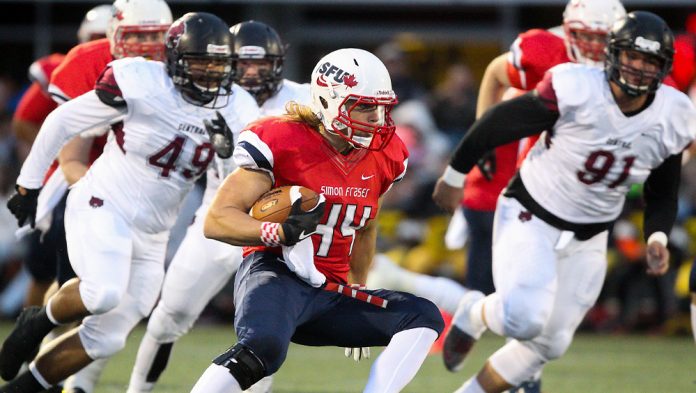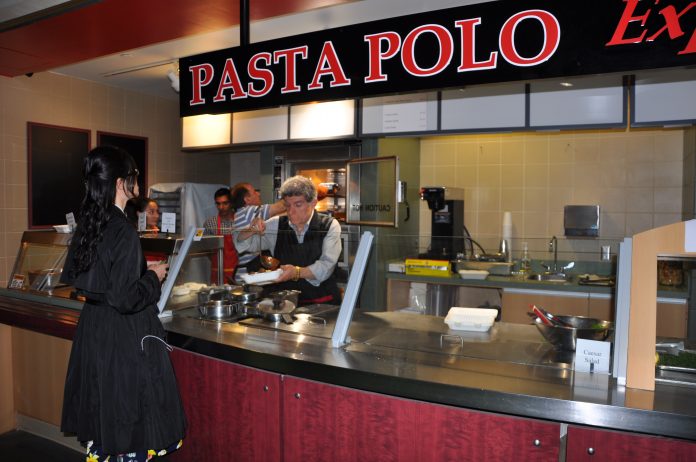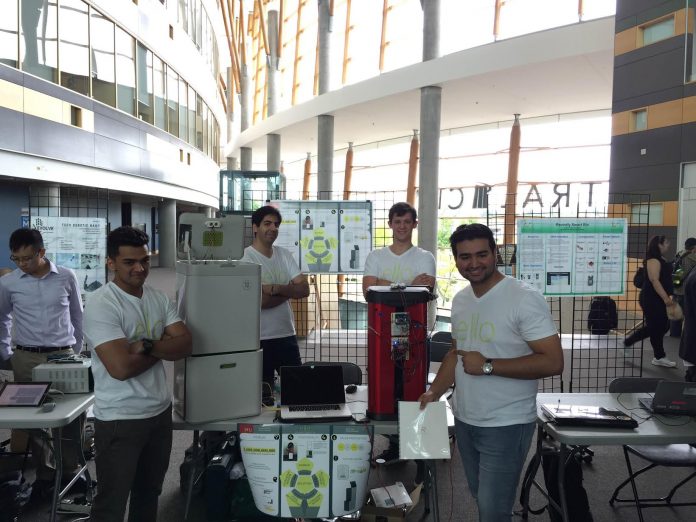
On today’s episode, we ask SFU students: What’s your favourite meal to make on a budget?
Special Thanks to Zach Siddiqui
On today’s episode, we ask SFU students: What’s your favourite meal to make on a budget?
Special Thanks to Zach Siddiqui
We ask some members of The Peak team about any tips they have for freshmen SFU students.
Special thanks to Nathan Ross, Maia Britt, Ashley Fraser, Matthew Fongman, Linda Shu, Phoebe Joy Lim, Zach Siddiqui, Janis McMath, and Alexa Tarrayo
Woohoo: Drills
Check out humanity’s least-boring innovations. They provide a valid reason to invite your attractive dentist to get all up in your mouth and fill your cavities, if you know what I mean. They help us build sturdy structures like underground bunkers for cults. They even make performing Neolithic trepanning rituals on Squad™ so easy when their defeated enemies’ salty ghosts possess them.
Dangerous? Obviously — wear goggles. If you do lose important facial features, the scars will tell one heck of a story.
Boohoo: Drills
My life’s already up in flames; don’t remind me that my surroundings could go the same way without warning. Fire drills leave me standing in winter chills that make me wish I’d been victimized by arson.
Earthquake drills were another horror. Hiding under your desk for 60 seconds eases academic monotony until you look up at the gifts your predecessors left. Or, worse – you don’t look up, and thereafter find those presents trapped in your hair.
There’s a reason I don’t chew.
Recently, NFL football player Colin Kaepernick of the San Francisco 49ers made headlines when he chose to sit during the national anthem rather than stand.
Kaepernick is not the first professional athlete to protest a patriotic song, and he probably won’t be the last. In the ‘90s, NBA player Mahmoud Abdul-Rauf (who played for the Vancouver Grizzlies) protested the anthem for many of the same reasons, and in return, the NBA suspended him for one game.
Kaepernick, so far, has received no suspension or other punishment because of his actions.
Specifically, he chose to sit during “The Star-Spangled Banner” to draw attention to the Black Lives Matter movement, and in doing so, has undermined the credibility of the initiative. When the media gets a hold of a story where an athlete is, arguably, disrespecting his country by refusing to stand for the anthem, they don’t concentrate on the reasons behind his actions. They focus on the action itself; the intent, no matter how good, gets left in the dark.
He is drawing attention away from the actual problem — racism — because everyone is too caught up in wondering if his stats allow him the luxury of being pardoned by the public for his offence. They’re not discussing the deaths of black people at the police’s hands, or of young black men like Trayvon Martin who were killed by white citizens.
Kaepernick is biracial, so I’m sure his heart was in the right place. He’s also been outspoken on his Twitter about Black Lives Matter. It really seems like he wants to help raise awareness, get people involved, and get them in the know if they were ignorant before. But this is not the way to do it.
A country that only weeks ago slandered Gabby Douglas across the Internet for not placing her hand over her heart during the national anthem is not a country that will take Kaepernick’s actions lightly. His actions will instead be discussed with words like “disrespectful,” “ungrateful,” and “unpatriotic.” His actions will be reduced to a sound bite of “what not to do.” No conversations and no change will come about because of his act of protest.
I wish I could say that Kaepernick’s actions sparked a revolution in how the world sees and deals with the imbalance of power, authority, and opportunity across racial and other constructed lines in the sand. I wish I could tell you that the various media outlets discussing the situation weren’t complicit, knowingly or otherwise, in the stifling of voices searching for a better world.
You may be wondering why this matters to us here in Canada, here at SFU. We’re not American. We say sorry too much. You could be forgiven for thinking we don’t have a race problem. But you’d be wrong.
Just because it isn’t as apparent here at home as it is in the US doesn’t mean it doesn’t exist. It just means we’re better at denying it. These issues of demographic superiority and a status quo media are a global problem.
We may forget about Kaepernick sitting out “The Star-Spangled Banner,” but the issue isn’t going to just go away if we ignore it. Systemic oppression affects everybody and as such, it is everybody’s responsibility to try and correct it.
It’s not often that I find myself defending corporations and their capitalist ploys, but when I read Brian Hickey’s article in the PhillyVoice titled “Enough with the pumpkin-spice craze, sheeple,” — yes, Hickey really used the term sheeple — I felt defensive.
Bashing Starbucks’ widely-known autumn beverage, the pumpkin spice latte, is nothing new. Hickey certainly isn’t the only one to complain about the annual “pumpkinspiceification,” as he puts it, of everyone’s favourite products, from beer to hummus to waffles. However, Hickey is certainly among the more aggressive of the crowd.
Referring to the deluge of pumpkin-themed items as a “cultural abomination” and its consumers as “culinary sheeple,” Hickey argues that the popularity of the pumpkin is evidence that “people will drop hundreds of millions of dollars if an effective marketing campaign/conspiracy hits its sweet spot.”
Um, obviously.
This isn’t new information. This is quite literally how capitalism and marketing work. And of all the capitalist schemes in the world, why is the romanticization of pumpkin so abominable? In 2011, Dr. Pepper launched an ad campaign with the catchphrase “it’s not for women.”
At least Starbucks isn’t using misogyny to sell its products. In fact, its marketing is pretty innocent. The romanticization of seasonal changes should hardly be considered problematic. For those of us who prefer the sunshine of the season prior, every little bit of romanticization helps.
If I want to cope with the unhappier changes — gloomy weather, spending my weekends typing instead of surfing — by buying myself a relatively inexpensive pumpkin-flavoured latte, I’ll fucking do it.
Hickey calls on Len Gigante, a man who literally tried to launch a national anti-pumpkin day five years ago, for backup. Gigante is quoted saying, “It’s just out of hand. [. . .] We don’t eat Christmas trees.”
That’s true, we certainly don’t eat Christmas trees. And most people don’t eat raw pumpkin, either. But if this is an argument that Starbucks frequenters don’t match their winter craze to their autumnal one, Gigante clearly must have forgotten about the peppermint, gingerbread, and eggnog-flavoured lattes that roll into town around mid-November.
Starbucks is an international corporation with no shortage of problems. With paper cups that can’t be recycled, its environmental footprint is bigger than the pumpkin craze itself, and Starbucks CEO Howard Schultz is infamous for neglecting to follow through on promises made by the company.
These empty promises include providing employees with their schedules a minimum of 10 days ahead of time, and a guarantee of no “clopening” shifts — shifts where the scheduled closer completes their shift only to be the first employee to arrive the next day. Depending on the operational hours of the location, this can mean having as little as five hours’ time between shifts.
If you’re going to get angry about capitalism, I’ll join you in a heartbeat. If you want to boycott Starbucks in favour of local coffee shops (who will also likely feature pumpkin-flavoured products), I’ll buy your drink. But if your inspiration is contempt for a seasonal vegetable, I’ll pass.
In fact, I’ll probably go buy a PSL out of spite.
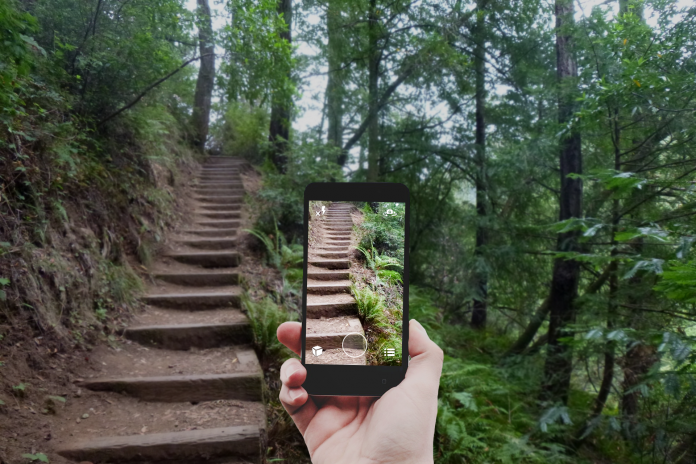
These past few weeks, we’ve had a fleeting, visceral taste of a dystopia ruled by simulacra, blurred reality, and adorable mascot characters. Software development company Niantic captivated hearts worldwide with the release of Pokémon Go: an augmented reality (AR) game that has helped us all relive our childhood fantasies.
Collecting the original Kanto fauna, tackling gyms in pursuit of being the very best — it’s been a journey that even the most detached from the Pokémon craze have had difficulty withdrawing from. It’s sparked a series of unlikely events — players discovering partners’ infidelity, capturing Pidgeys while spouses give birth, stumbling upon corpses — that has raised a veritable uproar online.
Yet the media’s fixation appears to be tapering off, and like most cultural phenomena, Go is diving back into the dark void beyond public scrutiny. As surreal tweets and memes about the game shrink from a waterfall to a trickle, the game appears to have proven itself little more than a one-hit wonder.
But those who declare this gimmick one-hit KO’d are forgetting something important: the fact that it’s dropping out of immediate sight doesn’t preclude it from being an insanely massive success as a game. It’s far from dead; if anything, it’s the biggest cash Miltank in recent memory.
Take a mean look at these numbers. As of July 12, the American player base alone was spending approximately $1.6 million per day on in-app purchases. Niantic’s net worth was roughly $3.65 billion by July 25. That’s not even getting into the billions the company’s going to be raking in with ad revenue.
If, like me, you a) carry an Apple product everywhere, and b) need a tl;dr because flooding numerals irritate you, check the App Store. Go may be seeing a decline in players, but that’s common sense considering its initial, impossible popularity. As I write, it’s in the #1 spot for Top Grossing and #11 for most popular Free apps.
Meanwhile, the nature, age, and sheer size of the Pokémon franchise make for so many possibilities for expanding this game that it will (almost literally) never lack avenues to be reinvented. Just look at the various handheld games for potential mechanics: battling outside gyms, trading with others, raising friendship, Contests, a pseudo-story mode. . . In other words, Niantic can take this game in pretty much any direction it pleases. That flexibility will charm an enormous player base no matter what happens — whether they be loud or quiet about selling their Pokémon friends to Professor Willow for performance-enhancing drugs.
Even now, people of all walks of life find something to enjoy about Pokémon Go; imagine how wide a net it’ll cast months or years from now. It’s decently accessible, and the interface is, if simplistic, bizarrely addicting. Best of all, what better open world could you ask for than the actual open world?
As the first AR smartphone game to attract international attention, this coveted app might really have the potential to lead us into a totally novel age of gaming. Discussion about it might be stalled for now, but it won’t be forgotten.
With the rest of the franchise moving forward, it’s only logical to assume that Pokémon Go will continue to do so as well. Don’t be quick to dismiss it as fading.
Being white, straight, cisgender, male, and able-bodied in this country is like winning the lottery.
You didn’t do anything to deserve your prize, but you still get one. In one case, it’s a large sum of money, while in the other, it’s a set of privileges that extend to preferential treatment by police and within the legal system, higher likelihood of employment and educational opportunities, and freedom from discriminatory policies on accessibility, reproductive rights, voting — even on using the washroom.
While the concept of white privilege has become more mainstream following traction made by movements like Black Lives Matter and Idle No More, the fight for equality has existed for centuries. That it’s taken this long for many people to finally pay attention is disheartening.
However, it’s also an opportunity for those who’ve enjoyed their privilege unchecked to reimagine their role in society, and how that role is informed by systems that make life easier for them at the expense of everyone else.
There are basically two responses to this: you can shove your fingers in your ears and deny that this privilege exists, or you can commit yourself to making your space in society one that supports the rights of women and non-binary folks, non-white people, those with disabilities, those below the poverty line, and those who don’t identify as straight.
The former option explains the popularity of figures like Donald Trump and UKIP leader Nigel Farage: plenty of people like to believe that they’ve earned their place in society, no matter how much they’ve been helped by racist, sexist, and generally awful systems. They complain that our society has become “too politically correct,” and react to the fight for equality with fear and hatred.
On the other hand, those who decide to commit themselves to being allies are faced with a question: where do I start?
As a white, male, able-bodied, and mostly straight person, this is a question I ask myself constantly. How do I take my status in society — no matter how unearned it is — and use it to support those who don’t have the privilege I do? There’s no easy answer, and you’re unlikely to find any consensus among marginalized groups — some even deny that those outside the group can ever really call themselves supporters.
For what it’s worth, I try to be conscious of not overshadowing others’ voices. As Rebecca Solnit writes in her incredible essay “Men Explain Things to Me,” placing too much value on male voices in society “keeps women from speaking up and from being heard when they dare; [and] crushes young women into silence by indicating, the way harassment on the street does, that this is not their world.”
Just look at news sources that hire white men to review Lemonade, or directors who cast Jared Leto to play a trans woman in Dallas Buyers Club. Even when it comes to speaking to the experiences of oppressed peoples, white men still get preferential treatment.
For me, allyship is a process of becoming that is never really finished. It’s about being critical of oneself and unlearning years of societal conditioning. Sometimes I catch myself using racist language without meaning to, or making unfair assumptions based on gender or sexuality. I’m not perfect; the best I can do is to correct this behaviour when I notice it, and try to be better. You never really stop learning.
With that in mind, I’m going to shut up now, in hopes that others will have room to speak.
1. Be prepared. No one wants to be sitting next to the person who needs a pen or piece of paper, and same goes for sex. The first time it could be a flirty excuse to get their number, but if a person cannot be trusted to bring basic supplies, how can they be trusted to bring it to study some anatomy?
2. Keep a tidy dorm room to subdue your parents’ suspicions. You couldn’t answer their call last night because you were studying in the library, obviously. You definitely did not manage to cram three people into your twin bed — nope.
(Additionally, try to find out what Skyping angles hide your door best so you can order that over-the-door sex swing you found while browsing Amazon trying to make the most of your free six months of Amazon Prime two-day shipping. )
3. Use a planner, or maybe try bullet journals! They’re fast and efficient, just like your ex in bed. Plus, you can find some Insta inspo with hashtags like #bujo and #bj, to name a few! Not only will you know when your paper is due, you’ll also know when you’re due to get laid.
4. Get tested — and not only by your professors. When you know you’re clear and good to go, it’s much more fun to be a hoe!
5. Scout out all the best sex spots on campus since Shrum isn’t the only place you can find chemistry! There’s the infamous avocado, but don’t overlook other opportunities, like the old single-stall washrooms — they’re not just for private pooping!
6. Buy bananas. Not only are those babies good for you and your brain, but they’re a subtle way to demonstrate your skills to potential partners.
7. Take the stairs instead of the elevator to the sixth floor of the AQ. Climbing the stairs will leave you with a perfect rosy flush for when you talk to your hot TA, and it basically counts as cardio. You’re building up your stamina, one trip to your TA’s office at a time.
8. Grab some rubbers! The doctor’s office is stocked full of them, and you’ll be there anyway since it’s flu season. And if you’re one of the lucky few who never seems to get sick, you could always fake a cough to get some free condoms.
In the end, if you decide that being a hoe just isn’t for you or just can’t get it up, at least you can work on getting your GPA up. You do you, boo.
You’ve seen and appreciated the dramatic and astonishing character of Sundance Film Festival movies, and also have loved the adorable and uplifting nature of Studio Ghibli films, but have you ever imagined the two intermingled? You haven’t? Well, The Peak knows what you want and we’ve got it for you babe — don’t even worry.
Kiki’s Delivery Service (1989)
Arthouse/Comedy
Recent art-school dropout Kiki finds herself completely out of answers and hopelessly directionless. During her struggle to find purpose once again, Kiki spends her nights stoned out of her mind talking to her cat. One evening while having a particularly stimulating conversation with Jiji, she realizes that drugs are, in fact, the answer to all her problems when she decides to start up a weed delivery service of her own. As she pursues this new and exciting career, Kiki learns about herself and the complex life as a vendor of the black market. (120 mins.)
My Neighbour Totoro (1988)
Crime/Action
When sisters Mei and Satsuki accidently find out their beloved long-time neighbour is a serial killer and corrupt cop while visiting him for dinner one night, they work undercover together in hopes of collecting enough incriminating evidence to convict him for his gruesome sins. The sisters devote their nights to playing detective and quickly become obsessed with solving a crime which seems to never stop growing and evolving. They unfold a conspiracy they were never prepared for, risking it all to expose the truth. (160 mins.)
Princess Mononoke (1997)
Drama/Thriller
San is a shy insomniac living a timid and tired life, until one day she meets a familiar-looking stranger who insists that she looks exactly like someone who goes by the alias “Princess Mononoke.” Her silent life begins to rapidly spiral out of control when she learns that she has multiple personality disorder, and a second personality who is a wealthy and reputable escort. San’s fervent struggle to maintain her identity and sanity begins once she realizes that her alter-ego is trying to take over. (200 mins.)
The Simon Fraser Student Society announced in a recent press release that they have decided not to proceed with the Fall 2016 semester after getting an estimate back on how much money they could save by cancelling the term.
They still plan on collecting money from students, but none of the services they offer will be available. SFU administration has announced their support for this project, saying they will be cancelling classes and not paying educators, but tuition will still be collected “for reasons.”
The press release, sent out via Twitter at 3 a.m. Sunday morning, cited that although the SFSS still supports the idea of higher education taking place at SFU this semester, it will take a backseat to cash money.
“Obviously, we would love to be able to offer students the complete post-secondary experience, but that just isn’t feasible with how badly we’ve managed our budget over the last few years,” the press release said. “Students should feel better knowing that their compliance with this could potentially help future students, but that’s not something we feel comfortable guaranteeing at this time.”
As pointed out in the press release, no one actually has to be enrolled in classes at SFU in order to be considered a student. This is a loophole known as “Deepak’s Law,” named in honour of Deepak Sharma, who didn’t enroll in classes upon being elected student president.
Suggestions have been made by the SFSS that the money should not go only towards balancing the books, but could be used for buying new furniture for the SFSS offices, or potentially even hiring enough staff to keep the Highland Pub open.
Students are livid by the lack of consultation with them about this, accusing the SFSS of a lack of transparency and accountability. The SFSS didn’t respond to this, because why would they?
Some students have even taken this one step further by suggesting they unionize and have some students represent the best interests of students to prevent situations like this from ever taking place. One student posted on Twitter suggesting “we should have some kind of student society, so that we have a voice at the table which makes all the decisions for us.”
At press time, it seems as though there should be an election for the president of this proposed student society, which could take place within the next couple of weeks at SFU.