Home Blog Page 780

Indigenous groups concerned about LNG pipeline project

0

By: Manon Busseron

The federal cabinet has approved an $11.4 billion pipeline project that would transport natural gas over 900 km from northern British Columbia to the Prince Rupert area. The Pacific Northwest LNG project is backed by the giant Malaysian company Petronas.

Environmentalists and First Nations have expressed their concern regarding the environmental damages that could be caused by the pipeline. Indeed, the Canadian Environmental Assessment Agency concluded that the project would provoke a significant increase in greenhouse gas emissions and contribute to climate change. The terminal could also threaten wildlife, especially harbour porpoises and the salmon in the Skeena river estuary.

Pacific NorthWest LNG responded that the pipeline and terminal would reduce greenhouse emissions from Asian coal-fired plants. Moreover, the project’s approval has been submitted to an array of 190 conditions meant to reduce its environmental consequences, including a cap on greenhouse gas emissions that would cut them to “4.3 millions tonnes per year, 900,000 tonnes less than what had initially been proposed by the proponent”, according to The Globe and Mail.

Environmentalists argue that despite this measure, the project is inconsistent with Canada’s climate commitments.

First Nations and experts warn that the terminal would likely harm the salmon population. Jonathan Moore, associate professor at Simon Fraser University’s School of Resource and Environmental Management and department of biological sciences, and his graduate students conducted collaborative research with First Nations’ fisheries programs.

In an email to The Peak, Moore described their findings. They found out that the area affected by the terminal “is particularly important to young salmon. [. . .] We also know from previous research that salmon populations generally have much lower survival when estuaries have more industrial development. Thus, we know that salmon are sensitive to industrial development in estuaries and we know that Pacific NorthWest LNG is proposed for a particularly risky location”.

Many aboriginal leaders have said that they were not consulted and that their concerns have been ignored by the company, although the latter said that it has consulted with five Tsimshian First Nations since 2012 regarding the project. Tensions have emerged among First Nations since some have signed agreements with the company to benefit from the pipeline, whereas others, such as the Gitanyow, are still opposed to the project, and claim that they have not been consulted by the BC government.

Other First Nations have expressed concern about the salmon population, on which they have relied “heavily for thousands of years,” stated Moore, based on previous archeological study. In addition to harming the species, First Nations claim that the project also ignores their fishing rights on their traditional lands.

Given the impasse, First Nations have launched four challenges so far before the Federal Court, accusing the government of ignoring their demands by approving the project without their agreement.

According to some aboriginal leaders, this case illustrates the damaged relations between First Nations and the Canadian government. In an article from Desmog Canada, Glen Williams, Chief and negotiator for the Gitanyow, declared that “Justin Trudeau promised a new relationship with Indigenous communities.

“Instead, he added insult to injury by ignoring us, and giving the green light to a project that will destroy our way of life.”

SFU officially becomes an engaged university

0

Pop the champagne bottles and prepare for festivities! On January 1, SFU President Andrew Petter got down on one knee and asked Simon Fraser University to be joined with him in holy matrimony, forever and always. Their engagement is a testament to the transcendence of love beyond classifications of age, gender, and types of things.

The big day is scheduled for September 1, 2017, to mark their seven-year anniversary of being together. Many can attest that Petter is the one man capable of making the once wild and radical campus want to settle down.

Naysayers’ complaints regarding the impending nuptials range from “SFU is over 50 years old — isn’t it too late to get hitched?” to “Andrew Petter already has a wife!” Regardless, the bond between these two was set in stone when SFU said “Yes!” on the first day of the new year.

Frankly, the signs that this couple is meant to be are pretty evident. Just a few months ago, when Petter was naught but a gentleman caller to the non-gender binary institution, he regularly used many courting strategies to earn SFU’s favour.

His most overt approach was to coin SFU’s pithy catchphrase as “Canada’s engaged university.” Way to be subtle, casanova. He didn’t hold back during speeches or press releases either, using various conjugations of “engage” as frequently as possible, effectively employing the wink wink, nudge nudge approach in winning over his beloved.

Additionally, he’s regularly spoiled SFU with lavish gifts, like a Frank Lloyd Wright fountain finished just in time for the university’s most recent birthday. One of his grandest gestures of affection was selling his soul to Goldcorp to support SFU’s artistic dreams — that act of selfless sacrifice of moral value for his true love is what makes this pair everyone’s OTP.

Now, you may be wondering about the giant kilt-laden dog in the room — that is, Andrew Petter’s wife, Maureen Maloney. He could use a little less-een, if you ask me. It’s time he was unshackled from that ol’ ball and chain.

Between providing a more-than-steady income, limitless resource facilities, and three beautifully furnished locations, SFU is a tough love rival to beat. At this point, with the Petter/Fraser union now written in the stars, Maloney will have to cut her losses and let her husband pursue his true soulmate.

SFU admins are now on the hunt for the finest interior designers to ready the blushing educational institution for the day of matrimony. The school will be decked out in virginal white to represent its purity — though we all probably know about that wanton trist SFU had with Gordon Shrum back in its youth. Additionally, a constellation made especially for the couple will be added to the Trottier Observatory display.

So expect an invitation soon, SFU community. September 1 is sure to be a day of celebration with students, faculty, and alumni watching as man and tertiary academic establishment tie the knot.


McDonald’s lovin’ nuts is a big mistake

0

When I was four years old, I bit into half of a cashew and had to be immediately rushed to the hospital. For those like me with anaphylactic allergies, coming into contact with an allergen is a serious matter. In about 20 minutes, I can go into complete cardiac arrest without proper help.

McDonald’s is one of those places that I’ve always gone to because it’s there, it’s easy, and it’s safe. The fact that I, among millions of others, now literally risk my life by eating there is quite a turn off.

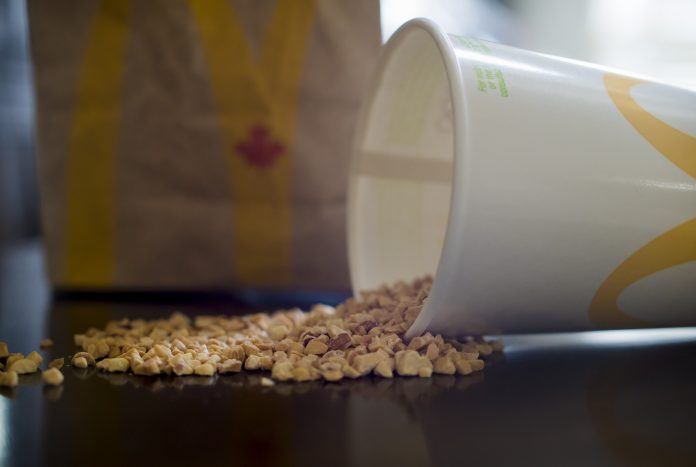
McDonald’s has gone nuts. By that, I mean they’ve gone the way that so many restaurants have, by becoming an area contaminated by allergens. Because of new items that require them to stock non-packaged nuts namely, the almonds for the Skor McFlurry the rest of the menu is now under a warning for potential cross-contamination with allergens.

McDonald’s Canada’s decision to bring unsealed nuts into a once-safe environment will affect millions of people negatively, including myself. In an increasingly accepting society, this policy seems to be moving backward, closing off an entire demographic from the consumer base. Anyone who knows a person with severe allergies, they will understand that this is a big deal for those who have to constantly monitor their food.

For those who may not be able to understand the seriousness of the situation, picture this: you go on a road trip with some friends, and as you are nearing exhaustion you decide to get food. McDonald’s is, of course, the easy option which litters every city.  You go in and order a Big Mac and some fries and sit down to eat your glorious meal.

After taking only one bite, you start to feel as if something is stuck in your throat and when you take a drink or cough, it doesn’t stop. Kids from the PlayPlace are screaming, and that’s when you notice it: there are little pieces of Skor bar accidentally in your burger. Mayhem ensues.

This may seem like a far-fetched, dramatic example, but for those who have allergies, it can be a very real nightmare. McDonald’s used to be a safe haven of a fast-food restaurant. Shoving the allergy community out the doors so a few people can enjoy a Skor McFlurry and feel a little more fancy is a poor decision from a business perspective.

Millions of people in North America alone have a nut allergy; the Skor McFlurry is just one item out of of many, and one that is not likely to bring in a comparable number of new customers on its own. In other words, the number of people McDonald’s attracts with this is far less than the number they’re pushing away.

McDonald’s has placed a sign in their stores that clearly outlines the risk of nut contact to their customers. To those with severe allergies like myself, this kind of sign is a frequently-seen ‘NOT WANTED’ sign pointed directly at me. Perhaps that’s the idea – of course I’m glad to have the warning rather than the onset of allergy symptoms – but all the same, it feels awful to be essentially banished from somewhere which for so long has been one of few safe places.

This new policy is disappointing and frustrating. My immune system fights against nuts, and McDonald’s new, “inclusive” policy means I’ll have to stand at odds with the corporation too, as will all of the people who’ve now been excluded.

Album Reviews

0

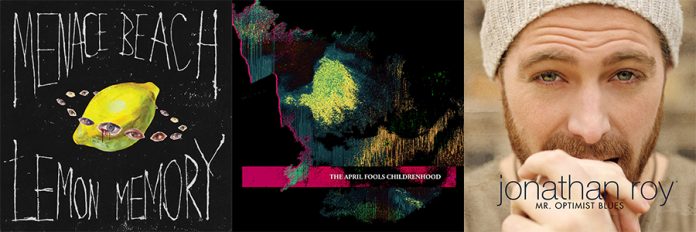
Lemon Memory – Menace Beach

From the opening track, it instantly becomes clear where Menace Beach is from — confirmed by a quick Google search — they’re UK-based. Leeds, if we really want to get picky. Even though this is their second full length album, it sounds more like a debut album assembled from demos that were recorded on the cheapest cassettes possible.

I’ve been told numerous times to never describe a sound as “crunchy,” but I’ve also been told that rules are meant to be broken for the right reasons. So I’m going to come out and say it: this album is crunchy. Not in a satisfying fresh potato chip way, it’s more the crunch of a potato chip that has been left out for just a little too long. A stale crunch, if you will.

And stale is the perfect way to describe this album. It sounds like it came from the mid-00s British Invasion, but not in a good way. I was hoping for the album to get better, but it never did. Instead, as I was listening to it I felt the lead in some angsty indie film that only speaks to 16 year-olds.

Low Colour – The April Fools Childrenhood

Normally I don’t get stumped with what to say in an album review. Usually there are multiple things I can say about an album — good or bad. But with Low Colour I have just one: YES.

Yes, there are strong vocals. Yes, the lyrics actually make sense. Yes, there is a progression of tracks. Yes, I did get goosebumps.

I will take a moment to realize that while the sad indie boy vibe might not work for everyone, it works for me. David Cowling — the heart soul, and lone member of The April Fools Childrenhood — pairs his strong vocal abilities with sparse backing tracks, making for an album that is at times reminiscent of a stripped down Andy Shauf.

This might only be a four-song EP with an intro, but these four songs have been the highlight of my week. I just wish there were more, because I’m hooked.

Mr. Optimist Blues Jonathan Roy

This album is poppy as hell, but in the best possible way. It’s not electronic pop and, bless him, Jonathan Roy’s vocals actually carry the whole thing. He also draws from the more successful aspects of recent pop music, only sparingly, as a way to highlight the feeling of a song.

It’s more optimistic than blues, but with a title like Mr. Optimist Blues I wasn’t expecting there to be much of a bluesy sound. Although, if he wanted to go bluesy it’s well within his vocal range to do so. It’s also probably hard to be blue when your dad is legendary goalie Patrick Roy.

This album is closest in sound and style to Coleman Hell, and that’s not a bad thing. The album as a whole gives a glimpse as to where pop could have gone (with a stand out cover of “New Shoes”) and where it should go. It also doesn’t hurt that his biggest musical mentor is none other than “Sunglasses at Night” singer Corey Hart.

I also listened to the whole album, which is a pretty big deal.

The flaws in the sexual misconduct draft policy

1

I don’t think anyone can argue that SFU forming a Sexual Violence and Misconduct Prevention, Education, and Support Policy is a bad thing. However, the draft that recently went public undoubtedly needs work. While the town hall consultations have raised a lot more questions than answers, the solutions are a lot simpler than you might think (or at least some of them are).

Below are a list of complaints raised by myself or others, and ideas of how to remedy them.

A lack of specific language:

As was brought up multiple times during the town hall, the policy lacks some specific language. Some found problems with the fact that the policy doesn’t outright say any and all sexual misconduct is wrong, and that it doesn’t completely list out what constitutes banned behaviour.

The problem with vague language in policy is that it leaves a lot of wiggle room. While that freedom of interpretation may seem like a good thing, it’s quite the opposite when a survivor comes forward and the committee tells them that what they experienced was not sexual misconduct. The final draft would be much better with firmer definitions.

“Mandates education but does not make education mandatory”:

A town hall attendee tweeted this quote from Dr. Jon Driver, vice-president (VP) academic and member of the policy working group. How can a policy preach education on sexual misconduct without teaching students (who, for one reason or another, don’t always know what consent is) what that means?

The draft policy says there will be “education for members of the University Community.” But with this training not appearing to be at all compulsory, the people that actually need it probably won’t go. Just how does SFU plan on making sure students learn?

Make education mandatory, and not just in residence. We teach every student what plagiarism is; we should probably teach them what crimes are, too.

A timeline for the central resource office would be nice:

I love the idea of a central resource office, but I’d also love some idea of when the office will be up and running, how it will be funded, etc. The students of Sexual Violence Prevention and Support Centre (SVPSC), who’ve worked on a similar project for the past year and a half, seem more than willing to help. Yet the tone of tweets from figures like Dr. Tim Rahilly (VP of students), saying that there have been “limited meetings” about who will spearhead creating the resource office, suggest that SFU administration still isn’t sure what to do.

Announcing this project before putting a plan in place is unacceptable. SFU needs a better idea of how the central resource office will be run before it starts worrying about a better name.

How will the school respond?

The sexual violence policy was written specifically for SFU, so why have both the policy and the people presenting it been so vague about what role the university will play when misconduct occurs? What is the university’s stance when their students commit sexual misconduct off-campus? How effective is this policy really going to be?

Honestly, these questions are a bit sticky. Not because they’re hard to answer (be more specific, hold the university accountable, etc.). It’s more because the university keeps covering up assaults, allegedly going as far as to ask the families of survivors to “keep quiet.


Of course, the policy should include more detail on how administration will respond in the future. And If SFU starts working towards ending rape culture — with education, hint hint — they won’t have to worry so much about how incidents will affect their public relations. The policy needs to tell us, in more certain and complete terms, about the measures SFU will be obligated to take in countering sexual violence; otherwise, there’s just too much room for things to go wrong.

Taxis need to stop suing and stop sucking

0

If there’s one big threat to a status quo, it’s the rise of competition that you can’t just sweep under the rug. When people see the holes in the way things are being run, it’s pretty much a given that somebody’s going to come out of the woodwork to try and take you down. Prime example: the mediocrity of taxicabs, targeted by the ascension of ride-sharing companies like Uber and Lyft.

This, understandably, is a threatening concept. When Uber started muscling in on taxicab territory, it was just a matter of time before the legal actions started going off.

A few months ago, the taxicab industry launched a $215 million lawsuit against Ottawa for allegedly not doing enough to defend their livelihoods. Similar cases have been cropping up across North America for the past couple of years in places like New York. Uber themselves faced upwards of 50 lawsuits in 2015 alone.

Don’t get me wrong; in a lot of respects, the way Uber does things is just a little bit shady. For instance, the whole dispute over just what Uber drivers are considered to be (Employees? Independent contractors? Random citizens linked up to give each other rides by a social media app?) has raised questions about how things like tax laws and labour laws should be applied to them and their company.

But the ethics behind how Uber runs their operation are a separate conversation. The problem I have is this: competitors are cropping up, and rather than this being an impetus for the taxicab industry to improve, it’s been a source of three-way conflict eating up time and money better spent elsewhere.

Taxis aren’t in danger because of Uber. They’re in danger because they’re stuck in a rut of conducting themselves the same way as they always have, partially through their own lack of change and partially because their municipal governments aren’t giving them the freedom to compete properly.

People like Uber for a lot of reasons: it’s cheaper, it tracks the car called to you, it’s often perceived to be faster, etc. If cities that enforce base charges upon taxis gave more freedom for the companies to decide their own rates and make other changes to compete with Uber drivers, we’d have a healthier system of different drivers competing and forcing each other to become better.

At the same time, there are plenty of simple ways for taxis to stay ahead of Uber that aren’t generally restricted by city laws — for instance, investigating the claims that Uber provides quicker pickup times and faster transport, establishing better communication between drivers and those getting picked up, and developing a stronger online presence.

I understand the frustrations faced by taxis right now, but firing off lawsuits like this isn’t the best. Not only does the deluge of legal actions make it harder and harder to take any one issue with Uber seriously, but it comes before any real concentrated efforts to improve. Beyond all that, people just aren’t likely to sympathize with taxis when they’re flat-out happier with Uber.

It doesn’t matter how many times taxis win their suits. Until they do their jobs better, they’ll always be fighting uphill battles. Both city governments and taxi companies need to take companies like Uber and Lyft as incentives to work together and be better.

Liberal Crime Squad is the most topical game of 2017

0
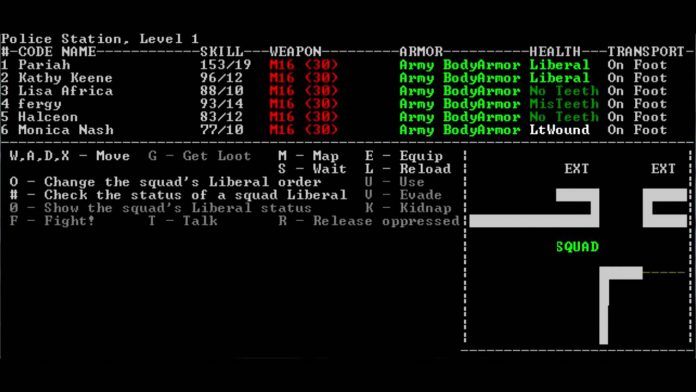
Don't let the lack of graphics fool you, Liberal Crime Squad is one of the most immersive games of what if surrounding politics.

By: Vincent Justin Mitra, Staff Writer

Republicans have gained majority control of the House of Representatives, Senate, Supreme Court, and the Oval Office with commentators describing it as the beginning of a new Conservative era.

This is the world of Liberal Crime Squad, the 2002 freeware game by Tarn Adams. The game positions you as the founder and leader of a group concerned with turning the United States away from the oppressive Conservative ideals that have swept the nation, and instead towards more Liberal government policies.

The game takes place in a US that caricatures both Republican and Democratic parties in the same tone as political cartoons. By doing so, it softens the elements of political horror and brings a bit of comedy and absurdity to an otherwise serious topic. While the game positions Liberals as the heroes and Conservatives as the villains, it also depicts both sides as strawmen extremists. One of the game’s Liberal goals, for example, is granting animals the right to marry; while Conservative goals include making flag burning legally equivalent to murder, and using death squads to suppress unacceptable speech.

The largest barrier to the game is likely to be the lack of graphics and the rather steep learning curve, two things it shares with Adams’ other creation, Dwarf Fortress (Reviewed for The Peak previously on June 6, 2016). Much of the game takes place in simple menus, and though a good portion does also involve moving your squad around a number of game maps, even these are depicted plainly and with only an occasional dash of colour.

While the game positions Liberals as heroes, it does allow the player to engage in violent, criminal, and hypocritical behaviour. For example, players can match the Conservative forces shot for shot, gunning down their enemies with the very types of guns they wish to ban. Alternatively, players can operate completely non-violently, without a drop of blood spilled as they passionately play guitars until their enemies break down in tears and lower their weapons.

Other activities your squads can engage in range from playing street music and selling pot brownies, to hacking the CIA or causing a nuclear meltdown. Nearly all of your actions will have a positive or negative effect on public opinion (freeing sweatshop workers will draw attention to harsh labour laws, for example) which will in turn affect policy decisions as well as the political leanings of elected officials.

Changes to the law will also affect gameplay, such as tighter gun regulation making it more difficult to buy guns, and the current stance on police regulation having an impact on whether your members survive arrest.

The game carries a disclaimer that its scope is “narrower than that of real life,” and underscores that it is meant as entertainment. Though Adams stopped working on the game in 2004, a dedicated fan community continues to develop and add features to the game.

With such an extreme election having just taken place in the United States, many people are fearful for their lives, and the division between the political left and right has become much more apparent. For people who can overcome the graphics and learning curve, this game will perhaps allow for a sort of escape, as well as an outlet where they can cause drastic political change on a simulated American hellscape.

Liberal Crime Squad is available for free at LCS.wikidot.com

Stuff we like and don’t like

0
(Elena Hsu / The Peak)

Stuff we don’t like — Not getting what you expected from a menu (especially ones with pictures)

It’s a pretty well known fact that your food isn’t going to look like the picture (I’m looking at you McDonald’s). But usually the picture shows all of the ingredients even the ones you can’t usually see like ketchup, mustard, and more than one pickle.

When a menu trolls you though, that’s another thing entirely.

If you advertise something as mango salad and then you show a picture of actual mango salad, you know what I’m expecting? A freaking mango salad that looks (mostly) like the one in the picture. I’m not expecting sad iceberg lettuce, with sad carrots, anemic mango, and some wilted cilantro. I’m not looking for perfection, but I am looking for mango salad not salad with mango. Those are very different things.

So learn from my mistake and don’t order the mango salad from Thai Express, you’ll pay too much money for sadness. And I already pay too much money for sadness — I am, after all, a university student. – JW

Stuff we like — Novels by Christopher Moore

What happened to Jesus between the time he was a born and began his ministry? What if your child was capital D “Death?” What if the fool was the most important character in King Lear?

Christopher Moore attempts to answer all of these questions with a sense of sarcasm, wit, and satirical prowess. However, as you read his novels you realize that he isn’t mocking what he is writing about, instead — especially as is the case with Fool and Lamb: The Gospel According to Biff, Christ’s Childhood Pal — he’s probing the what ifs of subjects he’s taken the time to understand.

If you are looking to laugh your ass off at great novels, or just want to read a less Shakespearean version of Shakespeare, but still with all the great tragic rantings, pick up a novel by Christopher Moore. You won’t regret it, and I know, since I’ve read all of them. – JW

Stuff we don’t like — Paying extra for sub-par guac’

Usually when I have to pay extra for guac’ all I’m getting is over ripe avocado slices that have been in a bullet blender for five minutes. If that’s all I’m getting in return for my $3 then I might as well have brought an avocado and done it myself.

There are two major problems here: 1. You’re making me pay for something that should be included in the price and 2. You clearly have no idea how to make guac’.

Guac should be built into the price of appropriate items on the menu, plain and simple. In most cases, the only thing saving your mediocre nachos is the fresh taste of avocado.

What’s worse is that very few people actually make decent guac’.

Pull it together, guys. – TC

Stuff we like — Blanket scarfs

Even if the snow has melted, that winter air is as cold as Meryl Streep in The Devil Wears Prada. The only thing preventing me from becoming a grade-A popsicle is my extra large, super soft blanket scarf.

Why sacrifice style with a parka when you can wrap yourself up in a scarf and self-swaddle harder than anyone else. It can also double as a blanket if you need to take a power nap in between classes. – TC

Pill tracks body temperature while exercising

0

The introduction of technology into the world of fitness and exercise through devices such as the Apple Watch and the Fitbit, has revolutionized the way that we monitor our progress when we work out. But what if you could obtain that same information without having to wear anything on your wrist?

That is what SFU’s Laboratory for Exercise and Environmental Physiology are trying to find out. The lab, of which biomedical physiology and kinesiology professor Dr. Matthew White is the head professor, is currently testing the effects of this pill. Specifically, understanding the human physiological response in extreme temperatures and climates.

Having been an alpine ski racer for more than 20 years, White is no stranger to the extreme climates that some athletes have to face. With SFU taking part in this research, White says that it will allow us to monitor the core temperatures of athletes and gain a better understanding of how people perform in the outdoors. To date, the pill has been tested on many different types of athletes, from mountain ultra marathon runners to women exercising in cold conditions.

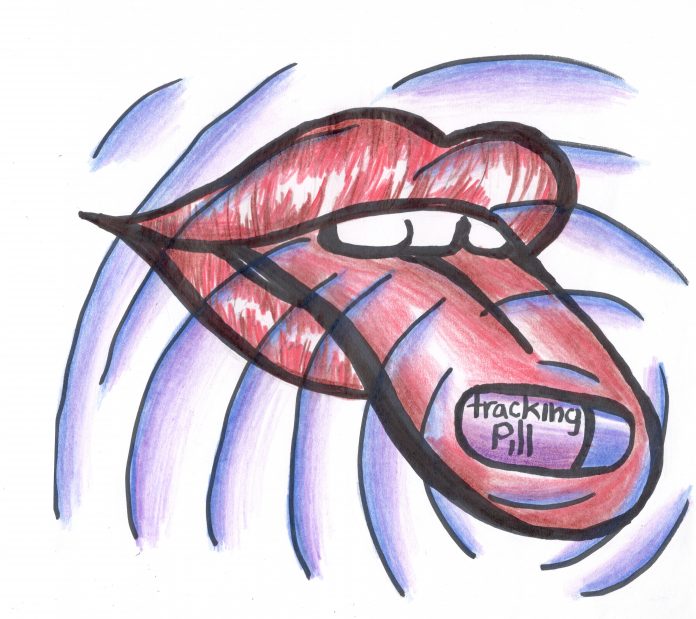
The pill, which was created by the French company BodyCap, is taken just like a normal medicine tablet, but enables researchers to learn much more about what goes on inside. After the pill is ingested by the user, it makes its way through the gastrointestinal tract. It is able to monitor the internal body temperature every 30 seconds, and then send this information wirelessly to the user’s monitor. This becomes particularly useful when a person’s temperature deviates away from normal range, where the pill will send an alert out.

Though it sounds quite futuristic, the reality is that the patent for such a pill actually existed before the company BodyCap (the patent holders for the e-Celsius pill) was created in 2011. Since then, a lot of research and development has gone into the pill to test its effectiveness.

The entire BodyCap monitoring system with the pill rounds out to cost €50, which is about $70 with today’s exchange (as of January 27, 2017). This comes as a shock and relief to many of those who are serious athletes and those that would like to break into the athletic world, considering that the newest Fitbit Charge 2 starts at $199.95, while some Apple watches start at $489.

Beyond price, White says that the core temperature pill and something like the Fitbit are entirely different things, though both are useful in their own right. “The core temperature pill is a relatively easy way to measure body temperature, whereas the Fitbit serves as an accelerometer,” White told The Peak. “This [accelerometer] function is likely to come afterwards.”

With technology like the e-Celsius pill becoming readily available for sale, its tracking abilities to monitor progress and body functions can definitely play a key role not only in athletes’ training, but also for future research into the state of the body in extreme conditions. This can help to create new preventative measures for these athletes to avoid any harm or injury.

Famous philosophers and their fetishes

0

Thales: Watersports

  • First in the western canon, first in the sack. Thales thought water was the only element. Show him how right he is.


Friedrich Nietzsche: Strangling

  • What doesn’t kill you makes you stronger, and the meaninglessness of the universe strangles us everyday anyways.


Immanuel Kant: Anal

  • After all, humans are always an end and not a means.


Ludwig Wittgenstein: Bugs

  • Is that a beetle in your box, or are you just happy to see me?


Michel Foucault: Flogging

  • Discipline and Punish your way into his heart. 


Jeremy Bentham: Voyeurism

  • He may not be watching you all the time, but you’ll learn to act as though he always is — and he’s probably rubbing one out, too. Call it the Panopti-cum.


Mary Wollstonecraft: Dom/sub

  • She loves it when women come out on top.


Socrates: Sensory deprivation

  • He knows that he knows nothing, especially what you’re going to do to him.


René Descartes: Wax play

  • His shape, texture, size, color, and smell may change, but he’ll always have extension, if you know what I mean.


Albert Camus: CBT (cock and ball torture)

  • All he wants to do is be crushed by Sisyphus’ boulder.


Karl Marx: Master/Slave

  • The proletariat may be a slave to the bourgeoisie, but Karl is only a slave to you.


Thomas Hobbes: Furries

  • We’re all animals in the state of nature, baby. Let’s make it nasty, brutish, and short.


Marquis de Sade: BDSM

  • Too easy.