Home Blog Page 67

Stop supporting the Greater Vancouver Zoo

0
A tiger sitting down in a caged zoo enclosure.
PHOTO: Molnár Tamás Photography / Pexels

By: Yulissa Huamani, SFU student

Content warning: mentions of animal abuse and death.

Zoos tend to incite imagery of children being excited to see animals. However, animals in zoos are held in enclosures that are often way too small and just can’t compare to their natural habitats. Children tend to find the experience thrilling, but as adults, we should realize that the conditions these animals live in are often depressing and unethical. While there are some sanctuaries that do genuine conservation and rehabilitation work, the way most zoos cage animals for viewing purposes is far from humane. Reports of animal abuse in zoos showcase how caging causes physical and mental damage, and we should keep this in mind the next time we’re invited on an outing to the local zoo. 

Being confined to zoo enclosures can lead to learned helplessness. This is a condition that affects animals’ brains due to the inability to escape when constantly exposed to stimuli that triggers their survival instincts. As a result, even if an animal is released after years of trauma, they’re unable to survive because they lost the ability to do so on their own. Living like that is not living. The damage that zoos cause outweighs any benefits for us as humans.

Profiting off someone’s pain is wrong, regardless of the species, and shouldn’t be accepted in our society. One controversial local zoo is the Greater Vancouver Zoo, where it’s been reported multiple times that animals are living in poor conditions. And their “diversity” of animals means animals that aren’t adapted to live under BC’s weather conditions are forced to do so. This October, Jenga the giraffe died at the age of eight. This is concerning due to the 25-year lifespan that giraffes usually have in the wild, and the population of giraffes in their natural habitat is decreasing. In the past, the Greater Vancouver Zoo faced animal cruelty charges for “inadequate housing arrangements” for a baby hippo they adopted. The hippo previously starred in a Telus commercial before being transferred to the zoo, where it was kept indoors with nothing but a “small shallow pool to wade in.” The charges were later dropped “when the zoo agreed to construct better hippo accommodation.” These are just a few of many examples of mistreatment or death of animals under the care of the Greater Vancouver Zoo. While the zoo did improve the housing conditions of certain animals, how much damage were they hoping to get away with before they started taking action?

Furnishing cages with branches or stumps can be compared to decorating a prison cell like a forest. It might look natural, but it’s not free. The Vancouver Humane Society reports that “enclosure space should be outfitted to meet species-specific needs.” However, the zoo has been known to not satisfy these conditions. Additionally, visitors’ reviews highlight that the animals seem to be stressed and that their overall experience was more sad than satisfactory. Seeing animals under poor conditions and showing signs of anxiety could also negatively impact children, since kids are likely to be curious about the conditions an animal is being held in. It is certainly known that zoos in general aren’t able to replicate the complexities of natural habitats, and this ends up psychologically and physically harming animals. What are we teaching children by showing them that this is OK?

It seems to be that the Greater Vancouver Zoo’s main focus is on entertainment instead of preserving species and advancing animal rights. Putting profit before animals’ well-being is unethical, and zoos that do so shouldn’t be considered a form of entertainment. These enclosures display living beings that aren’t able to escape, and are suffering as a result. This should make us reflect on what zoos suggest about our morals as a society. It is not a necessity to see an animal that is submitted to stress and frustration just for entertainment. 

Zoos are unnecessary, especially in the 21st century. There are other ethical options that allow children to learn about an animal if they are curious, such as virtual zoos. The sadness that animals experience in these spaces is evident, and there isn’t an educational purpose that justifies the suffering. Zoos should only exist as wildlife sanctuaries for rehabilitation purposes, and be held to strict standards. Animals should be released once they receive the proper treatment they need and are certified to be able to live in the wild. There have to be regulations that force zoos to do so. It’s understandable that some animals can’t be released due to domestication or severe injury. However, the purpose of zoos should be to help animals and protect species first and foremost. There is no reason why animals like giraffes and hippos should be living in BC rather than wildlife sanctuaries in their countries of origin.

Federal government announces ban on open net-pen salmon farms

0
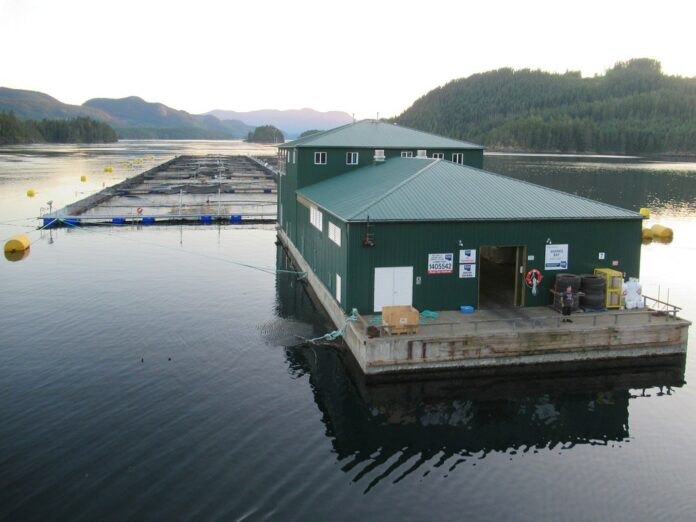
This is a photo of a large open net-pen salmon farm in BC.
Grieg Seafood operates a salmon farm at Barnes Bay off Sonora Island, British Columbia, Canada.

By: Mason Mattu, Peak Associate

On June 19, the federal government announced a ban on “open net-pen salmon aquaculture in BC coastal waters by June 30, 2029.” This comes after many Indigenous communities and environmental groups have called for its end due to environmental concerns and a decline in wild salmon. Licences for open net-pen salmon farming have also been renewed for five years for an industry transition. 

Open net-pen salmon farms are “large cages and nets placed in coastal waters” by fish farm technicians holding “hundreds of thousands of fish,” which hatch from eggs within the pen. Over 90% of open net-pen salmon farms are owned by three Norwegian companies. According to the sustainable seafood partnership SeaChoice, open net-pen farms are a high-risk method of salmon farming as they do not filter what comes in or out of the farm, allowing a “free exchange of waste, chemicals, parasites, and disease.” SeaChoice “is a partnership among the David Suzuki Foundation, Ecology Action Centre, and Living Oceans Society.” This combined with the “high density of foreign fish packed into a farm pen” increases the risk of infection and contagious viruses in the water for local marine life. The farming infrastructure itself ruins sensitive coastal ecosystems, producing “the same amount of waste as a city of half a million people” and trapping wild fish in the nets. 

In a draft transition plan by the federal government, they describe plans to make Canada “a world leader in innovative and clean aquaculture technology.” The transition plan aims to retrain workers currently employed by the industry, support the construction of land-based closed containment salmon farms, and work with Indigenous communities to “develop new economic opportunities that align with each community’s particular needs and values.” Land-based closed containment salmon farms help keep aquatic environments safe without causing risks to “the surrounding aquatic environment.” The estimated cost to replace BC’s current open net-pen farms “could be as high as $1.8 billion” and quite a bit of extra electric power, making some believe that the plan is unrealistic in a five-year window. 

“Because of the work and dignity that comes with the salmon farming industry, we have had no suicides in my community of Klemtu for the past 18 years.” — Isaiah Robinson, deputy Chief councillor, Kitasoo Xai’xais Nation

“Our wild salmon are already facing so many risks. This is a precautionary measure, and by isolating the threats [in closed containment pens], we are taking away some of that risk to our wild salmon,” said Johnathon Wilkinson, minister of energy and natural resources, in a speech.

Fishing is “part of the culture and identity that sustains First Nations peoples.” The First Nations Fisheries Council of BC stated, “Fisheries have formed the basis of economies for many Nations, first through trade with other Nations and early settlers, and later through commercial activities.” The move to ban open-net farms is supported by the BC Assembly of First Nations, the First Nations Wild Salmon Alliance, and other environmental advocates. Over 123 First Nations in BC supported the ban in a letter to the Prime Minister citing the farming method’s “impact on their cultural, economic and spiritual way of life.” Salmon have not only long been a source of food, but an important figure in spiritual and cultural traditions.

Some Indigenous communities have raised concerns about the impact this transition will have on their livelihoods. 

For one, the Klemtu community of the Kitasoo Xai’Xais Nation has a “99% employment rate with 51% of those being tied up in aquaculture.” Isaiah Robinson, deputy Chief councillor of the Kitasoo Xai’Xais Nation, requested to extend the open net-pen salmon farming practice by at least six years. “Because of the work and dignity that comes with the salmon farming industry, we have had no suicides in my community of Klemtu for the past 18 years,” he wrote in an open letter to Prime Minister Justin Trudeau. “It makes no sense to shut it down. There is no industry that can fill that space.”

The Coalition of First Nations for Finfish Stewardship, representing 17 Indigenous communities in the province, stated that “due to the impact of colonization on wild salmon stocks, we have had to include salmon farming alongside salmon stewardship to fill the economic gap caused by the decline of wild salmon.” During British and French colonial rule in Canada, natural resources such as salmon were exploited en masse. The group claimed that around “700 Indigenous people provincially work in salmon farming, which is a sector that brings in $133 million per year” for Indigenous communities. 

The federal government has yet to put out a final transition plan for Indigenous communities.

Council Chats: SFSS debriefs this year’s Fall Kickoff

0
This is an illustration of a graphic that reads “Council Chats.” The image also has two text boxes to symbolise messages being sent.
ILLUSTRATION: Andrea Choi / The Peak

By: Lucaiah Smith-Miodownik, News Writer

On November 13, The Peak attended the bi-weekly Simon Fraser Student Society (SFSS) Council meeting via Zoom. The discussion involved a debrief of this year’s Fall Kickoff Music Festival, followed by two committee elections.

Debriefing Fall Kickoff

Fall Kickoff, which took place on September 20, made its return after it was last held in 2019. The event aimed “to tackle the unique challenges of a commuter school by fostering a sense of community, creating lasting memories for students, and demonstrating the SFSS’ commitment to providing a well-rounded student experience beyond academics.” Specifically, the SFSS wanted to “bring student life back to SFU,” recognizing “engaged students are more likely to utilize services, attend events, and contribute to the overall vibrancy of campus culture.”

The SFSS also aimed to garner sponsors “to secure financial support and in-kind contributions” to lay “the groundwork for future collaborations and initiatives.” The student society also said they took this event as an opportunity to develop strategies for future events. For one, the SFSS said they learned to maintain their partnerships with sponsors to “ensure the success of subsequent events” through hosting the event. They also learned that planning Kickoff yearly would raise “student awareness” of the event. Overall, Chitransh Motwani, SFSS vice president of events and student affairs, outlined a refined approach for the next time they host Kickoff. His approach involved earlier planning, clearer stakeholder communication, “detailed operational plans,” and improved budget forecasting, among others.

Council also reported they went over their budget for Kickoff. Originally, Council approved $65,000 to be allocated to the concert from the large-scale events budget. Total expenses were $194,388, with $114,554 going towards paying artists and staging. Motwani reported the total revenue of the kickoff to be $64,343. Ultimately, a motion to cover the excess cost of Fall Kickoff was passed. While some Council members expressed concerns over the cost implications for other grants or clubs, others provided reassurance that the money spent on Fall Kickoff would not impact these other endeavours since their funding is not drawn from the large-scale events budget. The SFSS may need to lower costs for other large events planned this and next year, like Winter Warm-up and a Lunar New Year celebration.

Elections for committee positions

Elections were also held to appoint councillors to two committees. The first committee, looking to fill one spot, was the oversight committee on executive officers. Its job involves “overseeing the conduct of executive officers.” Should the group investigate the conduct of an executive officer, it also has the power to “potentially recommend disciplinary action,” such as a reduced stipend. Two individuals spoke to Council regarding their respective qualifications and abilities for the position. After a vote, Johnny Gates, SFSS public policy councillor, was elected. 

The other committee with one open spot was the equity and sustainability committee. This committee is designed “to center historically-excluded students in the community at SFU within the framework of the SFSS.” The committee focuses on “work[ing] towards dismantling intersecting forms of systemic oppression.” Amrit Kullar, SFSS world languages and literature councillor, was elected for this position.

Read the full length version of this article, which covers elections for two committee positions, on The Peak’s website, the-peak.ca.

BC’s major sports teams for beginners

0
Two men wearing shirts with the Canucks orca logo pose with baseball caps decorated with the Whitecaps logo resembling mountains.
PHOTO: Courtesy of @whitecapsfc / Instagram

By: Yildiz Subuk, Staff Writer

Editor’s note: stats are taken from November 22, 2024. 

Vancouver Canucks

After a remarkable playoff run in the last season, the Vancouver Canucks got off to a shaky start by losing their first three games this season. Since then, the team has accumulated nine wins, six losses, and three overtime losses, good for a 9–6–3 record. The Canucks have had a lot of success under coach Rick Tocchet, who managed to take a middling team into the playoffs. Tocchet won the Jack Adams Award in the 202324 season, a trophy given to the best coach in the National Hockey League (NHL).

The team is filled with offensive players who score important goals, but also create high-quality chances for their teammates. J.T. Miller currently leads forwards in points with 16, followed by Conor Garland, who has 14. Prolific goal-scorer Brock Boeser, while currently out due to an injury, is tied for the team lead in goals with six. Miller led the team in points last season (103), while Boeser led in goals with 40 in 81 games. Along with Jake DeBrusk, this offensive line is ranked second in the NHL in expected goals for.

Another standout player is Canucks captain Quinn Hughes, an offensively-talented defenceman. Hughes has scored four goals and assisted on 15, making him the current leader in points (19) for the team. The former seventh overall pick in the 2018 NHL Draft is considered one of the best defencemen in the NHL alongside Cale Makar and Roman Josi. Hughes won his first James Norris Trophy last season, and has been compared to the likes of legends like Bobby Orr. In a 5–1 win against the Anaheim Ducks on November 5, he became the third-fastest NHL player to tally 300 assists in his career. 

The Canucks have just begun their season, having only played 18 games so far. An NHL regular season is 82 games long (excluding playoffs), so there will be plenty of opportunities to catch the Canucks live.

Vancouver Whitecaps FC

Despite their newcomer status, the Whitecaps have managed to win four Canadian Championships, which is the highest level soccer tournament in Canada.” 

The Whitecaps battled hard for a chance at advancing in the playoffs, but unfortunately lost their series against Los Angeles FC on November 8. They finished their season with a record of 13–13–8

Vancouver is fairly new to Major League Soccer (MLS), having joined in 2011. The MLS hosts teams from all across America and Canada. Despite their newcomer status, the Whitecaps have managed to win four Canadian Championships, which is the highest level soccer tournament in Canada. The winner of the championship receives the Voyagers Cup. The Whitecaps won their first Voyagers Cup back in 2015 and followed that up with a three-peat, winning consecutively in 2022, 2023, and 2024. In their most recent win back in September, they beat Toronto FC in a close game which ended up going to penalty shootouts. Ultimately, the Whitecaps secured another championship in their home arena, BC Place.

Some notable players include striker Brian White, who scored 15 goals in the 2024 regular season and assisted on two, and Ryan Gauld, who is not only the team’s best player, but top-three in the category of left winger/midfielder. Gauld, who is an attacking midfielder, managed to score 10 goals and assist 15 times in the regular season. Gauld is also currently the captain of the team.

The Whitecaps have wrapped up their 2024 season (a total of 34 league games are played), and will pick back up in 2025, when the next MLS season starts.

It’s Dear Peakie again

0
Professor standing in front of a lecture hall. He is holding a laptop and smiling at the camera.
PHOTO: Yan Krukau / Pexels

By: C Icart, Humour Editor and Yasmin Hassan, Staff Writer

Dear Peakie, 

I’m in my main character era. I love it when people watch me walk into lecture one hour late with my oat vanilla latte. I walk through the front door so I can strut right in front of the professor. I also make sure to make multiple people stand up so I can sit in my preferred seat in the middle of the row despite the other more discreet seats available. Anyway, I don’t really even have a question for you because I’m too iconic for that. Instead, I have an instruction: Validate me. 

Sincerely, 
It’s not rude when I do it 

Dear It’s not rude when I do it,

I get you. People sitting around you in lecture should already know that seat is your unassigned assigned seat. You deserve as much! At some point during any semester, you stop caring about unspoken rules of showing up on time to lecture or sitting in any farther available seat as quickly as possible, and that’s alright. You’re spending your energy, time, money (because I know that oat vanilla latte cost you at least $8), and academic prowess to be at university. Your presence is probably what the lecture hall is missing, so, in all honesty, they should be thankful to be graced by your fashionably late arrival.

XOXO,
Peakie gets it

Dear Peakie, 

In light of recent events, my feeds are flooded with people claiming they’re moving to Canada. But how can this be true if “Canada” is nothing but a colonial fantasy and the “border” is just lines random white men drew on a map? 

Decolonially, 
I’m still scared for the next federal election though

Dear I’m still scared for the next federal election though,

I’m totally with you there. Who knew fall 2024 would be characterized by TWO great migrations? One up north towards a so-called Canada run by monopolies who show up to Pride parades so you can’t criticize them. And the other from Twitter to Bluesky! Anyways, the conversation about borders might be a bit too advanced for people who think it’s acceptable to finders, keepers their way through life. It’s the natural order of things, really. First, you make up the border, and then you make up a department and name it after a meme coin

Biting my nails with you, 
Peakie

Dear Peakie, 

I guess this is more of a question for the SFU Snap App, but I’m already here. When I get off the bus at the Transportation Centre and want to go to Convocation Mall, should I cross the street into the big empty space with the piano, or is there a secret way to get in through the parking lot? Don’t worry, I can keep a secret. 

Best, 
Trying to reduce my step count

Dear Trying to reduce my step count,

Going up those flights of stairs humbles me every time I try to get to Convocation Mall from the bus stop. However, legend has it that a pack of raccoons will sometimes scamper through the Central Parkade, trying to forage for thrown away trash and whatnot. While our furry friends may seem unsuspecting, if you bribe their leader with a half eaten farmer’s wrap while continuously making eye contact with them, they will escort you through the parking lot all the way to the flights of stairs that lead directly into the mall. These valiant beasts are like SFU’s version of Minecraft dolphins.

Sincerely, 
Peakie

Nobuko Miyamoto: A Song in Movement — establishing a cultural voice

0
Five individuals, all dressed in colourful robes, hold hands and dance in a circle.
PHOTO: Courtesy of Tadashi Nakamura and Quyên Nguyen-Le

By: Yildiz Subuk, Staff Writer

Content warning: mentions of internment camps. 

The Vancouver Asian Film Festival premiered brilliant films and documentaries this year. One that stood out was Nobuko Miyamoto: A Song in Movement, which tracks the life of third-generation Japanese immigrant Nobuko Miyamoto. As an artist and storyteller who decided to break away from the white gaze to create powerful performance art and music, Miyamoto has established a legacy of using art to unite communities and creating spaces to tell the stories of the unheard.

During her childhood, Miyamoto and her family were part of the 120,000 Japanese Americans forced to relocate in internment camps during World War II. They spent most of the war in crowded concentration camps, facing discrimination from American society during a time of mass anti-Japanese sentiment. After the war, Miyamoto, who had found music as a way to lull the isolation she felt, went into performance art.

Miyamoto’s voice, soft yet powerful, radiates in every minute of the documentary as she presents her reflections on art and the importance of creating community through her craft. She is not simply answering questions about her life, but providing a narrative. The film provides decades of archived footage edited together to effortlessly give audiences a visual progression of her life, allowing her to have full agency over her story. 

“Miyamoto’s voice, soft yet powerful, radiates in every minute of the documentary as she presents her reflections on art and the importance of creating community through her craft.”

The early years of Miyamoto’s career had her working in musicals like West Side Story and Flower Drum Song. As an upcoming star, she realized there was something problematic in the way her culture was being represented when she performed “Chop Suey” on stage for Flower Drum Song. She realized the audience she performed to had no actual knowledge of her culture, and the authentic representation she thought she would be a part of was, instead, a cheap watered-down attempt to fetishize East Asian cultures. She was performing for the white gaze, a concept that obscured the story of her people through stereotypical caricatures of her culture. “There was something in the way those delighted folks looked at us. In a flash I realized, WE were “chop suey,” she said. The white gaze notes how stories are made to keep white audiences at the center of viewership. As Miyamoto walked away from the mainstream, a spark was lit. She didn’t want to be used as a prop in cheap attempts at multicultural storytelling — she wanted to create spaces for underrepresented voices to thrive. 

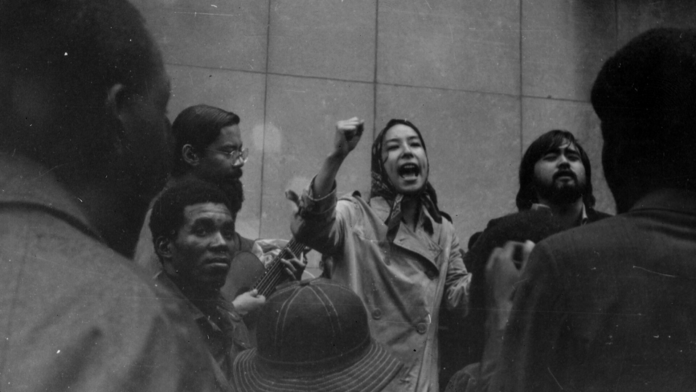
Miyamoto’s dedication to merging art and activism, a process known as artivism, started with performing songs during advocacy campaigns. She did not perform in venues, but in open areas amid large groups of people who were vocal about change. In her early years, she was involved with the Black Panthers and protested the Vietnam war. These experiences, as well as her desire to create spaces for Asian communities to learn and engage with art across America, show her belief in the transformative power of art. These spaces include empty studios and Buddhist temples, where she taught performative art and spent a lot of her early years as a mother. 

A Song in Movement not only captures Miyamoto’s story from a personal lens, but also a communal one. We see the impact her art has on the Asian communities she gets involved in, and we see how she uses music and performance as an instrument for revolution and breaking the mold of white-dominated storytelling through music. The documentary captures how Miyamoto starts a performance project called FandangObon. This dance project turned into many different communities collectively dancing in a circle and playing their music. It’s a dynamic form of performance that not only links communities together, but also invites many to engage in it.

The beauty and empowerment permeating in songs like “We Are the Children” could only be created by someone who not only understands the importance of authentic storytelling, but has devoted genuine care and taken action throughout her life. It’s a testament to the rich thoughts behind A Song in Movement, as well as the impact it has on storytelling within localized communities. A Song in Movement is the perfect example of a story that connects the audience with a past that laid the foundations of decentering art that only focuses on the white gaze.

2SLGBTQIA+ groups, clubs, and teams in the Metro Vancouver area

0
A photo of a group of runners
PHOTO: Ted Eytan / Flickr

By: Lucaiah Smith-Miodownik, News Writer

Finding like-minded community through groups, clubs, and teams is a great way to do what you love while making friends. In the Metro Vancouver area, there are numerous organizations dedicated to 2SLGBTQIA+ individuals connecting with one another, be it through sports, art, reading, and more. This article highlights a few of these spaces and the intriguing activities they have to offer.

Canadian Aviation Pride (CAP) is a not-for-profit organization designed to uplift and connect 2SLGBTQIA+ aviators and aviation enthusiasts, with a focus on “promoting diversity and inclusion in aviation.” The group “hosts regular events, including Pride festival parties and booths.” CAP also provides awards on an application basis for 2SLGBTQIA+ community members interested in pursuing flight education. To learn more, see their website:
aviationpride.ca

Following the theme of flight, Vancouver Queer Birders is a collective of avian enthusiasts welcoming all queer individuals regardless of birding experience. The group hosts bird walks and even offers up tips on bird watching and life lists, which are lists of “all the species that a person has seen over their lifetime.” For more information, check out their Instagram, @vanqueerbirders.

While similar in name, you won’t get to spend much time exploring the woods at The Birdhouse. This venue, located near Vancouver’s Mount Pleasant neighborhood, serves as a space for art and events such as the recent Trans Day of Remembrance gathering, various shows, balls, concerts, and more. “A venue run by and for trans people,” The Birdhouse is run by business partners Paige Frewer and Ryn Broz. “Traditional queer spaces don’t always meet the specific needs of trans folks, so trans people started making those opportunities for themselves,” The Tyee reported of the space. They’re intentional about “gender-affirming” camaraderie, “tailored support and resources,” and “daytime and substance-free” events for youth and folks recovering from trauma. For more information, see their Instagram, @birdhouseartspace. 

For a slower, more relaxed option, readers can check out Rainbow Country Book Club. The group meets monthly to discuss their latest page-turner, which is chosen by public vote. To see more, visit Rainbow Country Book Club on Facebook. If you’re new to the area and are looking to get out and explore, consider checking out GayVan Tourism. “Regularly updated information provides an interactive resource for consumers, travel agents, travel industry providers, and those wanting to reach the LGBTQ+ community.” The company site highlights activities and destinations in Vancouver and beyond, while highlighting local 2SLGTQIA+ events. To learn more, see their website: gayvan.com.

Vancouver Gaymers is a group of gamers in the broadest sense; they play video games, board games, and however you would categorize “lazer tag, corn mazes, amusement parks, and so much more.” Members are wholly encouraged to bring any games they enjoy and would love to share. For more, visit Vancouver Gaymers on Facebook.

For those looking to log some kilometers by foot, there is Vancouver Frontrunners (VFR), “a safe and friendly environment for the 2SLGBTQIA+ community and their friends to enjoy running and walking.” VFR often meets up post exercise for a group meal too. The group also hosts the annual Vancouver Pride Run & Walk at the end of July, which helps benefit 2SLGBTQIA+ charities focused on empowering queer youth. See vancouverfrontrunners.org for more information. If you’re more into team team sports, Vancouver Rogues Rugby might be the best fit for you. Not only were the original Rogues RFC the “first openly gay/inclusive rugby team in all Canada,” but this reboot has built fighting against racism, transphobia, and homophobia core to their identity.  

Maybe you’re less interested in land or sky and would rather take to the water. Sisters in Sync is “Vancouver’s first and only queer women’s (trans-inclusive) dragonboat team.” Dragon boating is a race in “large canoe-like vessels” with up to 16 people in one boat, paddling to be first across the line. Sisters in Sync is open to those interested regardless of experience. To learn more, check out sisterinsync.ca. However, if you’re more into being in the water rather than over the water, you might consider joining the English Bay Swim Club. The club has been active since 1982 and is all-inclusive to trans and gender non-conforming folks.

This list is far from exhaustive and only begins to scratch the surface of 2SLGBTQIA+ groups, clubs, and spaces in the area where joy and community are waiting to be found. From hockey to yoga to lawn bowling, there is so much more out there to explore!

What Grinds Our Gears: Laughably inconvenient goSFU updates

0
PHOTO: flipsnack / Unsplash

By: Olivia Visser, Opinions Editor

SFU students like to complain about our digital infrastructure. I can attest to this because I am a student, and I’m complaining right now. Everything from Canvas being slow to courses filling up in minutes is enough to earn a top post in r/simonfraser. I like to imagine that SFU’s IT department had these posts in mind when they decided to schedule their latest update during most people’s enrollment dates — a crisp screw you to the haters.  

This isn’t a complaint against SFU’s IT department as a whole; I know it takes hard work to keep our systems safe and running smoothly. But surely a line must be drawn somewhere that isn’t the hopes and dreams (and wallets) of fourth-year students trying to finish their required courses. 

And don’t even get me started on how non-user-friendly goSFU is in the first place. They should take some pointers from my high school club’s Weebly website. Yes, I know there are site functions that Weebly wouldn’t be able to accommodate, but that’s where ingenuity comes in! When has Weebly ever let us down? #goSFUgoesWeebly2k24

Trump’s re-election is a step backwards for Canadian society

0
Digital vector art. Donald Trump and Pierre Poilievre standing side-by-side, their backs to each other. Behind Trump is the US flag, and behind Poilievre is the Canadian flag.
ILLUSTRATION: Winnie Shen / The Peak

By: Olivia Visser, Opinions Editor and Yildiz Subuk, Staff Writer

Content warning: mentions of racism, Islamophobia, and genocide.

After being re-elected to serve a second term as US president, Donald Trump and his cabinet have already begun to target Canadian borders. While during his first term he imposed tariffs on Canadian steel exports, and he now threatens to do so again on a wider scale — that is just one piece of the narrative. Trump’s re-election doesn’t only pose an economic threat to Canada, but also a social one. 

There has already been a rise in xenophobia — prejudice towards people perceived as foreign — in Canada between 2019 and 2021. The most glaring indicator of this spike has to do with hate crimes, as they increased by 72% during this period. From East Asian hate to racism towards South Asian communities, bigoted individuals are becoming increasingly comfortable expressing their hatred towards those who do not constitute as “Canadians” in their eyes. When it comes to making Canada a safer and more equitable place for migrants and marginalized communities, Trump’s presidency signifies a step backwards. As he and his cabinet fear-monger about how Canada’s lack of border control presents a gateway for “terrorists” to enter the country, they will speak to many Canadians looking to make their bigotry known.

Trump recently announced that Thomas Homan will be in charge of American border security. Homan, who has been tasked to carry out the largest mass deportation plan in American history, has criticized Canada’s borders for being too flexible. He also actively uses the word “aliens” to describe undocumented immigrants, which dehumanizes them. To Homan and Trump, undocumented immigrants — which includes families seeking asylum from dangerous conditions — are a threat to national security. According to the National Institute of Justice, undocumented immigrants commit fewer crimes than American-born citizens, by a large margin. Trump’s pick for secretary of state, Marco Rubio, also stated that “terrorists and known criminals continue to stream across US land borders, including from Canada.” 

There is already a growing sentiment in Canada that targets immigrants as aggressors, while immigrants tend to be one of the most vulnerable populations in the country. A culture of anti-BIPOC slander is on the rise, where people who are not perceived as “white” are looked at as outsiders. For instance, a BC Conservative candidate was recently under fire for comments about “Muslim inbreeding” and for saying that Canadian society is incompatible with Islam. This didn’t stop him from winning in his riding, which suggests that racism wins votes in Canada too. 

When it comes to making Canada a safer and more equitable place for migrants and marginalized communities, Trump’s presidency signifies a step backwards.

Trump’s presidency is dangerous to racialized people because he along with his cabinet have labelled non-white immigrants as threats to the nation, and this rhetoric is catching on in Canada. Anti-immigration policies have already begun in the country, as the Liberal government plans to cap immigration levels and the Conservatives have made it clear in their campaign that they want to cut immigration further. Capping immigration, which would bring more financial detriments than benefits, does not provide any real solutions to the affordability crisis. Instead, it seems to be a way of subtly reaffirming to those who already believe immigration is an issue that it will be “taken care of.” 

The language used by Pierre Poilievre, Conservative Party of Canada leader, reflects similar tactics used by Republicans to garner support. Trump has run his campaigns based around nicknames rather than substance, as stirring division garners more support than concrete policy. Insulting titles like “sleepy Joe” and “crooked Hillary” are an easy way of appealing to radicals who vote based on reactionary rhetoric, and Poilievre has evidently been taking note. The Conservative candidate has been using similar tactics, calling NDP leader Jagmeet Singh “sellout Singh.” The nickname has since been used to spread online hate towards others with the same last name — a common title given to Sikh men “as a symbol of equality in their faith.” 

Poilievre also has endorsement from far-right extremists like Alex Jones and those present at the freedom convoy, an event that saw the expression of hateful acts from nazi flag waving to violence. Far-right extremism, according to research from The Organization for the Prevention of Violence, is any form of violent extremism carried out by people with right-wing ideologies. Their research also touches on the rise of crimes targeting Muslim people in Canada following Trump’s first presidency. 

Canadian politics, especially within the far-right, have radically shifted since Trump was elected in 2016. While the alt-right is not necessarily a popular ideological group in Canada, many members of the alt-right have not only been involved in hate crimes, but have comfortably expressed hateful views towards marginalized communities since Trump’s first term in office. And despite Canadian support for Trump still being relatively low, there has been rising support for the Conservative Party of Canada, and far-right rhetoric has been bleeding into mainstream media and opinion. A survey by Abacus Data projects that 42% of Canadians will vote Conservative in the upcoming election. Another survey by the Environics Institute found that 58% believe “immigration levels are too high” in the country.

The re-election of Trump can and will worsen sentiments that target marginalized groups in Canada. There is currently a wave of bigotry that is slowly spreading across the country. While there have been efforts to mitigate this, such as tightening laws on hate-speech, the re-election of a soon-to-be convicted felon who faces a series of sexual assault allegations and is celebrated by white supremacist groups is a step backwards in ensuring Canada progresses towards being a peaceful and welcoming country for all.

South Korean 4B movement gains interest following US presidential election

0
This is a photo of three people in witch hats holding up signs in Korean as part of the 4B movement.
PHOTO: AFP / Free Malaysia Today

By: Sofia Chassomeris, News Writer

Content warning: mentions of gender-based violence, sexual assault, and Missing and Murdered Indigenous Women and Girls.

November 25 marks the first day of the annual 16 Days of Activism Against Gender-based Violence. The international campaign begins on the International Day for the Elimination of Violence Against Women, and ends on December 10, Human Rights Day. It is a time to reflect and make a “commitment to ending violence against women, girls, and 2SLGBTQIA+ individuals.” Following the re-election of Donald Trump as the 47th President of the US, more American women have shown interest in joining the South Korean feminist 4B movement.

In the past few years, South Korea’s National Police Agency reported on the country’s “sharp increase” in dating violence against women, including sexual assault and homicide. The Agency stated a record high of over 77,000 cases in 2023, with only 310 individuals prosecuted for their crimes. Critics of South Korea’s legal system, such as the Korea Women’s Hotline, point out that the small percentage of violent crimes against women that actually get reported are also treated as minor or “accidental” occurrences. 

As a response to this, the 4 B’s in “4B” represent the “four no’s” that participating South Korean women follow in response to misogynistic violence. They are “bihon, bichulsan, biyeonae, and bisekseu, which translate to no marriage, no childbirth, no dating, and no sex with men.” For most women, the movement takes the form ofquiet feminism,” in which women practice its principles but refrain from disclosing their feminist position publicly for their safety.

The 4B movement started on an extremist South Korean online forum called “Womad.” Experts note “Womad is a product of ‘Ilbe Storage,’ a right-wing website that expresses hatred toward women” with a history of members sharing nude photos of women without their consent. Despite “consistent public requests to shut down Ilbe,” the forum remains unrestricted. “This is a society where a trusting boyfriend commits a crime like this because they think it is nothing serious,” said one petitioner.

According to The Korea Times, many “radical feminist” communities “have wrongly developed the original concept of pursuing gender equality to a gender war,” with forums like Womad “mirroring” gendered hate speech and sharing posts about committing violence against men. Some of these women were part of the 4B movement, but it does not represent the whole.

The 4B movement caught attention abroad in the weeks following the 2024 US presidential election. The election of Trump and his party’s promise to implement Project 2025 — what the BBC calls a comprehensive “set of proposals that would expand presidential power and impose an ultra-conservative social vision” — has worsened concerns about reproductive rights. The Guardian reported that searches for 4B “spiked by 450%” the day after the election.

Canada has also experienced a rise in support for conservative politics. With increasing “dissatisfaction with the federal Liberal Party,” leader of the Conservative Party Pierre Poilievre and conservative premiers have appealed to many Canadians concerned with the heightening cost of living. Across Canada, conservative parties are imposing barriers for 2SLGBTQIA+ children in their education and medical needs. In Alberta, premier Danielle Smith’s government passed a bill requiring parents to “opt-in for their child to be taught” about gender identity and sexual orientation. In 2023, the United Nations’ Commission on Population and Development stressed that “deprivation of access to education on sexual and reproductive health and rights results in a range of harmful practices,” including “high levels of gender-based violence.” 

Indigenous women remain the most “disproportionately affected by gender-based violence.” They are more likely to be victims of homicide, intimate partner violence, and sexual assault. It has been five years since the National Inquiry into Missing and Murdered Indigenous Women and Girls released their final report in 2019, which includes 231 calls for justiceintended to address the root causes that sustain violence against First Nations, Inuit, and Métis women, girls, two-spirit, and gender-diverse people.” However, only two calls to action have been fulfilled, and more than half haven’t been started. The National Inquiry’s most recent Interim Report stressed that the government needs to take responsibility and “support accountability” for transformational change to be possible.

Speaking on the rise of the 4B movement, Ju Hui Judy Han, an assistant professor in gender studies at the University of California, told NPR, “What I think is most important is that it’s about women recognizing that they’re in a collective struggle and that there’s a collective sense of frustration.”

She also told CNN that this “movement is unlikely to become mainstream in the US.” She predicts it will be short-lived, and that “those inspired to join it as a result of the election are overlooking the fact that plenty of women voted for Trump, too.” Exit polls show that 45% of women, specifically, a majority (53%) of white women, voted for Trump in the 2024 election. In the recent BC election, 25% of BC Conservative voters were women, while 60% of women voted for BC NDP.

Read the full extended article on The Peak’s website, the-peak.ca.